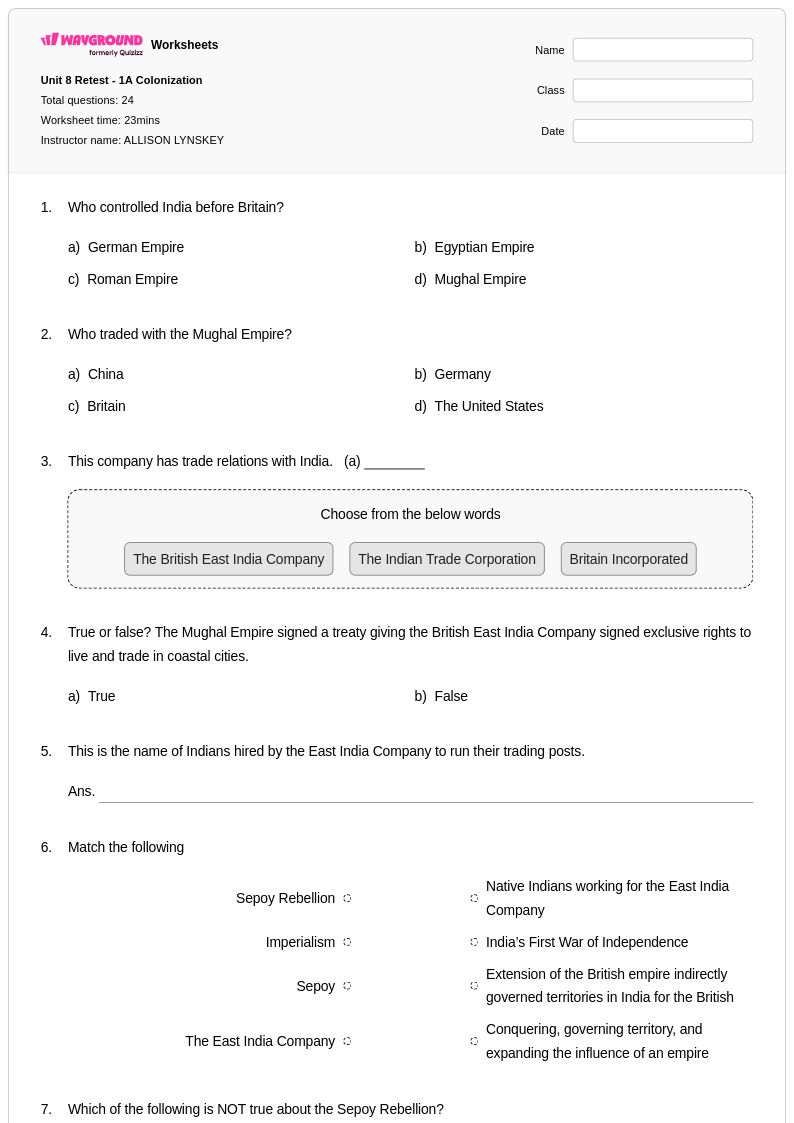
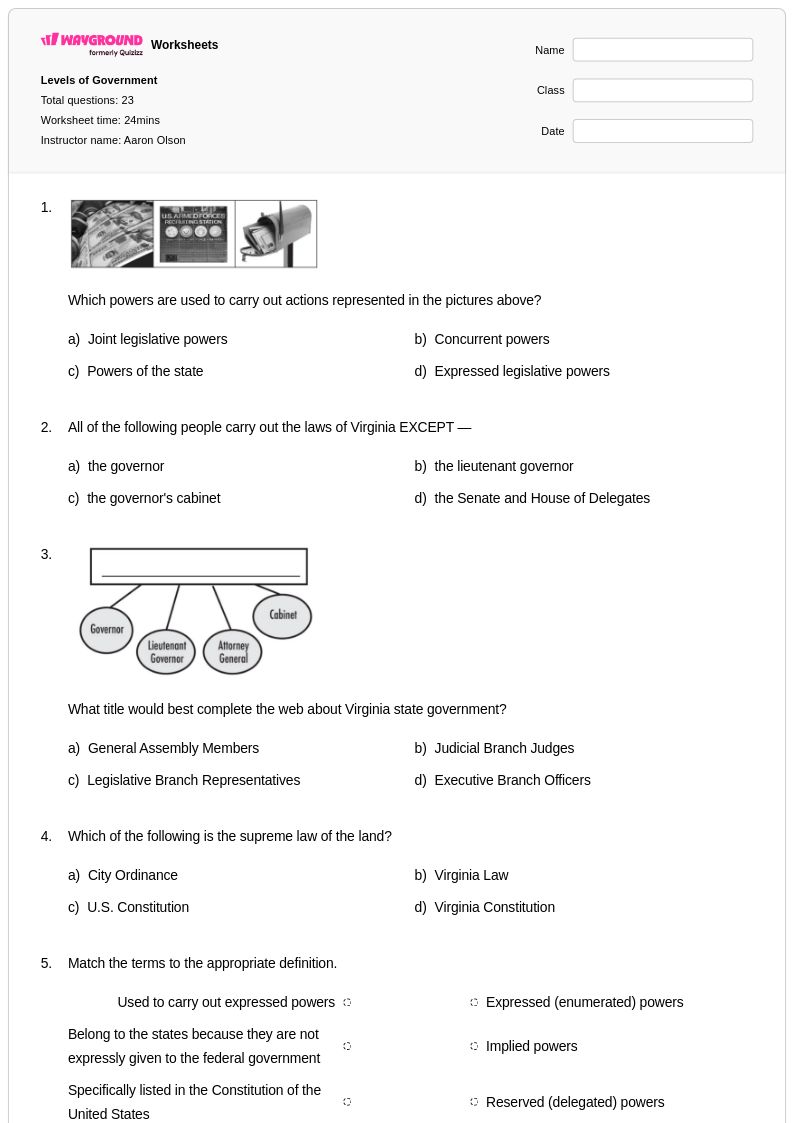
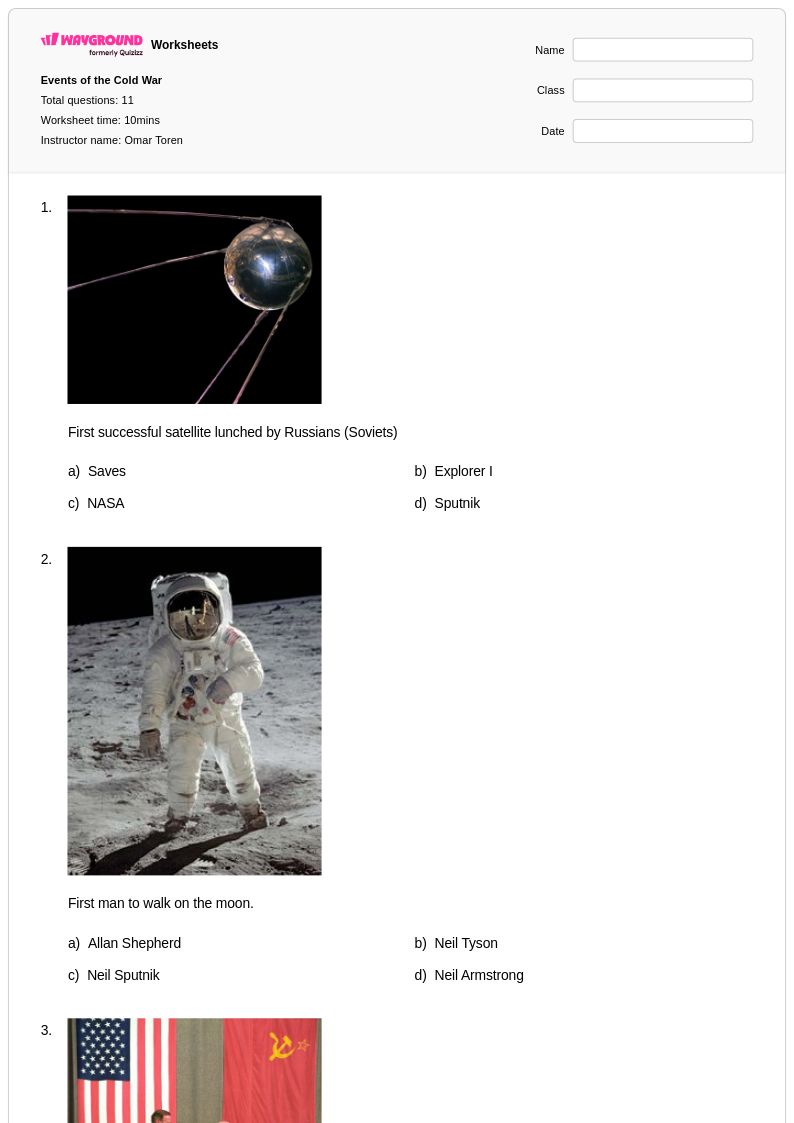
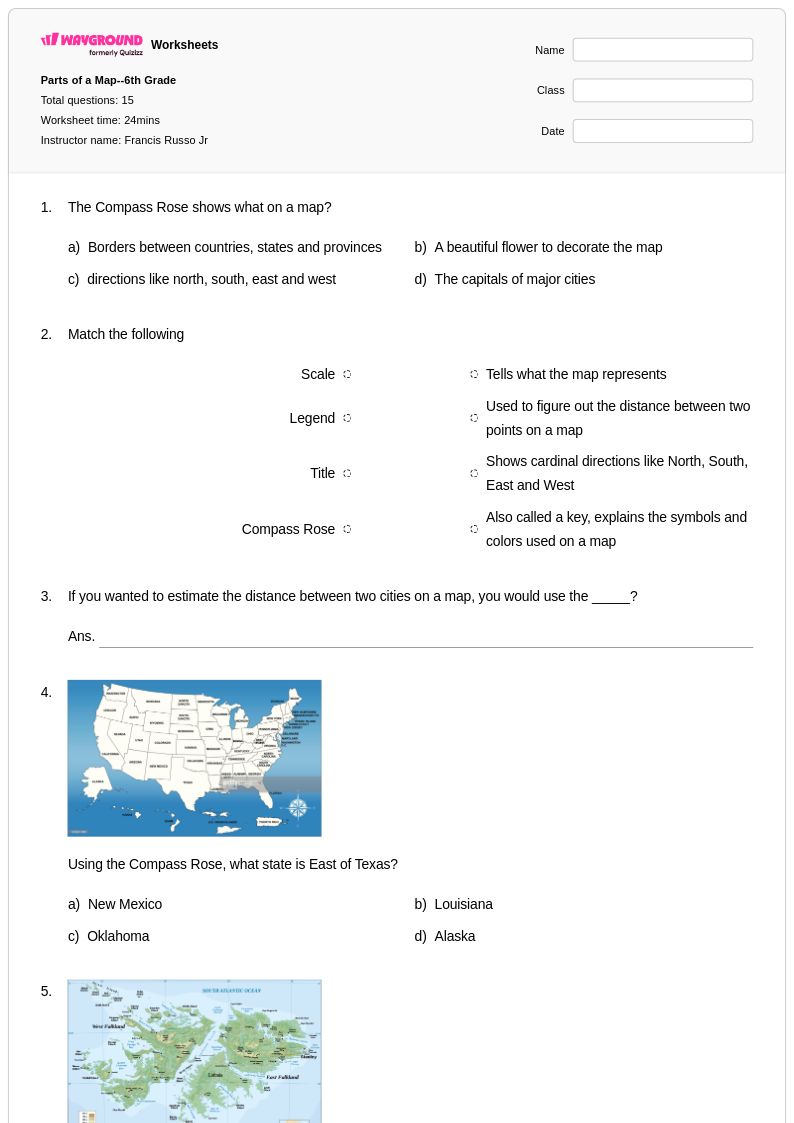
Free Printable Locus of Control Worksheets for Grade 6
Help Grade 6 students understand locus of control with Wayground's comprehensive collection of free social skills worksheets, featuring engaging printables, practice problems, and answer keys in PDF format.
Explore printable Locus of Control worksheets for Grade 6
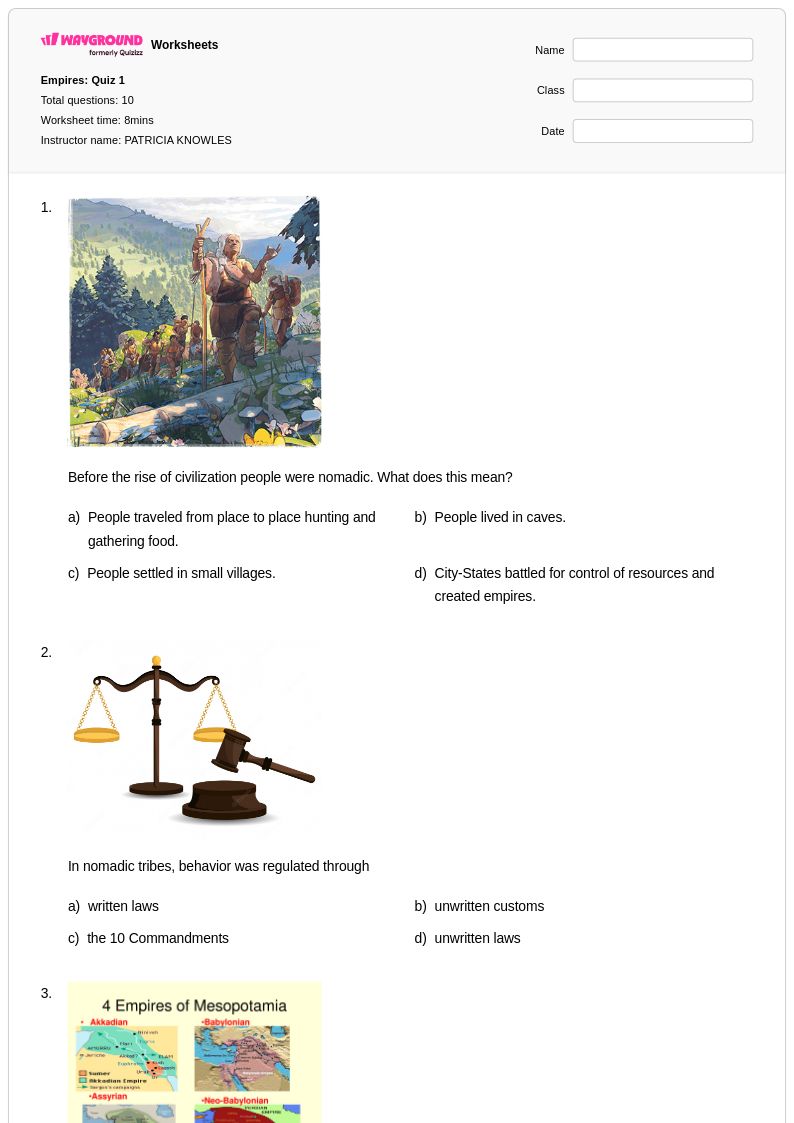
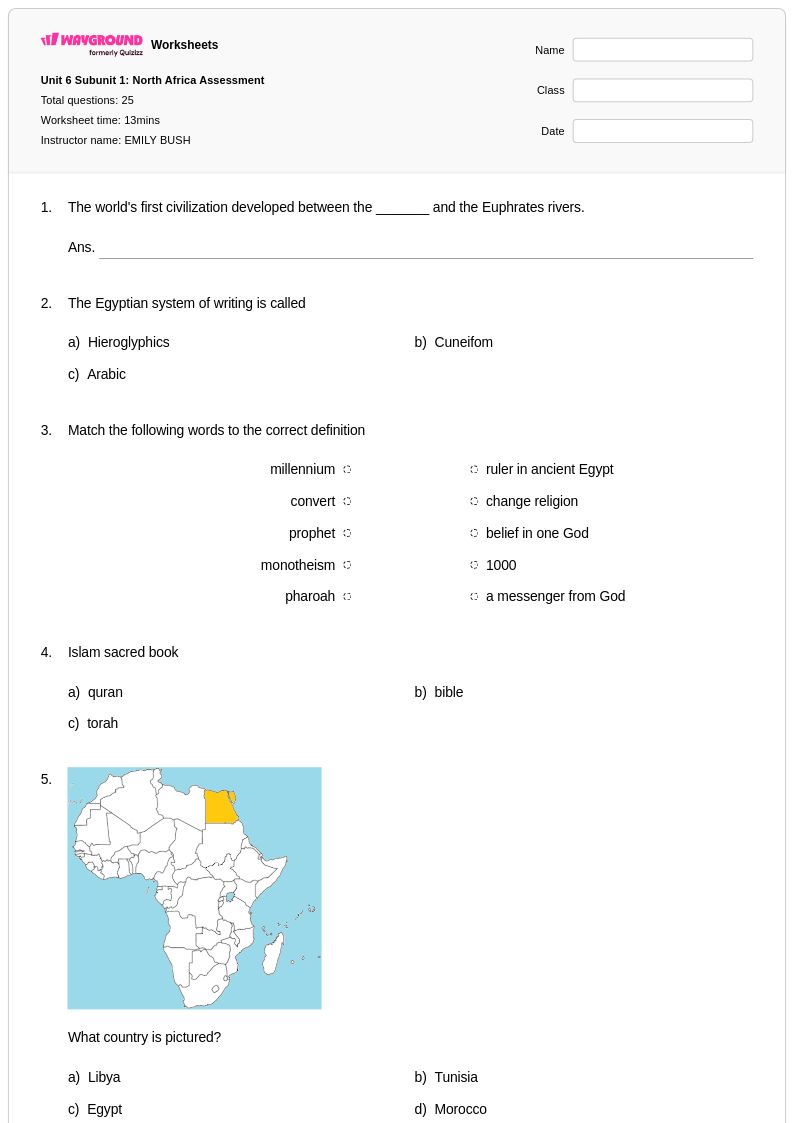
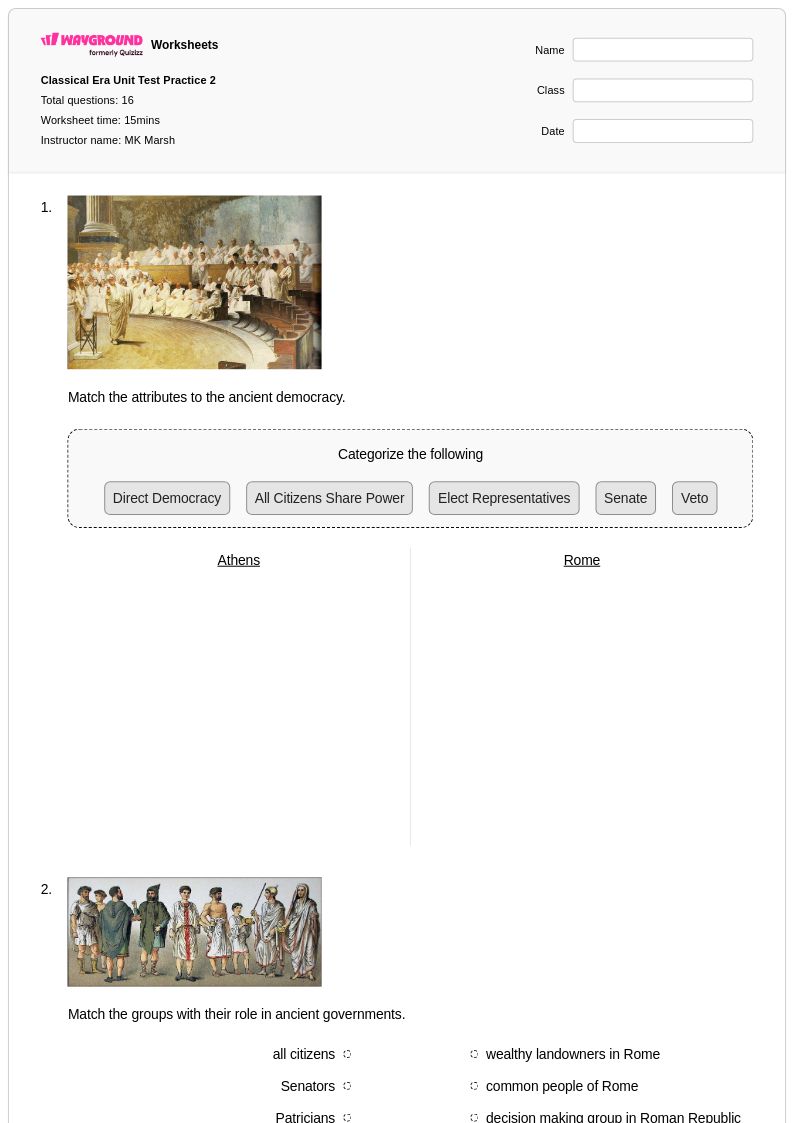
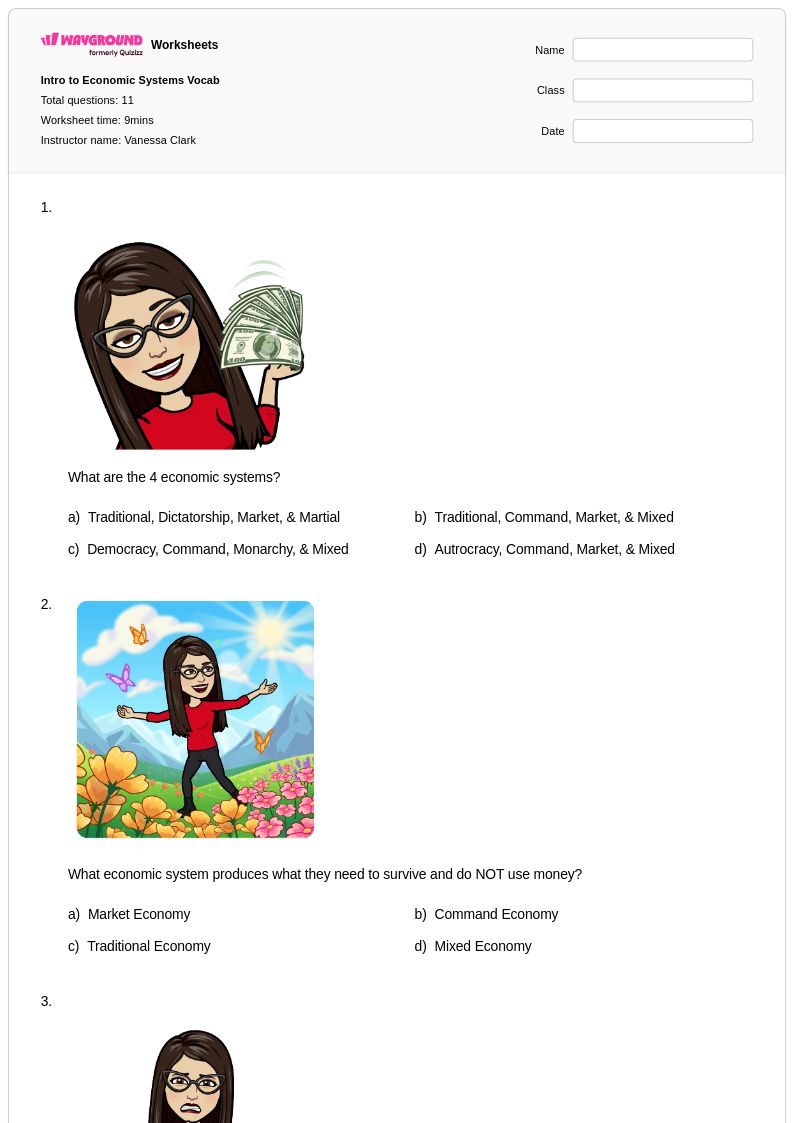
Locus of control worksheets for Grade 6 students available through Wayground (formerly Quizizz) provide comprehensive practice in understanding how individuals perceive their ability to influence events and outcomes in their lives. These educational resources help sixth-grade students explore the fundamental social studies concept that distinguishes between internal locus of control, where people believe they can control their circumstances through personal effort and decision-making, and external locus of control, where individuals attribute outcomes to external factors like luck, fate, or other people's actions. The worksheets strengthen critical thinking skills by presenting scenarios that require students to analyze different perspectives on personal agency and responsibility. Each printable resource includes detailed answer keys and practice problems that guide students through real-world situations, helping them recognize how locus of control affects behavior, motivation, and social interactions. These free pdf materials support classroom instruction by providing structured opportunities for students to examine their own beliefs about control and influence while developing greater self-awareness and emotional intelligence.
Wayground (formerly Quizizz) supports educators with an extensive collection of teacher-created locus of control worksheets, drawing from millions of resources specifically designed to meet the developmental needs of Grade 6 social studies curricula. The platform's robust search and filtering capabilities enable teachers to quickly locate materials that align with state standards and learning objectives, while differentiation tools allow for customization based on individual student needs and reading levels. Teachers can access these resources in both printable and digital formats, including downloadable pdf versions that facilitate flexible classroom implementation. The comprehensive collection supports diverse instructional approaches, from whole-class discussions to small group activities, making it easier for educators to plan targeted lessons that address varying levels of student understanding. These versatile tools prove invaluable for remediation with students who struggle to grasp abstract concepts about personal responsibility, enrichment activities for advanced learners exploring psychological theories, and regular skill practice that reinforces the connection between mindset and social behavior throughout the school year.
FAQs
How do I teach locus of control to students?
Begin by introducing the distinction between internal locus of control, where students believe their actions shape outcomes, and external locus of control, where outcomes are attributed to luck, fate, or other people. Use real-world scenarios and self-reflection activities to help students identify their own control beliefs. Connecting the concept to relatable situations, such as academic performance or peer relationships, makes the theory more concrete and personally meaningful.
What activities help students practice understanding locus of control?
Scenario-based practice problems are especially effective, as they ask students to analyze a situation and determine whether the person involved is demonstrating internal or external control beliefs. Self-reflection worksheets that prompt students to examine their own responses to success and failure deepen personal engagement with the concept. Analytical exercises that ask students to predict behavioral outcomes based on control orientation build higher-order thinking alongside conceptual understanding.
What misconceptions do students commonly have about locus of control?
A frequent misconception is that external locus of control is always negative, when in reality some situations genuinely are outside a person's control. Students also tend to conflate locus of control with self-esteem, conflating feeling good about oneself with believing one can influence outcomes. Another common error is treating locus of control as fixed, rather than understanding that it exists on a continuum and can shift across different life domains.
How does locus of control connect to real-world decision-making and behavior?
Research consistently links internal locus of control to greater academic persistence, healthier coping strategies, and stronger personal responsibility in decision-making. Students with an internal orientation are more likely to set goals, take initiative, and attribute both successes and setbacks to their own effort. Teaching this concept gives students a framework for recognizing how their beliefs about control actively shape the choices they make.
How do I use Wayground's locus of control worksheets in my classroom?
Wayground's locus of control worksheets are available as printable PDFs for traditional classroom distribution and in digital formats for technology-integrated learning environments, including the option to host them as a quiz directly on Wayground. Each worksheet includes an answer key, making them suitable for independent practice, guided instruction, or targeted remediation. Teachers can also use Wayground's customization tools to modify existing content or build personalized materials that target specific aspects of locus of control theory, from basic concept recognition to advanced application.
How can I differentiate locus of control instruction for students with different learning needs?
For students who need additional support, reduce cognitive load by focusing on one scenario type at a time and using visual supports to distinguish internal versus external control. Wayground's platform supports individual student accommodations including Read Aloud for students who benefit from audio delivery, reduced answer choices to lower difficulty, and extended time, all of which can be assigned per student without affecting the rest of the class. Advanced learners can be challenged with analytical exercises that explore the relationship between personal agency and social outcomes across complex, multi-factor scenarios.