
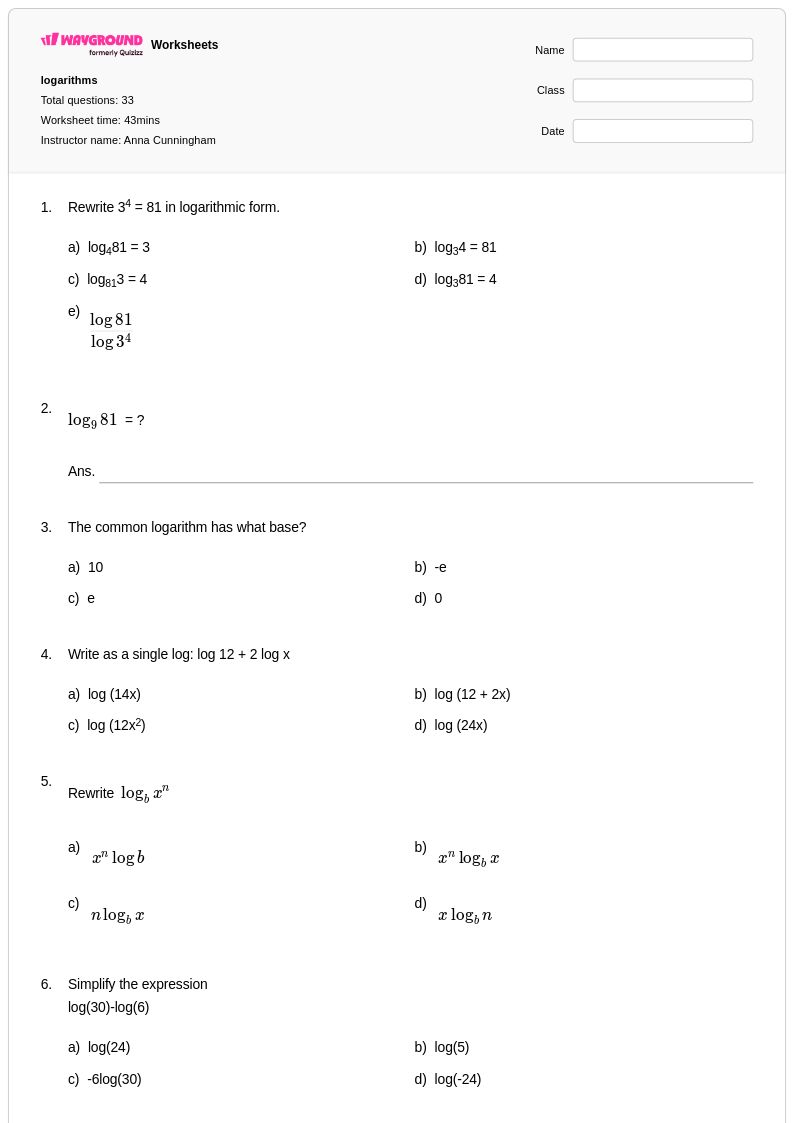
33 Q
11th - 12th
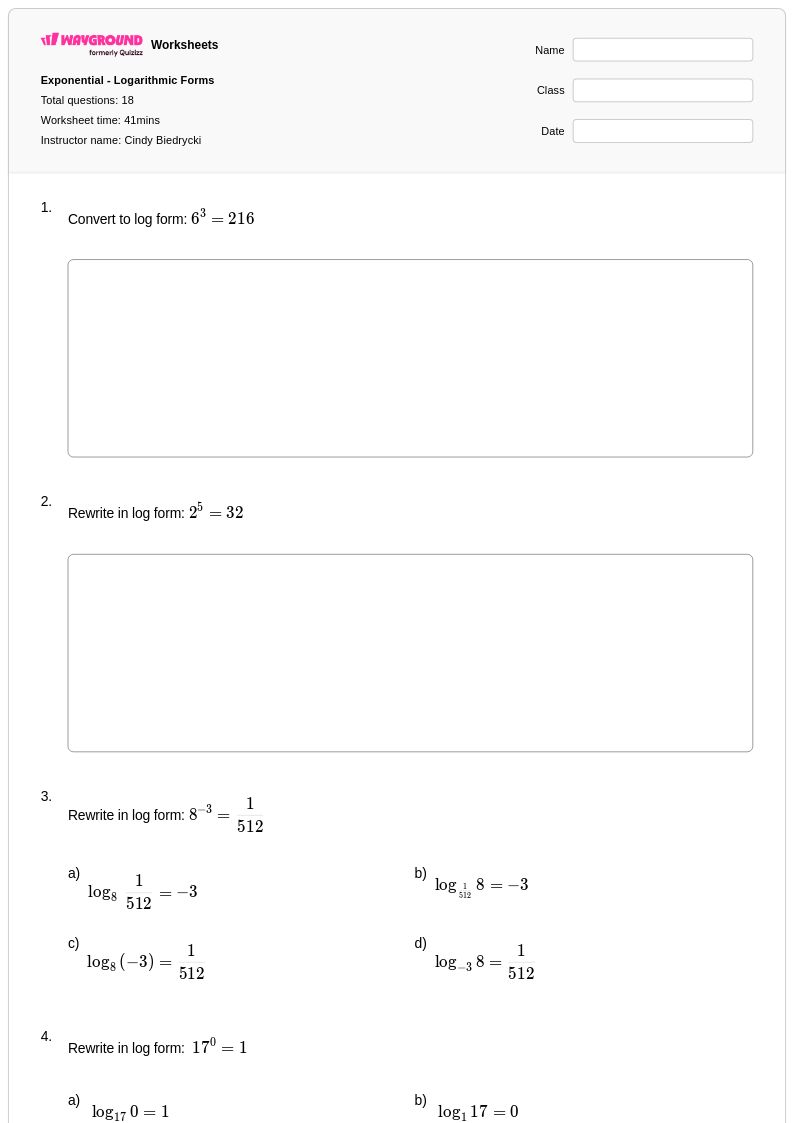
18 Q
10th - 11th
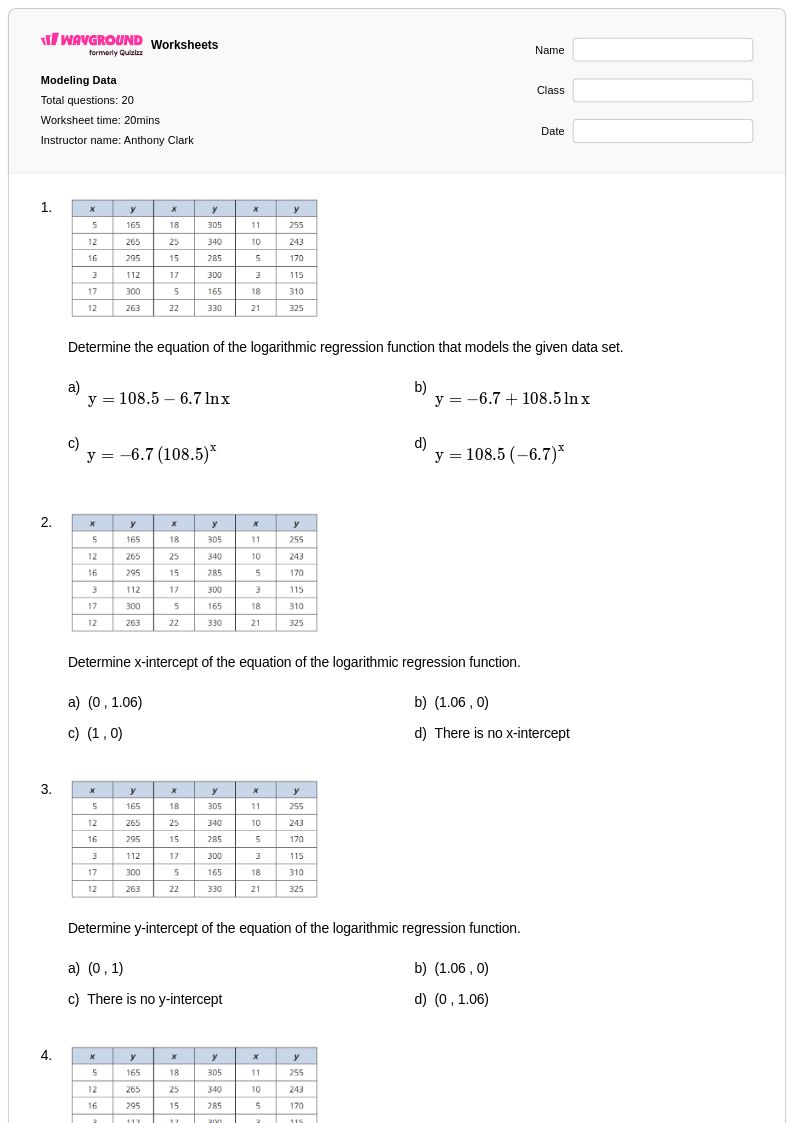
20 Q
12th - Uni
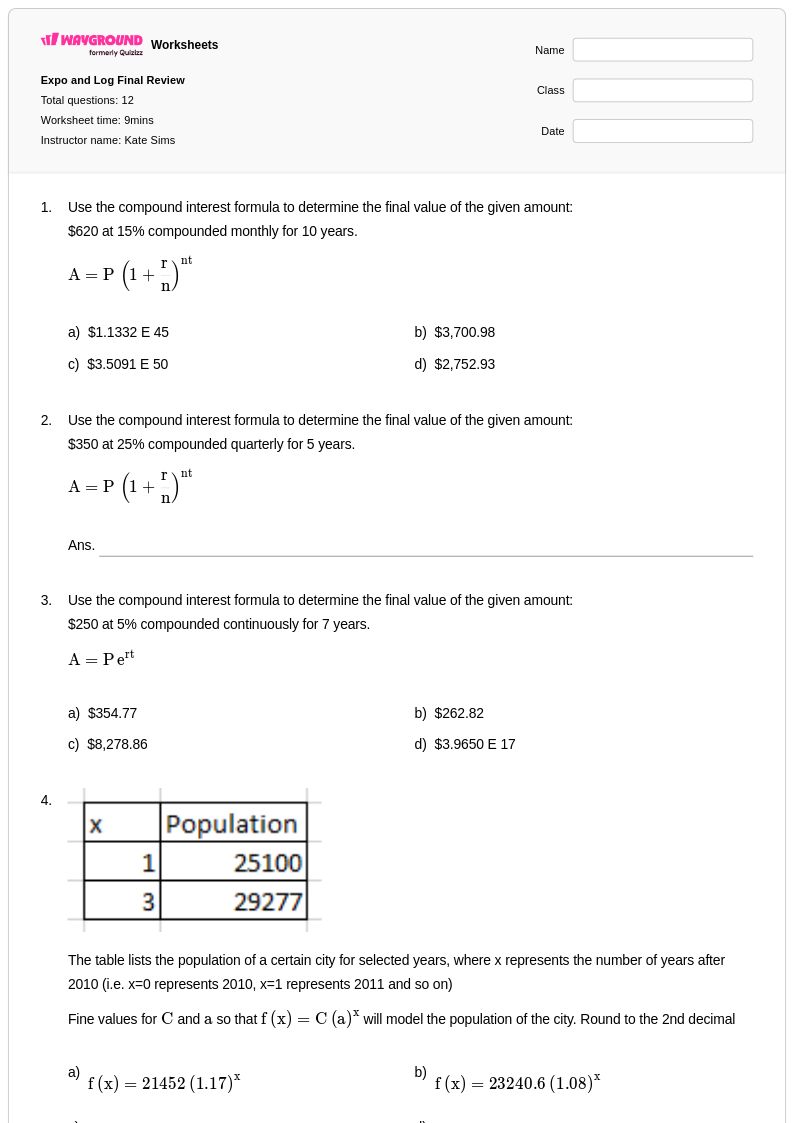
12 Q
Uni
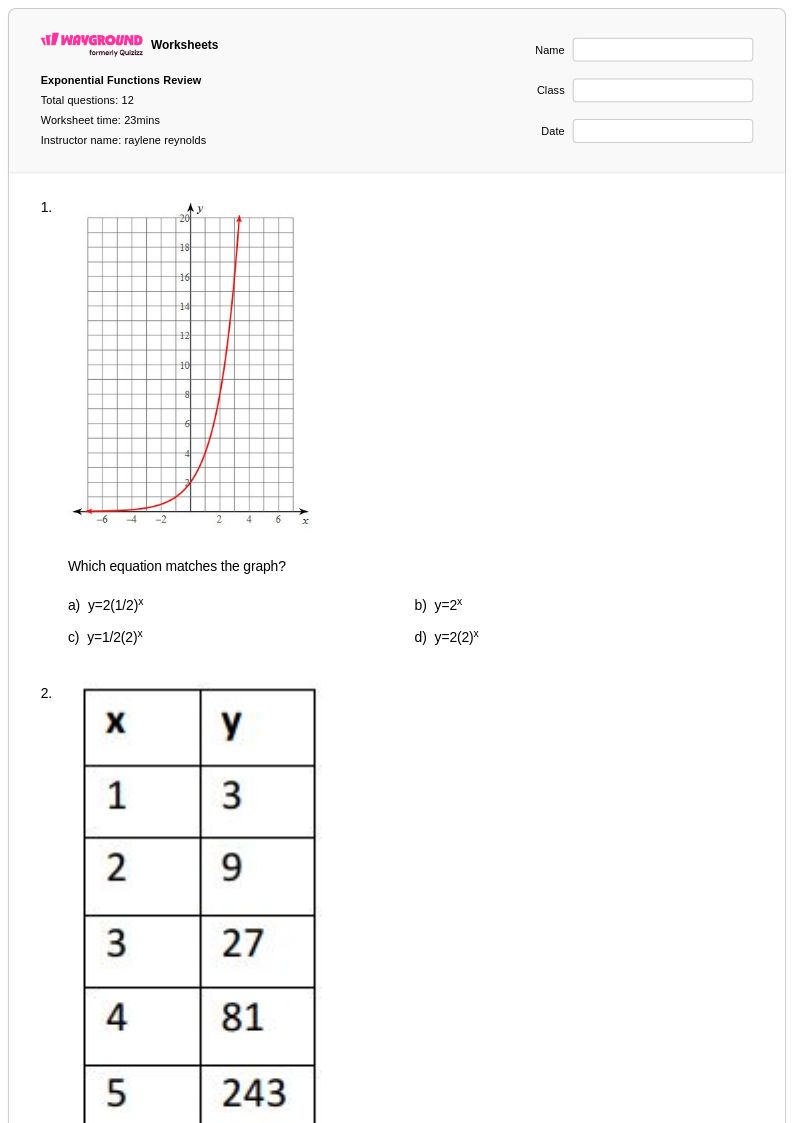
12 Q
9th
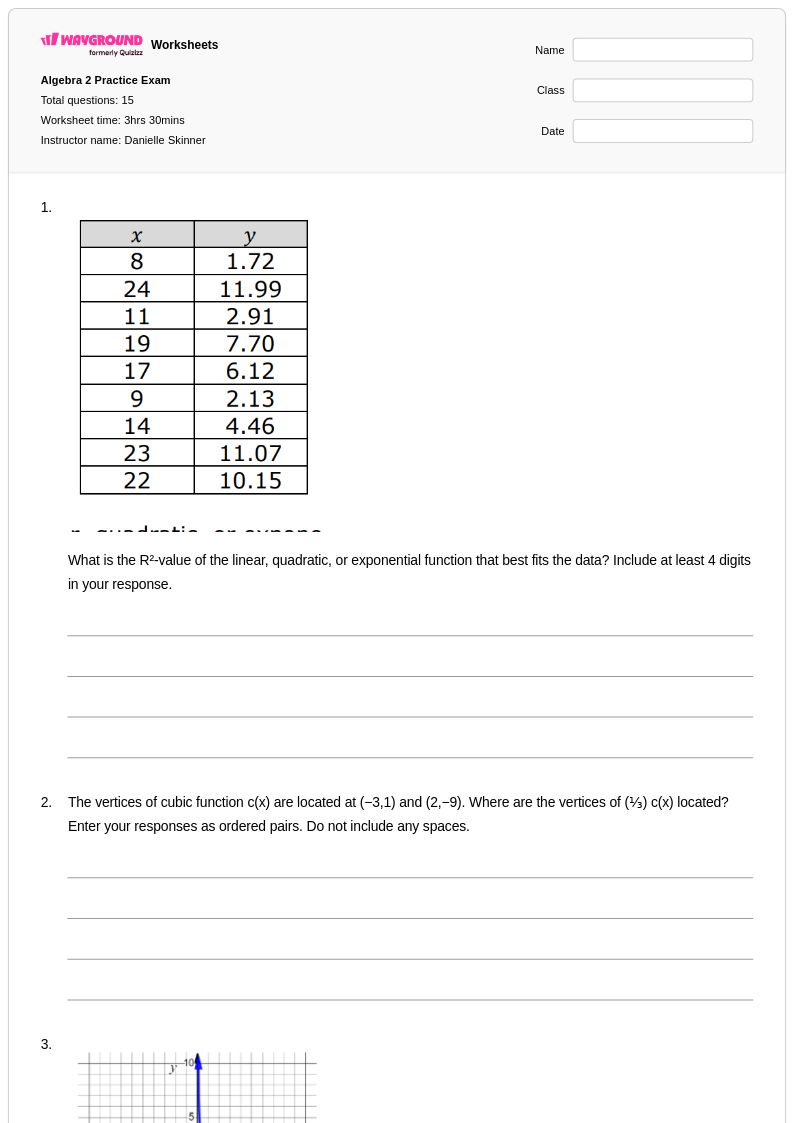
15 Q
11th
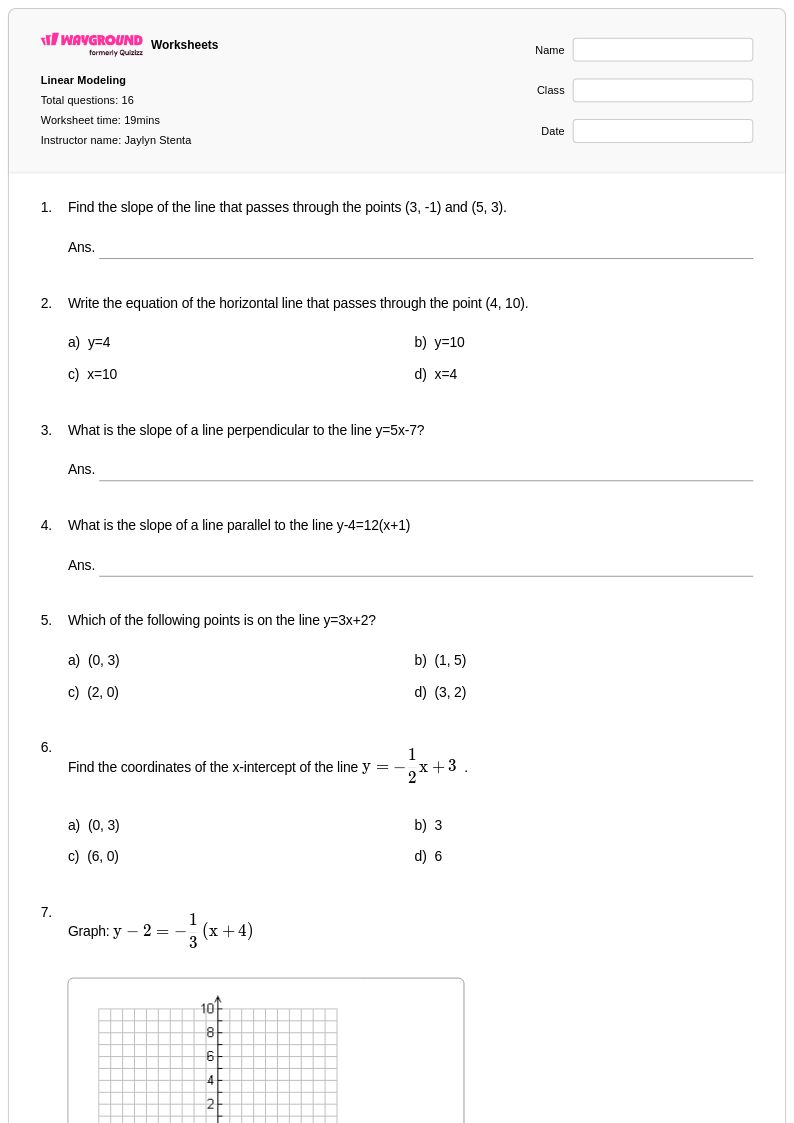
14 Q
8th - 12th
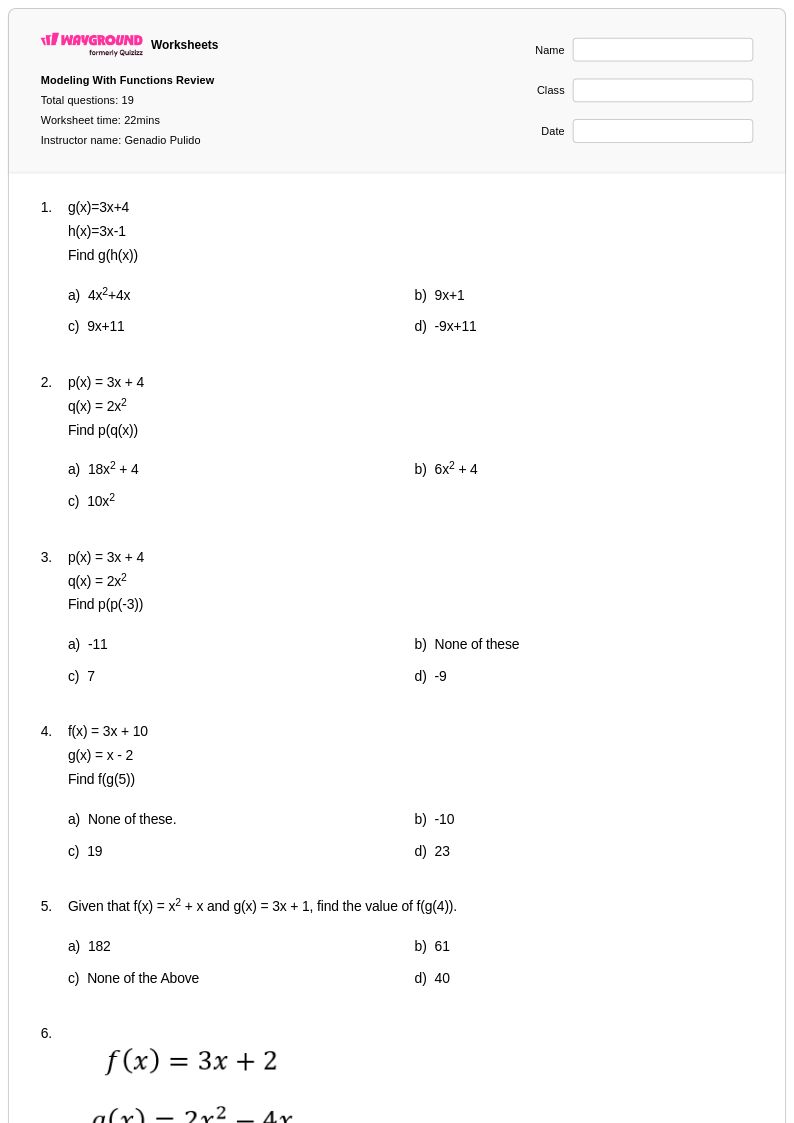
19 Q
10th
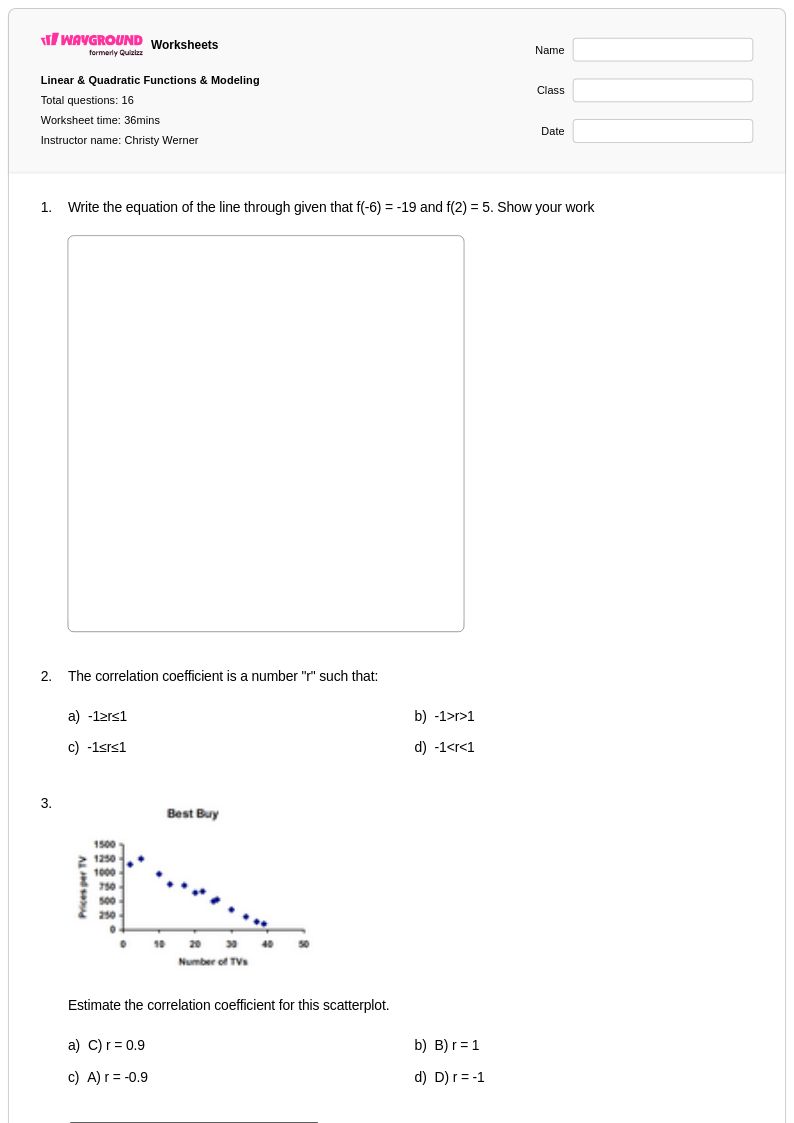
16 Q
10th - 11th
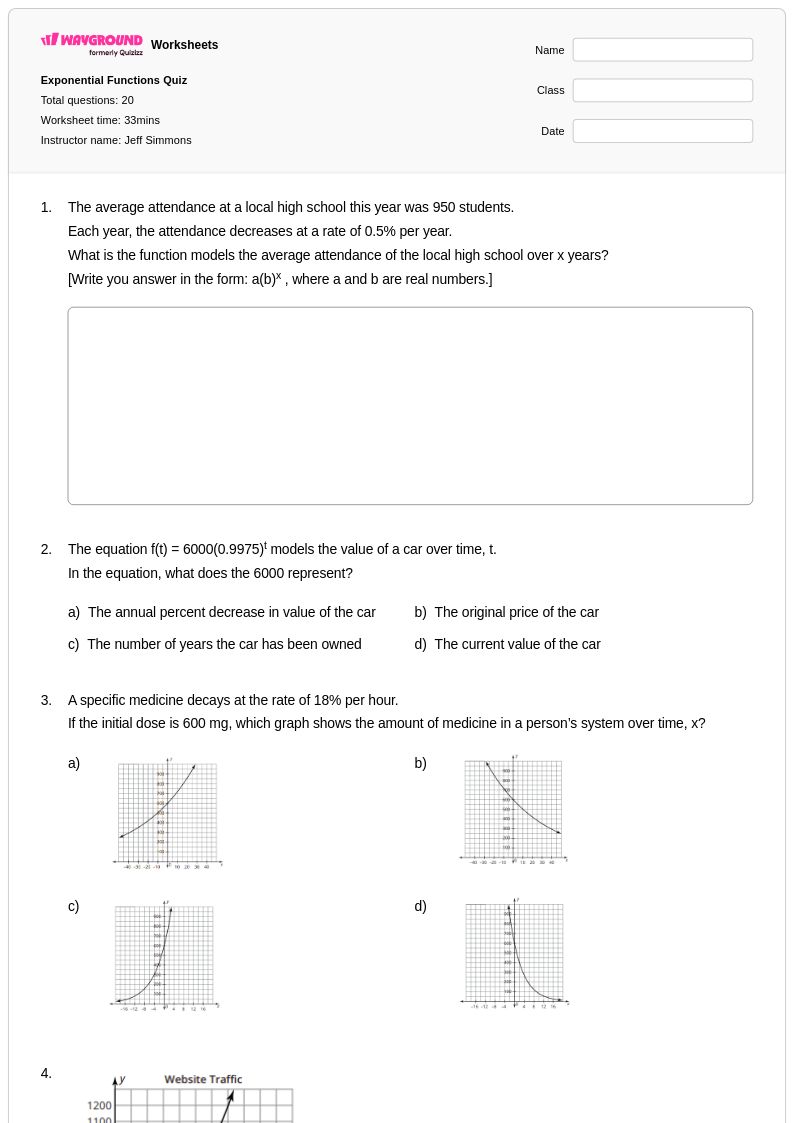
20 Q
9th - 12th
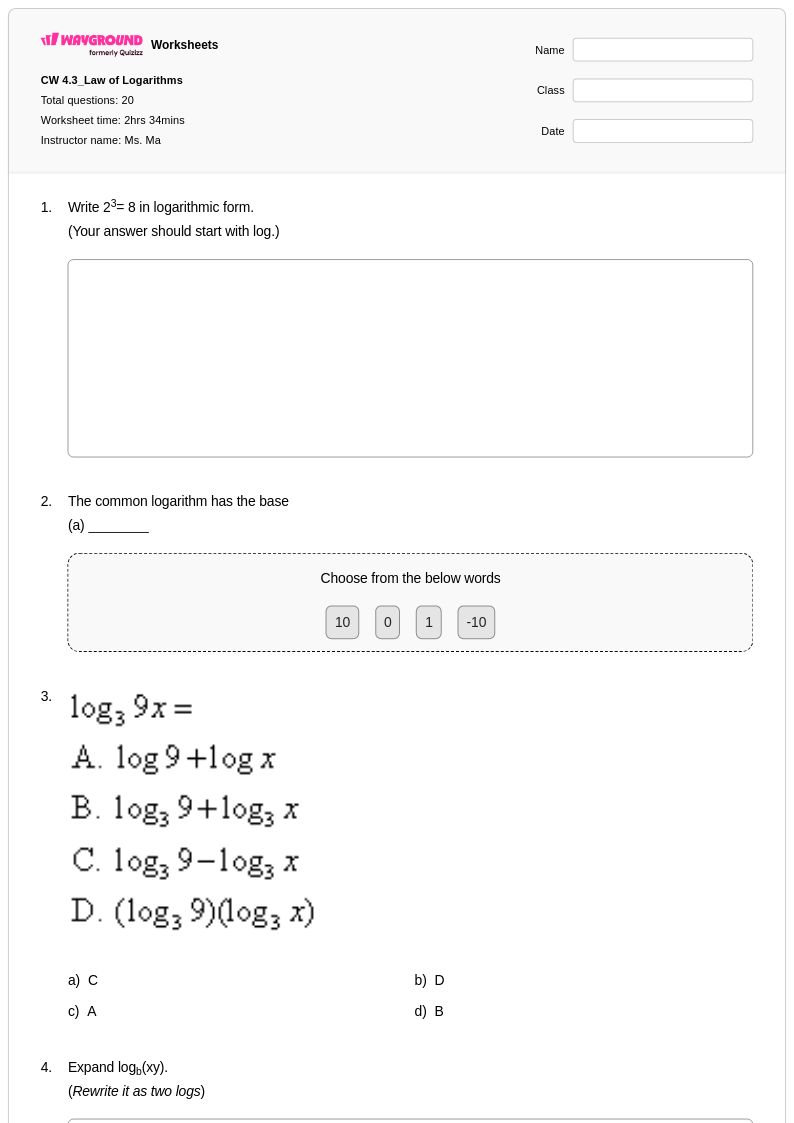
20 Q
9th - 12th
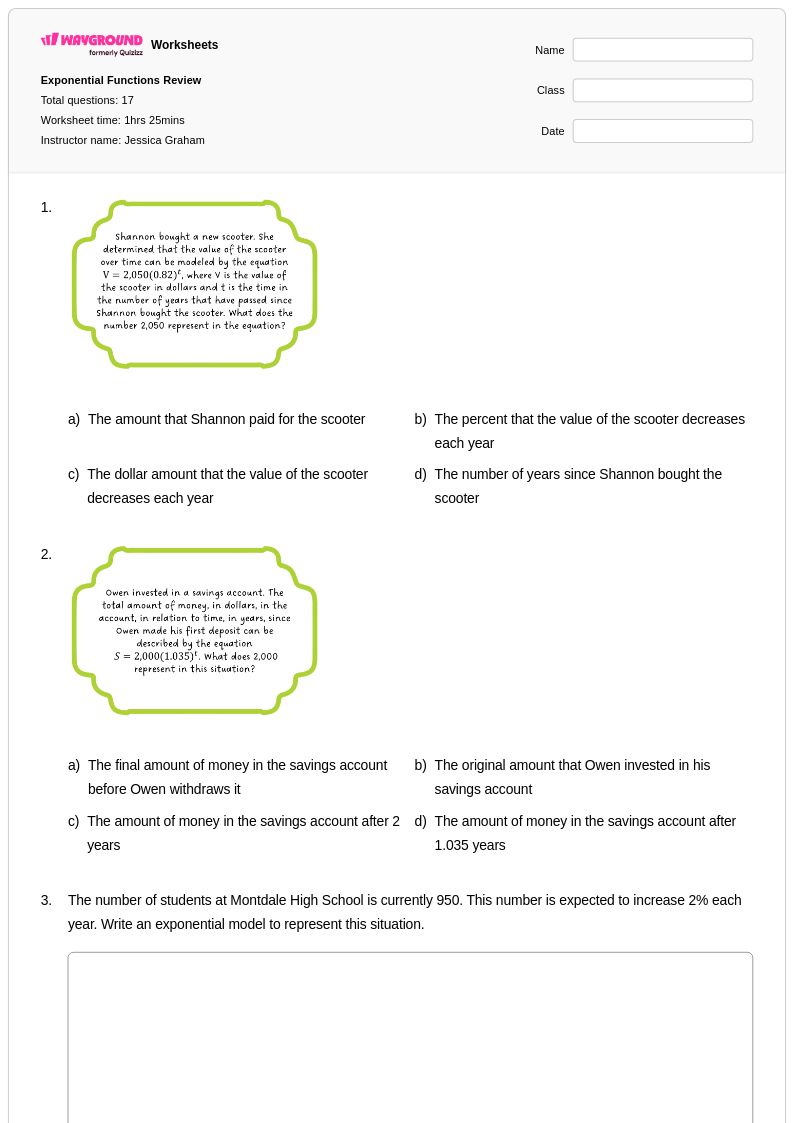
19 Q
9th
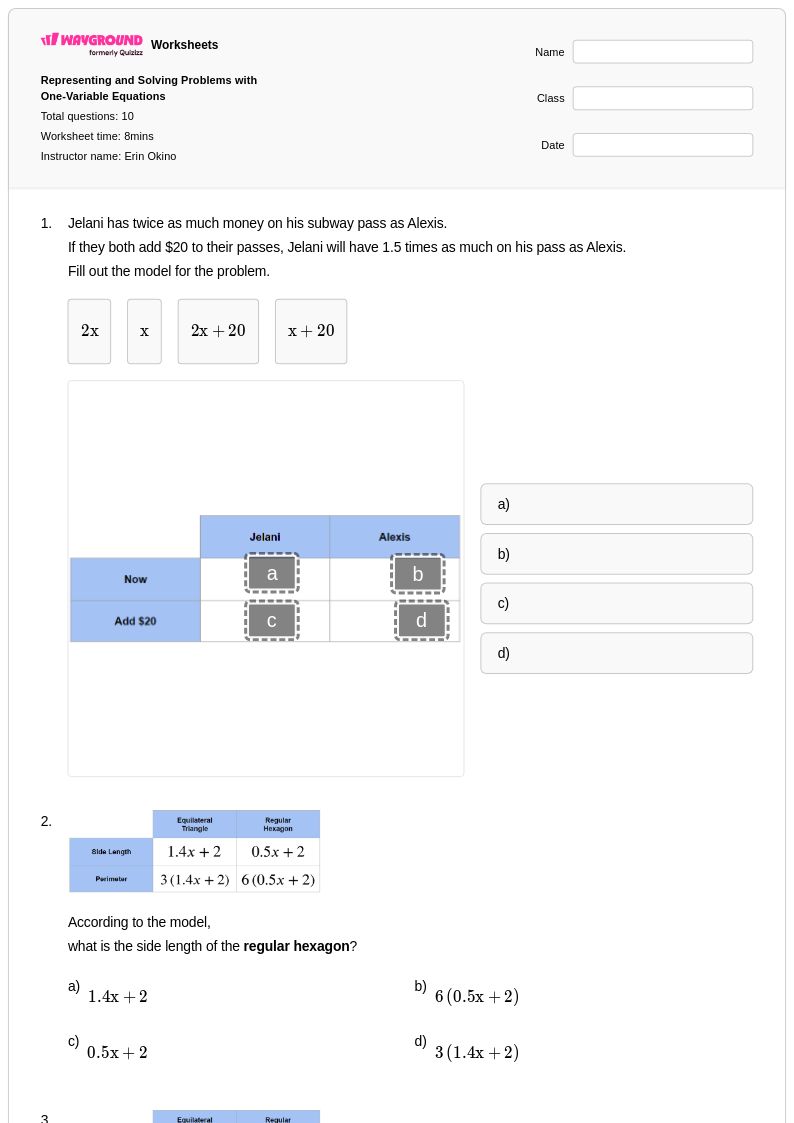
10 Q
8th
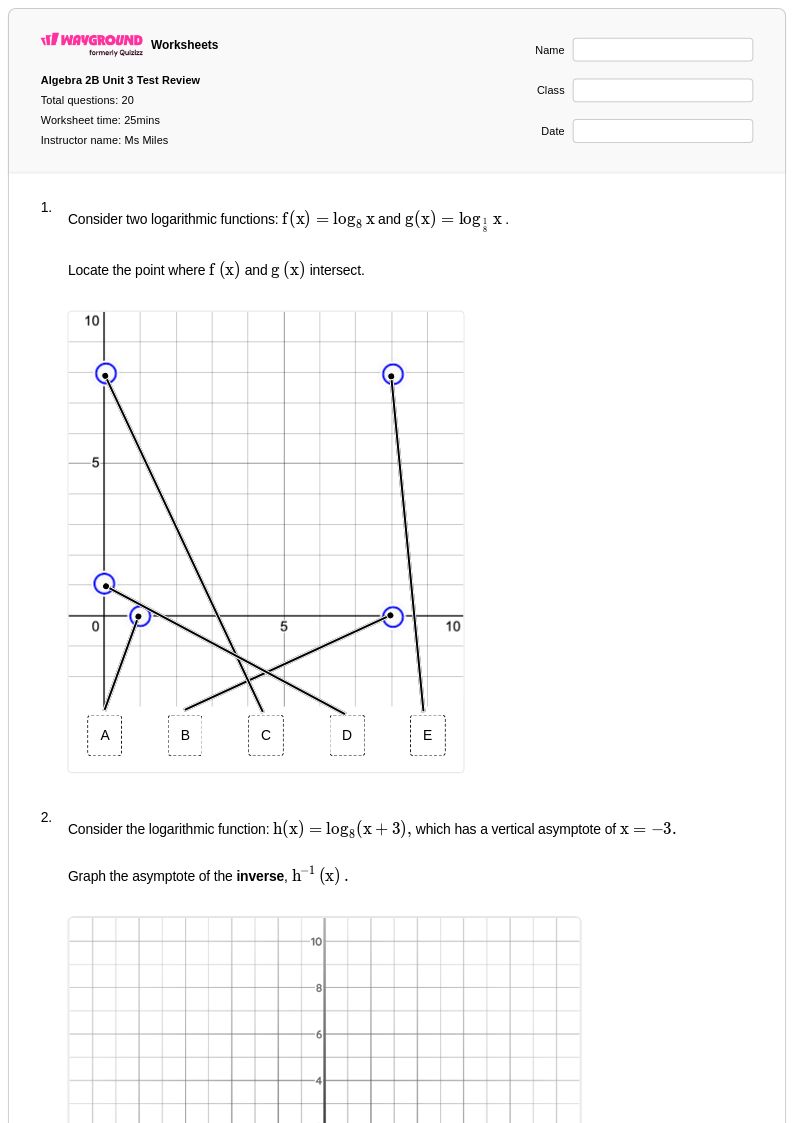
21 Q
11th
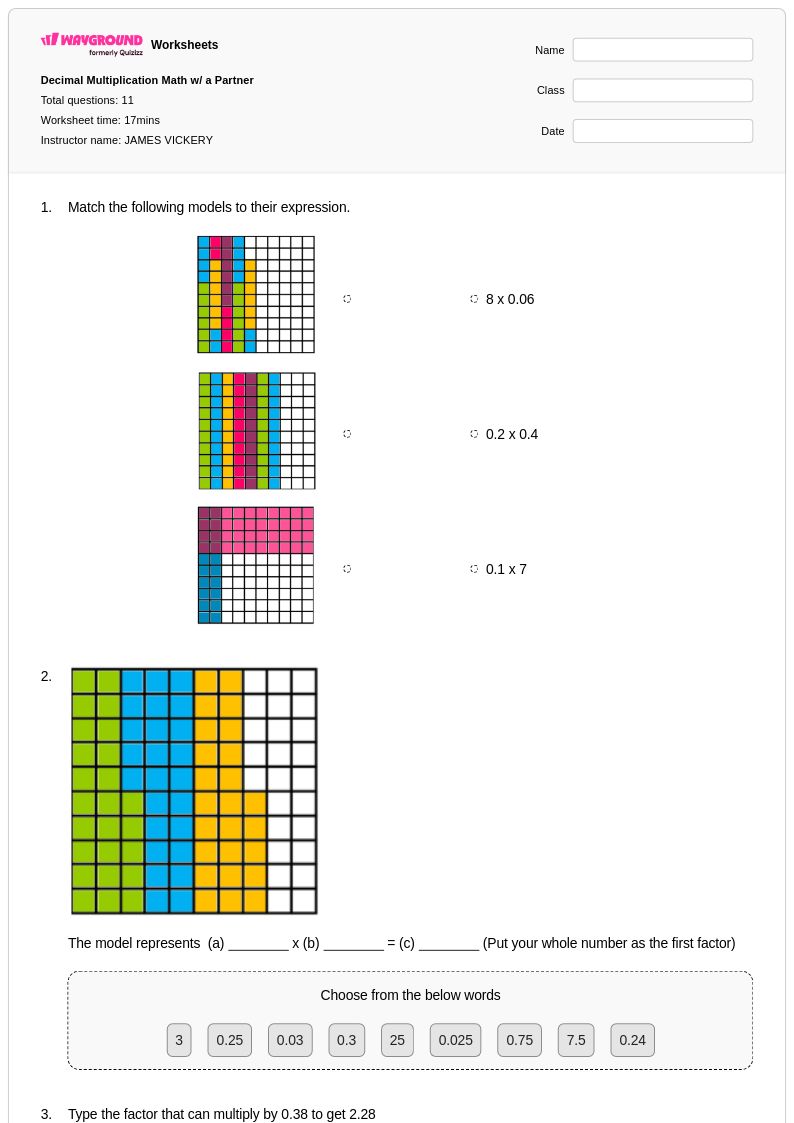
11 Q
5th
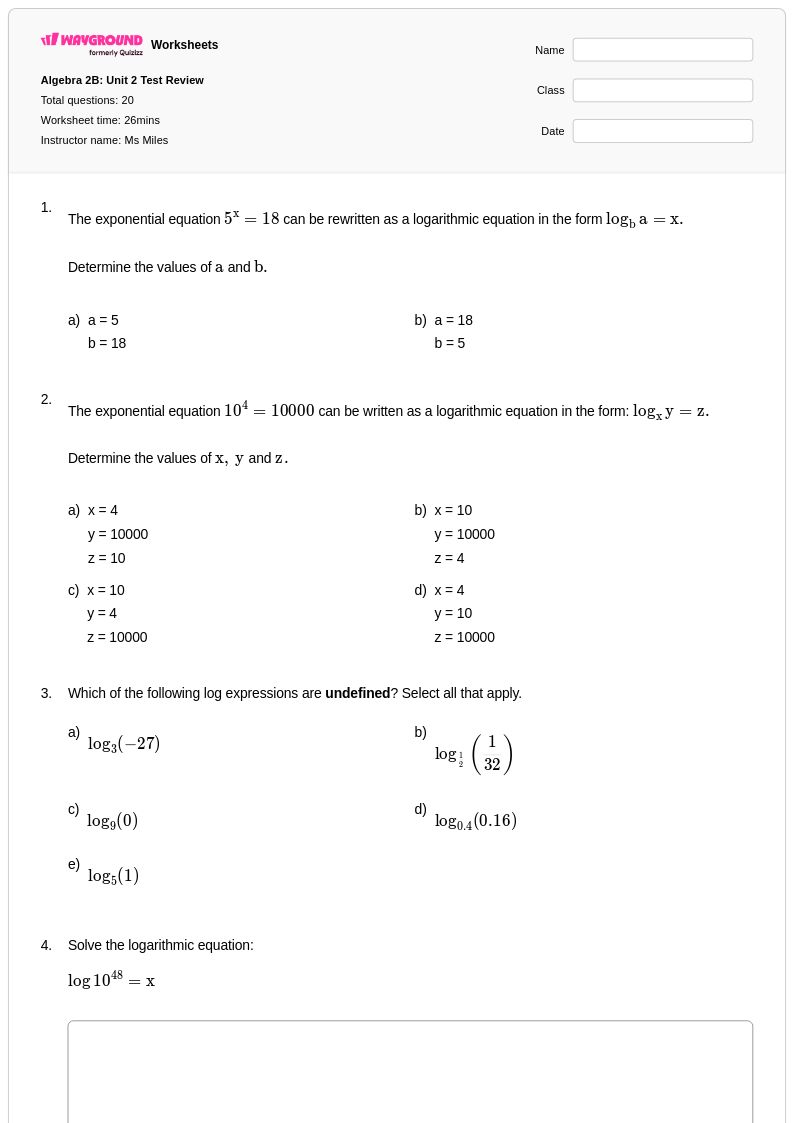
20 Q
11th
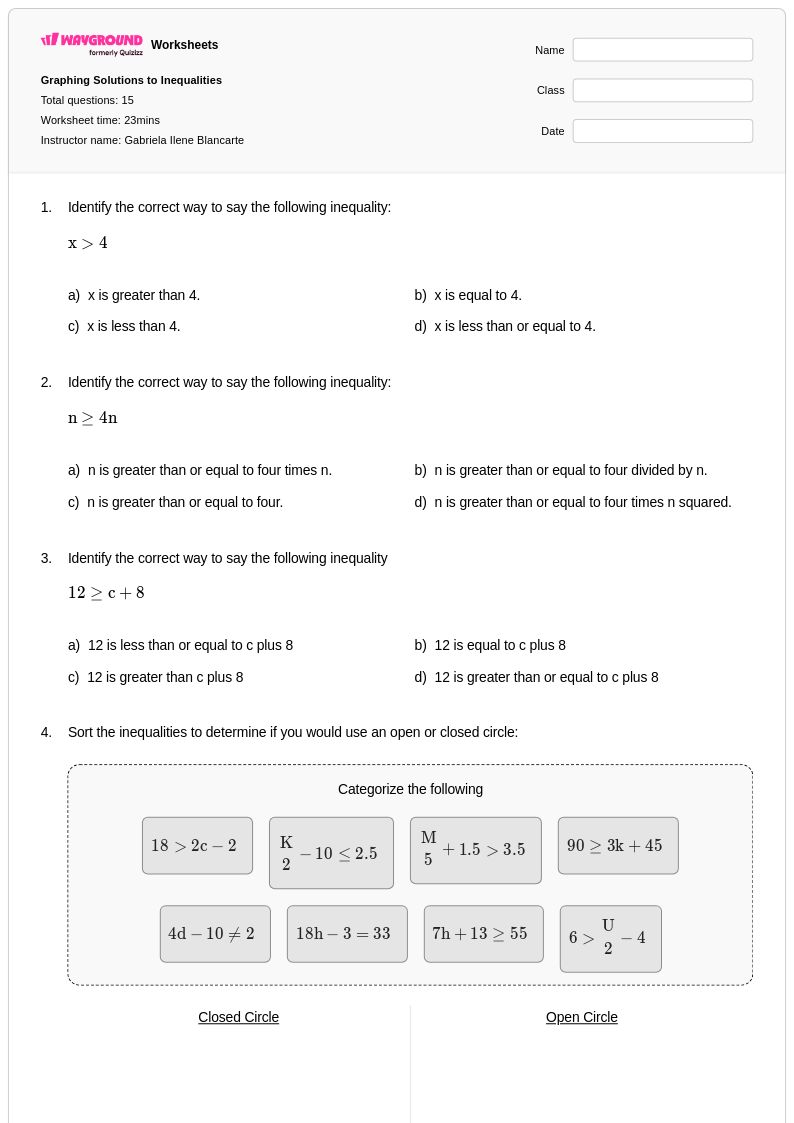
15 Q
7th
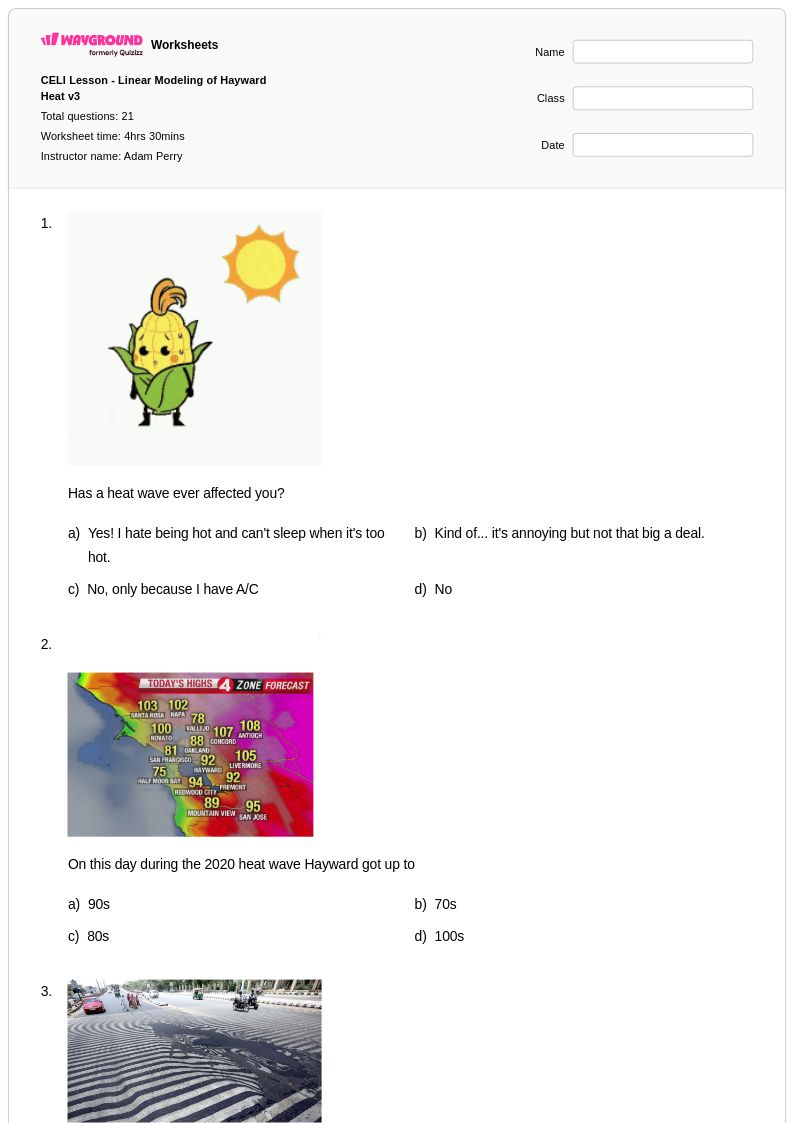
21 Q
9th - 12th
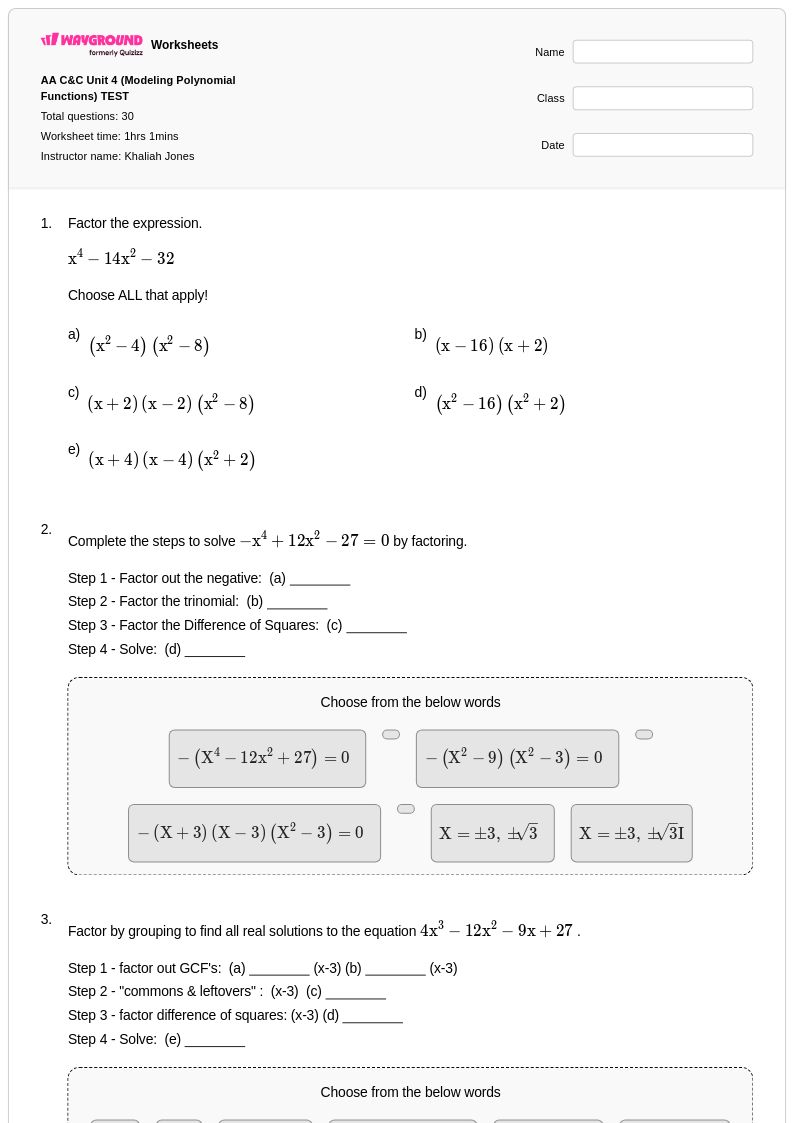
30 Q
11th
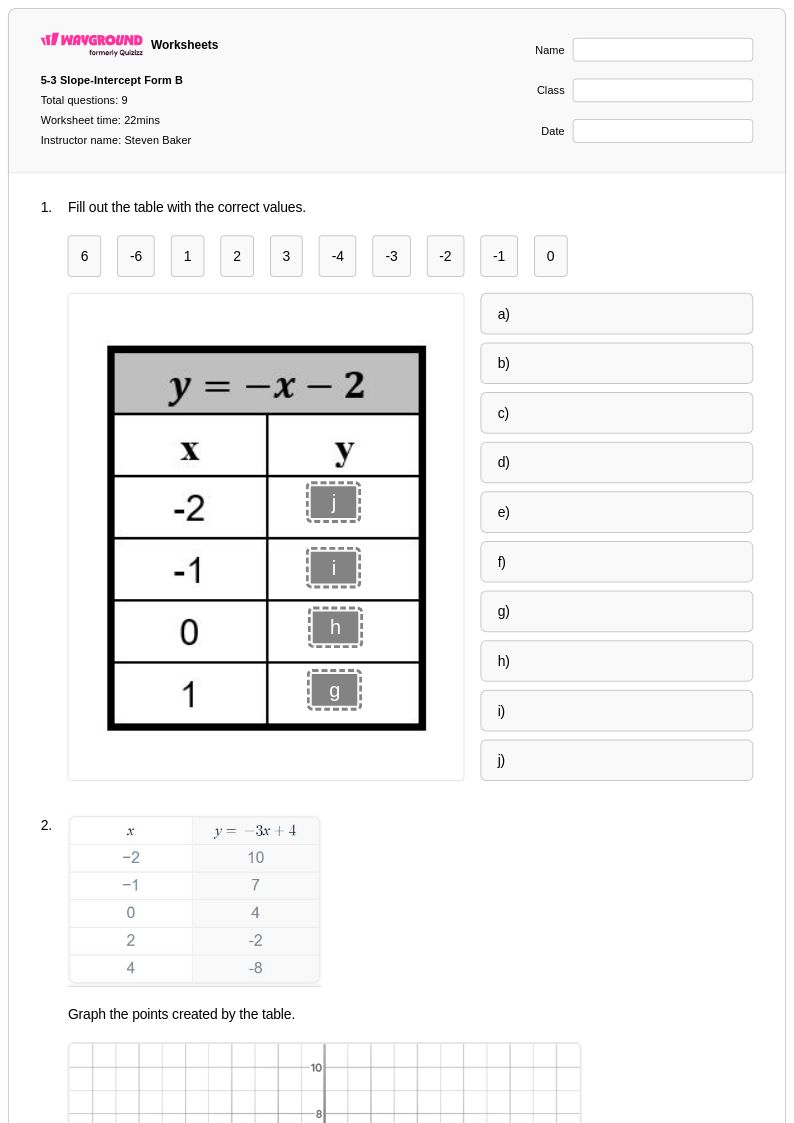
9 Q
9th - 12th
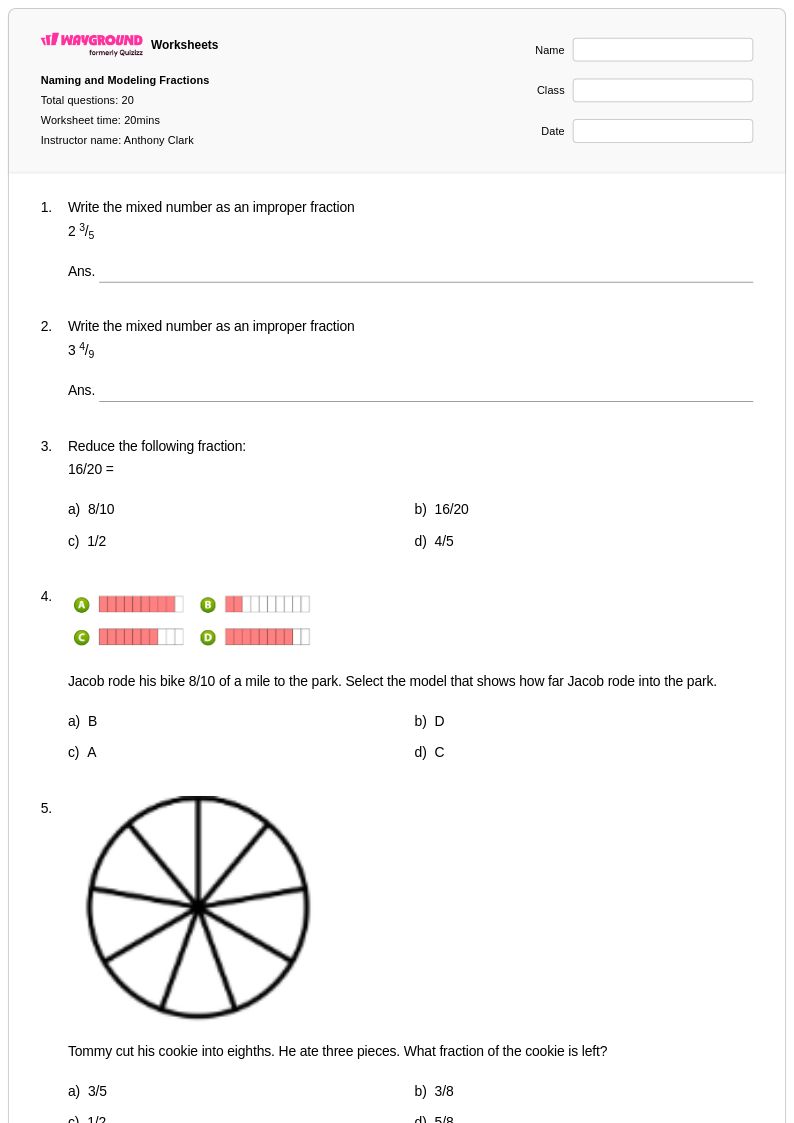
20 Q
4th - Uni
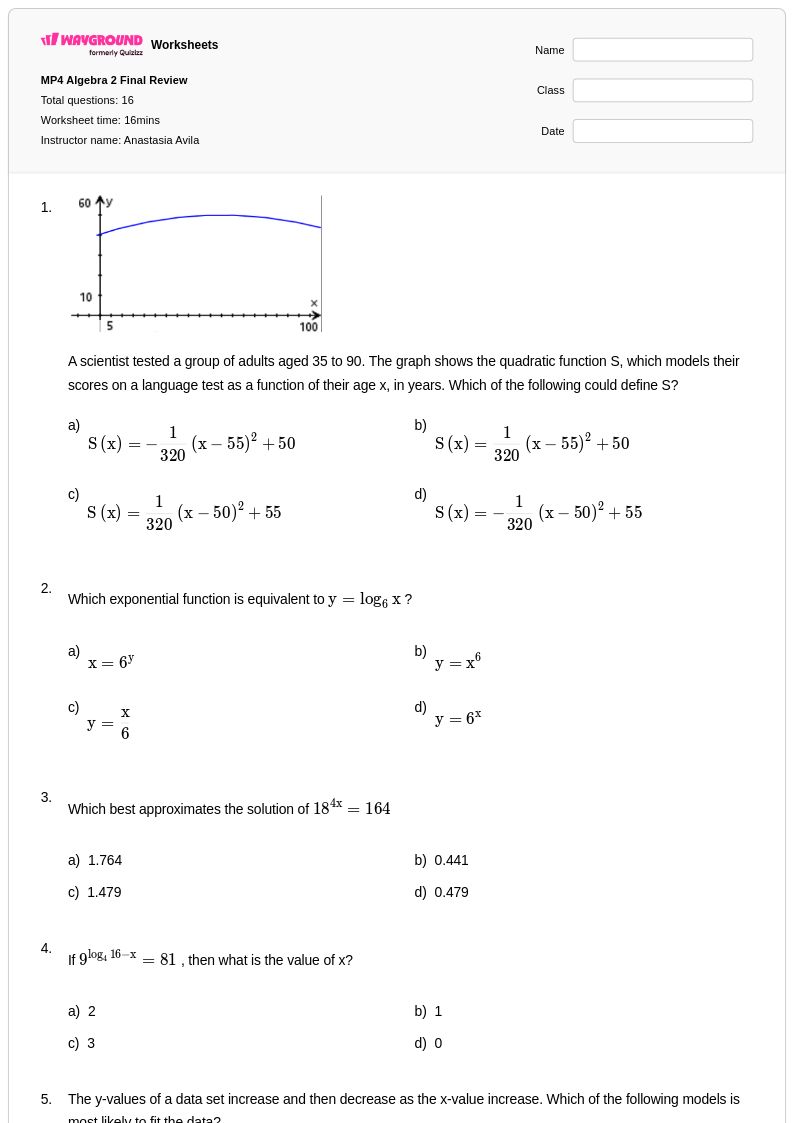
16 Q
9th - 12th
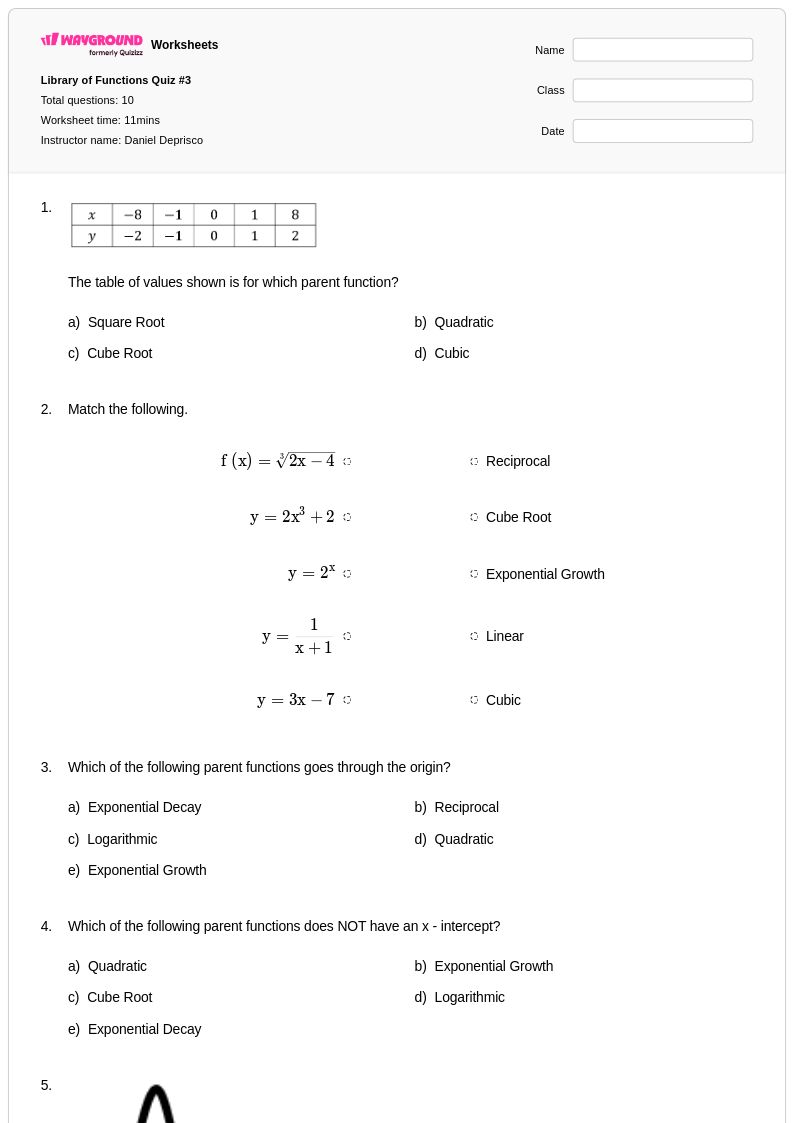
10 Q
10th
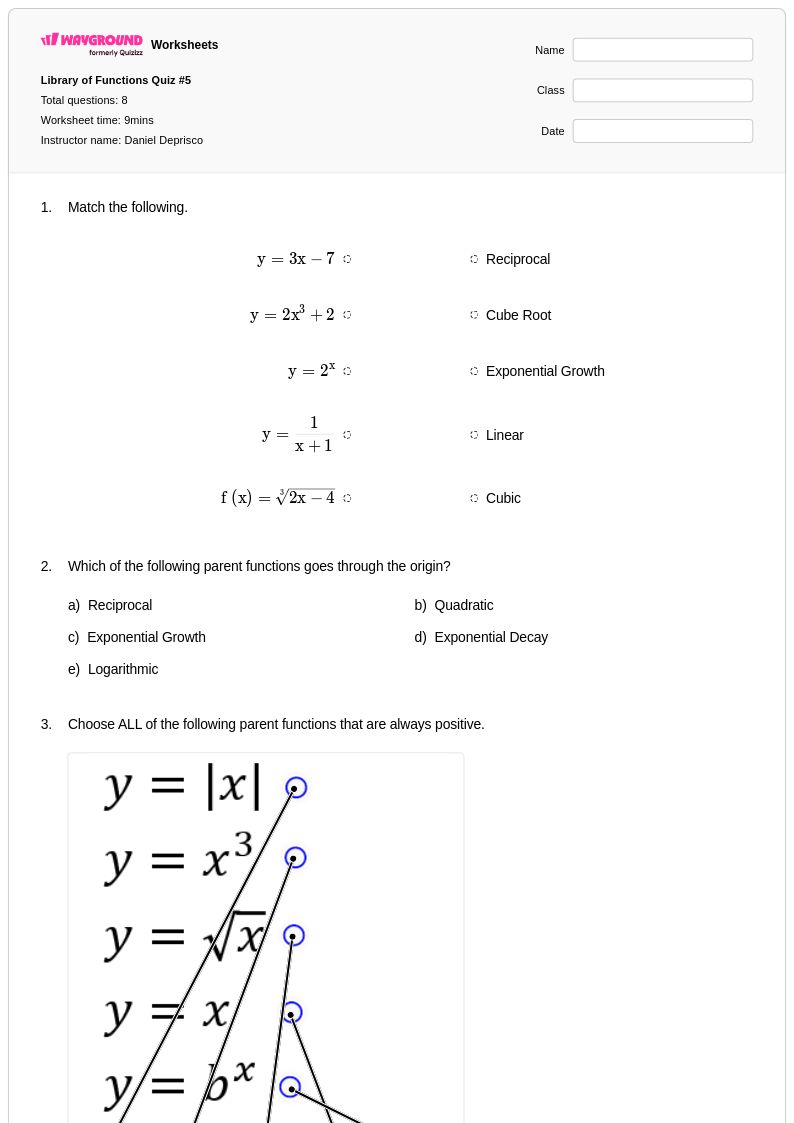
8 Q
10th
Explore Worksheets by Subjects
Explore printable Logarithmic Modeling worksheets
Logarithmic modeling worksheets available through Wayground (formerly Quizizz) provide comprehensive practice with one of the most practical applications of logarithmic functions in real-world problem solving. These expertly designed resources help students develop critical skills in translating complex exponential relationships into manageable logarithmic equations, working with growth and decay models, and interpreting logarithmic scales in scientific and economic contexts. The worksheets feature carefully structured practice problems that guide students through the process of identifying appropriate logarithmic models for data sets, determining parameters within logarithmic equations, and making predictions based on logarithmic relationships. Each worksheet includes a complete answer key and is available as a free printable pdf, making it easy for educators to incorporate meaningful logarithmic modeling practice into their mathematics instruction.
Wayground (formerly Quizizz) supports mathematics educators with an extensive collection of millions of teacher-created logarithmic modeling resources that can be easily accessed through robust search and filtering capabilities. Teachers can quickly locate worksheets aligned to specific mathematical standards and customize content to match their students' varying skill levels, whether for introductory exposure to logarithmic applications or advanced modeling techniques. The platform's differentiation tools enable educators to modify problem complexity and provide appropriate scaffolding for diverse learners, while the flexibility of both printable and digital pdf formats accommodates different classroom environments and teaching preferences. These comprehensive resources streamline lesson planning while providing targeted practice for skill development, remediation of foundational logarithmic concepts, and enrichment opportunities for students ready to explore sophisticated mathematical modeling applications.
FAQs
How can I introduce logarithmic modeling to my students?
What types of problems help students practice logarithmic modeling?
What are common mistakes students make when learning logarithmic modeling?
How can I use this logarithmic modeling worksheet in my class?
How does logarithmic modeling fit into the high school math curriculum?
How can I support struggling students with logarithmic modeling?