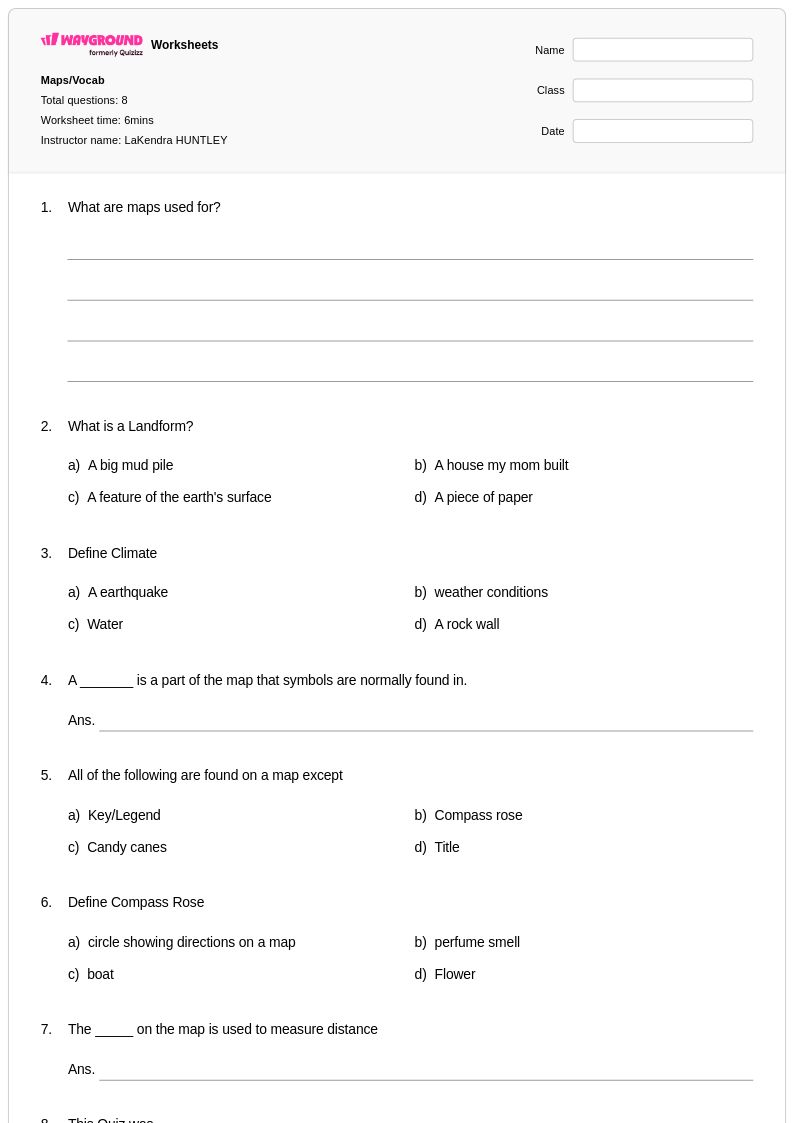
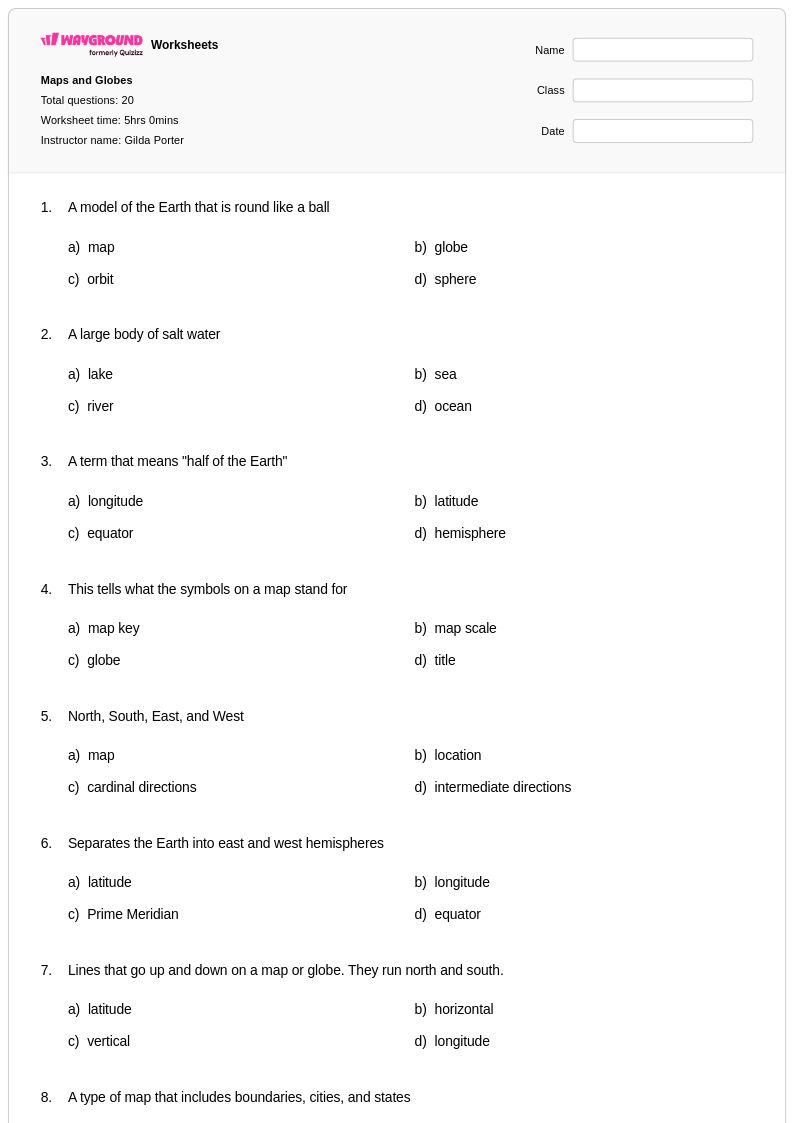
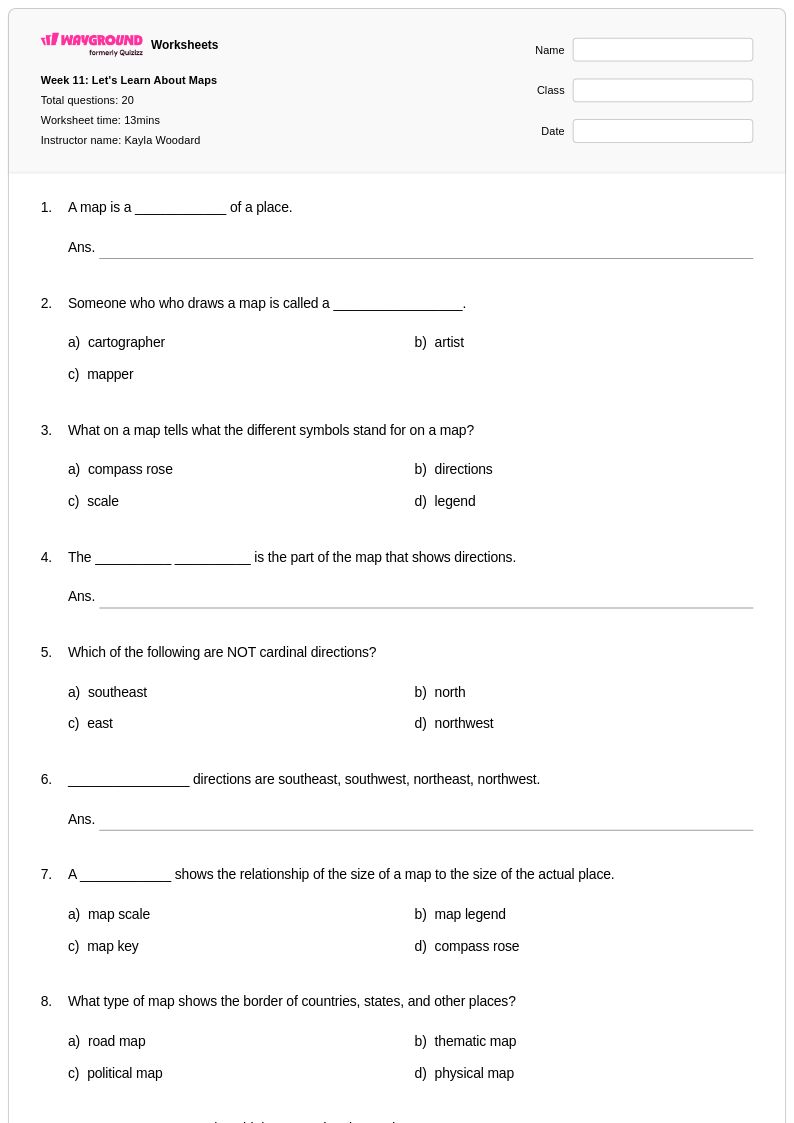
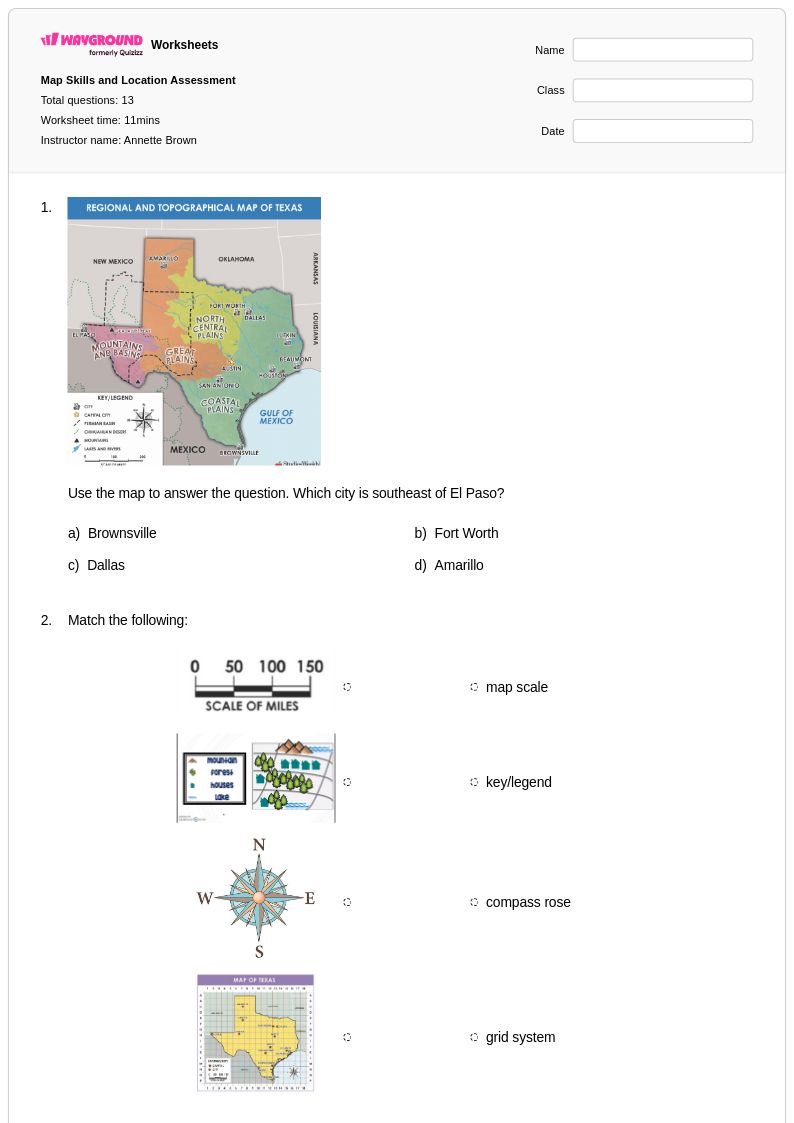
Explore Wayground's free Grade 4 maps worksheets and printables that help students master essential geography skills through engaging practice problems, complete with answer keys and downloadable PDFs.
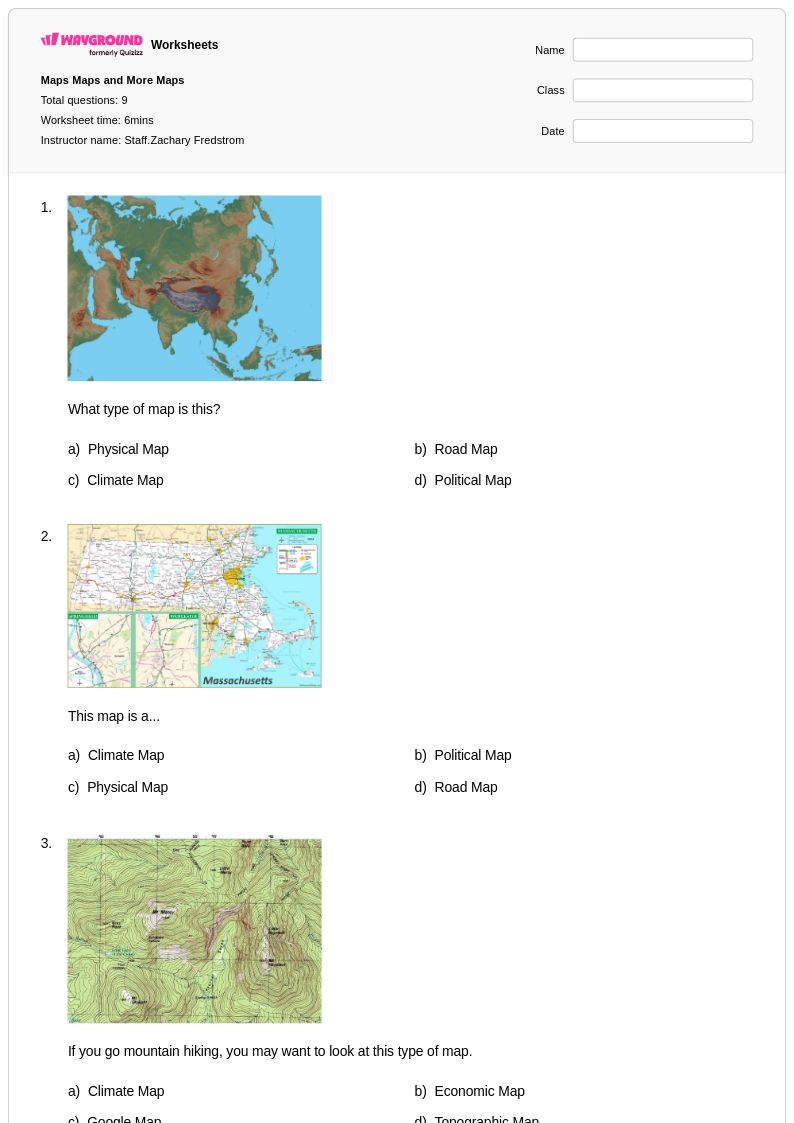
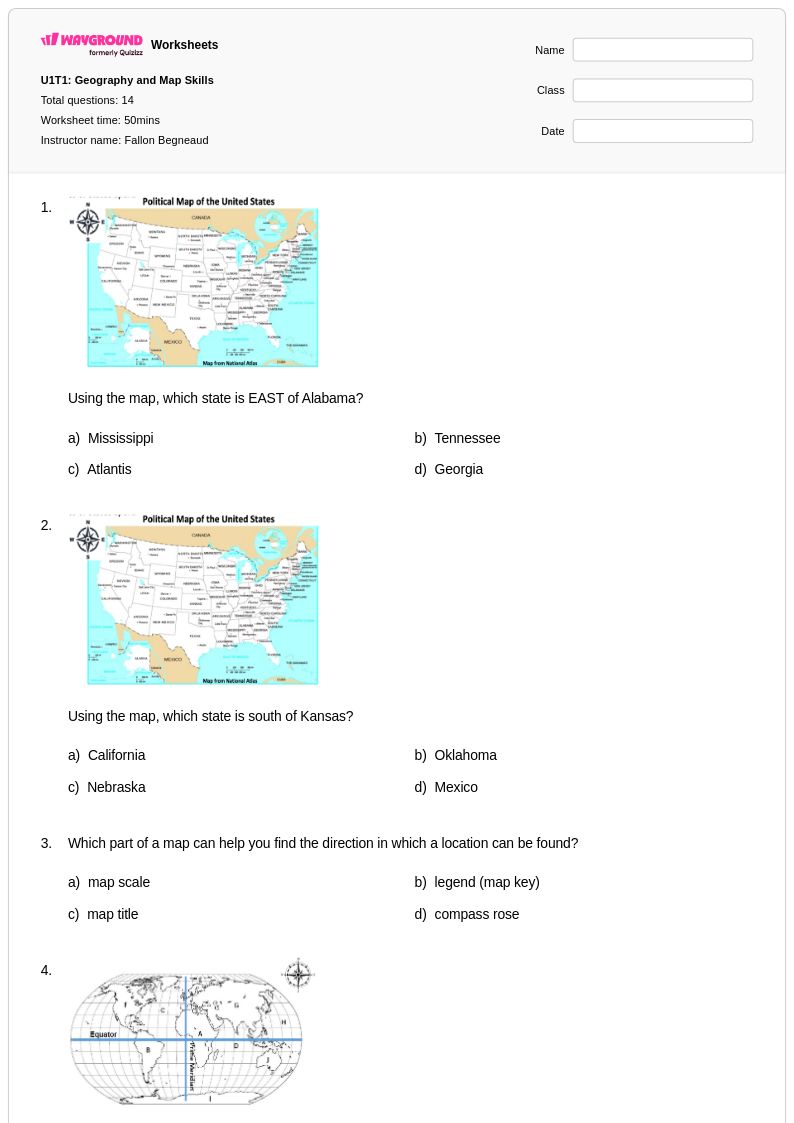
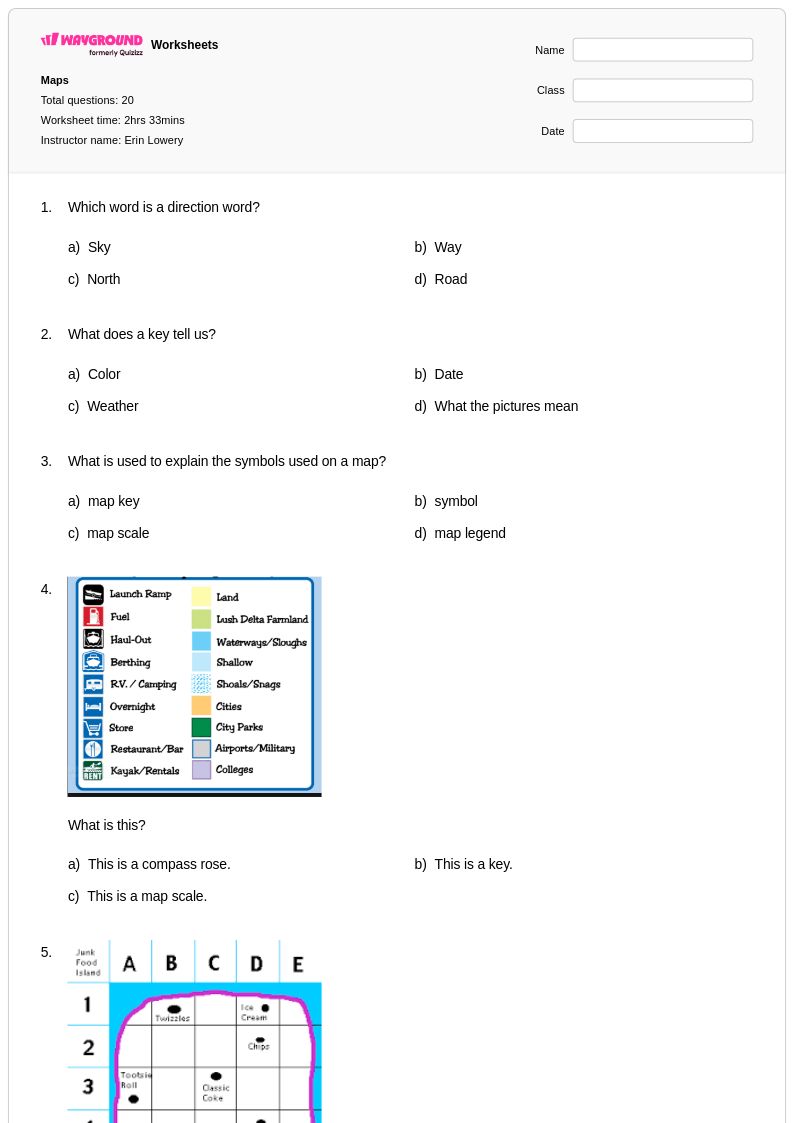
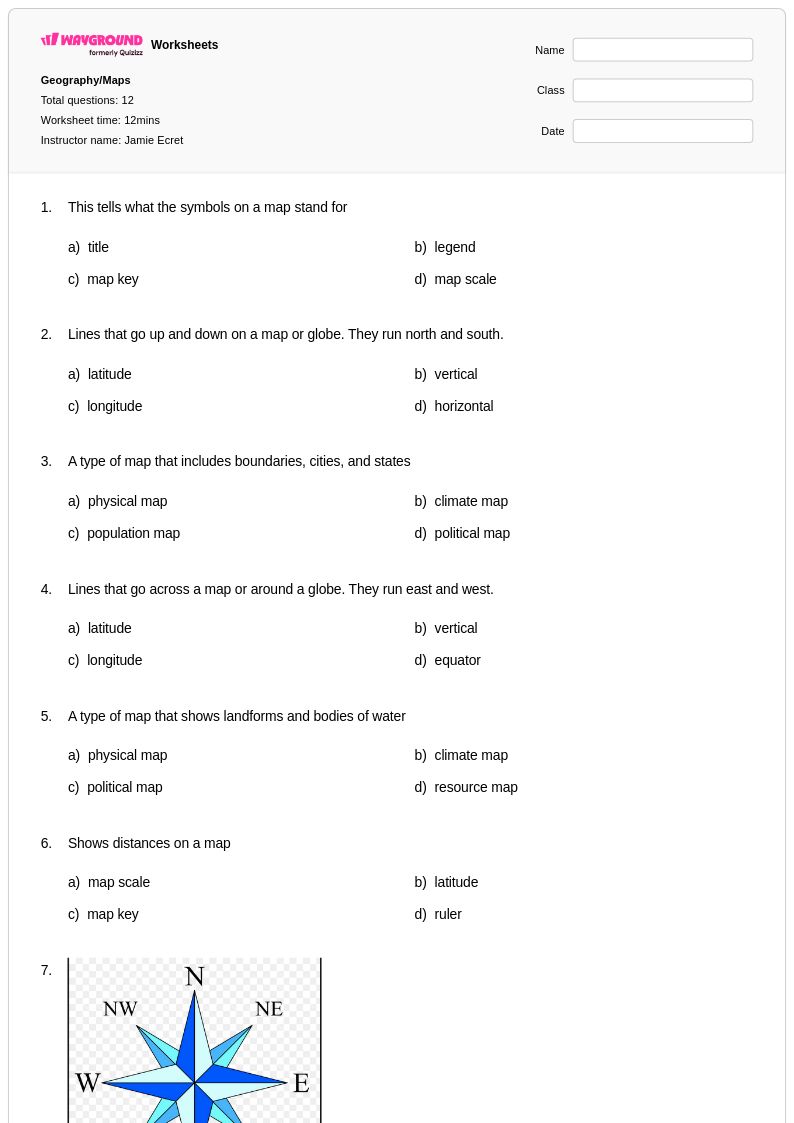
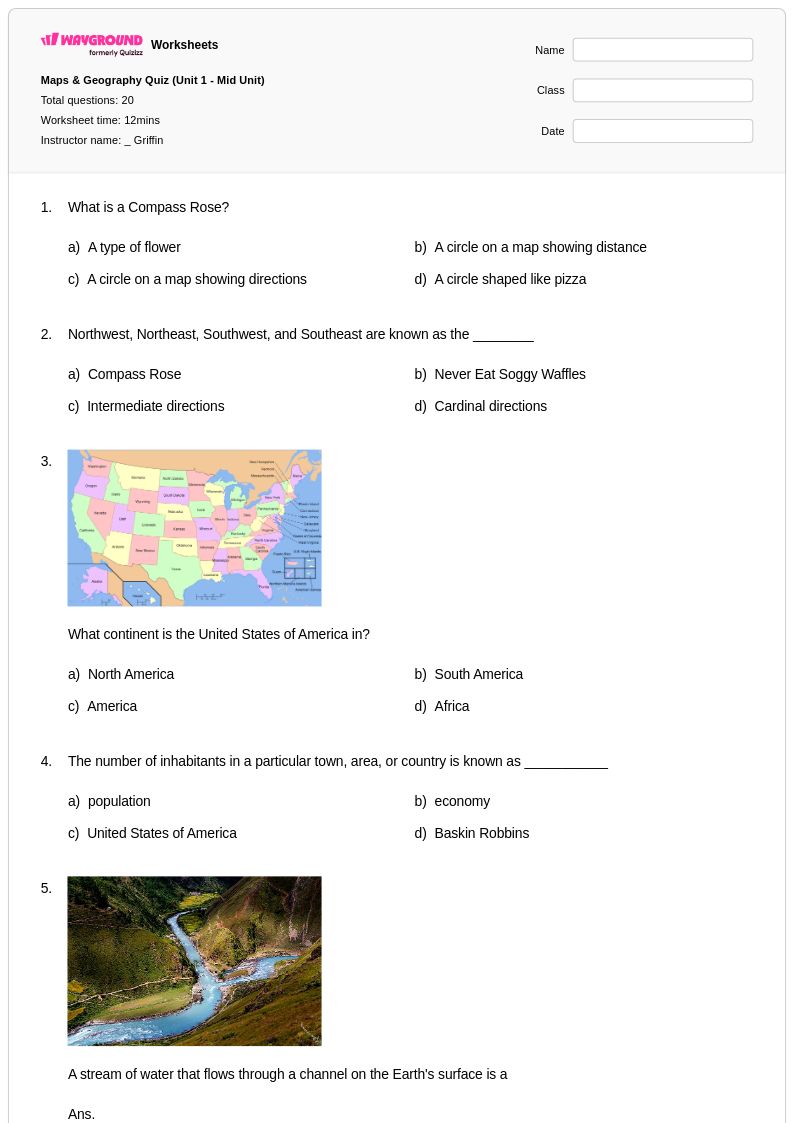
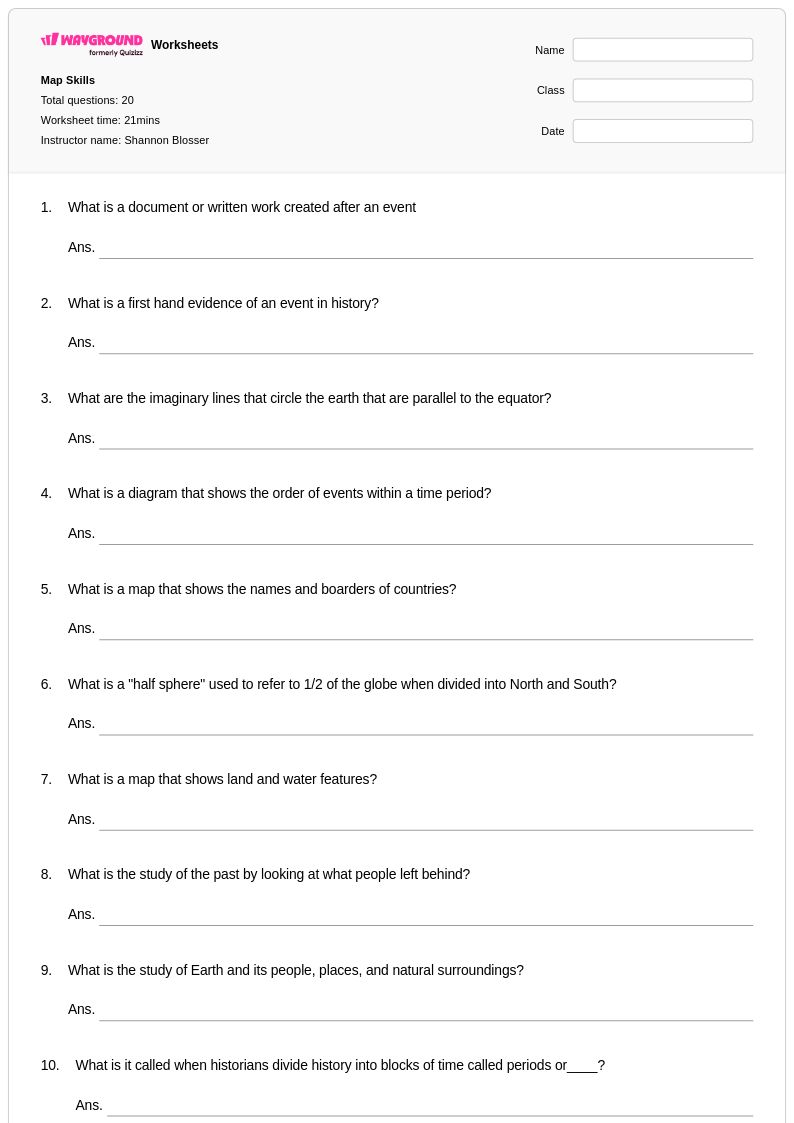
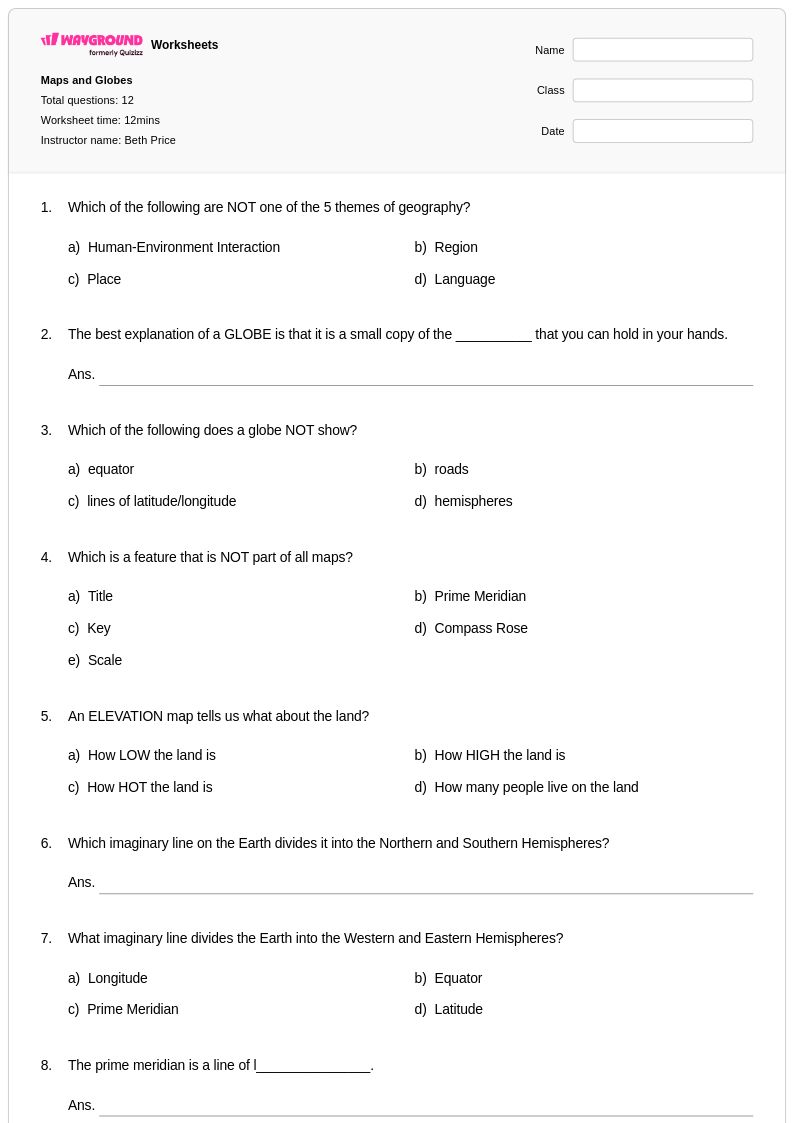
Maps worksheets for Grade 4 students available through Wayground (formerly Quizizz) provide comprehensive practice with essential cartographic skills that form the foundation of geographic literacy. These expertly designed resources help fourth-grade learners master critical map reading abilities including interpreting map symbols, understanding scale and distance, identifying cardinal and intermediate directions, and analyzing different types of maps such as political, physical, and thematic representations. Students develop spatial reasoning skills through engaging practice problems that challenge them to locate places using coordinates, read map legends and keys, and understand how geographic features are represented on various map projections. Each worksheet collection includes detailed answer keys and is available as free printable pdf resources, making it easy for educators to assess student progress and provide targeted feedback on map interpretation skills.
Wayground (formerly Quizizz) supports educators with an extensive library of millions of teacher-created map resources specifically designed for Grade 4 geography instruction. The platform's robust search and filtering capabilities allow teachers to quickly locate worksheets that align with specific curriculum standards and learning objectives, while built-in differentiation tools enable customization based on individual student needs and skill levels. These comprehensive collections are available in both printable pdf format and interactive digital versions, providing flexibility for classroom instruction, homework assignments, and independent practice sessions. Teachers can efficiently plan engaging map lessons, provide remediation for students struggling with spatial concepts, offer enrichment activities for advanced learners, and create targeted skill practice opportunities that reinforce essential cartographic knowledge throughout the academic year.
FAQs
How do I teach map reading skills to students?
Start by introducing the core components of a map — title, legend, compass rose, scale, and grid — before asking students to apply each element to a real or sample map. Progress from simple political maps to more complex topographic or weather maps as students build confidence. Anchoring each lesson in a specific map type helps students understand that cartographic conventions vary by purpose and audience.
What exercises help students practice map skills?
Effective map skills practice includes reading and interpreting legends, calculating real-world distances using map scale, identifying locations using coordinate systems, and comparing information across different map types. Structured worksheets that sequence these tasks from basic to complex help students build spatial reasoning incrementally. Regular exposure to diverse map formats — topographic, political, historical, and weather — ensures students can extract meaning from a wide range of visual geographic data.
What mistakes do students commonly make when reading maps?
Students frequently confuse map scale, either ignoring it entirely or misapplying the ratio when estimating distances. Another common error is misreading compass orientation, especially on maps where north is not aligned to the top of the page. Students also tend to overlook the legend, guessing at symbol meanings rather than referencing the key — which leads to systematic misinterpretation of the map's information.
How can I differentiate map skills instruction for students at different levels?
For struggling learners, simplify the map type and reduce the number of variables — use a clean political map with a clear legend before introducing topographic elevation data. Advanced students can be challenged with multi-step spatial analysis tasks or comparing two maps to identify changes over time. On Wayground, teachers can apply accommodations such as read aloud, reduced answer choices, and extended time to individual students, allowing the same worksheet to serve diverse learners simultaneously.
How do I use Wayground's maps worksheets in my classroom?
Wayground's maps worksheets are available as printable PDFs for traditional classroom use and in digital formats for technology-integrated environments. Teachers can also host worksheets as an interactive quiz directly on Wayground, which allows for real-time student responses and immediate feedback. Each worksheet includes a complete answer key, making them practical for independent practice, homework, or formative assessment without additional prep.
How do I align map skills practice to curriculum standards?
Map reading and spatial reasoning appear across geography, social studies, earth science, and history standards at multiple grade levels, so alignment depends on the specific map type and skill being addressed. When selecting worksheets, filter by the cartographic concept you are targeting — coordinate systems and scale are common in middle school geography standards, while historical and political map interpretation often appears in social studies units. Using worksheets that include structured, progressive practice problems makes it easier to demonstrate skill development over a unit.