
20 Q
4th - Uni
14 Q
3rd - 5th
10 Q
3rd - Uni
19 Q
3rd - Uni
17 Q
3rd - Uni
15 Q
3rd - Uni
20 Q
3rd - Uni
15 Q
4th - Uni
15 Q
5th
14 Q
3rd - Uni
18 Q
3rd - 5th
20 Q
3rd - Uni
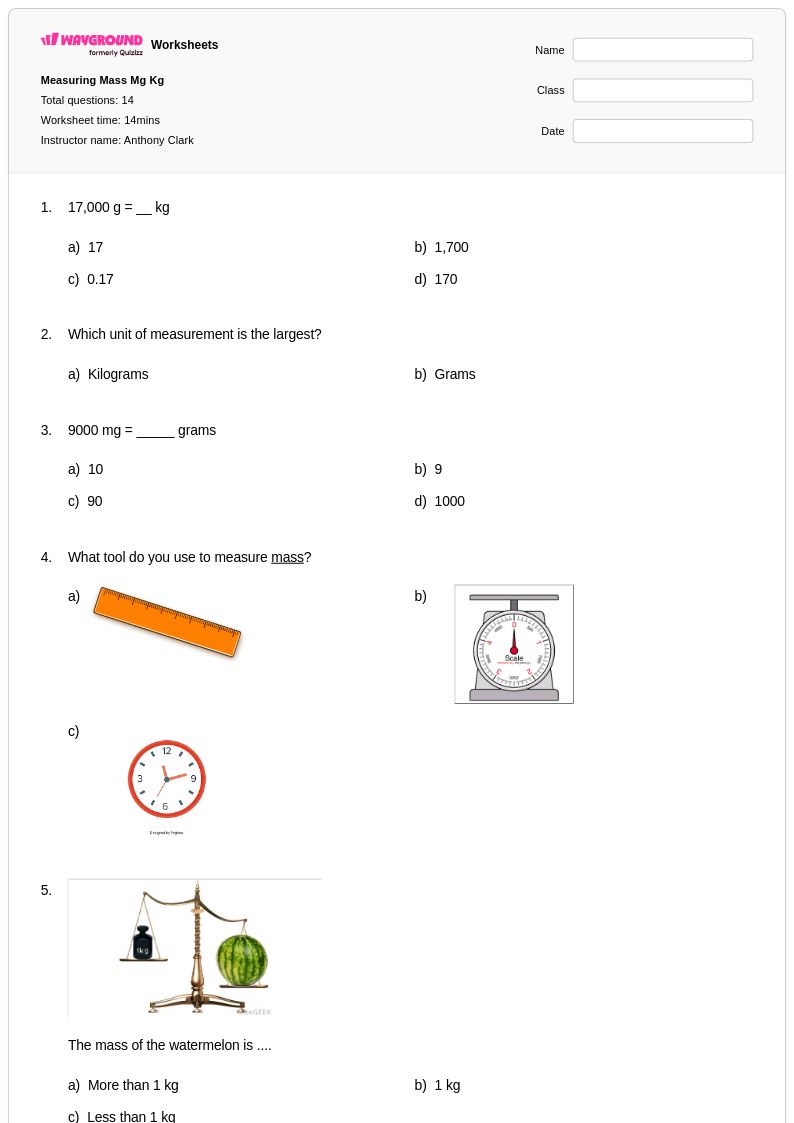
14 Q
3rd - Uni
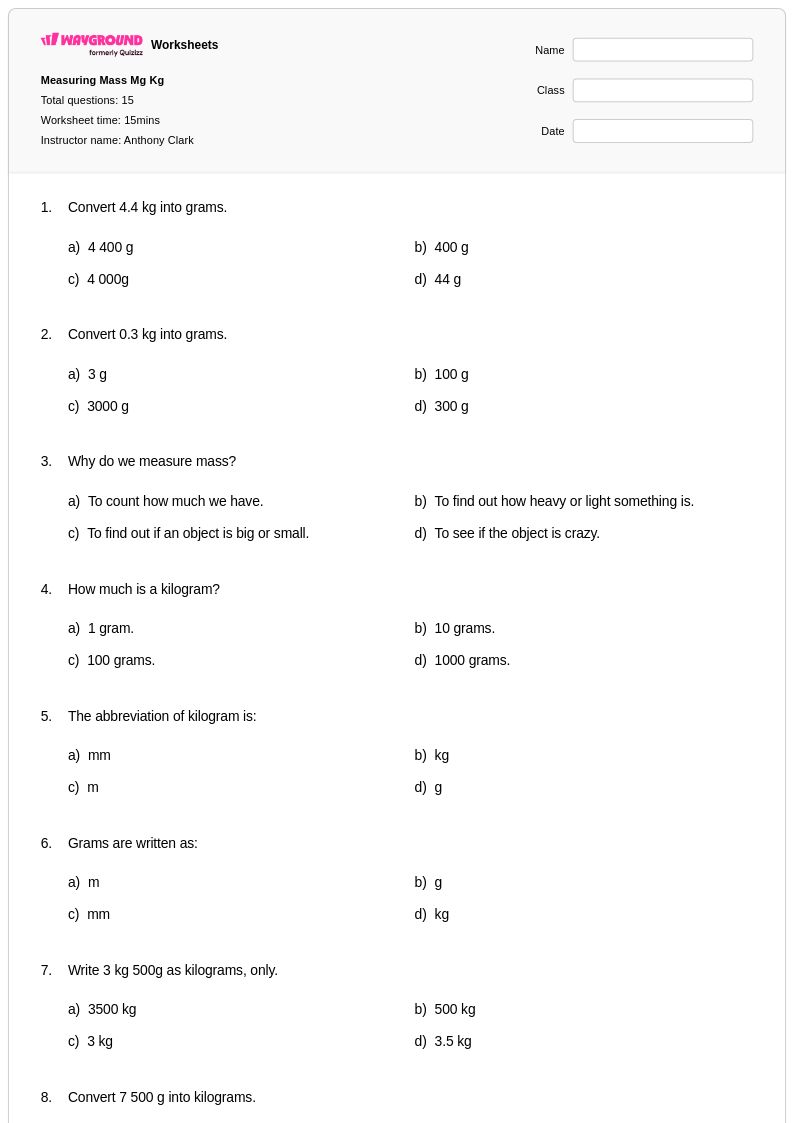
15 Q
3rd - Uni
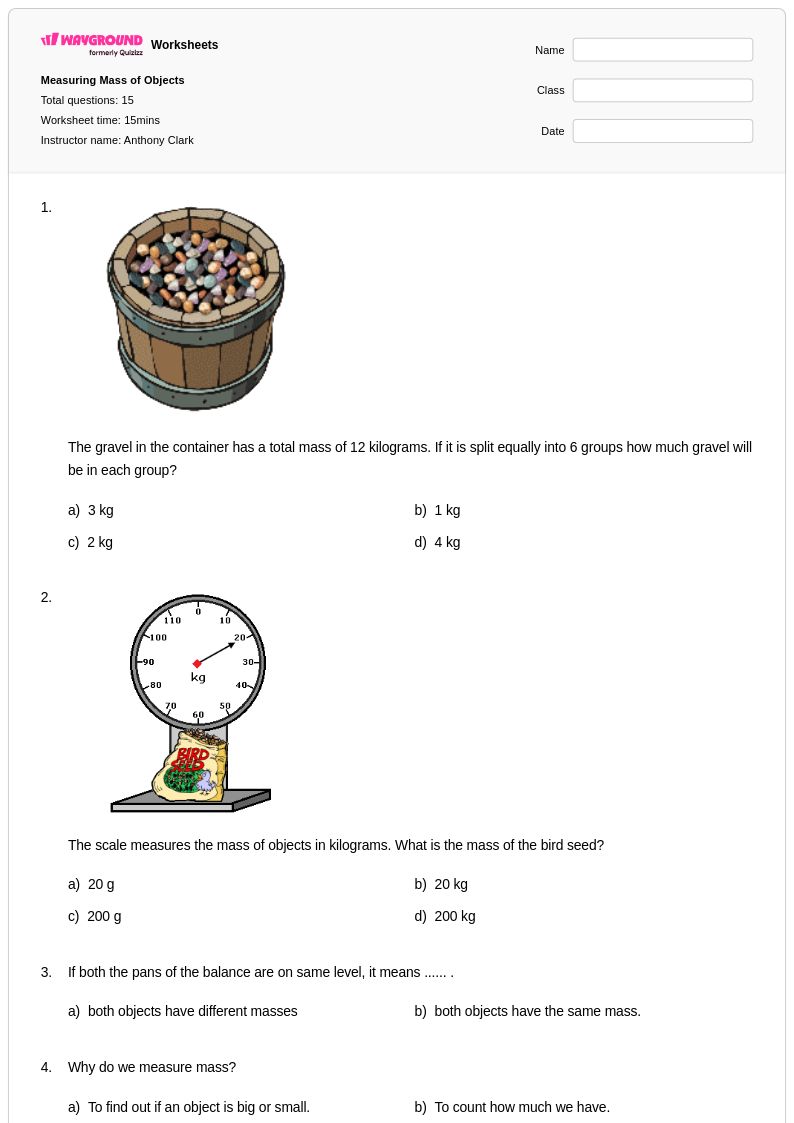
15 Q
3rd - Uni
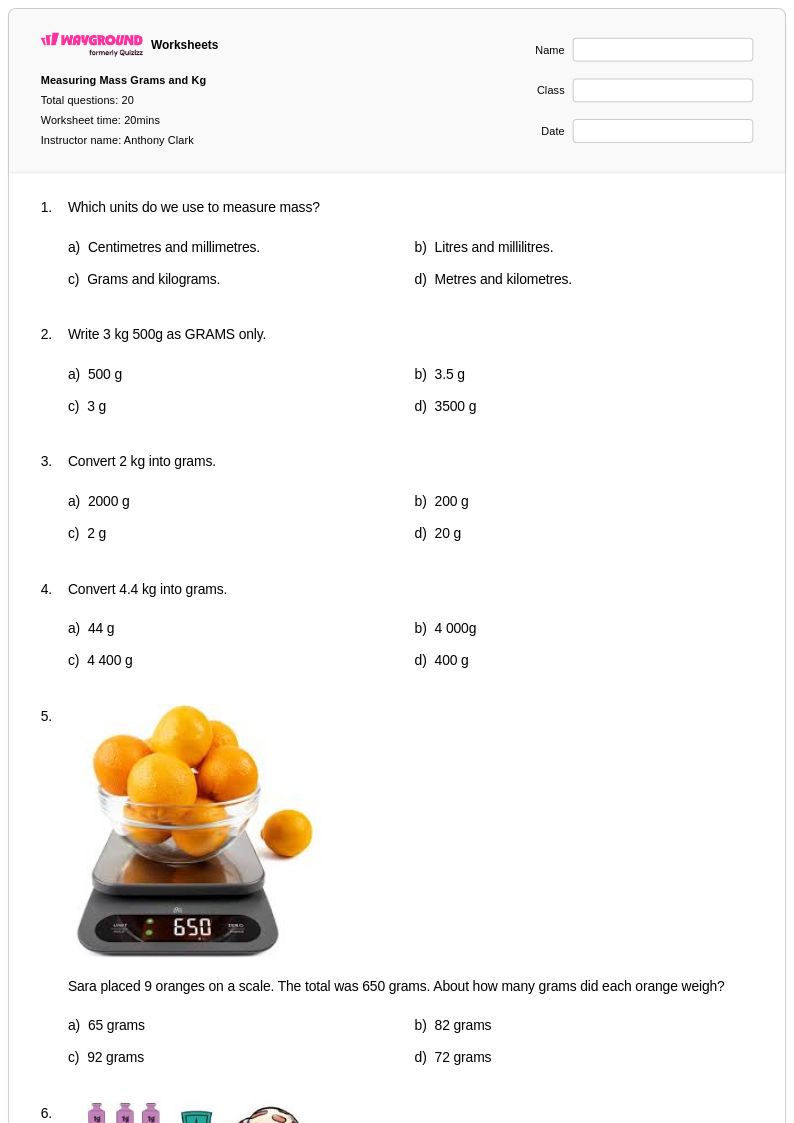
20 Q
3rd - Uni
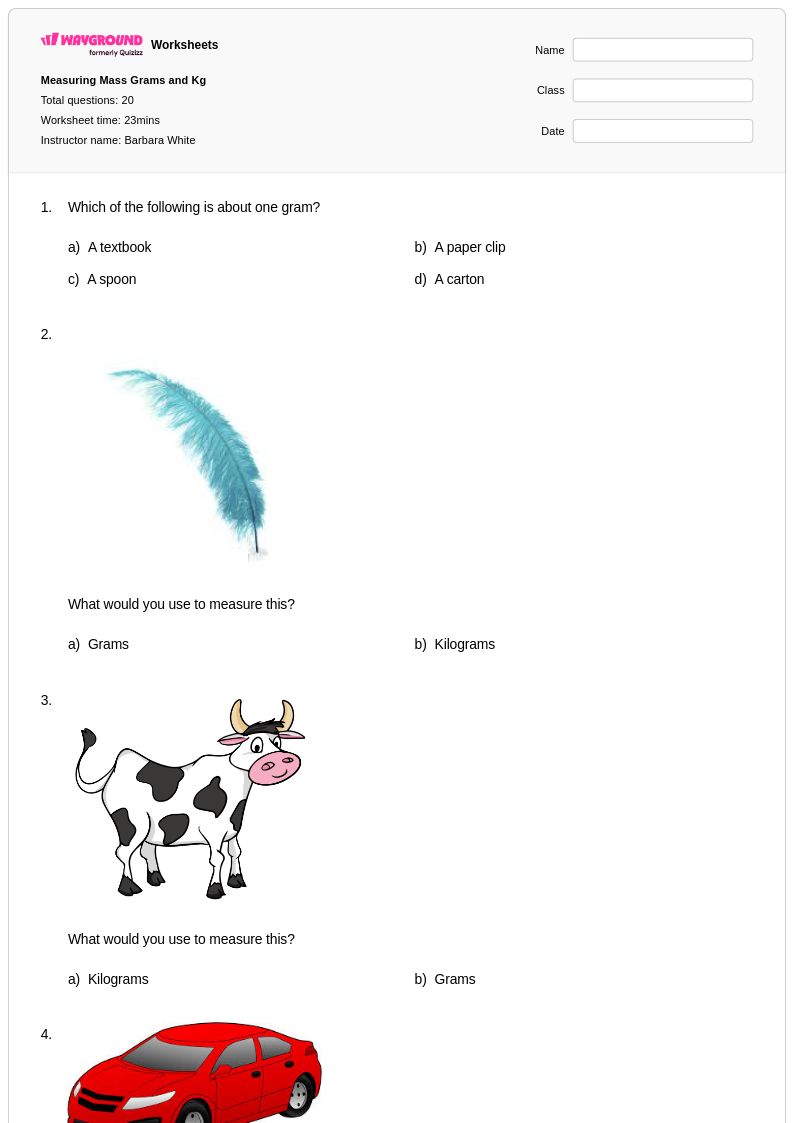
20 Q
3rd - 6th
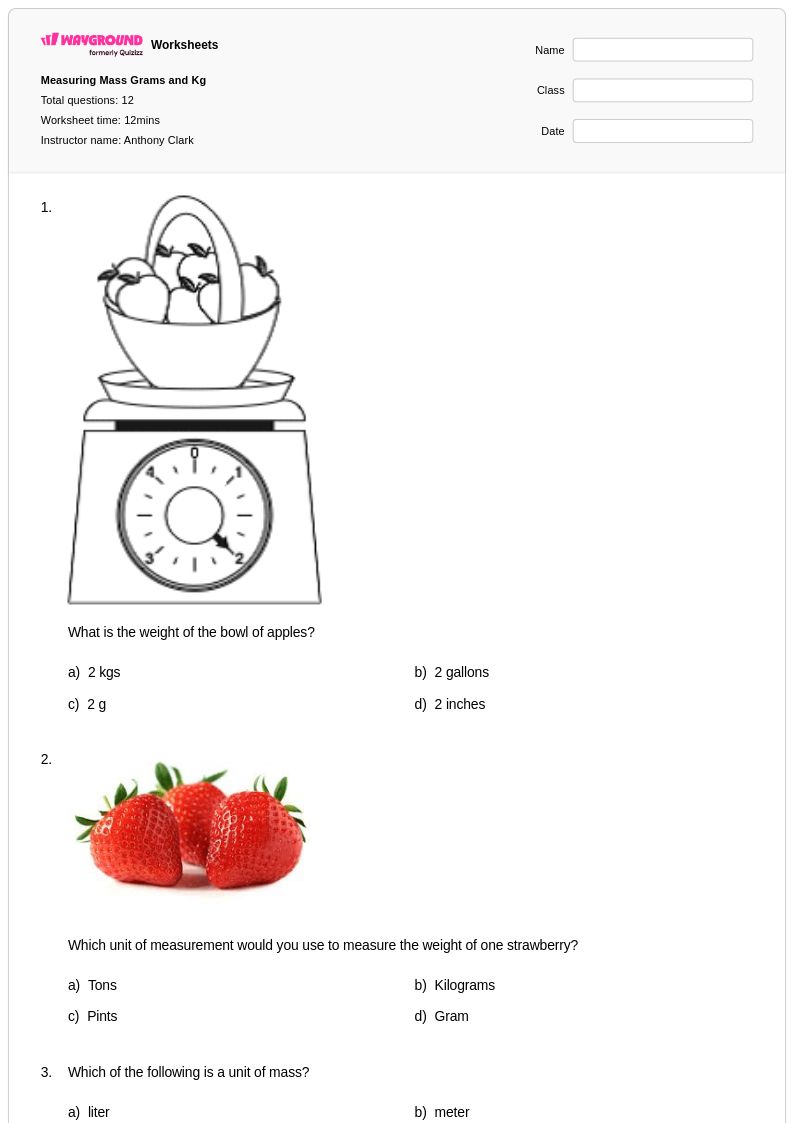
12 Q
3rd - Uni
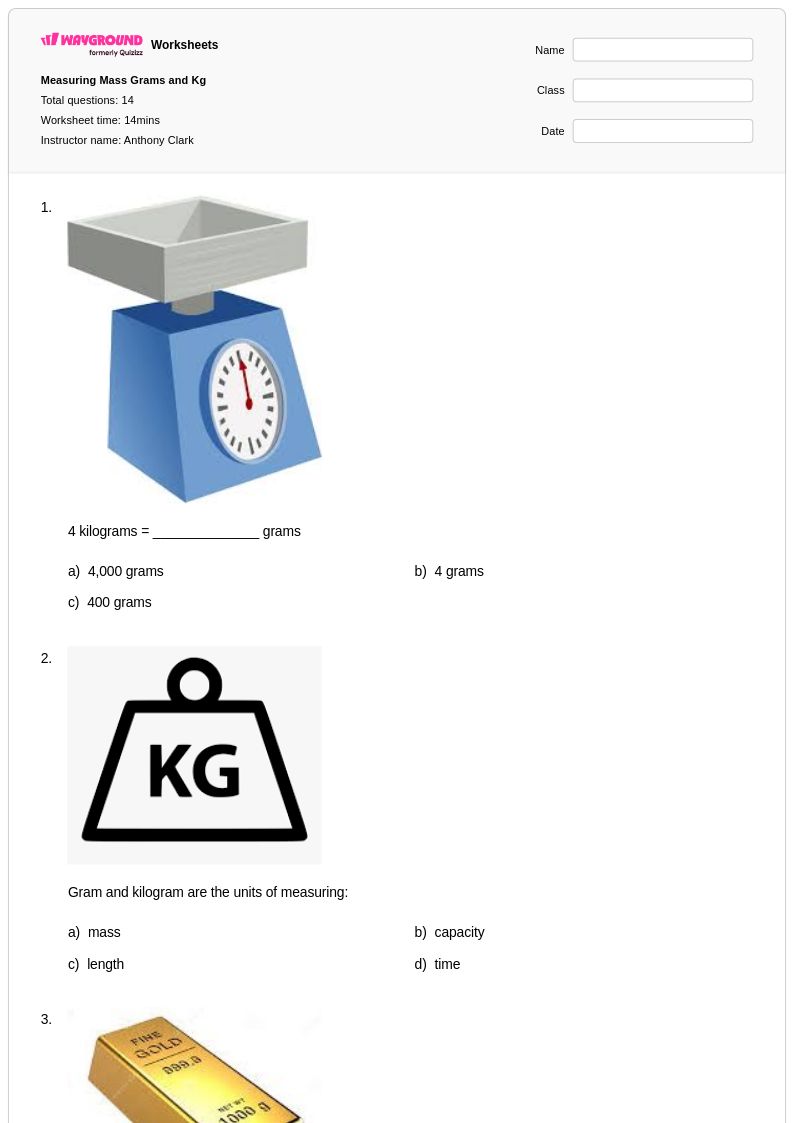
14 Q
3rd - Uni
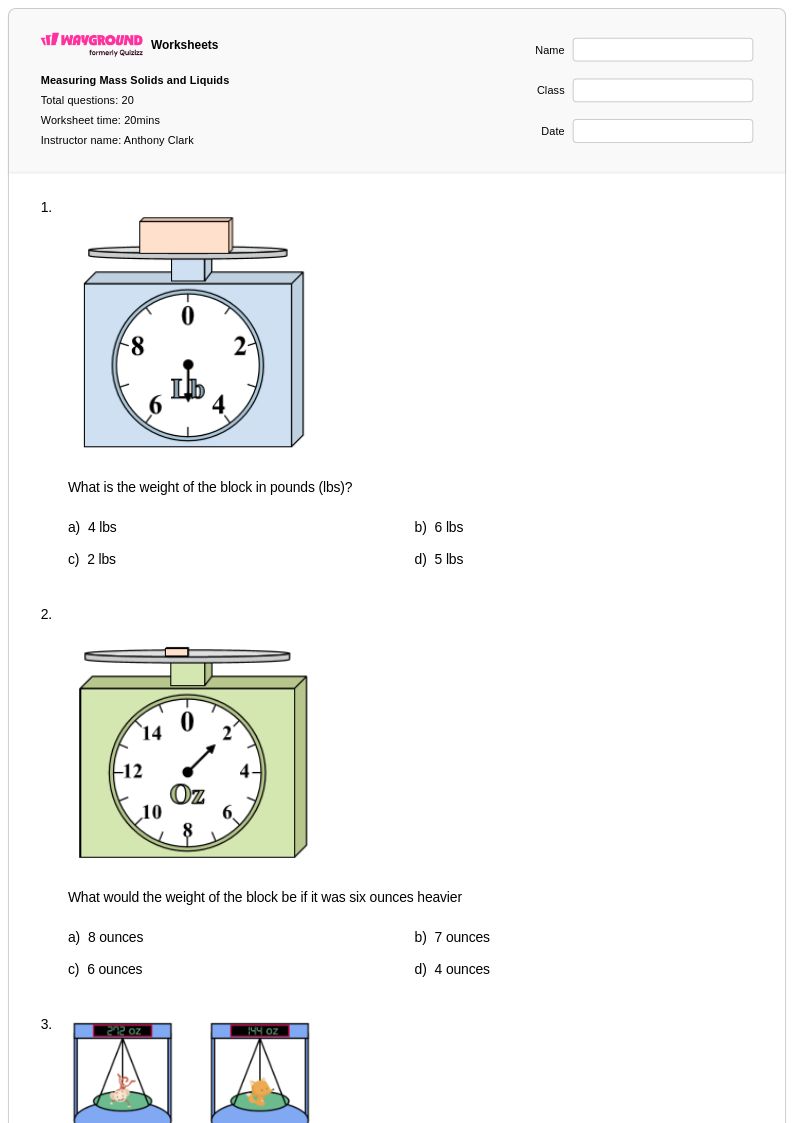
20 Q
5th - Uni
10 Q
3rd - Uni
9 Q
5th
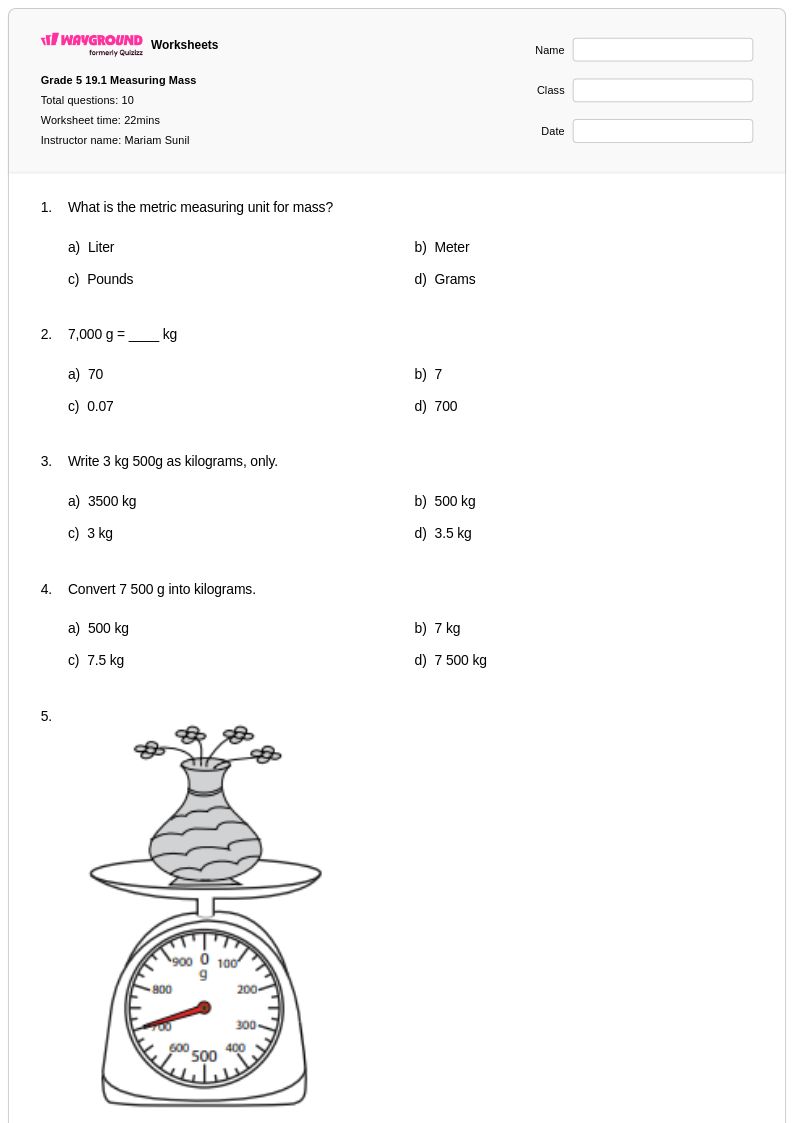
10 Q
5th
10 Q
1st - 5th
Explore Other Subject Worksheets for grade 5
Explore printable Measuring Mass worksheets for Grade 5
Measuring mass worksheets for Grade 5 students through Wayground (formerly Quizizz) provide comprehensive practice opportunities that strengthen fundamental measurement skills essential for mathematical proficiency. These carefully designed printables focus on helping students understand the concept of mass as a measurable attribute, practice using appropriate units such as grams and kilograms, and develop accuracy in reading various measuring instruments including balance scales and digital scales. The worksheet collections include diverse practice problems that progress from basic mass comparisons to more complex real-world applications, with each resource providing a complete answer key to support independent learning and immediate feedback. Students engage with free, downloadable content that reinforces their ability to estimate mass, convert between metric units, and solve word problems involving mass measurements in practical contexts.
Wayground (formerly Quizizz) empowers educators with access to millions of teacher-created measuring mass resources that streamline lesson planning and support differentiated instruction for Grade 5 mathematics classrooms. The platform's robust search and filtering capabilities allow teachers to quickly locate materials aligned with specific learning standards and skill levels, while customization tools enable educators to modify existing worksheets or create new ones tailored to their students' unique needs. Available in both printable pdf format and interactive digital versions, these resources facilitate flexible implementation whether used for whole-class instruction, small group remediation, individual enrichment, or homework assignments. Teachers can efficiently address varying student abilities by selecting from graduated difficulty levels, ensuring that all learners receive appropriate challenges while building confidence and mastery in measuring mass concepts.
FAQs
How do I teach measuring mass to fifth-grade students?
What exercises help Grade 5 students practice measuring mass?
What mistakes do fifth graders make when converting mass units?
How can I use a Grade 5 measuring mass worksheet?
How does measuring mass fit into the Grade 5 Common Core math progression?
How can I differentiate measuring mass worksheets for Grade 5?
What grade level is appropriate for grams, kilograms, and mass conversions?