
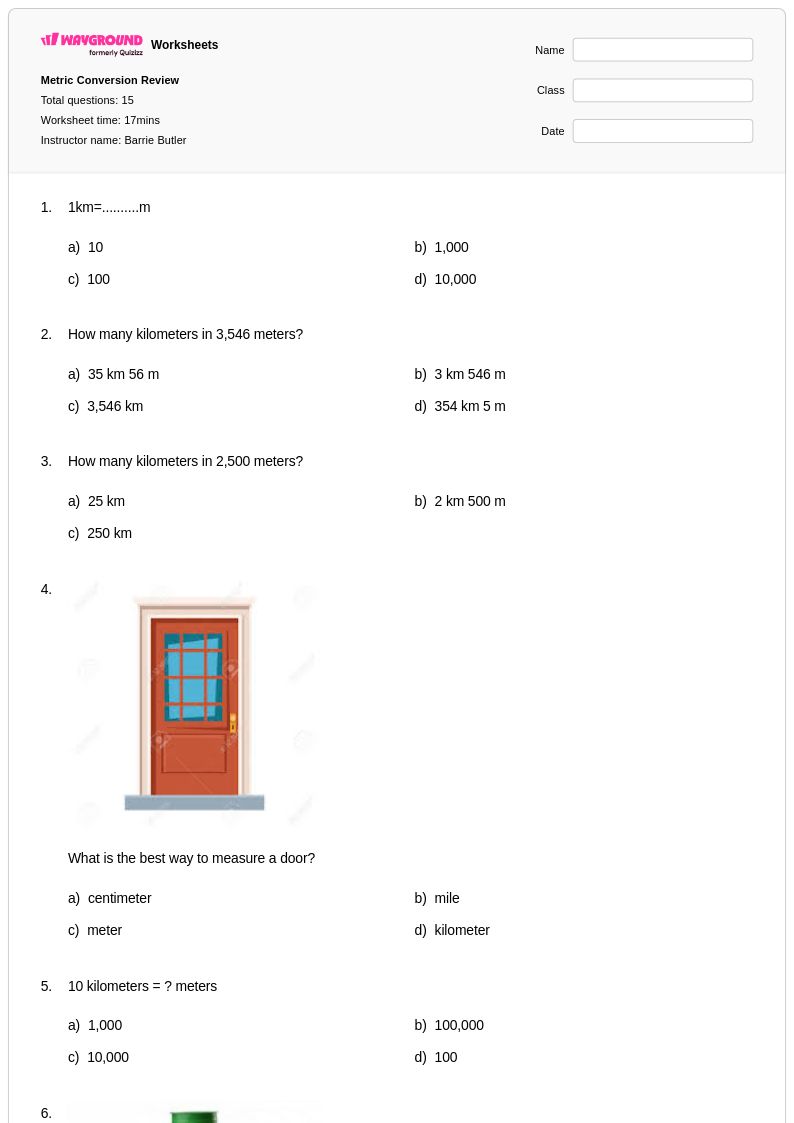
15 Q
4th
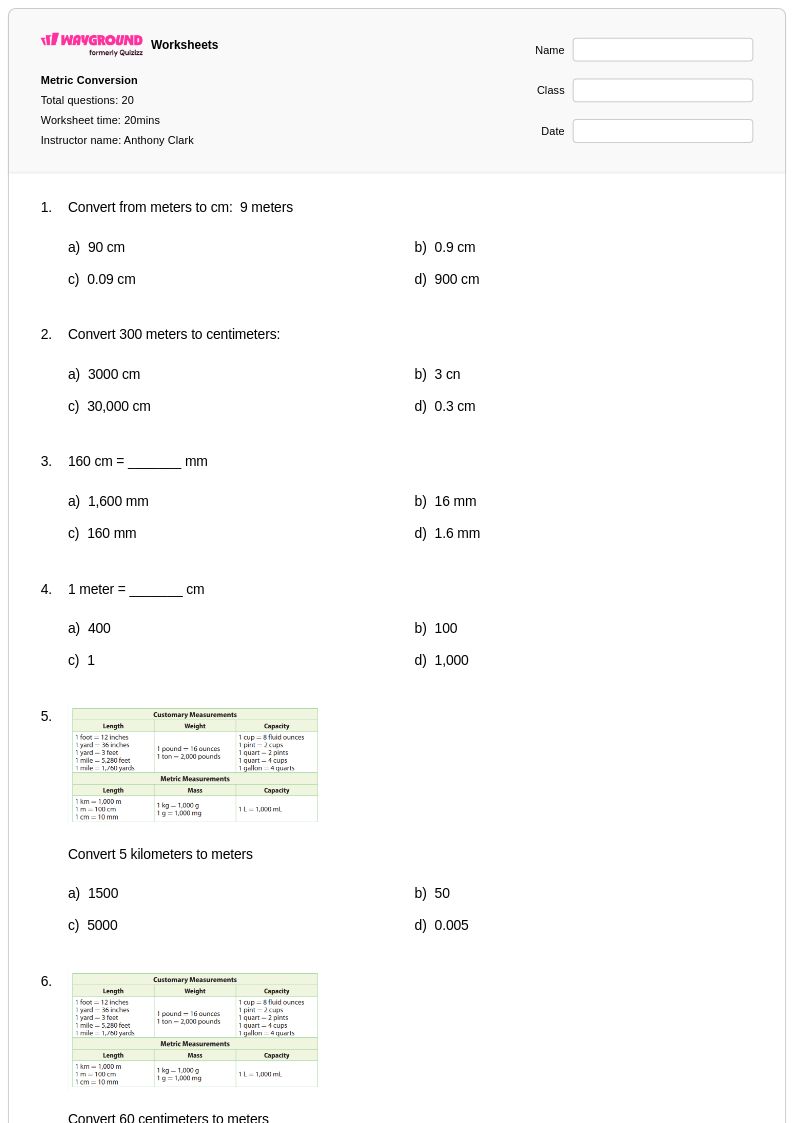
20 Q
4th - Uni
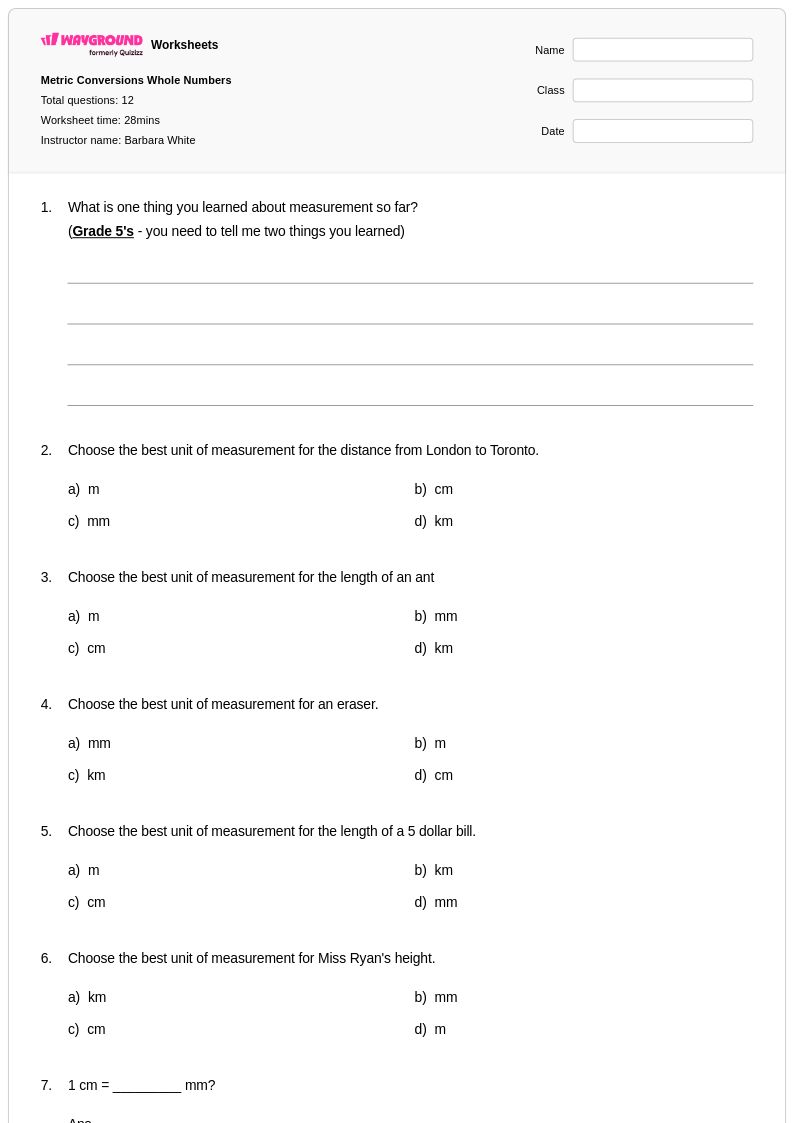
12 Q
4th - 5th
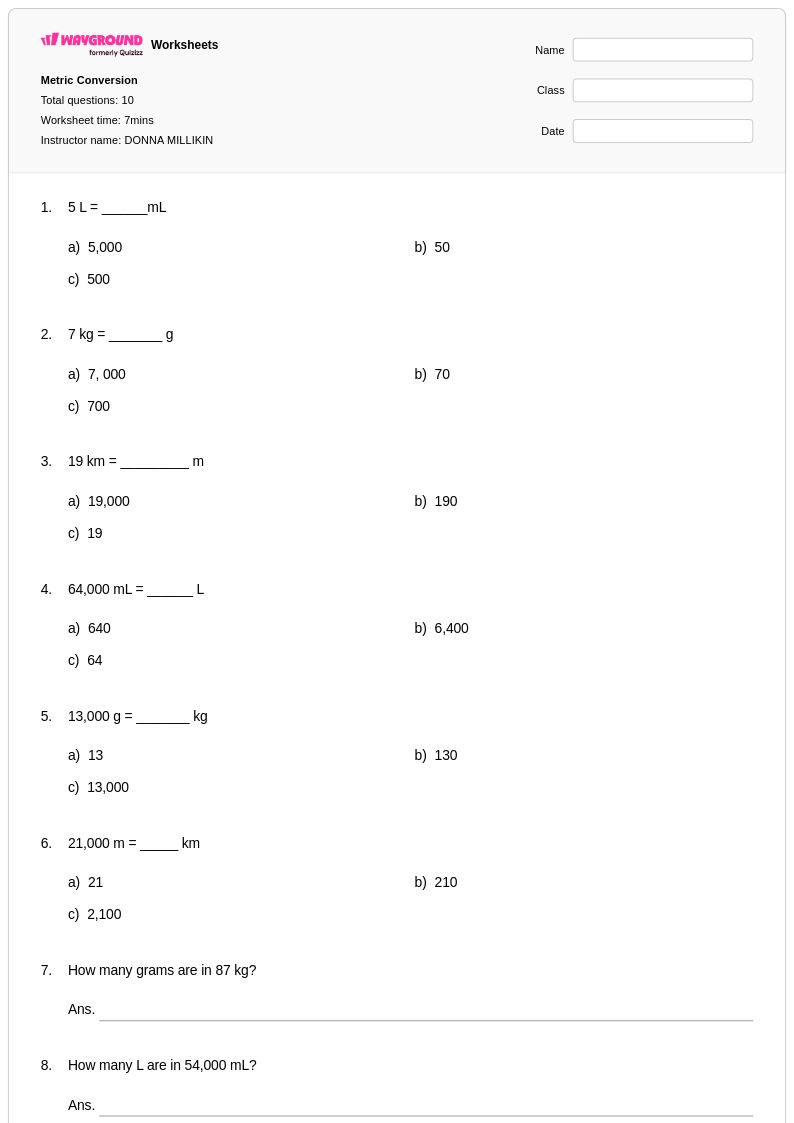
10 Q
2nd - 4th
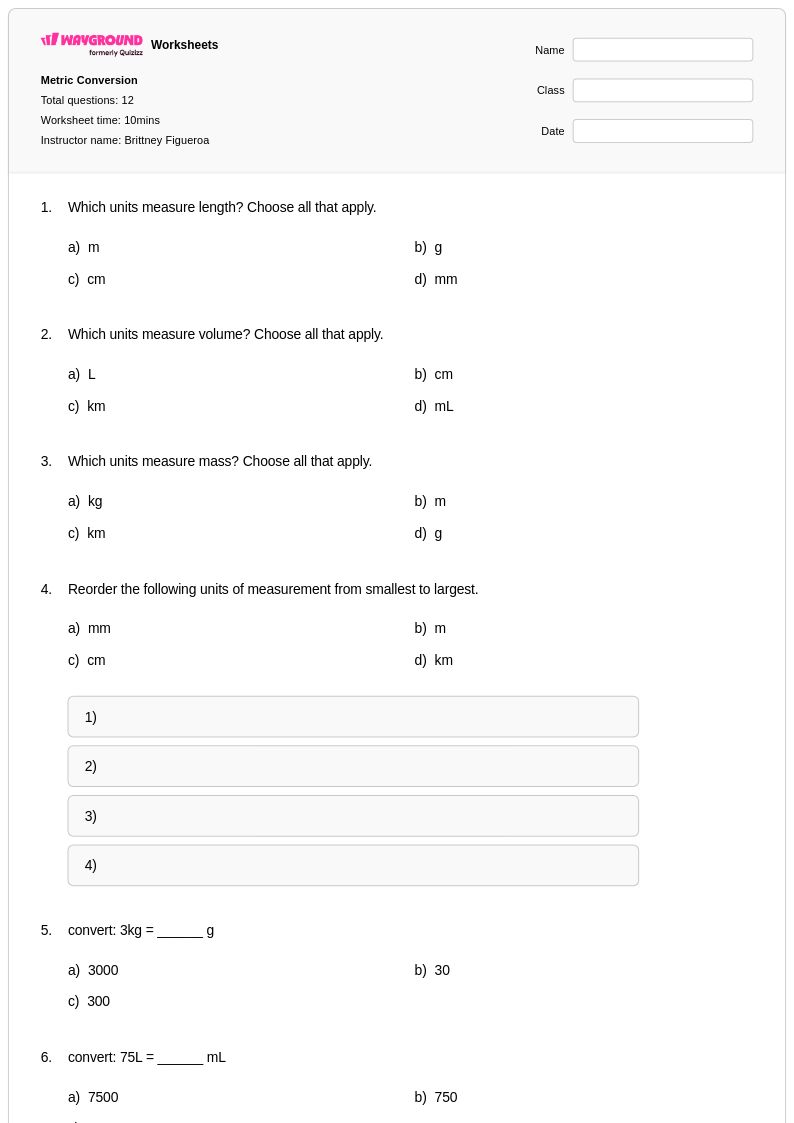
12 Q
4th
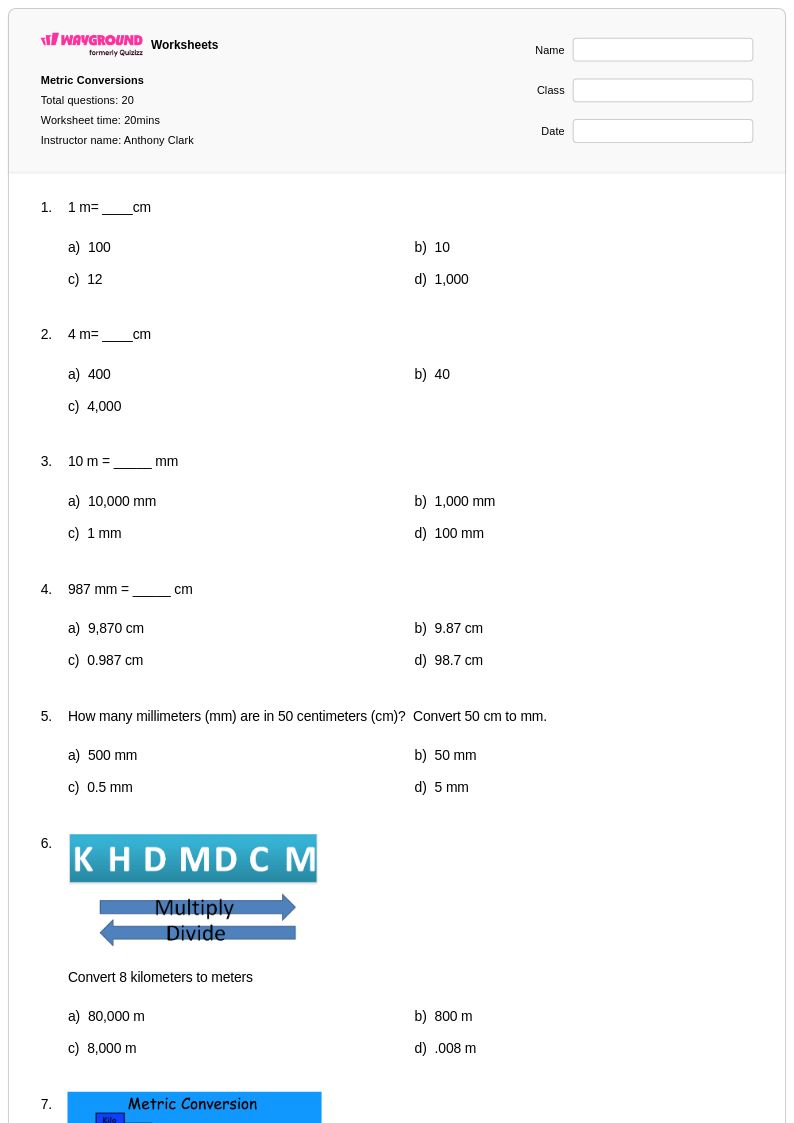
20 Q
4th - Uni
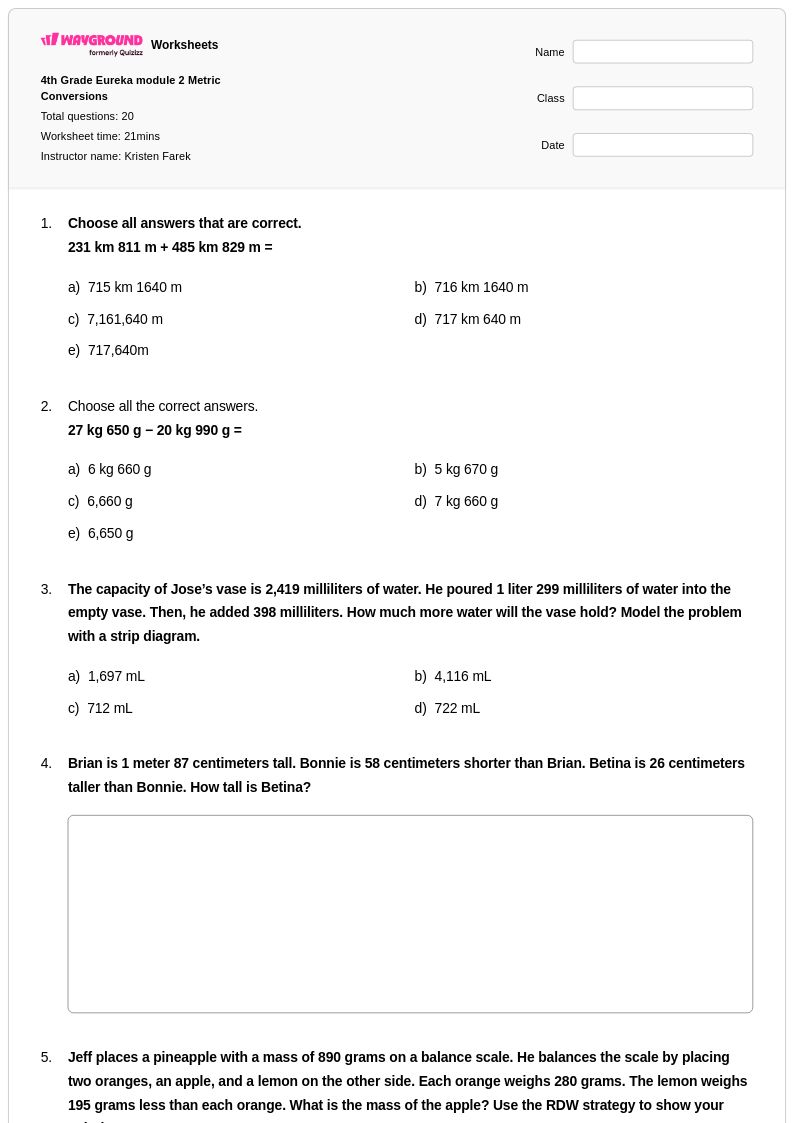
20 Q
4th
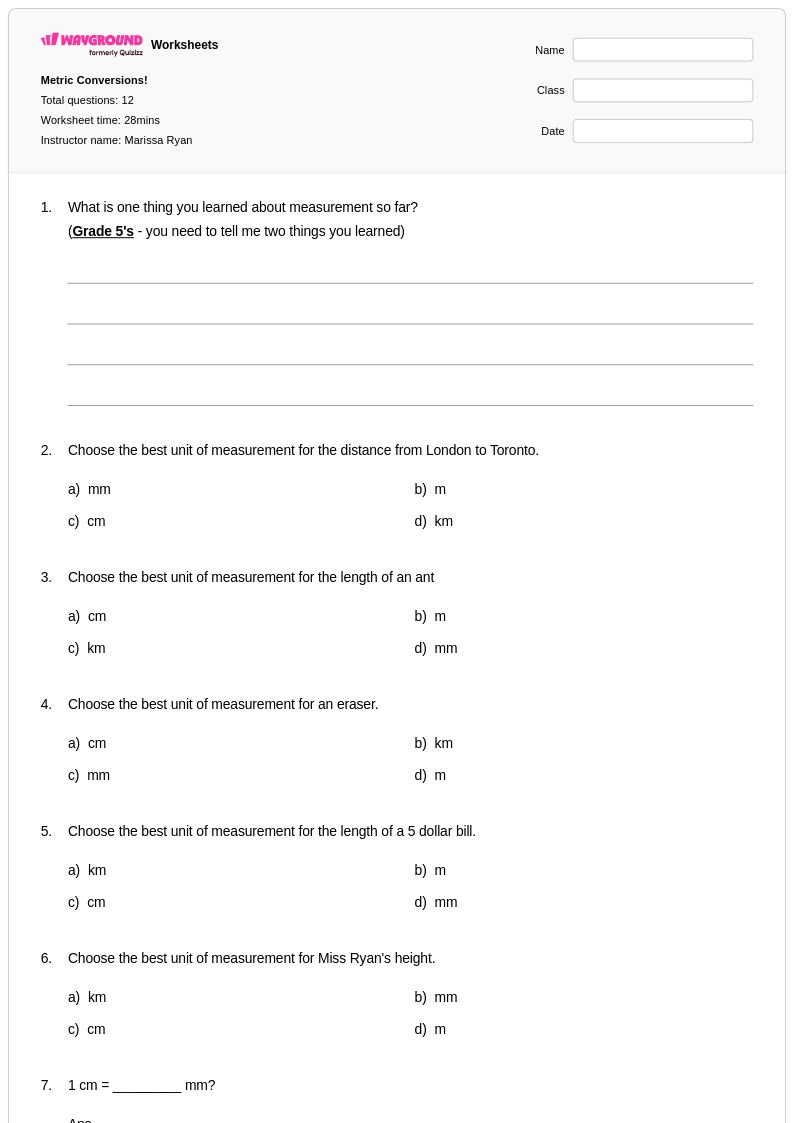
12 Q
4th - 5th
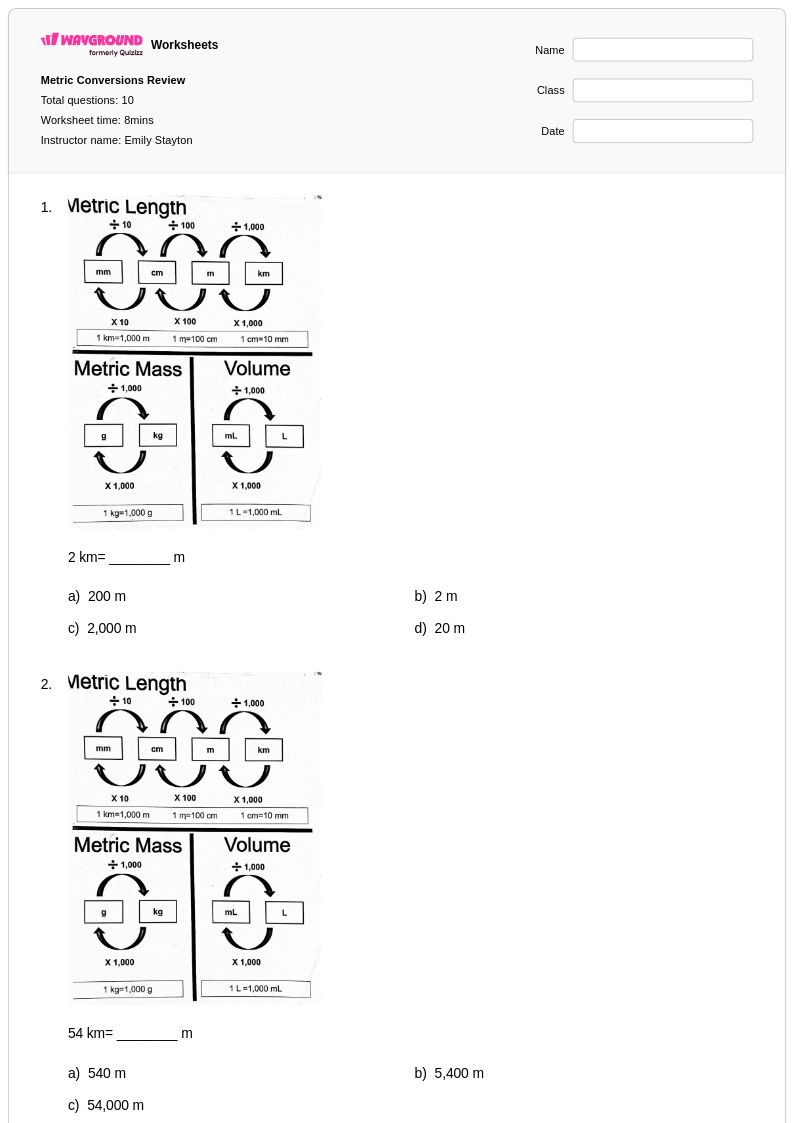
10 Q
4th
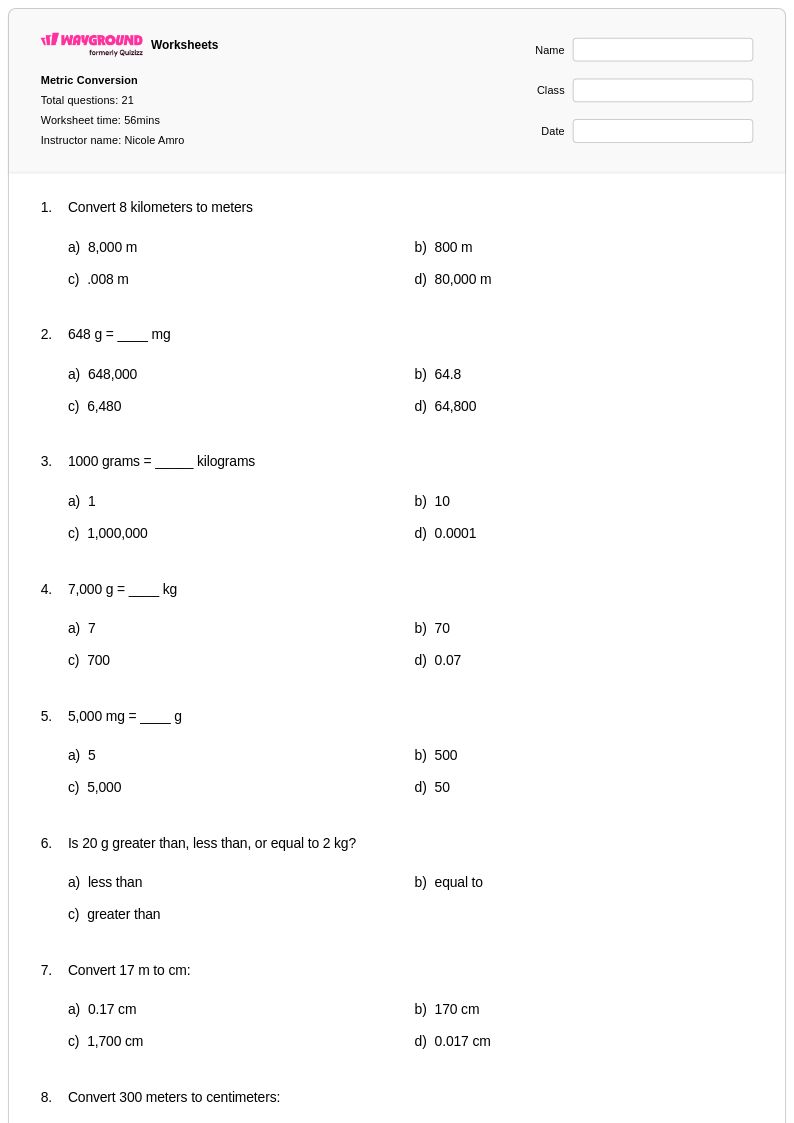
21 Q
4th
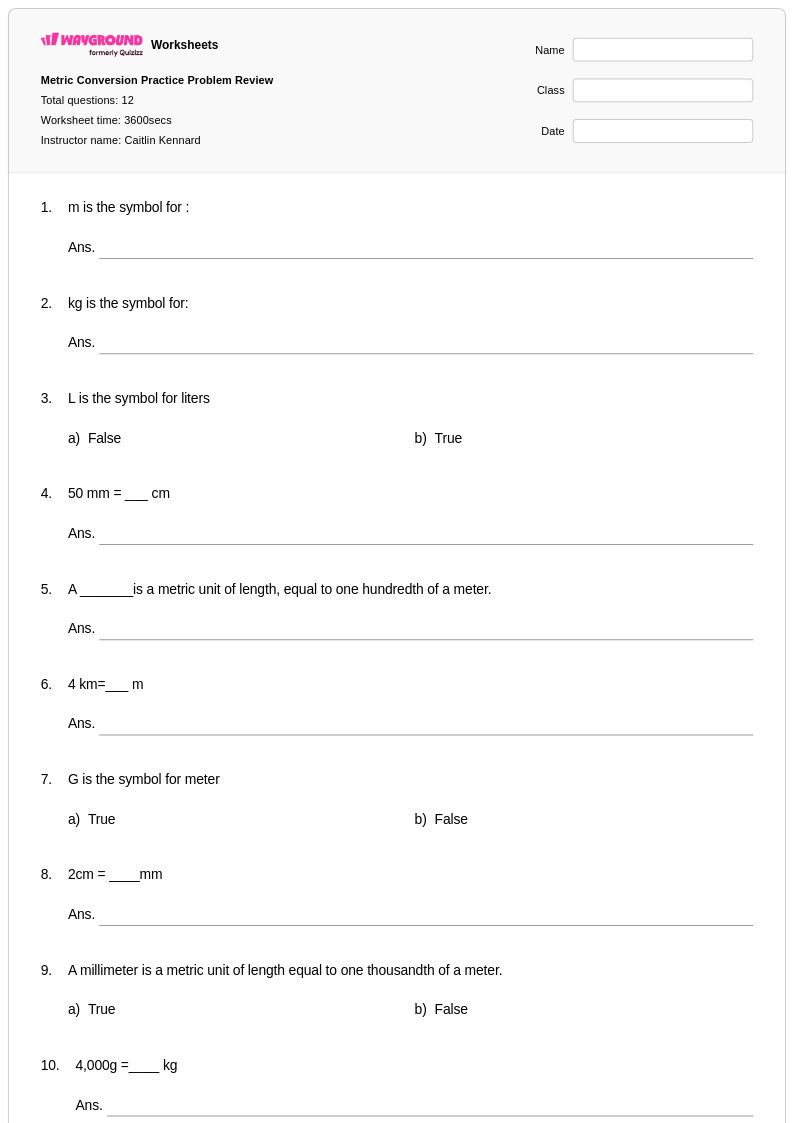
12 Q
4th

10 Q
4th
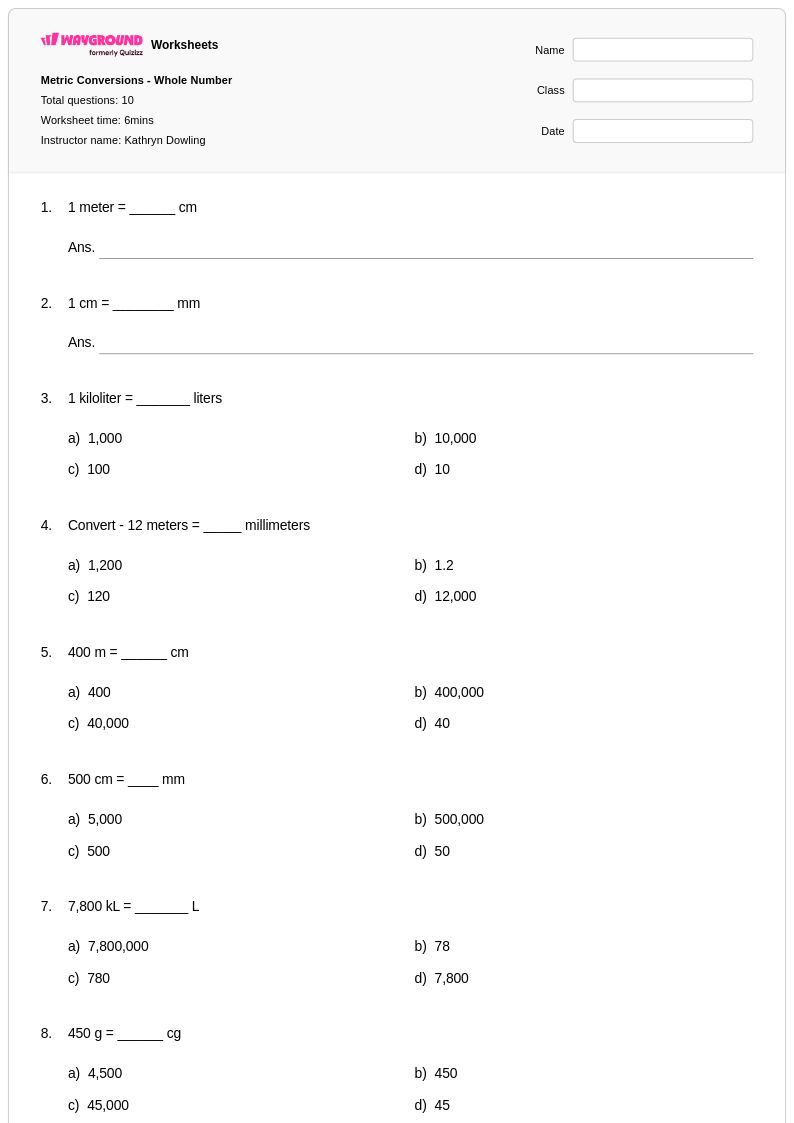
10 Q
4th - 5th
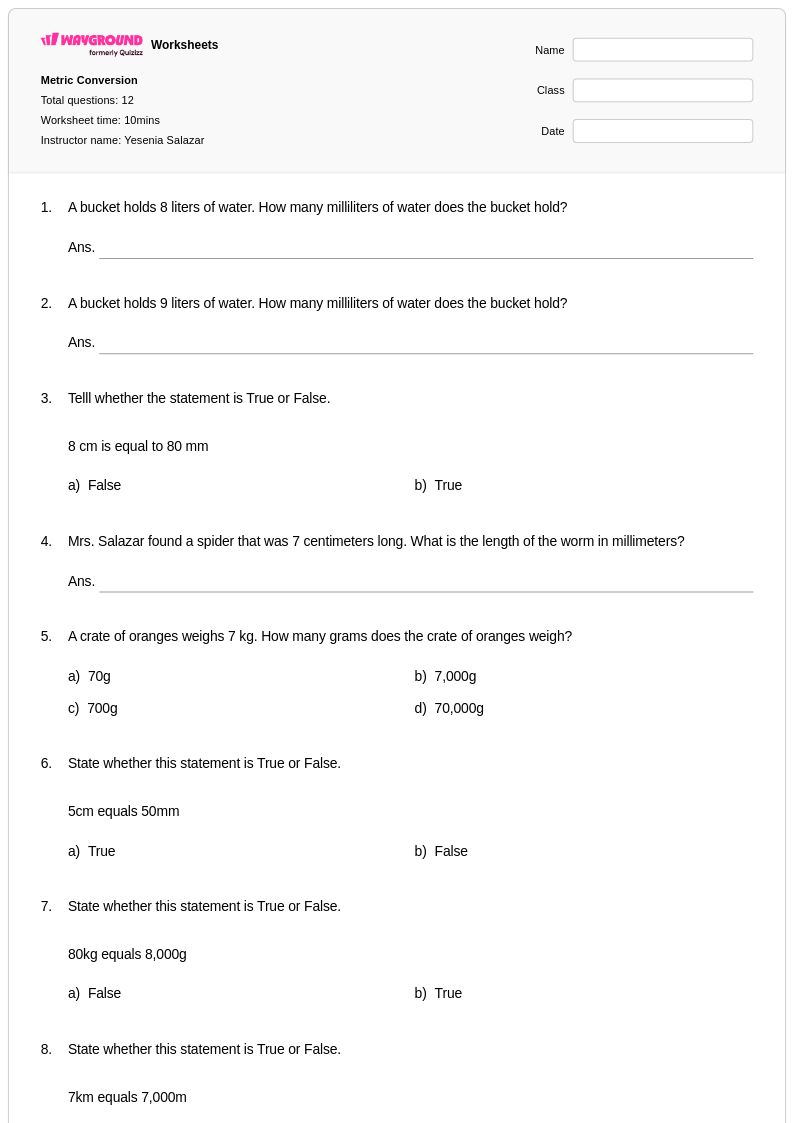
12 Q
4th
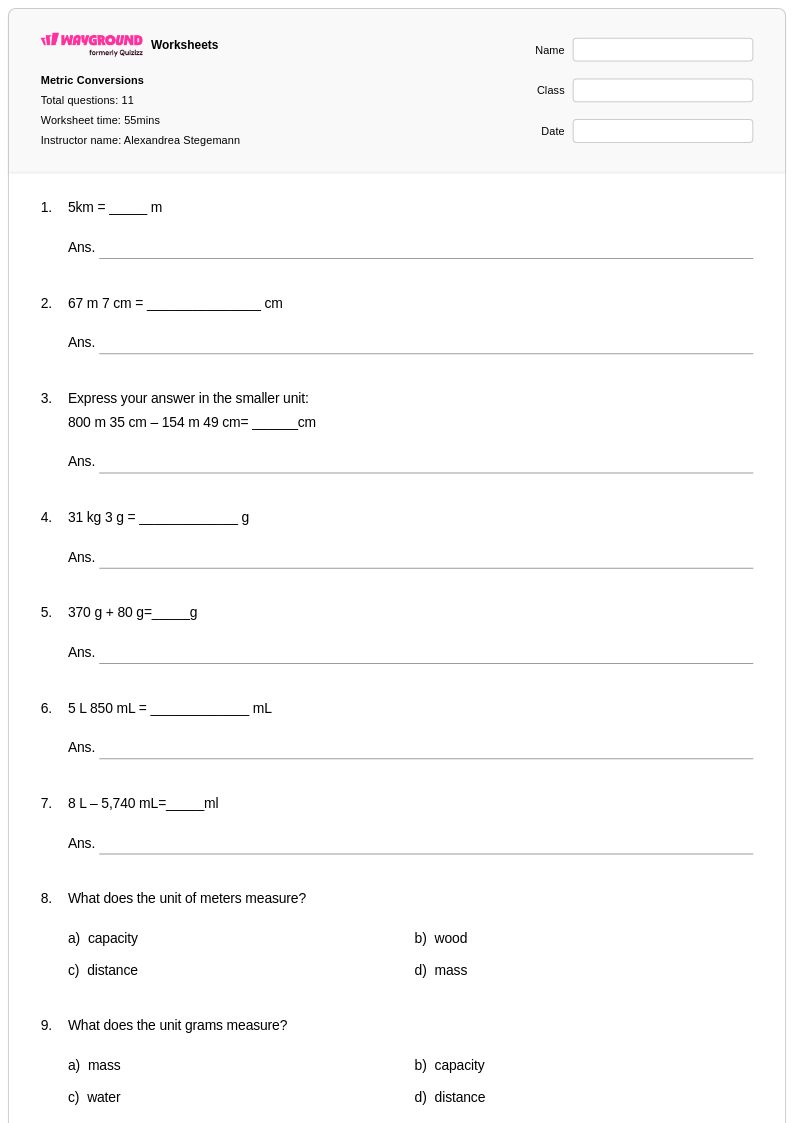
11 Q
4th
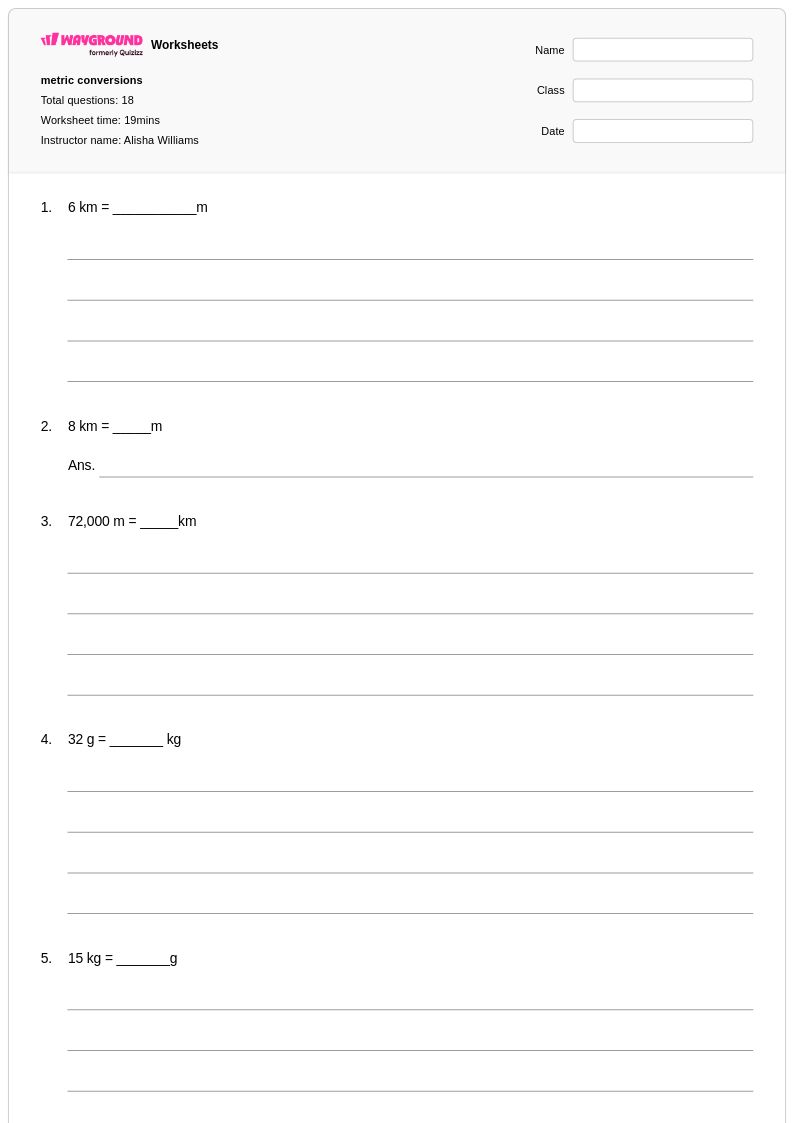
18 Q
4th
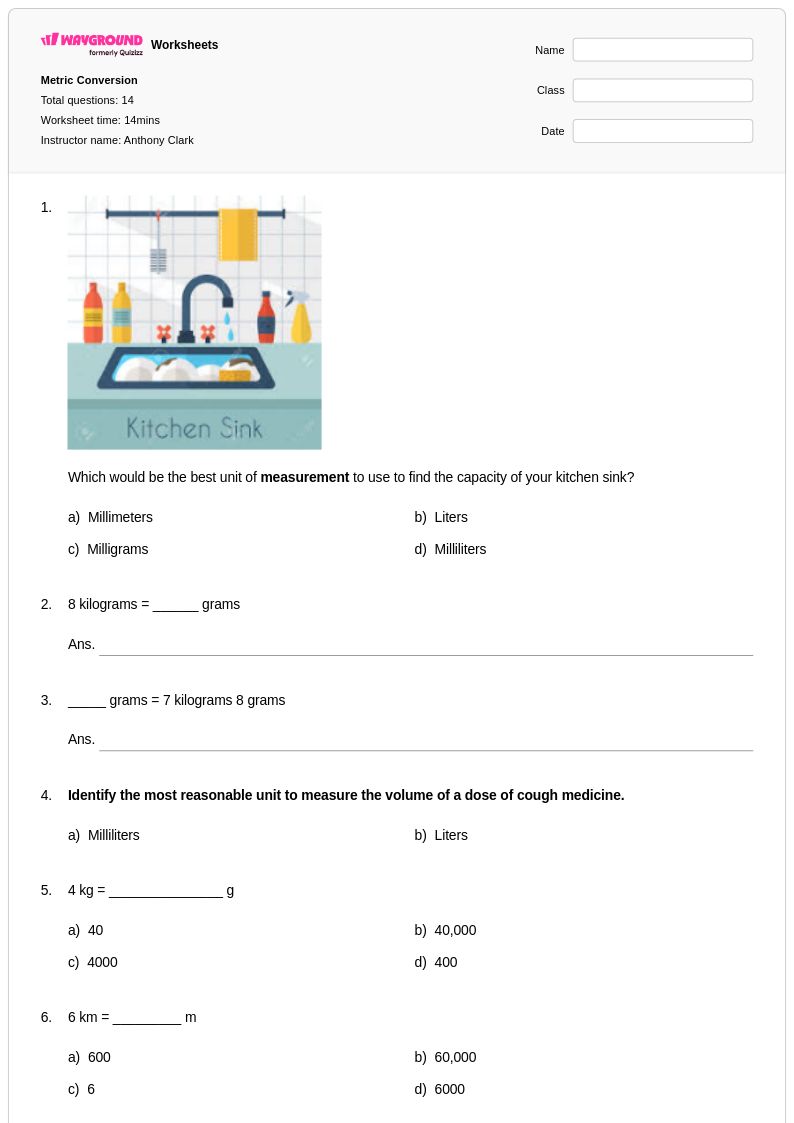
14 Q
4th - Uni
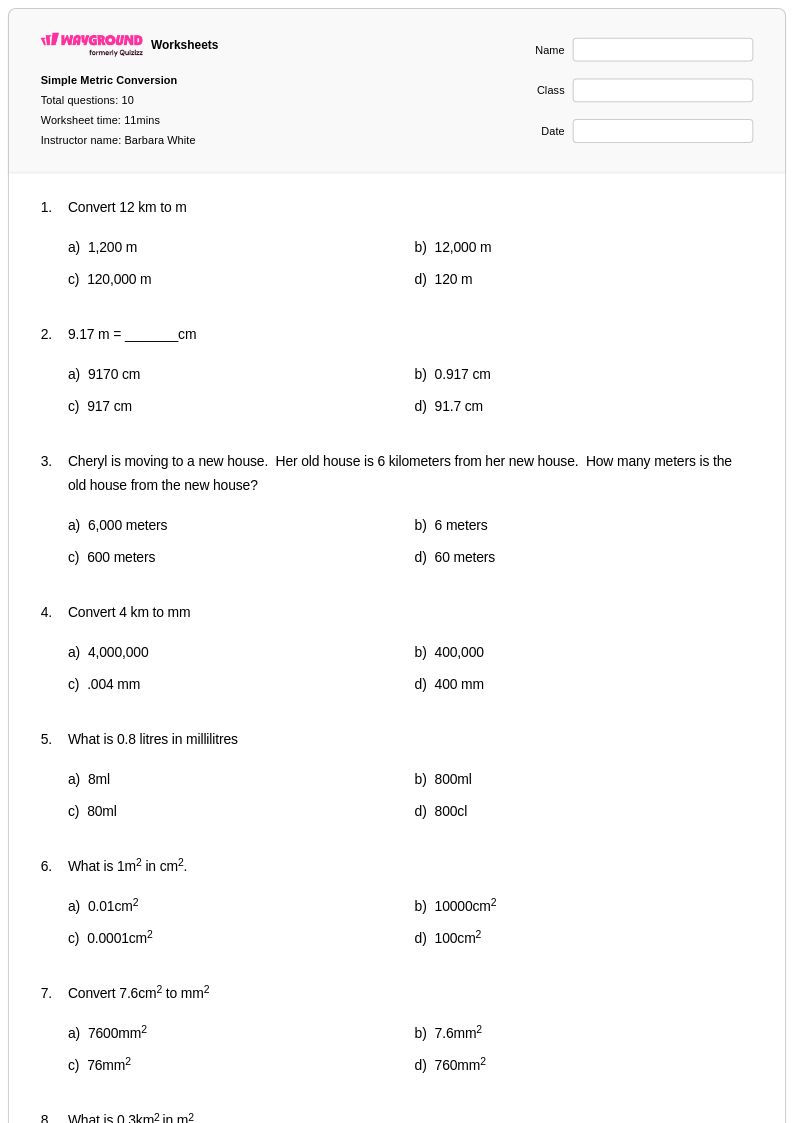
10 Q
4th
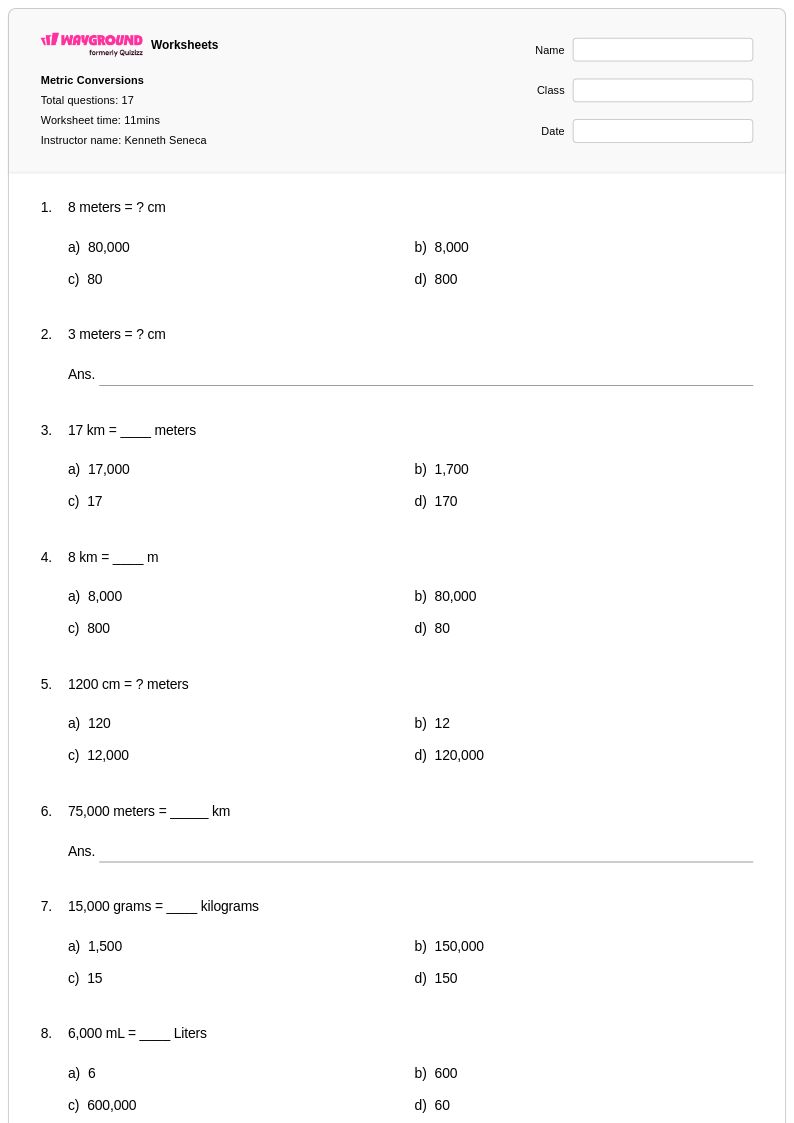
17 Q
4th
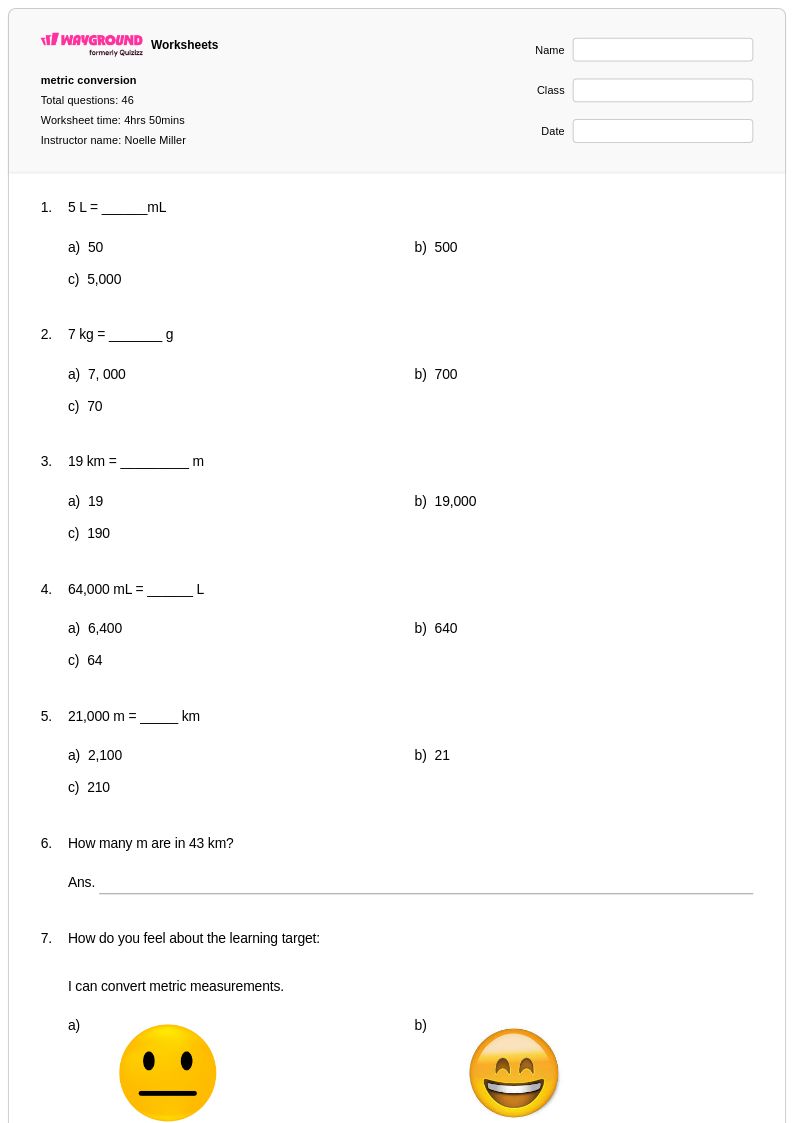
46 Q
2nd - 4th
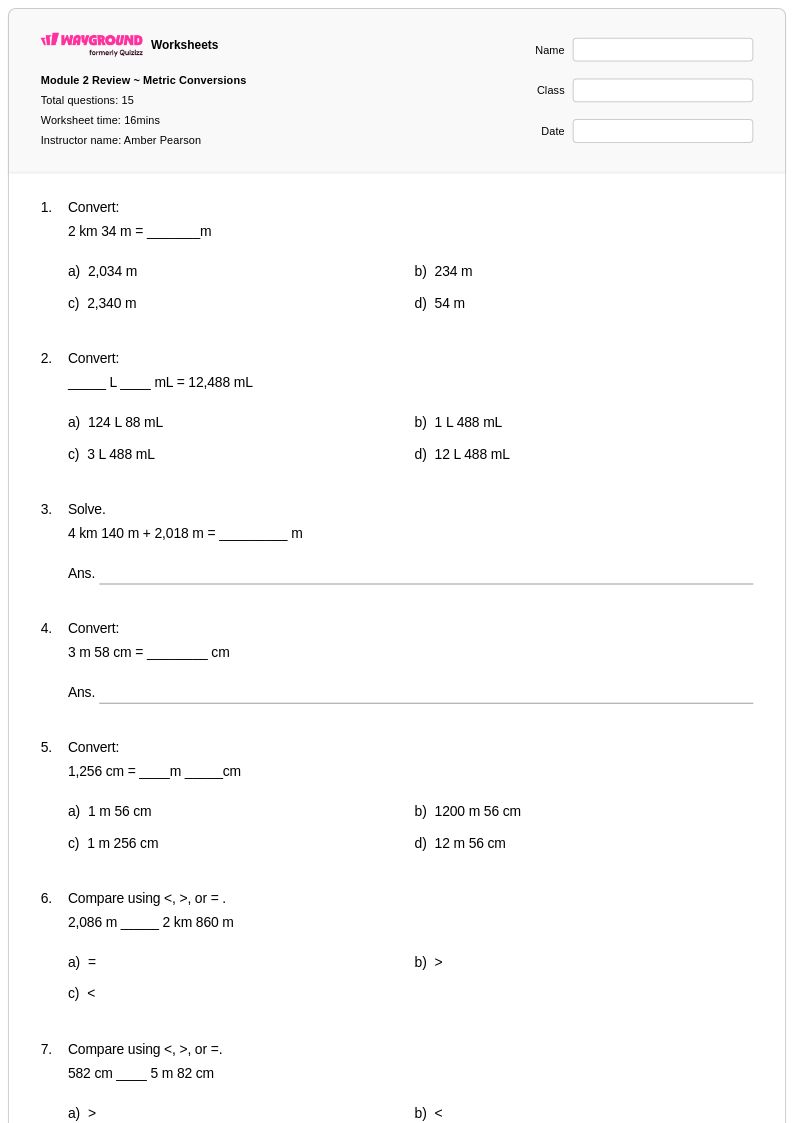
15 Q
4th
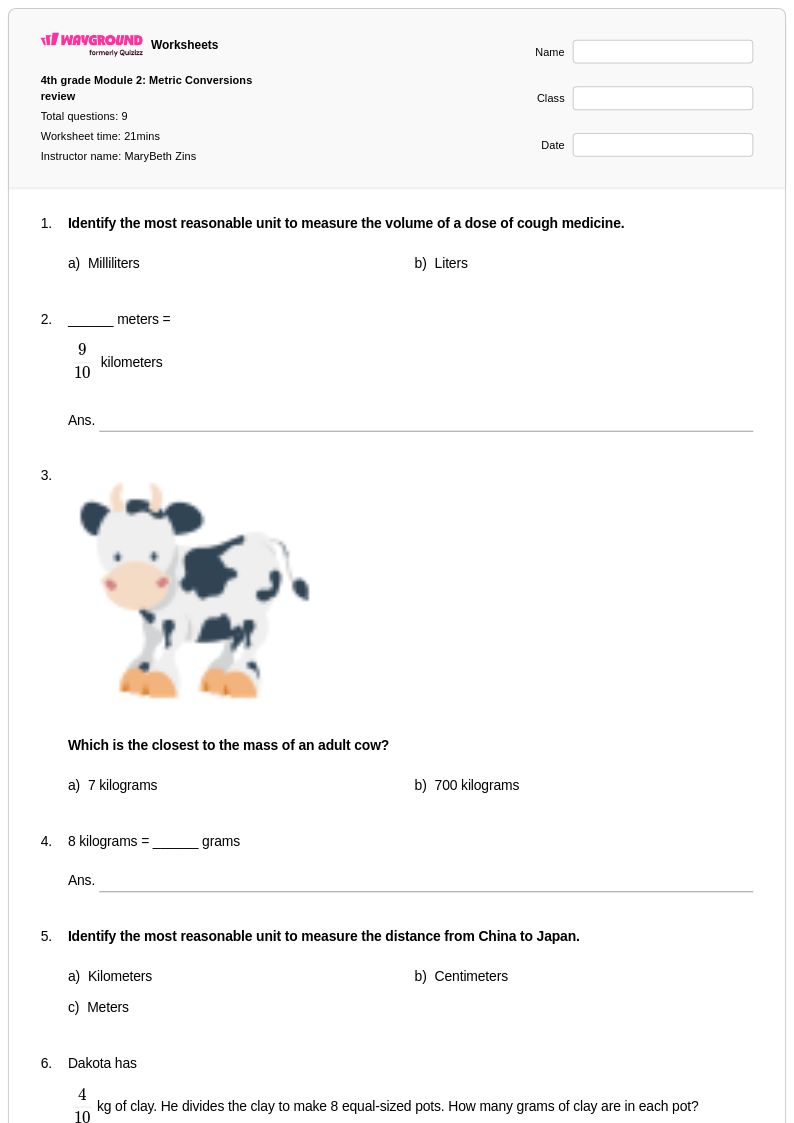
9 Q
4th
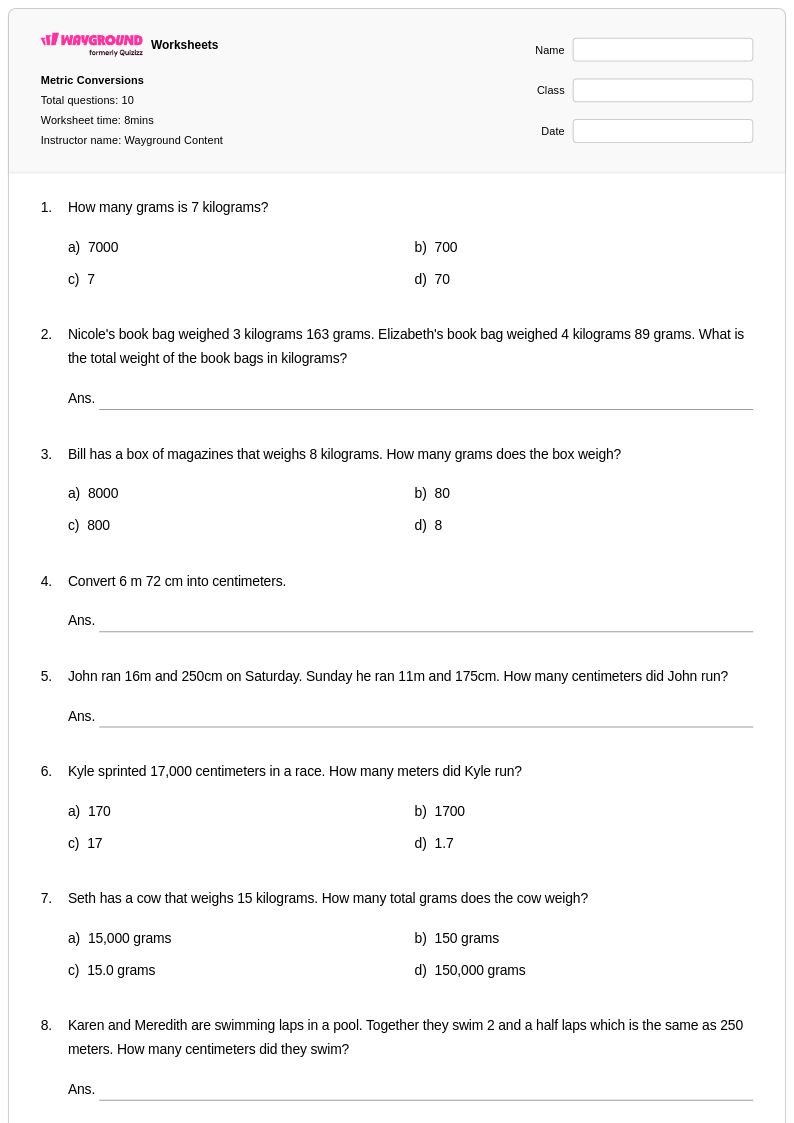
10 Q
4th
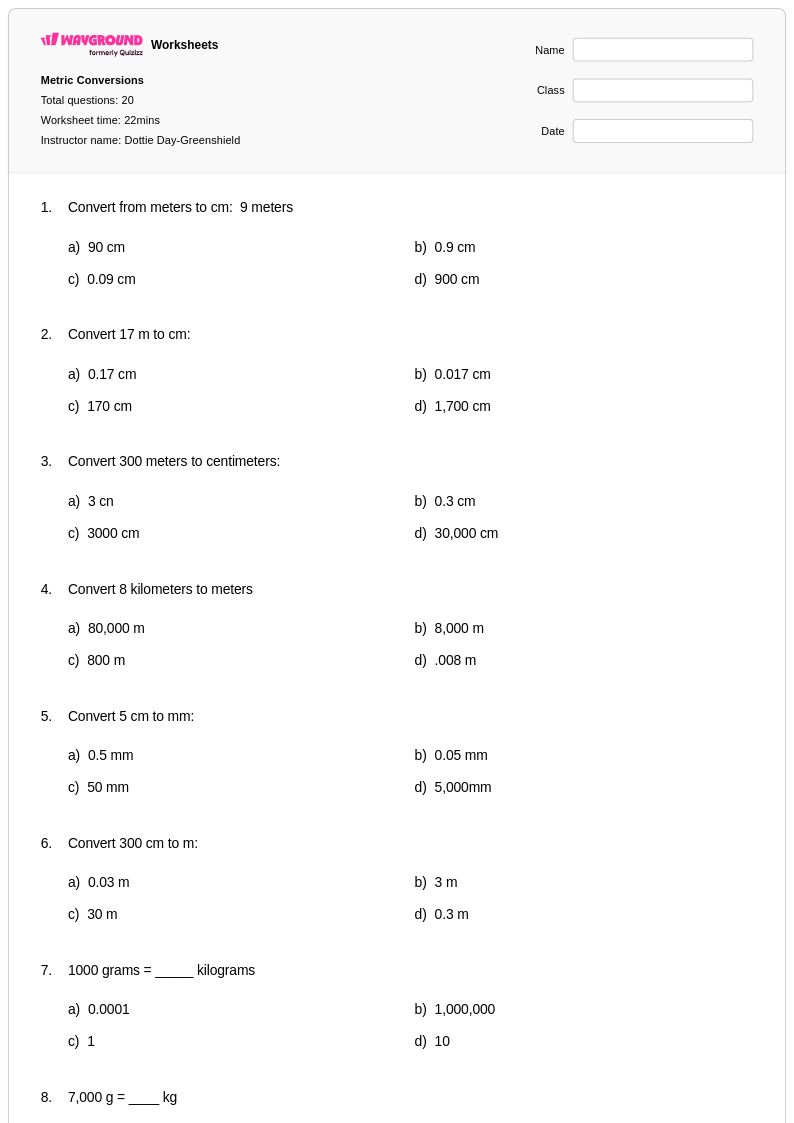
20 Q
4th
Explore Other Subject Worksheets for grade 4
Explore printable Metric Conversion worksheets for Grade 4
Grade 4 metric conversion worksheets available through Wayground (formerly Quizizz) provide students with essential practice in converting between units within the metric system, including measurements of length, mass, and capacity. These carefully designed worksheets strengthen foundational skills in recognizing relationships between metric units such as meters and centimeters, grams and kilograms, and liters and milliliters. Students develop proficiency in using multiplication and division to convert between larger and smaller metric units while building number sense and computational fluency. Each worksheet includes comprehensive practice problems that progress from basic conversions to more complex multi-step scenarios, and teachers can access complete answer keys to support accurate assessment and feedback. The printable pdf format ensures easy classroom distribution and homework assignments.
Wayground (formerly Quizizz) empowers educators with millions of teacher-created metric conversion resources specifically aligned to Grade 4 mathematics standards and learning objectives. The platform's robust search and filtering capabilities allow teachers to quickly locate worksheets that match their students' specific skill levels and instructional needs, whether for initial instruction, remediation, or enrichment activities. Advanced differentiation tools enable customization of problem difficulty and quantity, ensuring appropriate challenge levels for diverse learners within the same classroom. Teachers can seamlessly integrate these resources into lesson planning by accessing both digital and printable formats, facilitating flexible implementation across various instructional settings. The comprehensive collection supports systematic skill development in metric measurement concepts while providing educators with reliable assessment tools to monitor student progress and identify areas requiring additional practice.
FAQs
How do I teach metric conversions to fourth graders?
What exercises help fourth graders practice metric conversions?
What mistakes do students commonly make when converting metric units?
How can I use these Grade 4 metric conversion worksheets in class?
Do Grade 4 metric conversion worksheets support Common Core expectations?
How can I differentiate metric conversion practice for mixed-ability fourth graders?
What grade do students learn metric conversions?