
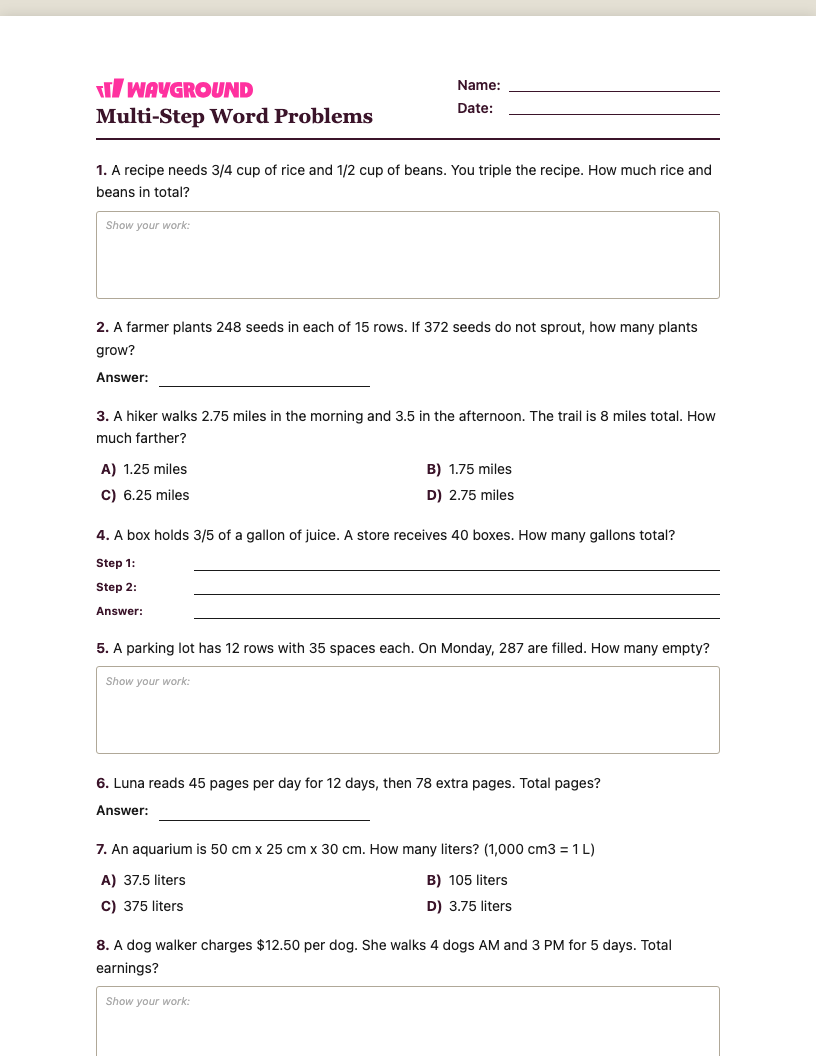
15 Q
5th
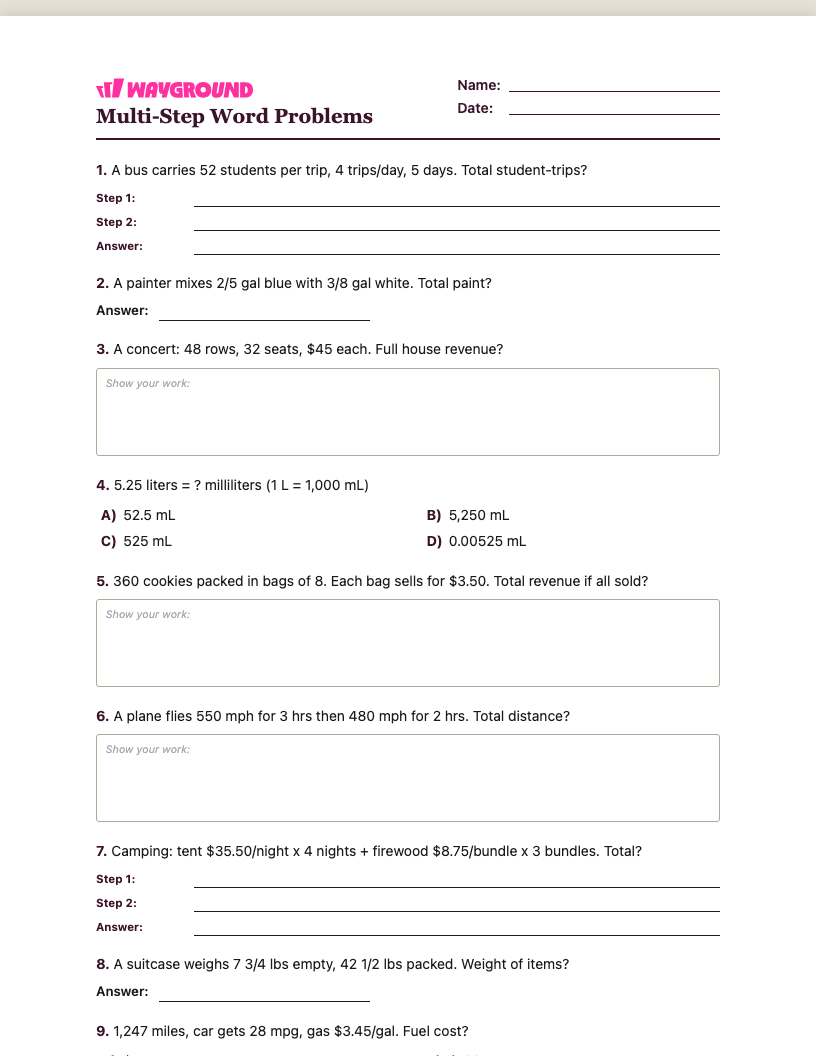
15 Q
5th
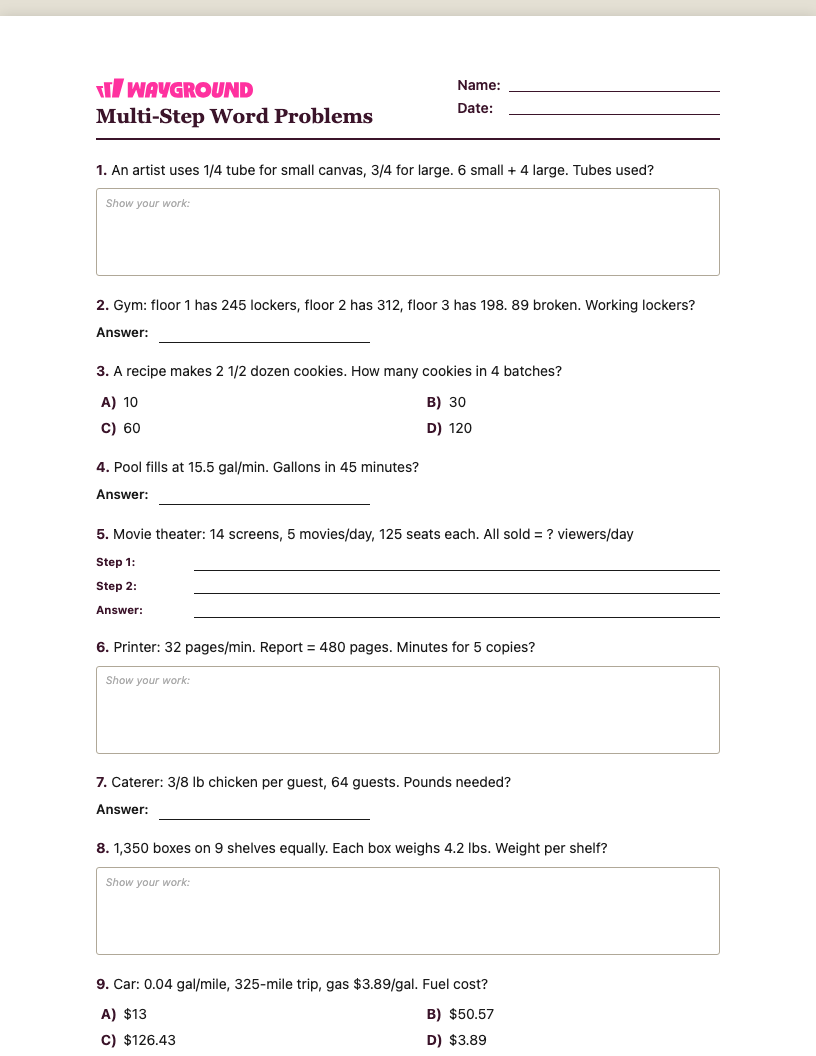
15 Q
5th
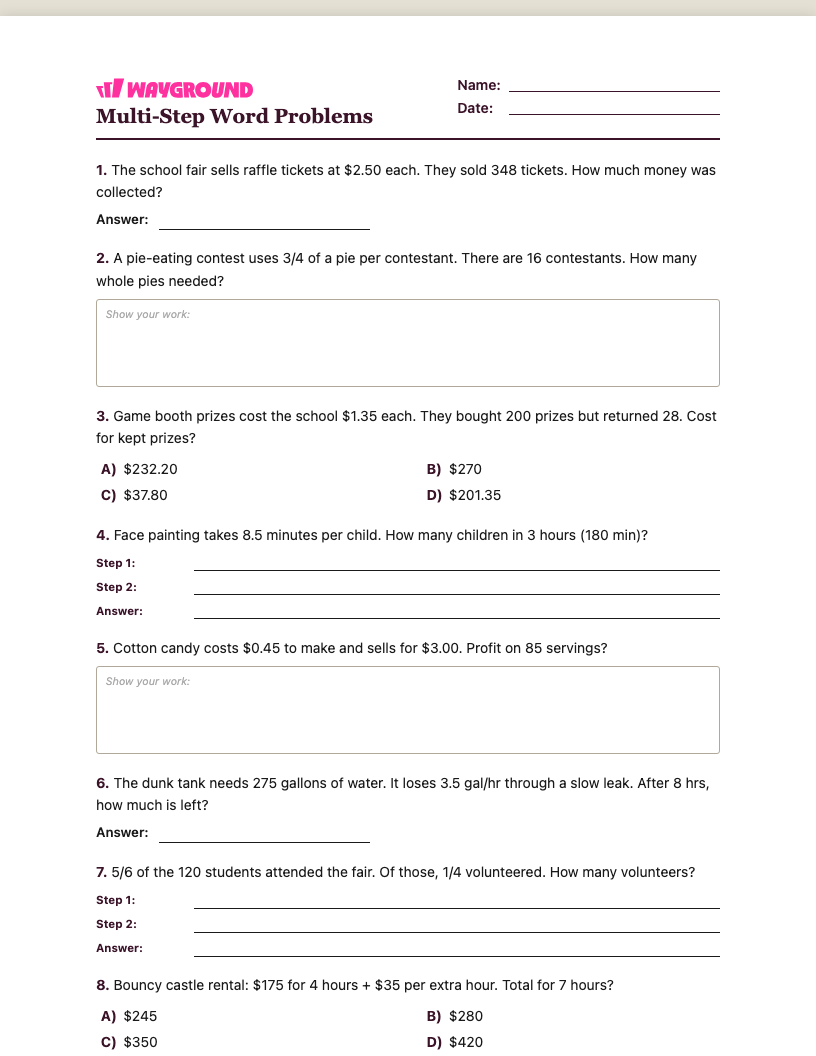
12 Q
5th
12 Q
5th
14 Q
5th
14 Q
5th
14 Q
5th
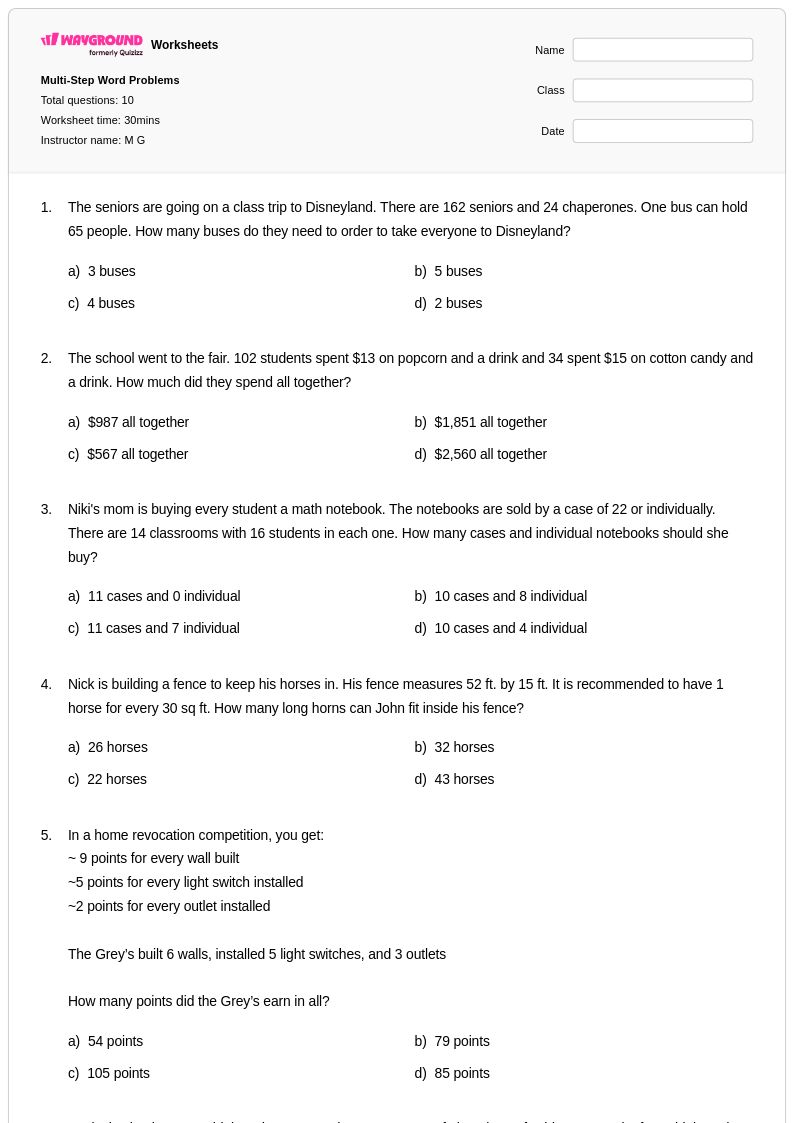
10 Q
5th - 6th
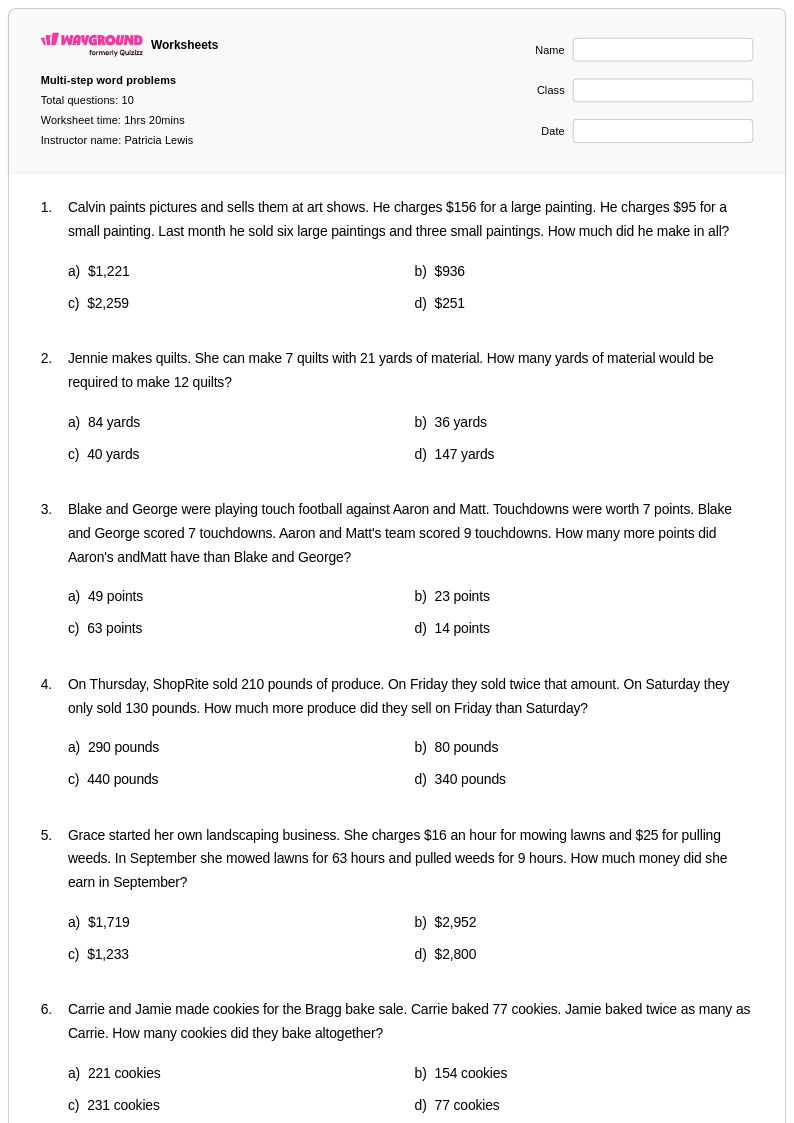
10 Q
5th
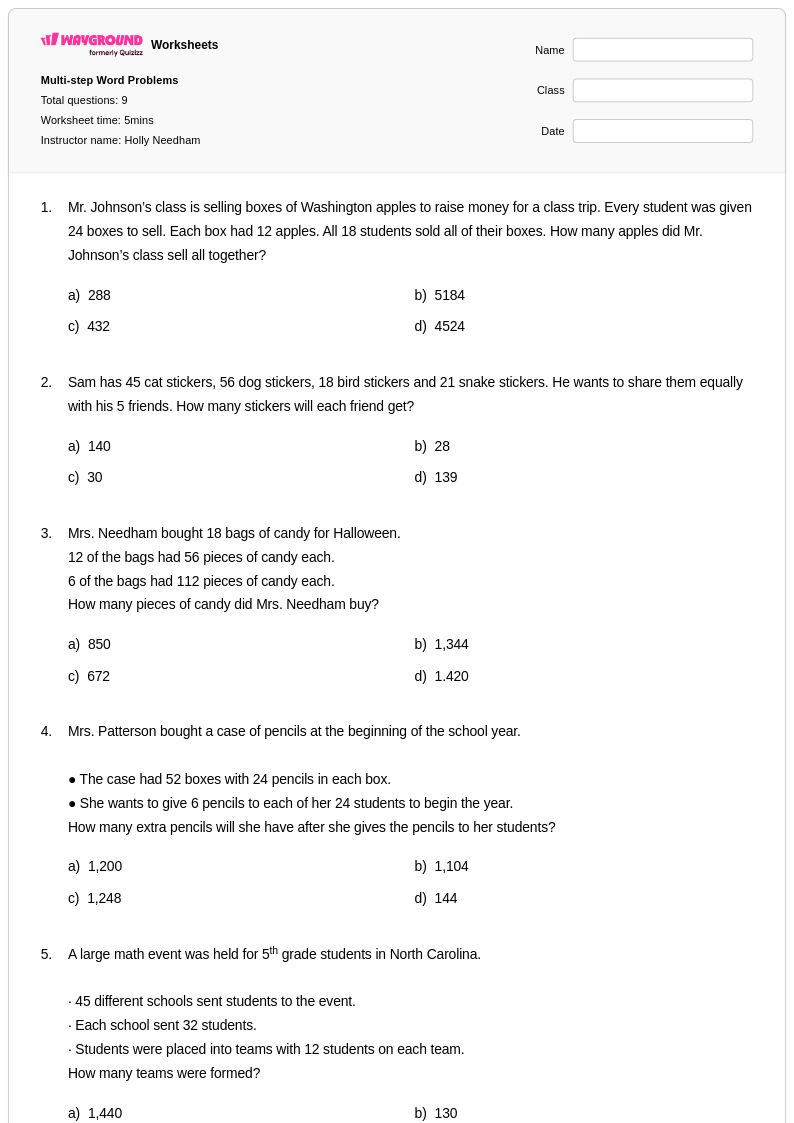
9 Q
5th
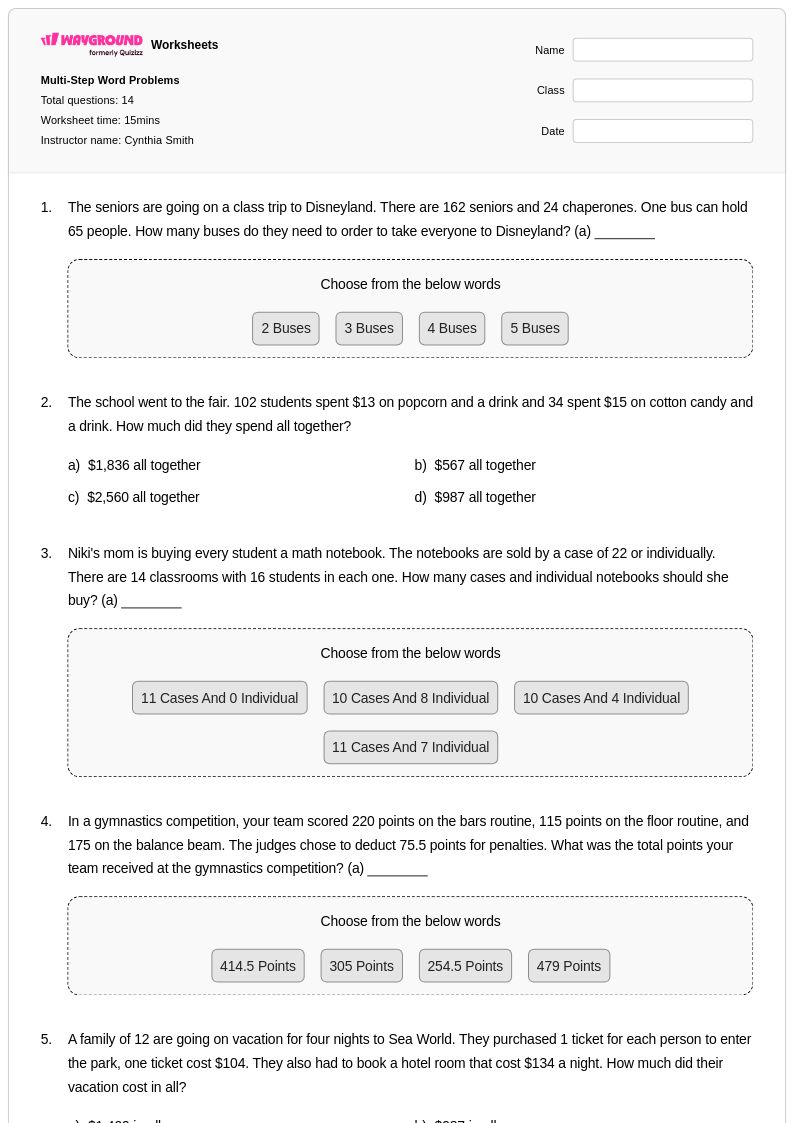
14 Q
5th
10 Q
5th
11 Q
5th
10 Q
4th - 5th
15 Q
5th
10 Q
4th - 5th
10 Q
1st - 5th
4 Q
5th
9 Q
4th - 5th
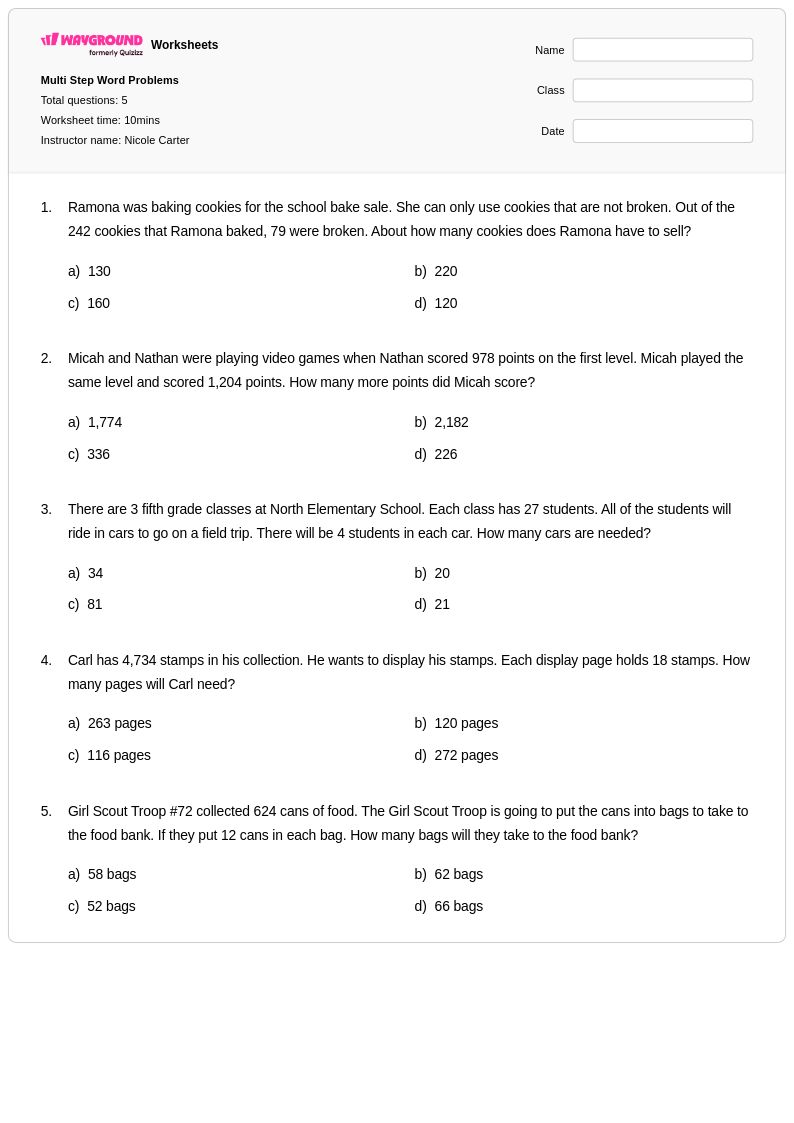
5 Q
5th
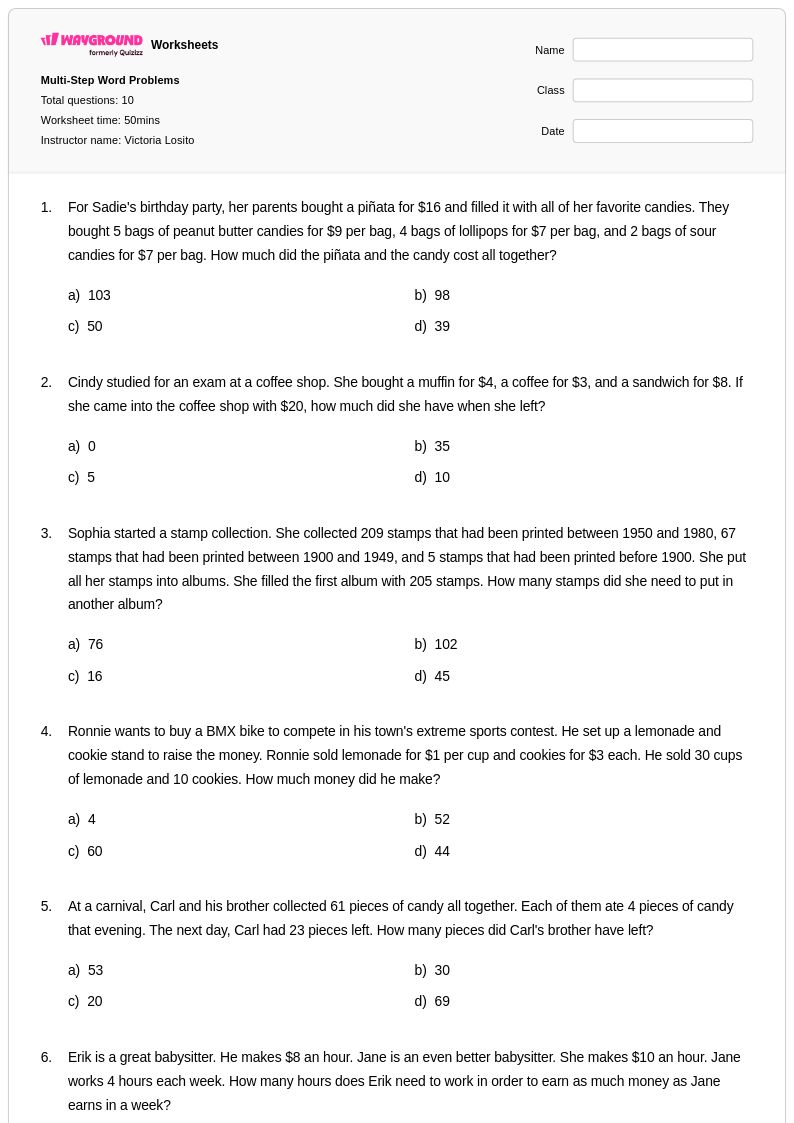
10 Q
5th
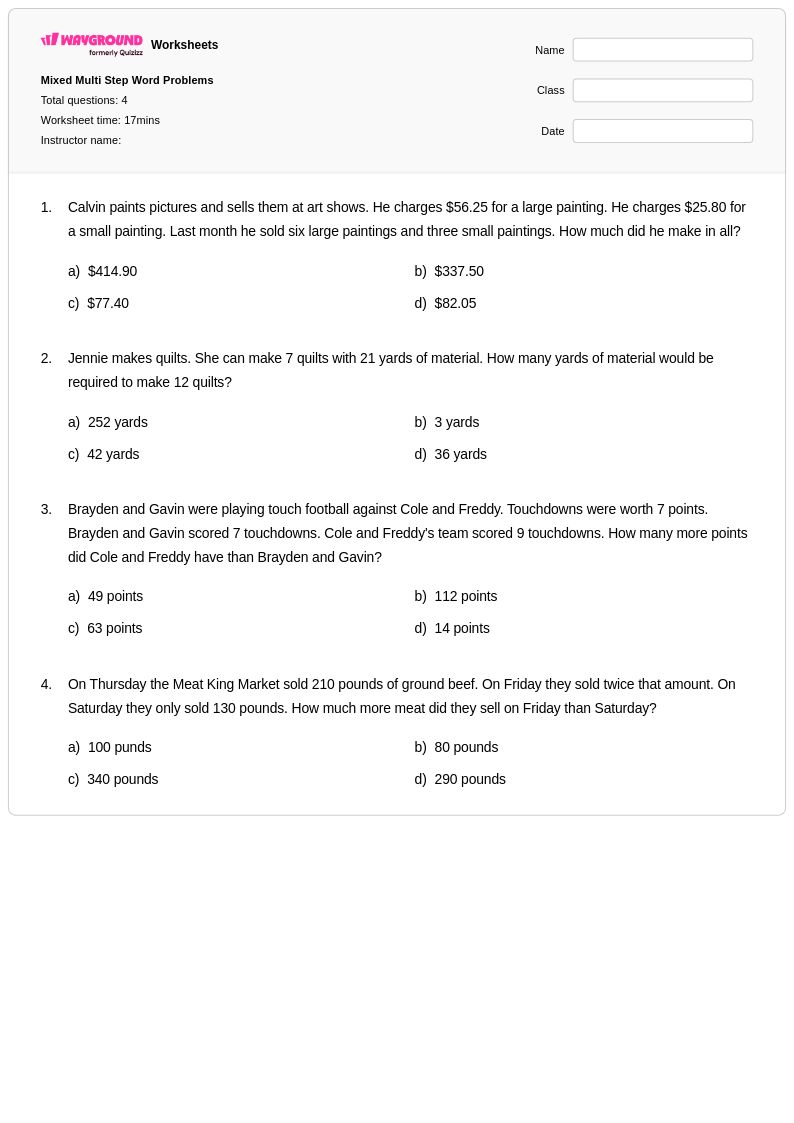
4 Q
4th - 5th
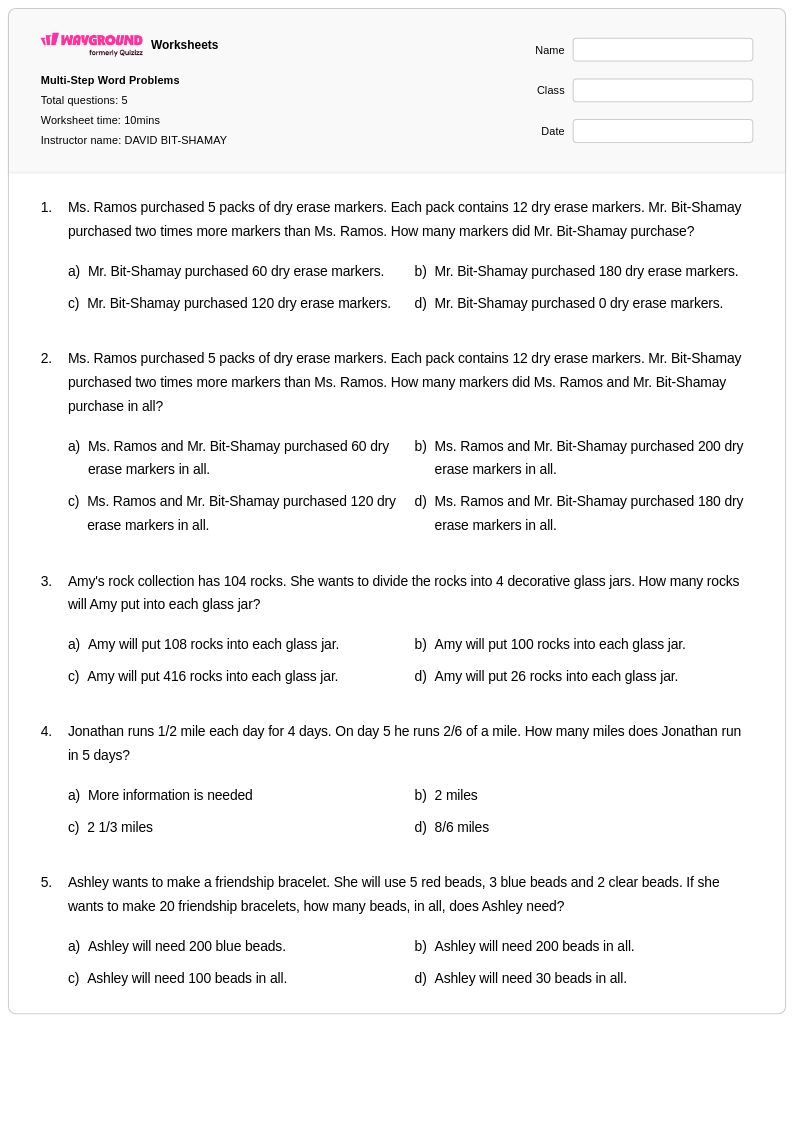
5 Q
4th - 5th
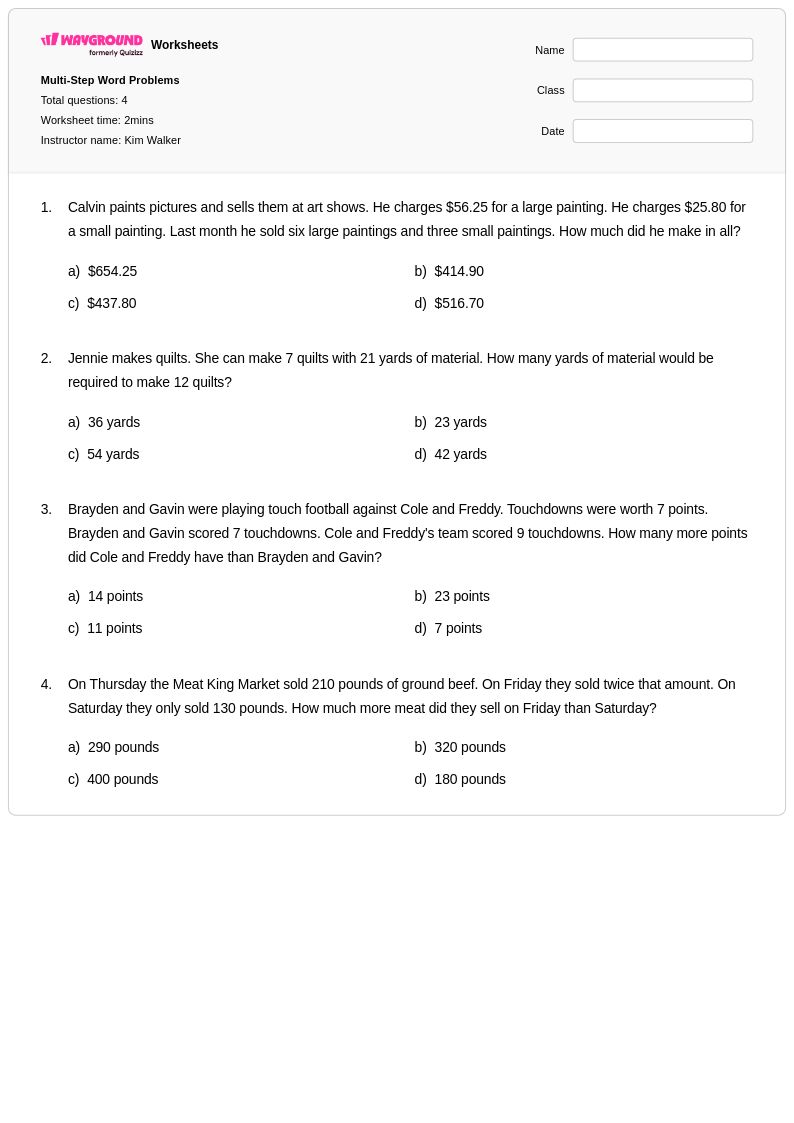
4 Q
4th - 5th
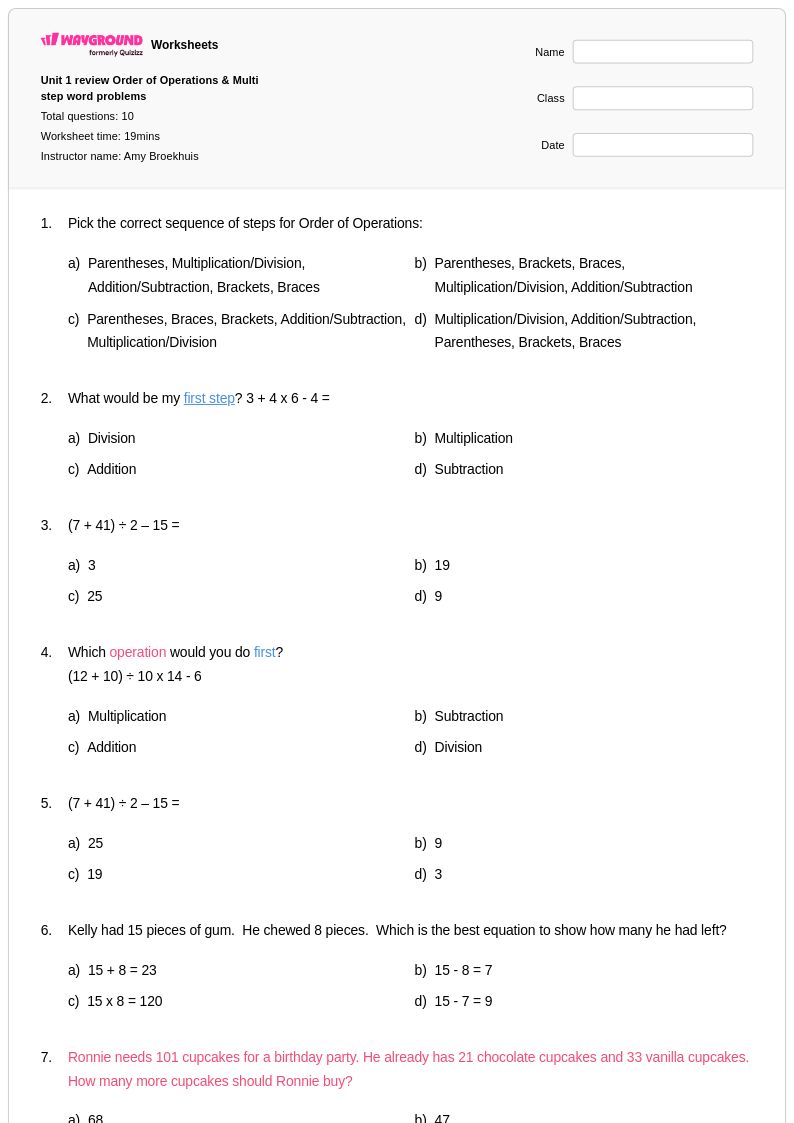
10 Q
5th
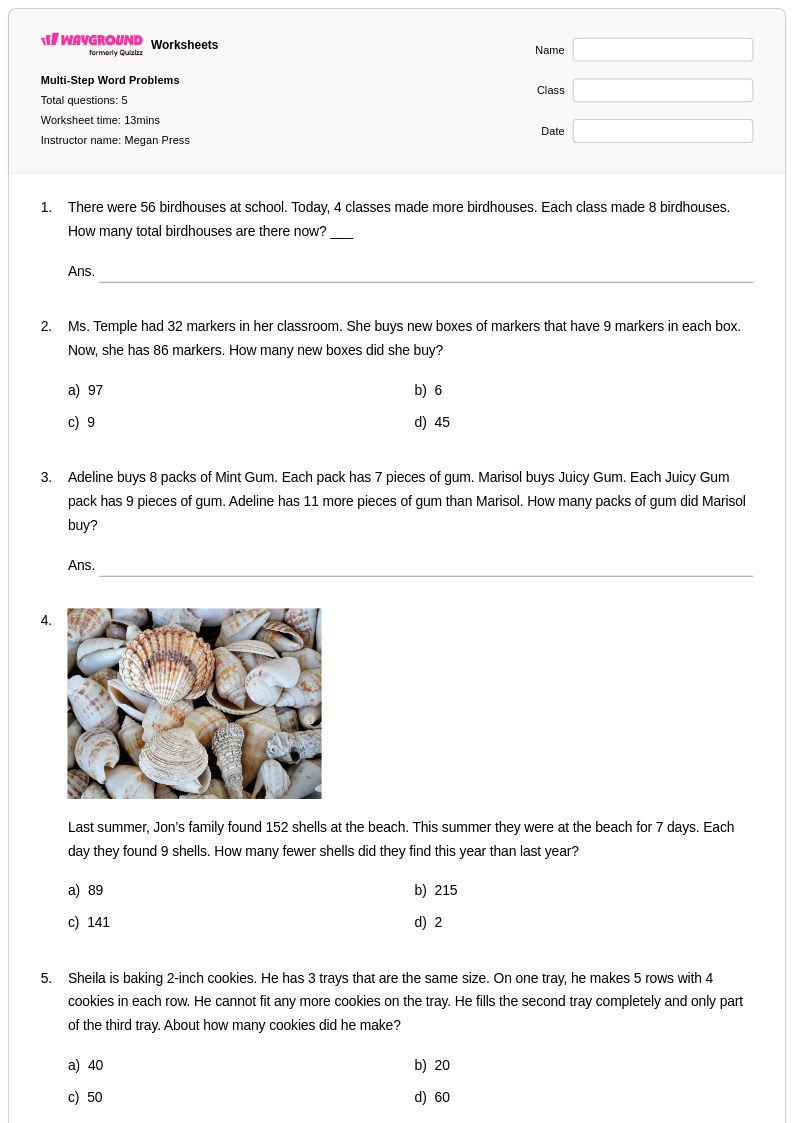
5 Q
3rd - 5th
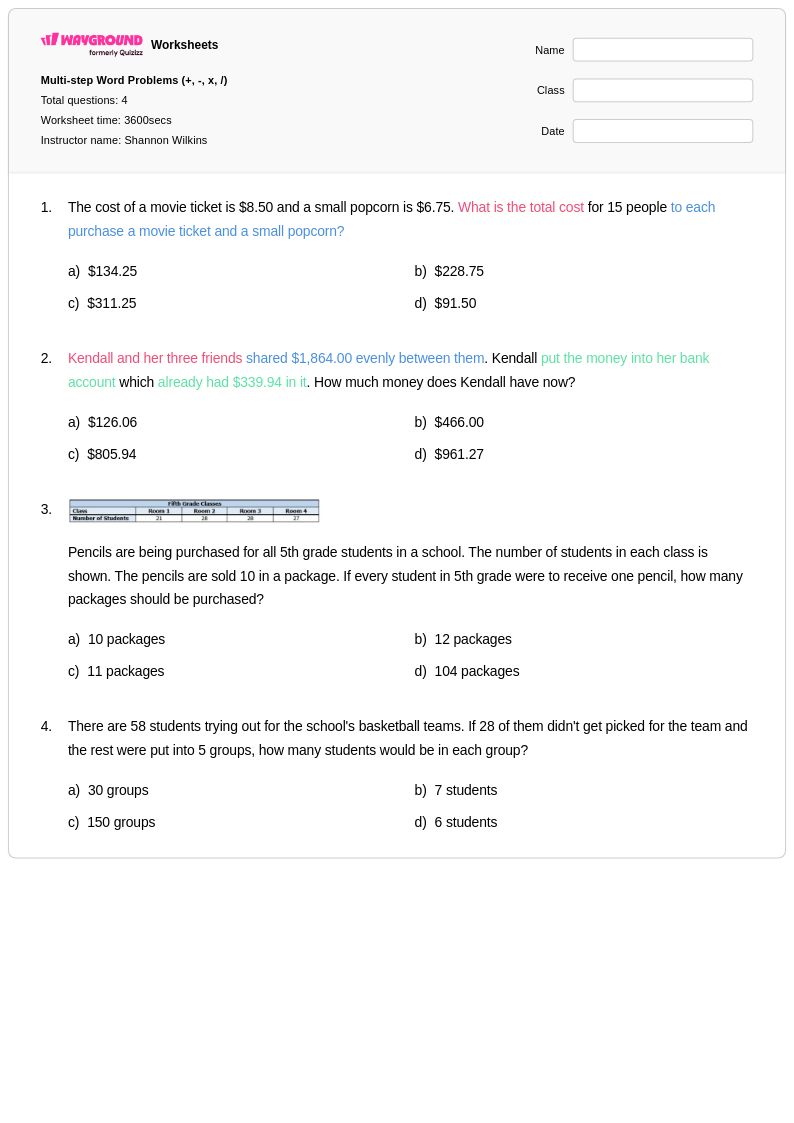
4 Q
5th
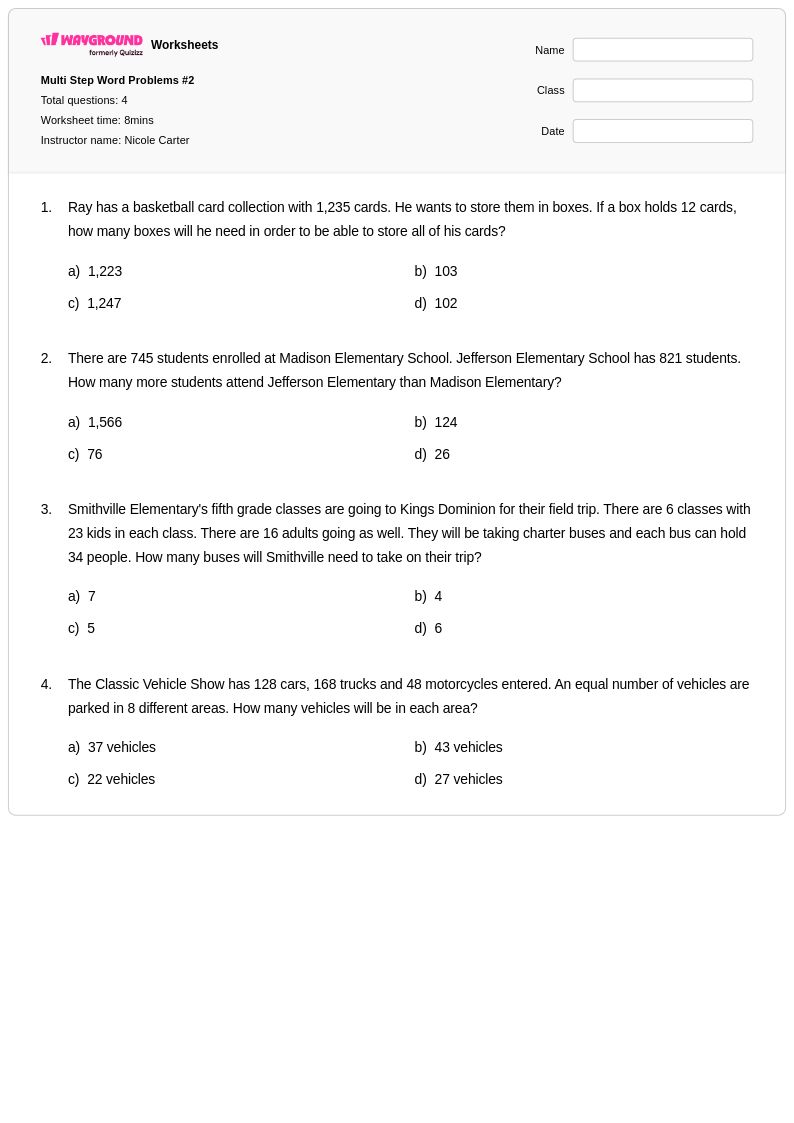
4 Q
5th
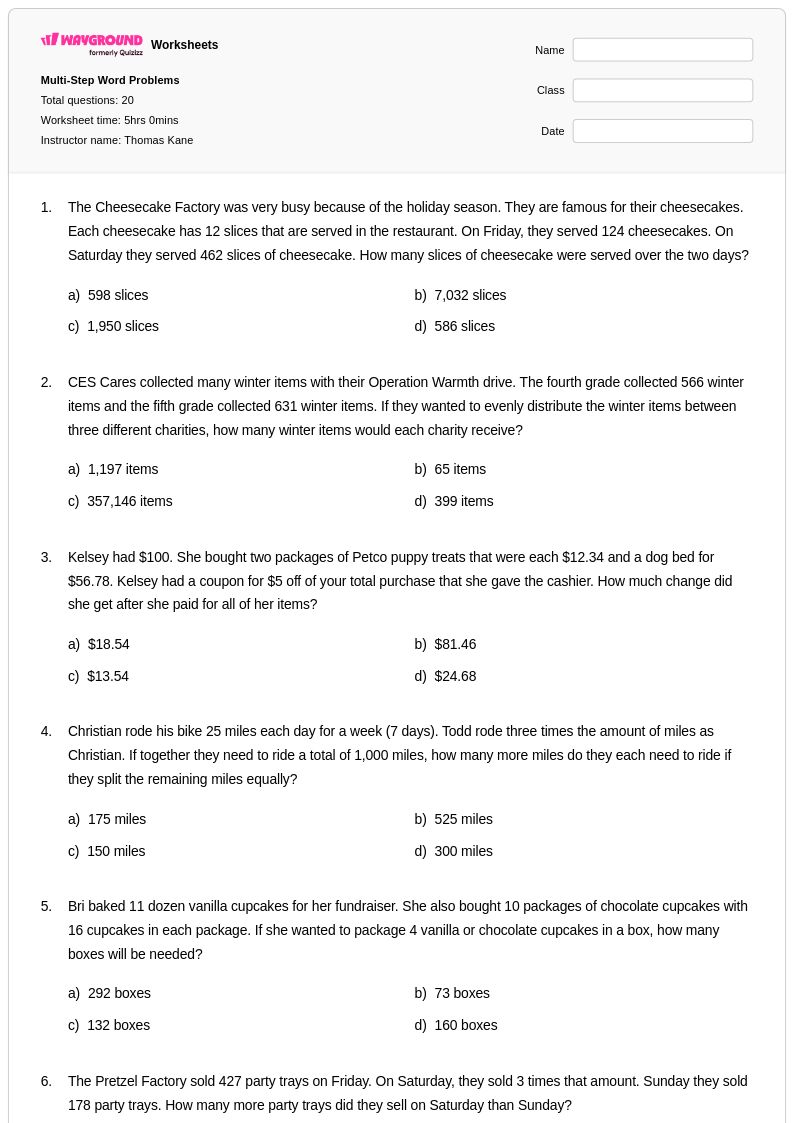
20 Q
5th
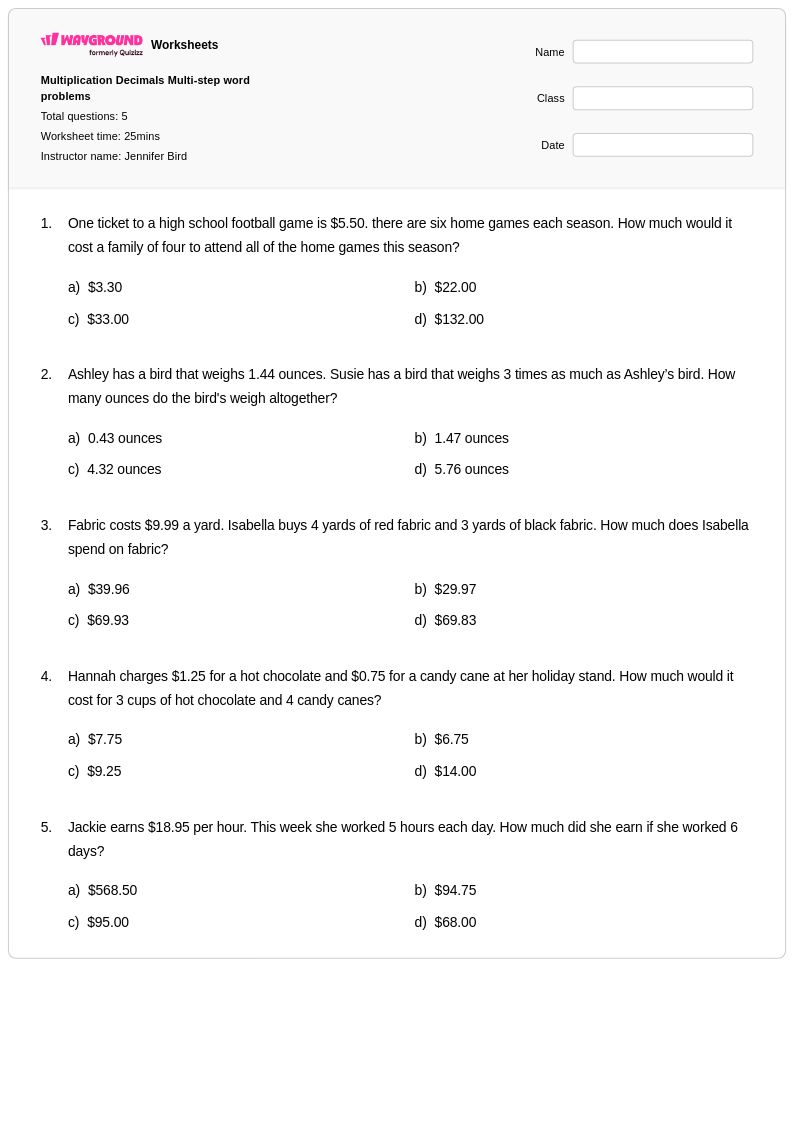
5 Q
5th
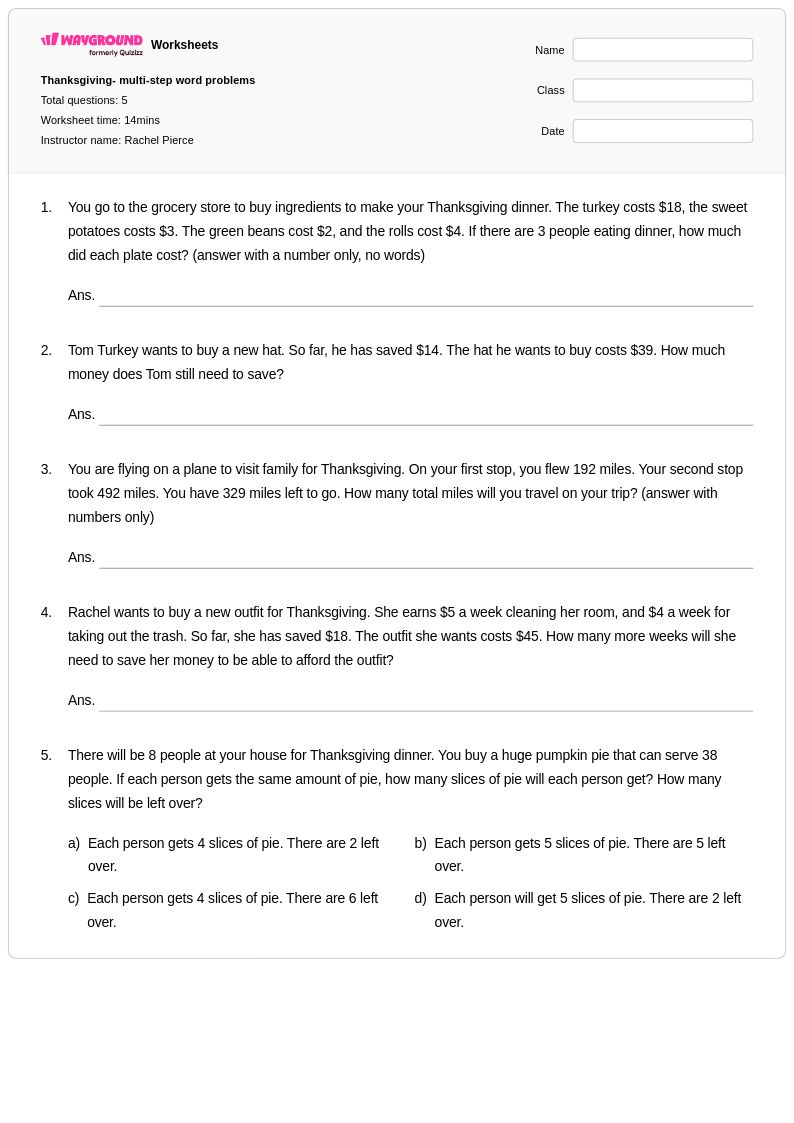
5 Q
3rd - 5th
Explore Other Subject Worksheets for grade 5
Explore printable Multi-step Word Problems worksheets for Grade 5
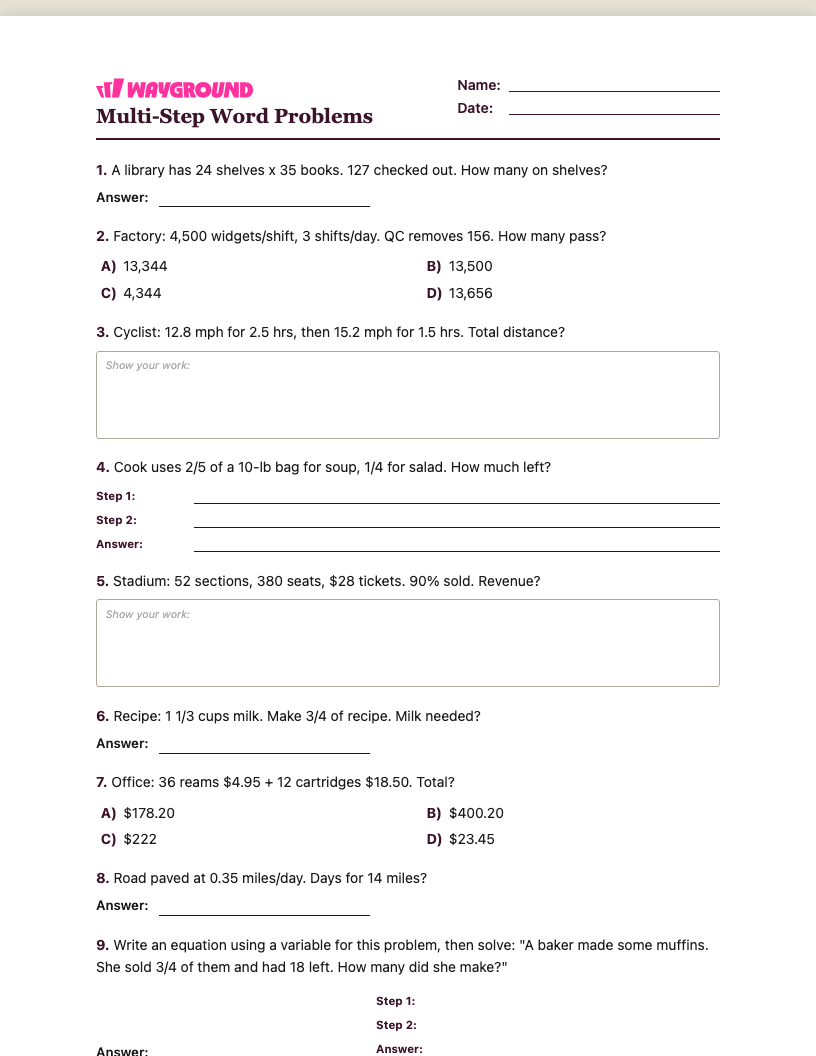
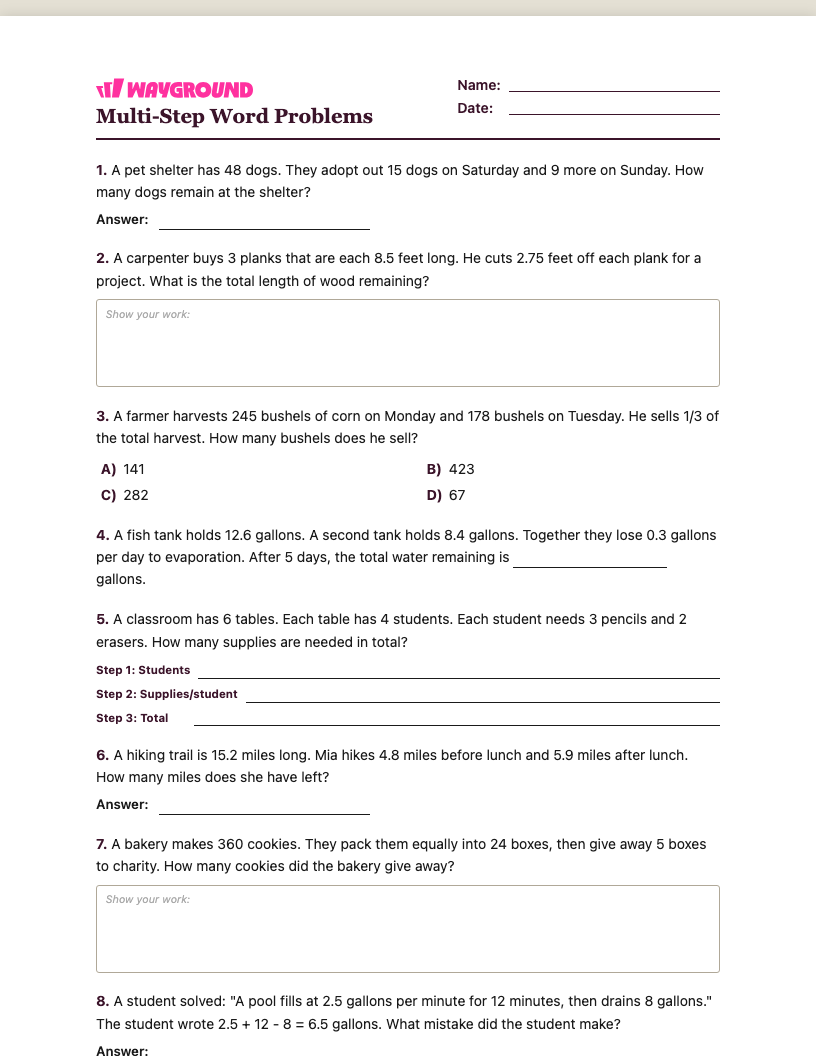
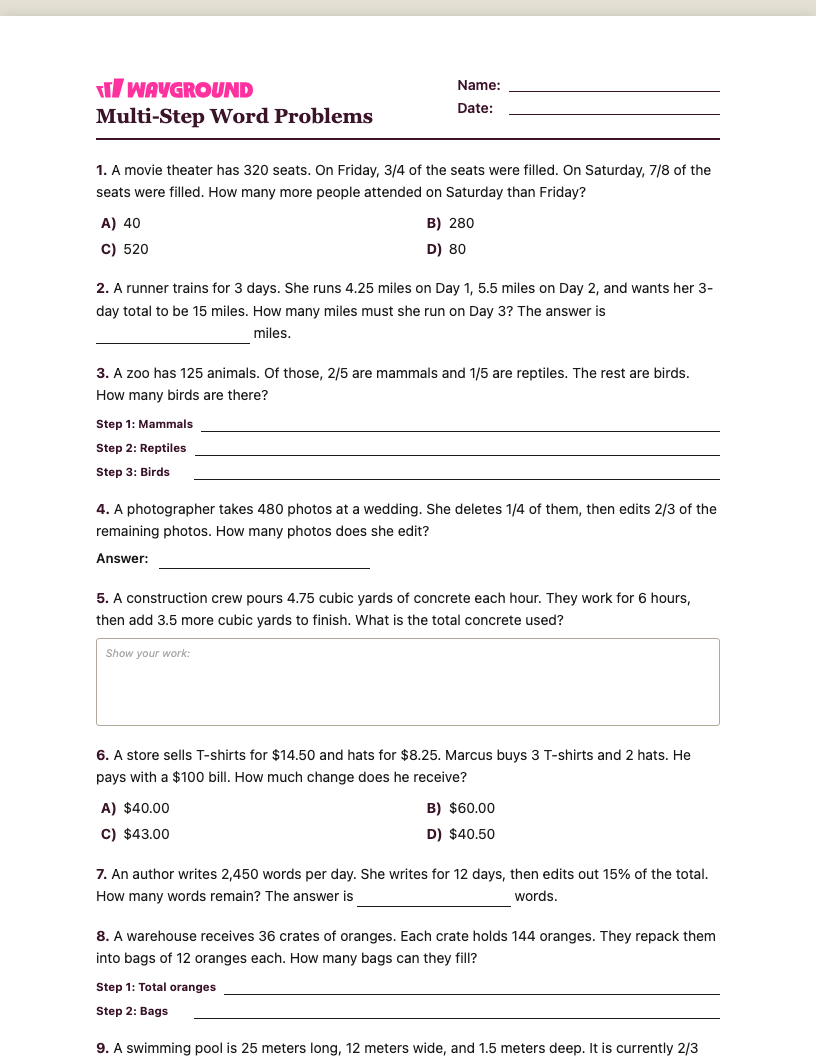
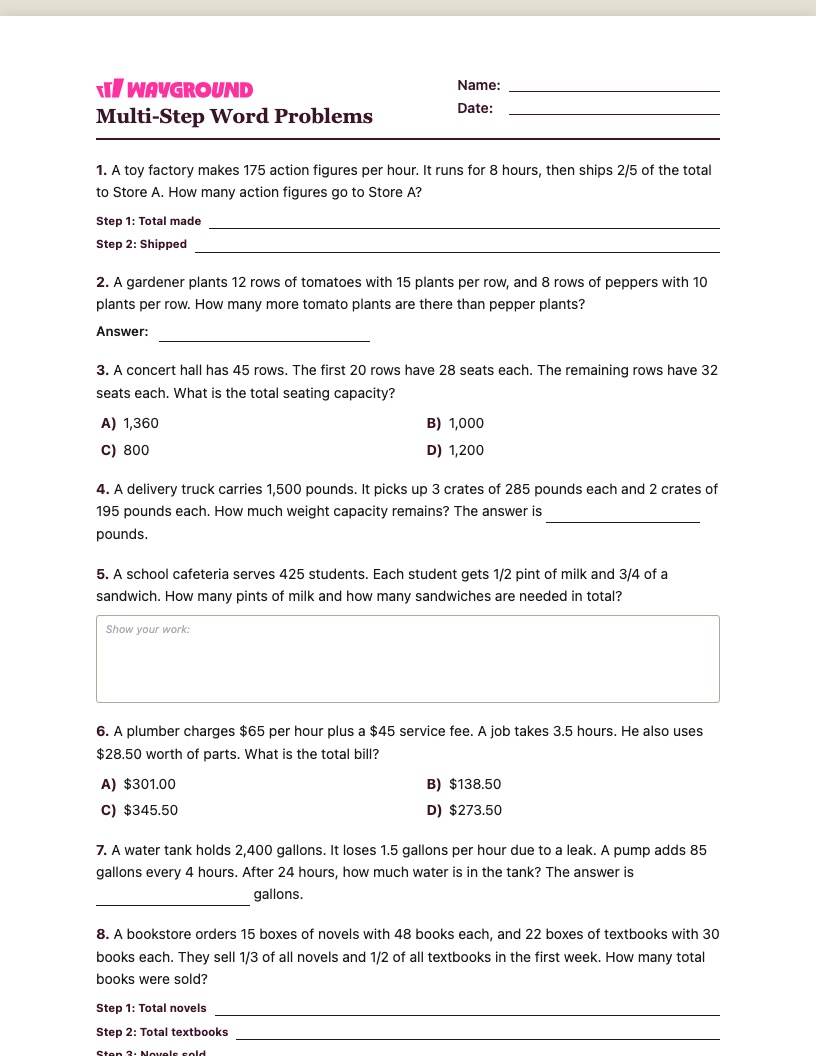
Multi-step word problems for Grade 5 represent a critical milestone in mathematical development, requiring students to synthesize multiple operations and logical reasoning skills within real-world contexts. Wayground's comprehensive collection of multi-step word problem worksheets challenges fifth-grade students to break down complex scenarios involving combinations of addition, subtraction, multiplication, and division while developing essential problem-solving strategies. These carefully crafted practice problems strengthen students' ability to identify relevant information, determine appropriate operation sequences, and verify their solutions through logical reasoning. Each worksheet includes a detailed answer key to support independent learning and self-assessment, with free printable pdf formats ensuring easy classroom distribution and homework assignments.
Wayground, formerly Quizizz, empowers educators with millions of teacher-created resources specifically designed for multi-step word problem instruction, featuring robust search and filtering capabilities that allow teachers to locate worksheets aligned with specific learning standards and skill levels. The platform's differentiation tools enable teachers to customize problem complexity and modify worksheets to meet diverse student needs, supporting both remediation for struggling learners and enrichment opportunities for advanced students. Available in both printable and digital formats, including downloadable pdf versions, these resources streamline lesson planning while providing flexible options for in-class practice, homework assignments, and assessment preparation. Teachers can efficiently target specific mathematical reasoning gaps, scaffold complex problem-solving processes, and build student confidence through systematic skill practice across various real-world mathematical applications.
FAQs
What new skills are included in 5th grade multi-step word problems?
What's the best way to teach multi-step problems with fractions and decimals?
Where do 5th graders struggle with these more complex word problems?
How do these worksheets help 5th graders master this topic?
How can I use this 5th grade worksheet for practice or assessment?
How do these problems align with 5th grade math standards like Common Core?