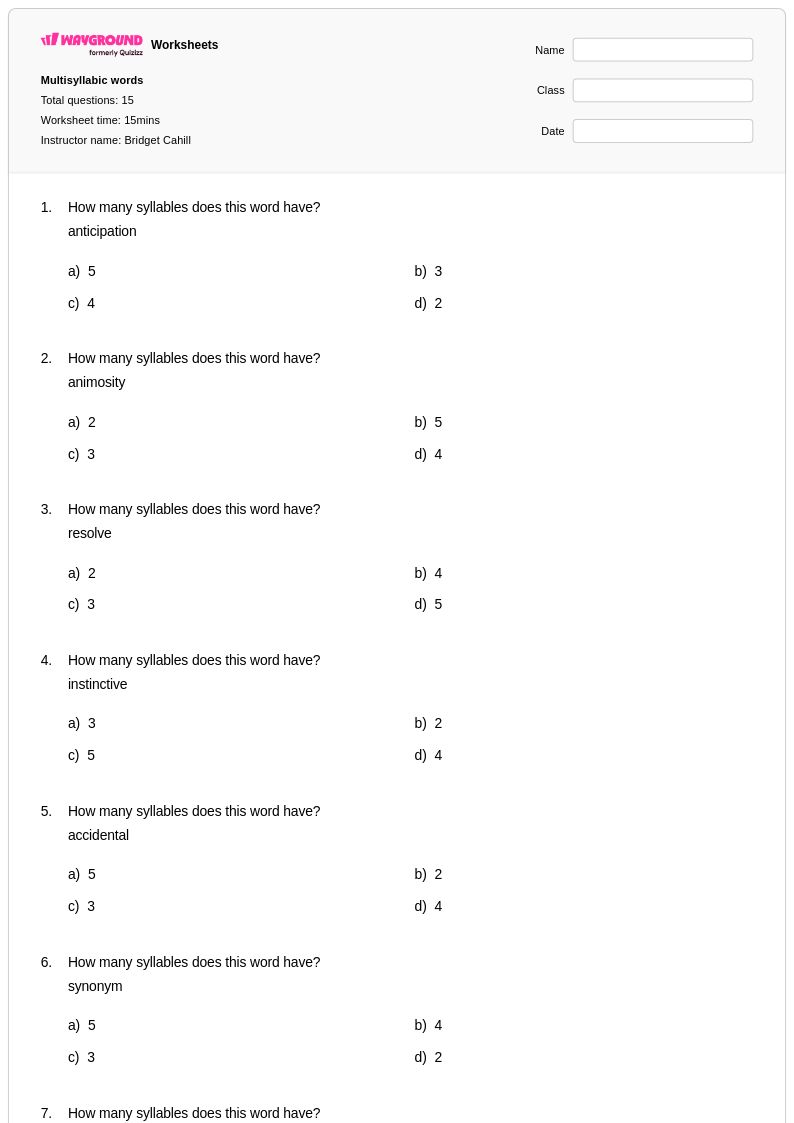
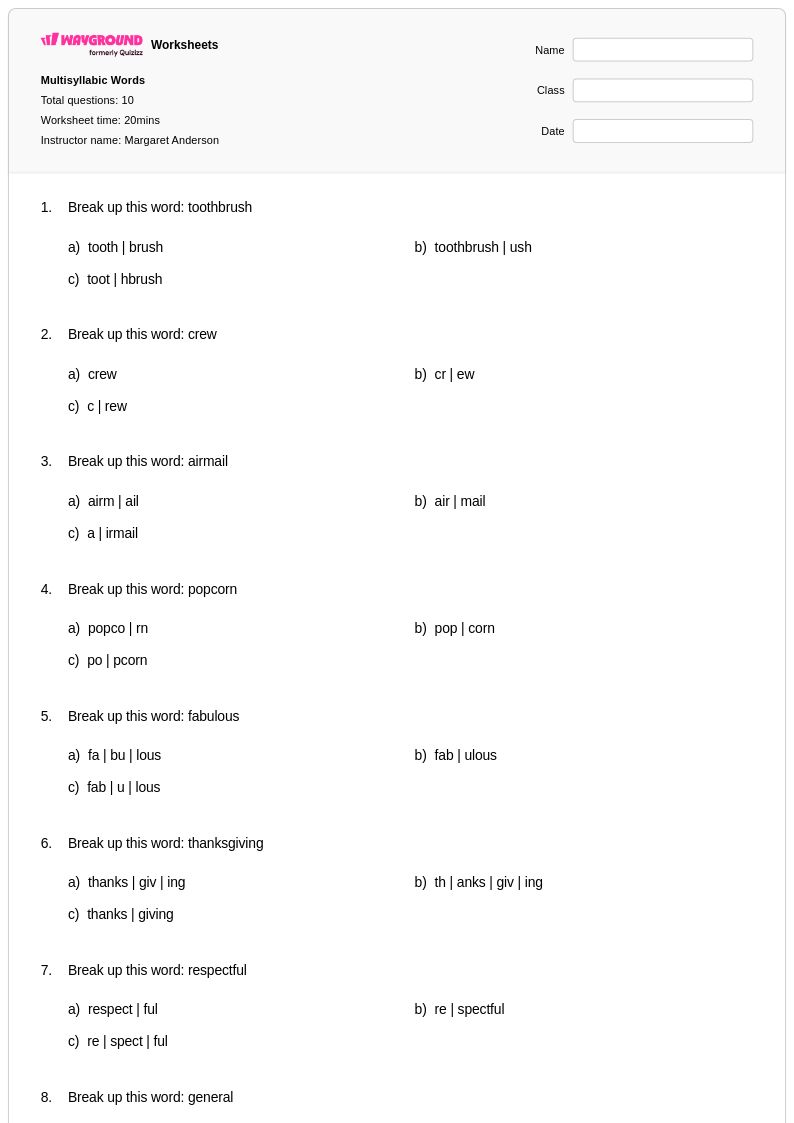
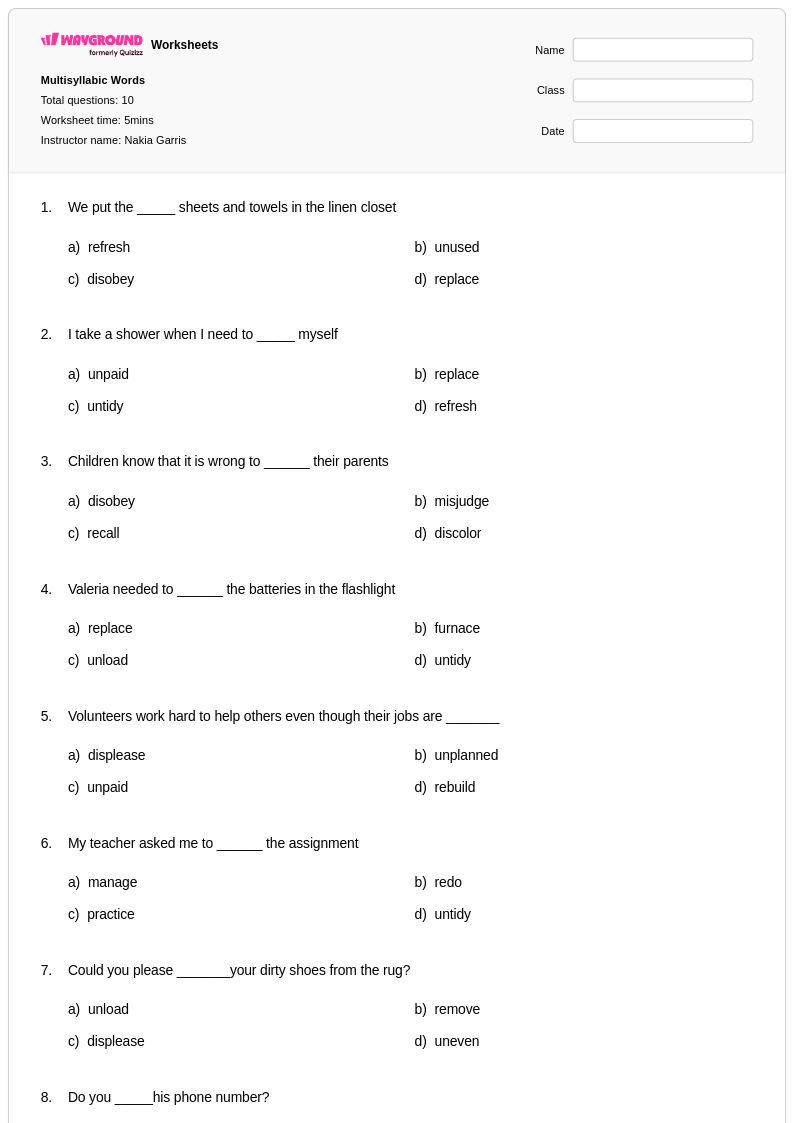
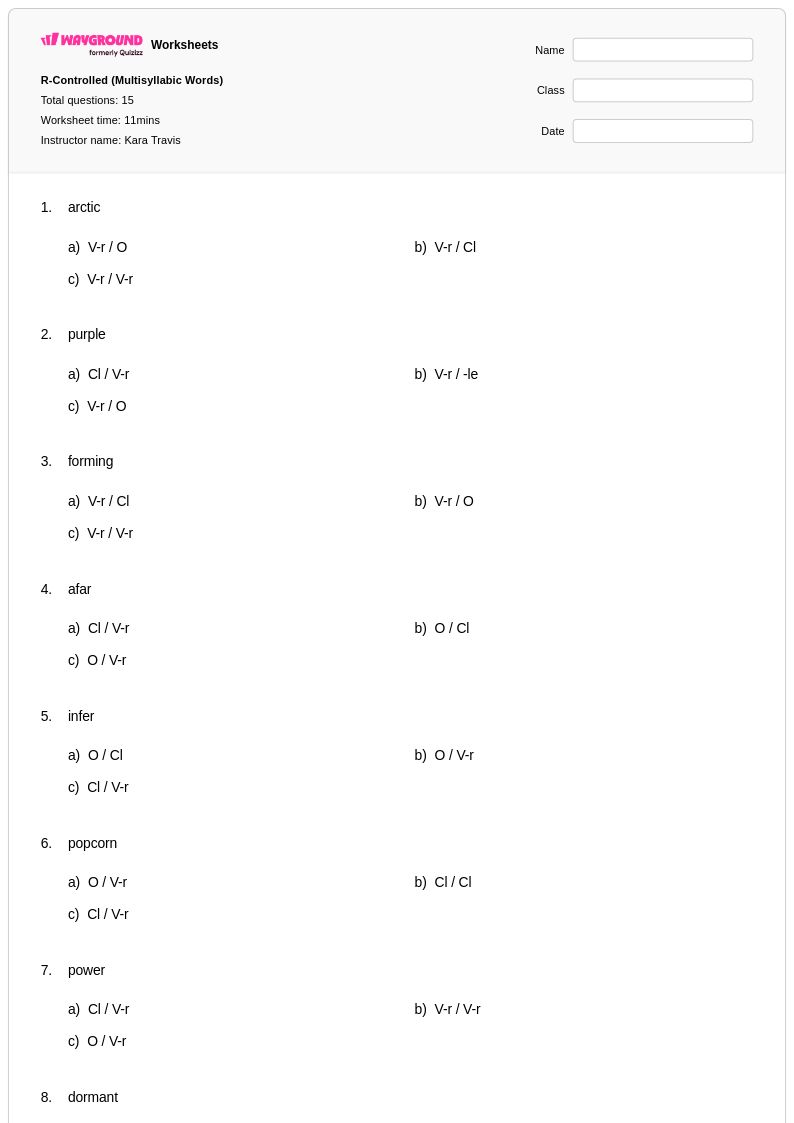
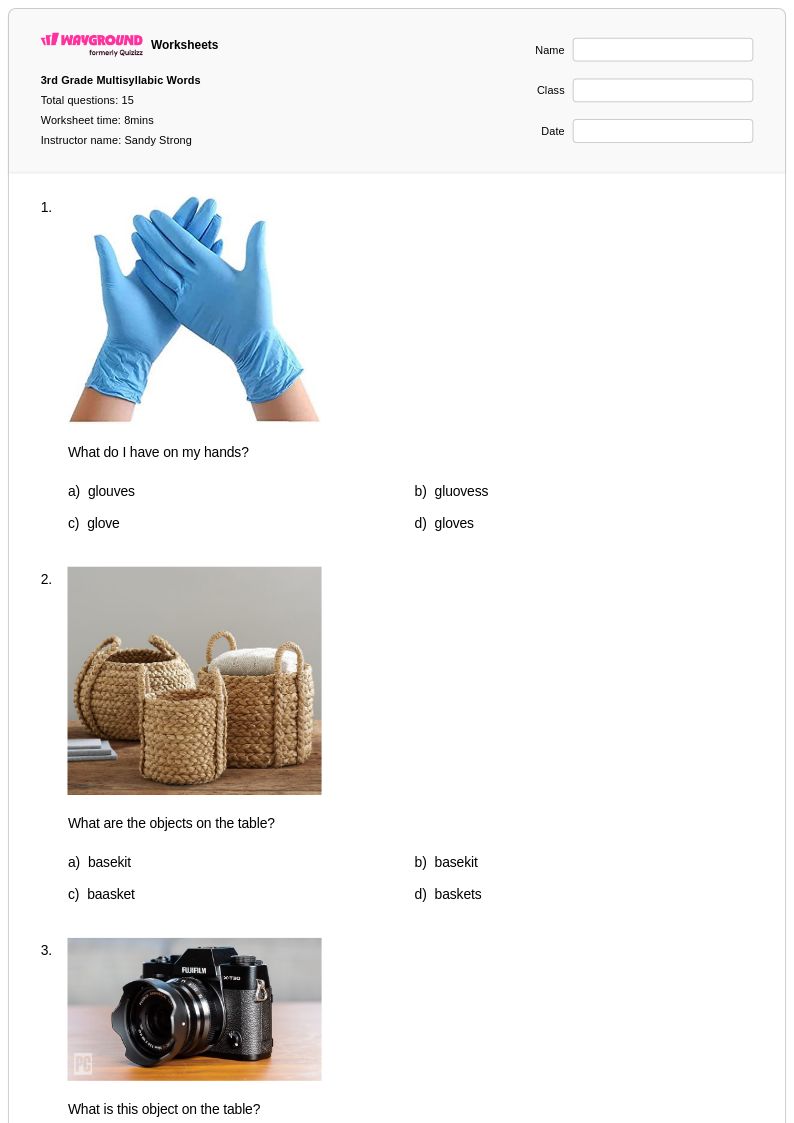
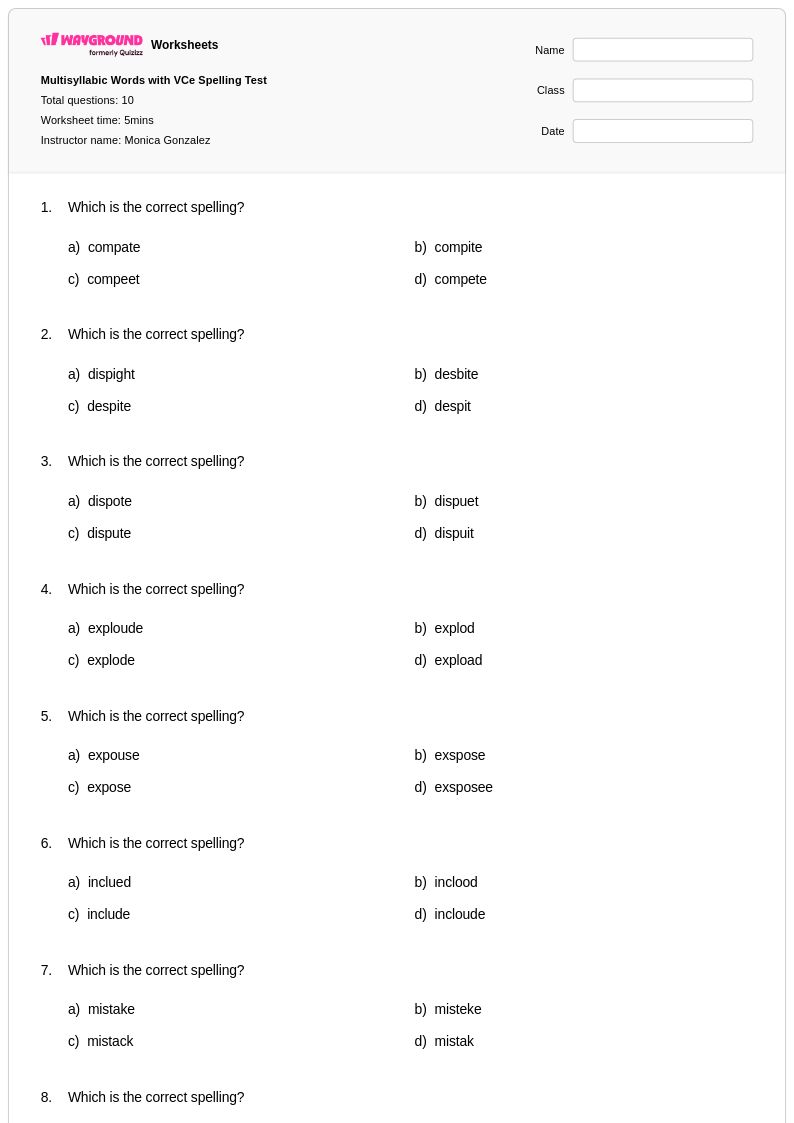
Master multisyllabic words with Wayground's comprehensive collection of free worksheets and printables, featuring practice problems and answer keys to help students develop strong syllable recognition and word breakdown skills.
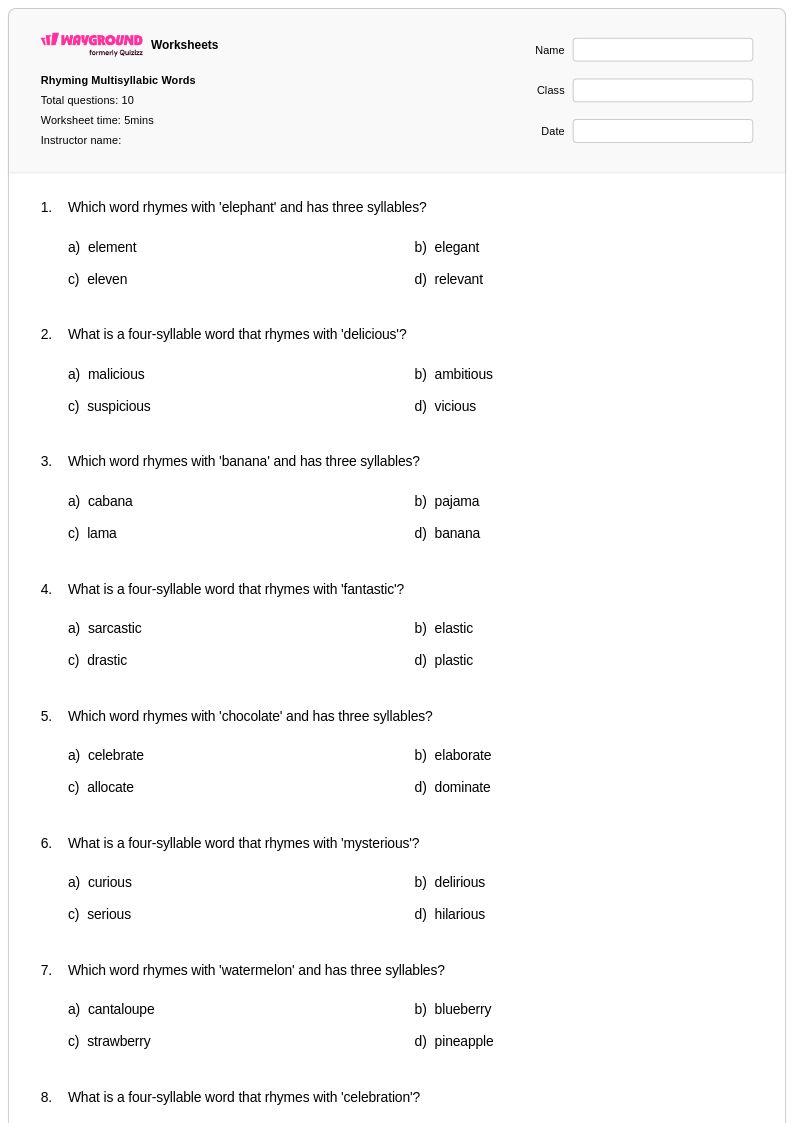
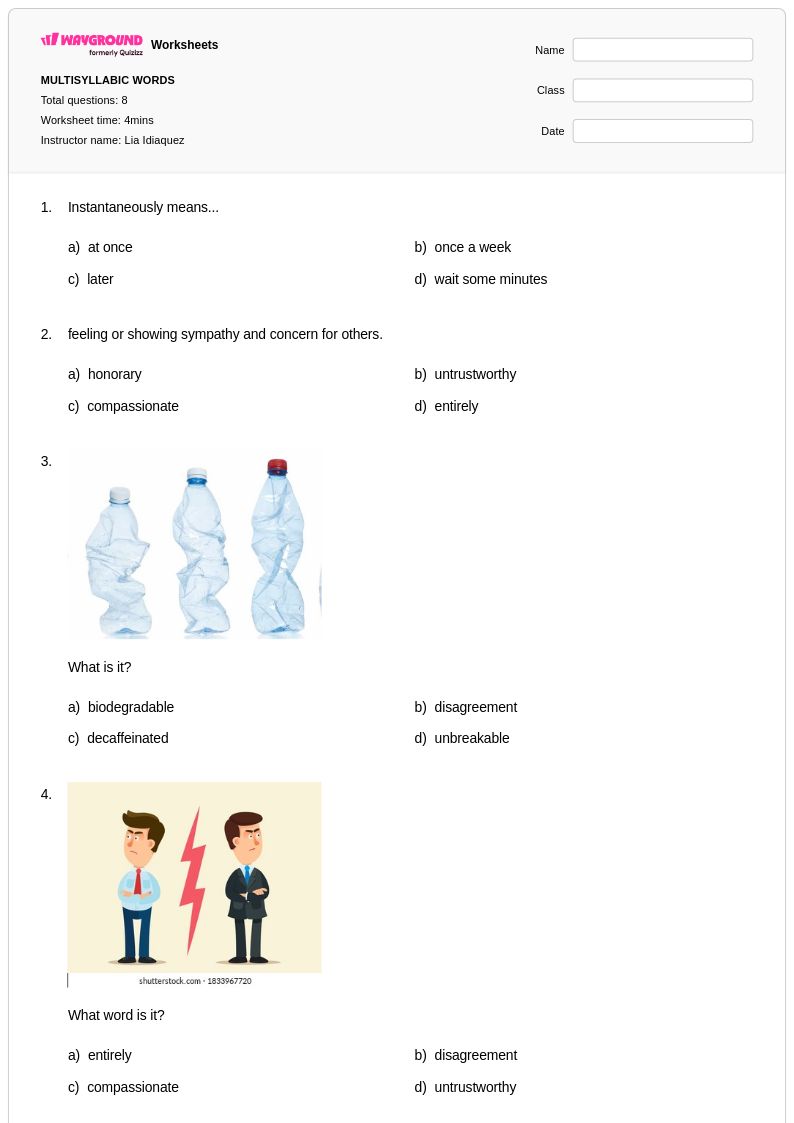
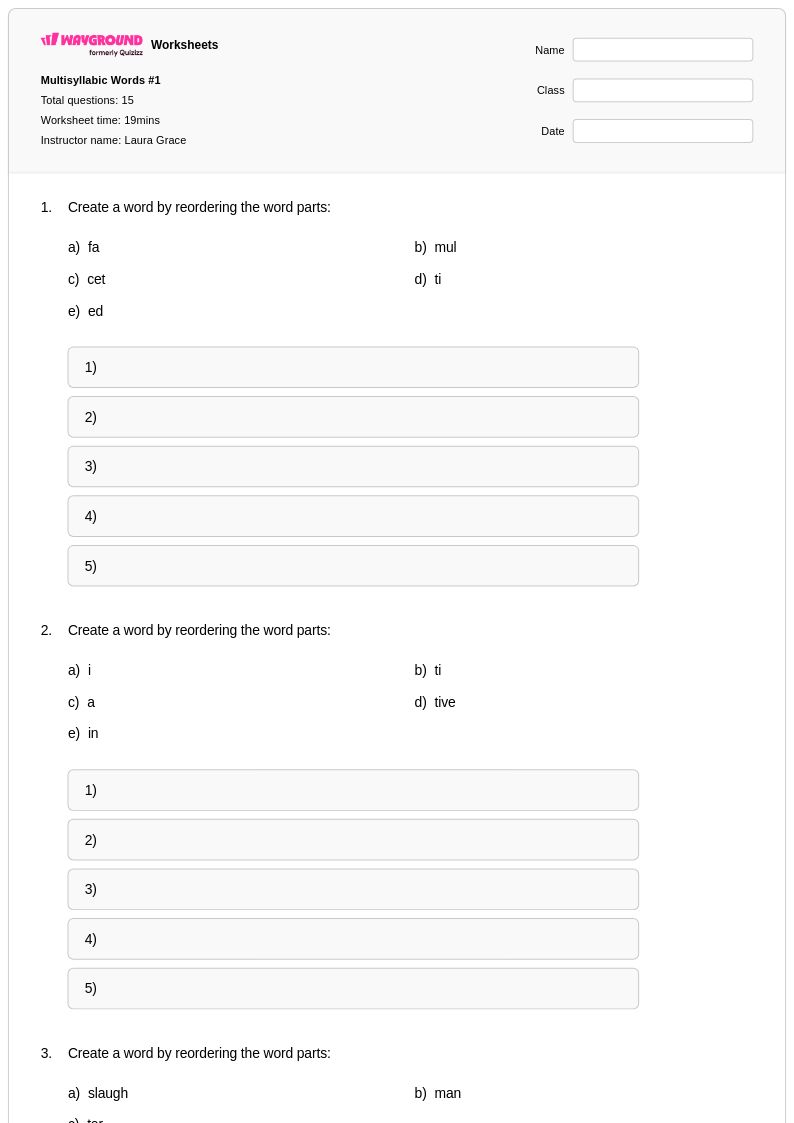
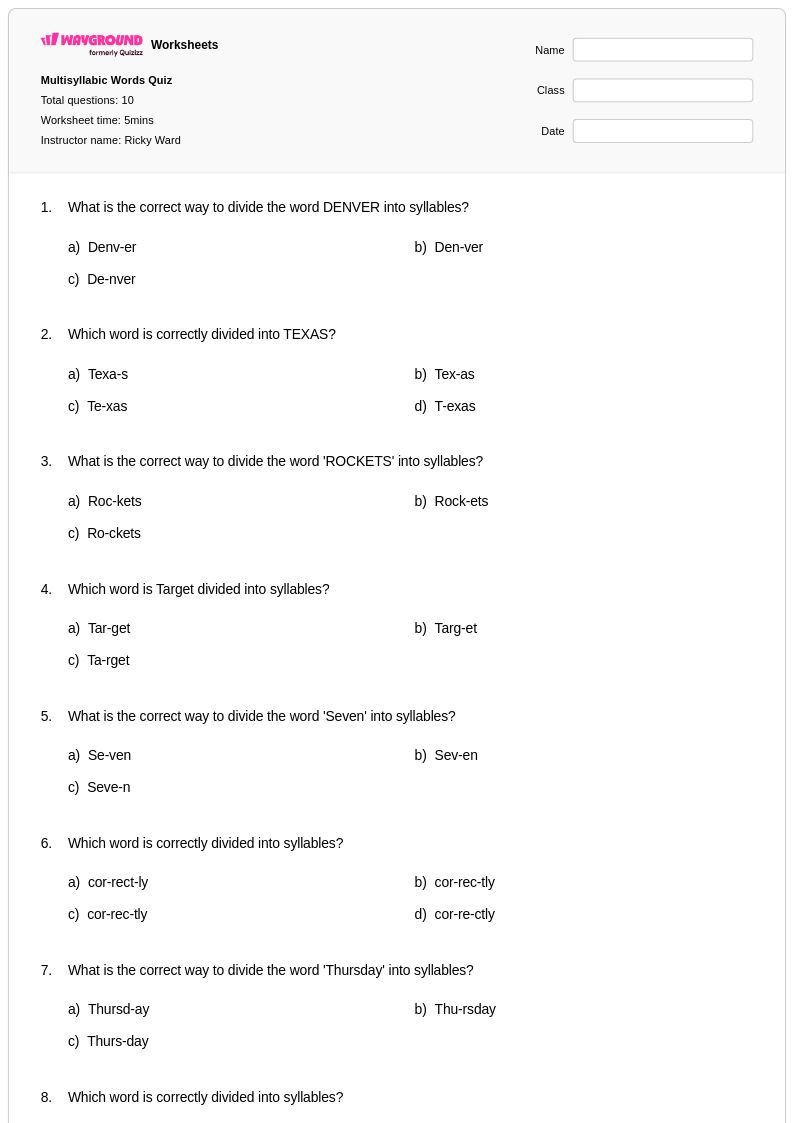
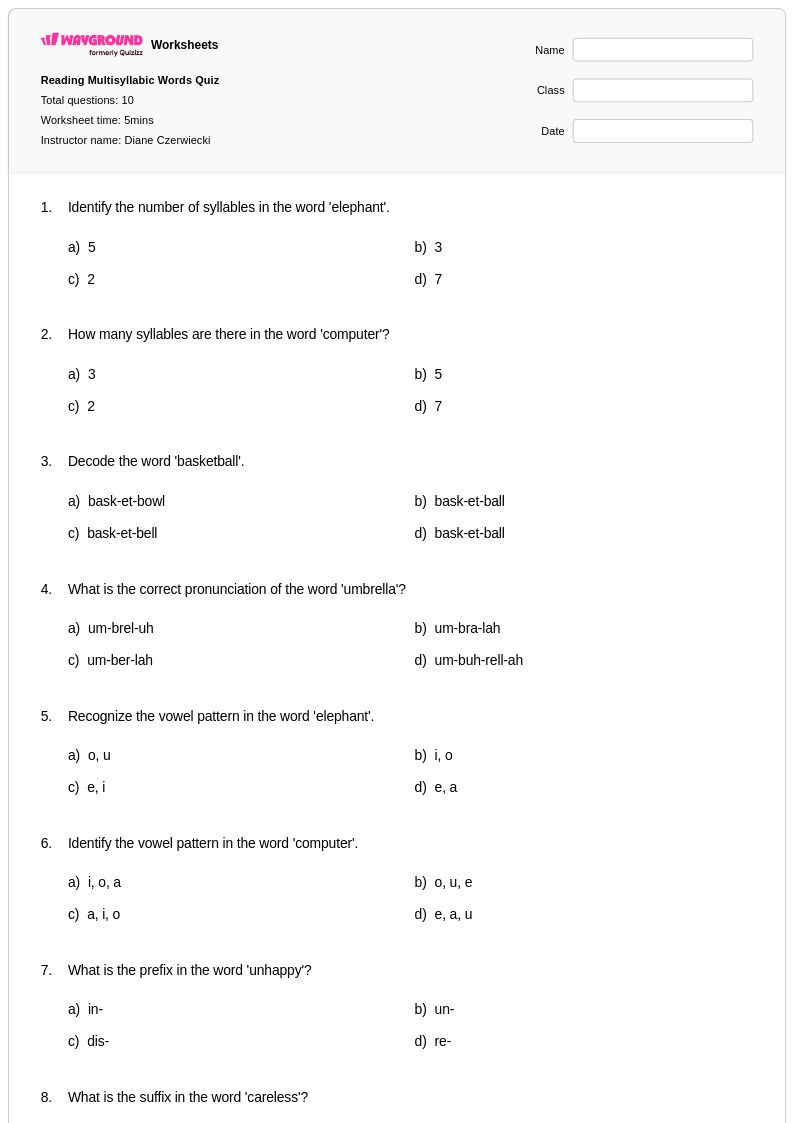
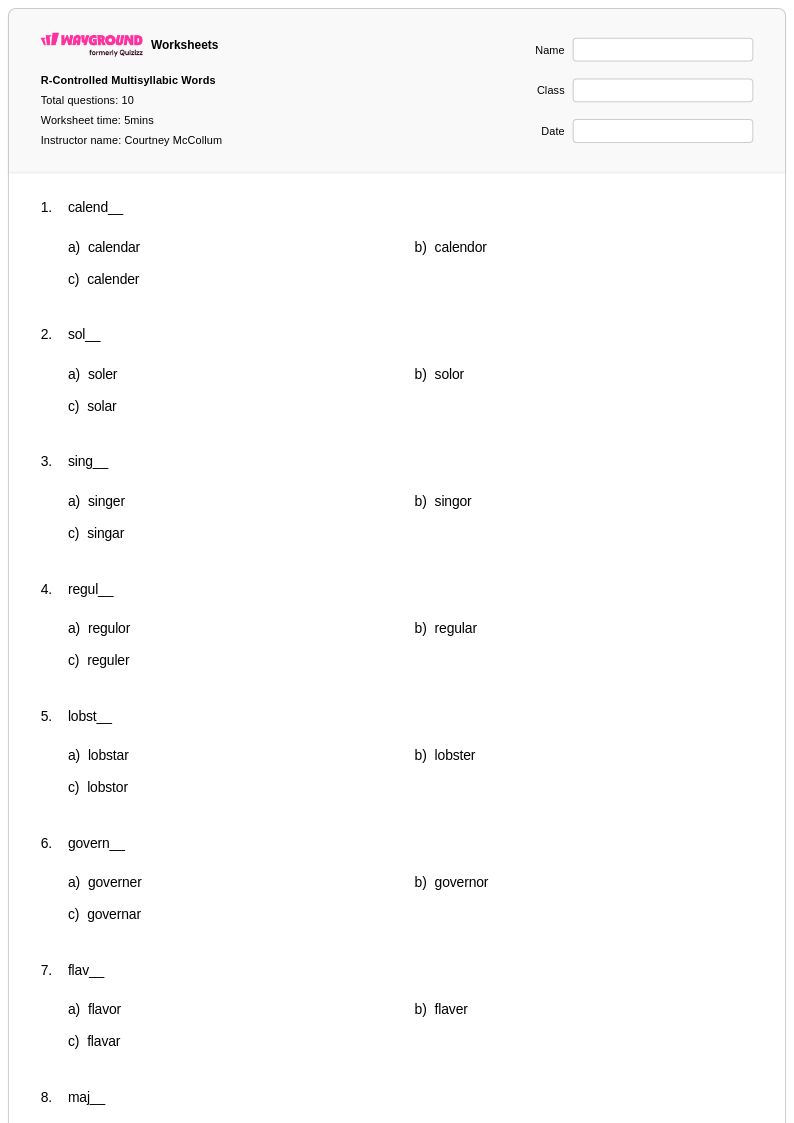
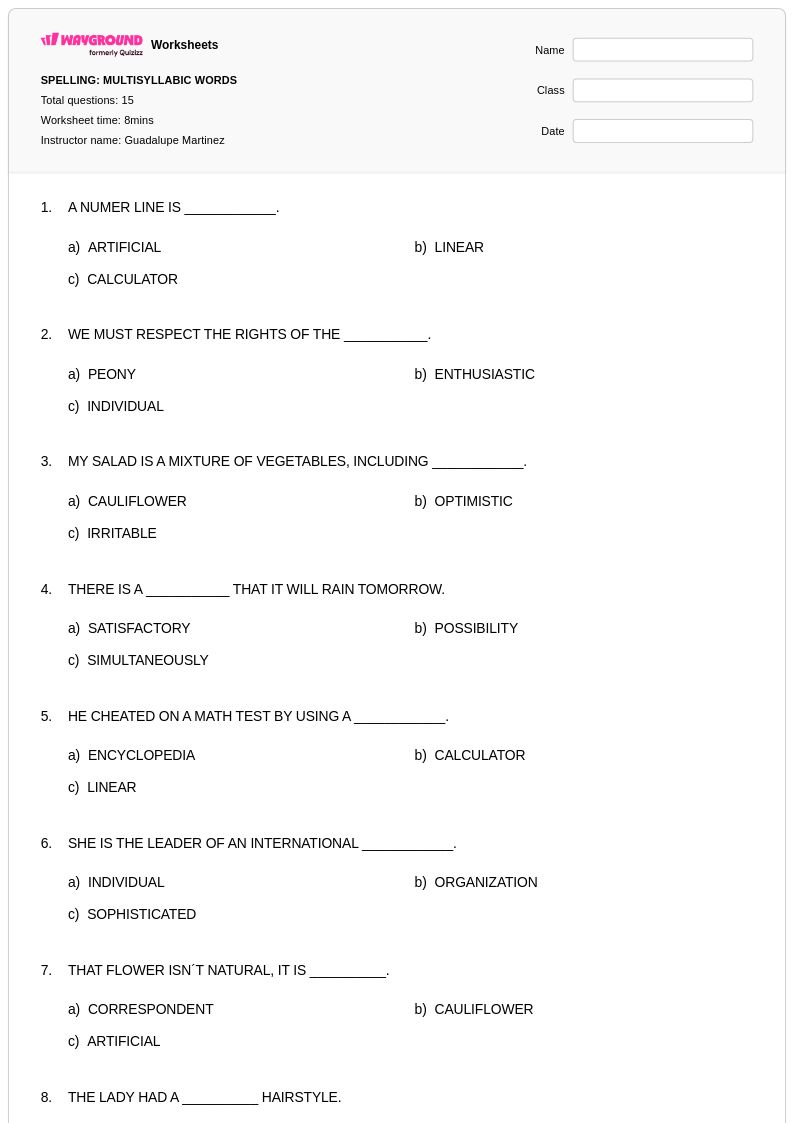
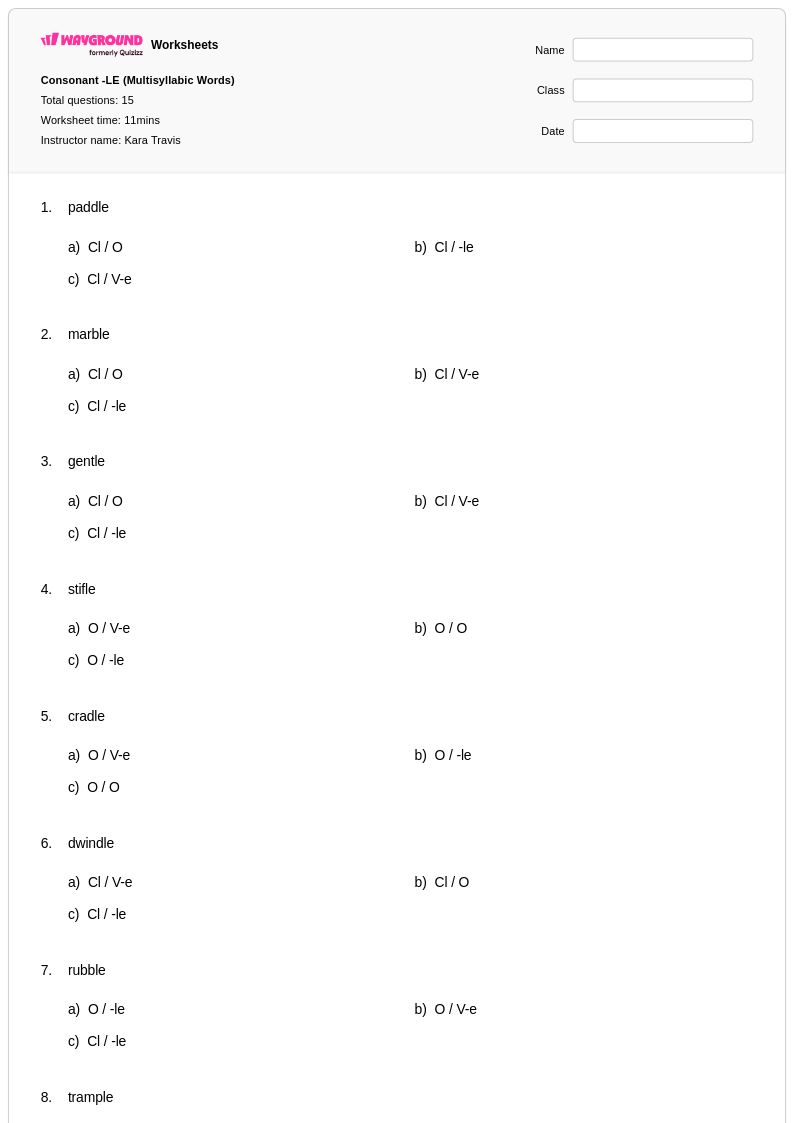
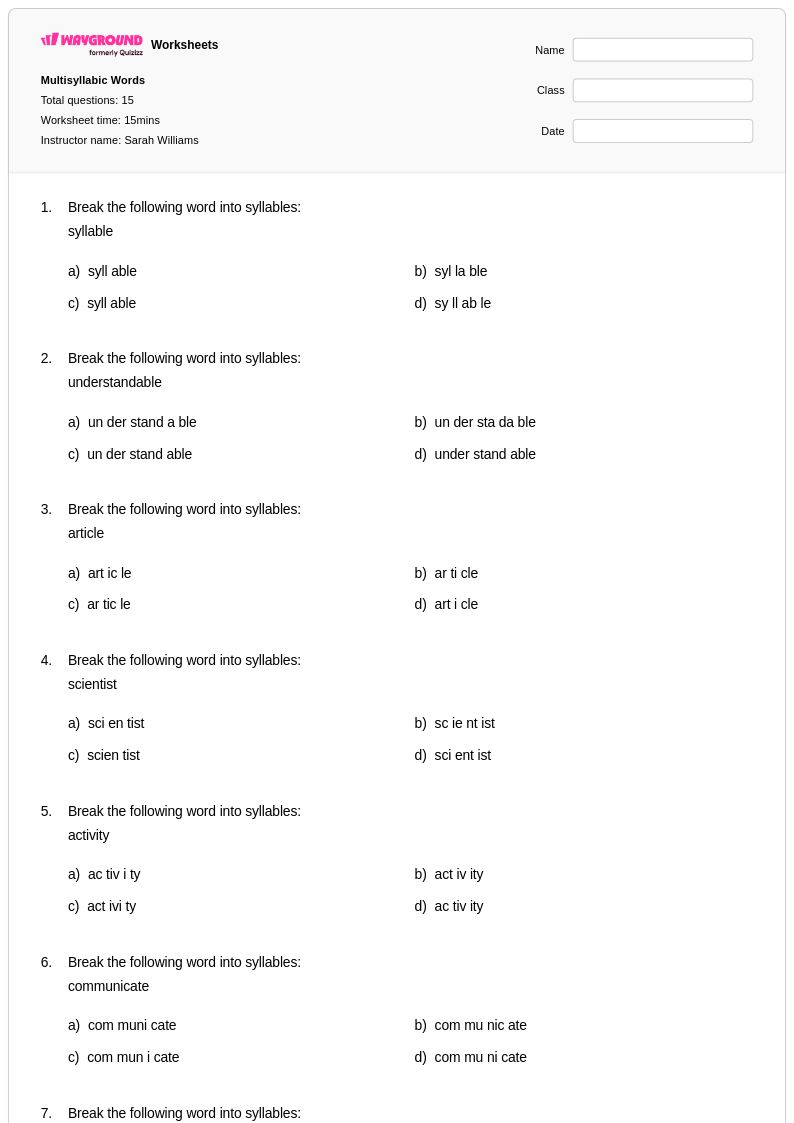
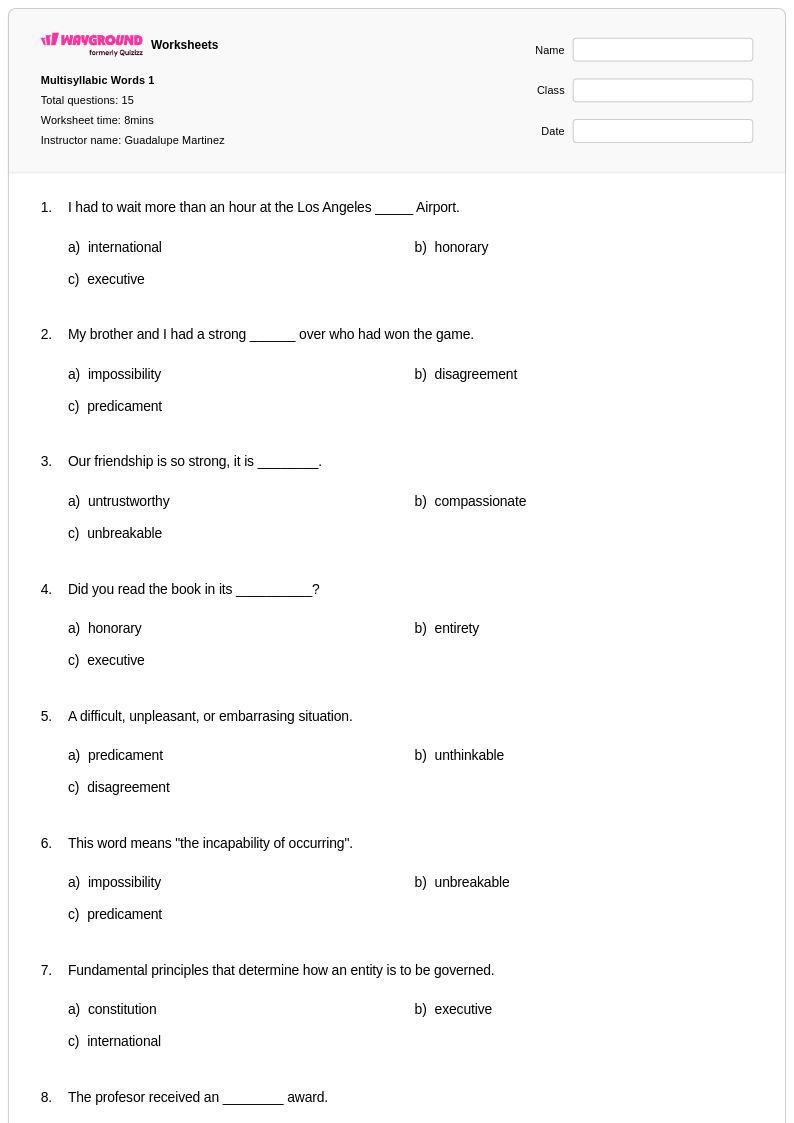
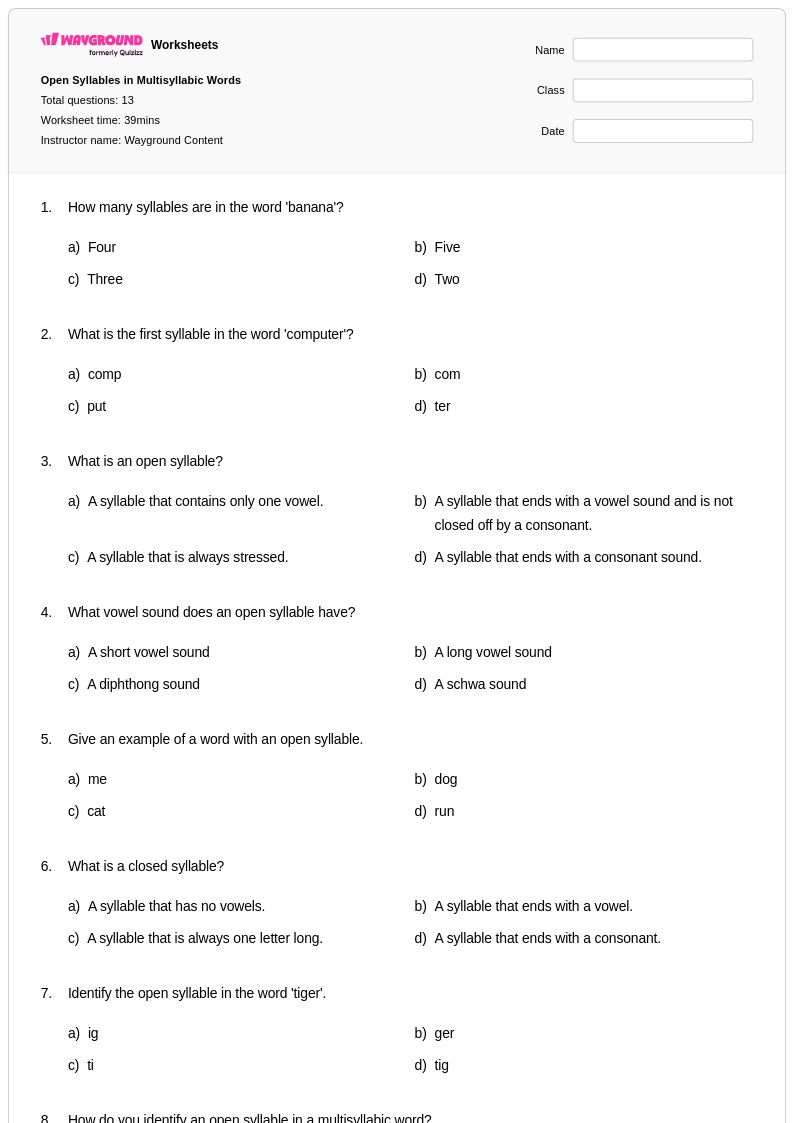
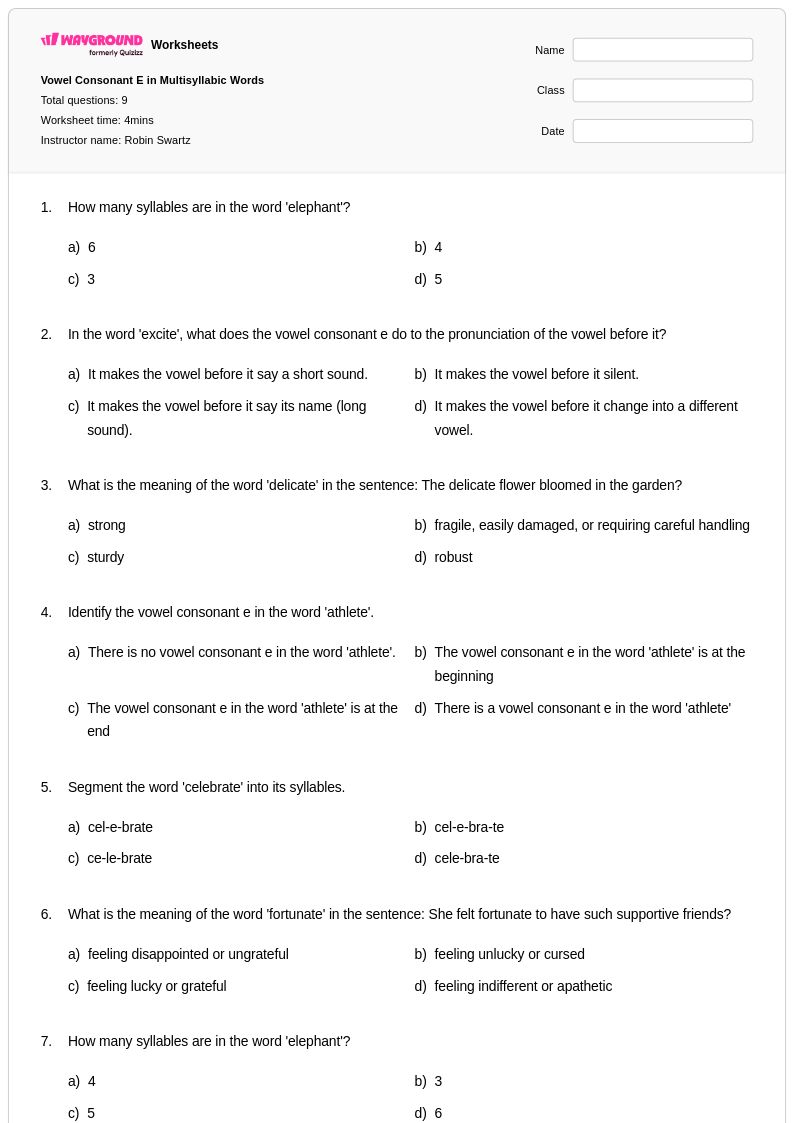
Multisyllabic words worksheets available through Wayground (formerly Quizizz) provide comprehensive practice for students developing advanced phonemic awareness and decoding skills. These educational resources focus on breaking down complex words containing multiple syllables, helping learners master syllable division patterns, stress placement, and pronunciation strategies essential for reading fluency and vocabulary development. The worksheets feature systematic practice problems that guide students through identifying syllable boundaries in compound words, words with prefixes and suffixes, and complex vocabulary terms across various academic subjects. Each printable resource includes detailed answer keys and structured exercises that reinforce syllable counting, pattern recognition, and phonetic analysis skills. These free materials offer targeted practice in applying syllable division rules, understanding vowel patterns within syllables, and developing the metacognitive strategies necessary for independently tackling unfamiliar multisyllabic vocabulary in academic texts.
Wayground's extensive collection of teacher-created multisyllabic words worksheets draws from millions of educational resources developed by experienced educators who understand the complexities of phonics instruction and vocabulary development. The platform's robust search and filtering capabilities allow teachers to quickly locate materials aligned with specific learning standards and differentiate instruction based on individual student needs and reading levels. These customizable worksheet collections are available in both printable pdf format and interactive digital versions, enabling seamless integration into various instructional settings and learning environments. Teachers can efficiently plan targeted remediation sessions for struggling readers, provide enrichment activities for advanced learners, and implement systematic skill practice that builds upon foundational syllable knowledge. The platform's organizational tools and standards alignment features streamline lesson planning while ensuring that multisyllabic word instruction supports broader literacy goals and reading comprehension objectives across the curriculum.
FAQs
How do I teach students to break apart multisyllabic words?
Teaching multisyllabic words works best through explicit, systematic instruction in syllable division rules, such as closed syllables, open syllables, and vowel-consonant-e patterns. Start by having students identify the number of vowel sounds, then apply rules for where to split the word, such as dividing between two consonants or before a single consonant in a VCCV or VCV pattern. Practicing with compound words and words containing recognizable prefixes and suffixes gives students reliable anchor points before moving to more complex vocabulary.
What exercises help students practice reading and decoding multisyllabic words?
Effective practice exercises include syllable segmentation tasks where students draw lines to divide words, syllable counting activities, and sorting words by their syllable patterns. Exercises that isolate prefixes and suffixes help students recognize meaningful chunks rather than decoding letter by letter. Regular exposure to multisyllabic words drawn from academic subject areas also builds the vocabulary students need for reading comprehension across content classes.
What common mistakes do students make when decoding multisyllabic words?
Students frequently misplace the syllable boundary, especially in VCV patterns where they must determine whether the first vowel is long or short before deciding where to split. Another common error is ignoring prefixes and suffixes as units, instead trying to decode the entire word phonetically from left to right. Students also often confuse syllable count by treating vowel digraphs or diphthongs as two separate syllables rather than one.
How do I differentiate multisyllabic word instruction for struggling readers?
For struggling readers, begin with two-syllable compound words before introducing words with derivational affixes or less predictable vowel patterns. Reducing the number of answer choices on practice tasks lowers cognitive load and allows students to focus on the decoding process itself. On Wayground, teachers can apply accommodations such as reduced answer choices and read-aloud support to individual students, so struggling readers receive targeted scaffolding while the rest of the class works through standard practice.
How can I use Wayground's multisyllabic words worksheets in my classroom?
Wayground's multisyllabic words worksheets are available as printable PDFs for traditional classroom use and in digital formats for technology-integrated learning environments, and teachers can also host them as a quiz directly on Wayground. Each worksheet includes a complete answer key, making them efficient for independent practice, homework, or small-group instruction. The platform's search and filtering tools allow teachers to locate materials aligned to specific syllable patterns or learning standards quickly.
At what grade level should students start working on multisyllabic words?
Explicit instruction in multisyllabic words typically begins in second and third grade, once students have a solid foundation in basic phonics patterns and single-syllable decoding. However, systematic practice with multisyllabic academic vocabulary remains important through middle school, particularly for content-area reading in science and social studies. Instruction should scale in complexity, moving from compound words and simple affixes in early grades to polysyllabic Latin and Greek root words in upper elementary and beyond.