Free Printable Musculoskeletal System Worksheets for Grade 10
Grade 10 musculoskeletal system worksheets from Wayground offer comprehensive printables and practice problems to help students master bone structure, muscle function, and body movement through engaging PDF activities with answer keys.
Explore printable Musculoskeletal System worksheets for Grade 10
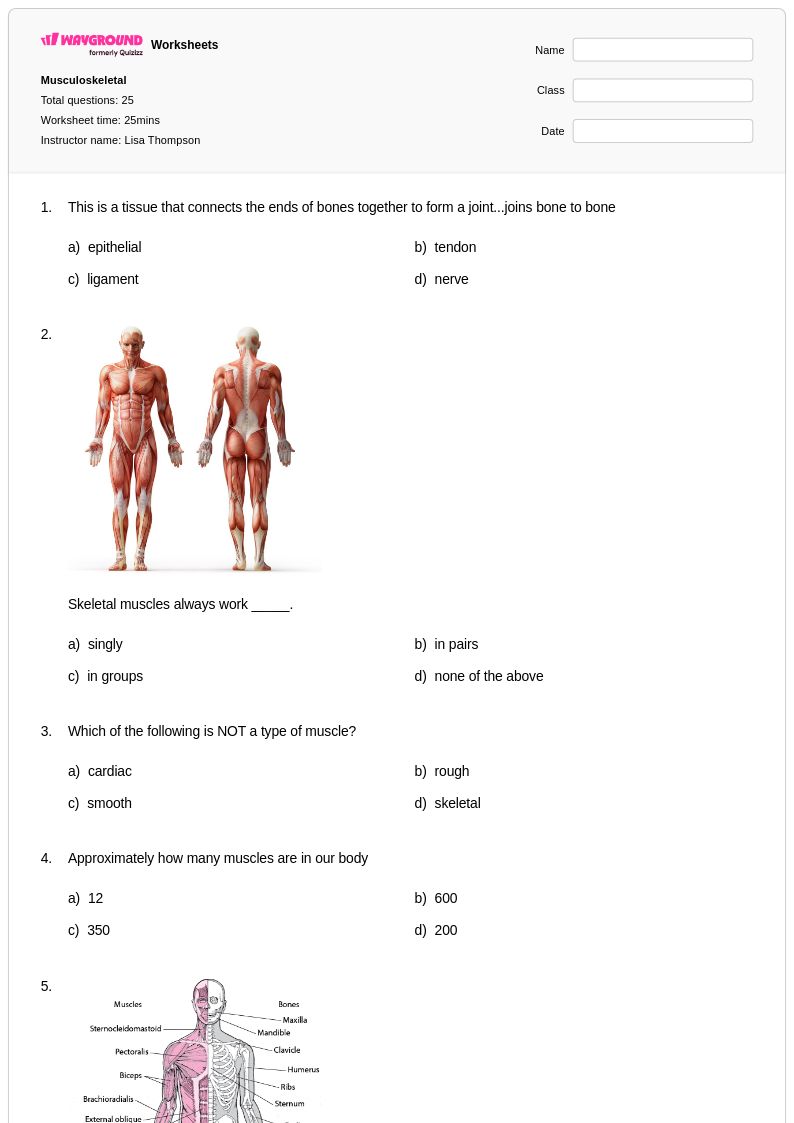
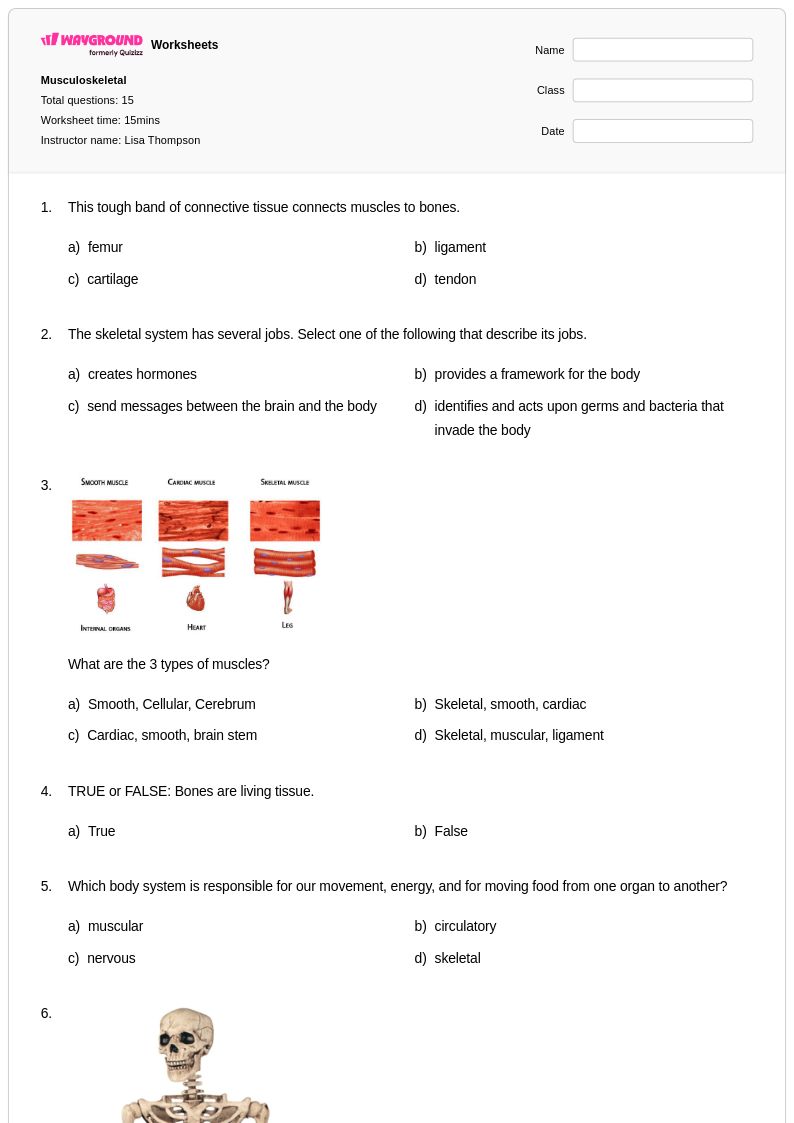
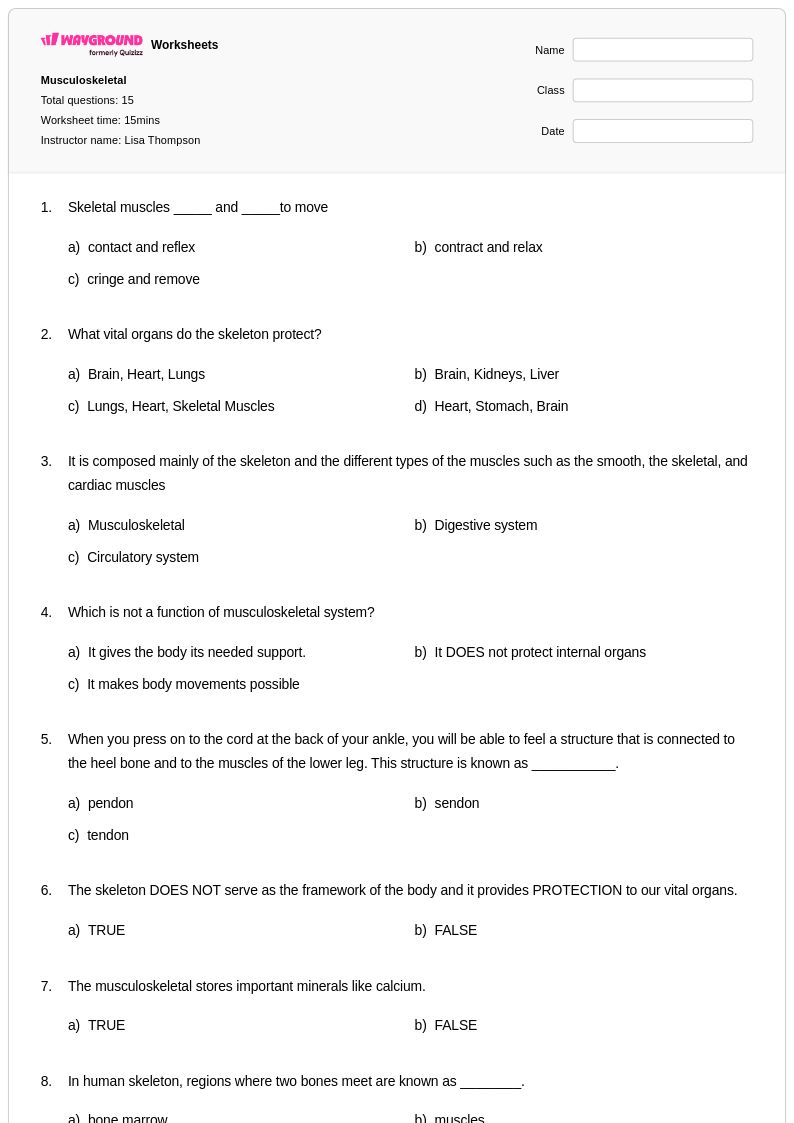
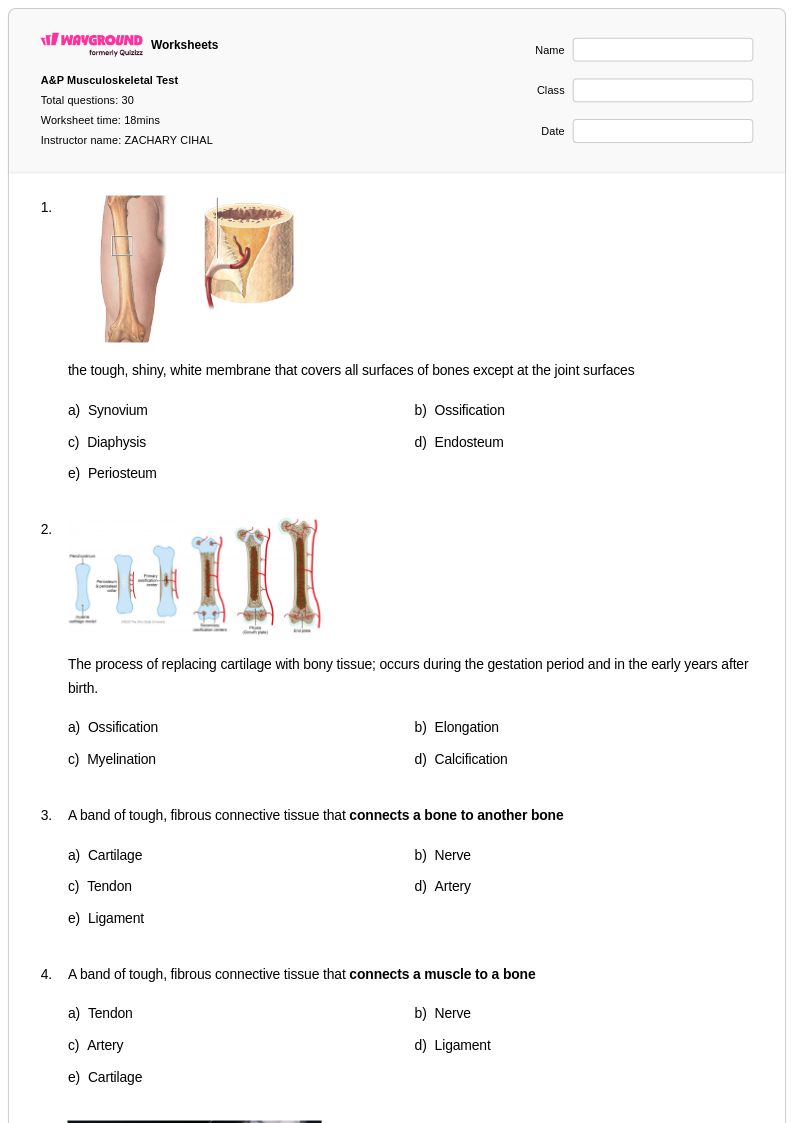
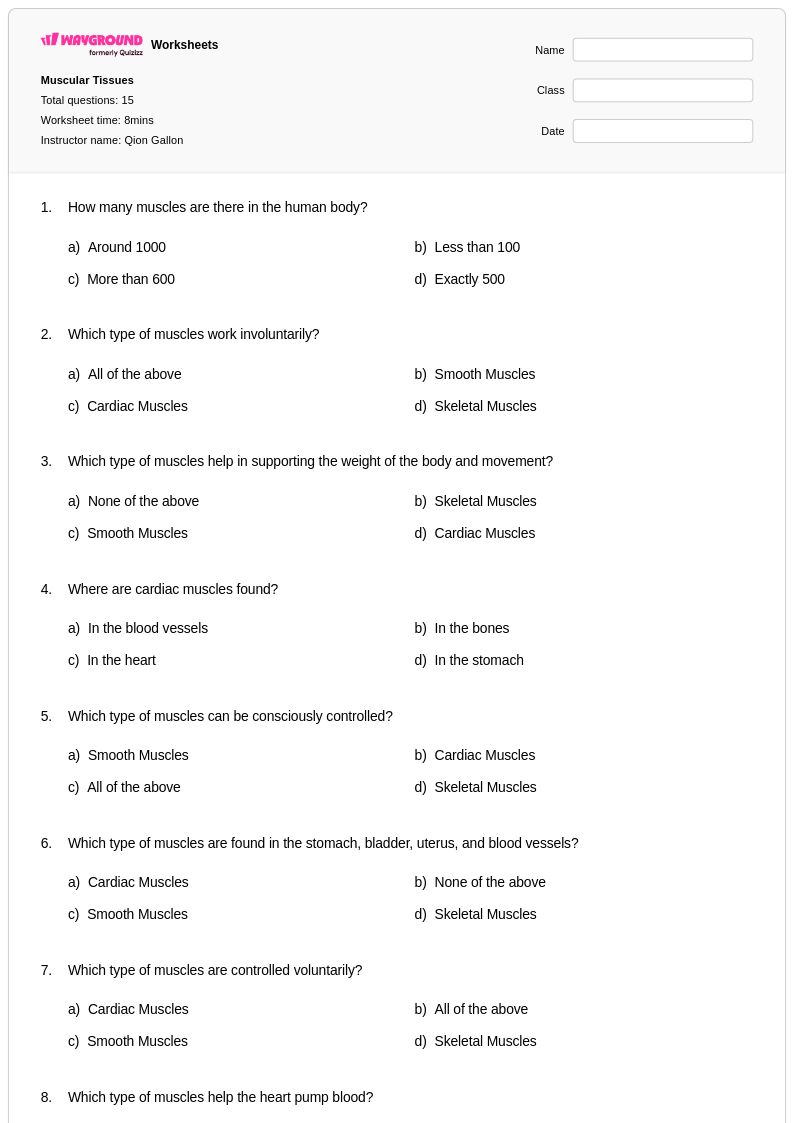
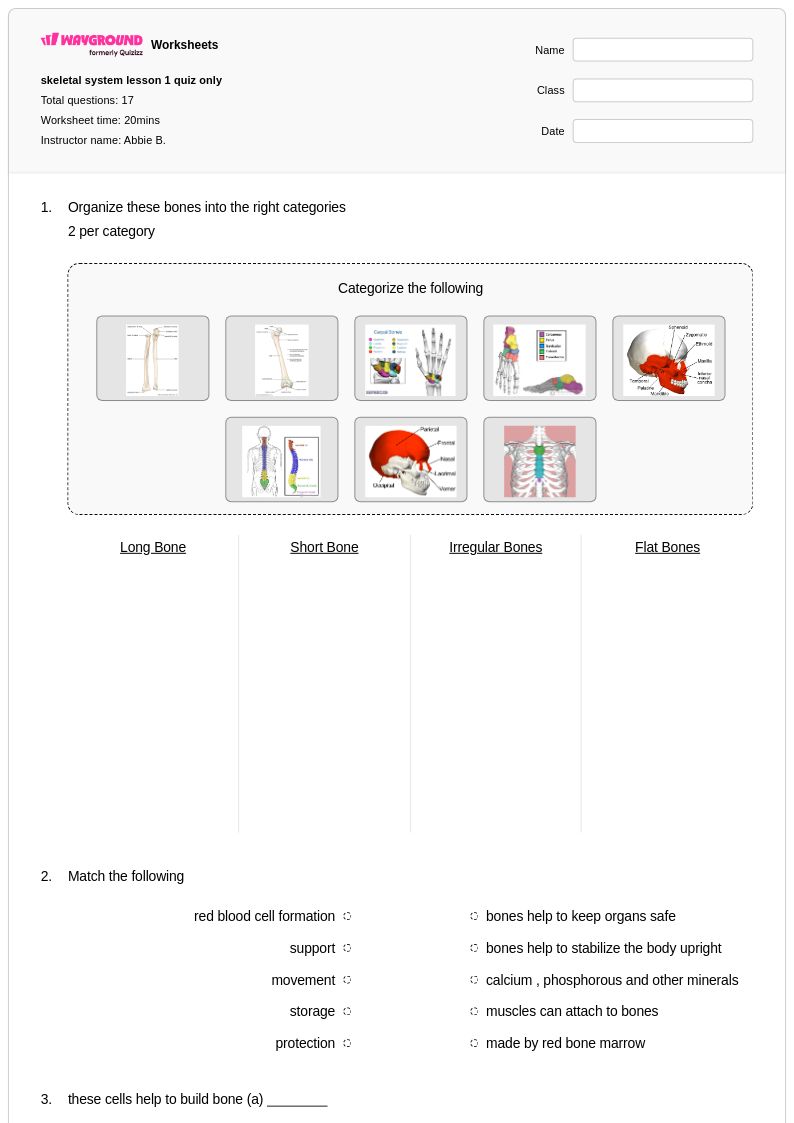
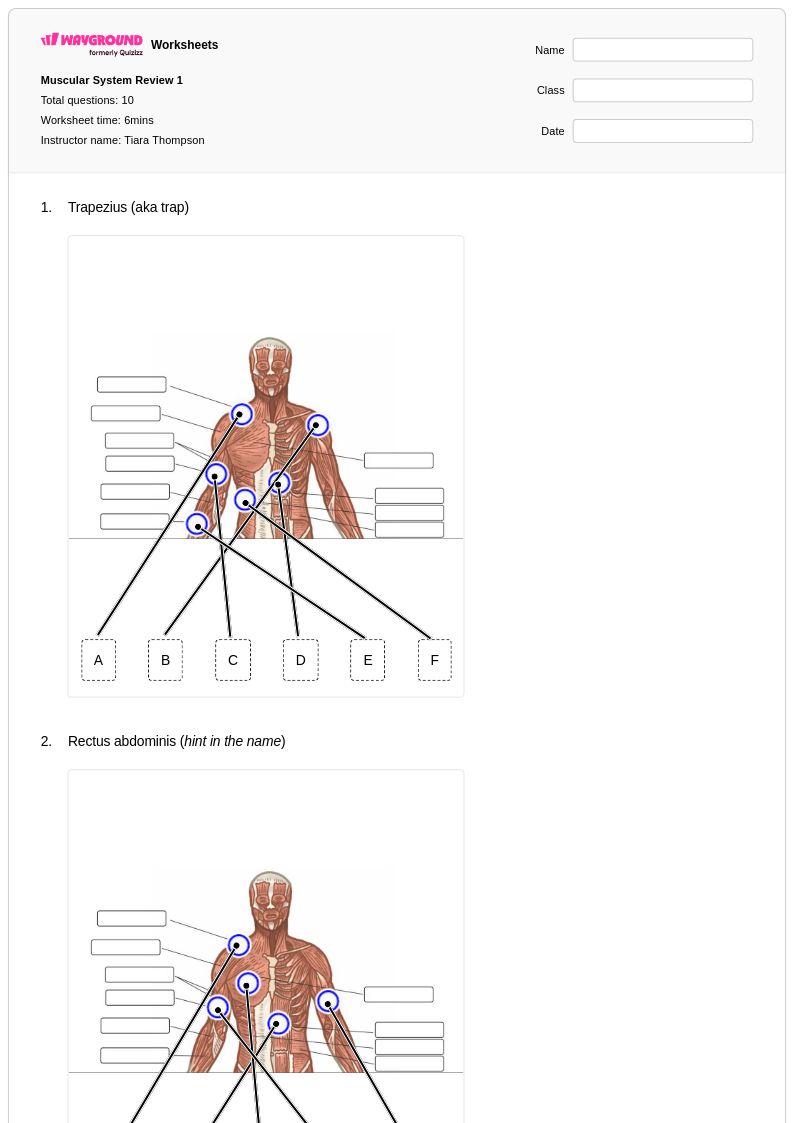
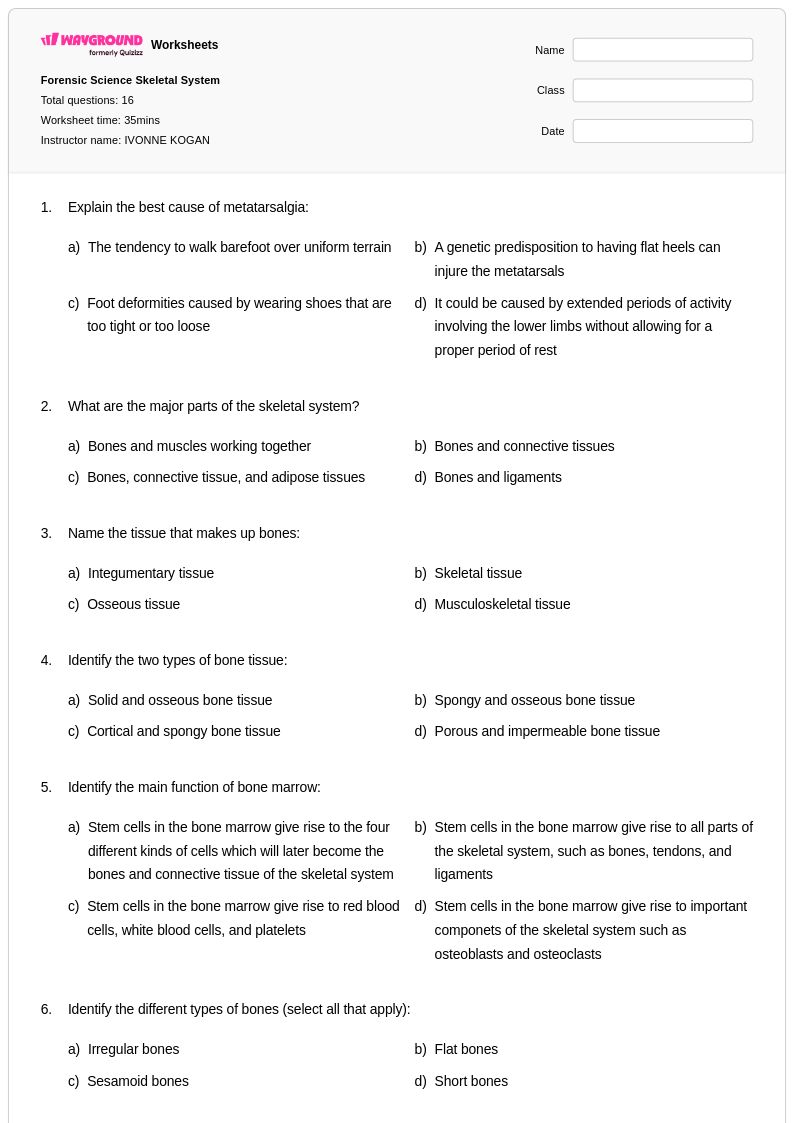
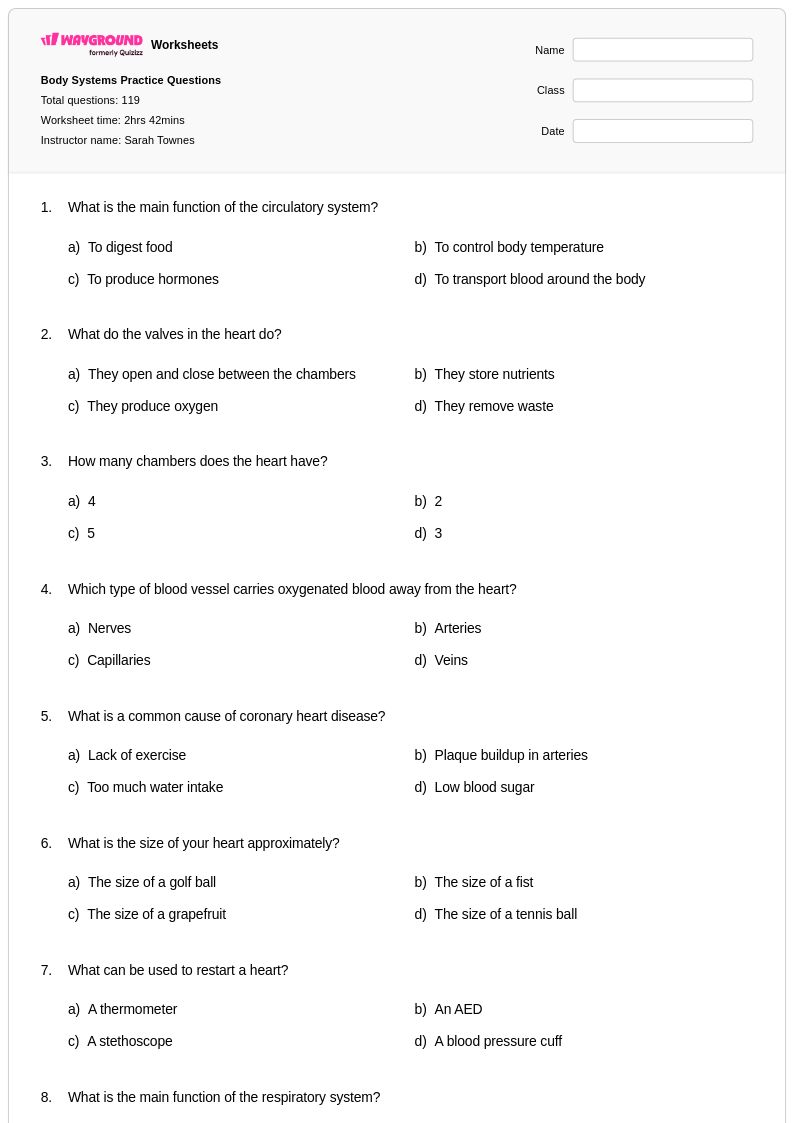
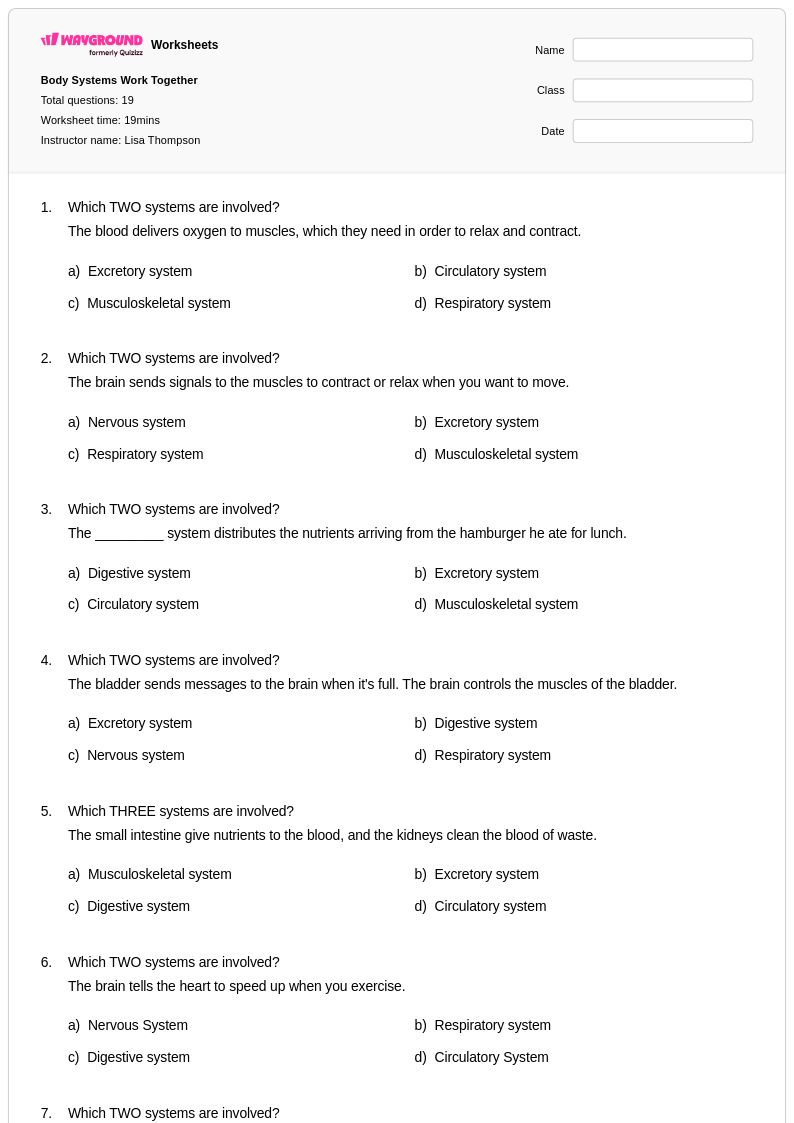
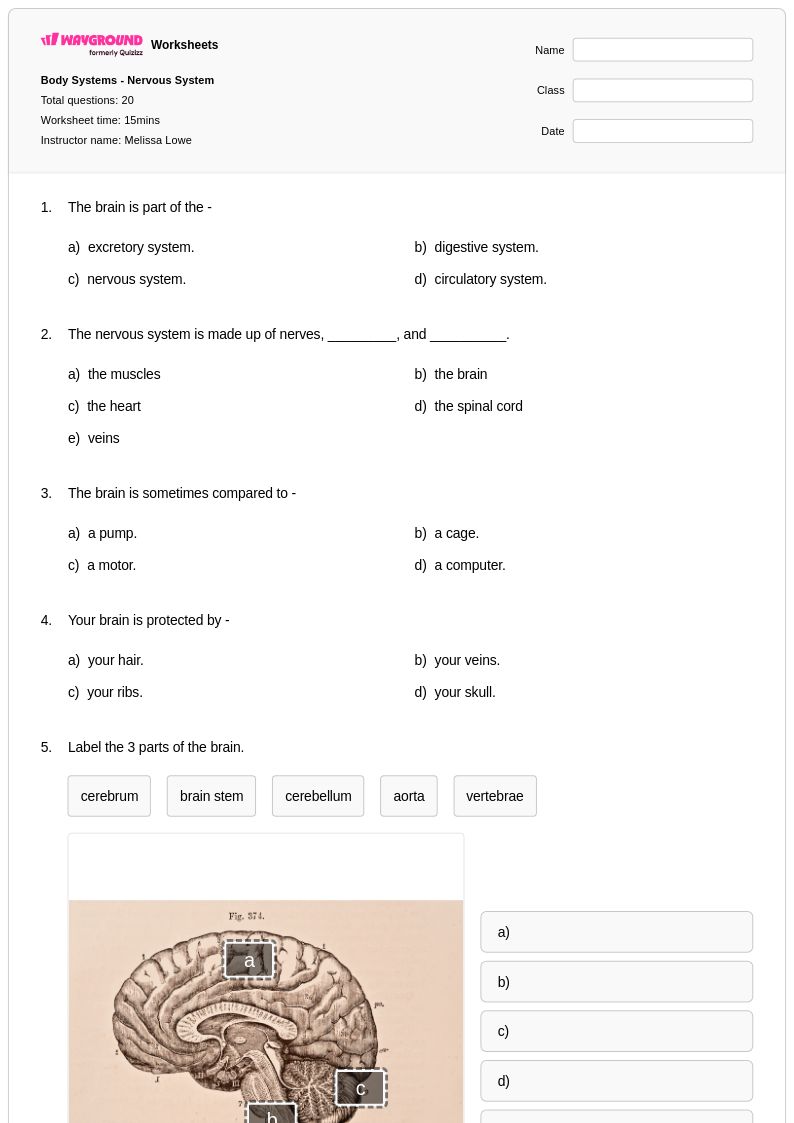
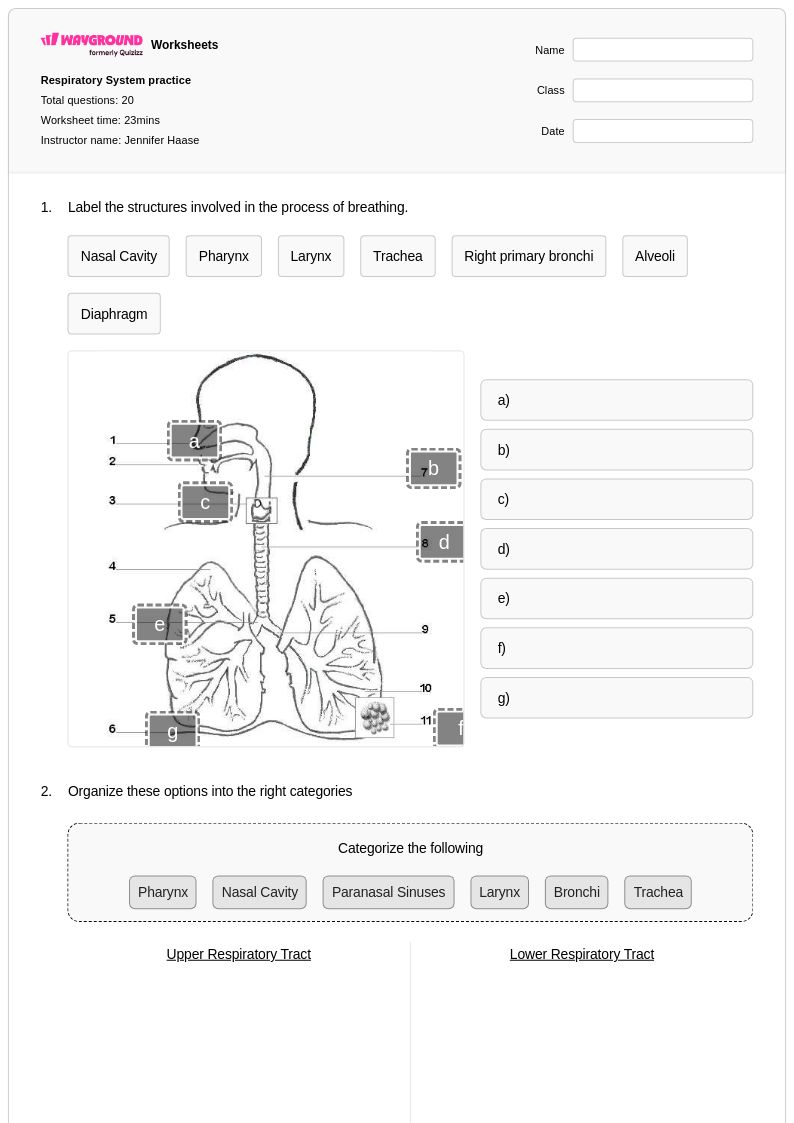
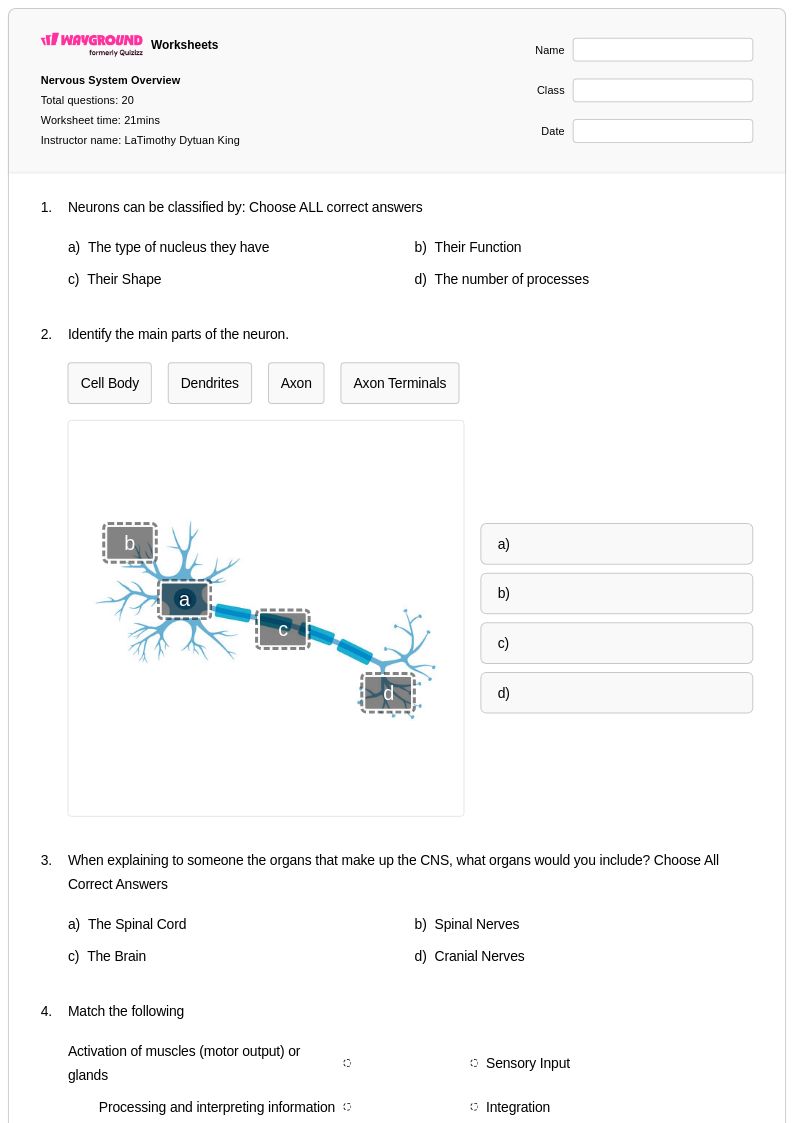
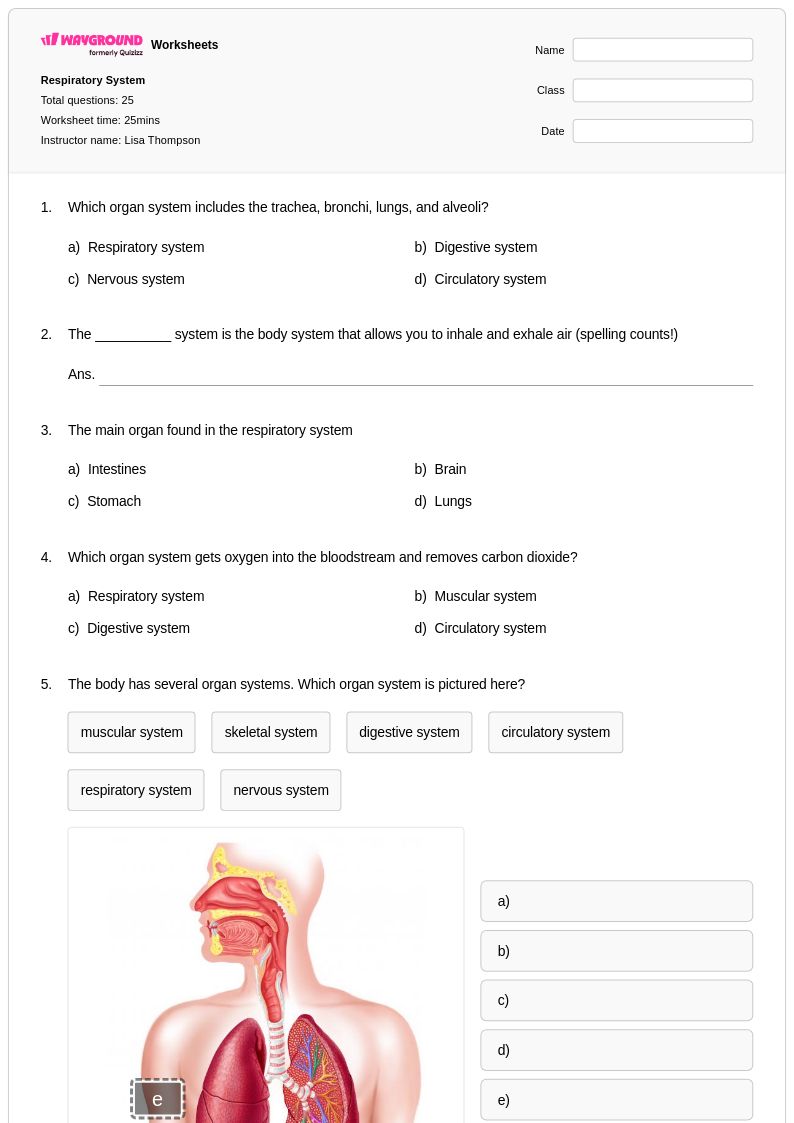
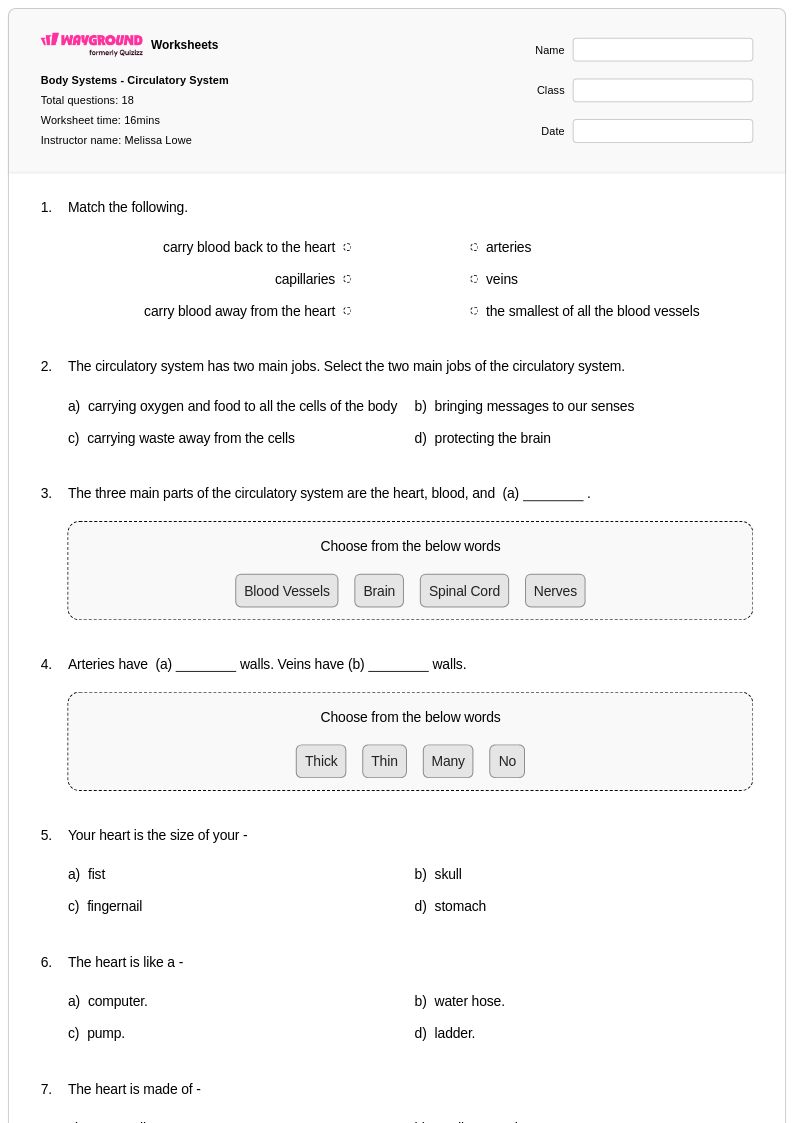
Grade 10 musculoskeletal system worksheets available through Wayground provide comprehensive coverage of bone structure, muscle function, joint mechanics, and the interconnected relationships within the human skeletal and muscular systems. These educational resources strengthen students' understanding of anatomical terminology, bone classification and composition, muscle tissue types and contraction mechanisms, and the physiological processes that enable movement and structural support. The worksheets feature detailed diagrams for labeling exercises, comparative analysis problems examining different joint types, and practice problems that challenge students to apply their knowledge of calcium regulation, muscle fiber recruitment, and injury prevention. Each worksheet collection includes answer keys and is available in printable pdf format, making them accessible for both classroom instruction and independent study sessions focused on this complex body system.
Wayground's extensive library of teacher-created musculoskeletal system resources offers educators millions of carefully curated materials with robust search and filtering capabilities that align with state and national science standards for Grade 10 biology curricula. Teachers can easily differentiate instruction by selecting from worksheets that range from basic bone and muscle identification to advanced biomechanics problems, with flexible customization tools allowing for modifications to match individual student needs and learning objectives. The platform's dual availability in both printable and digital pdf formats supports diverse classroom environments and teaching preferences, while the comprehensive answer keys and detailed explanations facilitate efficient grading and provide valuable resources for remediation and enrichment activities. These features streamline lesson planning and enable educators to provide targeted skill practice that reinforces understanding of how the musculoskeletal system maintains posture, produces movement, and adapts to physical demands.
FAQs
How do I teach the musculoskeletal system to students?
Start by introducing the skeletal system as the structural framework before layering in how muscles attach to bones via tendons and work in antagonistic pairs to produce movement. Use labeled diagrams to help students visualize anatomical relationships between bones, joints, and muscle groups. Connecting structure to function — for example, explaining how the arrangement of the elbow joint enables flexion and extension — helps students move beyond memorization toward genuine conceptual understanding.
What exercises help students practice musculoskeletal system concepts?
Labeling diagrams of the skeletal and muscular systems is one of the most effective practice formats because it requires students to recall and locate specific structures simultaneously. Analytical practice problems that ask students to explain how a particular movement is produced — naming the bones, joints, muscles, and connective tissues involved — reinforce the integrated nature of the system. Combining diagram work with short-answer questions about physiological processes ensures students can both identify structures and explain their roles.
What are the most common mistakes students make when learning about the musculoskeletal system?
Students frequently treat the skeletal and muscular systems as entirely separate units rather than recognizing how they interact to produce movement, which leads to incomplete or inaccurate explanations. Confusing tendons with ligaments is another persistent error — students must understand that tendons connect muscle to bone while ligaments connect bone to bone. Students also tend to oversimplify joint function, not accounting for the role of cartilage, synovial fluid, and joint type in determining range of motion.
How do I differentiate musculoskeletal system instruction for students with different learning needs?
For students who need additional support, reducing the number of structures required for labeling at one time lowers cognitive load while still building anatomical vocabulary progressively. On Wayground, teachers can enable individual accommodations such as Read Aloud for students who benefit from audio support, reduced answer choices to simplify multiple-choice questions, and extended time for students who need more processing time. These accommodations can be assigned to specific students without affecting the experience of the rest of the class.
How do I use Wayground's musculoskeletal system worksheets in my classroom?
Wayground's musculoskeletal system worksheets are available as printable PDFs for traditional classroom use and in digital formats for technology-integrated learning environments, giving teachers flexibility in how they deploy the materials. Teachers can also host worksheets directly as a quiz on Wayground, enabling real-time student responses and instant review. All worksheets include answer keys, which streamlines grading and makes the materials practical for both guided instruction and independent student practice.
How do I assess whether students understand the musculoskeletal system?
Effective assessment goes beyond recall of bone and muscle names — ask students to explain how a specific movement is produced, trace the pathway from neural signal to mechanical action, or identify what would happen to movement if a particular structure were damaged. Labeling exercises reveal whether students can accurately locate structures, while analytical questions reveal whether they understand function and interaction. Using a mix of diagram-based and written response tasks gives a fuller picture of student understanding than multiple-choice alone.