
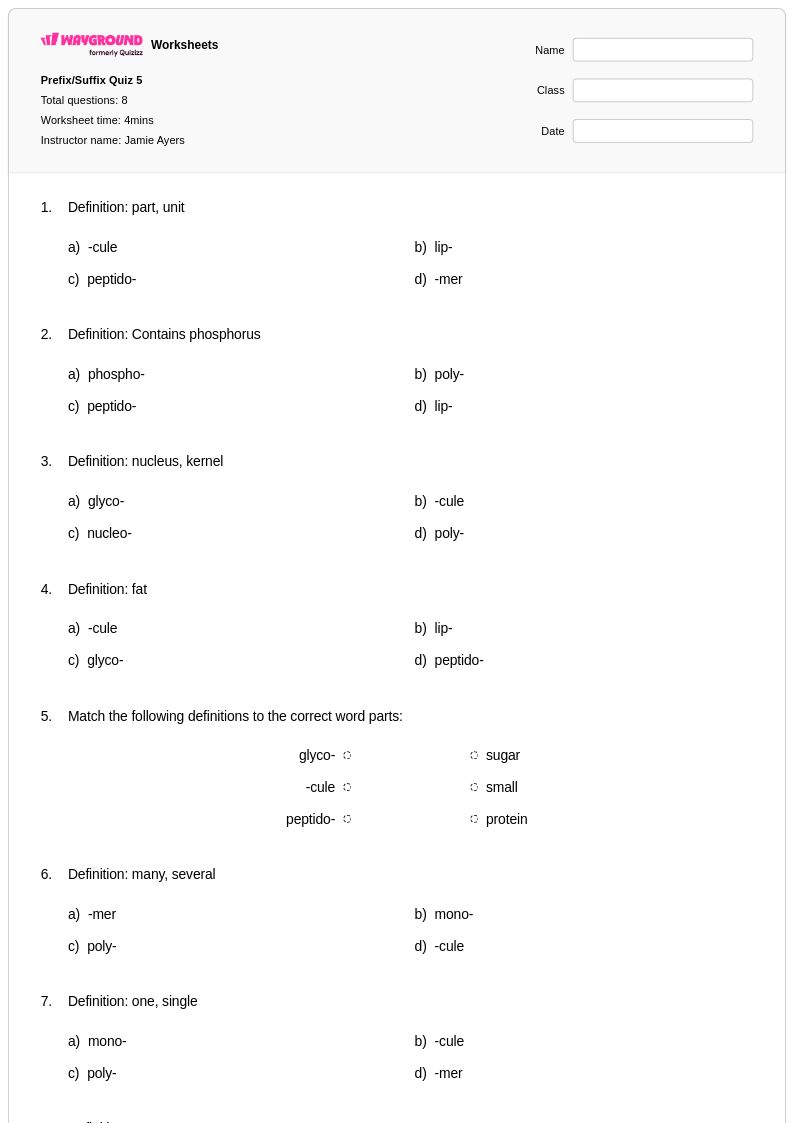
8 Q
10th
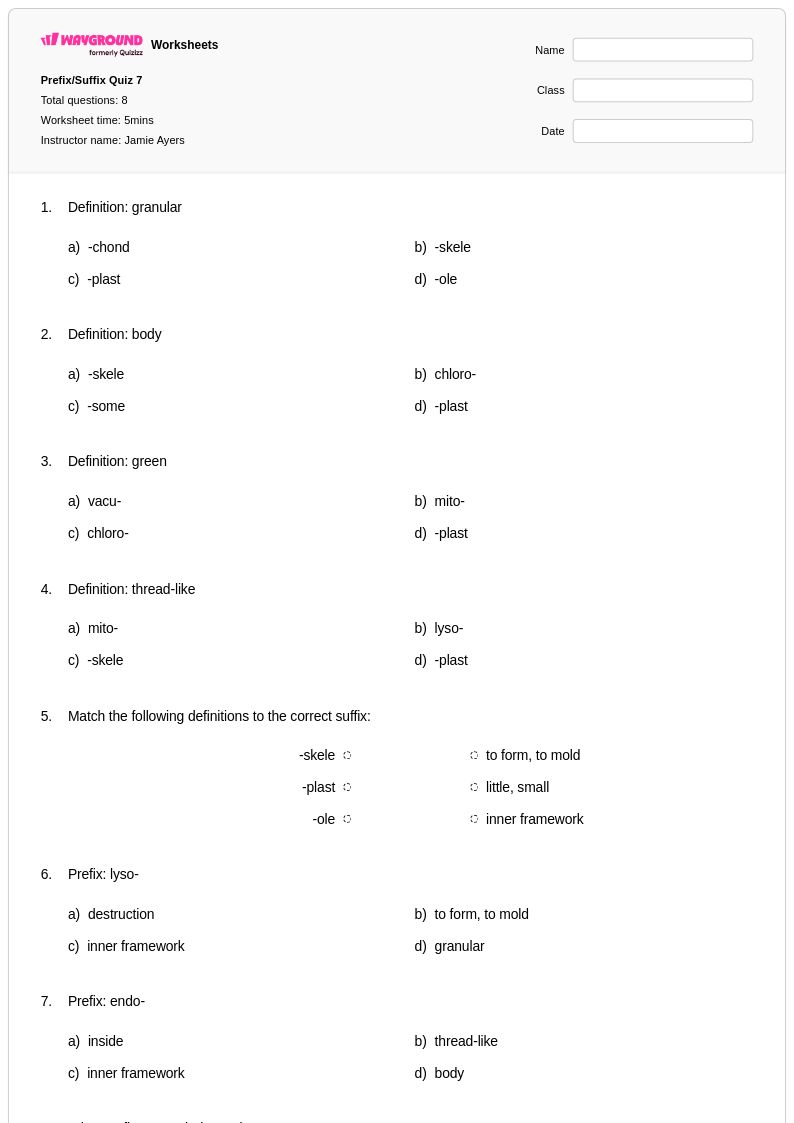
8 Q
10th
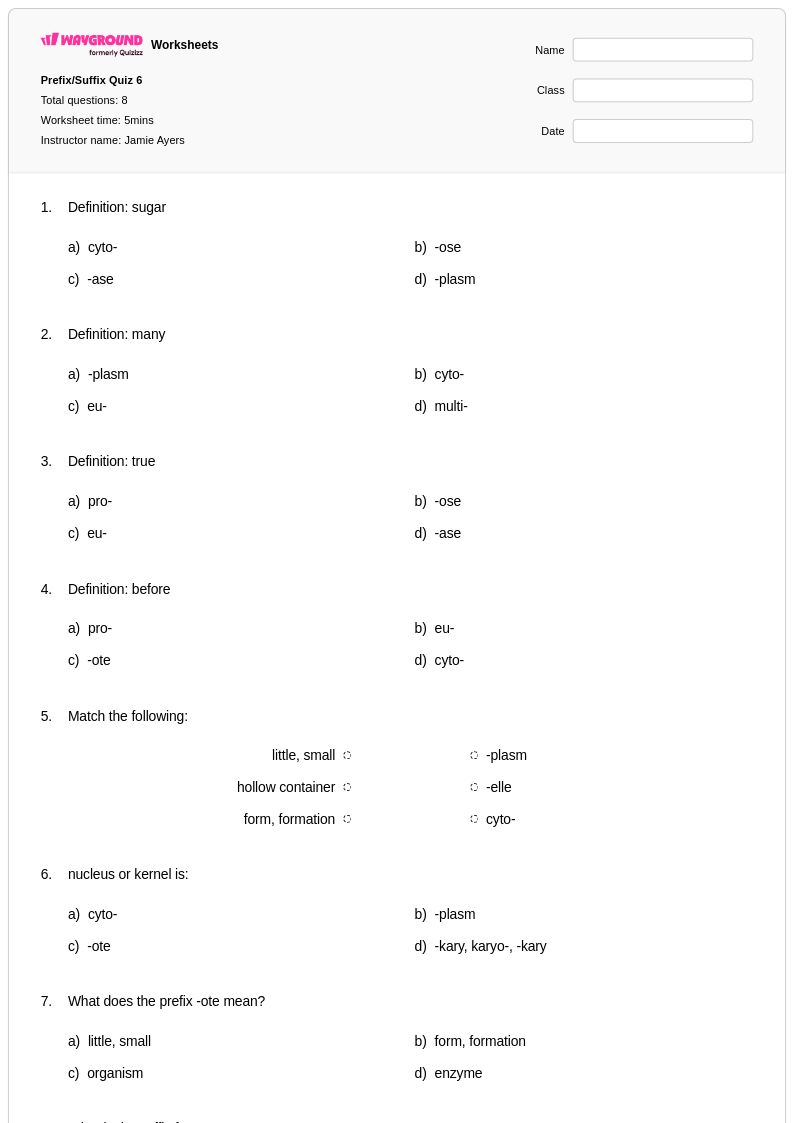
8 Q
10th
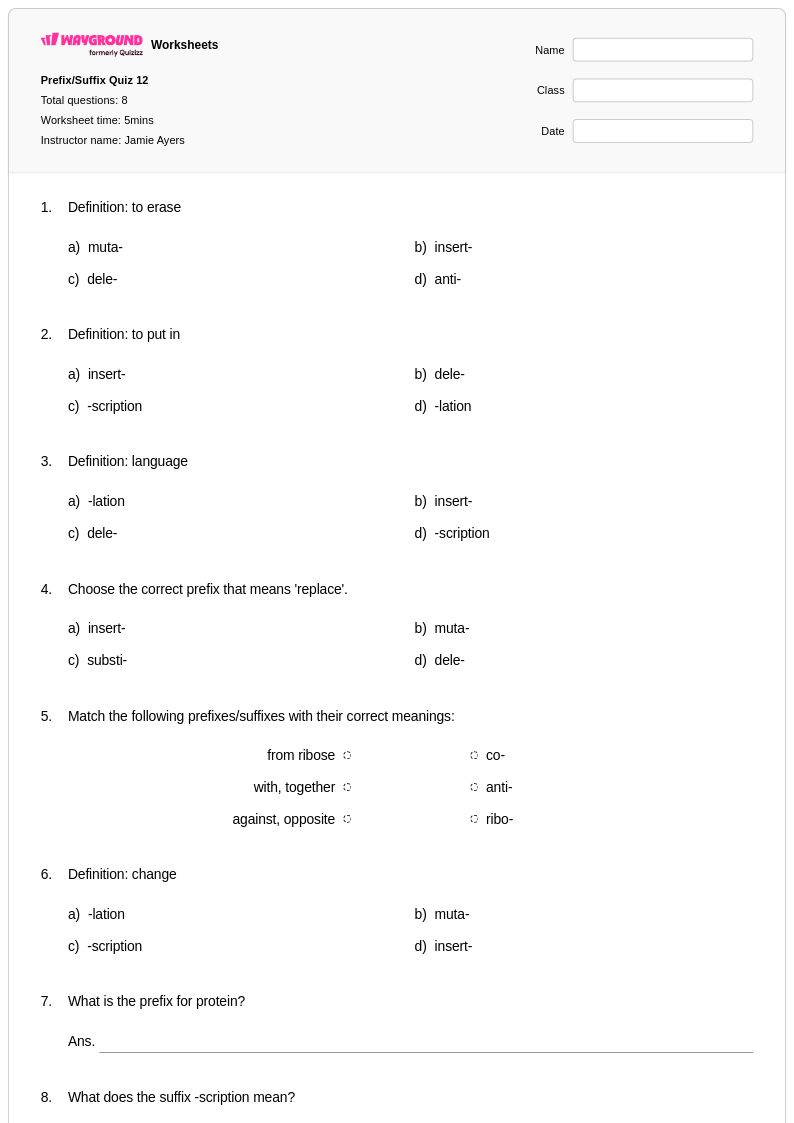
8 Q
10th
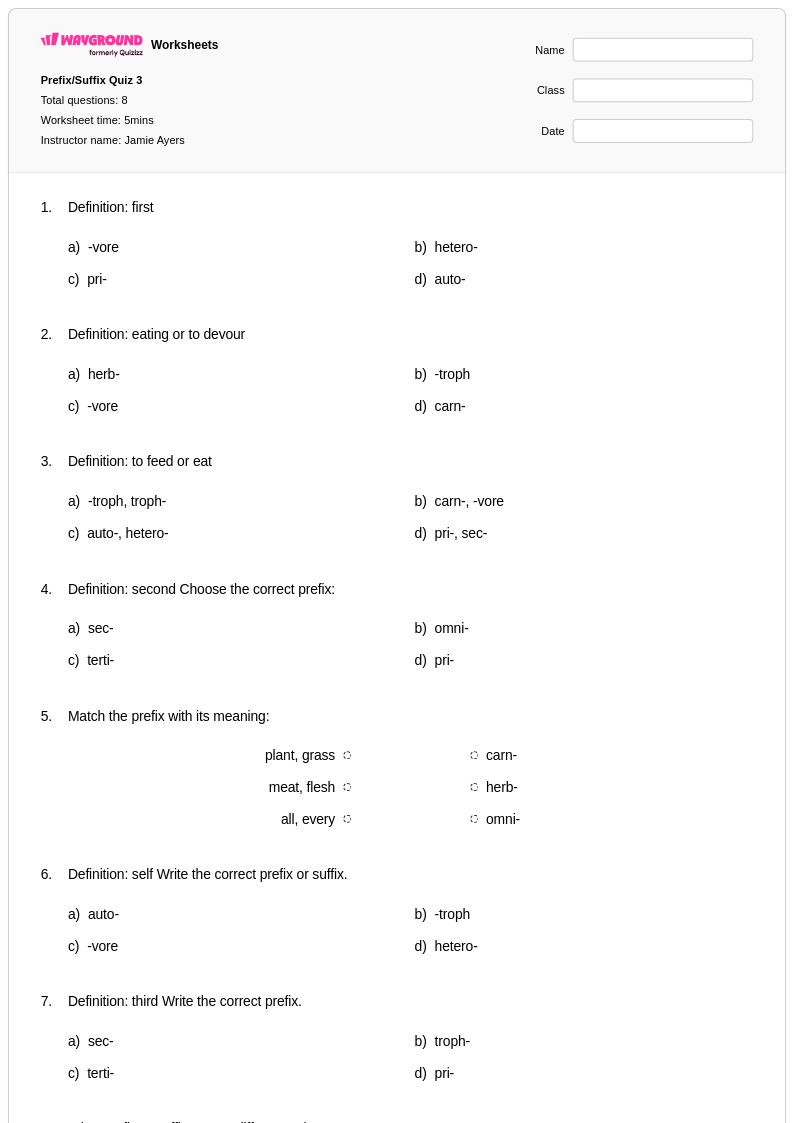
8 Q
10th
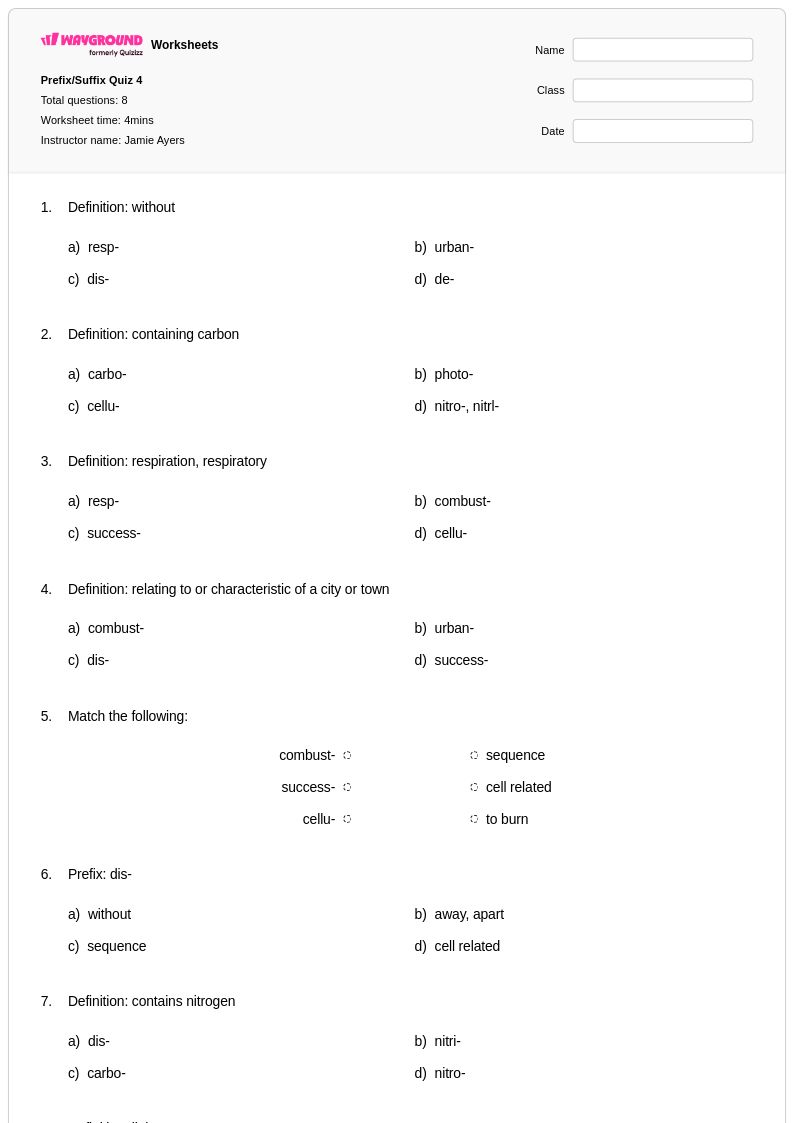
8 Q
10th
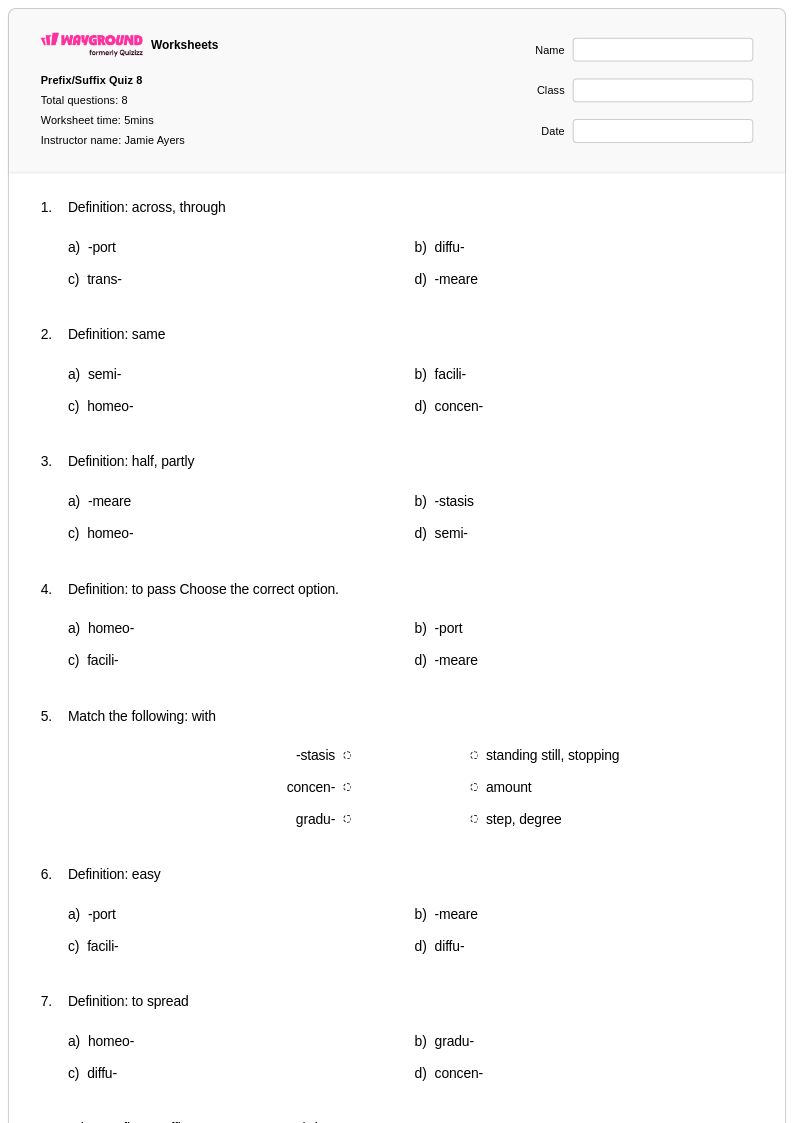
8 Q
10th
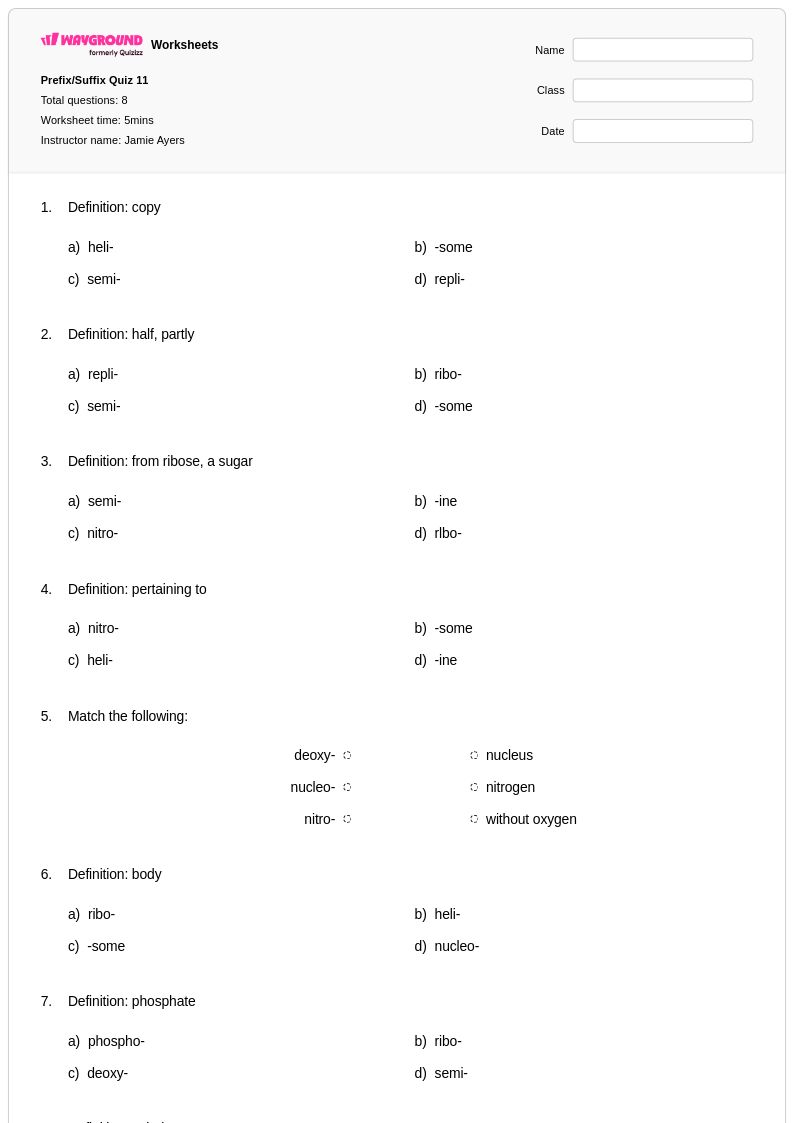
8 Q
10th
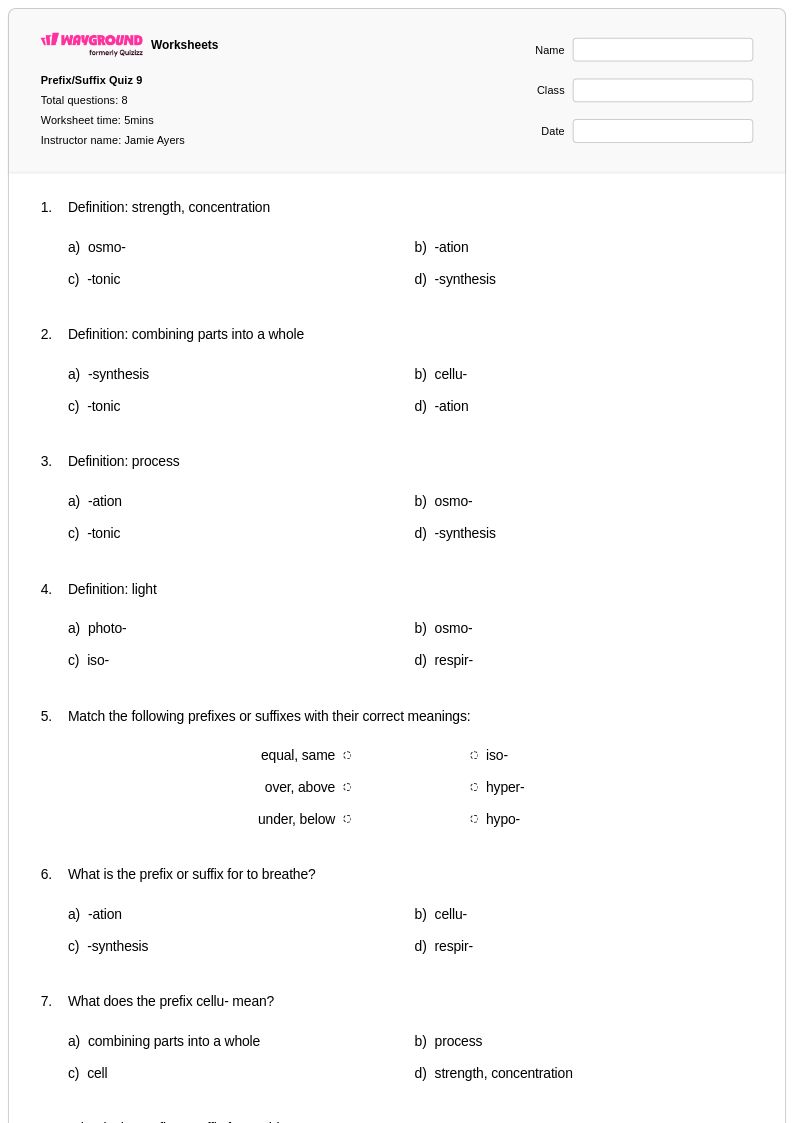
8 Q
10th
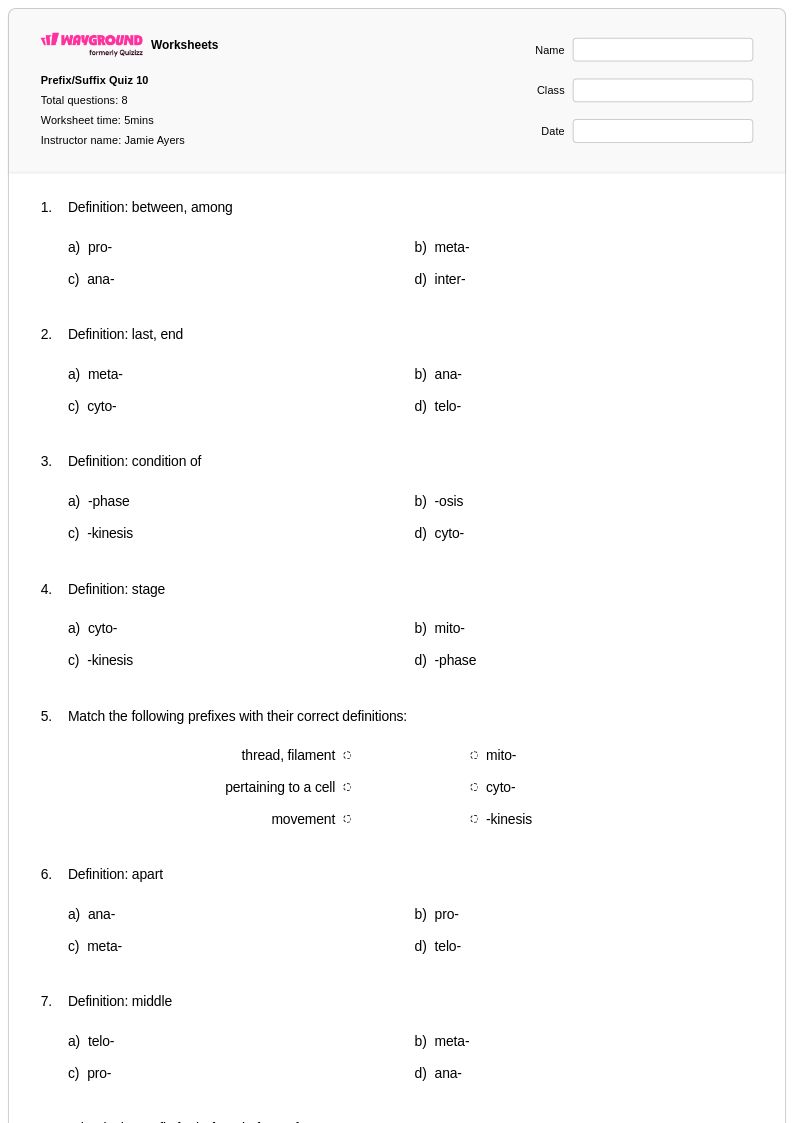
8 Q
10th
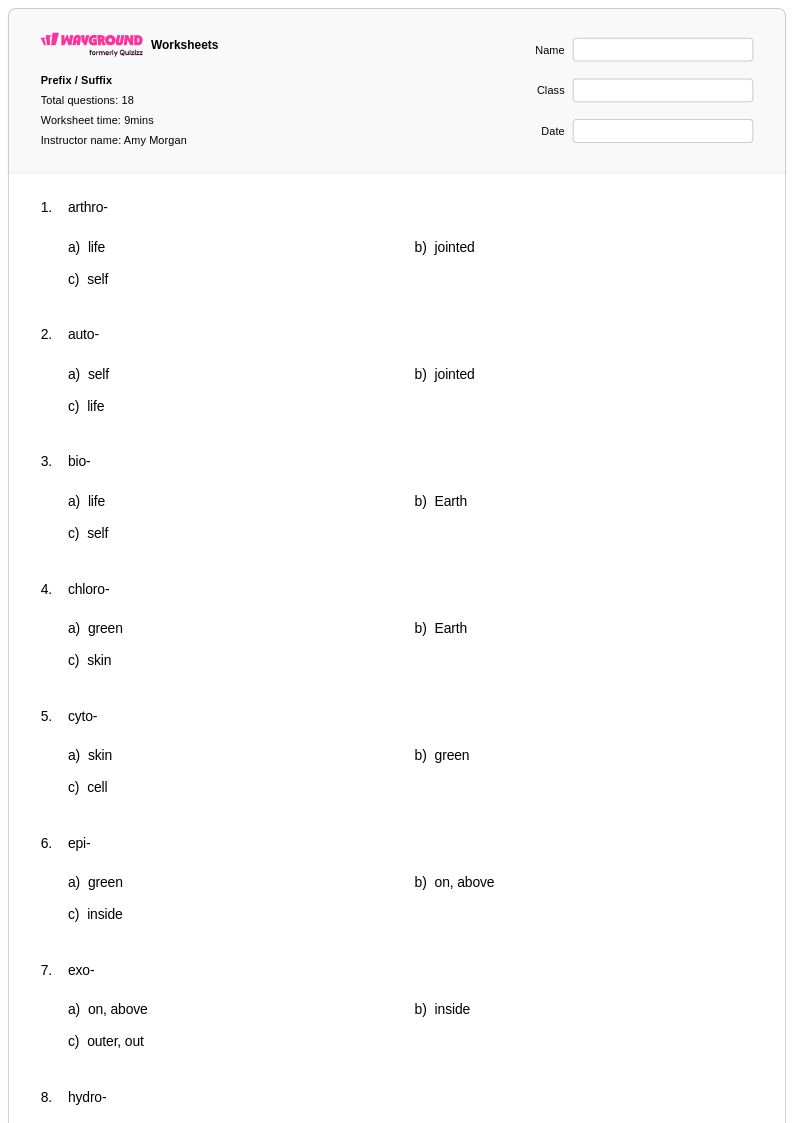
18 Q
6th - Uni
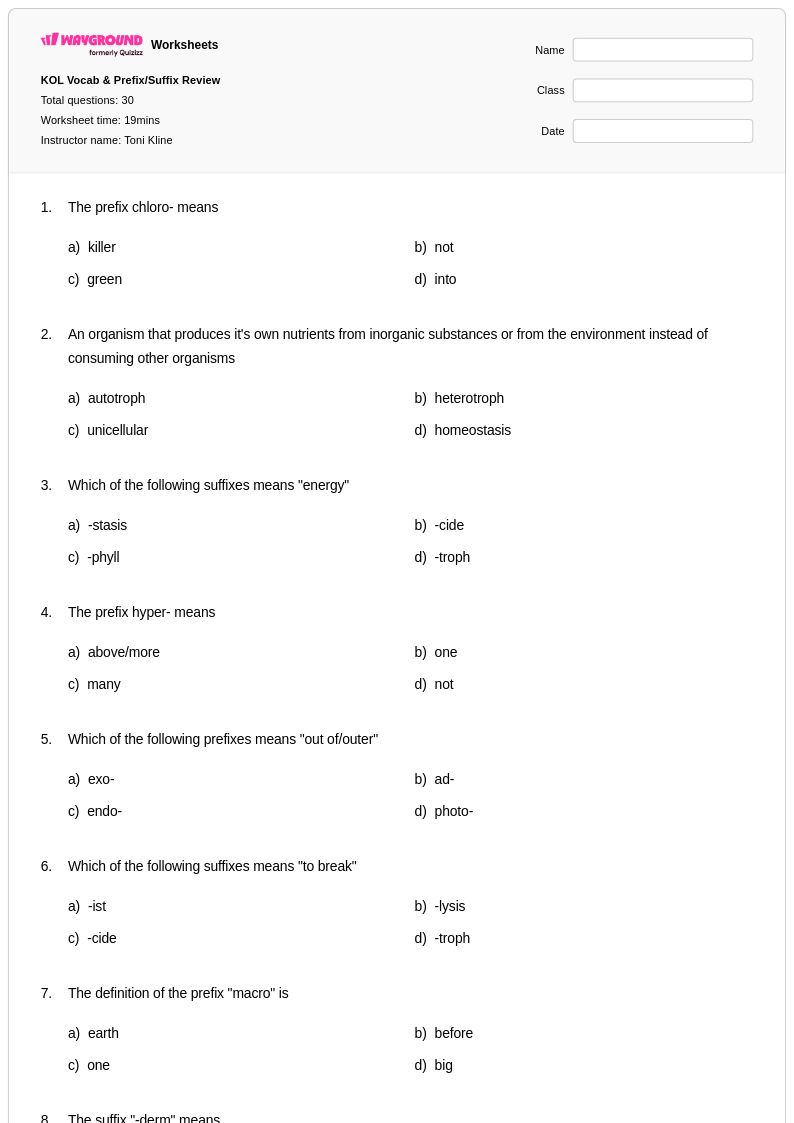
30 Q
9th - 12th
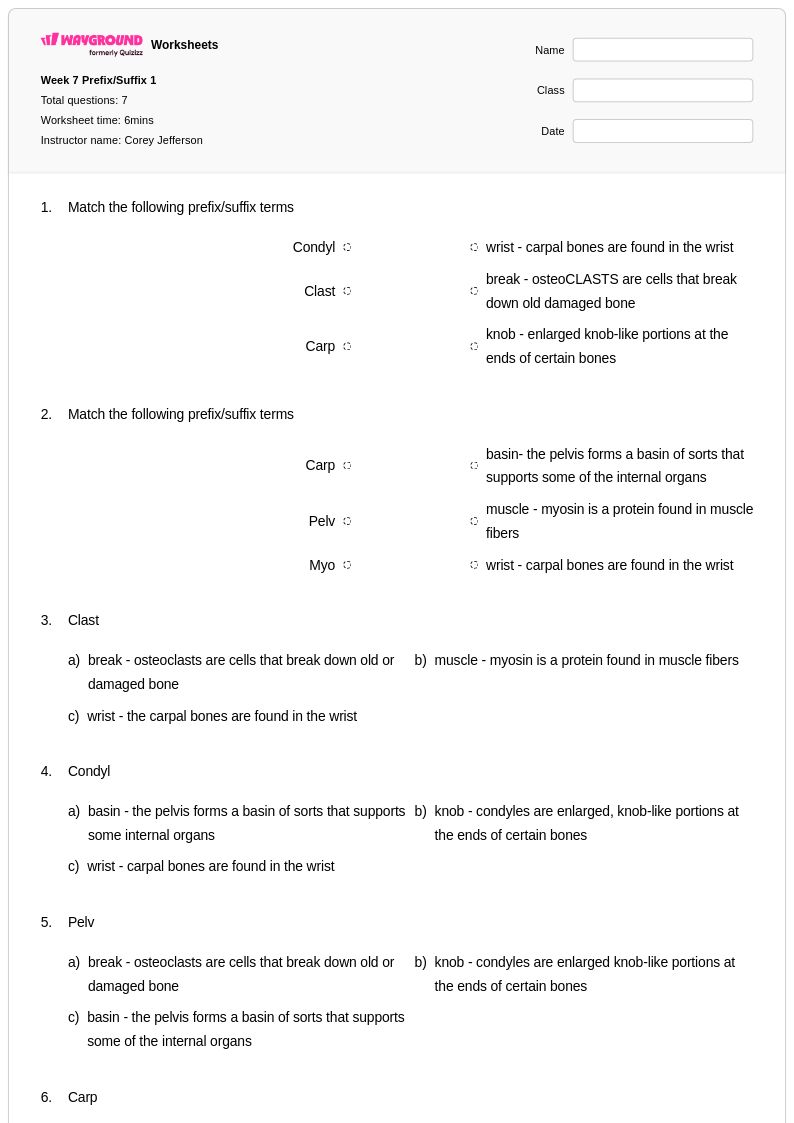
7 Q
9th - 12th
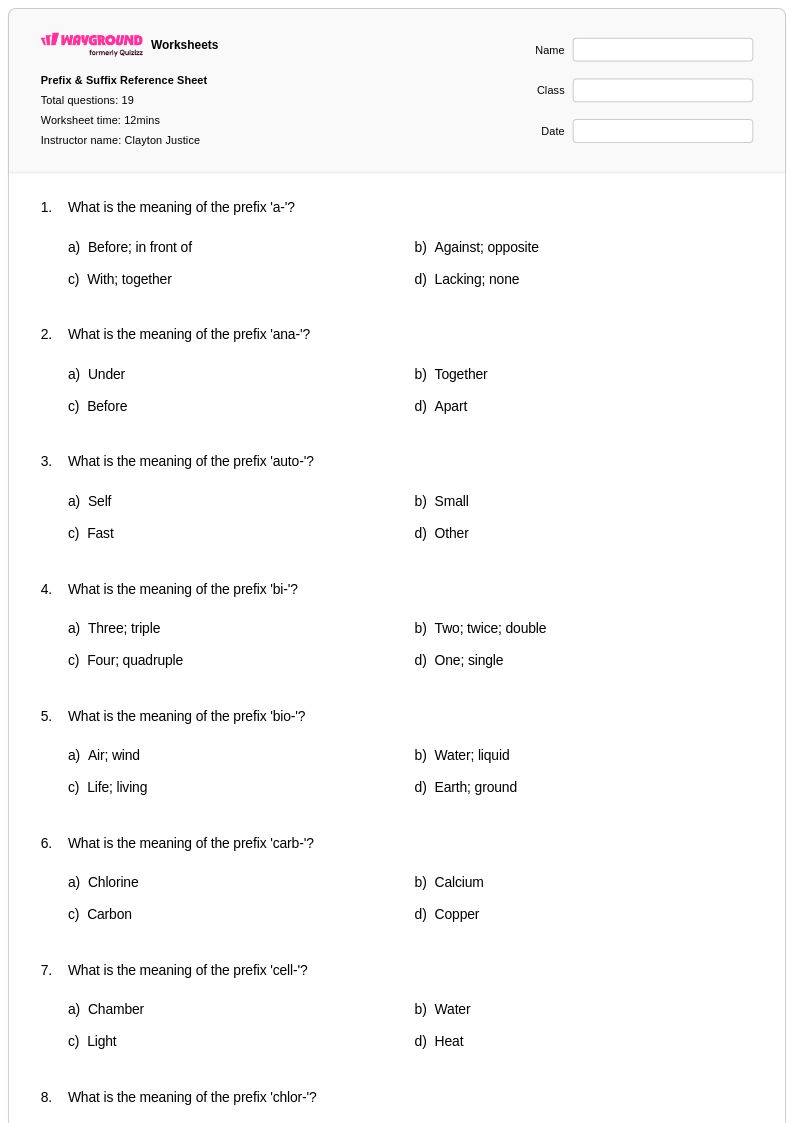
19 Q
10th
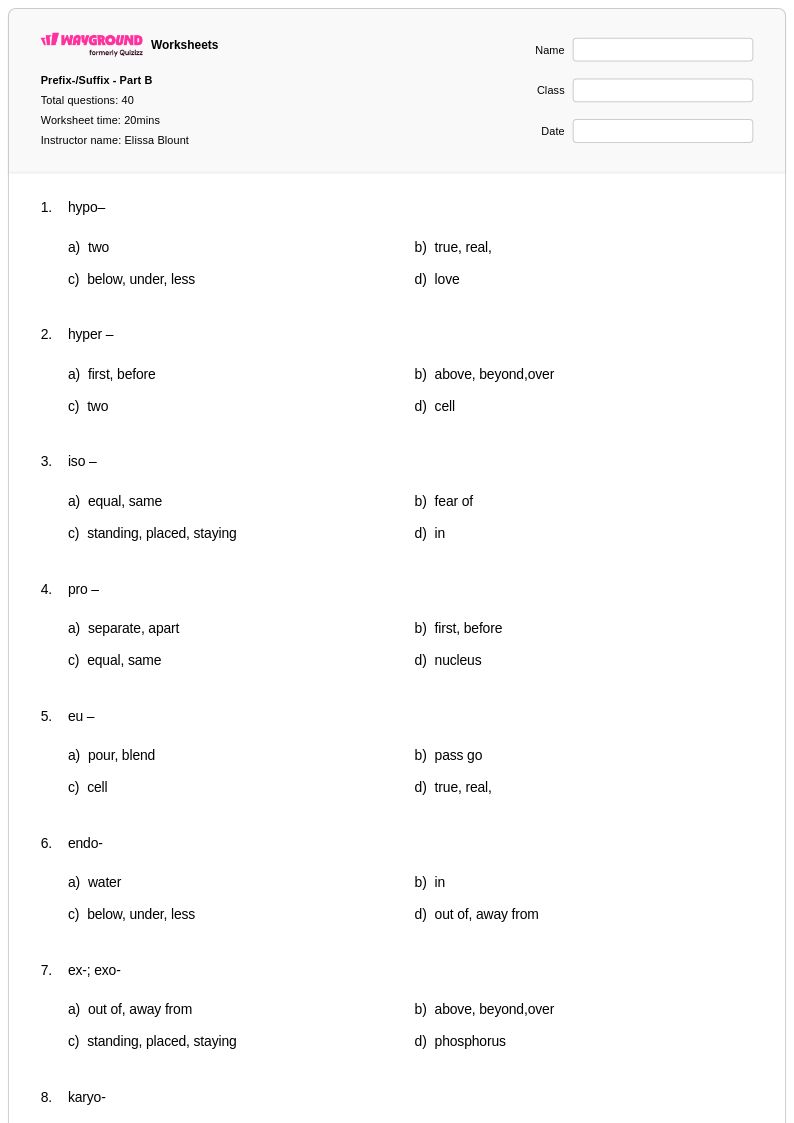
40 Q
10th
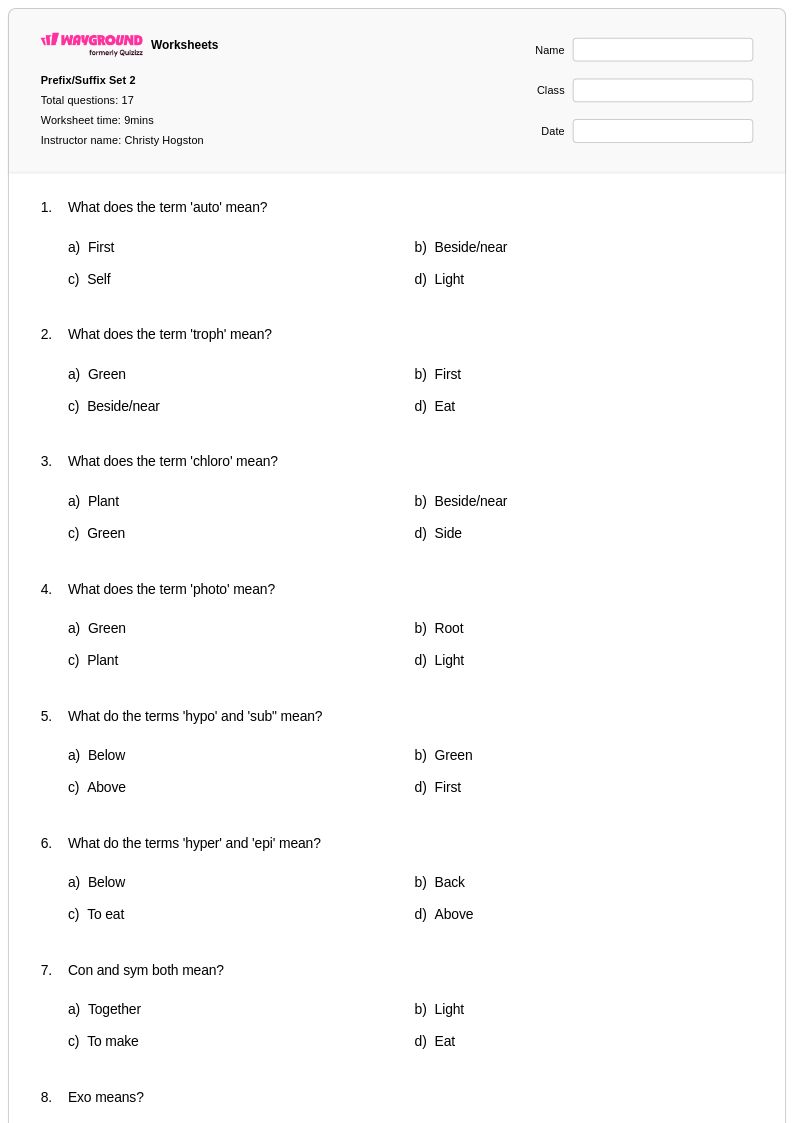
17 Q
10th
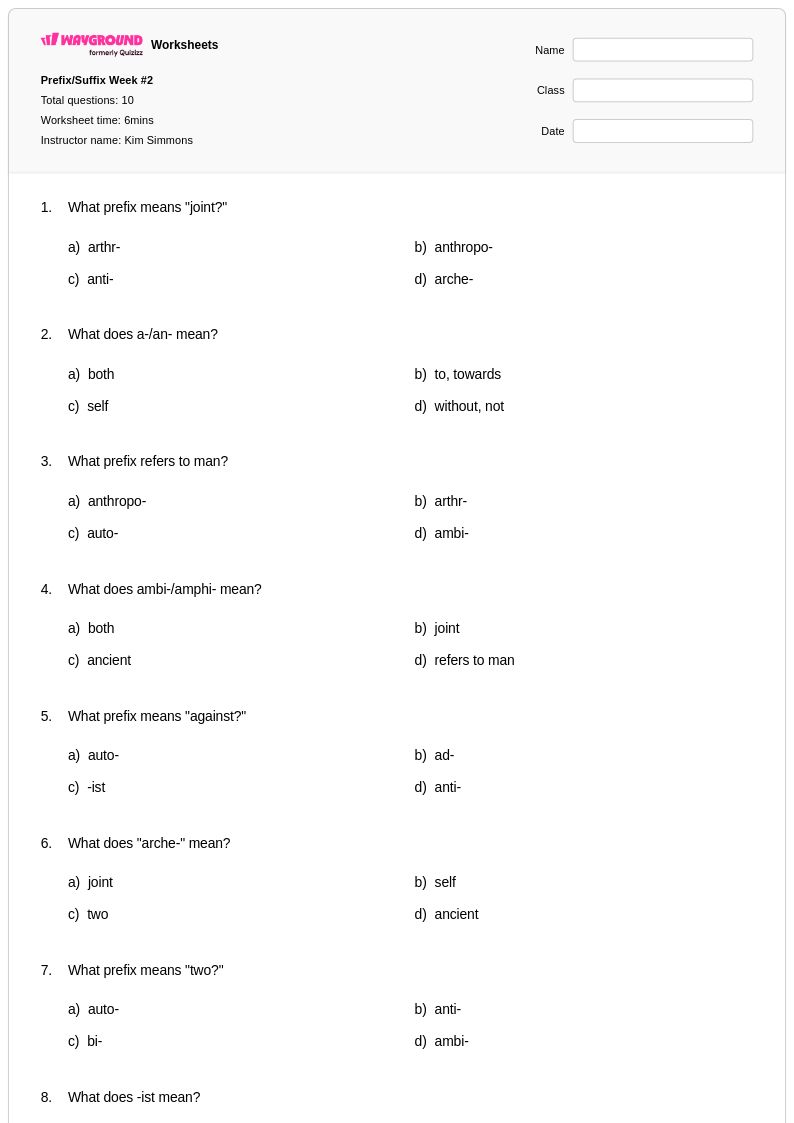
10 Q
7th - 12th
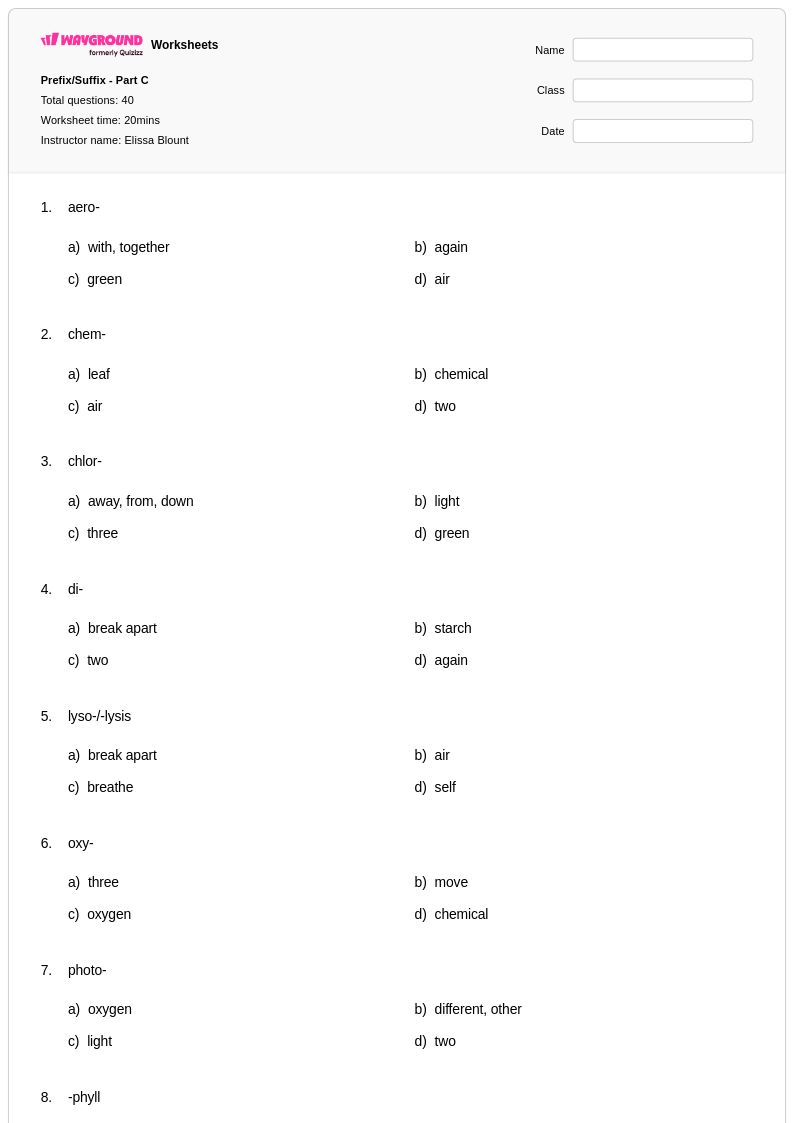
40 Q
9th - 12th
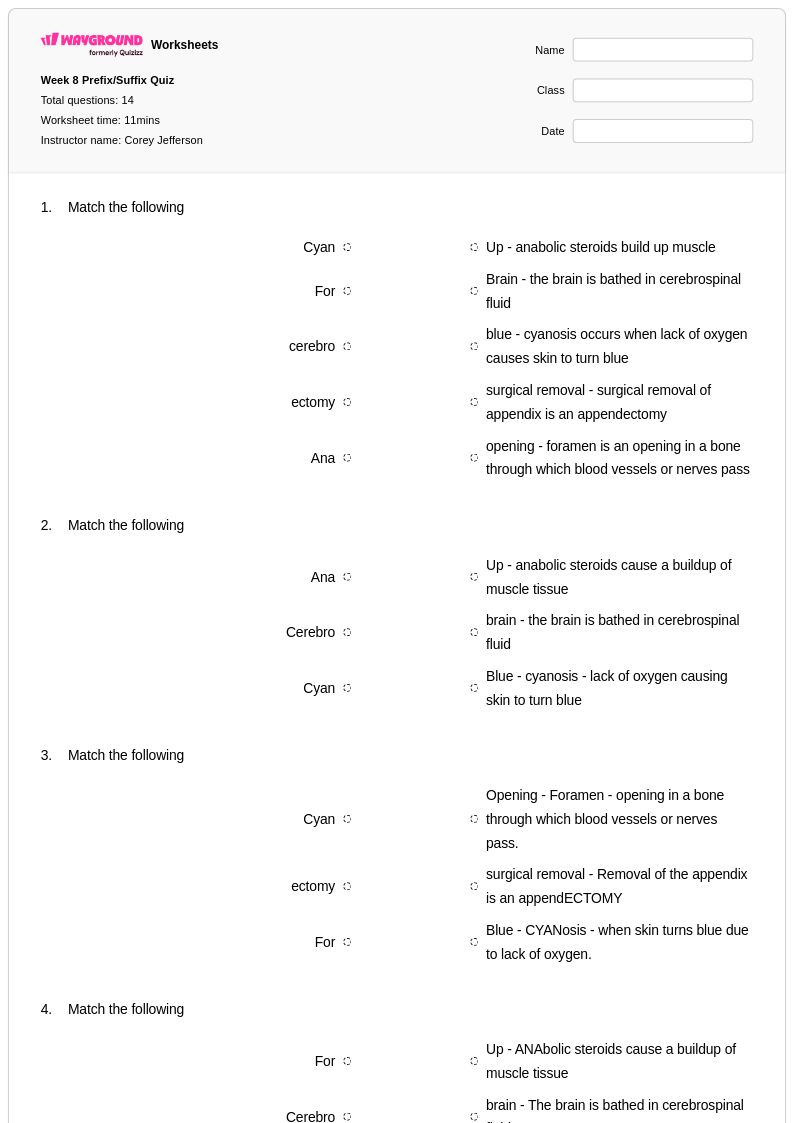
14 Q
9th - 12th
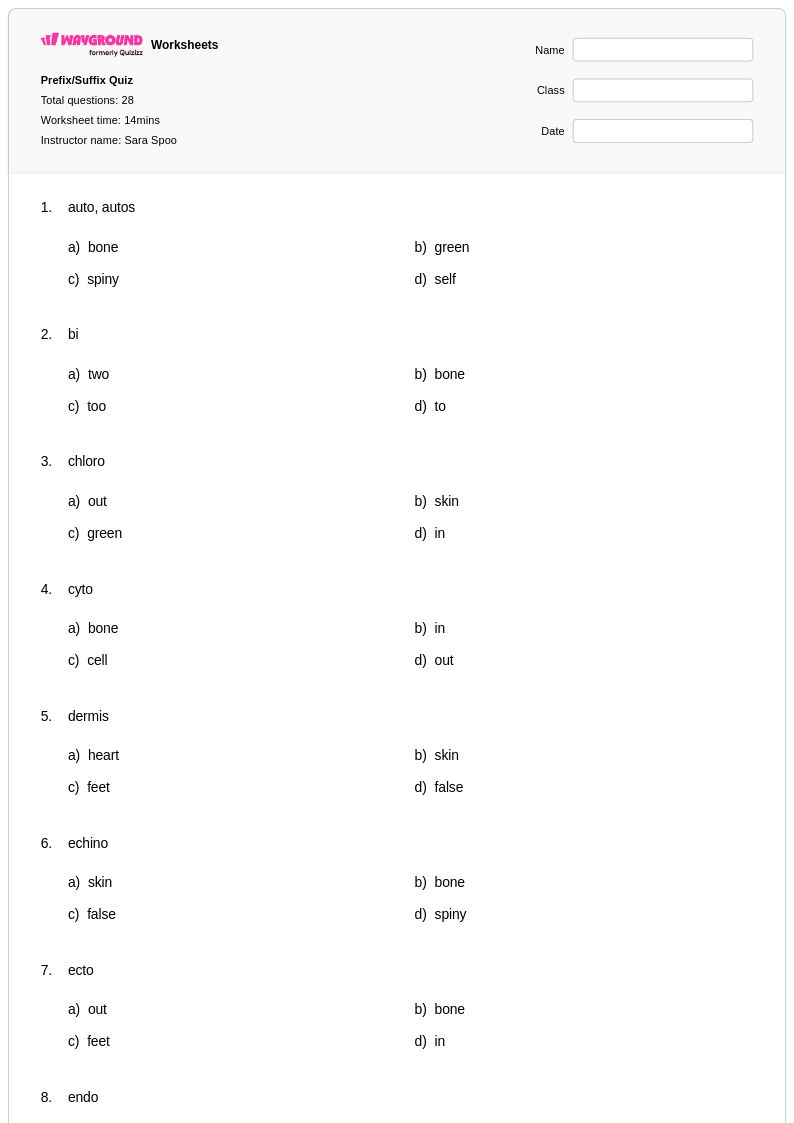
28 Q
9th - 12th
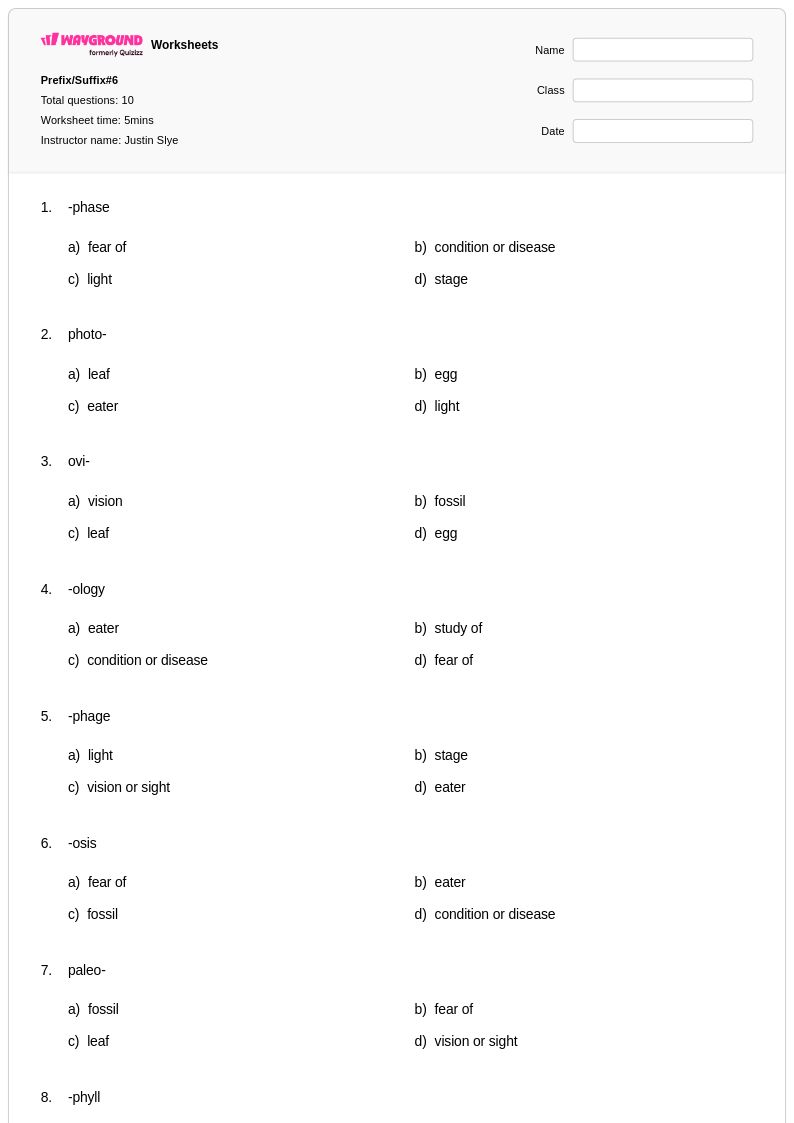
10 Q
10th
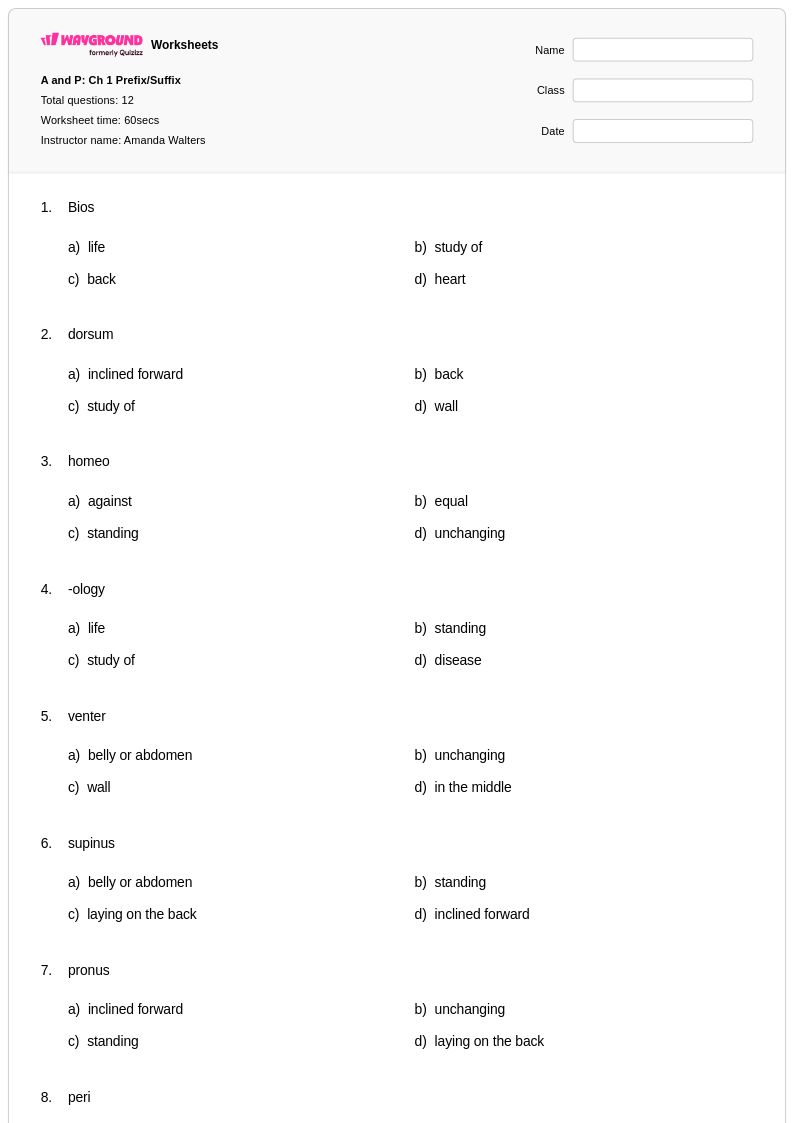
12 Q
9th - 12th
Explore Prefix Suffix Worksheets by Grades
Explore Other Subject Worksheets for grade 10
Explore printable Prefix Suffix worksheets for Grade 10
Prefix and suffix worksheets for Grade 10 biology provide essential vocabulary-building resources that help students decode complex scientific terminology and understand the systematic nature of biological language. These comprehensive worksheets available through Wayground (formerly Quizizz) focus on common biological prefixes like "hypo-," "hyper-," "endo-," and "exo-" alongside suffixes such as "-osis," "-lysis," and "-genesis" that form the foundation of scientific communication. Students engage with practice problems that require them to break down multisyllabic terms, identify root meanings, and construct new vocabulary using familiar word parts. Each worksheet comes with a detailed answer key and is available as a free pdf download, making these printables accessible for both classroom instruction and independent study while strengthening students' ability to tackle unfamiliar terminology with confidence.
Wayground (formerly Quizizz) empowers biology educators with millions of teacher-created prefix and suffix worksheets specifically designed for Grade 10 students, offering robust search and filtering capabilities that allow instructors to quickly locate resources aligned with curriculum standards and learning objectives. The platform's differentiation tools enable teachers to customize worksheets for various skill levels within their classrooms, while flexible formatting options provide both printable pdf versions for traditional paper-based activities and digital formats for technology-integrated lessons. These extensive worksheet collections support comprehensive lesson planning by offering varied approaches to vocabulary instruction, from basic word part identification to advanced application in biological contexts, making them invaluable for remediation sessions, enrichment activities, and regular skill practice that builds the linguistic foundation students need for success in advanced biological studies.
FAQs
How do I teach biology prefixes and suffixes effectively?
What exercises help students practice biology prefix and suffix recognition?
What mistakes do students commonly make when learning biological prefixes and suffixes?
How do I differentiate prefix and suffix instruction for students at different levels?
How can I use Wayground's prefix and suffix worksheets in my classroom?