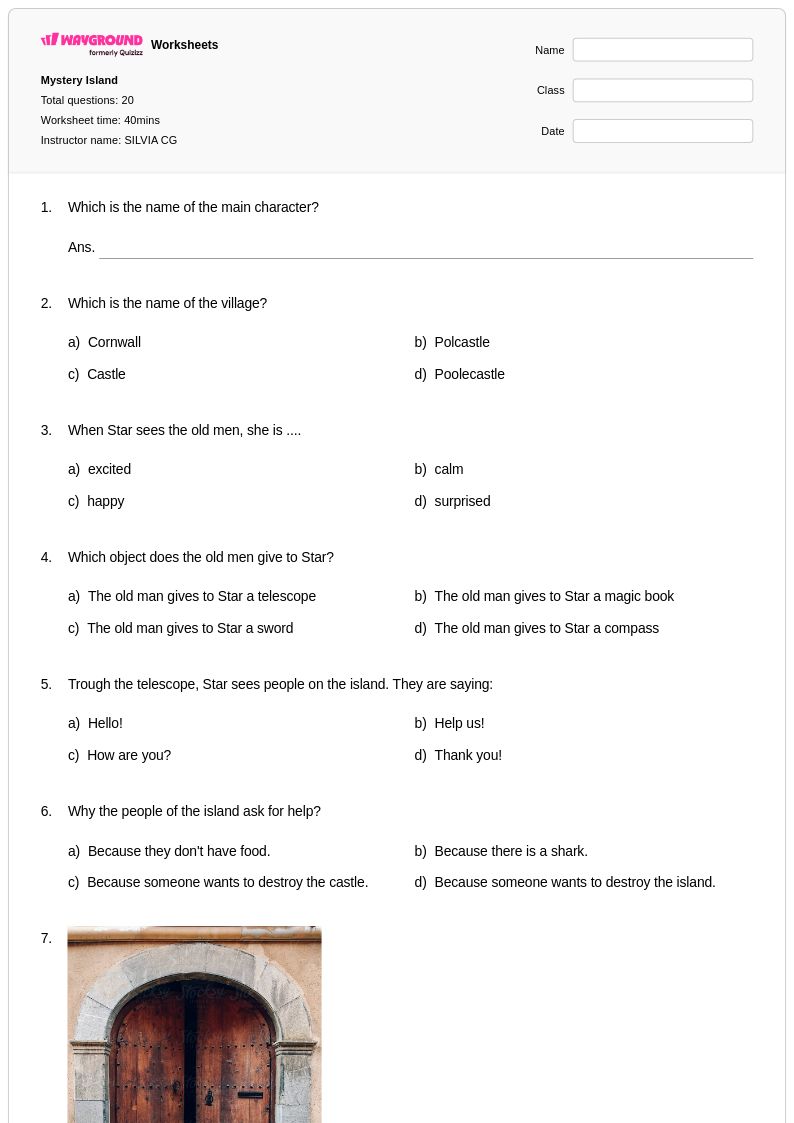
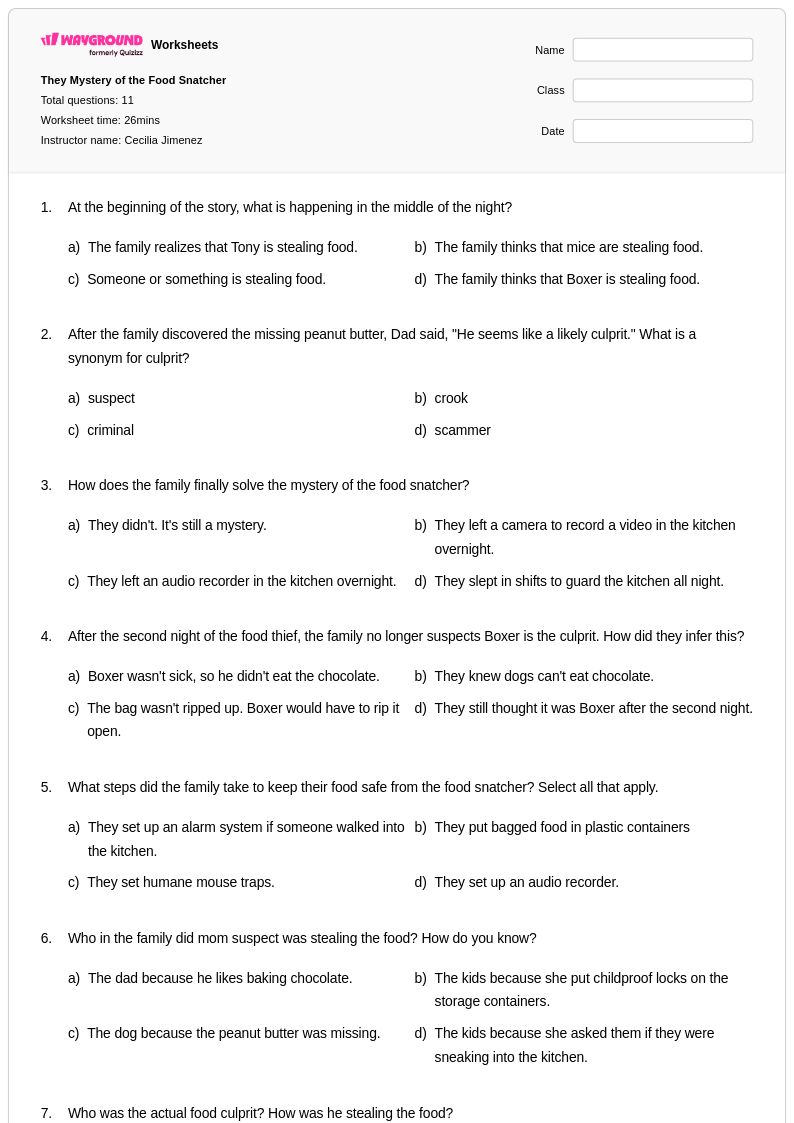
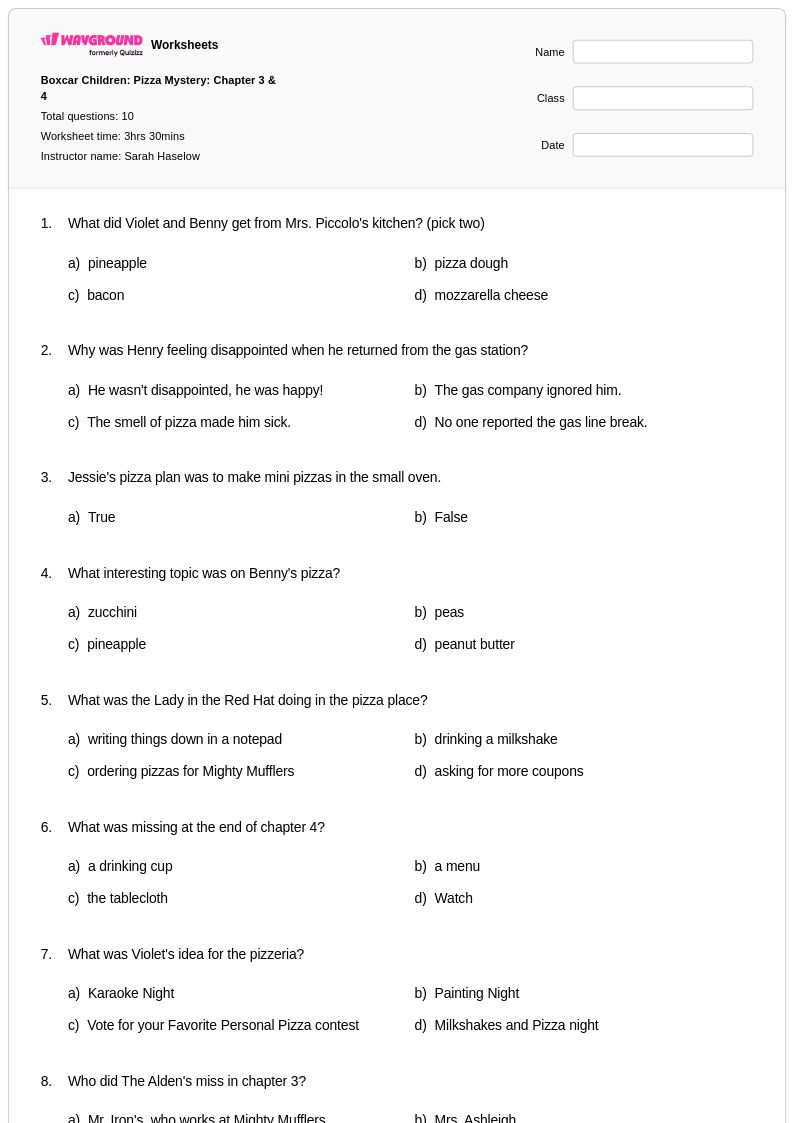
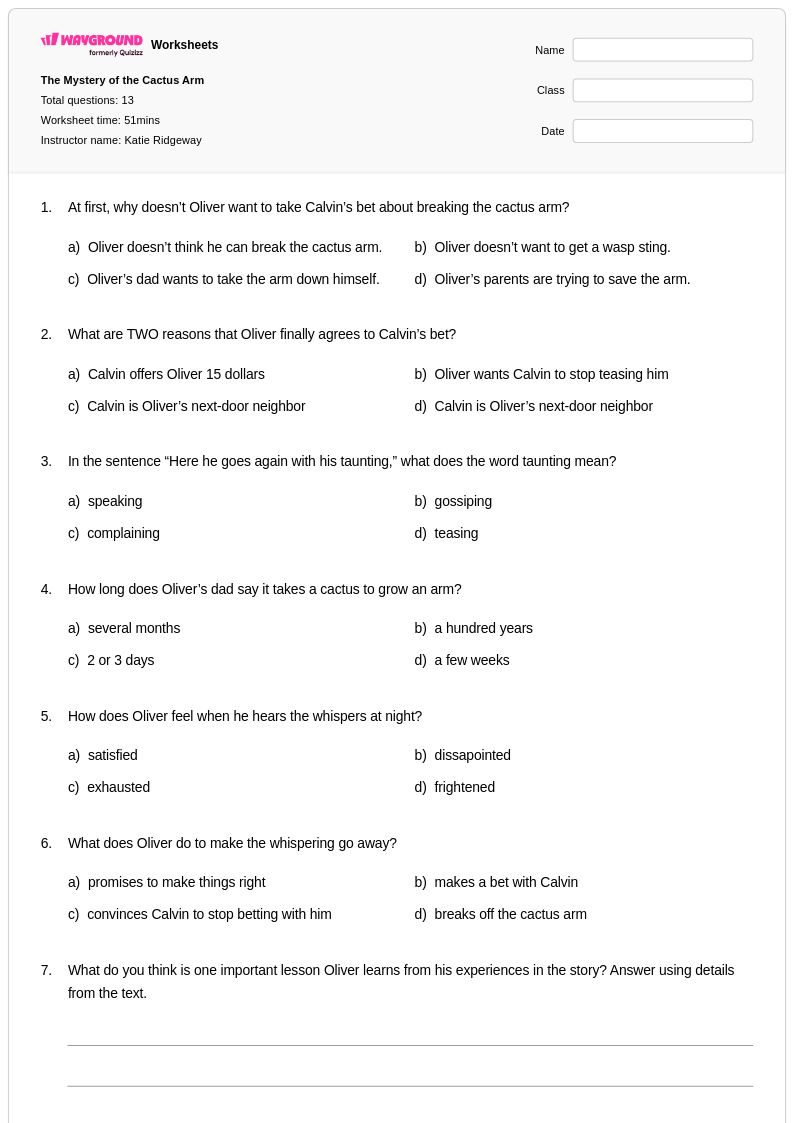
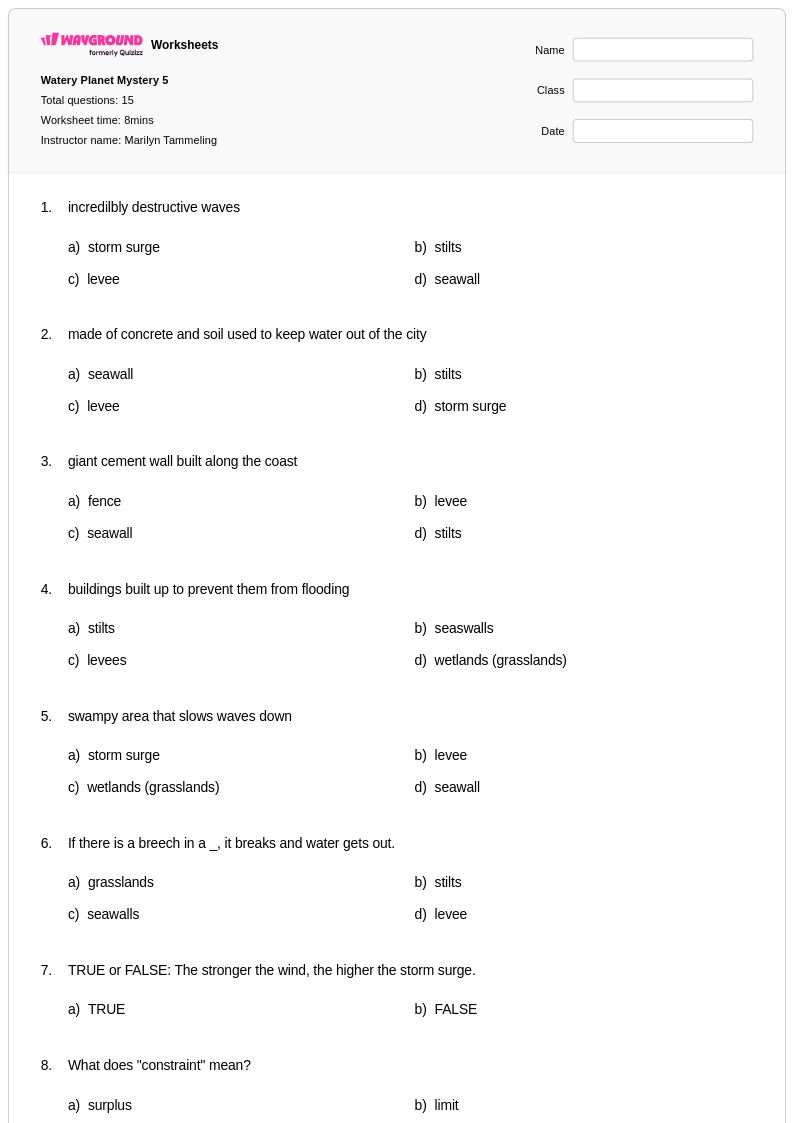
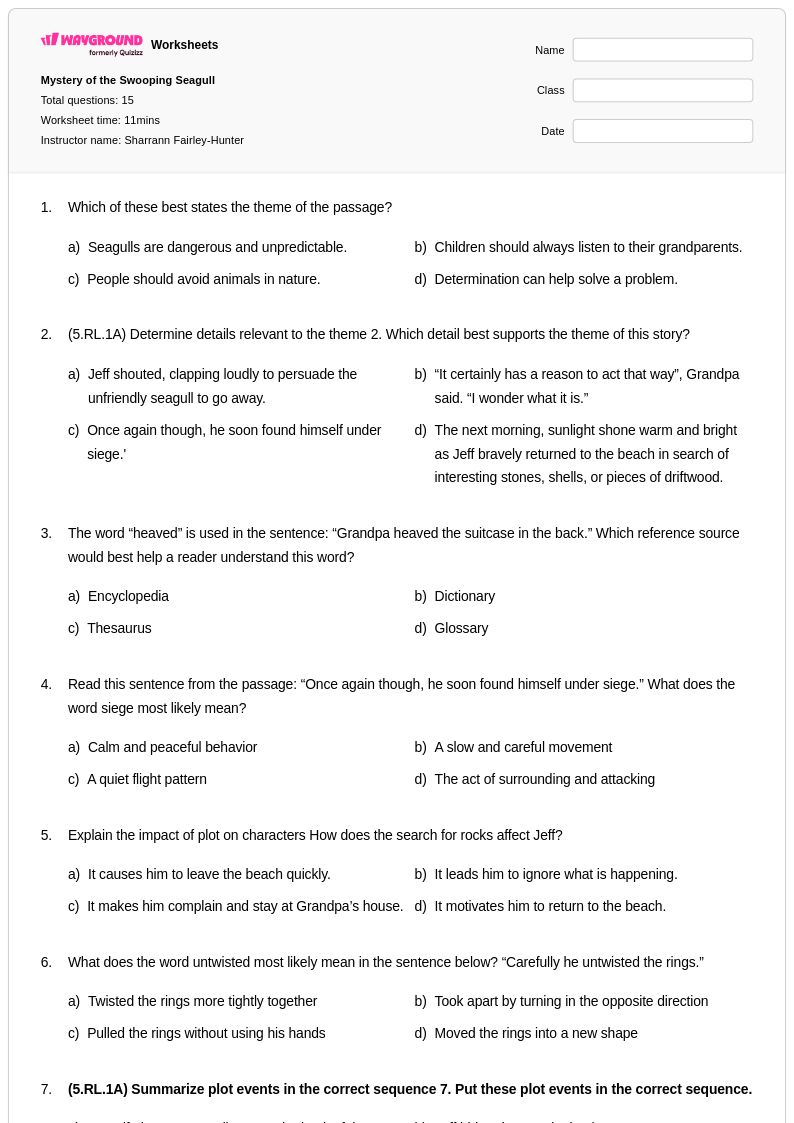
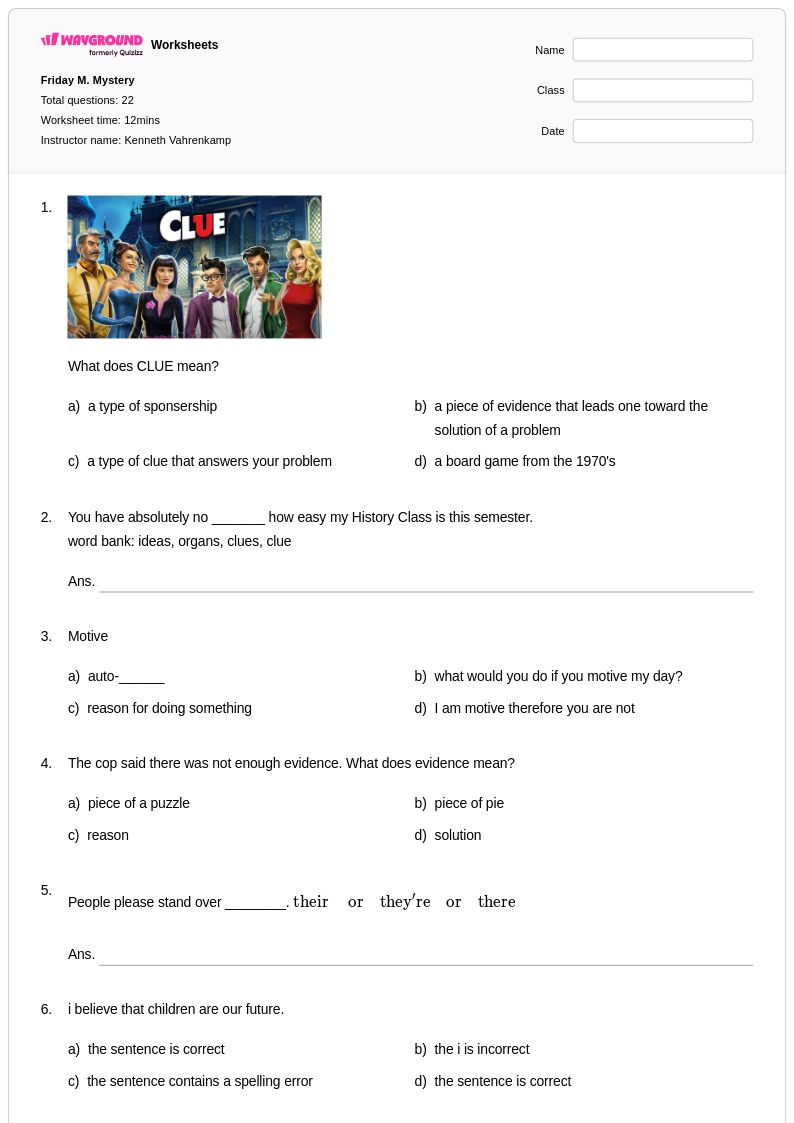
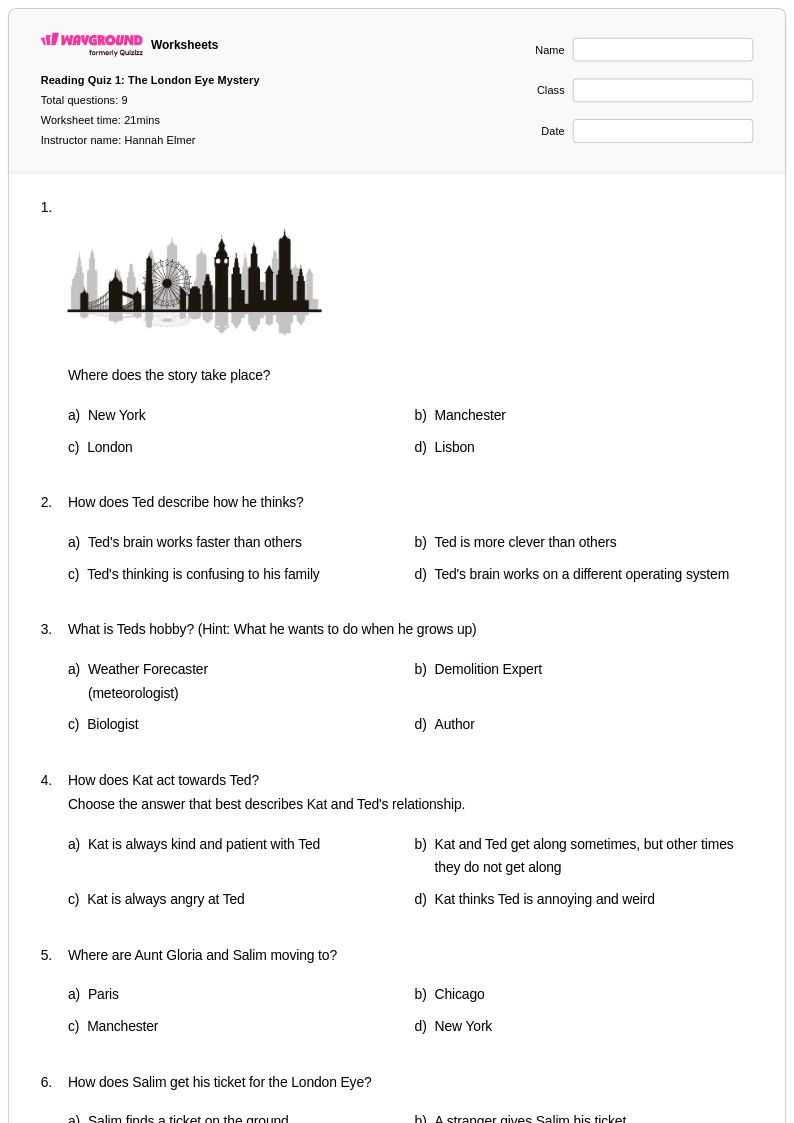
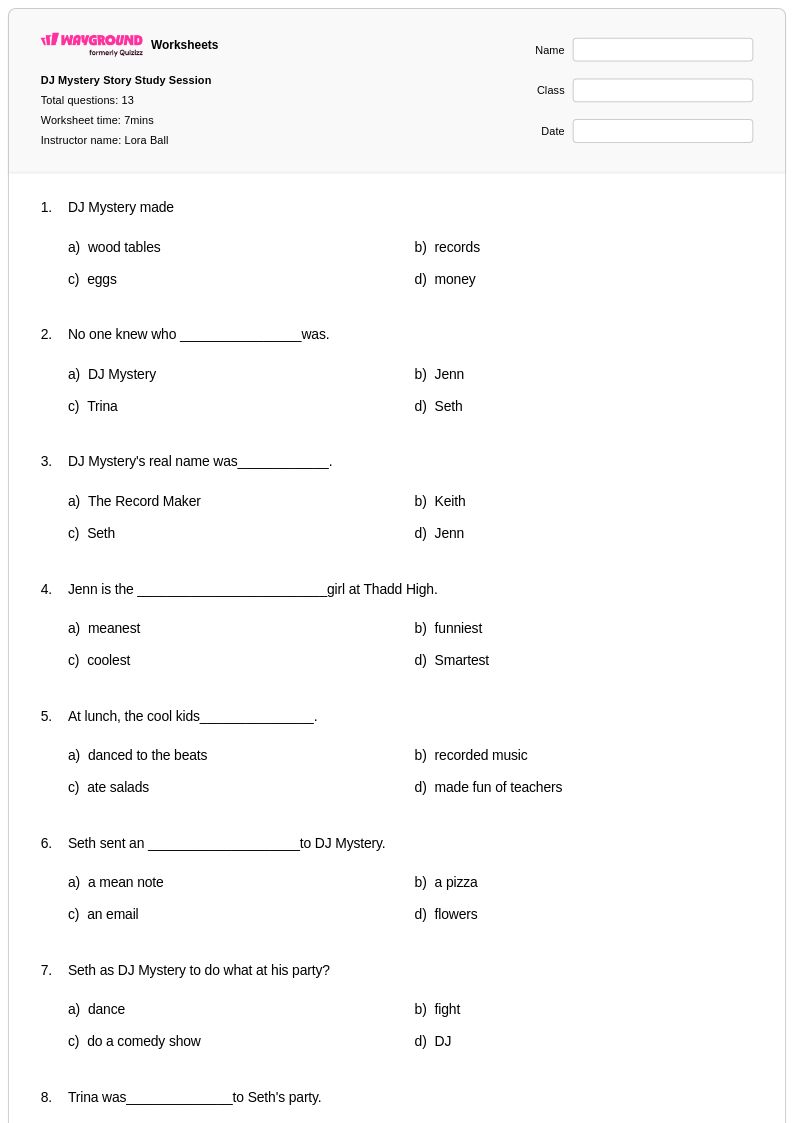
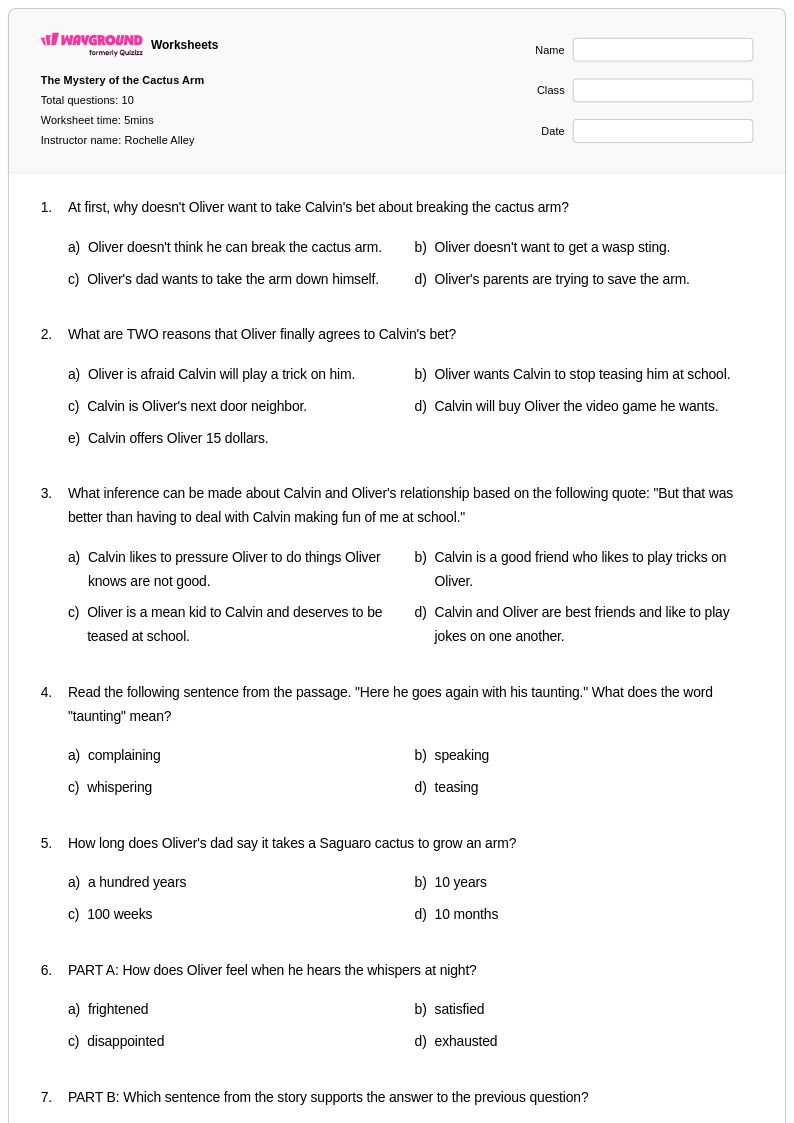
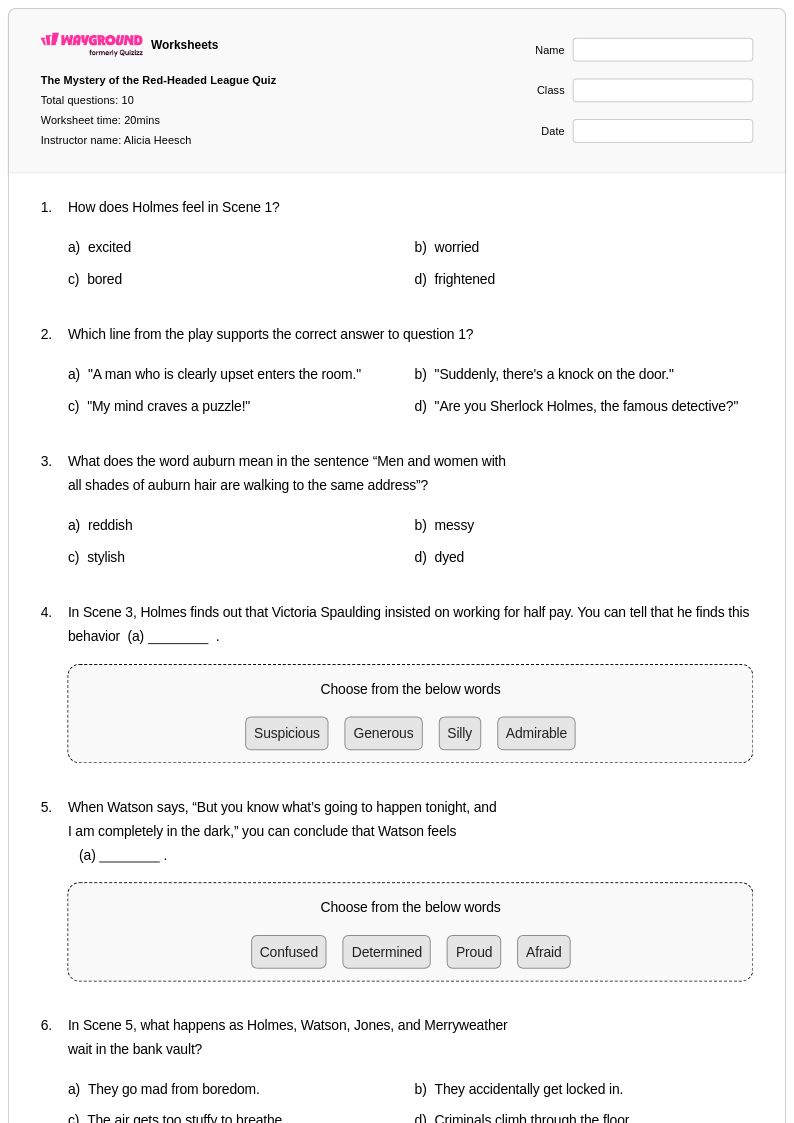
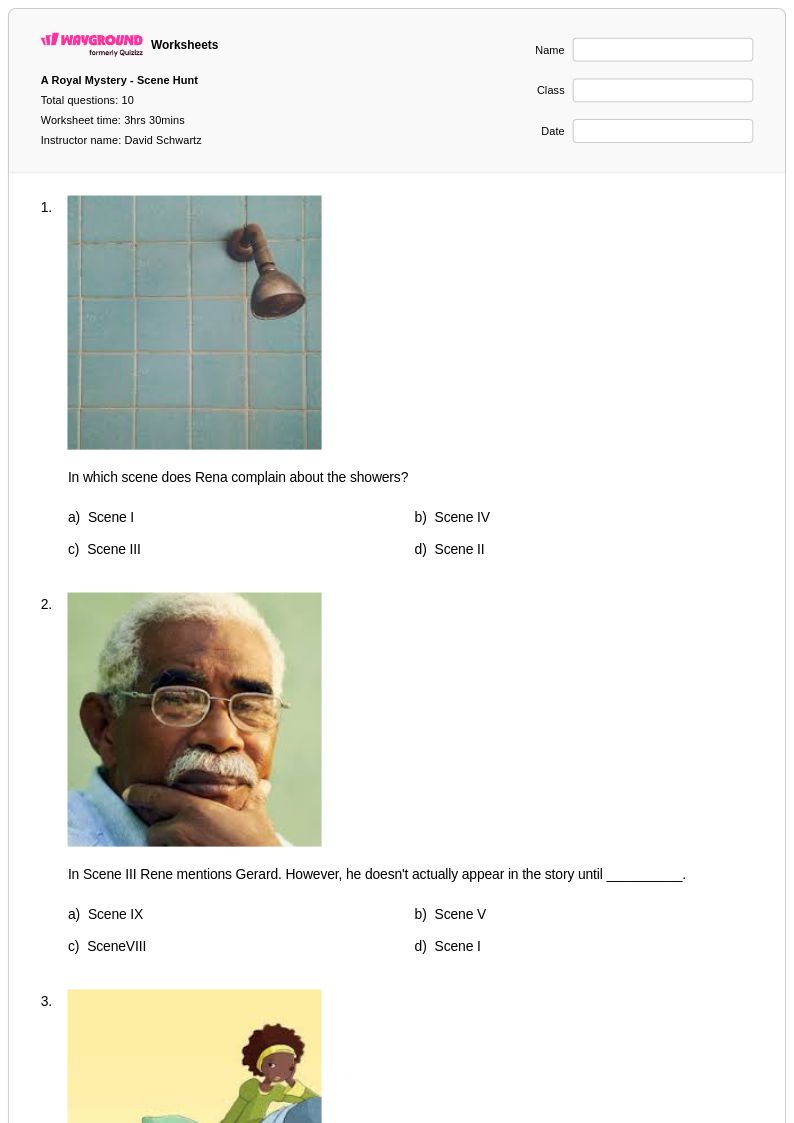
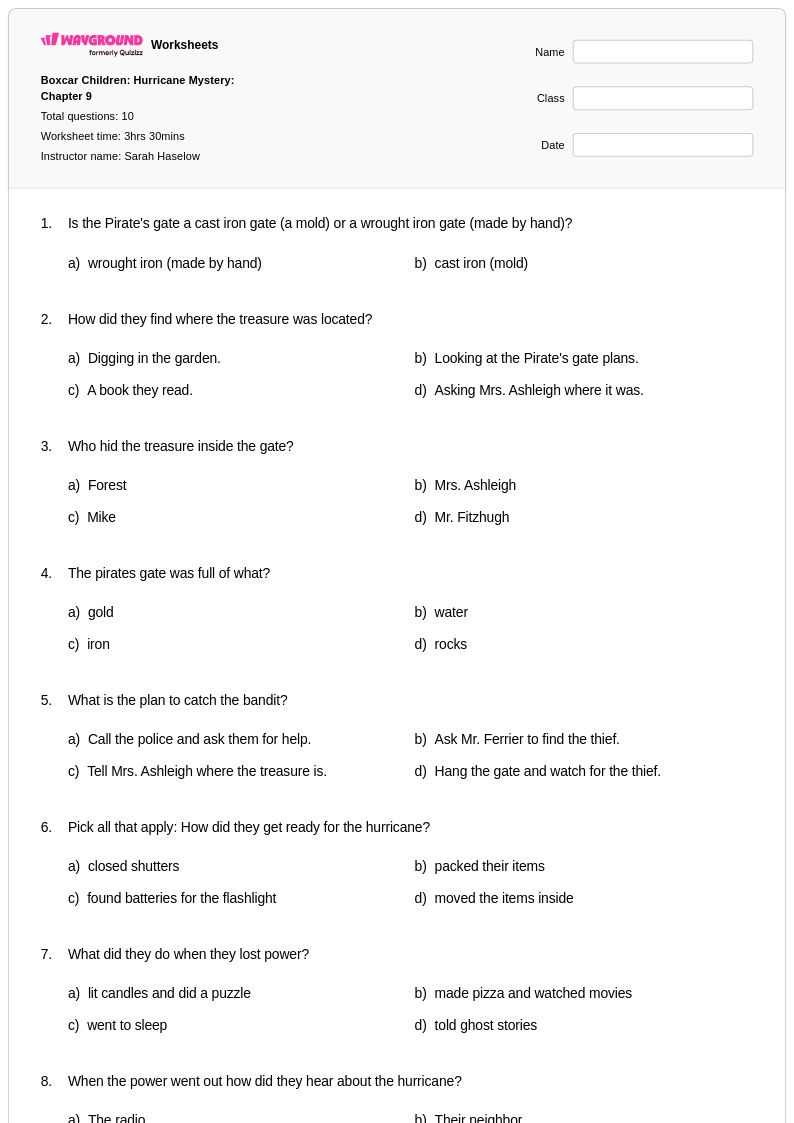
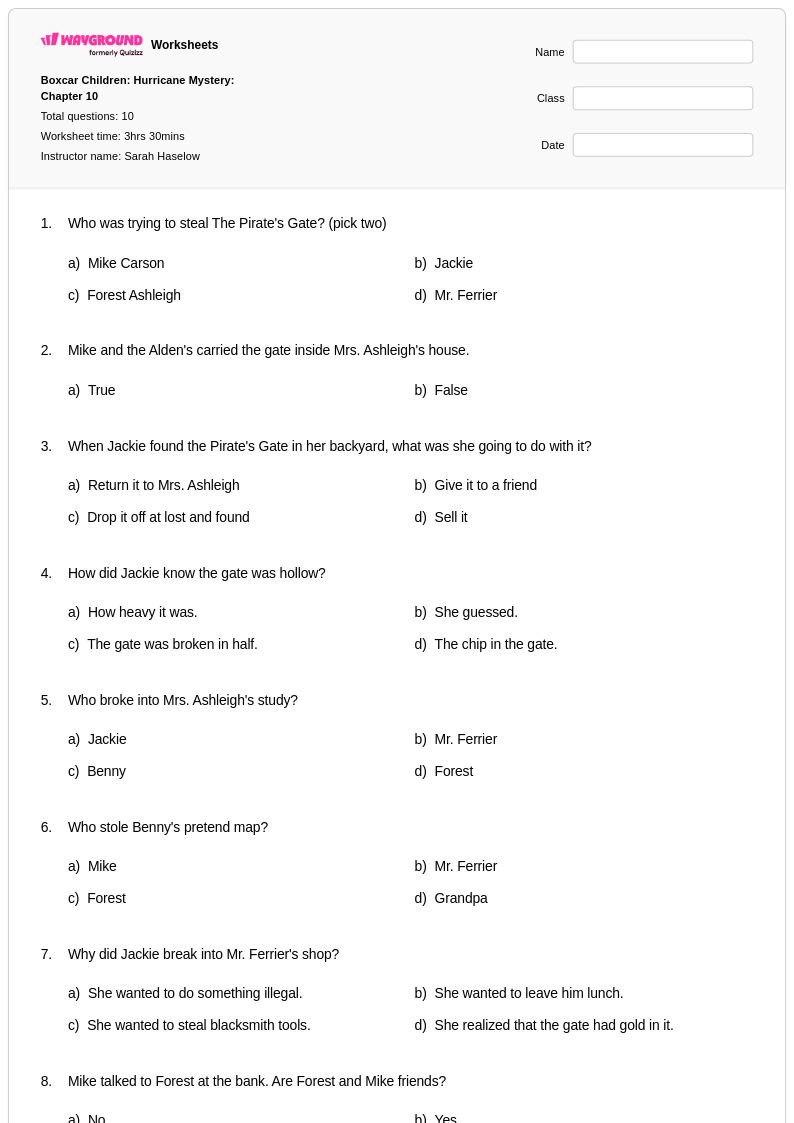
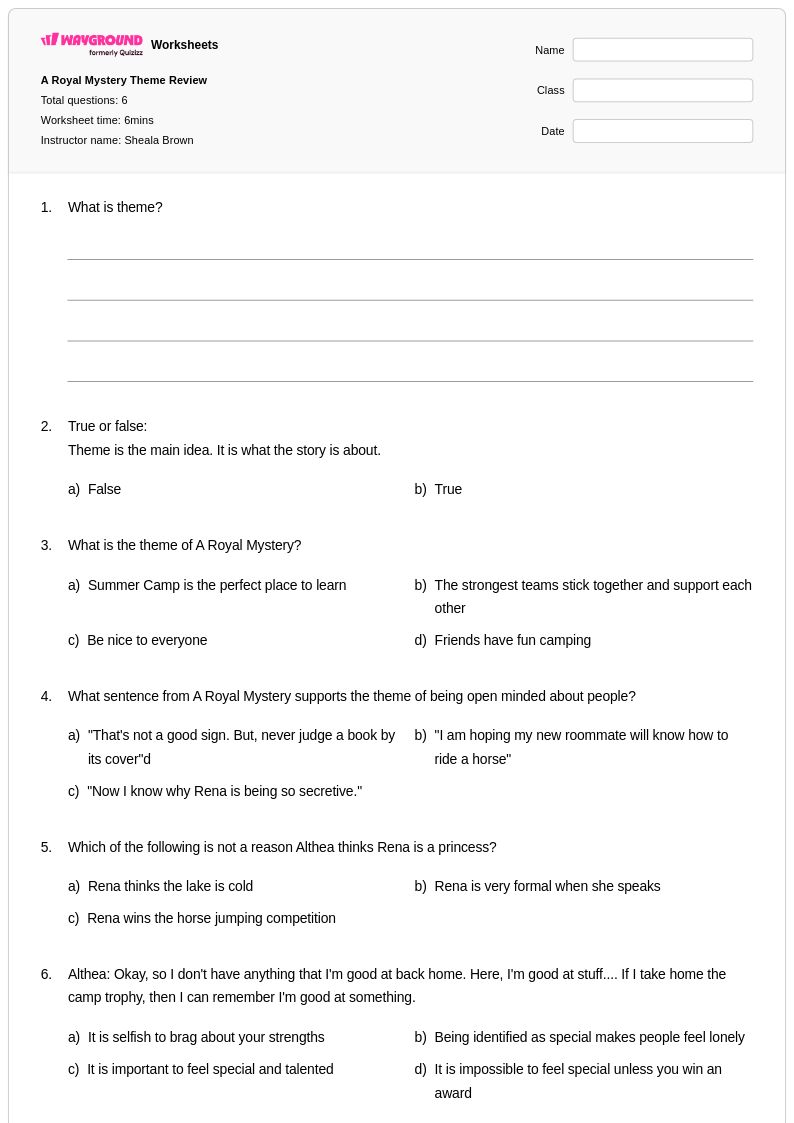
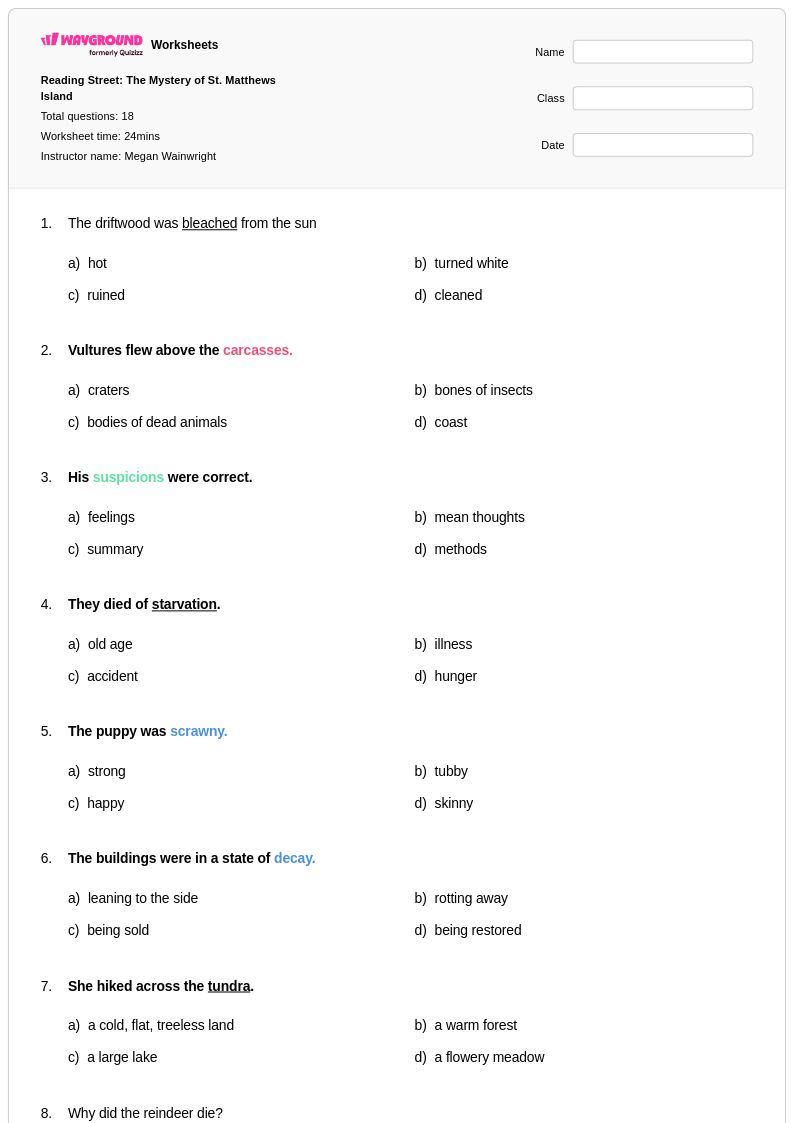
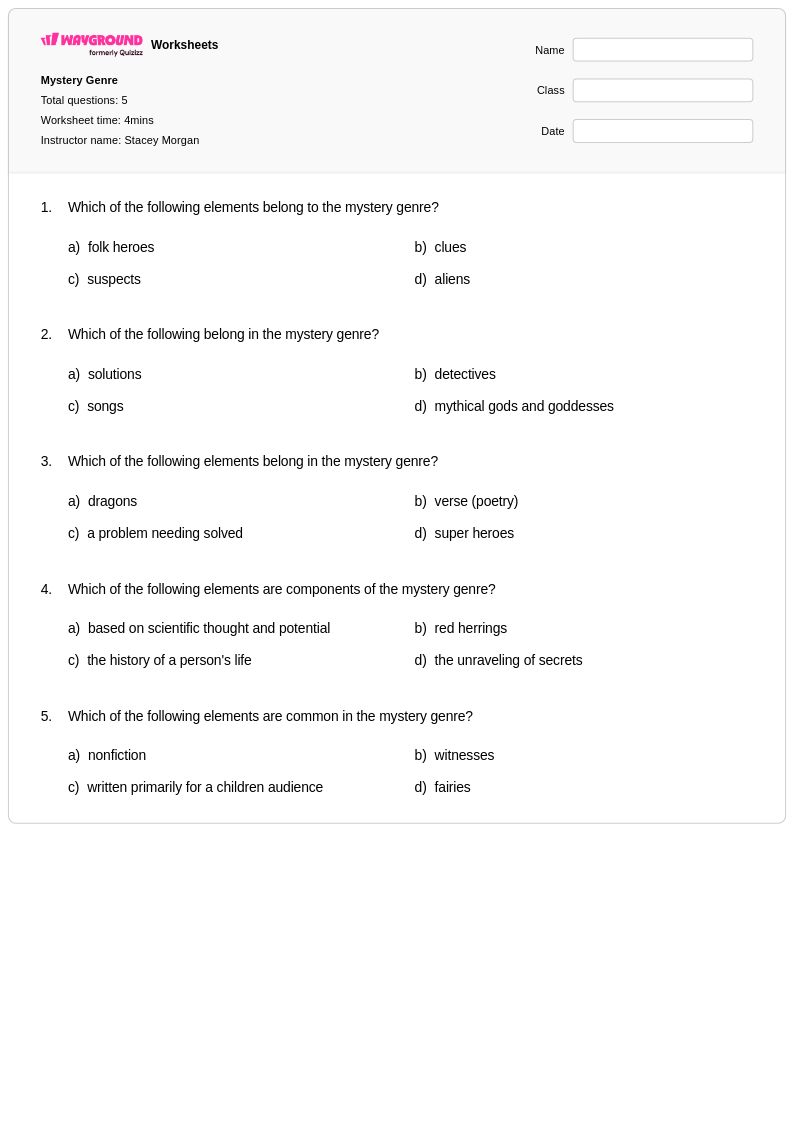
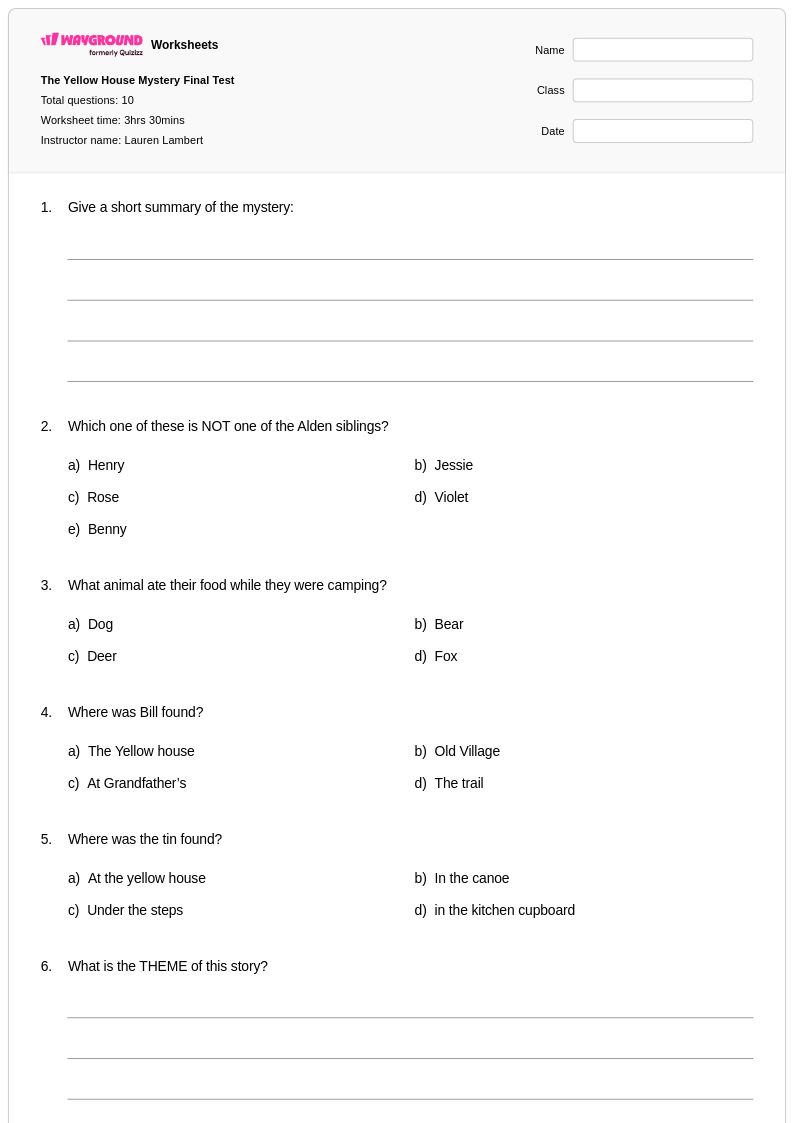
Explore Wayground's free Grade 5 mystery reading worksheets and printables that help students analyze clues, make inferences, and develop critical thinking skills through engaging detective stories and suspenseful narratives with complete answer keys.
Mystery worksheets for Grade 5 students available through Wayground (formerly Quizizz) provide comprehensive practice in analyzing one of literature's most engaging and intellectually stimulating genres. These carefully designed resources help fifth-grade students develop critical thinking skills by examining key mystery elements including plot structure, character motivation, clue analysis, and logical deduction. Students work through practice problems that challenge them to identify red herrings, analyze suspicious character behavior, predict story outcomes, and understand how authors build suspense throughout their narratives. Each worksheet comes with a detailed answer key to support independent learning, and teachers can access these materials as free printables in convenient PDF format, making them ideal for both classroom instruction and homework assignments that strengthen reading comprehension and analytical reasoning skills.
Wayground's extensive collection of teacher-created mystery worksheets offers educators access to millions of resources specifically designed to enhance Grade 5 reading instruction. The platform's robust search and filtering capabilities allow teachers to quickly locate materials that align with specific learning standards and student needs, while built-in differentiation tools enable customization for various reading levels within the same classroom. These worksheets are available in both printable PDF format and interactive digital versions, providing flexibility for different teaching environments and learning preferences. Teachers can effectively use these resources for lesson planning, targeted skill remediation, enrichment activities for advanced readers, and regular practice to reinforce students' understanding of mystery genre conventions, ultimately helping students become more sophisticated readers who can appreciate the complexity and craftsmanship of mystery literature.
FAQs
How do I teach the mystery genre to students?
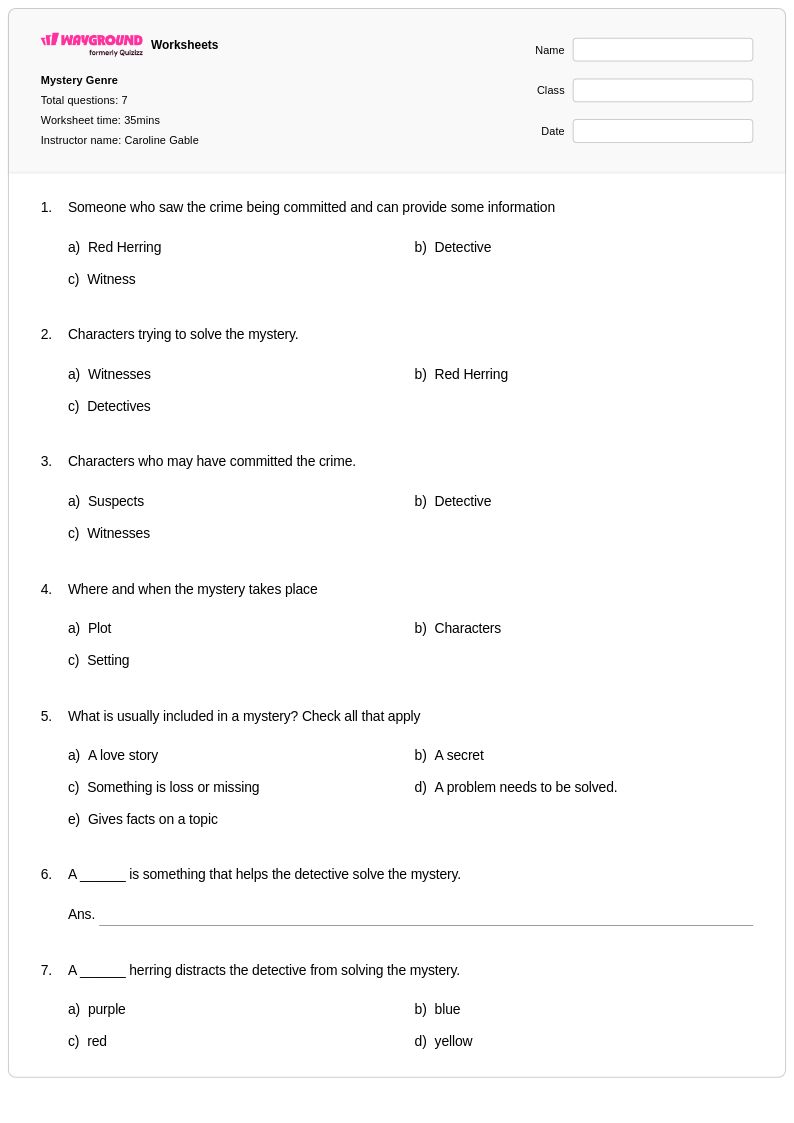
Teaching the mystery genre effectively starts with breaking down its core structural elements: the crime or puzzle, the detective or protagonist, suspects, motives, clues, red herrings, and resolution. Begin by modeling how authors build suspense through setting atmosphere and narrative pacing before asking students to identify these elements independently in texts they read. Pairing direct instruction with guided analysis activities helps students internalize the conventions of the genre rather than just recognizing them on the surface.
What exercises help students practice analyzing mystery stories?
Effective practice exercises for mystery genre analysis include identifying clues versus red herrings within a text, mapping the plot structure from the introduction of the puzzle to its resolution, and tracing how an author builds tension across a narrative. Activities that ask students to predict outcomes before finishing a story and then evaluate whether their prediction was supported by textual evidence are especially useful for developing deductive reasoning. Worksheets that target specific components like character motive or suspect analysis give students focused, repeatable practice with the genre's essential features.
What mistakes do students commonly make when analyzing mystery texts?
One of the most common errors students make is conflating clues with red herrings, accepting every detail the author presents at face value rather than evaluating its reliability. Students also frequently summarize plot events instead of analyzing how the author uses those events to build suspense or reveal character. A third common misconception is treating the resolution as the only significant moment in a mystery, overlooking how tension and inference operate throughout the entire narrative.
How can I differentiate mystery genre instruction for students at different reading levels?
Differentiation in mystery genre instruction works best when both the complexity of the text and the analytical demand of the task are adjusted together. For struggling readers, simplified texts paired with scaffolded worksheets that break analysis into discrete steps keep the cognitive load manageable. On Wayground, teachers can apply individual accommodations such as read aloud support, reduced answer choices, and extended time to specific students, ensuring that all learners can engage with mystery genre analysis at an appropriate level of challenge without disrupting the experience of their peers.
How do I use Wayground's mystery worksheets in my classroom?
Wayground's mystery worksheets are available as printable PDFs for traditional classroom use and in digital formats for technology-integrated learning environments, making them flexible enough to use for whole-class instruction, independent practice, or homework. Teachers can also host worksheets directly as a quiz on Wayground, which allows for real-time student interaction and built-in answer key support. Each worksheet includes a complete answer key, so students can use them for self-assessment and independent review as well.
How do I help students understand how authors create suspense in mystery writing?
Helping students understand suspense in mystery writing requires shifting their focus from what happens to how the author controls what the reader knows and when. Teach students to look for techniques like withheld information, unreliable narrators, atmosphere-building through setting description, and the deliberate placement of clues and misdirections throughout the plot. Asking students to annotate a mystery passage specifically for authorial craft choices, rather than content alone, builds the analytical habit of reading like a writer.