
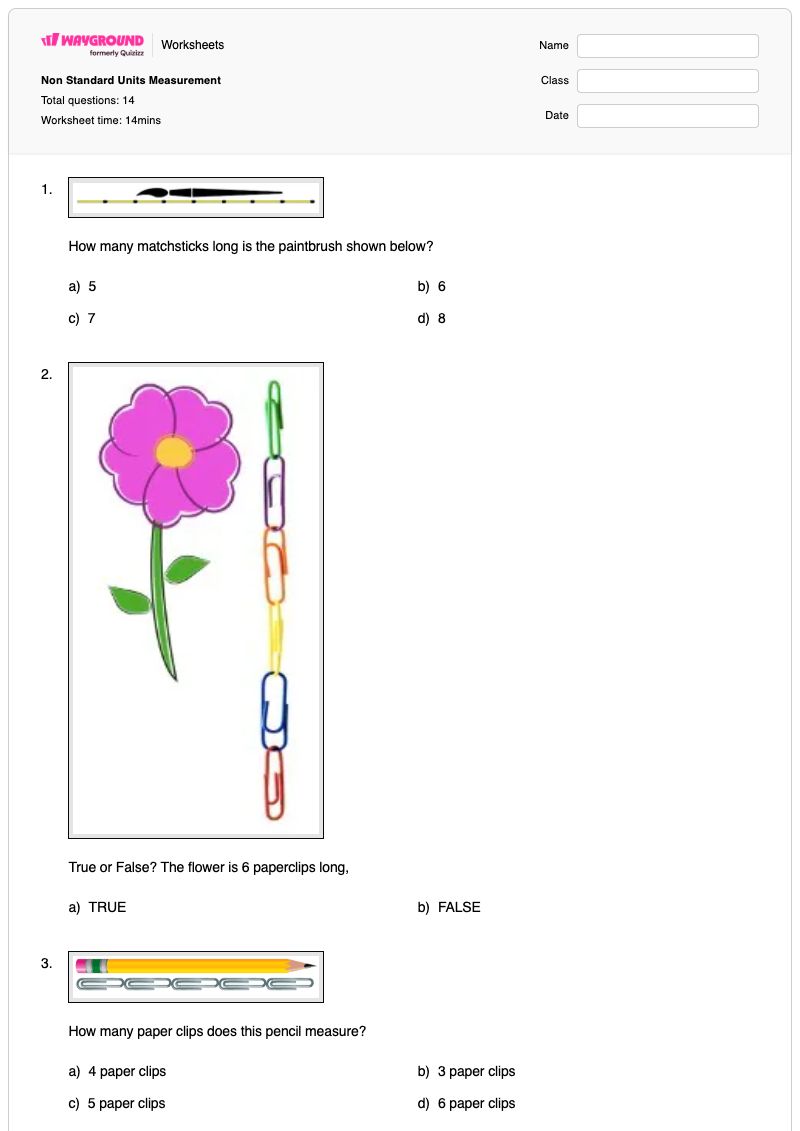
14 Q
1st - Uni

12 Q
2nd - Uni
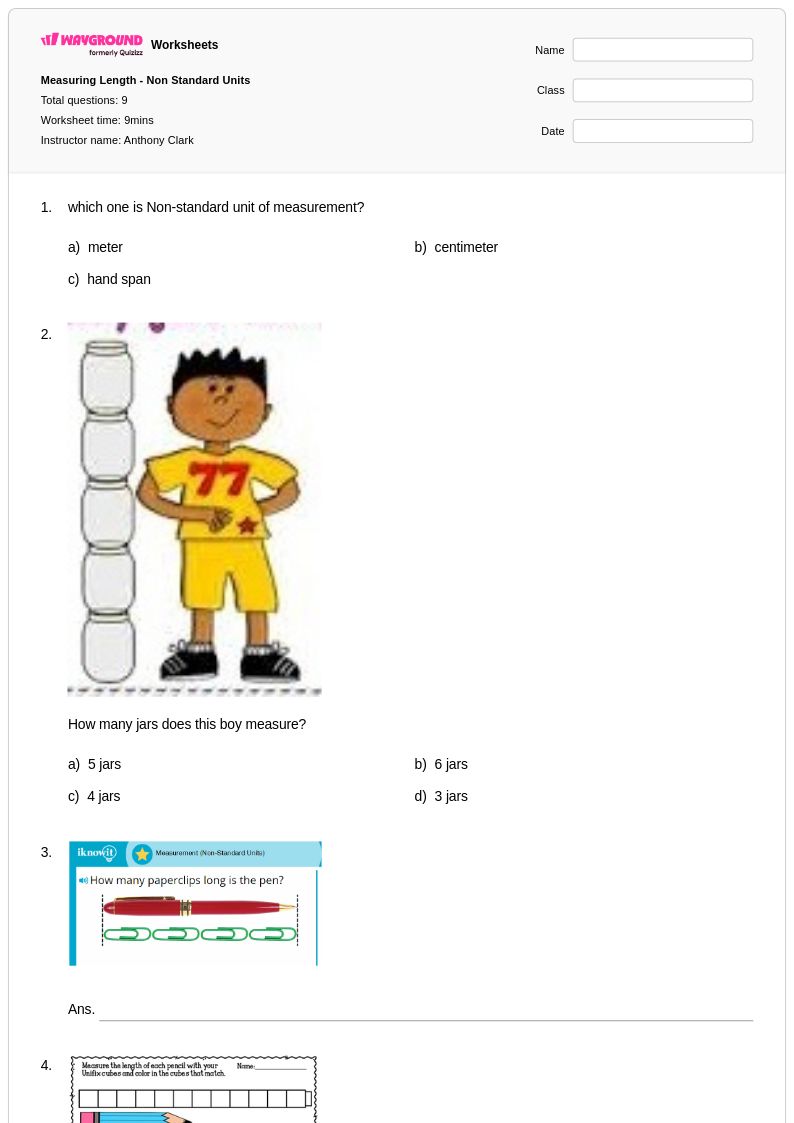
9 Q
2nd - Uni
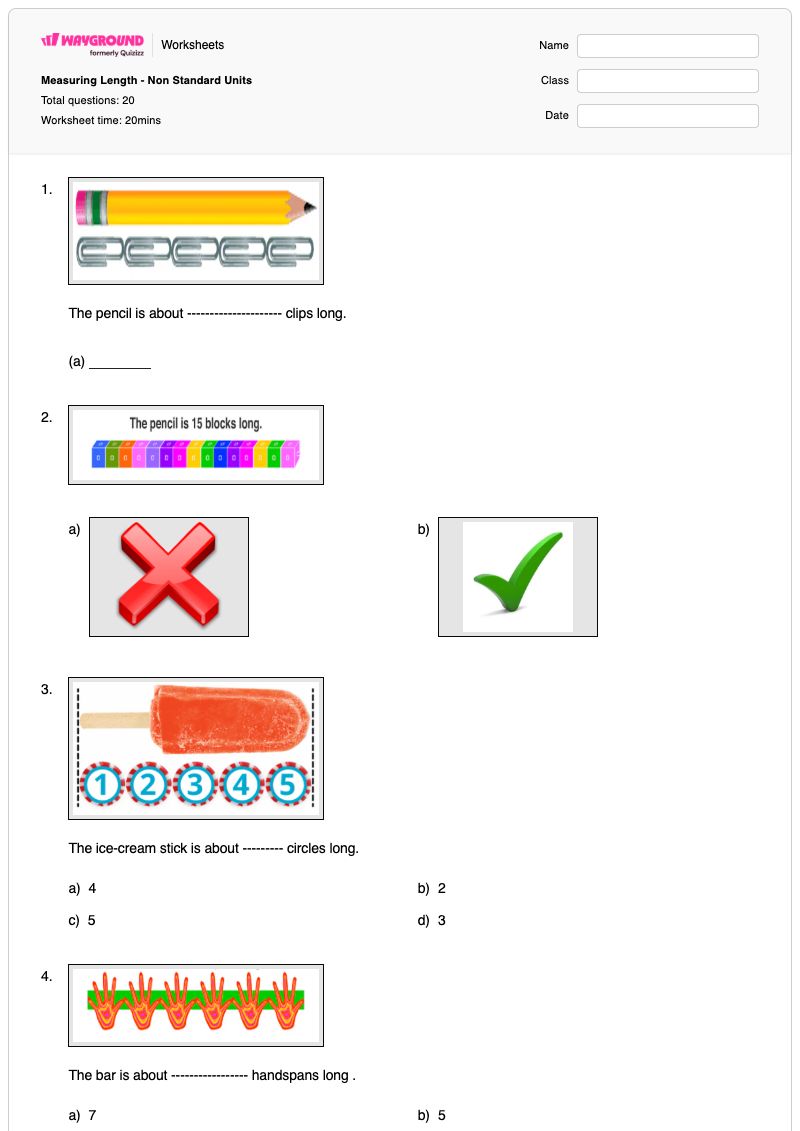
20 Q
2nd - Uni

15 Q
1st - Uni
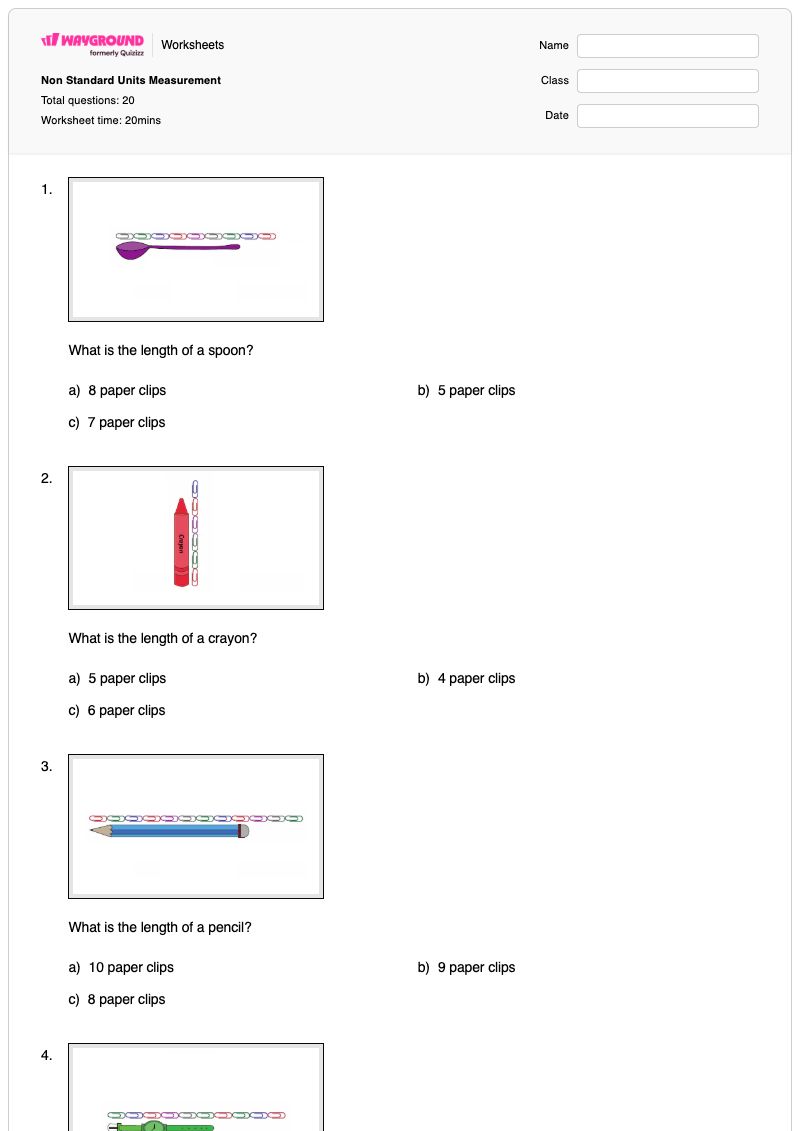
20 Q
1st - Uni

13 Q
1st - Uni
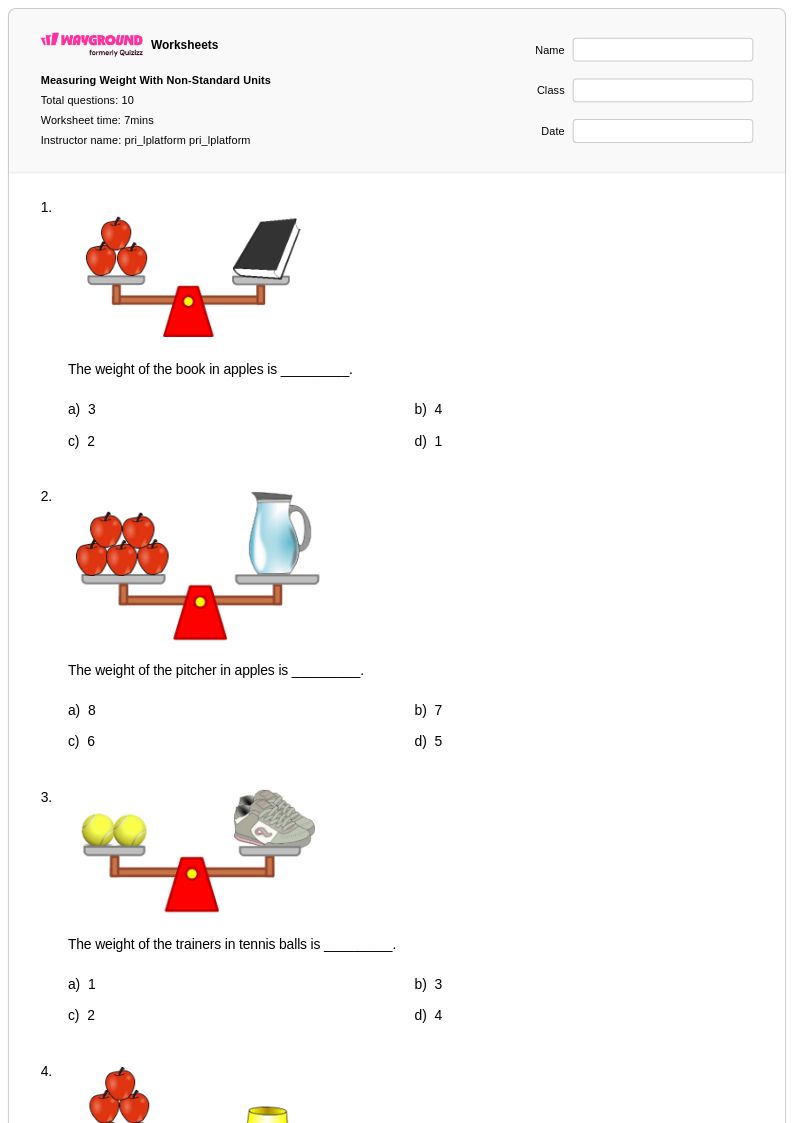
10 Q
1st

10 Q
2nd
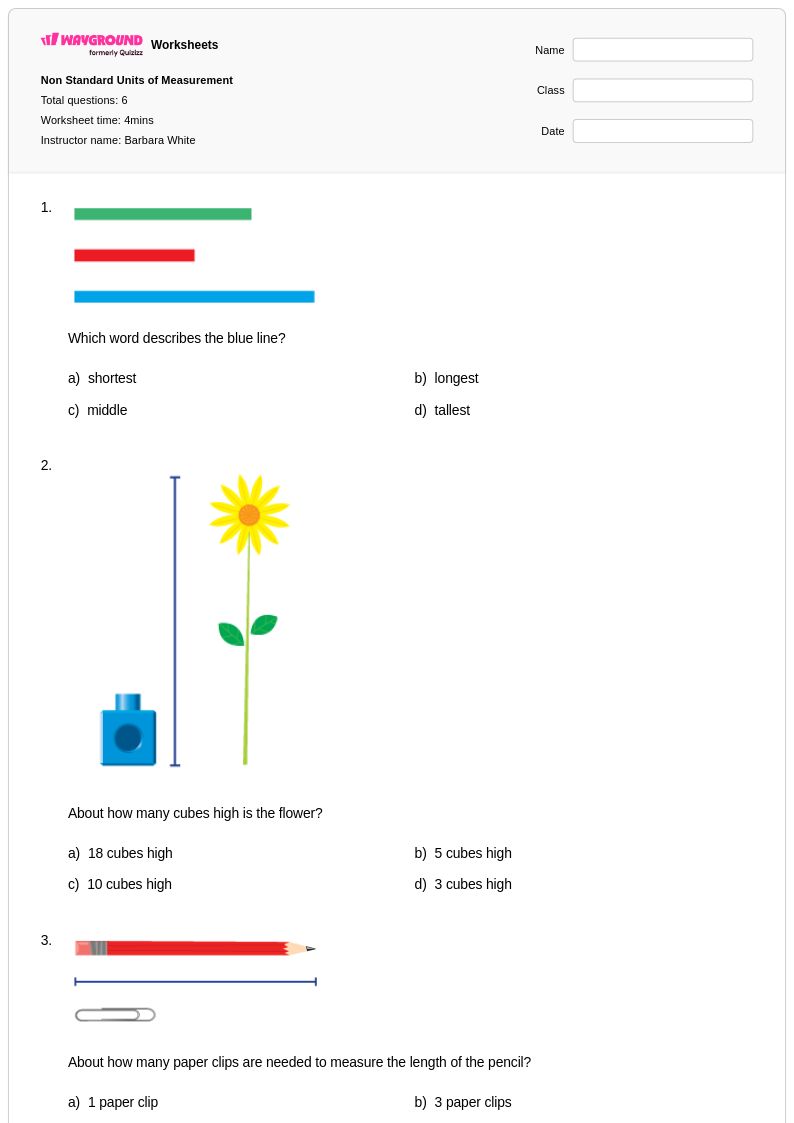
6 Q
1st

10 Q
4th

20 Q
2nd - Uni

10 Q
1st

5 Q
KG

20 Q
1st - Uni

10 Q
4th

15 Q
1st - Uni

9 Q
1st

6 Q
1st

15 Q
2nd - Uni

6 Q
1st

6 Q
1st

11 Q
1st

15 Q
2nd - Uni
Explore Non-standard Units Worksheets by Grades
Explore Other Subject Worksheets for kindergarten
Explore printable Non-standard Units worksheets for Kindergarten
Non-standard units worksheets for kindergarten provide young learners with essential foundational experiences in measurement concepts through hands-on, concrete activities. These engaging practice materials guide students to measure length, height, weight, and capacity using everyday objects like paper clips, blocks, crayons, and counting bears rather than traditional rulers or scales. The academic purpose centers on developing measurement sense, comparative thinking, and understanding of units as consistent tools for quantifying attributes of objects. Students strengthen critical mathematical reasoning skills as they estimate, measure, and compare results while building vocabulary related to measurement concepts. These free printables include answer keys for easy assessment and feature problems that encourage exploration of why consistent units matter in measurement activities.
Wayground (formerly Quizizz) supports kindergarten teachers with an extensive collection of non-standard units measurement worksheets created by millions of educators worldwide. The platform's robust search and filtering capabilities allow teachers to quickly locate materials aligned with specific learning standards and differentiated for various skill levels within their classrooms. Teachers can customize existing worksheets or create entirely new versions to match their instructional goals, with flexible options for both digital classroom integration and printable pdf formats for independent practice or homework assignments. These comprehensive resources facilitate effective lesson planning while providing targeted materials for remediation support, enrichment activities, and systematic skill practice that helps students progress from concrete measurement experiences toward more abstract mathematical understanding.
FAQs
What grade do students learn about non-standard units?
How should I teach non-standard units in Kindergarten?
What are good practice activities for non-standard measurement in Kindergarten?
What's a common misconception for Kindergarteners with this topic?
How do I use this Kindergarten worksheet with my class?
How does this topic align with Kindergarten math standards?