Free Printable Paragraph Correction Worksheets for Grade 8
Grade 8 paragraph correction worksheets help students master editing and revising skills through engaging printables and practice problems, complete with answer keys for independent learning and skill development.
Explore printable Paragraph Correction worksheets for Grade 8
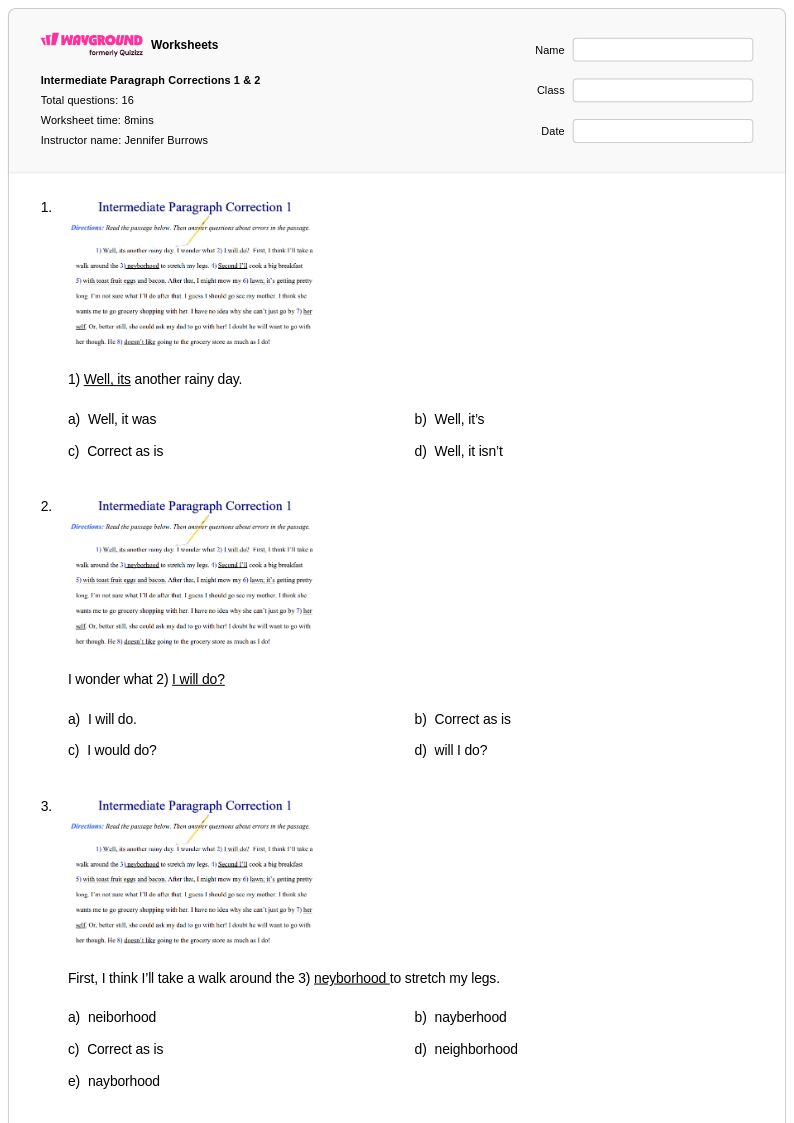
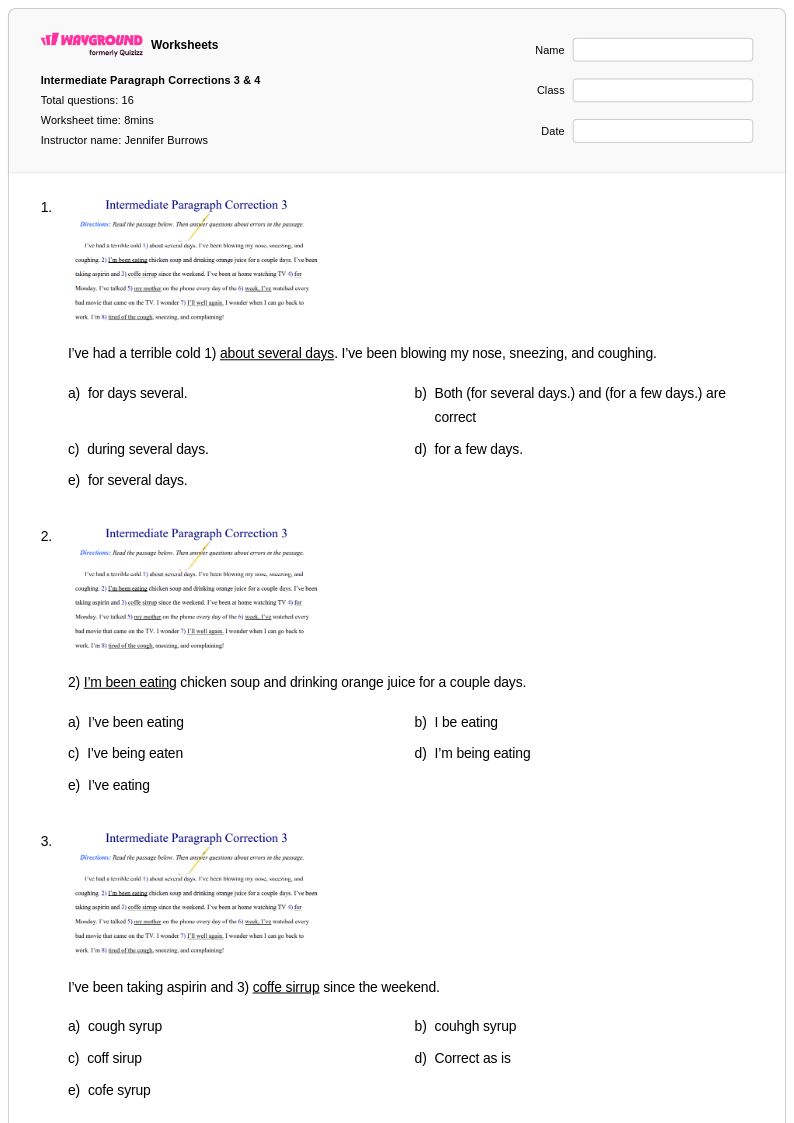
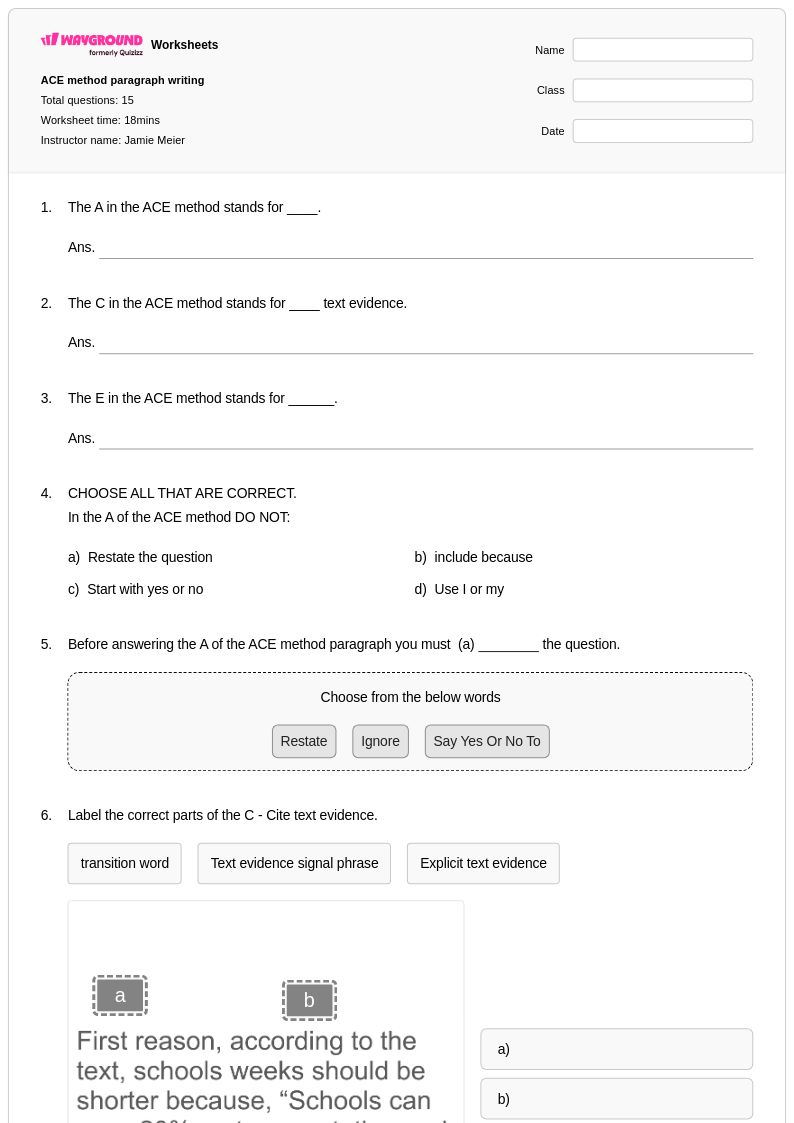
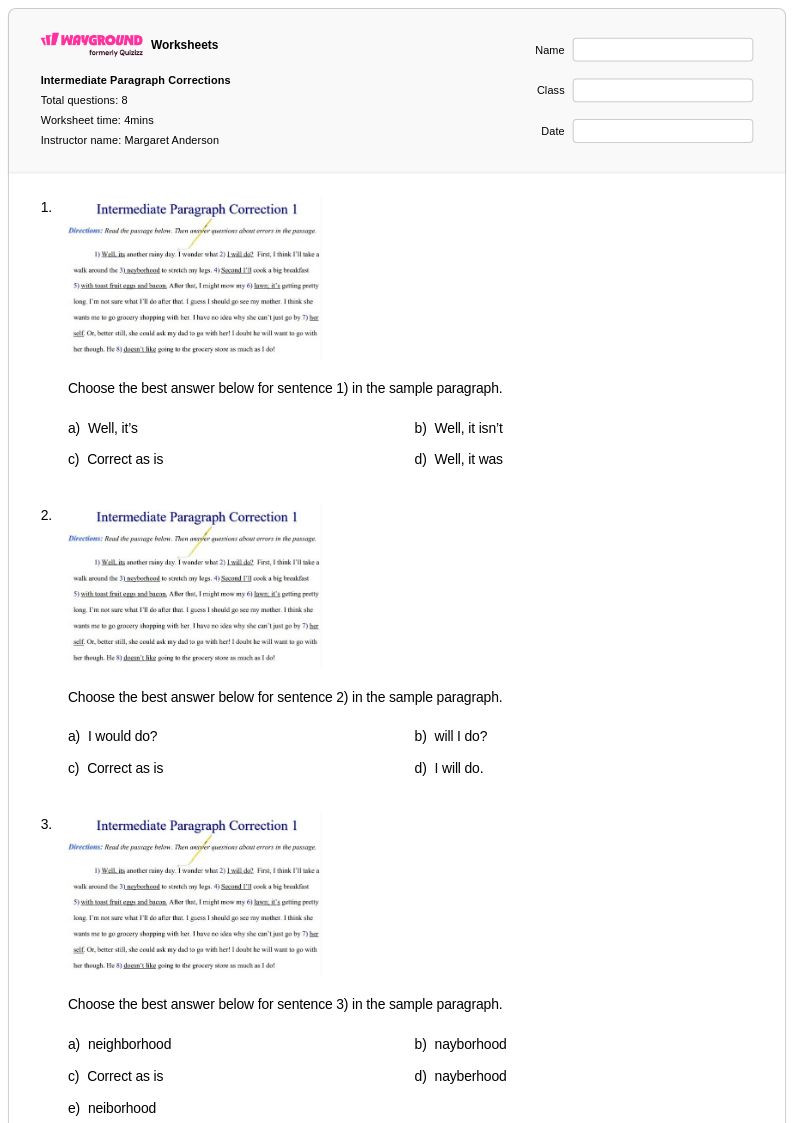
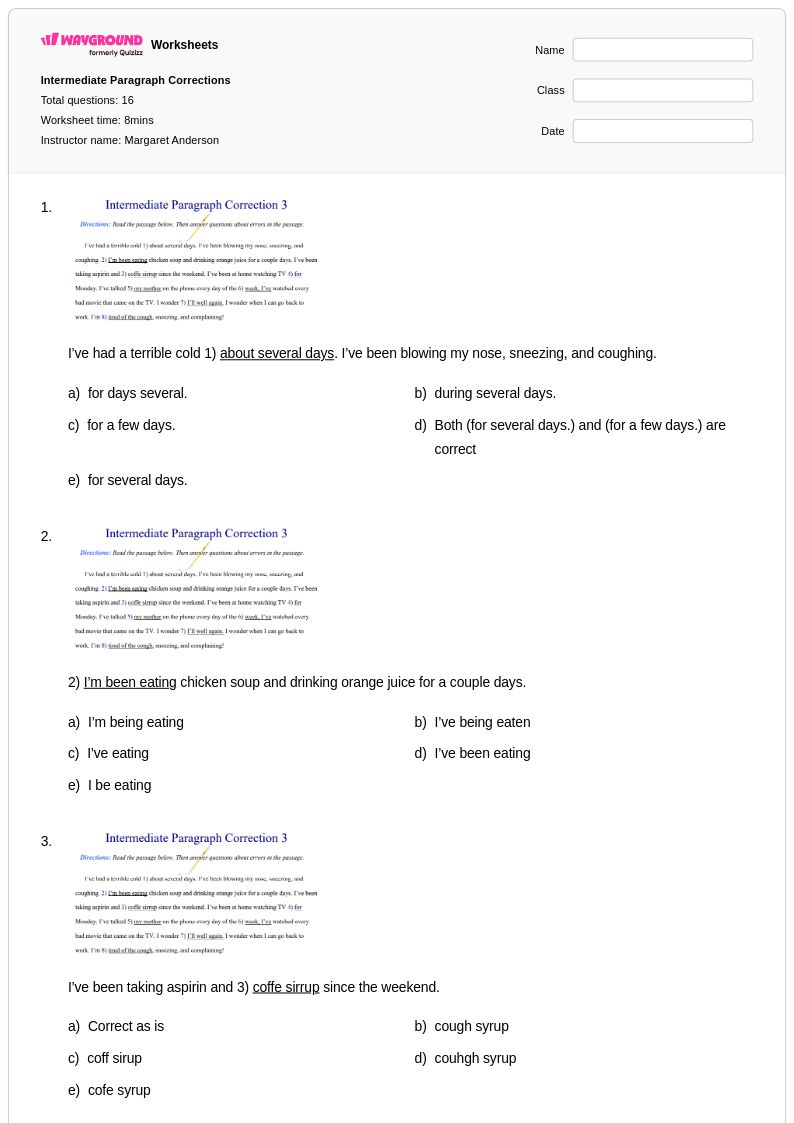
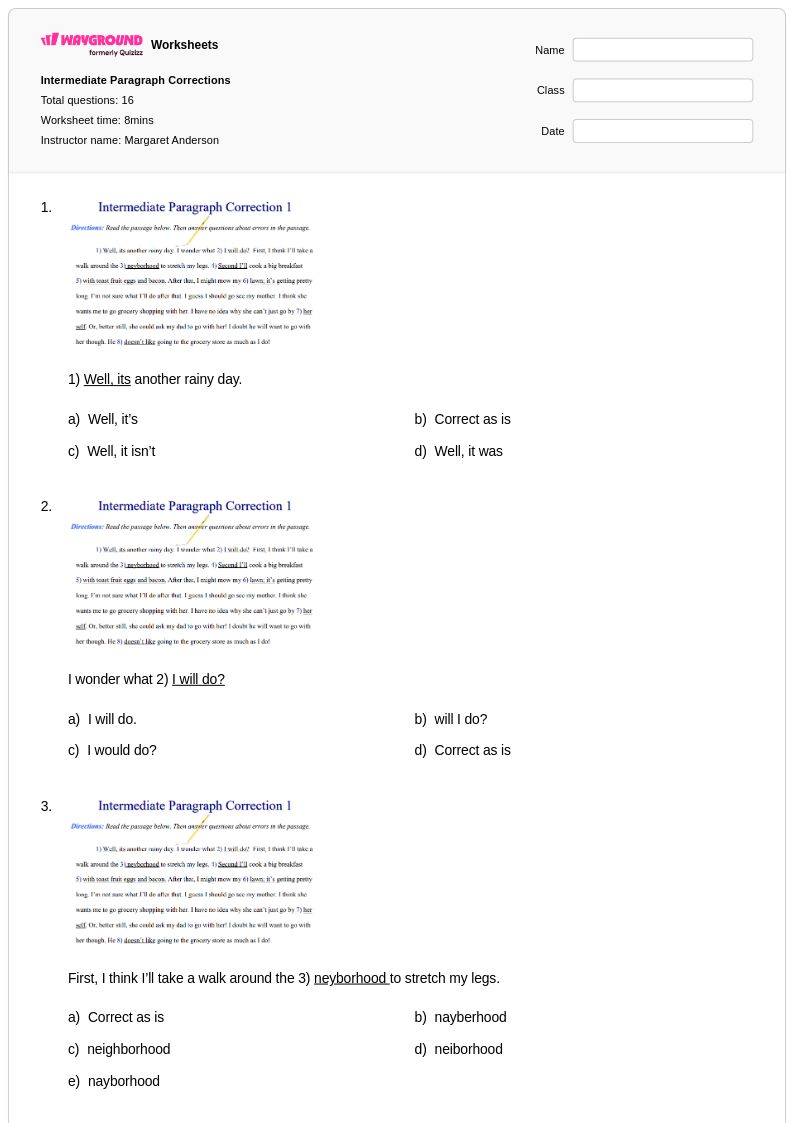
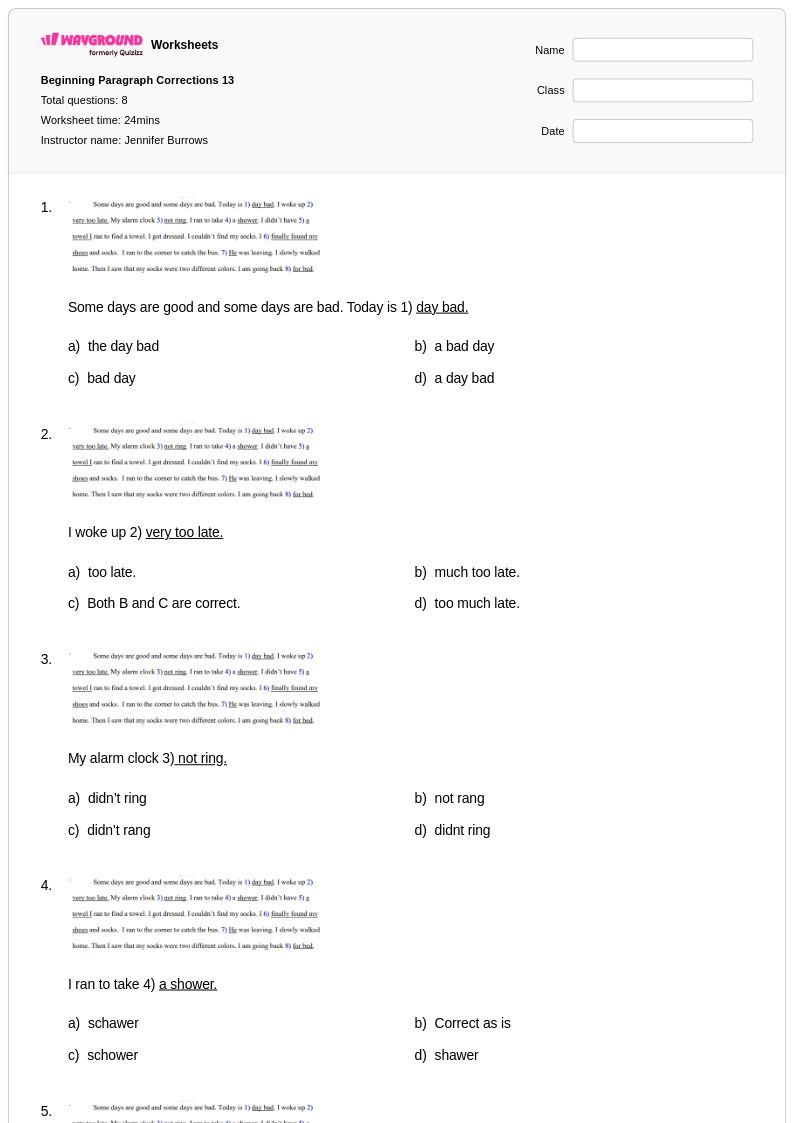
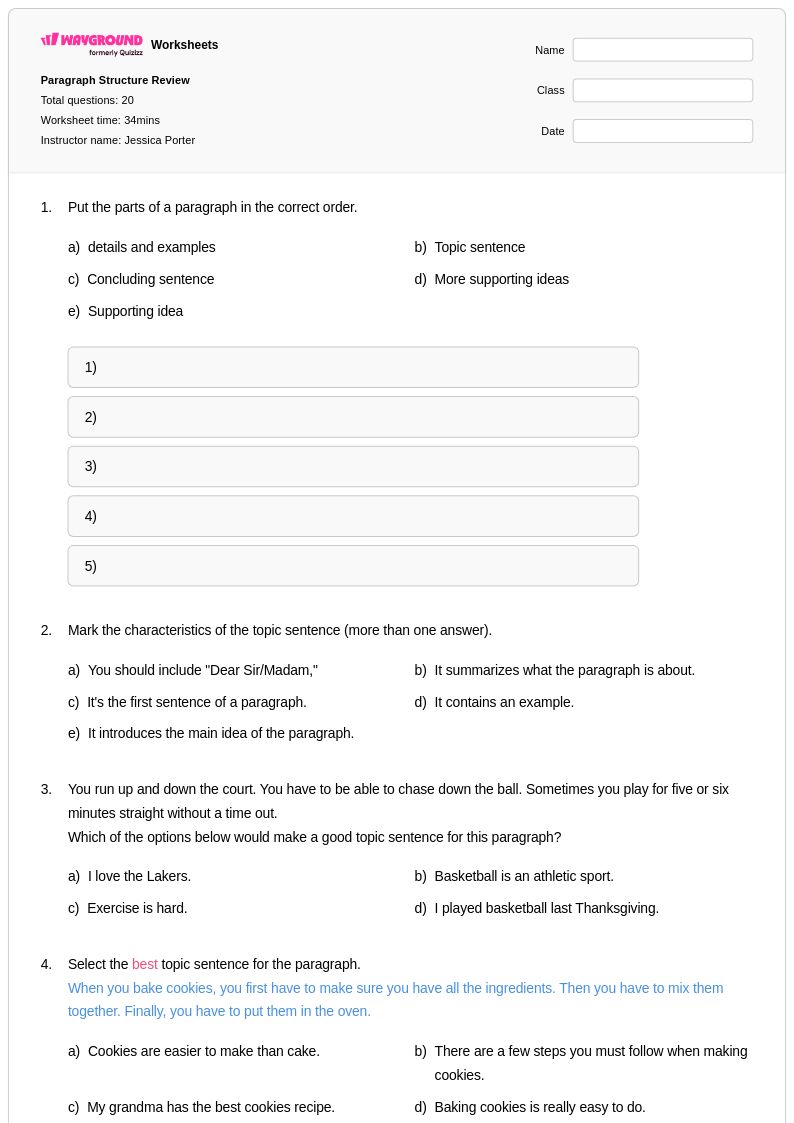
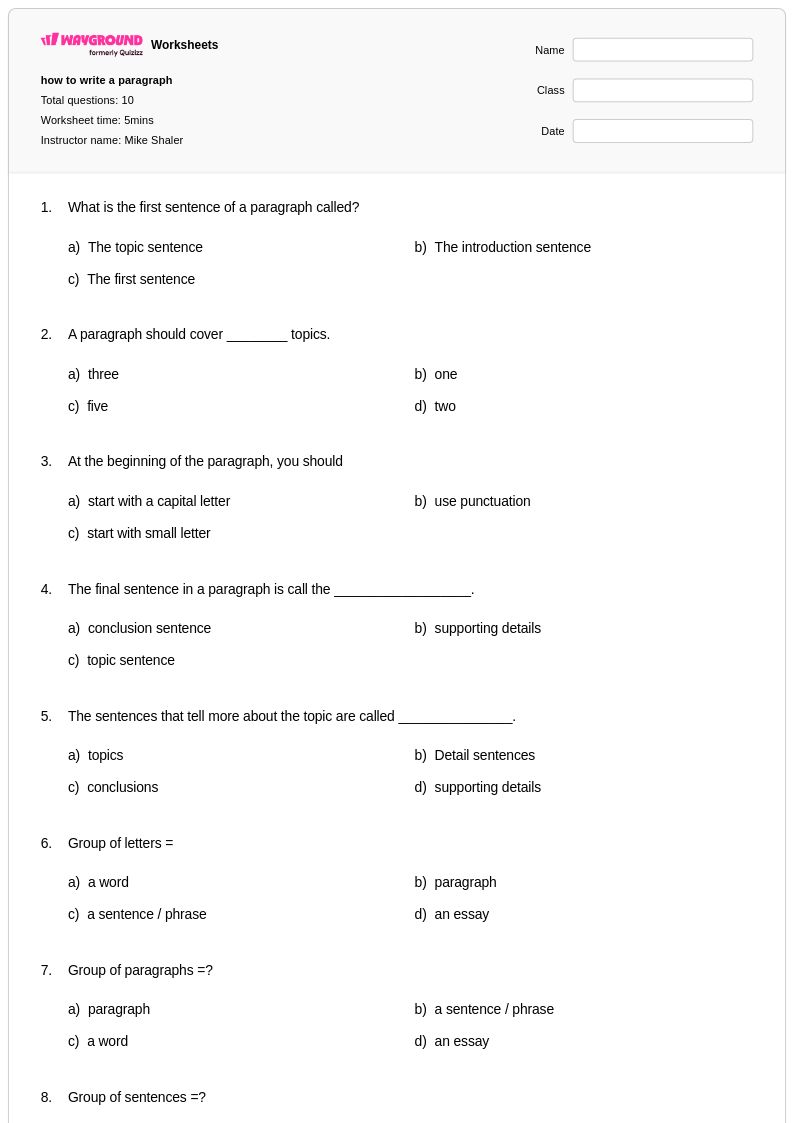
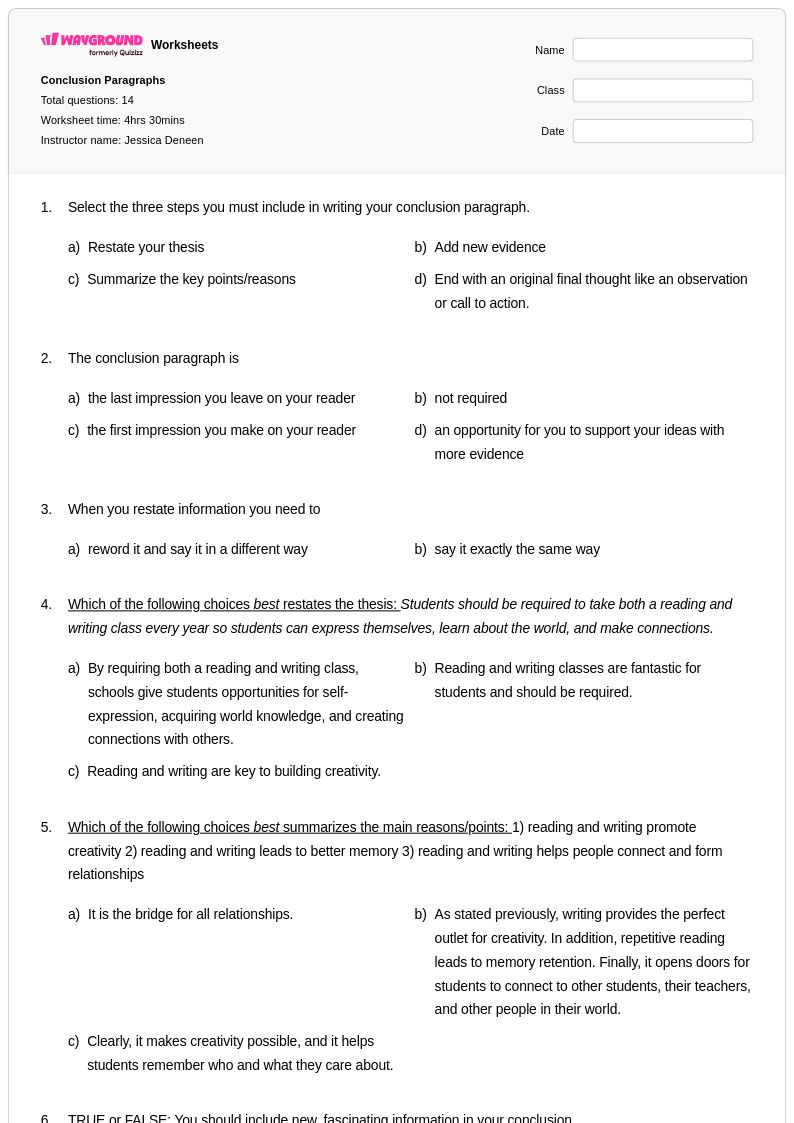
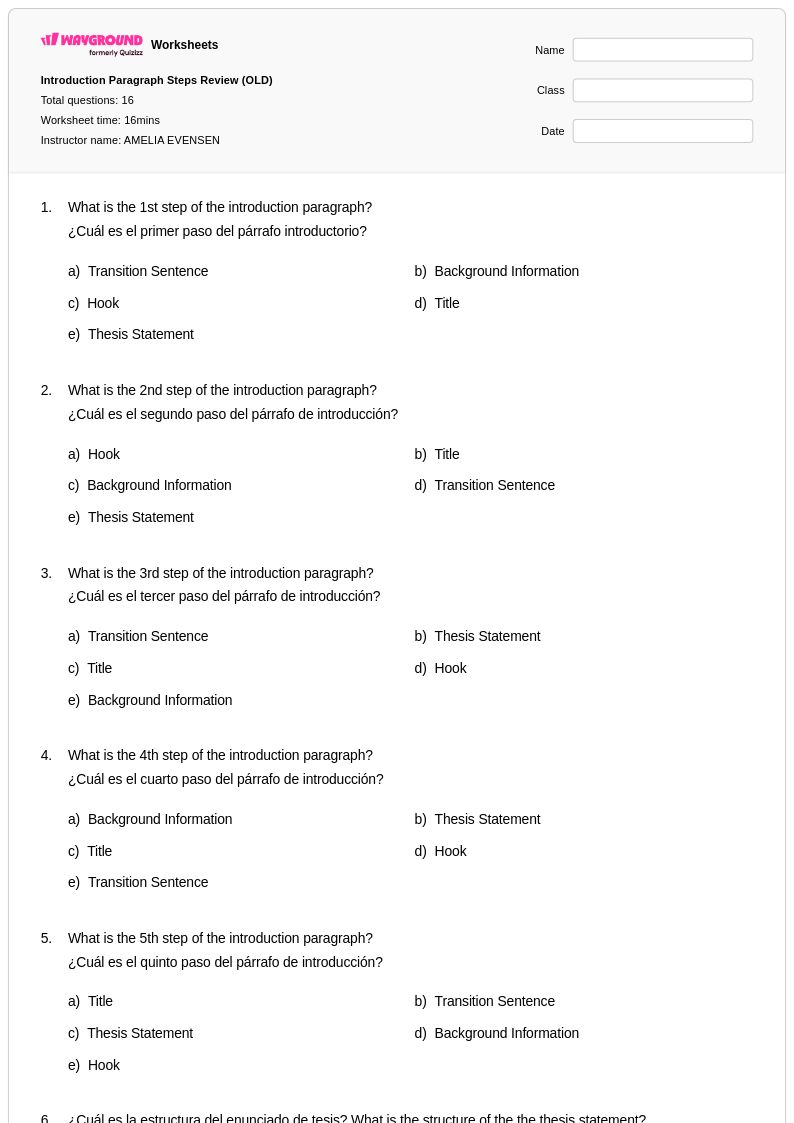
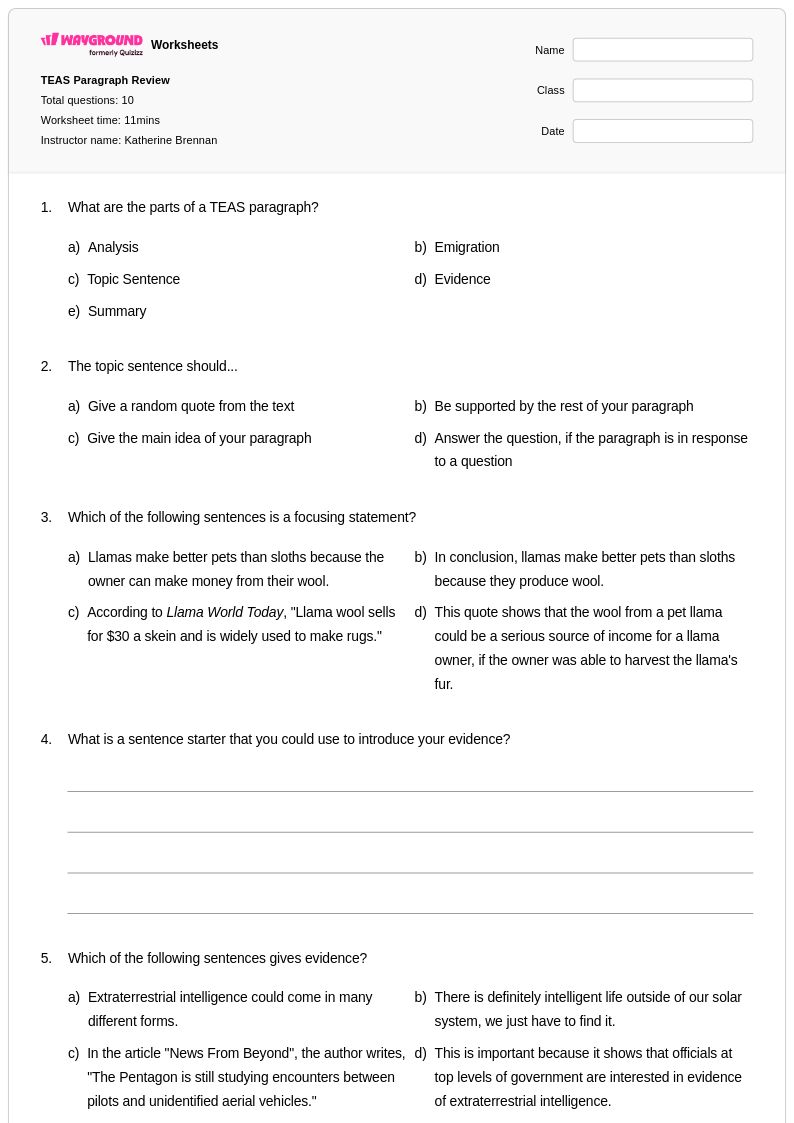
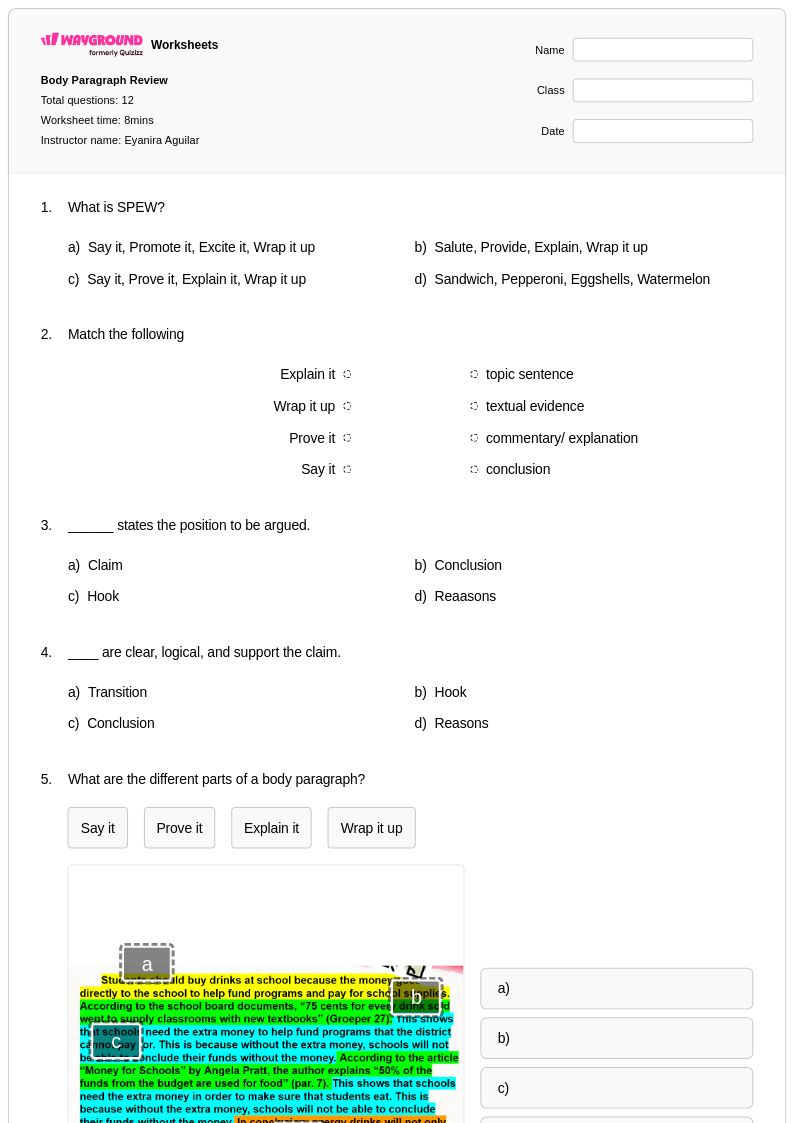
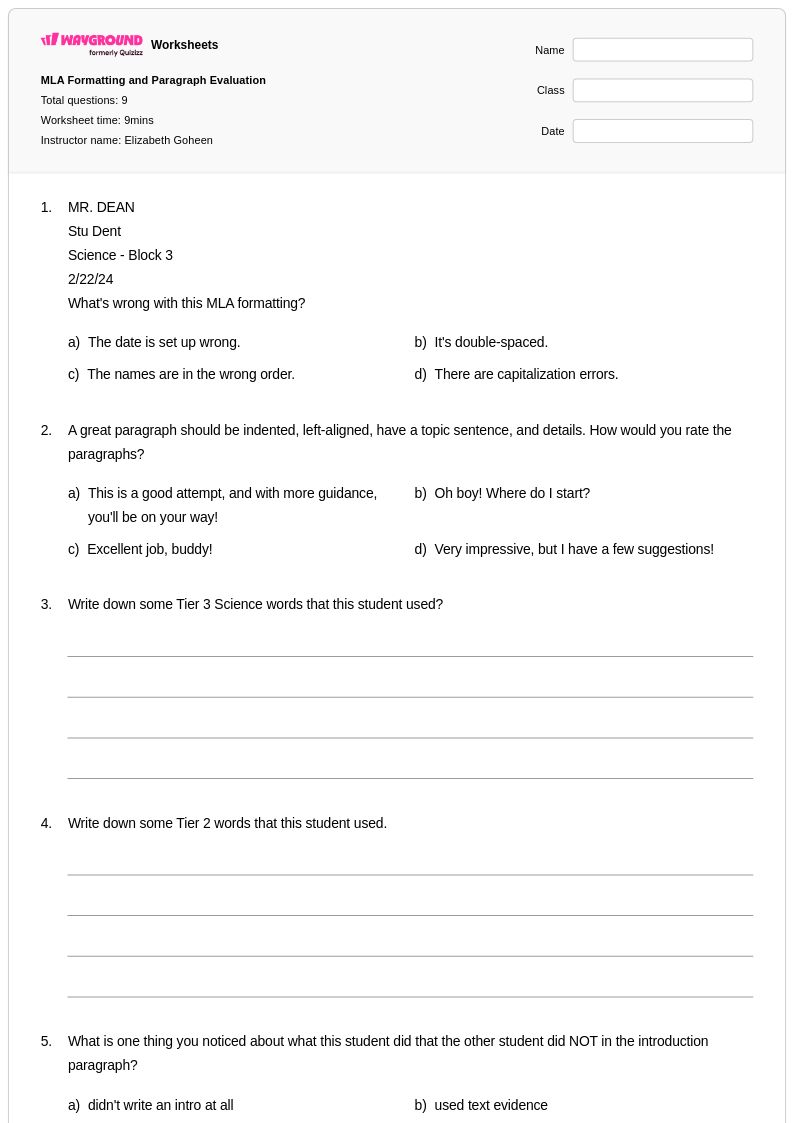
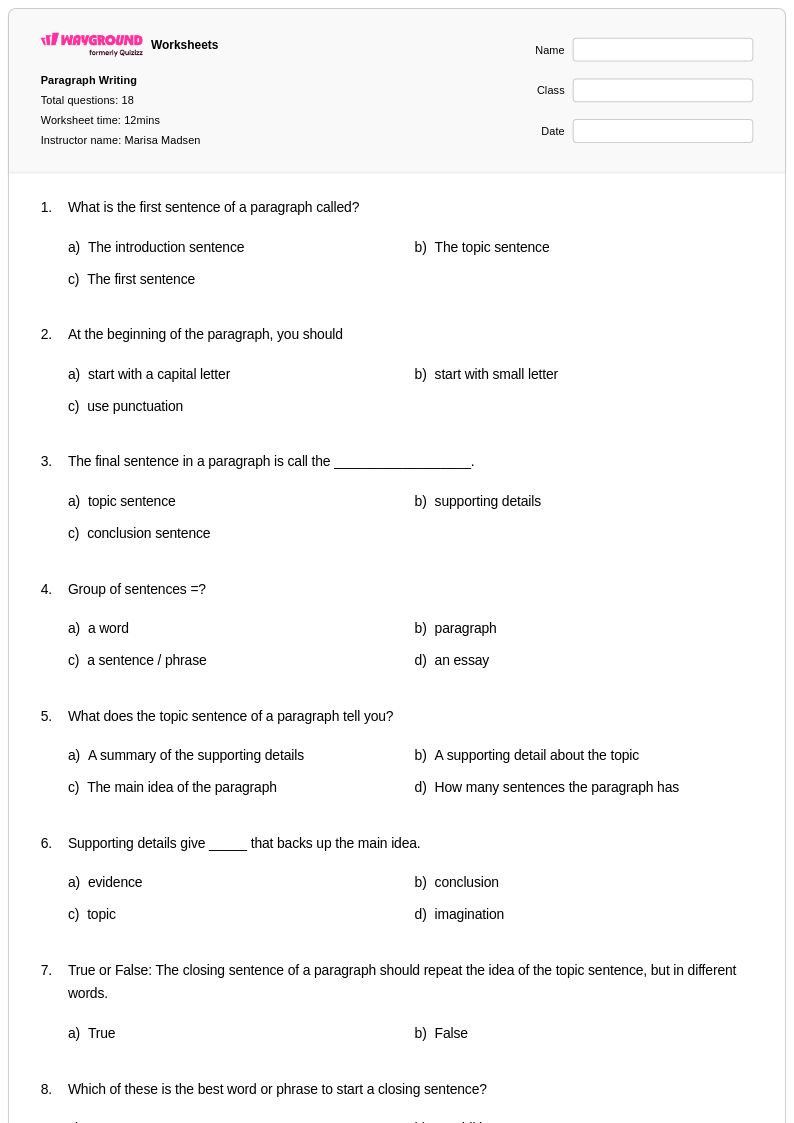
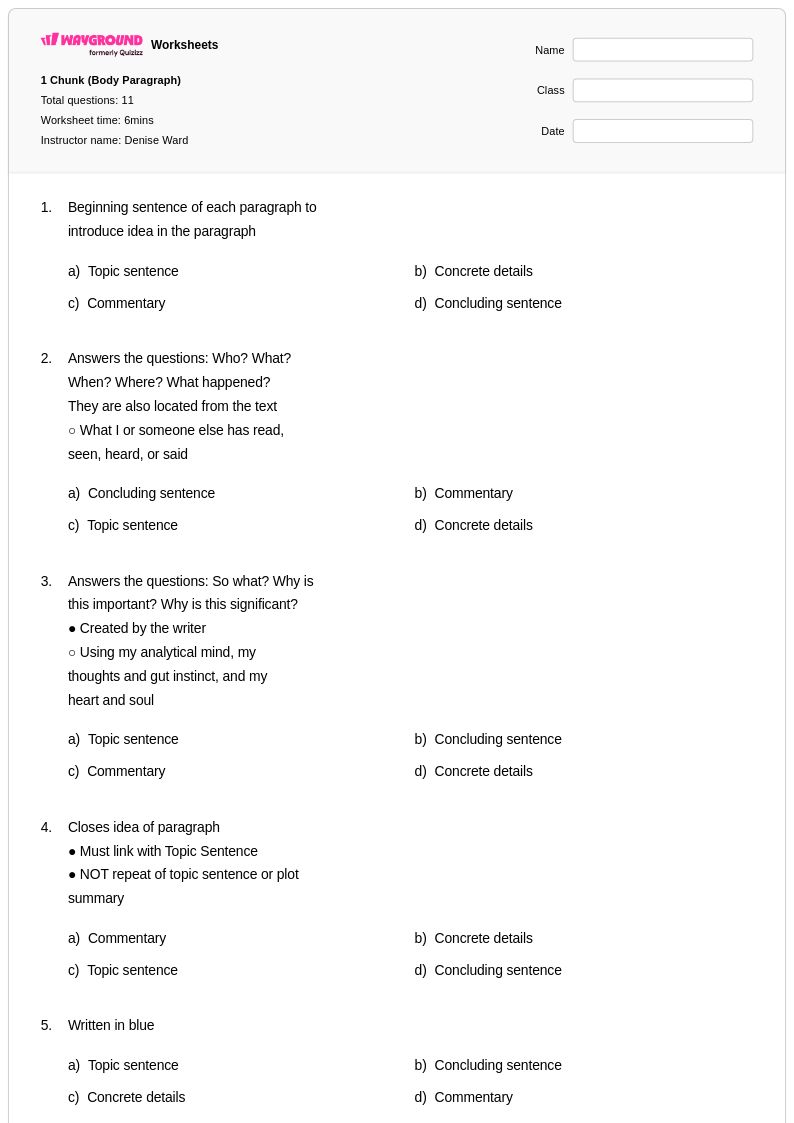
Paragraph correction worksheets for Grade 8 students available through Wayground (formerly Quizizz) provide essential practice in identifying and fixing structural and organizational issues within written passages. These comprehensive resources challenge eighth-grade learners to analyze paragraphs for problems such as unclear topic sentences, improper transitions, lack of supporting details, inconsistent focus, and poor concluding statements. Students work through carefully designed practice problems that require them to recognize when sentences are out of logical order, identify missing connections between ideas, and restructure content for improved clarity and flow. Each worksheet includes detailed answer keys that not only provide corrections but explain the reasoning behind effective paragraph organization, helping students understand the principles of coherent writing. These free printables serve as valuable tools for developing critical editing skills and reinforcing the fundamental elements of paragraph structure that are crucial for academic writing success.
Wayground (formerly Quizizz) empowers educators with an extensive collection of millions of teacher-created paragraph correction resources specifically designed for middle school instruction. The platform's robust search and filtering capabilities allow teachers to quickly locate worksheets that align with specific writing standards and target particular organizational challenges their Grade 8 students face. Advanced differentiation tools enable instructors to modify existing materials or select from varying difficulty levels to meet diverse learning needs within their classrooms. These versatile resources are available in both printable PDF formats for traditional classroom use and digital formats for online learning environments, providing flexibility for lesson planning and homework assignments. Teachers can seamlessly integrate these materials into their writing curriculum for skill practice, use them for targeted remediation with struggling writers, or deploy them as enrichment activities for advanced students, making paragraph correction instruction more effective and engaging across all learning contexts.
FAQs
How do I teach paragraph correction to students who struggle with identifying writing errors?
Start by teaching students to evaluate a paragraph against a clear checklist: Does it have a focused topic sentence? Do the supporting details connect logically? Does the concluding sentence wrap up the idea? Modeling the correction process aloud helps students internalize the reasoning before they work independently. Once students can identify one type of error consistently, introduce additional issue types like weak transitions or illogical sequencing.
What kinds of exercises help students practice paragraph correction effectively?
The most effective exercises present students with sample paragraphs that contain deliberate errors, such as unclear topic sentences, poor transitions, illogical sequencing, or weak concluding statements, and ask them to identify and revise the problems. Guided practice problems that include answer keys explaining the reasoning behind each correction are especially valuable because they teach students not just what to fix, but why the revision improves clarity and coherence. Repeated exposure to varied paragraph types builds transferable self-editing skills.
What mistakes do students most commonly make when correcting paragraphs?
Students frequently fix surface-level errors like spelling or punctuation while missing deeper structural problems, such as a topic sentence that does not match the supporting details or transitions that do not reflect the logical relationship between ideas. Another common error is rewriting a paragraph entirely rather than making targeted revisions, which suggests they have not learned to diagnose the specific issue. Teaching students to annotate before editing helps them slow down and identify the root cause of each problem.
How can I use paragraph correction worksheets to support struggling writers without singling them out?
Paragraph correction worksheets work well as a low-stakes, whole-class activity because every student is working on the same flawed sample text, which removes the vulnerability of having their own writing critiqued. For students who need additional support, Wayground allows teachers to enable accommodations such as Read Aloud, which reads questions and content aloud, and reduced answer choices to lower cognitive load. These settings can be applied individually and invisibly, so struggling writers receive targeted support without any disruption to the rest of the class.
How do I use Wayground's paragraph correction worksheets in my classroom?
Wayground's paragraph correction worksheets are available as downloadable printable PDFs for traditional classroom use and in interactive digital formats for technology-integrated learning environments, and teachers can also host them as a quiz directly on Wayground. Each worksheet includes a complete answer key, making them practical for independent practice, homework, or small-group revision sessions. Teachers can search and filter resources to find materials that align with specific writing standards, then differentiate as needed for individual students or the whole class.
At what point in a writing unit should I introduce paragraph correction practice?
Paragraph correction practice is most effective after students have been introduced to the components of a well-structured paragraph, since they need a framework to recognize what is broken before they can fix it. It works well as a bridge activity between direct instruction and independent writing, giving students a low-risk opportunity to apply structural knowledge before revising their own work. It is also highly effective as a remediation tool when formative data shows students are producing paragraphs with specific recurring issues.