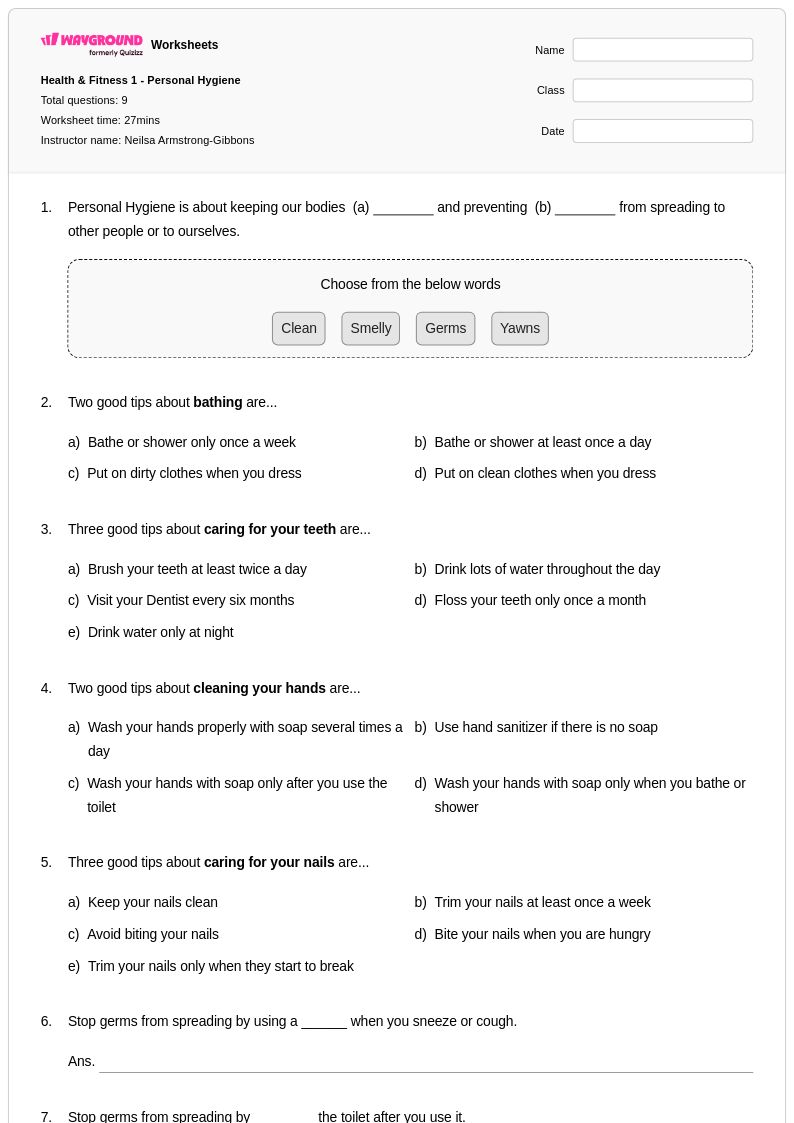
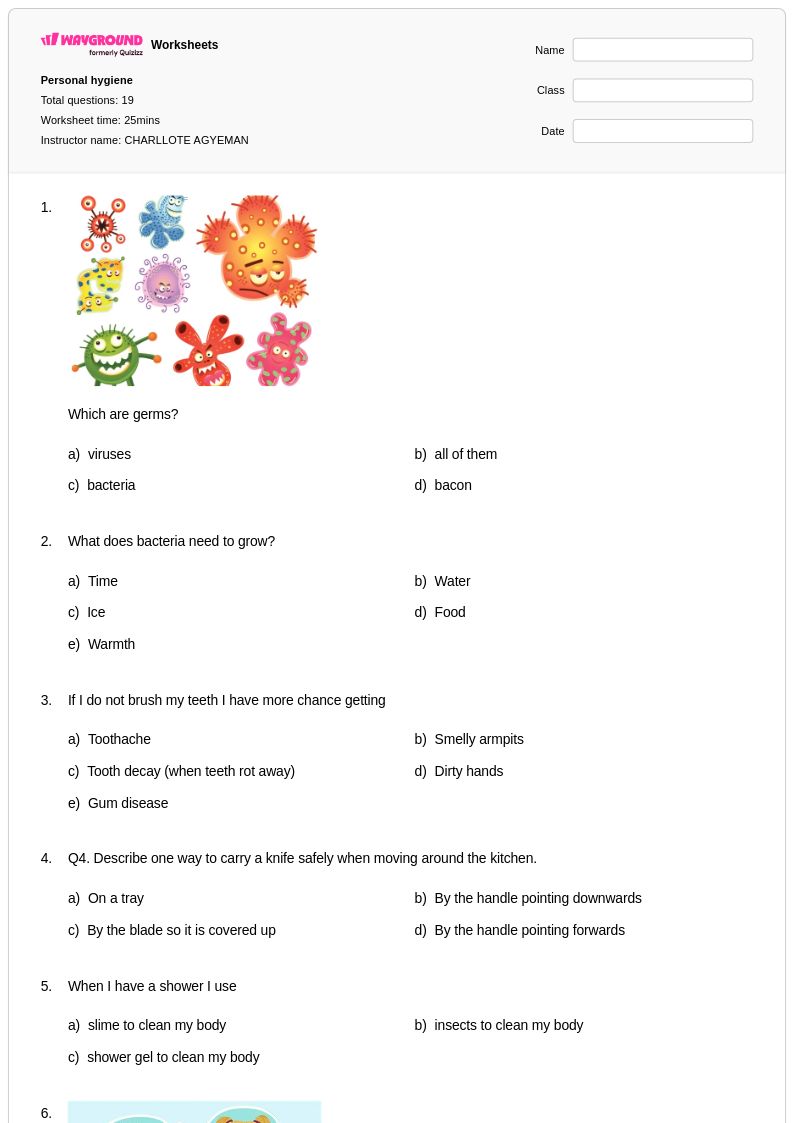
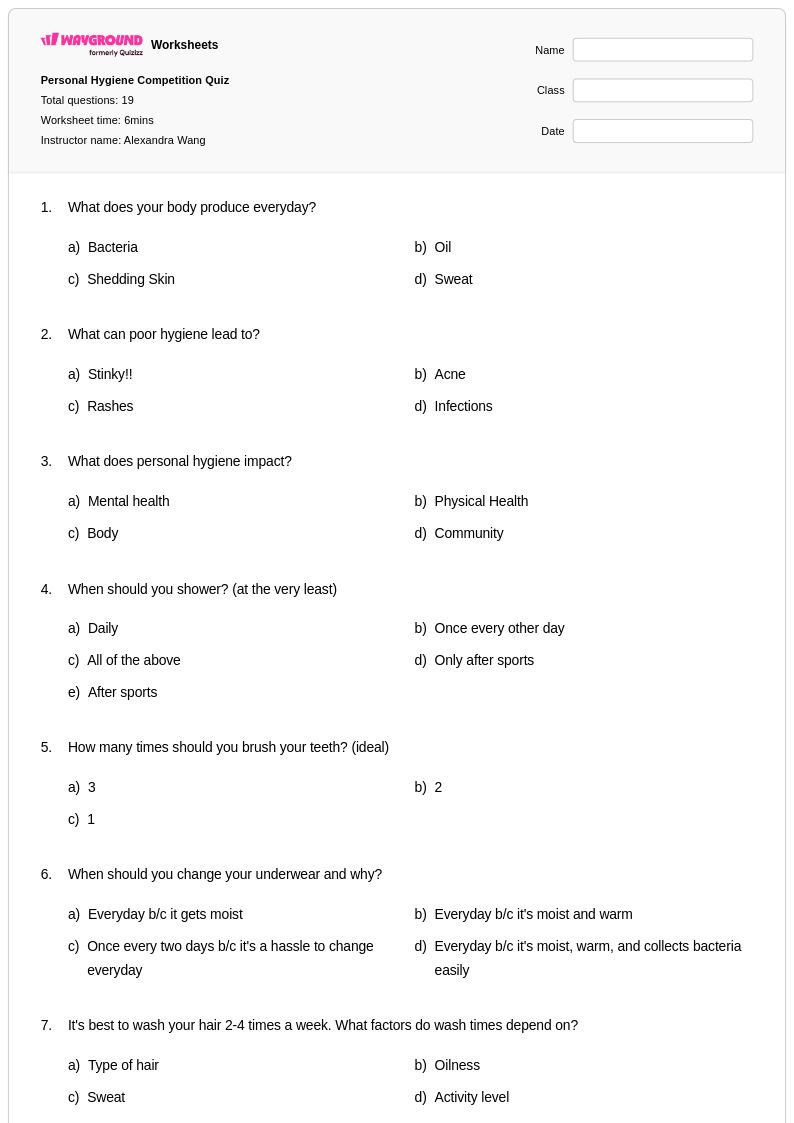
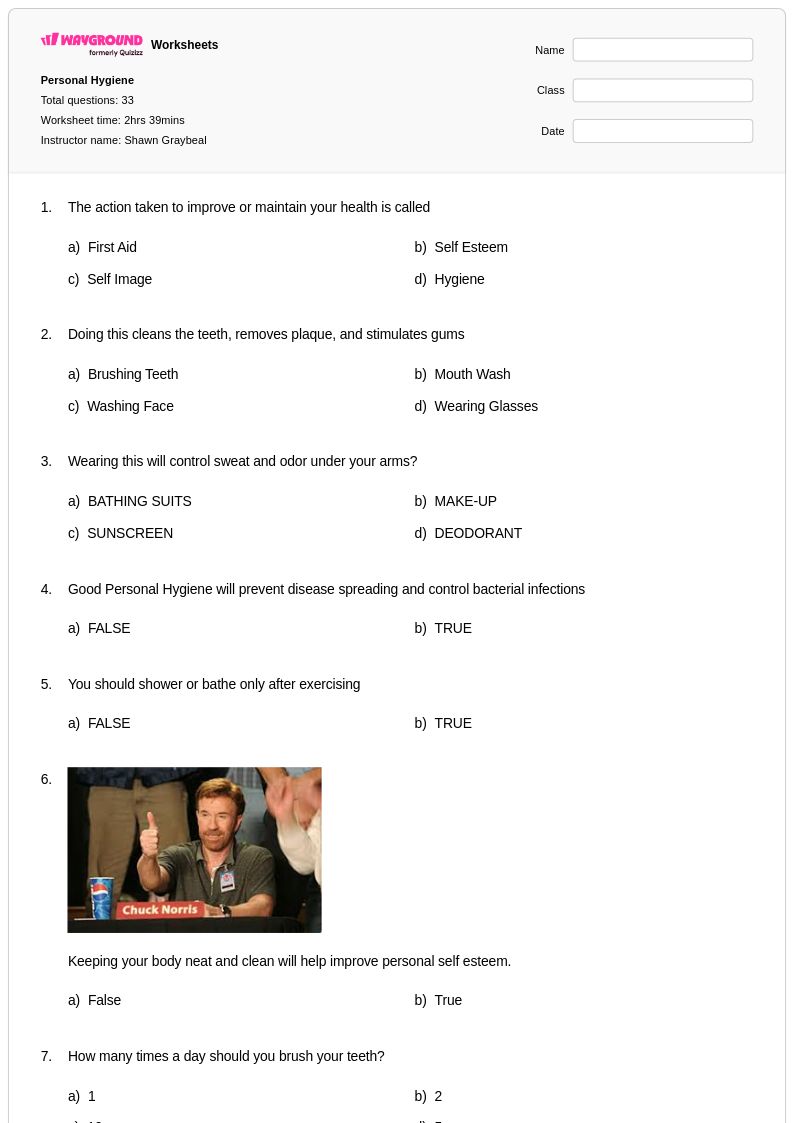
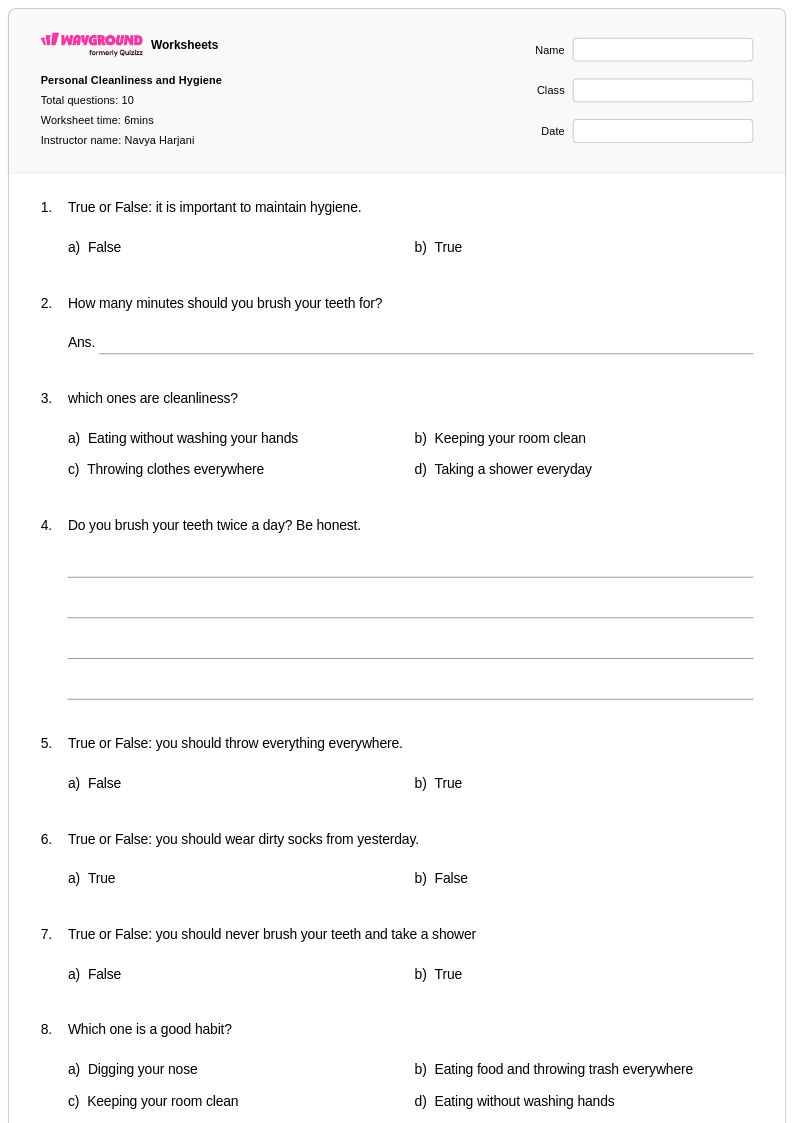
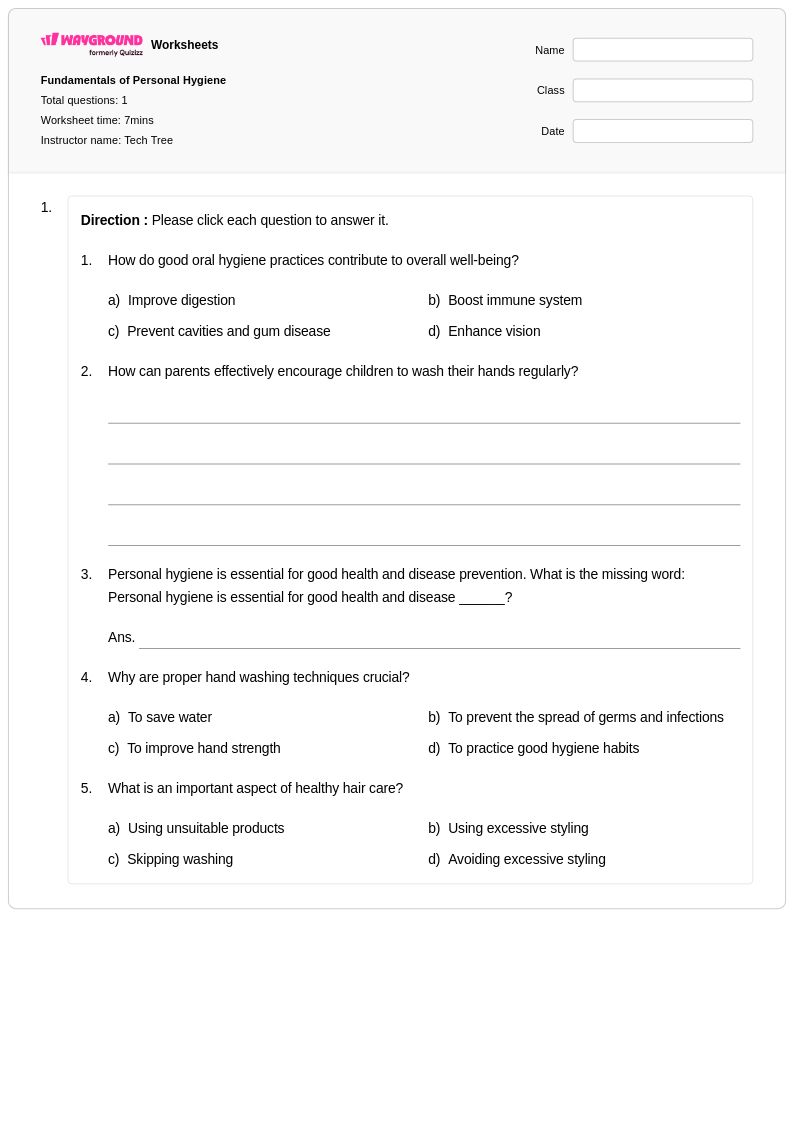
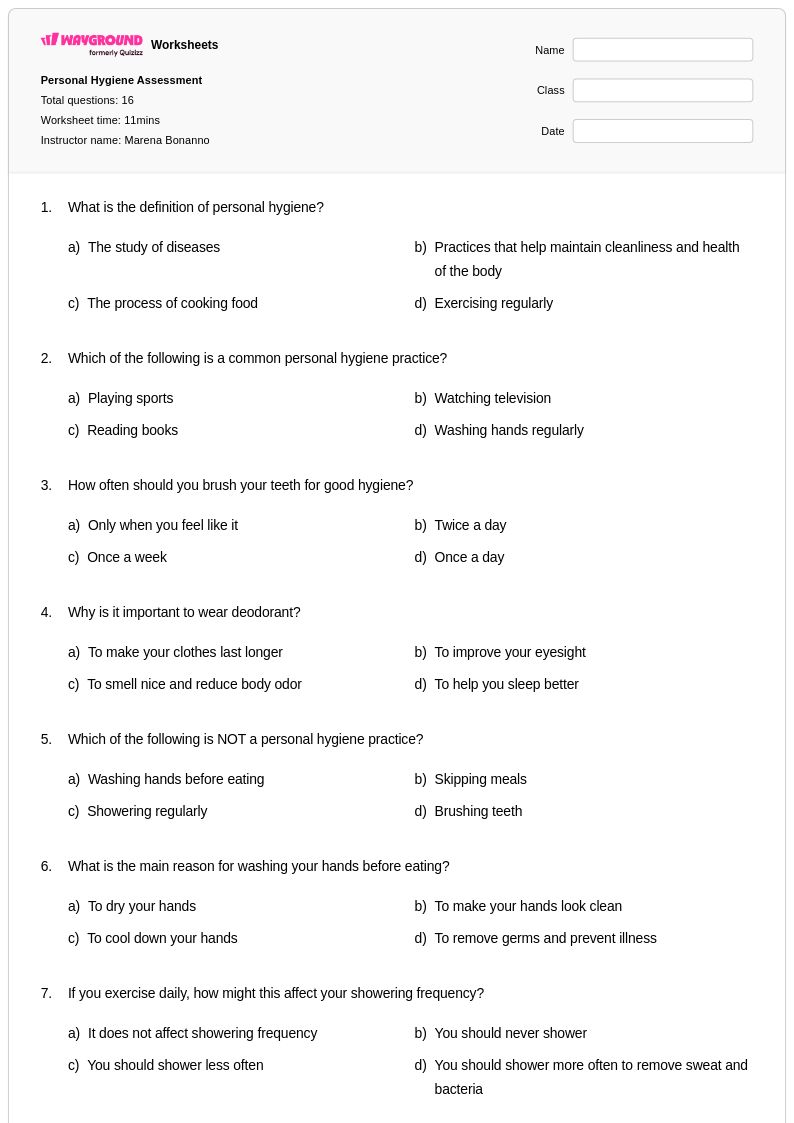
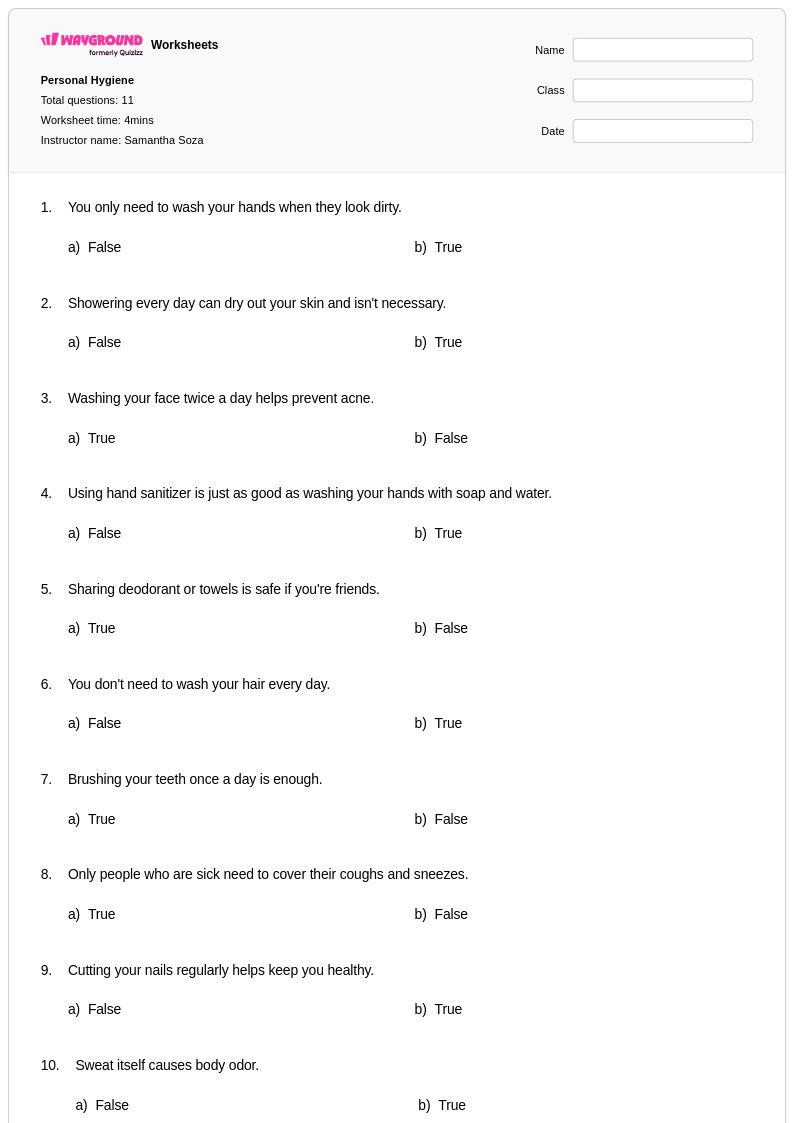
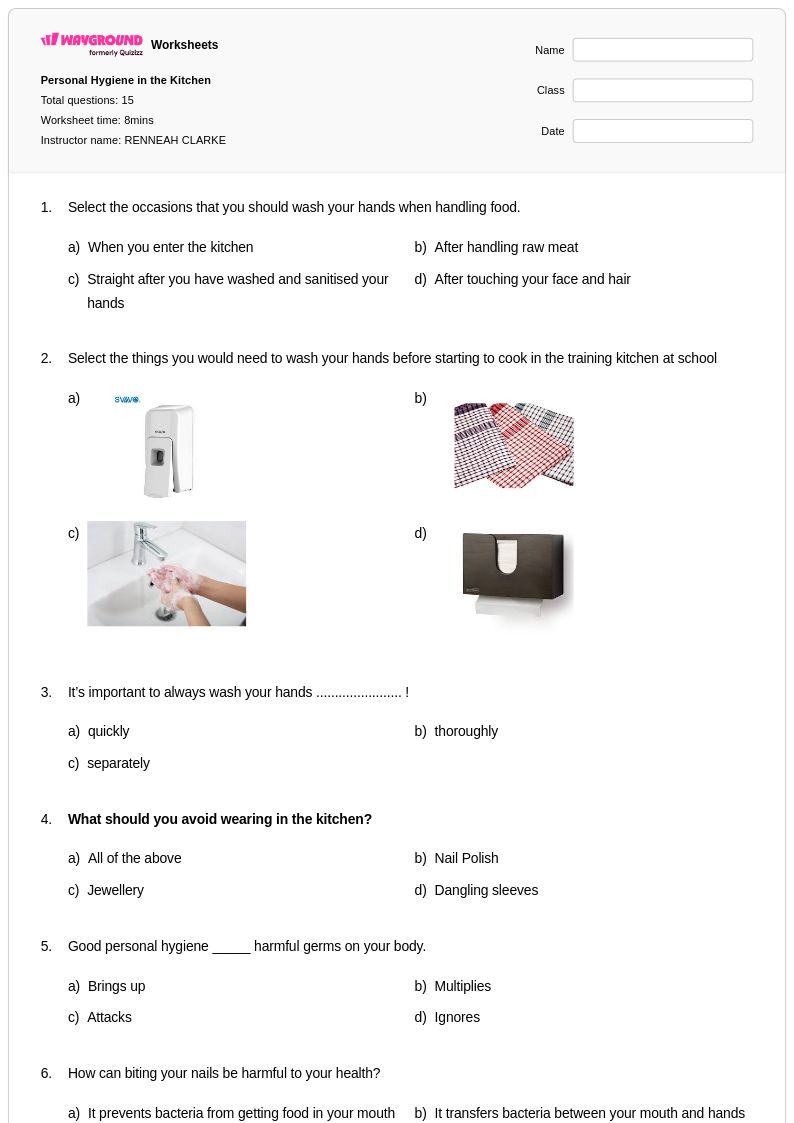
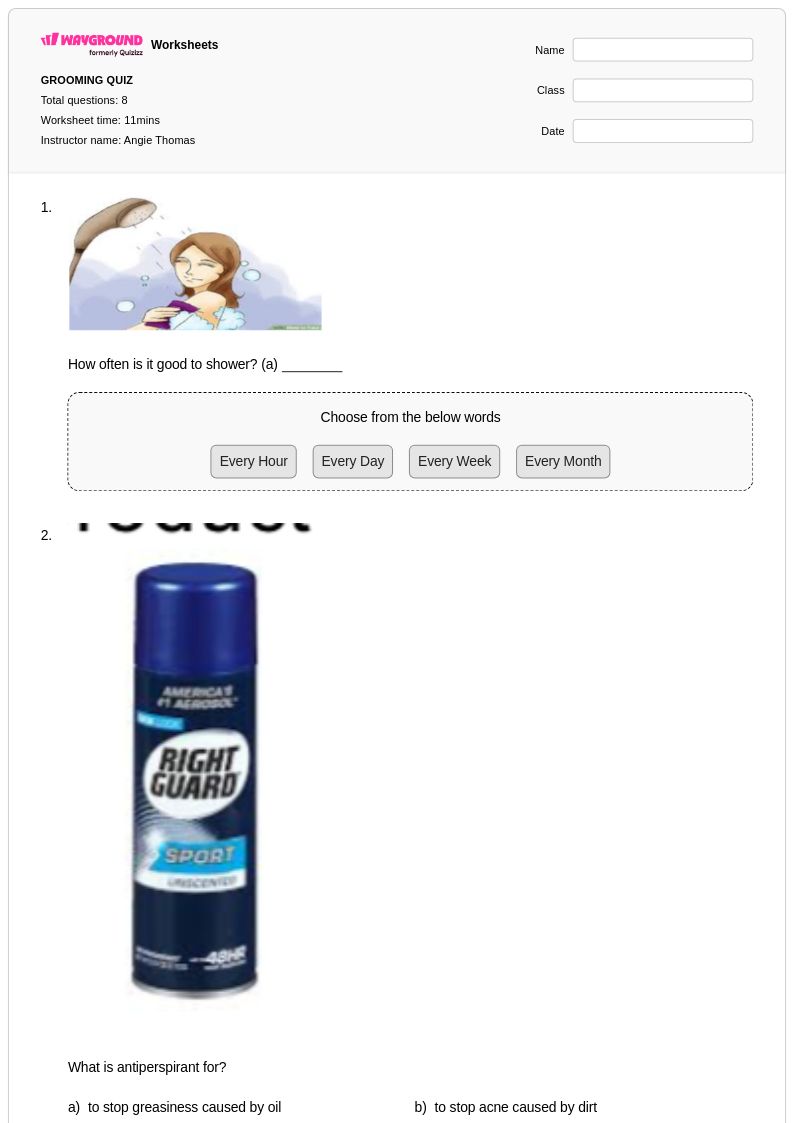
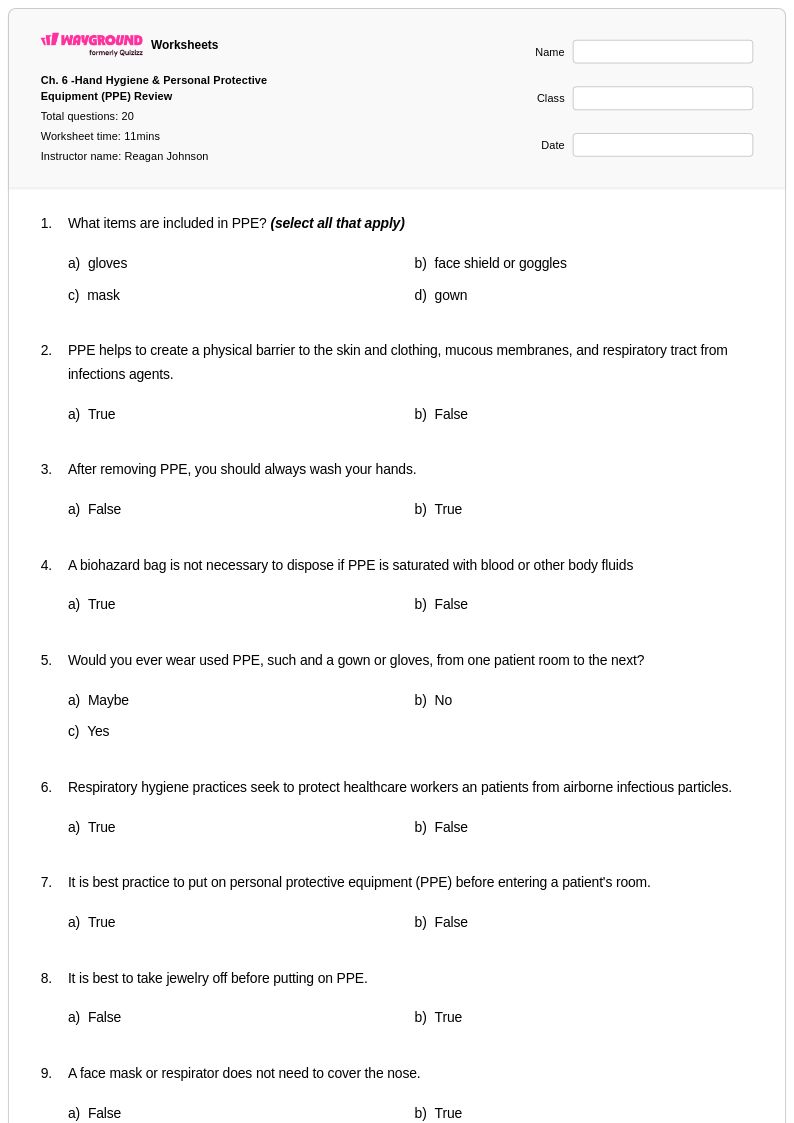
Free personal hygiene worksheets and printables help students learn essential health habits through engaging practice problems, featuring downloadable PDFs with answer keys for comprehensive physical education instruction.
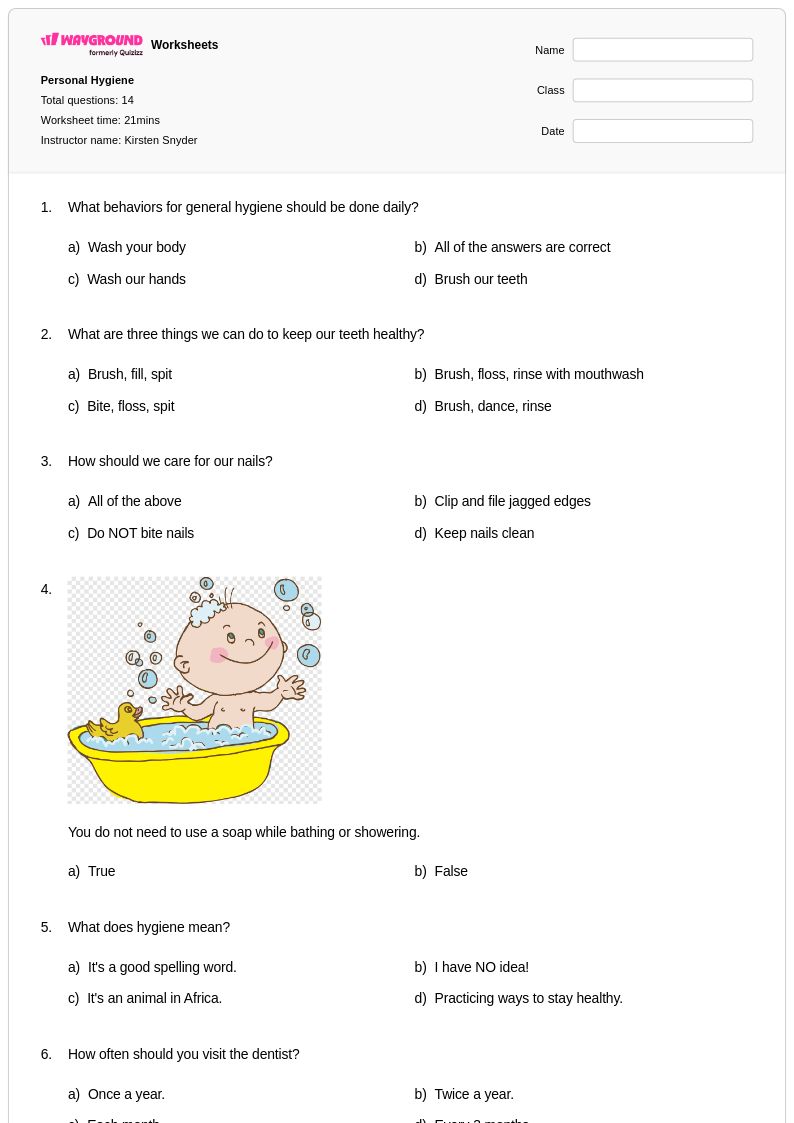
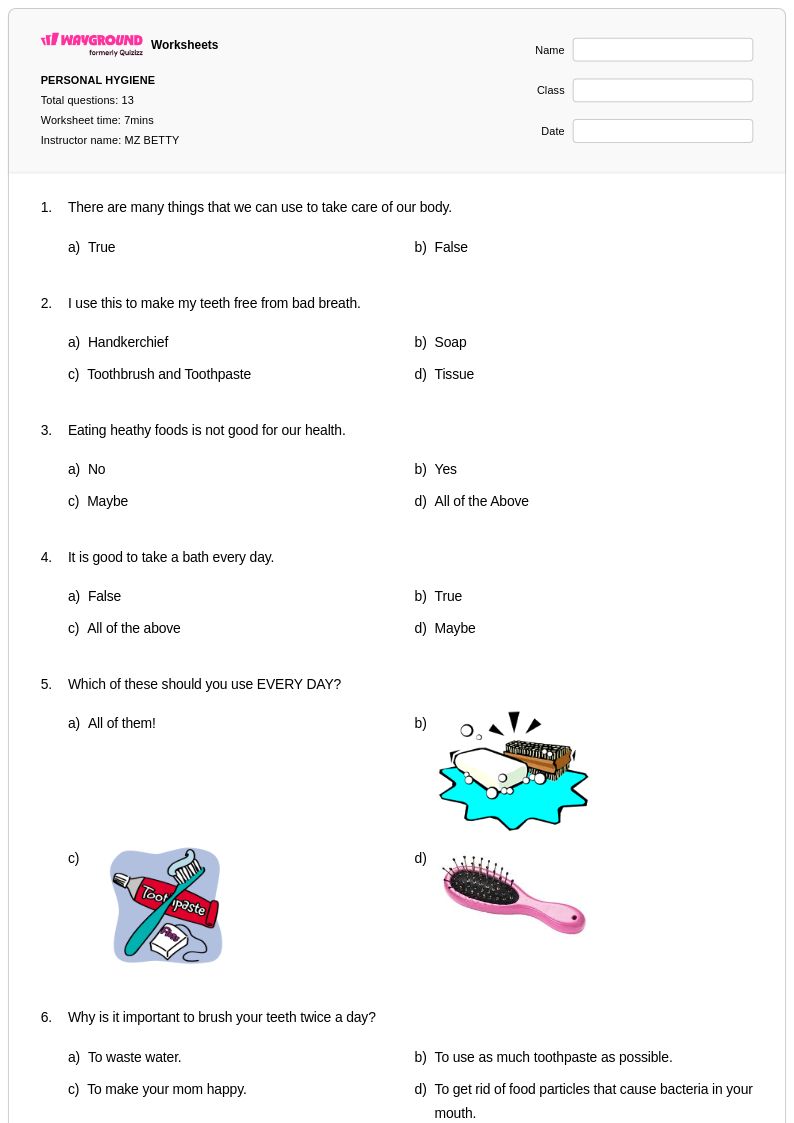
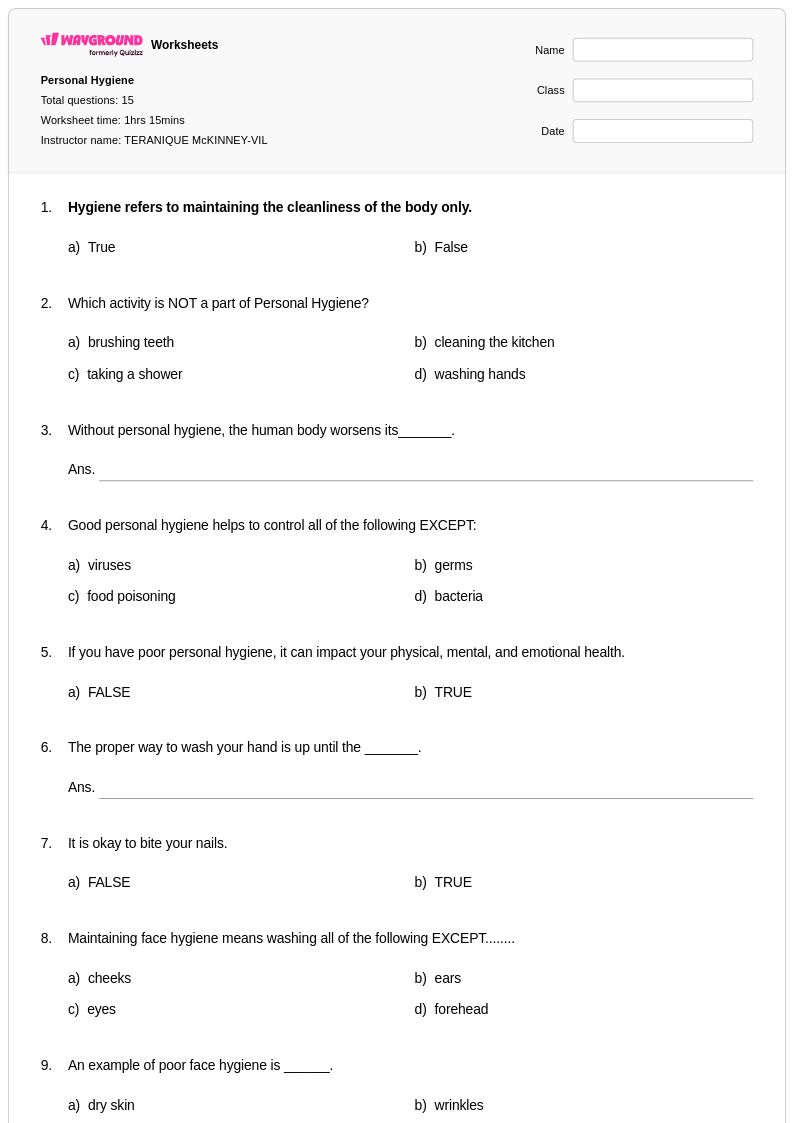
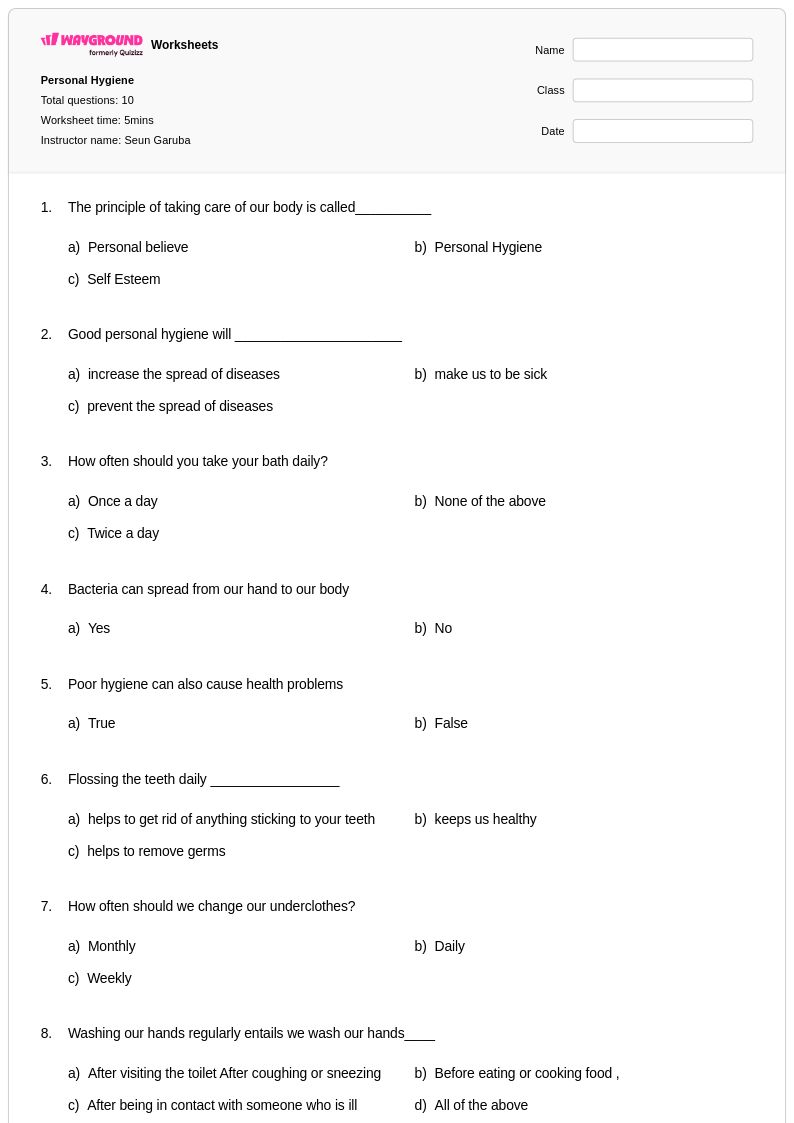
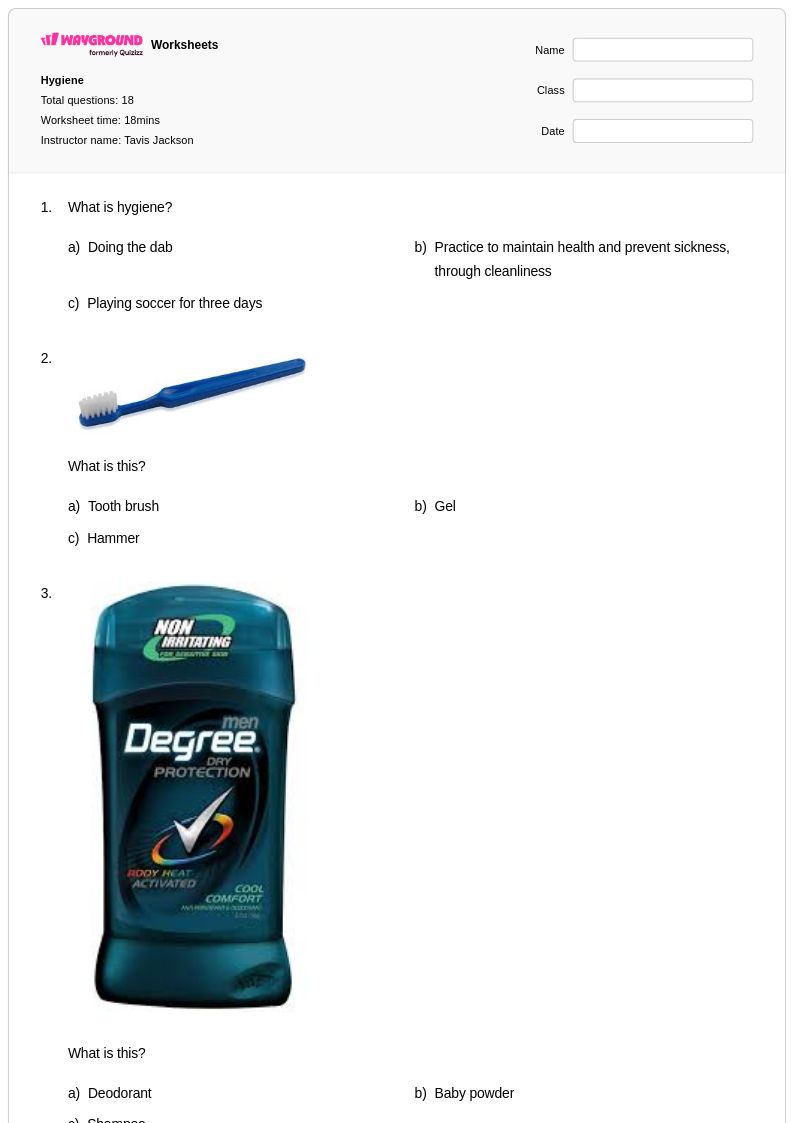
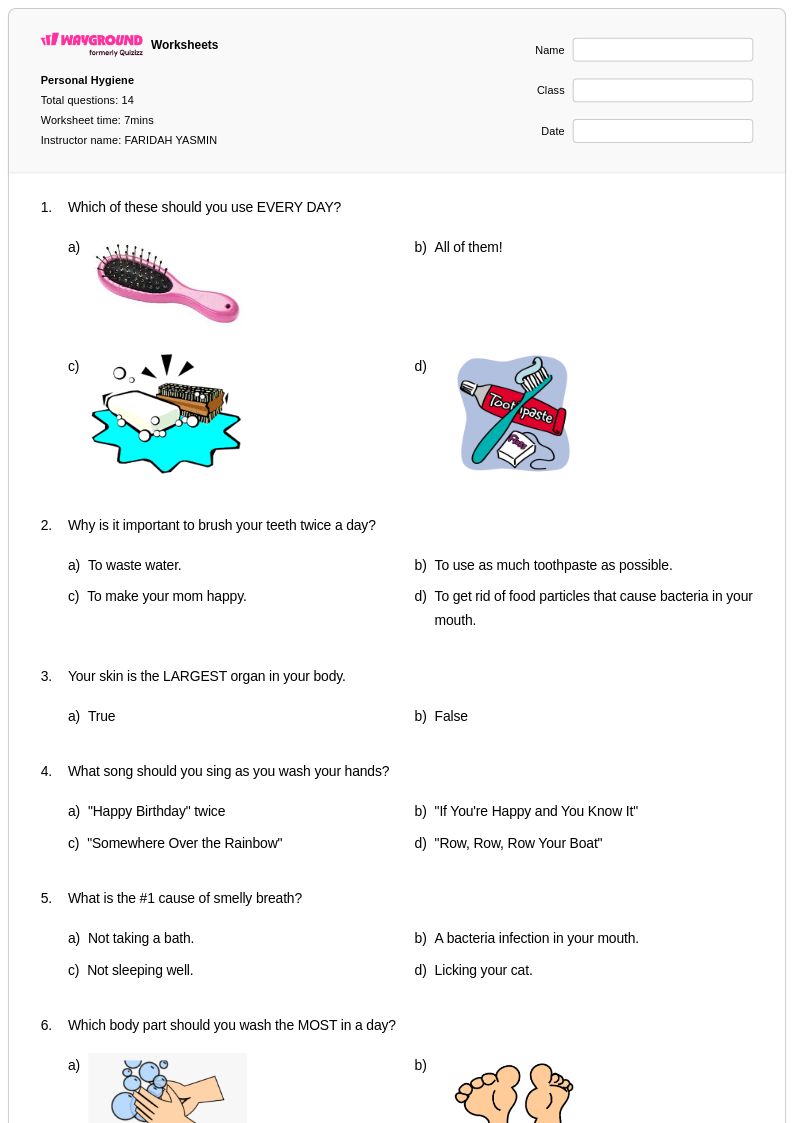
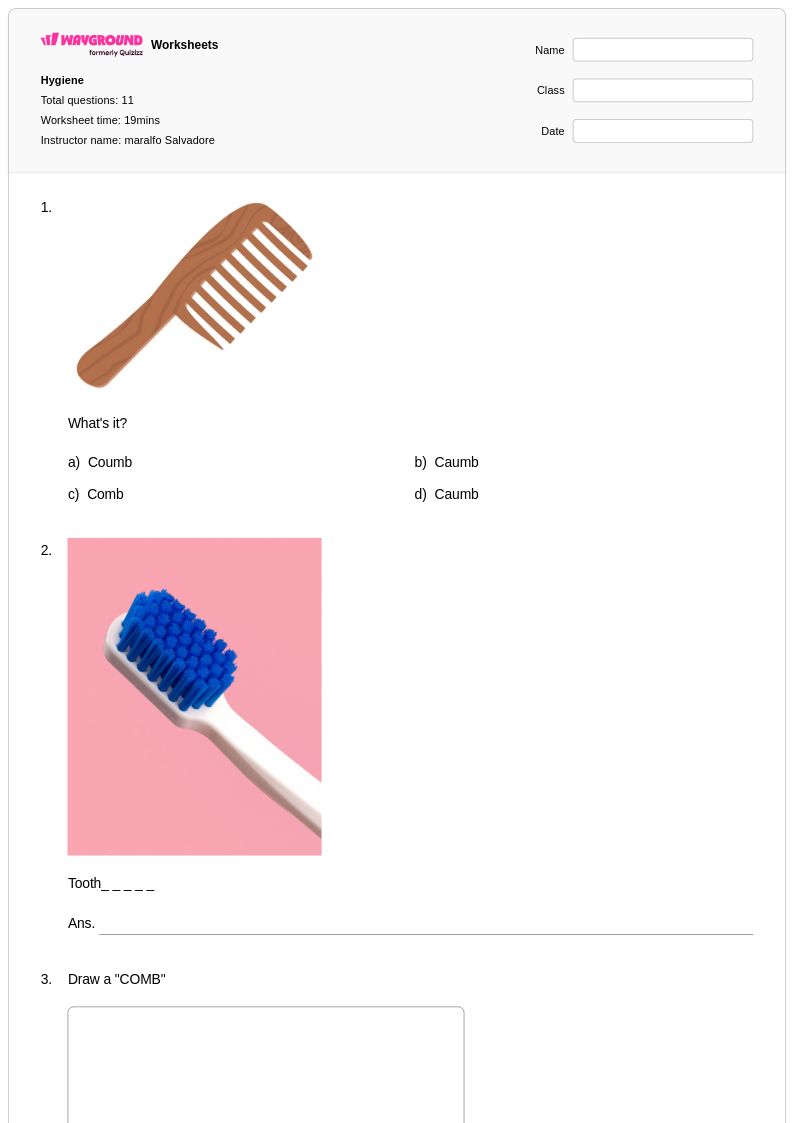
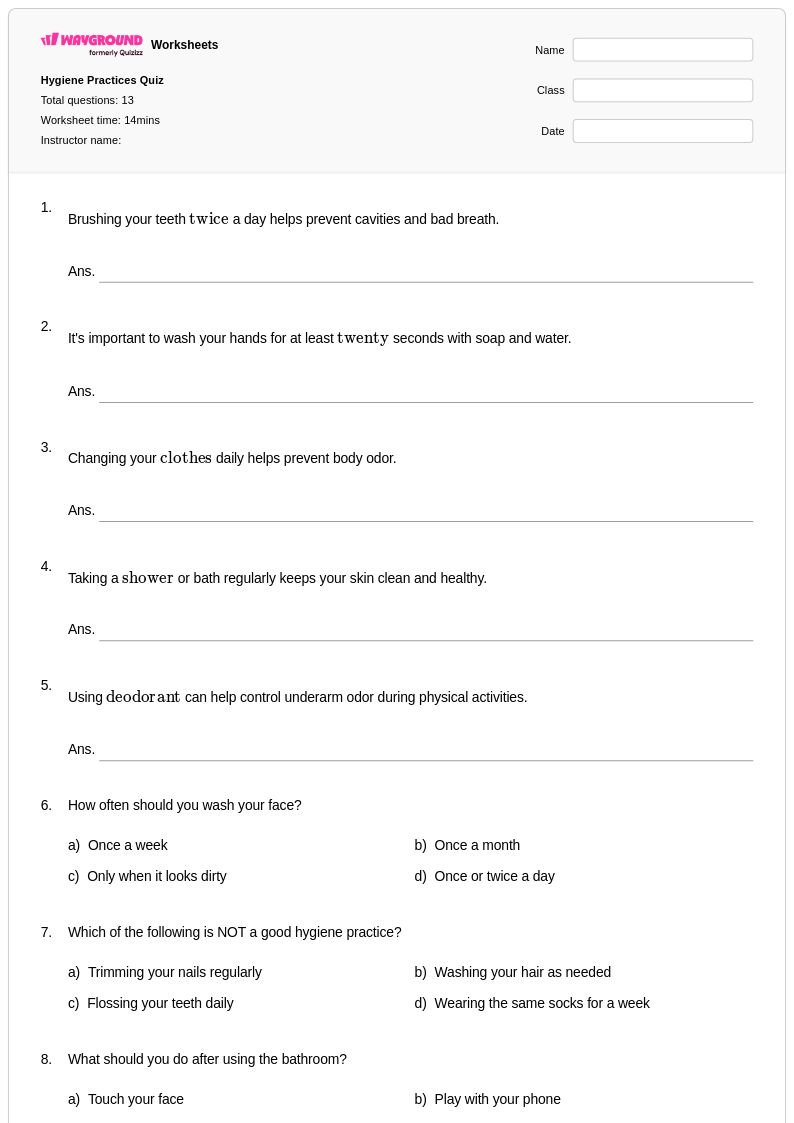
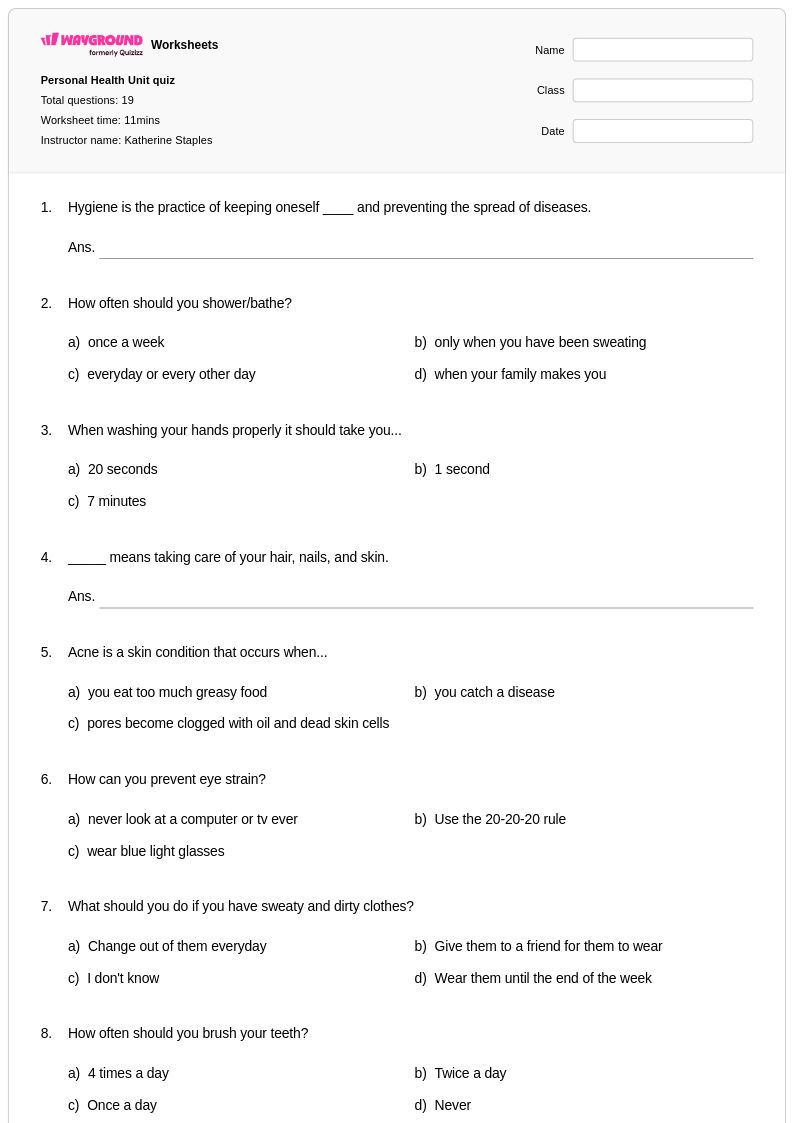
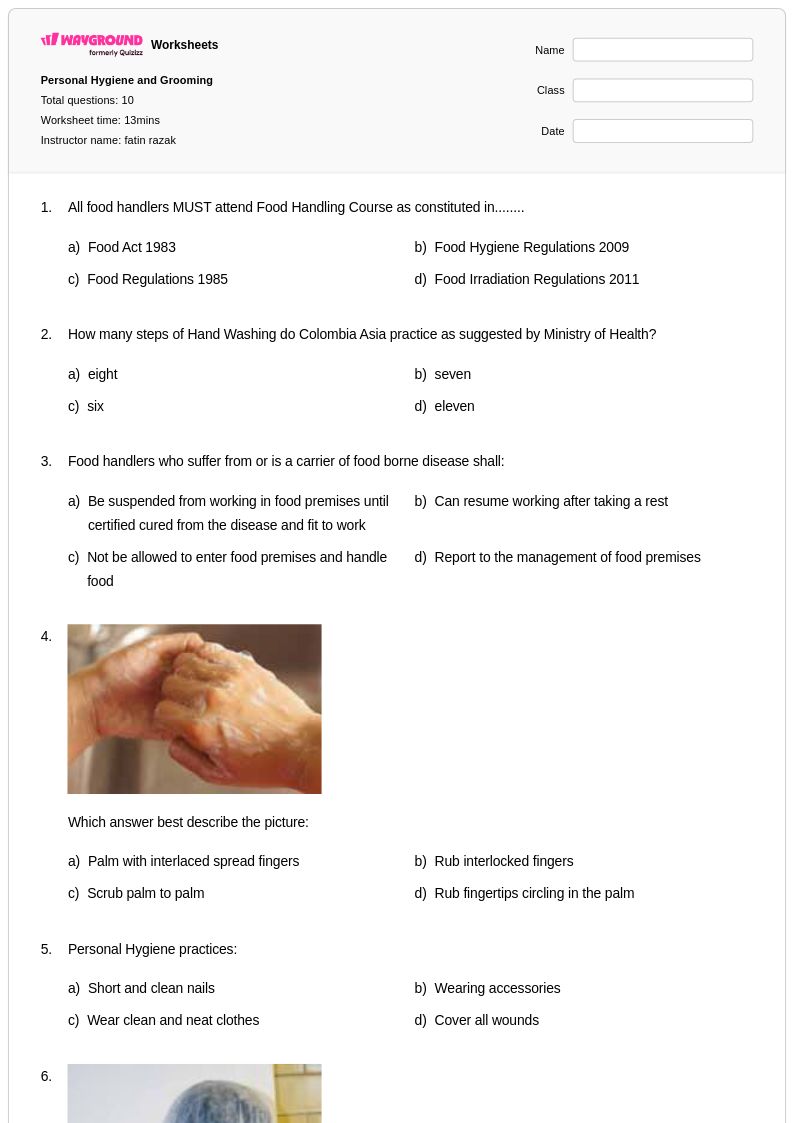
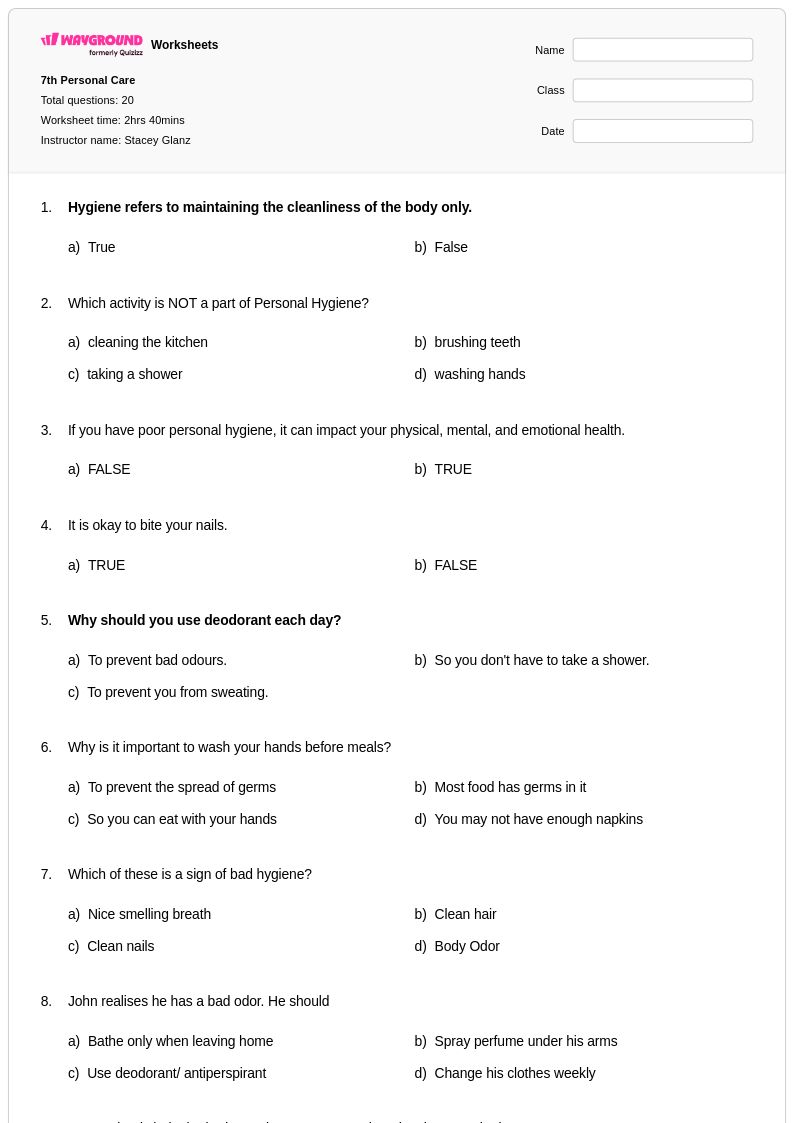
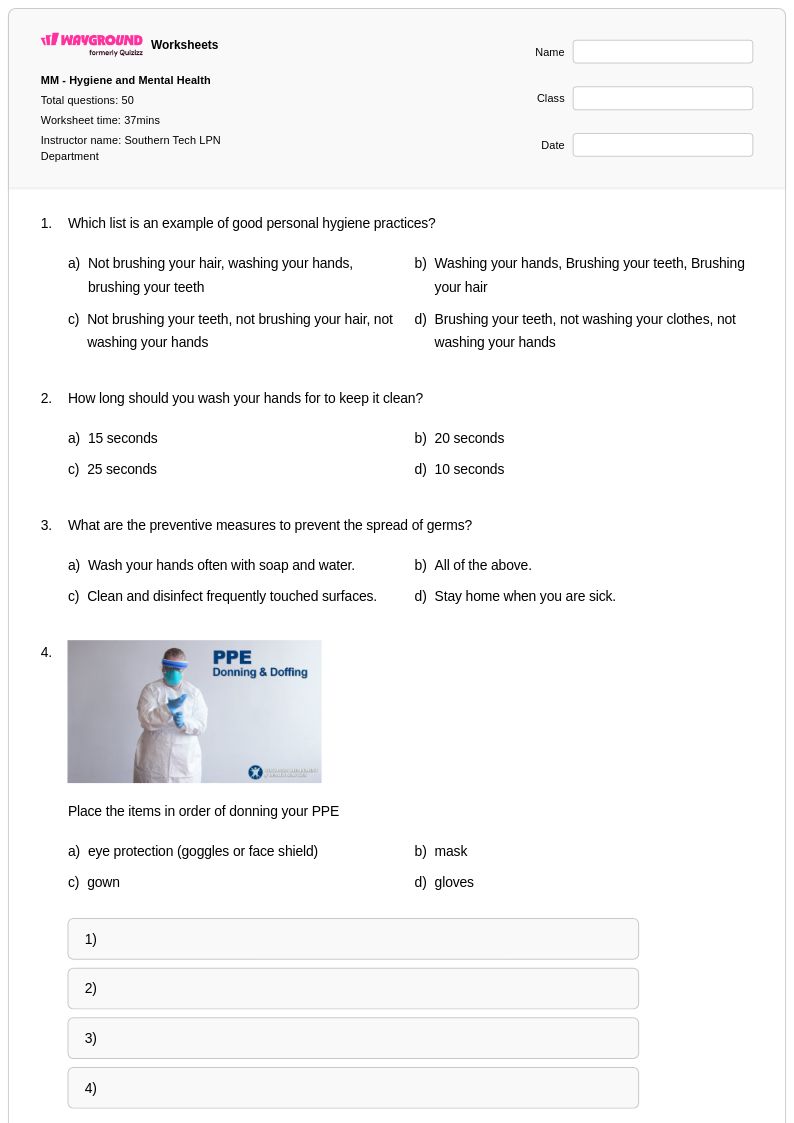
Personal hygiene worksheets available through Wayground (formerly Quizizz) provide comprehensive educational resources that help students develop essential health and wellness habits through structured learning activities. These expertly crafted materials focus on teaching proper hygiene practices, including handwashing techniques, dental care routines, grooming standards, and understanding the connection between cleanliness and disease prevention. The worksheets strengthen critical life skills by engaging students in interactive exercises that cover personal care fundamentals, hygiene product identification, and the science behind maintaining good health practices. Each resource includes detailed answer keys and is available as free printables in convenient pdf format, featuring practice problems that reinforce proper hygiene protocols and help students internalize healthy daily routines that will benefit them throughout their lives.
Wayground (formerly Quizizz) empowers educators with an extensive collection of millions of teacher-created personal hygiene resources that streamline lesson planning and enhance classroom instruction. The platform's robust search and filtering capabilities allow teachers to quickly locate age-appropriate materials that align with health education standards and curriculum requirements. Advanced differentiation tools enable educators to customize worksheets for diverse learning needs, while flexible formatting options provide both printable and digital versions including downloadable pdf files. These comprehensive features support teachers in delivering effective remediation for students who need additional hygiene education, enrichment activities for advanced learners, and consistent skill practice opportunities that help all students master fundamental personal care concepts essential for maintaining optimal health and social confidence.
FAQs
How do I teach personal hygiene to elementary students?
Teaching personal hygiene to elementary students is most effective when instruction connects daily routines to real health outcomes. Start with concrete, observable practices like handwashing steps, toothbrushing frequency, and hair and nail care, then explain why each habit matters for preventing illness and maintaining social confidence. Visual aids, demonstration, and repeated practice through structured activities help young learners internalize habits they can carry into daily life.
What topics should a personal hygiene worksheet cover?
A well-designed personal hygiene worksheet should cover handwashing techniques, dental care routines, grooming standards, hygiene product identification, and the relationship between cleanliness and disease prevention. Worksheets that address both the how and the why behind each habit give students a fuller understanding, not just procedural recall. Including real-world scenarios or fill-in activities tied to daily routines helps students connect classroom learning to their actual behavior.
What common misconceptions do students have about personal hygiene?
Students frequently underestimate how quickly germs spread through indirect contact, such as touching shared surfaces before eating or rubbing their eyes. Many also conflate smelling clean with being clean, missing the broader connection between hygiene and disease prevention. Another common error is believing that hygiene habits only matter when visibly dirty, rather than understanding consistent daily routines as a health necessity.
How can I differentiate personal hygiene instruction for students with different learning needs?
Differentiation in personal hygiene instruction can include simplified visual sequencing for students who need scaffolded steps, and more detailed written explanations or research extensions for advanced learners. On Wayground, teachers can apply accommodations such as Read Aloud to support students who struggle with reading-heavy content, reduced answer choices to lower cognitive load, and adjustable font sizes through reading mode. These settings can be assigned per student so the rest of the class continues with default materials without disruption.
How do I use Wayground's personal hygiene worksheets in my classroom?
Wayground's personal hygiene worksheets are available as printable PDFs for traditional classroom use and in digital formats for technology-integrated settings, including the option to host them as a quiz directly on the Wayground platform. Teachers can assign worksheets as independent practice, use them for guided instruction, or deploy them digitally for remote or hybrid learning. Each worksheet includes answer keys, making them easy to use for both instruction and self-correction.
At what grade level should personal hygiene be formally taught?
Personal hygiene concepts are typically introduced in early elementary grades and revisited with increasing complexity through middle school. Foundational habits like handwashing and dental care are appropriate starting points for kindergarten and first grade, while topics like body changes, deodorant use, and the science of germ transmission become more relevant in upper elementary and middle school health education. Instruction is most effective when it is age-appropriate, specific, and connected to students' real daily contexts.