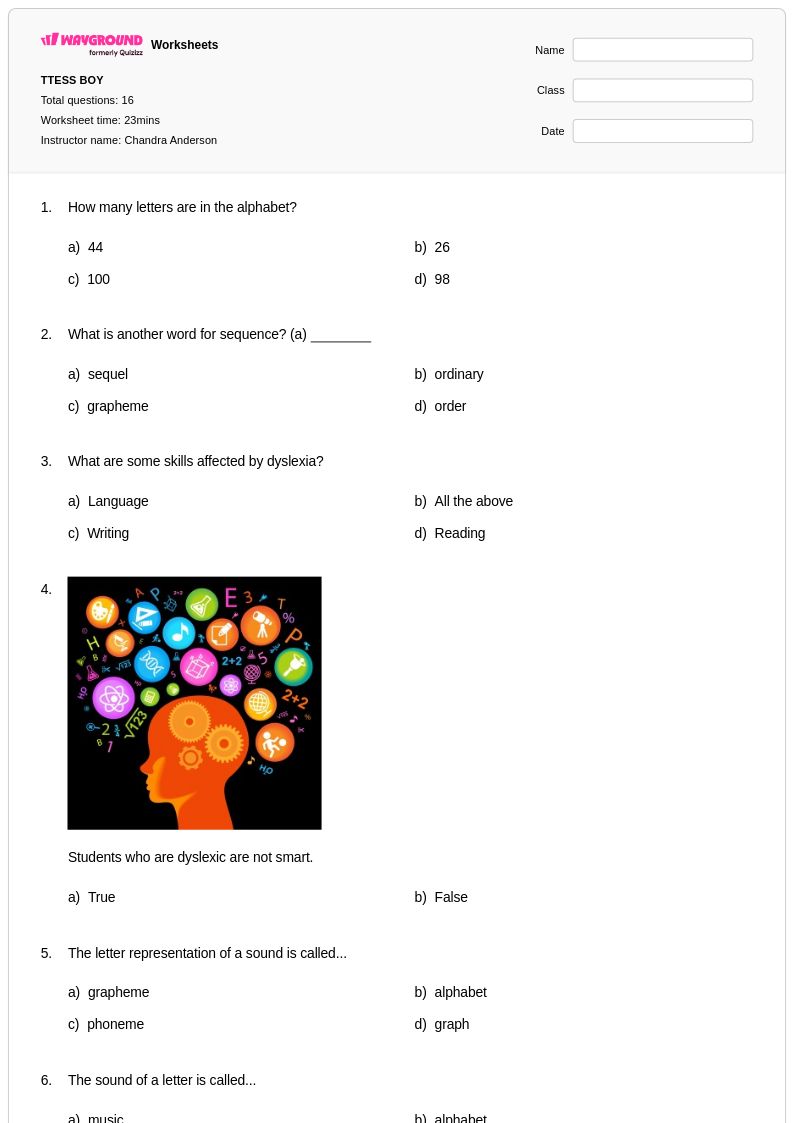
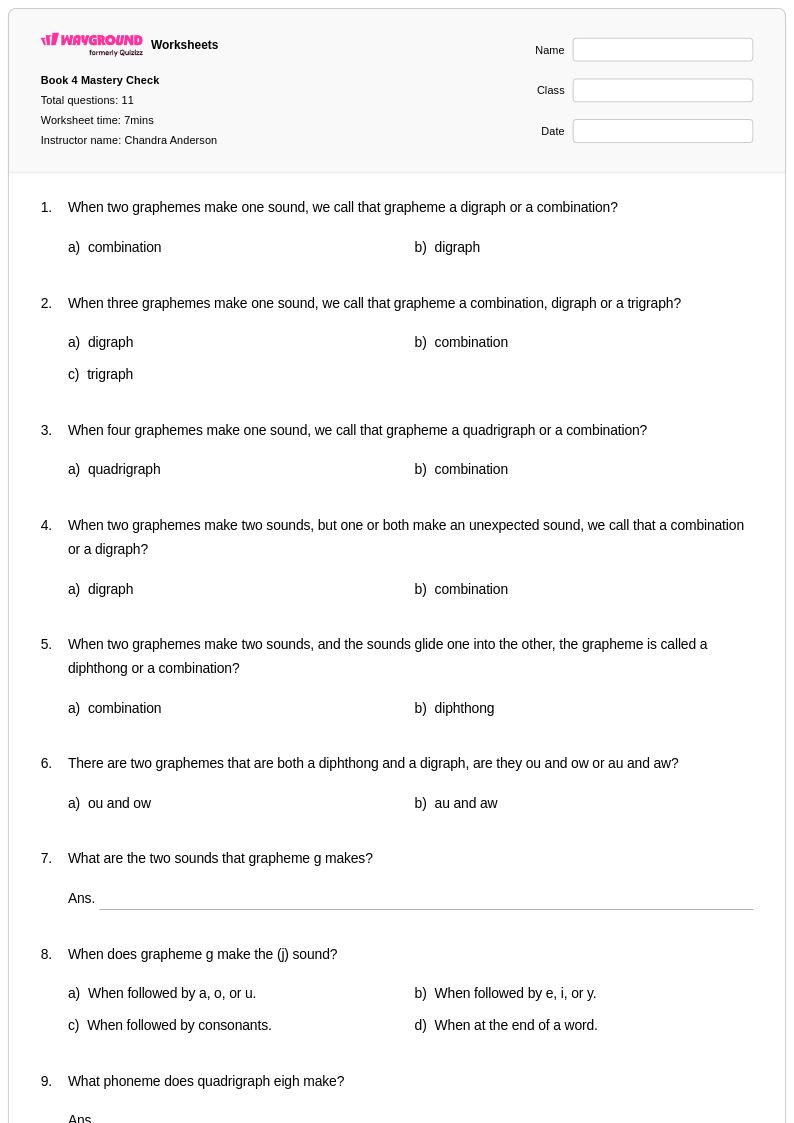
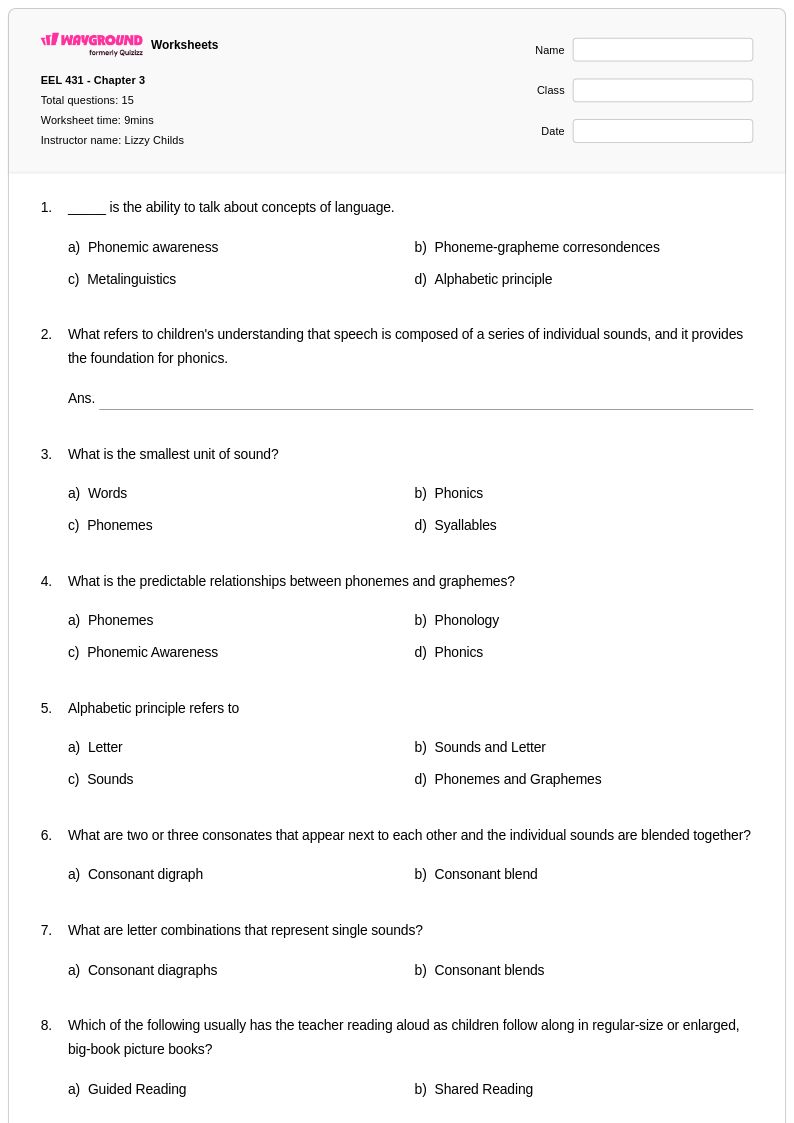
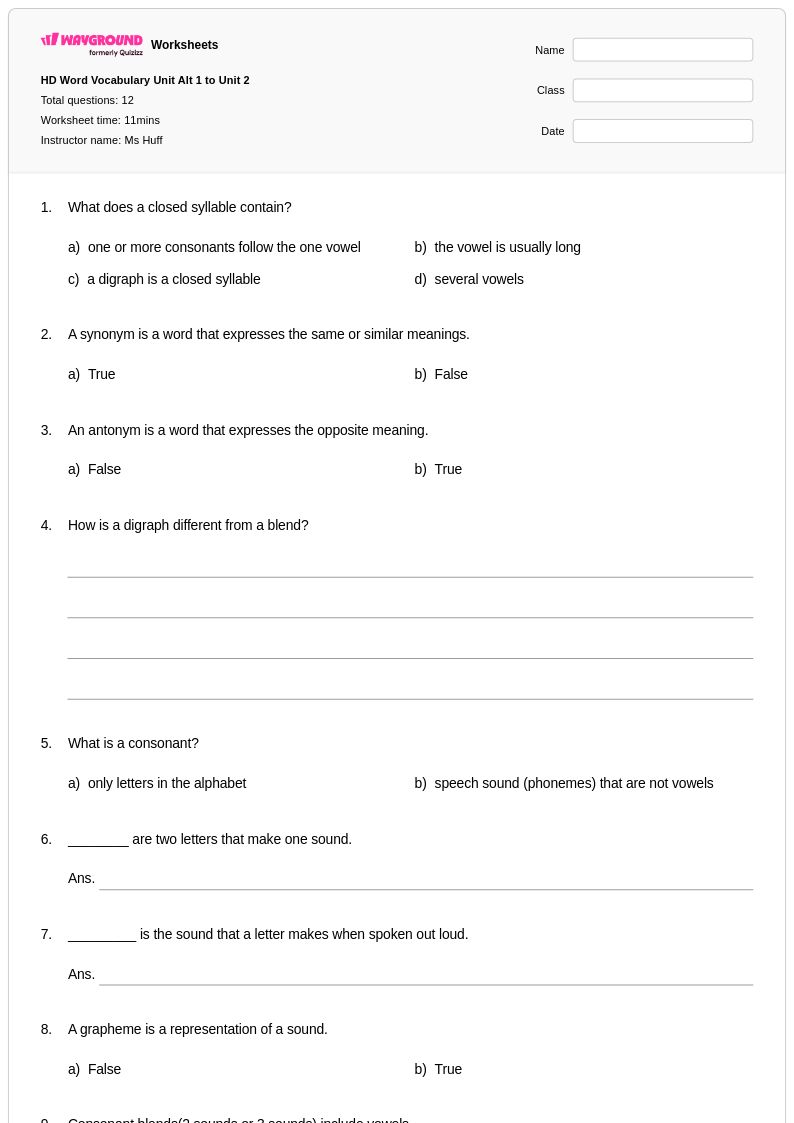
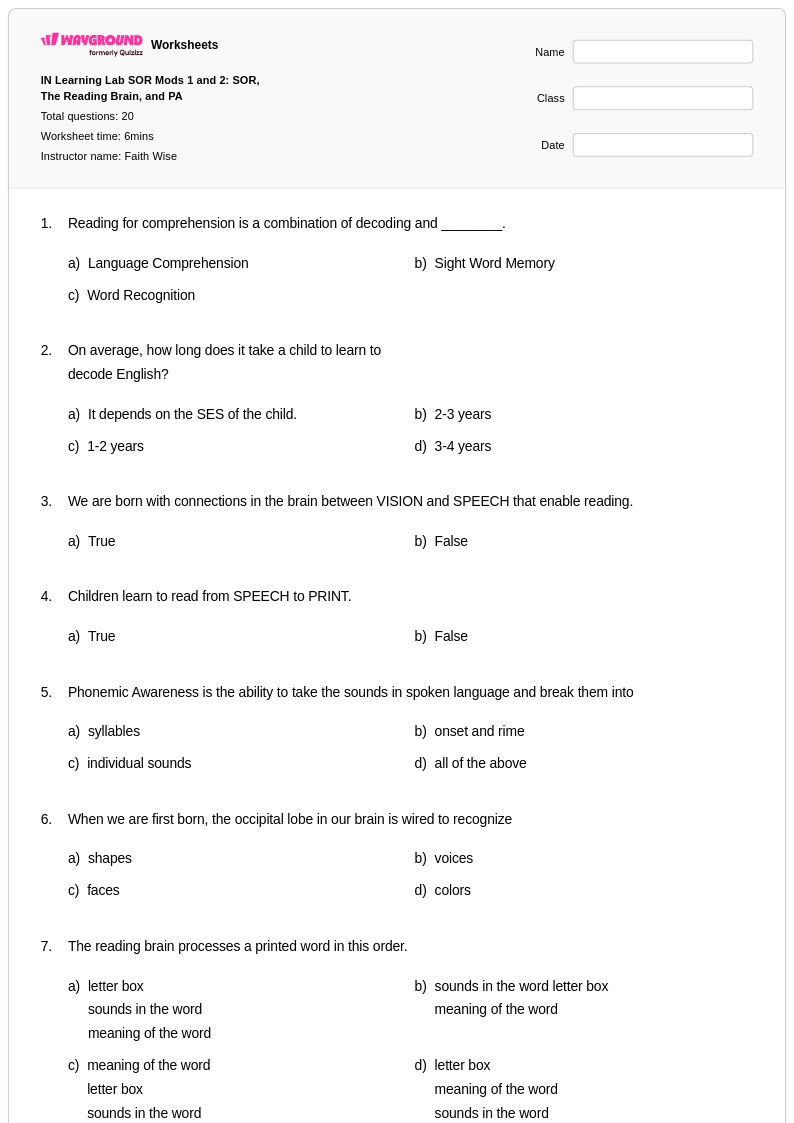
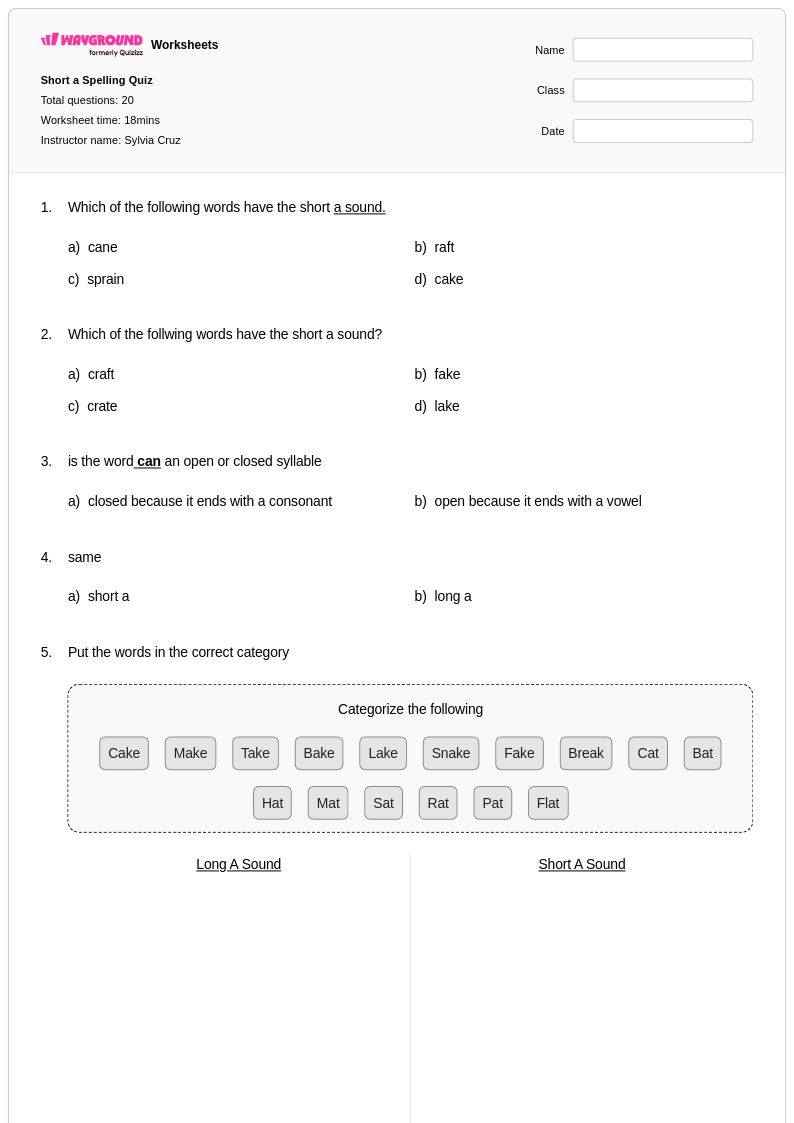
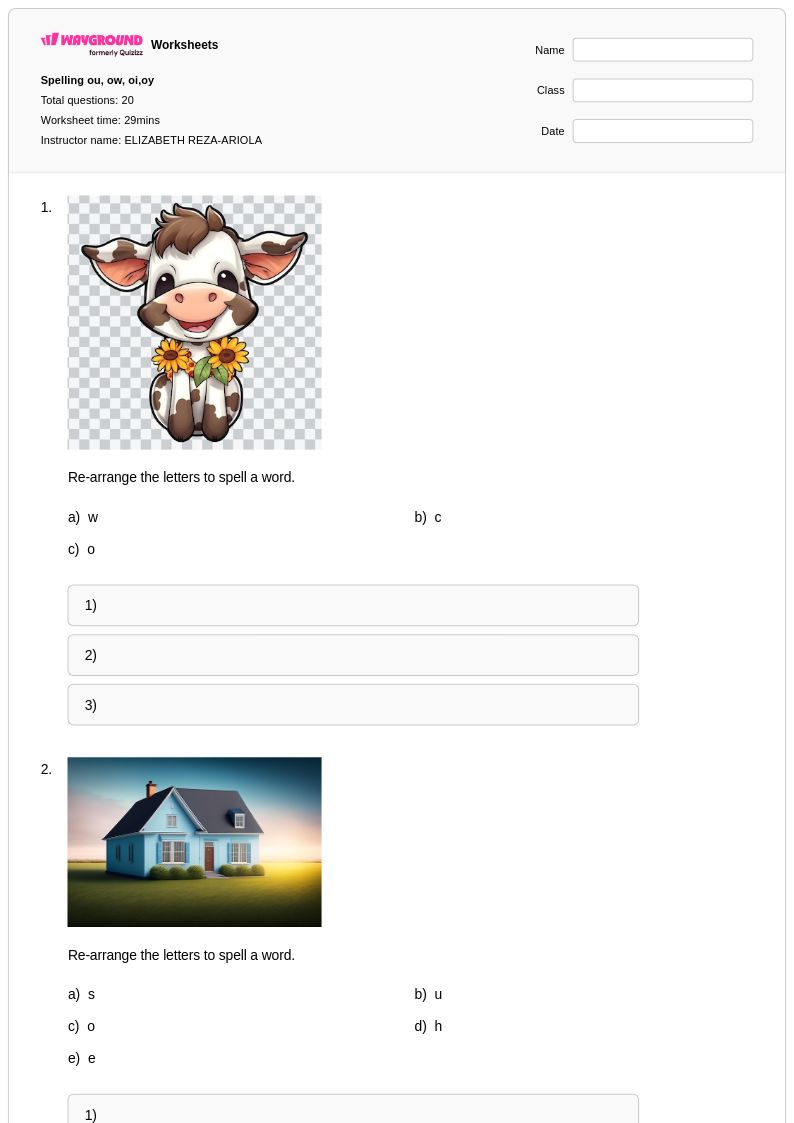
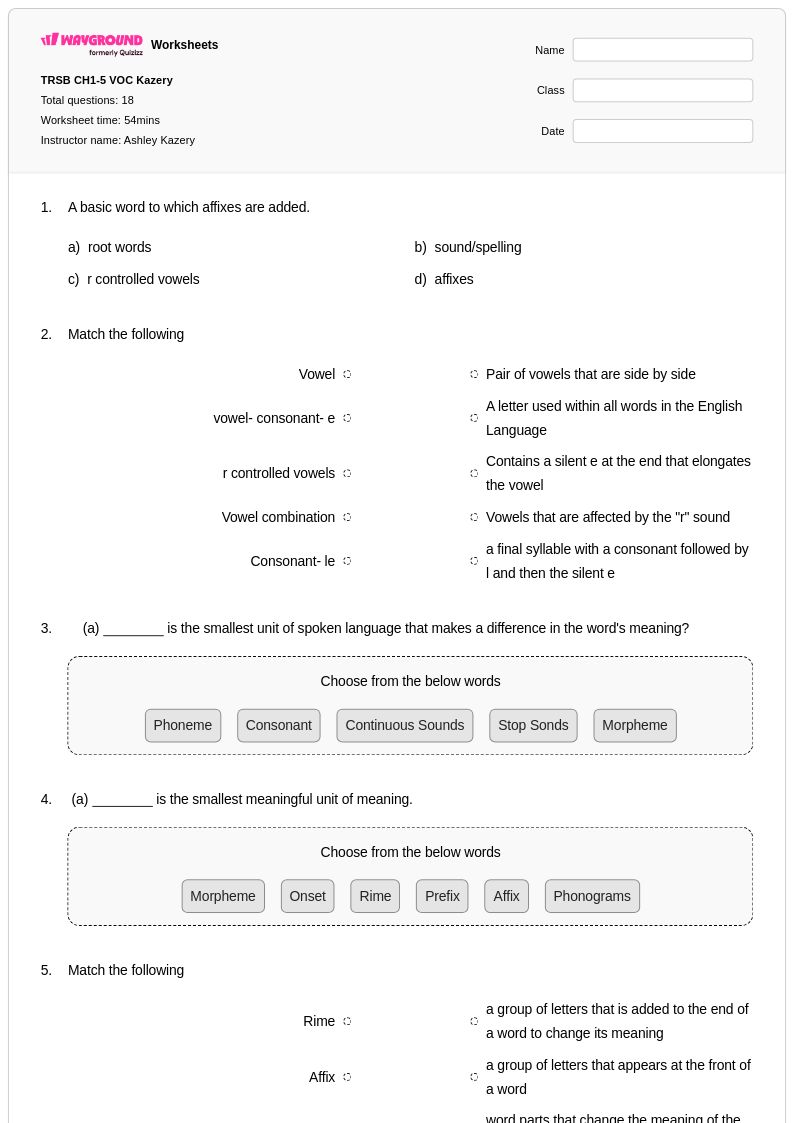
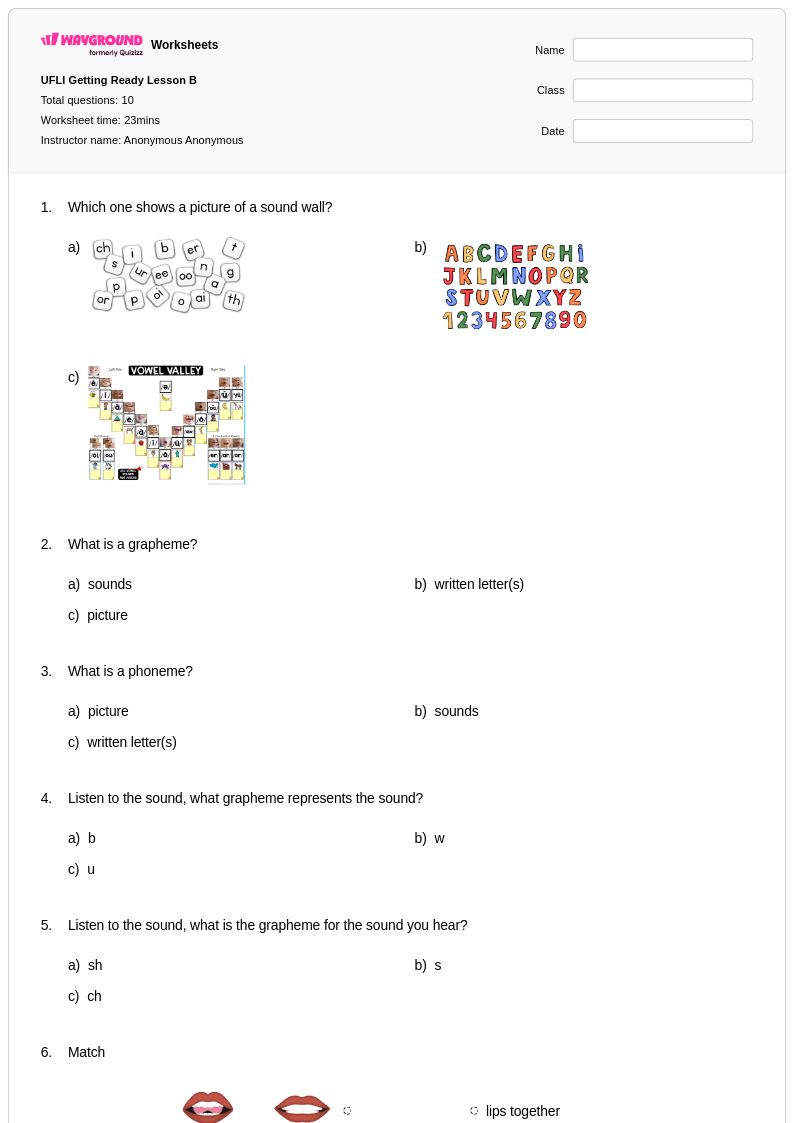
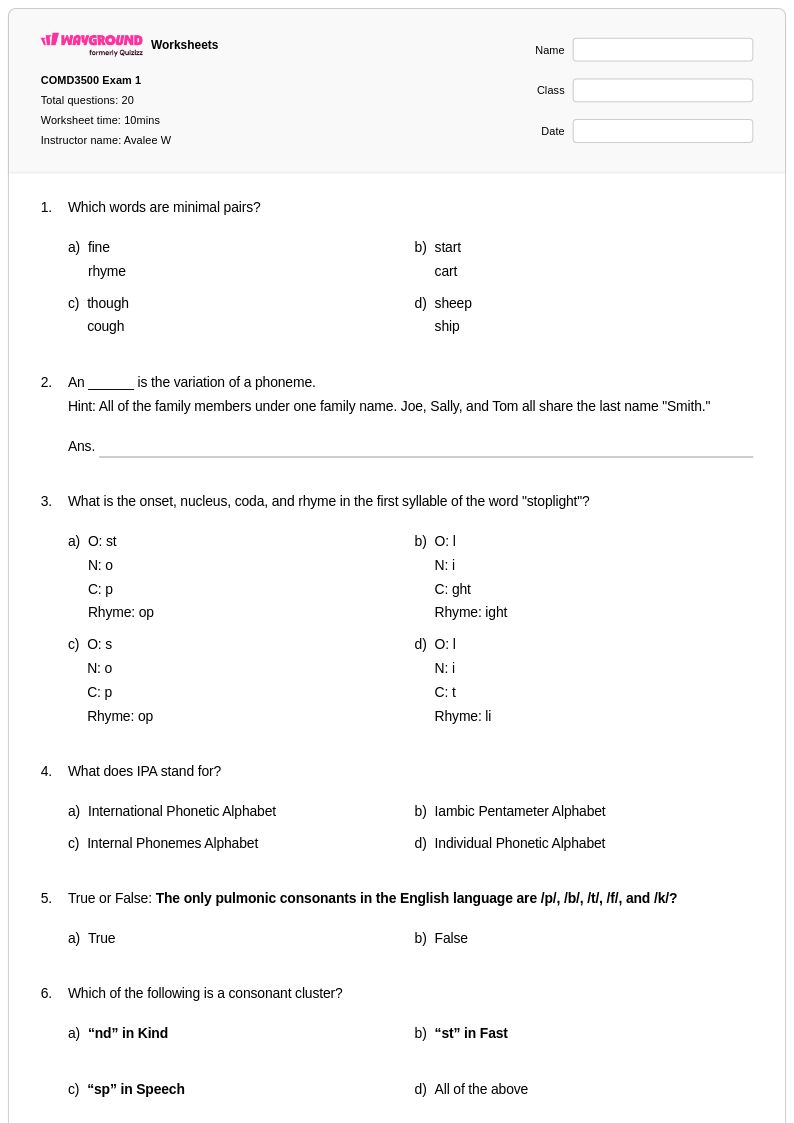
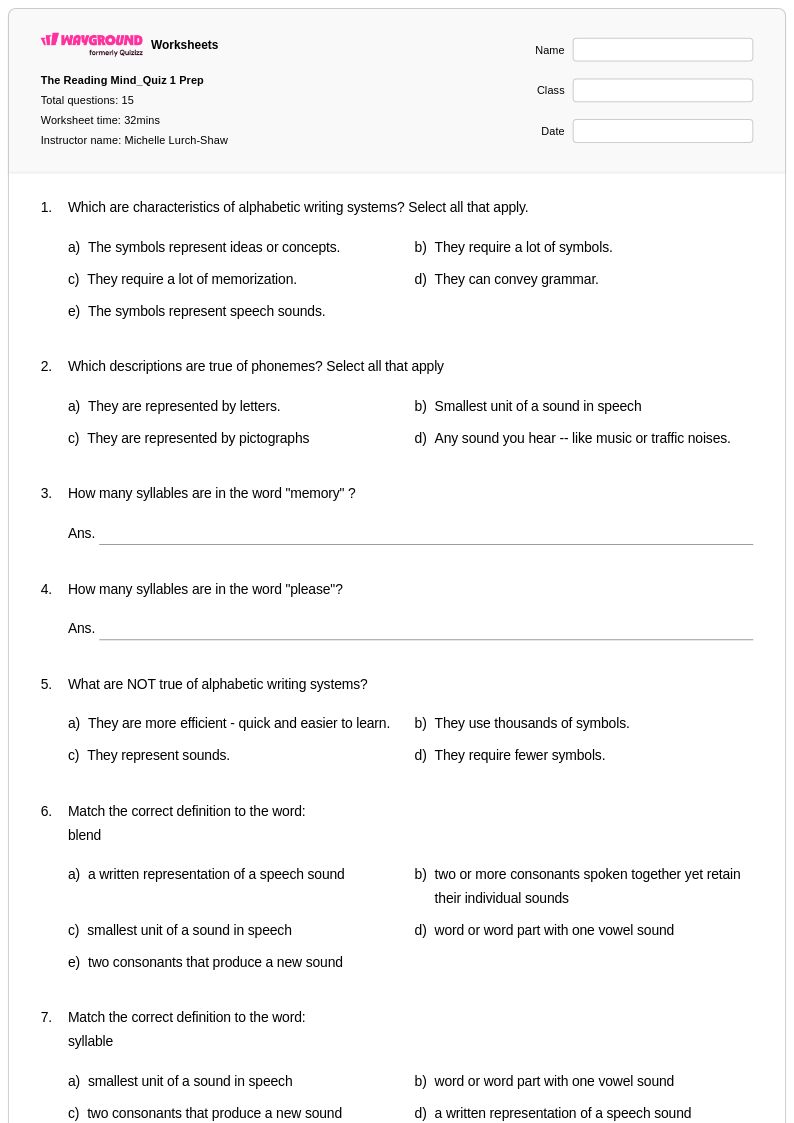
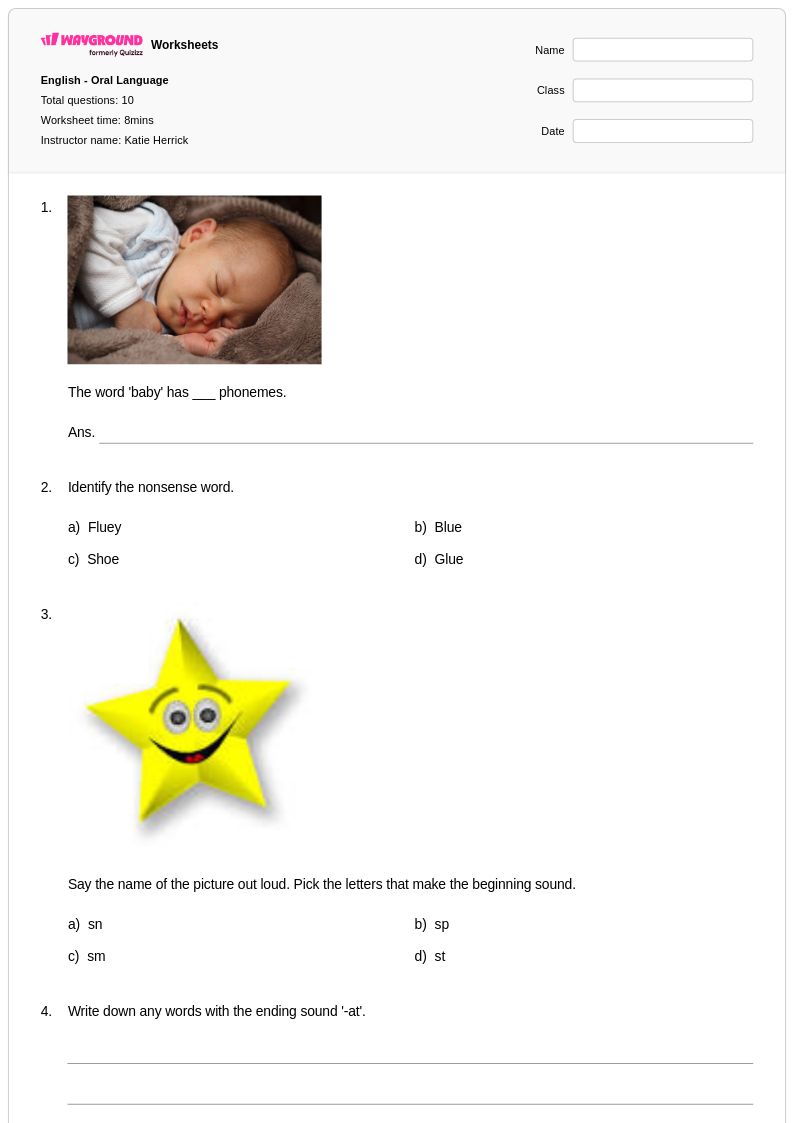
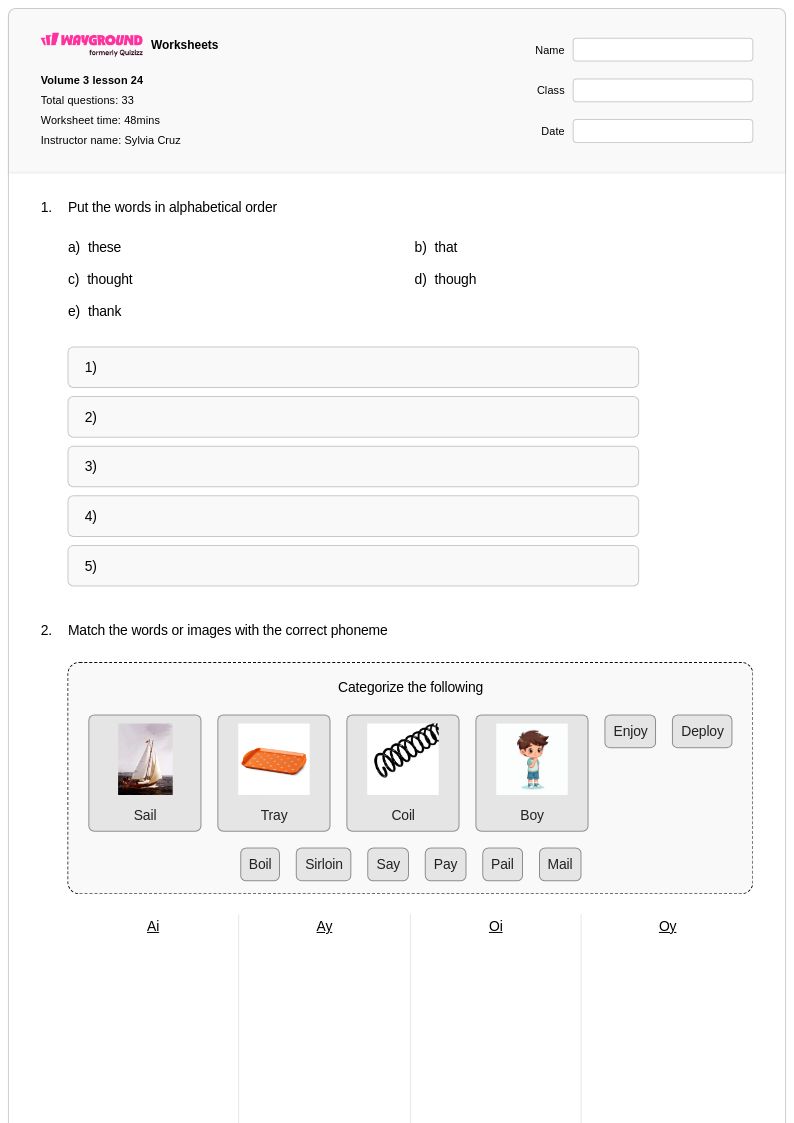
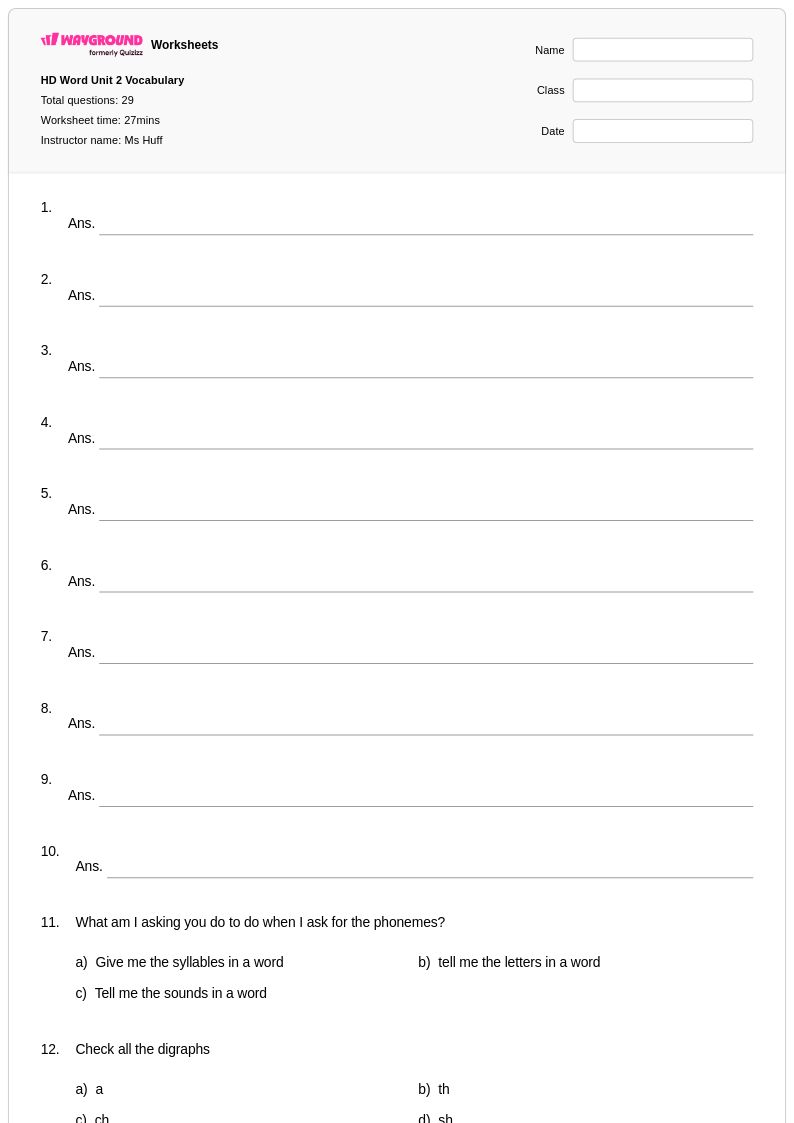
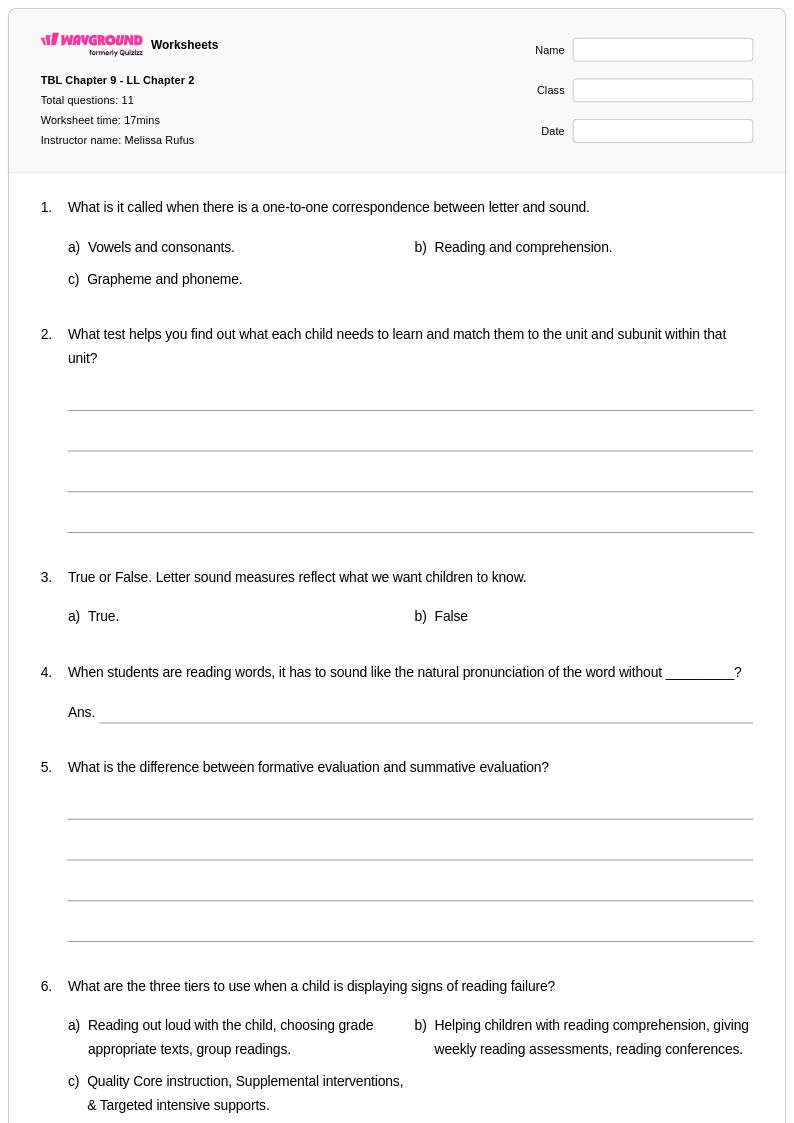
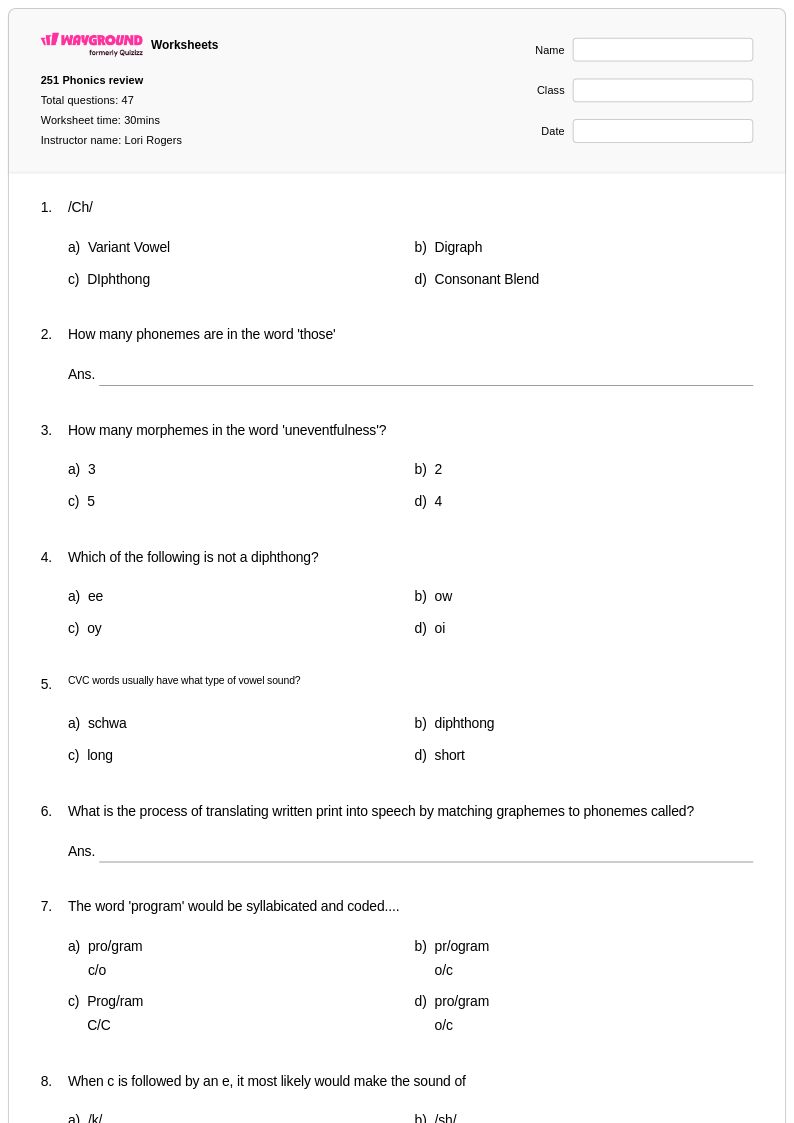
Explore Wayground's free phoneme-grapheme mapping worksheets and printables that help students master the connection between sounds and letters through engaging practice problems with comprehensive answer keys.
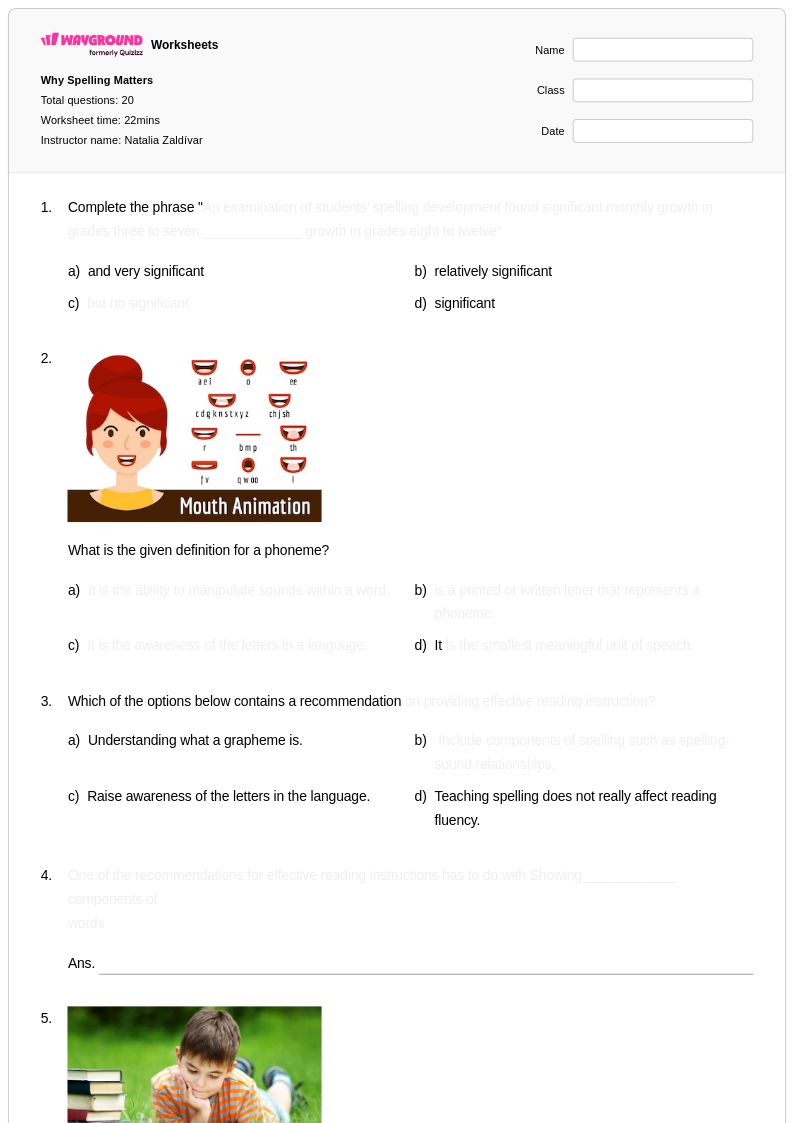
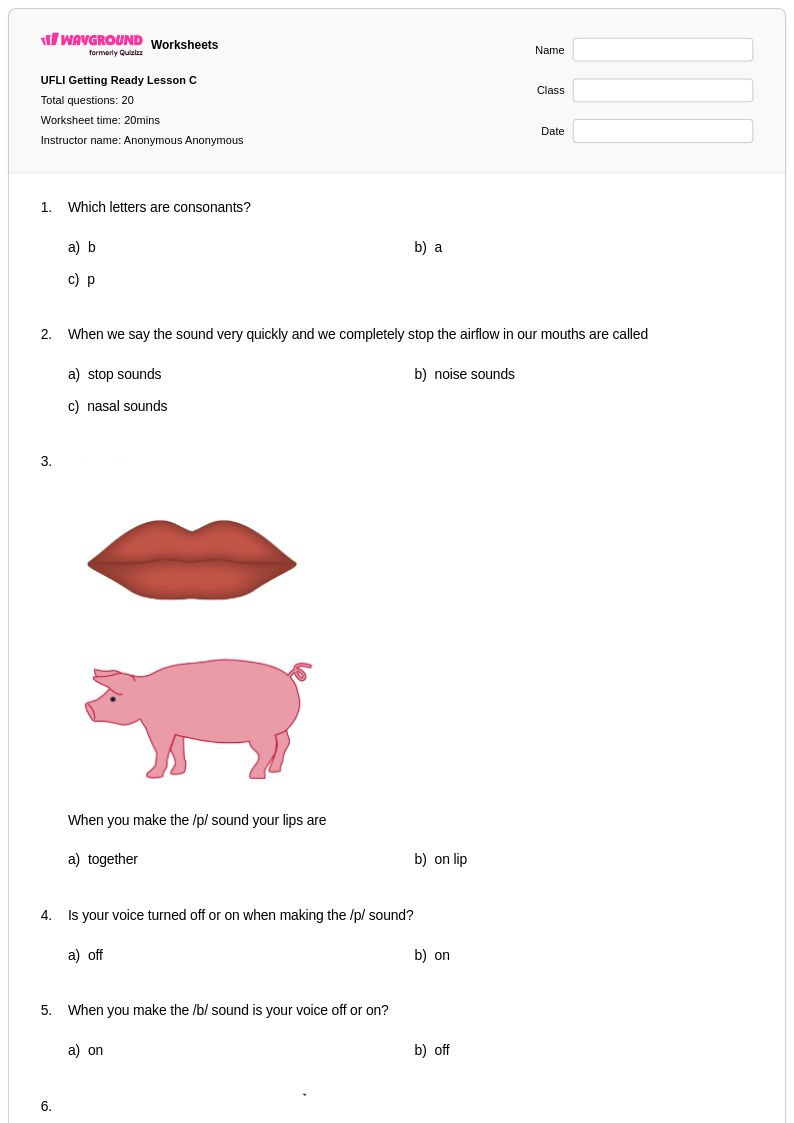
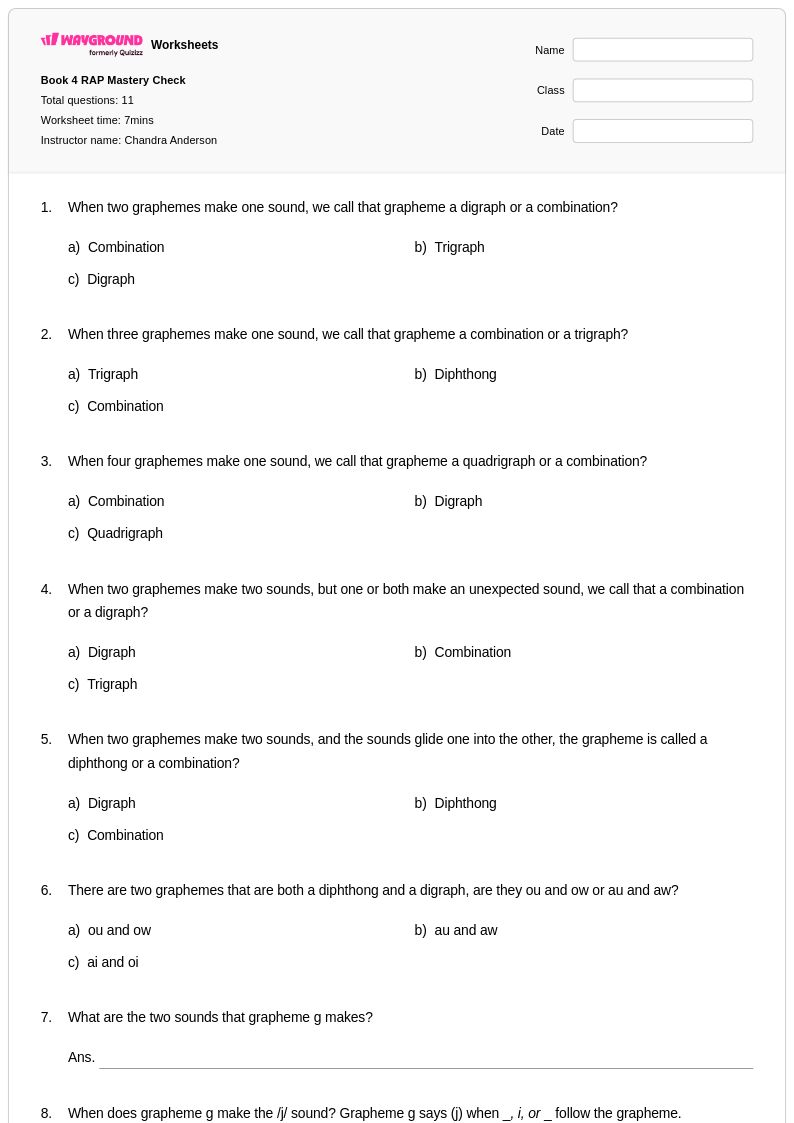
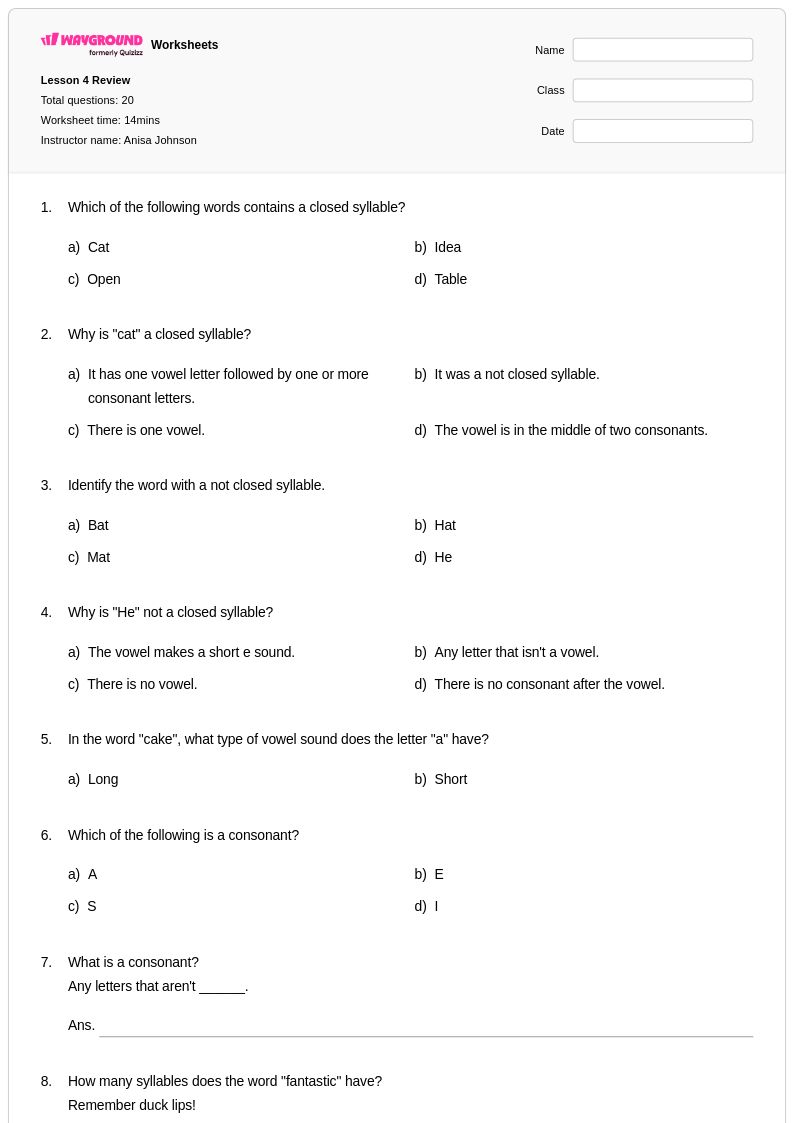
Phoneme-grapheme mapping worksheets available through Wayground (formerly Quizizz) provide essential practice in connecting spoken sounds to their written letter representations, a foundational skill that bridges oral language and reading proficiency. These comprehensive worksheets strengthen students' ability to identify individual phonemes within words and match them to their corresponding graphemes, building the phonemic awareness and letter-sound knowledge crucial for decoding unfamiliar words. The collection includes systematic practice problems that progress from simple single-letter correspondences to complex spelling patterns, with each worksheet featuring clear answer keys and available as free printables in convenient pdf format for immediate classroom implementation.
Wayground (formerly Quizizz) supports educators with an extensive library of millions of teacher-created phoneme-grapheme mapping resources that streamline instructional planning and differentiation. The platform's robust search and filtering capabilities allow teachers to quickly locate worksheets aligned with specific phonics standards and learning objectives, while customization tools enable modifications to match individual student needs and ability levels. These versatile resources are available in both printable and digital formats, including downloadable pdfs, making them ideal for whole-group instruction, small group remediation, independent practice, or enrichment activities that reinforce the critical connection between sounds and letters in systematic, research-based ways.
FAQs
How do I teach phoneme-grapheme mapping to early readers?
Phoneme-grapheme mapping is best taught through explicit, systematic phonics instruction that begins with the most common single-letter sound-spelling correspondences before progressing to digraphs, blends, and complex spelling patterns. Teachers typically use a structured literacy approach: say the word aloud, have students segment it into individual phonemes, then map each phoneme to its corresponding grapheme in a dedicated mapping box or grid. This method builds both phonemic awareness and orthographic knowledge simultaneously, which research consistently shows accelerates decoding development.
What's the difference between phonemic awareness and phoneme-grapheme mapping?
Phonemic awareness is purely auditory — it involves hearing, identifying, and manipulating individual sounds in spoken words without any print. Phoneme-grapheme mapping adds the visual and alphabetic layer by connecting each spoken sound (phoneme) to its written representation (grapheme). This distinction matters in the classroom because phoneme-grapheme mapping bridges oral language skills to actual reading and spelling, making it a critical transition skill in early literacy instruction.
What exercises help students practice phoneme-grapheme mapping?
Effective practice exercises include segmenting spoken words into phonemes and recording each sound in a separate box, then writing the corresponding grapheme beneath each box. Teachers can also use sound boxes or Elkonin boxes paired with letter tiles for hands-on practice, progress from CVC words to words with digraphs and vowel teams, and use dictation activities where students write words from sound to print. Worksheets that include systematic practice problems progressing from simple to complex spelling patterns reinforce these skills with consistent structure and immediate feedback through answer keys.
What mistakes do students commonly make with phoneme-grapheme mapping?
A common error is conflating the number of letters in a word with the number of phonemes — for example, treating 'sh' as two sounds rather than one. Students also frequently mismap vowel teams and silent letters, assigning a grapheme box to every letter rather than every sound unit. Another widespread misconception is confusing letter names with letter sounds, particularly for vowels. Identifying these error patterns early allows teachers to target instruction at the exact phonics concepts causing confusion rather than re-teaching broadly.
How can I use phoneme-grapheme mapping worksheets for students who are behind grade level?
For students who are struggling, start with a diagnostic approach: use mapping worksheets at simpler phonics levels (CVC words, single consonant-vowel correspondences) to identify exactly where the breakdown occurs rather than assuming a general phonics gap. Reduce the number of phonemes per word initially and provide word banks to lower retrieval demands. On Wayground, teachers can apply accommodations such as read-aloud support and reduced answer choices to individual students, so struggling learners receive targeted scaffolding without singling them out in front of peers.
How do I use Wayground's phoneme-grapheme mapping worksheets in my classroom?
Wayground's phoneme-grapheme mapping worksheets are available as printable PDFs for traditional classroom use and in digital formats for technology-integrated learning environments, including the option to host them as an interactive quiz directly on Wayground. Teachers can use them for whole-group instruction, small group remediation, or independent practice, and each worksheet includes a complete answer key for efficient grading and feedback. The platform's search and filtering tools make it straightforward to locate worksheets aligned to specific phonics standards, and customization options allow teachers to modify content to match individual student needs.