Explore Wayground's free Grade 3 pioneering worksheets and printables that help students discover early American settlers' journeys, challenges, and daily life through engaging practice problems with answer keys.
Explore printable Pioneering worksheets for Grade 3
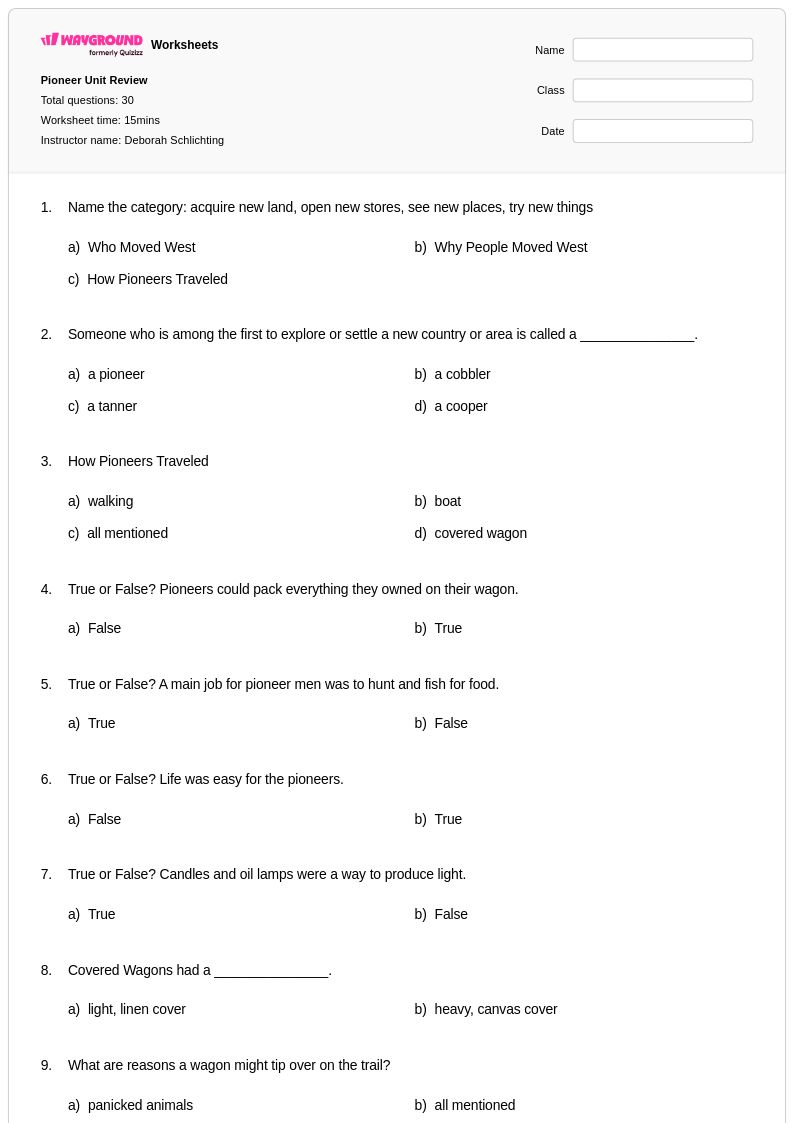
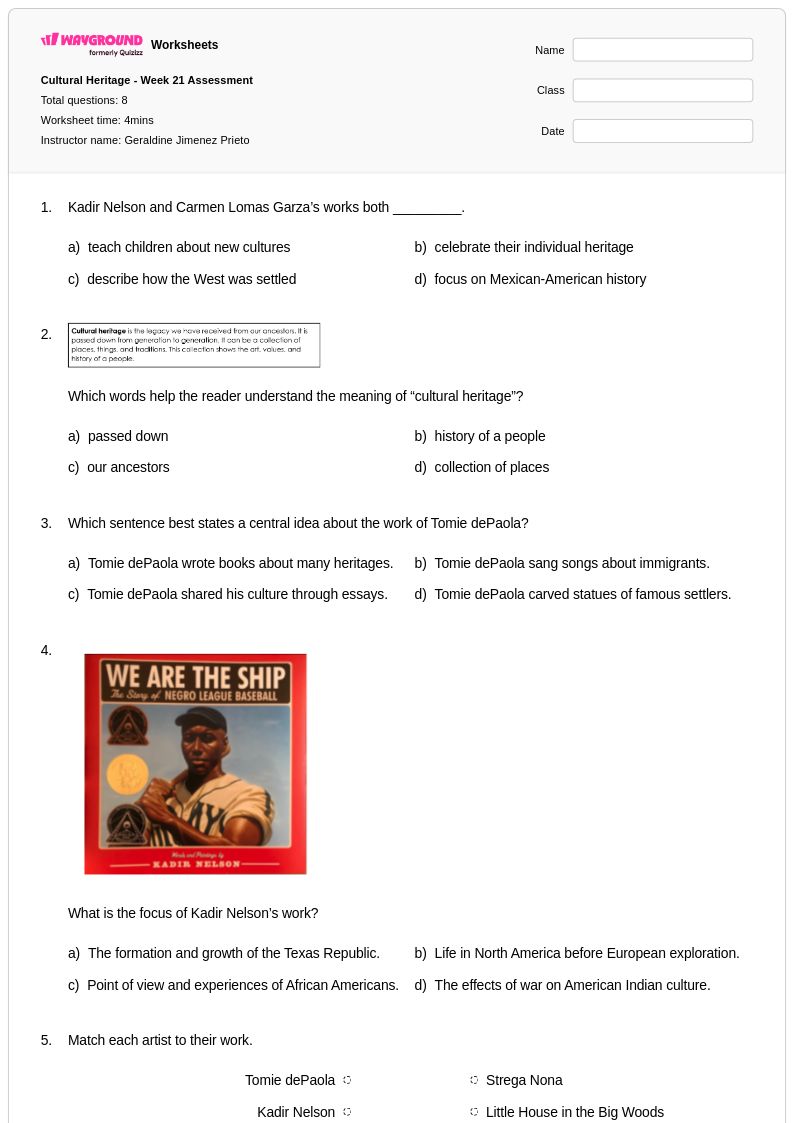
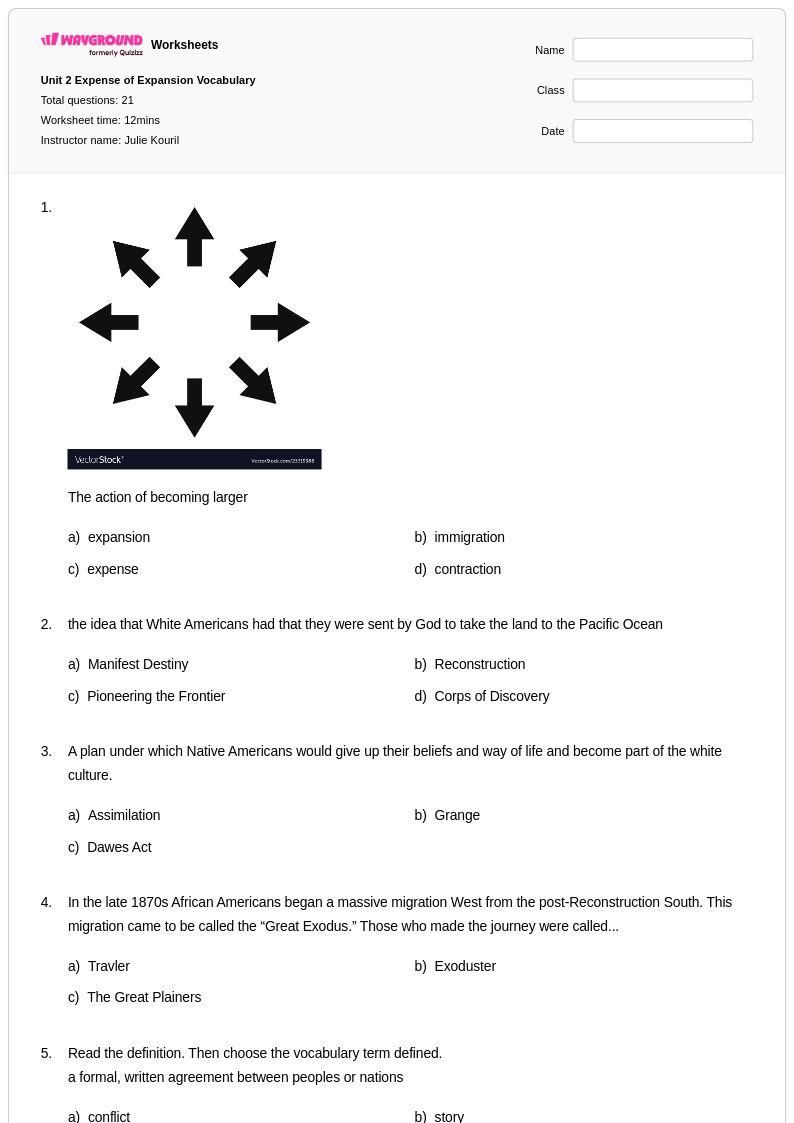
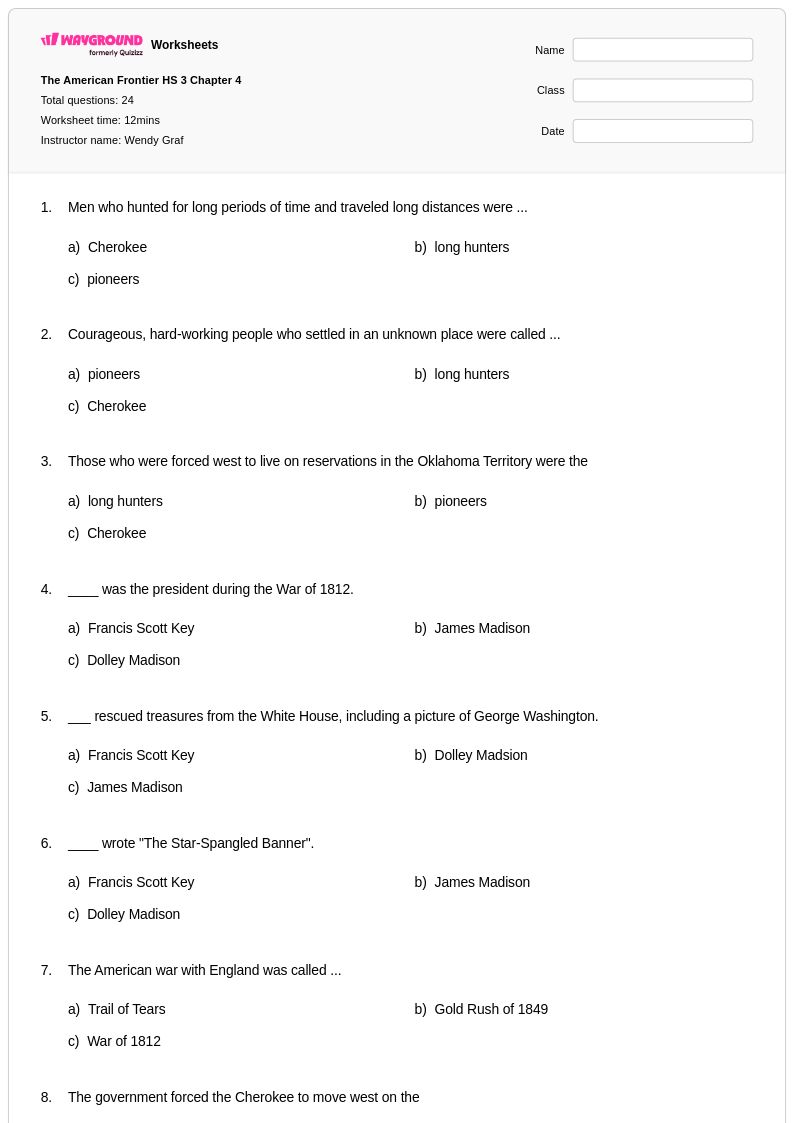
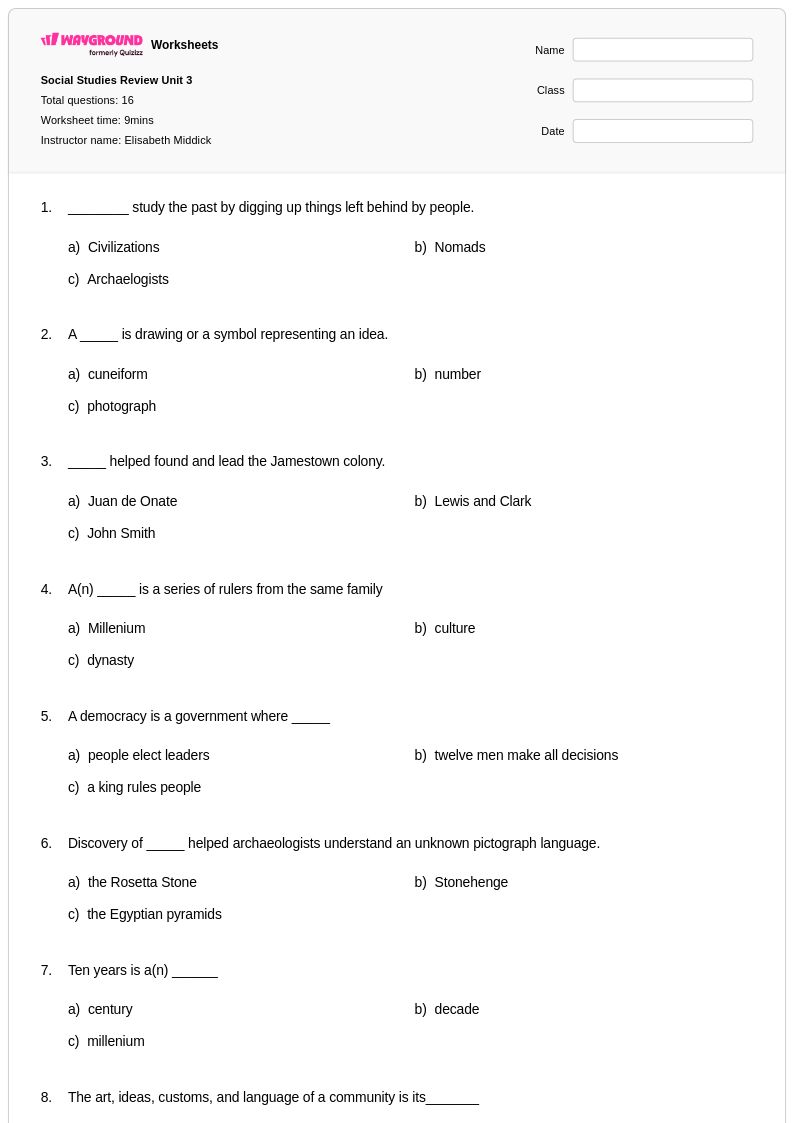
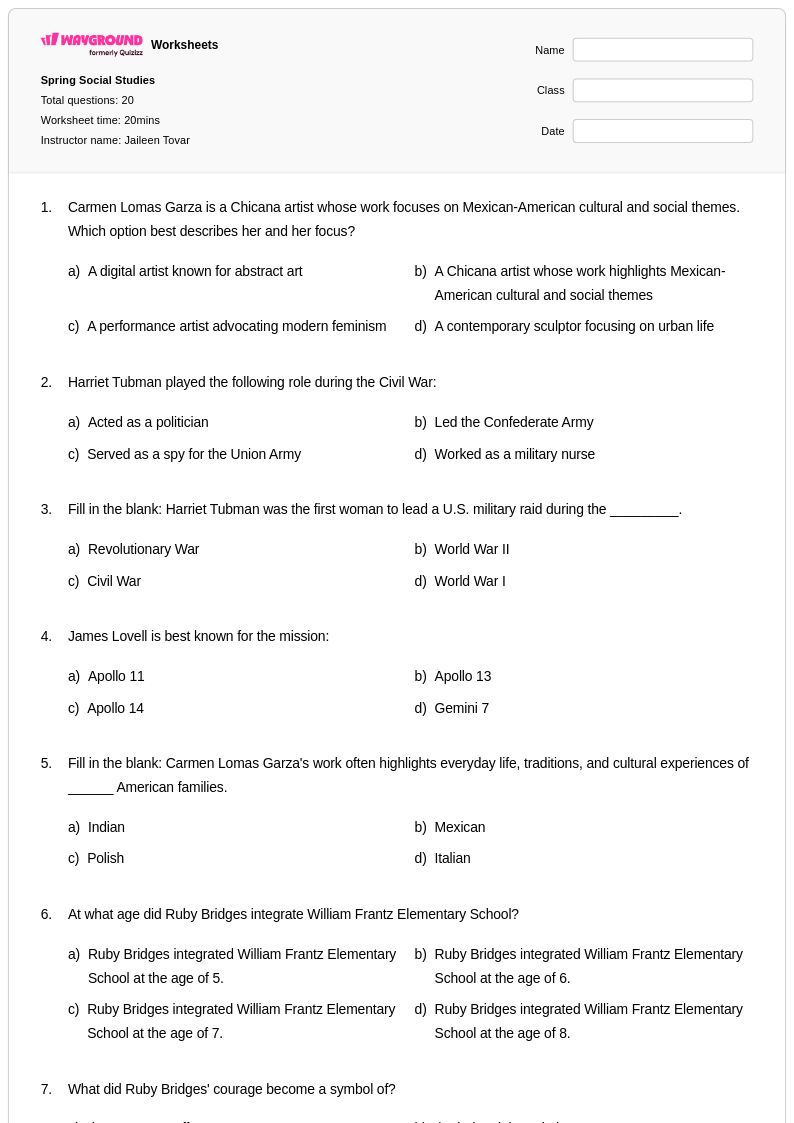
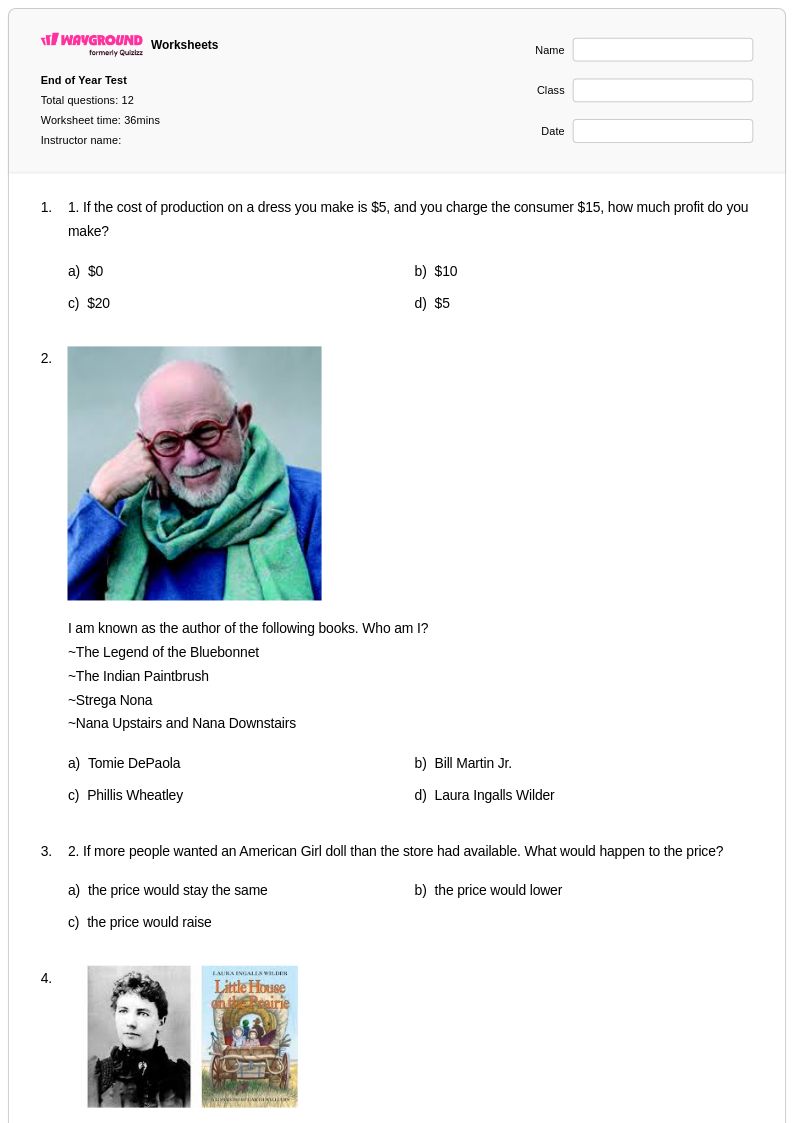
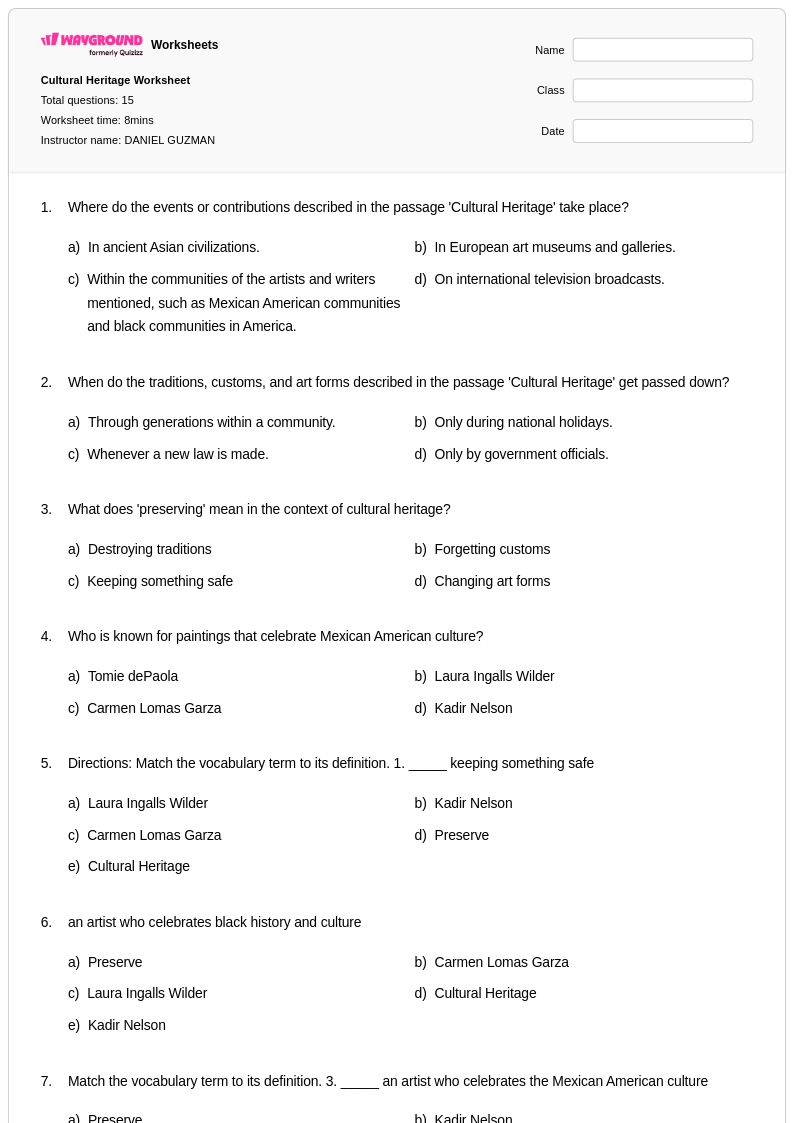
Pioneering worksheets for Grade 3 students available through Wayground offer young learners an engaging exploration of America's westward expansion and the brave settlers who shaped our nation's early development. These educational resources strengthen critical social studies skills including reading comprehension, historical thinking, and understanding cause-and-effect relationships as students discover how pioneers traveled across uncharted territories, established new communities, and overcame significant challenges. Each worksheet collection includes comprehensive answer keys and practice problems that help students analyze primary source materials, interpret historical maps, and compare pioneer life to modern experiences. Teachers can access these free printables in convenient pdf format, making it simple to incorporate authentic historical learning into daily instruction while building students' ability to sequence events, identify historical figures, and understand how geography influenced pioneer settlement patterns.
Wayground's extensive collection of teacher-created pioneering resources supports educators with millions of high-quality worksheets that align with social studies standards and accommodate diverse learning needs in Grade 3 classrooms. The platform's robust search and filtering capabilities enable teachers to quickly locate materials that match specific pioneer topics, from covered wagon journeys to frontier town establishment, while differentiation tools ensure appropriate challenge levels for all students. These flexible resources are available in both printable and digital pdf formats, allowing seamless integration into lesson planning, targeted remediation for struggling learners, and enrichment opportunities for advanced students. Teachers can customize worksheets to emphasize particular pioneering themes or historical connections, creating cohesive units that build foundational knowledge about American expansion while developing essential skills in historical analysis, geographic reasoning, and cultural understanding that support comprehensive social studies education.
FAQs
How do I teach westward expansion and pioneer life in a way that engages students?
Effective instruction on pioneer life combines narrative storytelling with primary source analysis so students connect emotionally and intellectually with the historical experience. Anchoring lessons around specific events like the Oregon Trail or the California Gold Rush gives students concrete case studies through which to examine broader themes like manifest destiny, economic hardship, and cultural conflict. Structured discussion prompts and cause-and-effect graphic organizers help students move beyond memorization toward genuine historical reasoning.
What topics should a pioneering worksheet cover for a comprehensive unit?
A well-rounded pioneering worksheet should address the motivations behind westward migration, the physical and social challenges of frontier life, landmark events like the Oregon Trail and California Gold Rush, and the experiences of diverse groups including immigrant families, miners, and homesteaders. Including primary source excerpts alongside comprehension and analysis questions pushes students to evaluate historical perspectives rather than simply recall facts. Coverage of manifest destiny and its consequences for Indigenous peoples rounds out the unit with critical historical thinking.
What common mistakes do students make when learning about westward expansion?
One of the most frequent misconceptions is that westward expansion was uniformly positive, with students often overlooking the displacement of Native American communities and the hardships endured by pioneers themselves. Students also tend to conflate different migratory movements, confusing the Oregon Trail settlers with Gold Rush prospectors or Homestead Act farmers, each of whom had distinct motivations and experiences. Teachers should build in explicit instruction that addresses these distinctions and encourages students to weigh multiple perspectives when evaluating this period.
How can I use primary source analysis in a pioneer history lesson?
Diary entries, land grant documents, and newspaper accounts from the 1840s through 1880s give students direct access to how pioneers narrated their own experiences, which builds both literacy and historical empathy. Teachers can scaffold primary source work by providing sentence starters, vocabulary supports, and guiding questions that direct students toward evidence-based claims. Pairing a primary source with a short-answer or claim-evidence worksheet reinforces analytical writing skills alongside content knowledge.
How do I use Wayground's pioneering worksheets in my classroom?
Wayground's pioneering worksheets are available as printable PDFs for traditional classroom use and in digital formats for technology-integrated environments, giving teachers flexibility for in-class instruction, homework, and remediation. Teachers can also host worksheets directly as a quiz on Wayground, enabling real-time student responses and instant feedback. For students who need additional support, Wayground's accommodation tools allow teachers to enable features like read aloud, extended time, and reduced answer choices on an individual basis without disrupting the rest of the class.
How do I differentiate pioneering worksheets for students at different skill levels?
Differentiation for pioneer history content often means adjusting the complexity of source texts and the cognitive demand of questions, moving from recall-level prompts for struggling readers to multi-step analysis tasks for advanced learners. On Wayground, teachers can apply individual accommodations such as read aloud for students who need audio support, reduced answer choices to lower cognitive load, and extended time for students who need more processing time. These settings are saved per student and apply automatically in future sessions, so differentiation does not require rebuilding configurations each time.