Free Printable Present Perfect Tense Worksheets for Grade 4
Wayground offers free Grade 4 present perfect tense worksheets and printables with answer keys to help students master this essential verb form through engaging practice problems and downloadable PDF activities.
Explore printable Present Perfect Tense worksheets for Grade 4
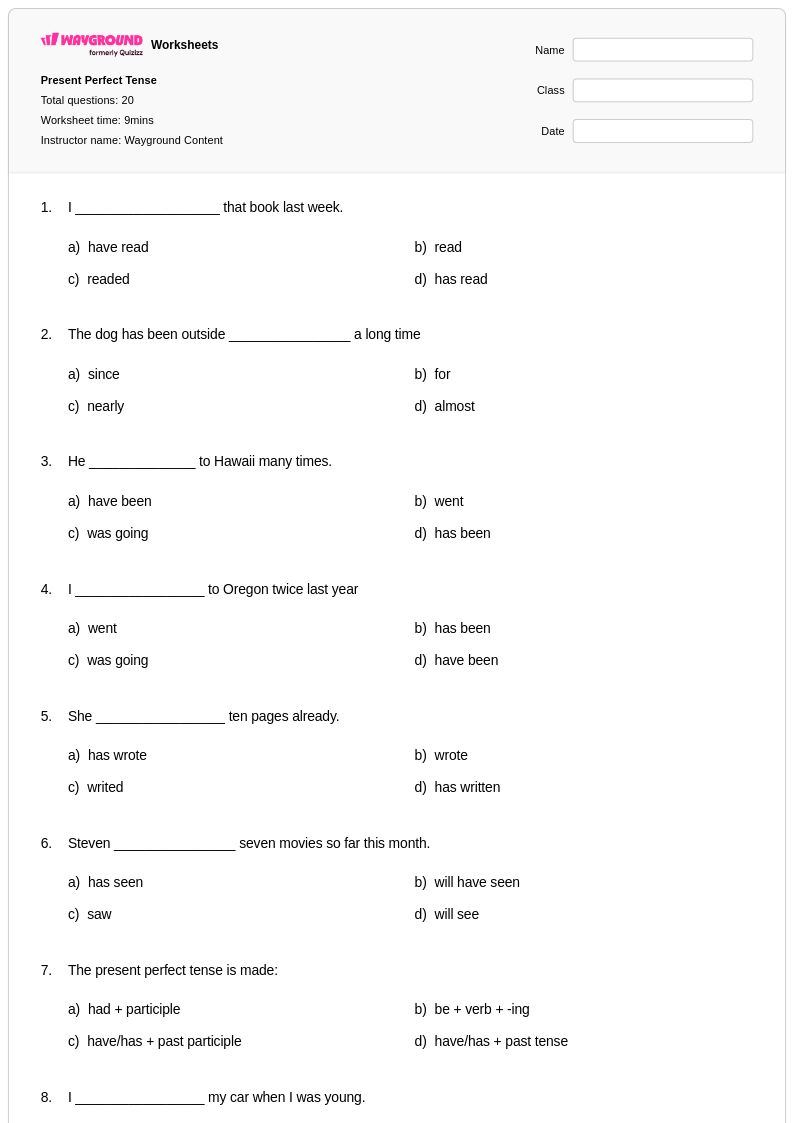
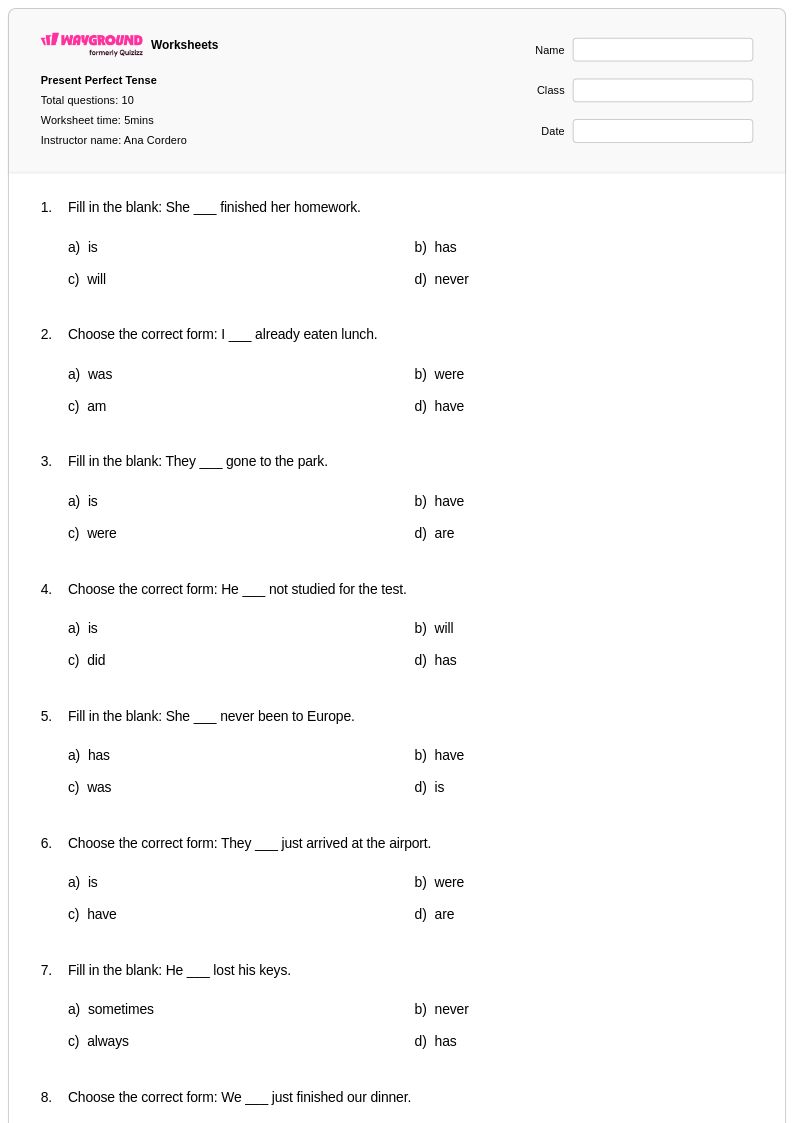
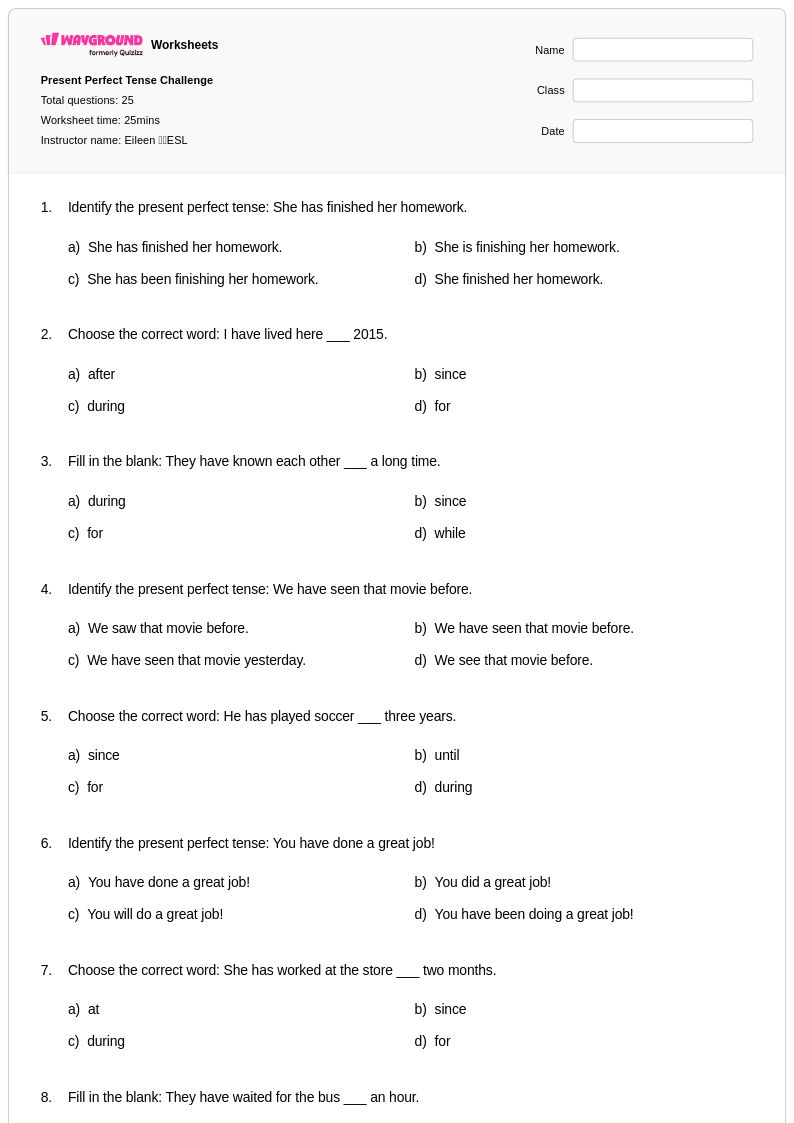
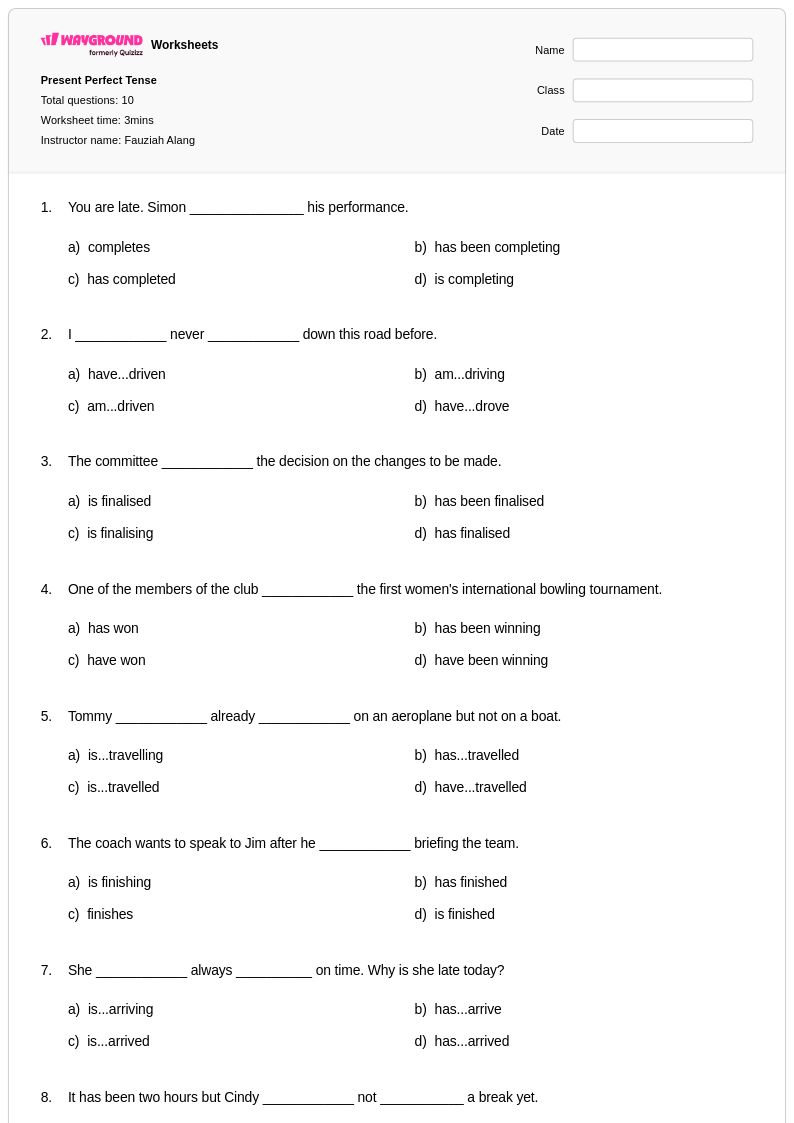
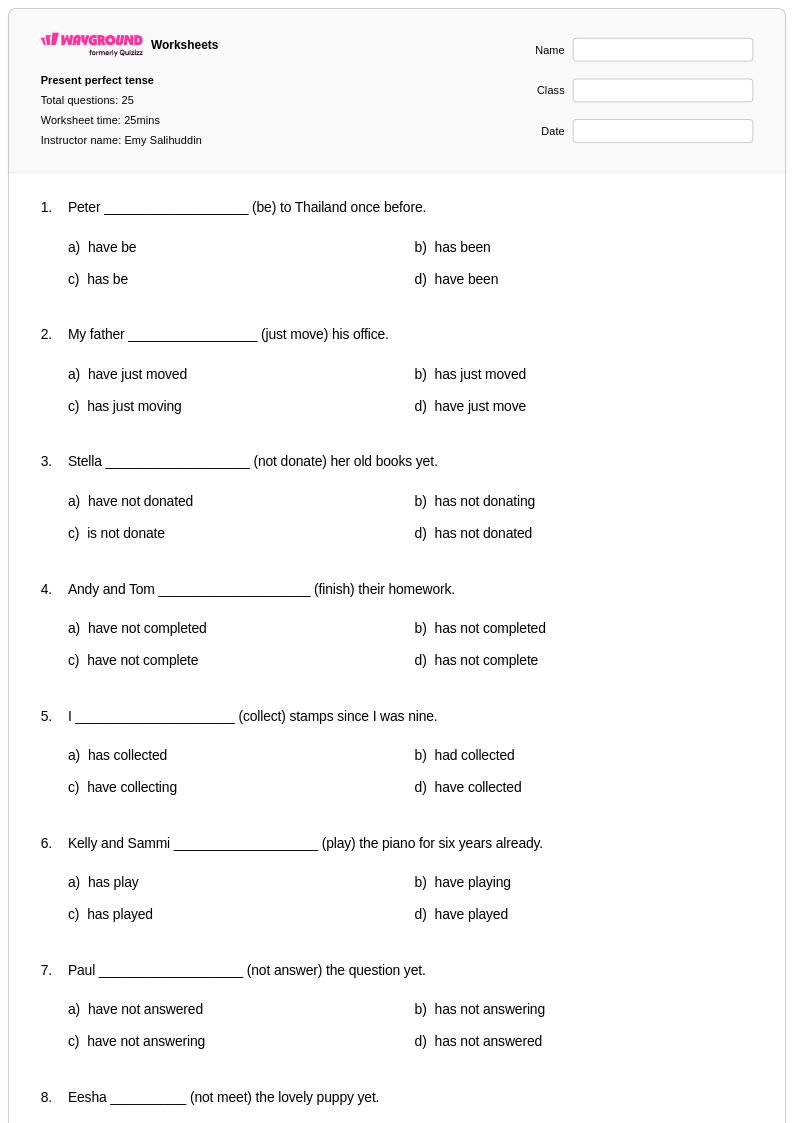
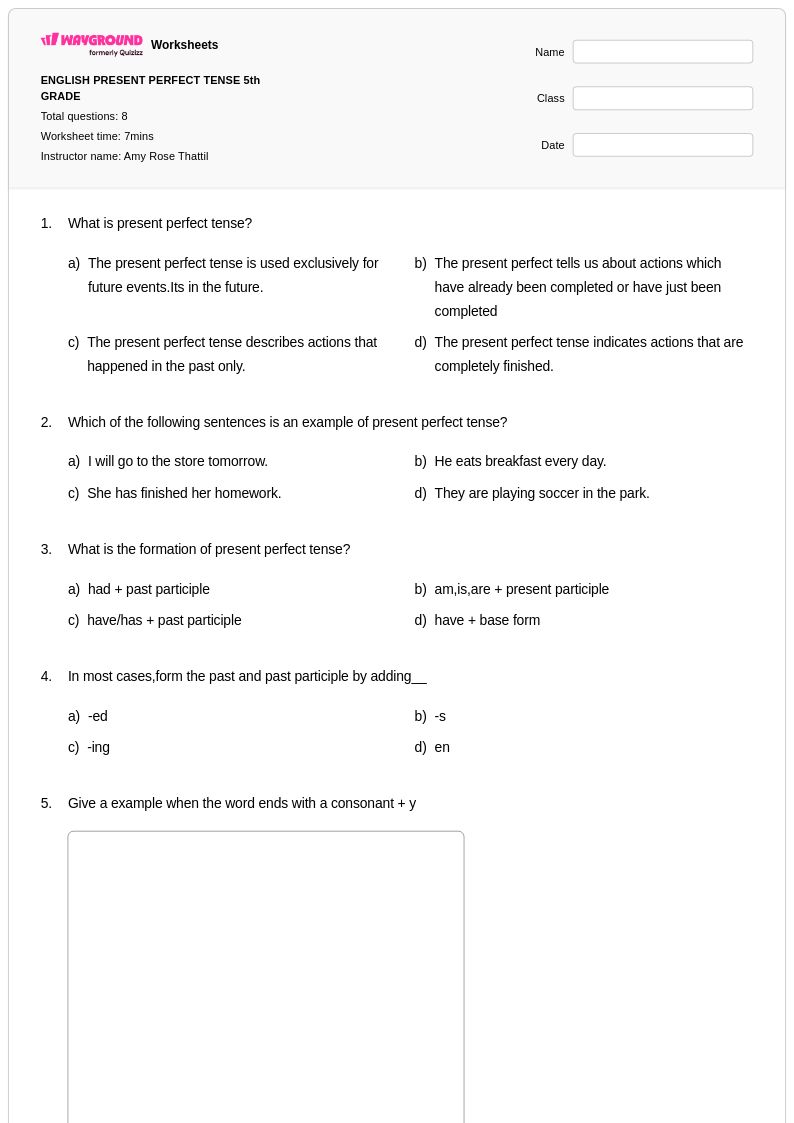
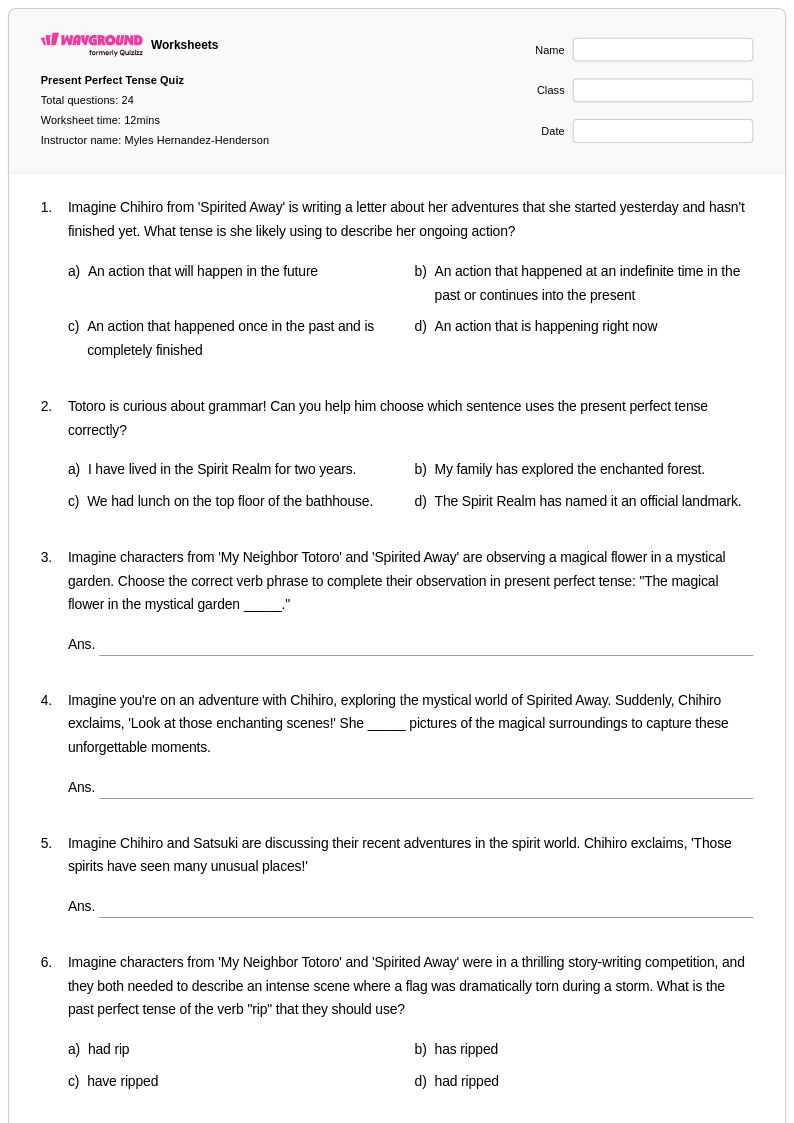
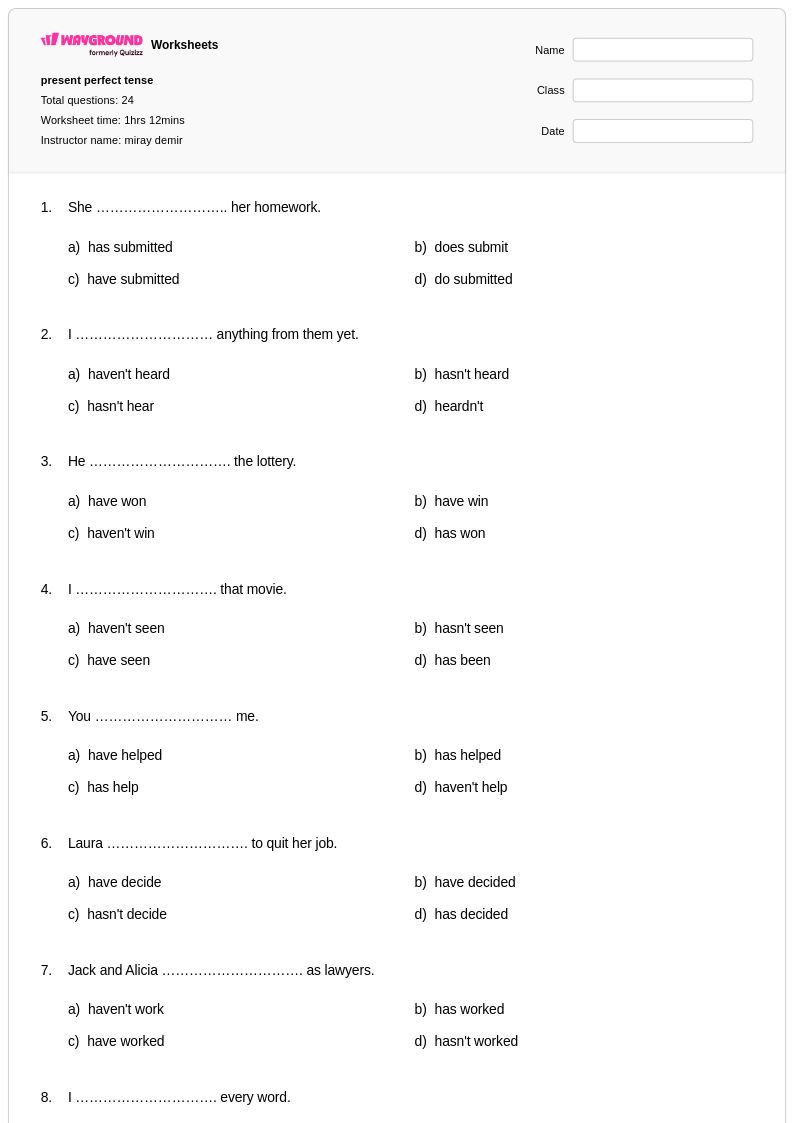
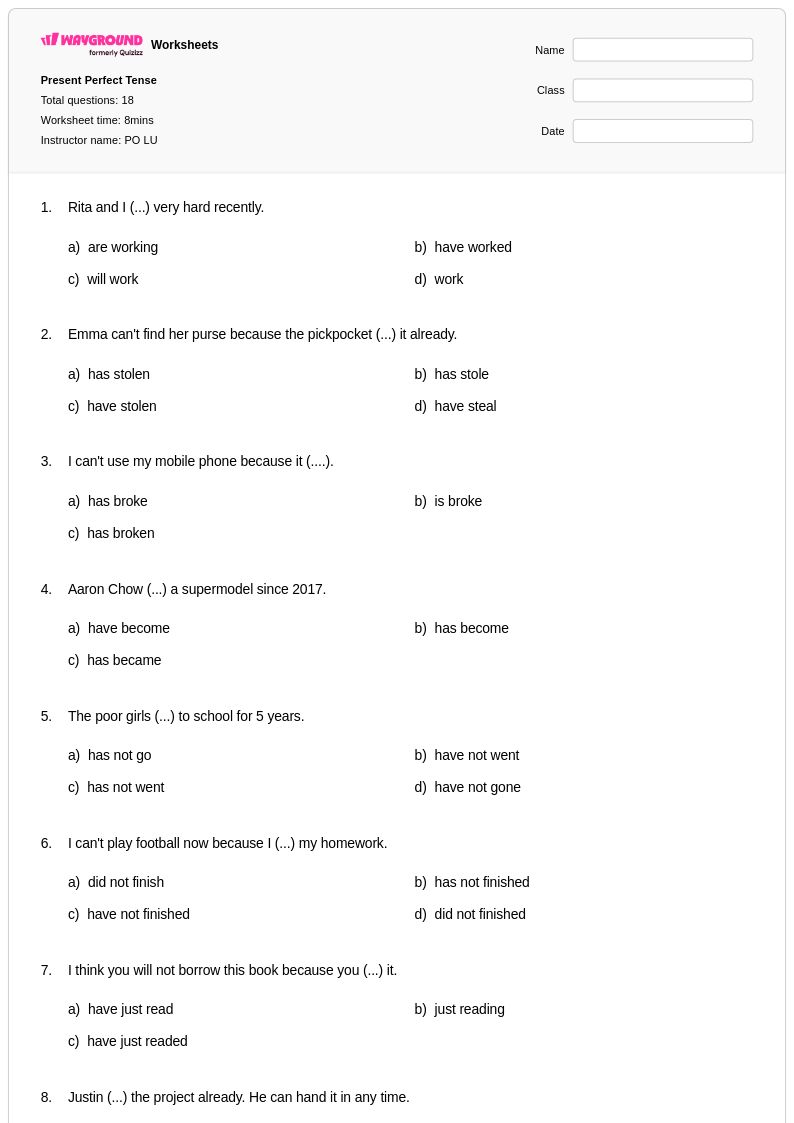
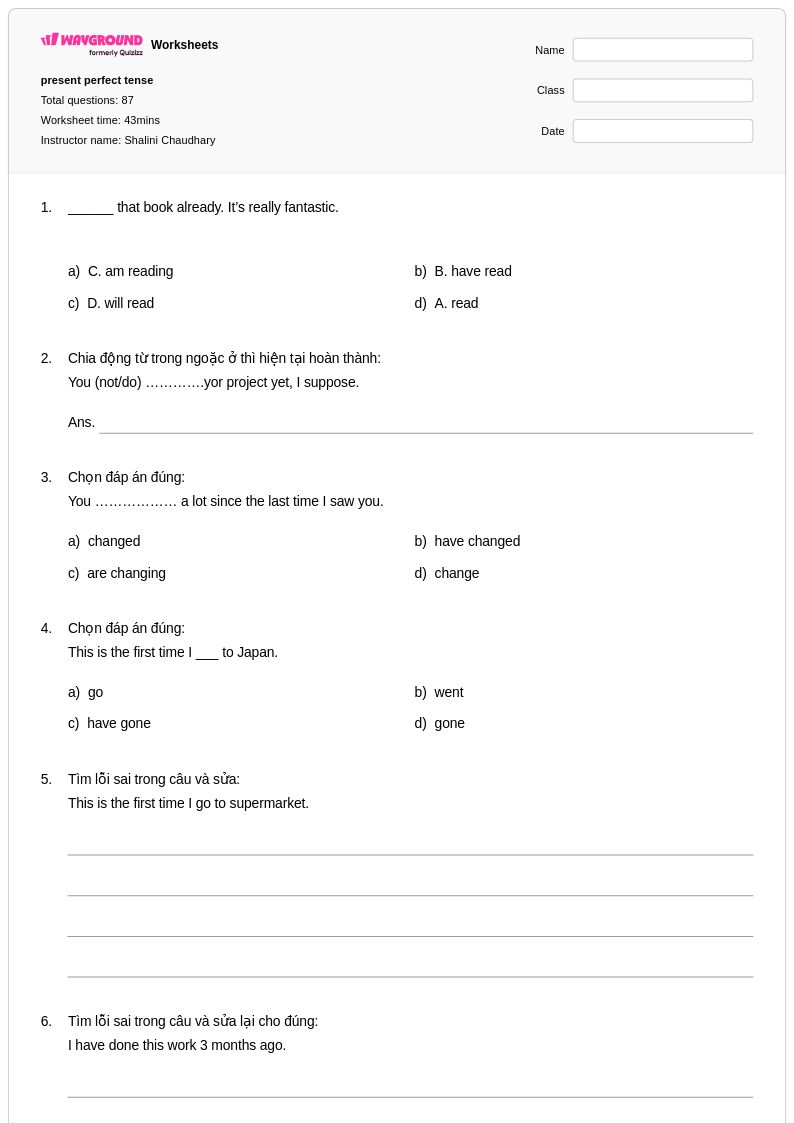
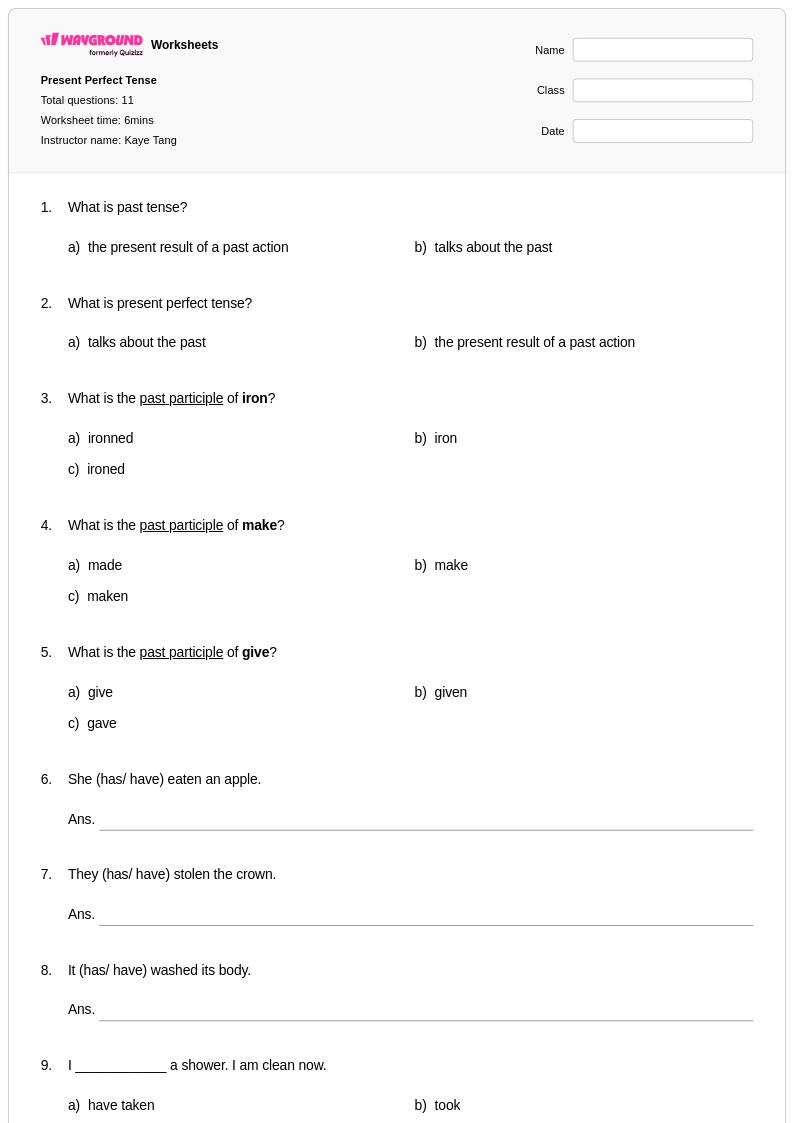
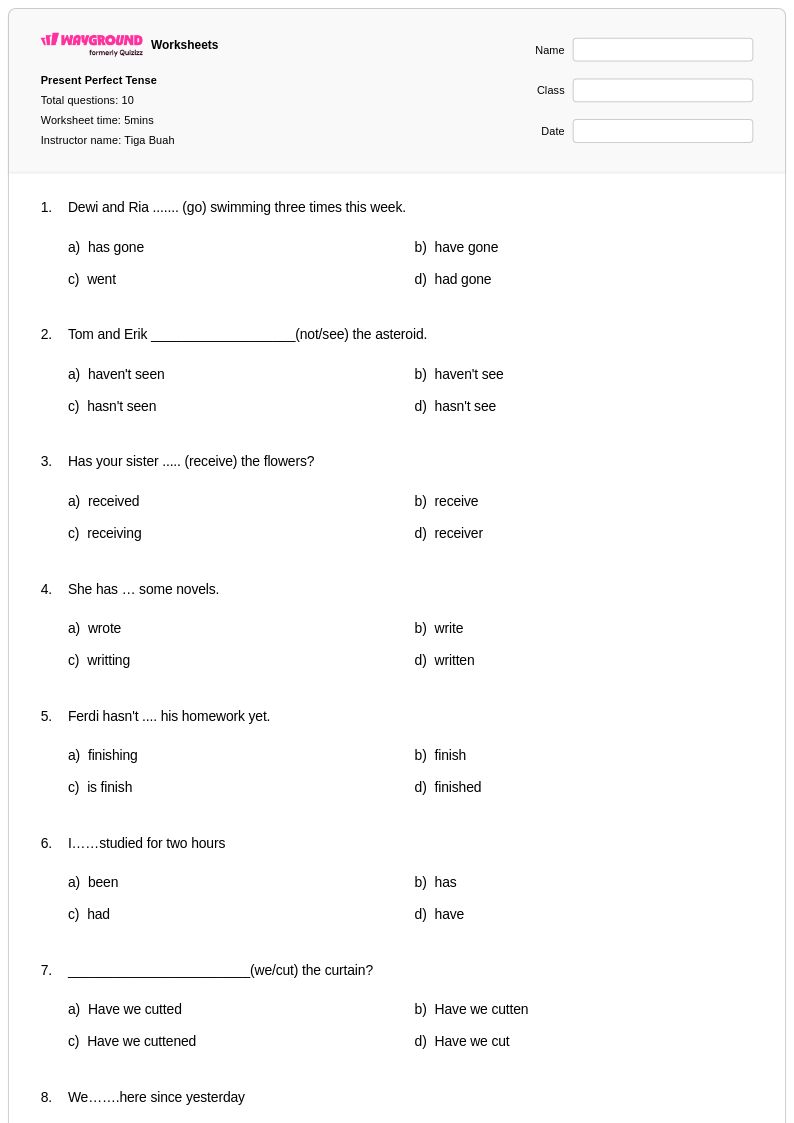
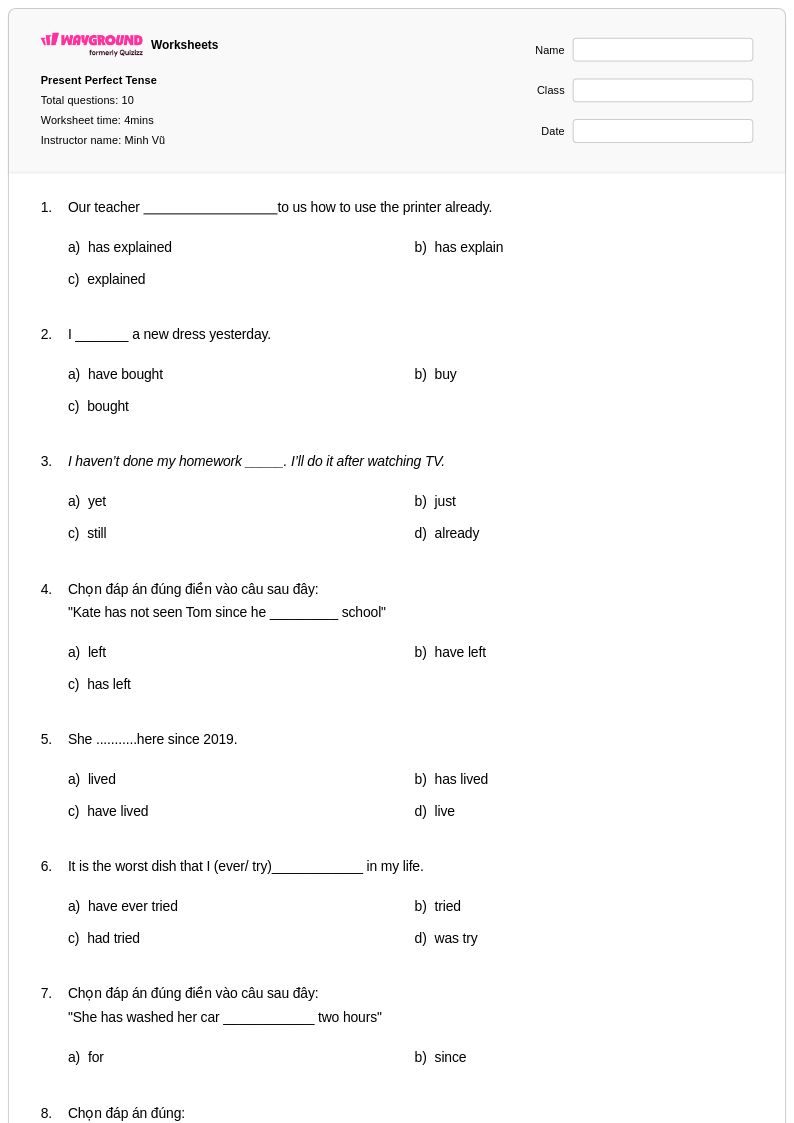
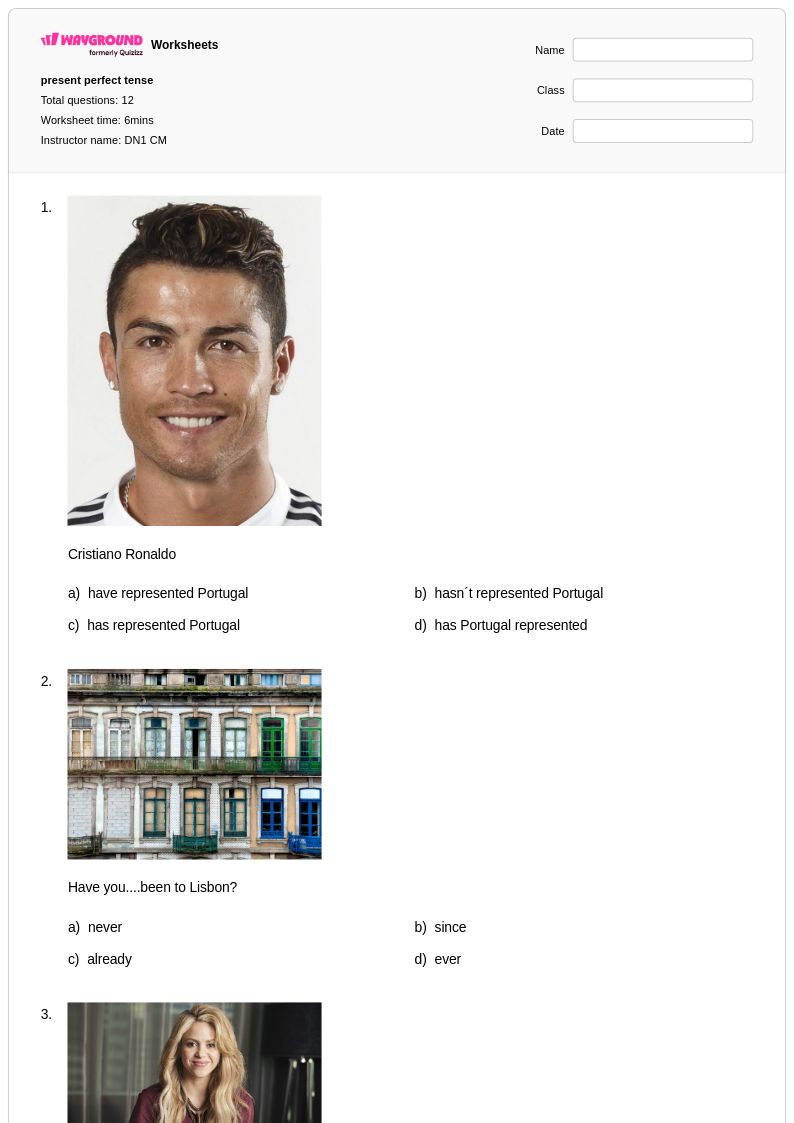
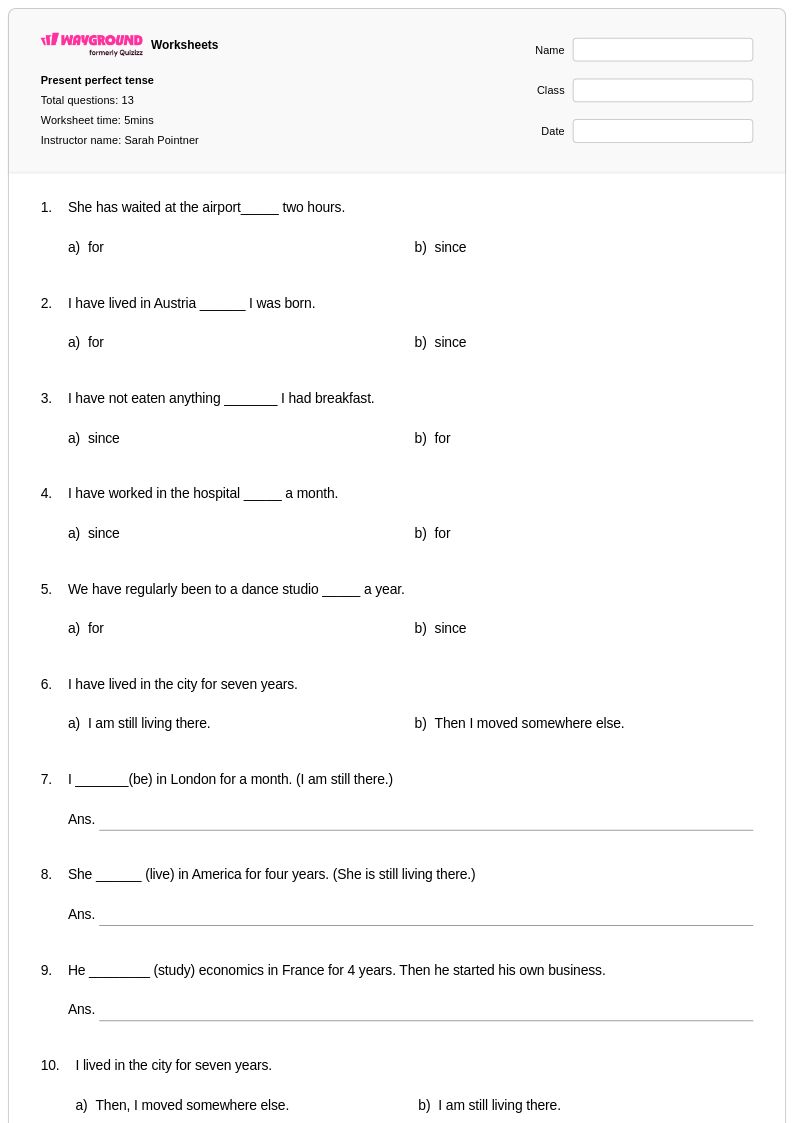
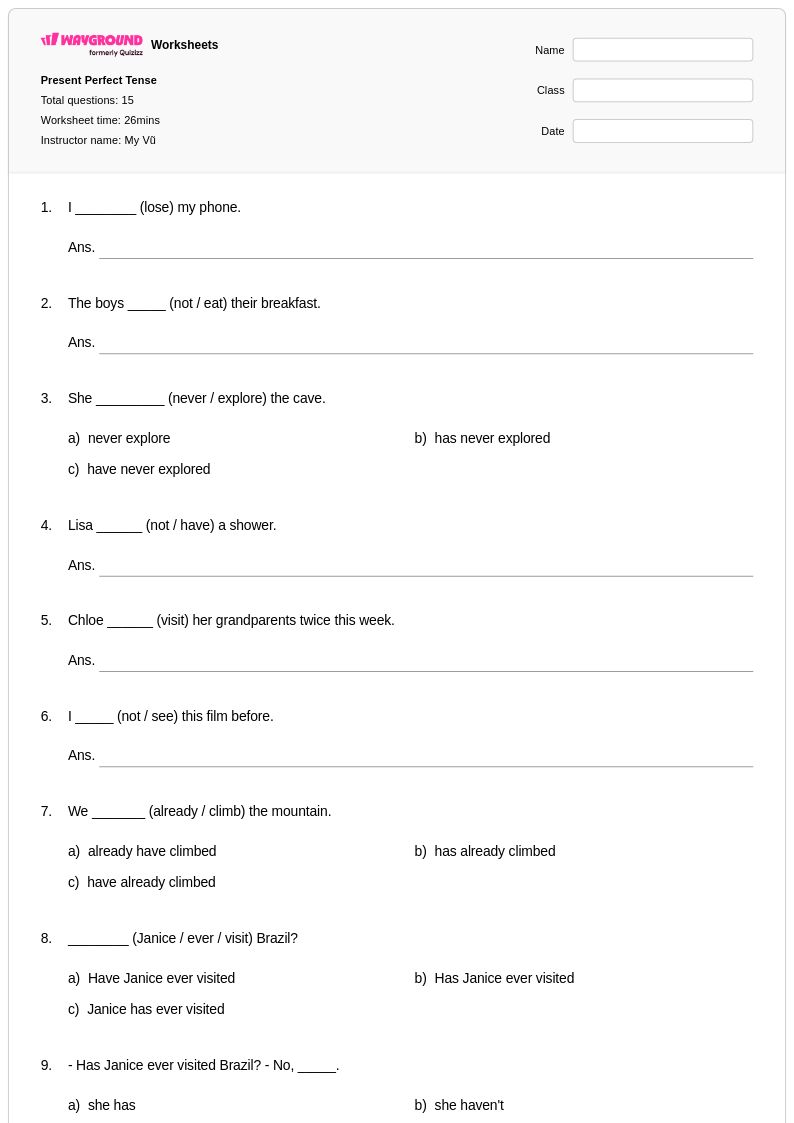
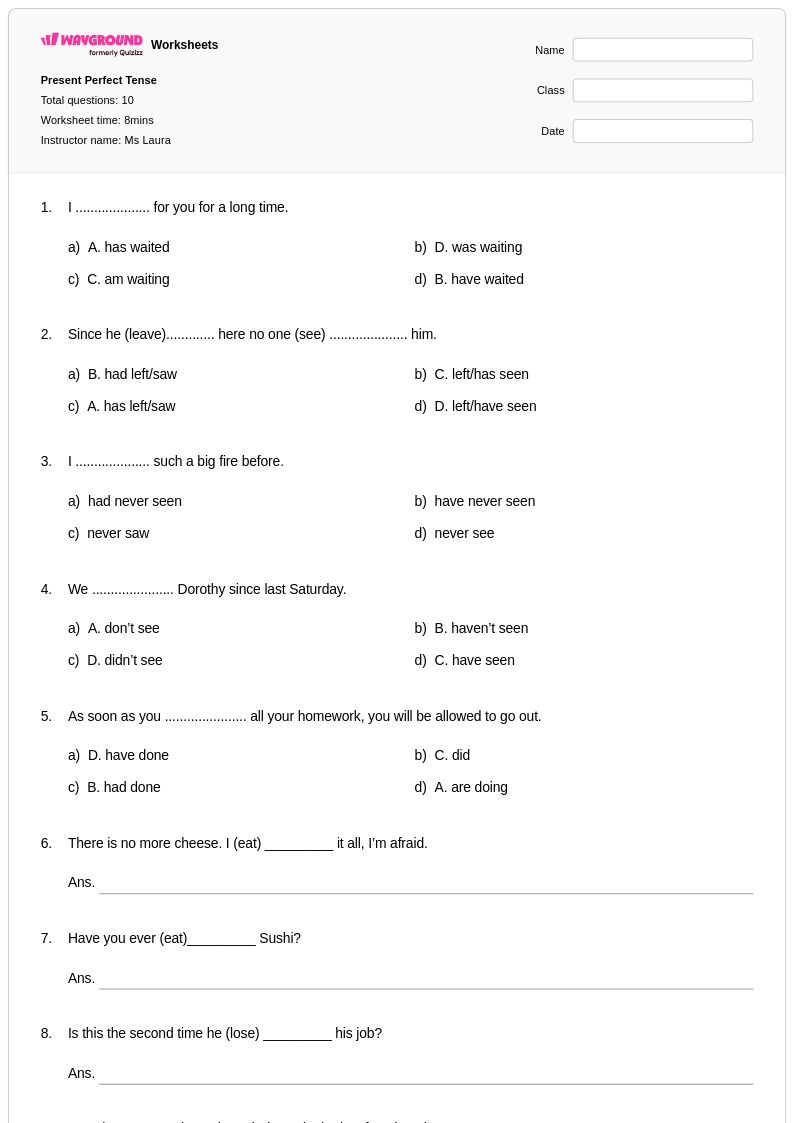
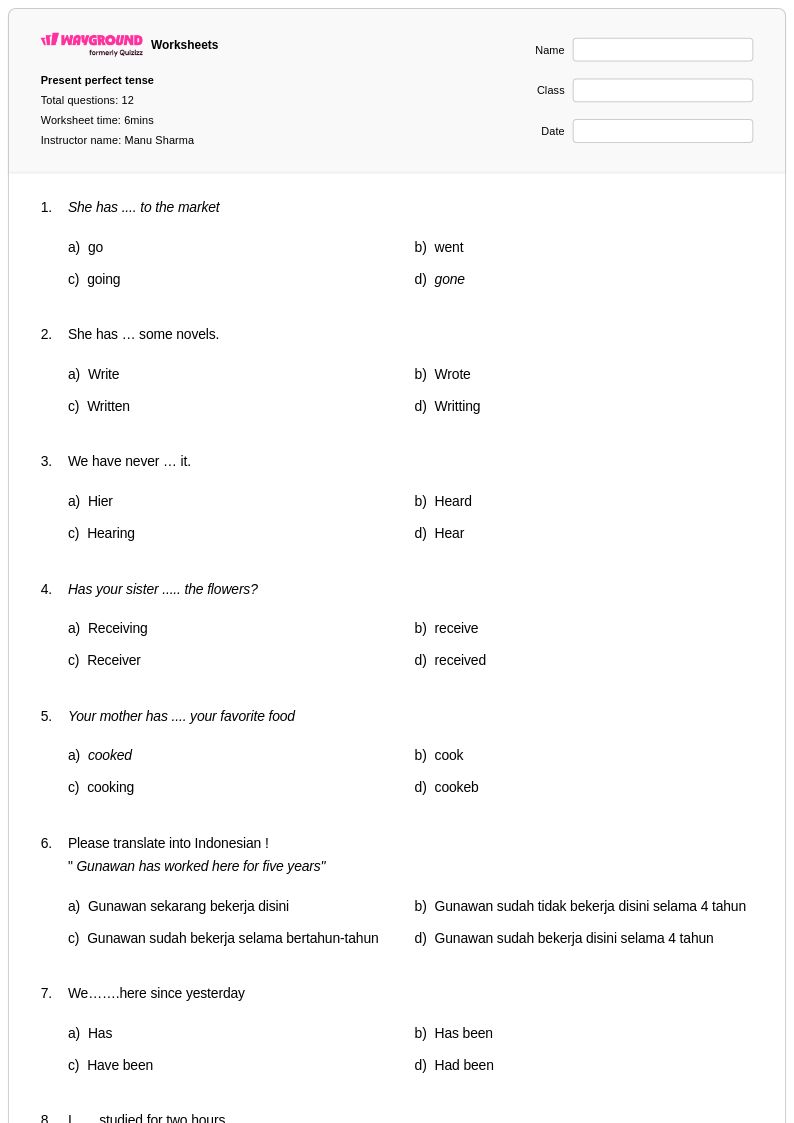
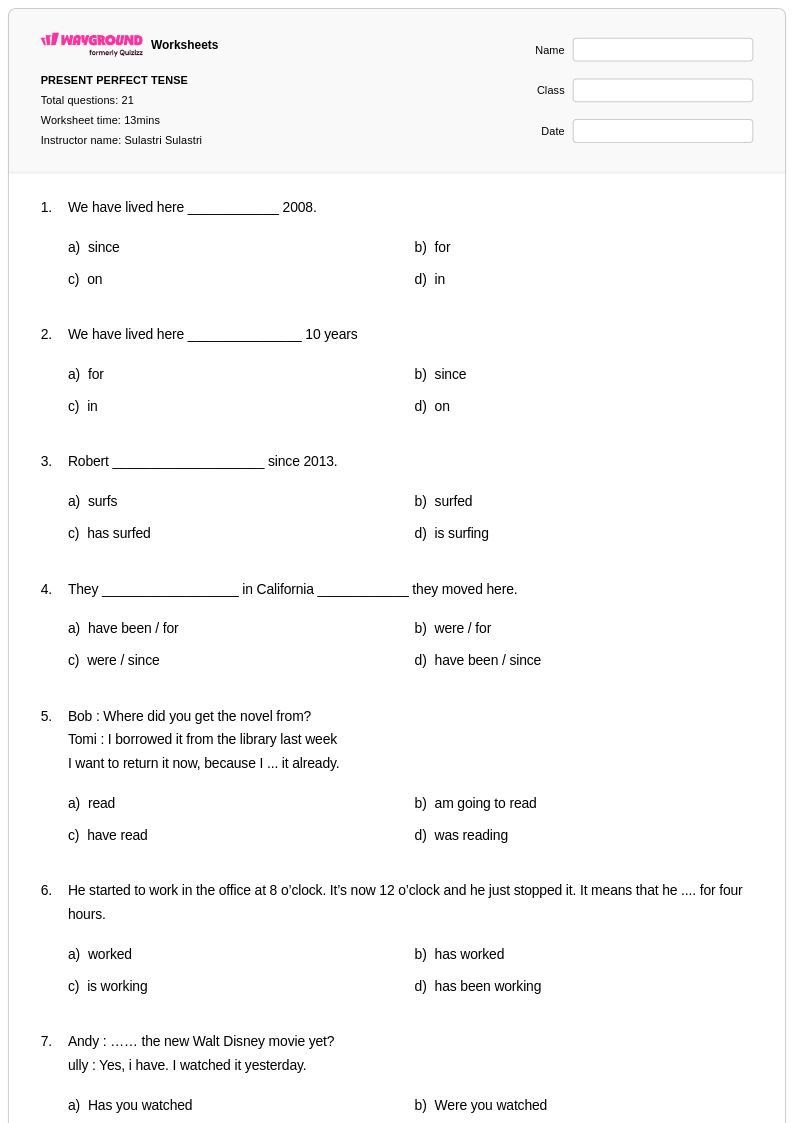
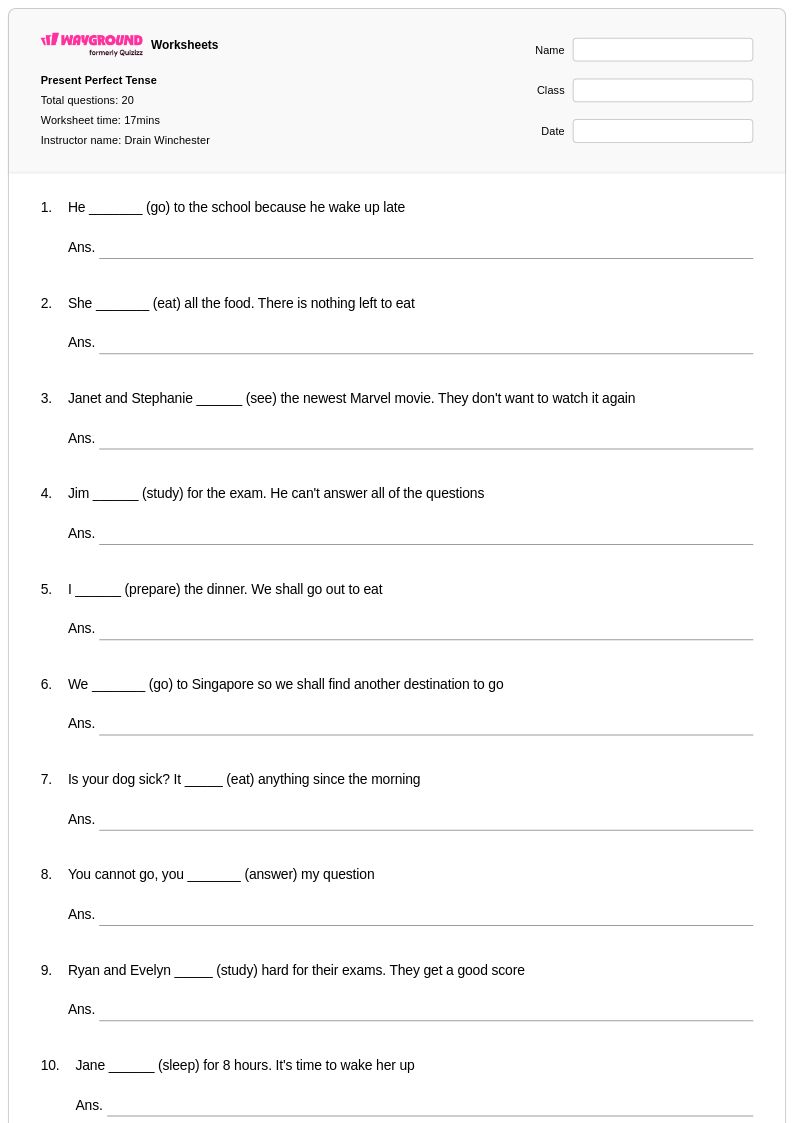
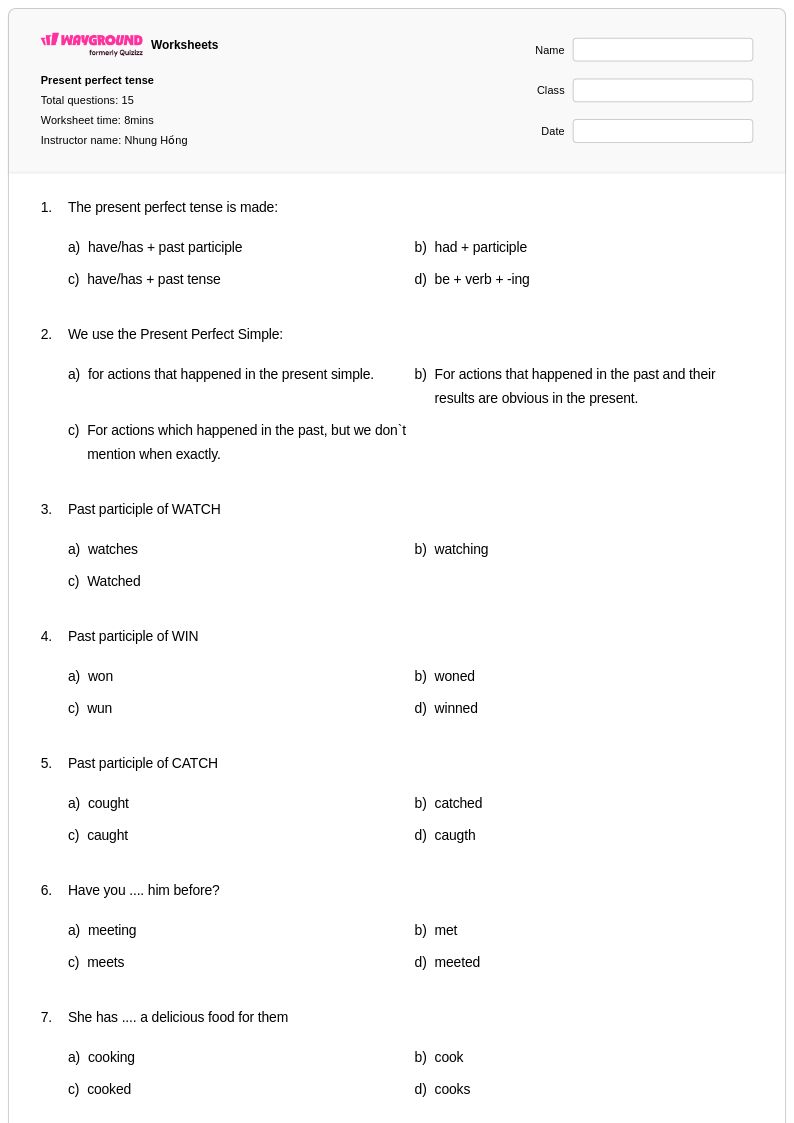
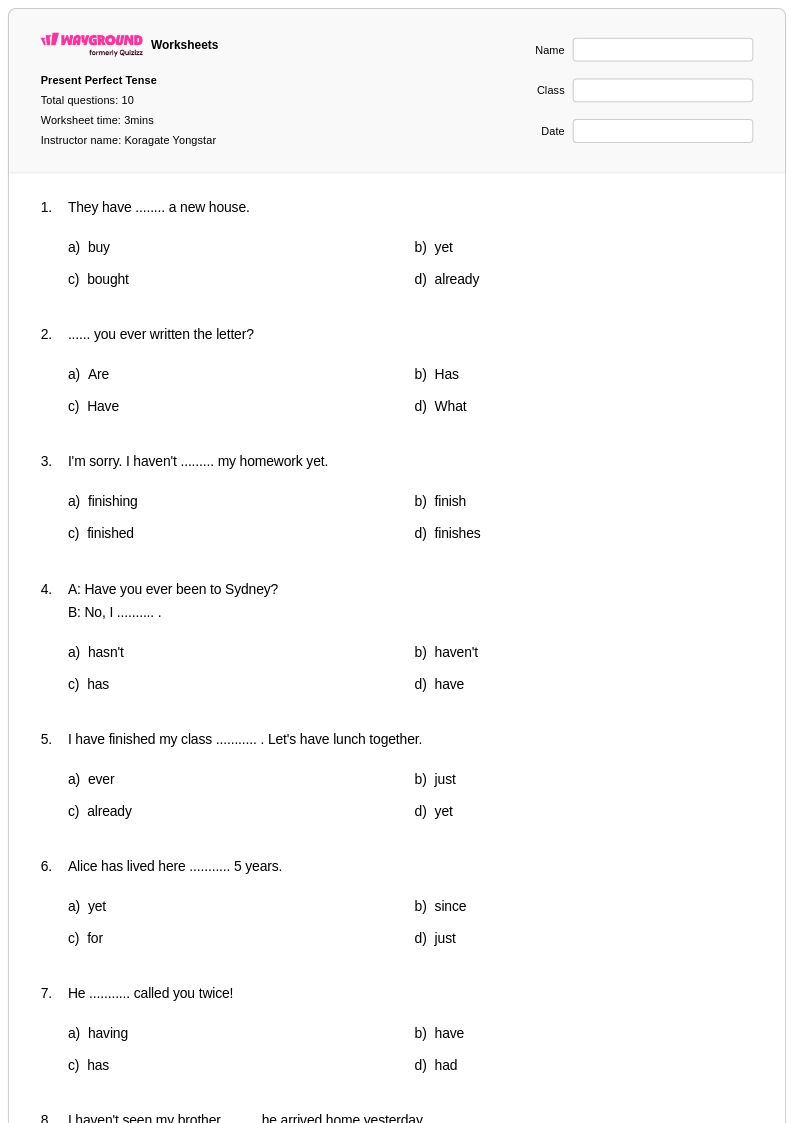
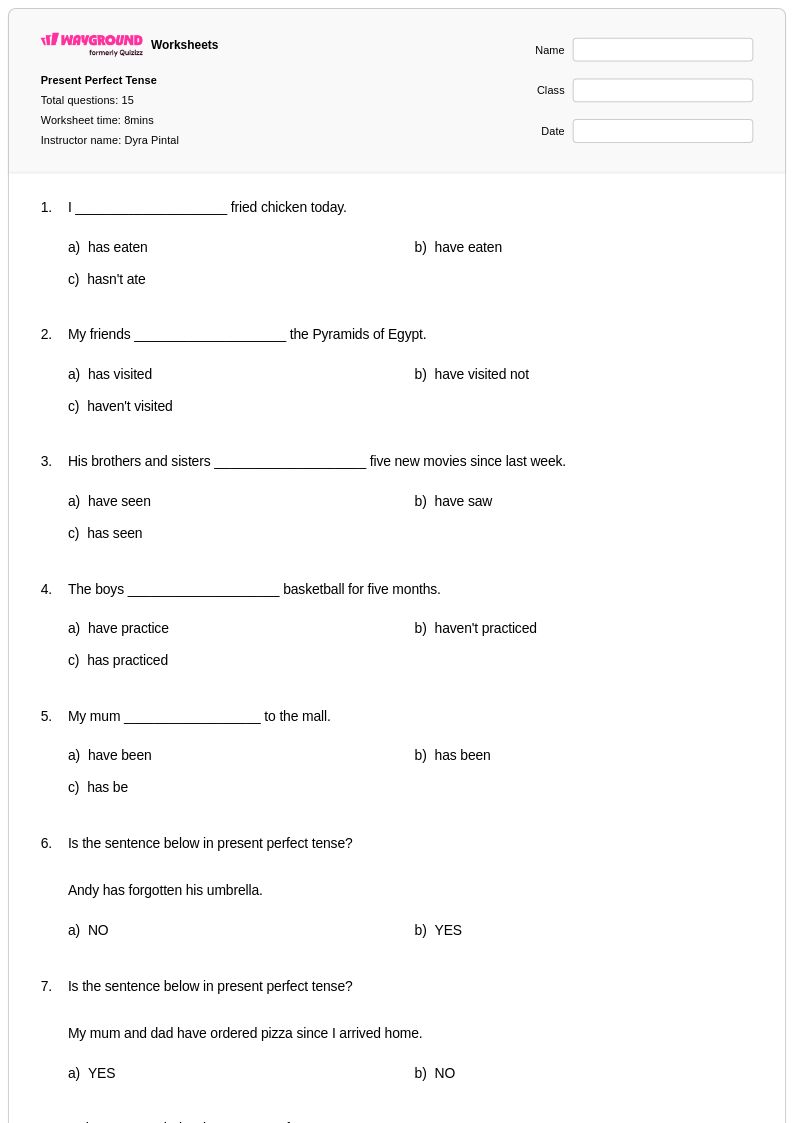
Present perfect tense worksheets for Grade 4 students available through Wayground (formerly Quizizz) provide comprehensive practice with this essential verb form that connects past actions to present relevance. These carefully designed educational resources help fourth-grade learners master the structure and usage of present perfect tense, including proper formation with "have" and "has" plus past participles, and understanding when to apply this tense in various contexts. Students engage with practice problems that reinforce recognition of present perfect versus simple past tense, while developing fluency in both oral and written communication. Each worksheet comes with an answer key to support independent learning and self-assessment, and these free printables offer educators flexible options for classroom instruction, homework assignments, and targeted skill development.
Wayground (formerly Quizizz) empowers teachers with an extensive collection of millions of teacher-created present perfect tense resources specifically tailored for Grade 4 instruction. The platform's robust search and filtering capabilities enable educators to quickly locate worksheets that align with curriculum standards and match their students' specific learning needs. Teachers can differentiate instruction through customizable features that allow them to modify difficulty levels, adjust question types, and personalize content for diverse learners. These versatile resources are available in both printable pdf format and interactive digital versions, making them ideal for classroom activities, homework practice, remediation sessions, and enrichment opportunities. The comprehensive worksheet library supports systematic skill building while providing educators with reliable tools for lesson planning and ongoing assessment of student progress in mastering present perfect tense concepts.
FAQs
How do I teach present perfect tense to ESL or grammar students?
Start by anchoring the present perfect to its core function: connecting a past action to the present moment. Introduce the structure 'have/has + past participle' with high-frequency verbs before adding complexity. Use timelines to visually contrast the present perfect with the simple past, since students often conflate the two. Gradually introduce time markers like 'already,' 'yet,' 'just,' and 'since' to help students recognize context clues that signal which tense to use.
What exercises help students practice present perfect tense?
Fill-in-the-blank exercises are effective for drilling the 'have/has + past participle' structure, especially when they target irregular verb forms. Sentence transformation activities, where students convert simple past sentences into the present perfect, deepen understanding of how the two tenses differ in meaning. Adding exercises that require students to identify and apply time markers like 'already,' 'yet,' 'just,' and 'since' rounds out practice by building contextual awareness alongside structural fluency.
What mistakes do students commonly make with present perfect tense?
The most frequent error is substituting the simple past for the present perfect, particularly in American English contexts where speakers sometimes use the simple past with 'already' or 'just.' Students also frequently use irregular past tense forms instead of past participles, writing 'I have went' instead of 'I have gone.' Confusion with subject-verb agreement in auxiliary selection, using 'have' with third-person singular subjects instead of 'has,' is another persistent error pattern.
How do I help students distinguish between present perfect and simple past?
The key distinction to teach is that simple past refers to a completed action at a specific, defined time, while the present perfect refers to an action with current relevance or an unspecified time in the past. Explicitly teach that time expressions like 'yesterday,' 'last week,' and 'in 2010' trigger the simple past, while 'already,' 'yet,' 'ever,' and 'since' signal the present perfect. Contrastive sentence pairs, such as 'I saw that film last night' versus 'I have seen that film,' are especially effective for making this distinction concrete.
How can I use present perfect tense worksheets in my classroom?
Wayground's present perfect tense worksheets are available as printable PDFs for traditional classroom use and in digital formats for technology-integrated environments, including the option to host them as a quiz on Wayground. Fill-in-the-blank and sentence transformation exercises can be used for guided practice, independent work, or homework reinforcement. Answer keys are included with each worksheet, making them equally suited for self-paced independent study and teacher-led review sessions.
How do I differentiate present perfect tense instruction for students at different skill levels?
For beginners, limit practice to regular verbs and affirmative constructions before introducing negatives and questions. Intermediate learners benefit from exercises targeting irregular past participles and time marker recognition. Advanced students can work with mixed tense scenarios that require them to choose between the present perfect and simple past based on contextual meaning. On Wayground, teachers can apply accommodations such as reduced answer choices for students who need additional support, and adjust font size and theme through reading mode to improve accessibility.