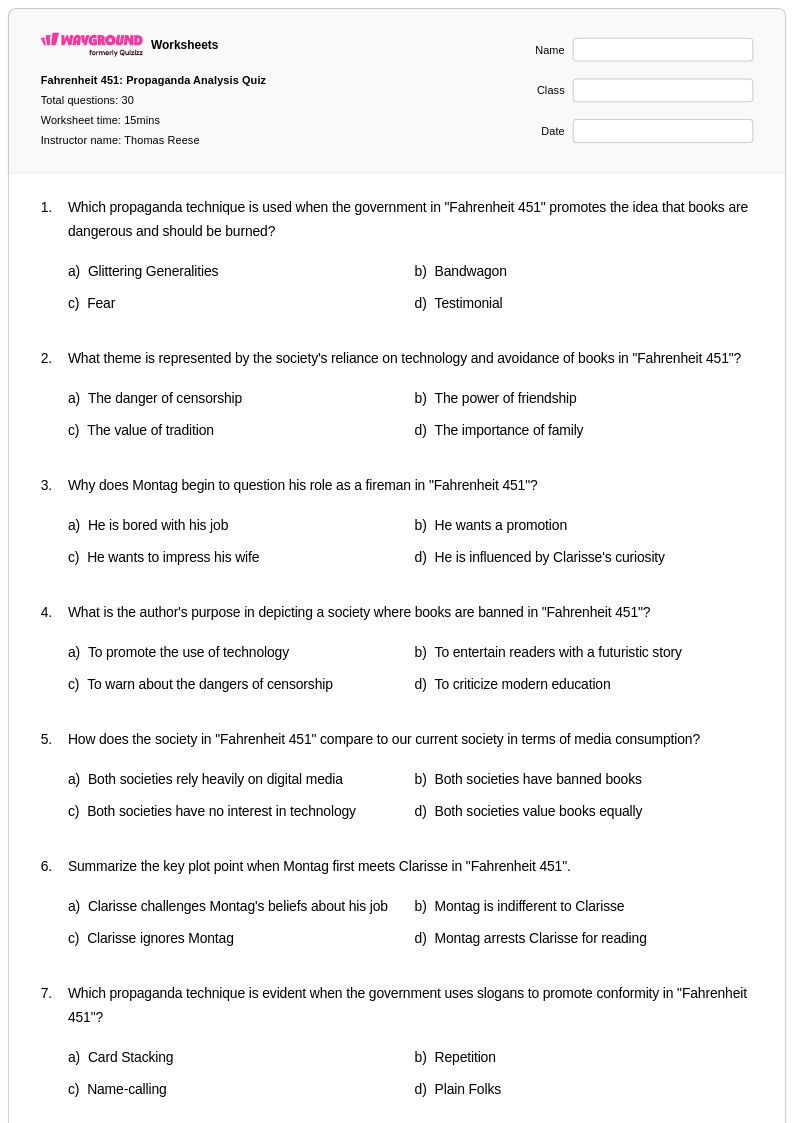
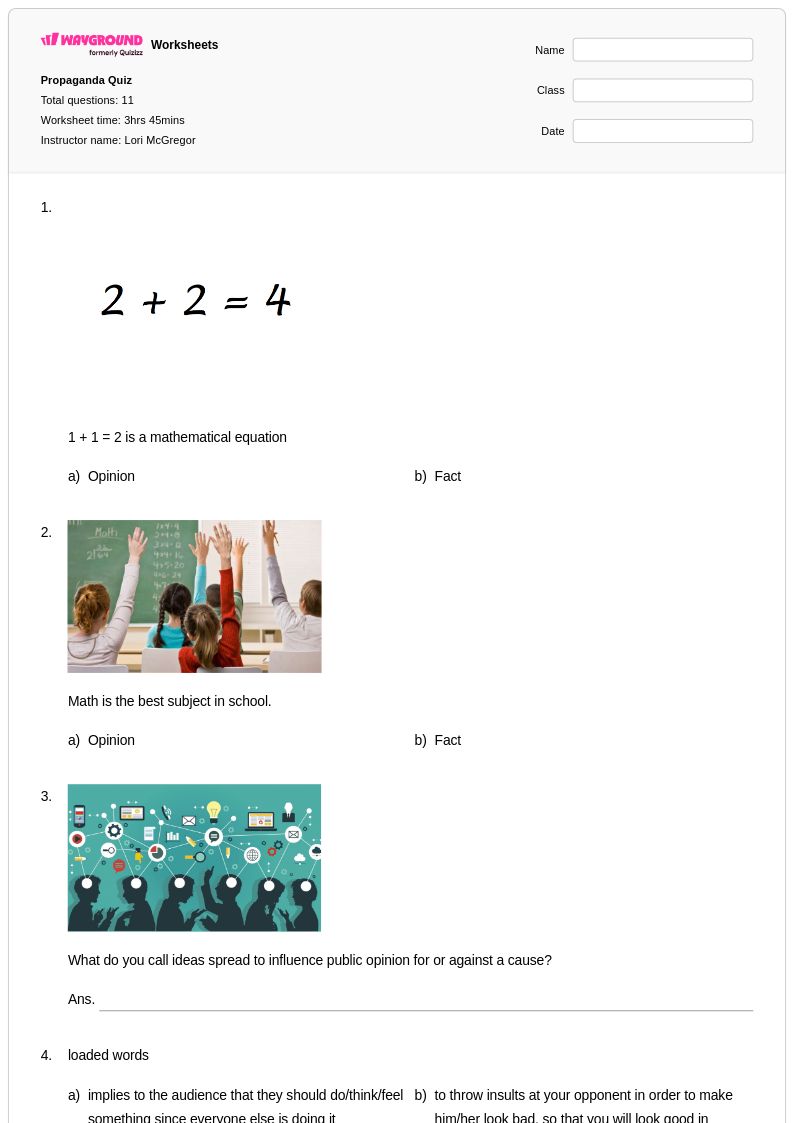
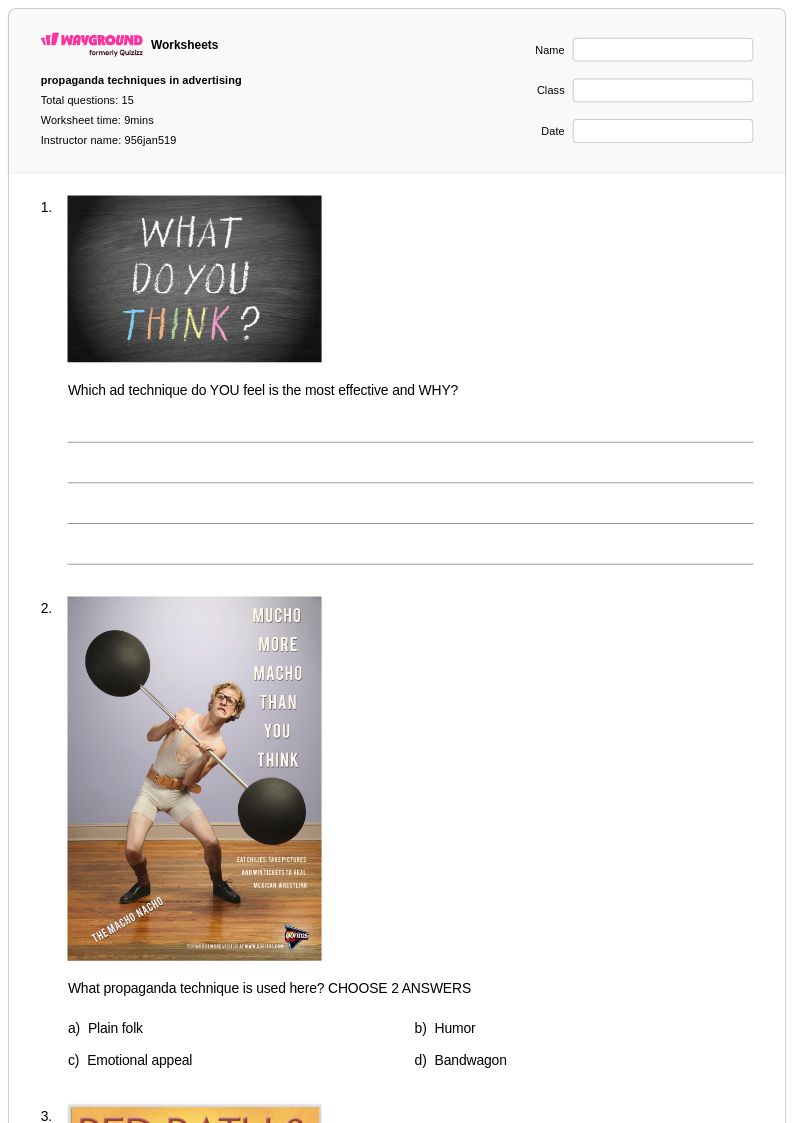
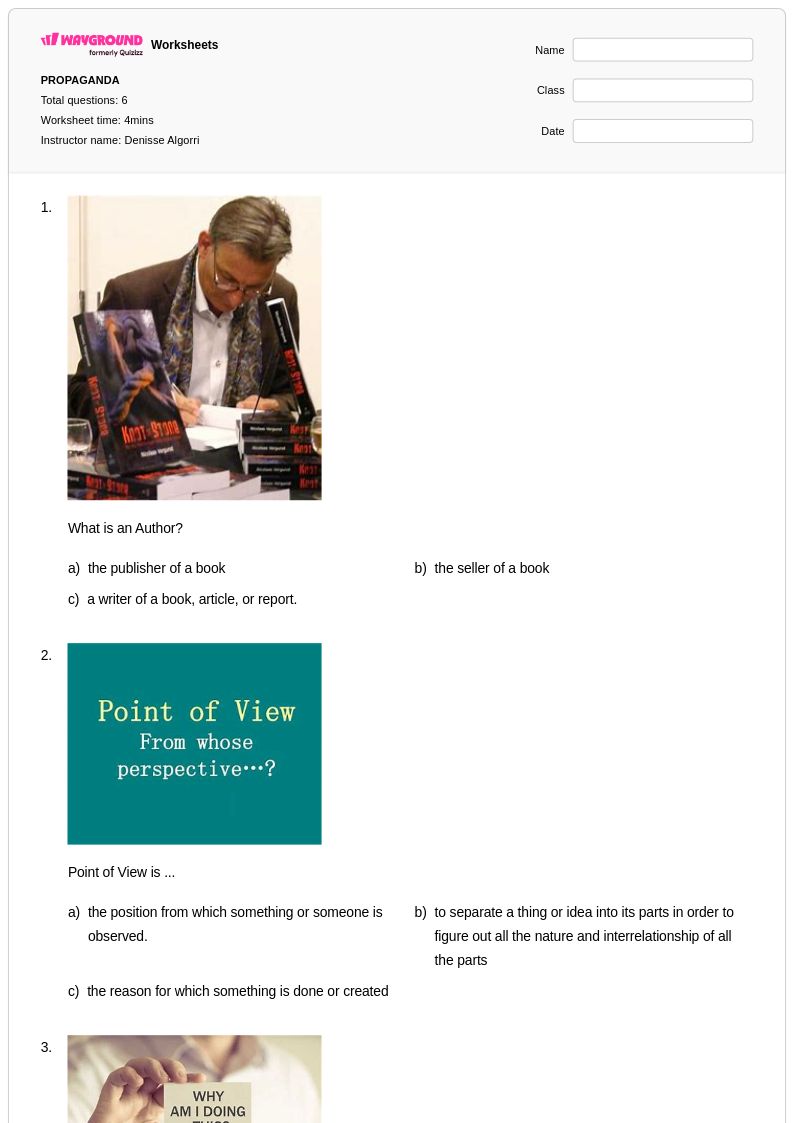
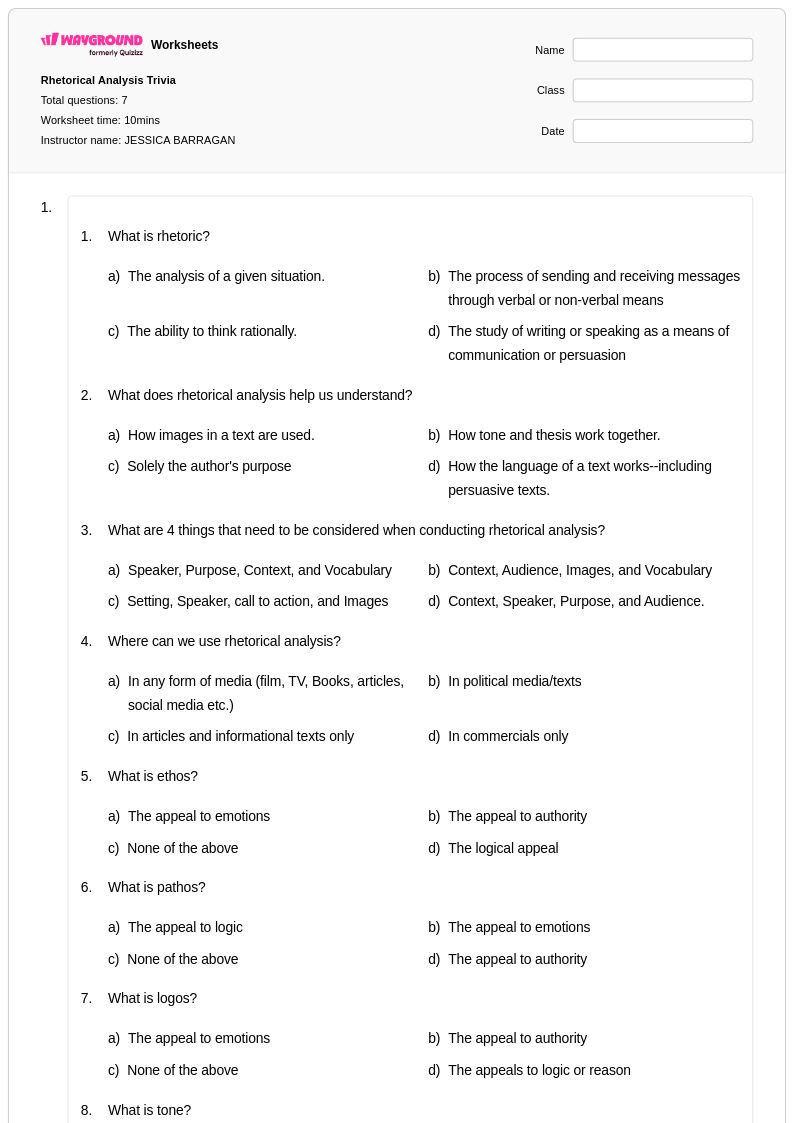
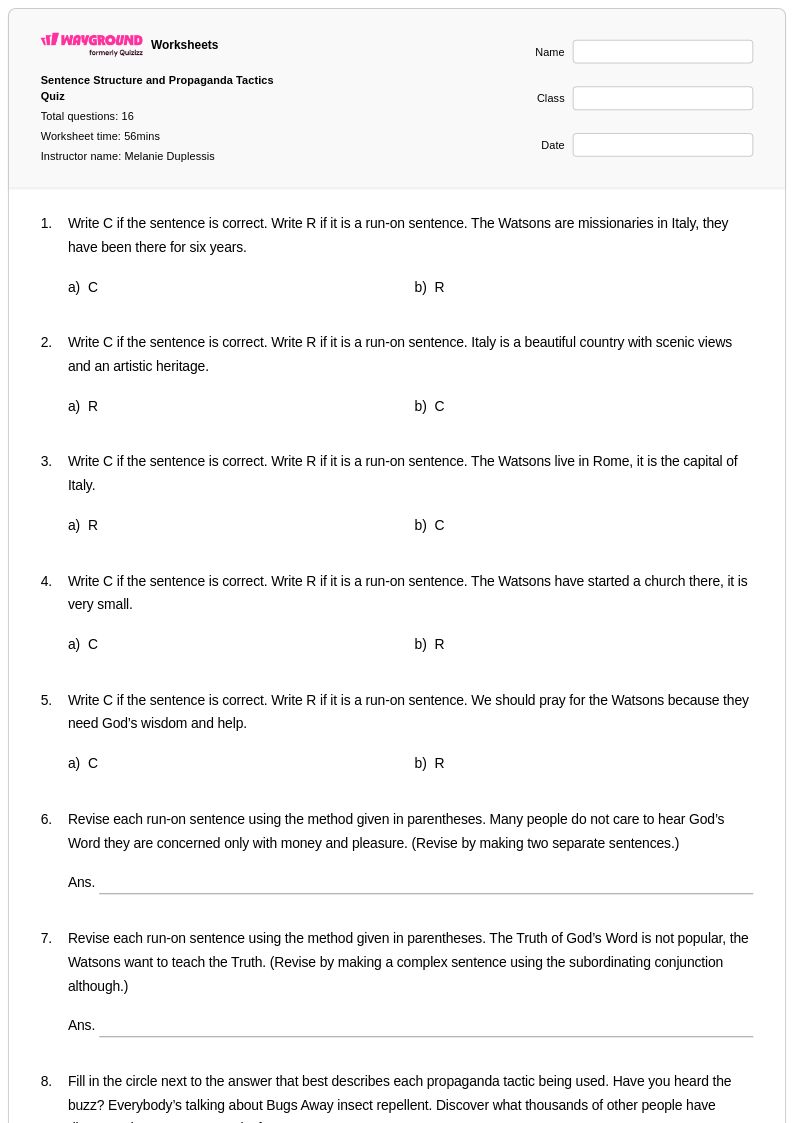
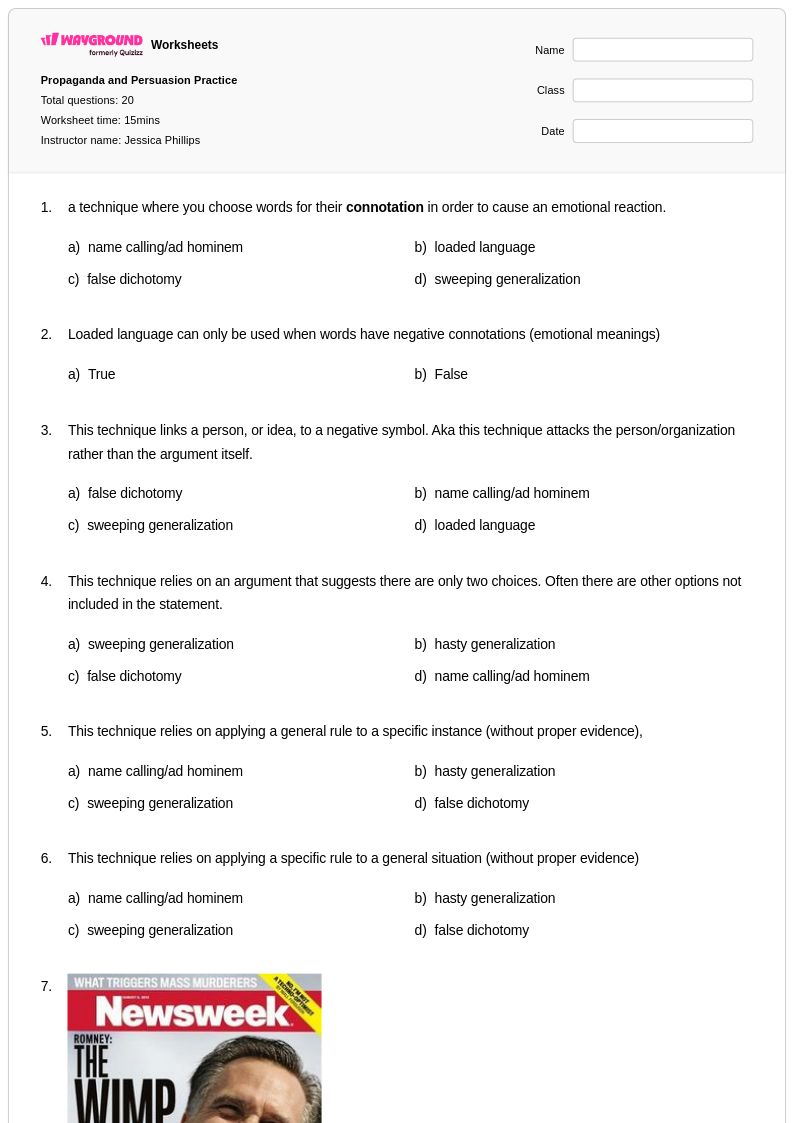
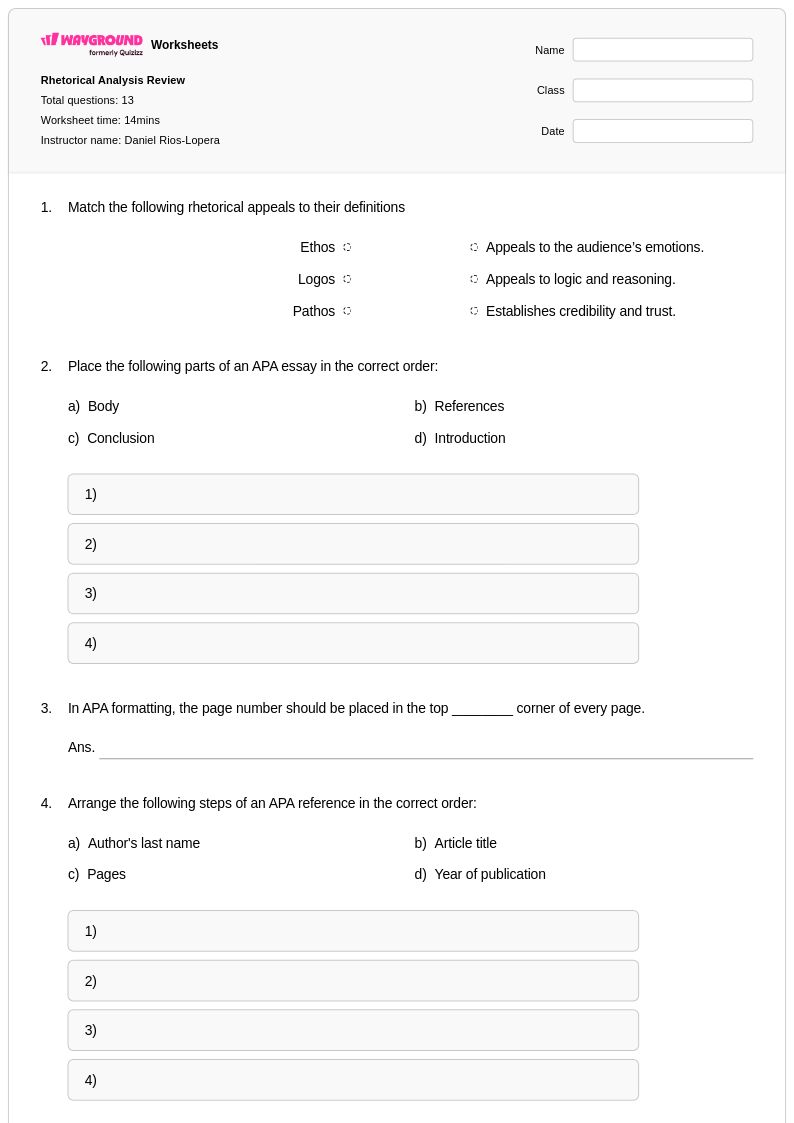
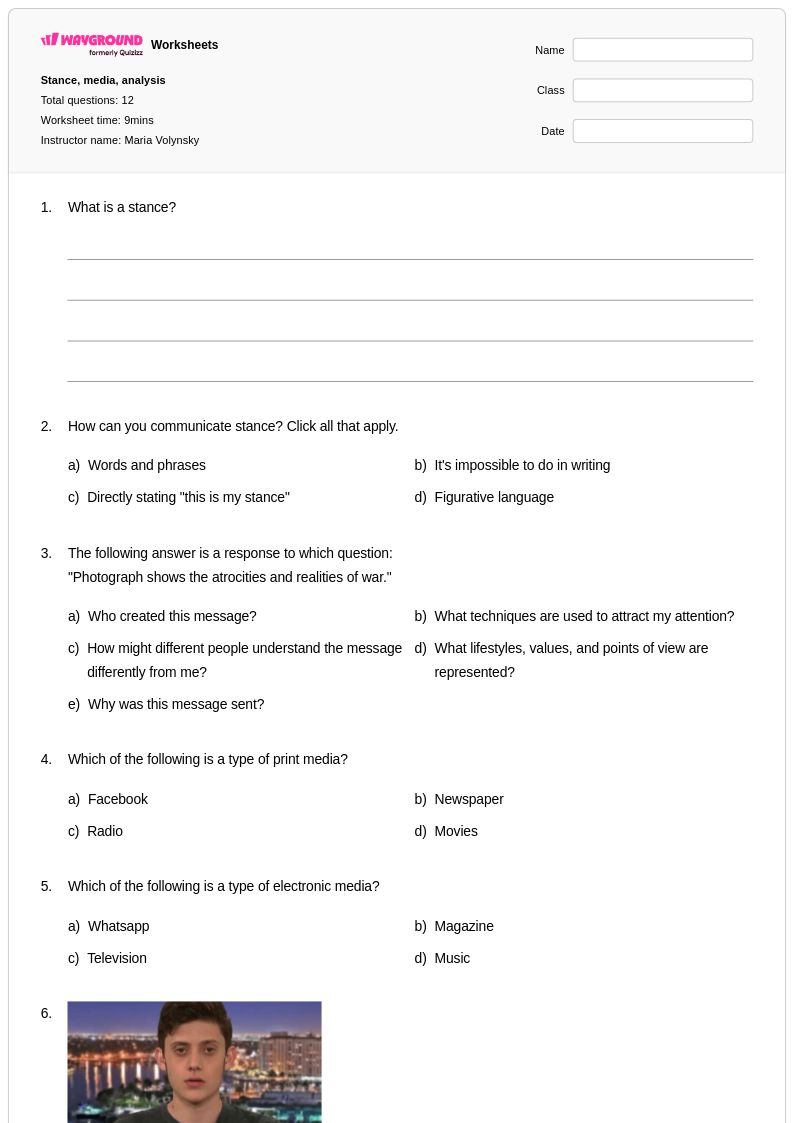
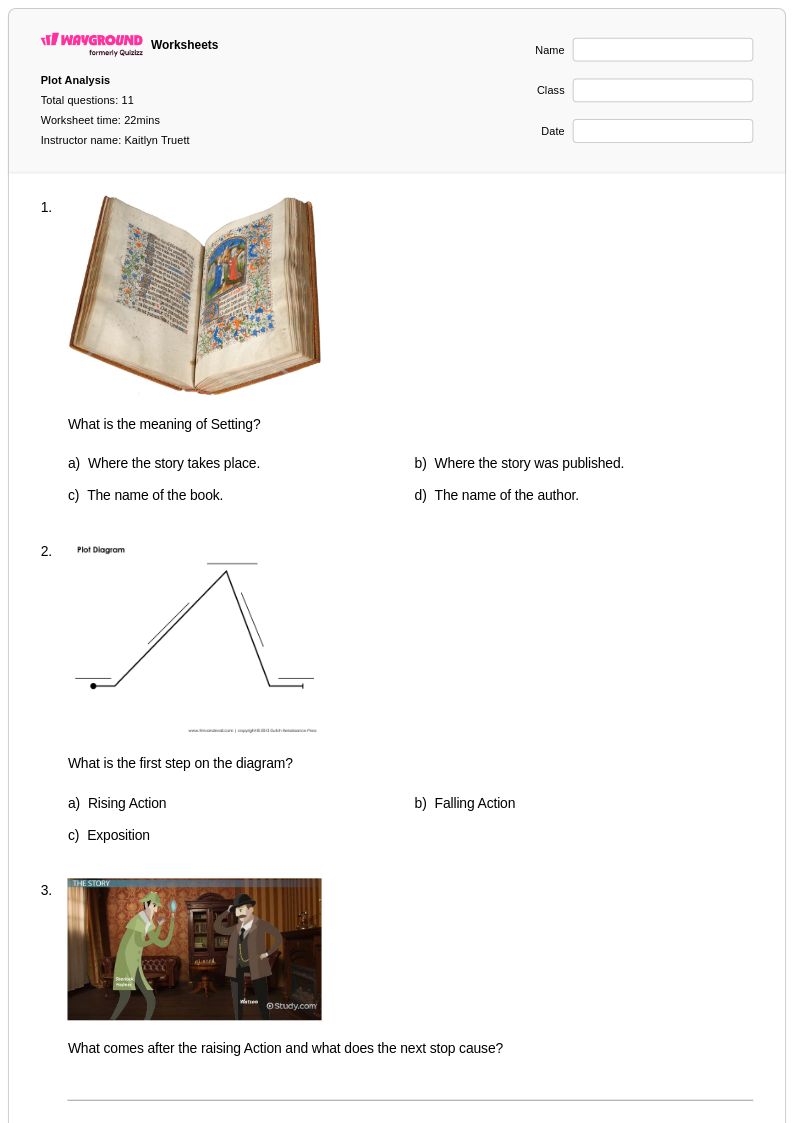
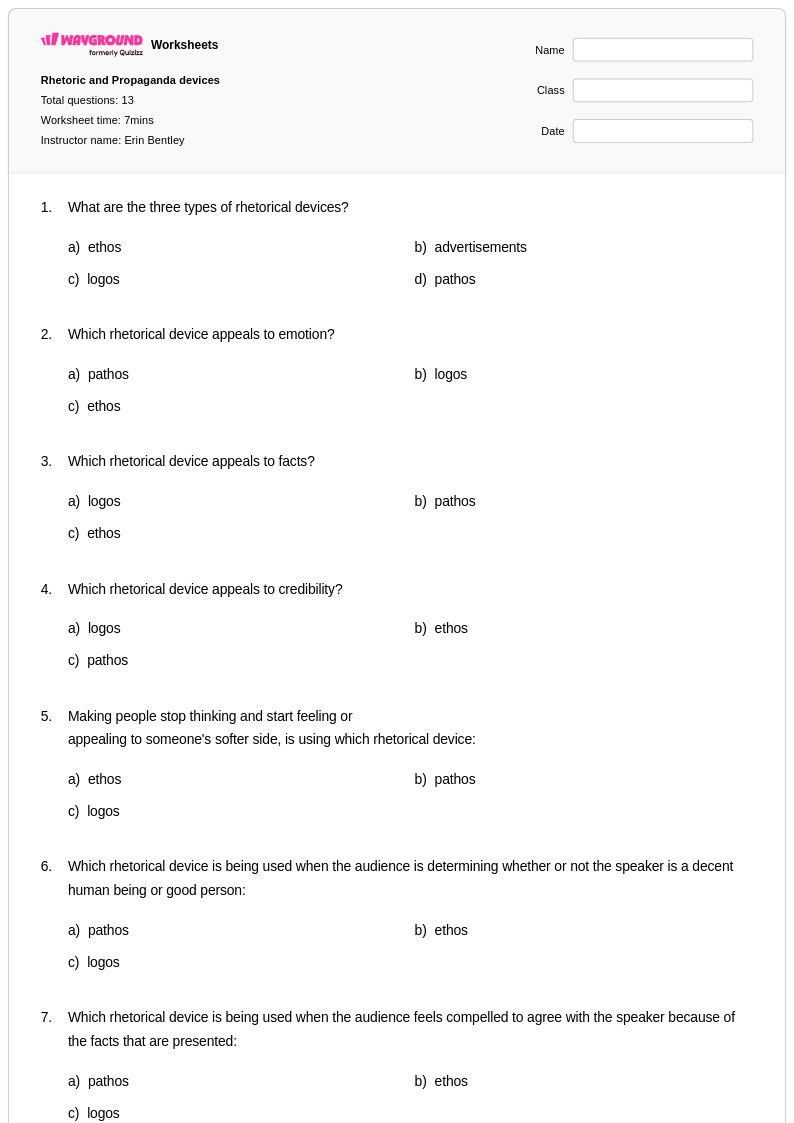
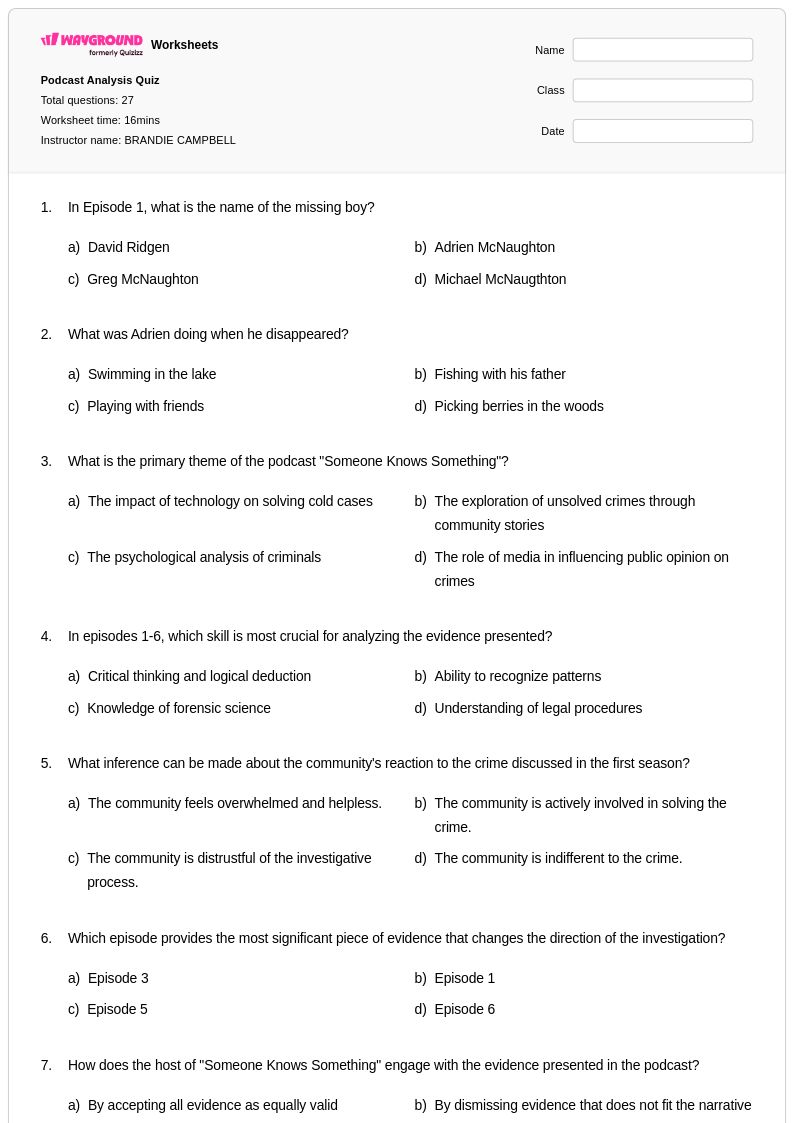
Enhance students' critical thinking skills with Wayground's free propaganda analysis worksheets and printables, featuring practice problems and answer keys to help learners identify persuasive techniques in media.
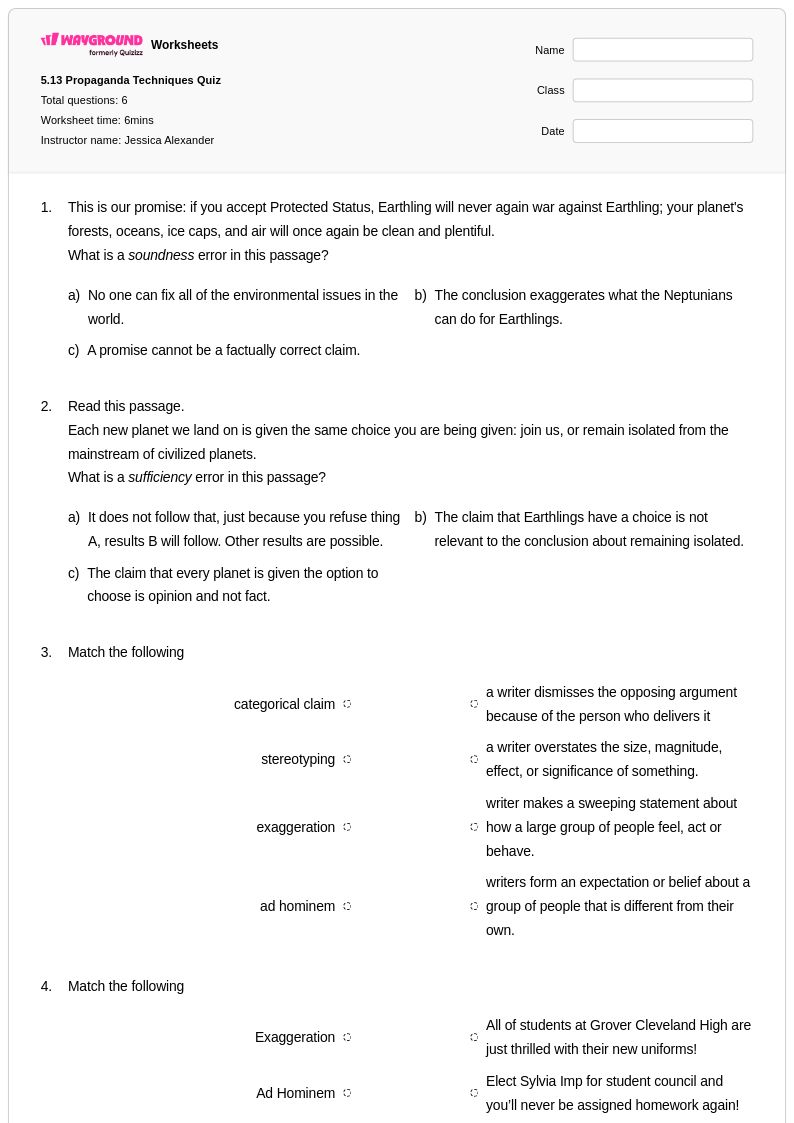
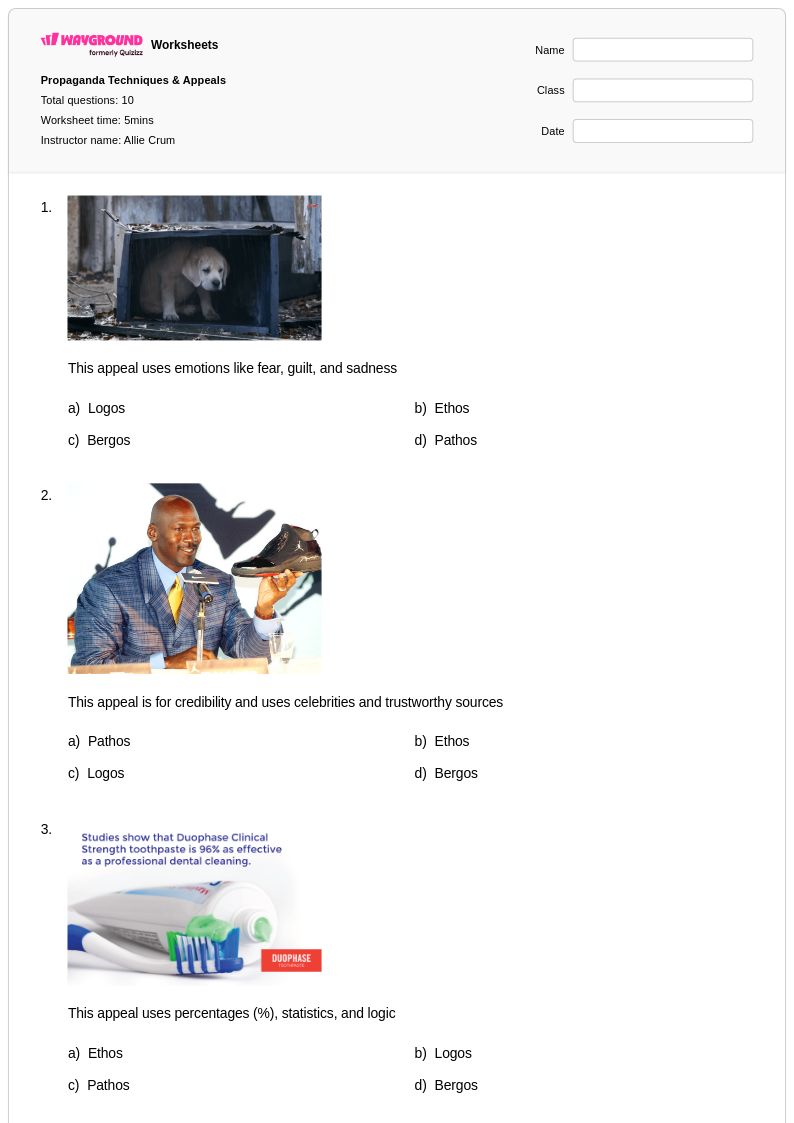
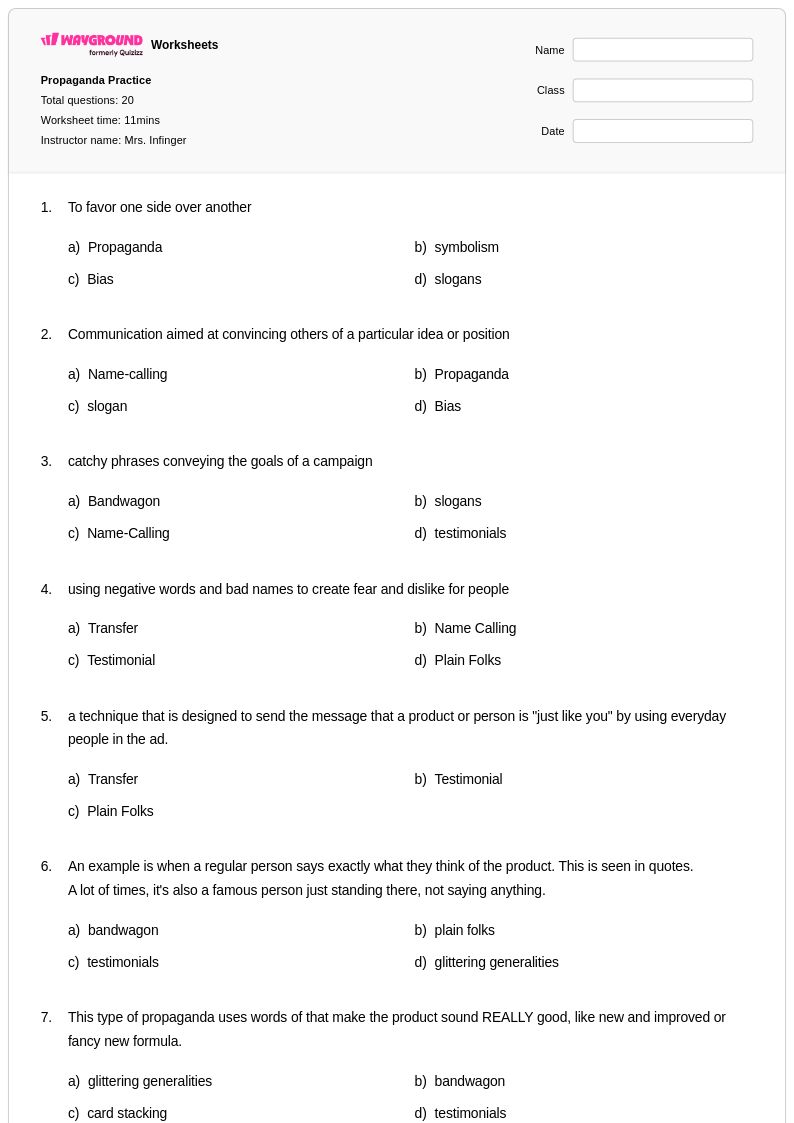
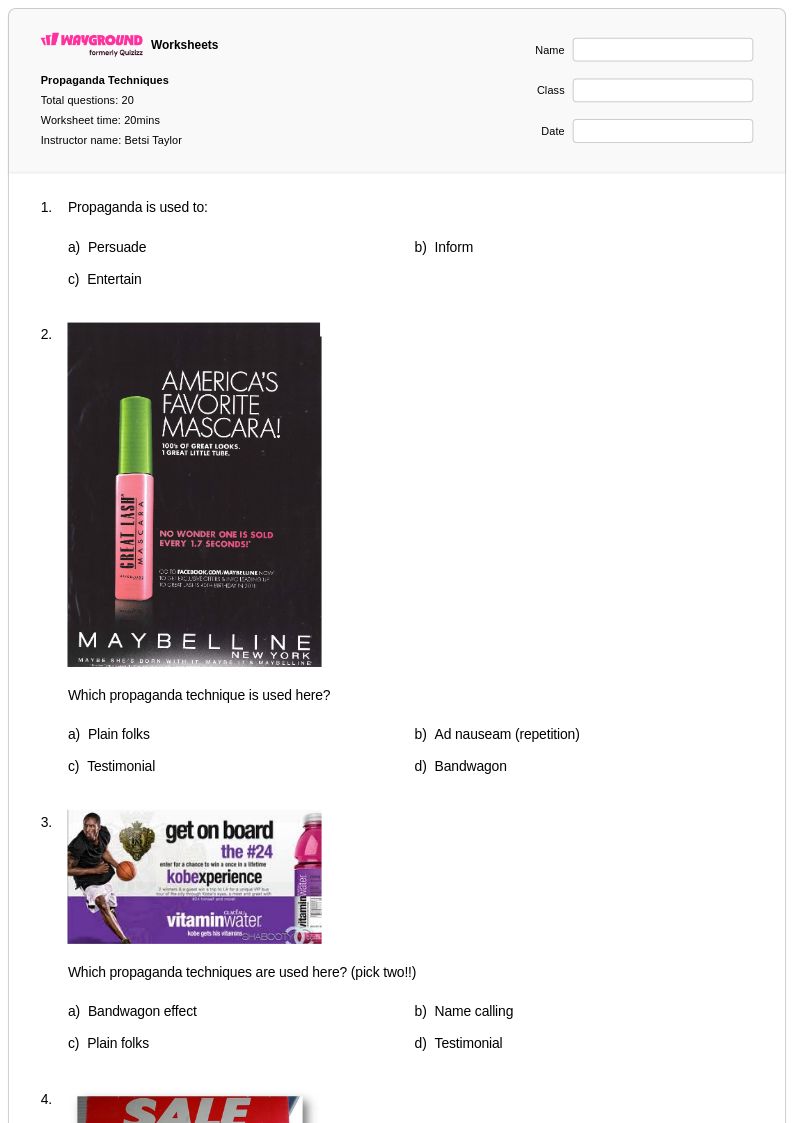
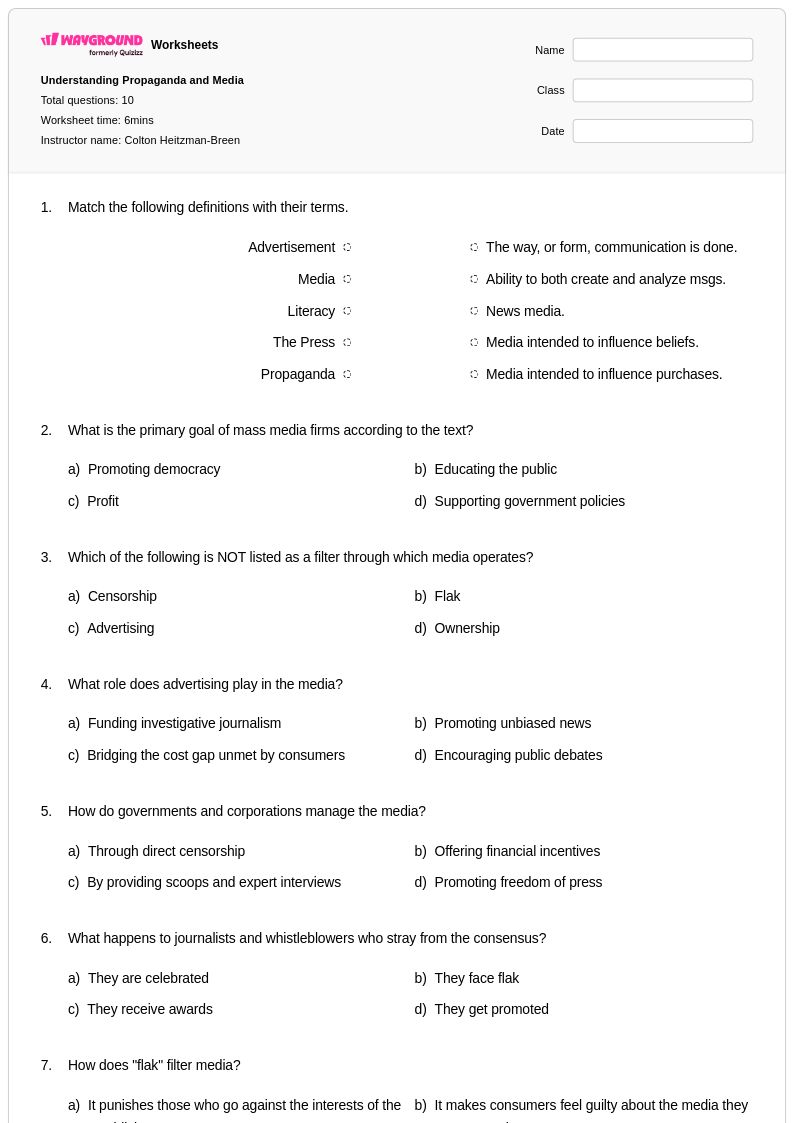
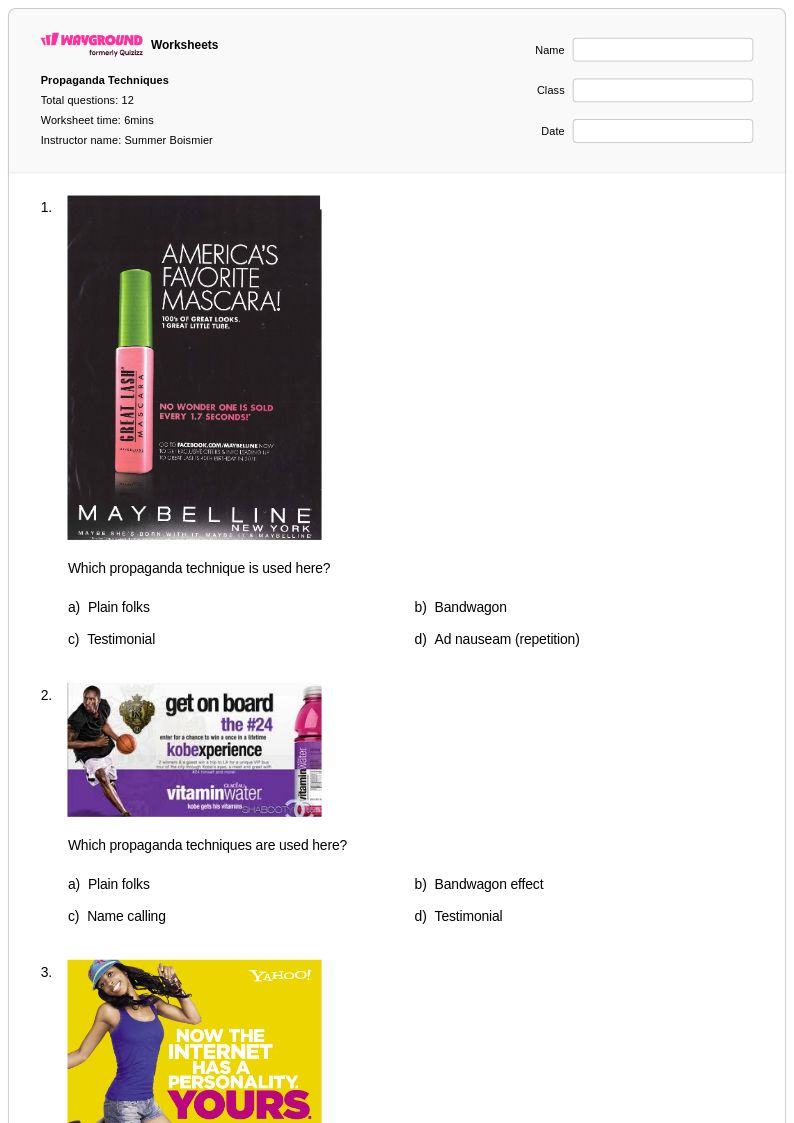
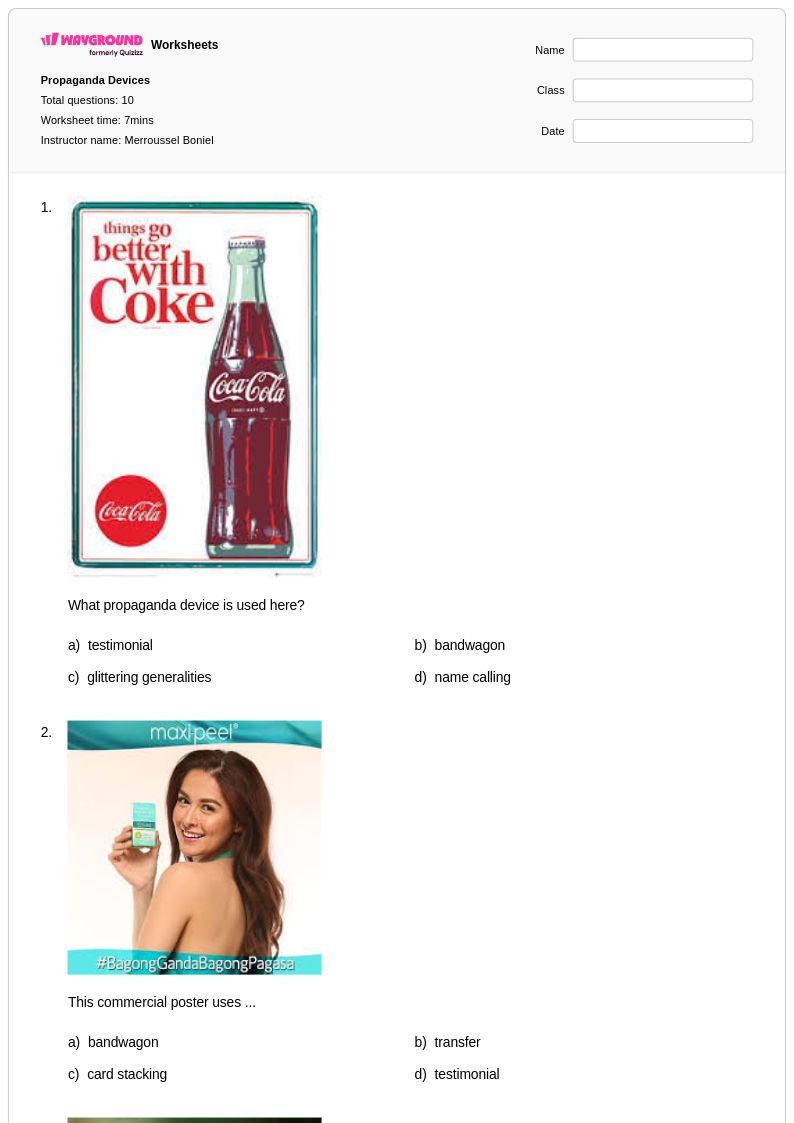
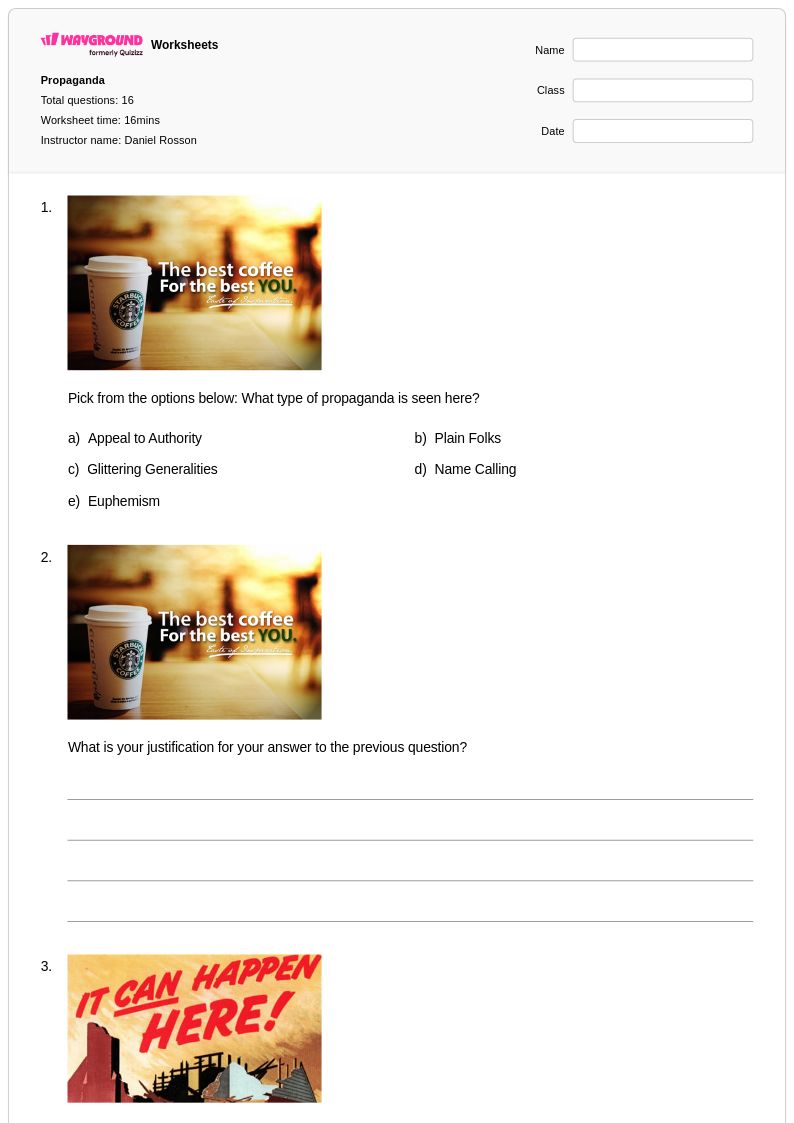
Propaganda analysis worksheets available through Wayground (formerly Quizizz) provide students with essential tools for developing critical thinking skills and media literacy in our information-rich society. These comprehensive practice materials guide learners through the systematic examination of persuasive techniques, helping them identify common propaganda methods such as bandwagon appeals, emotional manipulation, loaded language, and testimonials across various media formats. Students work through structured exercises that strengthen their ability to distinguish between factual information and biased messaging, while building vocabulary related to rhetorical devices and persuasive strategies. Each worksheet includes detailed answer keys that support both independent study and classroom instruction, with free printable pdf formats ensuring accessibility for diverse learning environments and enabling students to practice analyzing everything from historical political posters to contemporary advertisements.
Wayground (formerly Quizizz) empowers educators with millions of teacher-created propaganda analysis resources that streamline lesson planning and enhance critical reading instruction across all grade levels. The platform's robust search and filtering capabilities allow teachers to quickly locate materials aligned with specific learning standards and customize worksheets to match their students' reading levels and analytical abilities. These differentiation tools prove invaluable for remediation work with struggling readers who need scaffolded practice identifying obvious bias, as well as enrichment activities that challenge advanced students to analyze subtle propaganda techniques in complex texts. The flexible digital and printable formats enable seamless integration into both traditional classroom settings and remote learning environments, while the extensive collection ensures teachers can provide varied skill practice throughout the academic year without repetitive content that might diminish student engagement.
FAQs
How do I teach propaganda analysis in the classroom?
Start by grounding students in a core set of propaganda techniques — bandwagon appeals, emotional manipulation, loaded language, and testimonials — before exposing them to real examples. Historical political posters and contemporary advertisements work well as paired texts because they let students compare how the same techniques appear across different eras and media. Once students can name and define each technique, move them toward evaluating why a technique was chosen and what effect it was intended to produce.
What exercises help students practice identifying propaganda techniques?
Structured worksheet exercises that present short media excerpts alongside guiding questions are highly effective for building this skill. Students benefit from labeling specific words or phrases with the technique they represent, then writing a brief explanation of why that technique is being used. Practicing across varied formats — political posters, print advertisements, speeches, and social media posts — helps students recognize that persuasive techniques transfer across contexts, not just the examples they first studied.
What mistakes do students commonly make when analyzing propaganda?
The most common error is conflating persuasion with propaganda — students often assume any persuasive message is propaganda, without considering intent or the presence of deliberate manipulation. A related mistake is identifying a technique by surface features alone, such as labeling any emotional language as emotional manipulation, without examining whether that emotion is being exploited to bypass critical reasoning. Students also frequently struggle to distinguish between a factual claim that happens to support an argument and a biased or misleading claim designed to deceive.
How do I differentiate propaganda analysis instruction for struggling and advanced students?
Struggling readers benefit from scaffolded practice that isolates one technique at a time using high-contrast, visually clear examples like political posters with brief captions. For these students, providing a labeled reference sheet of techniques alongside the worksheet reduces cognitive load so they can focus on applying the skill rather than recalling vocabulary. Advanced students can be challenged with complex or subtle texts — such as news editorials or multi-layered advertising campaigns — where propaganda techniques are embedded rather than obvious, requiring deeper inference and evaluation.
How do I use Wayground's propaganda analysis worksheets in my class?
Wayground's propaganda analysis worksheets are available as printable PDFs for traditional classroom use and in digital formats for technology-integrated learning environments, making them flexible enough for in-person, hybrid, or remote instruction. Teachers can also host the worksheets directly as a quiz on Wayground, giving students an interactive experience while automatically capturing response data. Each worksheet includes a complete answer key, which supports both teacher-led instruction and independent student practice.
How does media literacy connect to propaganda analysis, and why does it matter for students?
Media literacy is the broader skill set that enables students to critically evaluate the sources, purposes, and techniques behind the messages they encounter — and propaganda analysis is one of its most practical applications. When students can identify loaded language, bandwagon appeals, and emotional manipulation in advertisements or political content, they are better equipped to make informed decisions rather than reacting to messages uncritically. This skill is increasingly important as students encounter persuasive content across social media, news platforms, and digital advertising on a daily basis.