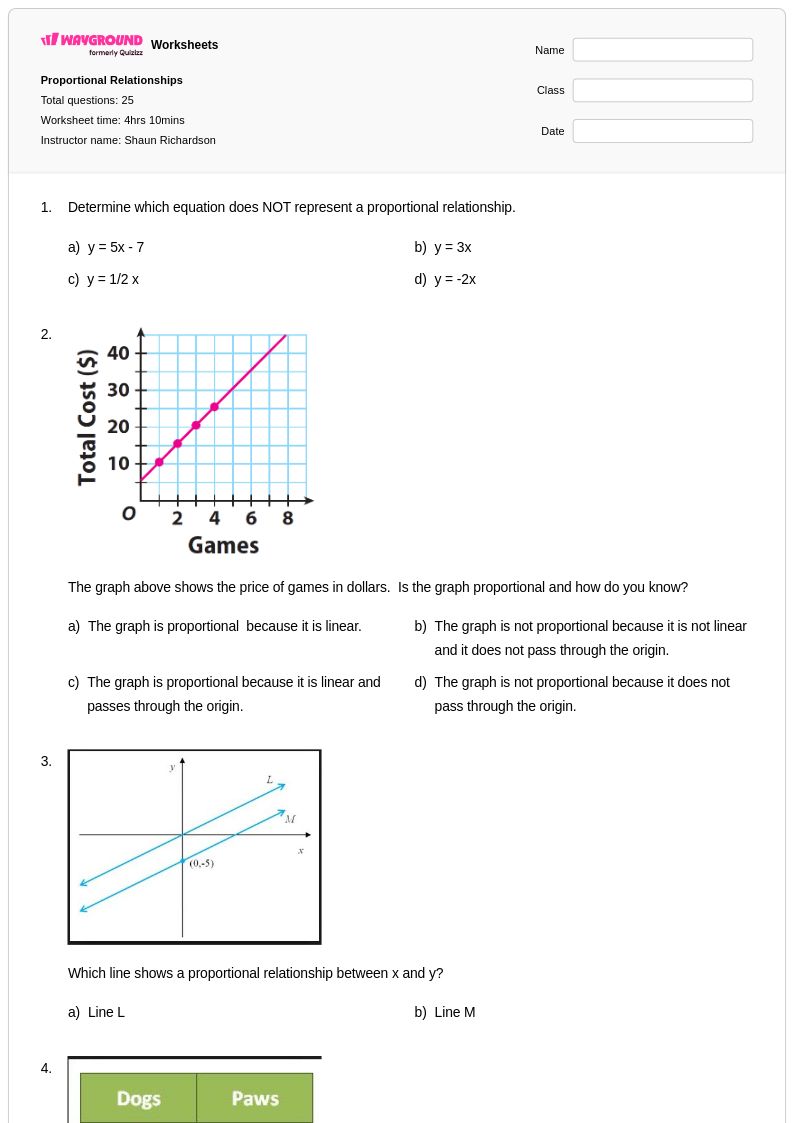
Explore Wayground's free printable worksheets and practice problems designed to help students master proportional relationships through engaging PDF exercises with comprehensive answer keys.
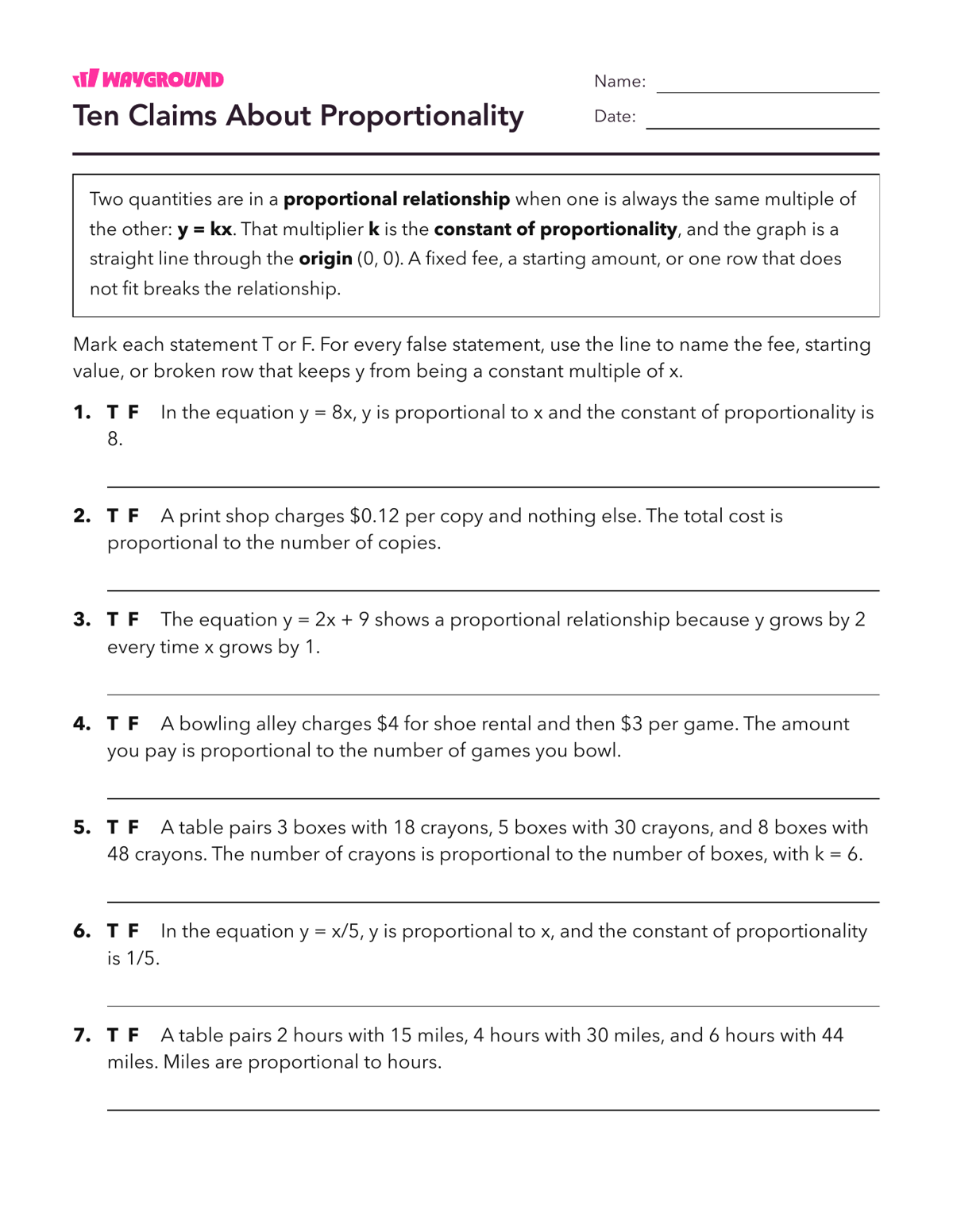
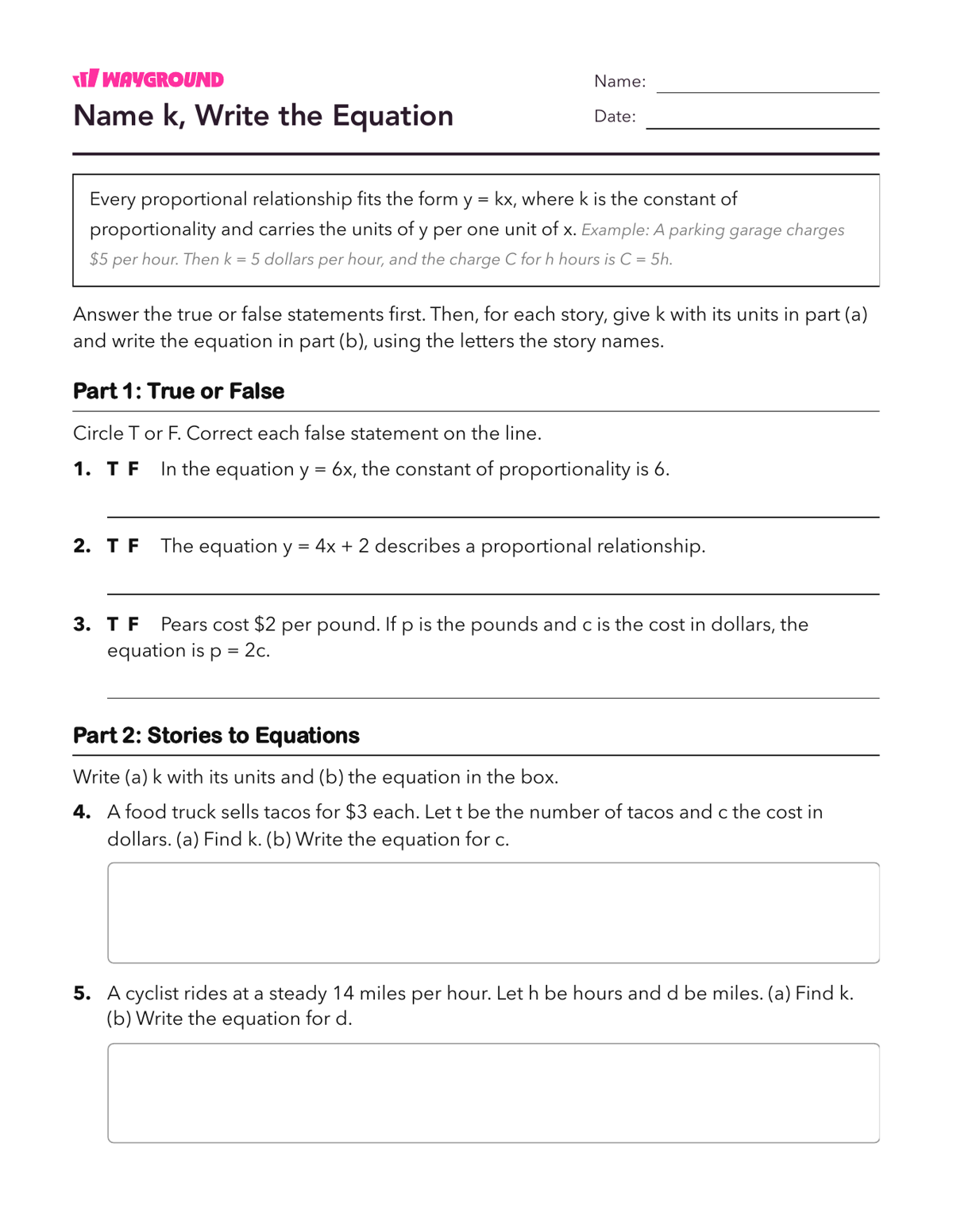
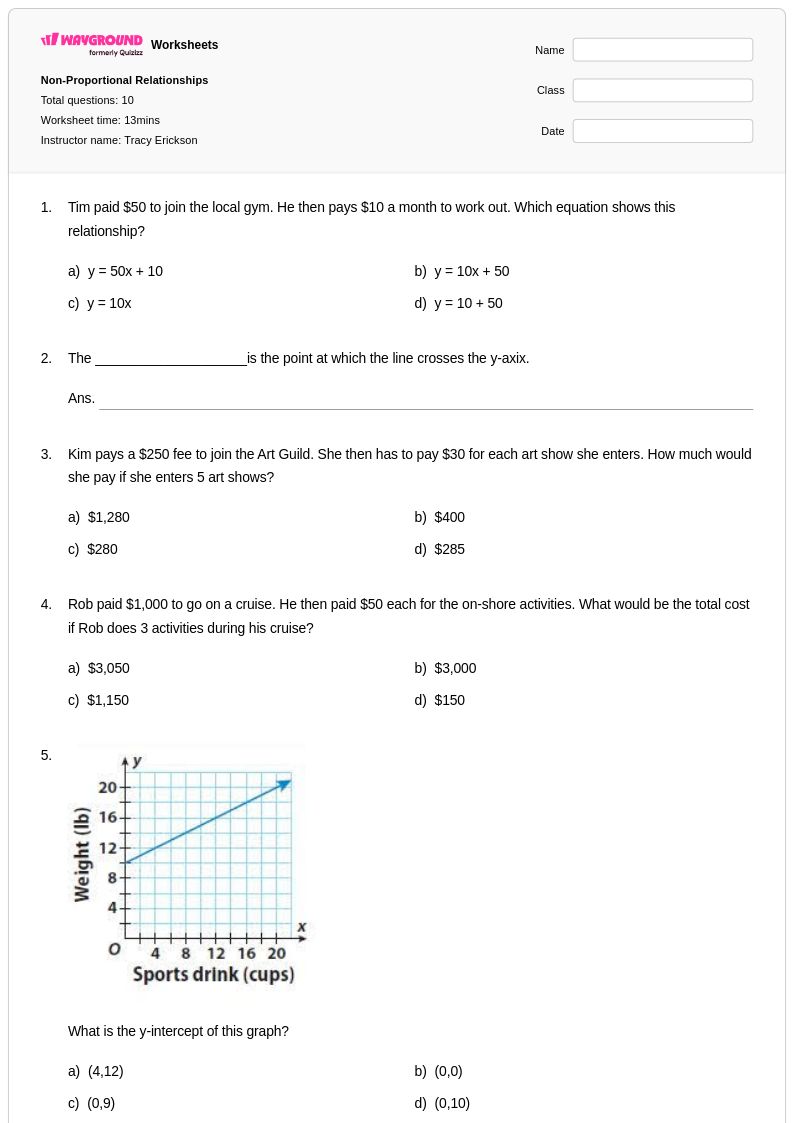
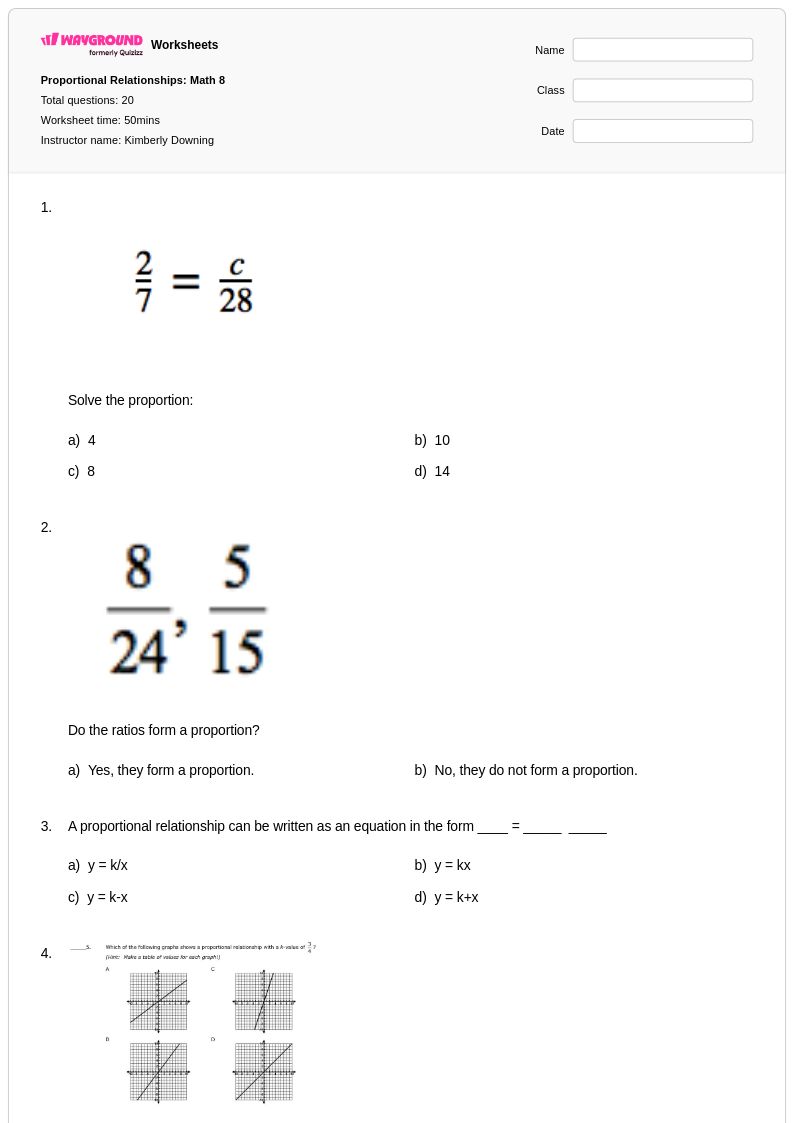
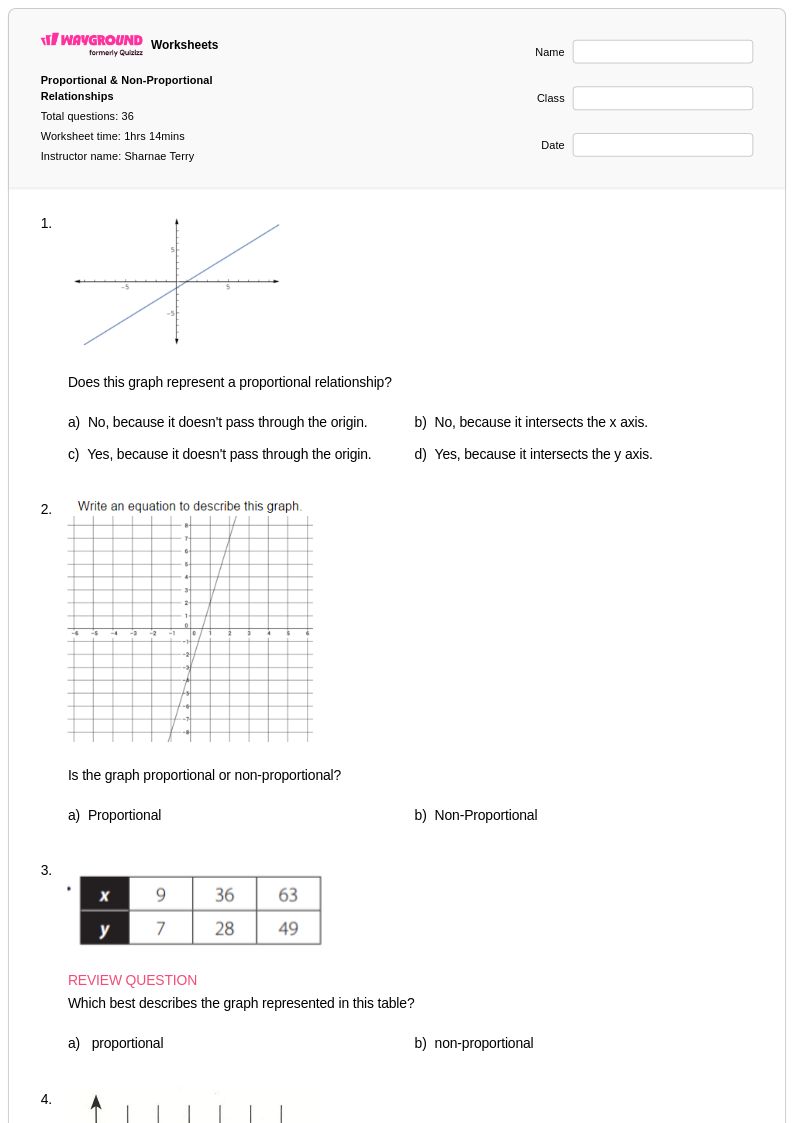
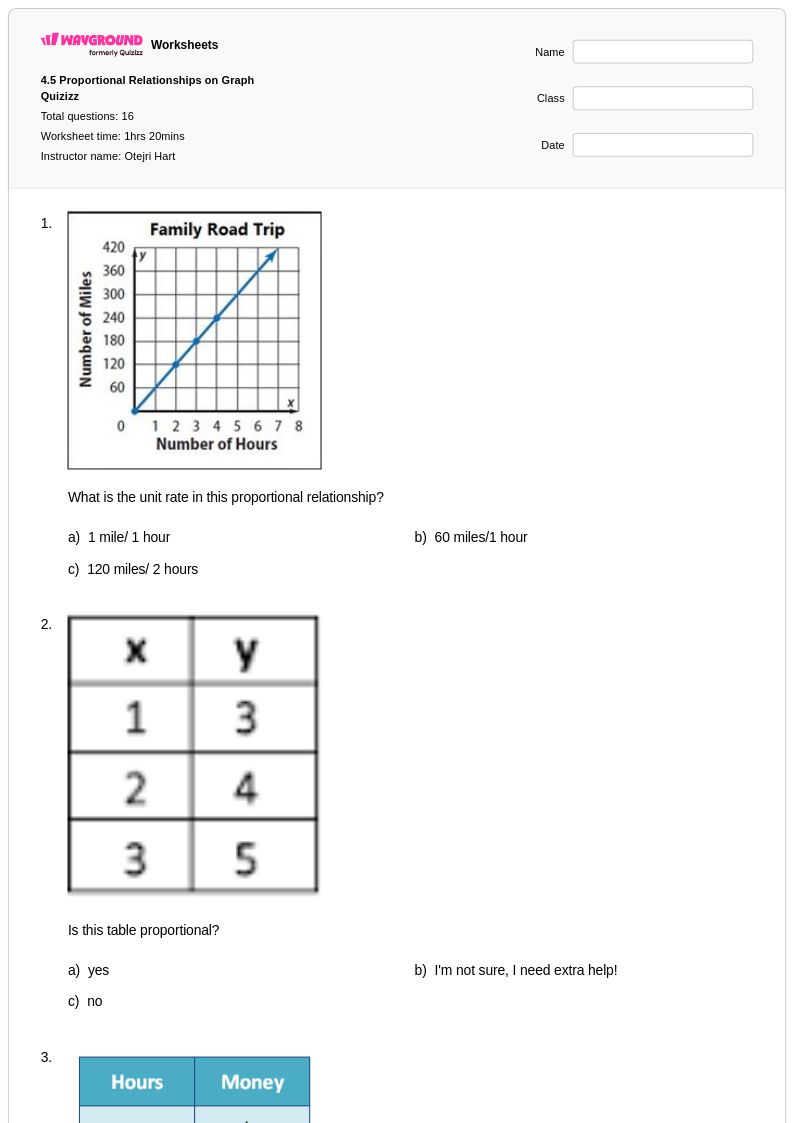
Proportional relationships form the foundation for understanding how quantities relate to each other through constant ratios, and Wayground's comprehensive worksheet collection provides educators with expertly designed resources to master this critical mathematical concept. These worksheets guide students through identifying, creating, and analyzing proportional relationships using tables, graphs, and equations, while strengthening essential skills in recognizing constant rates of change and understanding the multiplicative nature of proportional reasoning. Each practice problem set includes detailed answer keys and is available as free printable pdf resources, allowing students to work systematically through real-world applications such as unit rates, scaling recipes, and analyzing linear relationships that pass through the origin.
Wayground, formerly Quizizz, empowers teachers with millions of educator-created resources specifically focused on proportional relationships, featuring robust search and filtering capabilities that align with mathematics standards across different educational frameworks. The platform's differentiation tools enable instructors to customize worksheets based on individual student needs, whether providing remediation for struggling learners or enrichment opportunities for advanced students ready to explore complex proportional reasoning scenarios. Available in both printable and digital formats including downloadable pdfs, these resources streamline lesson planning while offering flexible options for classroom instruction, homework assignments, and targeted skill practice that builds students' confidence in recognizing and working with proportional relationships across various mathematical contexts.
FAQs
How do I teach proportional relationships?
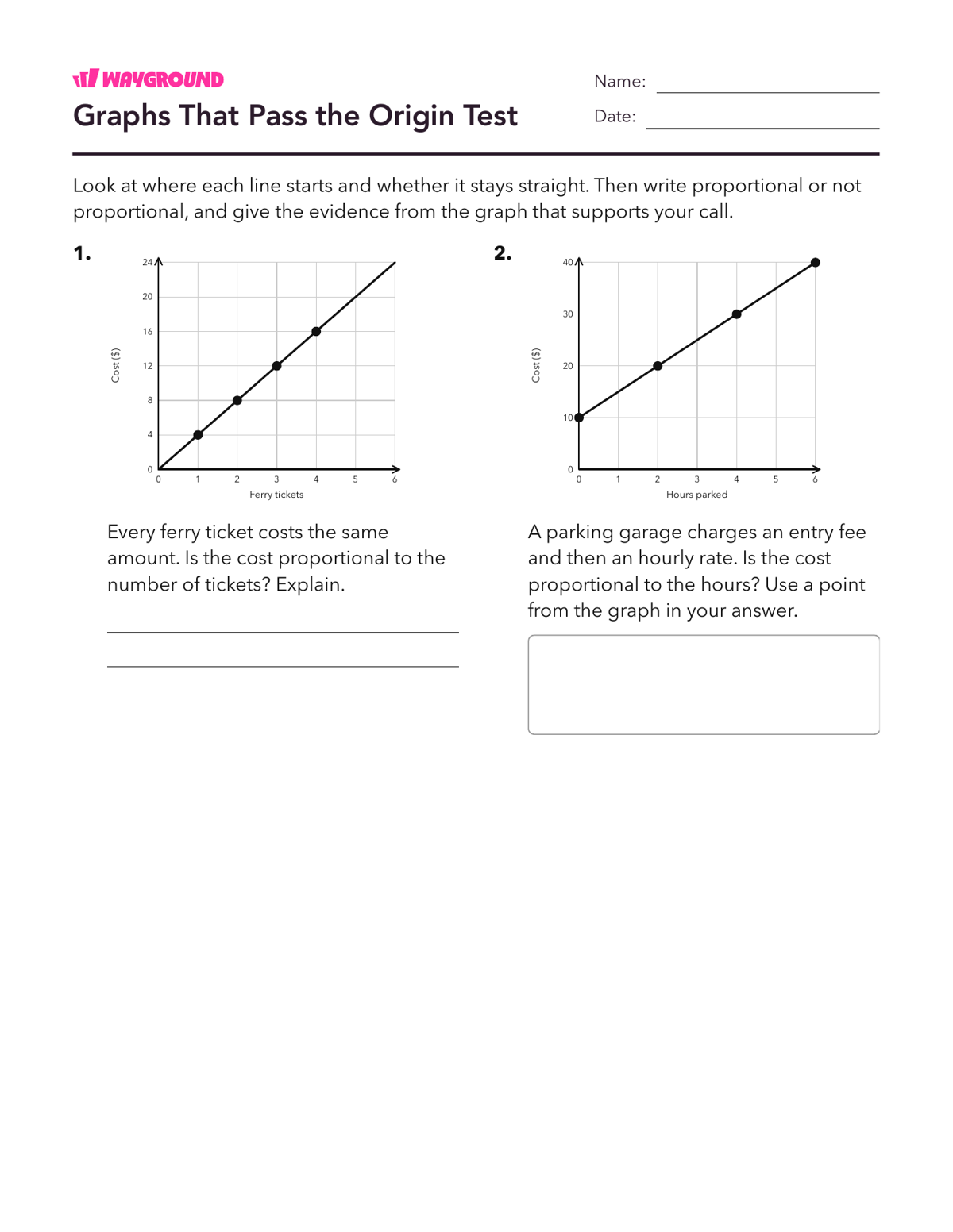
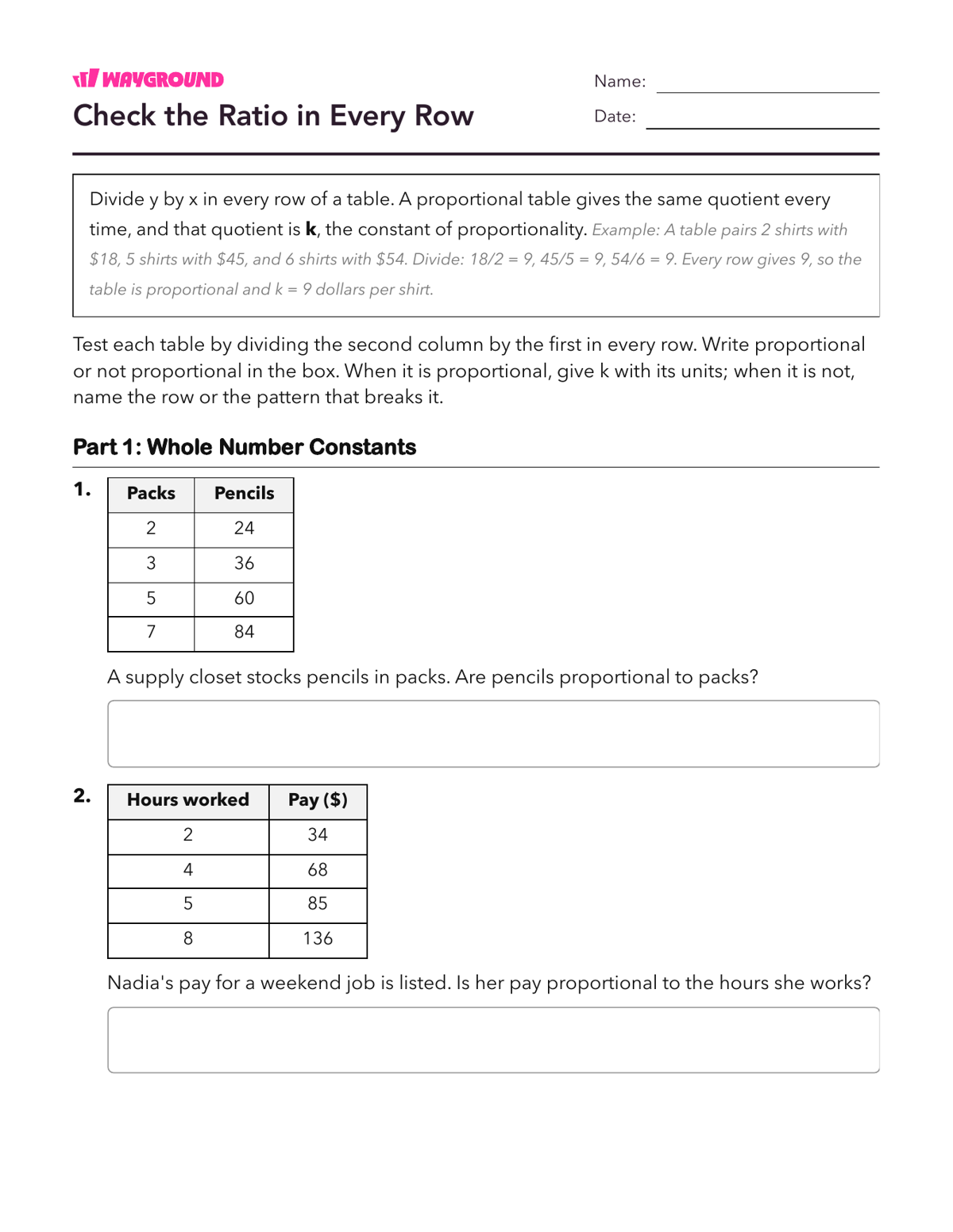
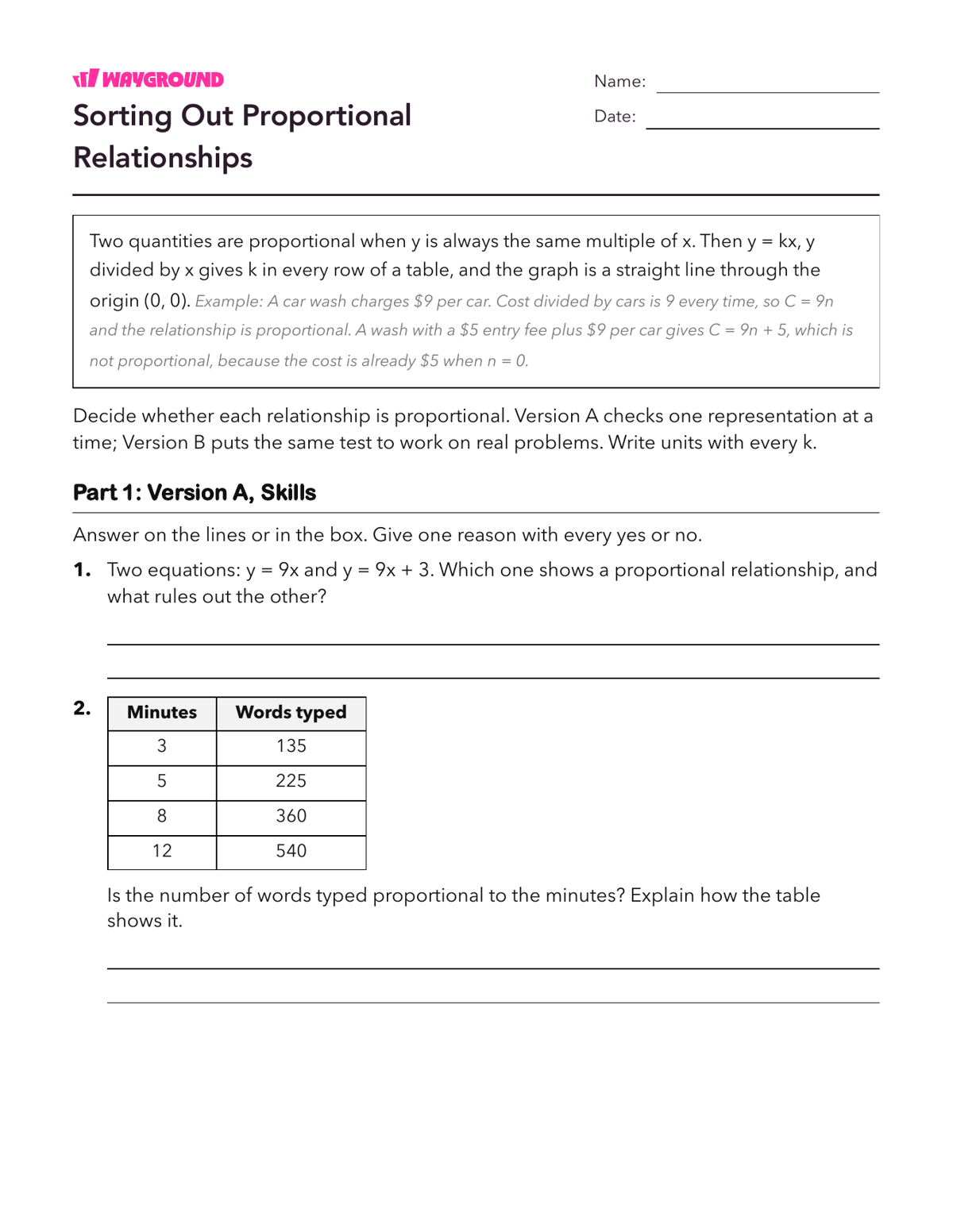
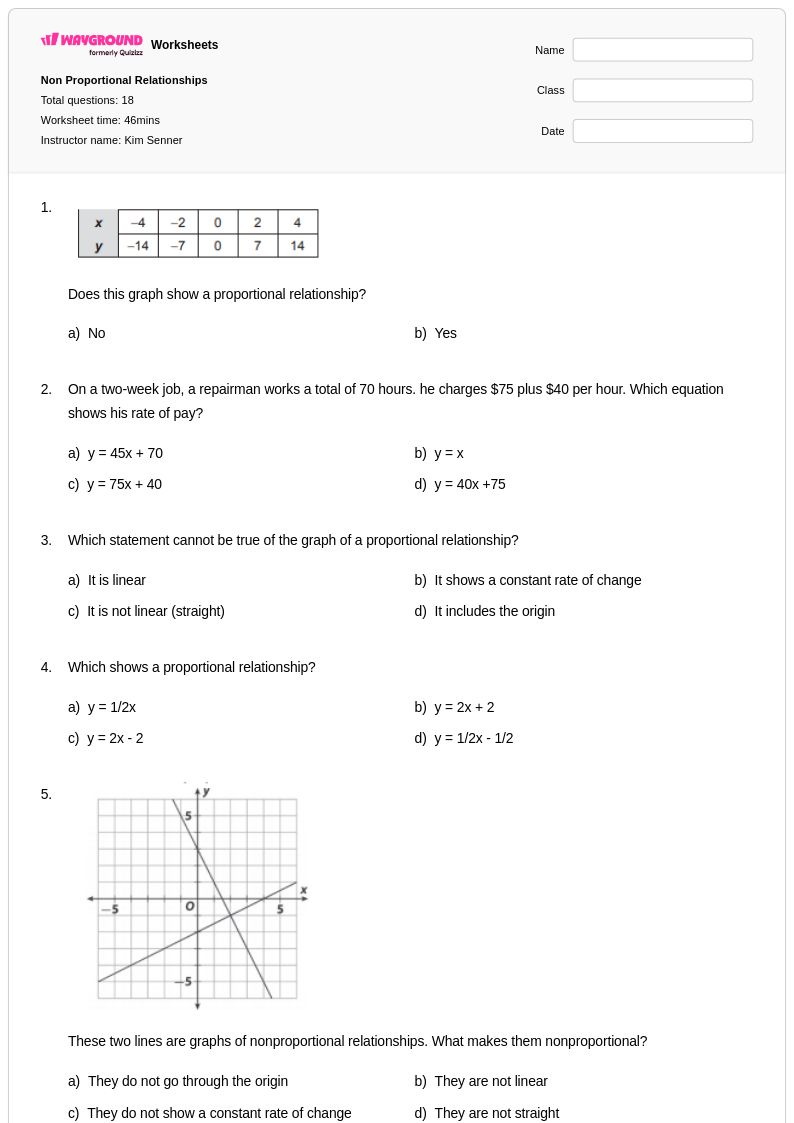
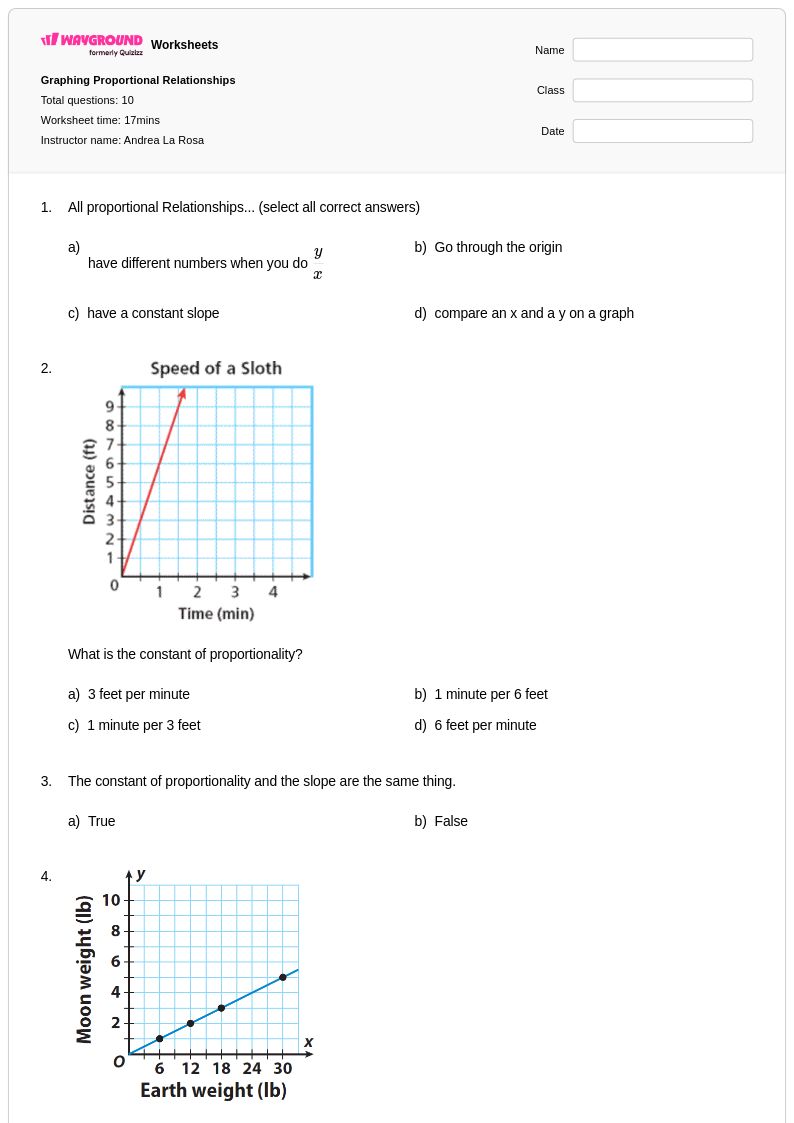
Start with concrete examples like recipes or pricing, asking students to find the 'rule' connecting two quantities (e.g., cost per item). Introduce the concept of a constant ratio or unit rate. Then, transition to representing these relationships in tables, on graphs as a straight line through the origin, and finally with the equation y = kx.
What exercises help students practice proportional relationships?
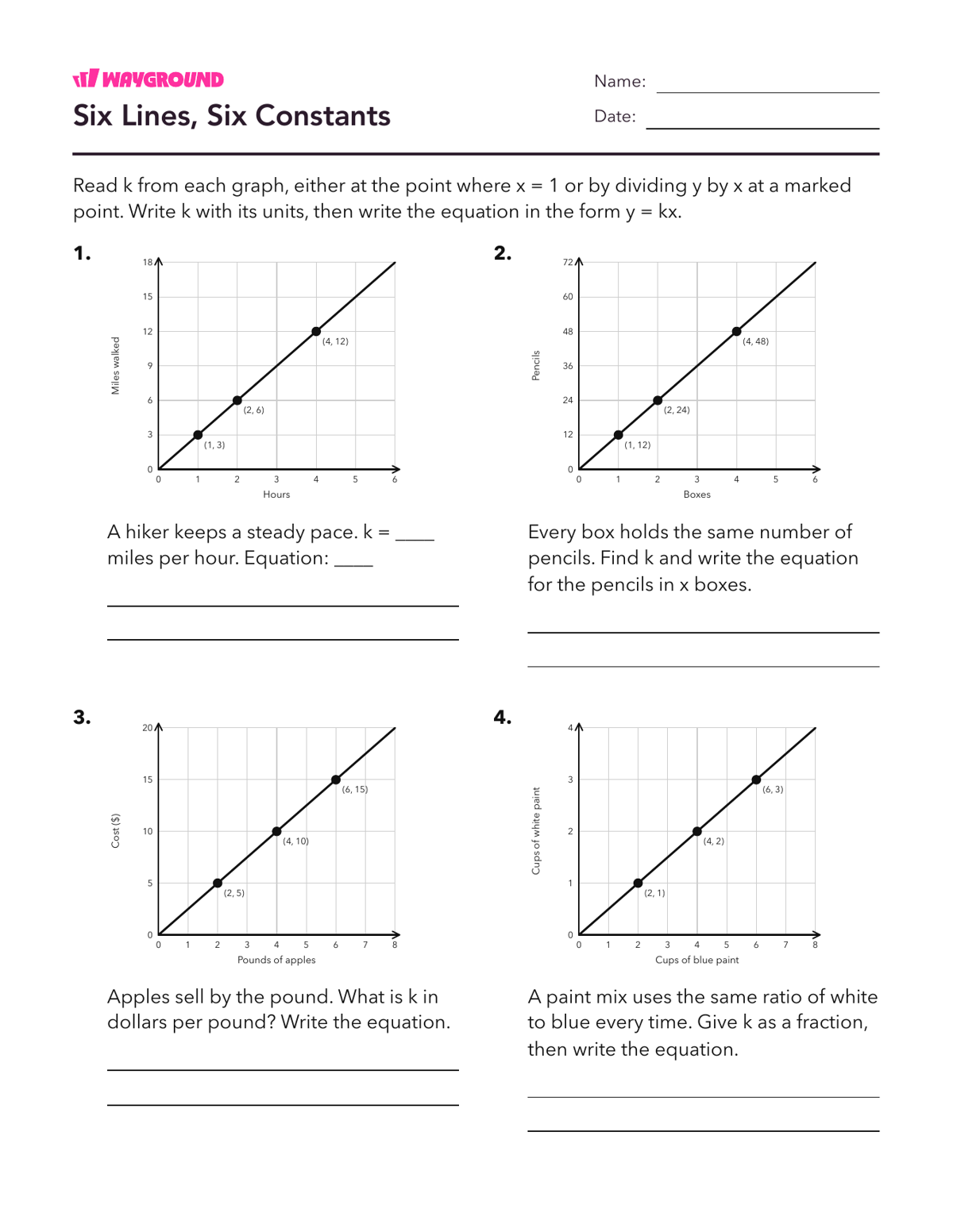
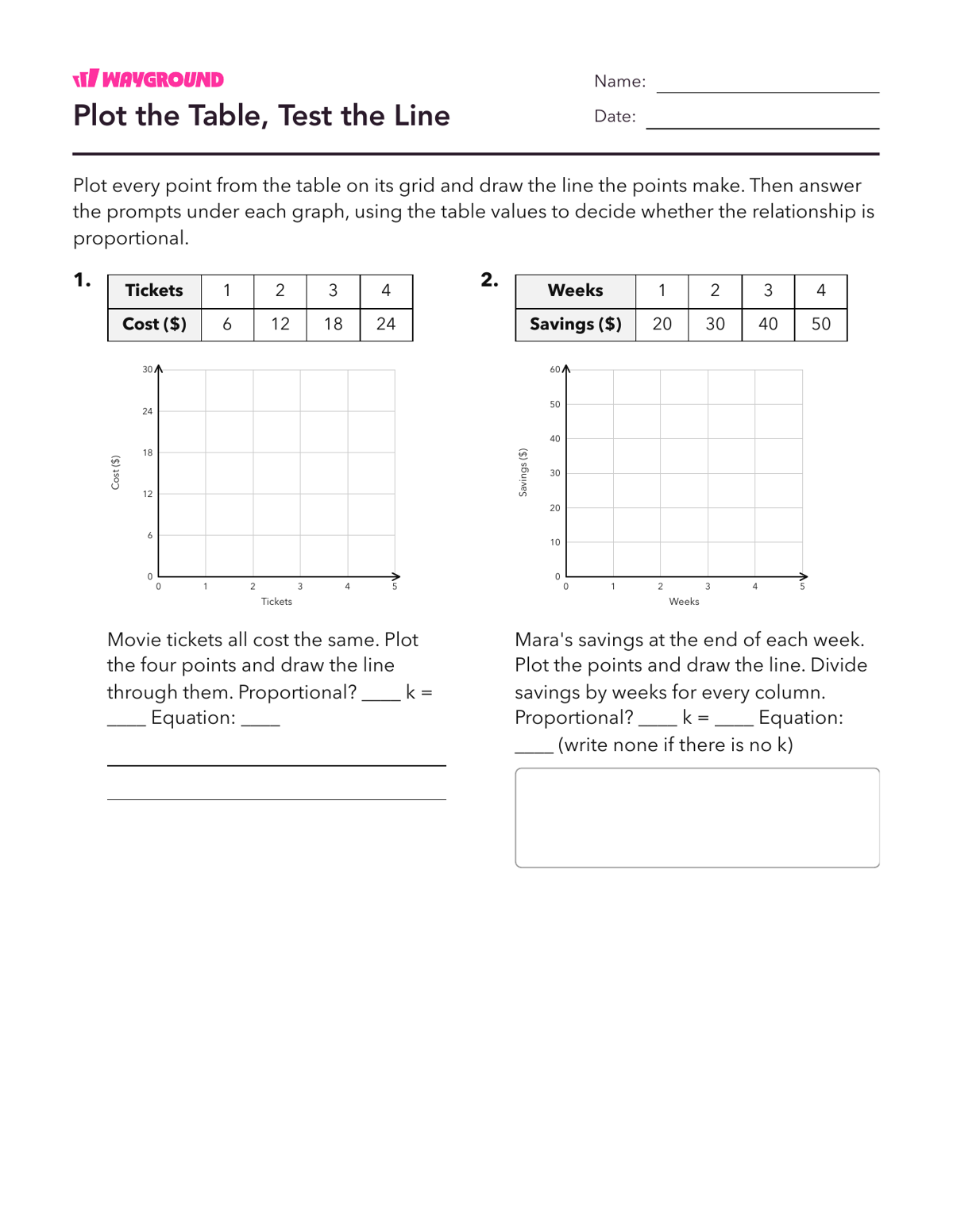
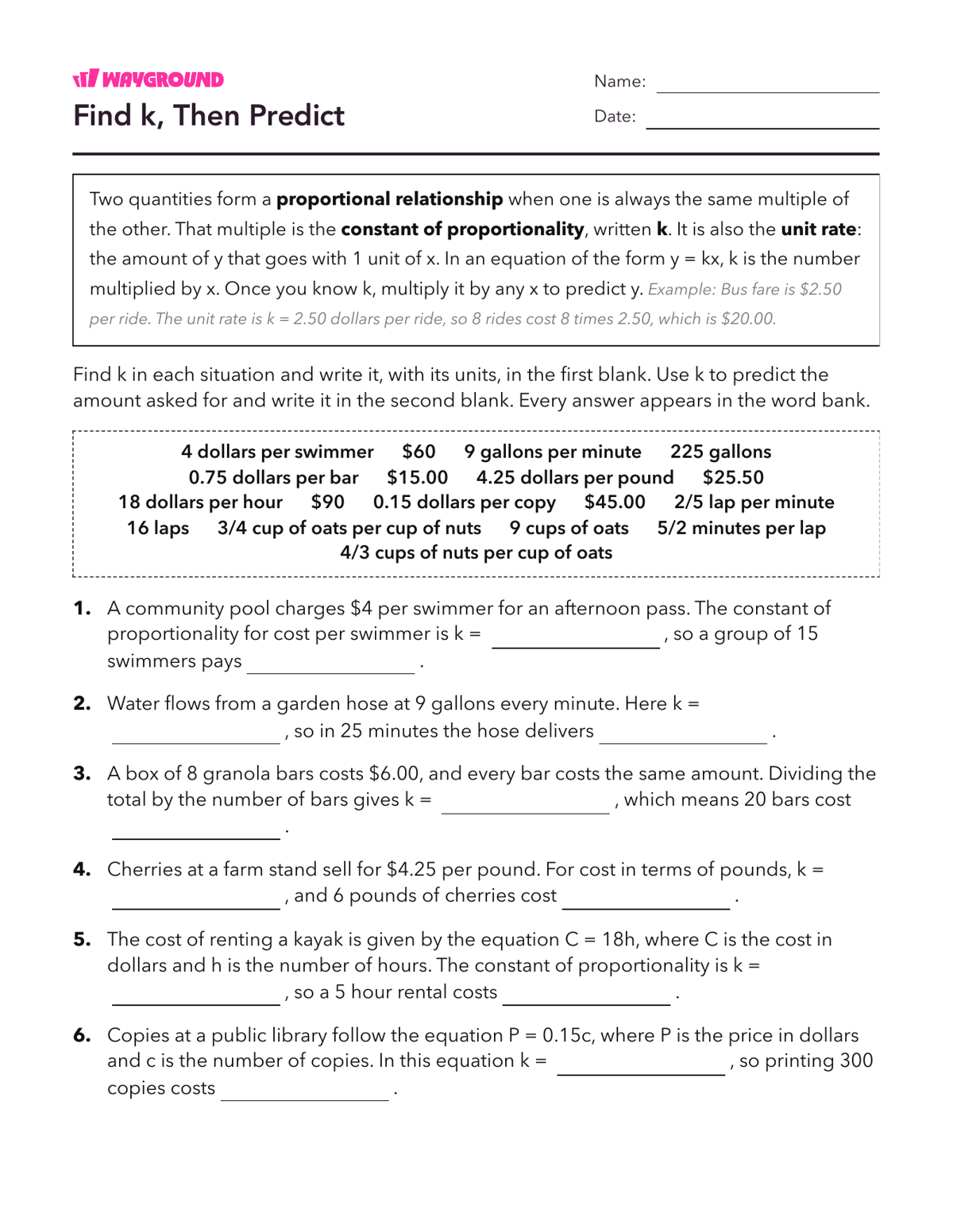
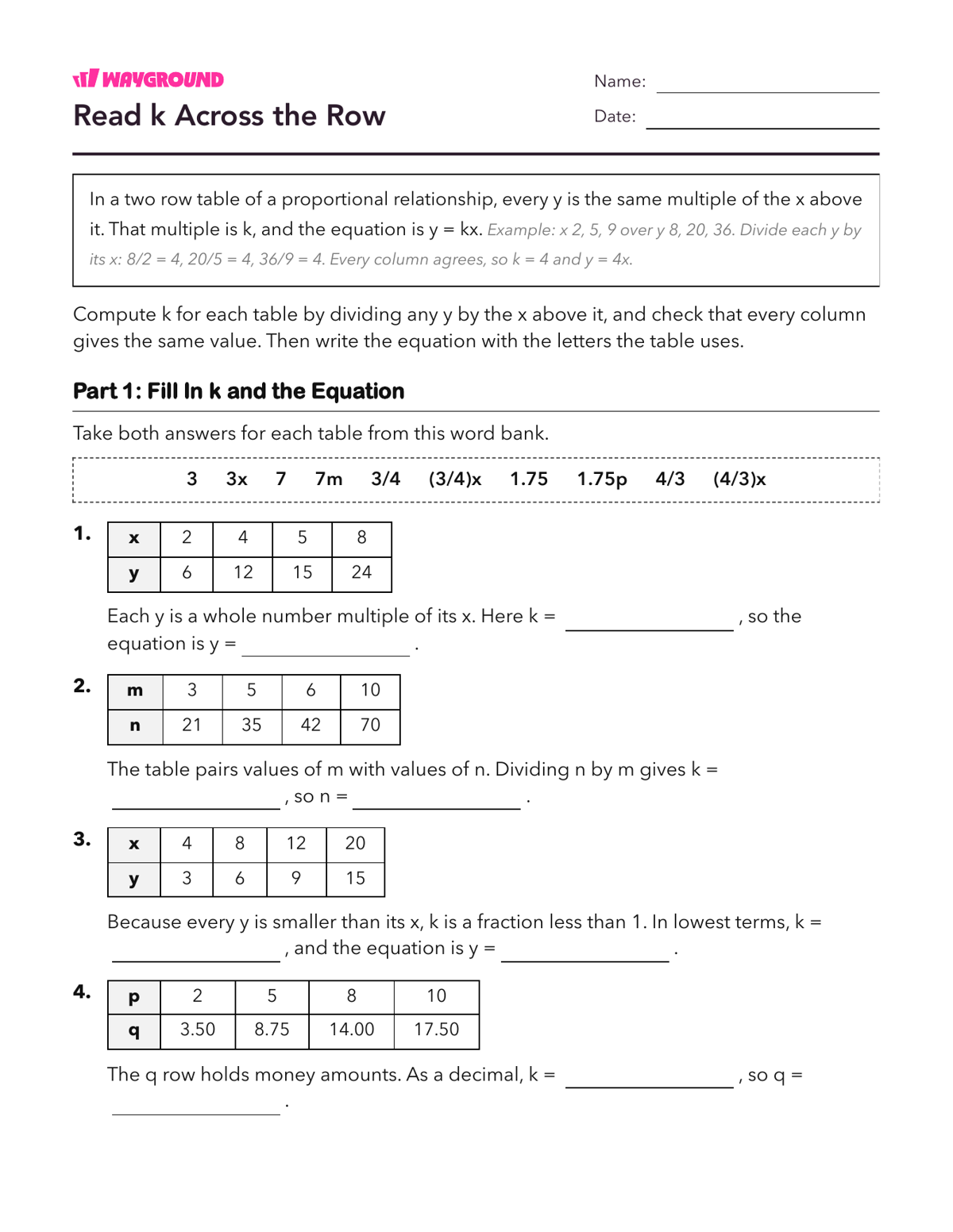
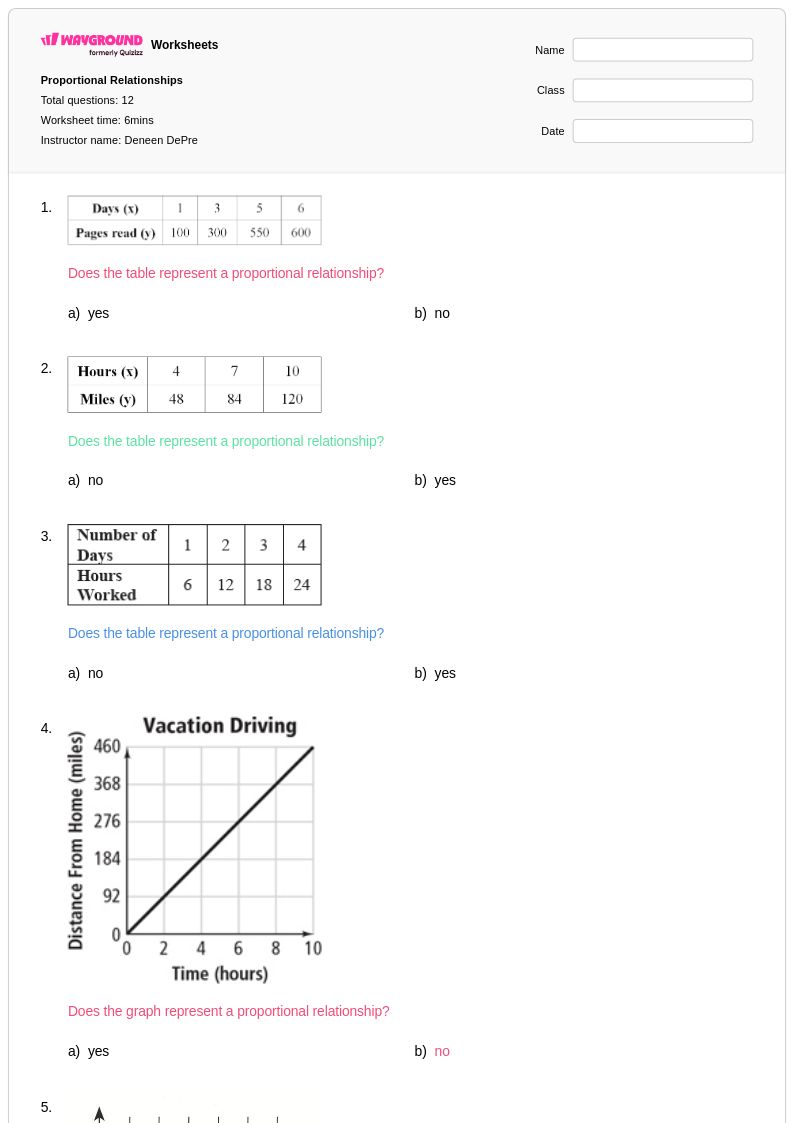
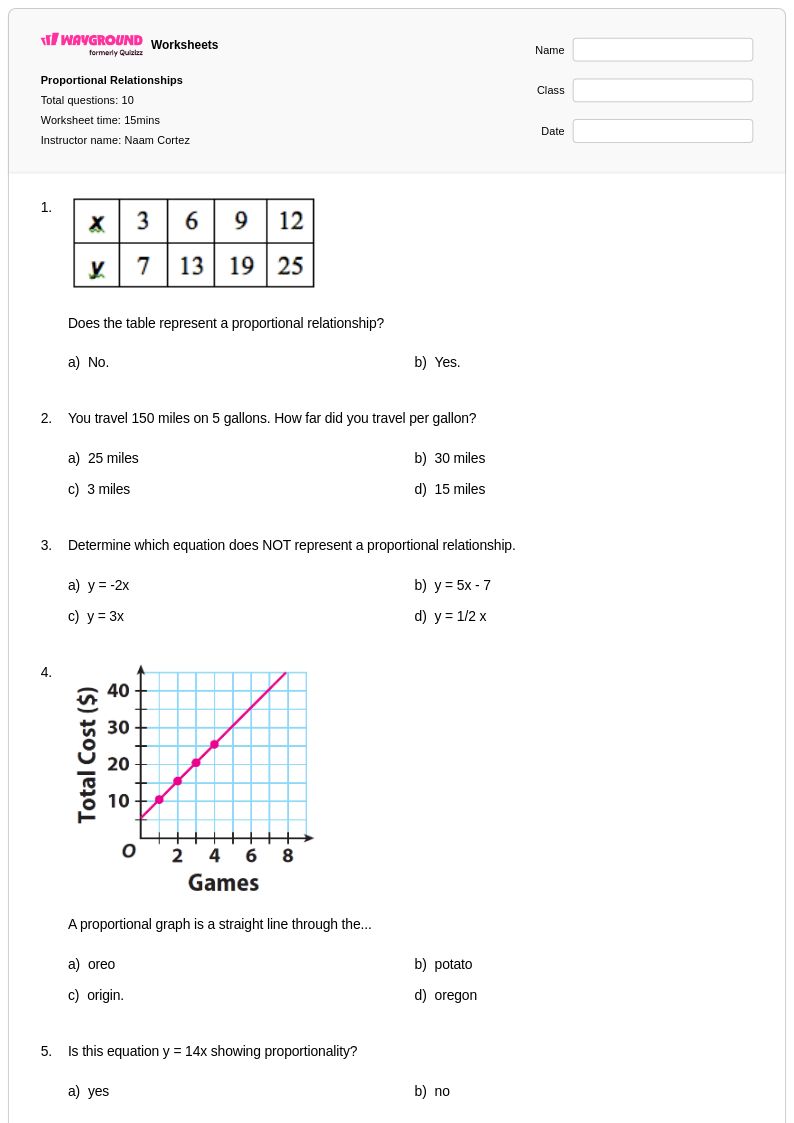
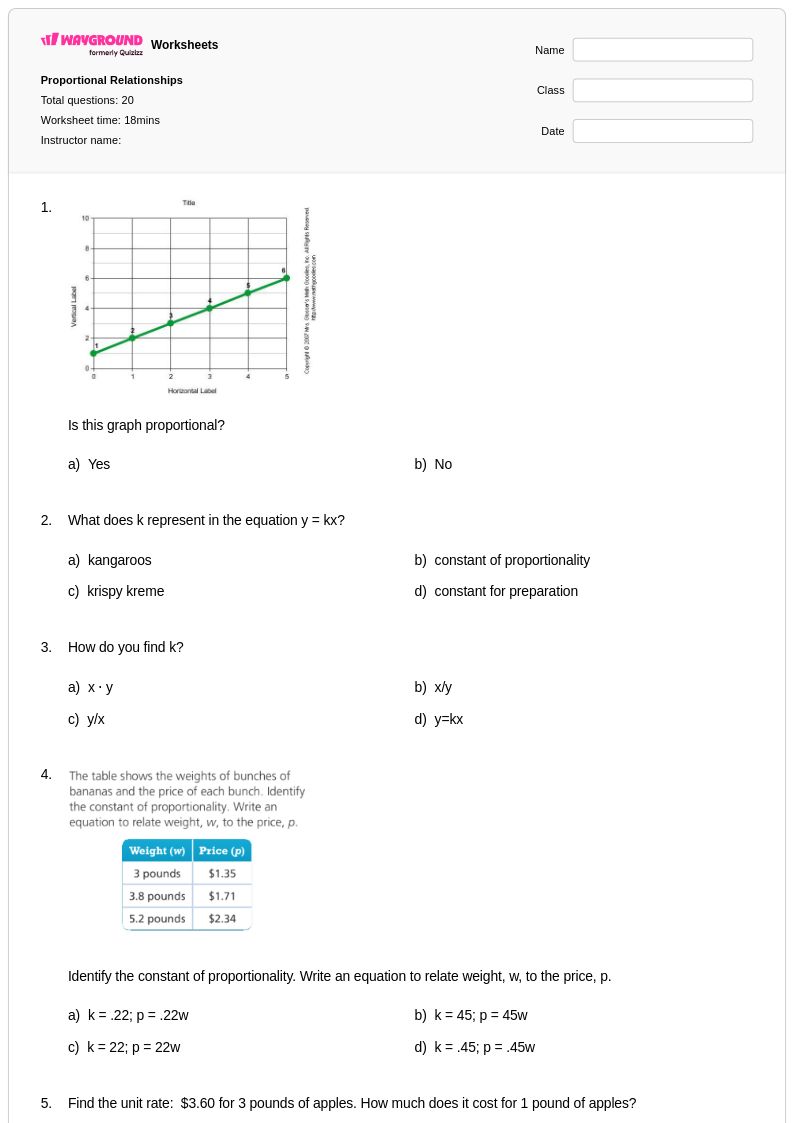
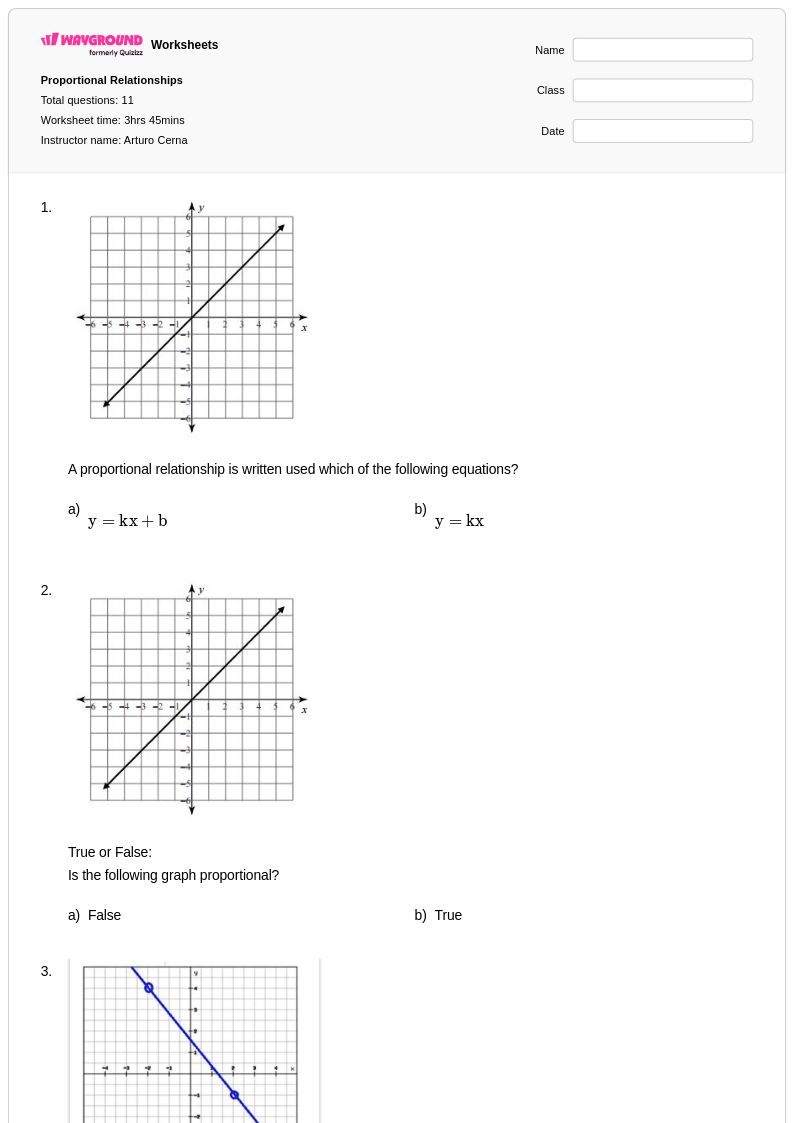
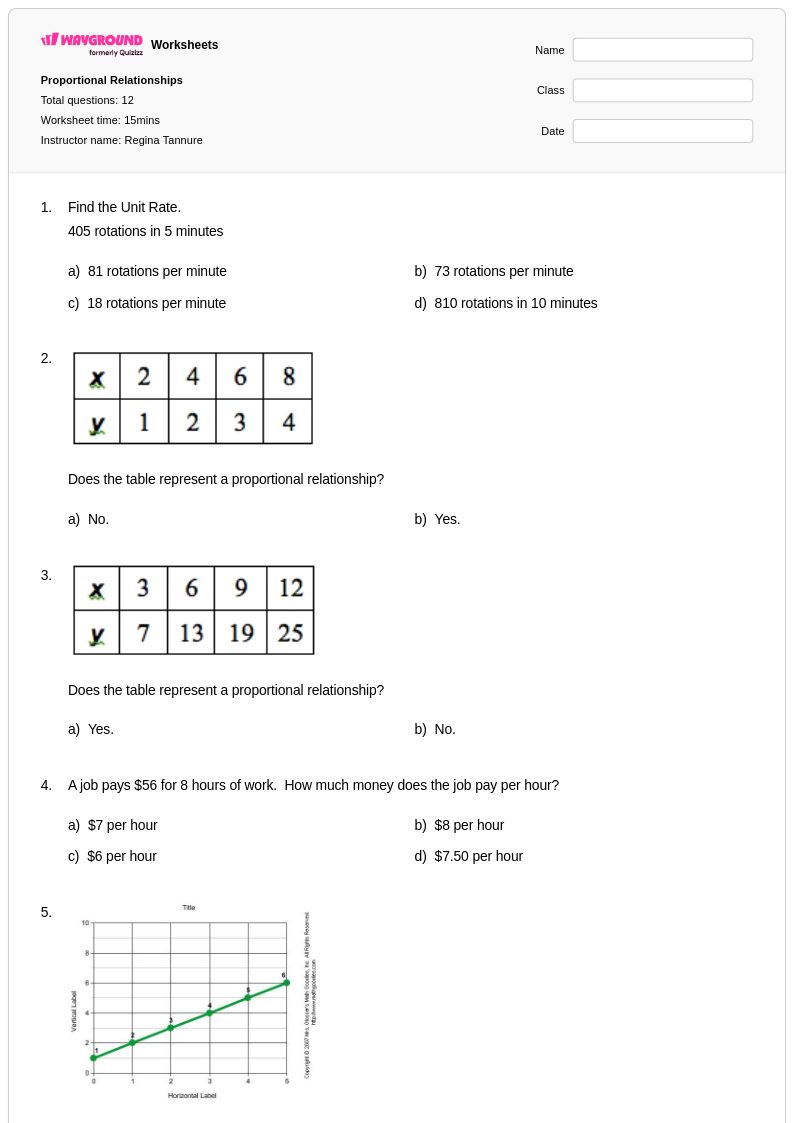
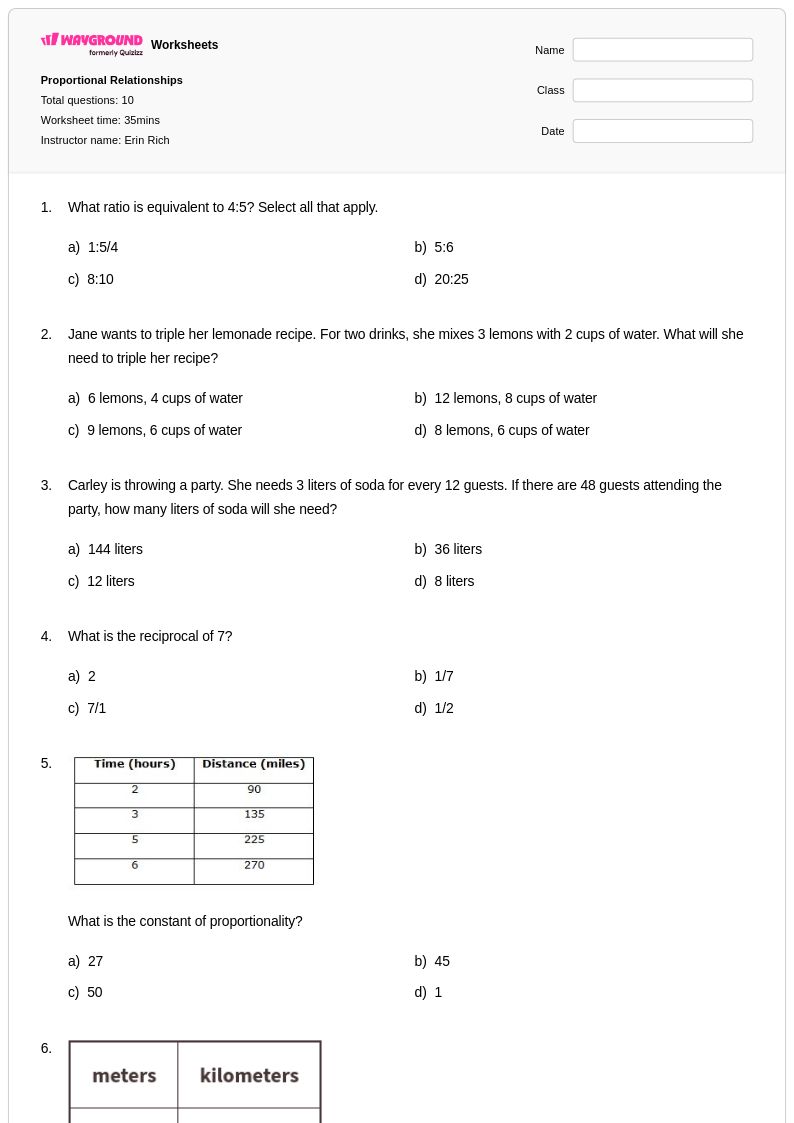
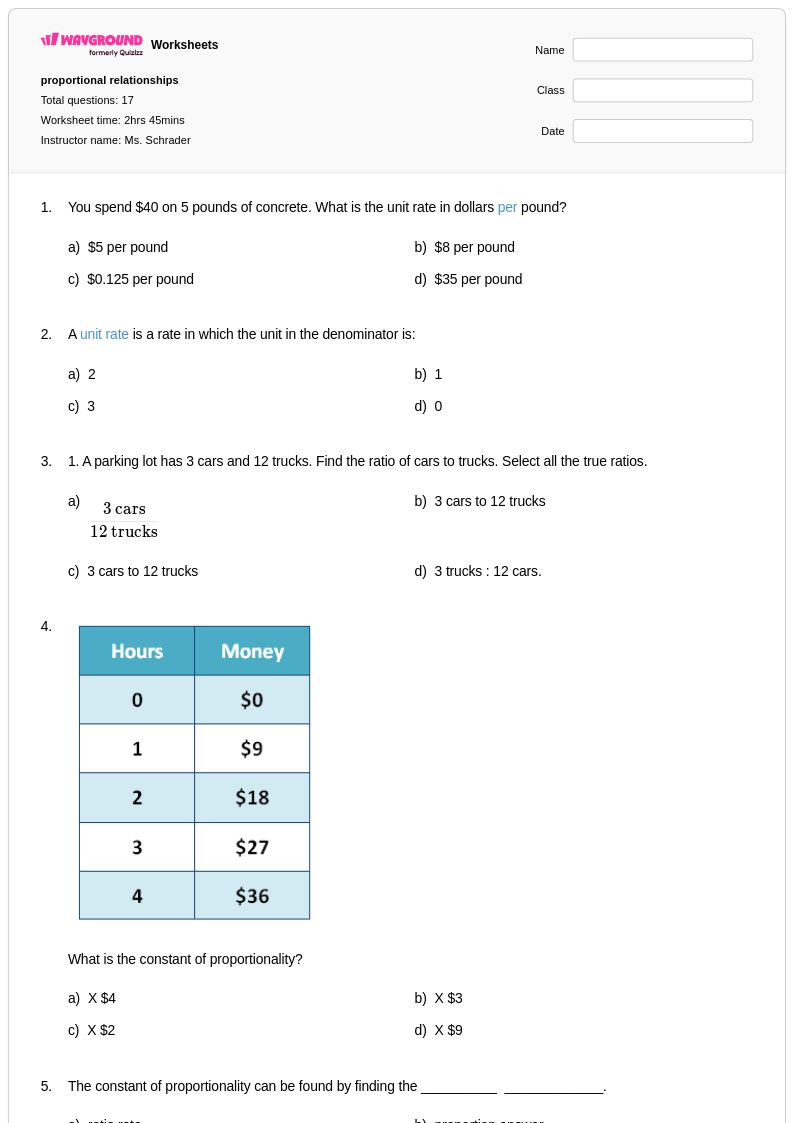
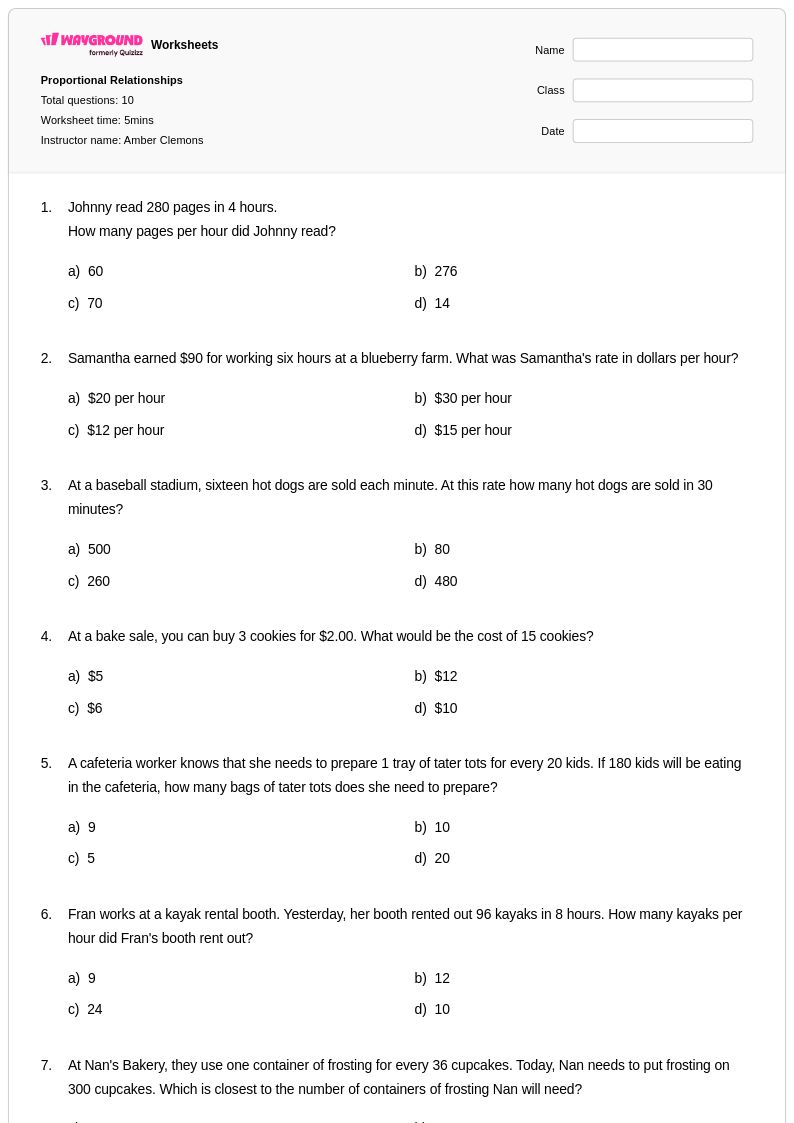
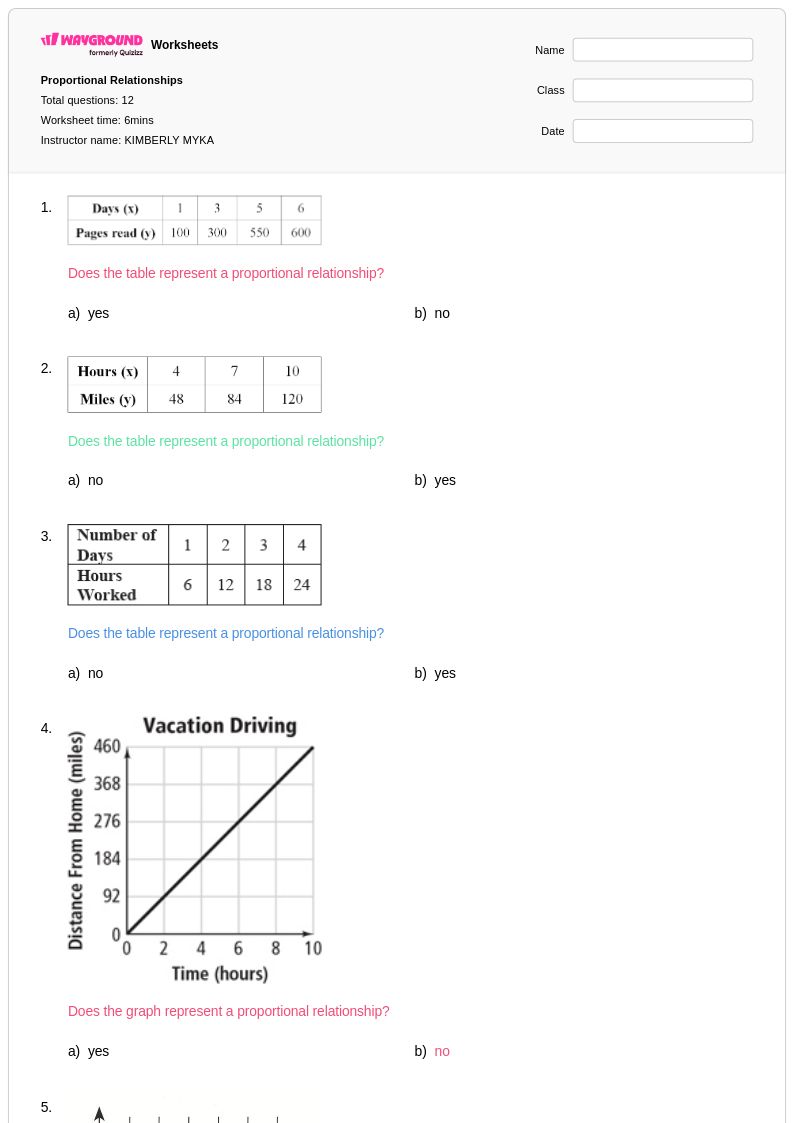
Effective practice involves multiple representations. Use worksheets that ask students to complete tables of values, graph ordered pairs to see if they form a line through the origin, determine the constant of proportionality (k) from a table or graph, and solve real-world word problems involving unit rates.
What are common student mistakes with proportional relationships?
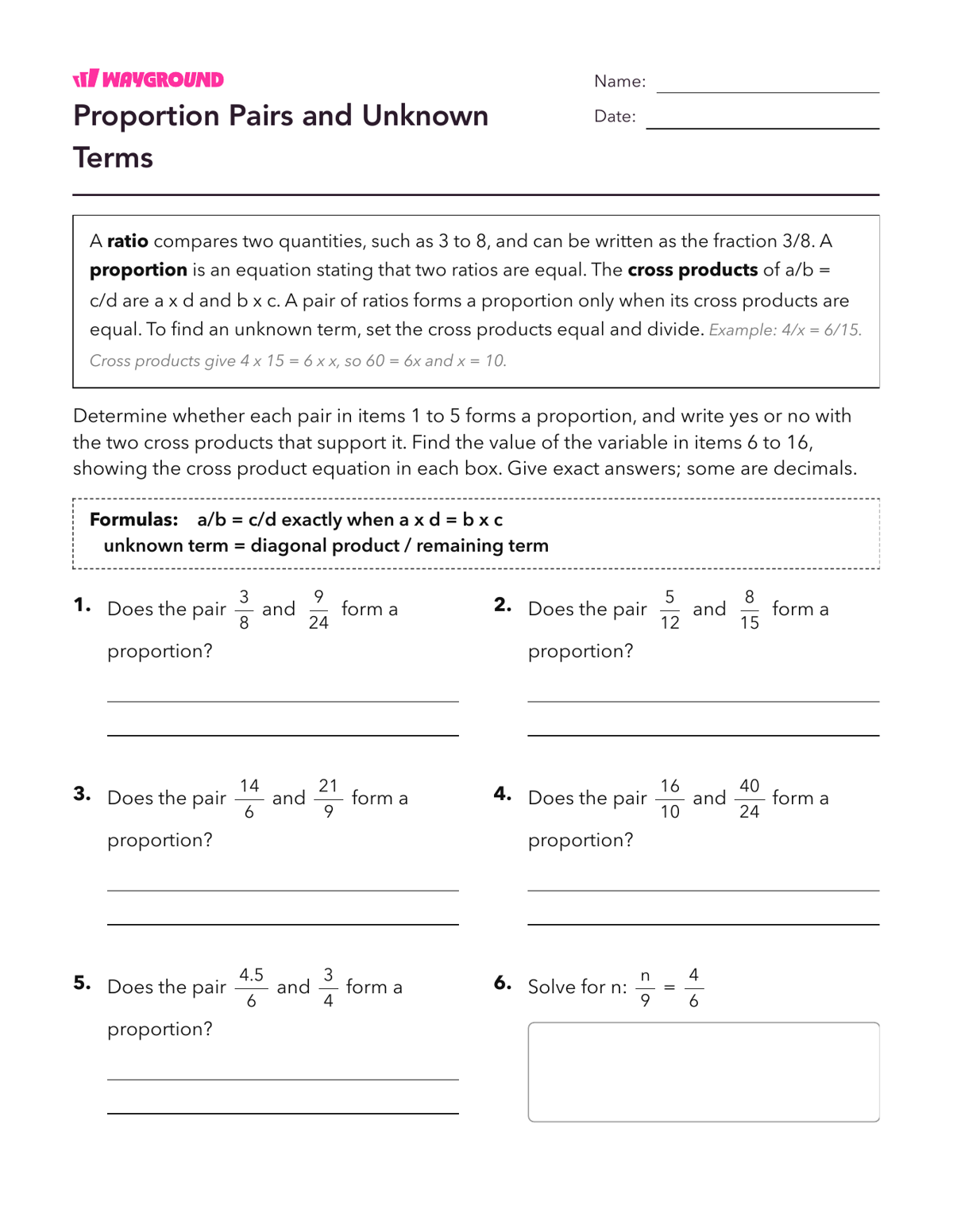
A primary error is confusing proportional (multiplicative) relationships with additive ones. For example, given the point (2, 6), a student might incorrectly assume the next point is (3, 7) by adding 1, instead of (3, 9) by multiplying by 3. Students also frequently misidentify the constant of proportionality or forget that the graph must pass through the origin (0,0).
How can I use these proportional relationships worksheets?
Wayground worksheets are flexible for any classroom. You can assign them as a digital activity on the Wayground platform or download a printable PDF for offline practice. Every worksheet includes a complete answer key, which simplifies grading. For paper assignments, you can use the Wayground for Teachers app to quickly scan and grade student work.
How do proportional relationships fit into the Common Core standards?
Common Core builds proportional reasoning across middle school. It begins in 6th grade with understanding ratios and rates, develops in 7th grade into analyzing proportional relationships and using them to solve multi-step problems, and culminates in 8th grade by connecting proportional relationships to linear functions. This topic is the essential bridge from arithmetic to algebra.
How can I differentiate instruction for this topic?
For students needing support with word problems, use Wayground's digital accommodation tool Read Aloud. For multiple-choice questions, the Reduced answer choices feature can lessen cognitive load. You can also create scaffolded versions of a printable worksheet by adjusting the font size and spacing to improve readability for different learners.