Free Printable Psoas Stretch Worksheets for Grade 8
Grade 8 Physical Education psoas stretch worksheets from Wayground provide free printables and practice problems with answer keys to help students master proper hip flexor stretching techniques and anatomical understanding.
Explore printable Psoas Stretch worksheets for Grade 8
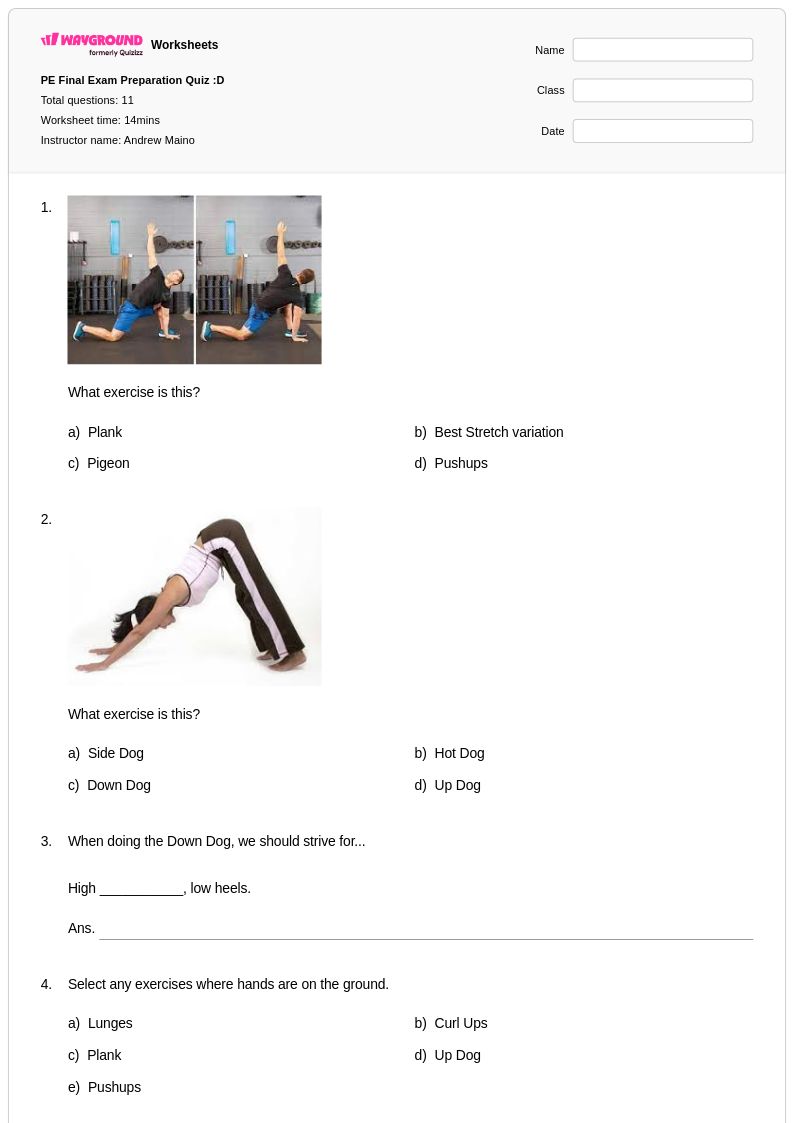
Psoas stretch worksheets for Grade 8 students available through Wayground provide comprehensive educational resources that teach proper hip flexor stretching techniques and anatomy fundamentals. These expertly designed materials guide eighth-grade students through the critical aspects of psoas muscle flexibility, including correct positioning, breathing techniques, and safety considerations essential for effective stretching routines. The worksheets strengthen students' understanding of muscle anatomy, proper form mechanics, and the physiological benefits of targeted hip flexor stretches, while comprehensive answer keys enable accurate self-assessment and teacher evaluation. Students engage with free printables that include detailed anatomical diagrams, step-by-step stretching sequences, and practice problems that reinforce proper technique and muscle identification skills necessary for developing safe, effective flexibility routines.
Wayground supports physical education teachers with millions of teacher-created psoas stretch resources that streamline lesson planning and enhance student learning outcomes. The platform's robust search and filtering capabilities allow educators to quickly locate Grade 8 appropriate materials that align with physical education standards and accommodate diverse learning needs through built-in differentiation tools. Teachers can customize worksheets to match specific curriculum requirements and student ability levels, while accessing resources in both printable pdf formats for traditional classroom use and digital versions for technology-integrated instruction. These flexible formatting options facilitate targeted skill practice, support remediation for students struggling with proper stretching techniques, and provide enrichment opportunities for advanced learners ready to explore more complex flexibility training concepts.
FAQs
How do I teach students proper psoas stretching technique in physical education?
Teaching proper psoas stretching begins with helping students locate and understand the psoas muscle, which runs from the lumbar spine through the pelvis to the femur. Instruction should cover correct lunge-based positioning, pelvic alignment, and how to engage the core while holding the stretch. Pairing anatomical diagrams with guided practice allows students to connect the visual cue to physical execution, reducing the risk of compensatory movement patterns.
What exercises help students practice hip flexor flexibility and psoas mechanics?
Effective practice combines stretching repetition with knowledge checks on muscle function and positioning. Worksheets that prompt students to identify correct versus incorrect form, label muscle anatomy, and answer questions about flexibility principles reinforce both the physical and conceptual dimensions of psoas stretching. Regular guided practice problems help students internalize safe technique before applying it independently.
What common mistakes do students make when learning to stretch the psoas?
The most frequent error is allowing the pelvis to anteriorly tilt during the stretch, which reduces tension on the psoas and shifts load to the lower back. Students also commonly flare the front knee past the toes or fail to engage the core, both of which compromise form and increase injury risk. Worksheets that include labeled diagrams of correct and incorrect positioning help students self-correct before these errors become habitual.
Why is psoas stretching important for students in physical education and athletic programs?
The psoas is one of the primary hip flexors and plays a central role in running, jumping, and postural stability, making it highly relevant for student athletes. Tightness in the psoas is a common contributor to lower back pain and hip impingement, particularly in students who spend extended time seated. Teaching proper psoas stretching as part of a physical education curriculum supports both immediate athletic performance and long-term injury prevention.
How do I use Wayground's psoas stretch worksheets in my physical education class?
Wayground's psoas stretch worksheets are available as printable PDFs for traditional classroom and gymnasium use, as well as in digital formats for technology-integrated learning environments. Teachers can also host them as a quiz directly on Wayground, making them suitable for warm-up instruction, homework reinforcement, or formative assessment. Each worksheet includes a complete answer key, so they function effectively for both teacher-led instruction and independent student practice.
How can I differentiate psoas stretch instruction for students with varying fitness or mobility levels?
Wayground supports student-level accommodations including reduced answer choices to lower cognitive load for students who need additional support, and Read Aloud functionality so students can have questions and instructions read to them. These settings can be applied to individual students without other students being notified, allowing differentiation to happen discreetly during digital worksheet sessions. For physical modifications, pairing differentiated worksheets with visual positioning guides helps students at different mobility levels engage with the material at an appropriate level.