
20 Q
3rd - Uni

11 Q
3rd
10 Q
2nd - 3rd
15 Q
2nd - 5th
20 Q
2nd - Uni
20 Q
3rd - Uni
20 Q
3rd - 4th
20 Q
2nd - Uni
20 Q
2nd - Uni
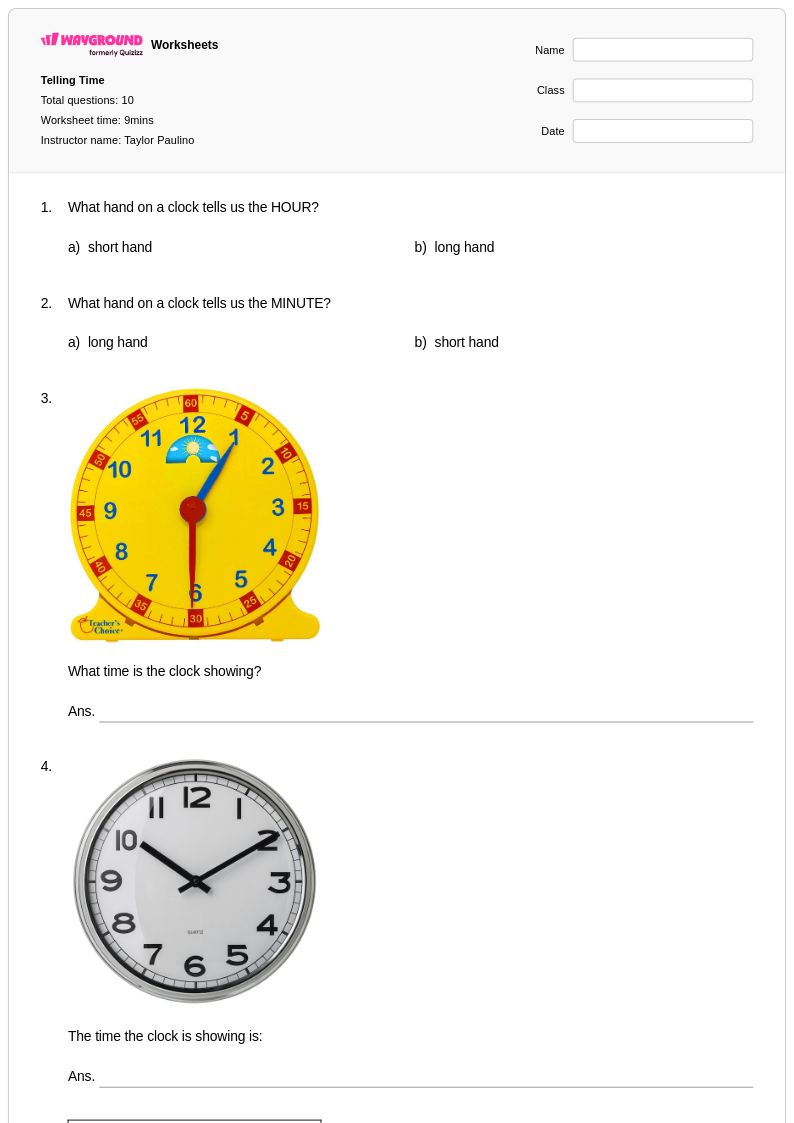
10 Q
3rd
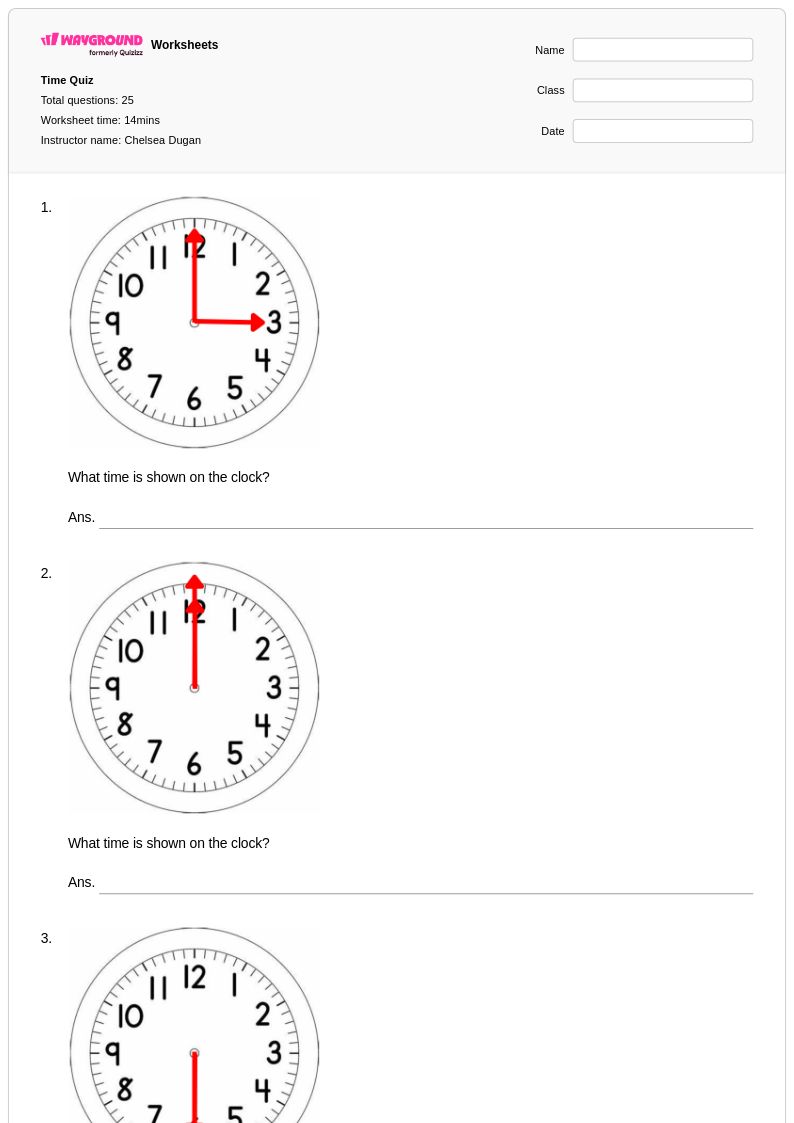
25 Q
3rd
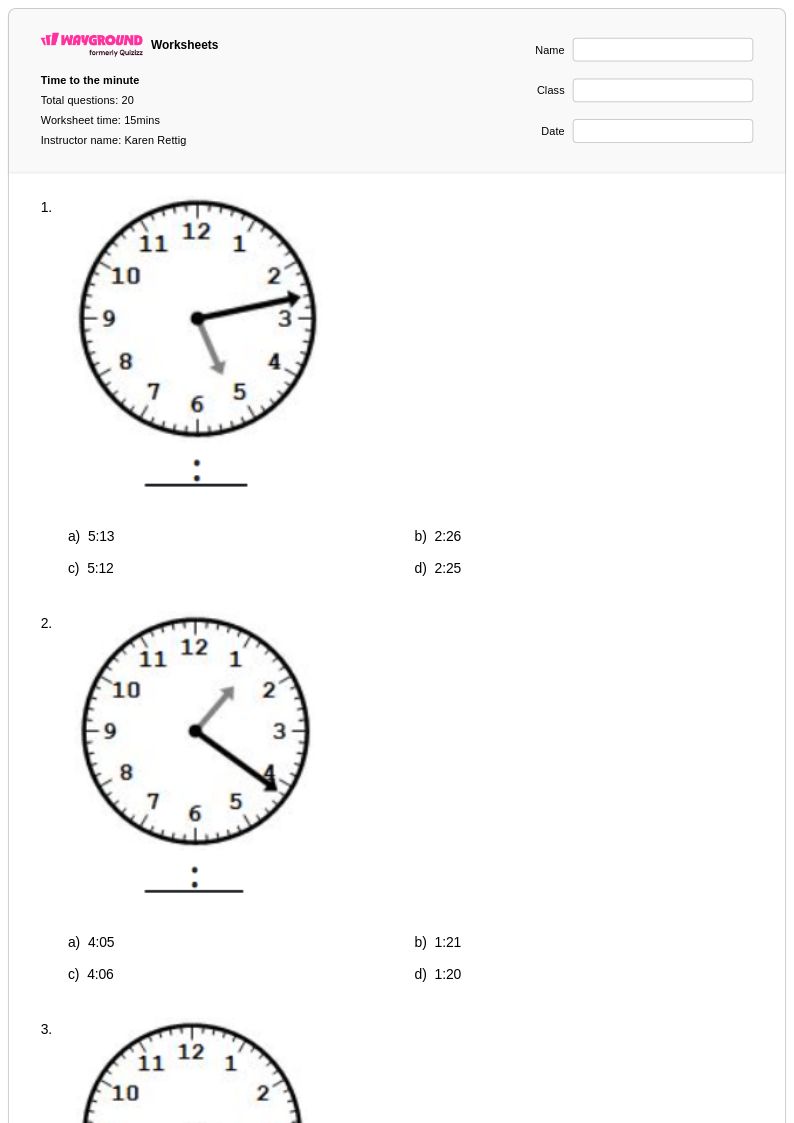
20 Q
2nd - 4th
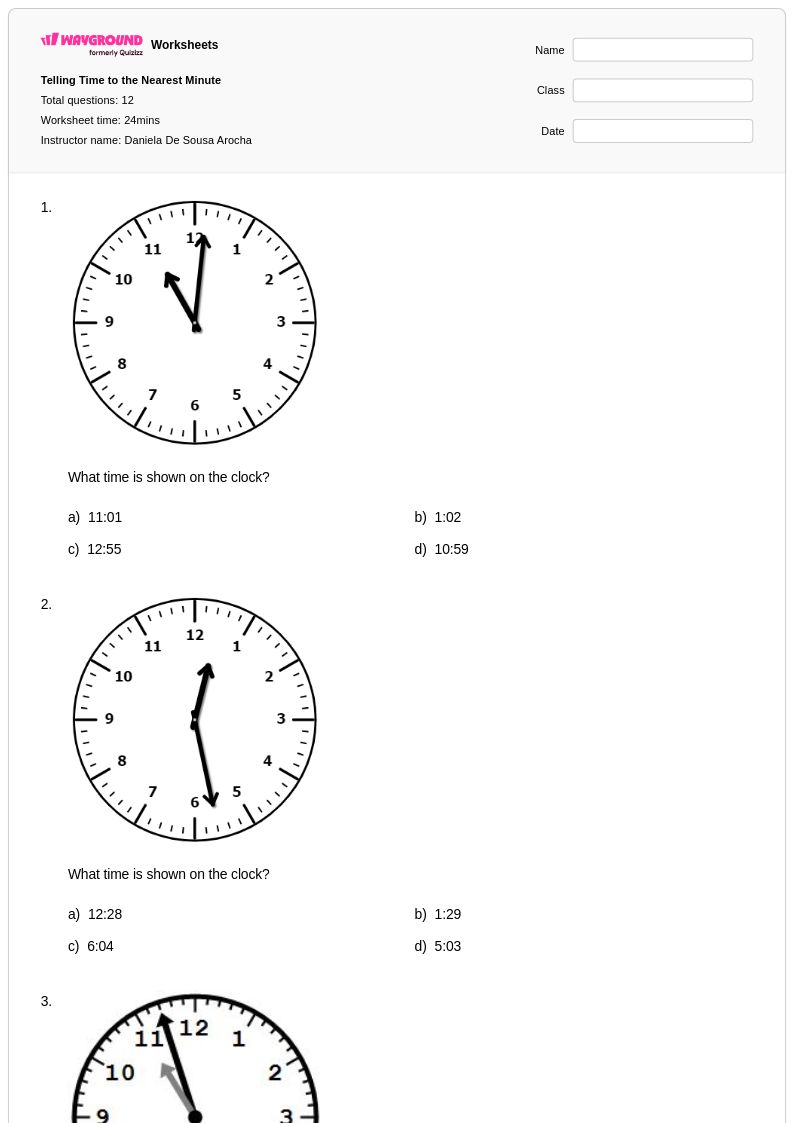
12 Q
3rd
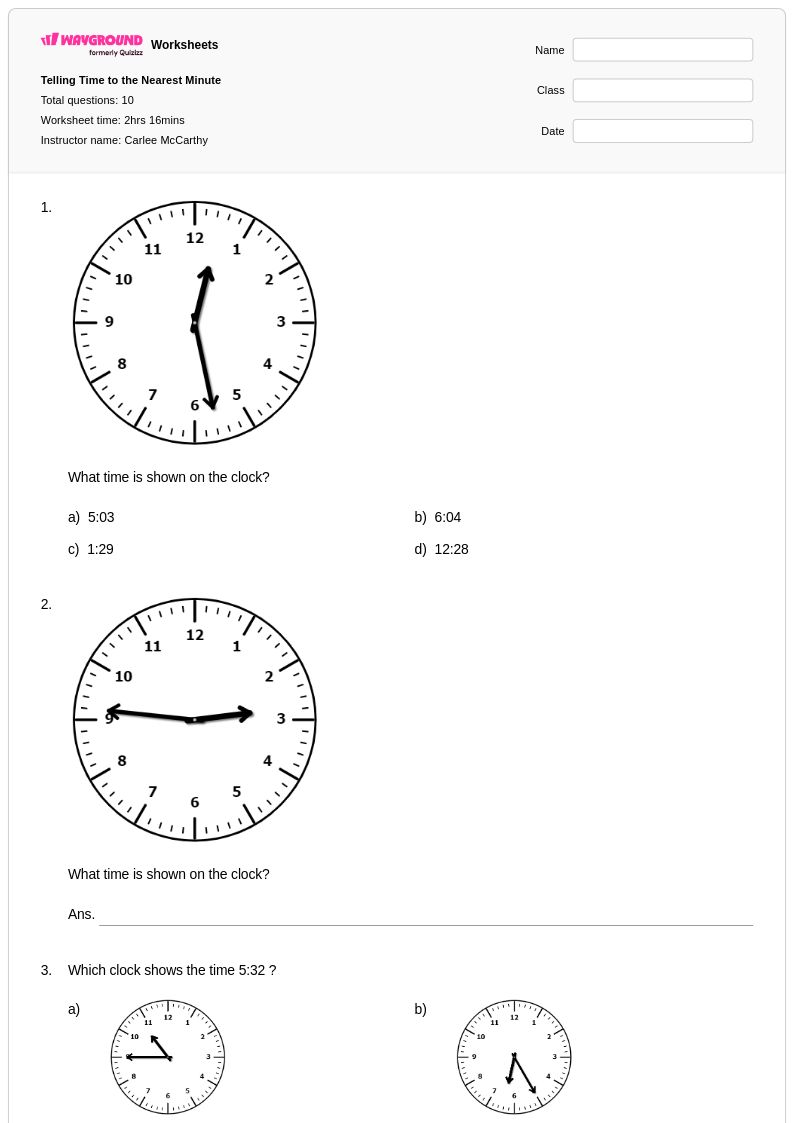
10 Q
3rd - 4th
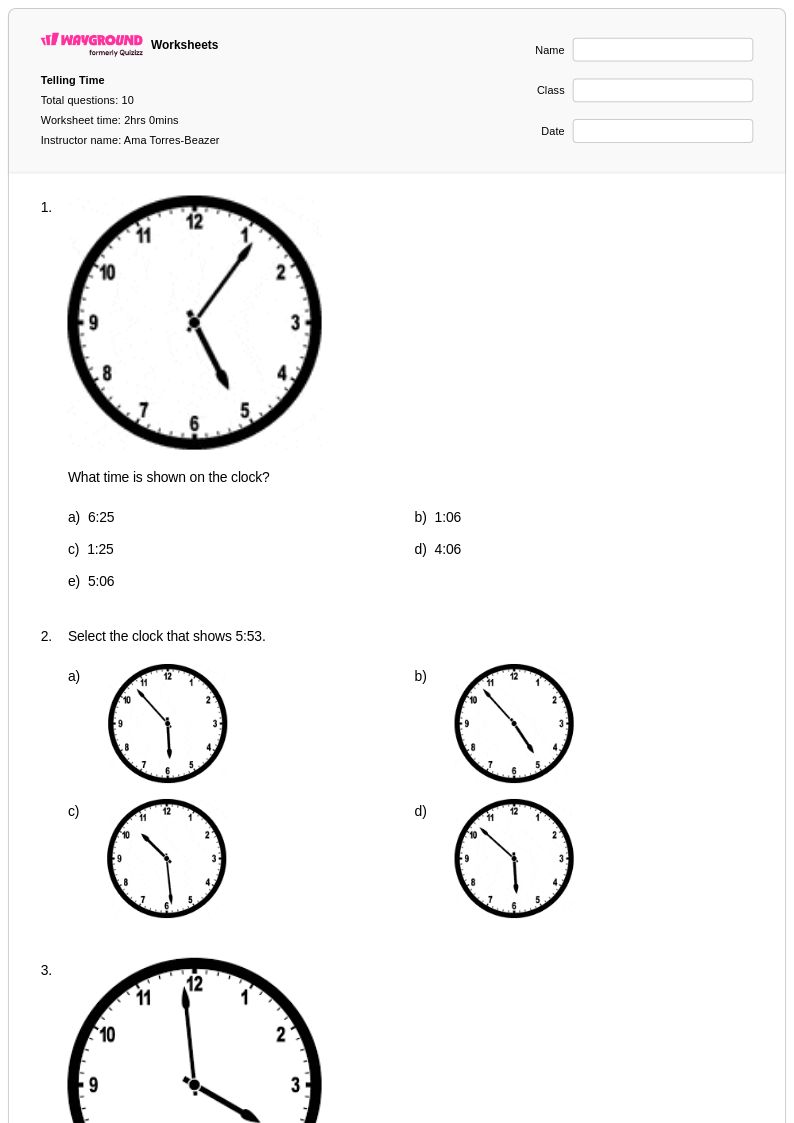
10 Q
3rd - 4th
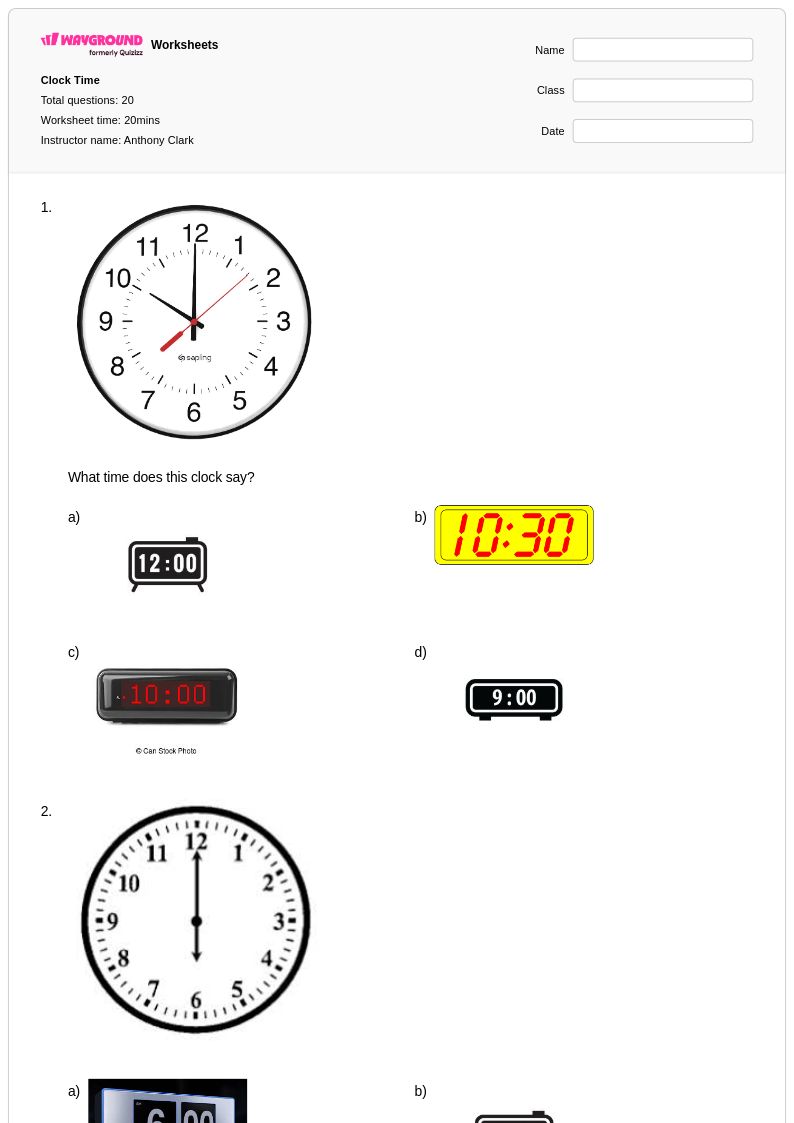
20 Q
2nd - Uni
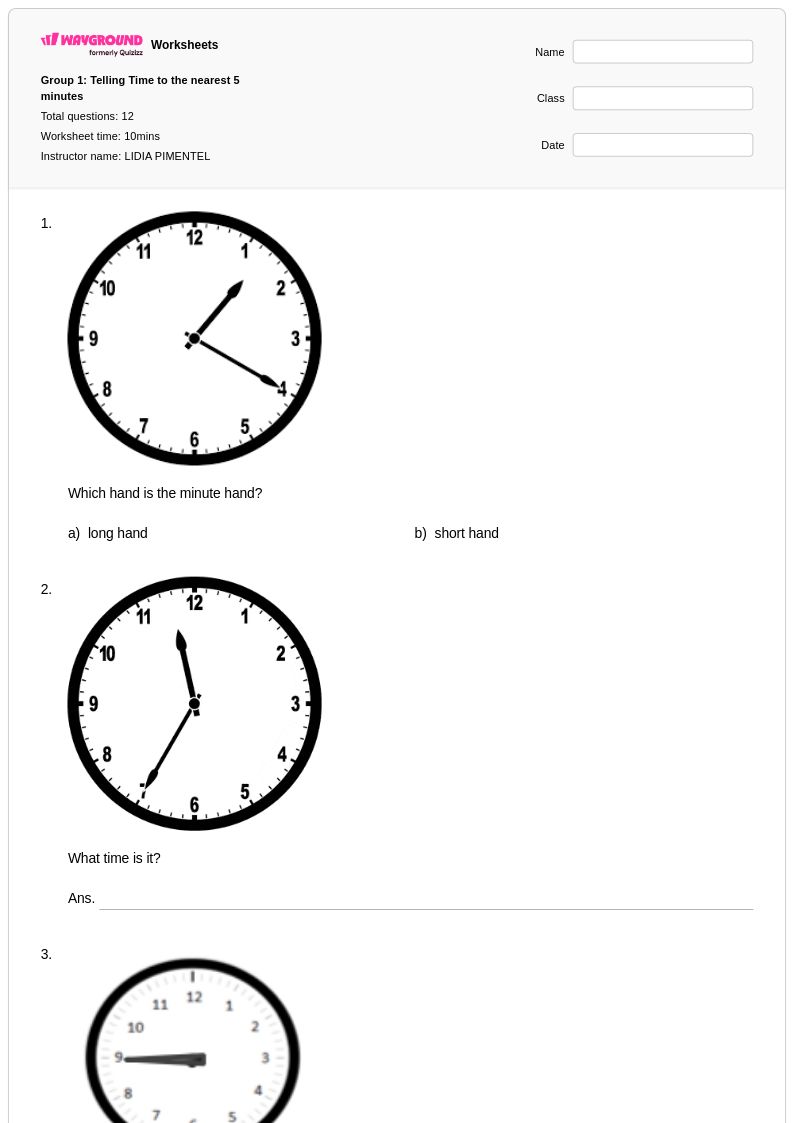
12 Q
1st - 3rd
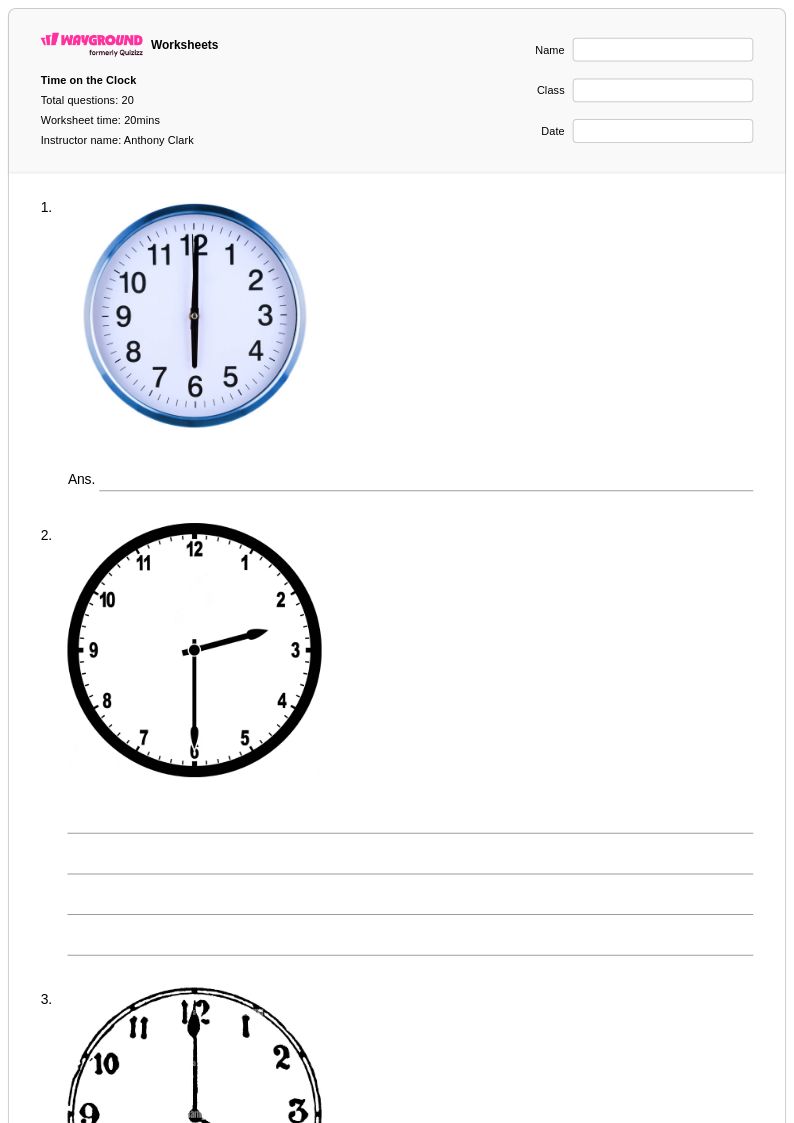
20 Q
3rd - Uni
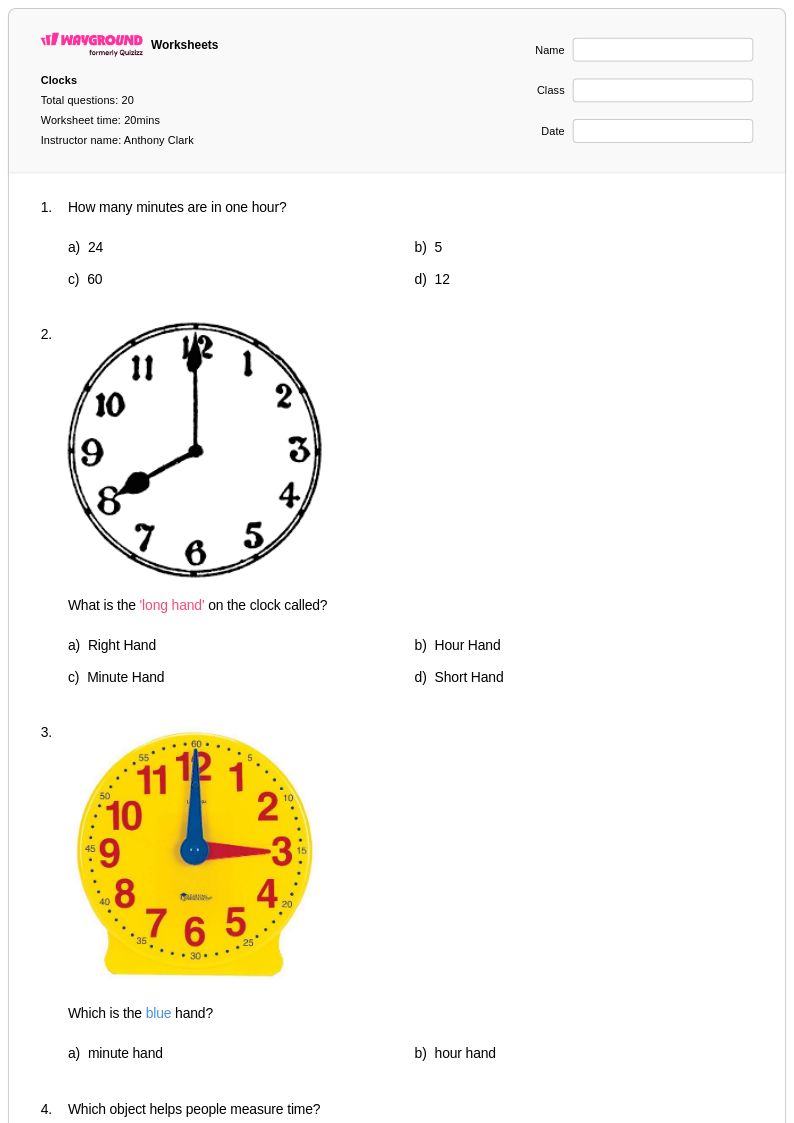
20 Q
1st - Uni
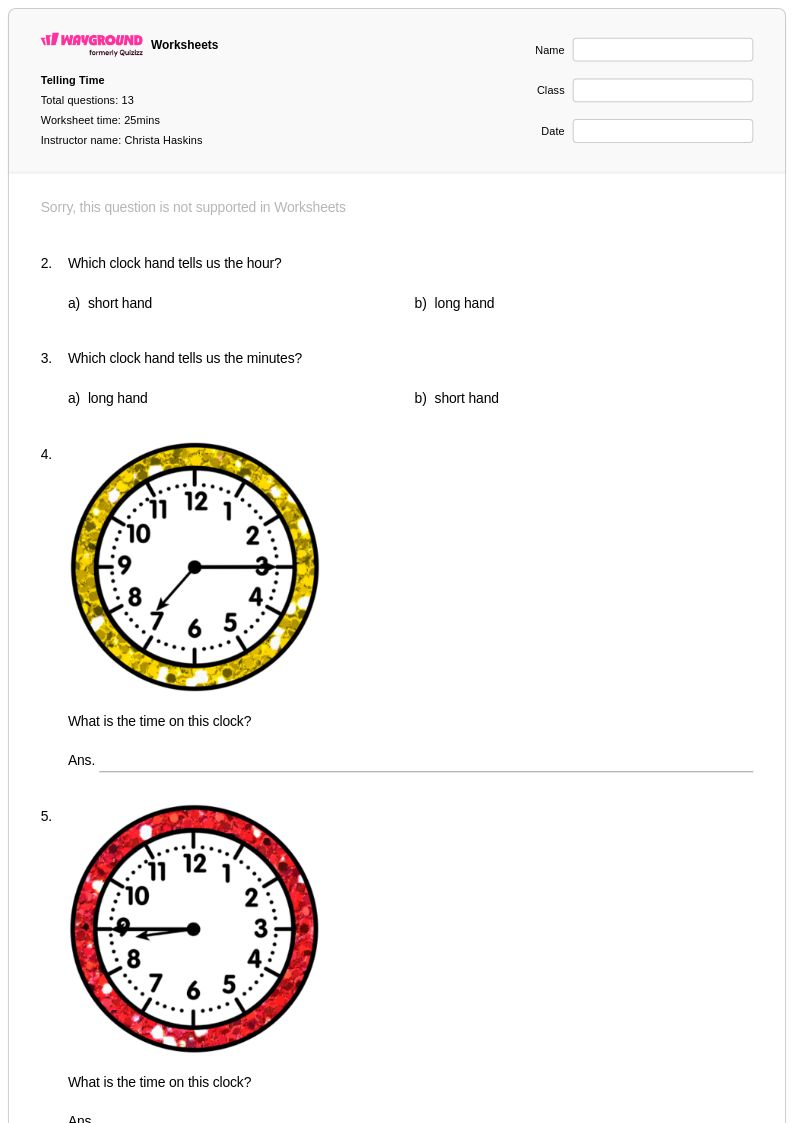
18 Q
3rd
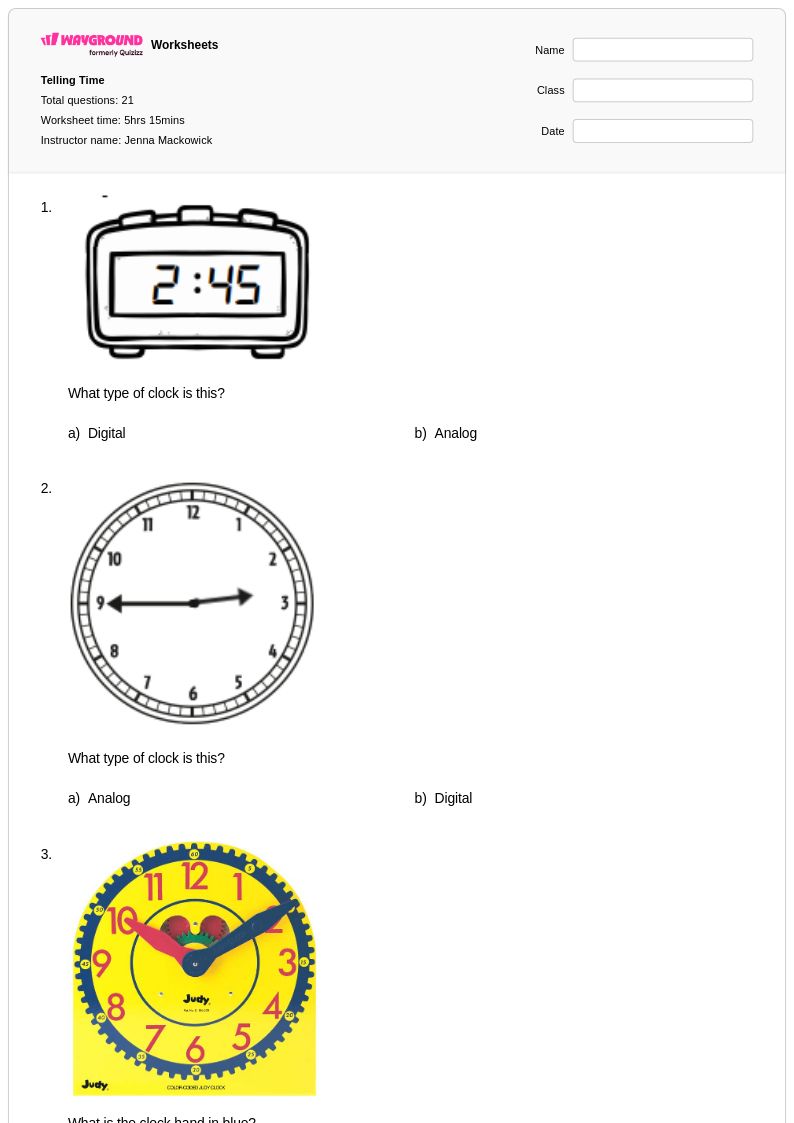
21 Q
1st - 3rd
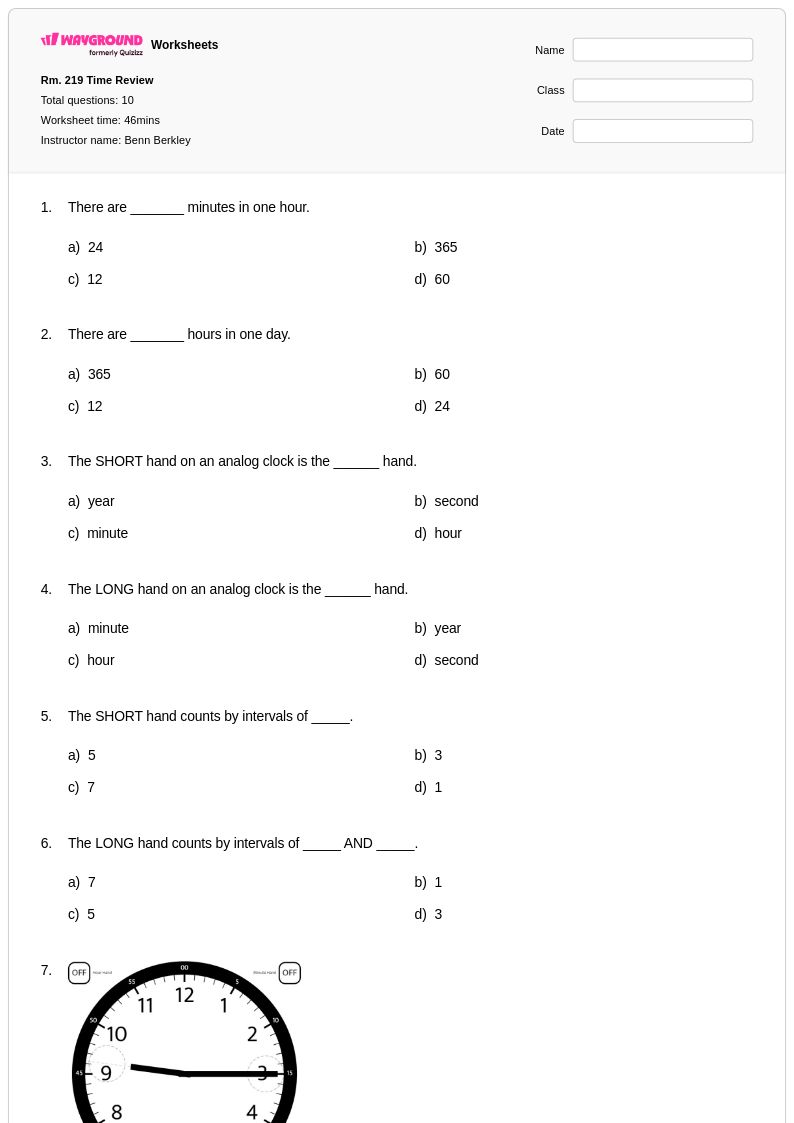
10 Q
2nd - 4th
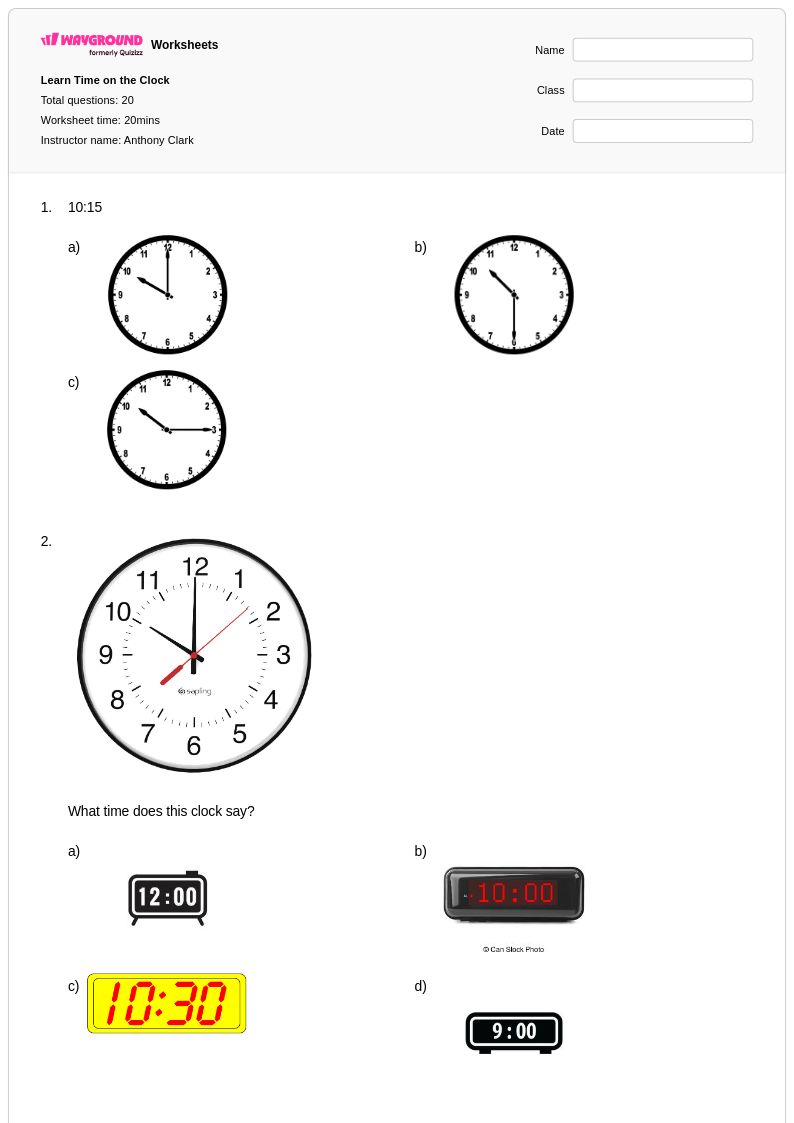
20 Q
2nd - Uni
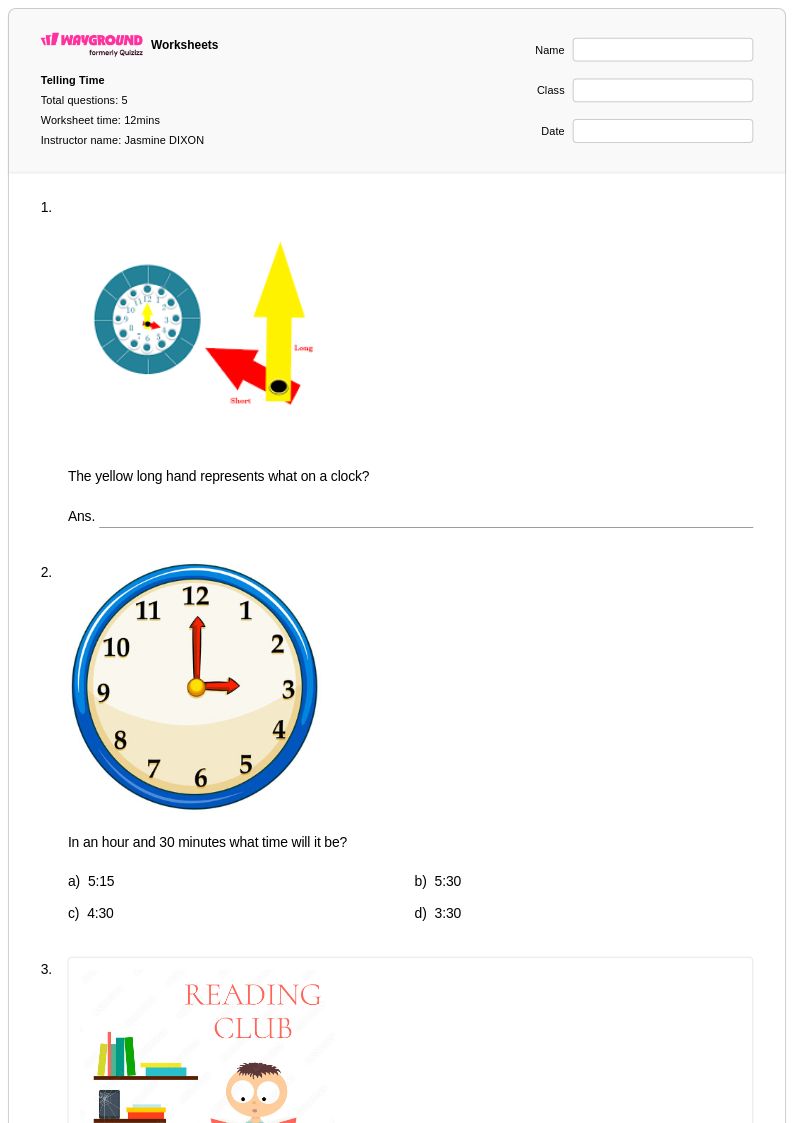
6 Q
3rd
Explore Other Subject Worksheets for grade 3
Explore printable Reading Clock Faces worksheets for Grade 3
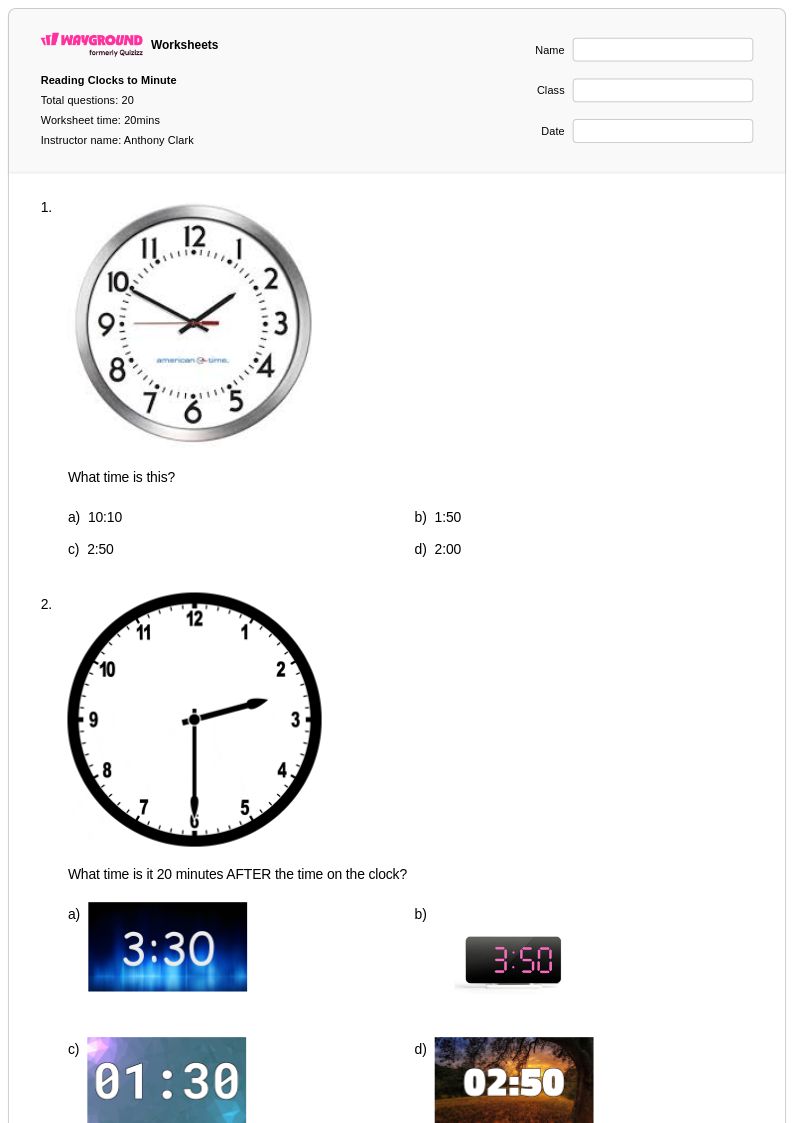
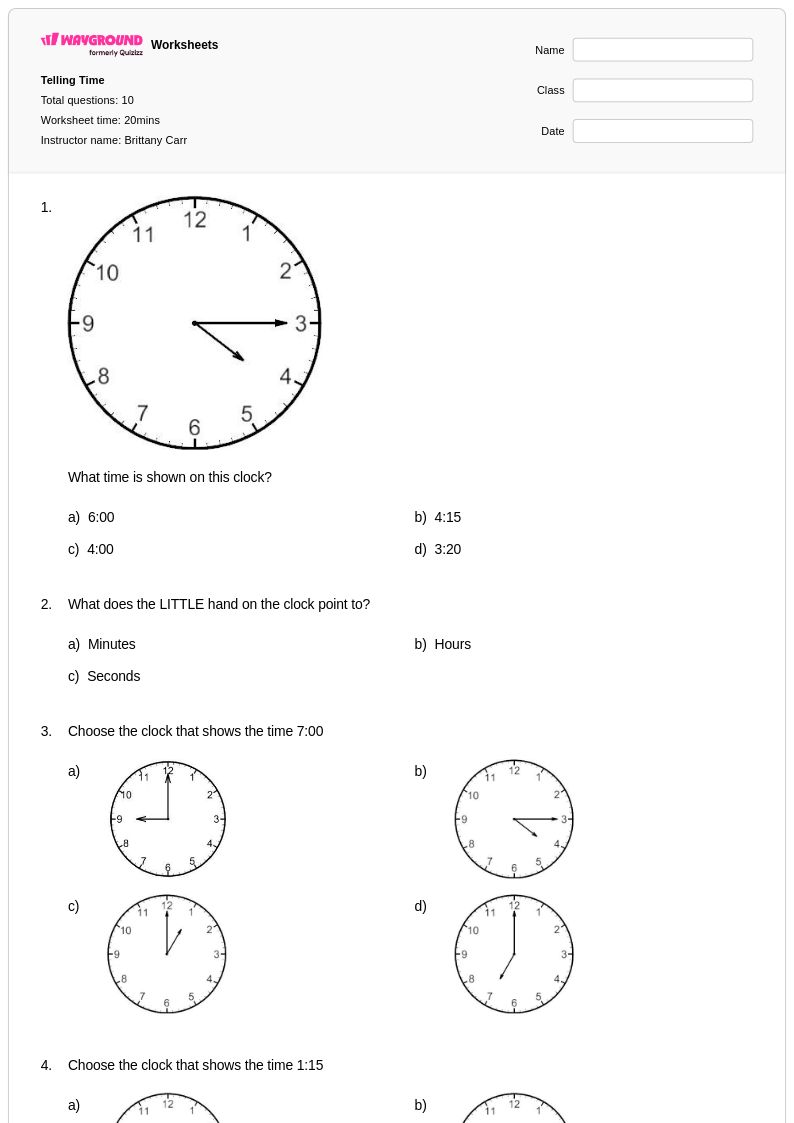
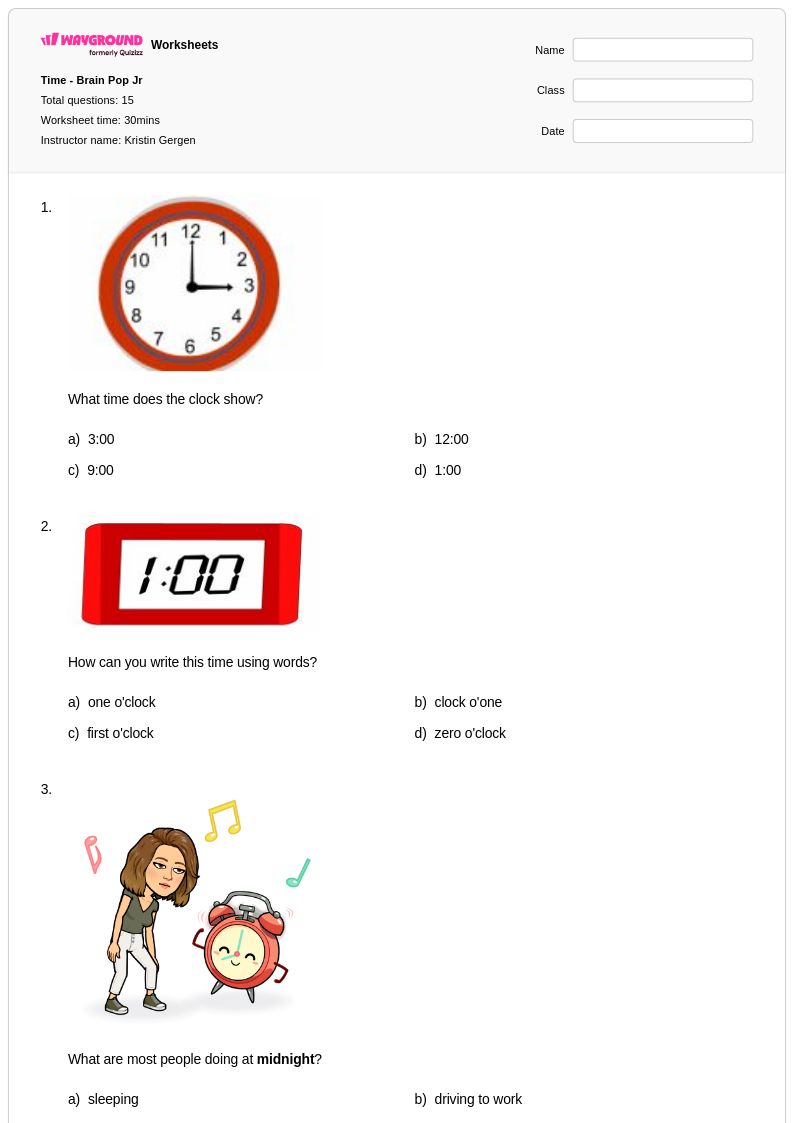
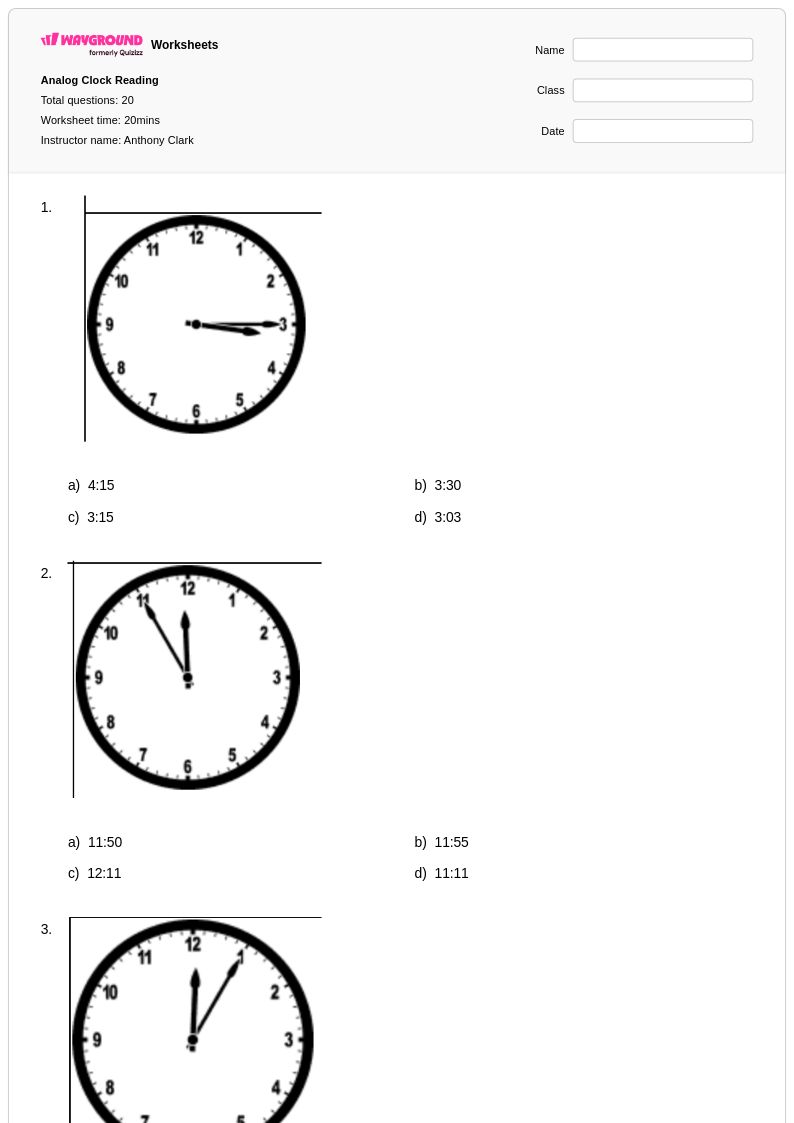
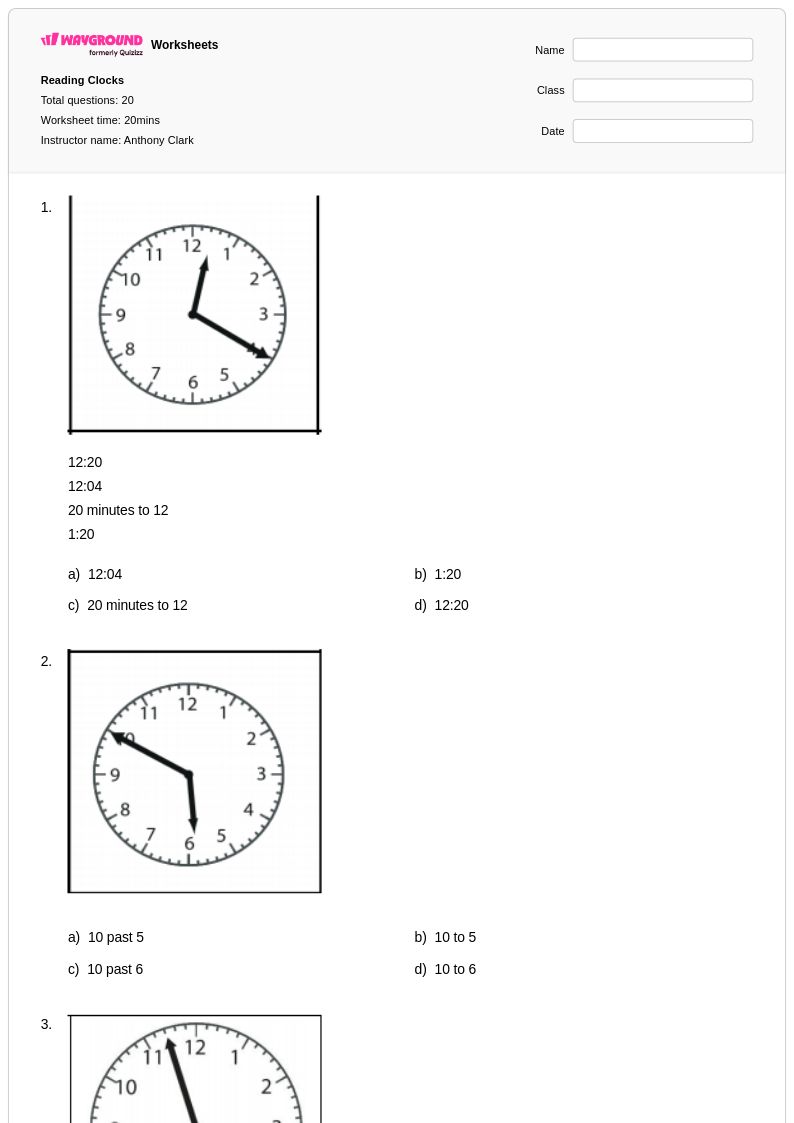
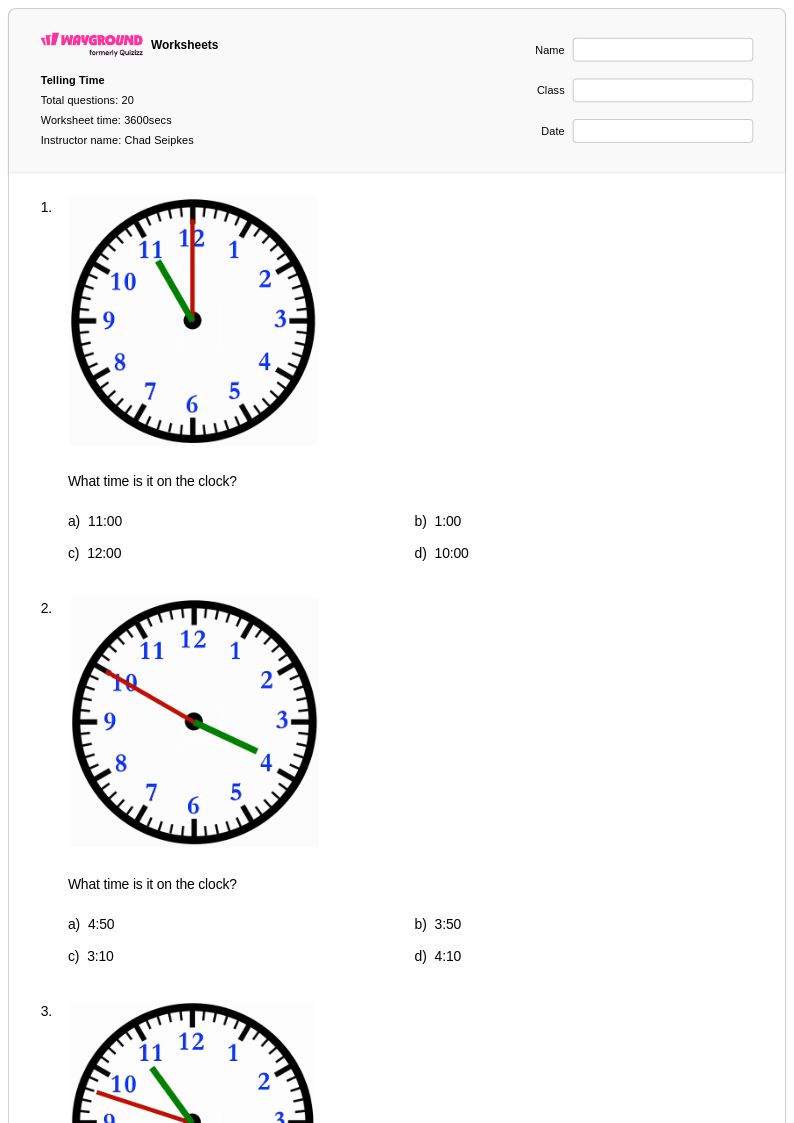
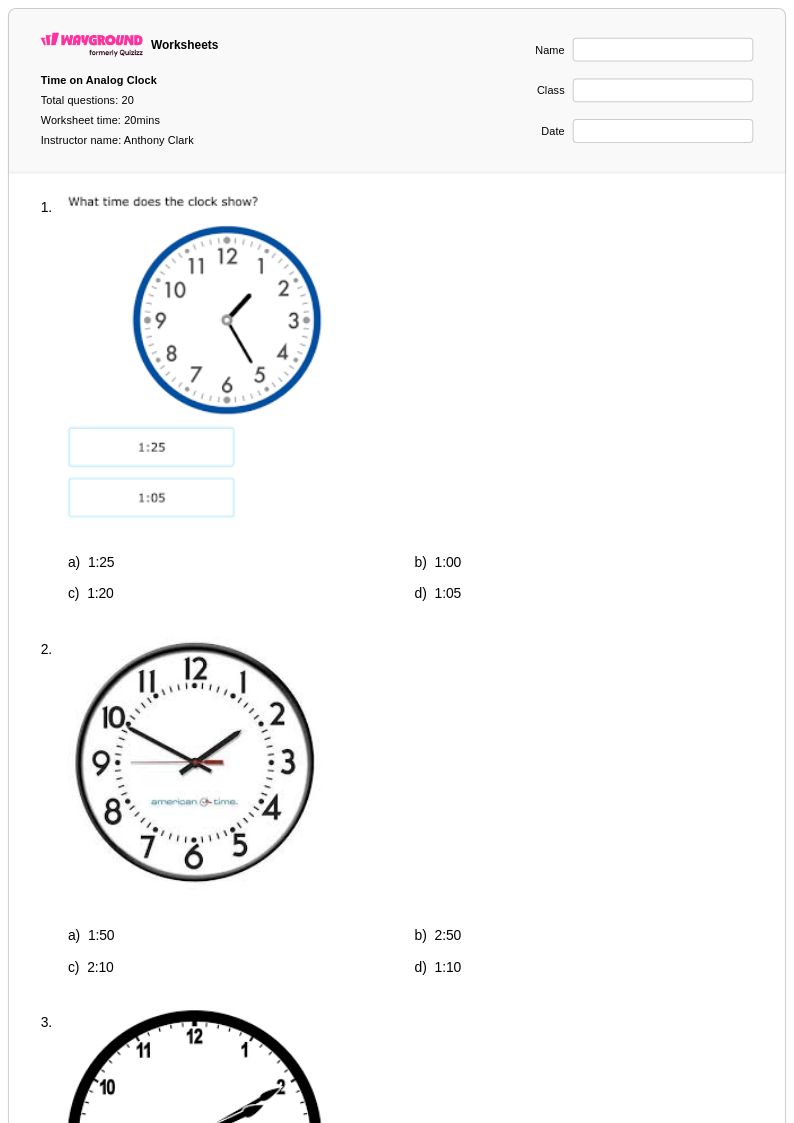
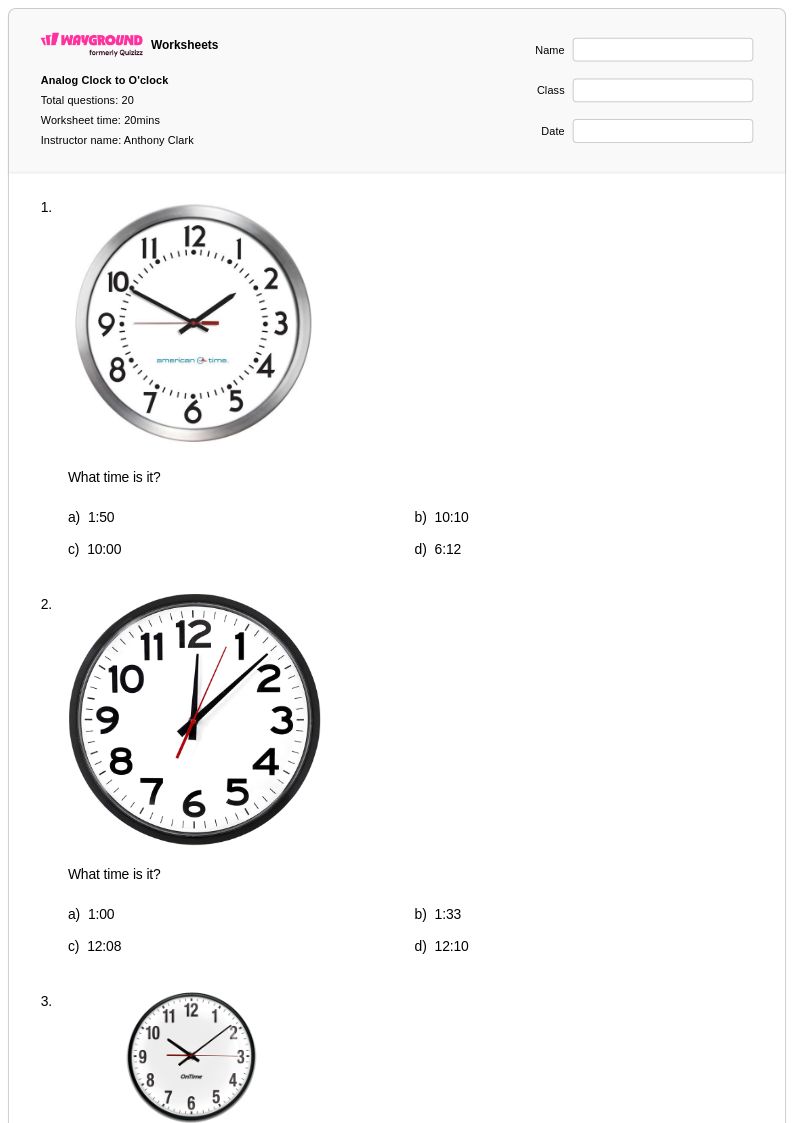
Reading clock faces represents a fundamental mathematical skill that Grade 3 students must master as they develop their understanding of time measurement and daily scheduling concepts. Wayground's comprehensive collection of reading clock faces worksheets provides structured practice opportunities that strengthen students' ability to interpret analog clocks, identify hour and minute hand positions, and translate visual time representations into numerical formats. These carefully designed printables feature progressive difficulty levels that guide third-grade learners from basic hour recognition to more complex time-telling scenarios involving quarter hours, half hours, and five-minute intervals. Each worksheet includes detailed answer keys that support independent learning and self-assessment, while the free pdf format ensures accessibility for both classroom instruction and home practice sessions that reinforce essential time-reading competencies.
Wayground's extensive platform, formerly known as Quizizz, empowers educators with millions of teacher-created resources specifically tailored for Grade 3 mathematics instruction, including sophisticated search and filtering capabilities that streamline the process of locating appropriate reading clock faces materials. Teachers benefit from standards-aligned content that connects directly to curriculum requirements, alongside differentiation tools that accommodate diverse learning needs within mixed-ability classrooms. The platform's flexible customization options allow educators to modify existing worksheets or combine multiple resources to create targeted practice sets, while both printable and digital formats support various instructional approaches from traditional paper-based activities to interactive technology-enhanced lessons. These comprehensive features facilitate efficient lesson planning while providing teachers with reliable resources for remediation support, skill enrichment opportunities, and ongoing assessment of student progress in time-telling proficiency.
FAQs
How can I teach third graders to solve elapsed time problems?
What skills do these Grade 3 time worksheets cover?
What are the biggest challenges for students learning about elapsed time?
How can I use these Grade 3 clock worksheets in my class?
What does the third-grade math curriculum require for time-telling?
How can I support students who struggle with elapsed time?