Free Printable Reality Testing Worksheets for Grade 10
Grade 10 reality testing worksheets help students master critical thinking and evidence evaluation skills through engaging printables, practice problems, and comprehensive answer keys available as free PDF downloads.
Explore printable Reality Testing worksheets for Grade 10
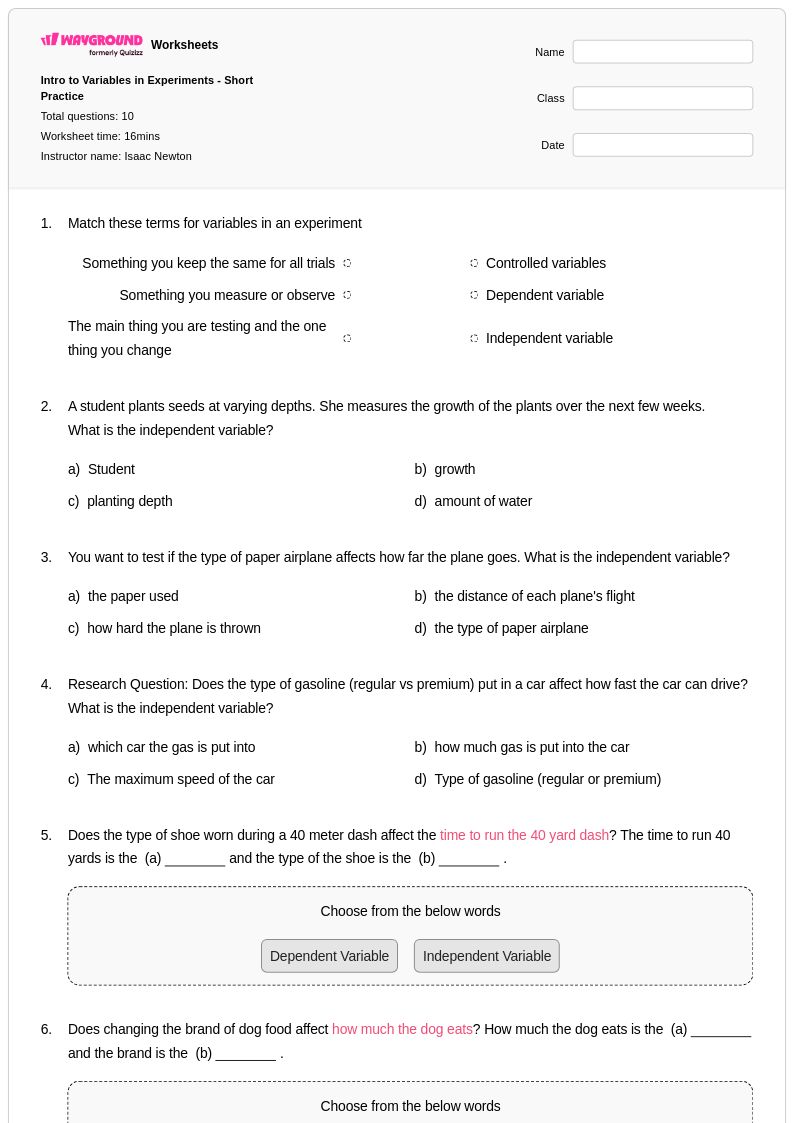
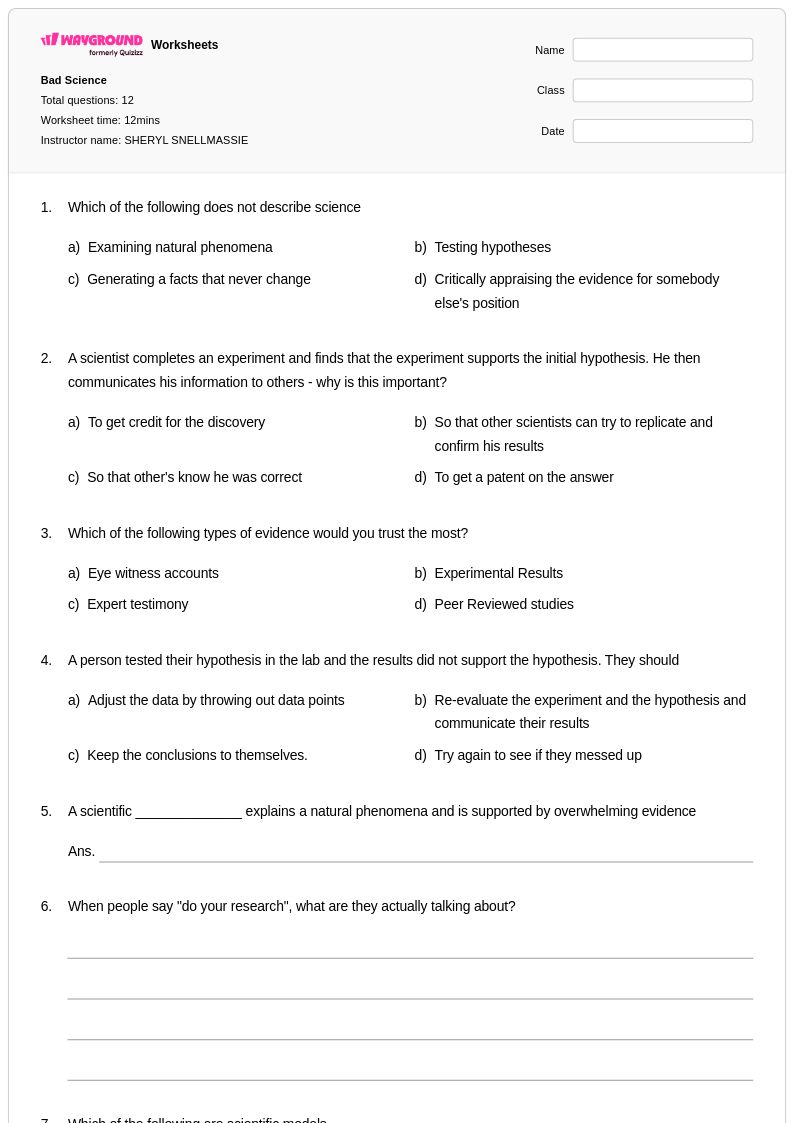
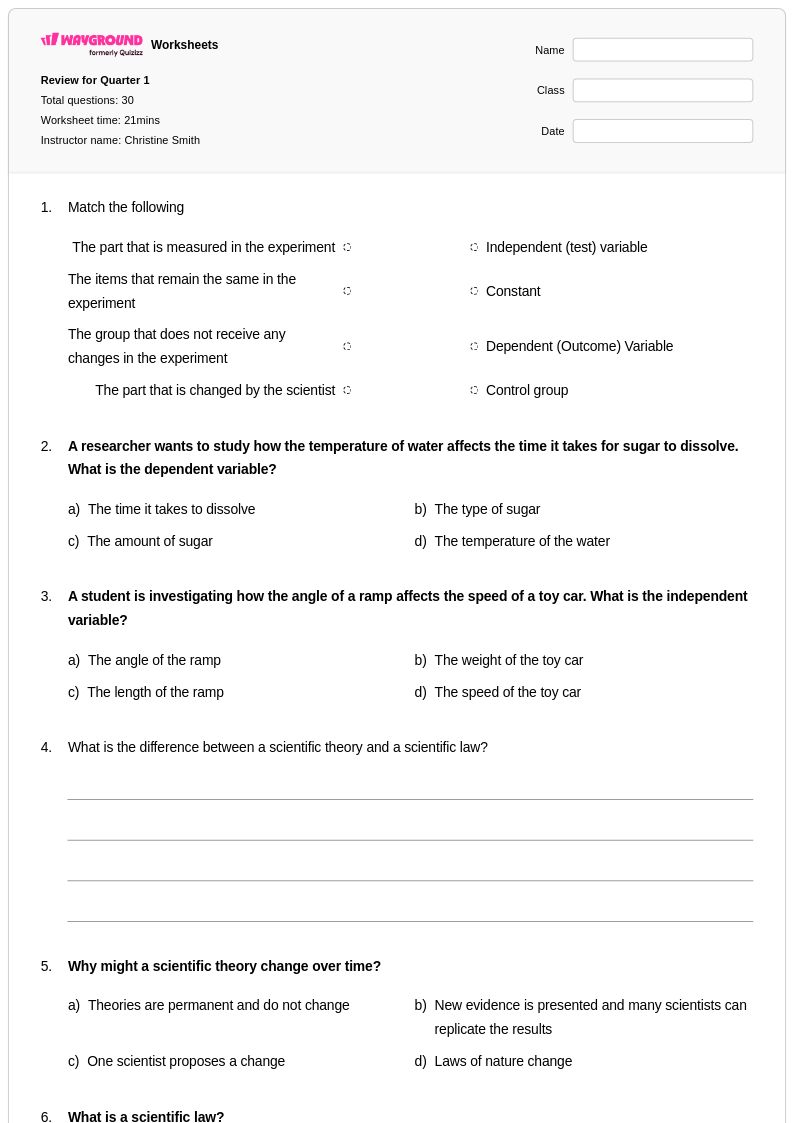
Reality testing worksheets for Grade 10 students available through Wayground (formerly Quizizz) provide comprehensive practice in one of the most critical engineering and science practices that bridges theoretical knowledge with empirical validation. These carefully designed printables guide students through the systematic process of evaluating scientific claims, testing hypotheses against observable evidence, and distinguishing between reliable and unreliable sources of information. Each worksheet strengthens essential skills including experimental design evaluation, data interpretation, error analysis, and the application of scientific reasoning to real-world scenarios. Students work through practice problems that challenge them to assess the validity of scientific studies, identify potential biases in research methodologies, and develop criteria for determining when sufficient evidence supports a particular conclusion. Answer keys accompany these free resources, enabling students to verify their understanding while developing the critical thinking abilities necessary for advanced scientific inquiry.
Wayground (formerly Quizizz) supports educators with an extensive collection of teacher-created reality testing worksheets that can be easily customized to meet diverse classroom needs and learning objectives. The platform's robust search and filtering capabilities allow teachers to quickly locate materials aligned with specific standards and grade-level expectations, while differentiation tools enable instructors to modify content complexity for varied student abilities. These resources are available in both printable pdf formats for traditional classroom use and digital formats for seamless integration with technology-enhanced learning environments. Teachers can efficiently plan lessons that progress from foundational concepts to advanced applications, implement targeted remediation for students struggling with evidence evaluation, and provide enrichment opportunities for those ready to tackle more sophisticated scientific reasoning challenges. The platform's millions of educator-contributed materials ensure that teachers have access to diverse perspectives and approaches for developing students' reality testing competencies across multiple scientific disciplines.
FAQs
How do I teach reality testing skills in a science class?
Teaching reality testing involves guiding students through structured analysis of scientific claims by asking whether evidence supports a conclusion, whether the source is credible, and whether the methodology is sound. Start with concrete examples of well-supported versus poorly-supported claims, then progressively introduce more complex scenarios involving experimental data, bias, and replication. Having students practice evaluating real scientific studies or media headlines builds the habit of critical scrutiny rather than passive acceptance.
What kinds of exercises help students practice evaluating the validity of scientific claims?
Effective practice exercises include analyzing data sets to determine whether conclusions are justified, comparing experimental results against theoretical predictions, and identifying sources of bias or experimental error in described investigations. Students also benefit from tasks that require them to assess whether findings can be replicated or generalized beyond the original study context. These structured activities build systematic reasoning habits that transfer across scientific disciplines.
What mistakes do students commonly make when evaluating scientific evidence?
Students frequently confuse correlation with causation, accepting a relationship between two variables as proof that one causes the other without considering alternative explanations. They also tend to over-generalize findings from small or unrepresentative samples and fail to recognize confirmation bias in how evidence is selected or reported. Another common error is treating a single study as definitive rather than understanding that scientific conclusions are strengthened through replication and peer review.
How can I use reality testing worksheets to address misconceptions about scientific validity?
Reality testing worksheets are most effective for misconception remediation when they present students with plausible-but-flawed reasoning and ask them to identify specifically what went wrong. Targeted exercises that isolate common errors, such as overgeneralization, biased sampling, or unsupported conclusions, allow teachers to address misconceptions directly rather than through general review. Reviewing completed worksheets as a class and discussing why incorrect answers seem reasonable is especially effective at reshaping entrenched misunderstandings.
How do I use Wayground's reality testing worksheets in my classroom?
Wayground's reality testing worksheets are available as printable PDFs for traditional classroom use and in digital formats for technology-integrated environments, giving teachers flexibility depending on their setup. Teachers can also host worksheets as a live or assigned quiz directly on Wayground, enabling real-time tracking of student responses. This makes them suitable for whole-class instruction, independent practice, formative assessment, or small-group remediation sessions.
How can I differentiate reality testing instruction for students at different skill levels?
For students who struggle, reducing the complexity of claims being evaluated and providing scaffolding such as sentence starters or structured analysis frameworks can lower the barrier to entry. Advanced learners benefit from open-ended tasks that require them to critique real scientific abstracts or design their own validity-testing rubrics. On Wayground, teachers can apply individual accommodations such as reduced answer choices or read-aloud support to specific students without disrupting the experience for the rest of the class.