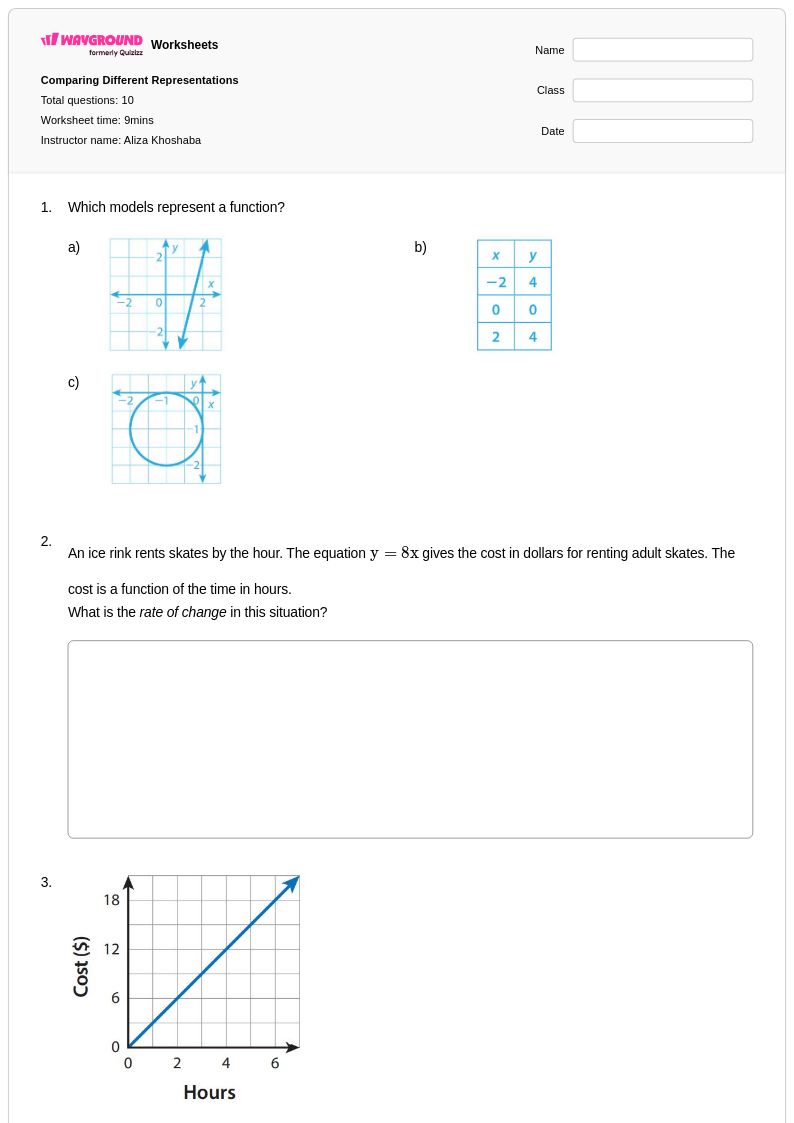
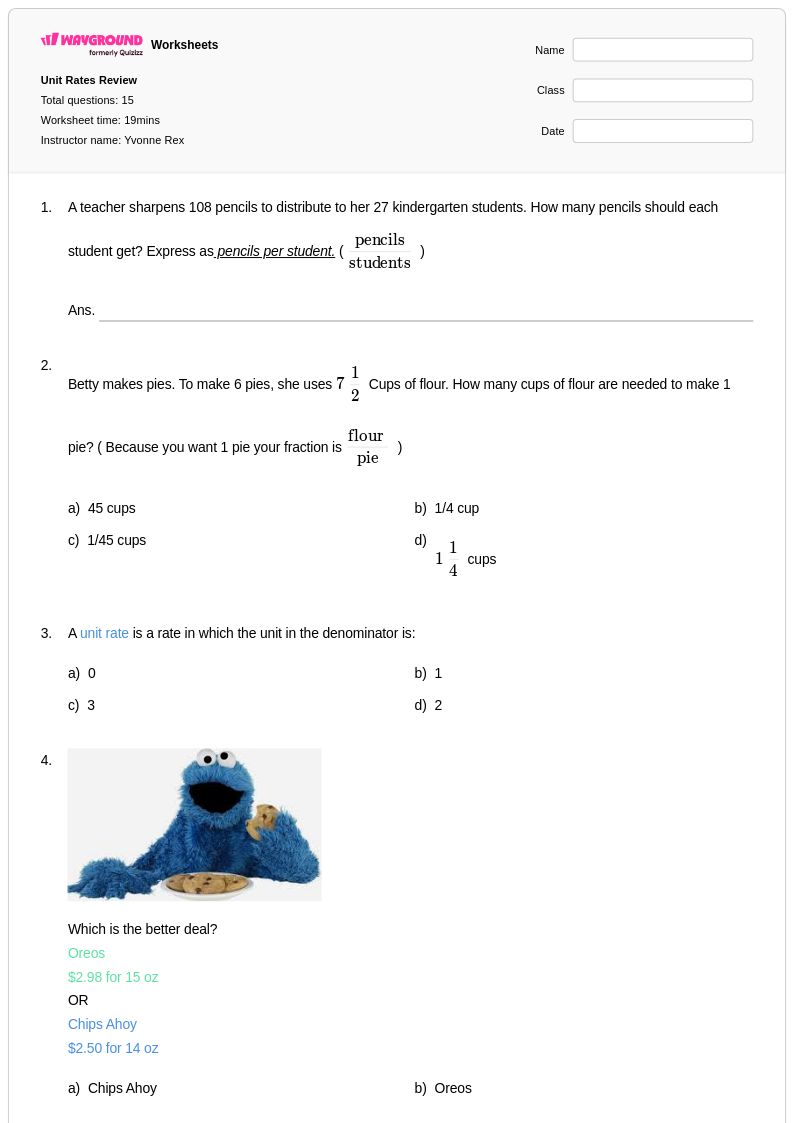
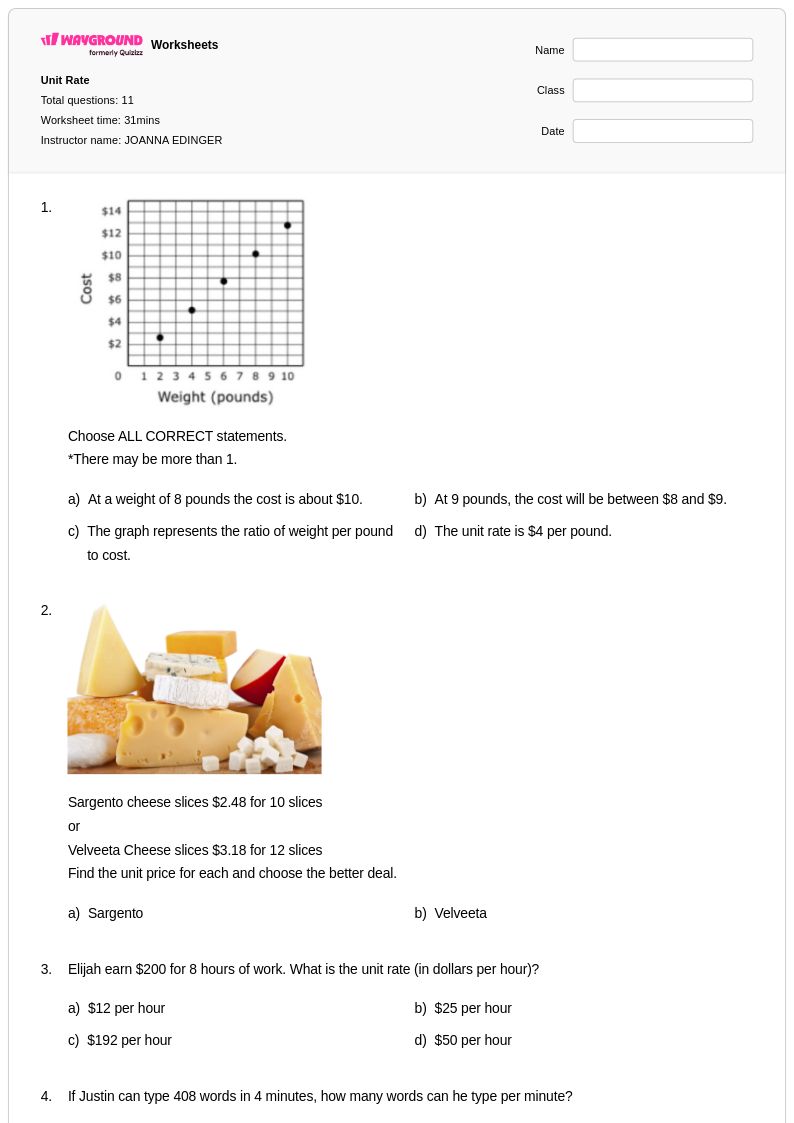
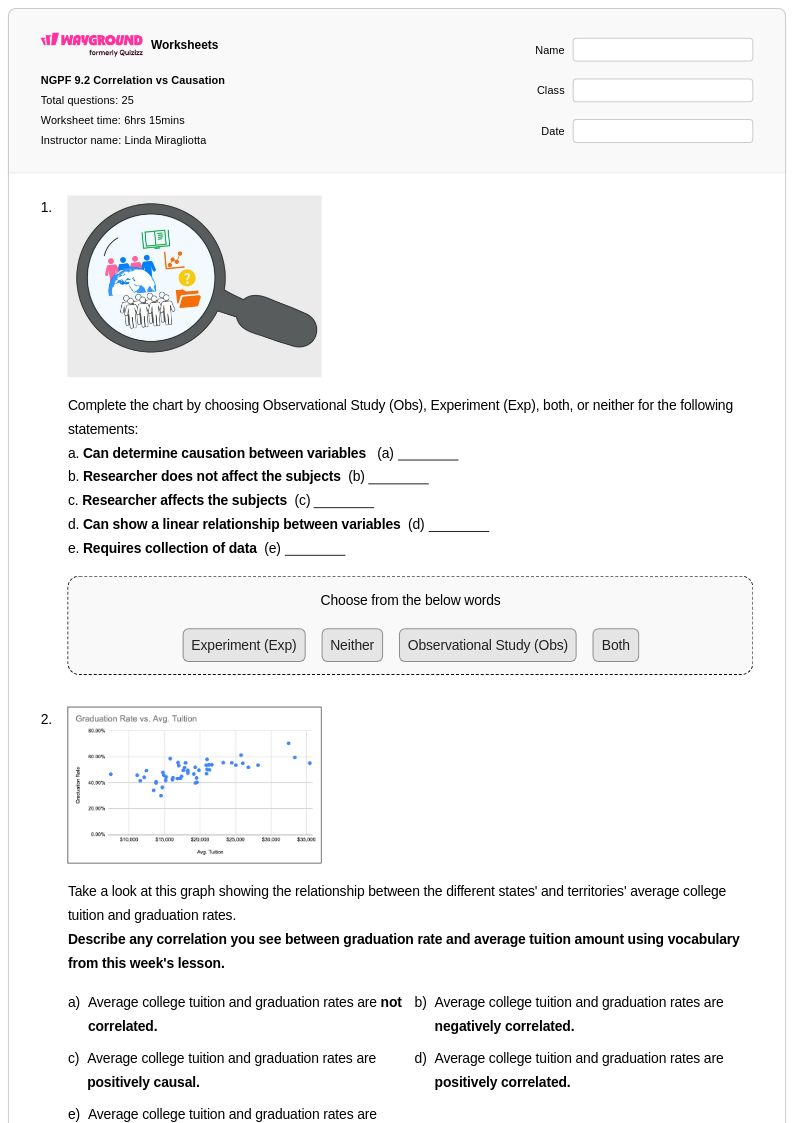
Master related rates problems with Wayground's comprehensive collection of free calculus worksheets, featuring step-by-step practice problems, detailed answer keys, and printable PDFs to strengthen problem-solving skills.
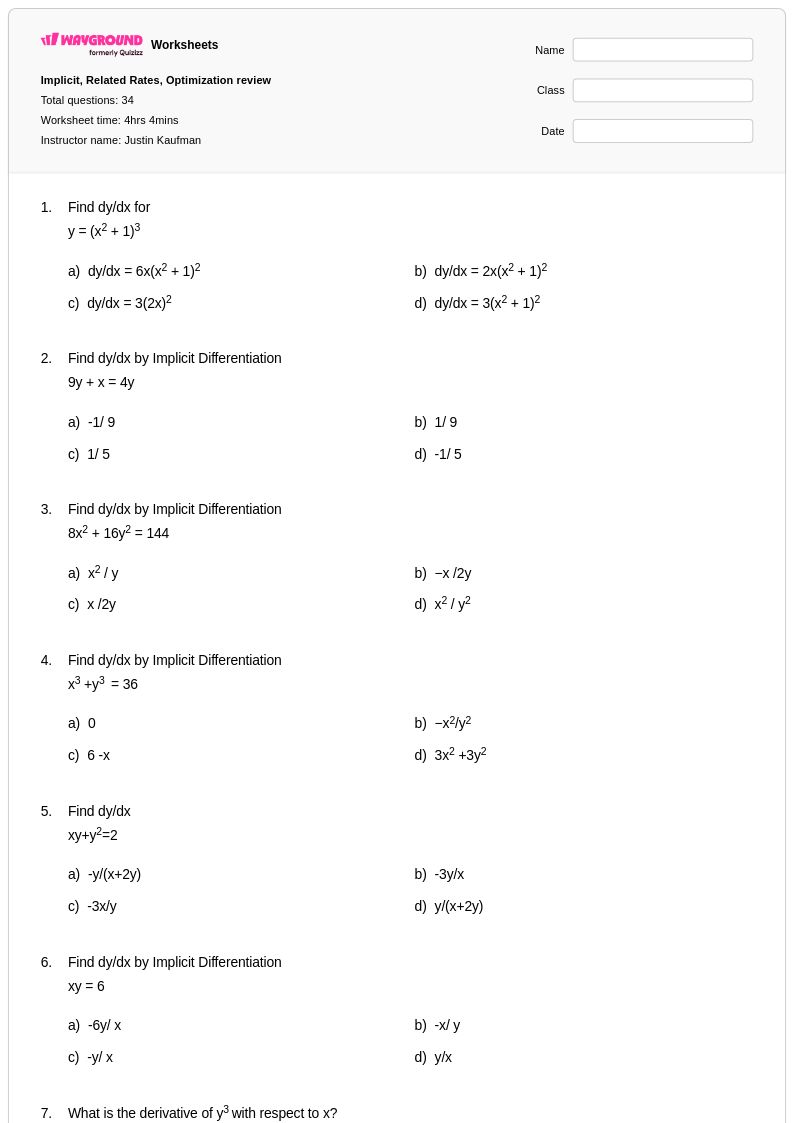
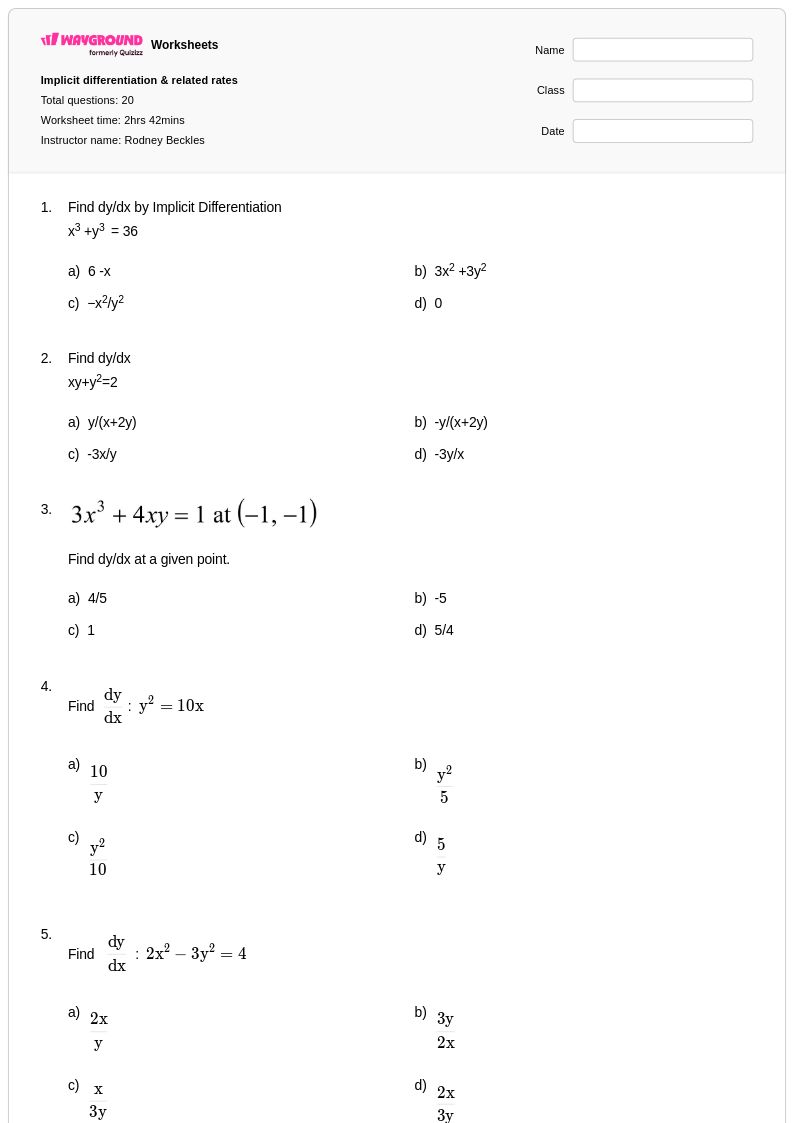
Related rates worksheets available through Wayground (formerly Quizizz) provide comprehensive practice materials designed to strengthen students' mastery of one of calculus's most challenging application areas. These expertly crafted worksheets focus on developing the analytical skills necessary to solve problems involving multiple variables changing with respect to time, such as ladder problems, balloon expansion scenarios, and geometric optimization situations. Students work through carefully sequenced practice problems that build their ability to identify implicit relationships, apply the chain rule effectively, and set up differential equations that model real-world dynamic situations. Each worksheet collection includes detailed answer keys and step-by-step solution guides, with materials available as free printables and downloadable pdf formats to accommodate diverse classroom needs and study preferences.
Wayground (formerly Quizizz) empowers mathematics educators with access to millions of teacher-created related rates resources that streamline lesson planning and enhance student learning outcomes. The platform's robust search and filtering capabilities allow instructors to quickly locate worksheets aligned with specific curriculum standards and differentiate instruction based on individual student needs and skill levels. Teachers can customize existing materials or create entirely new worksheet collections, with flexible formatting options that support both traditional printable assignments and interactive digital practice sessions. These comprehensive tools prove invaluable for targeted remediation of students struggling with implicit differentiation concepts, enrichment activities for advanced learners ready to tackle complex optimization problems, and regular skill practice that reinforces the procedural fluency essential for success in advanced calculus topics.
FAQs
How do I teach related rates effectively?
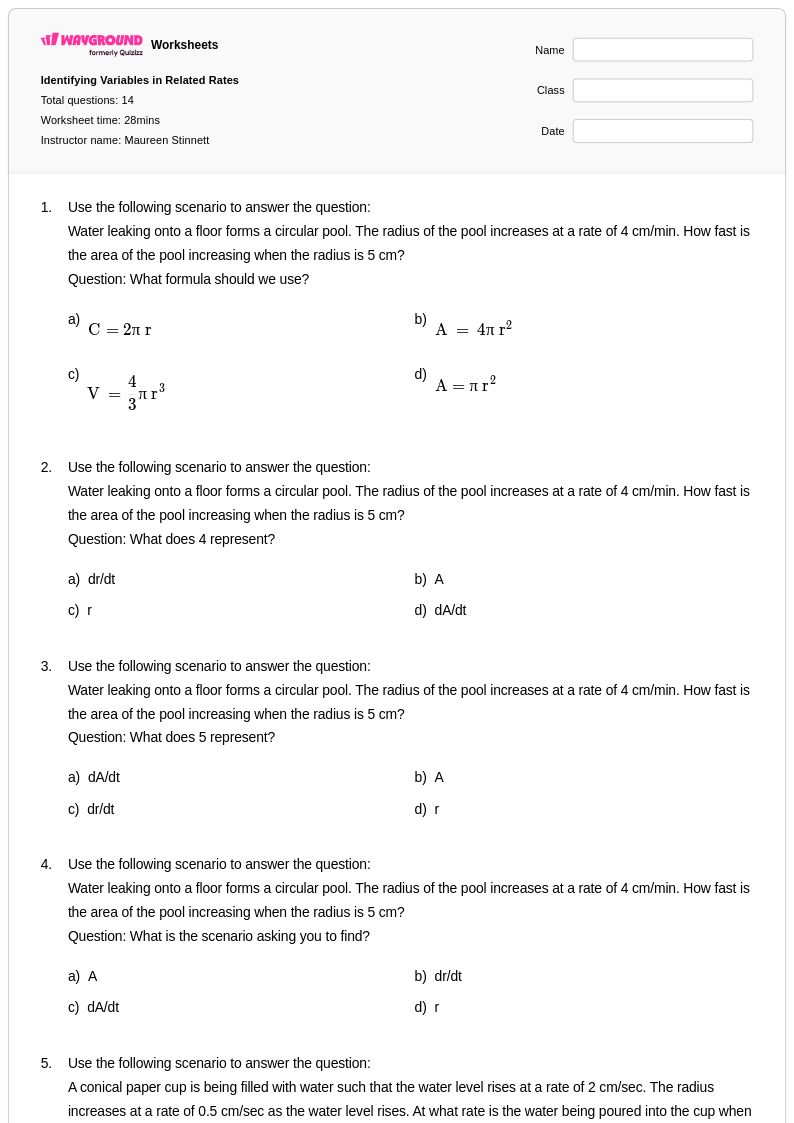
Introduce related rates using a consistent, step-by-step method. A reliable 'recipe' is: 1) Draw a diagram and label constants and variables. 2) Write an equation relating the variables. 3) Differentiate both sides with respect to time (t), using the chain rule. 4) Substitute the known values and rates. 5) Solve for the unknown rate. Starting with simple geometric examples like an expanding circle helps build confidence.
What are the most common student mistakes in related rates problems?
Students often struggle with three main areas. First, they may substitute a variable's value before differentiating, incorrectly treating it as a constant. Second, they frequently forget to apply the chain rule, writing dy/dx instead of (dy/dt) / (dx/dt). Finally, setting up the initial geometric or algebraic equation can be a major hurdle, especially with problems involving similar triangles or cones.
What types of problems help students practice related rates?
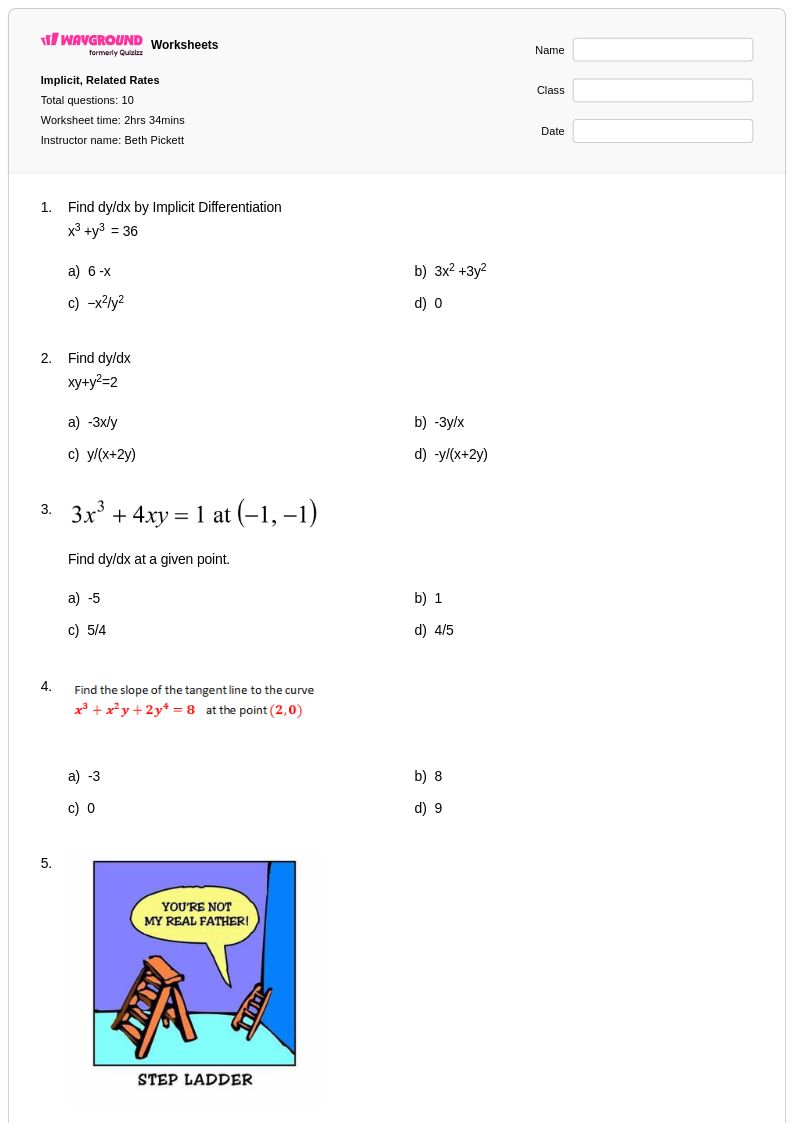
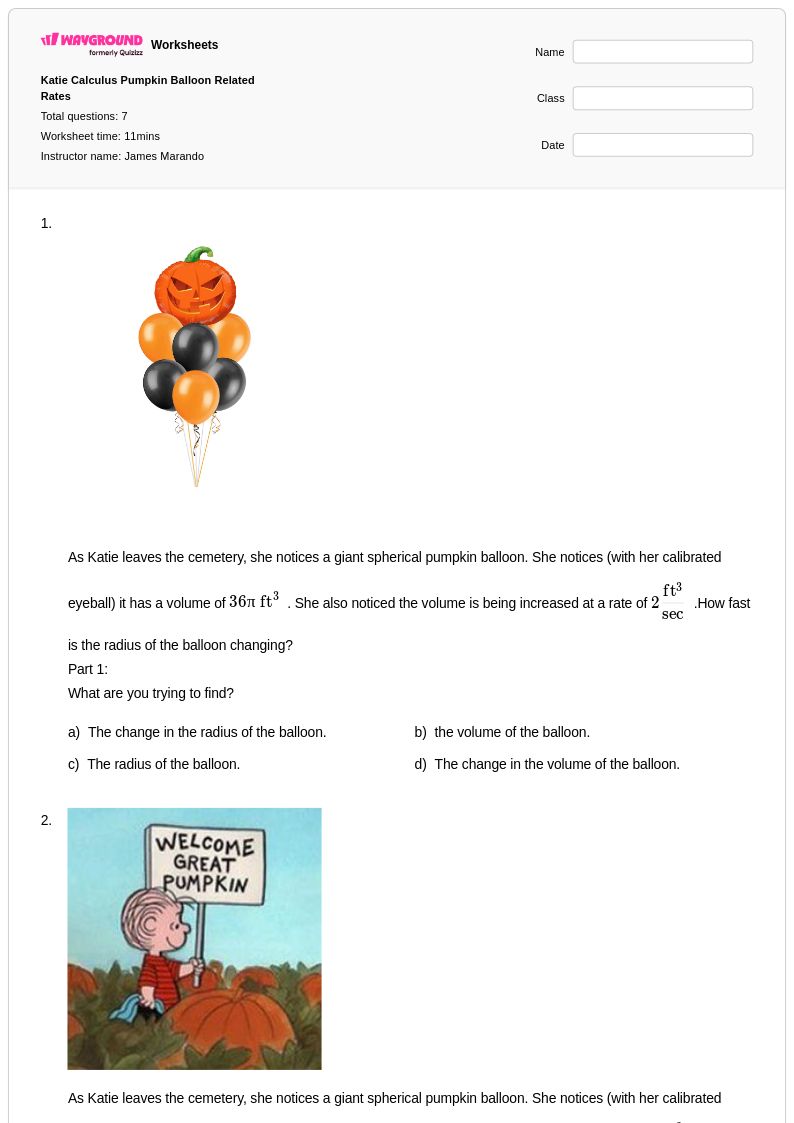
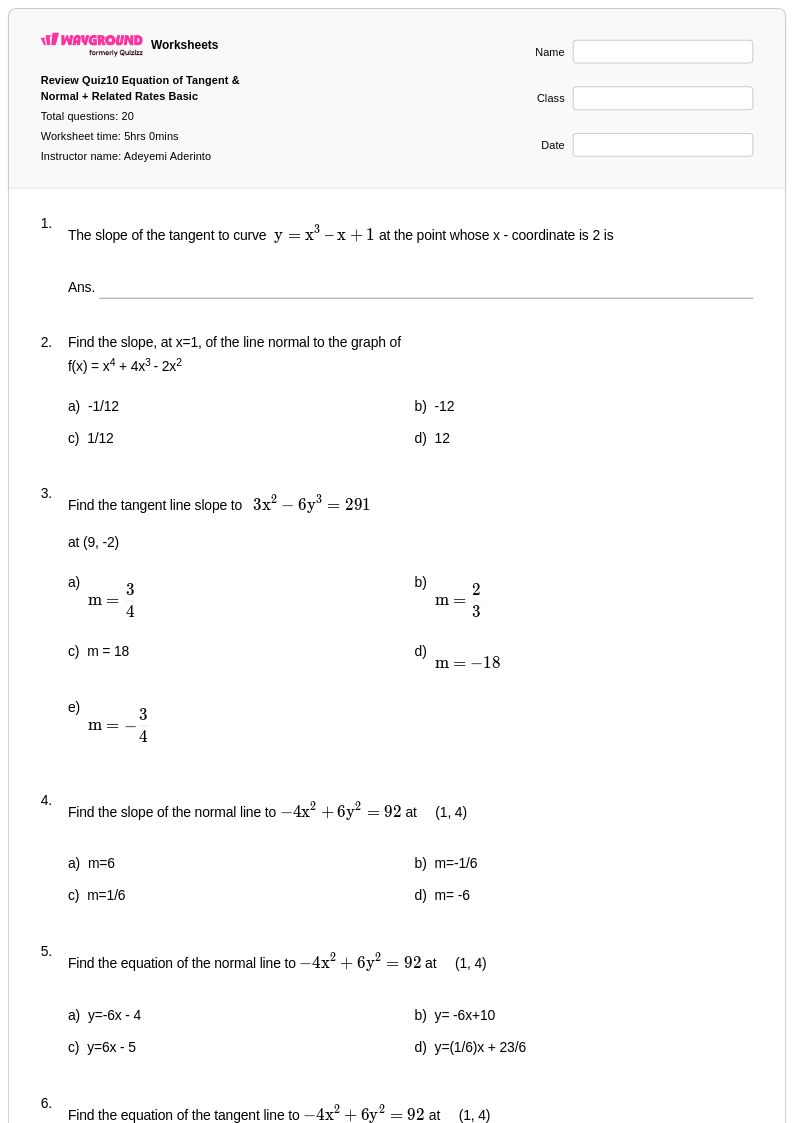
Classic scenarios are best for building foundational skills. This worksheet includes problems like the 'sliding ladder,' an inflating spherical balloon, and water filling or draining from a conical tank. These examples effectively test students' ability to apply geometric formulas (Pythagorean theorem, volume formulas) within a calculus context.
How can I use this related rates worksheet in my class?
This resource is flexible for any classroom setup. You can assign it as an interactive digital quiz on the Wayground platform for immediate feedback, or provide it as a printable PDF for focused, offline paper practice. Every worksheet includes a complete answer key to support student review and simplify grading.
How does learning related rates fit into the calculus curriculum?
Aligned with Common Core's standards for high school mathematics, related rates are a key application of differential calculus. The topic directly builds upon students' mastery of implicit differentiation and the chain rule. Successfully solving these problems demonstrates a student's ability to model dynamic real-world situations, a skill that serves as a bridge to more advanced topics like optimization.
How can I differentiate instruction for this challenging topic?
For students needing support, use Wayground's digital assignment settings to provide accommodations like 'Read Aloud' for complex word problems or 'Extended time' per question. For scaffolding, you can also create an alternate version of the printable worksheet with wider font spacing or a larger font size to improve readability and reduce cognitive load.