Free Printable Relevant Details Worksheets for Grade 12
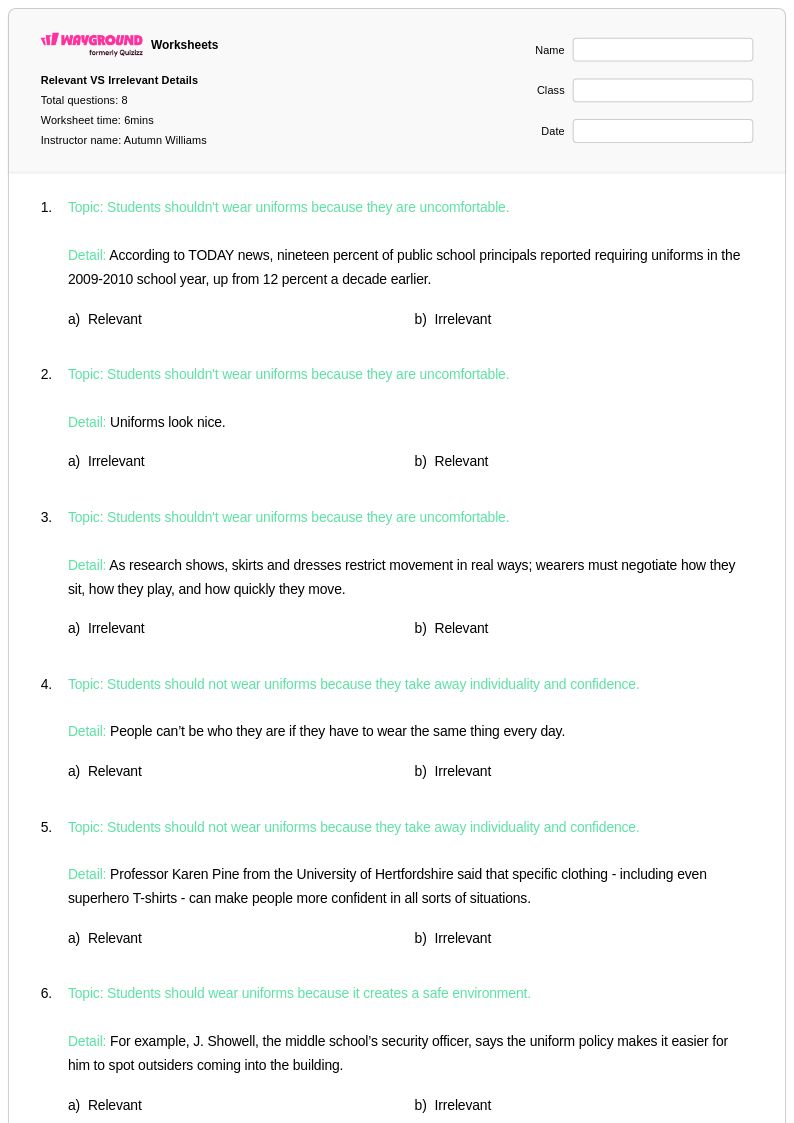
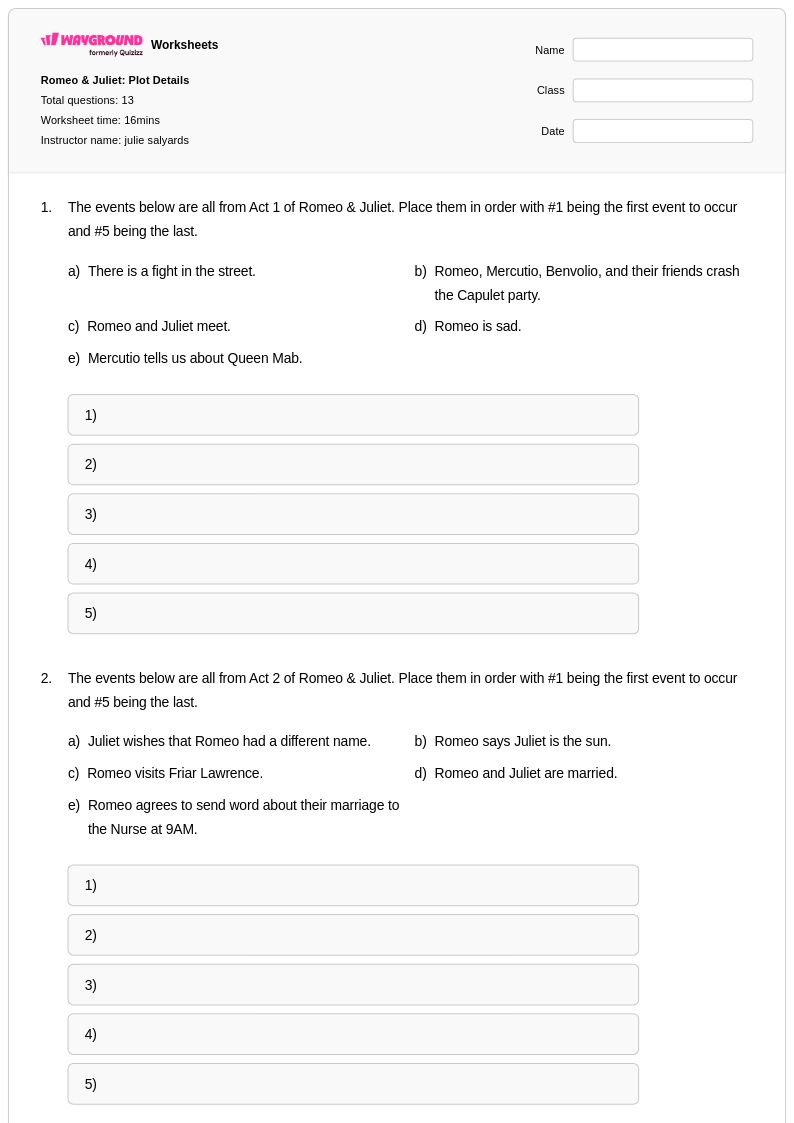
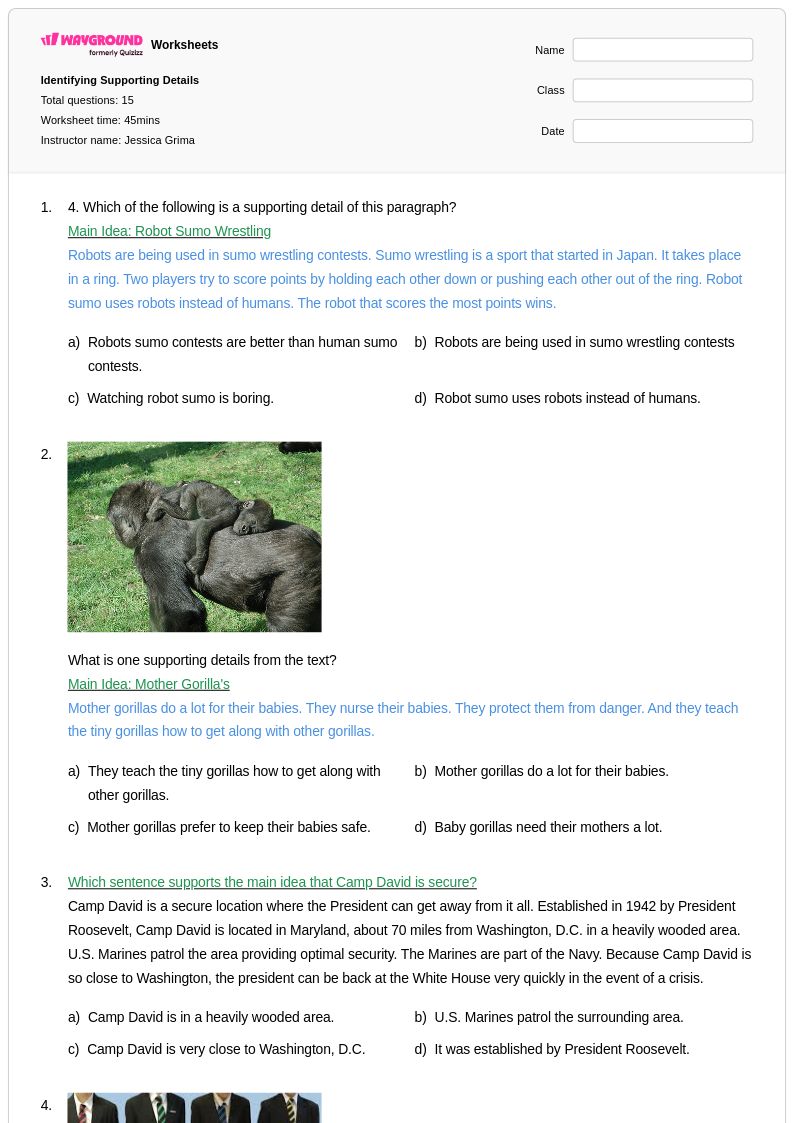
Grade 12 free worksheets and printables help students master identifying and incorporating relevant details in their writing, featuring practice problems and answer keys to strengthen organizational skills.
Explore printable Relevant Details worksheets for Grade 12
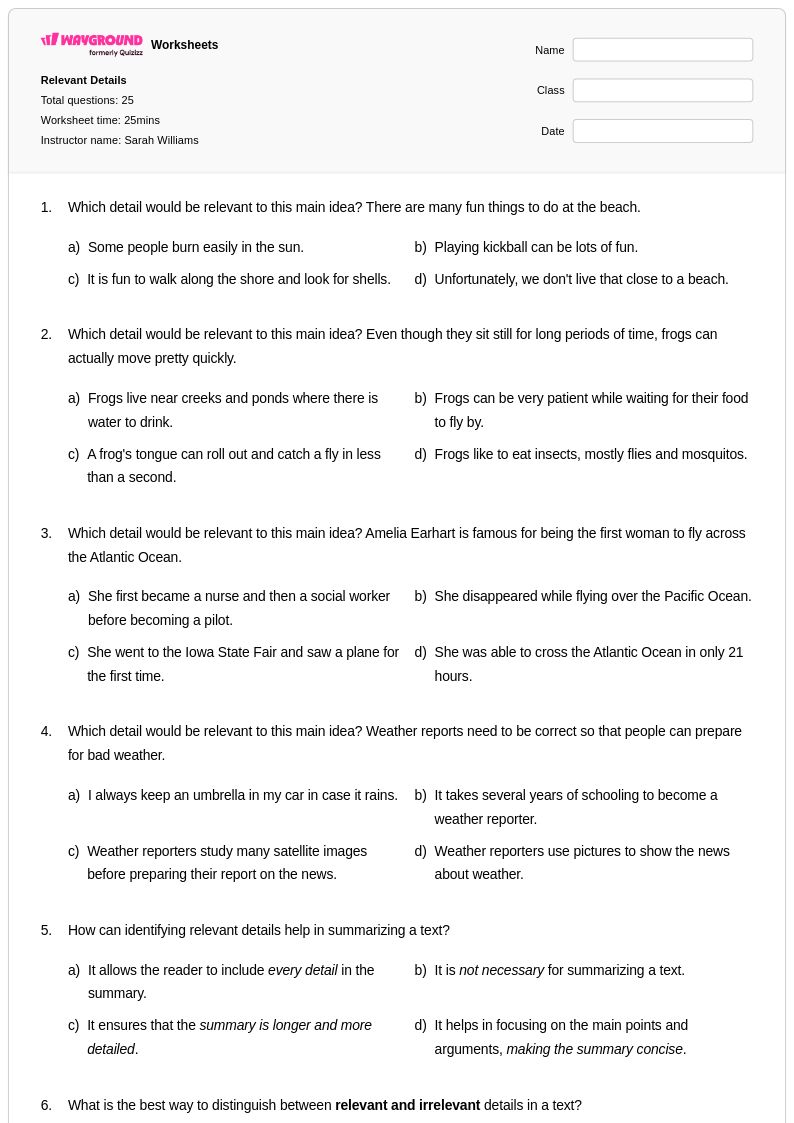
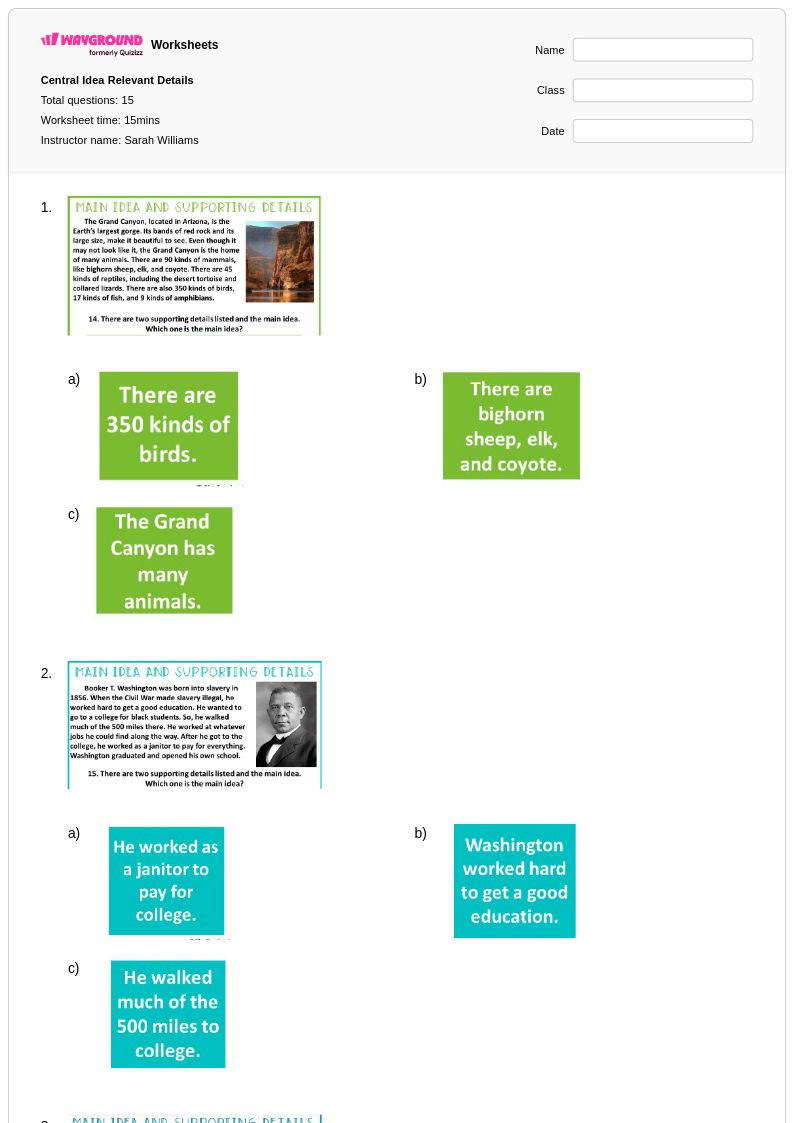
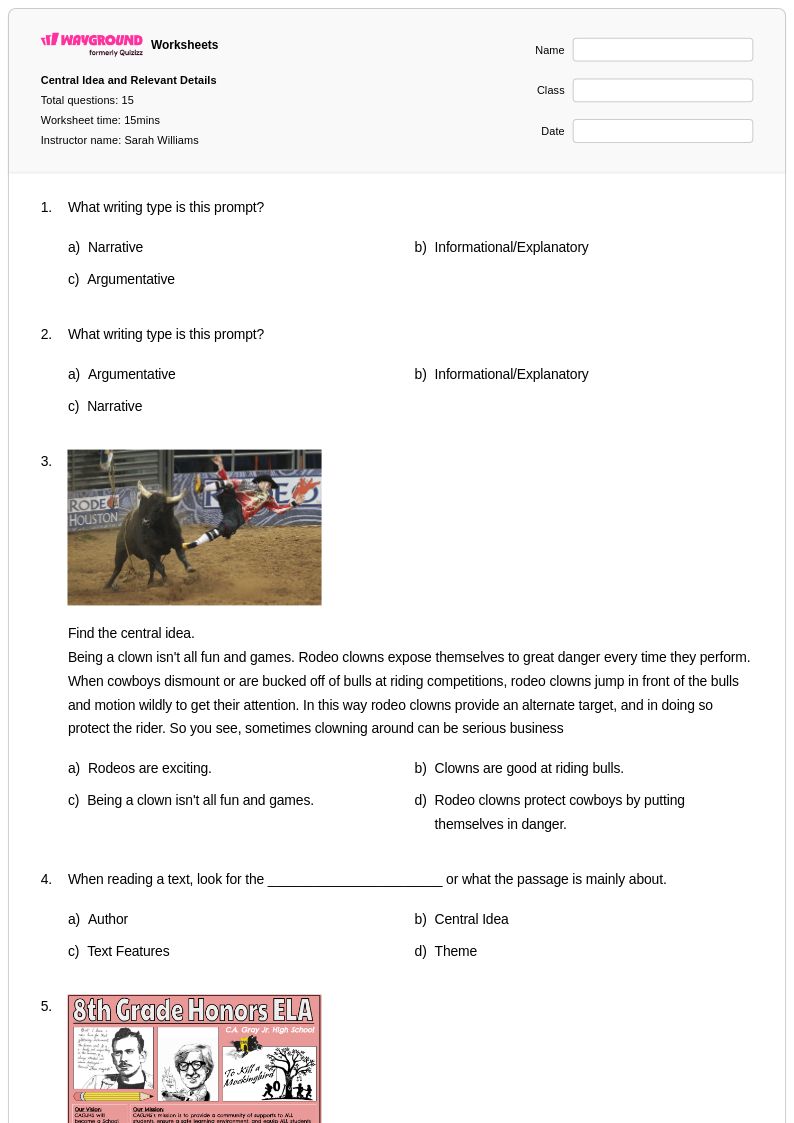
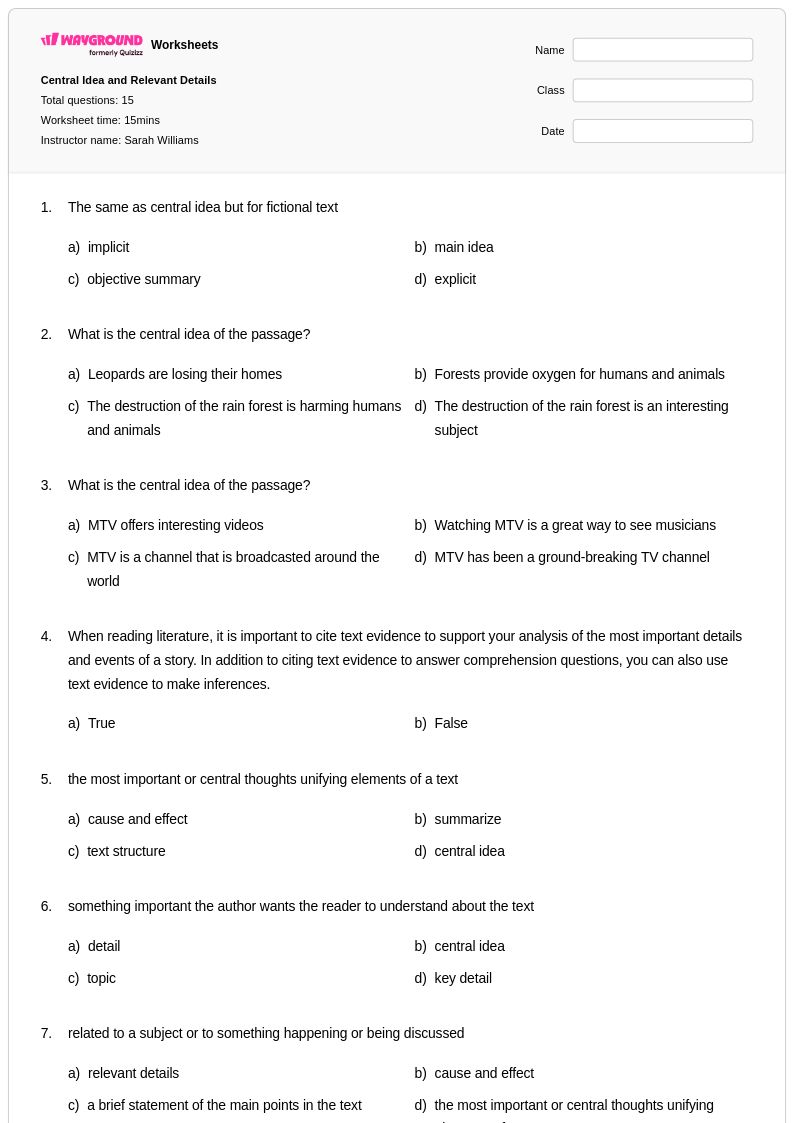
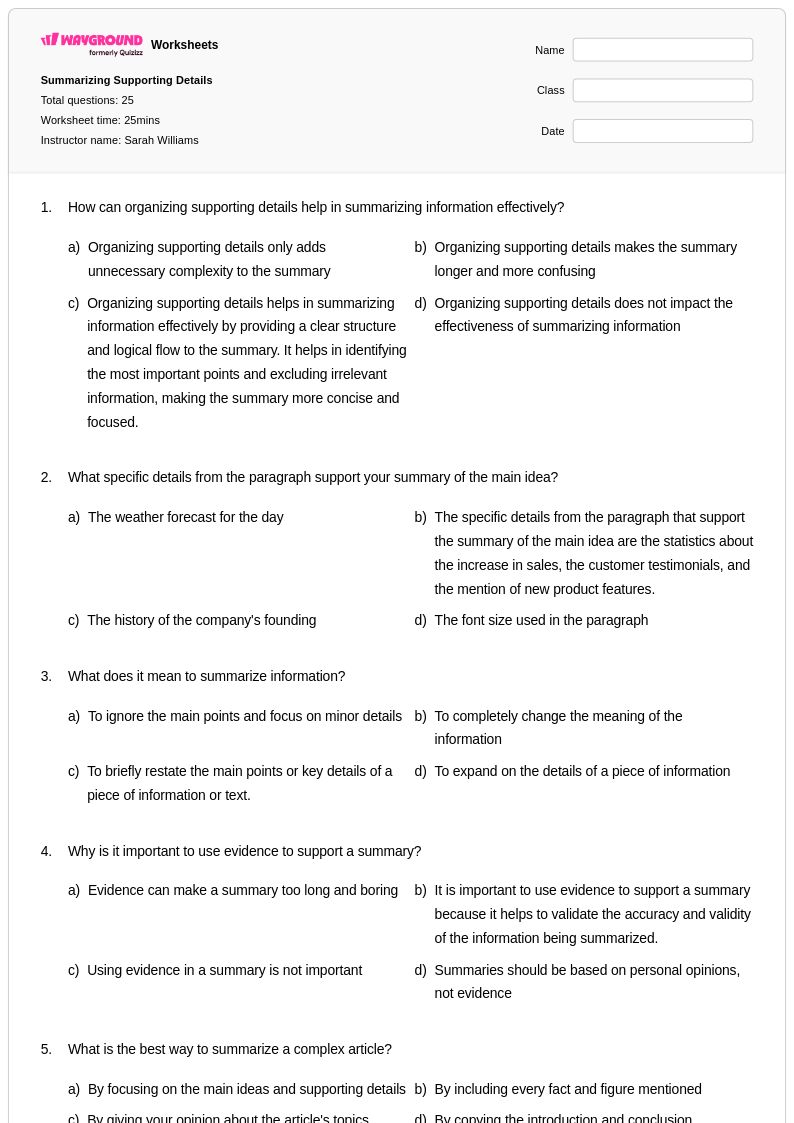
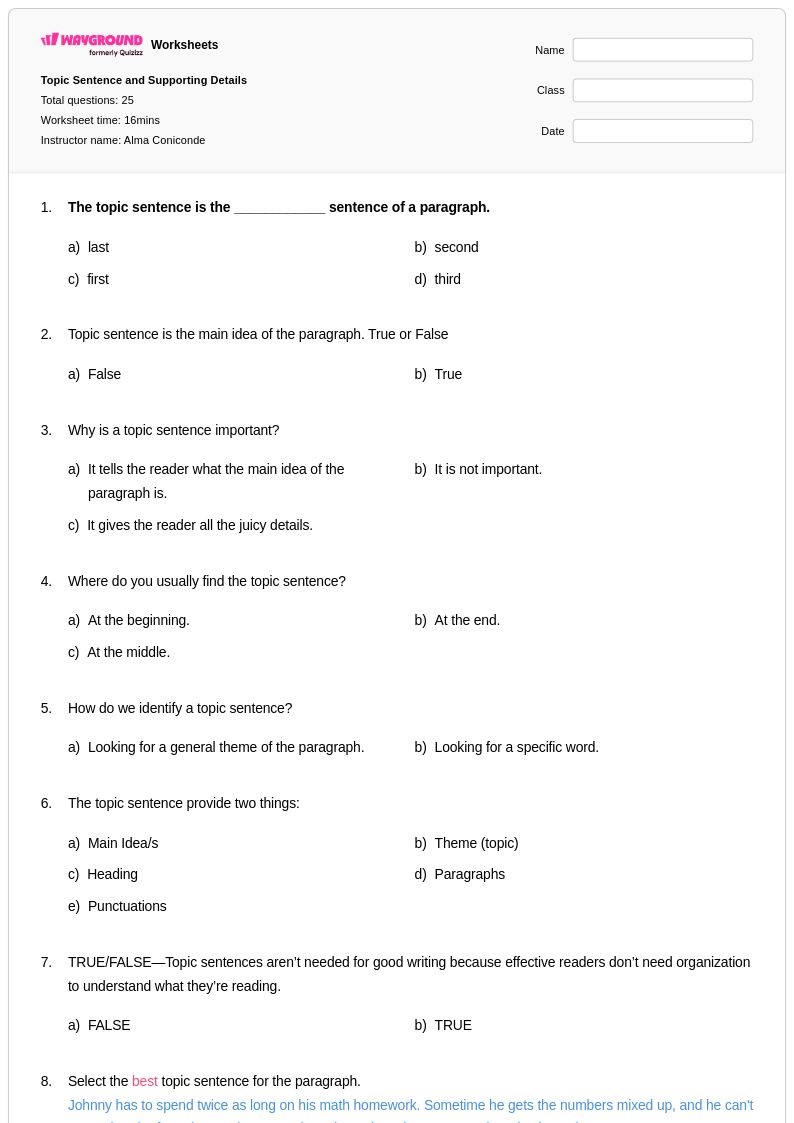
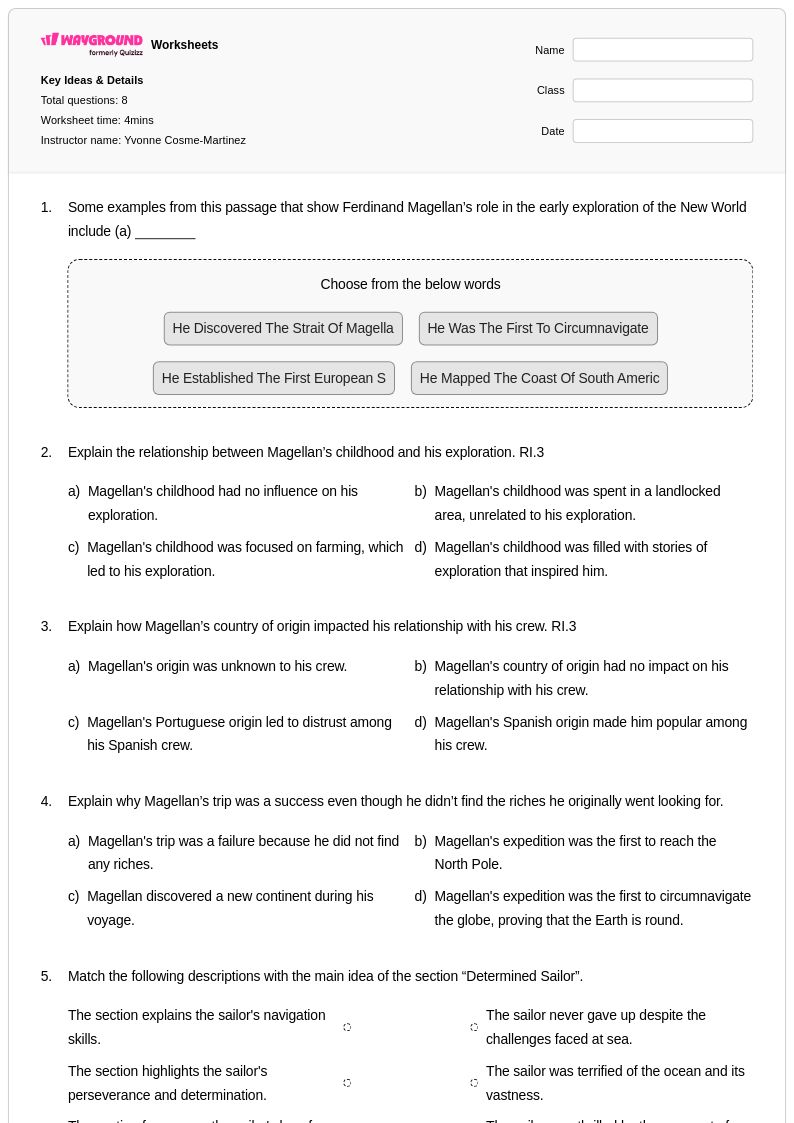
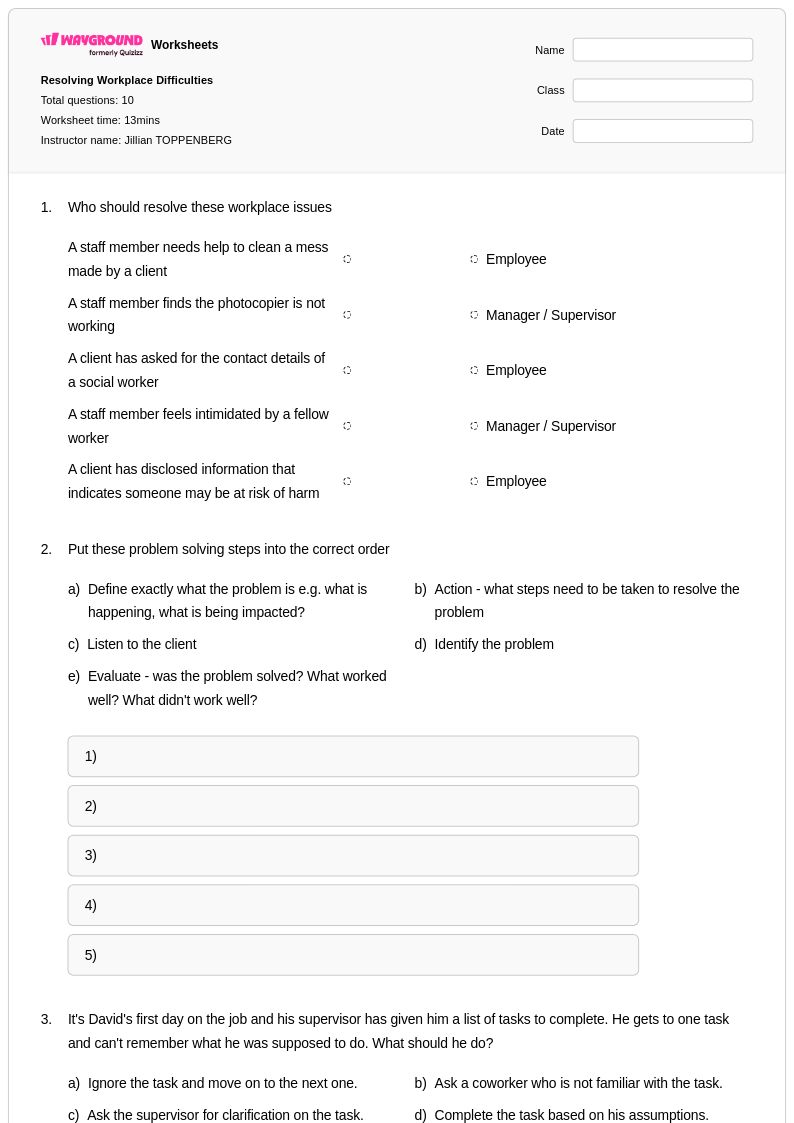
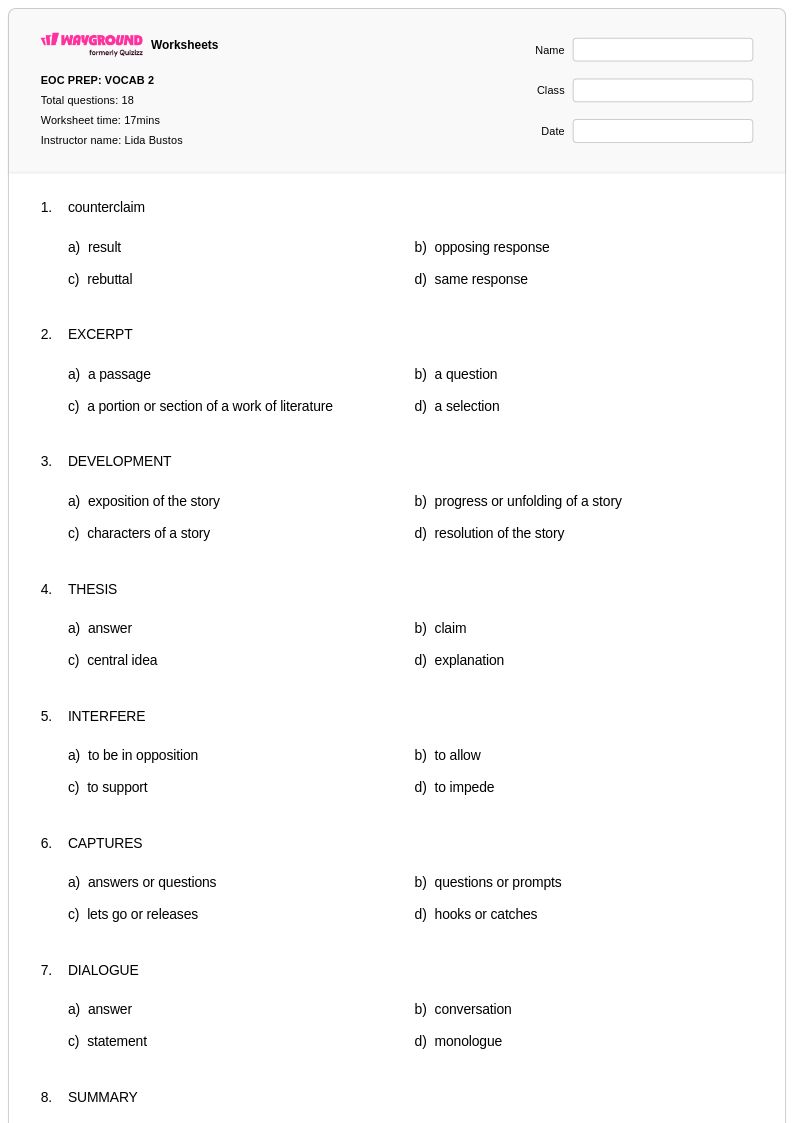
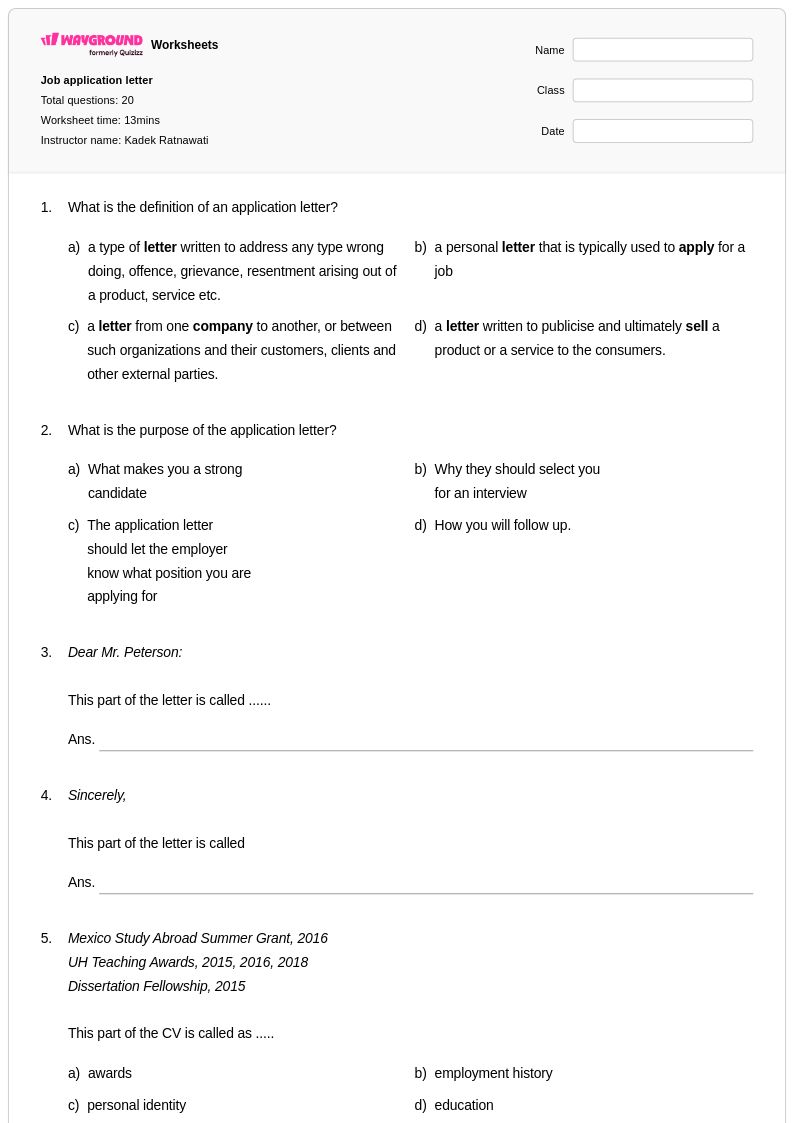
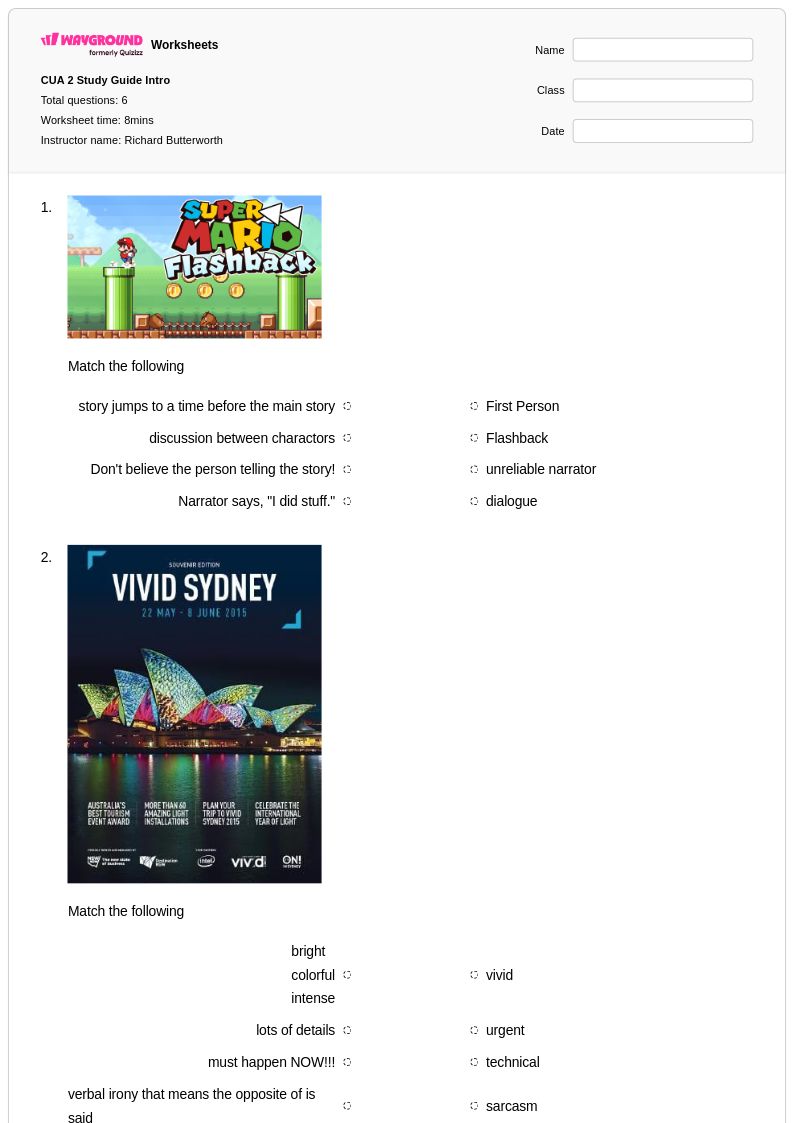
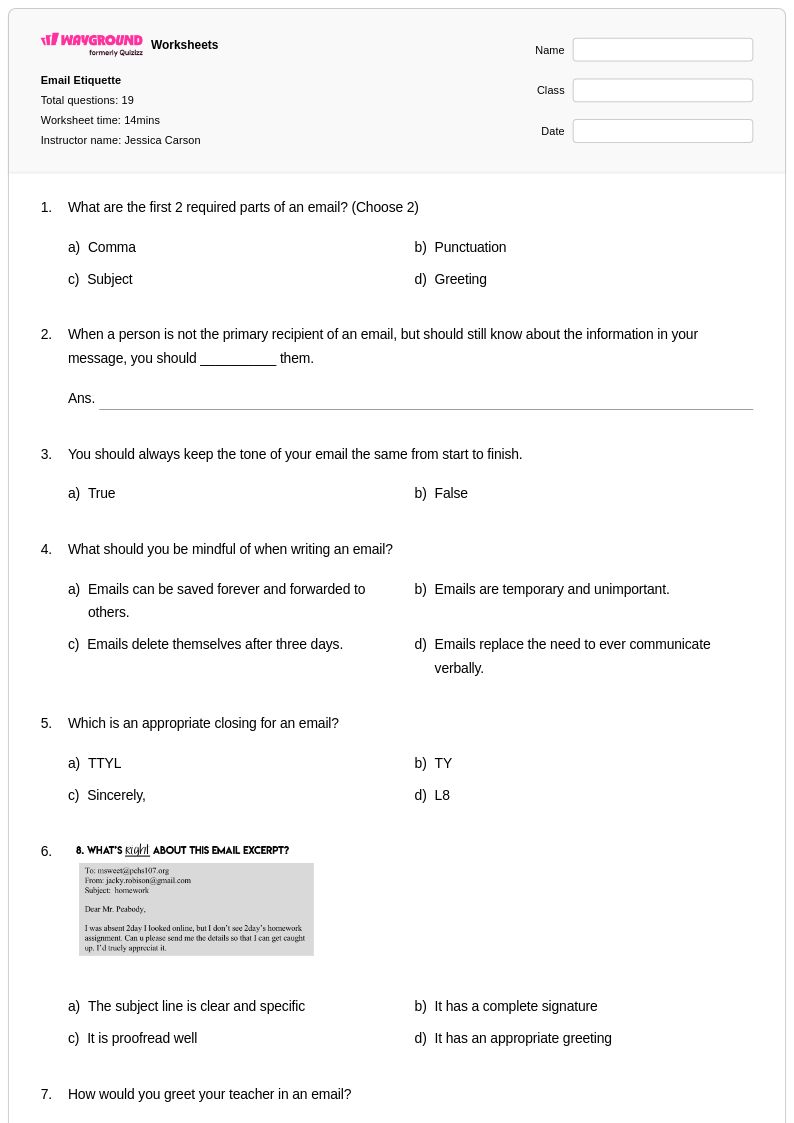
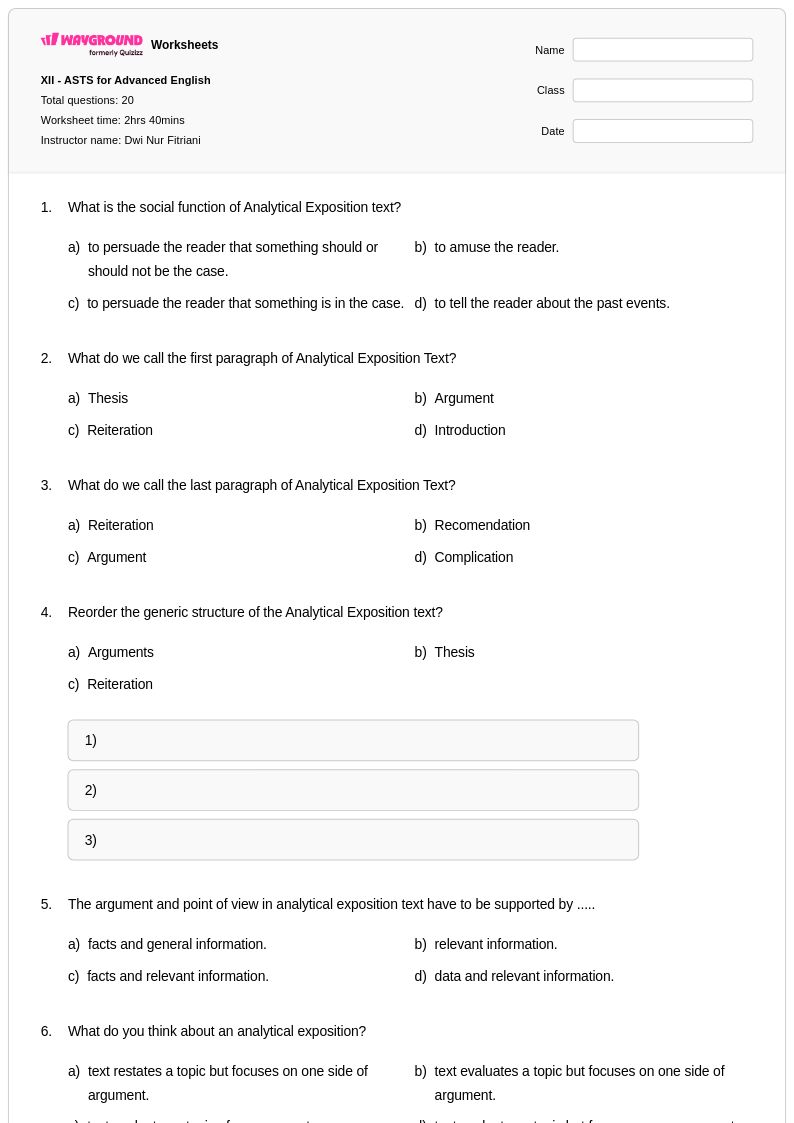
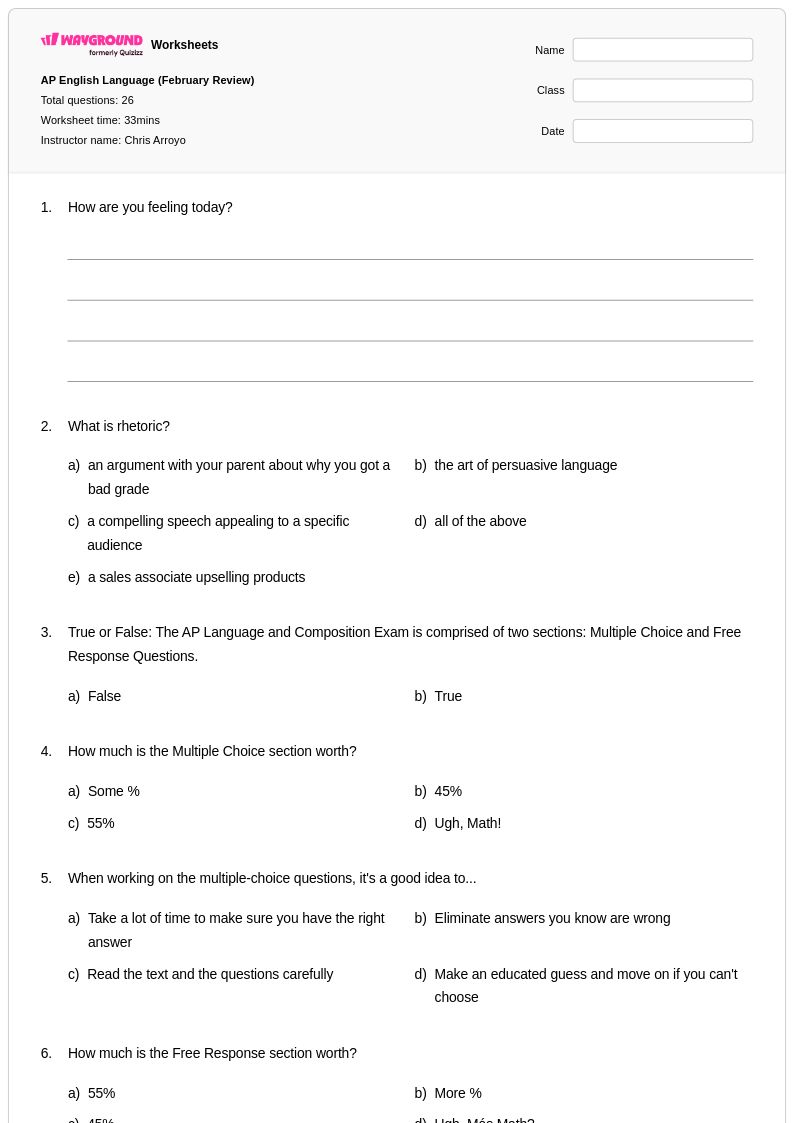
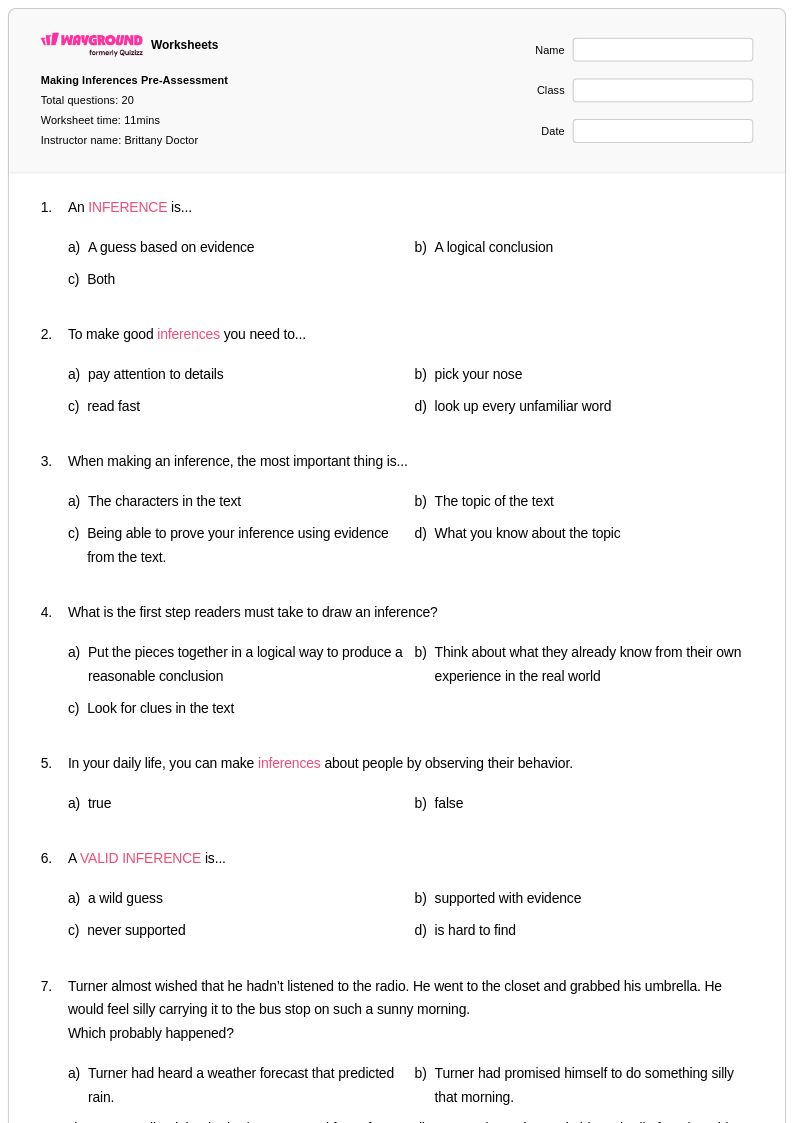
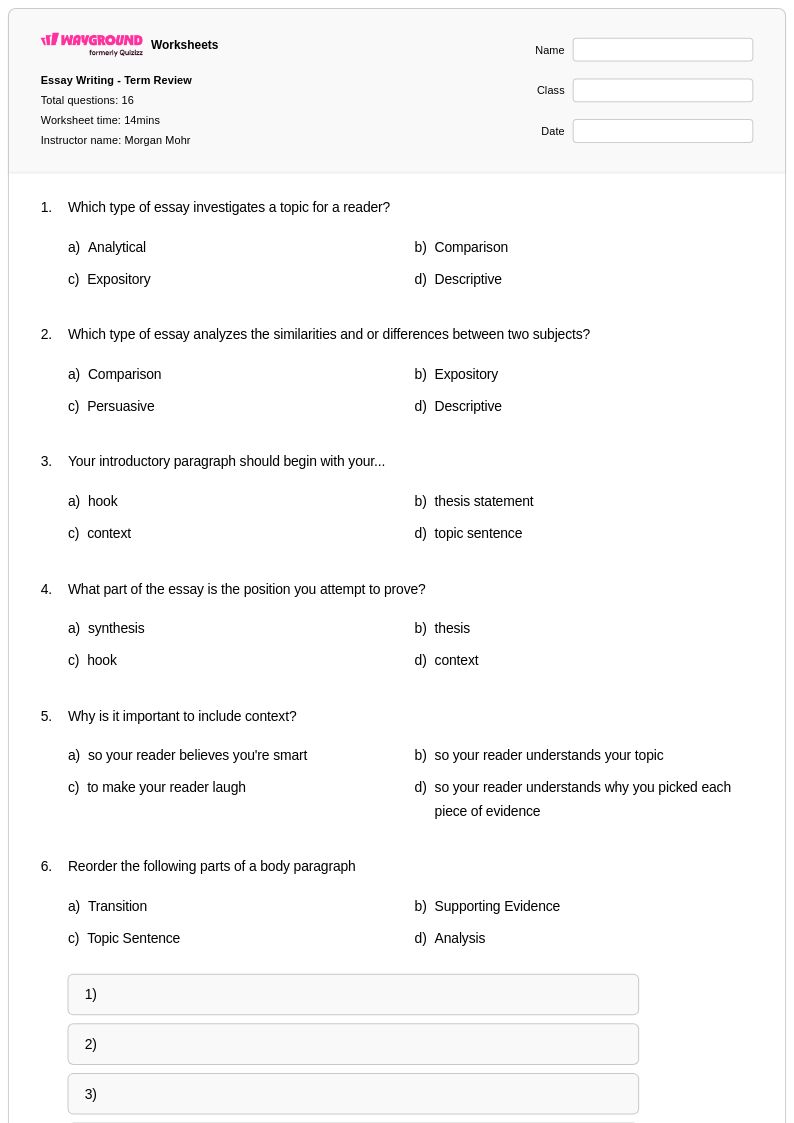
Relevant details worksheets for Grade 12 students through Wayground (formerly Quizizz) provide comprehensive practice in selecting and incorporating supporting evidence that enhances writing effectiveness. These advanced worksheets challenge twelfth-grade writers to distinguish between essential and extraneous information, evaluate the credibility and relevance of sources, and strategically integrate details that strengthen their arguments and narratives. Students work through practice problems that require them to analyze sample texts, identify which details best support specific thesis statements, and revise passages by adding or removing information to improve clarity and impact. Each worksheet includes an answer key that explains the reasoning behind effective detail selection, helping students develop the critical thinking skills necessary for college-level writing. These free printables cover various text types including argumentative essays, research papers, creative writing, and analytical compositions, ensuring students can apply relevant detail strategies across multiple writing contexts.
Wayground (formerly Quizizz) supports English teachers with an extensive collection of millions of teacher-created resources focused on writing organization and structure, including specialized materials for relevant details instruction. The platform's robust search and filtering capabilities allow educators to quickly locate worksheets that align with specific standards and match their students' skill levels, while differentiation tools enable teachers to modify content for diverse learning needs. Teachers can access these resources in both printable pdf formats for traditional classroom use and digital formats for online instruction, providing flexibility in lesson delivery and student practice. The customizable nature of these worksheets makes them invaluable for targeted skill practice, remediation sessions for students struggling with evidence selection, and enrichment activities for advanced writers ready to tackle sophisticated argumentation techniques, ultimately supporting comprehensive planning for relevant details instruction at the Grade 12 level.
FAQs
How do I teach students to identify relevant details in their writing?
Start by anchoring every lesson to a clear thesis or topic sentence, then ask students to evaluate each potential detail against a single question: does this directly support the main idea? Modeling this evaluation process with mentor texts — showing both strong and weak examples side by side — helps students internalize the standard before applying it independently. Gradually release responsibility by moving from whole-class sorting activities to partner work to individual practice, so students build the analytical habit before writing on their own.
What exercises help students practice choosing relevant details?
Sorting activities are highly effective: give students a list of details and ask them to categorize each as relevant or irrelevant to a provided thesis statement, then justify their choices in writing. Paragraph revision exercises, where students identify and remove off-topic sentences from a draft, build the same skill in a more authentic context. These structured practice tasks develop the evaluative thinking students need to self-monitor during the drafting and revision stages of writing.
What mistakes do students commonly make when selecting supporting details?
The most common error is including details that are interesting but tangential — students confuse what they find engaging with what actually supports the main idea. Another frequent mistake is restating the topic sentence in different words rather than providing genuinely new supporting information. Students also tend to under-explain details, dropping in evidence without connecting it back to the claim, which leaves readers to make the logical leap themselves.
How do I help struggling writers understand the difference between relevant and irrelevant details?
Use a visual anchor: write the thesis in the center of a graphic organizer and draw arrows outward to potential details, then ask students to label each arrow as 'supports,' 'partially supports,' or 'doesn't connect.' This makes the abstract concept of relevance concrete and spatial. For students who need additional support, Wayground's platform allows teachers to enable Read Aloud so instructions and example passages are read to them, and reduced answer choices can be applied in digital practice sets to lower cognitive load while the core concept develops.
How do I use relevant details worksheets in my classroom, and what formats are available?
Relevant details worksheets work well as guided practice after direct instruction, as independent work during writing workshop, or as targeted remediation for students who struggle with organizing and supporting their ideas. On Wayground, these worksheets are available as printable PDFs for traditional classroom use and in digital formats for technology-integrated settings, and teachers can host them as a quiz directly on the Wayground platform. Each worksheet includes a complete answer key, so students can receive immediate feedback and self-assess their understanding.
How do relevant details fit into teaching writing organization and structure?
Relevant details are the connective tissue of well-organized writing: they give each paragraph its purpose and signal to readers that the writer has thought critically about what to include. Teaching students to select and sequence supporting details directly improves paragraph cohesion, essay clarity, and the overall persuasiveness of their compositions. When students understand which details belong and why, they write with more intention — and revision becomes a more meaningful process rather than a surface-level edit.