Free Printable Rhetorical Analysis Worksheets for Grade 12
Enhance Grade 12 students' rhetorical analysis skills with Wayground's comprehensive collection of free worksheets, printables, and practice problems that include detailed answer keys to master persuasive techniques and literary devices.
Explore printable Rhetorical Analysis worksheets for Grade 12
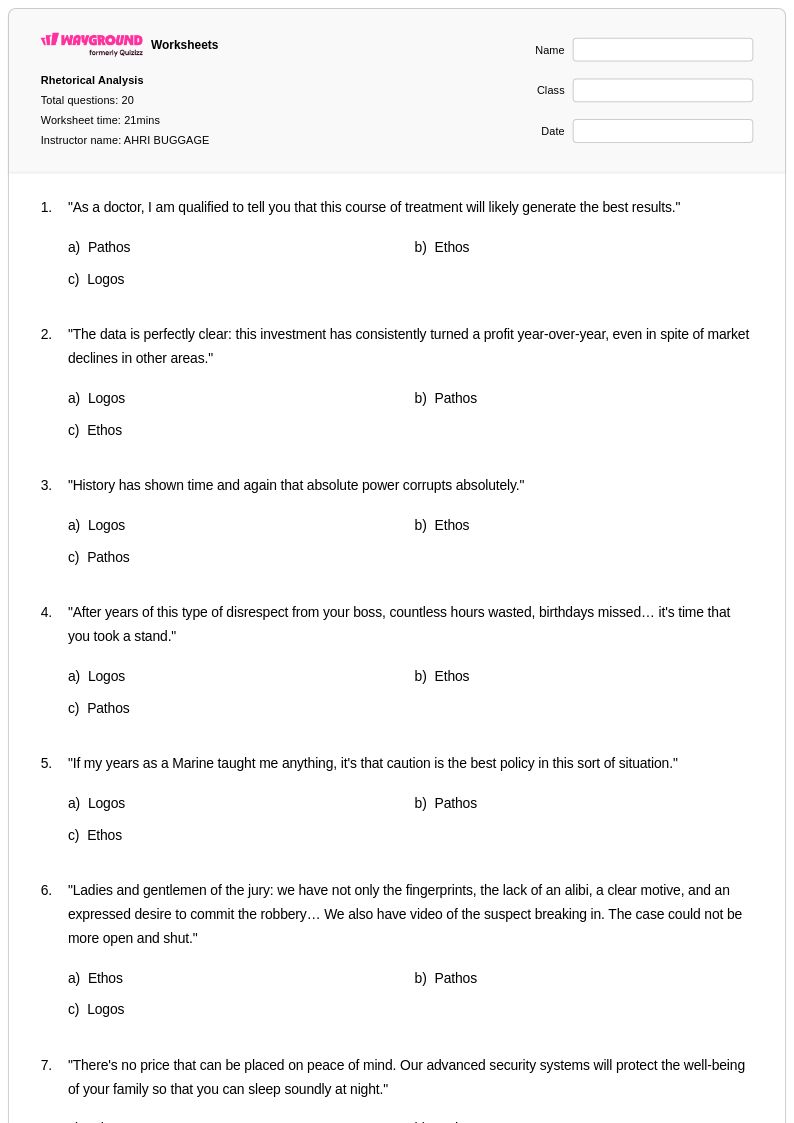
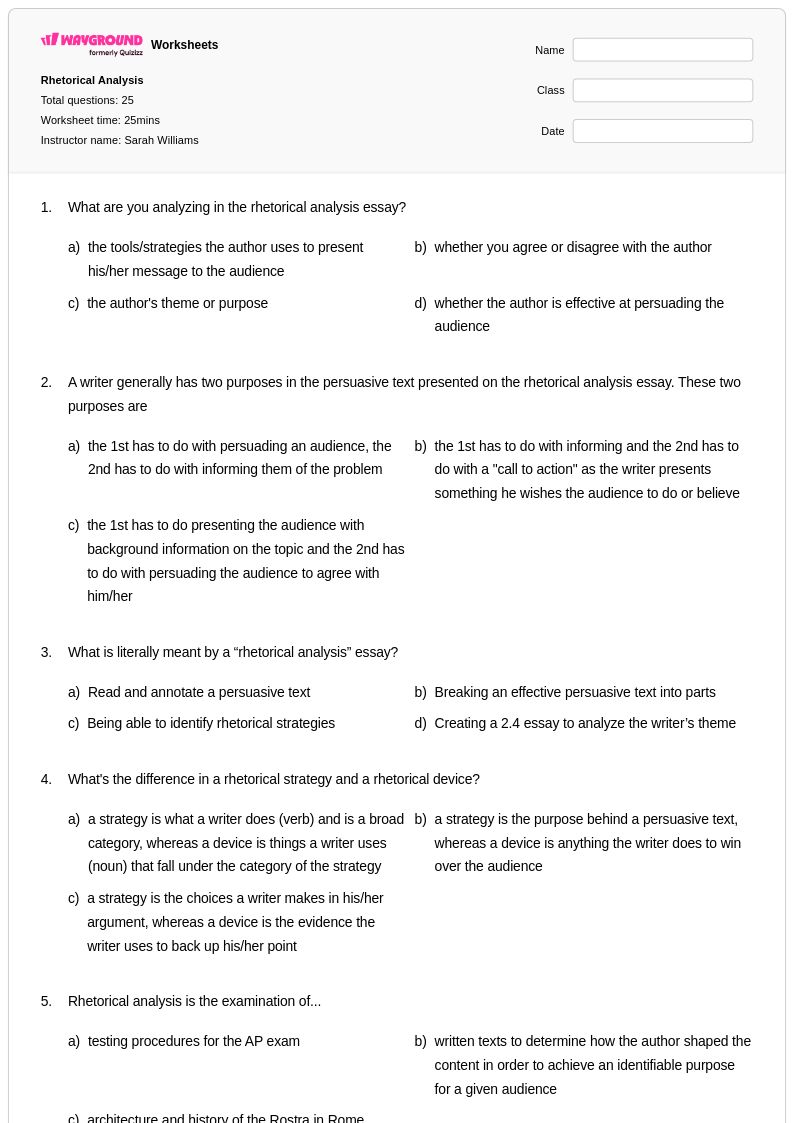
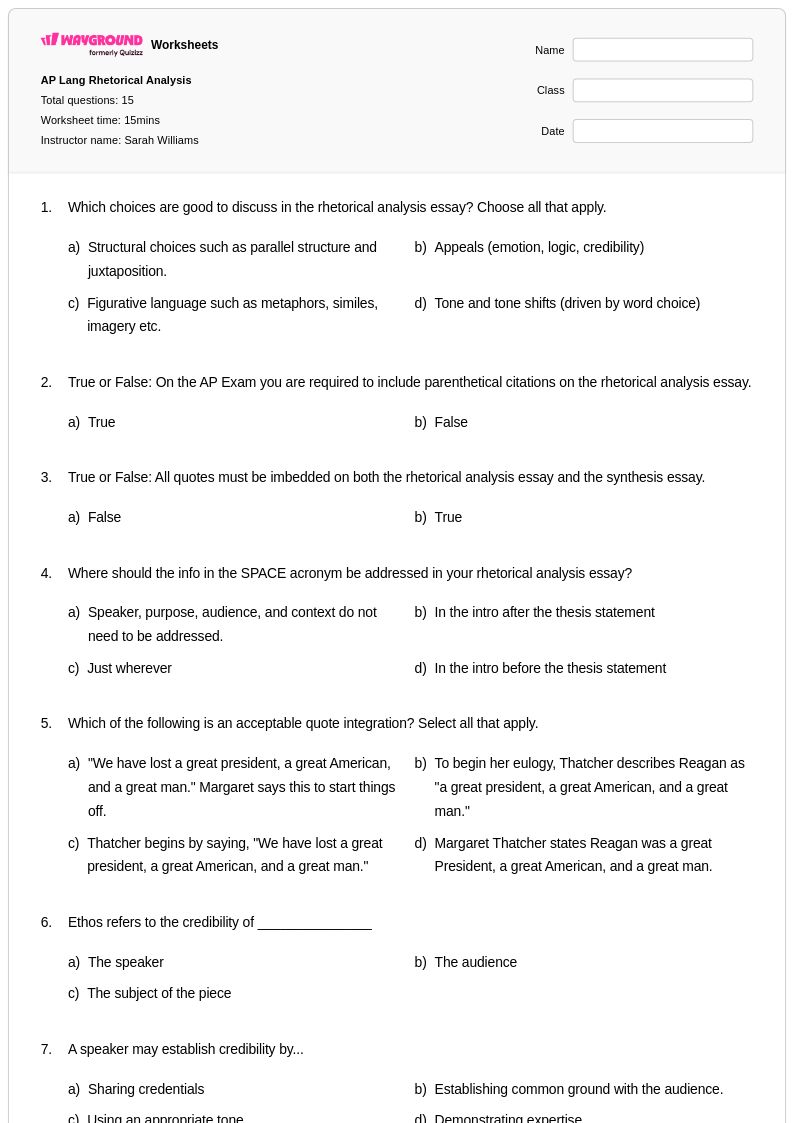
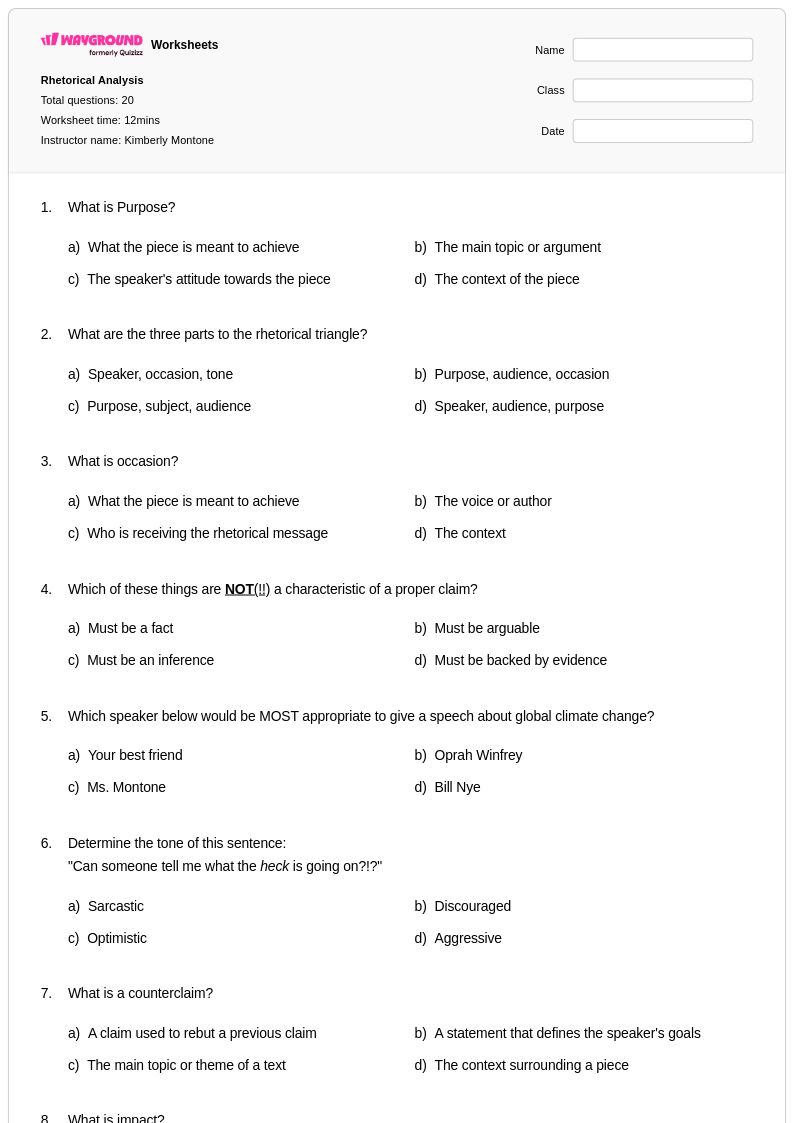
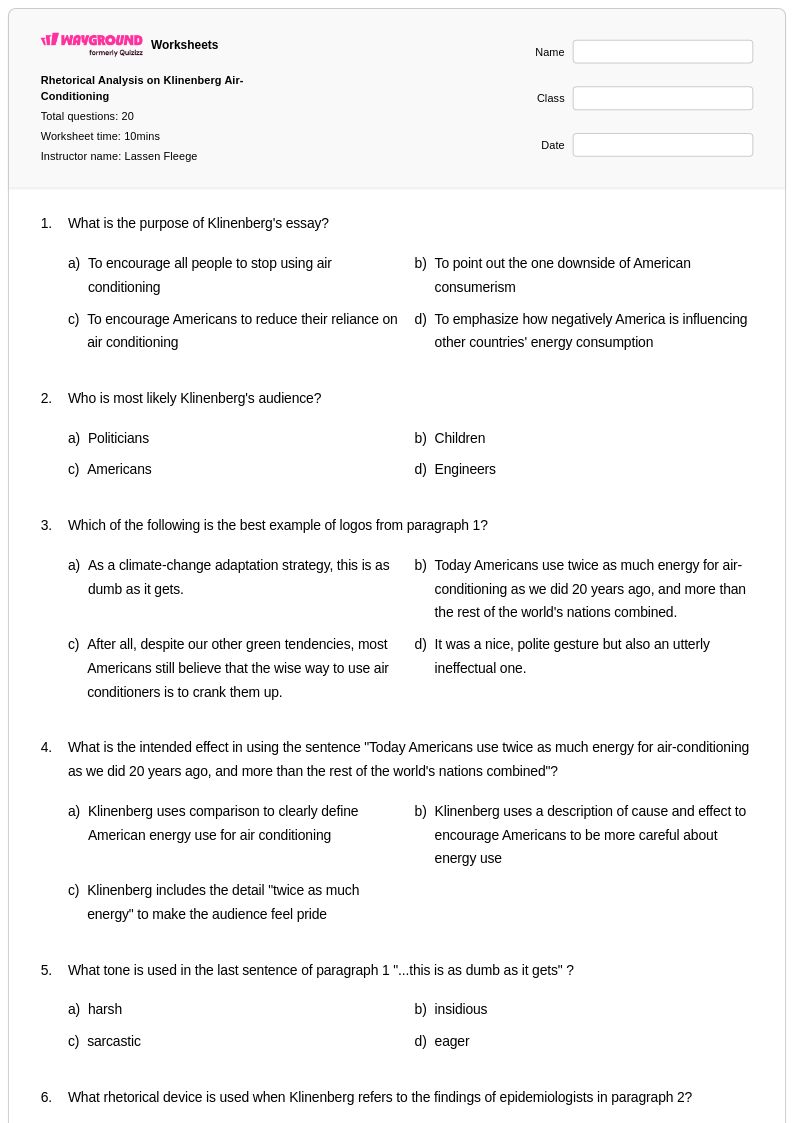
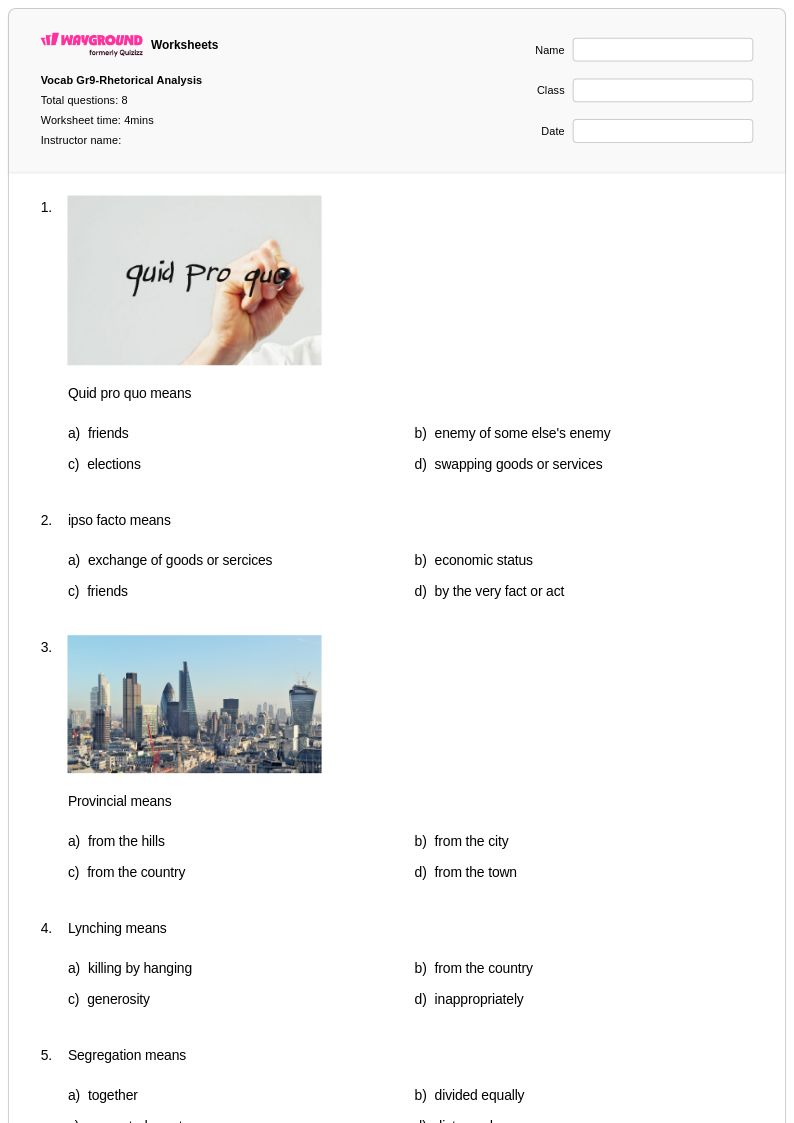
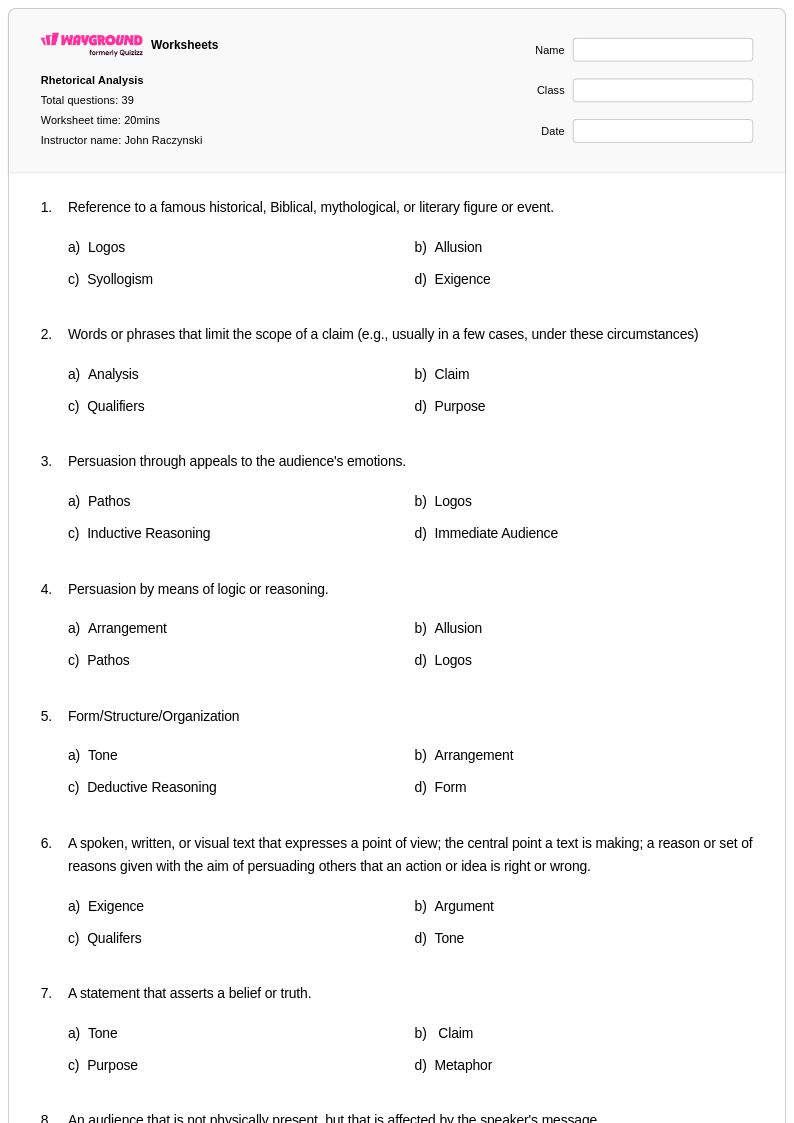
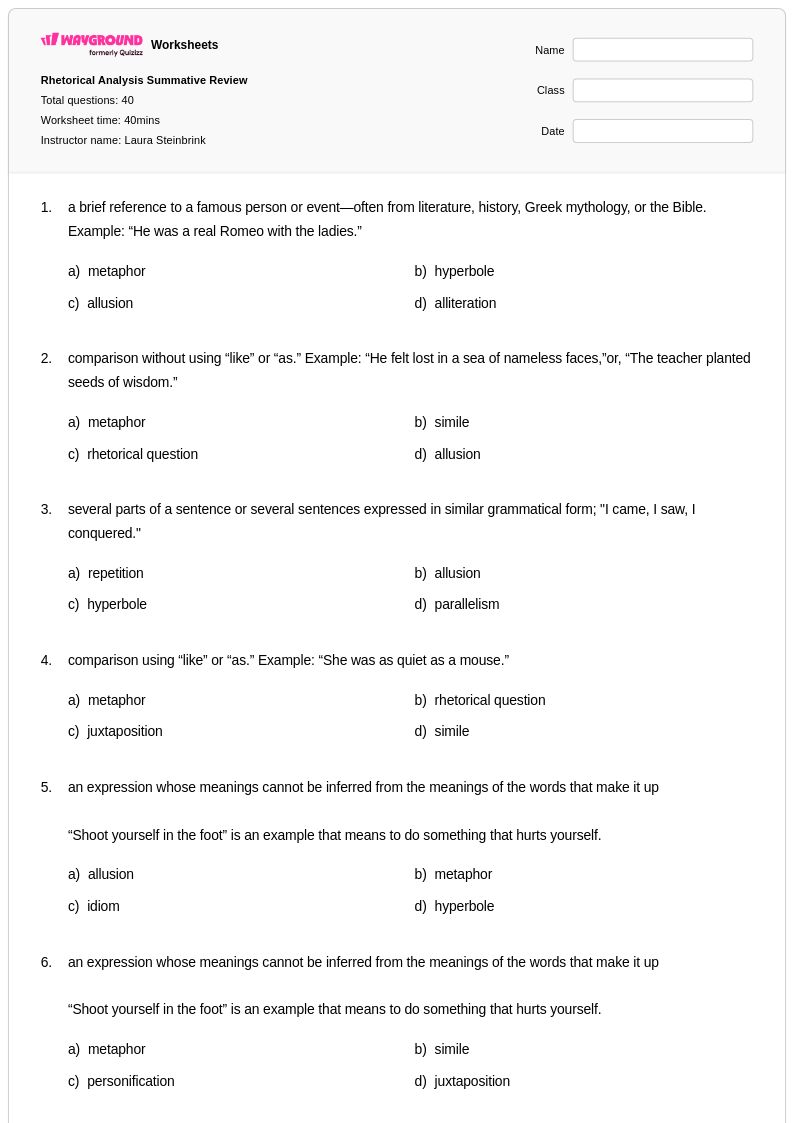
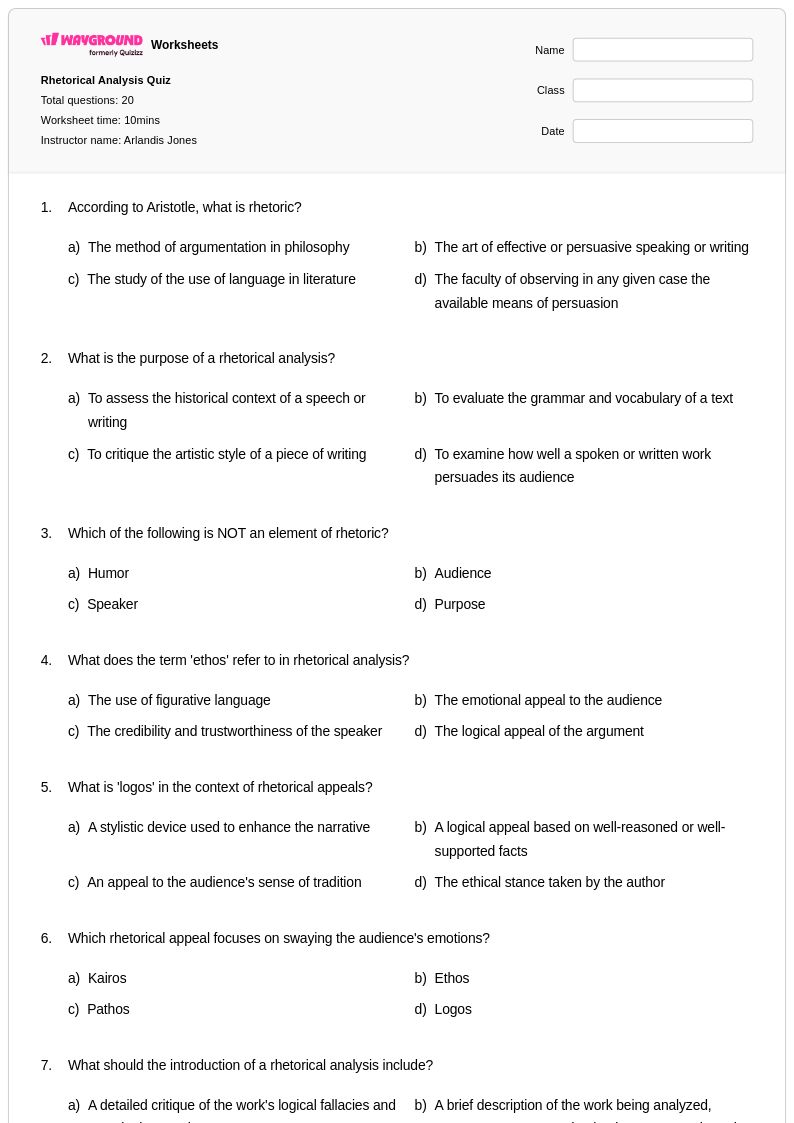
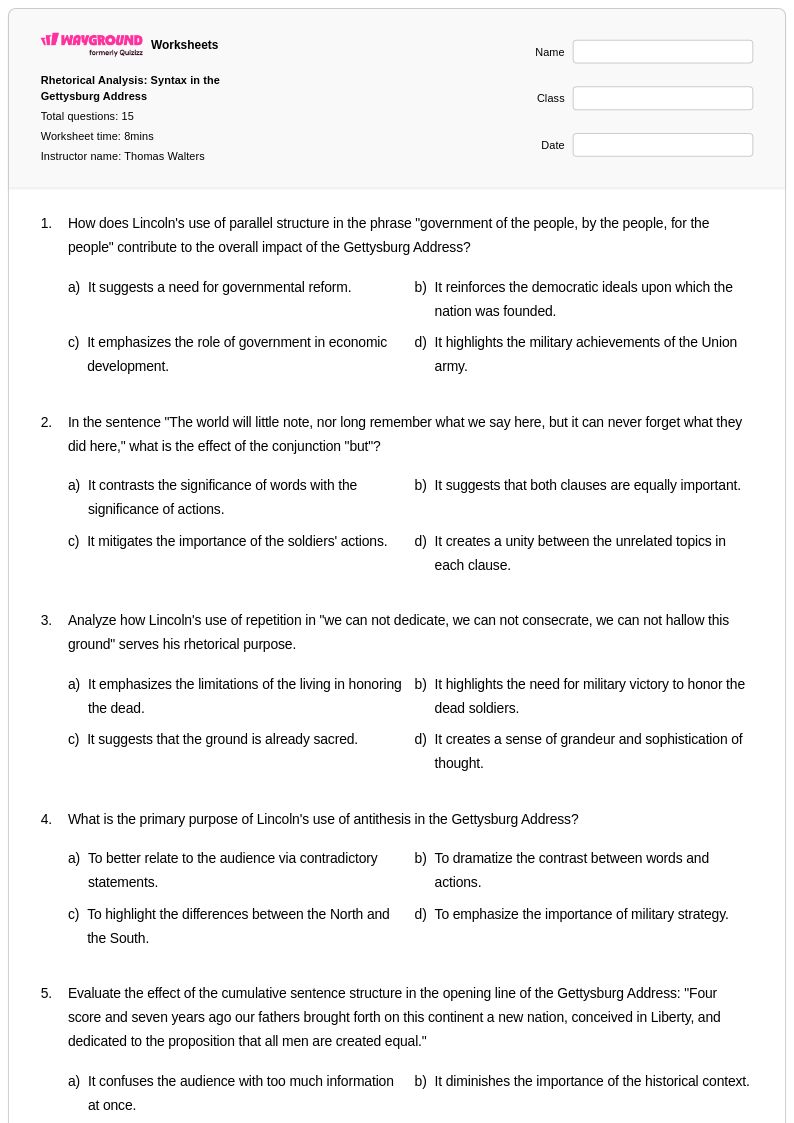
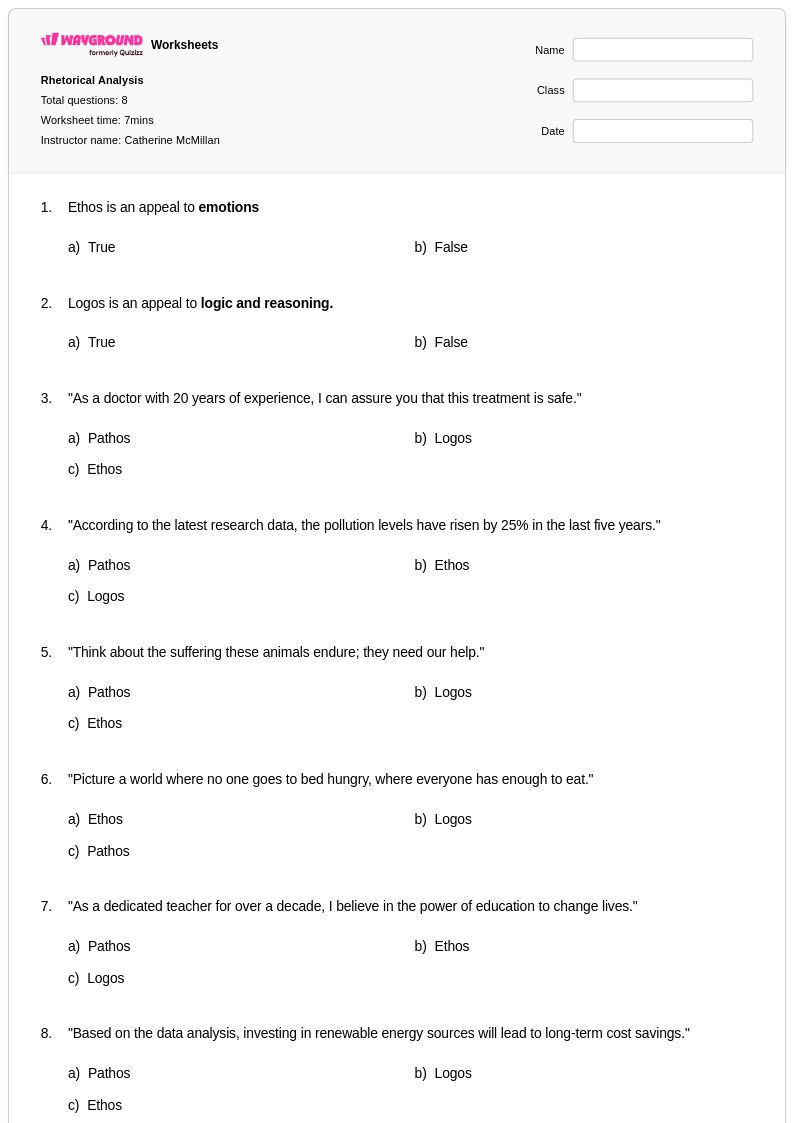
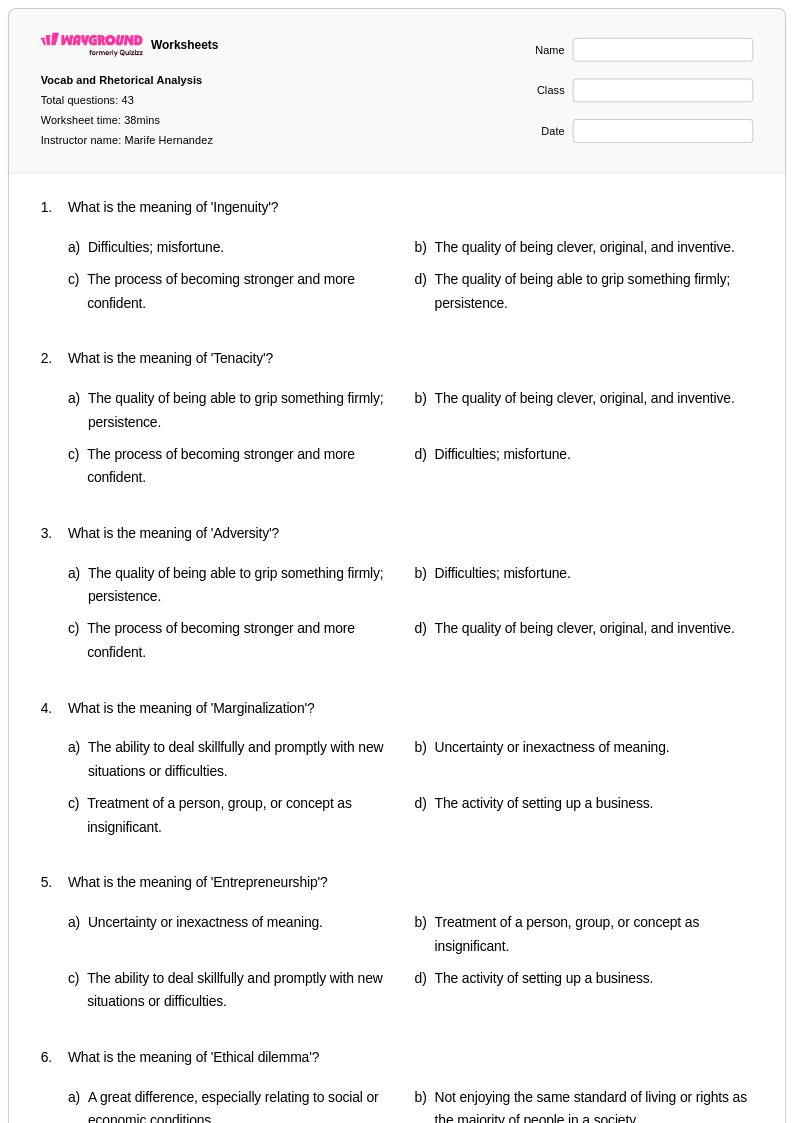
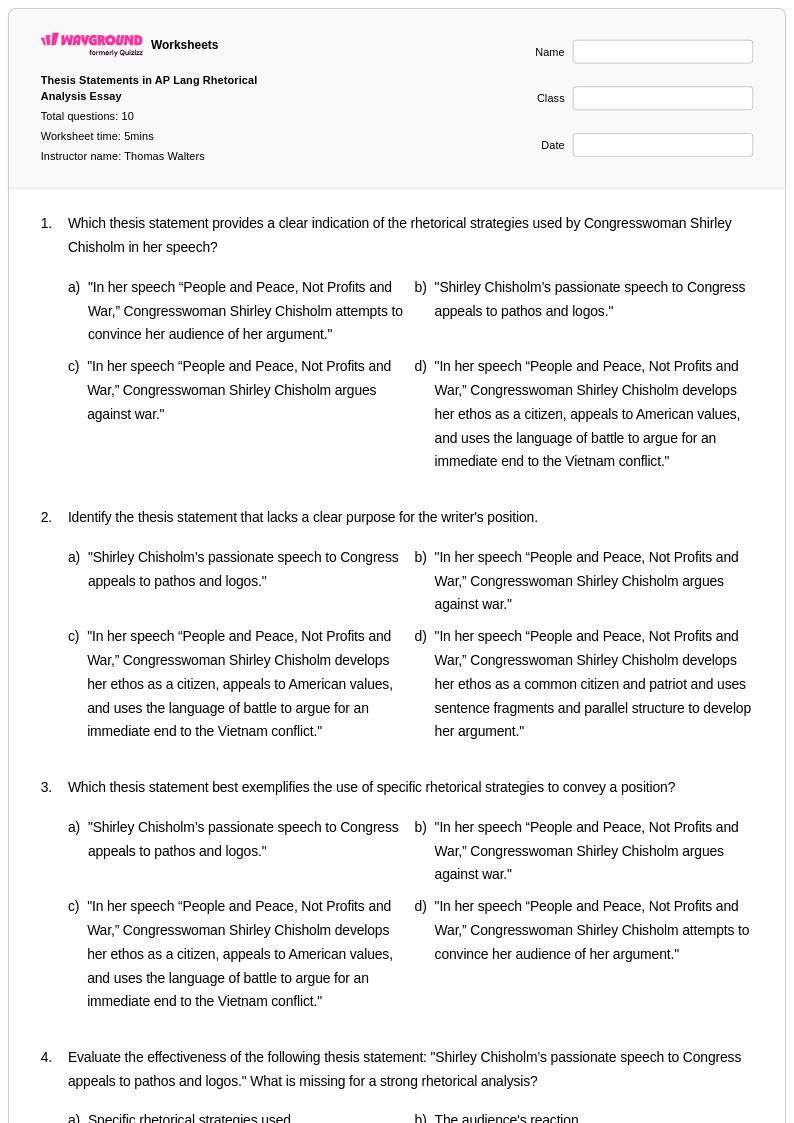
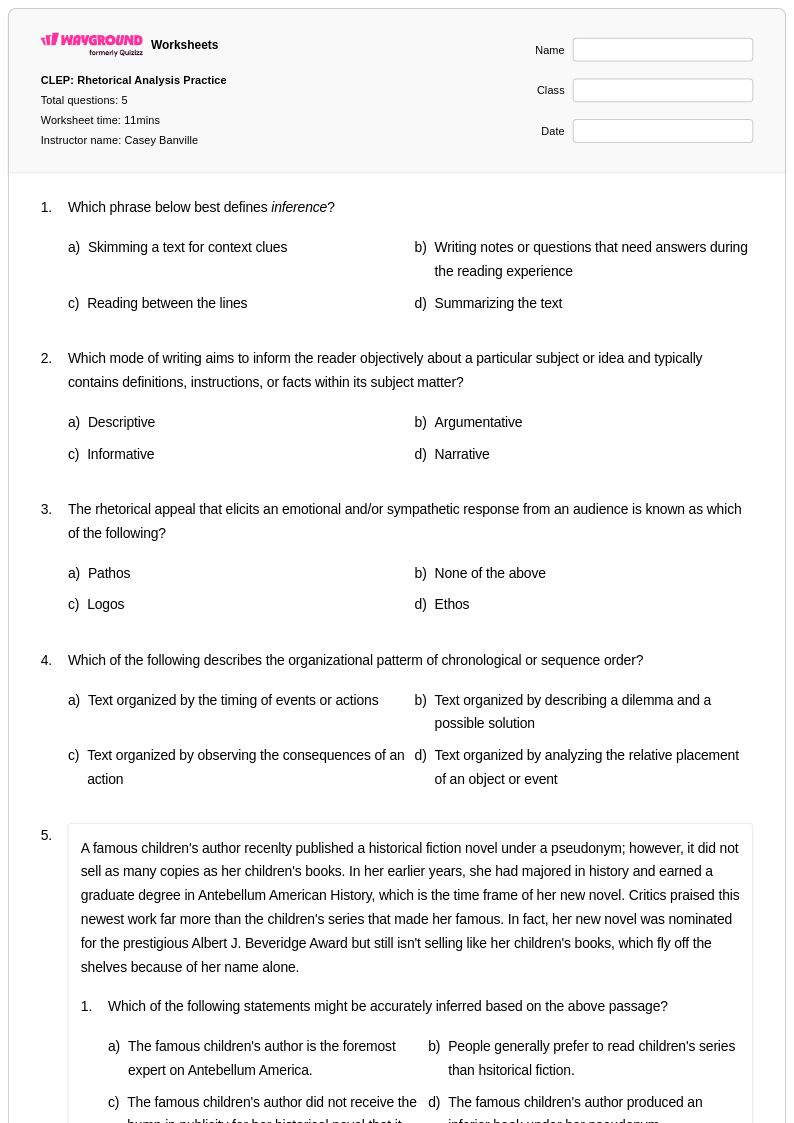
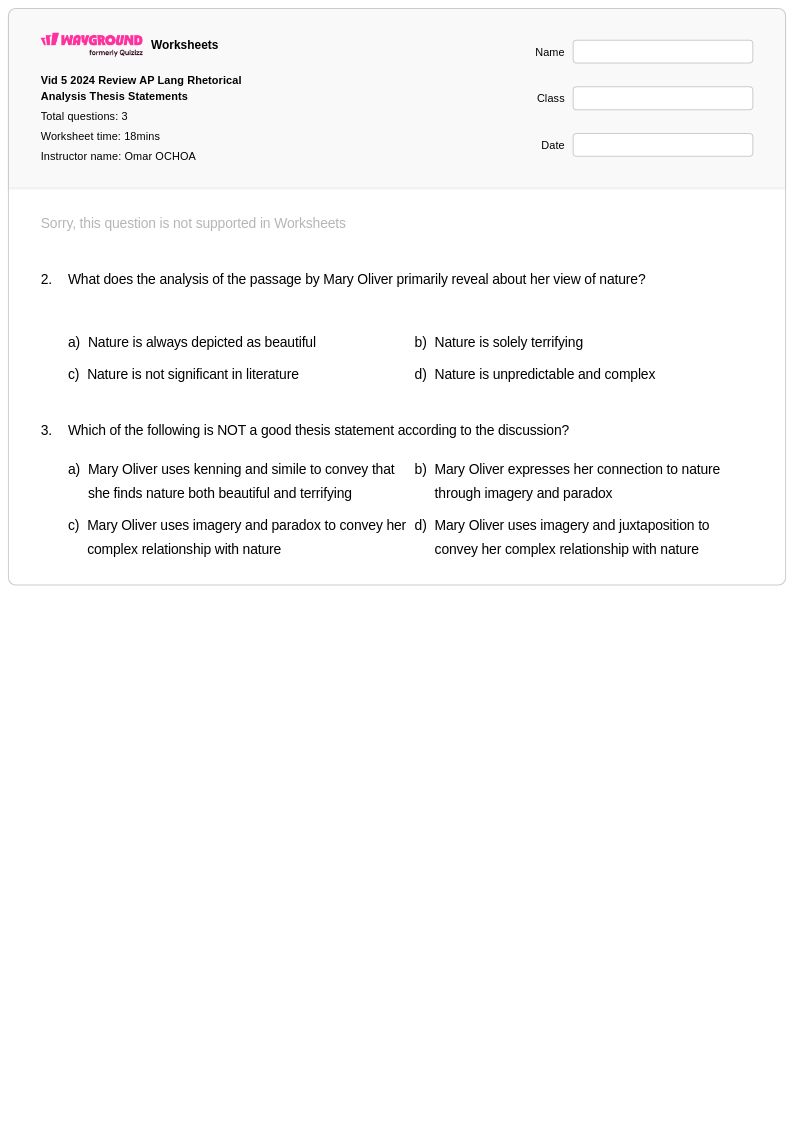
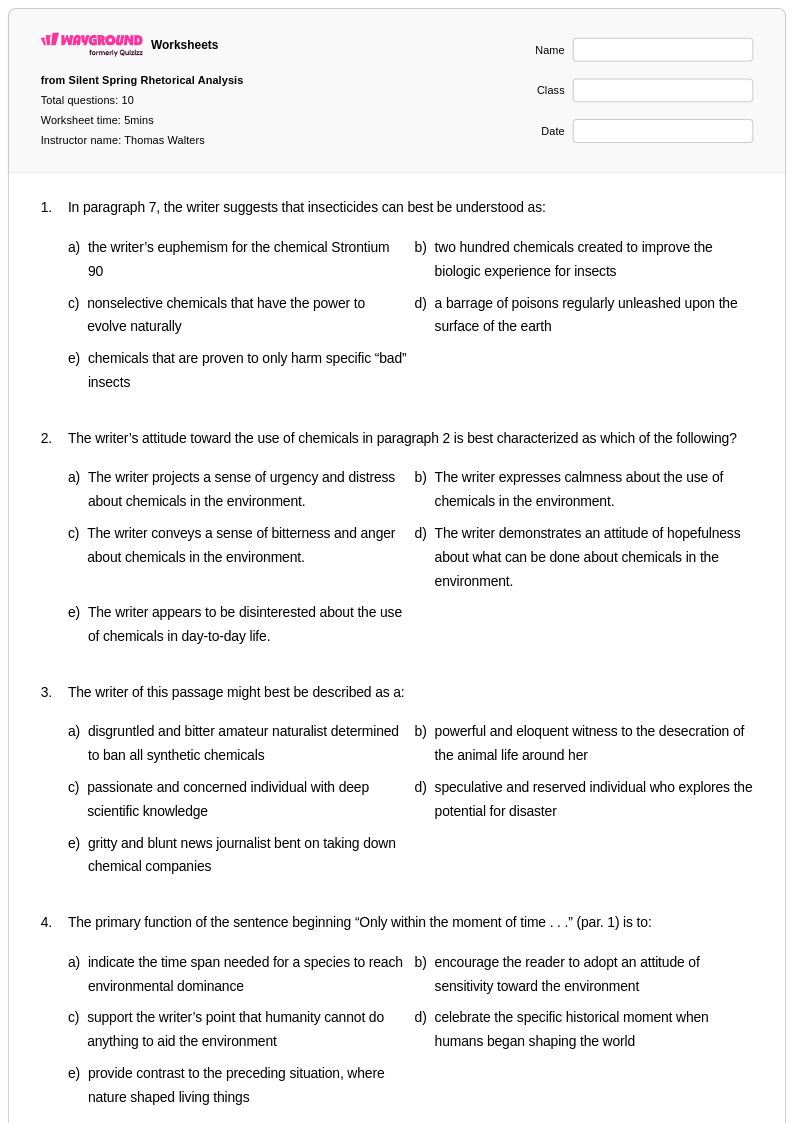
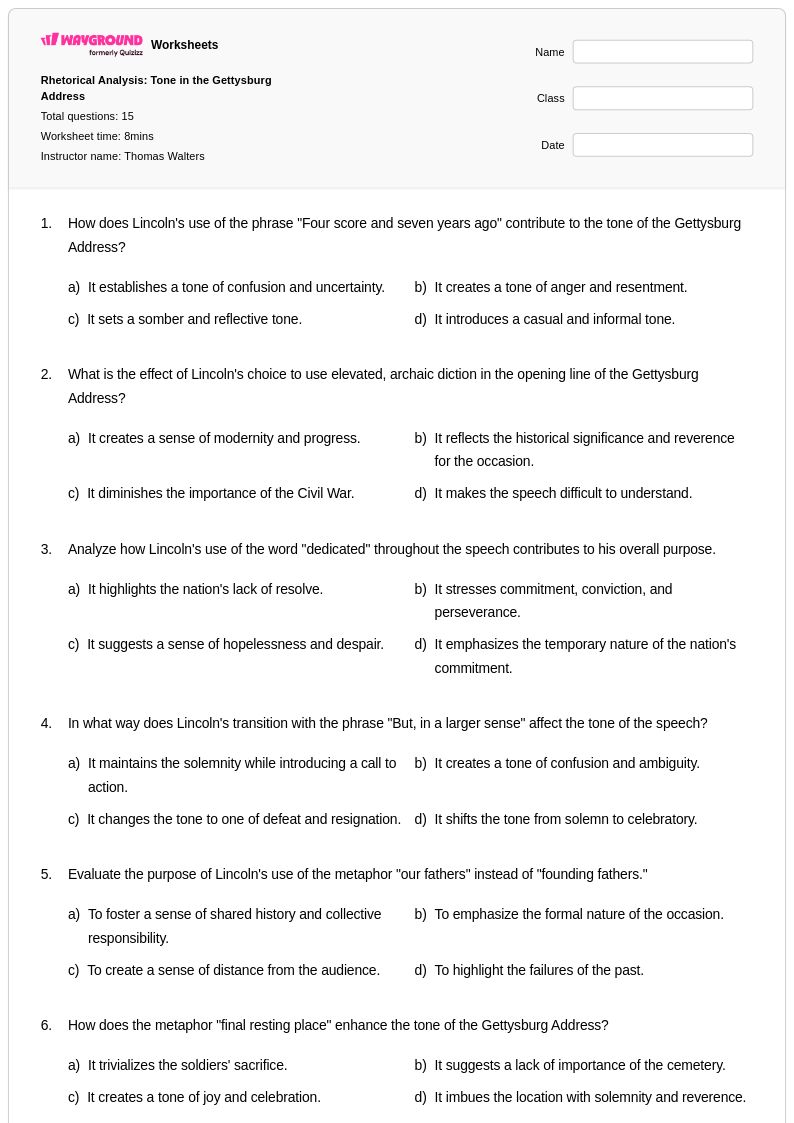
Grade 12 rhetorical analysis worksheets available through Wayground (formerly Quizizz) provide comprehensive practice opportunities for students developing advanced analytical writing and critical thinking skills. These expertly crafted resources guide students through the systematic examination of persuasive texts, helping them identify and analyze rhetorical strategies including ethos, pathos, and logos, as well as literary devices, tone, diction, and structural elements. Each worksheet includes detailed practice problems that challenge students to deconstruct complex arguments, evaluate authorial choices, and articulate sophisticated interpretations of how writers achieve their persuasive purposes. The accompanying answer keys support both independent study and classroom instruction, while the free printable format ensures accessibility for diverse learning environments and enables teachers to distribute materials efficiently as pdf downloads.
Wayground (formerly Quizizz) empowers educators with an extensive collection of millions of teacher-created rhetorical analysis resources specifically designed to meet the rigorous demands of Grade 12 English instruction. The platform's advanced search and filtering capabilities allow teachers to quickly locate materials aligned with specific standards and learning objectives, while differentiation tools enable seamless customization to accommodate varying student proficiency levels within the same classroom. These flexible worksheet collections are available in both printable and digital formats, including downloadable pdf options, making them ideal for hybrid learning environments and diverse instructional approaches. Teachers can strategically deploy these resources for targeted skill practice, remediation support for struggling students, enrichment opportunities for advanced learners, and comprehensive lesson planning that builds students' capacity to analyze complex rhetorical situations with confidence and precision.
FAQs
How do I teach rhetorical analysis to high school students?
Start by grounding students in the rhetorical triangle: ethos, pathos, and logos. Use mentor texts like speeches or opinion editorials to model how to identify specific devices before asking students to analyze independently. Scaffold instruction by beginning with single-device identification tasks and gradually moving toward full analyses that require students to evaluate how multiple rhetorical choices work together to shape a text's persuasive effect.
What exercises help students practice rhetorical analysis?
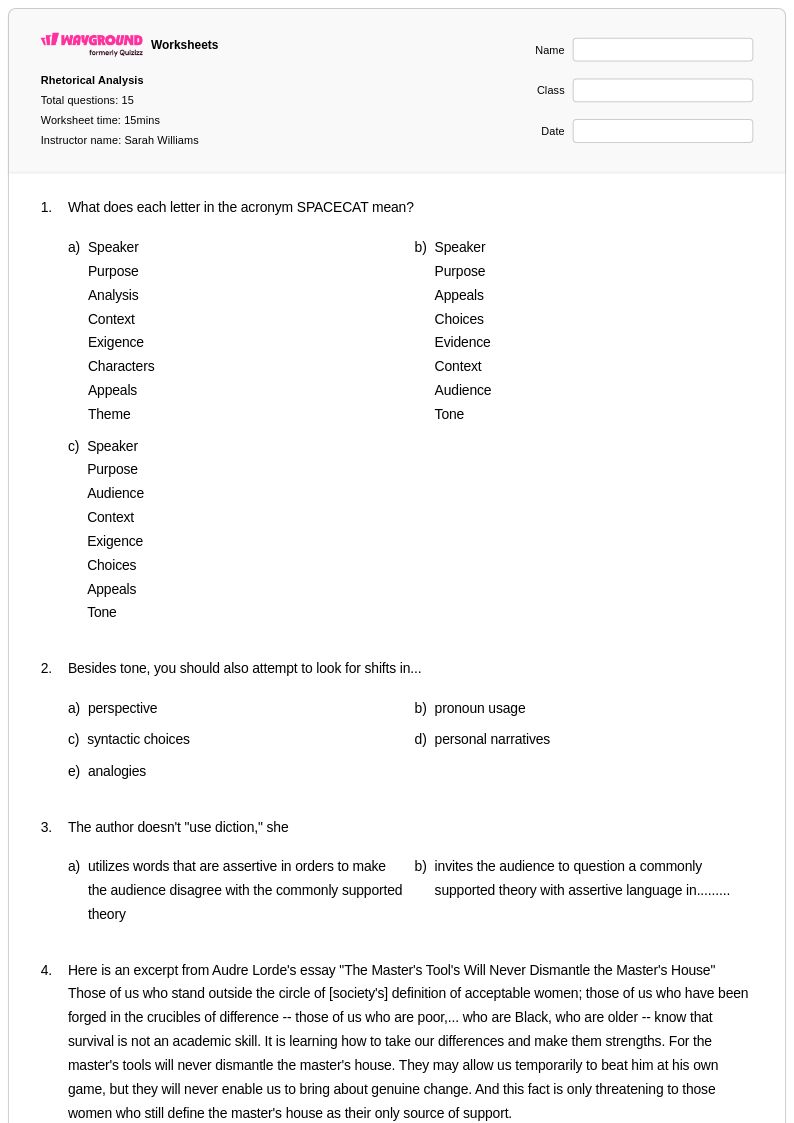
Structured worksheets that walk students through tone, diction, syntax, and appeal identification are among the most effective practice tools. Exercises that ask students not just to label devices but to explain how those devices contribute to a text's overall argument push them toward the kind of analytical writing expected in AP Language and Composition and college-level courses. Repeated practice with varied text types, from political speeches to advertisements, also builds flexibility in applying rhetorical frameworks.
What mistakes do students commonly make when analyzing rhetoric?
The most common error is device-spotting without analysis: students identify that a text uses a metaphor or appeals to pathos but fail to explain why the author made that choice and what effect it has on the audience. Students also frequently conflate the author's tone with the text's subject matter, or confuse ethos with pathos. Worksheets that require students to complete the 'so what' step, explaining the rhetorical effect, help correct these patterns directly.
How do I help struggling readers participate in rhetorical analysis activities?
Breaking analysis into discrete, sequenced steps prevents struggling readers from being overwhelmed by the full complexity of a text at once. On Wayground, teachers can enable Read Aloud so questions and content are read to students who need audio support, and Reduced Answer Choices can lower the cognitive load for students working on device identification tasks. These accommodations can be assigned to individual students without affecting the experience of the rest of the class.
How do I use Wayground's rhetorical analysis worksheets in my classroom?
Wayground's rhetorical analysis worksheets are available as printable PDFs for traditional classroom use and in digital formats for technology-integrated instruction. Teachers can assign them for whole-class lessons, small group work, or independent practice, and can also host them as a quiz directly on Wayground. Each worksheet includes a complete answer key, making them practical for both teacher-led instruction and self-paced student review.
How do I prepare students for the AP Language and Composition rhetorical analysis essay?
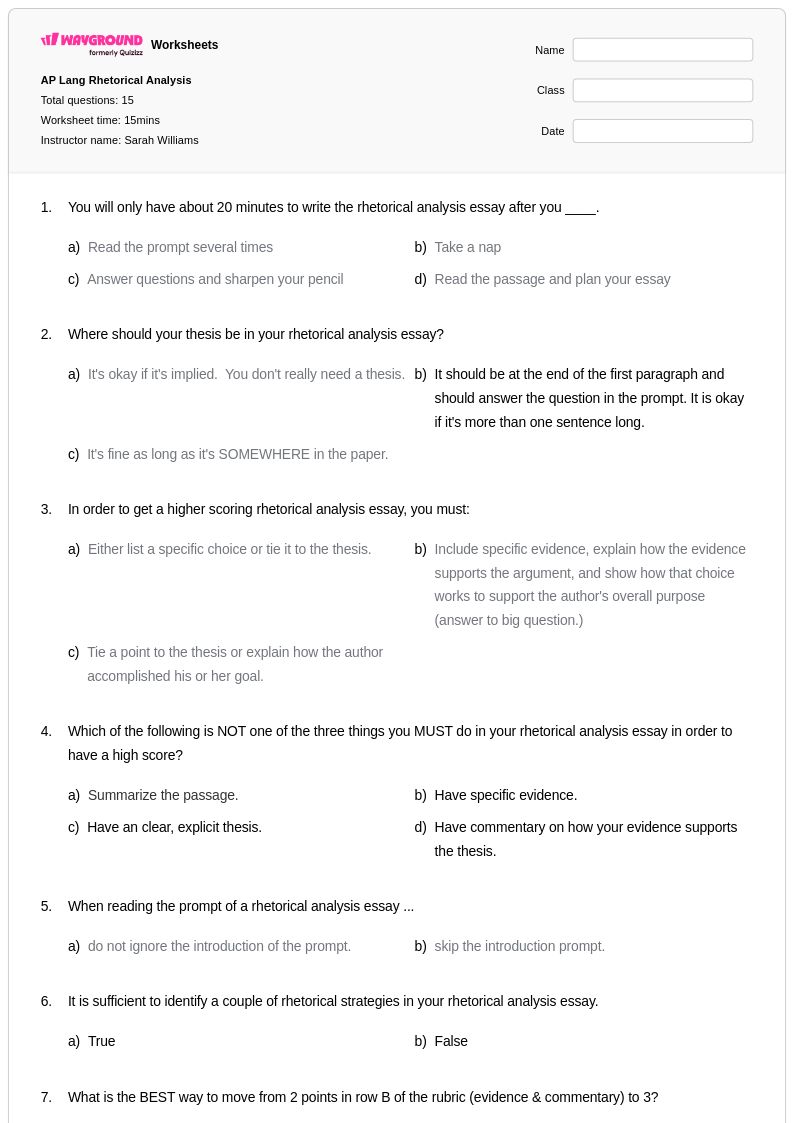
AP Lang students need to move beyond device identification and develop the ability to build a sustained argument about how an author's rhetorical choices serve a specific purpose for a specific audience. Practice that isolates individual skills, such as analyzing syntax in isolation before integrating it into a full essay, builds the granular fluency the exam requires. Timed practice with full texts and structured outlines that require students to select and justify evidence before writing helps bridge the gap between worksheet-level analysis and exam performance.