Free Printable Rhetorical Triangle Worksheets for Grade 9
Grade 9 Rhetorical Triangle worksheets and printables help students master persuasive writing techniques through engaging practice problems, featuring free PDF resources with comprehensive answer keys to strengthen analytical and communication skills.
Explore printable Rhetorical Triangle worksheets for Grade 9
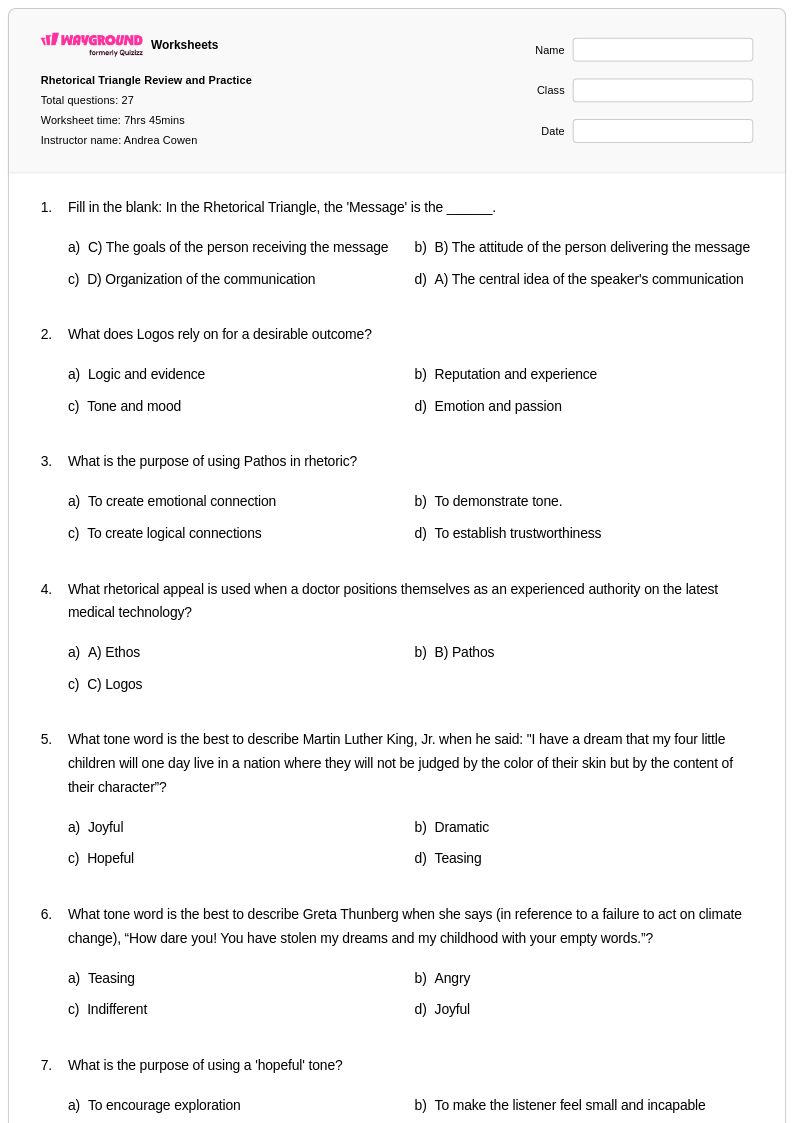
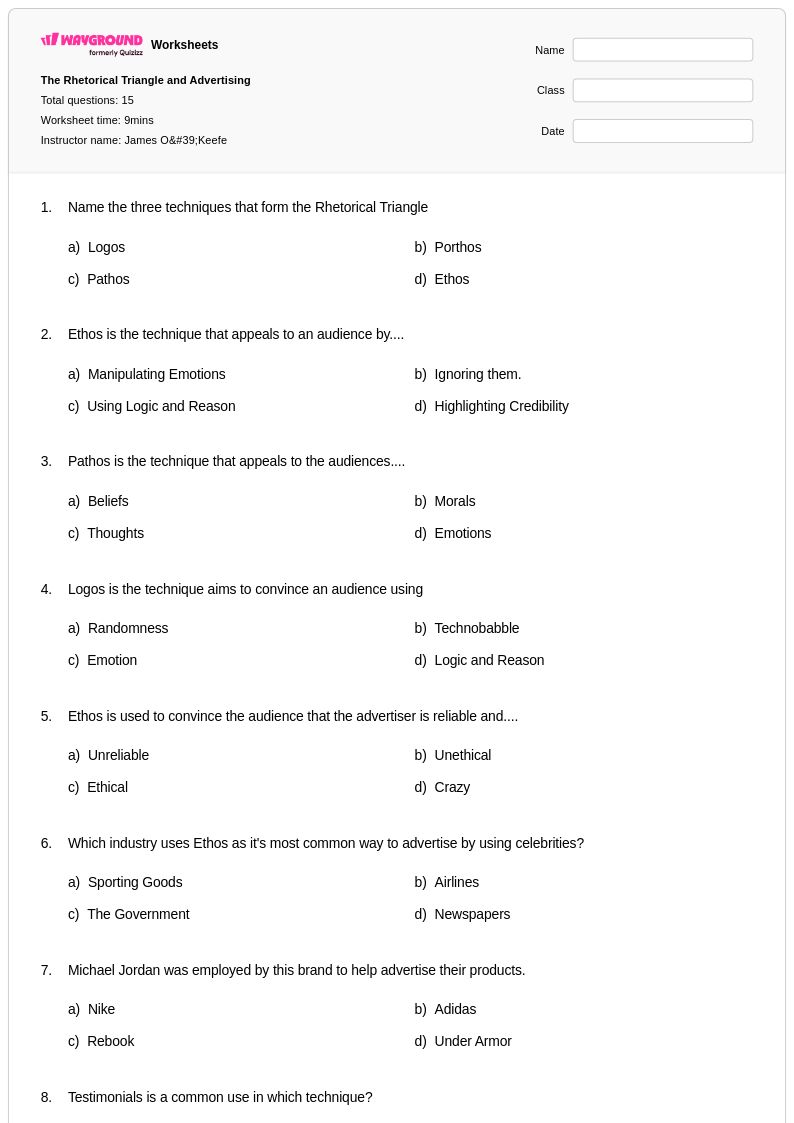
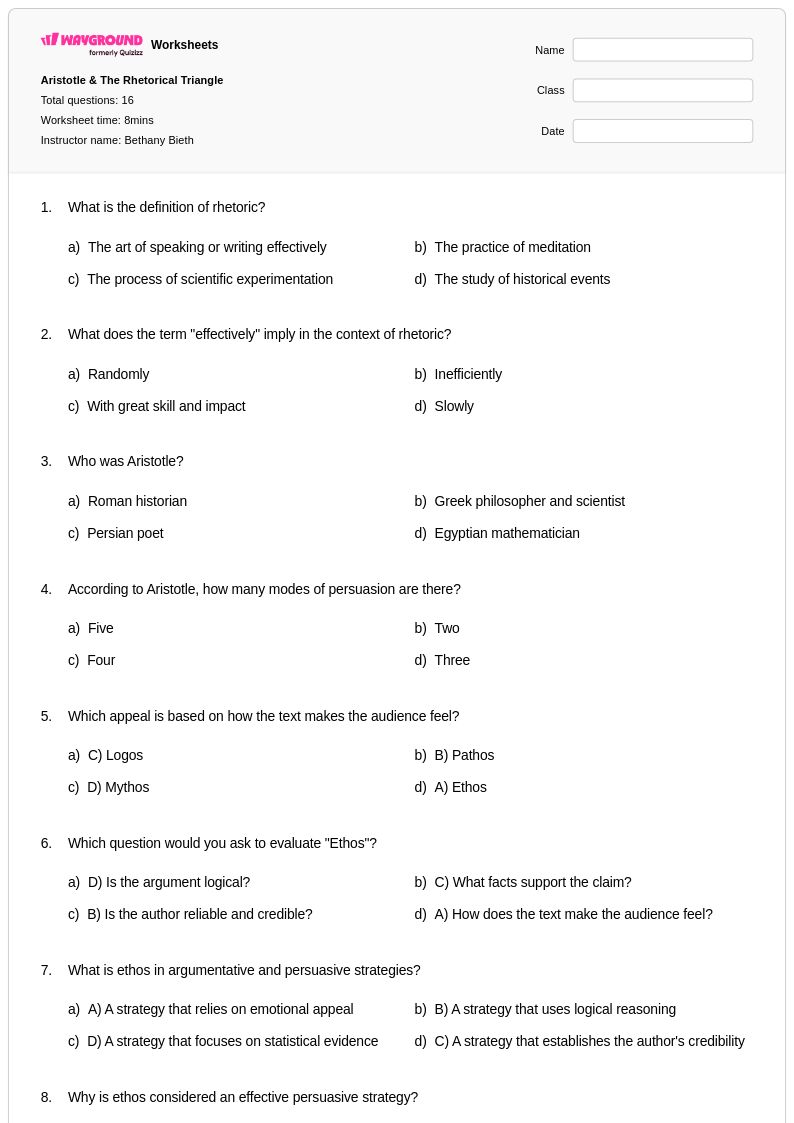
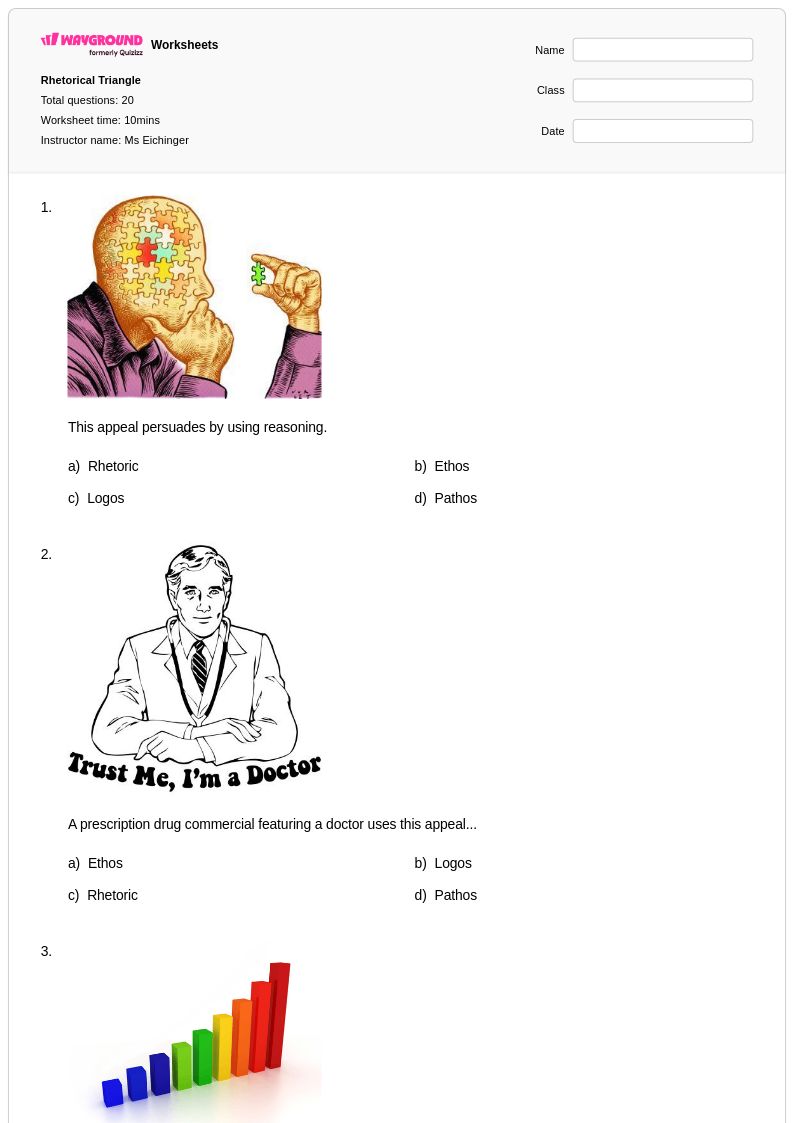
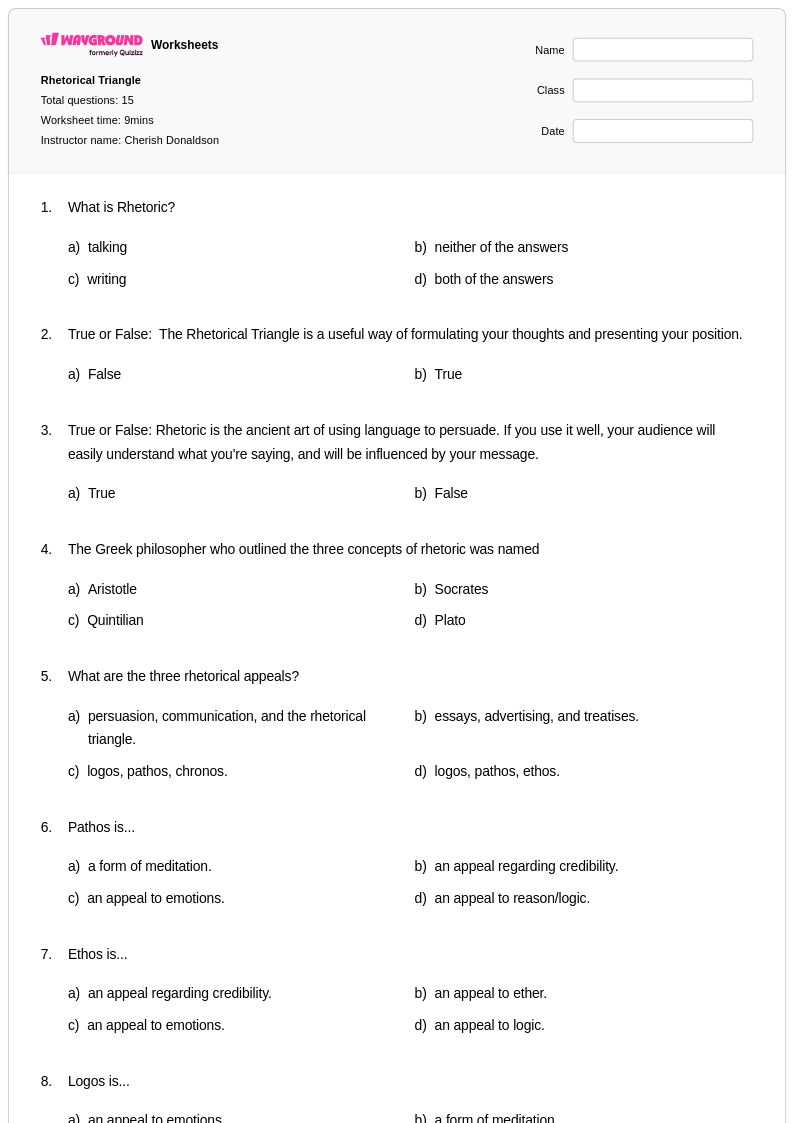
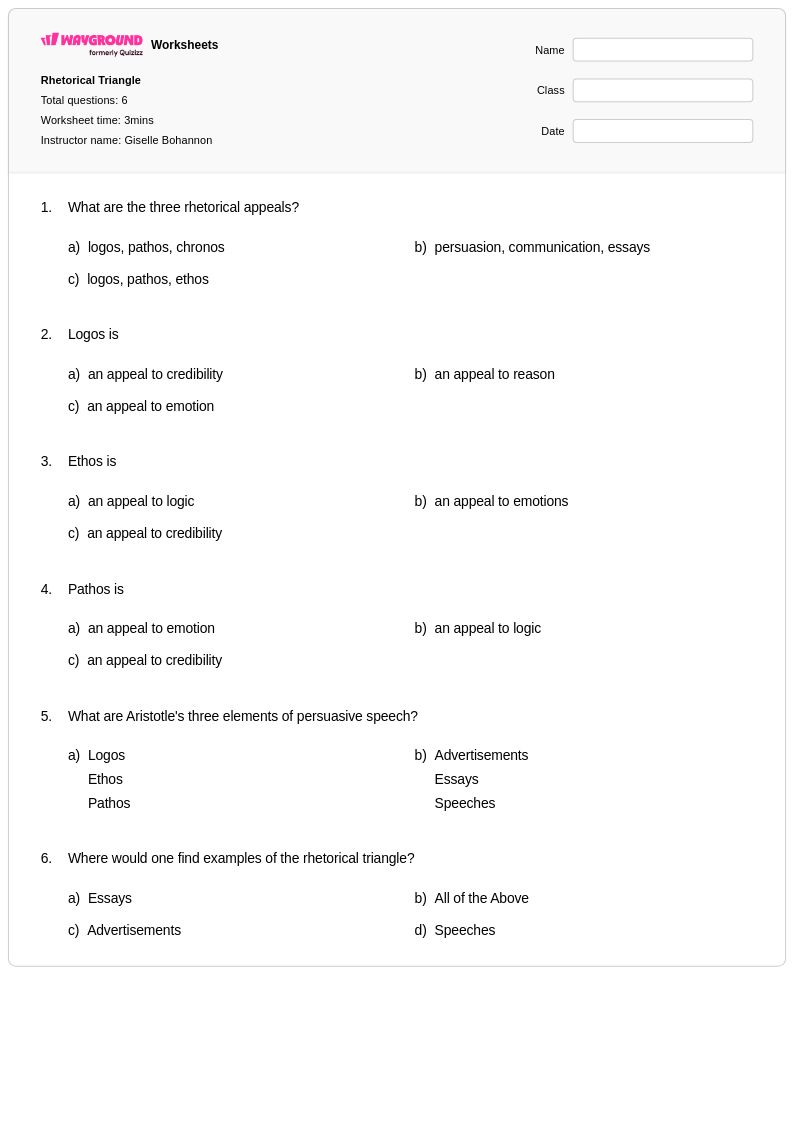
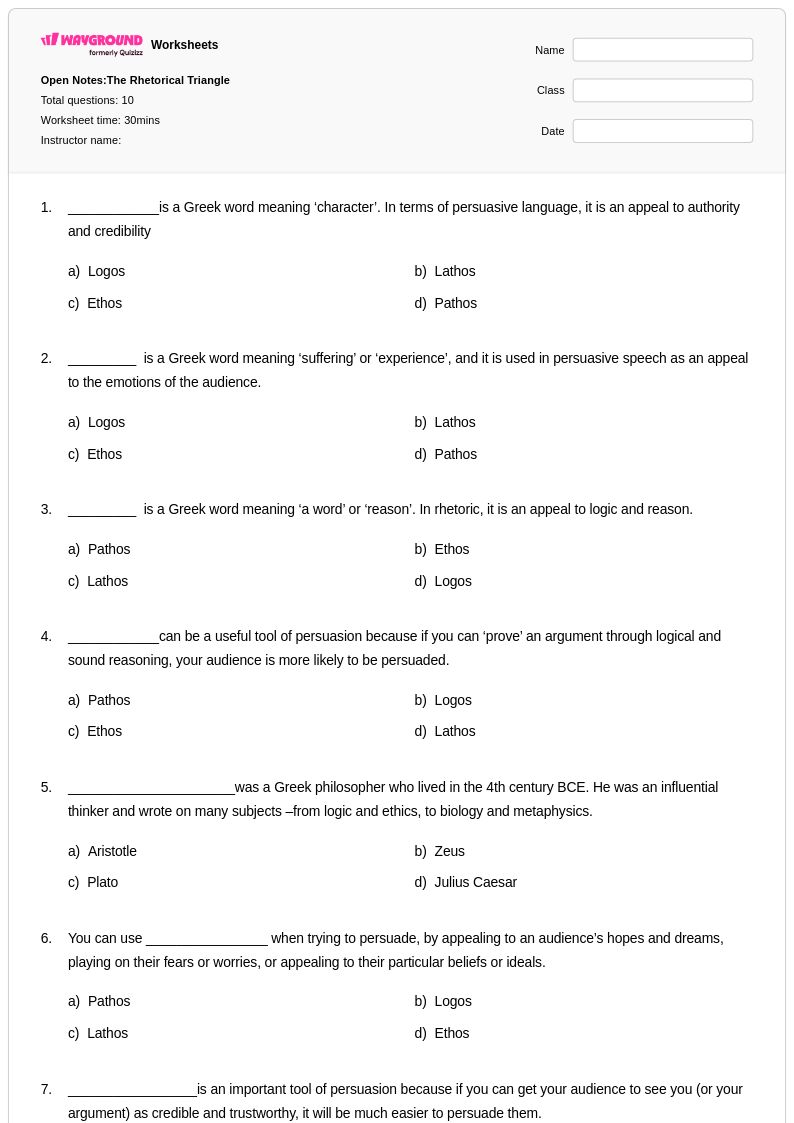
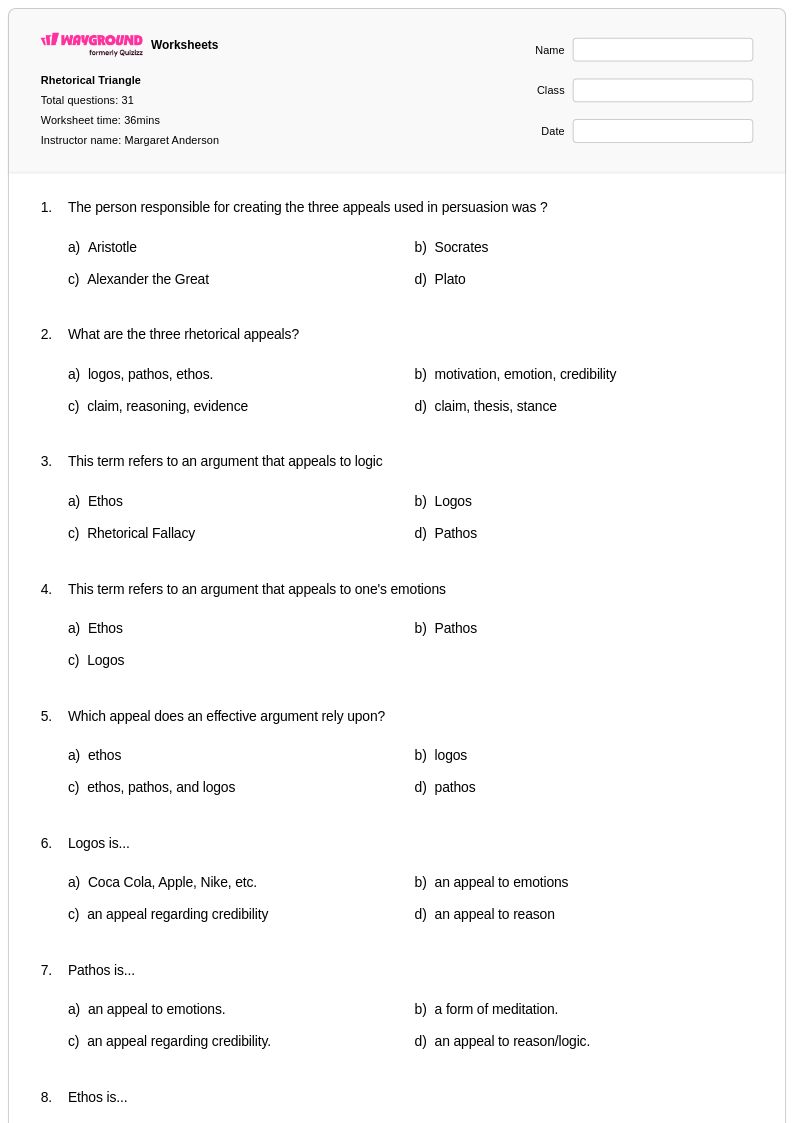
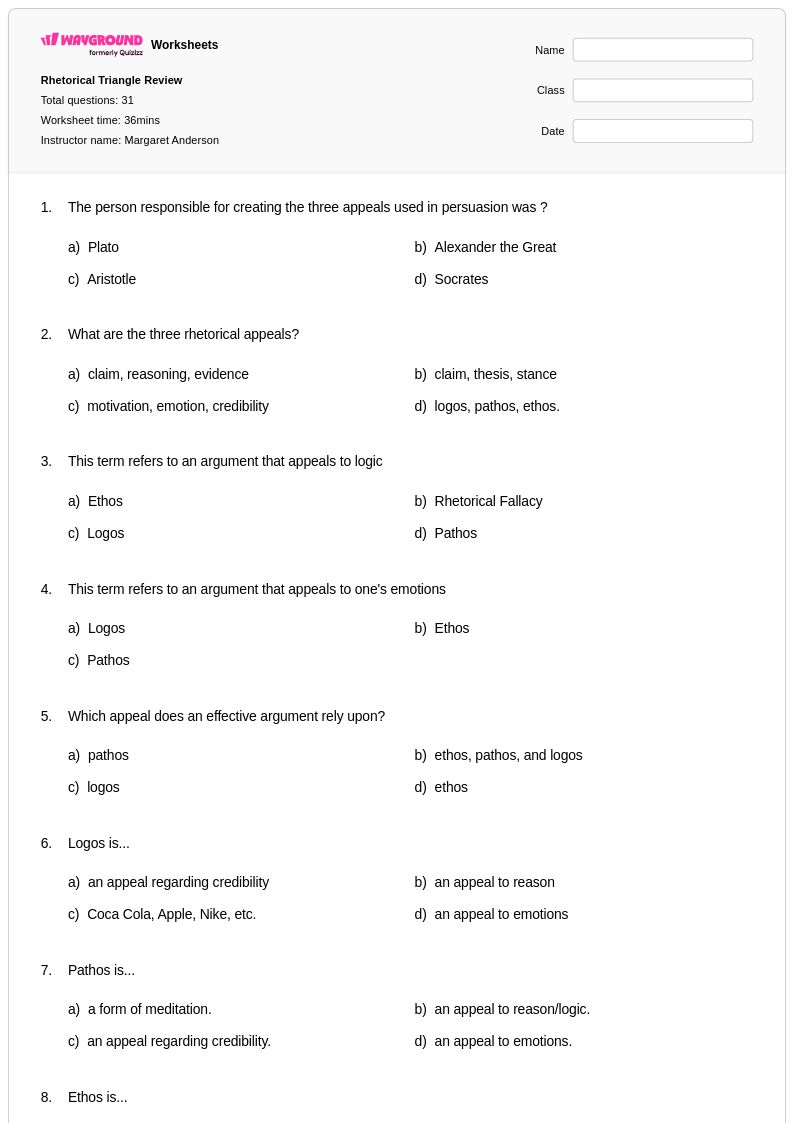
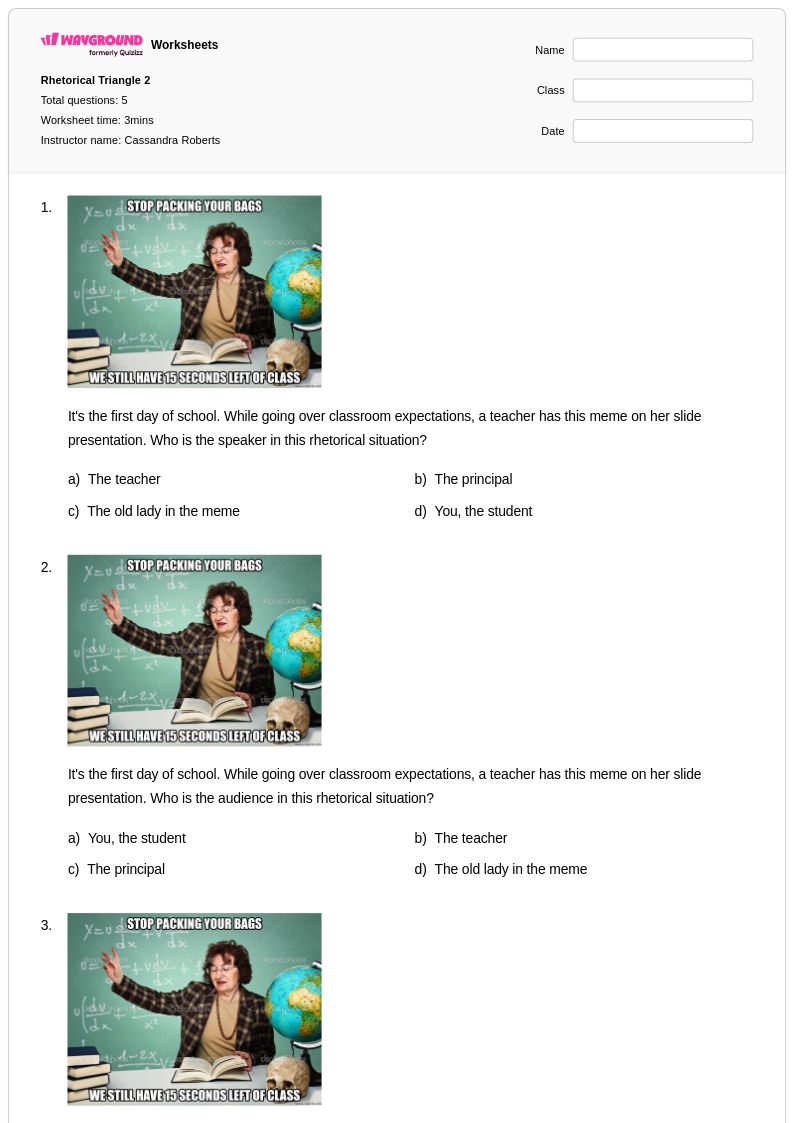
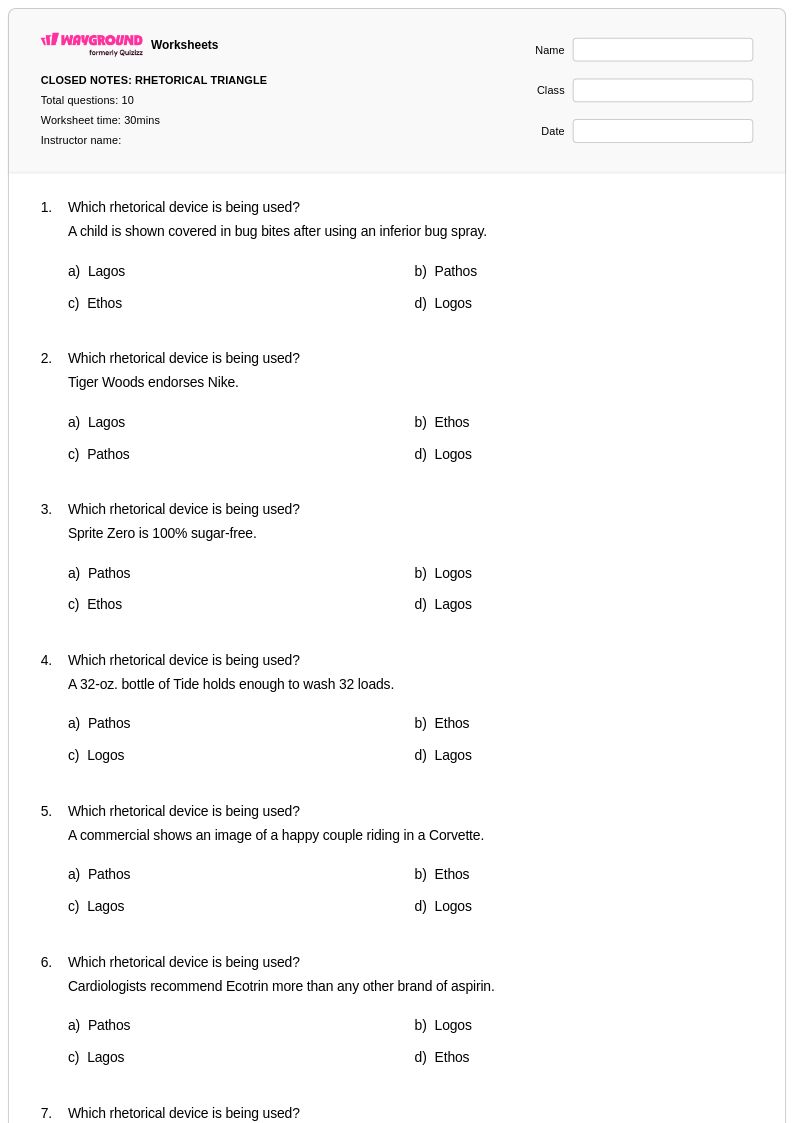
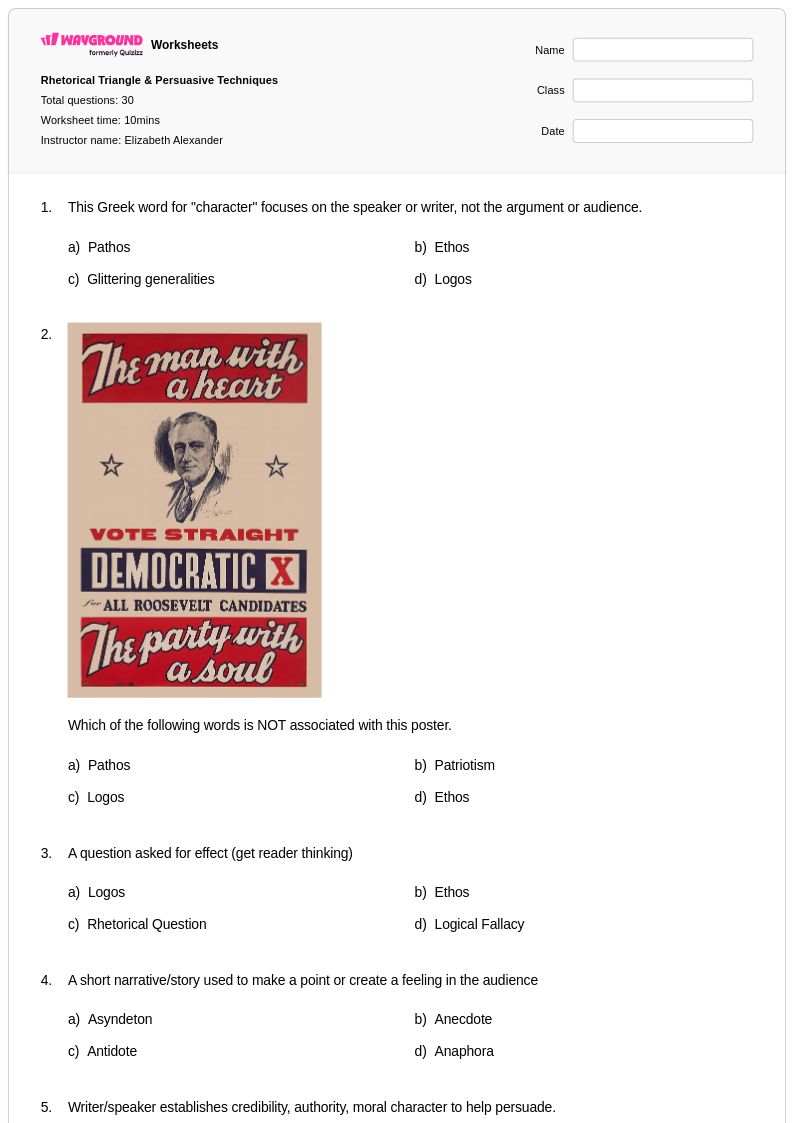
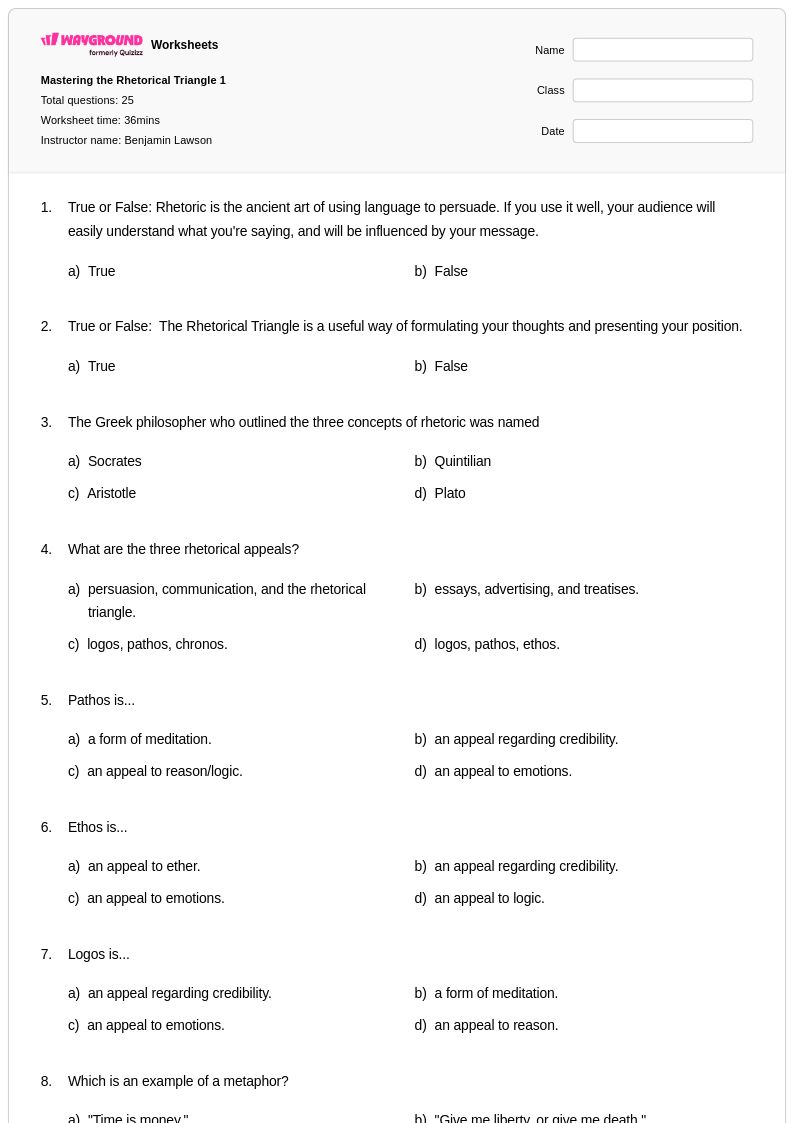
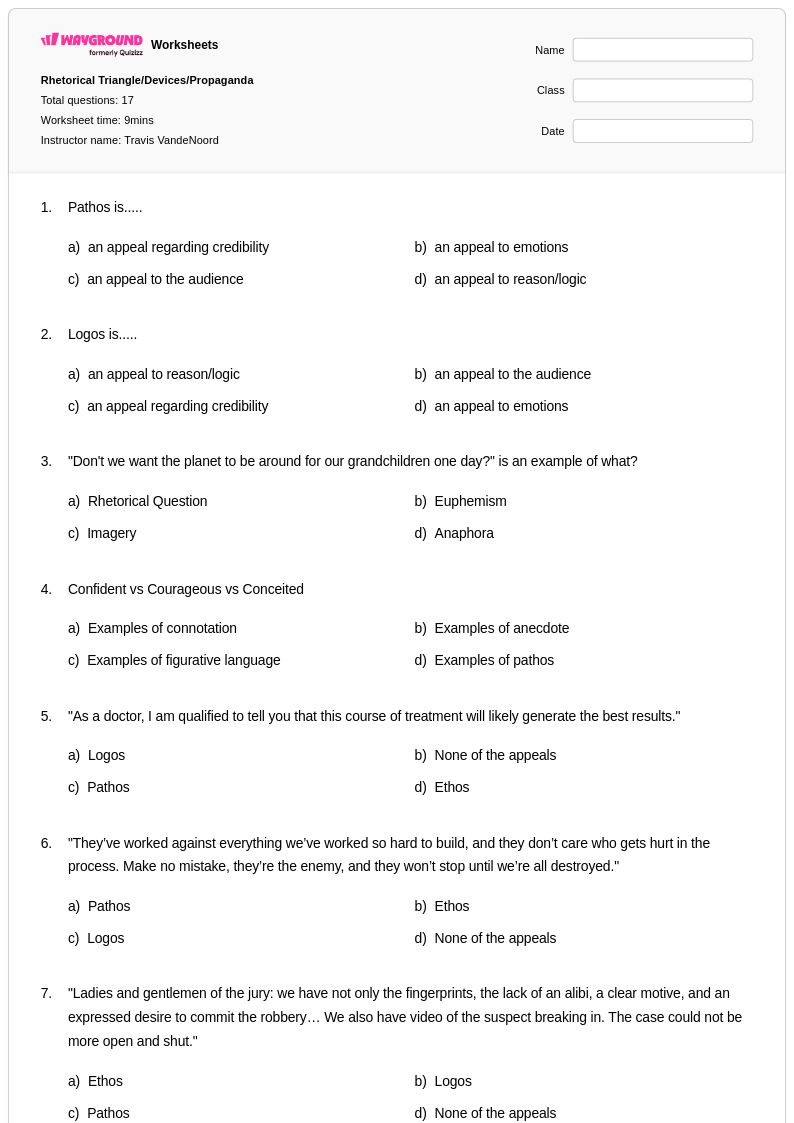
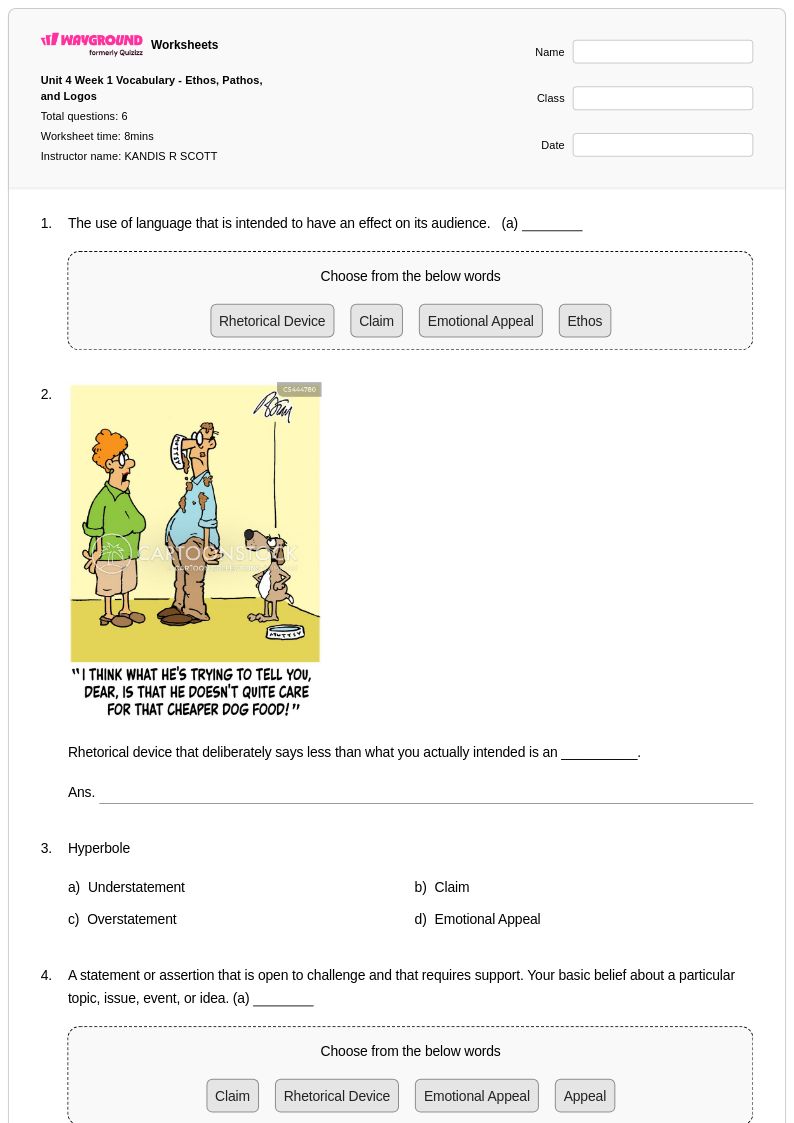
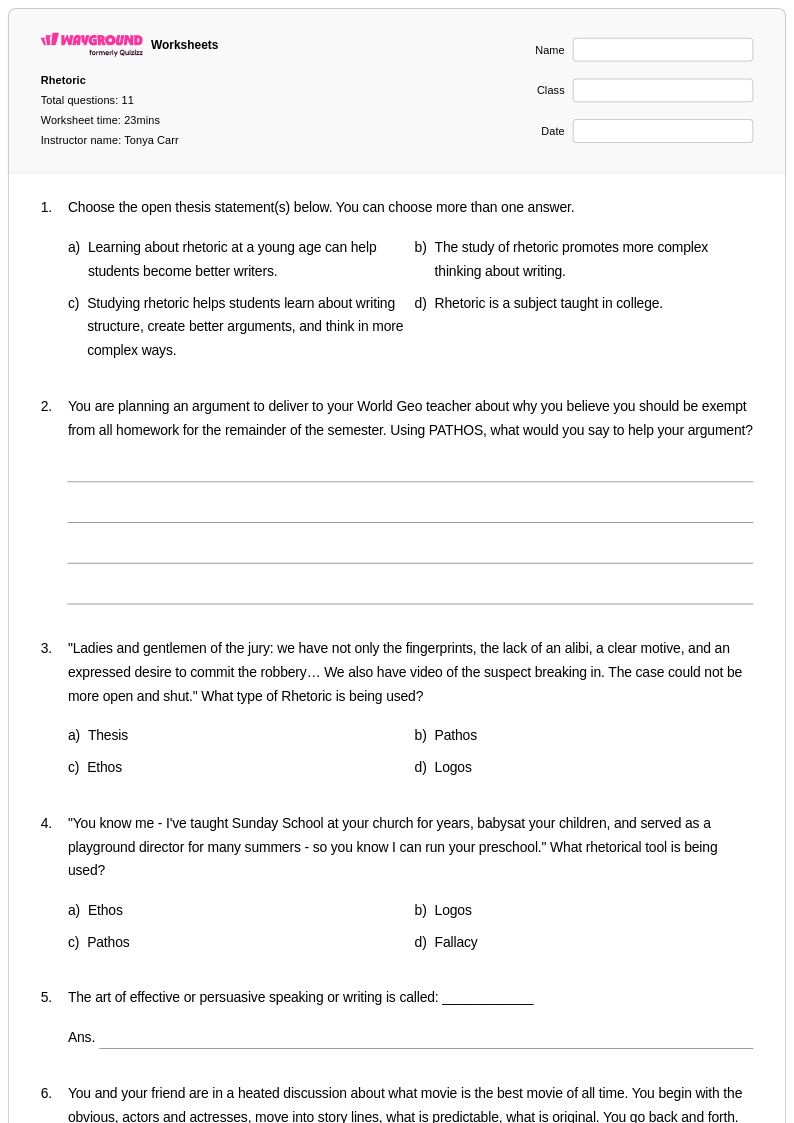
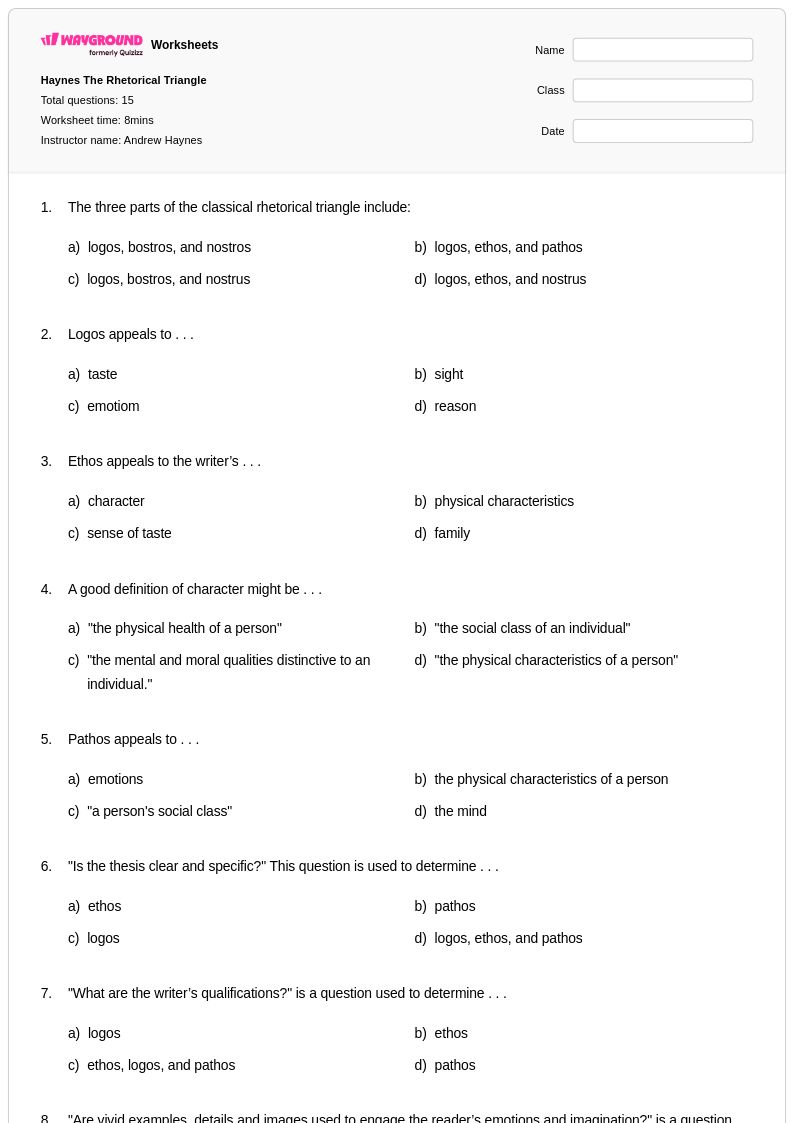
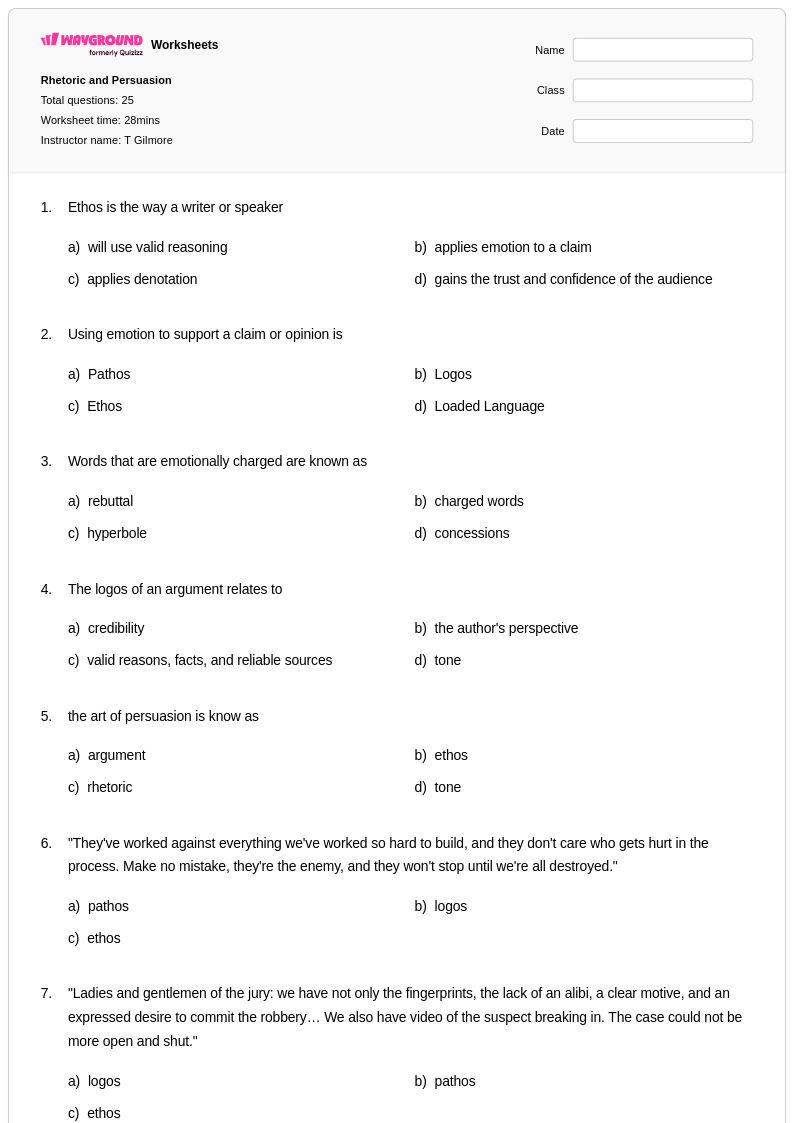
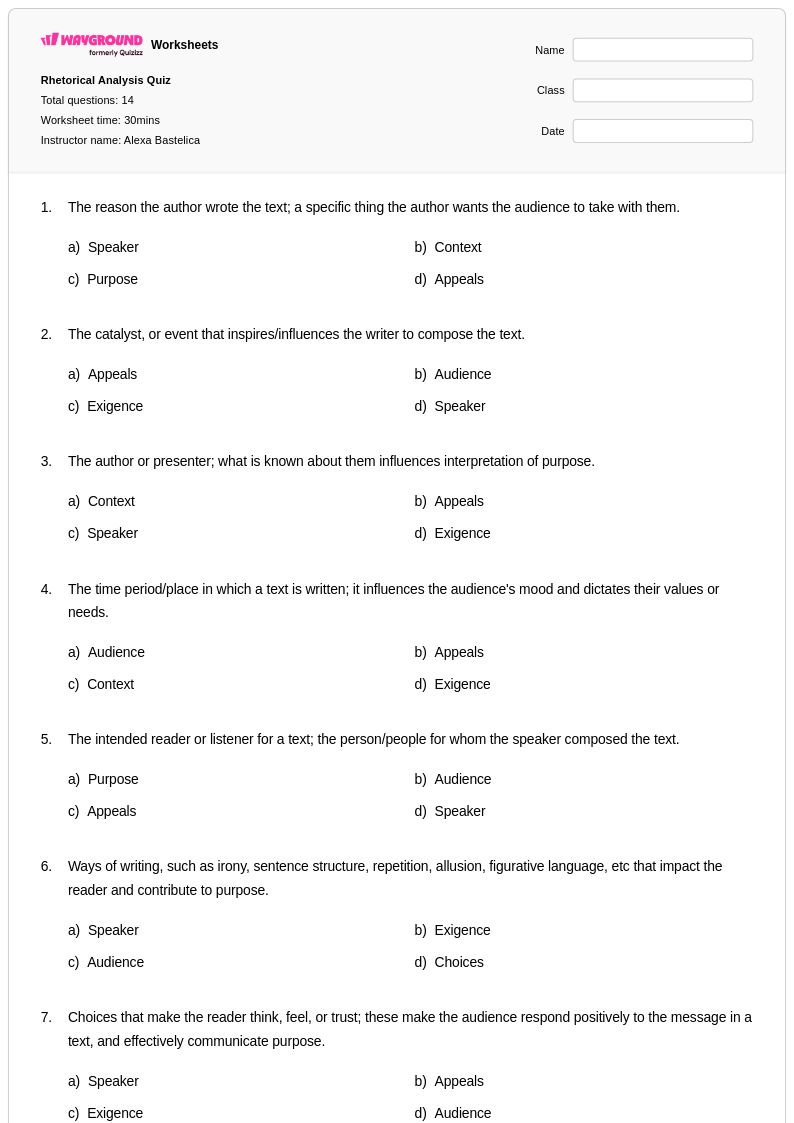
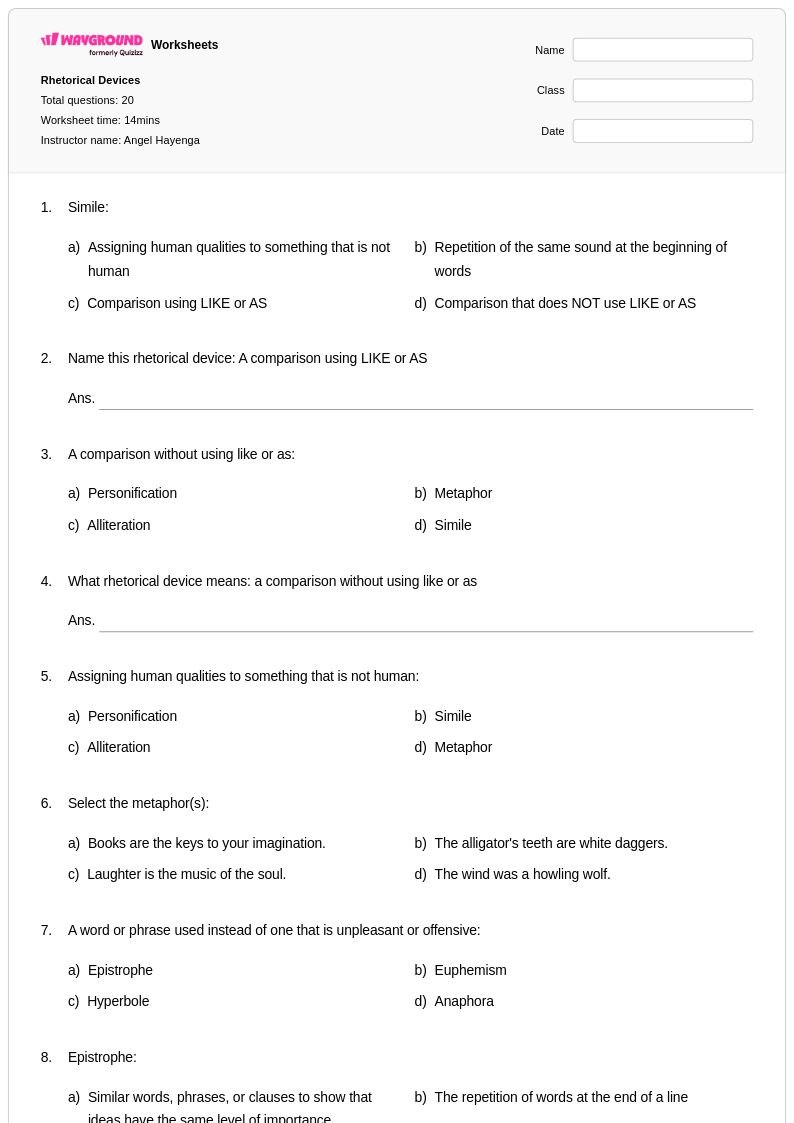
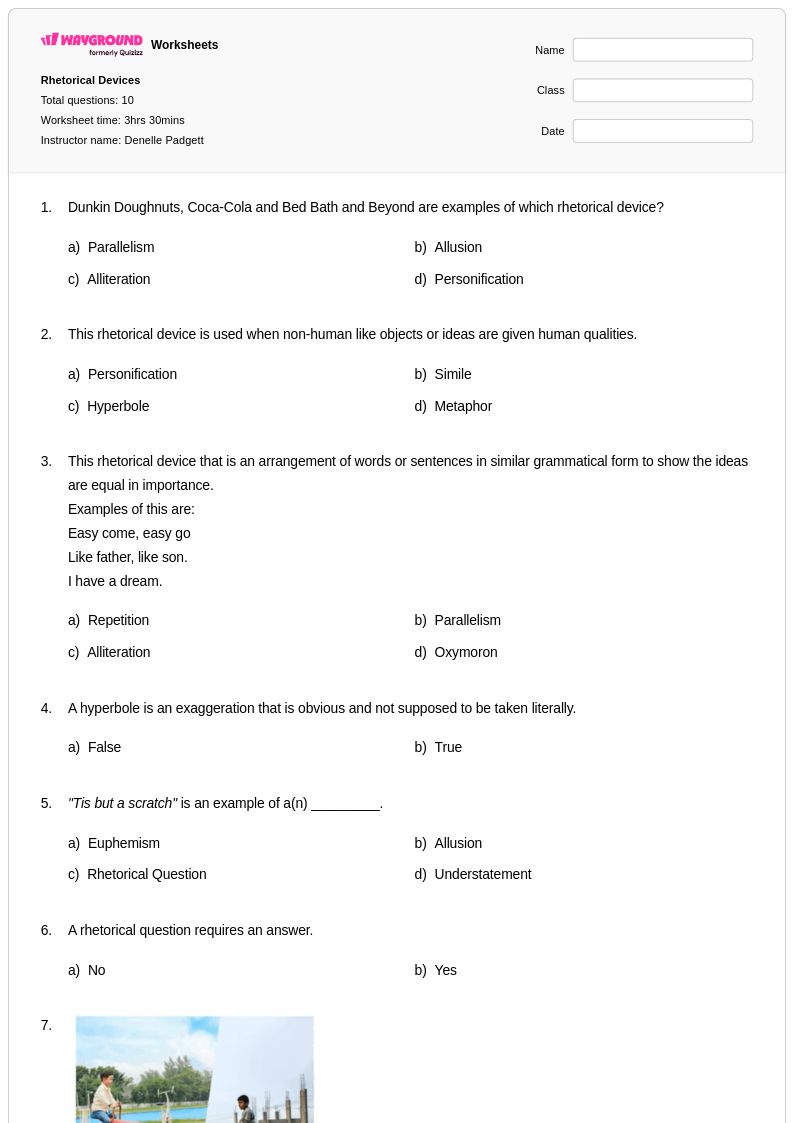
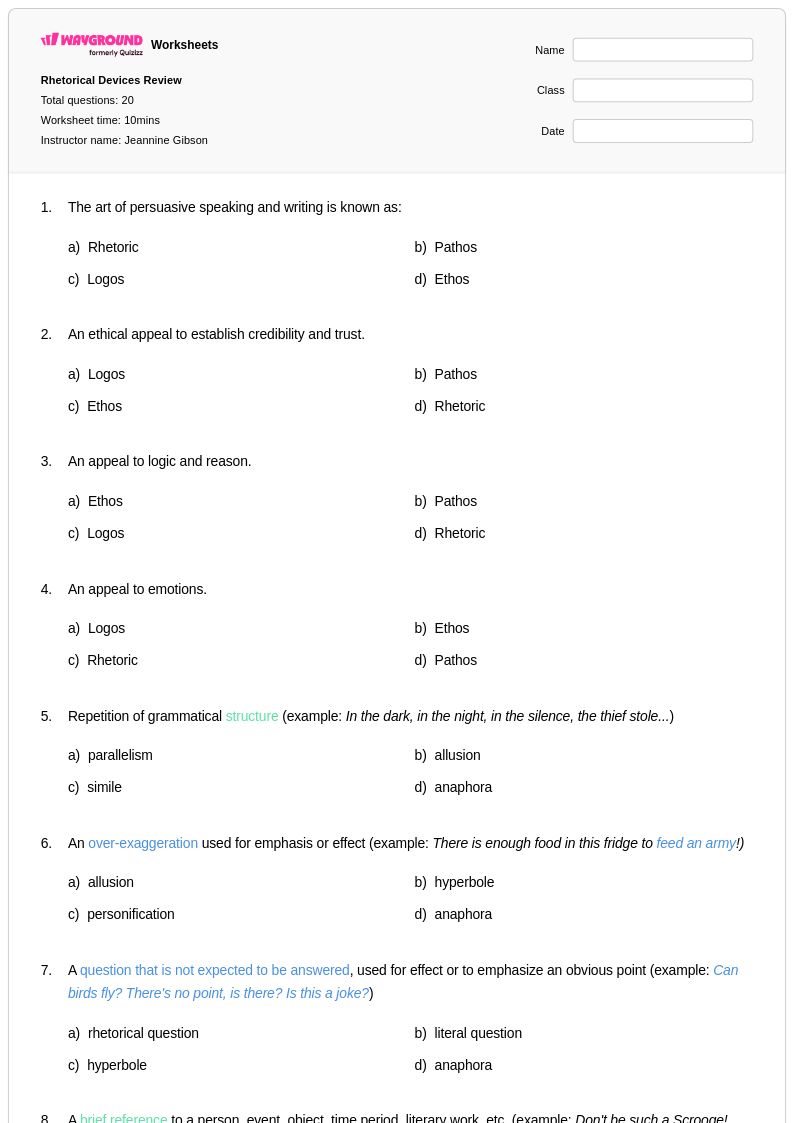
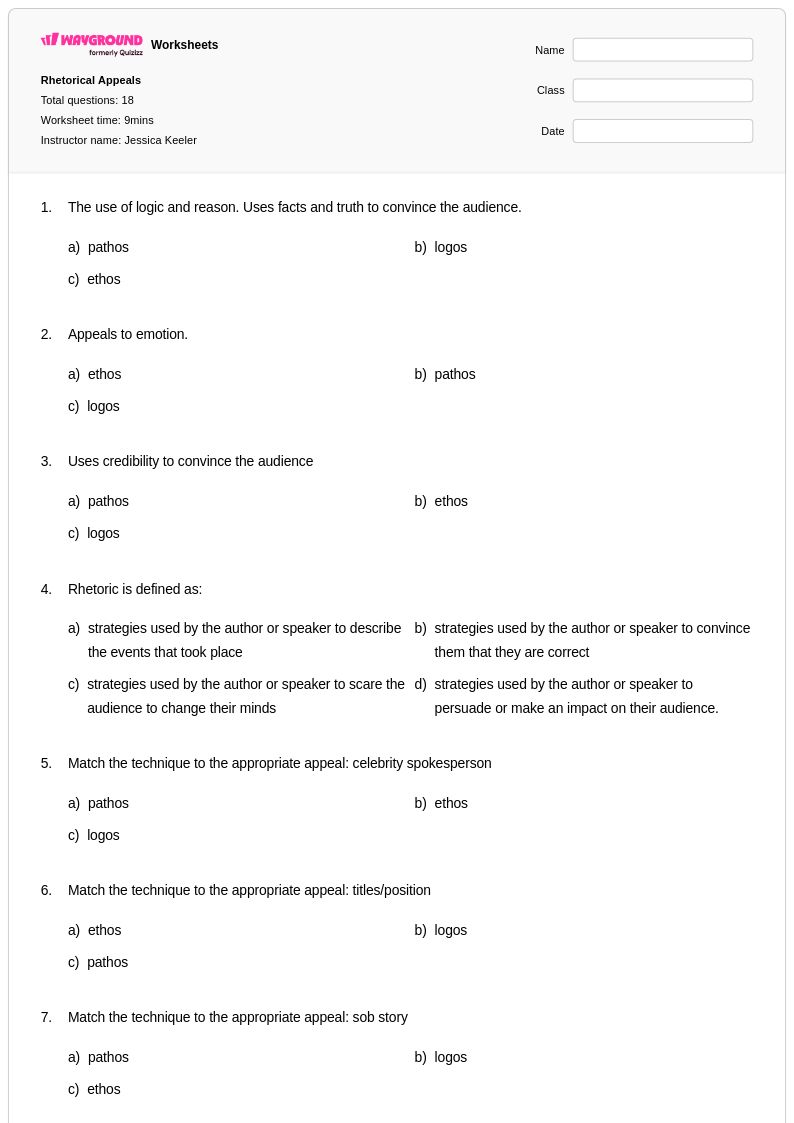
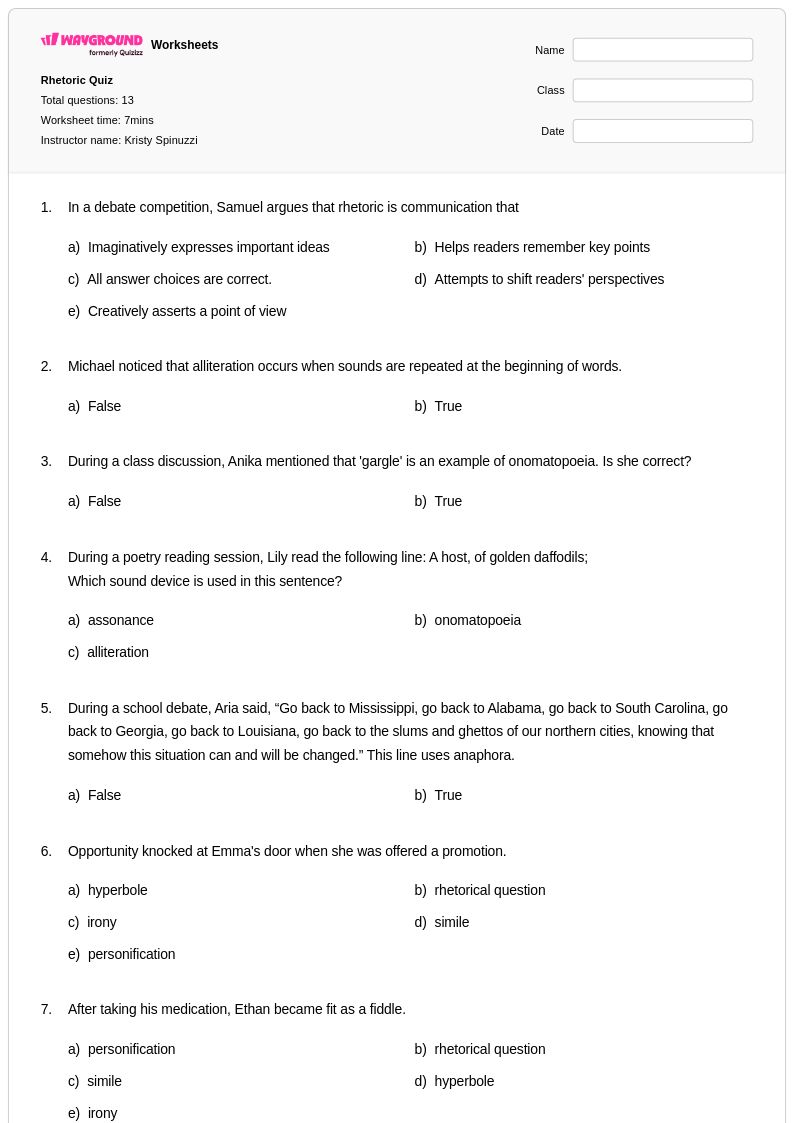
Rhetorical Triangle worksheets for Grade 9 students available through Wayground (formerly Quizizz) provide comprehensive practice in analyzing and applying the fundamental components of persuasive communication: ethos, pathos, and logos. These carefully designed resources help ninth-grade students develop critical thinking skills by examining how authors establish credibility, appeal to emotions, and use logical reasoning to persuade their audiences across various genres of writing. The worksheets feature diverse practice problems that guide students through identifying rhetorical appeals in speeches, advertisements, essays, and literary works, while accompanying answer keys enable both independent study and structured classroom assessment. Students engage with free printable activities that strengthen their ability to recognize persuasive techniques and craft their own compelling arguments using the rhetorical triangle framework.
Wayground (formerly Quizizz) empowers educators with an extensive collection of teacher-created Rhetorical Triangle resources drawn from millions of educational materials, all easily accessible through robust search and filtering capabilities that align with curriculum standards. Teachers can efficiently locate age-appropriate content for Grade 9 students and customize worksheets to match diverse learning needs, whether providing remediation for struggling learners or enrichment opportunities for advanced students. The platform's flexible format options, including downloadable pdf versions and interactive digital activities, support varied instructional approaches from traditional paper-based practice to technology-enhanced learning environments. These differentiation tools enable educators to streamline lesson planning while ensuring every student receives targeted skill practice in analyzing rhetorical strategies and developing persuasive writing techniques essential for academic success.
FAQs
How do I teach the rhetorical triangle to my students?
Start by introducing each appeal individually: ethos (credibility), pathos (emotion), and logos (logic). Use familiar texts like advertisements or political speeches to show how all three appeals often work together in a single piece of persuasion. Once students can identify each appeal in isolation, move them toward analyzing how the combination of appeals strengthens or weakens an argument. Anchor charts and annotated text examples help students internalize the framework before applying it independently.
What kinds of texts work best for practicing rhetorical triangle analysis?
Political speeches, print advertisements, public service announcements, and op-ed articles are especially effective because they rely heavily on persuasive appeals and are short enough for focused classroom analysis. Literary excerpts and historical documents also work well for more advanced practice. Using a variety of text types helps students understand that ethos, pathos, and logos appear across genres, not just in formal argument writing.
What mistakes do students commonly make when identifying ethos, pathos, and logos?
The most frequent error is conflating pathos with any emotional language and ignoring whether it is actually being used to persuade. Students also tend to label an entire text as one appeal rather than recognizing that most persuasive writing blends all three. Another common mistake is assuming ethos only refers to the author's credentials, when it can also be built through tone, word choice, and how sources are cited.
How can I use rhetorical triangle worksheets to prepare students for persuasive writing?
Rhetorical analysis and persuasive writing are reciprocal skills: students who can identify how ethos, pathos, and logos function in other writers' work are better equipped to deploy those strategies in their own writing. Use worksheets to first build recognition skills, then have students plan their own arguments by deliberately deciding which appeals to use and where. This transfer from analysis to production is one of the most effective ways to improve student writing quality.
How do I differentiate rhetorical triangle practice for students at different skill levels?
For struggling students, reduce cognitive load by providing pre-selected short passages with guiding questions that isolate one appeal at a time. For advanced students, use complex multi-source texts and ask them to evaluate which appeals are most effective and why. On Wayground, teachers can apply accommodations such as reduced answer choices or read-aloud support to individual students, allowing differentiated practice within the same assignment without signaling differences to the rest of the class.
How do I use Wayground's rhetorical triangle worksheets in my classroom?
Wayground's rhetorical triangle worksheets are available as printable PDFs for traditional paper-based instruction and in digital formats for technology-integrated classrooms. Teachers can also host the worksheets as a quiz directly on Wayground, making them suitable for both formative assessment and independent practice. Answer keys are included with each resource, which supports self-paced study as well as teacher-led review.