Free Printable Rights and Responsibilities worksheets
Explore Wayground's free printable worksheets and practice problems on rights and responsibilities, helping students understand their civic duties and freedoms through engaging PDF activities with complete answer keys.
Explore printable Rights and Responsibilities worksheets
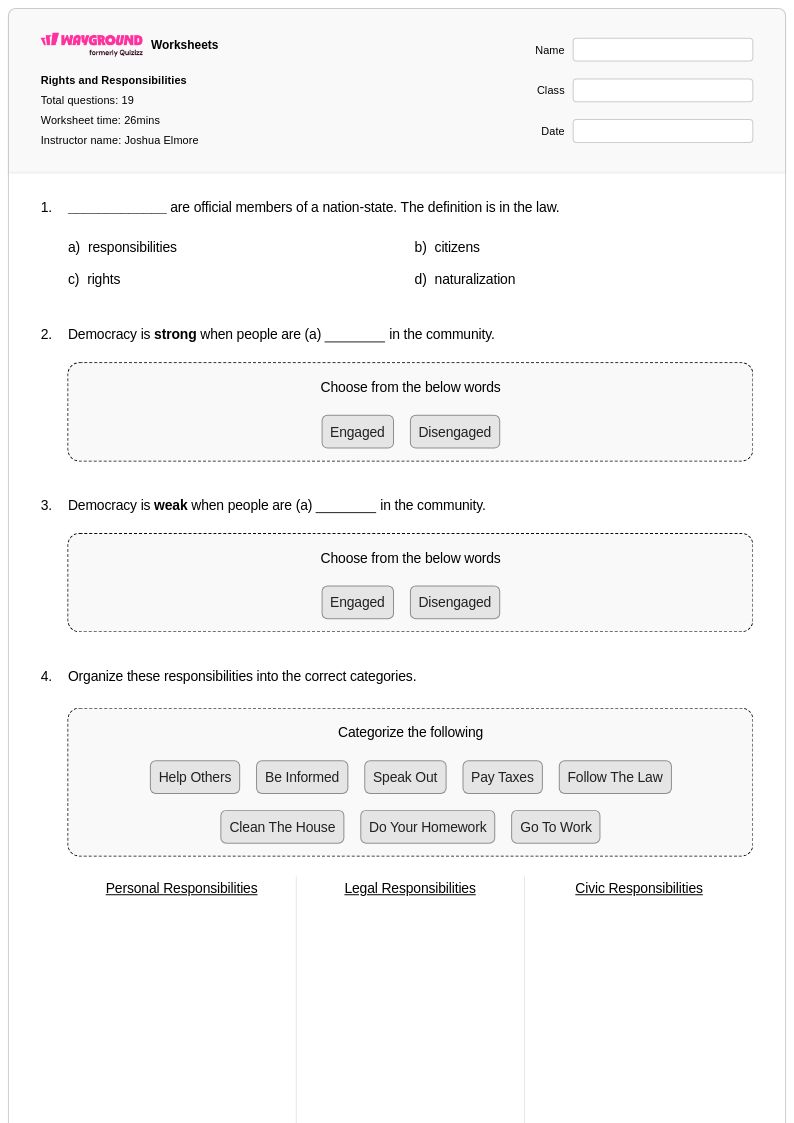
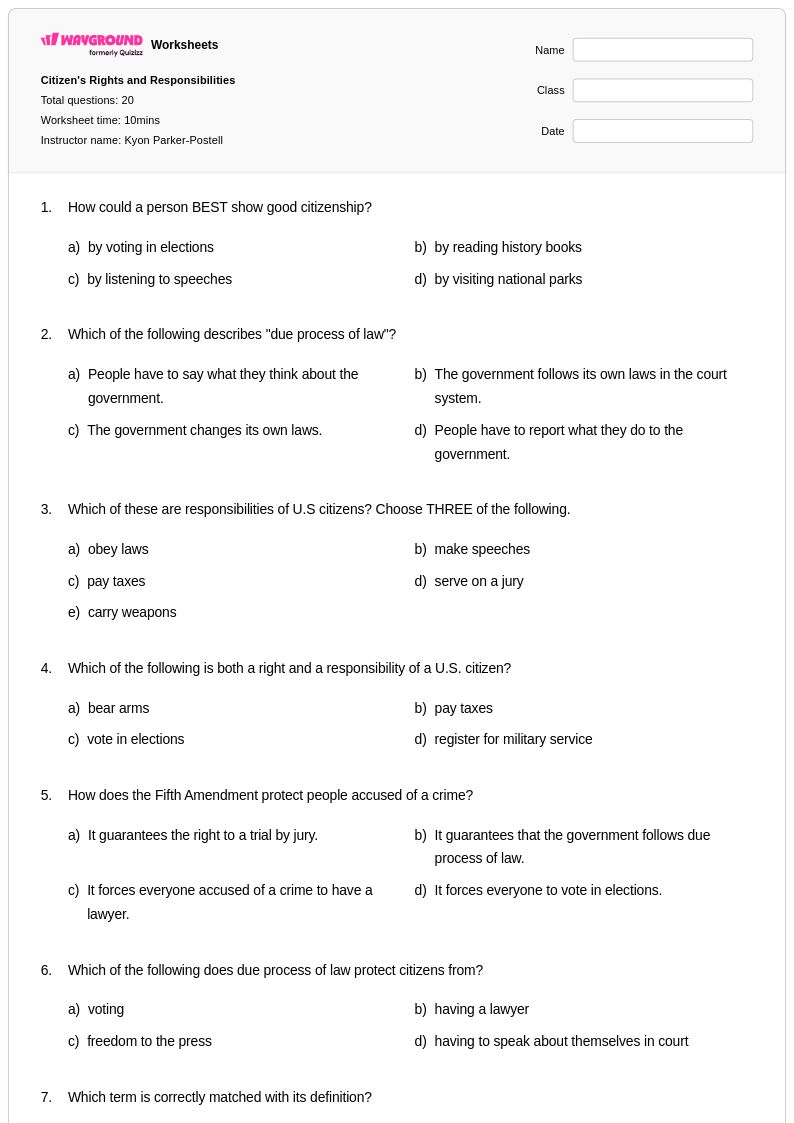
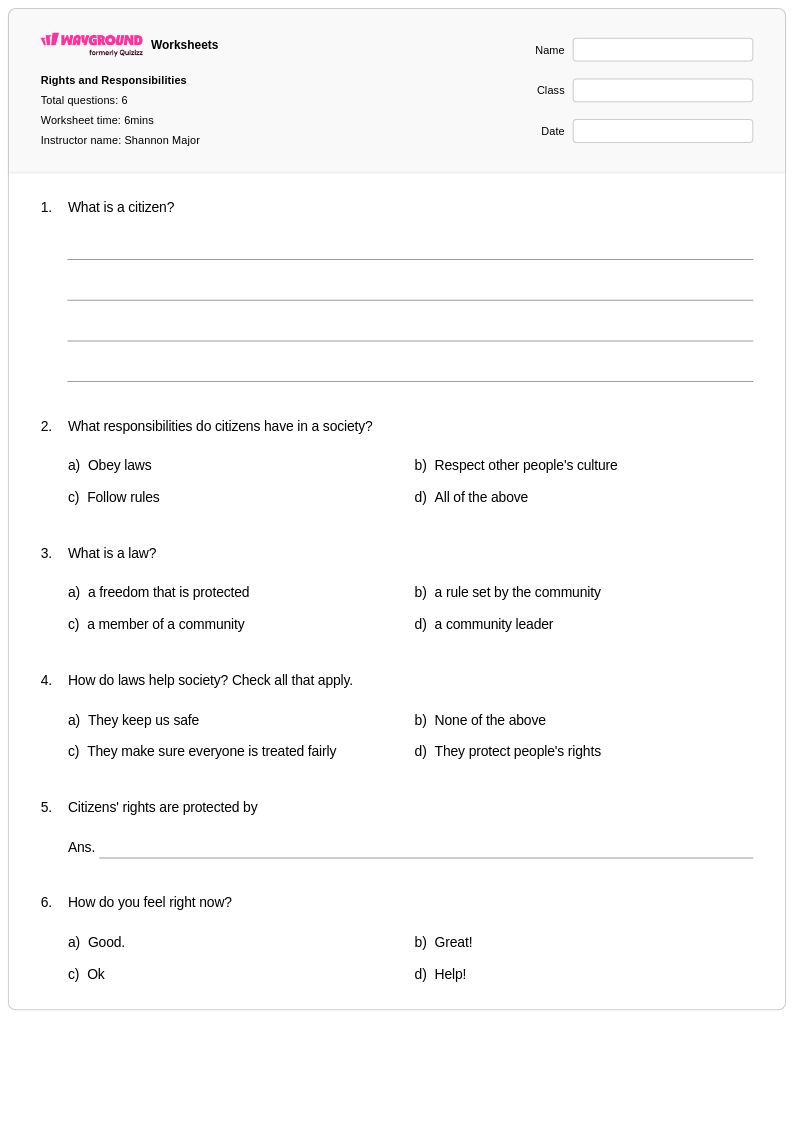
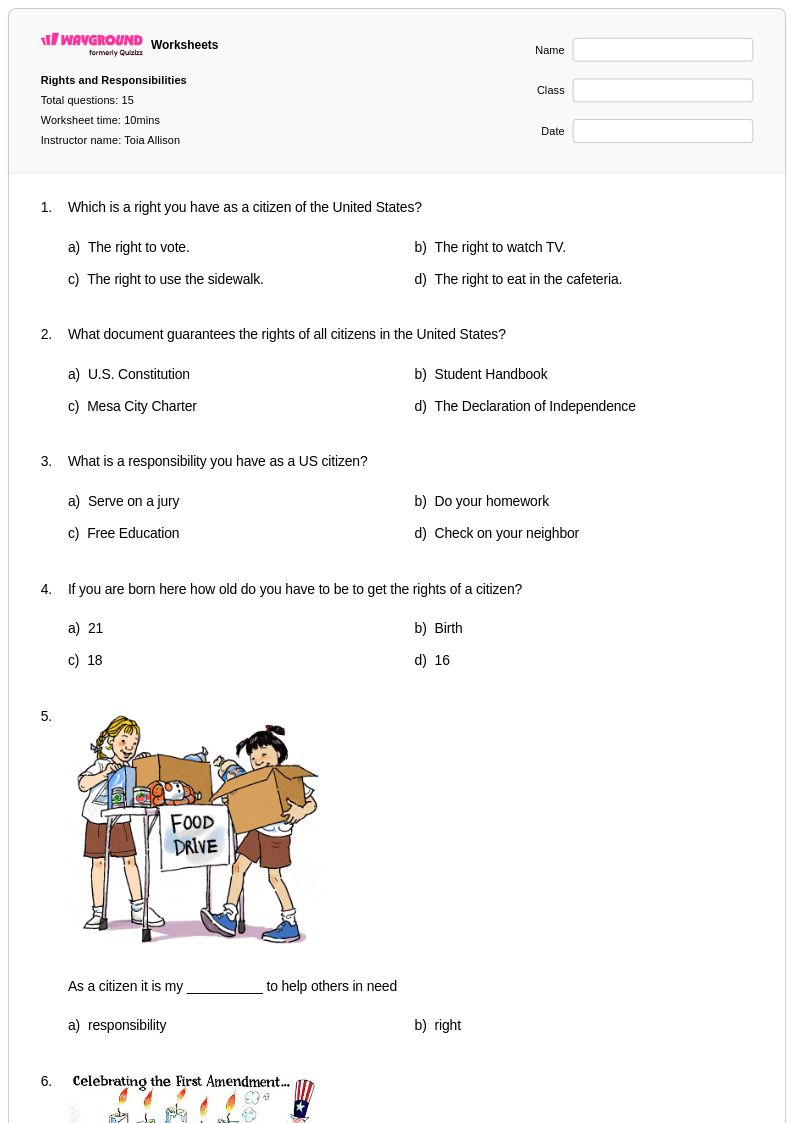
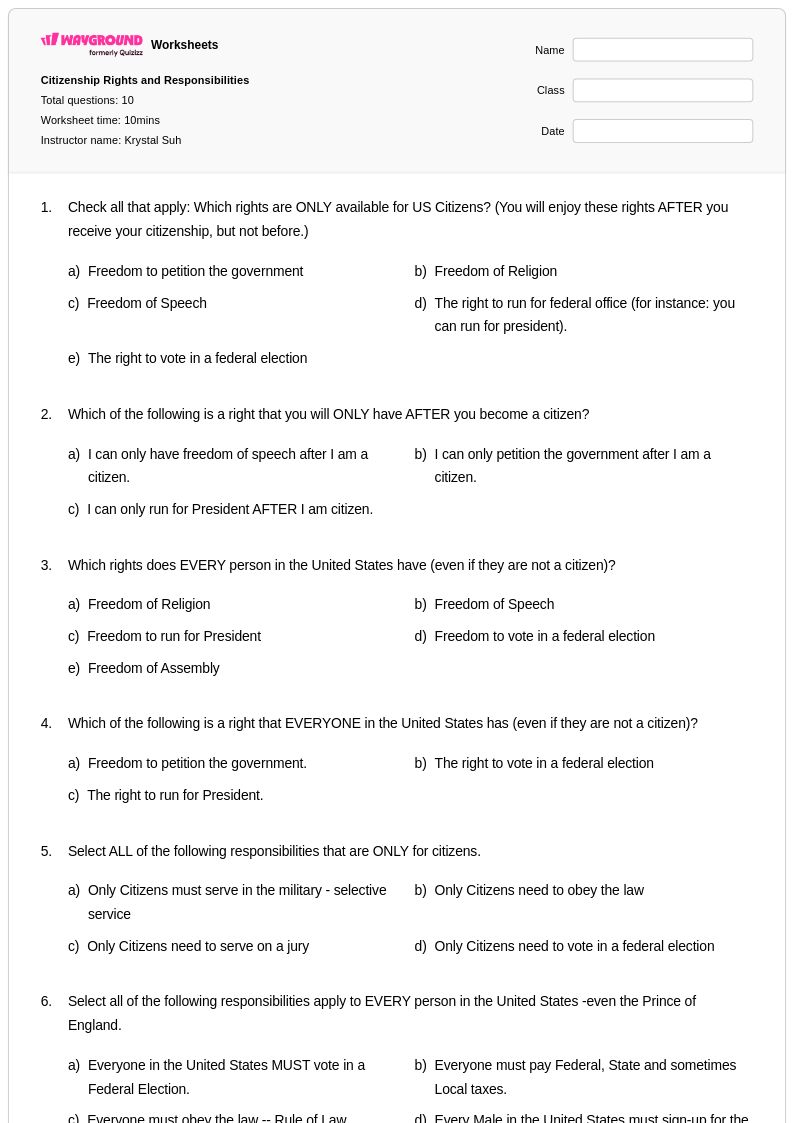
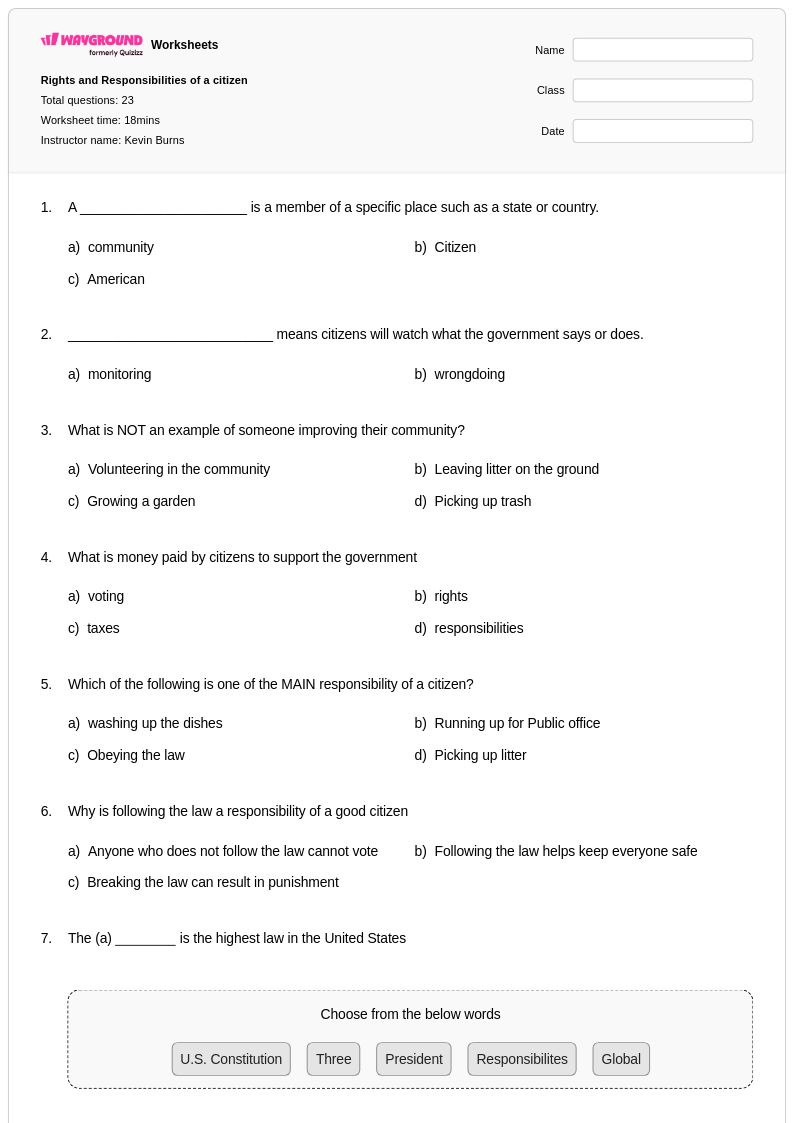
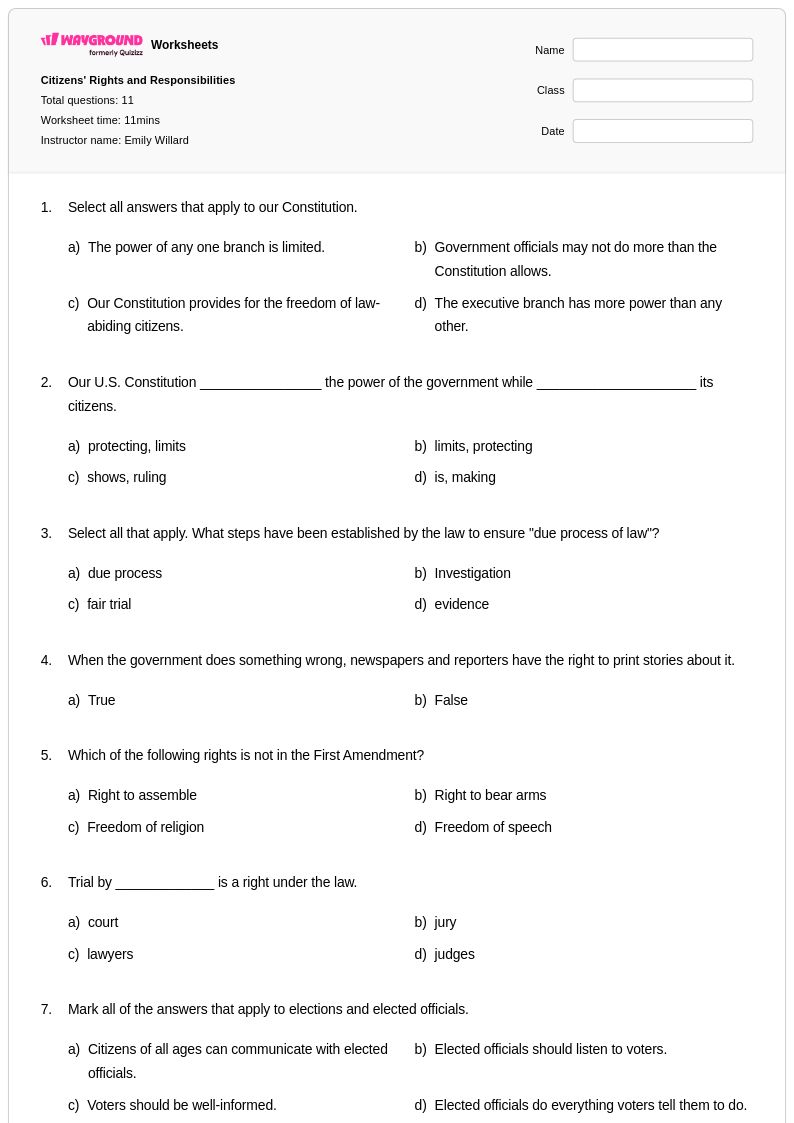
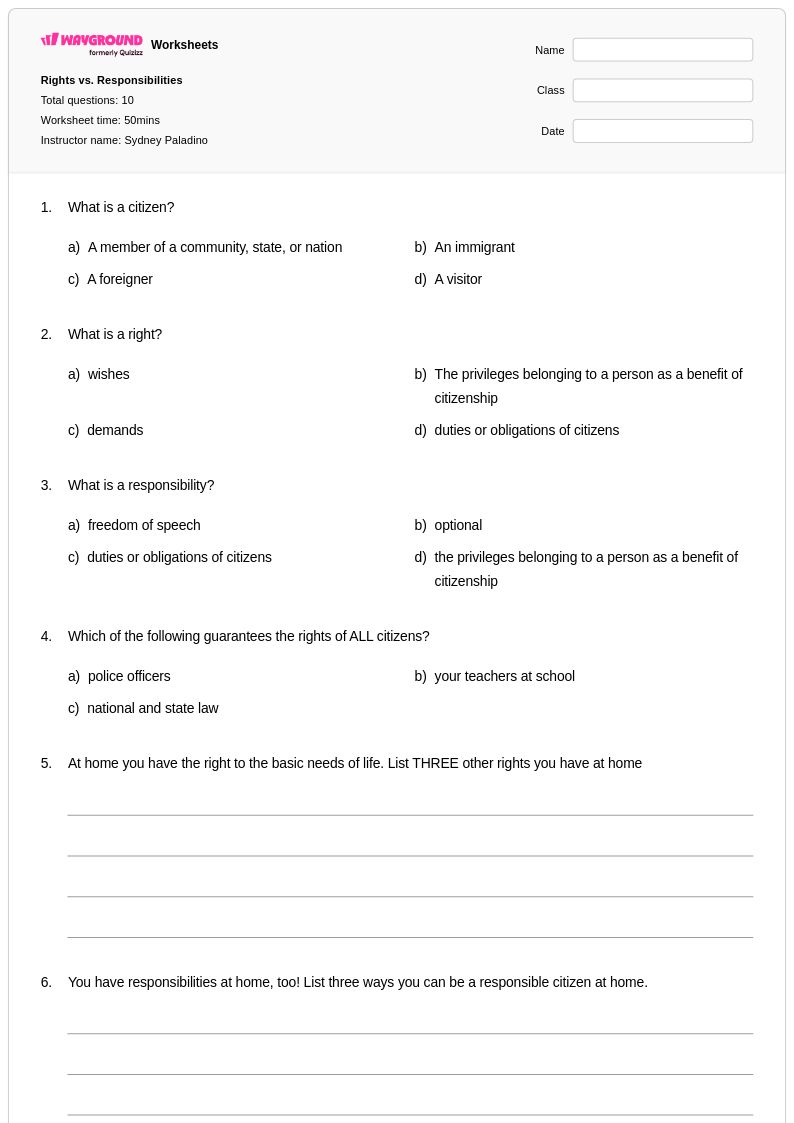
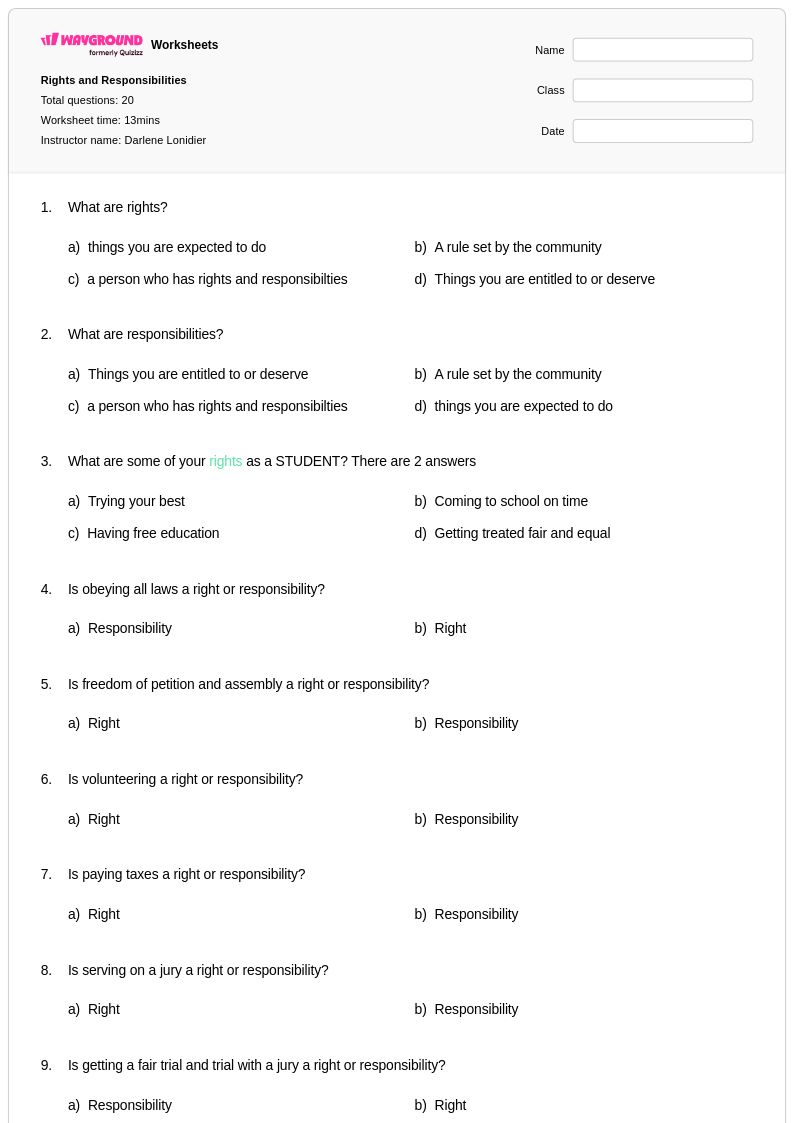
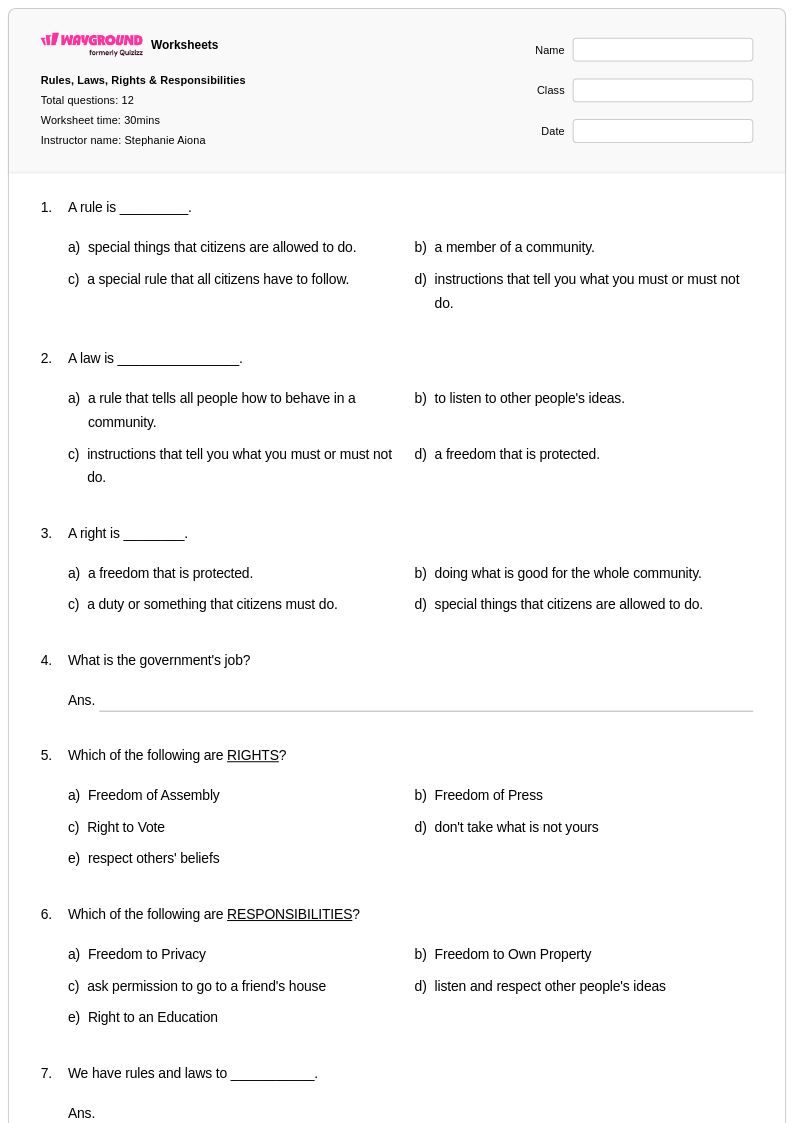
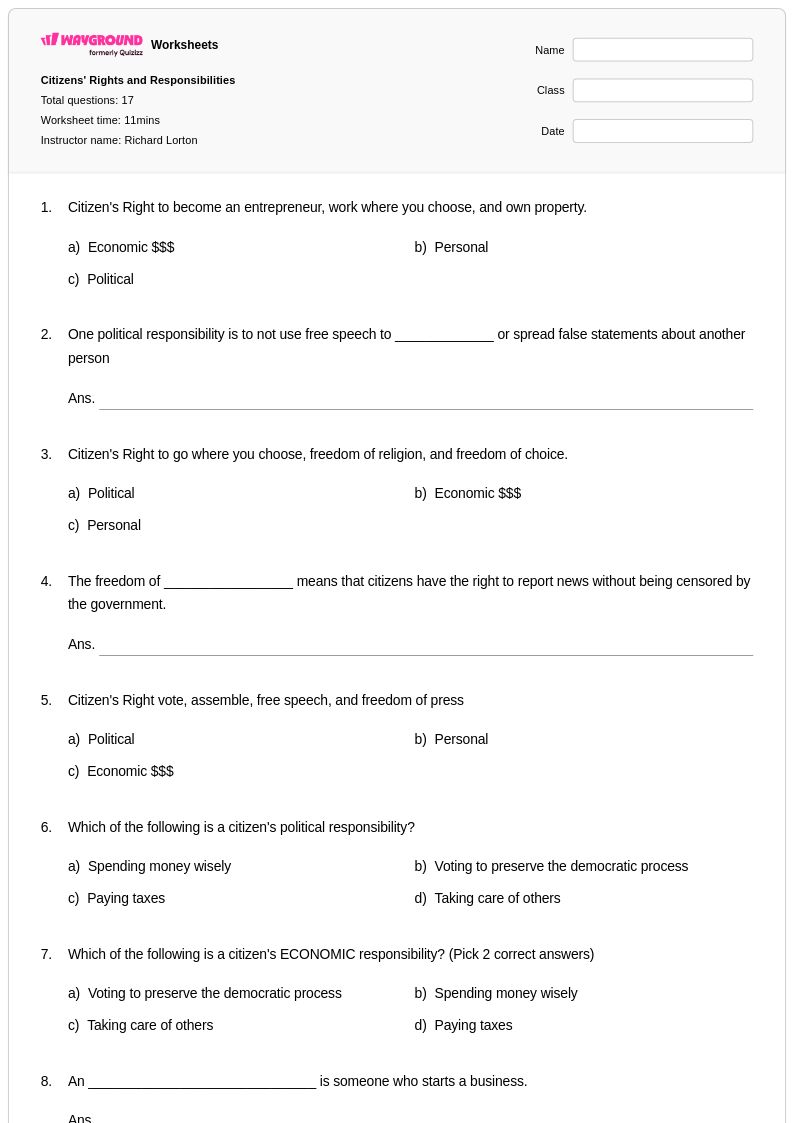
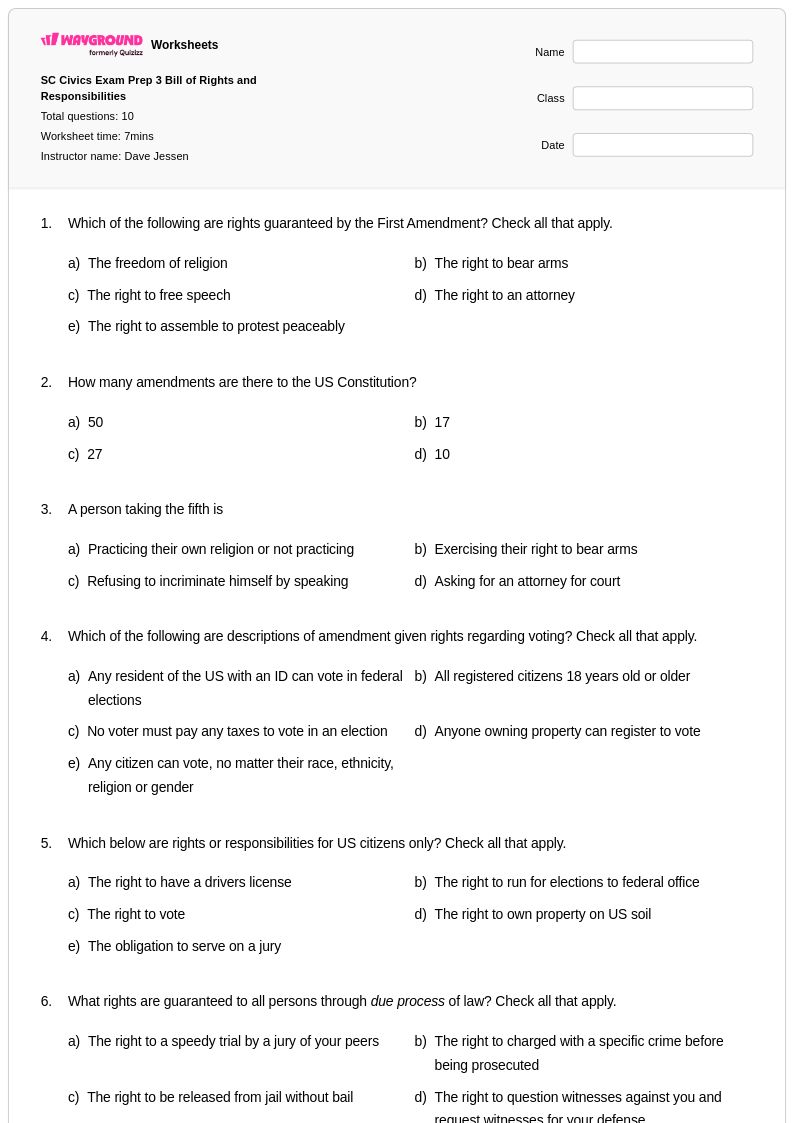
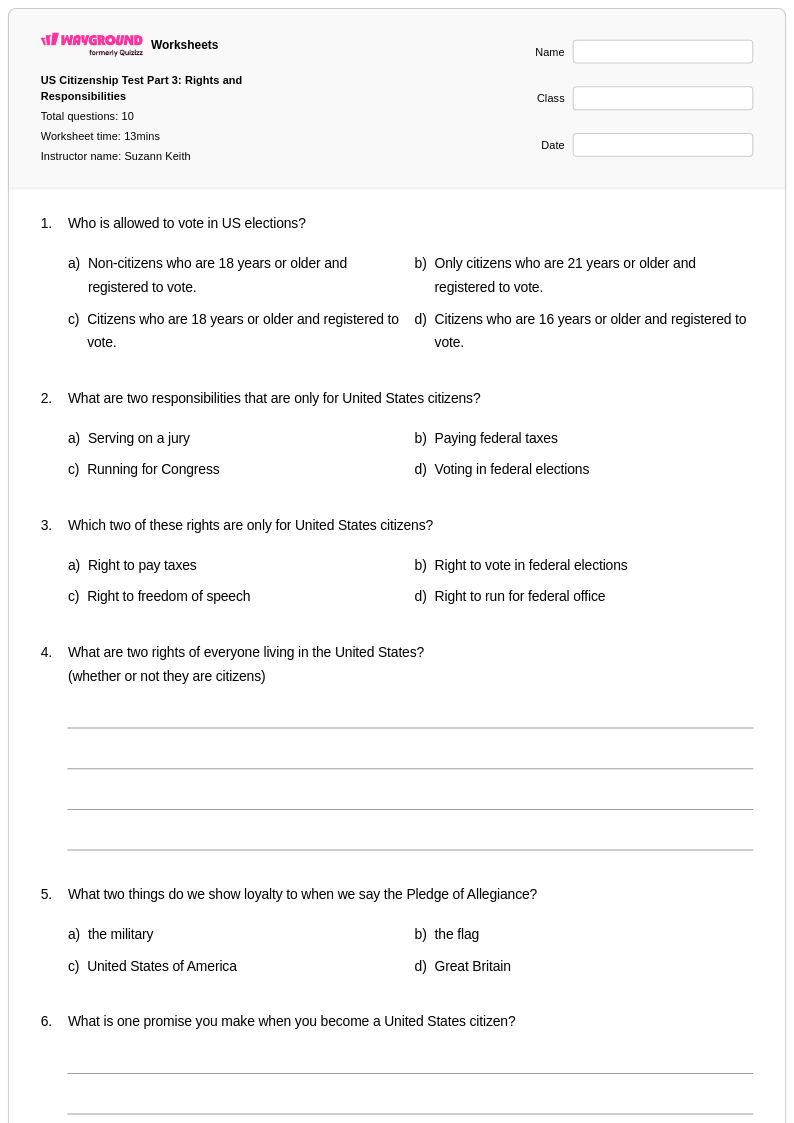
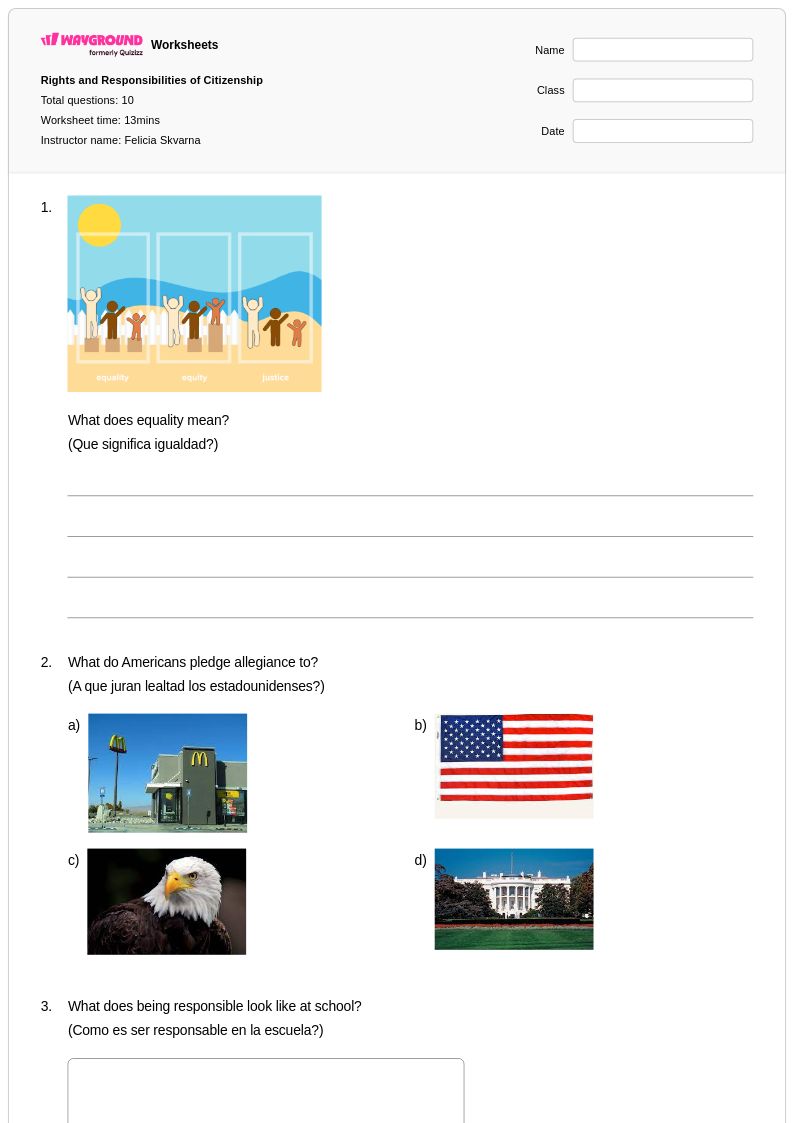
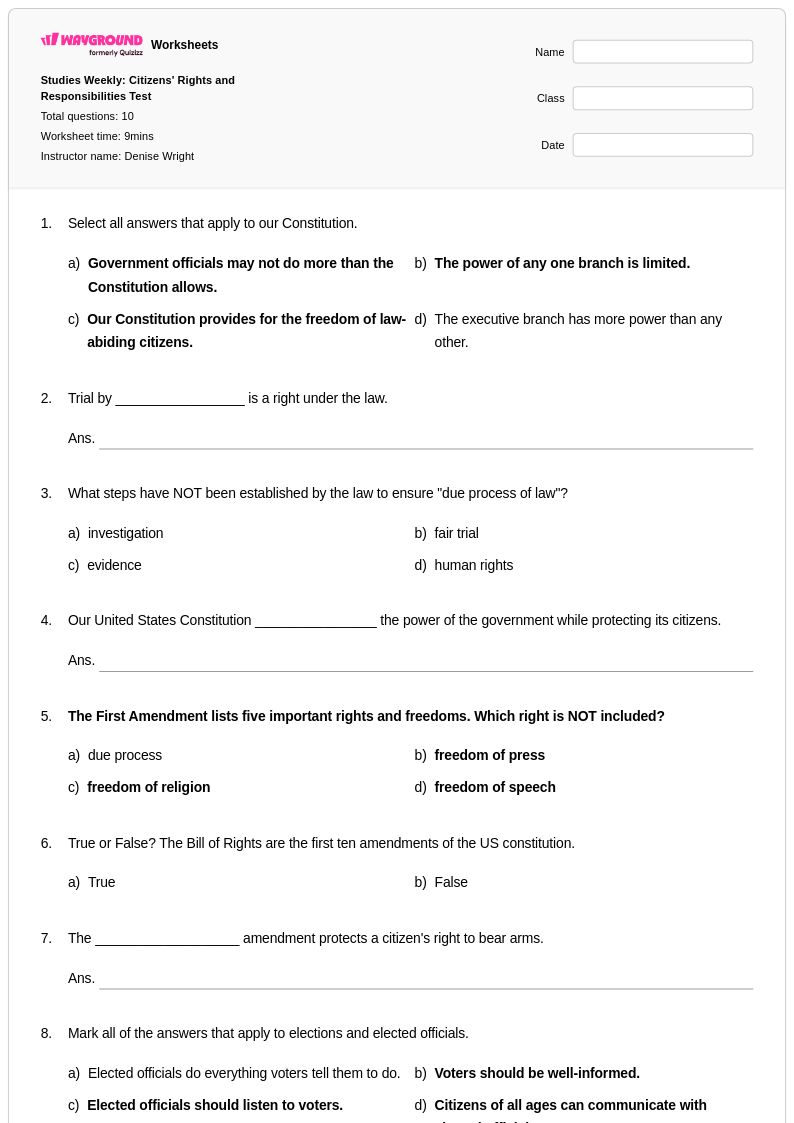
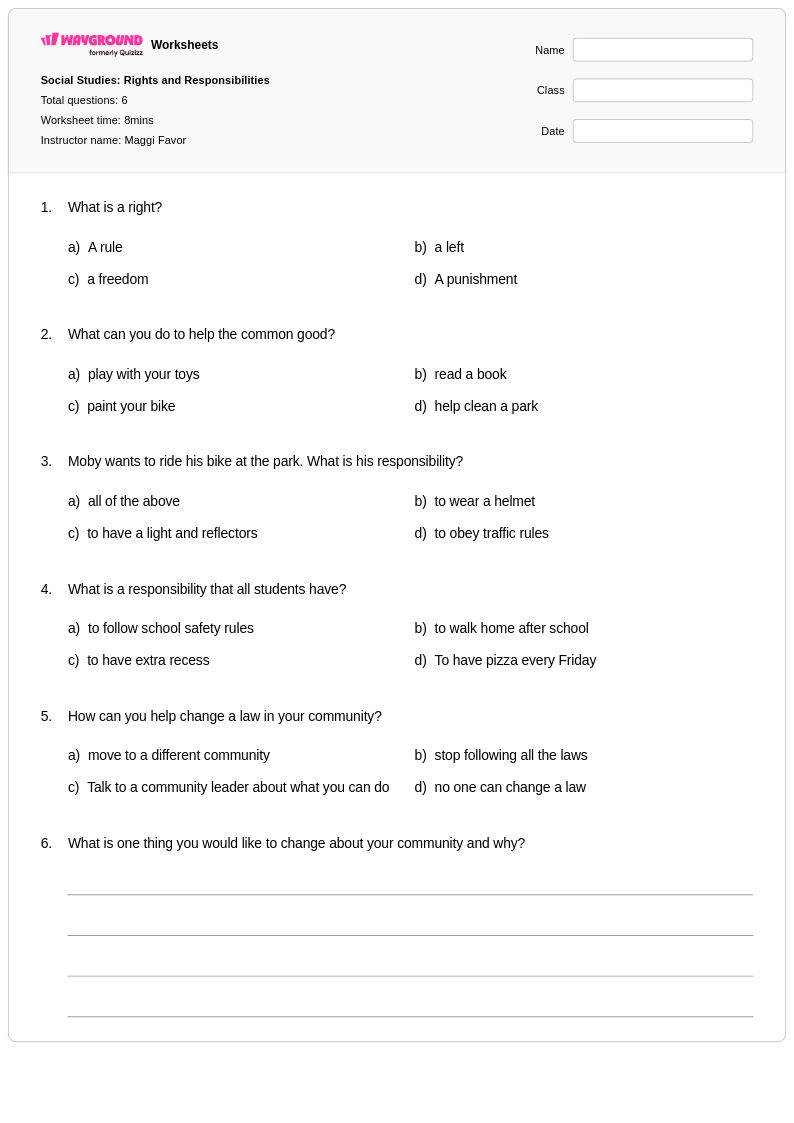
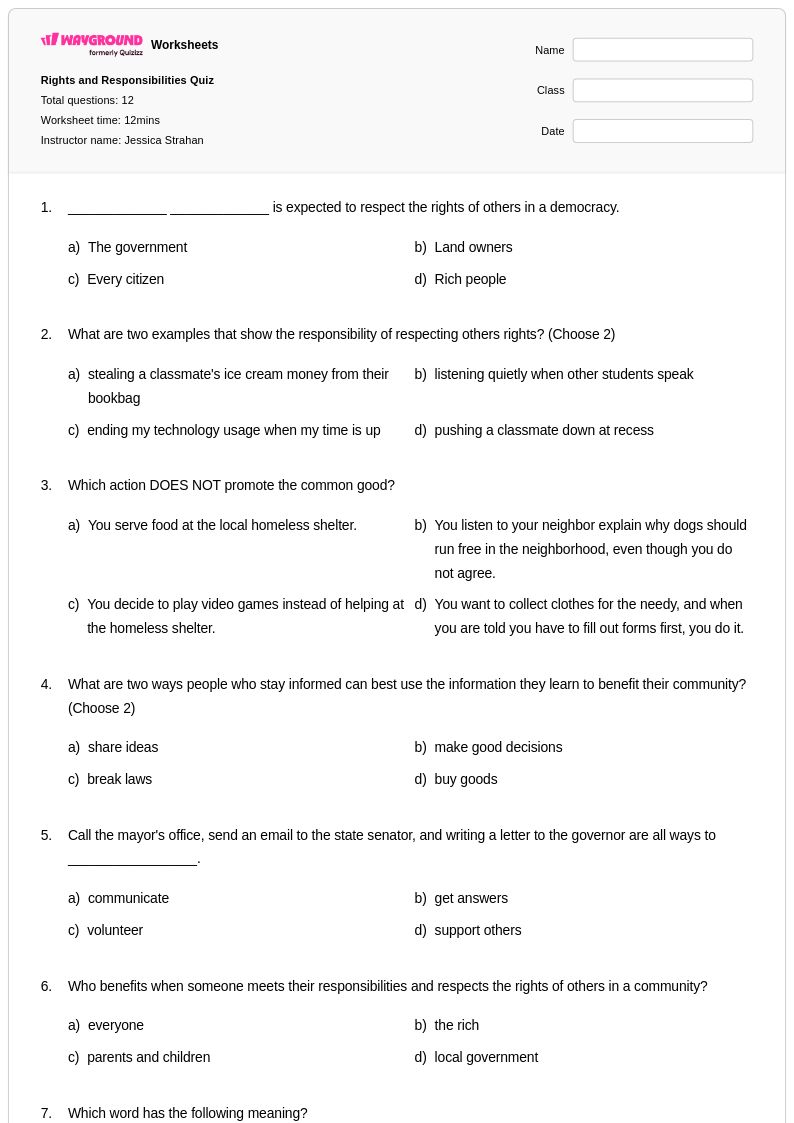
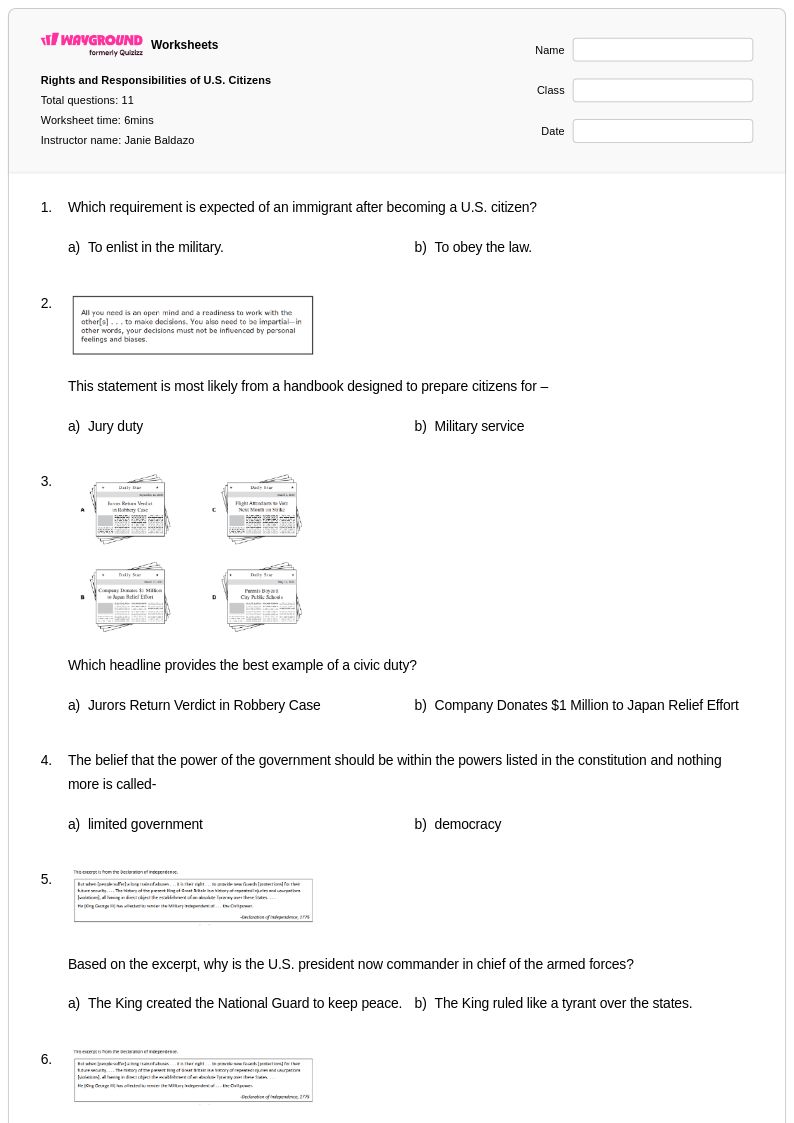
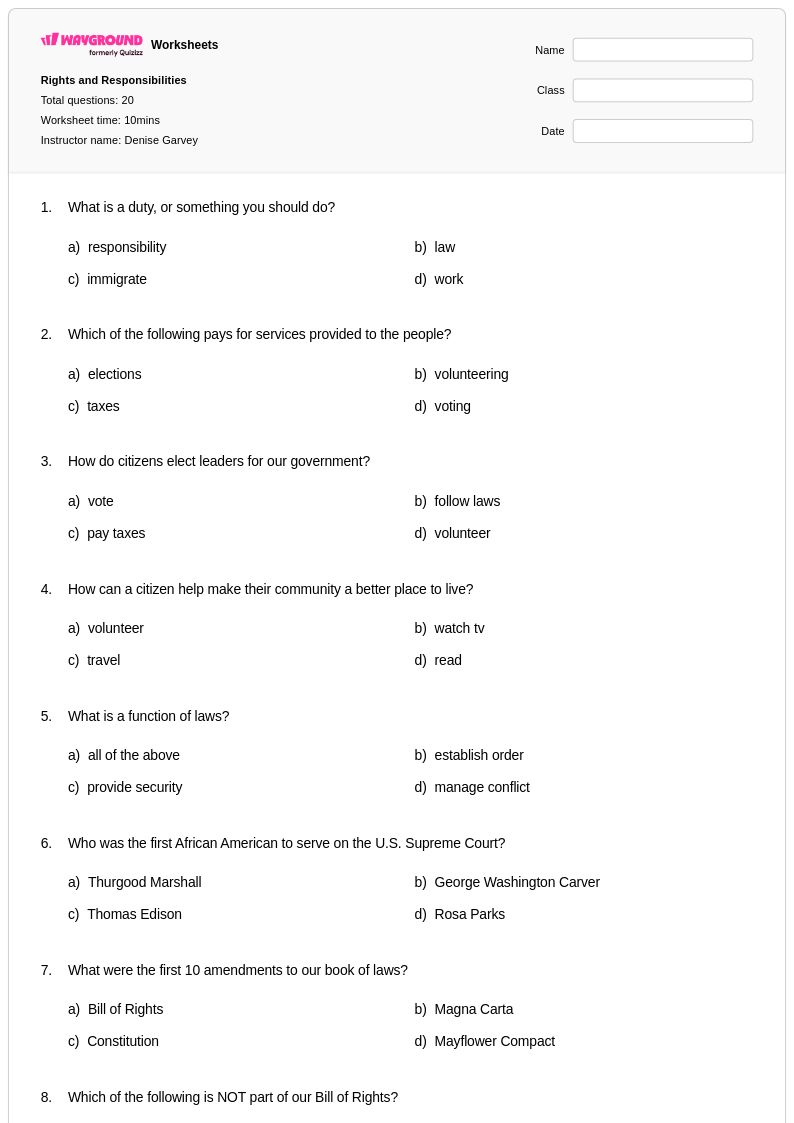
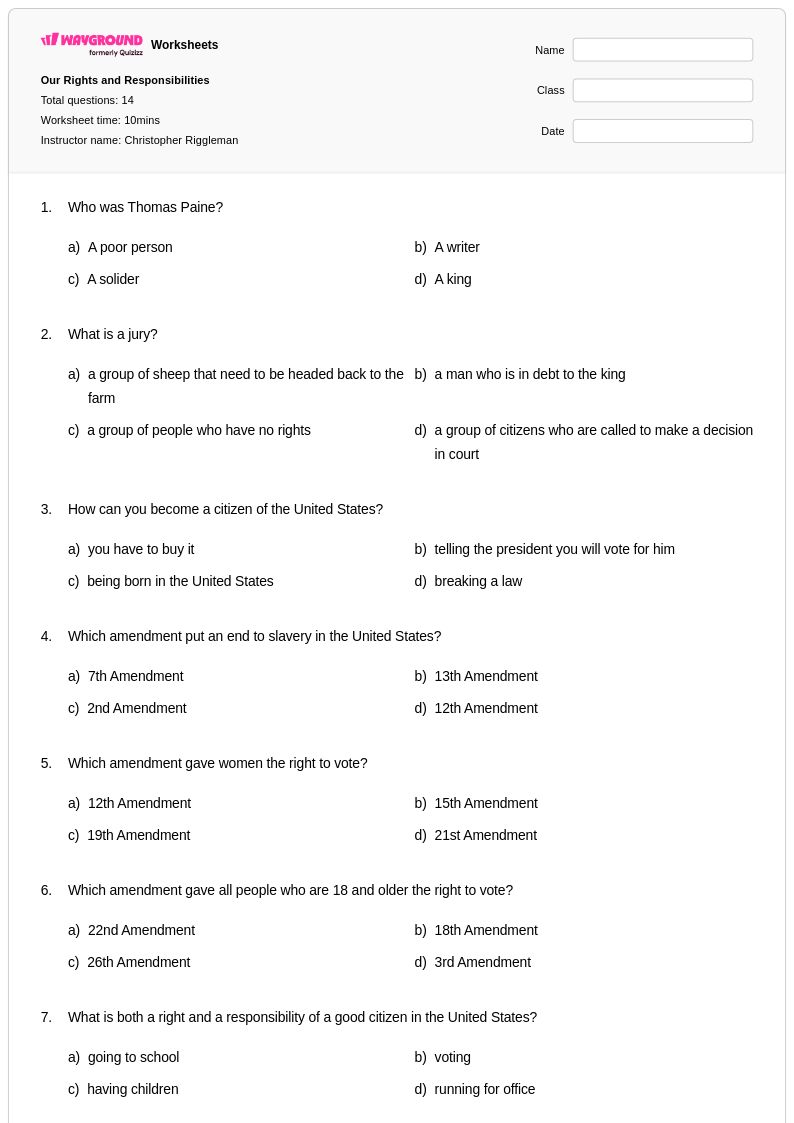
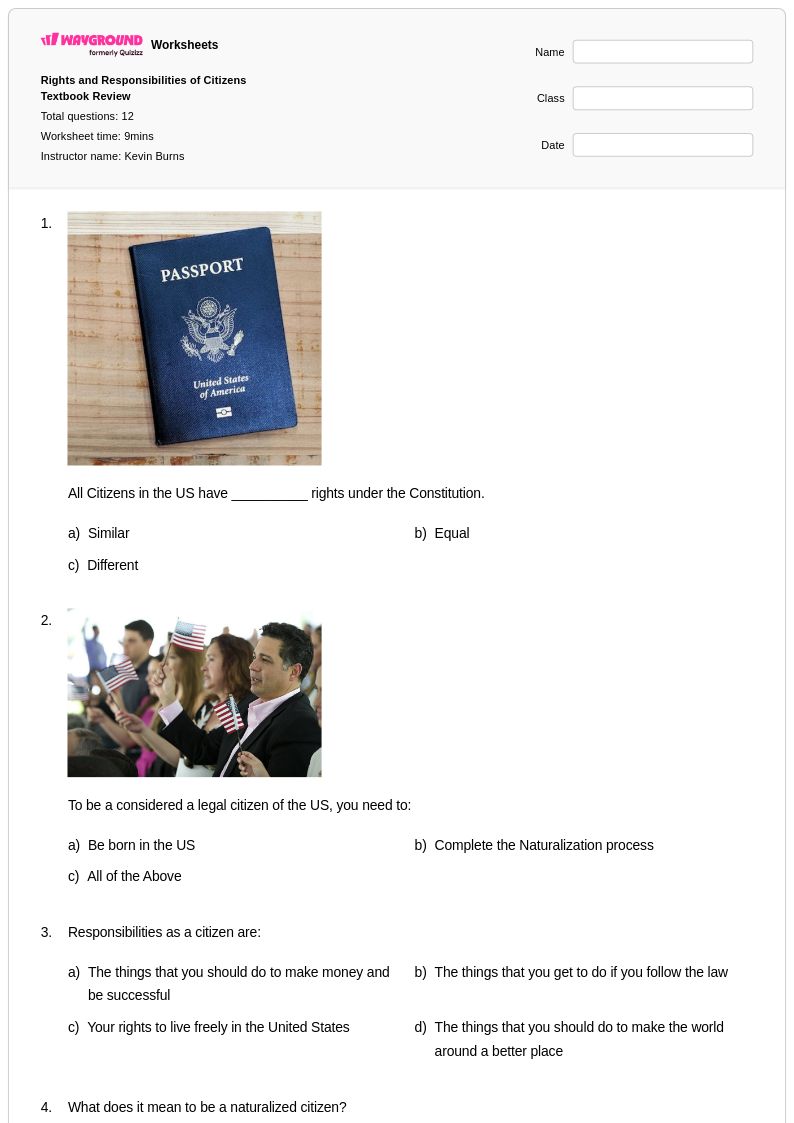
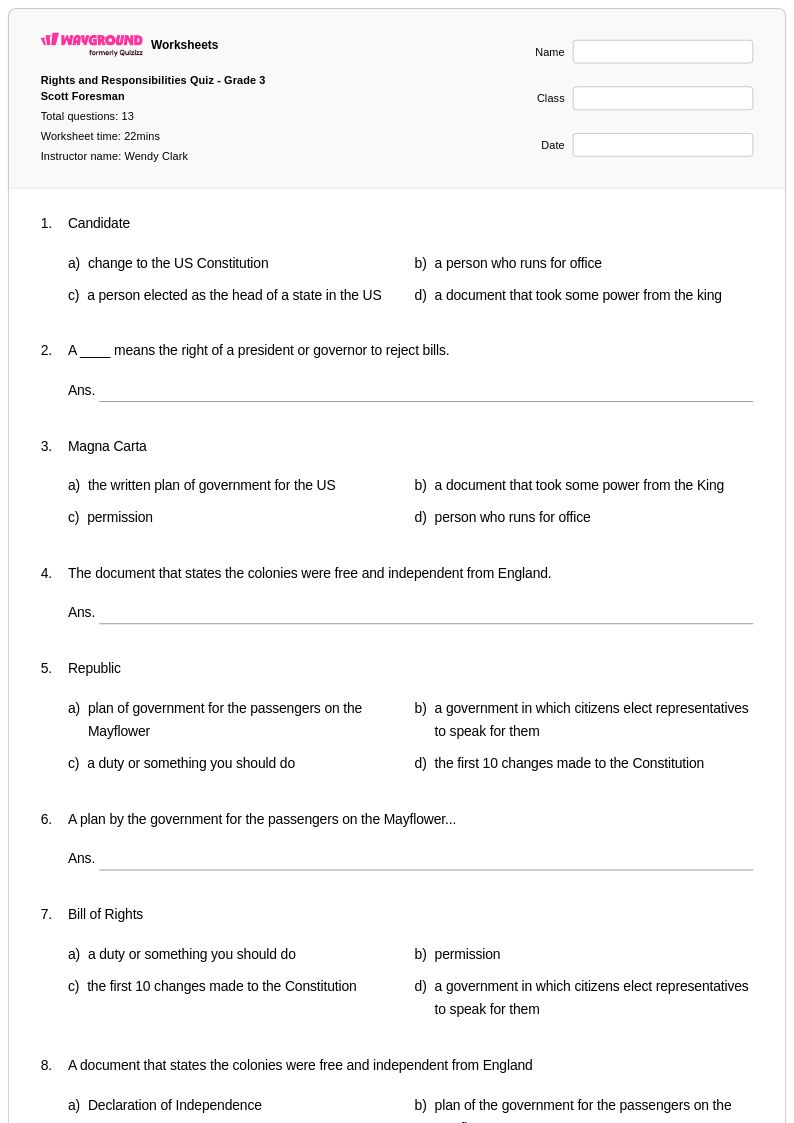
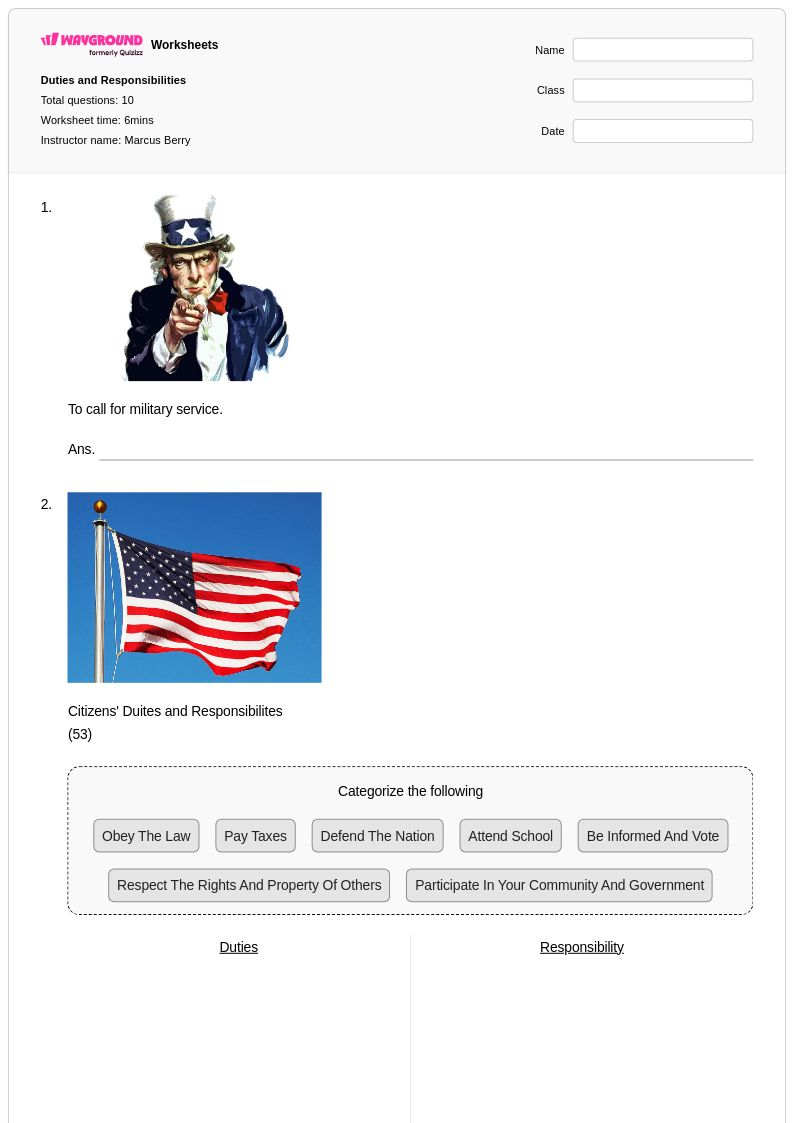
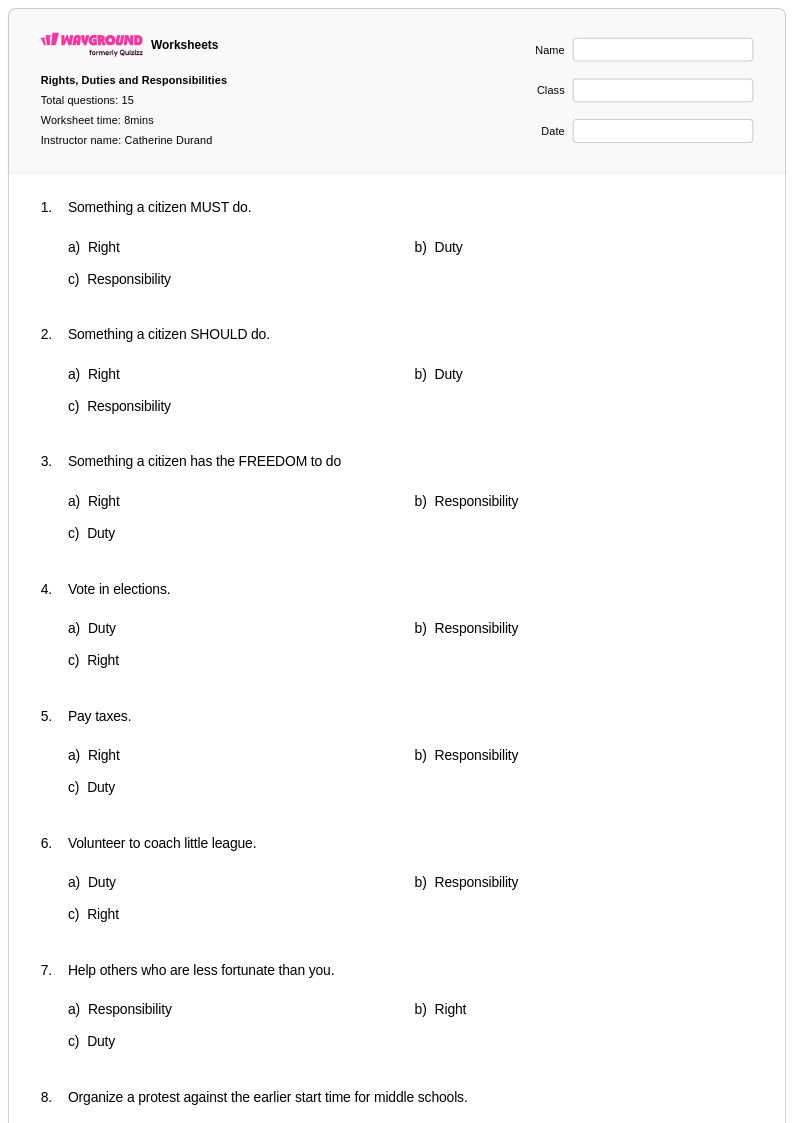
Rights and responsibilities worksheets available through Wayground (formerly Quizizz) provide students with essential practice in understanding the fundamental balance between individual freedoms and civic duties in democratic societies. These comprehensive resources strengthen critical thinking skills as students explore constitutional rights, analyze case studies involving civil liberties, and examine the corresponding responsibilities that citizens must uphold to maintain a functioning democracy. The worksheet collection includes diverse practice problems that challenge students to identify connections between rights such as freedom of speech, religion, and assembly with responsibilities like jury duty, voting, and civic participation. Each printable resource comes with a detailed answer key, and the free pdf format ensures easy accessibility for both classroom instruction and independent study, helping students develop a nuanced understanding of how personal freedoms and societal obligations intersect in American civic life.
Wayground (formerly Quizizz) supports educators with millions of teacher-created resources specifically designed to enhance civics and government instruction around rights and responsibilities concepts. The platform's advanced search and filtering capabilities enable teachers to quickly locate standards-aligned materials that match their specific curriculum requirements and student needs. These differentiation tools allow educators to customize worksheets for various learning levels, providing both remediation support for struggling students and enrichment opportunities for advanced learners. The flexible format options, including printable pdf versions and digital interactive materials, accommodate diverse classroom environments and teaching preferences. Teachers can efficiently plan comprehensive lessons, target specific skill gaps, and provide meaningful practice opportunities that reinforce students' understanding of the delicate balance between individual rights and civic responsibilities essential to democratic citizenship.
FAQs
How do I teach rights and responsibilities in a civics class?
Effective instruction on rights and responsibilities begins by grounding students in the constitutional basis for individual freedoms, then explicitly connecting each right to a corresponding civic duty. For example, pairing freedom of speech with the responsibility to engage respectfully in public discourse helps students see these concepts as interdependent rather than separate. Case studies involving real civil liberties scenarios deepen comprehension by showing students how rights and responsibilities play out in democratic life.
What exercises help students practice understanding rights and responsibilities?
Structured practice activities that ask students to match specific constitutional rights with their corresponding civic responsibilities are highly effective for building conceptual understanding. Worksheets that include case studies, scenario analysis, and identification tasks challenge students to apply their knowledge rather than simply recall definitions. These exercises reinforce the idea that rights such as freedom of religion and assembly carry real civic obligations like jury duty, voting, and community participation.
What common mistakes do students make when learning about rights and responsibilities?
A frequent misconception is that rights are absolute and exist without limitations or corresponding duties, leading students to overlook the civic obligations that sustain a functioning democracy. Students also commonly conflate constitutional rights with general privileges, or struggle to distinguish between rights protected at the federal level and those governed by state law. Targeted practice problems that require students to analyze specific scenarios help surface and correct these misunderstandings before they become entrenched.
How can I differentiate rights and responsibilities instruction for students at different levels?
For students who need additional support, reducing the complexity of case studies and scaffolding vocabulary around terms like civil liberties, civic duty, and constitutional rights helps build a foundation before deeper analysis. Advanced learners benefit from open-ended scenario tasks that require them to weigh competing rights and responsibilities or evaluate historical civil liberties cases. On Wayground, teachers can apply accommodations such as read aloud, reduced answer choices, and extended time to individual students, allowing the same worksheet to serve multiple learning levels simultaneously.
How do I use Wayground's rights and responsibilities worksheets in my classroom?
Wayground's rights and responsibilities worksheets are available as printable PDFs for traditional classroom use and in digital formats for technology-integrated environments, giving teachers flexibility in how they assign and collect student work. Teachers can also host worksheets directly as a quiz on Wayground, enabling real-time tracking of student responses and immediate feedback. Each worksheet includes a complete answer key, making it straightforward to review student work or facilitate self-assessment.
How do rights and responsibilities connect to standards in civics and government courses?
Most state civics and government standards require students to analyze the relationship between individual freedoms and civic obligations as foundational to democratic participation. This includes understanding constitutional protections such as those outlined in the Bill of Rights alongside duties like jury service, military service, and informed voting. Worksheets aligned to these standards help teachers systematically address required content while building students' capacity for civic reasoning.