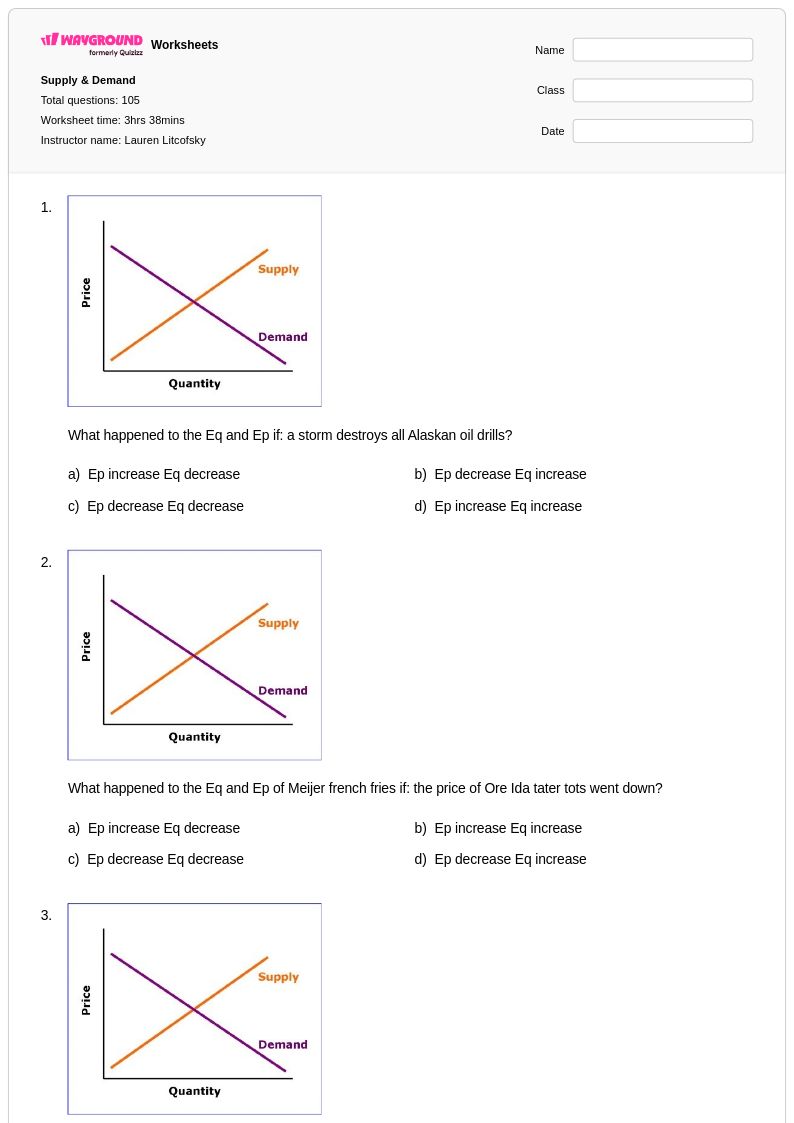
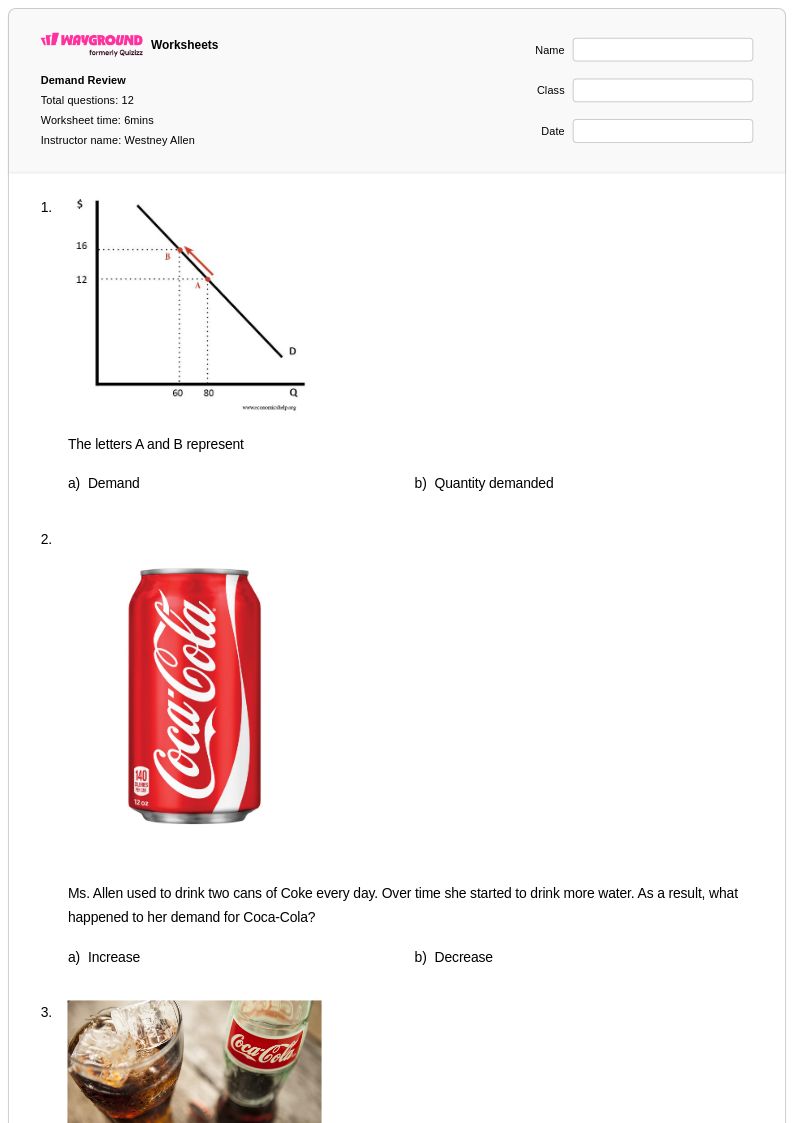
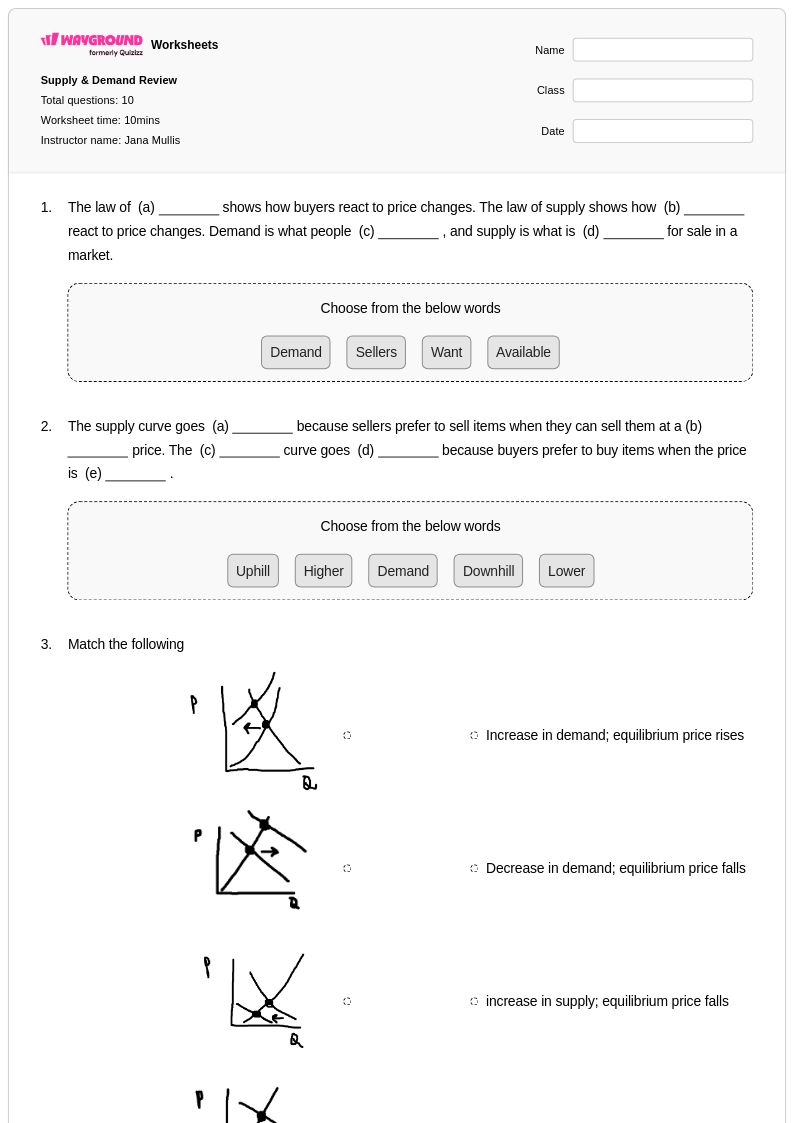
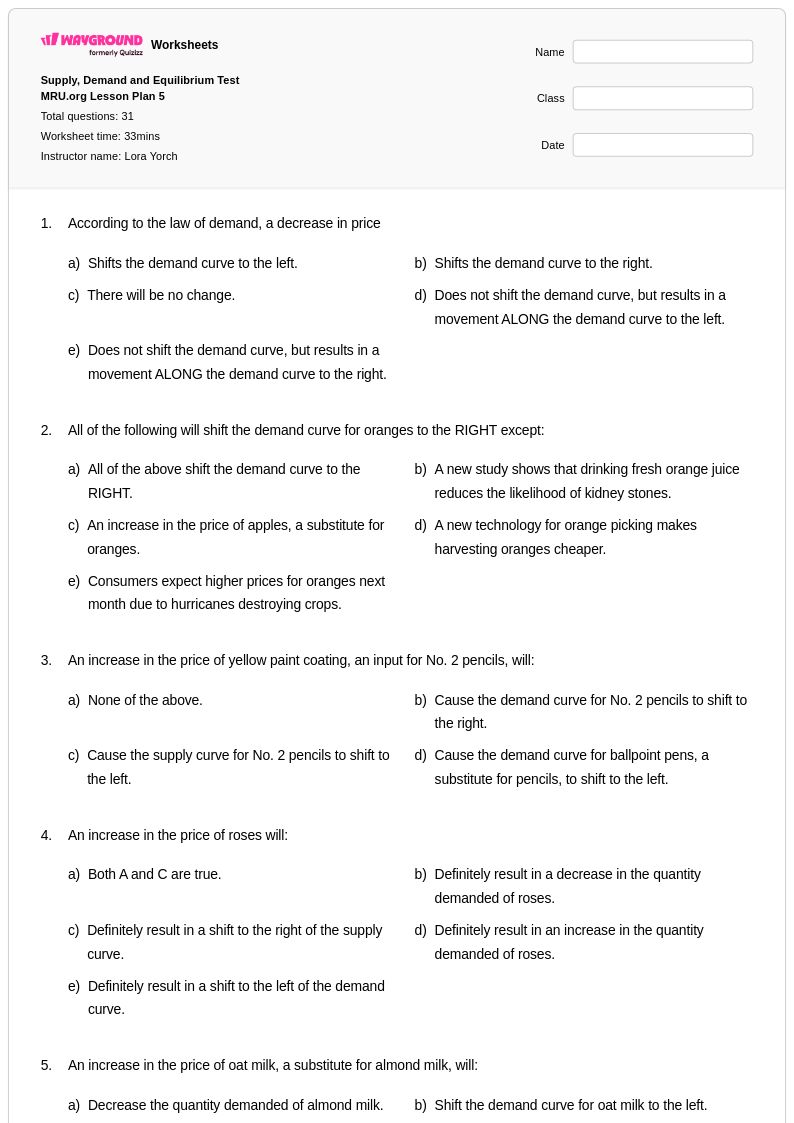
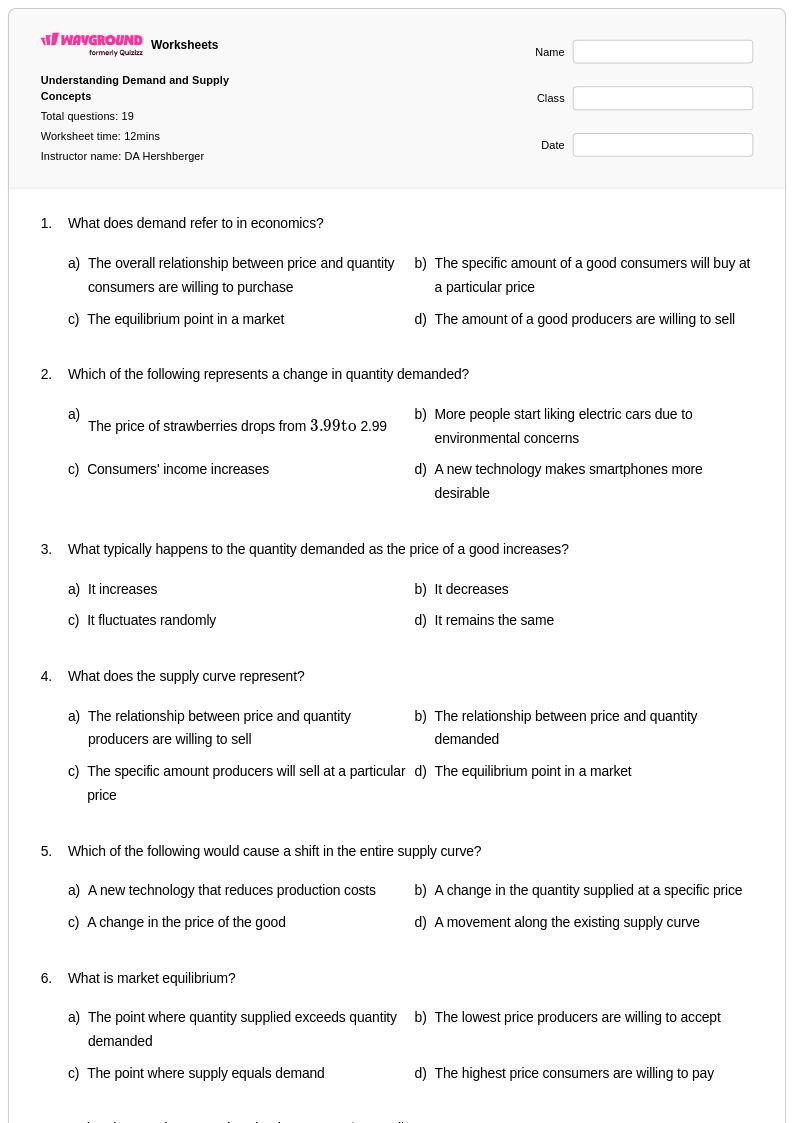
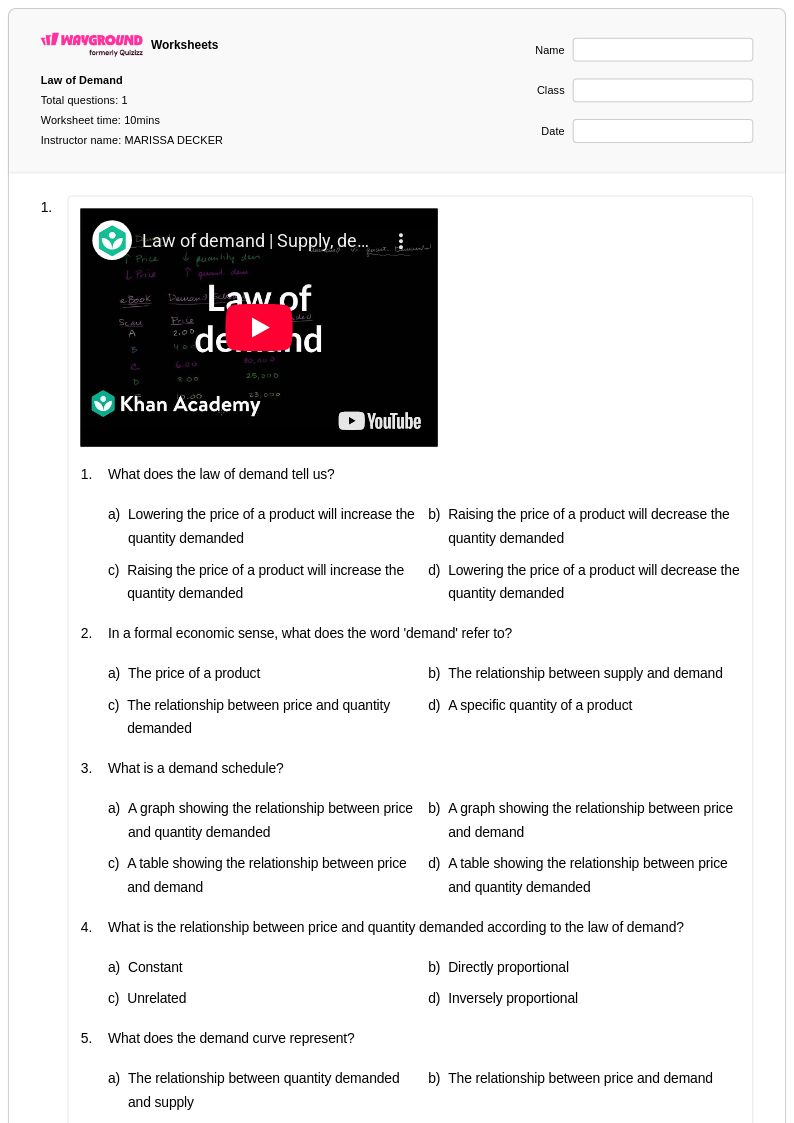
Explore free printable worksheets and practice problems on shifts in demand that help students understand how various factors influence consumer demand curves, complete with detailed answer keys and PDF resources.
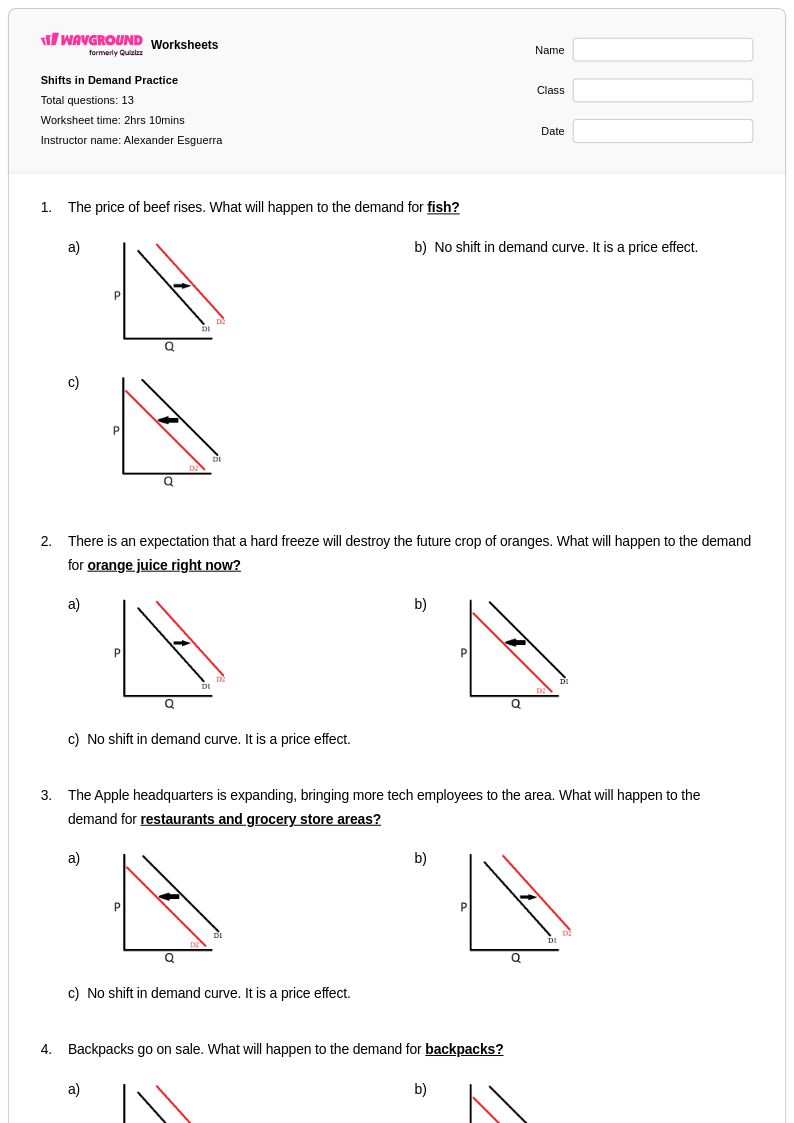
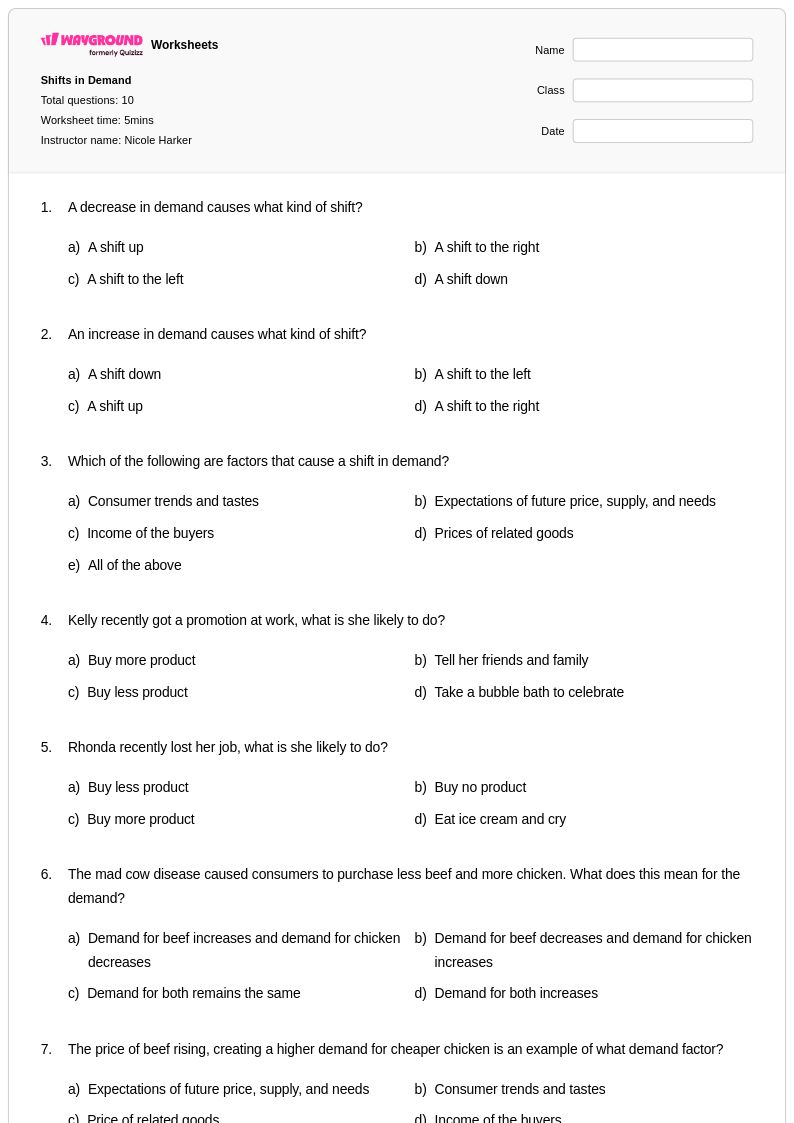
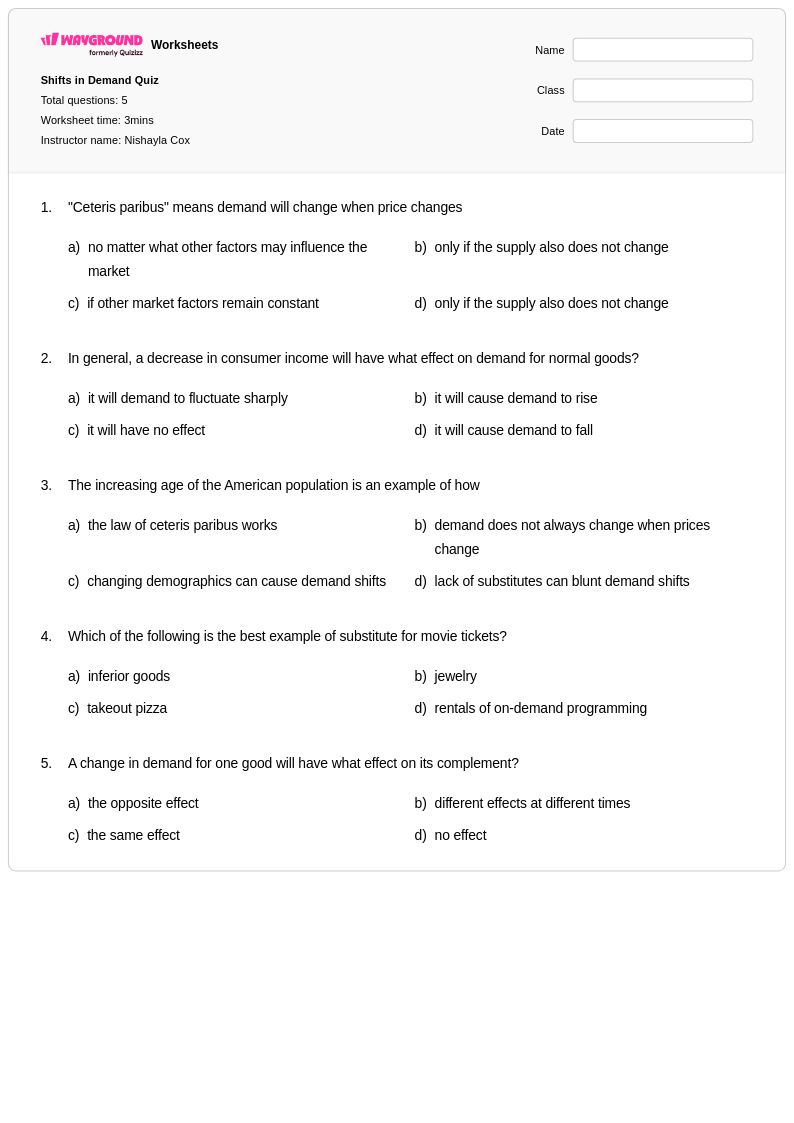
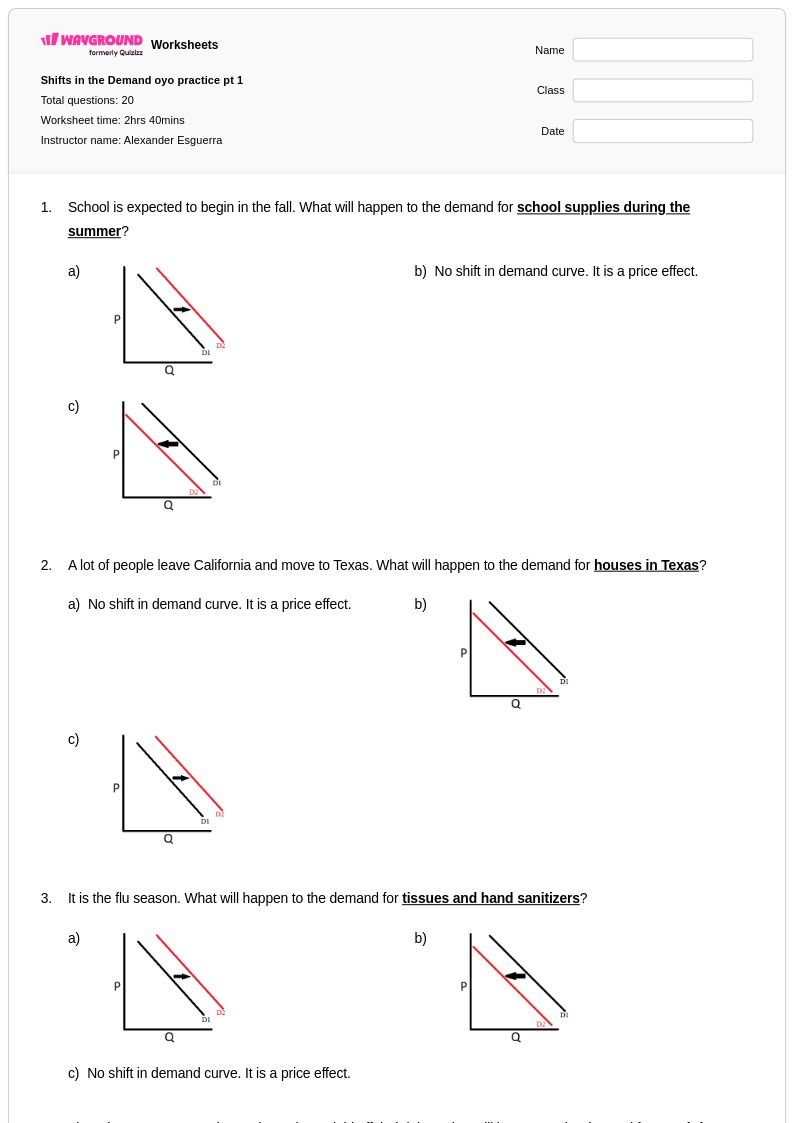
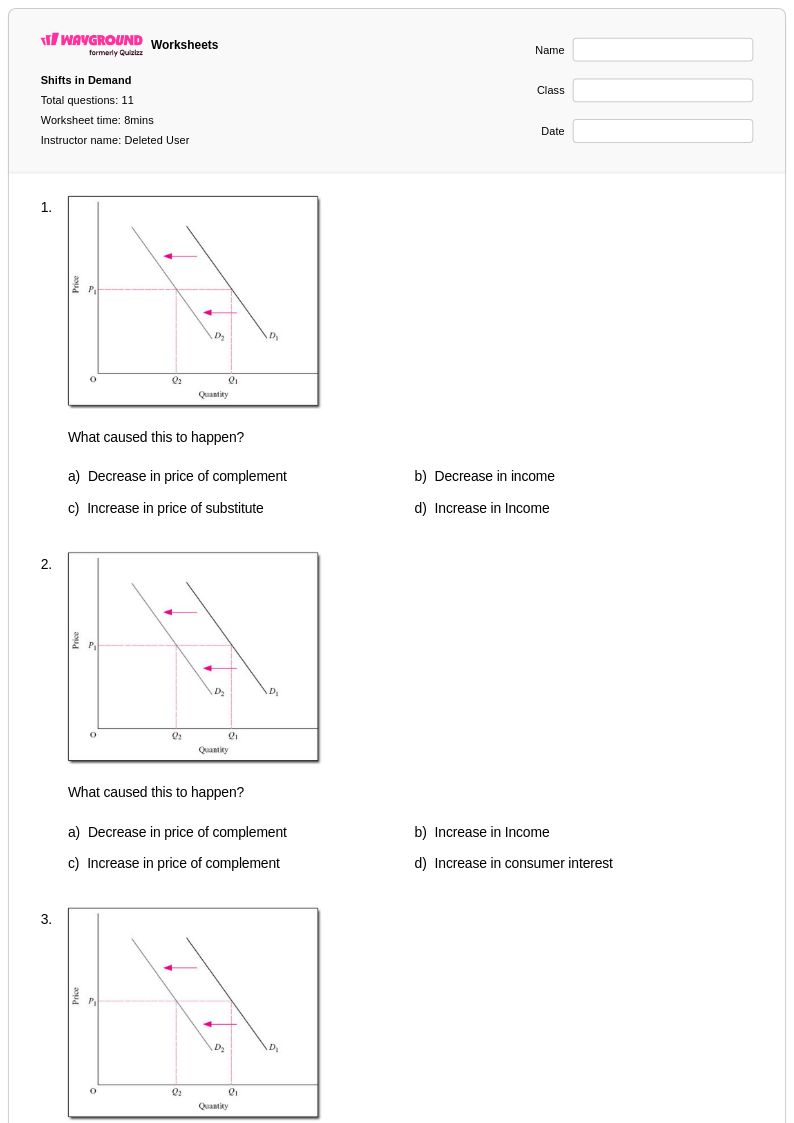
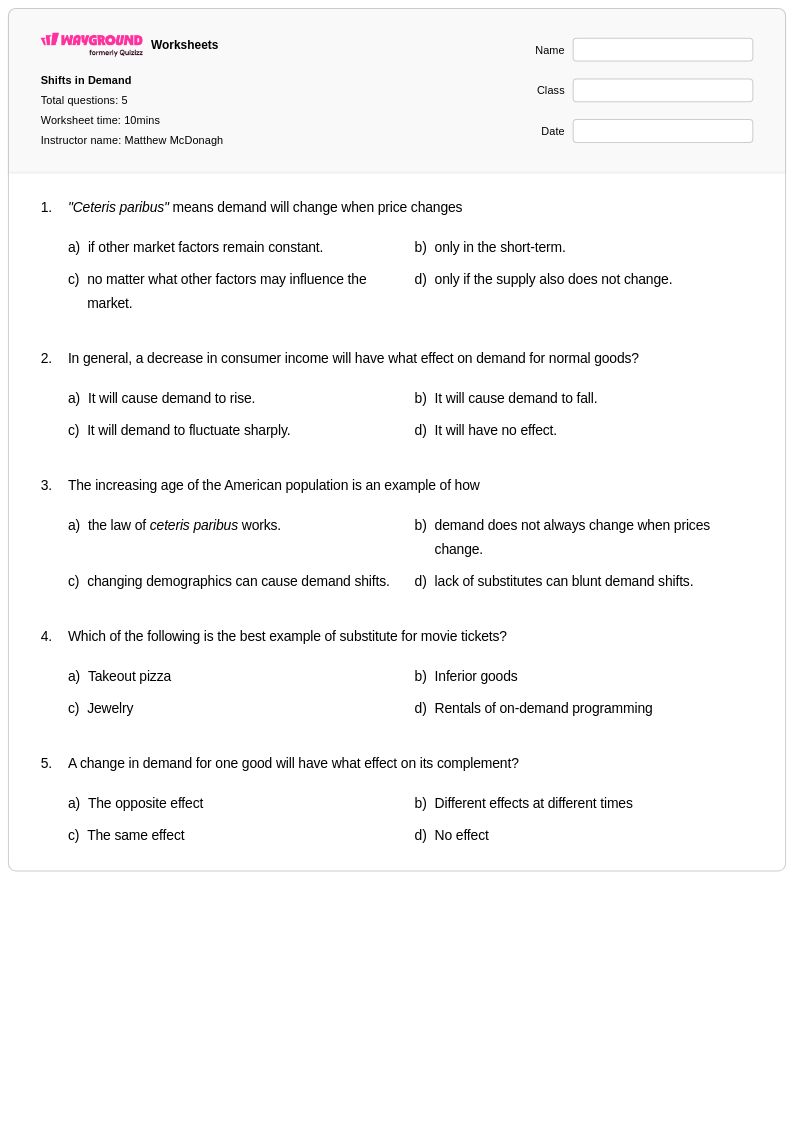
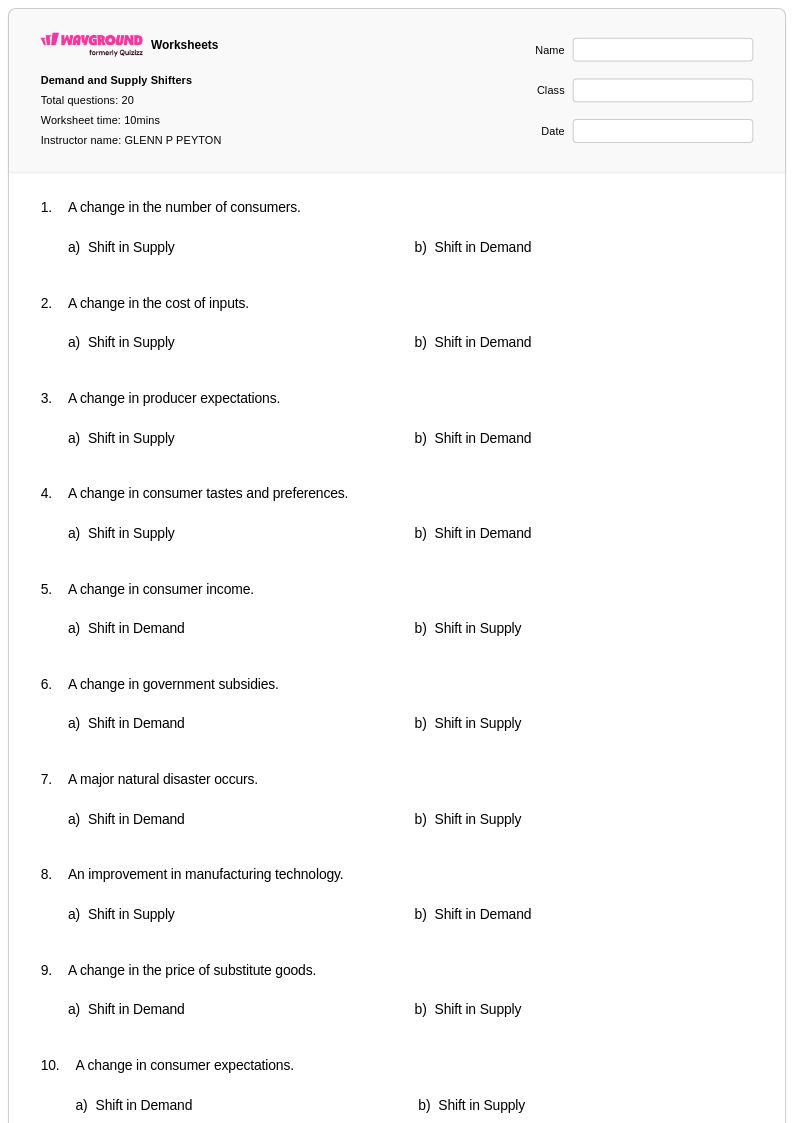
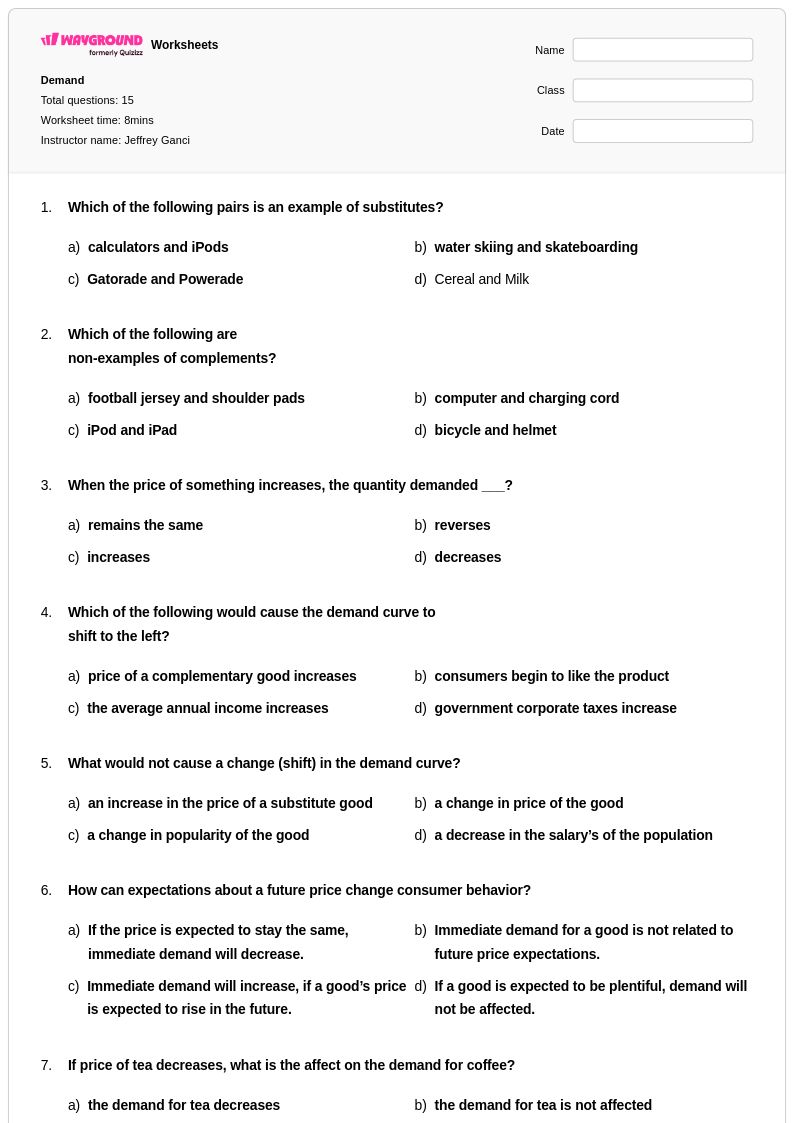
Shifts in demand worksheets available through Wayground (formerly Quizizz) provide comprehensive educational resources that help students master this fundamental economic concept through structured practice and analysis. These expertly designed materials guide learners through the factors that cause demand curves to move left or right, including changes in consumer income, preferences, population, expectations, and the prices of related goods. Students engage with real-world scenarios and graphical representations while working through practice problems that reinforce their understanding of how market conditions influence consumer behavior. Each worksheet collection includes detailed answer keys and explanations, ensuring students can verify their work and teachers can efficiently assess comprehension. Available as free printables and downloadable PDF resources, these materials support both classroom instruction and independent study.
Wayground's extensive collection draws from millions of teacher-created resources, offering educators powerful search and filtering capabilities to locate worksheets perfectly aligned with their curriculum standards and student needs. The platform's differentiation tools enable teachers to customize content complexity and presentation style, making shifts in demand concepts accessible to learners at various skill levels. Whether planning core instruction, providing targeted remediation for struggling students, or offering enrichment opportunities for advanced learners, educators can seamlessly integrate these resources into their teaching strategies. The flexible format options, including both printable worksheets and interactive digital versions, accommodate diverse classroom environments and learning preferences while maintaining consistent quality and educational rigor across all materials.
FAQs
How do I teach shifts in demand to high school economics students?
Start by distinguishing between a movement along the demand curve (caused by a price change) and a shift of the entire curve (caused by a non-price factor). Introduce the five key determinants — consumer income, tastes and preferences, prices of related goods, expectations, and population — one at a time using concrete, relatable examples like how a rise in income shifts demand for restaurant meals rightward. Graphical practice is essential: students should draw and label both leftward and rightward shifts before moving to written analysis or market scenarios.
What exercises help students practice identifying shifts in demand?
Scenario-based exercises are the most effective practice format for this topic. Present students with a short description of a market event — such as a celebrity endorsing a product, a substitute good becoming cheaper, or a recession reducing household income — and ask them to identify the determinant at play, predict the direction of the shift, and sketch the resulting graph. Mixing multiple-choice identification questions with open-ended graph-drawing tasks ensures students can both recognize and apply shifts in demand across different contexts.
What mistakes do students commonly make when learning about shifts in demand?
The most persistent misconception is confusing a change in quantity demanded with a shift in demand. Students frequently interpret a price drop as something that 'shifts' the curve rather than moves along it. A second common error is misclassifying the type of related good: students often mislabel substitutes and complements, which reverses their predicted shift direction. Targeted practice problems that isolate these two concepts and require students to justify their reasoning in writing are the most reliable way to correct both errors.
How do I use Wayground's shifts in demand worksheets in my classroom?
Wayground's shifts in demand worksheets are available as printable PDFs for traditional classroom use and in digital formats for technology-integrated environments, giving you flexibility depending on your setup. You can assign digital versions directly through Wayground and host them as a quiz, which allows for real-time progress tracking. Each worksheet includes a complete answer key, so students can self-check their work and you can efficiently review class-wide comprehension without manual grading.
How can I differentiate shifts in demand instruction for students at different skill levels?
For students who are still building foundational understanding, start with guided worksheets that label determinants explicitly and provide partially completed graphs to reduce cognitive load. More advanced students can work through multi-step market analysis problems that require them to chain together multiple shifts across related markets. On Wayground, teachers can apply differentiation settings at the individual student level — including reduced answer choices for students who need additional scaffolding and extended time for those who require it — without disrupting the experience for the rest of the class.
How is a shift in demand different from a change in quantity demanded?
A change in quantity demanded is a movement along an existing demand curve triggered exclusively by a change in the good's own price. A shift in demand, by contrast, moves the entire curve left or right and is caused by a non-price determinant such as a change in consumer income, preferences, the price of a substitute or complement, buyer expectations, or market population. This distinction is one of the foundational concepts in introductory microeconomics, and students must be able to identify which type of change is occurring before they can correctly analyze any market scenario.