Free Printable Simple Predicate Worksheets for Grade 8
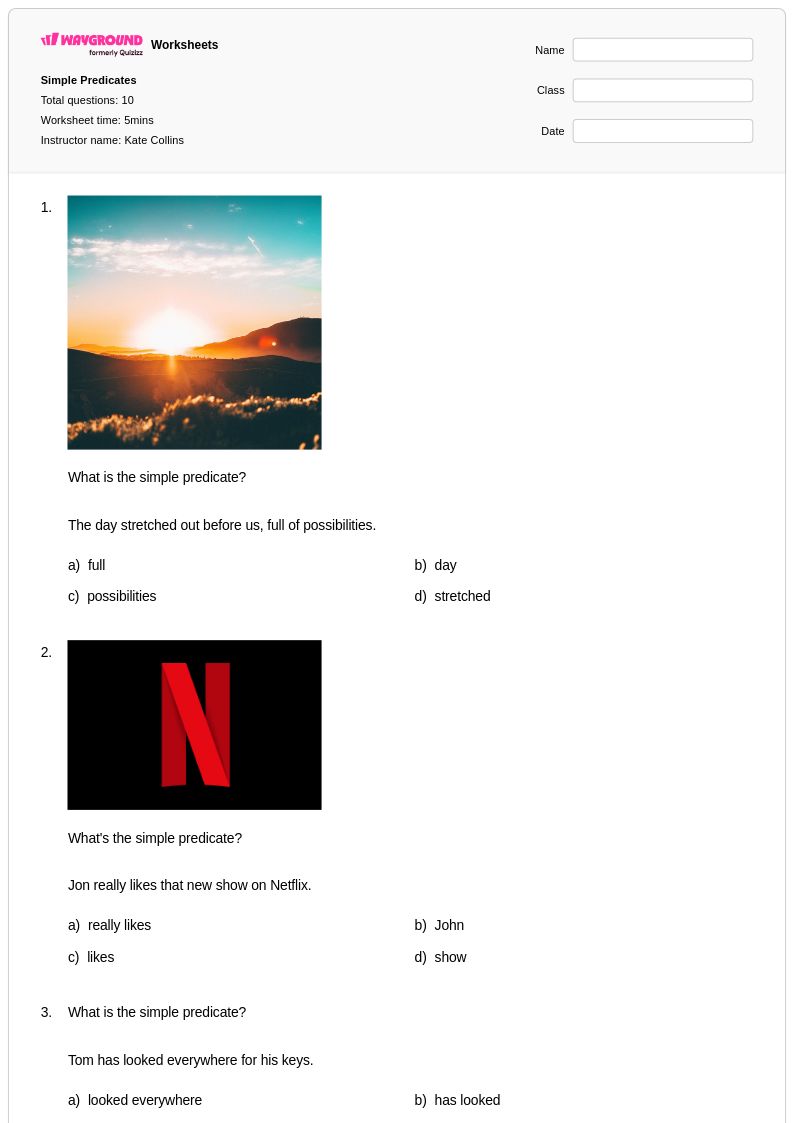
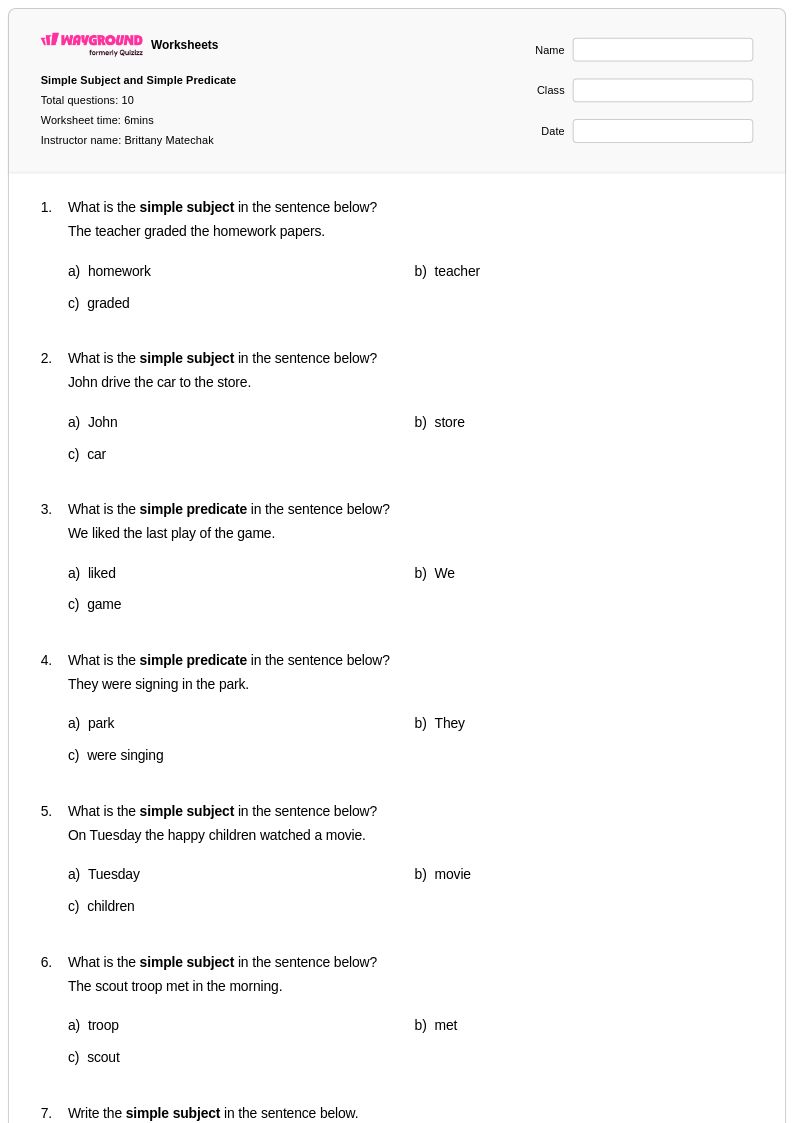
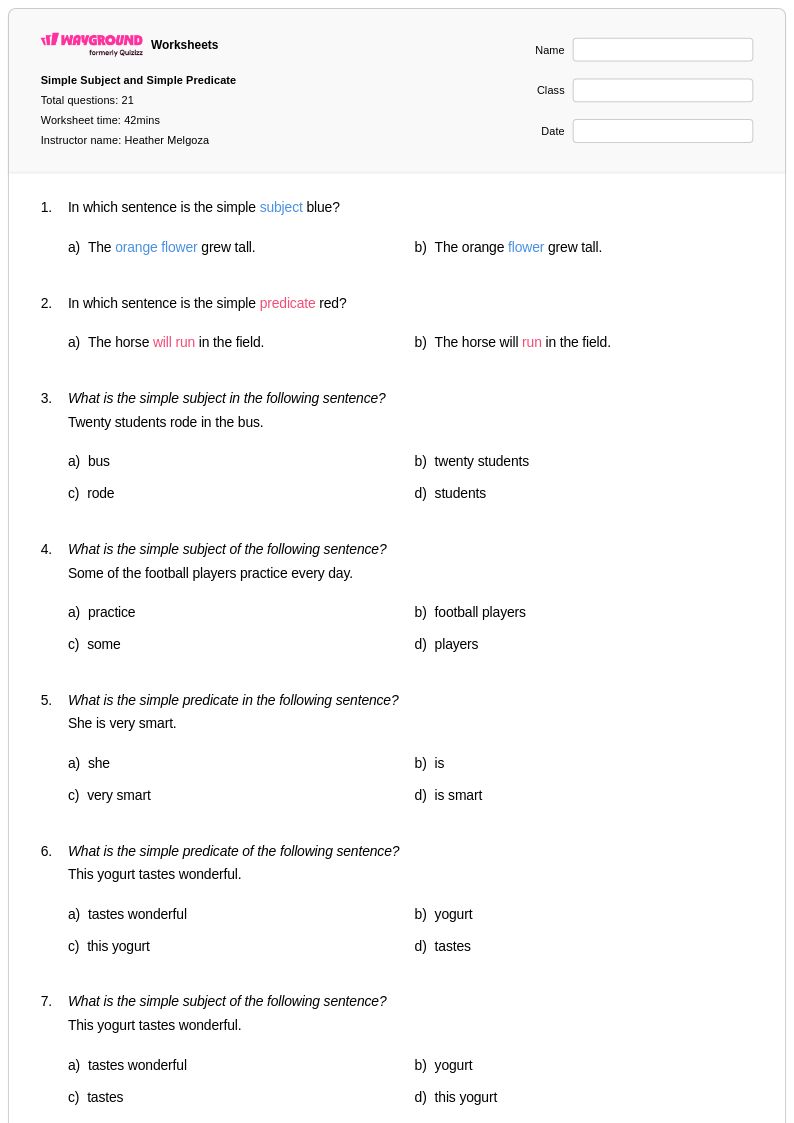
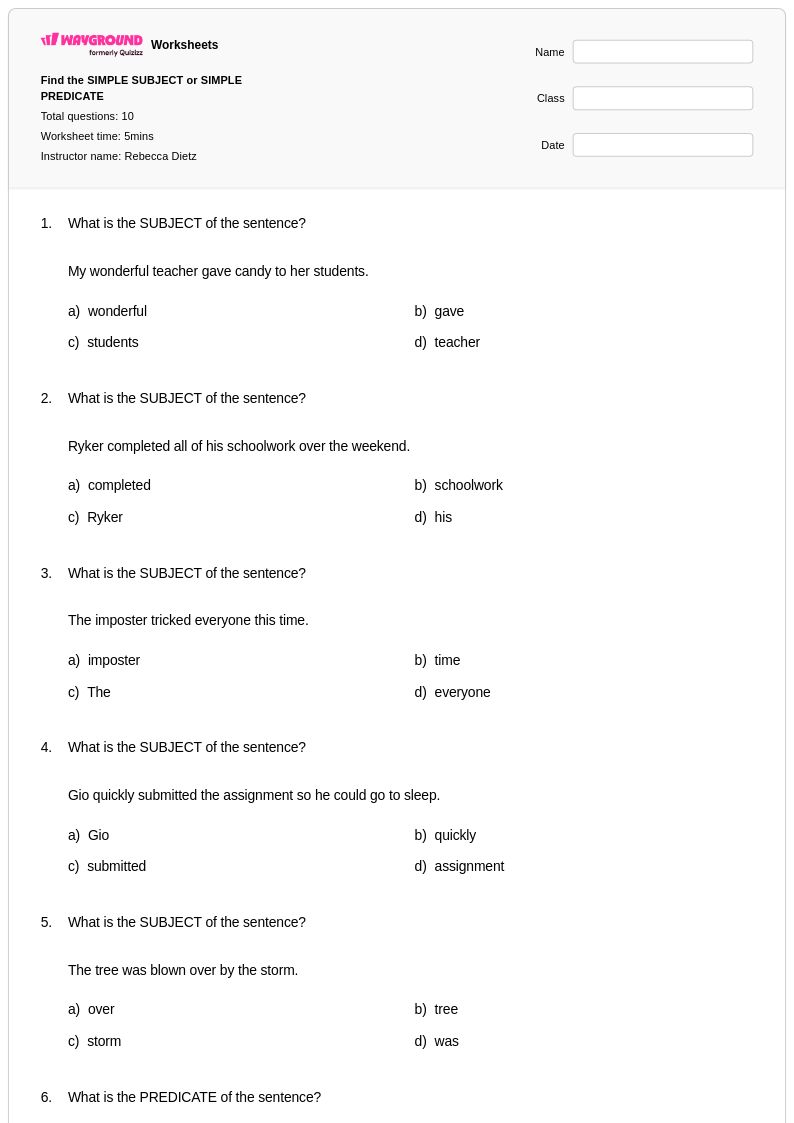
Grade 8 simple predicate worksheets from Wayground help students master identifying the main verb in sentences through engaging printables, practice problems, and comprehensive answer keys for effective grammar learning.
Explore printable Simple Predicate worksheets for Grade 8
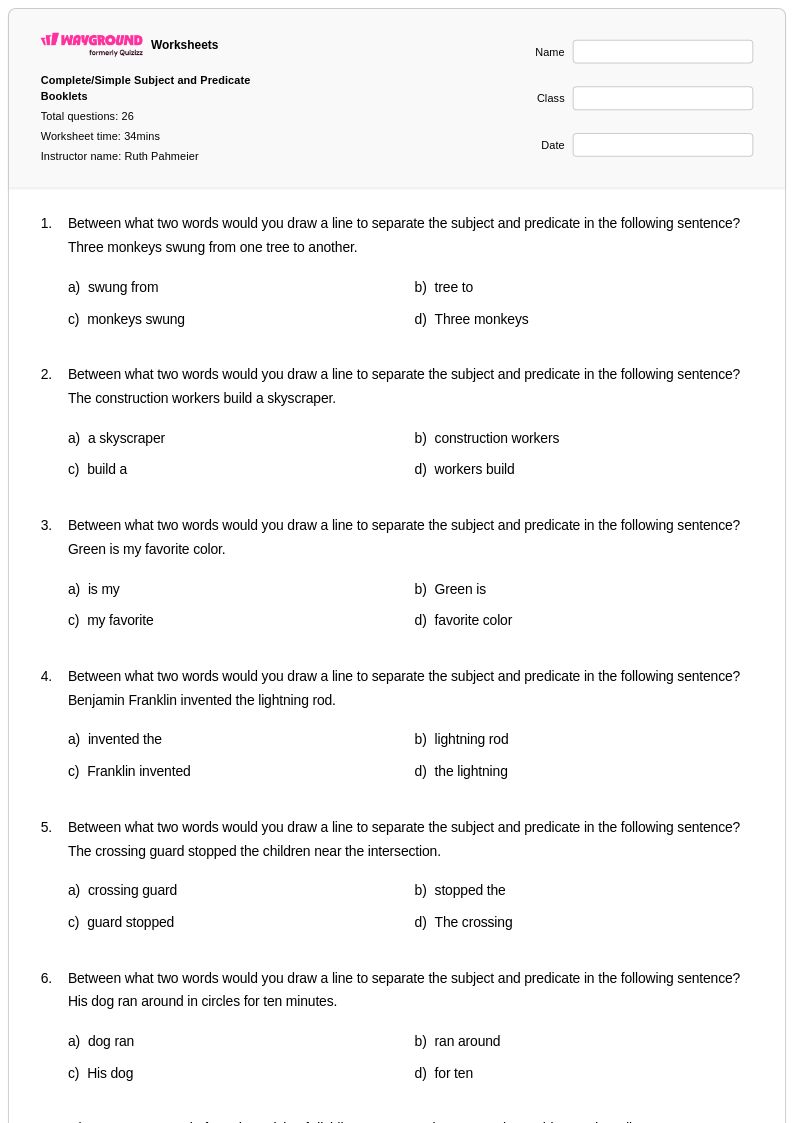
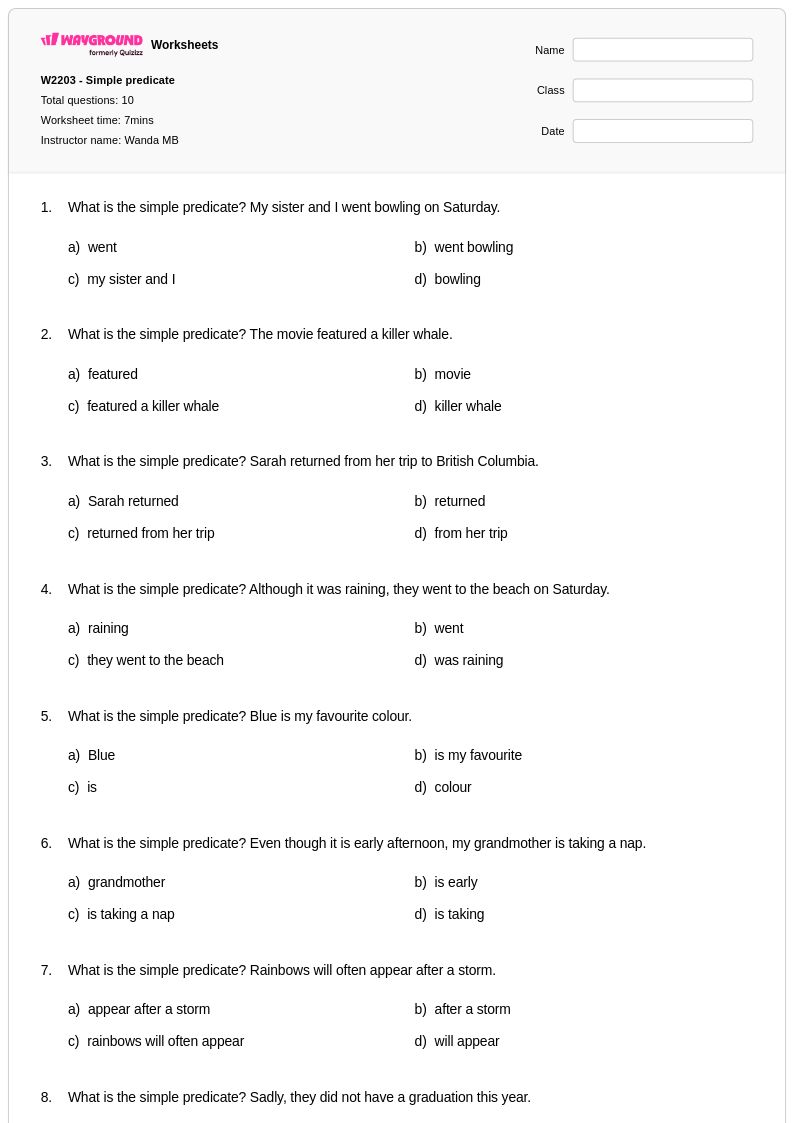
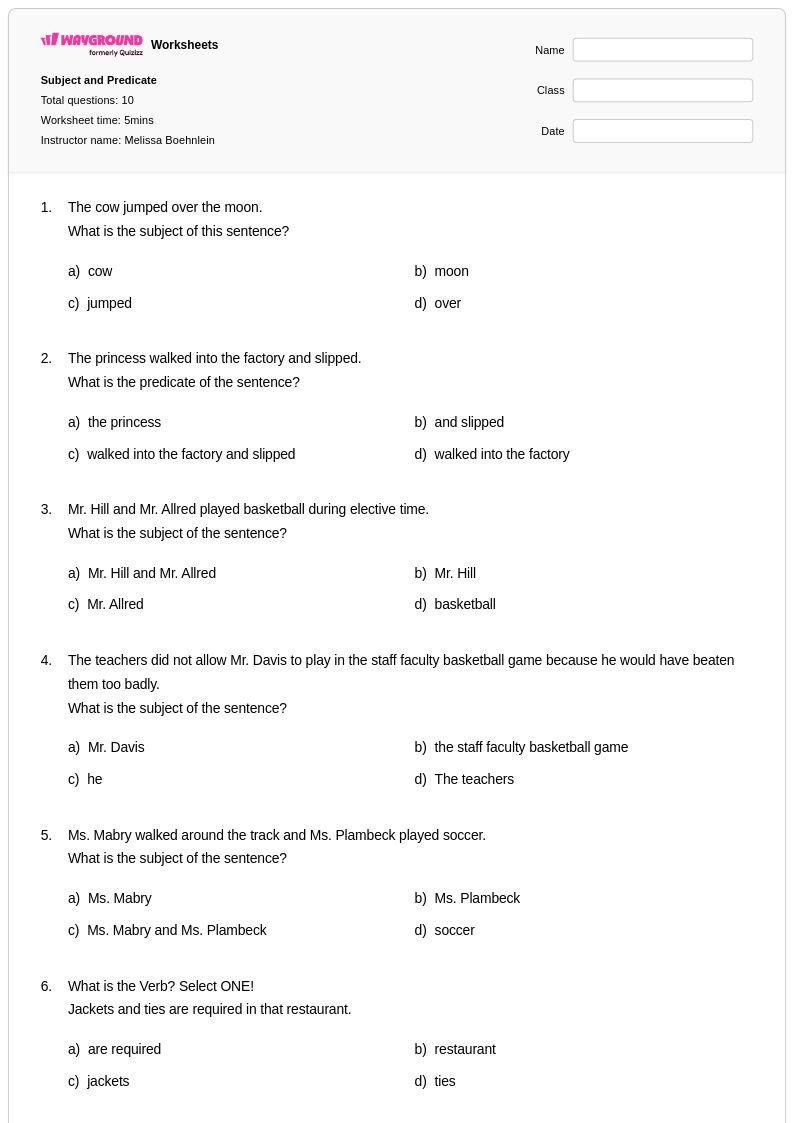
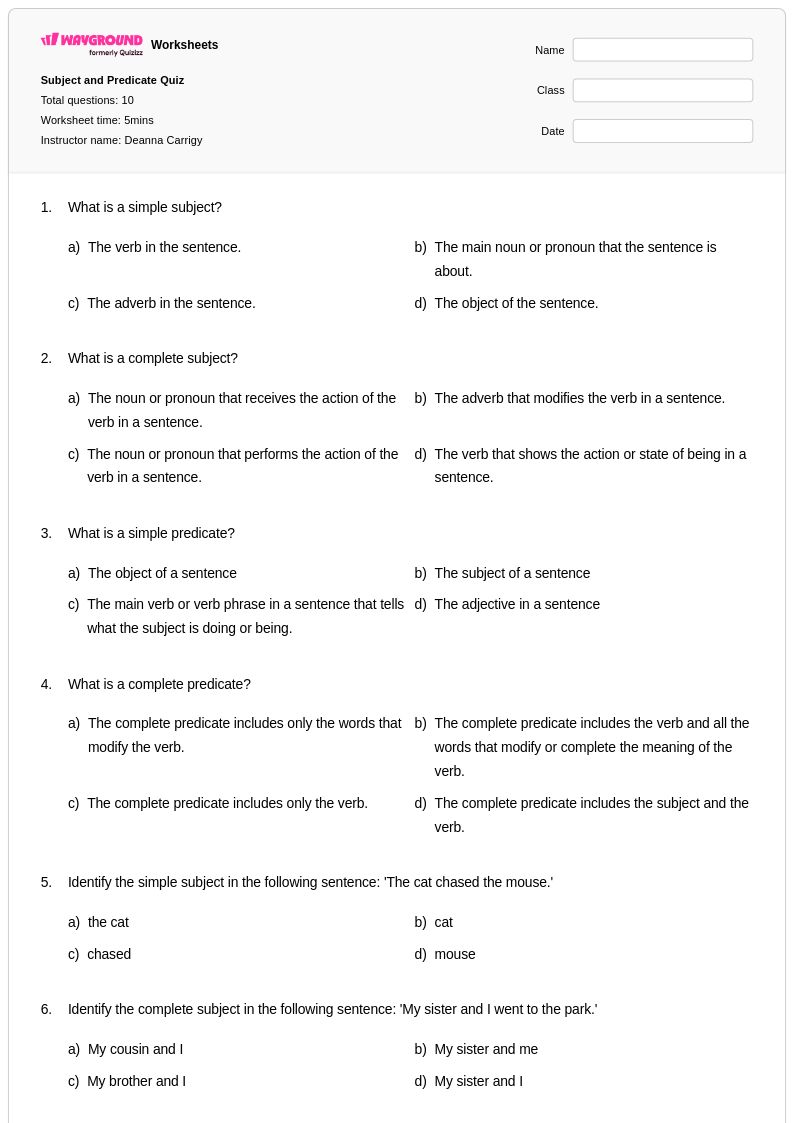
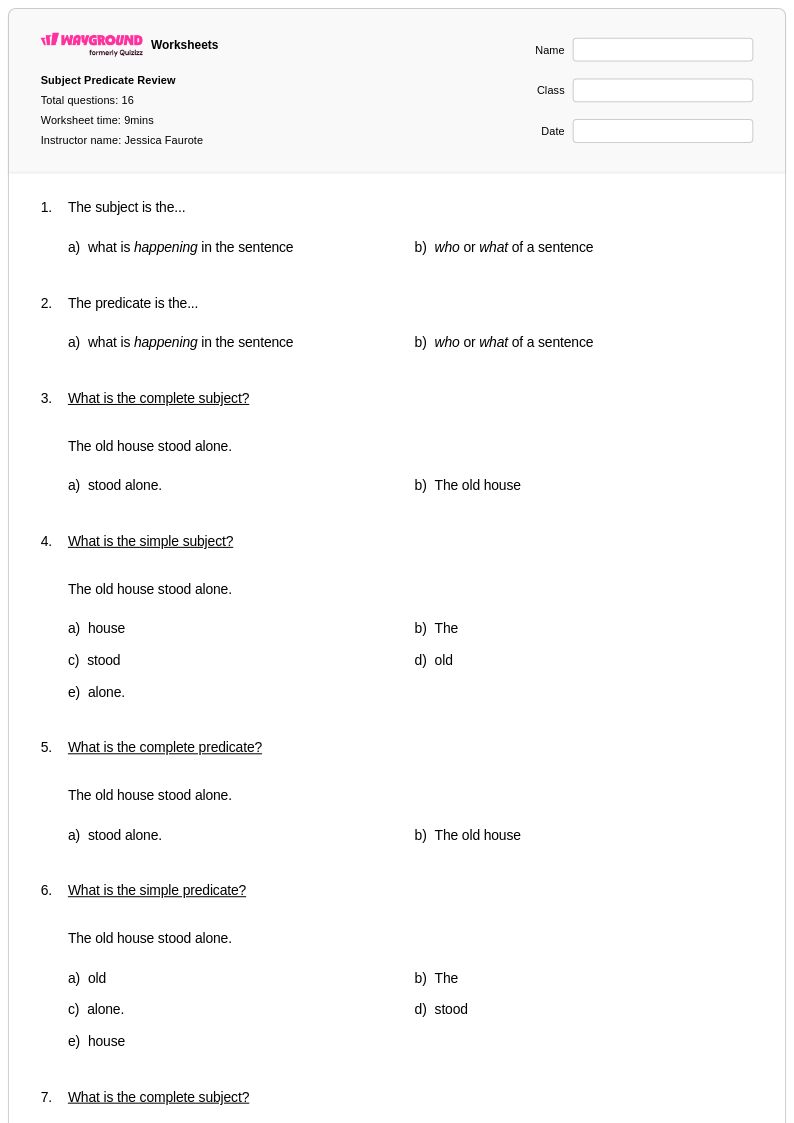
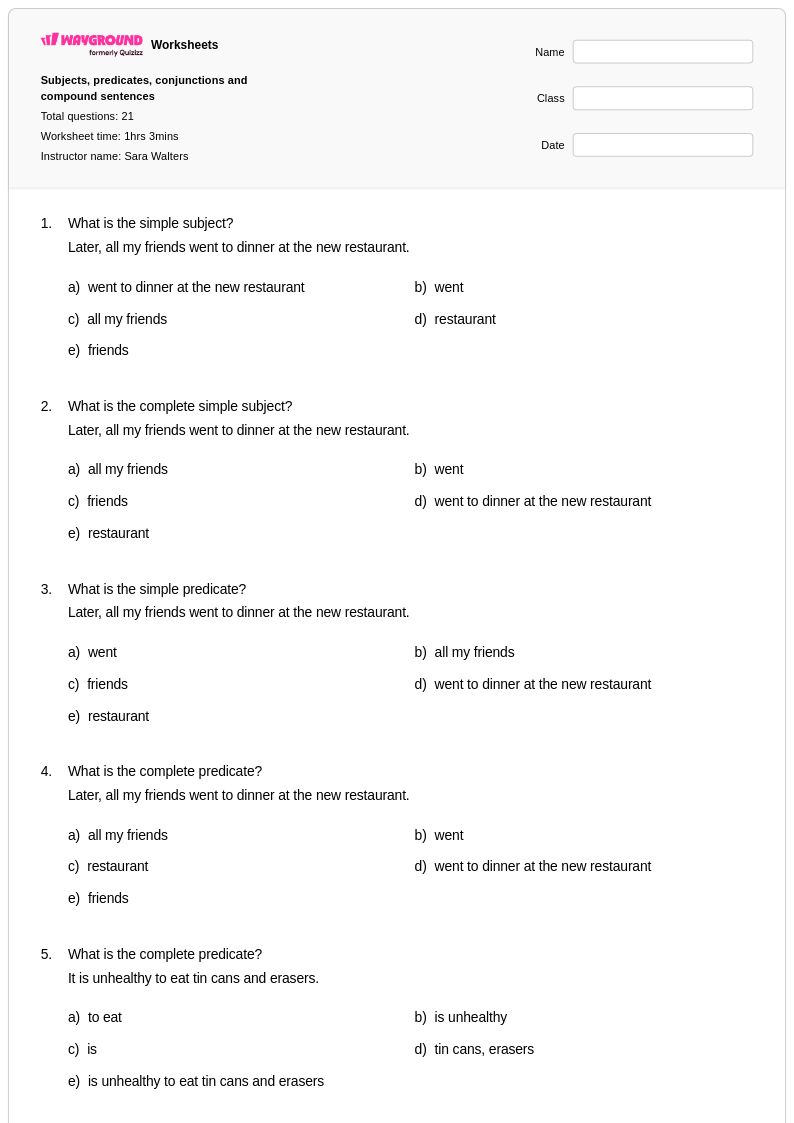
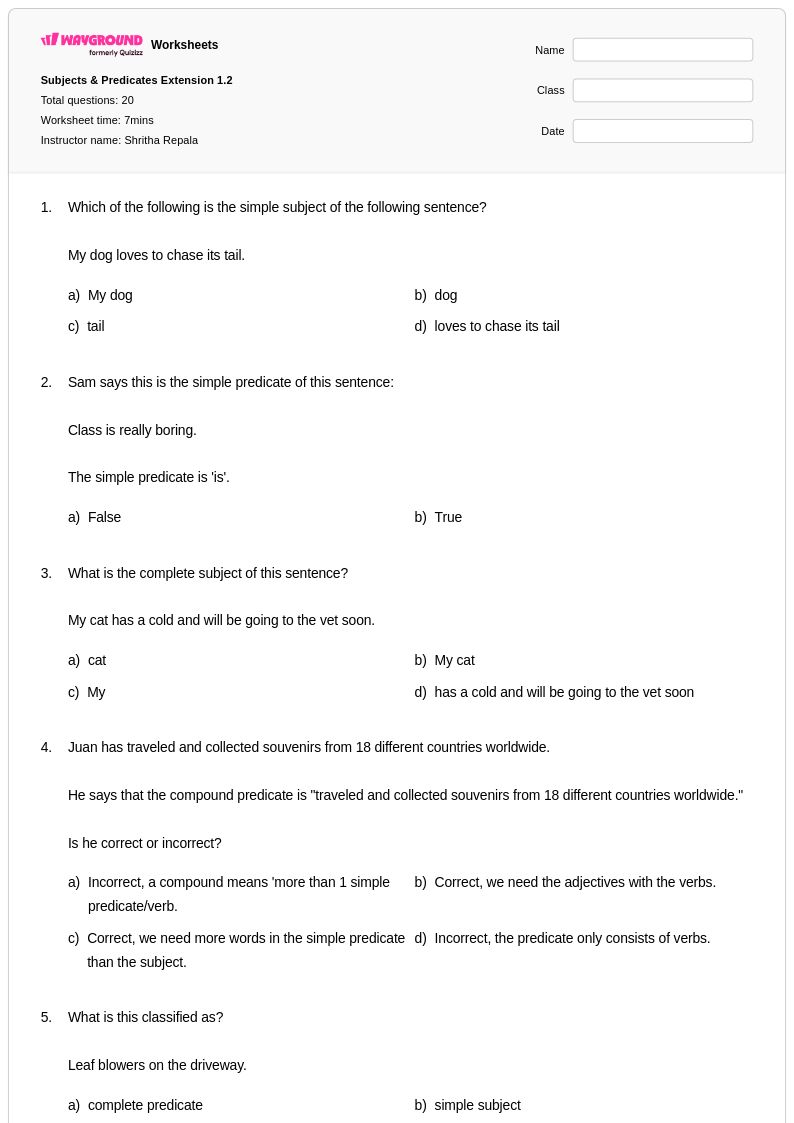
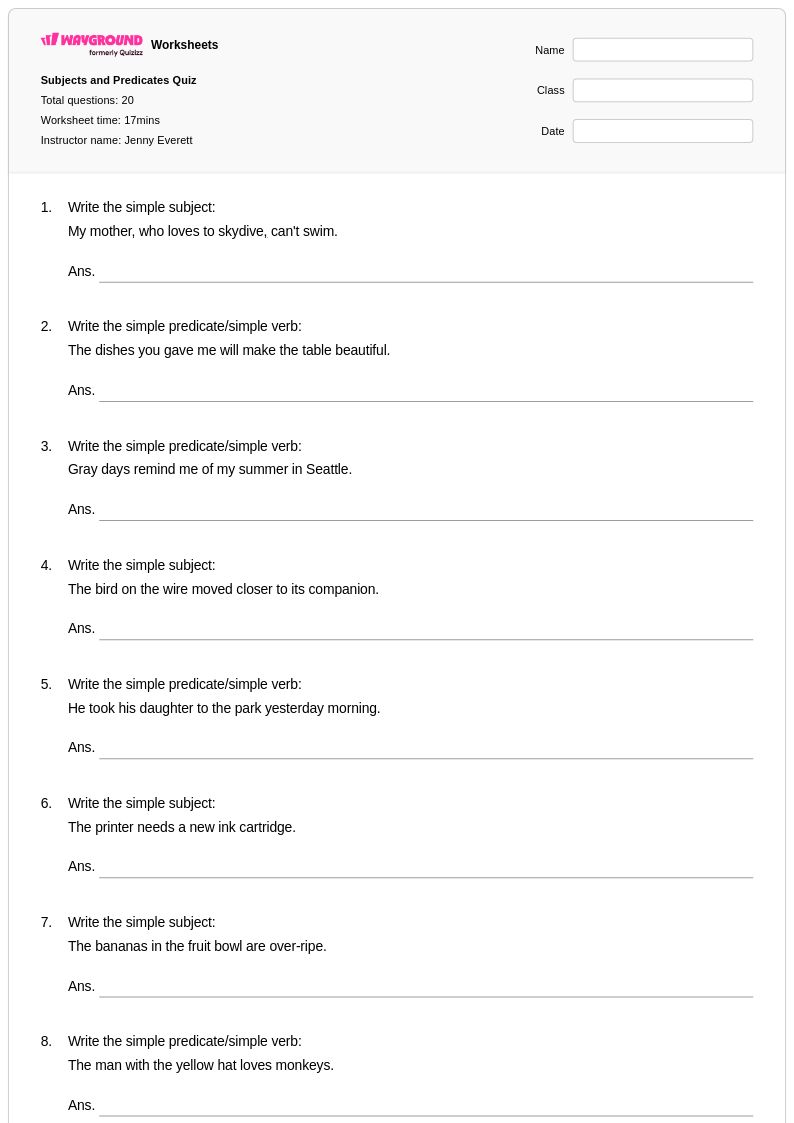
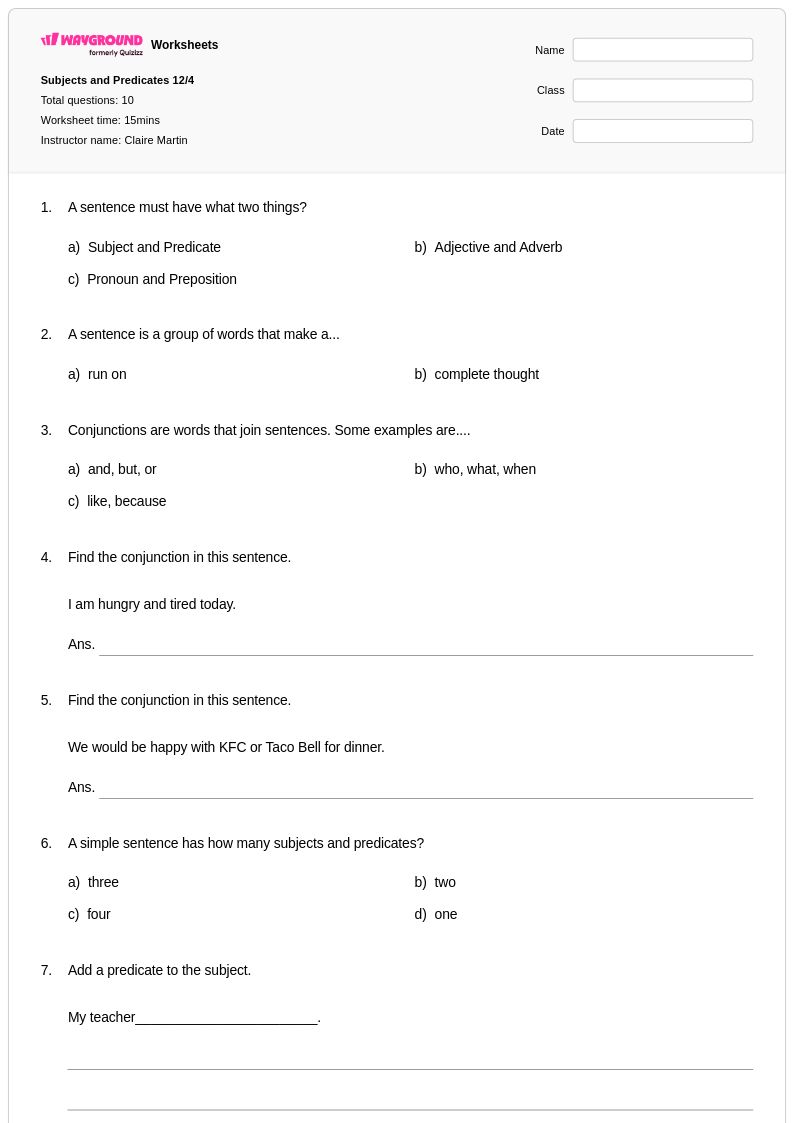
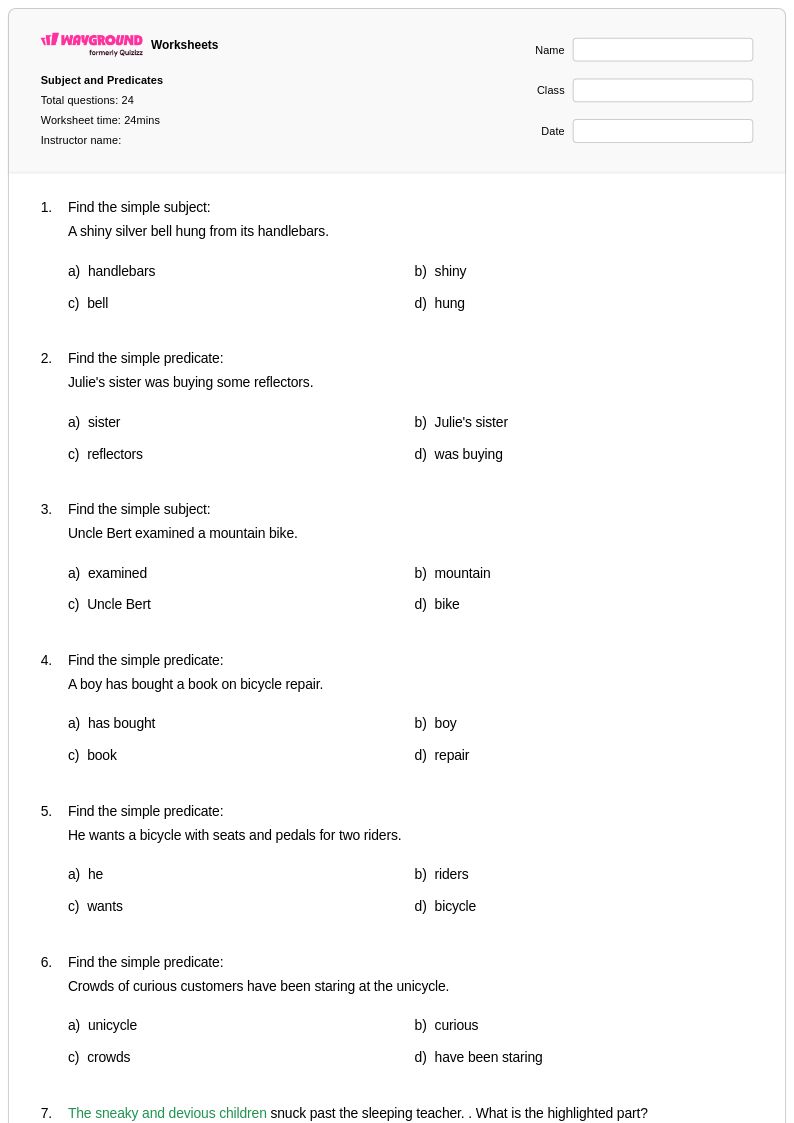
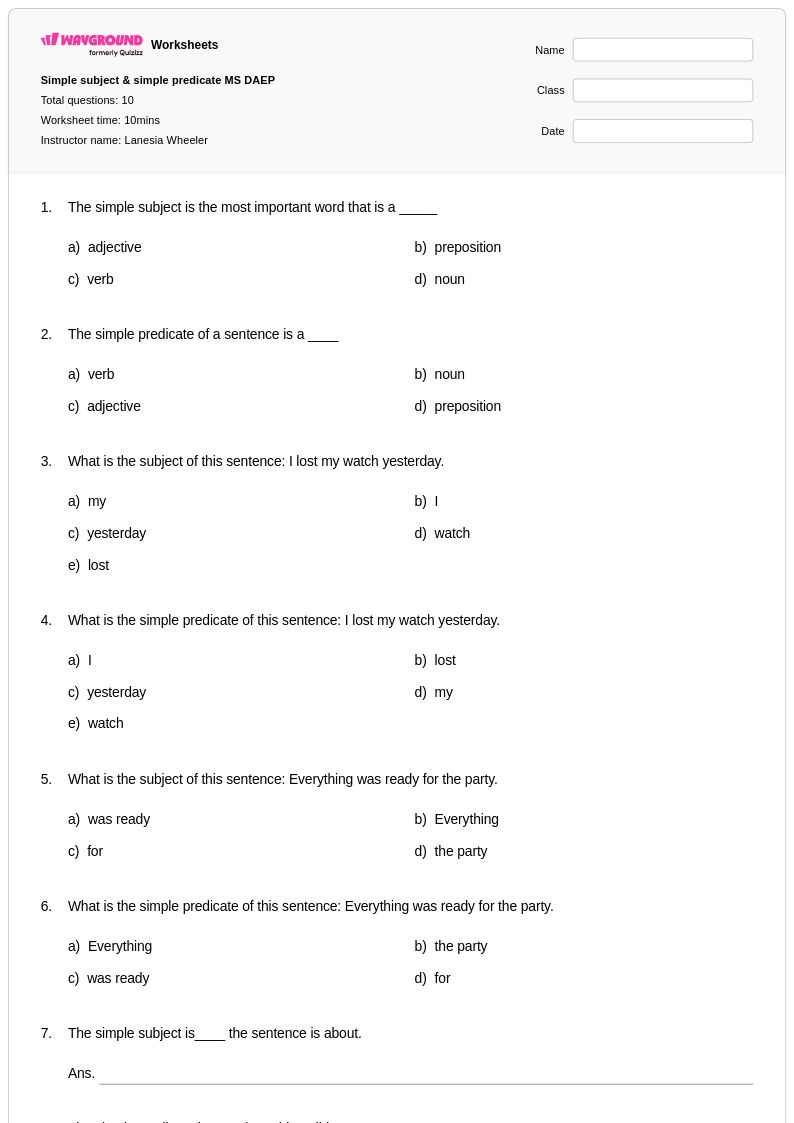
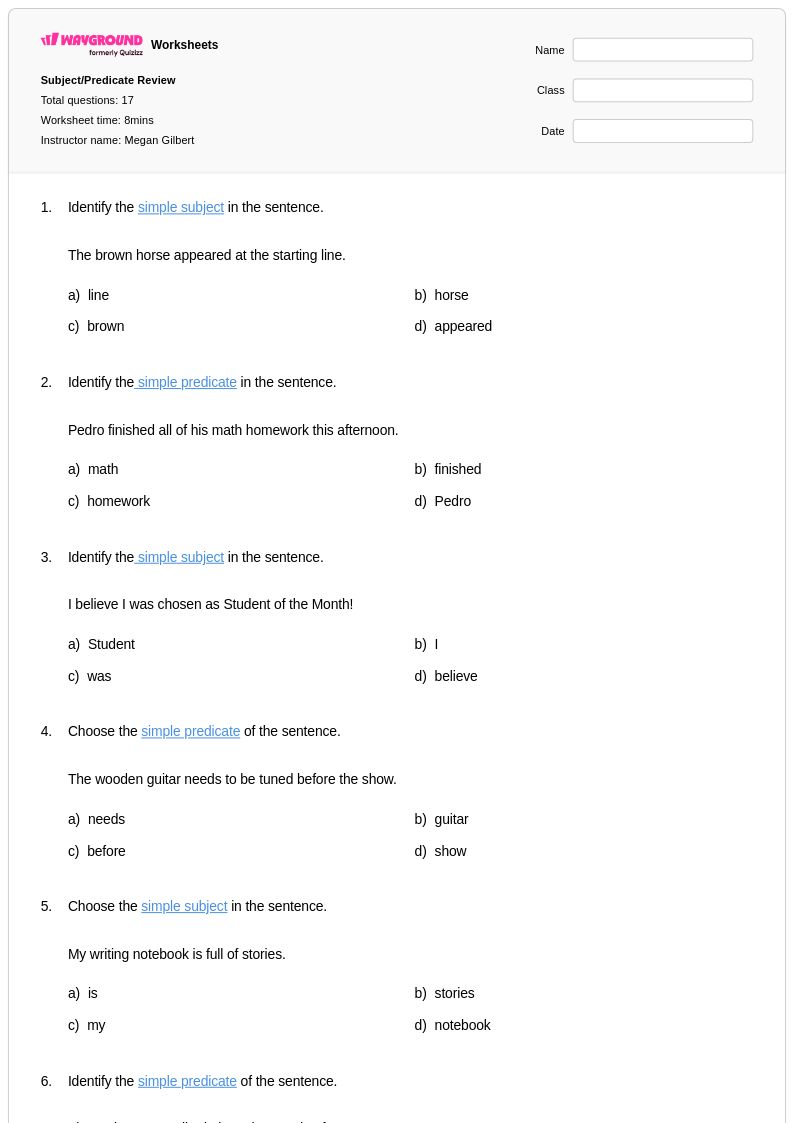
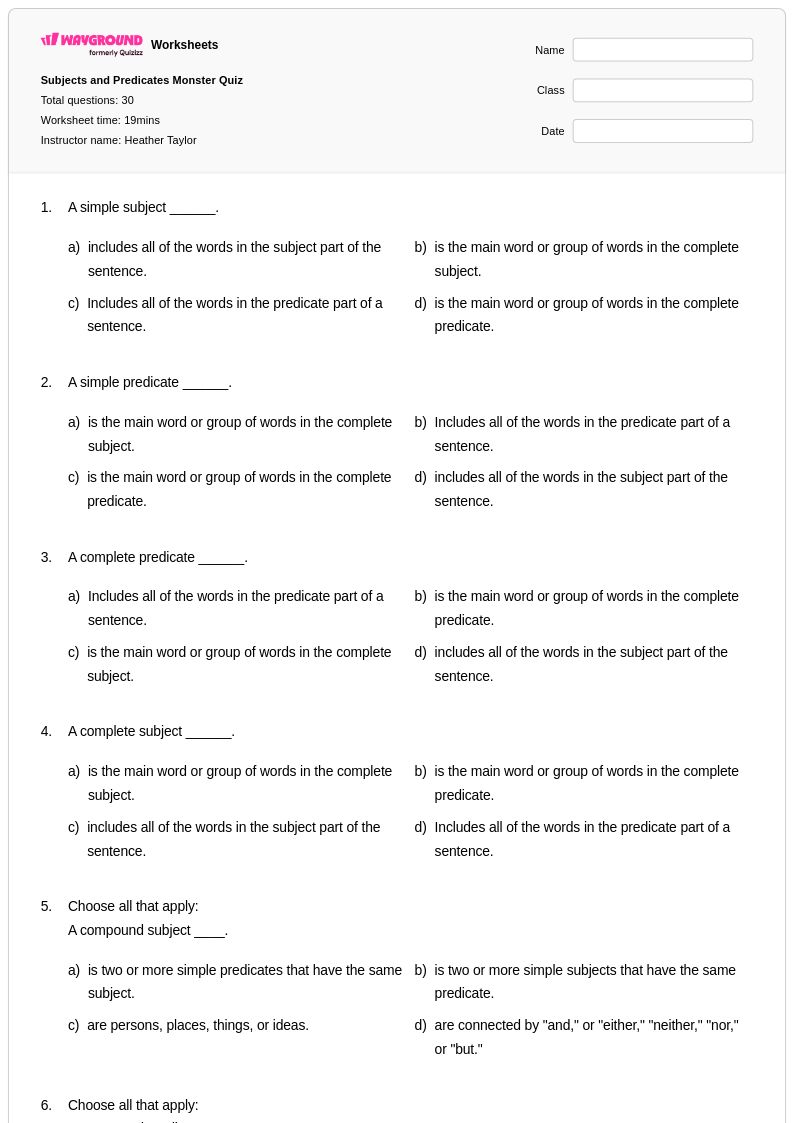
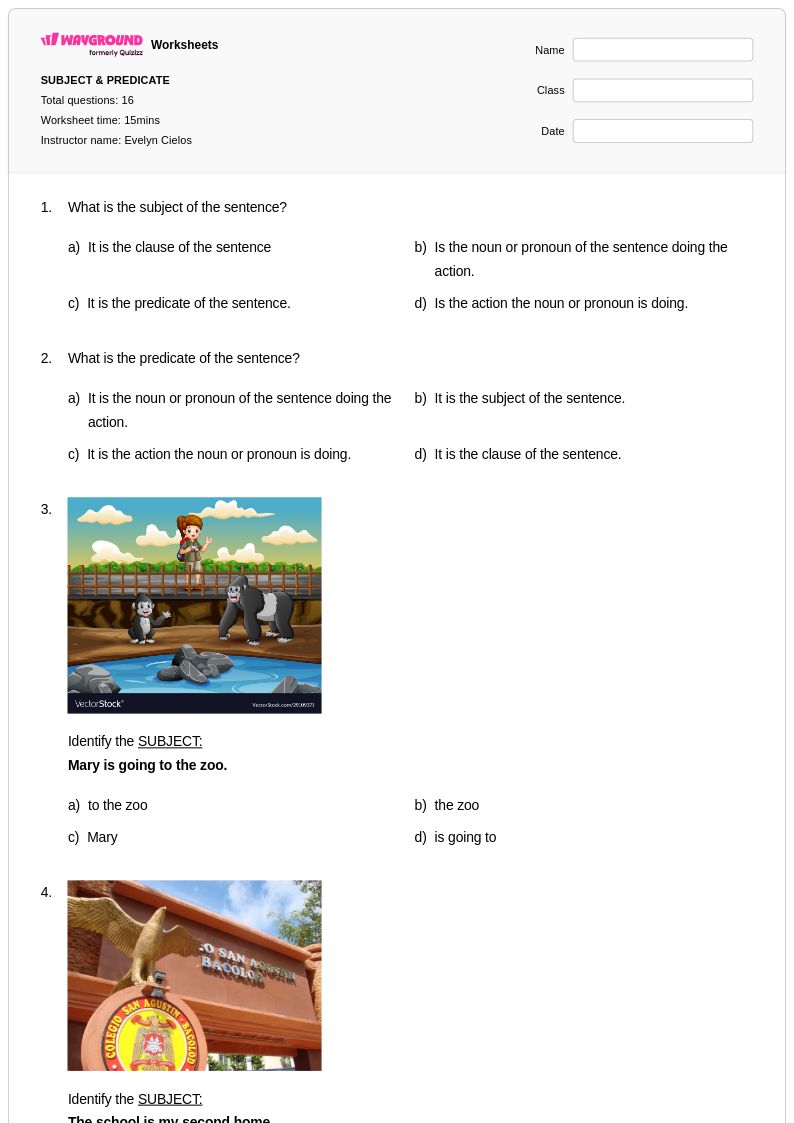
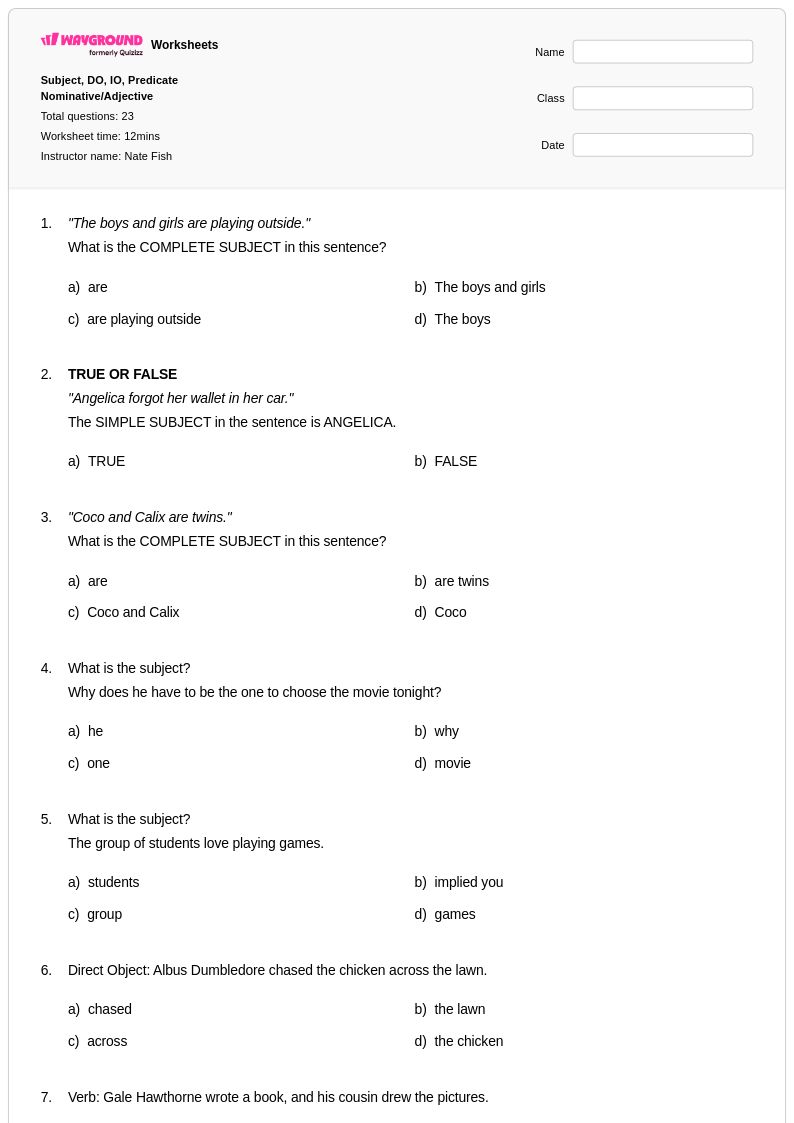
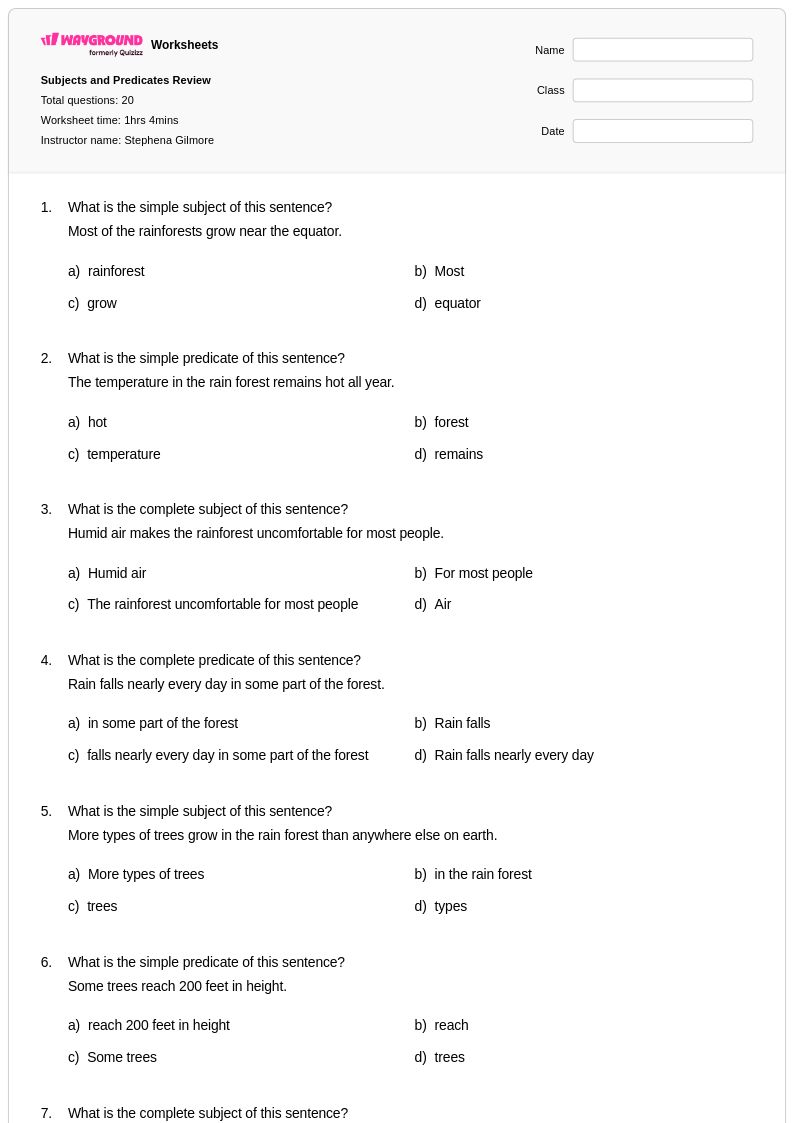
Simple predicate worksheets for Grade 8 students available through Wayground (formerly Quizizz) provide comprehensive practice in identifying and analyzing the essential verb components that form the core of sentence structure. These expertly crafted resources help eighth-grade learners master the fundamental skill of distinguishing simple predicates from complete predicates, enabling them to recognize action verbs, linking verbs, and helping verbs that serve as the grammatical foundation of effective communication. The collection includes diverse practice problems that challenge students to locate simple predicates in sentences of varying complexity, from basic subject-verb constructions to more sophisticated sentences containing compound verbs, verb phrases, and multiple clauses. Each worksheet comes with a detailed answer key and is available as free printables in convenient PDF format, making it easy for educators to distribute materials for both classroom instruction and independent study.
Wayground (formerly Quizizz) empowers teachers with millions of educator-created simple predicate worksheet resources that streamline lesson planning and support differentiated instruction for Grade 8 grammar and mechanics curricula. The platform's robust search and filtering capabilities allow instructors to quickly locate materials aligned with specific standards and learning objectives, while customization tools enable seamless adaptation of content to meet diverse student needs and proficiency levels. Teachers can access these comprehensive worksheet collections in both printable and digital formats, including downloadable PDFs, facilitating flexible implementation across traditional classroom settings and remote learning environments. These versatile resources prove invaluable for targeted remediation of struggling learners, enrichment activities for advanced students, and systematic skill practice that reinforces proper identification of simple predicates as a cornerstone of grammatical competency and clear written expression.
FAQs
How do I teach students to identify the simple predicate in a sentence?
Start by teaching students that the simple predicate is always the main verb or verb phrase that tells what the subject does, is, or has. A reliable strategy is to have students first locate the subject of the sentence, then ask 'What does the subject do or what is happening?' — the answer is the simple predicate. Once students are comfortable with action verbs, extend practice to linking verbs and verb phrases (e.g., 'was running') so they can identify more complex predicates in context.
What is the difference between a simple predicate and a complete predicate?
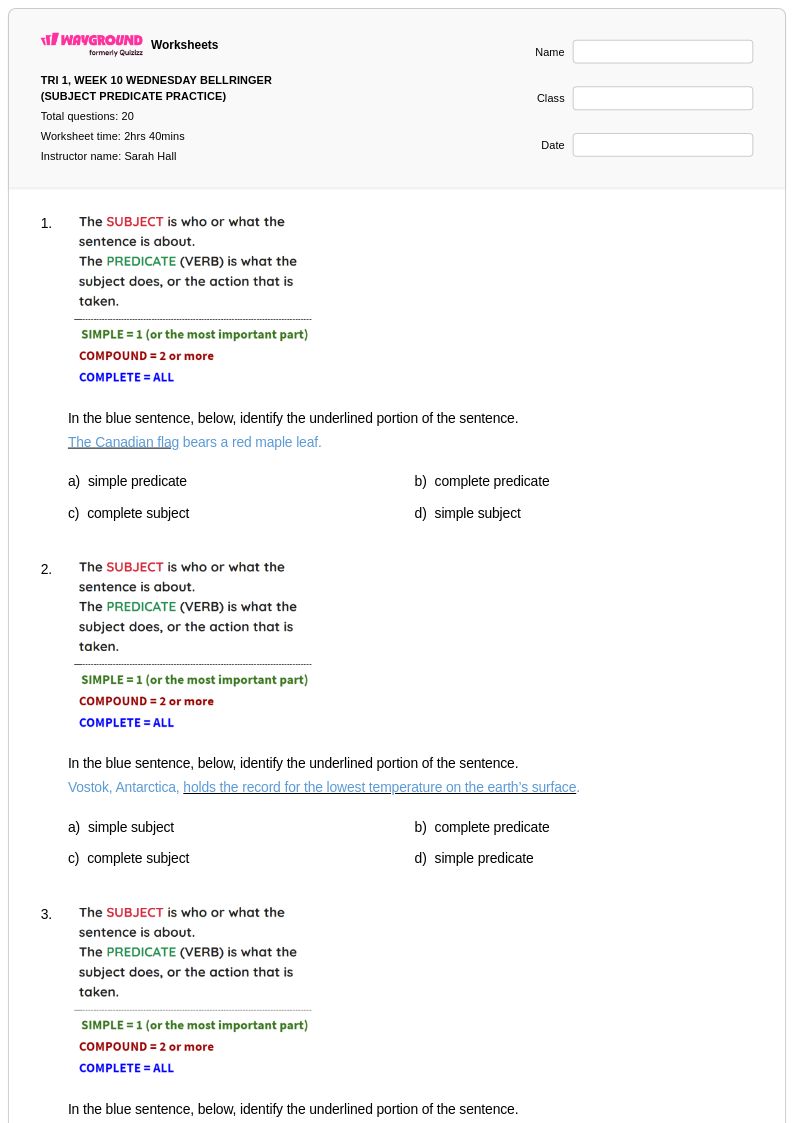
The simple predicate is only the main verb or verb phrase in a sentence (e.g., 'runs' in 'She runs every morning'), while the complete predicate includes the verb and all the words that modify or complete it (e.g., 'runs every morning'). Students often conflate the two, so having them underline the entire predicate first and then circle only the main verb is an effective way to distinguish between them. Practicing this distinction directly prepares students for more advanced sentence diagramming and analysis.
What exercises help students practice identifying simple predicates?
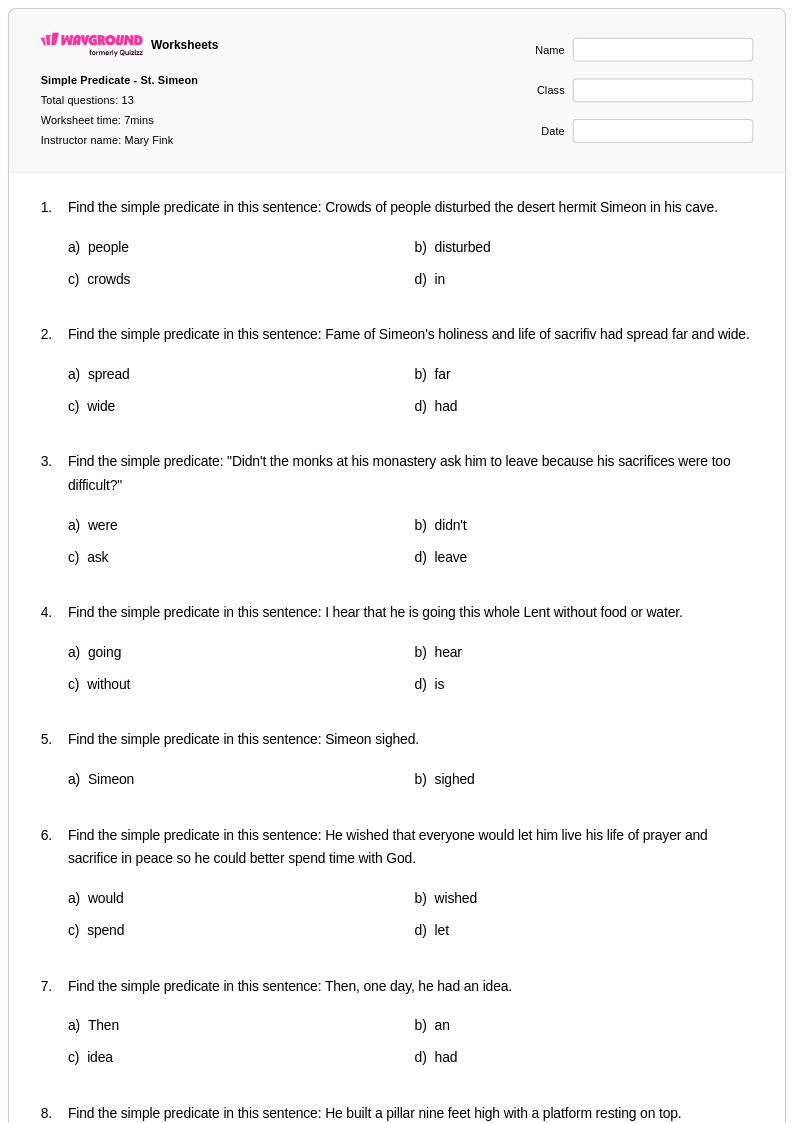
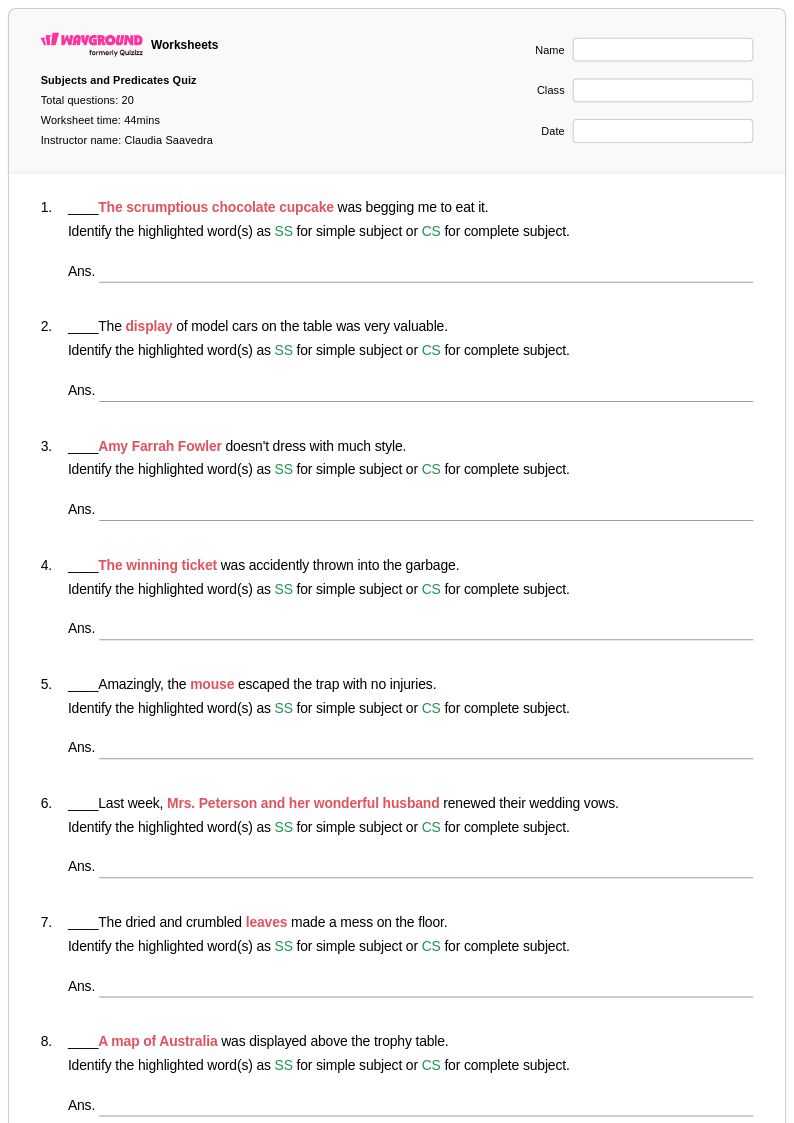
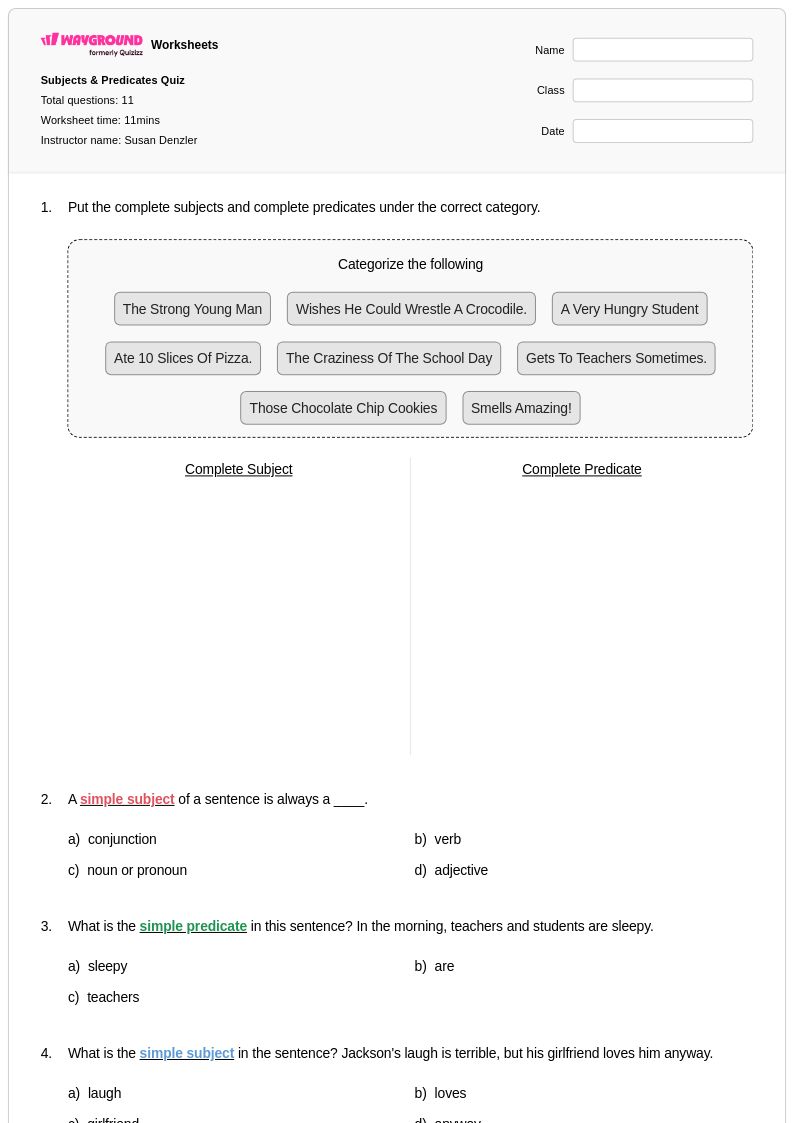
Effective practice exercises include sentence identification tasks where students underline the simple predicate, sentence sorting activities where they separate subjects from predicates, and sentence completion tasks where students supply a missing verb. Progressing from simple one-verb sentences to sentences with verb phrases and compound predicates ensures systematic skill building. Worksheet-based practice with varied sentence structures reinforces the concept across different grammatical contexts.
What mistakes do students commonly make when identifying simple predicates?
The most common error is confusing the simple predicate with the complete predicate — students frequently highlight the entire predicate phrase rather than isolating the main verb. Another frequent mistake is overlooking helping verbs in a verb phrase, identifying only the main verb when the simple predicate should include the full verb phrase (e.g., marking 'running' instead of 'was running'). Students also sometimes identify an action-sounding noun or adjective as the predicate, which is why explicit instruction on verb identification is essential before moving to predicate recognition.
How do I use Wayground's simple predicate worksheets in my classroom?
Wayground's simple predicate worksheets are available as printable PDFs for traditional classroom use and in digital formats for technology-integrated environments, giving teachers flexibility to assign them as in-class practice, homework, or independent review. Teachers can also host the worksheets as a quiz directly on Wayground, enabling real-time tracking of student performance. The worksheets include complete answer keys, which makes self-checking and formative assessment straightforward for both teachers and students.
How can I differentiate simple predicate practice for students at different skill levels?
For struggling learners, start with short, simple sentences containing only action verbs before introducing verb phrases and linking verbs. For advanced students, provide longer, more complex sentences that include compound predicates or embedded clauses to challenge their analytical skills. On Wayground, teachers can apply accommodations such as reduced answer choices or read-aloud support to individual students, ensuring that differentiation is built into the digital experience without disrupting the rest of the class.