Free Printable Singular Nouns Worksheets for Grade 4
Explore Wayground's free Grade 4 singular nouns worksheets and printables that help students master identifying and using singular nouns through engaging practice problems with complete answer keys.
Explore printable Singular Nouns worksheets for Grade 4
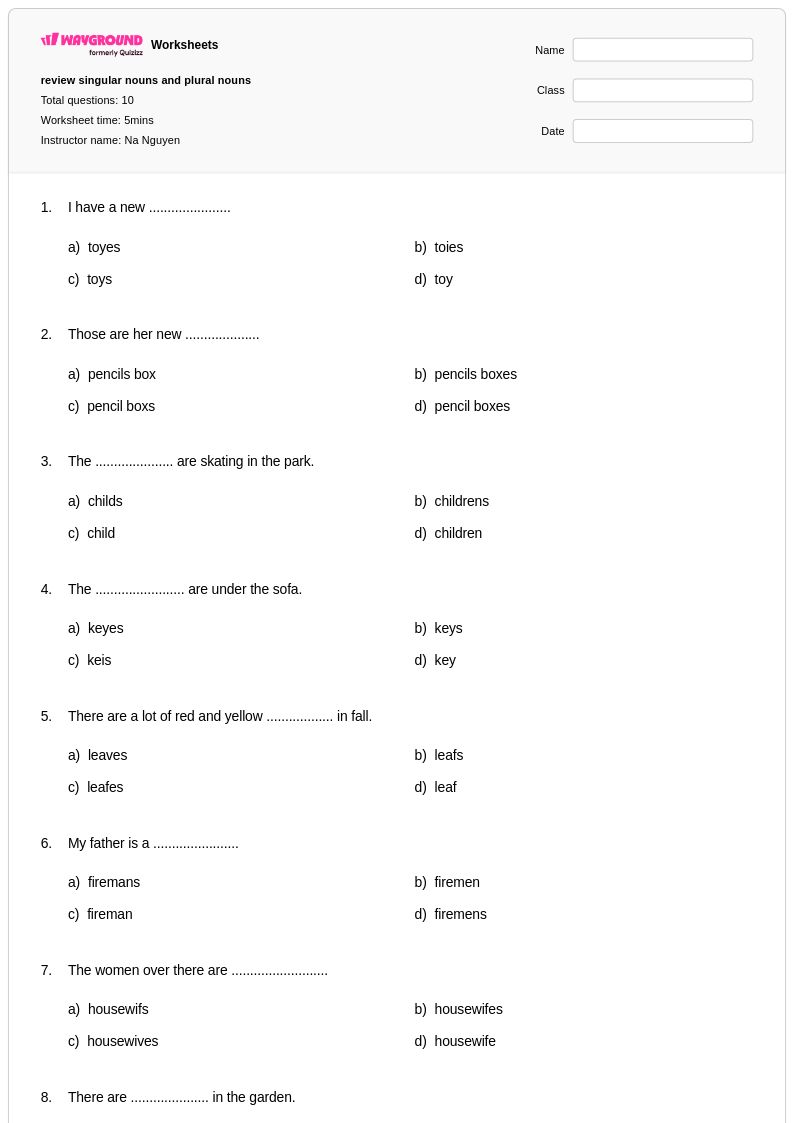
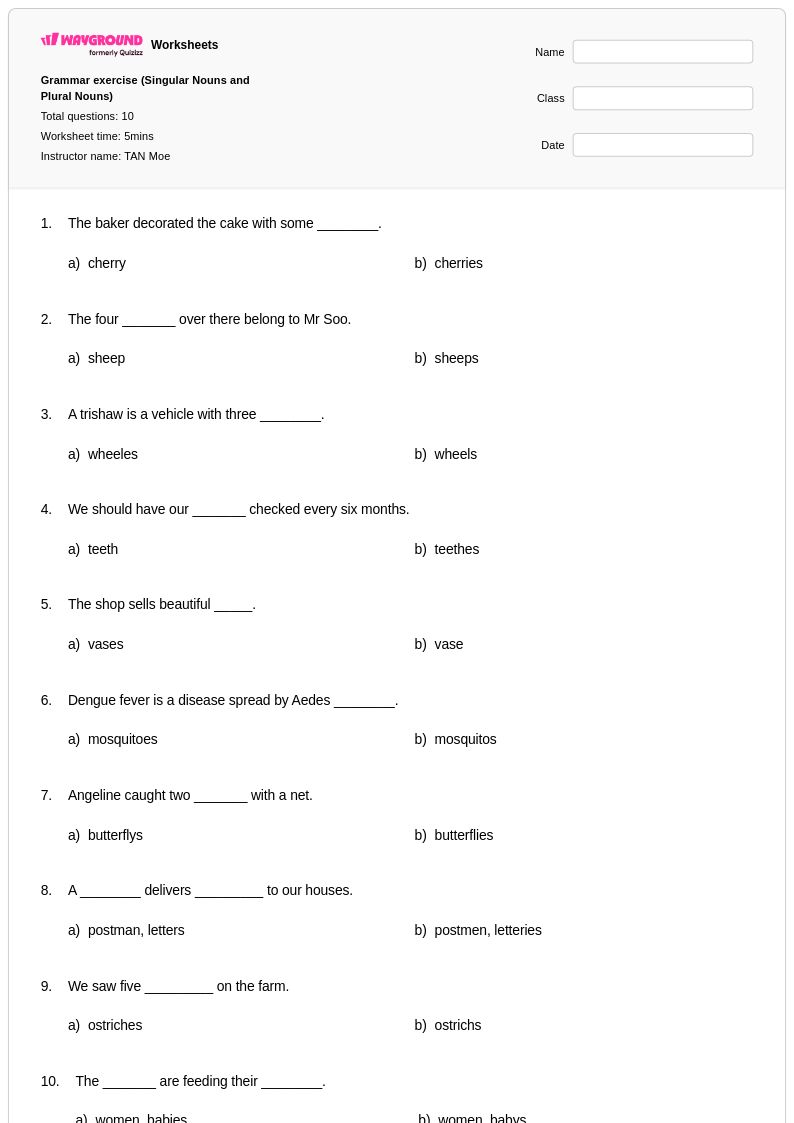
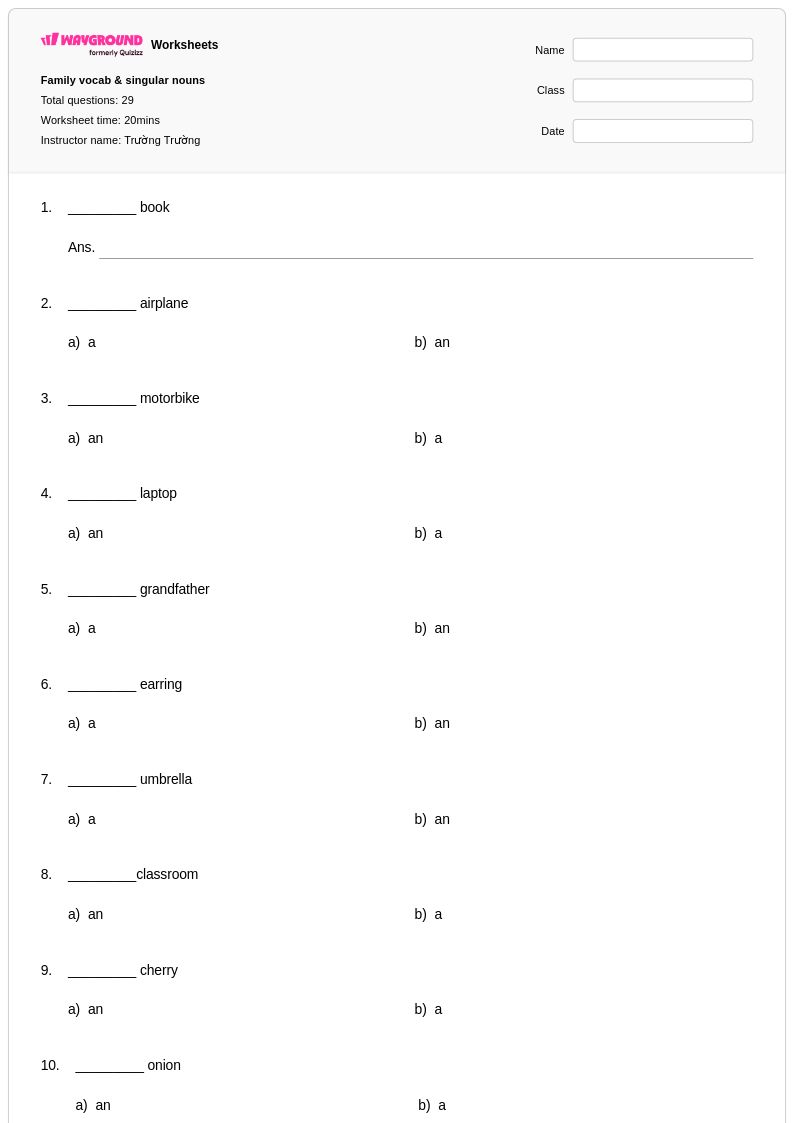
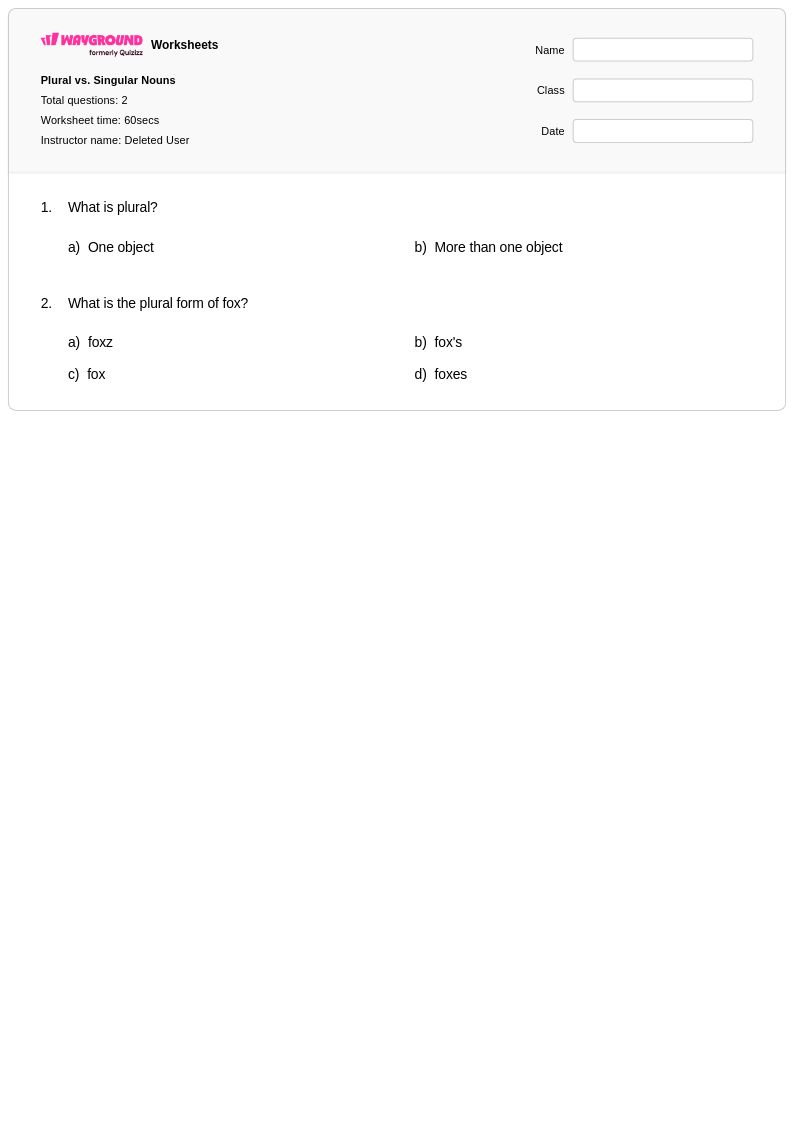
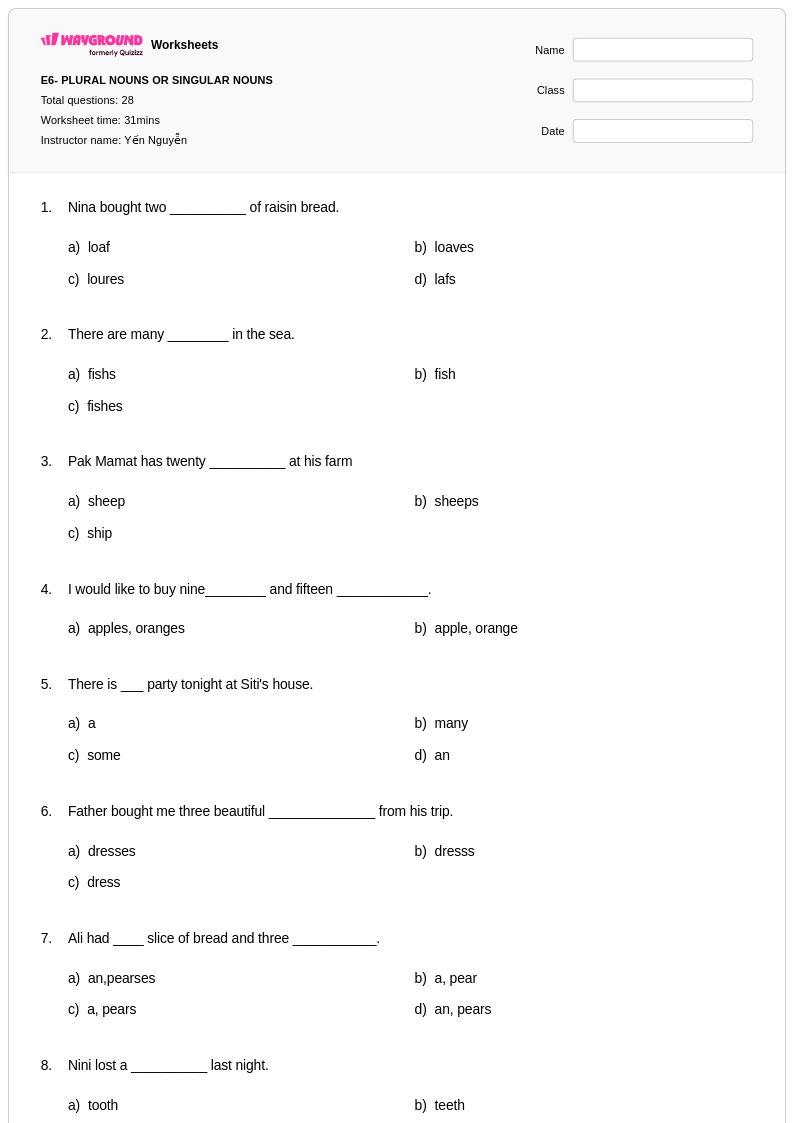
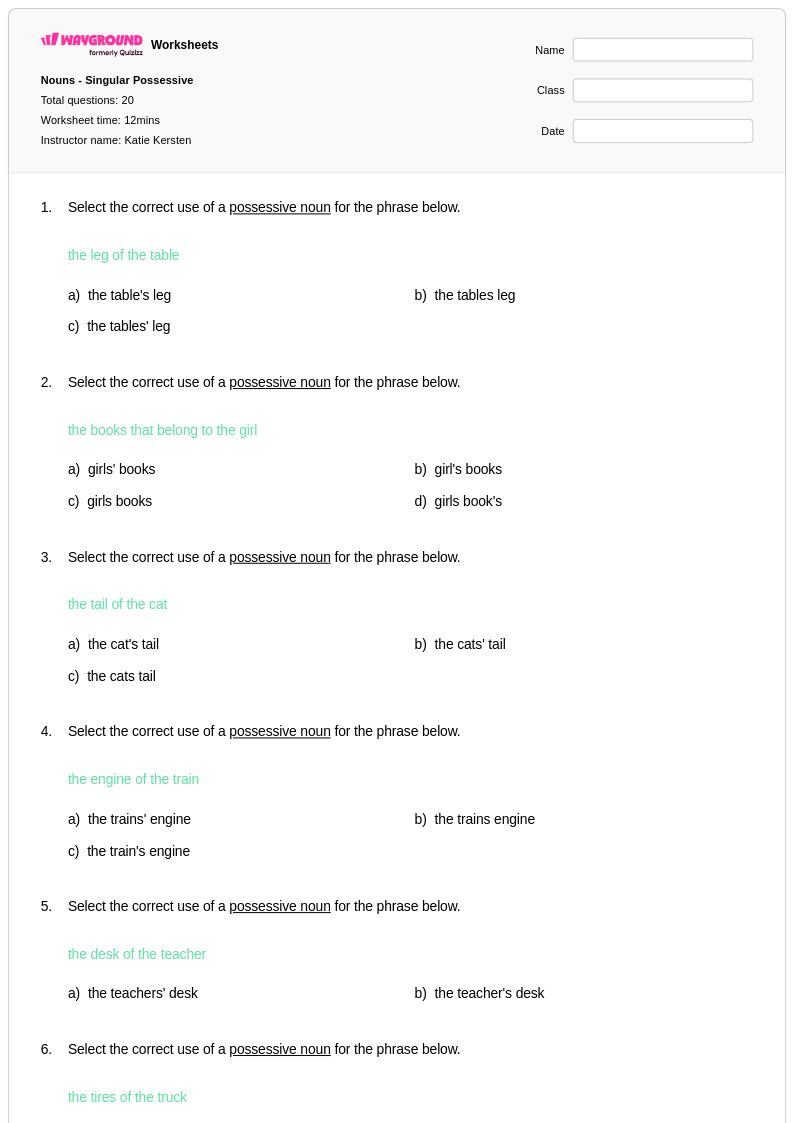
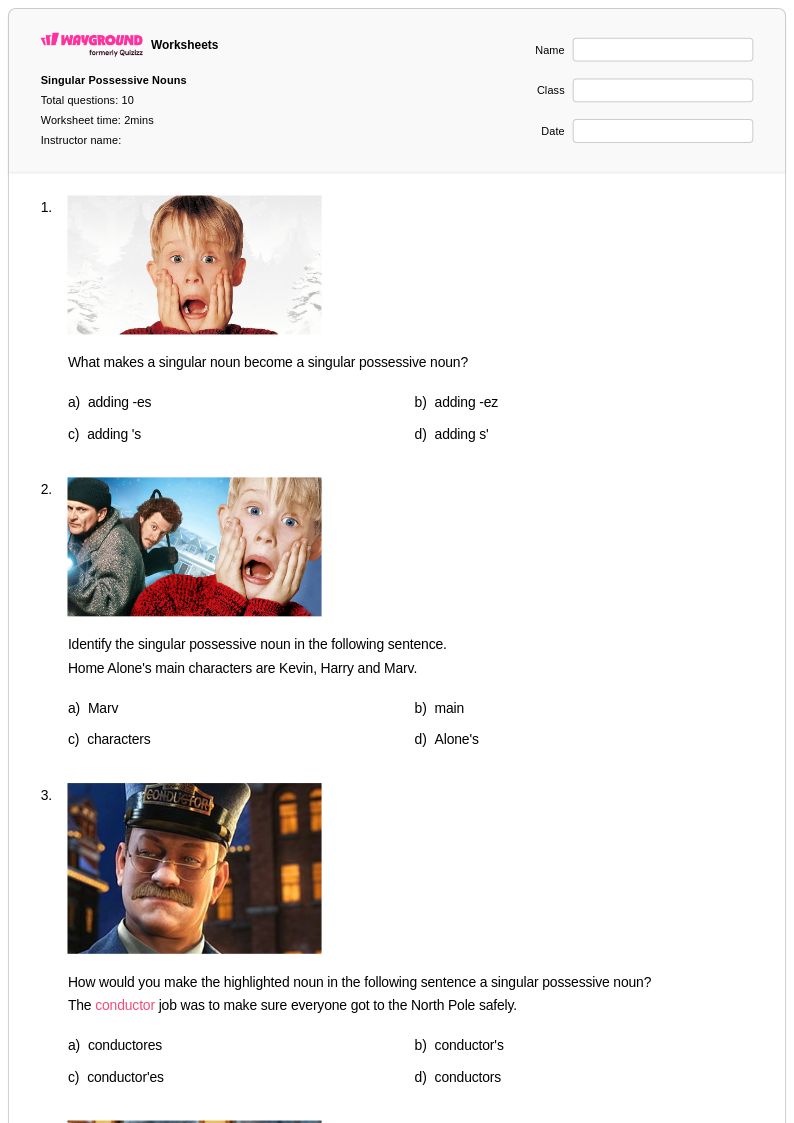
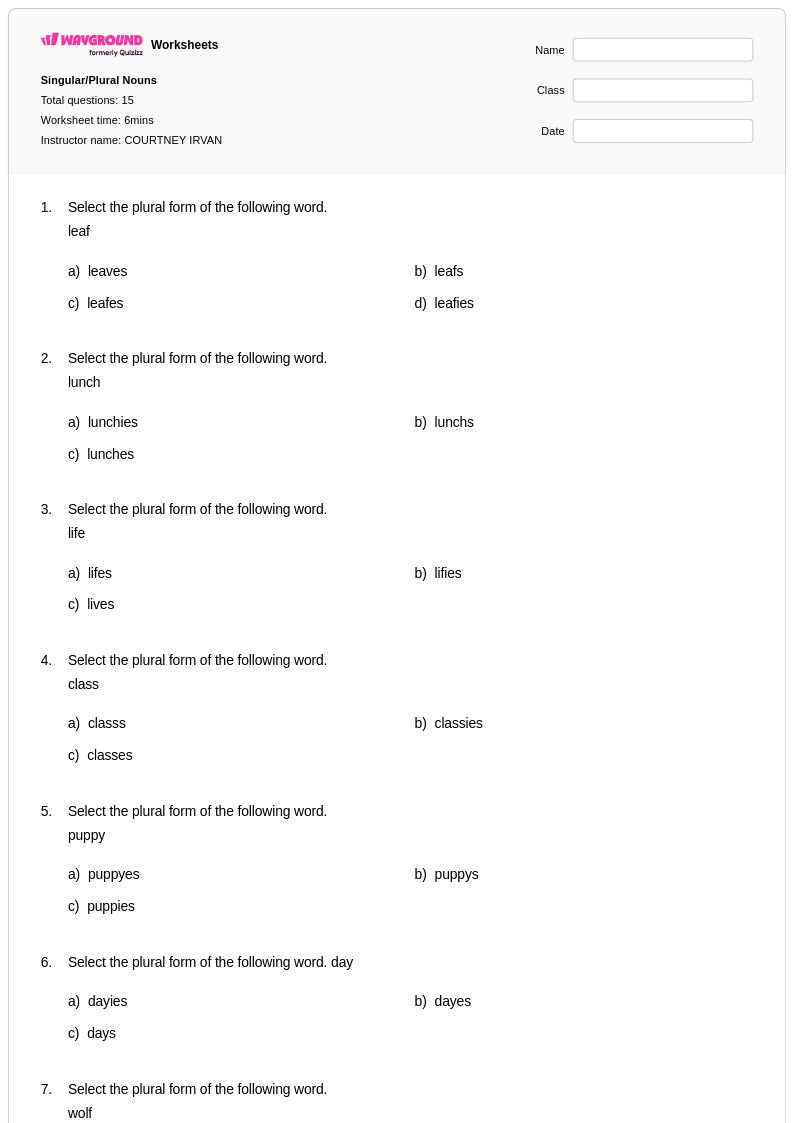
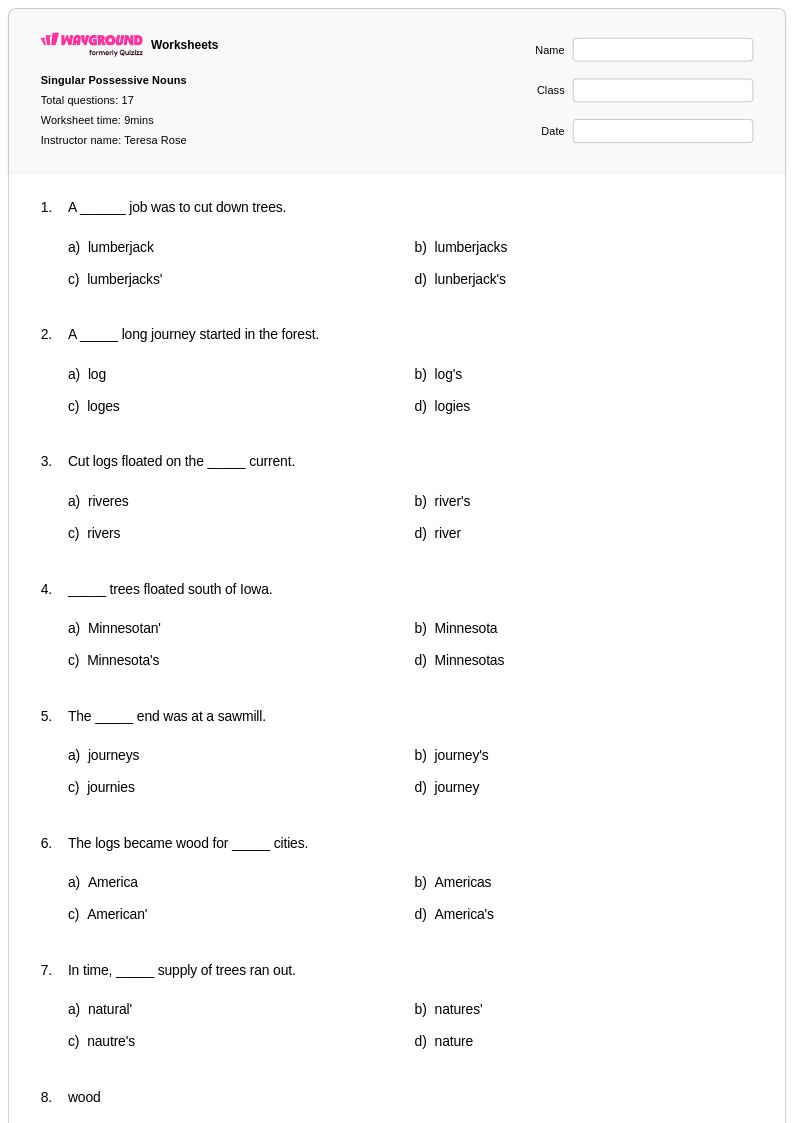
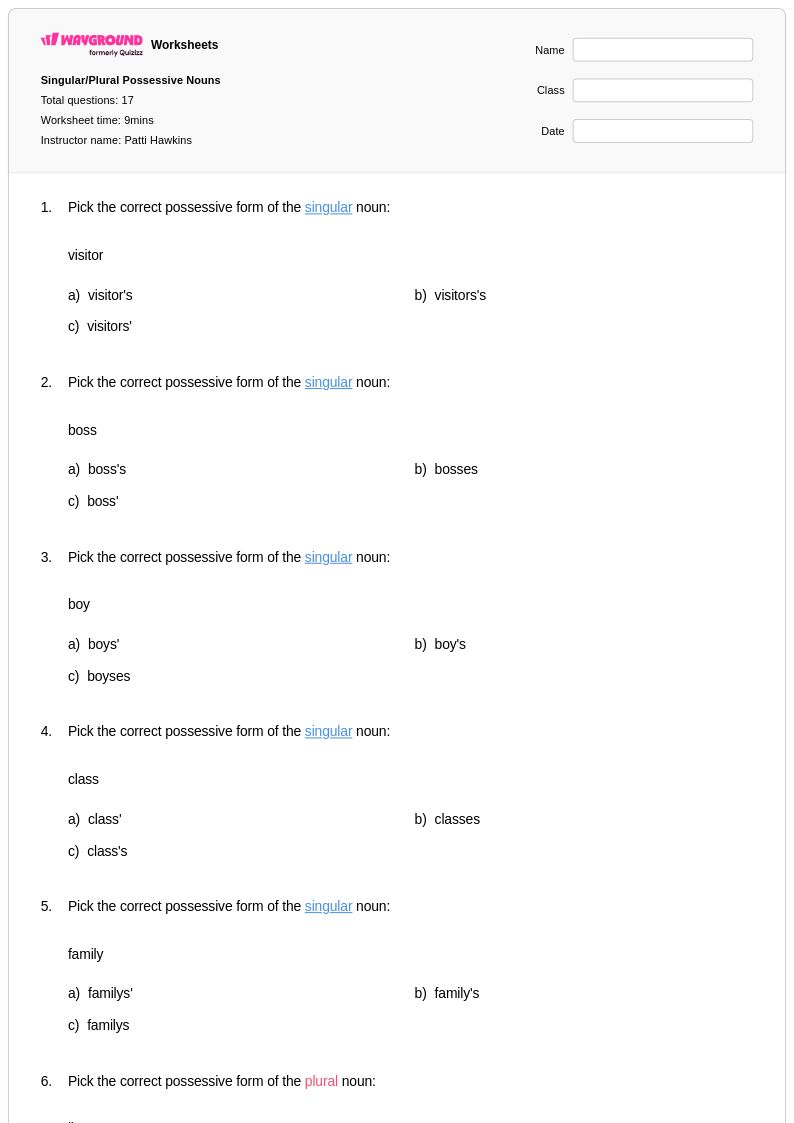
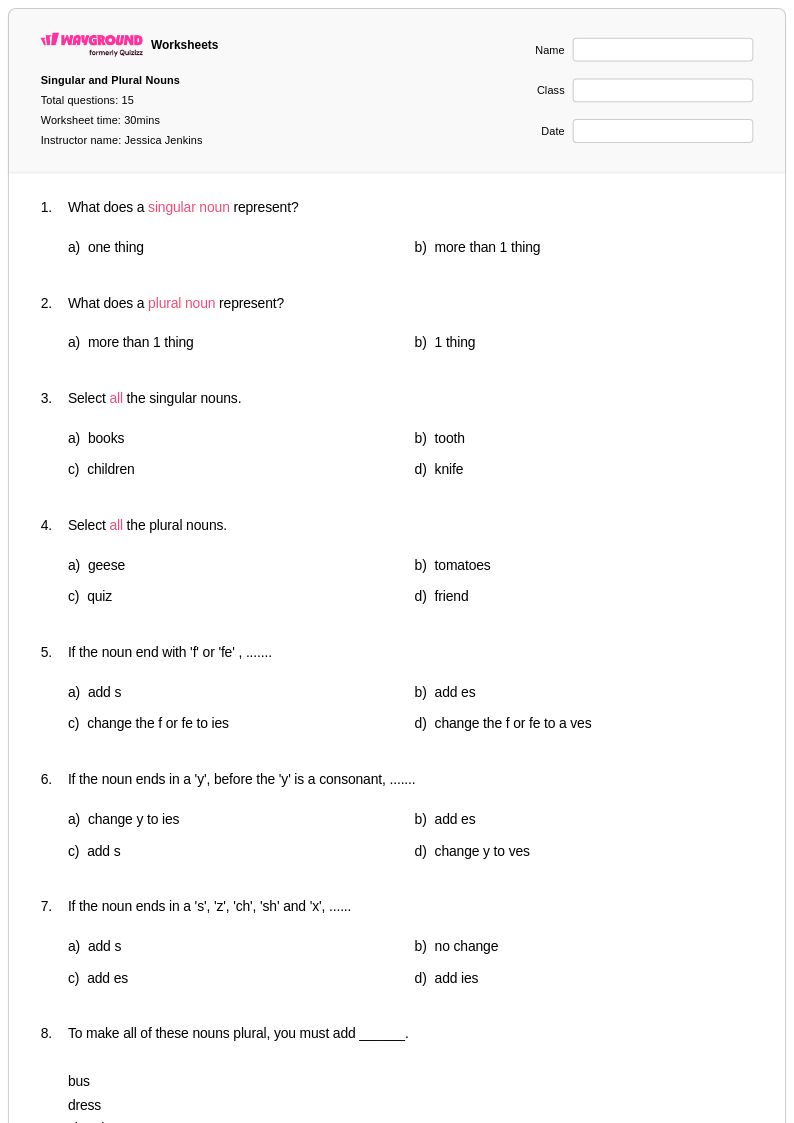
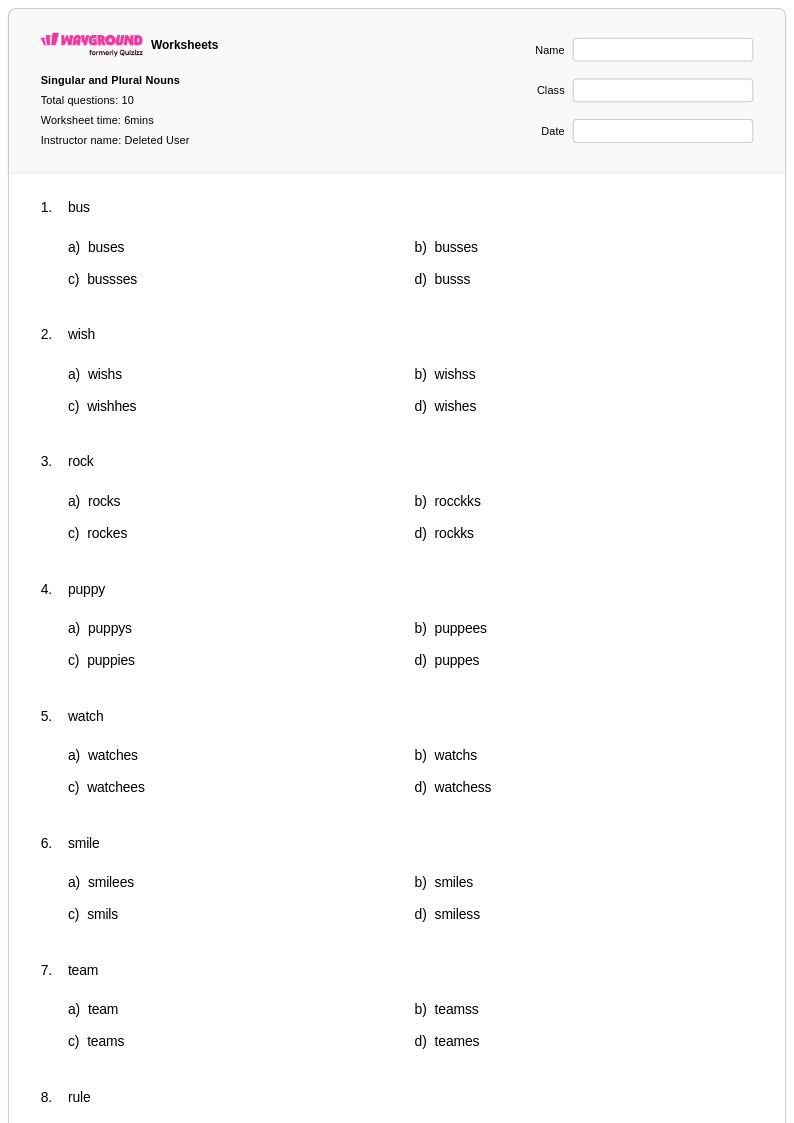
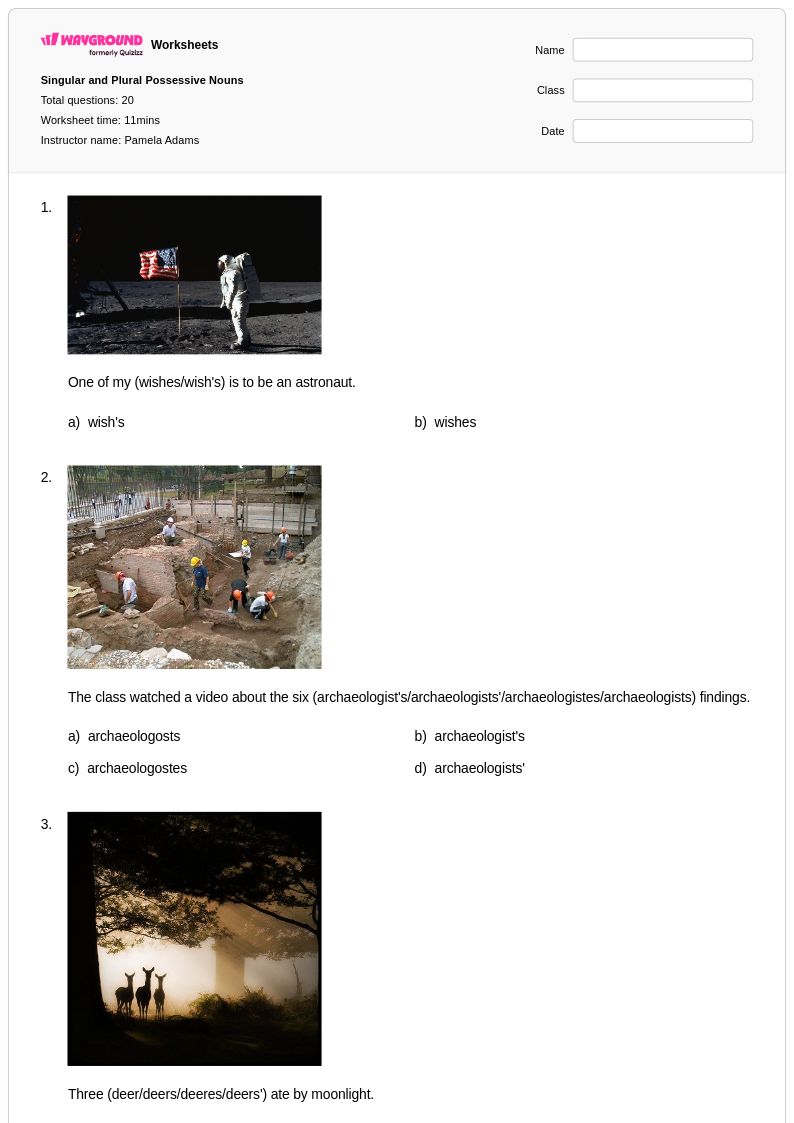
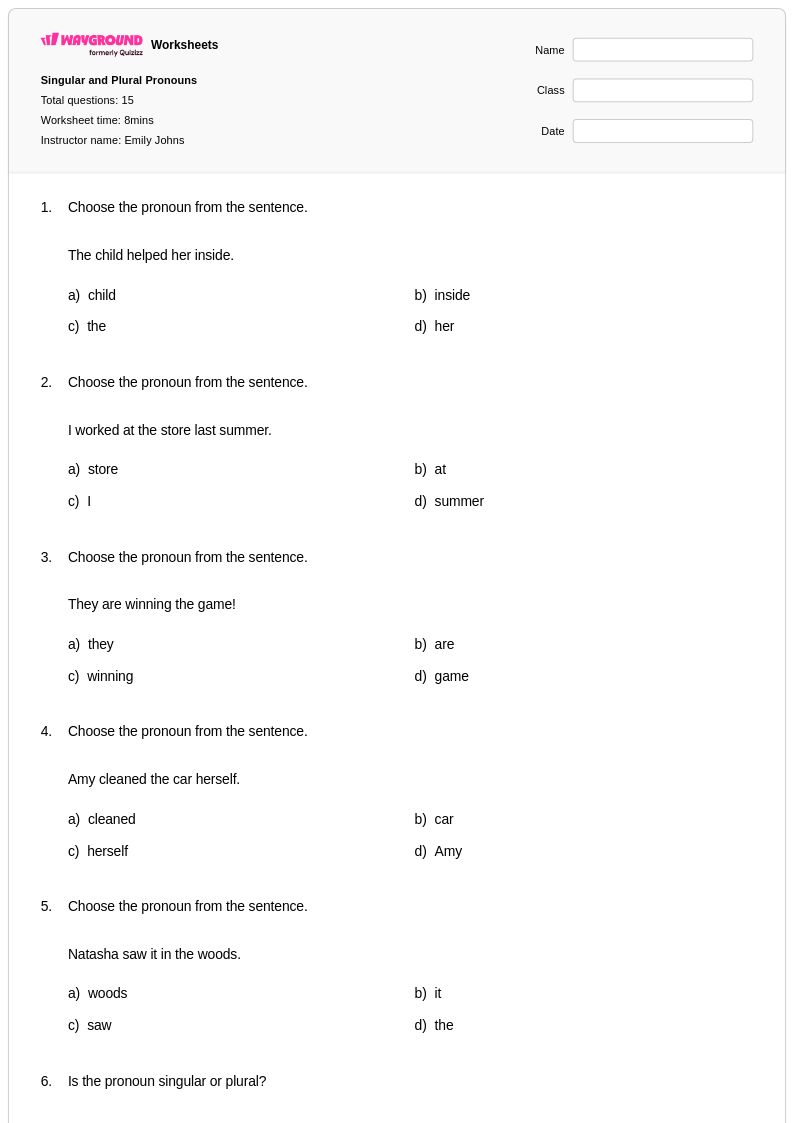
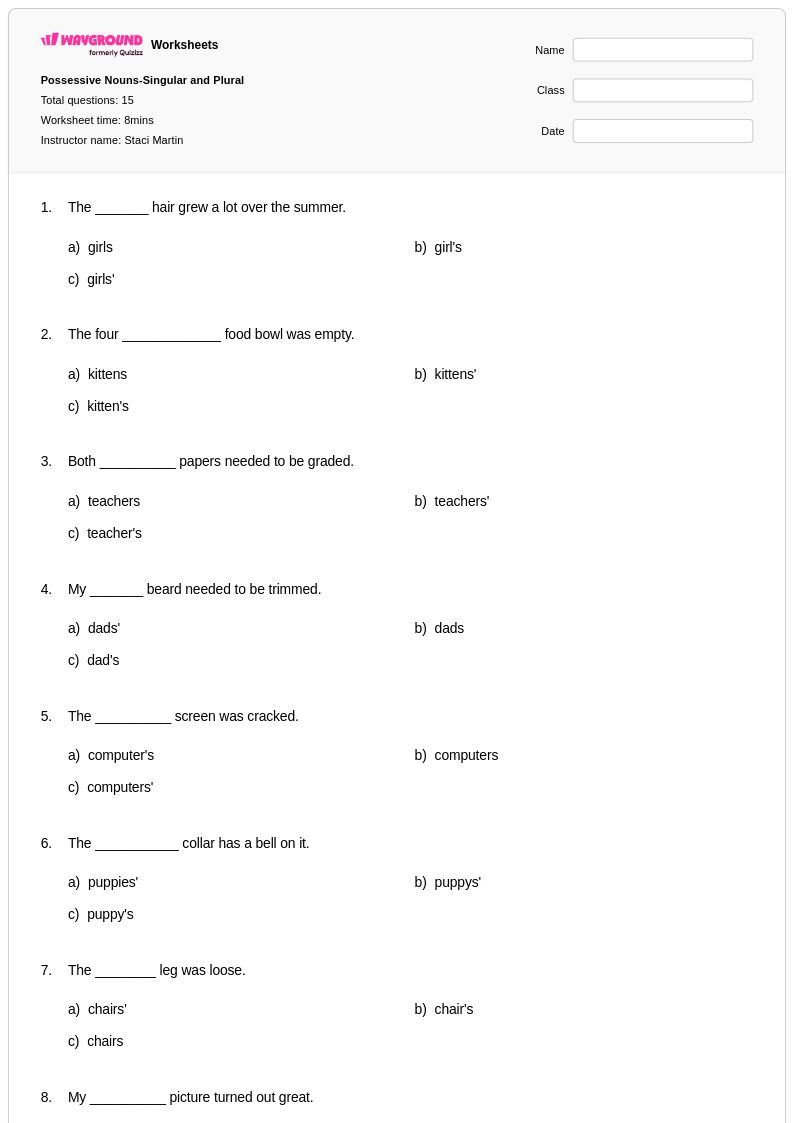
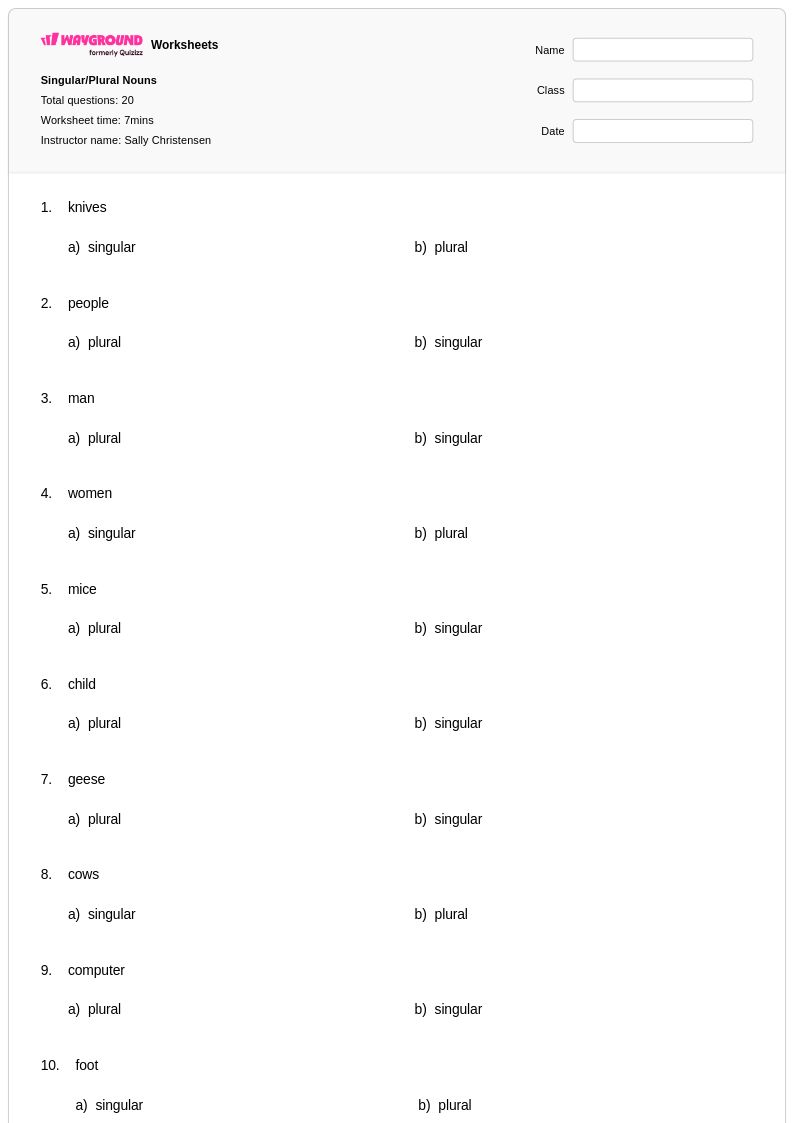
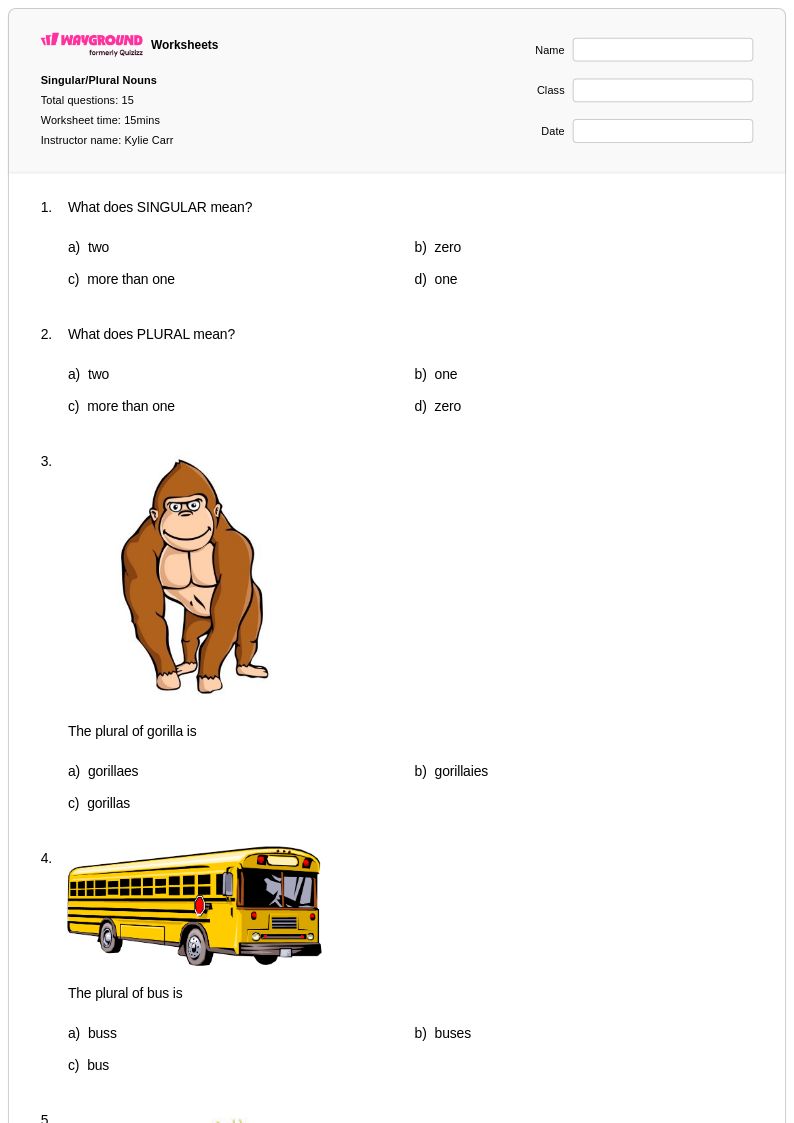
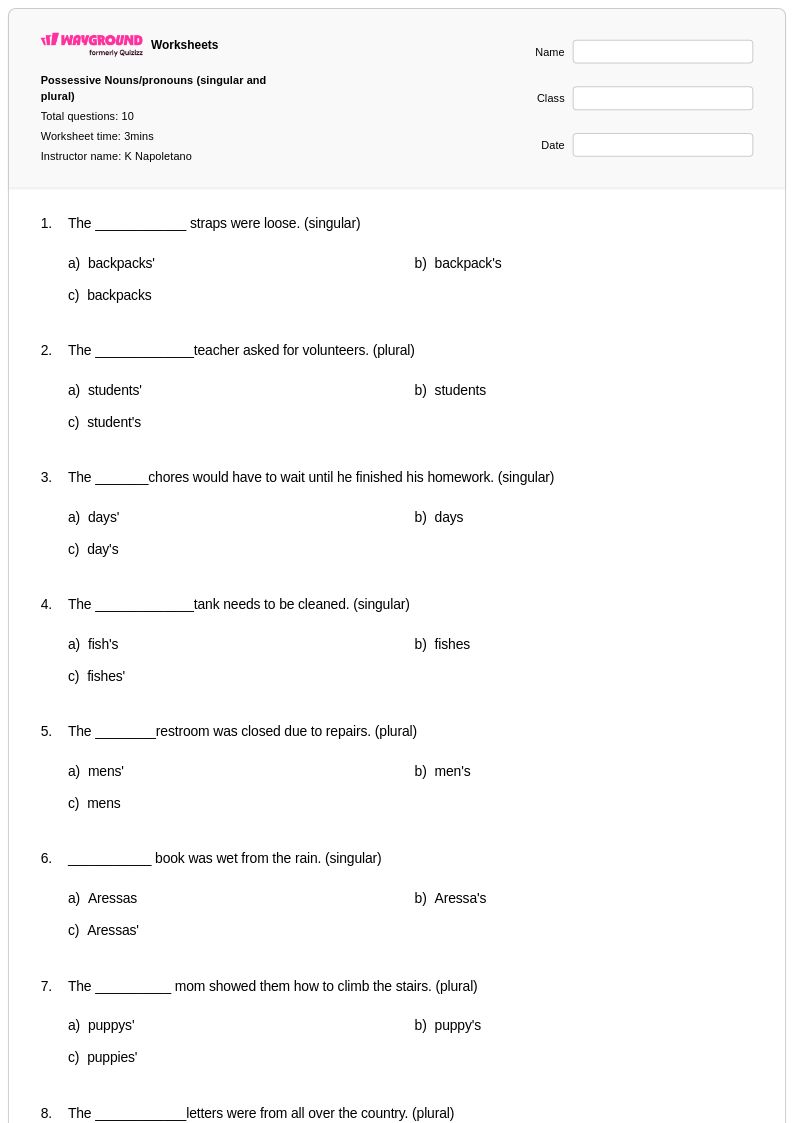
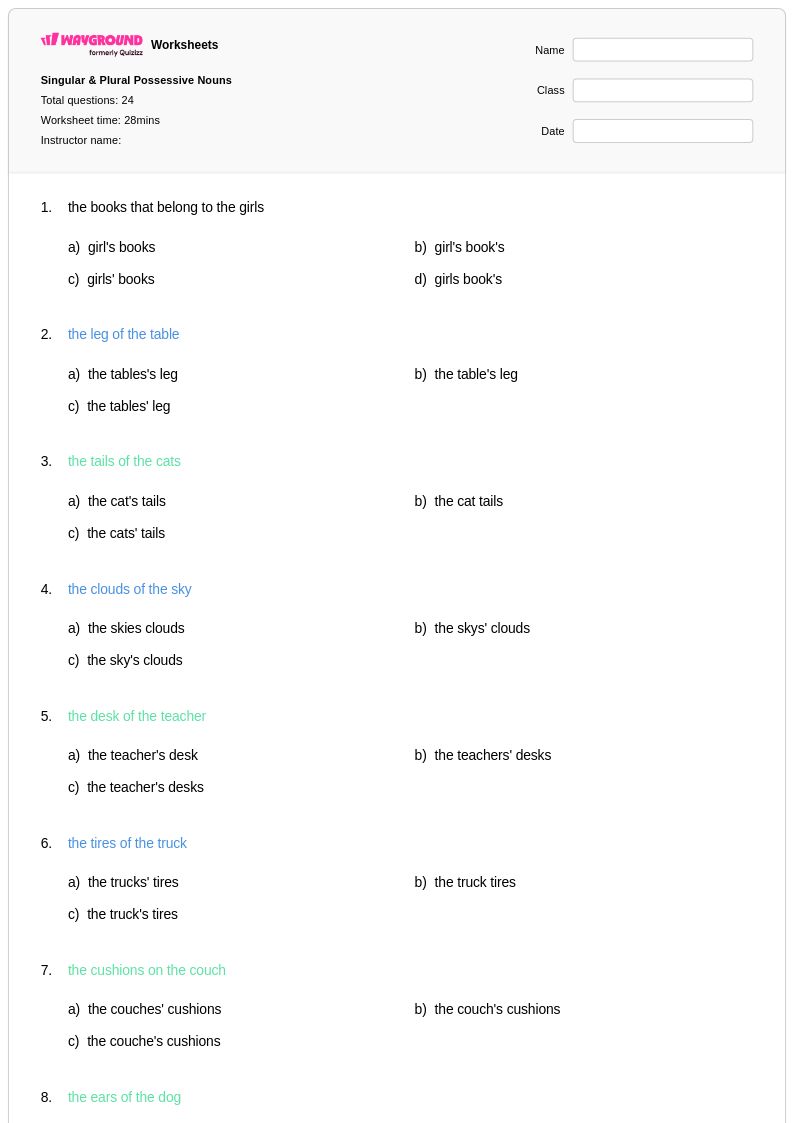
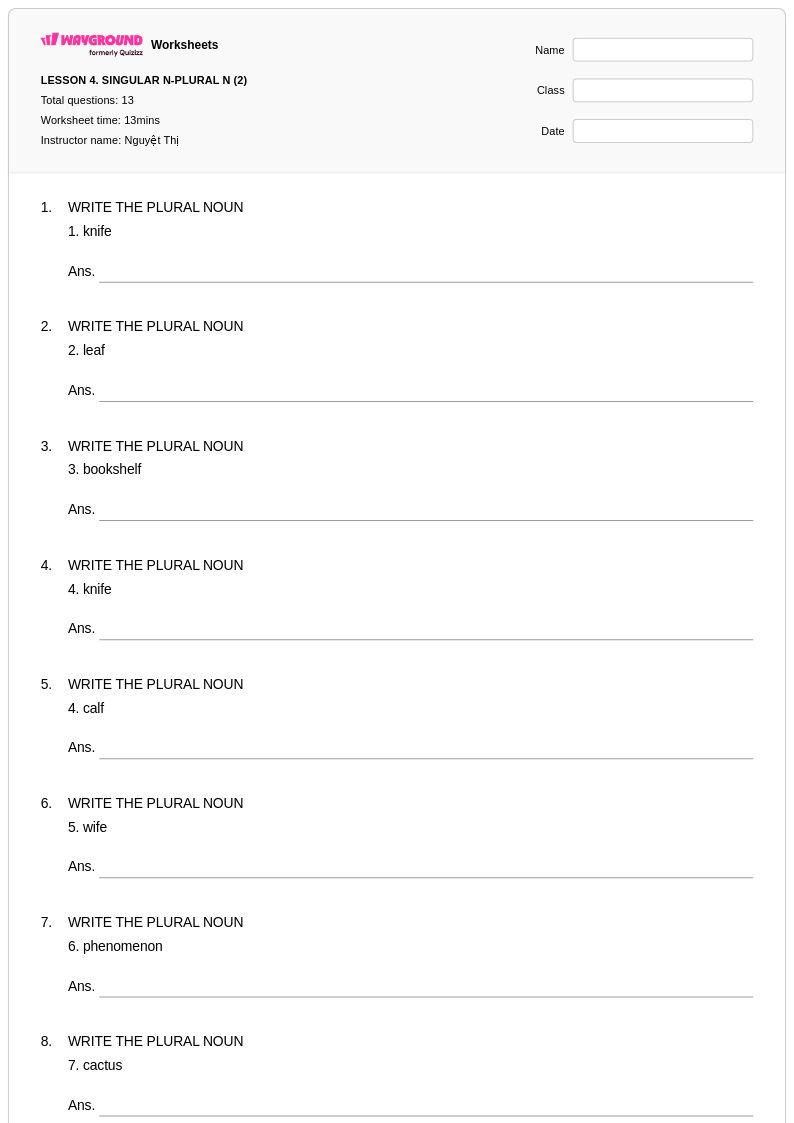
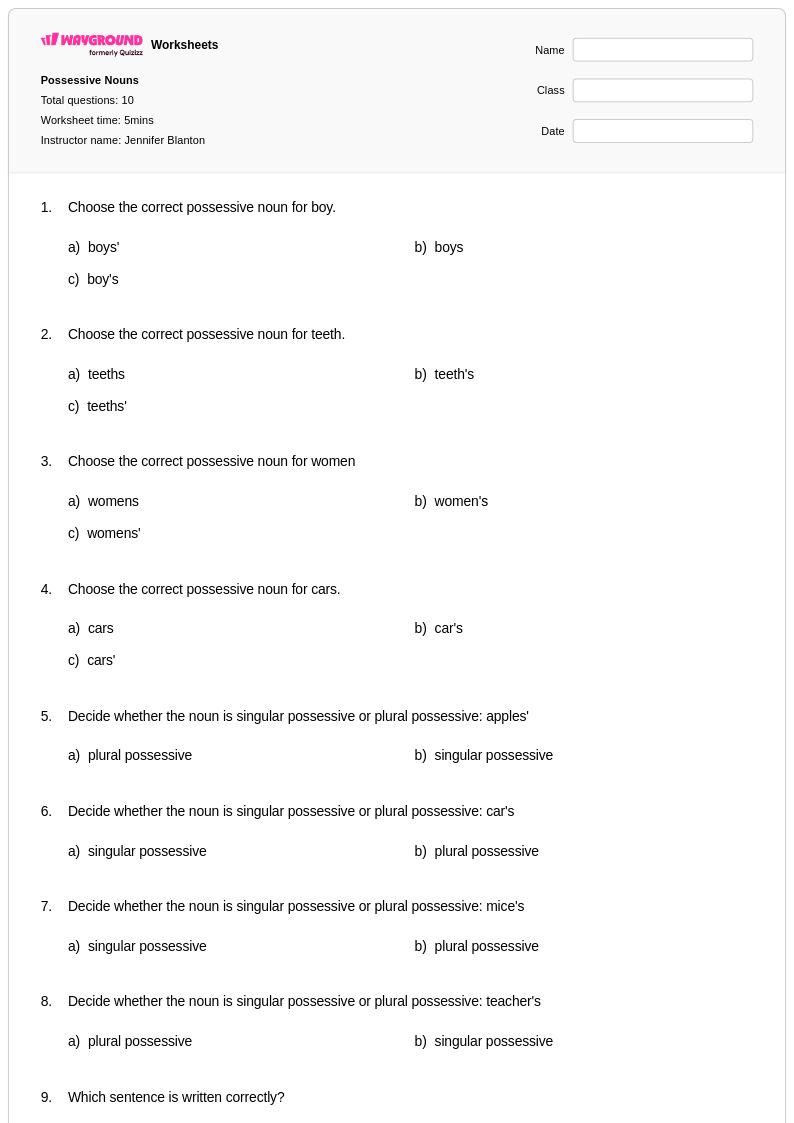
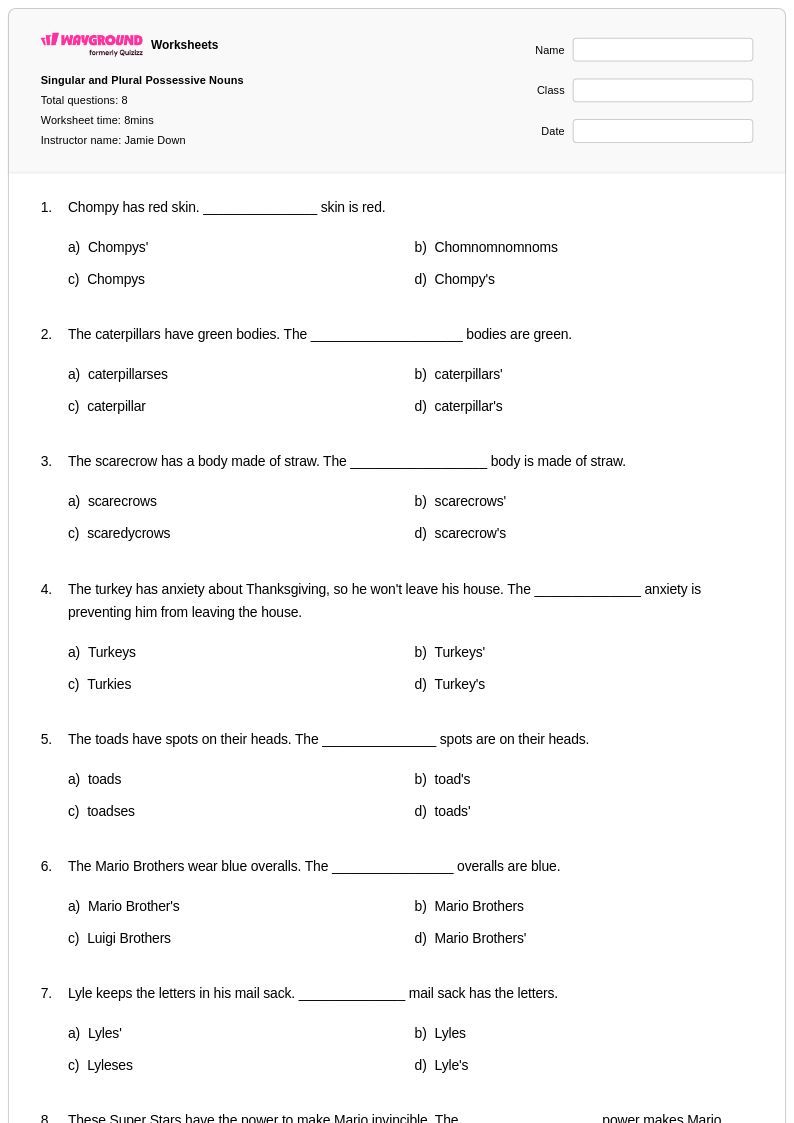
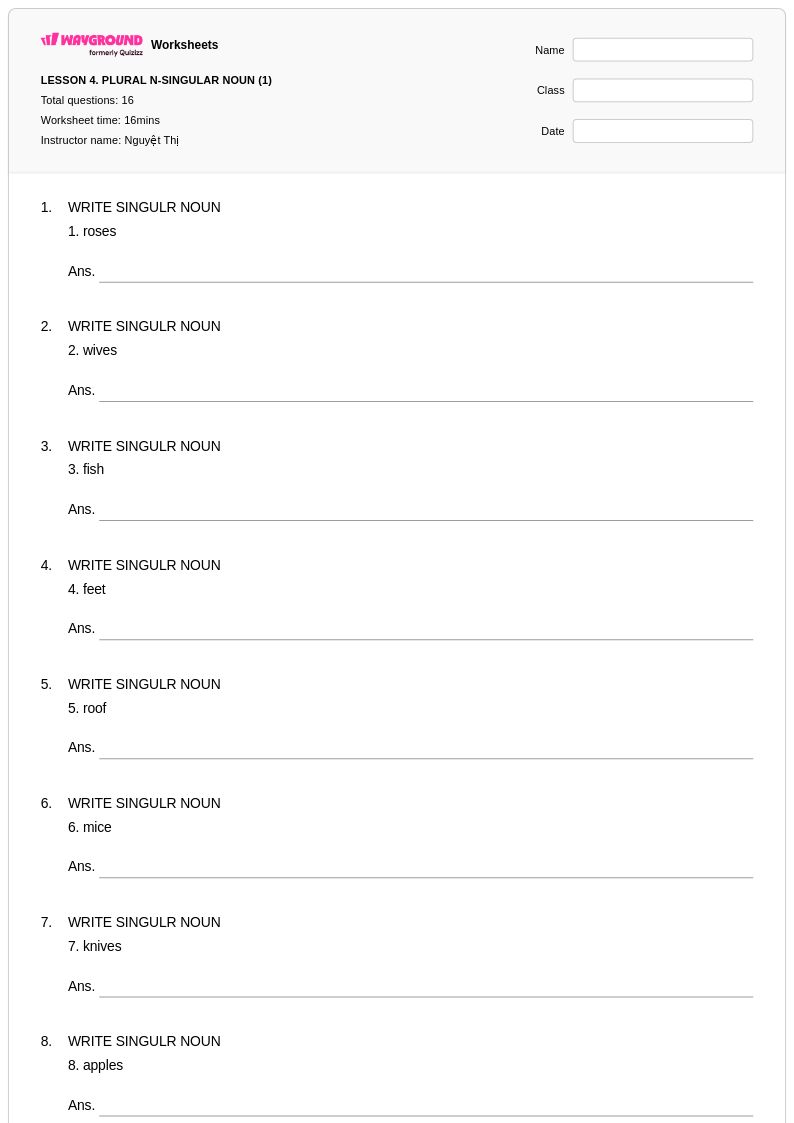
Grade 4 singular nouns worksheets available through Wayground (formerly Quizizz) provide essential foundation-building practice for elementary students learning to identify and use singular forms of nouns correctly. These comprehensive printables focus on helping fourth graders distinguish singular nouns from their plural counterparts while reinforcing proper usage in sentences and writing contexts. Students engage with practice problems that cover common singular noun categories including people, places, things, and ideas, building crucial grammar skills through varied exercises such as identification tasks, sentence completion, and categorization activities. Each worksheet collection includes detailed answer keys and free pdf formats, making it simple for educators to implement targeted grammar instruction that strengthens students' understanding of singular noun forms and their role in sentence structure.
Wayground (formerly Quizizz) supports teachers with an extensive collection of millions of teacher-created singular noun resources that streamline lesson planning and provide flexible differentiation options for diverse classroom needs. The platform's robust search and filtering capabilities allow educators to quickly locate grade-appropriate materials aligned with curriculum standards, while customization tools enable teachers to modify worksheets for remediation or enrichment purposes. These singular noun practice materials are available in both printable and digital pdf formats, offering versatility for in-class activities, homework assignments, or independent study sessions. Teachers can efficiently assess student progress through the integrated answer keys and use the varied difficulty levels to provide targeted skill practice that meets individual learning requirements, ensuring all Grade 4 students develop strong foundational knowledge of singular noun identification and usage.
FAQs
How do I teach singular nouns to elementary students?
Start by helping students understand that a singular noun names exactly one person, place, thing, or idea. Use concrete, familiar examples like 'dog,' 'school,' or 'happiness' before introducing abstract nouns. From there, practice distinguishing between common singular nouns and proper singular nouns, emphasizing capitalization rules as part of the lesson. Pairing direct instruction with sentence-level practice helps students see how singular nouns function in real writing contexts.
What exercises help students practice identifying singular nouns?
Effective practice exercises include noun identification tasks where students circle or underline singular nouns in sentences, sorting activities that separate common and proper singular nouns, and fill-in-the-blank exercises that require students to choose the correct singular form. Sentence-building tasks that ask students to use singular nouns in their own writing reinforce recognition at the application level, which is critical for transfer to independent writing.
What mistakes do students commonly make with singular nouns?
One of the most common errors is failing to capitalize proper singular nouns, such as writing 'london' instead of 'London.' Students also frequently confuse singular and plural forms, especially for irregular nouns like 'child' or 'tooth.' Another common misconception is treating collective nouns such as 'team' or 'class' as plural, when they function as singular nouns in standard American English. Targeted practice on these specific patterns helps students self-correct before errors become habitual.
How do I help struggling students differentiate between common and proper singular nouns?
A reliable approach is to anchor the distinction in capitalization: proper singular nouns always name a specific person, place, or thing and are always capitalized, while common singular nouns refer to general categories and are not. Sorting activities, where students categorize word lists into 'common' and 'proper' columns, provide low-stakes repetition that builds automaticity. For students who need additional support, Wayground's read aloud accommodation can help auditory learners process noun examples, and reduced answer choices can lower cognitive load during identification tasks.
How do I use Wayground's singular nouns worksheets in my classroom?
Wayground's singular nouns worksheets are available as both printable PDFs and in digital formats, giving teachers flexibility to use them in traditional paper-based lessons or technology-integrated environments. Teachers can also host the worksheets as a live quiz on Wayground, making them suitable for whole-class instruction, independent practice, or formative assessment. Each worksheet includes a complete answer key, which reduces grading time and makes them practical for homework assignments or learning centers.
How do I differentiate singular noun practice for advanced students?
For students who have mastered basic singular noun identification, move toward application tasks that require them to use singular nouns accurately within multi-sentence writing or to analyze noun function within more complex sentence structures. Tasks that ask students to distinguish singular nouns from pronouns or to identify nouns by their role as subject versus object push toward higher-order grammar understanding. Enrichment activities that incorporate less common proper nouns or abstract singular nouns are also effective for extending mastery.