
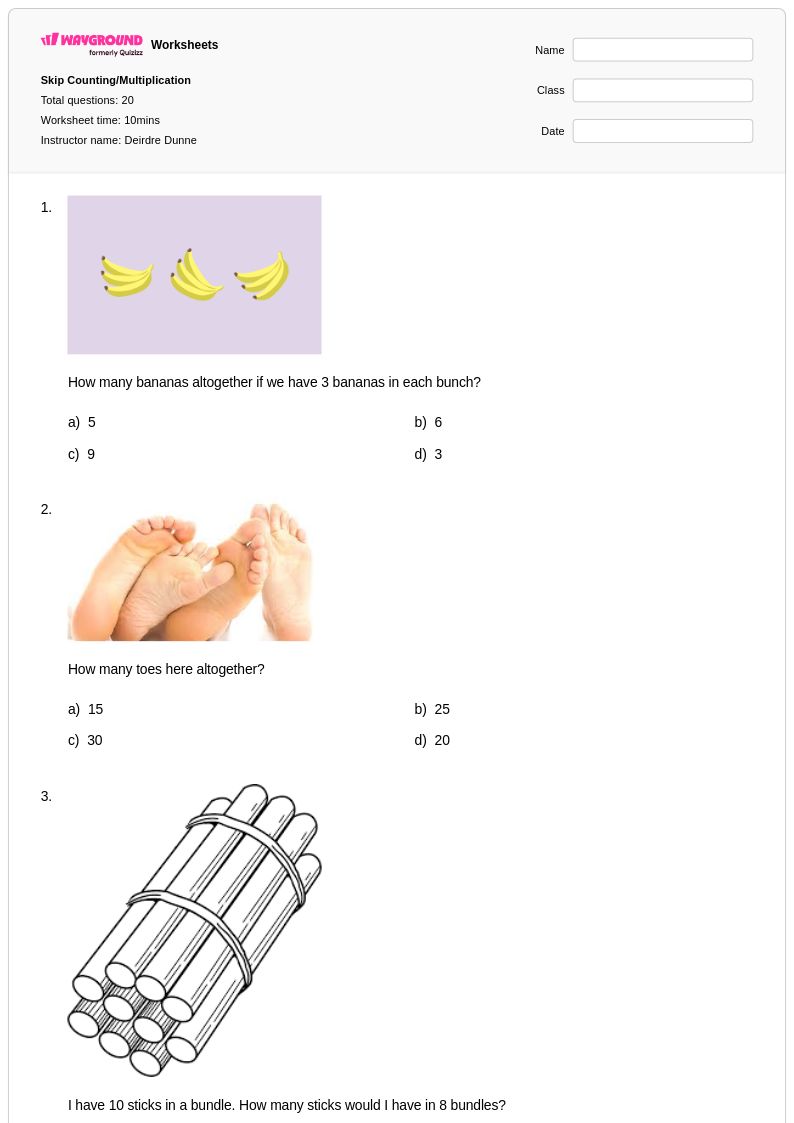
20 P
3rd - 4th
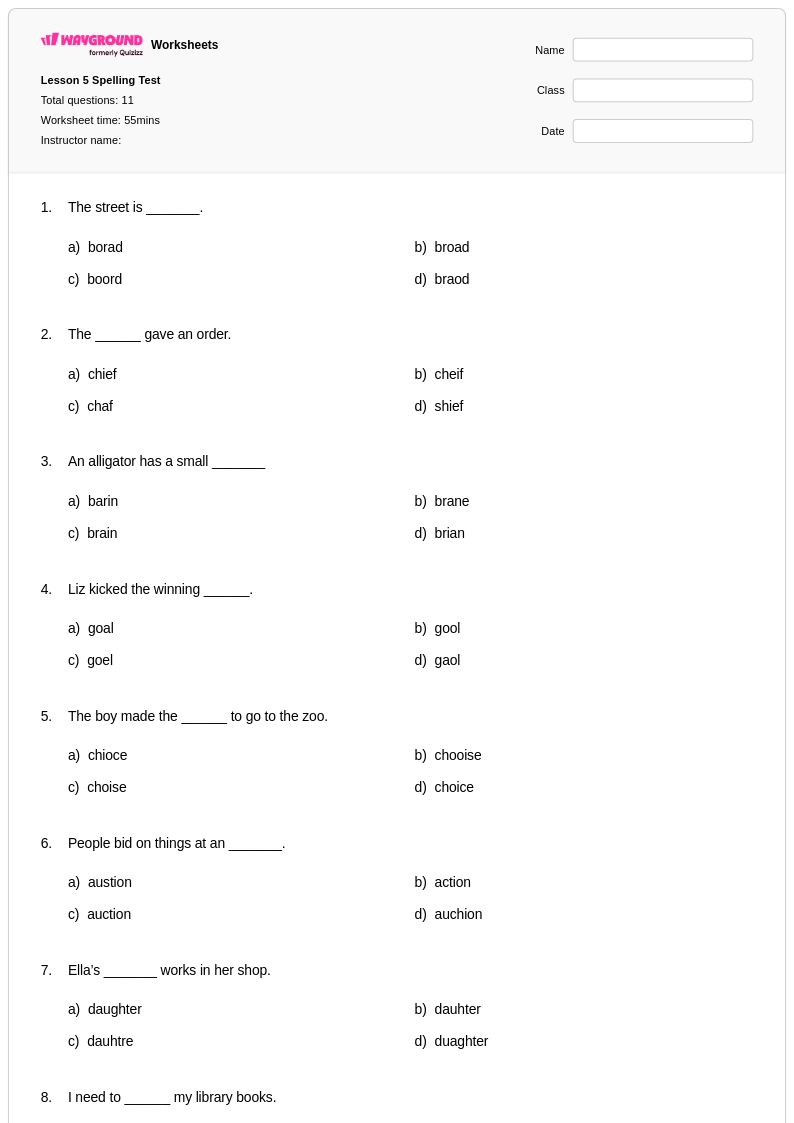
11 P
3rd - 4th
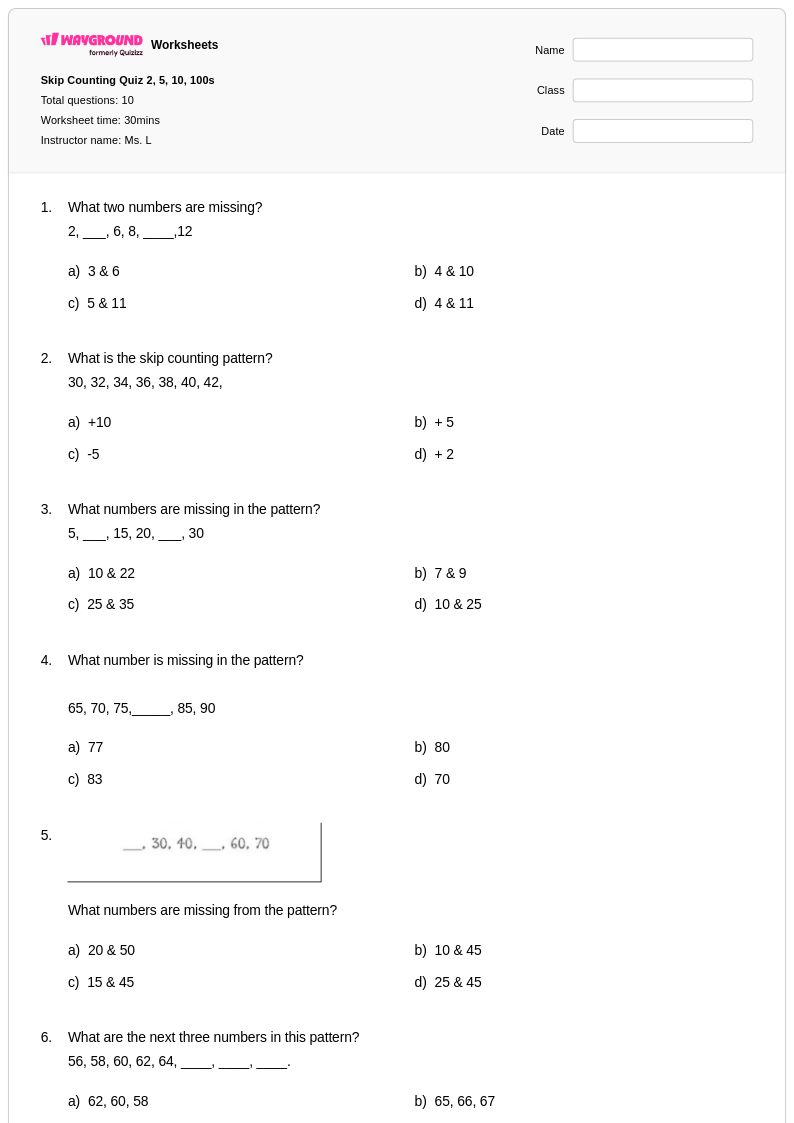
10 P
2nd - 4th
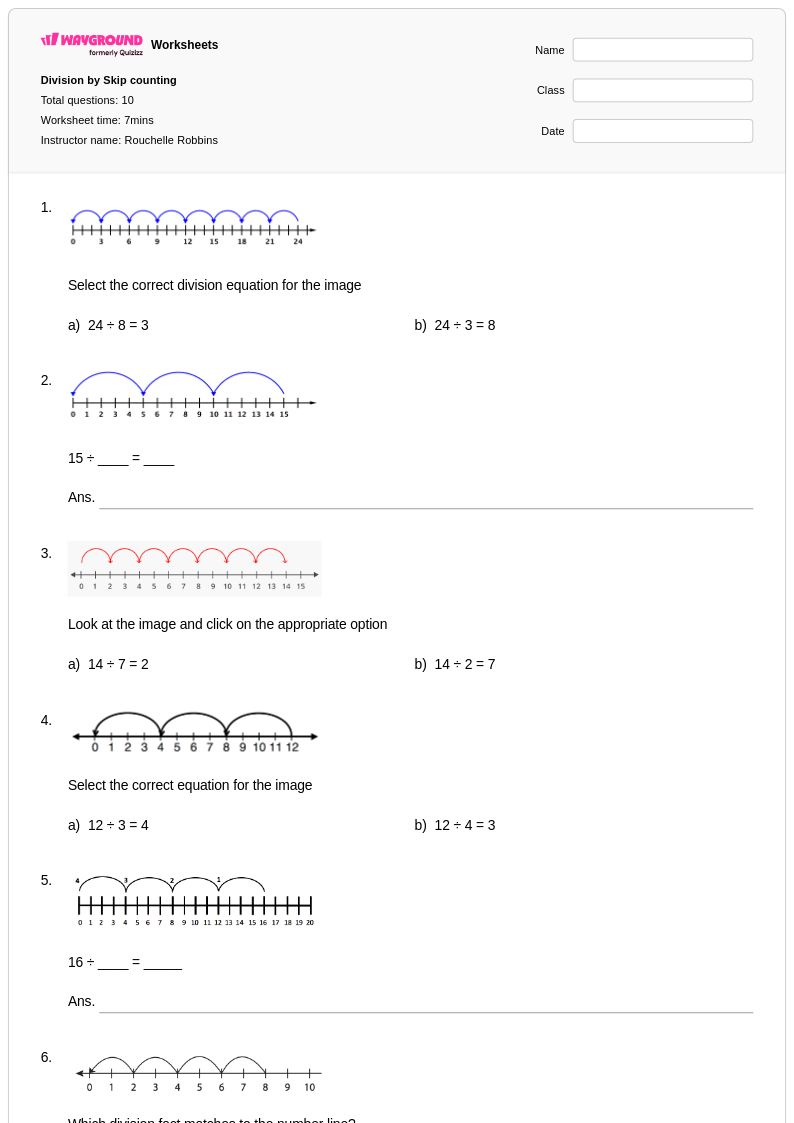
10 P
4th
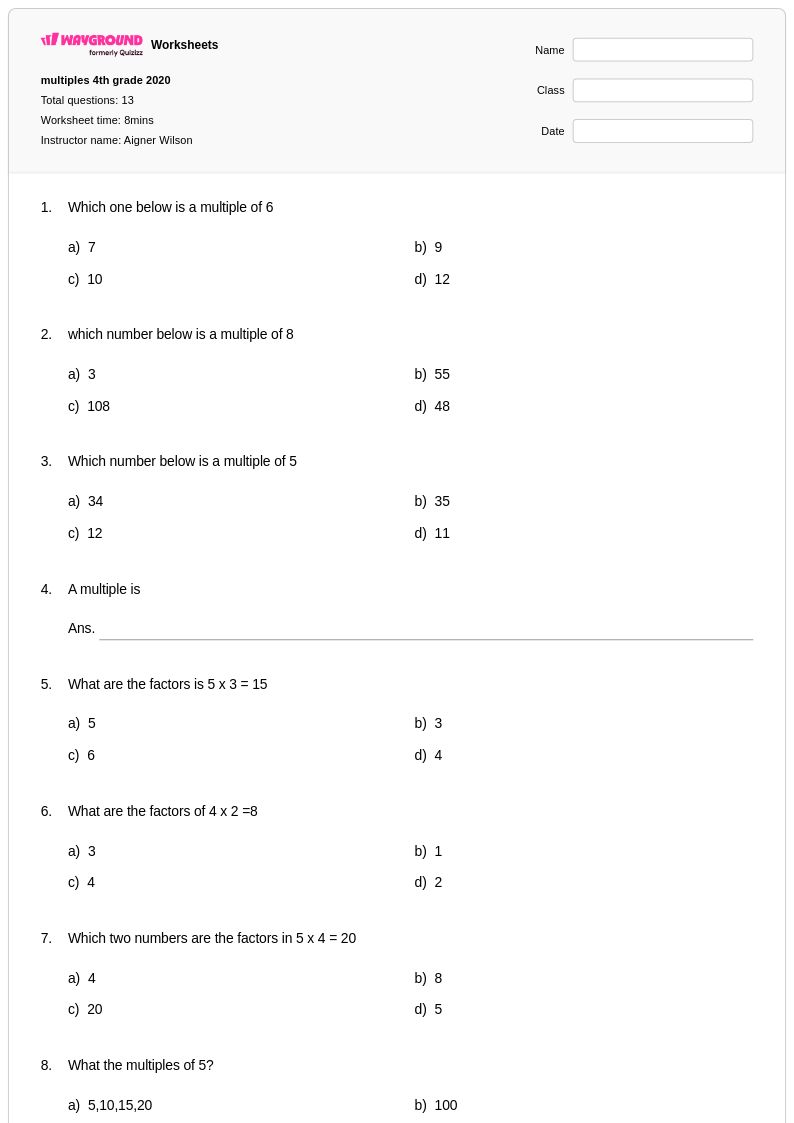
13 P
4th
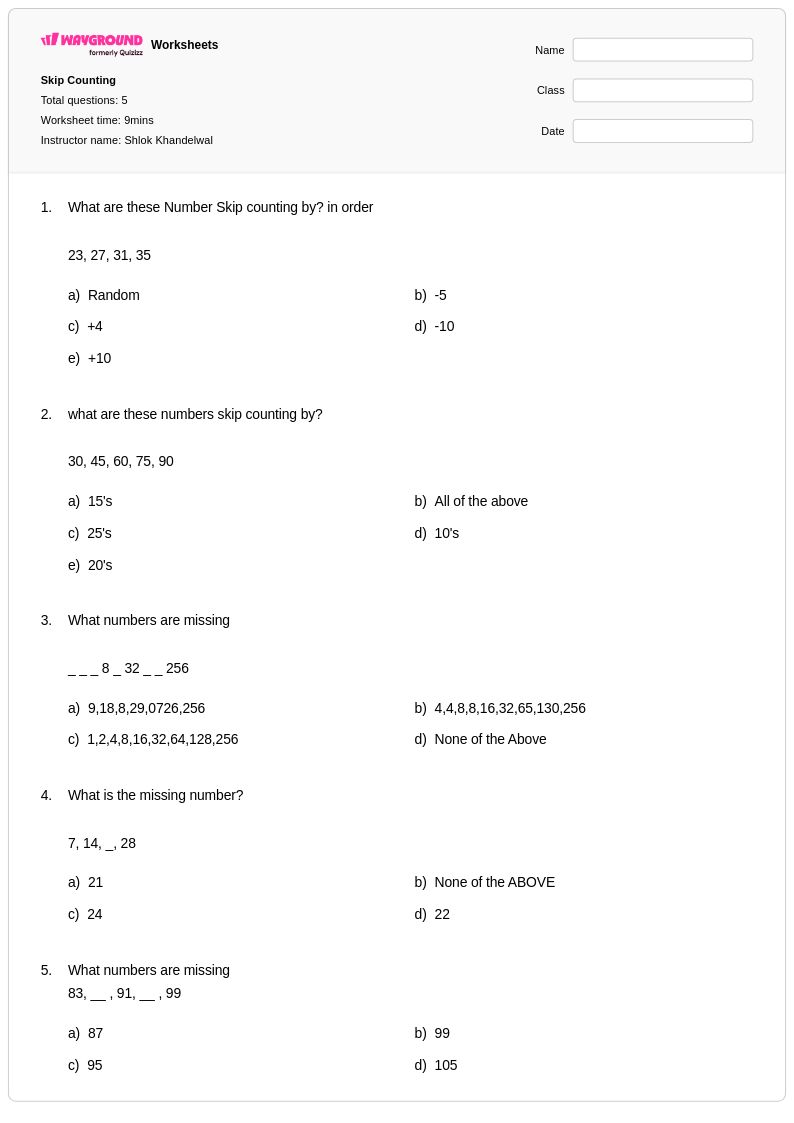
5 P
2nd - 4th
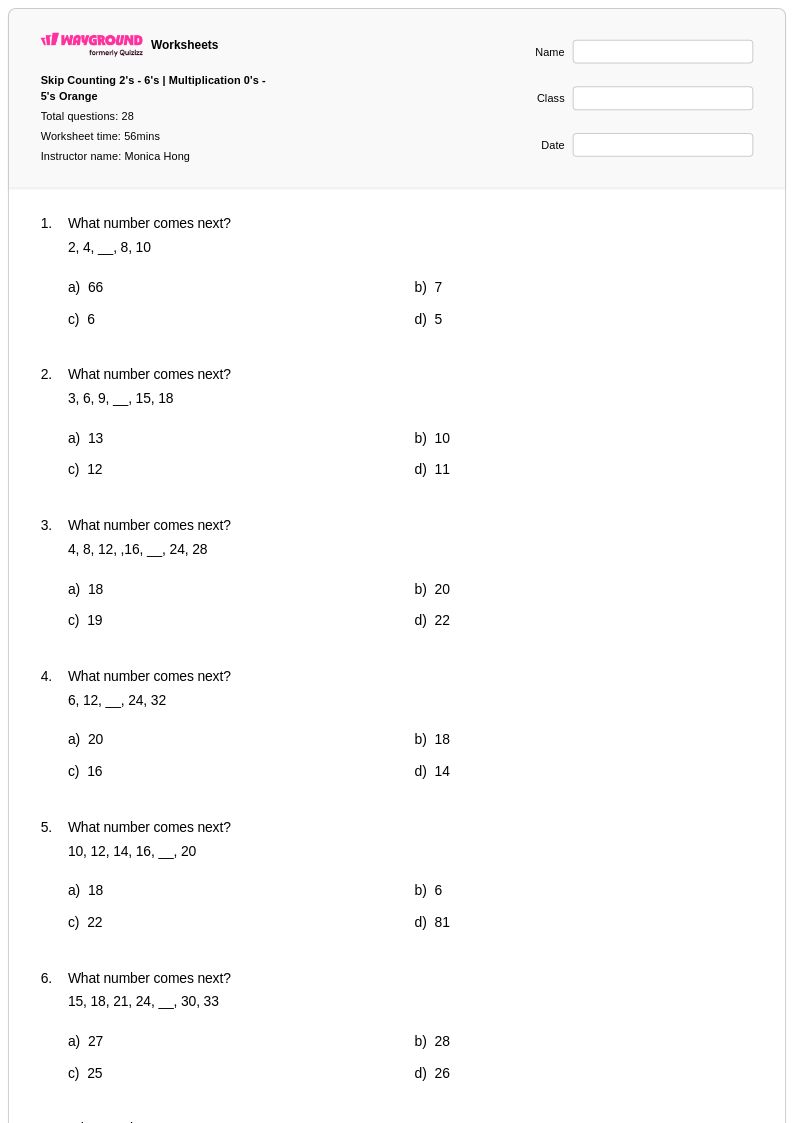
28 P
3rd - 4th
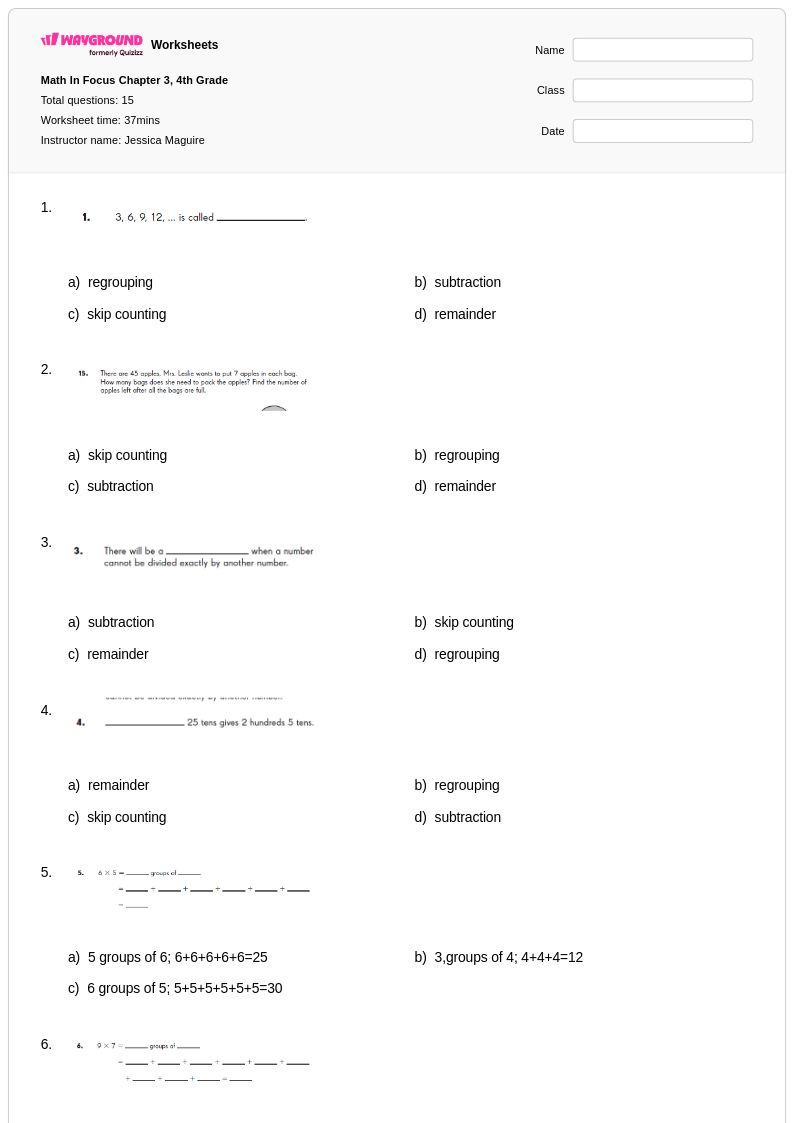
15 P
4th
13 P
3rd - 4th
10 P
KG - 4th
12 P
2nd - 4th
10 P
4th
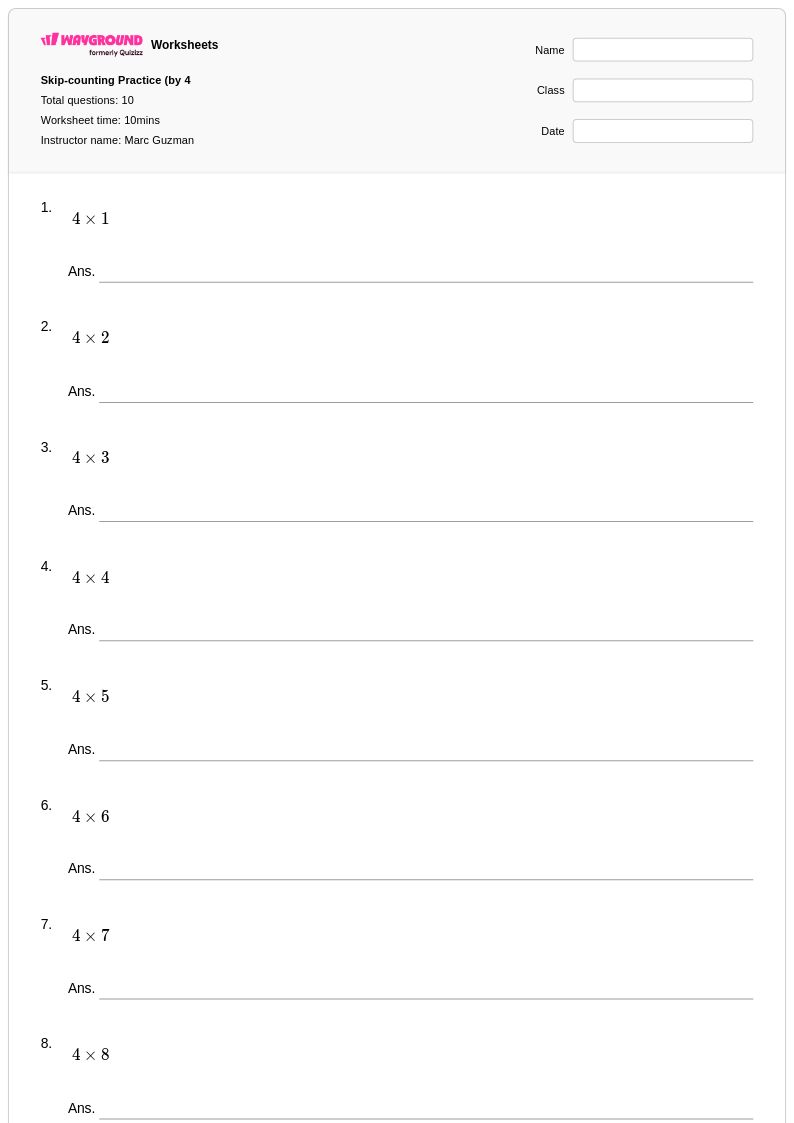
10 P
4th
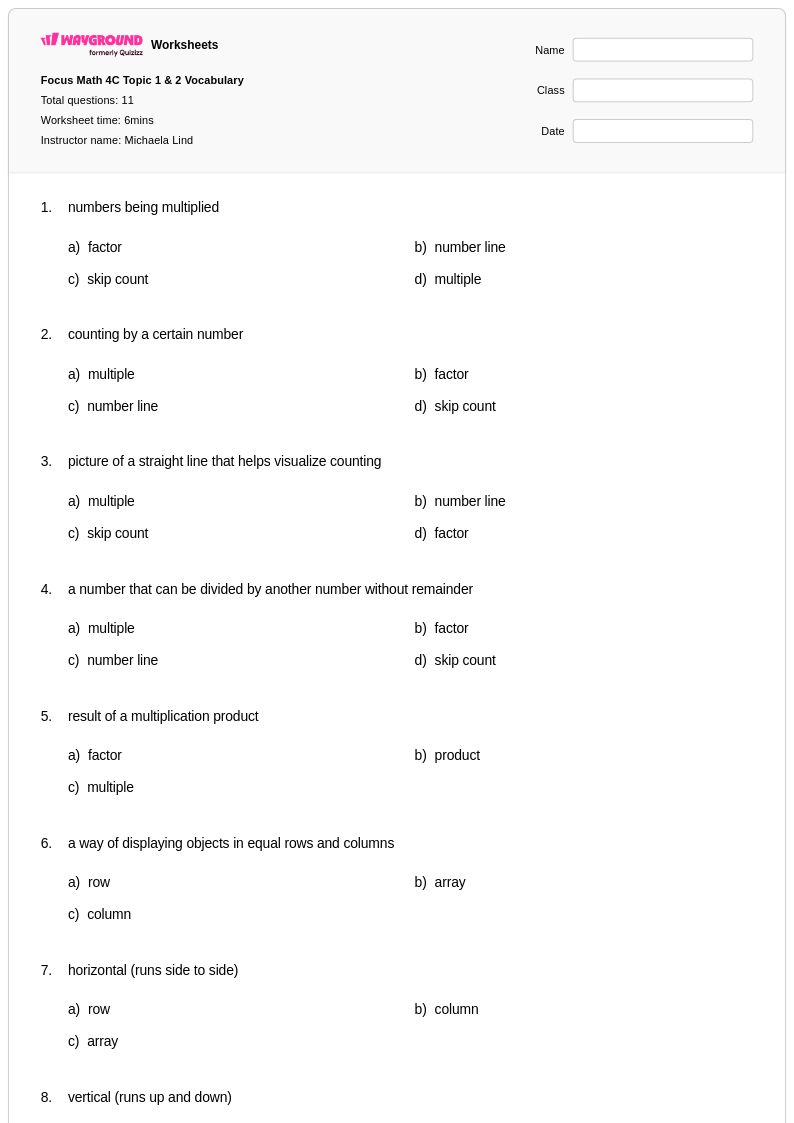
11 P
4th
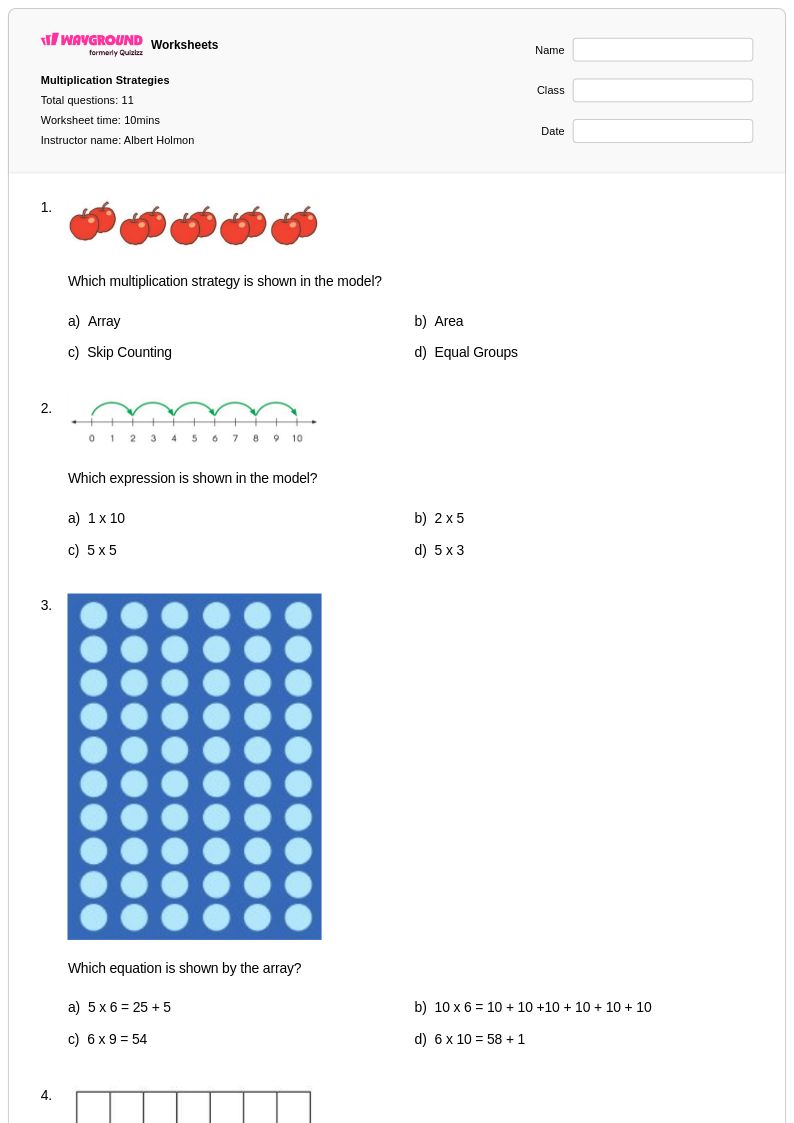
11 P
2nd - 4th
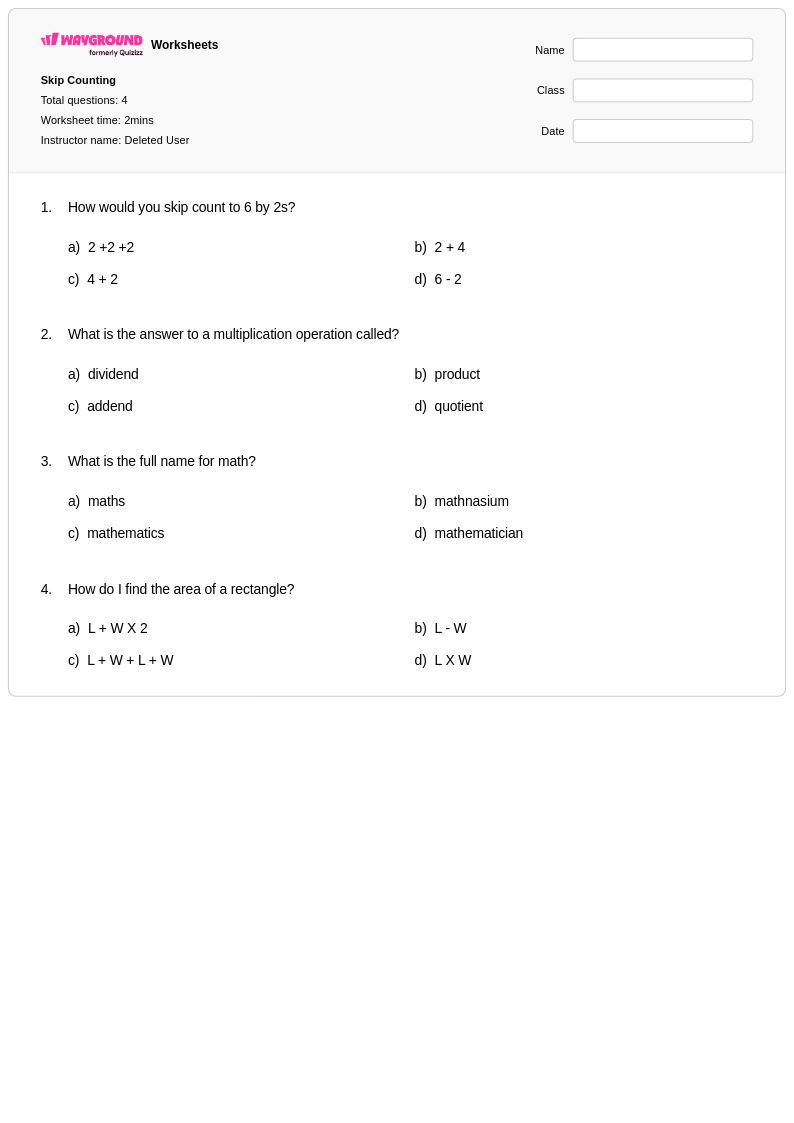
4 P
2nd - 4th
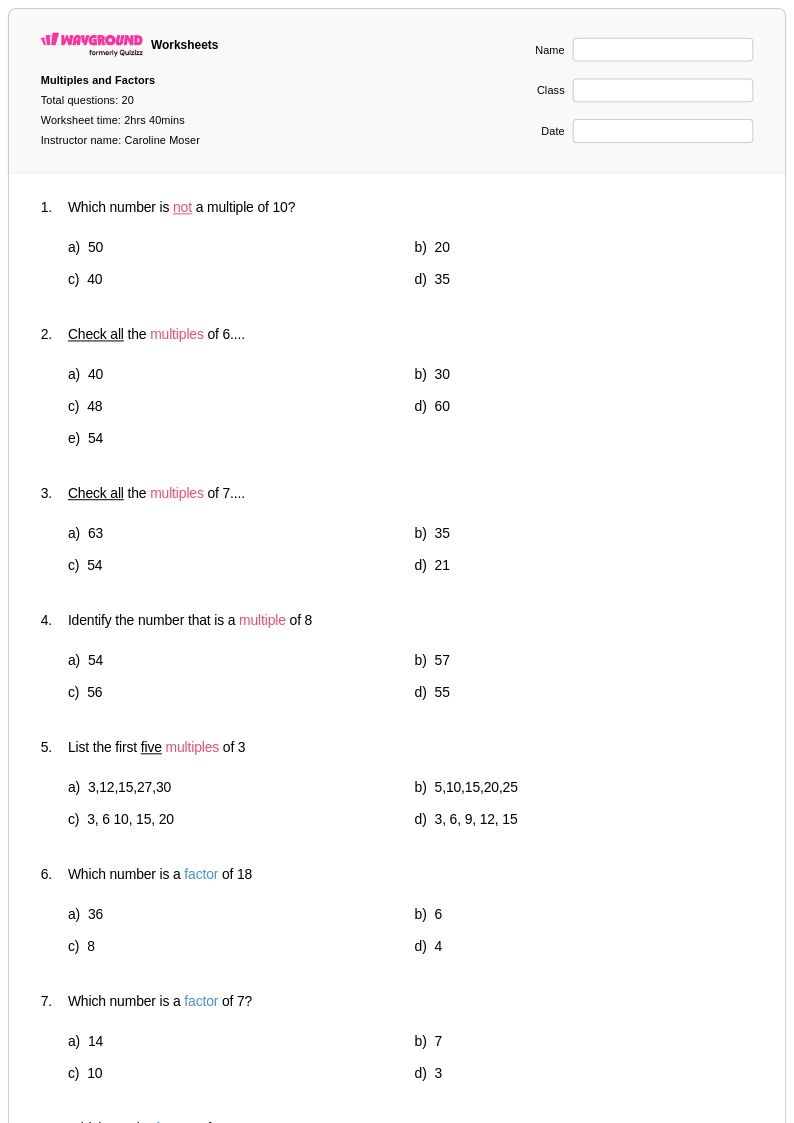
20 P
4th - 5th
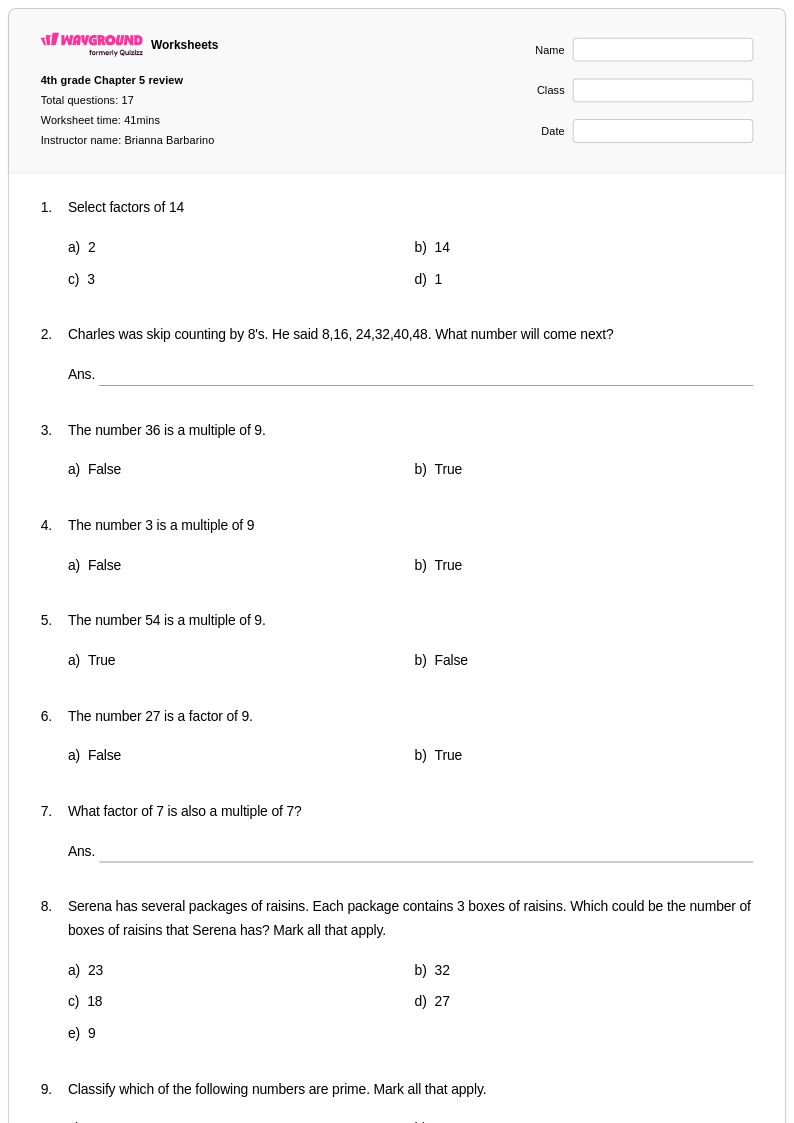
17 P
4th
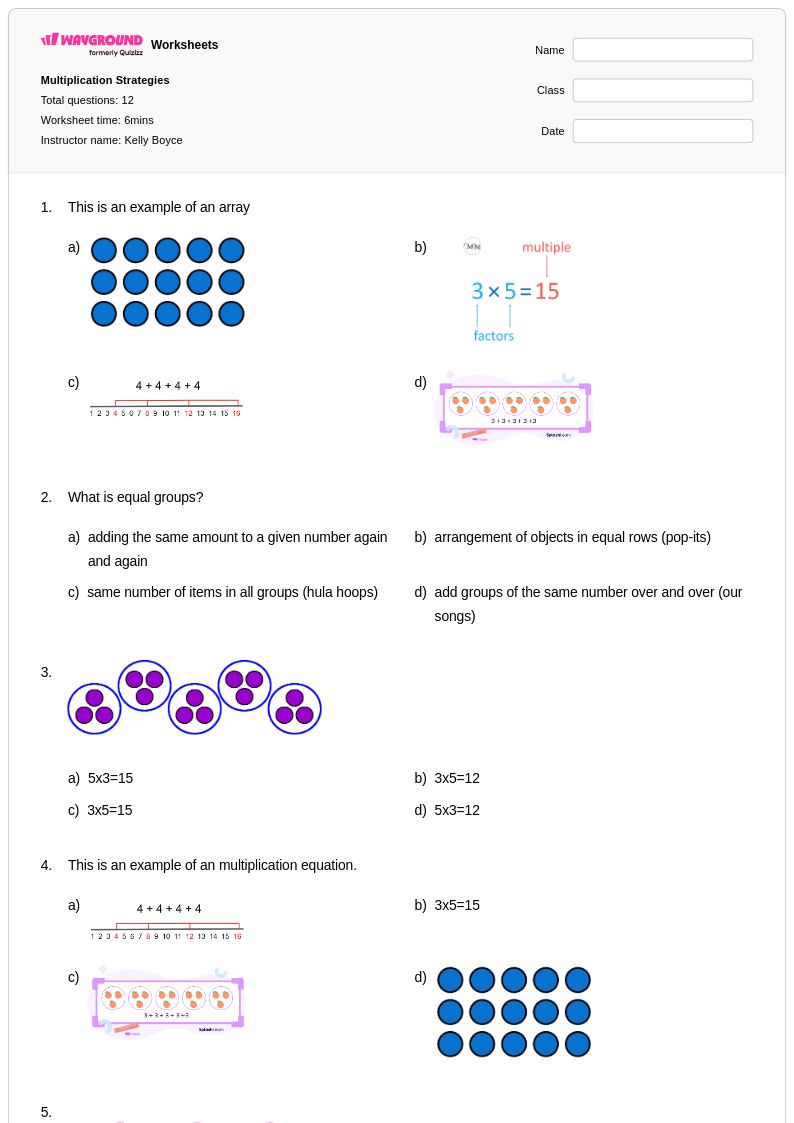
12 P
3rd - 4th
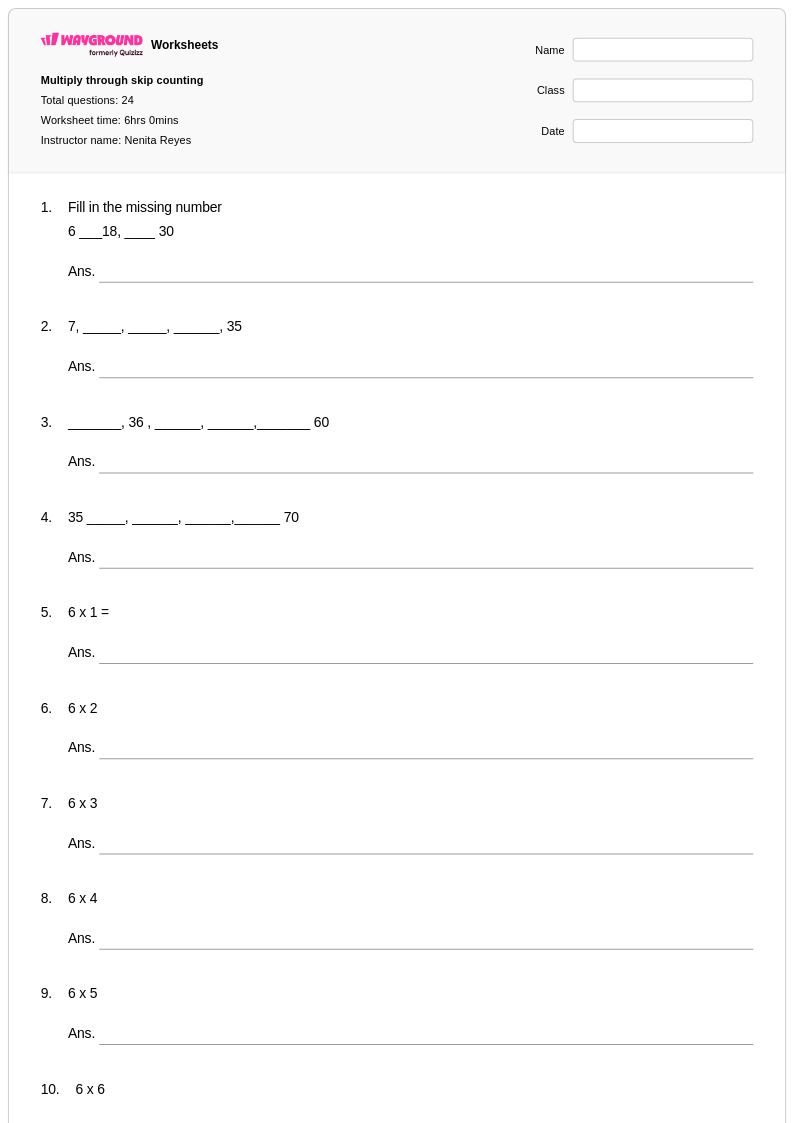
24 P
4th - 6th
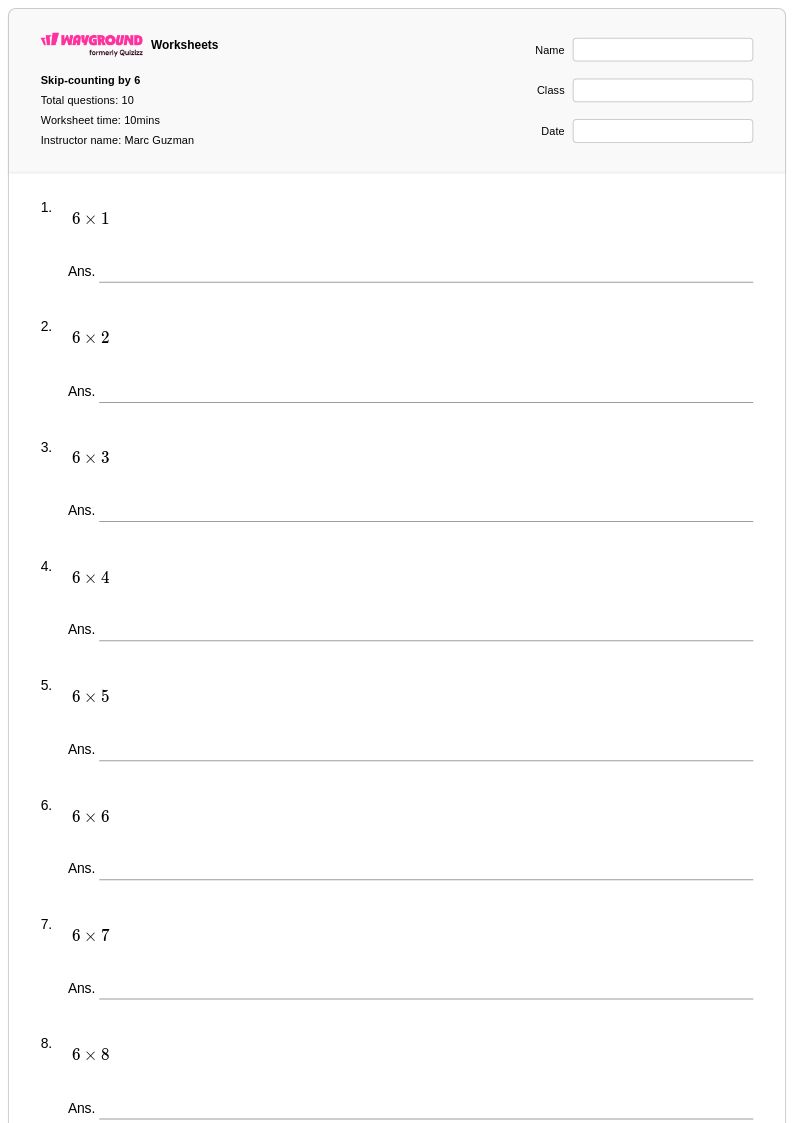
10 P
4th
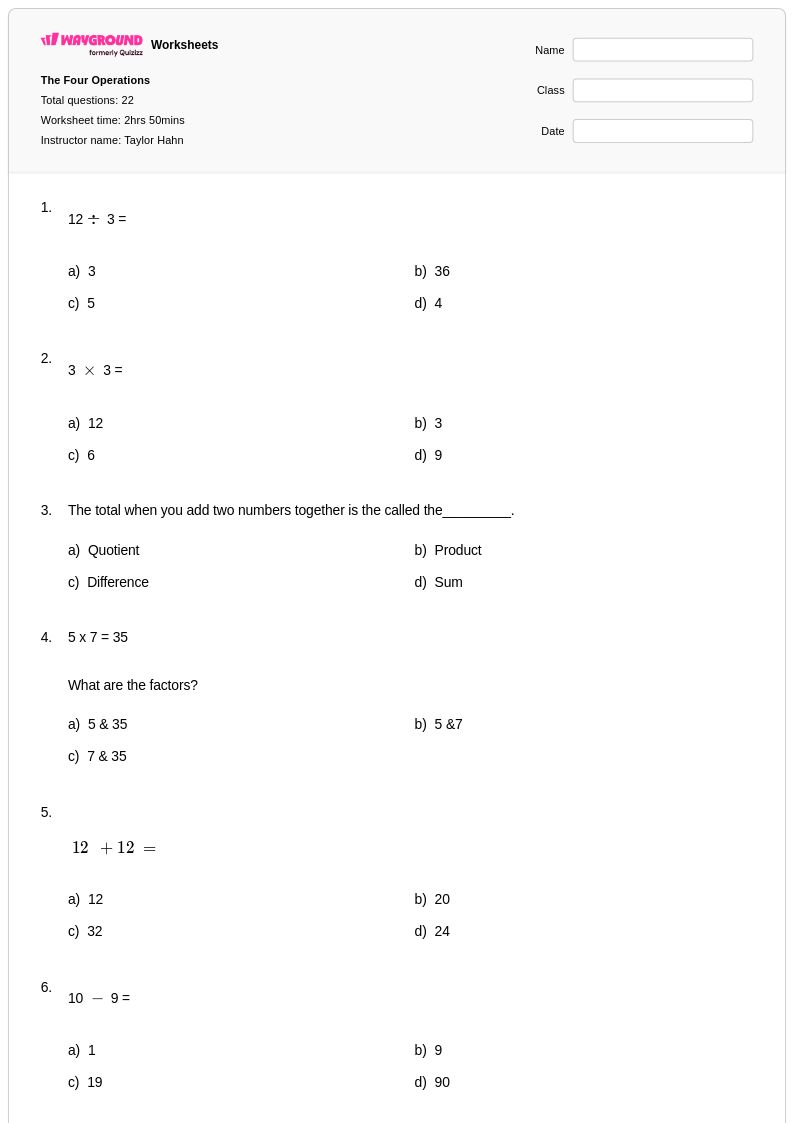
22 P
4th - 8th
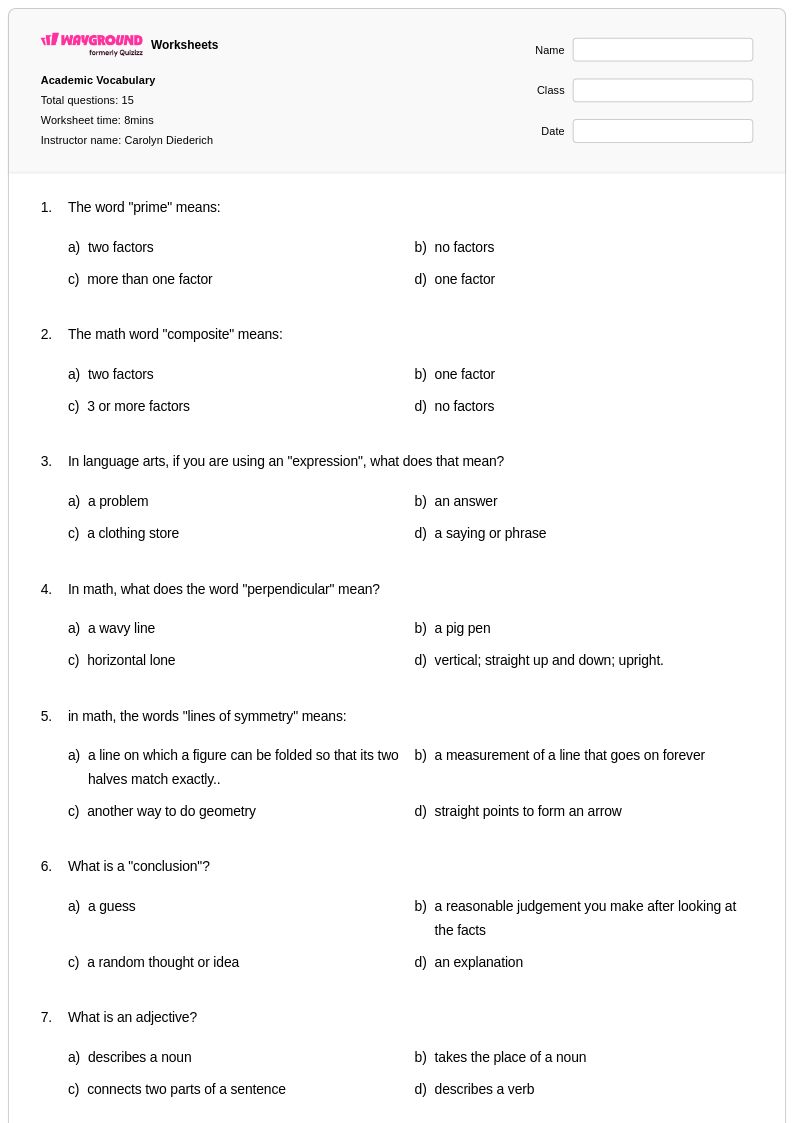
15 P
4th
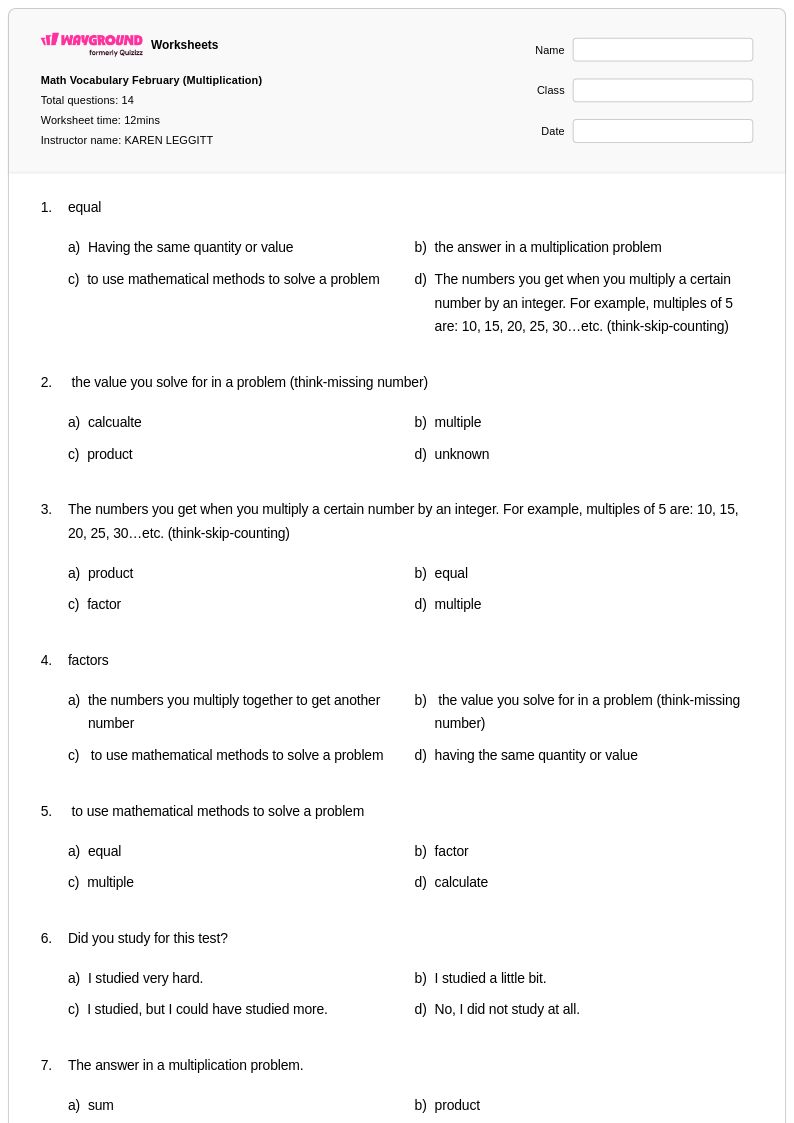
14 P
4th - 6th
Przeglądaj Skip Counting arkusze ćwiczeń według ocen
Przeglądaj inne arkusze tematyczne dla grade 4
Explore printable Skip Counting worksheets for Grade 4
Skip counting worksheets for Grade 4 students available through Wayground (formerly Quizizz) provide systematic practice in identifying and extending number patterns by counting in consistent intervals. These comprehensive resources strengthen students' understanding of multiplication foundations, number sense, and pattern recognition as they work with sequences involving multiples of 2, 3, 5, 10, and beyond. The collection includes varied practice problems that challenge fourth graders to fill in missing numbers in skip counting sequences, identify the counting rule being used, and create their own patterns using different intervals. Each worksheet comes with a complete answer key and is available as free printable pdf downloads, making them accessible for both classroom instruction and independent practice at home.
Wayground (formerly Quizizz) empowers educators with millions of teacher-created skip counting resources specifically designed to meet Grade 4 mathematics standards and support diverse learning needs in the classroom. The platform's advanced search and filtering capabilities allow teachers to quickly locate worksheets that align with specific curriculum requirements and skill levels, while built-in differentiation tools enable customization for students who need additional support or enrichment challenges. These skip counting materials are available in both printable and digital formats, including downloadable pdfs, giving teachers the flexibility to seamlessly integrate pattern practice into lesson planning, homework assignments, math centers, and targeted remediation sessions. The extensive collection supports teachers in building students' computational fluency while laying essential groundwork for more advanced mathematical concepts in multiplication, division, and algebraic thinking.