Free Printable Sojourner Truth Worksheets for Grade 12
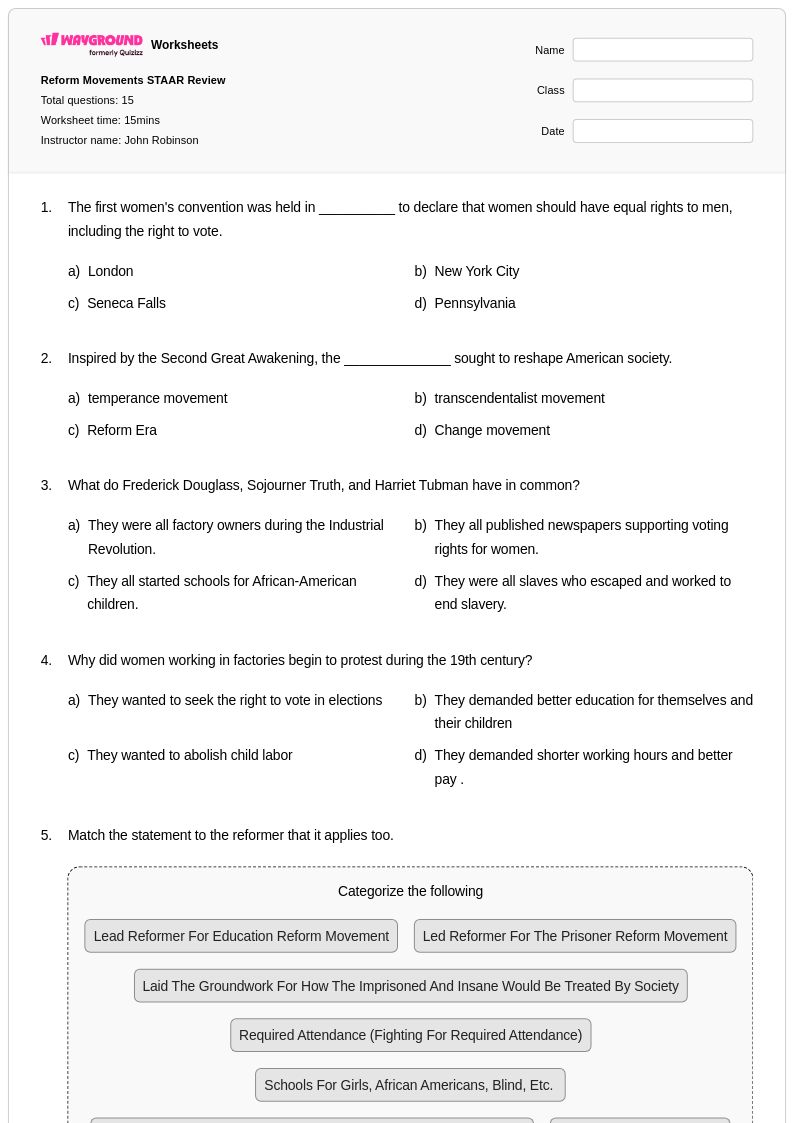
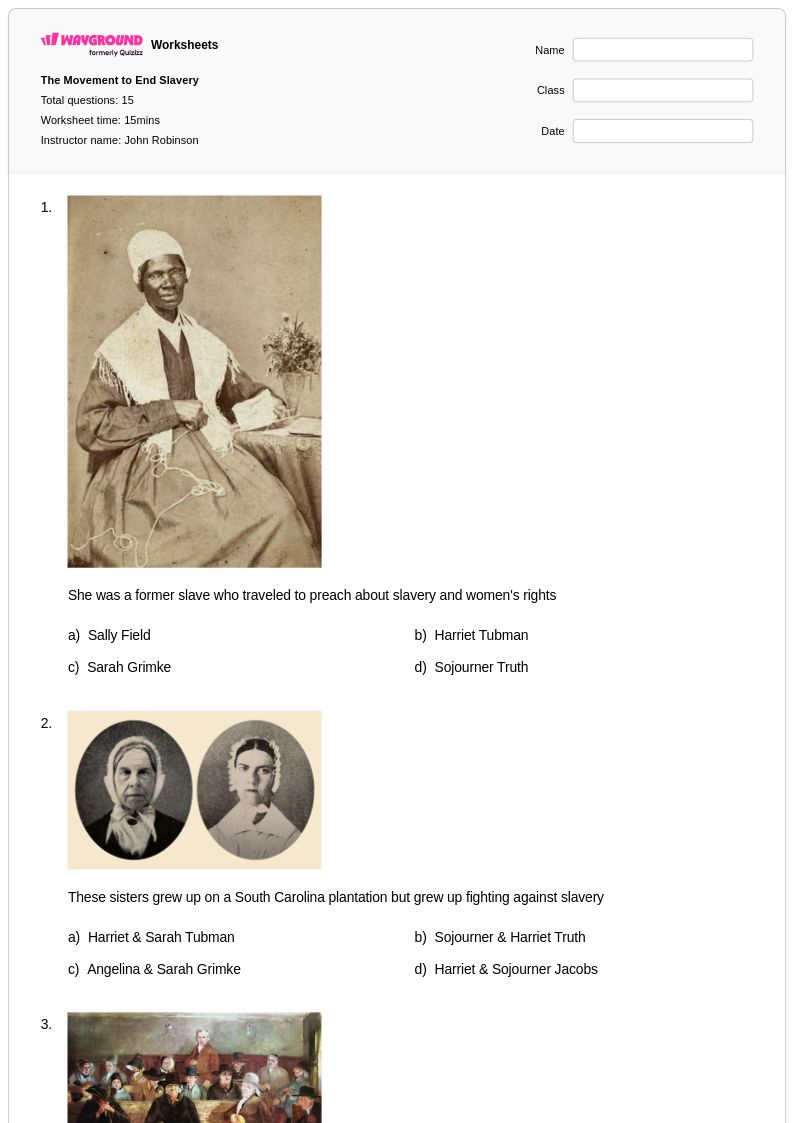
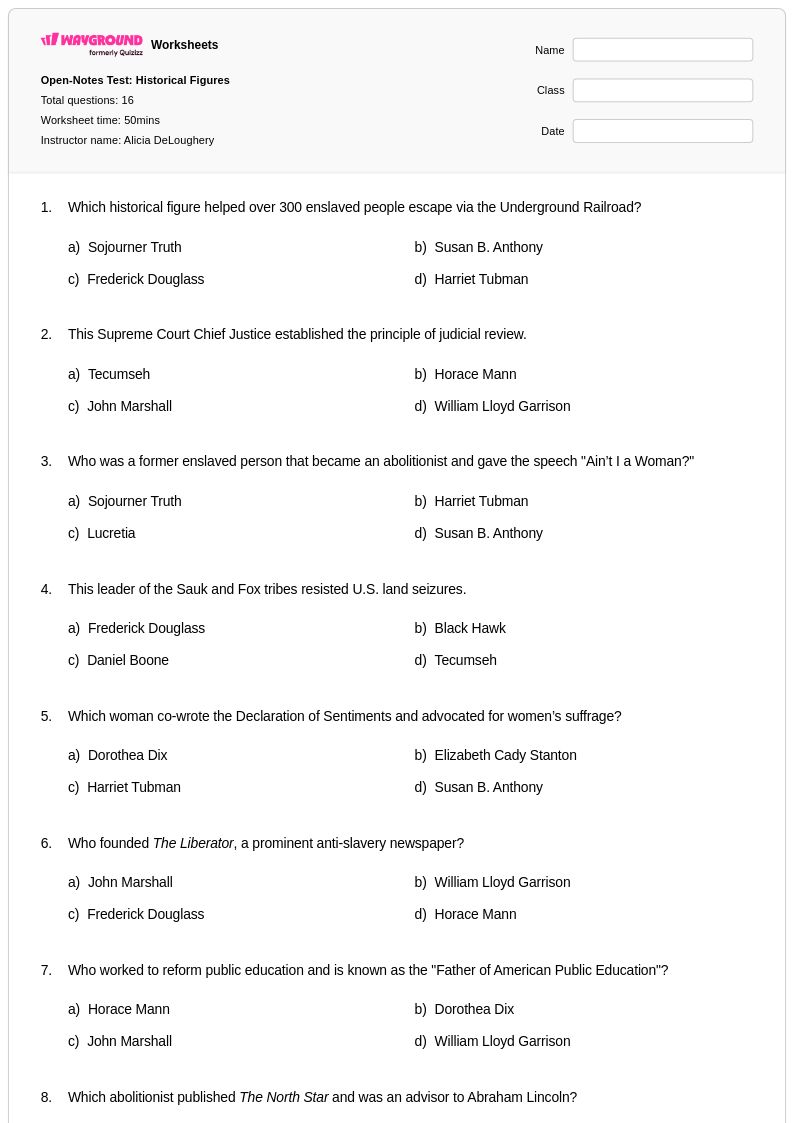
Explore Grade 12 Sojourner Truth worksheets and printables from Wayground that help students analyze the life, speeches, and impact of this influential abolitionist and women's rights activist through engaging practice problems and comprehensive answer keys.
Explore printable Sojourner Truth worksheets for Grade 12
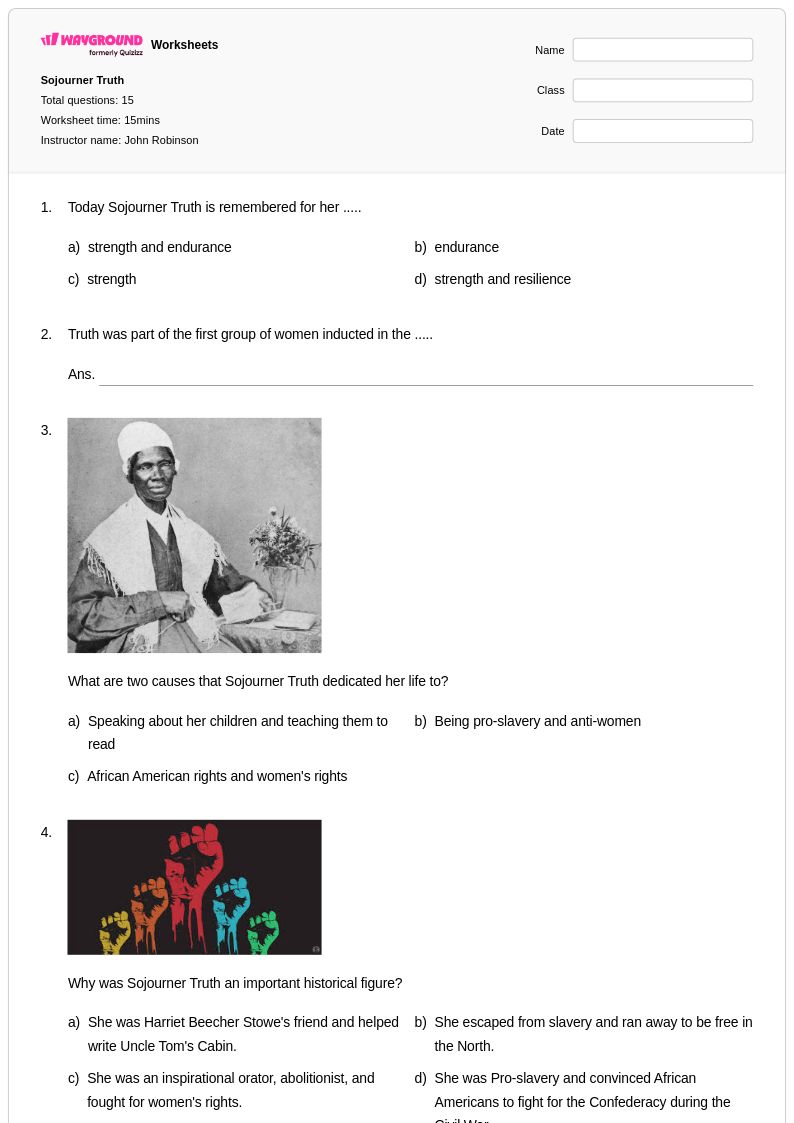
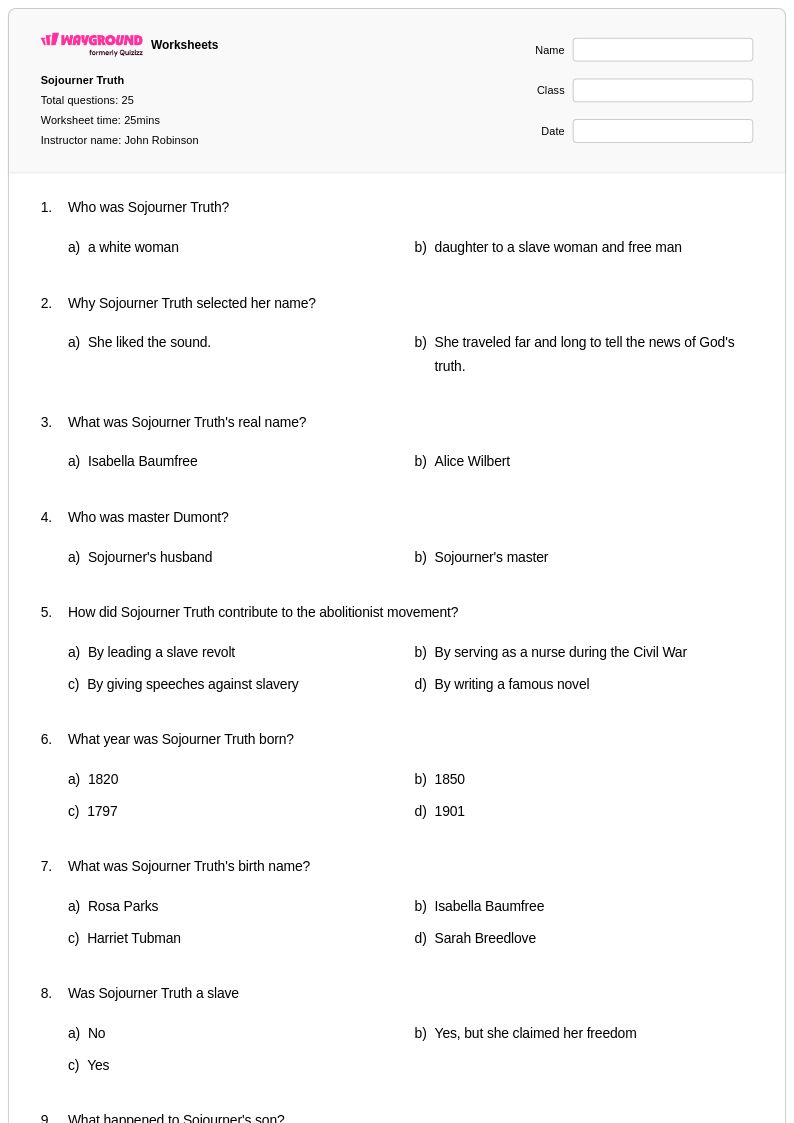
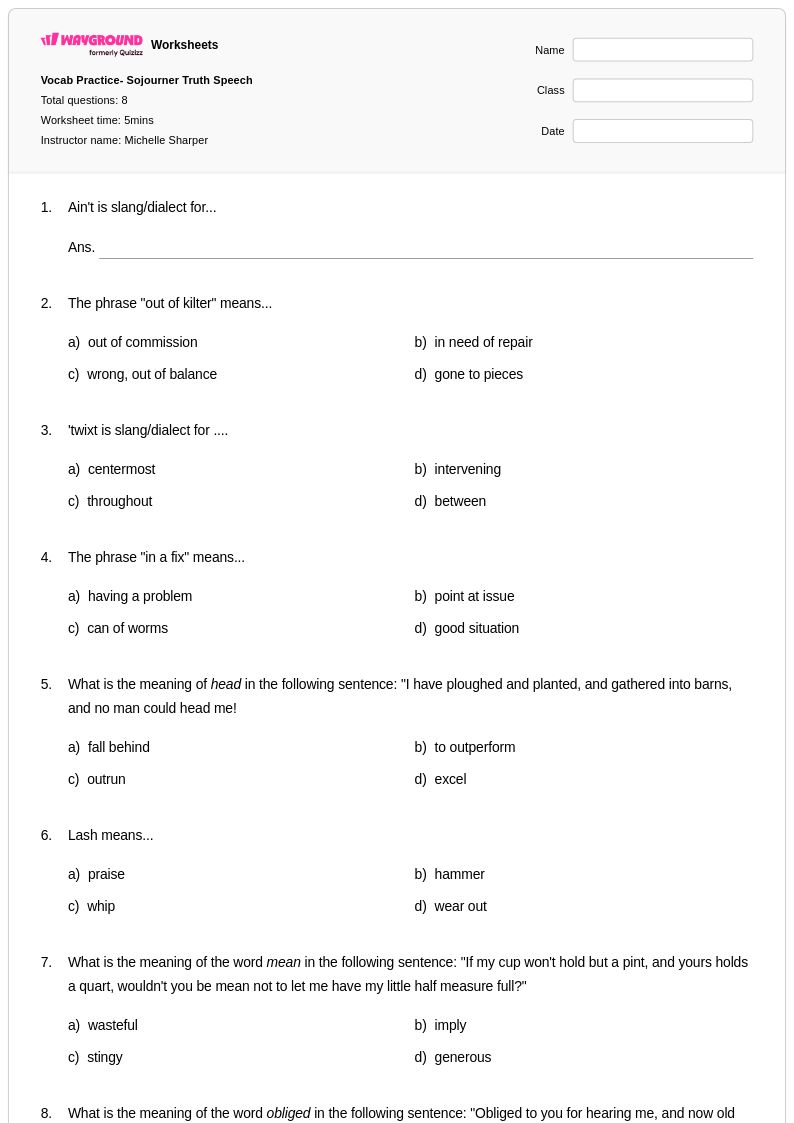
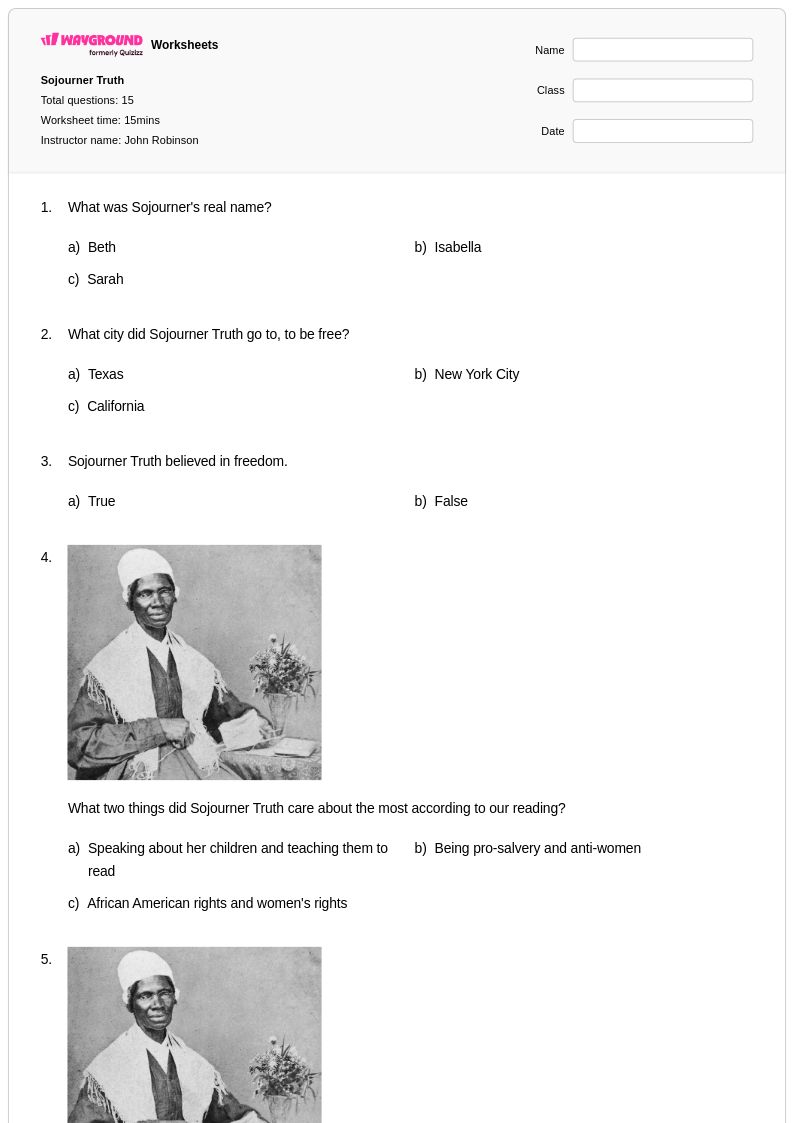
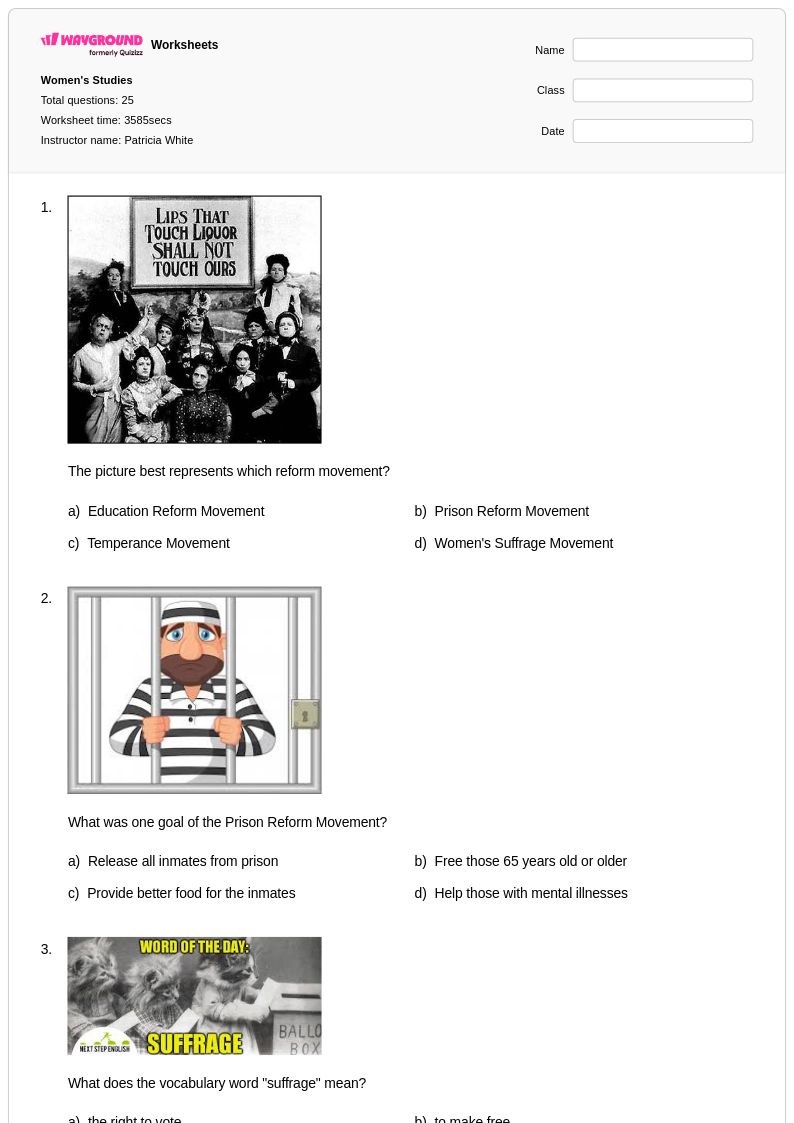
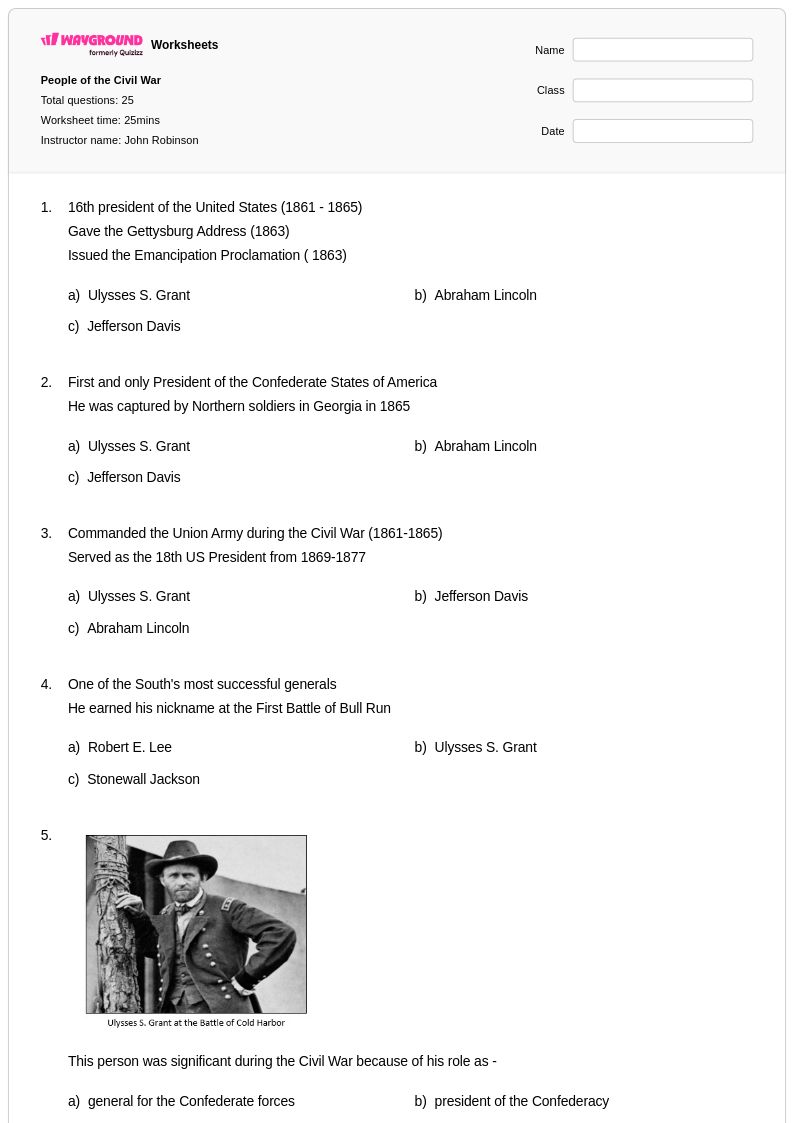
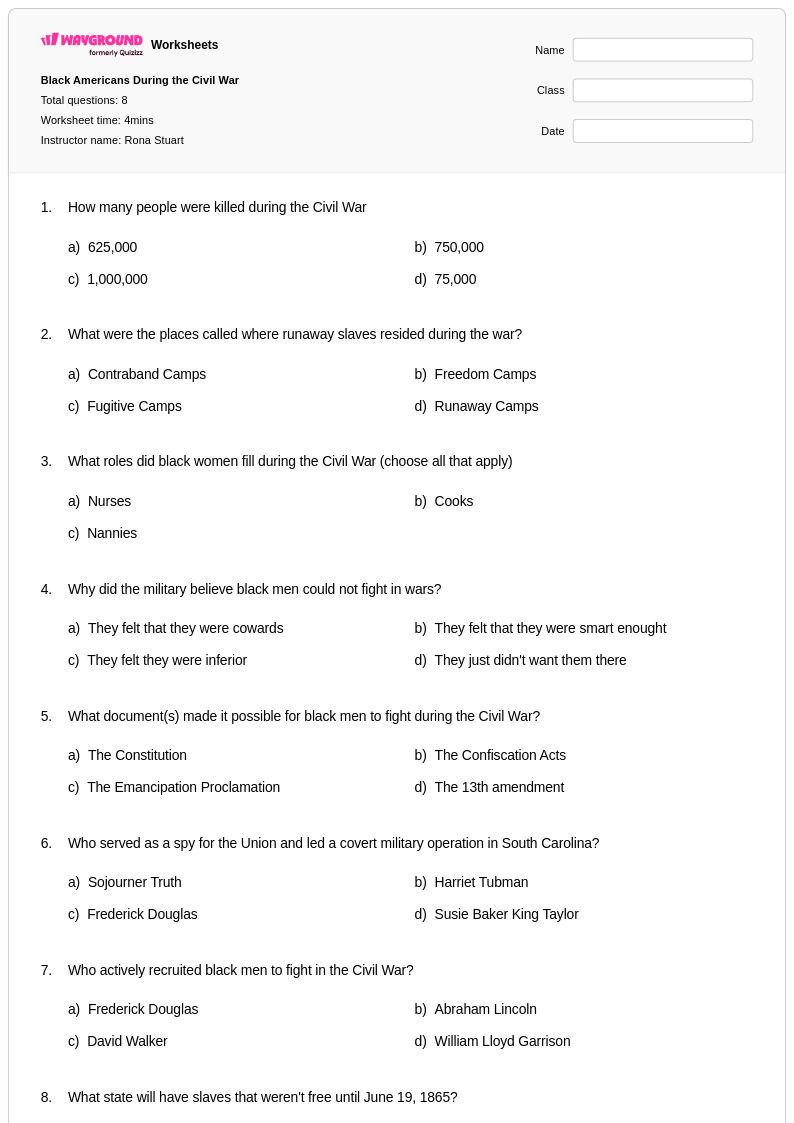
Sojourner Truth worksheets for Grade 12 students provide comprehensive exploration of one of America's most influential civil rights pioneers and her lasting impact on both the abolitionist and women's rights movements. These educational resources strengthen critical thinking skills as students analyze primary source documents including Truth's famous "Ain't I a Woman?" speech, examine her unique position as an African American woman advocating for multiple causes, and evaluate her strategic use of religious rhetoric to advance social justice. The worksheets incorporate diverse question formats from document analysis to essay prompts, with each printable resource including a detailed answer key to support both independent study and classroom instruction. Students engage with practice problems that require them to synthesize historical evidence, compare Truth's activism strategies with her contemporaries, and assess her influence on later civil rights leaders, making these free educational materials essential for developing sophisticated historical analysis skills.
Wayground, formerly Quizizz, empowers educators with an extensive collection of teacher-created Sojourner Truth resources that seamlessly integrate into Grade 12 U.S. History curricula through robust search and filtering capabilities aligned with national and state standards. The platform's millions of educational materials enable teachers to differentiate instruction effectively, offering both printable pdf formats for traditional classroom settings and digital versions that accommodate diverse learning environments and technological preferences. Teachers can customize existing worksheets or create entirely new assessments using the platform's flexible tools, making it simple to address varying skill levels within the same classroom while maintaining academic rigor. These comprehensive features streamline lesson planning while providing targeted resources for remediation of struggling learners, enrichment opportunities for advanced students, and consistent skill practice that reinforces understanding of Truth's historical significance and the broader context of 19th-century reform movements.
FAQs
How do I teach students about Sojourner Truth in a meaningful way?
Teaching Sojourner Truth effectively means grounding students in both her personal history and the broader social reform movements she shaped. Start with her journey from enslavement to freedom before moving into her activism, so students understand the lived experience behind her public work. Anchoring lessons in primary sources, particularly her 'Ain't I a Woman?' speech, helps students connect historical context to her arguments and legacy in the antislavery and women's suffrage movements.
What exercises help students analyze Sojourner Truth's speeches and historical impact?
Close reading exercises that ask students to identify rhetorical strategies, audience, and purpose in Truth's 'Ain't I a Woman?' speech are among the most effective practice activities for this topic. Pairing primary source analysis with questions about 19th-century social reform movements encourages students to interpret historical context rather than just recall facts. Worksheets that prompt students to compare Truth's arguments to other abolitionist voices deepen analytical thinking and build historical literacy.
What are the most common mistakes students make when learning about Sojourner Truth?
A frequent misconception is treating Sojourner Truth solely as a symbol rather than examining the specific arguments and strategies she used in her activism. Students also commonly conflate the abolitionist and women's suffrage movements, missing the ways Truth navigated tensions between the two. Another common error is failing to distinguish between the historical versions of her 'Ain't I a Woman?' speech and the political contexts in which each version was recorded and circulated.
How can I use Sojourner Truth worksheets to support different skill levels in my class?
Sojourner Truth worksheets can be differentiated by adjusting the complexity of primary source excerpts or the scaffolding provided for historical analysis tasks, ensuring on-level, struggling, and advanced learners all engage meaningfully with the content. On Wayground, teachers can apply individual accommodations such as read aloud support, reduced answer choices, and extended time to specific students without signaling those adjustments to the rest of the class. This makes it practical to run a single assignment that genuinely meets varied learning needs across the room.
How do I use Sojourner Truth worksheets from Wayground in my classroom?
Sojourner Truth worksheets on Wayground are available as printable PDFs for traditional classroom use and in digital formats for technology-integrated learning environments, including the option to host them as a quiz directly on the platform. Each worksheet includes a complete answer key, reducing preparation time for teachers. The digital format is especially useful for assigning primary source analysis as independent or homework practice, while the printable version works well for in-class guided instruction or small group work.
How does Sojourner Truth connect to broader U.S. History curriculum standards?
Sojourner Truth is a central figure in units covering 19th-century reform movements, the abolitionist movement, and early women's rights advocacy, making her directly relevant to most U.S. History standards at the middle and high school levels. Her life and speeches also support literacy standards tied to primary source analysis, argumentation, and historical interpretation. Teachers can use her story as a bridge between the antebellum period, the Civil War, and post-war social reform, giving students a through-line across multiple units.