Free Printable Structure of the Earth Worksheets for Grade 5
Discover Grade 5 Structure of the Earth printable worksheets and free PDF practice problems that help students explore Earth's layers, core composition, and geological features with comprehensive answer keys.
Explore printable Structure of the Earth worksheets for Grade 5
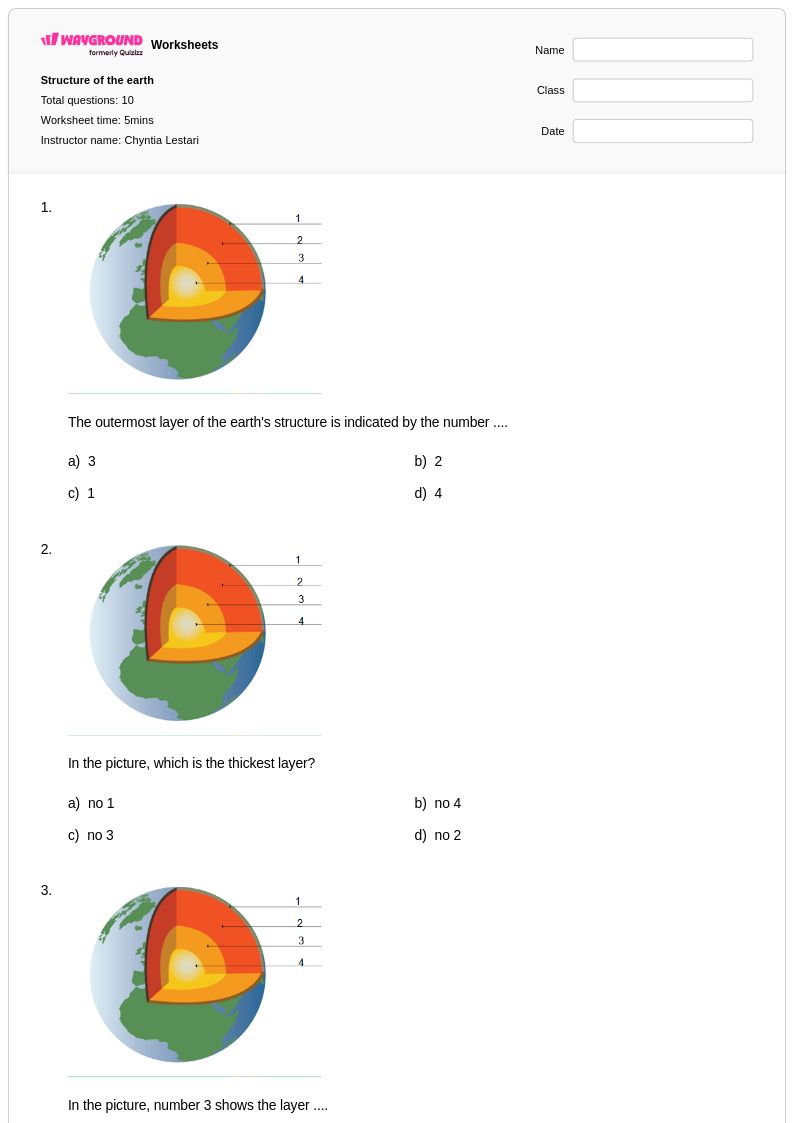
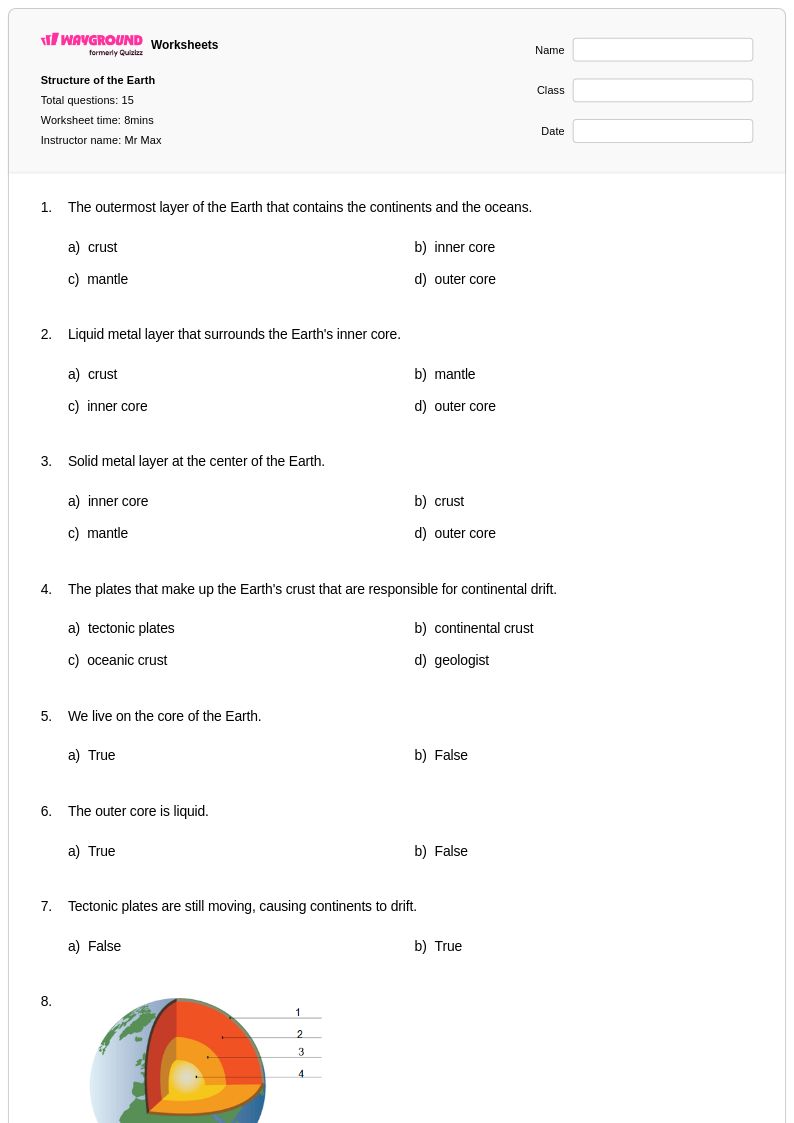
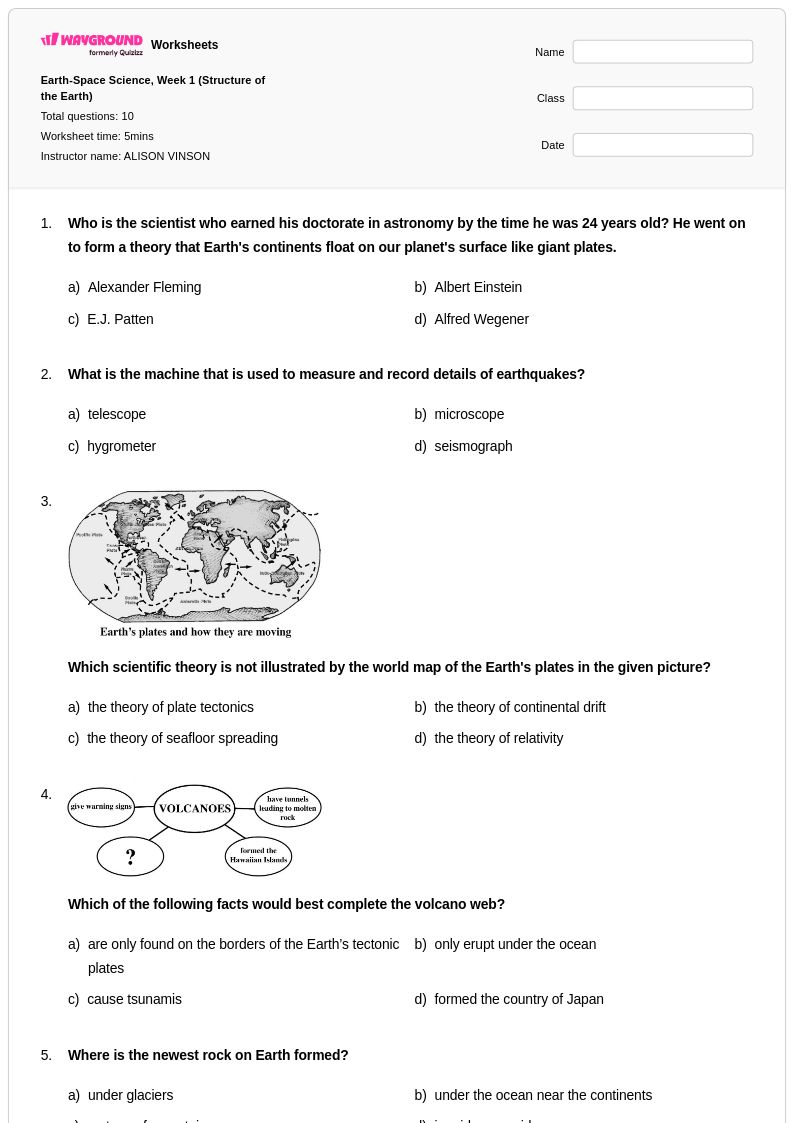
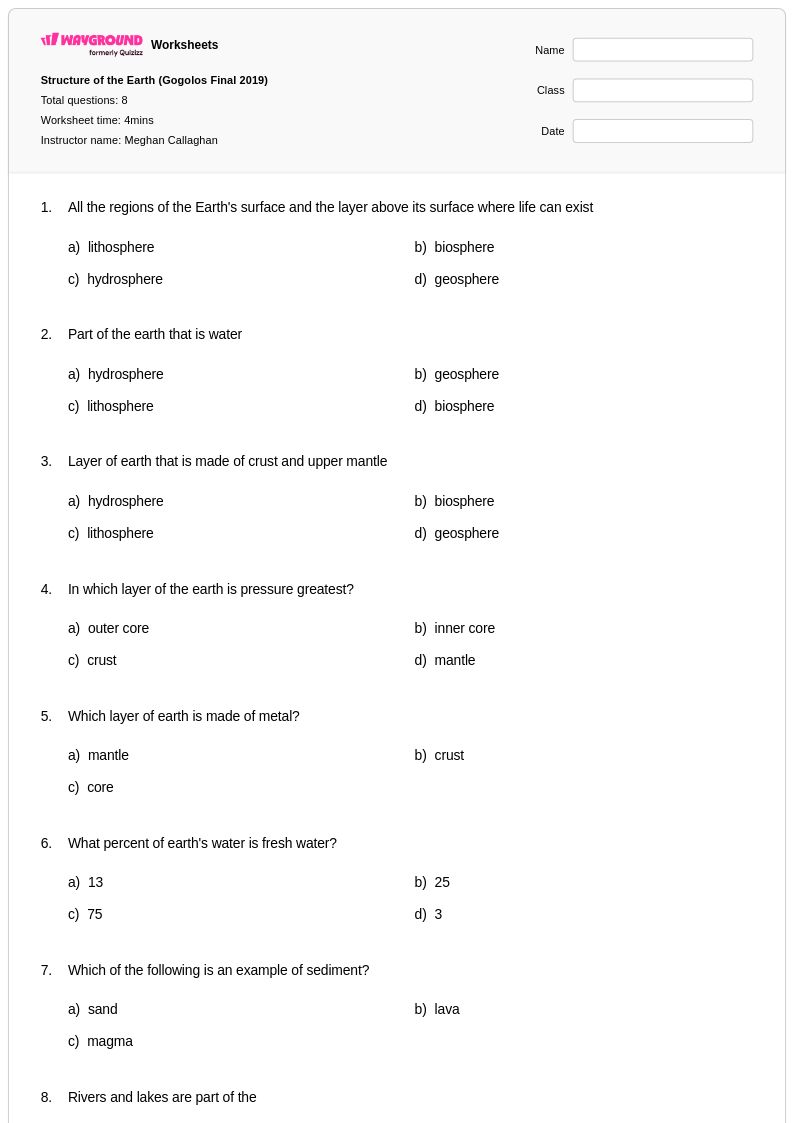
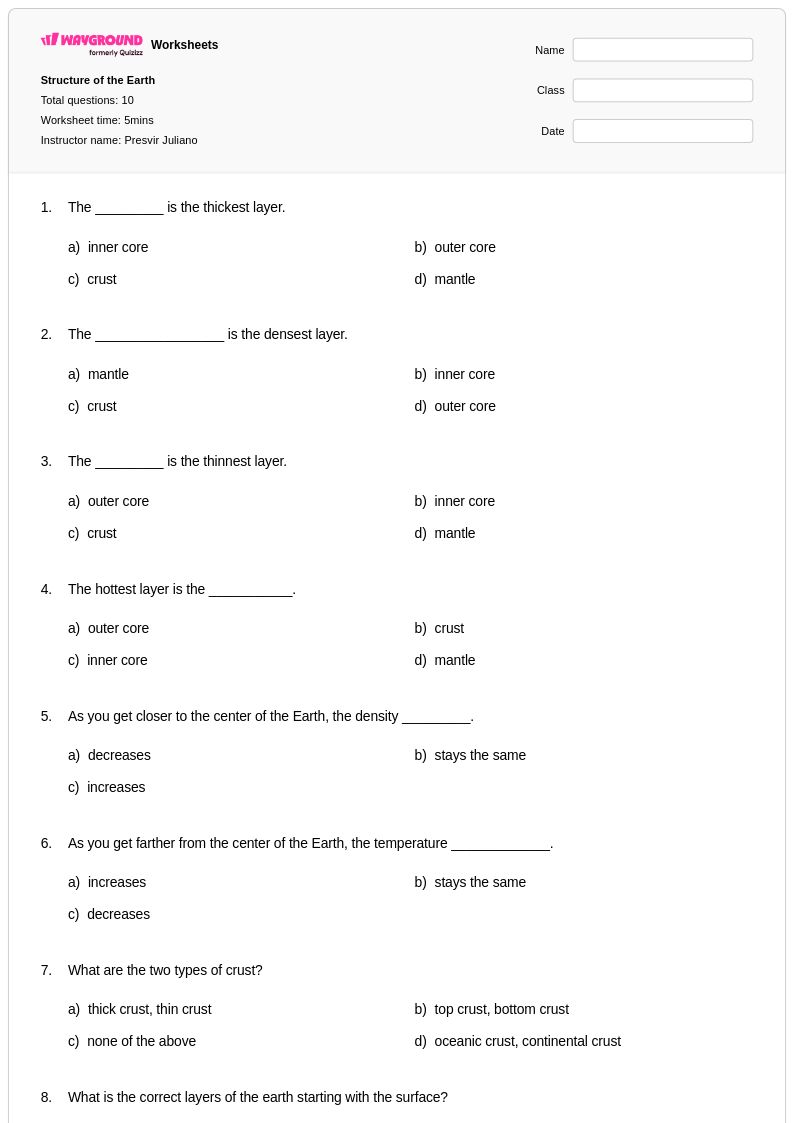
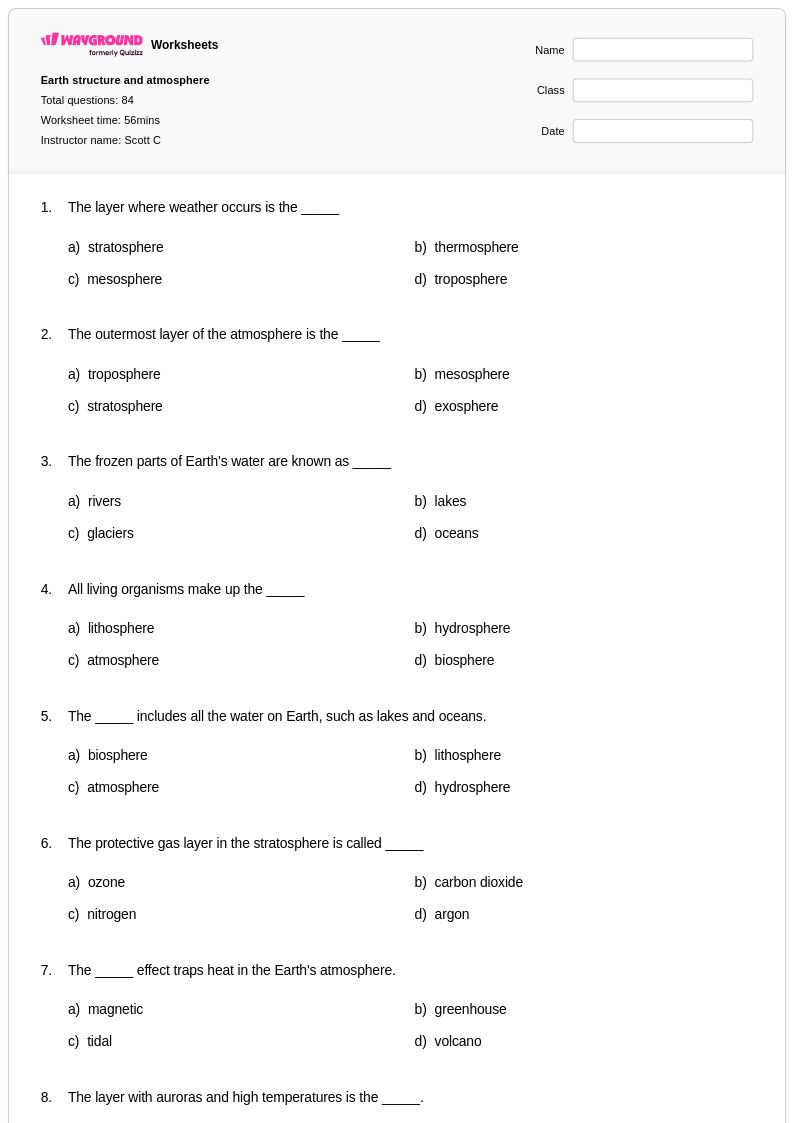
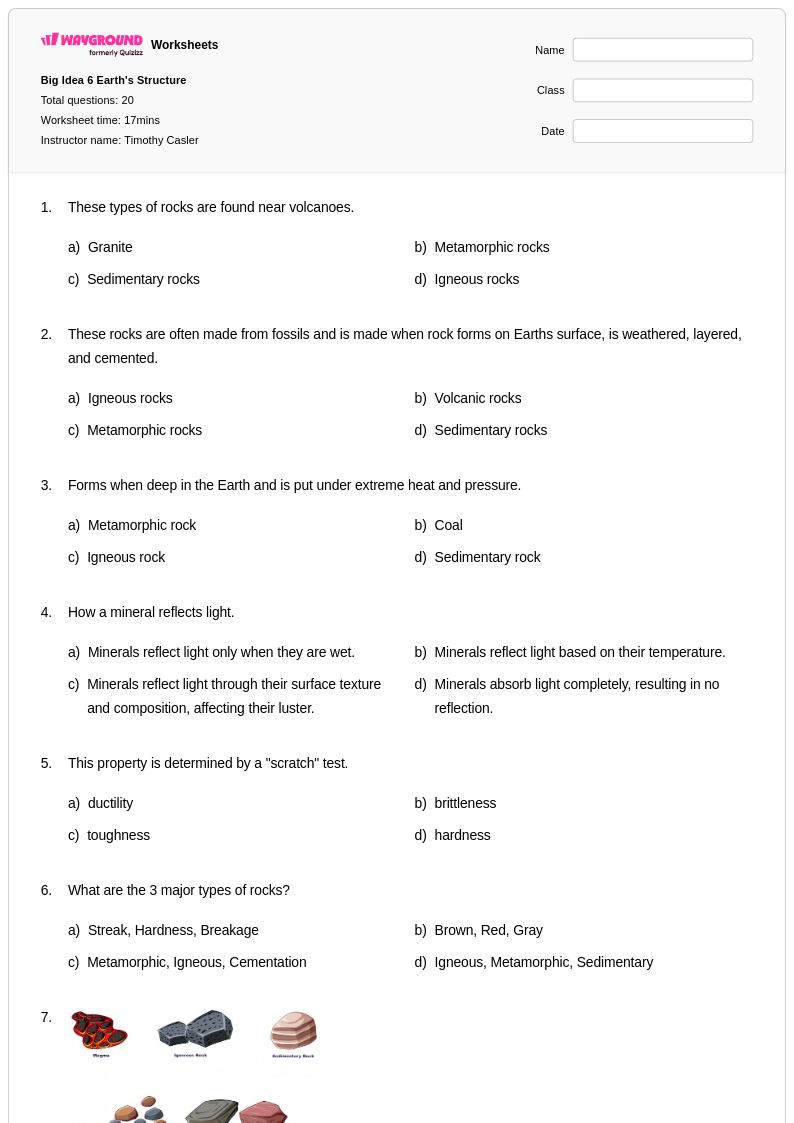
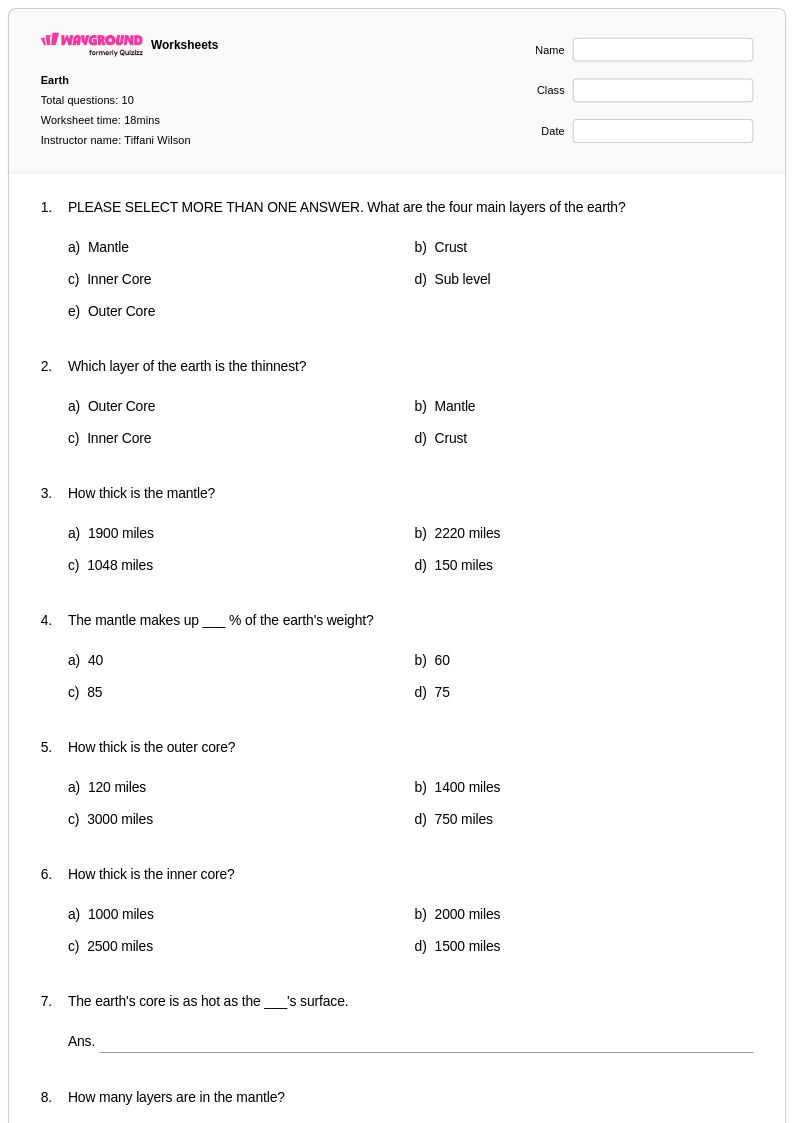
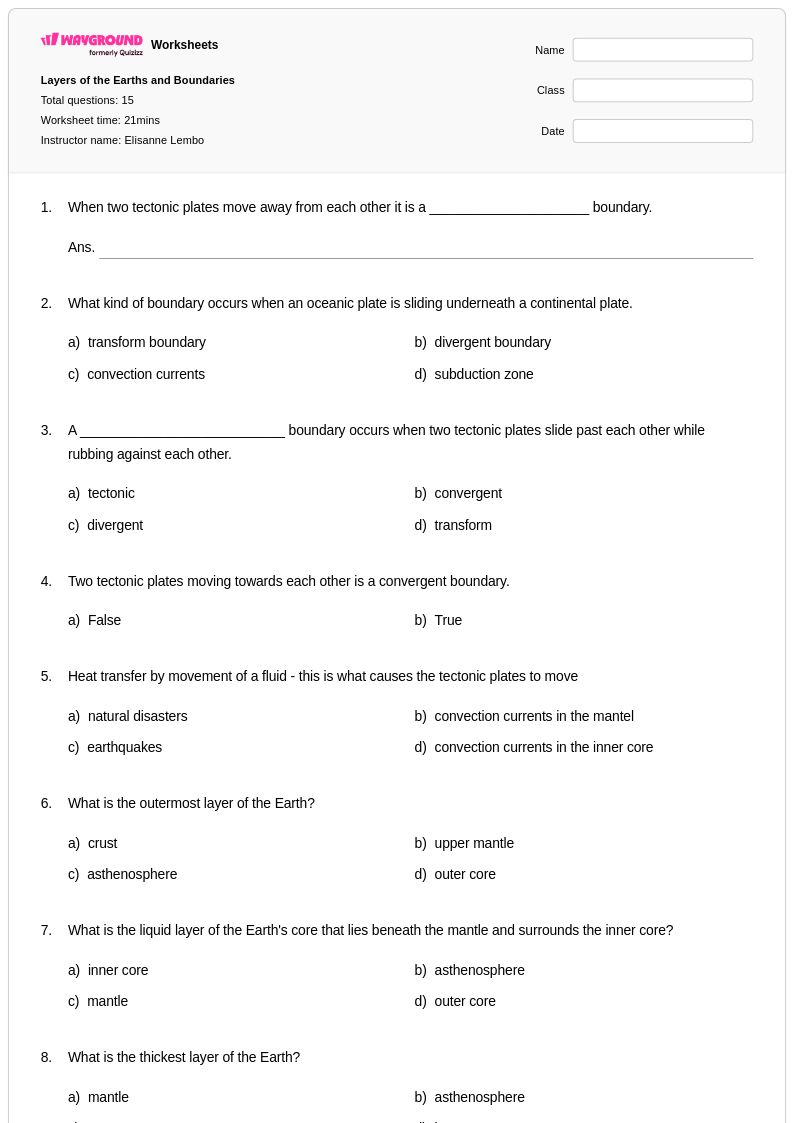
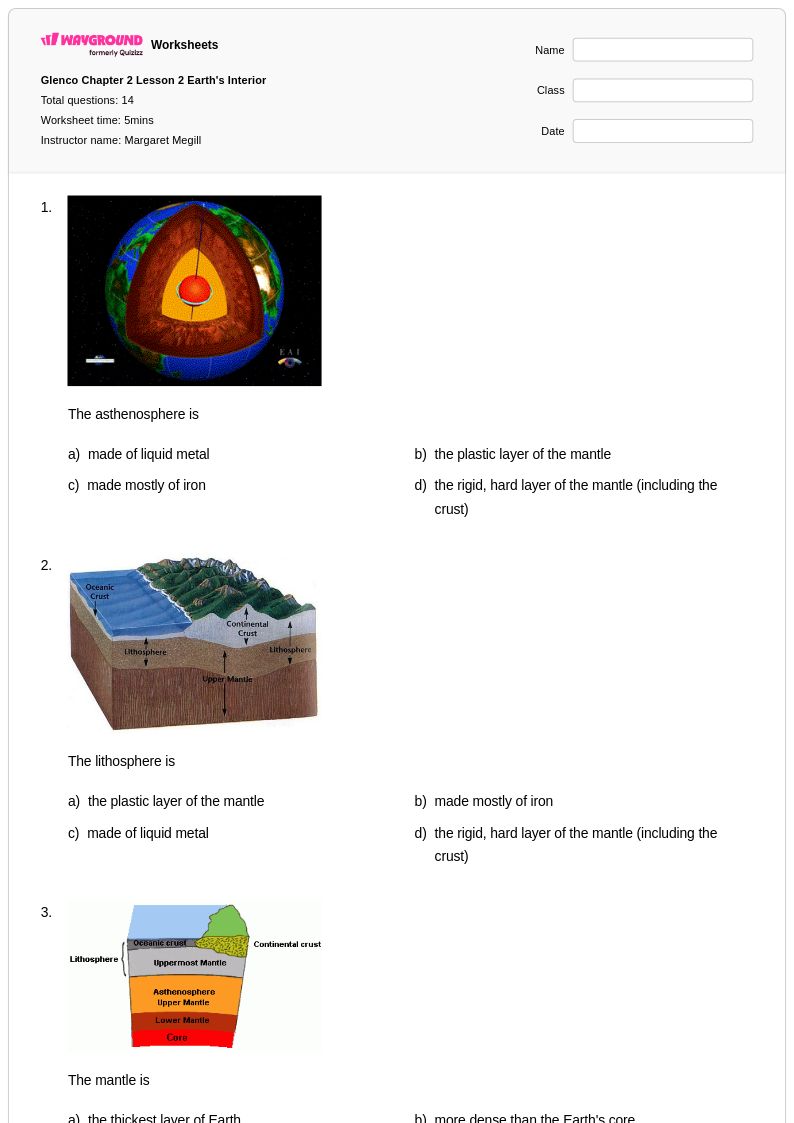
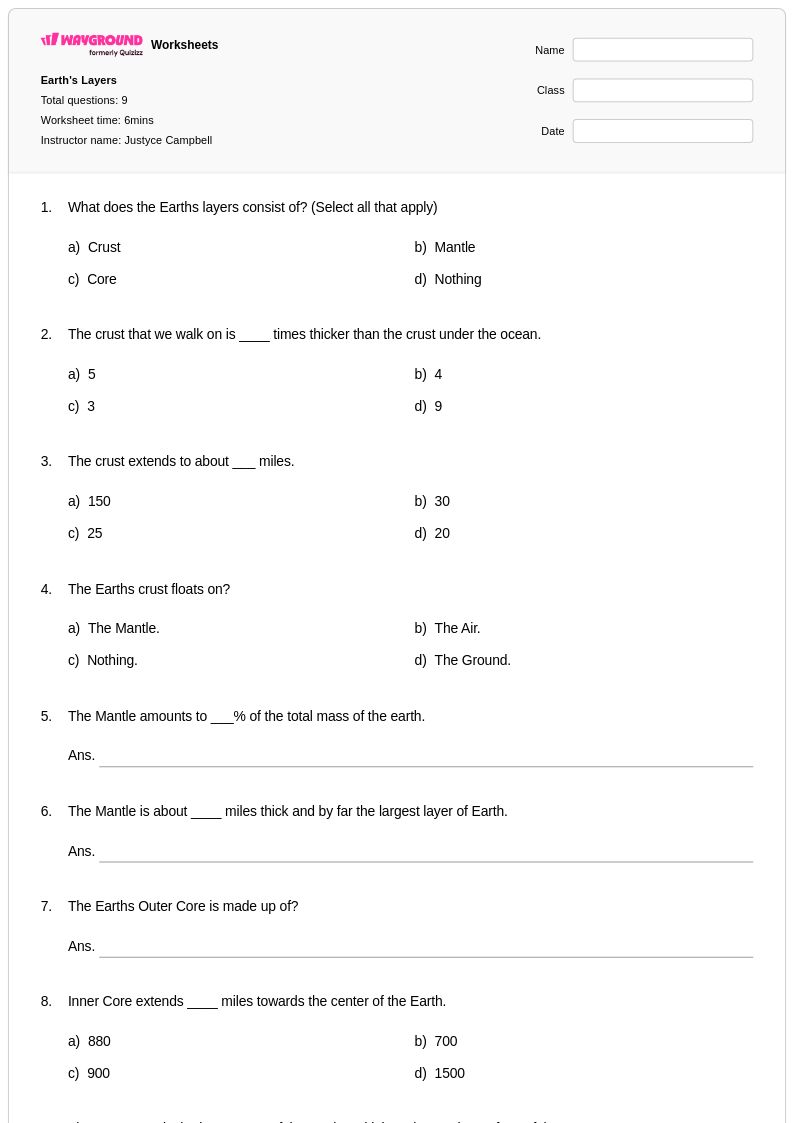
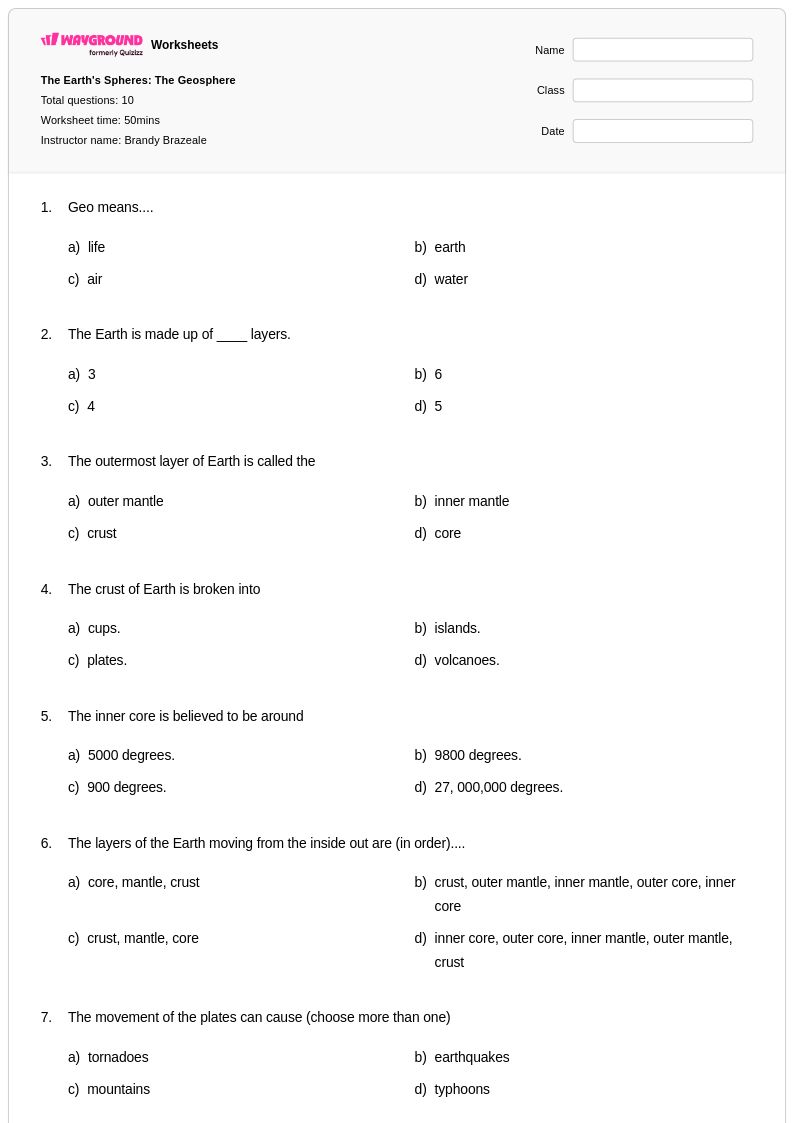
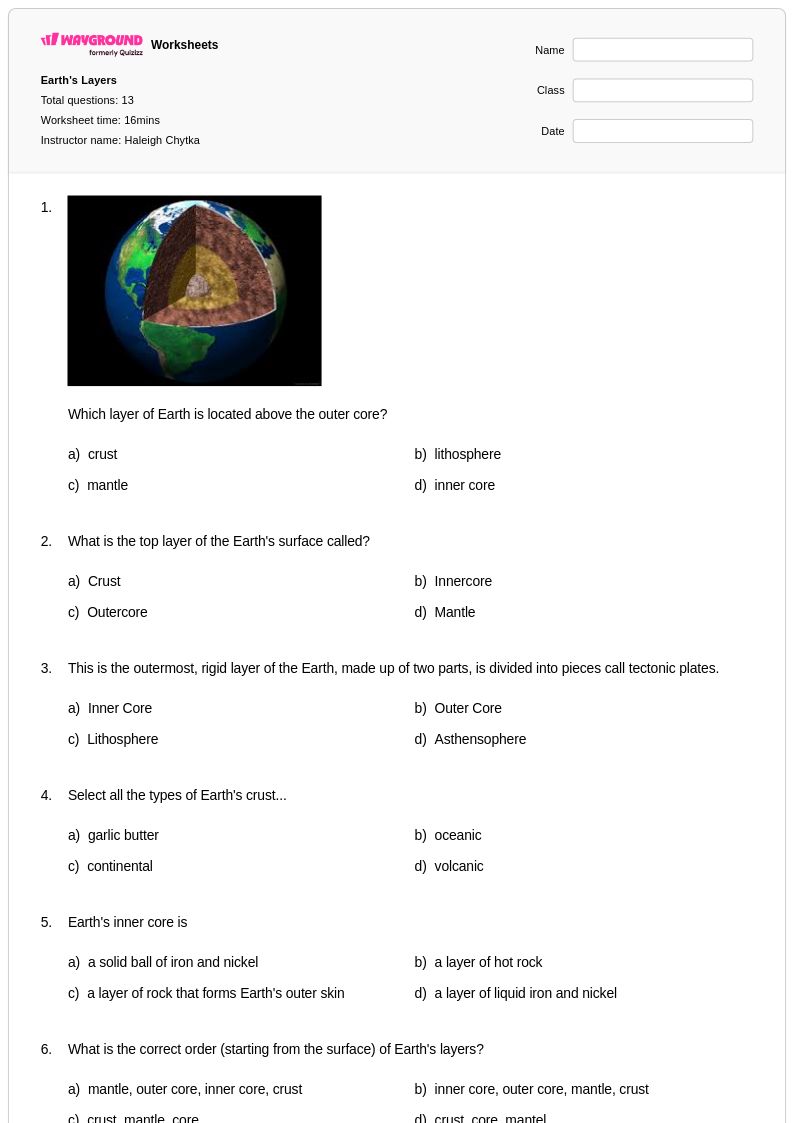
Grade 5 students exploring the structure of the Earth can access comprehensive worksheet collections through Wayground that systematically build understanding of our planet's internal composition and layers. These educational resources guide young learners through the fundamental concepts of the Earth's crust, mantle, outer core, and inner core, helping them visualize and comprehend the distinct characteristics, temperatures, and states of matter found at different depths. The worksheets strengthen critical thinking skills through labeled diagrams, cross-sectional analysis, and comparative exercises that challenge students to identify geological layers and explain their properties. Each printable resource includes detailed answer keys that support independent learning and allow students to verify their understanding of concepts like tectonic plate movement, rock formation processes, and the relationship between depth and temperature within Earth's interior.
Wayground's extensive collection of teacher-created Earth structure worksheets provides educators with millions of professionally developed resources that streamline lesson planning and support diverse learning needs in the Grade 5 classroom. The platform's robust search and filtering capabilities enable teachers to quickly locate materials aligned with state science standards, while differentiation tools allow for seamless customization based on individual student readiness levels and learning preferences. These versatile resources are available in both digital and printable pdf formats, making them ideal for traditional classroom instruction, homework assignments, remediation sessions, and enrichment activities. Teachers can efficiently adapt worksheet difficulty levels, modify question types, and select specific subtopics within Earth's structure to create targeted practice opportunities that reinforce key geological concepts and prepare students for more advanced Earth science studies.
FAQs
How do I teach the structure of the Earth to my students?
Start by establishing the four main layers — crust, mantle, outer core, and inner core — before introducing the physical and chemical properties that distinguish each one. Use cross-sectional diagrams to help students visualize depth, temperature, and pressure changes as you move from the surface toward the center. Connecting each layer to real-world phenomena like volcanic activity, earthquakes, and tectonic plate movement gives students a concrete framework for understanding why Earth's internal structure matters.
What are common misconceptions students have about Earth's layers?
A frequent misconception is that the mantle is entirely molten, when in fact most of it is solid rock that flows plastically over geological timescales. Students also commonly confuse the outer core and inner core, misattributing the liquid state to the inner core rather than the outer core. Another error is underestimating the scale of the mantle — it makes up roughly 84% of Earth's volume, yet students often sketch it as a thin band on diagrams.
What exercises help students practice identifying Earth's layers?
Labeling cross-sectional diagrams is one of the most effective exercises for reinforcing the names, depths, and properties of each layer. Practice problems that ask students to match temperature ranges, pressure conditions, and material composition to specific layers build analytical precision. Comparative tasks — such as contrasting oceanic crust and continental crust thickness or comparing Earth's structure to other planetary bodies — extend understanding beyond memorization.
How can I use Structure of the Earth worksheets in my classroom?
Structure of the Earth worksheets on Wayground are available as printable PDFs for traditional classroom use and in digital formats for technology-integrated learning environments, including the option to host them as a live quiz on Wayground. The printable versions work well for guided note-taking, homework, or in-class assessments, while the digital format supports remote learning and instant auto-grading. All worksheets include answer keys, so teachers can distribute materials with confidence and provide students with immediate feedback.
How do I differentiate Structure of the Earth instruction for diverse learners?
For students who struggle with complex geological vocabulary or dense diagrams, reducing answer choices on practice problems lowers cognitive load while keeping the core concept intact. Wayground's Read Aloud feature supports students who benefit from audio delivery of questions and content. Extended time settings can be applied per student for those who need additional processing time, and all accommodation settings are saved and reusable across future sessions without notifying the rest of the class.
How does seismic wave data help students understand Earth's interior?
Since no drill has ever reached Earth's core, seismic wave analysis is the primary evidence scientists use to infer the properties of each internal layer. P-waves and S-waves travel at different speeds and behave differently when passing through solid versus liquid material, which is how geologists determined that the outer core is liquid. Teaching students to interpret seismic wave diagrams builds both content knowledge and scientific reasoning skills, showing how indirect evidence can reveal information about places humans cannot directly observe.