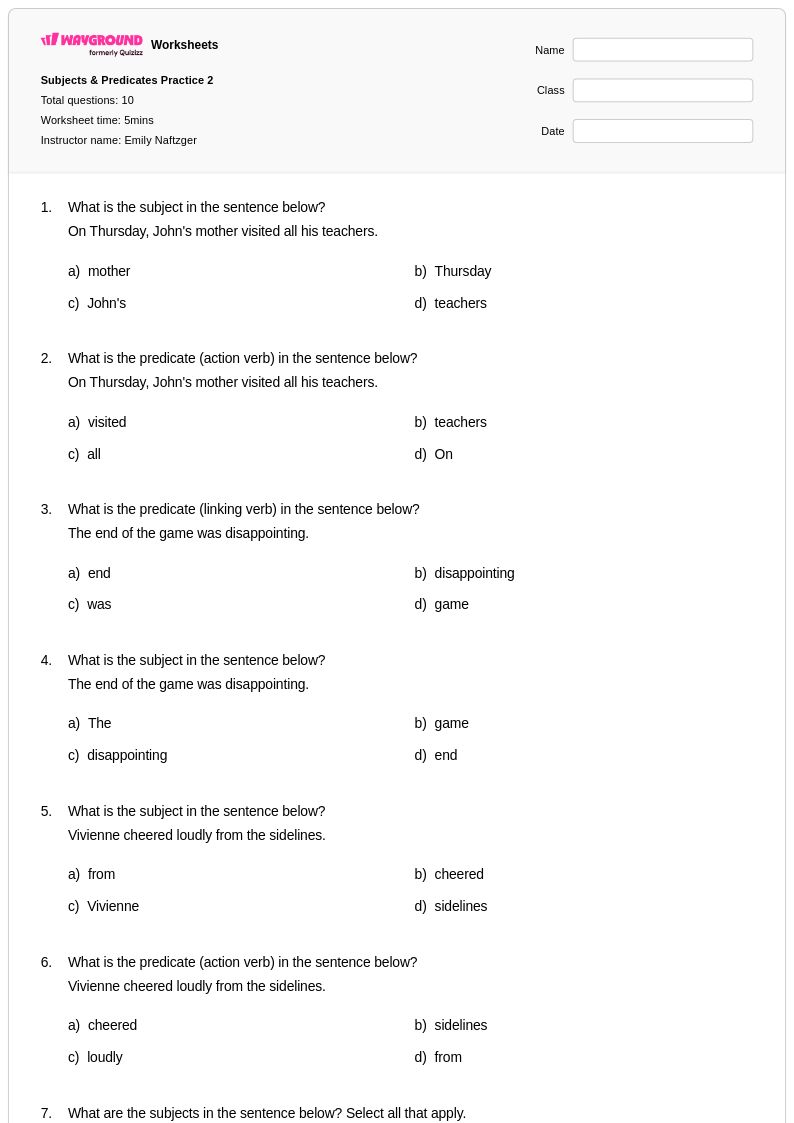
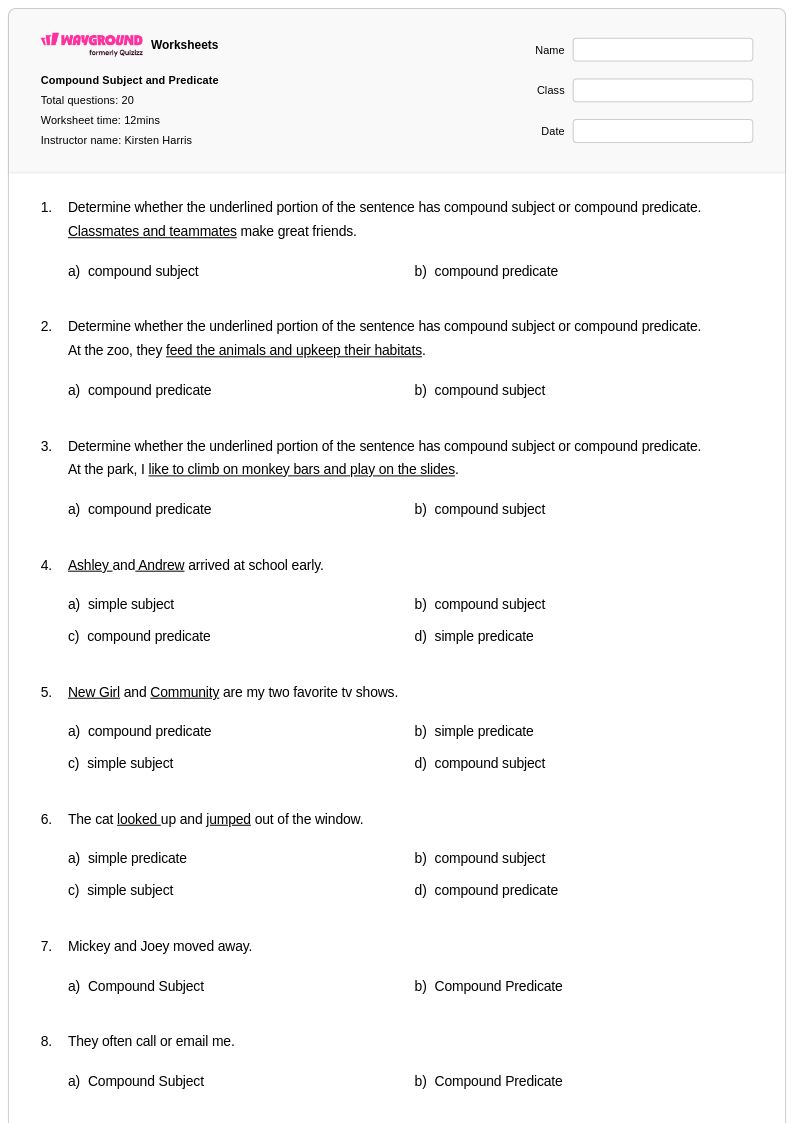
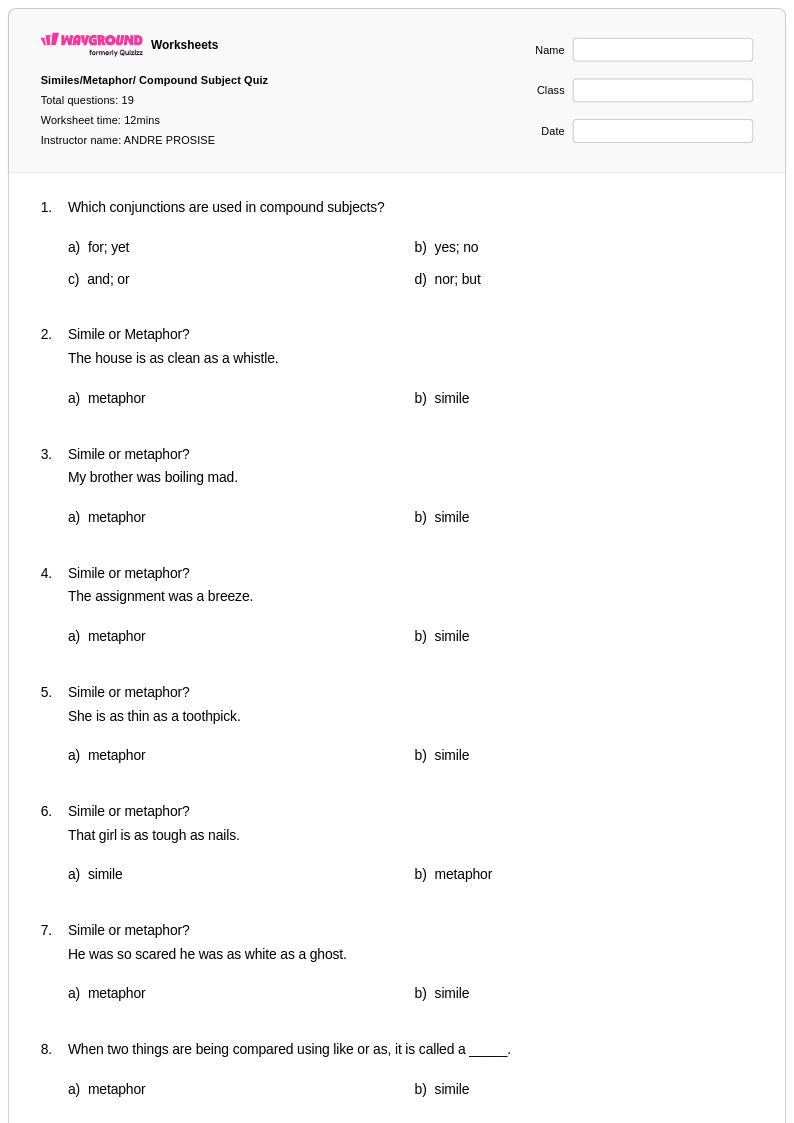
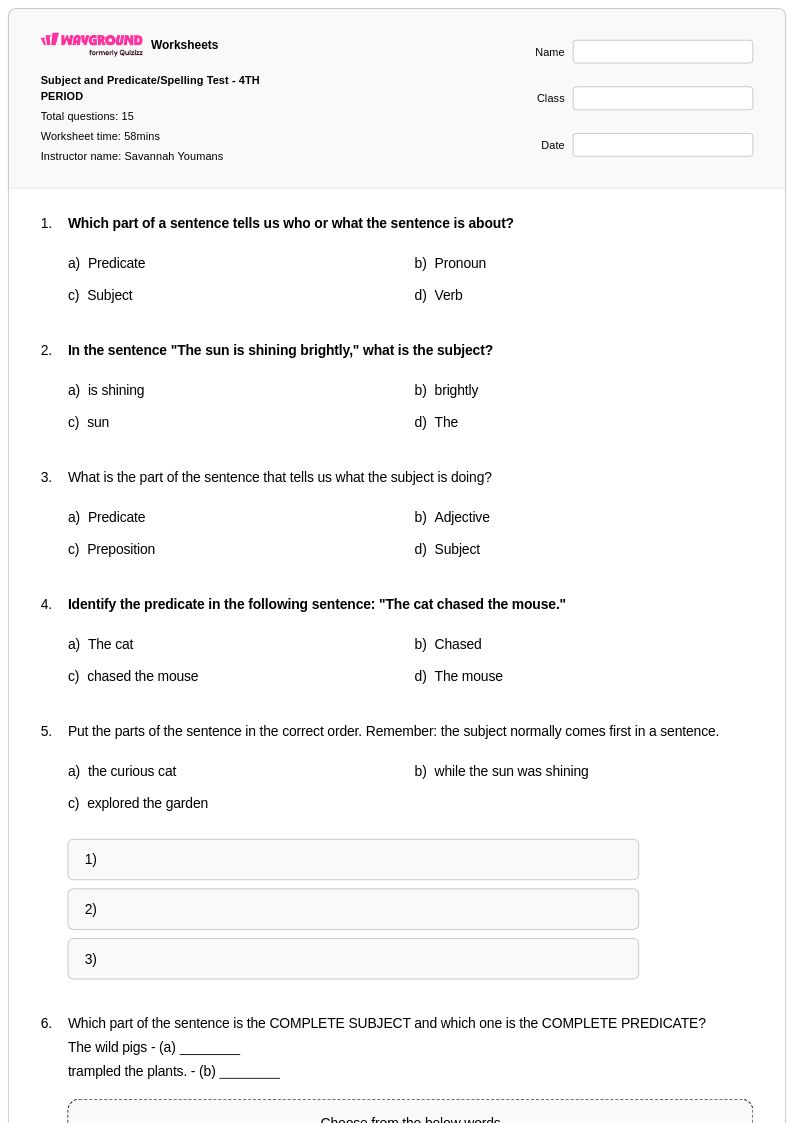
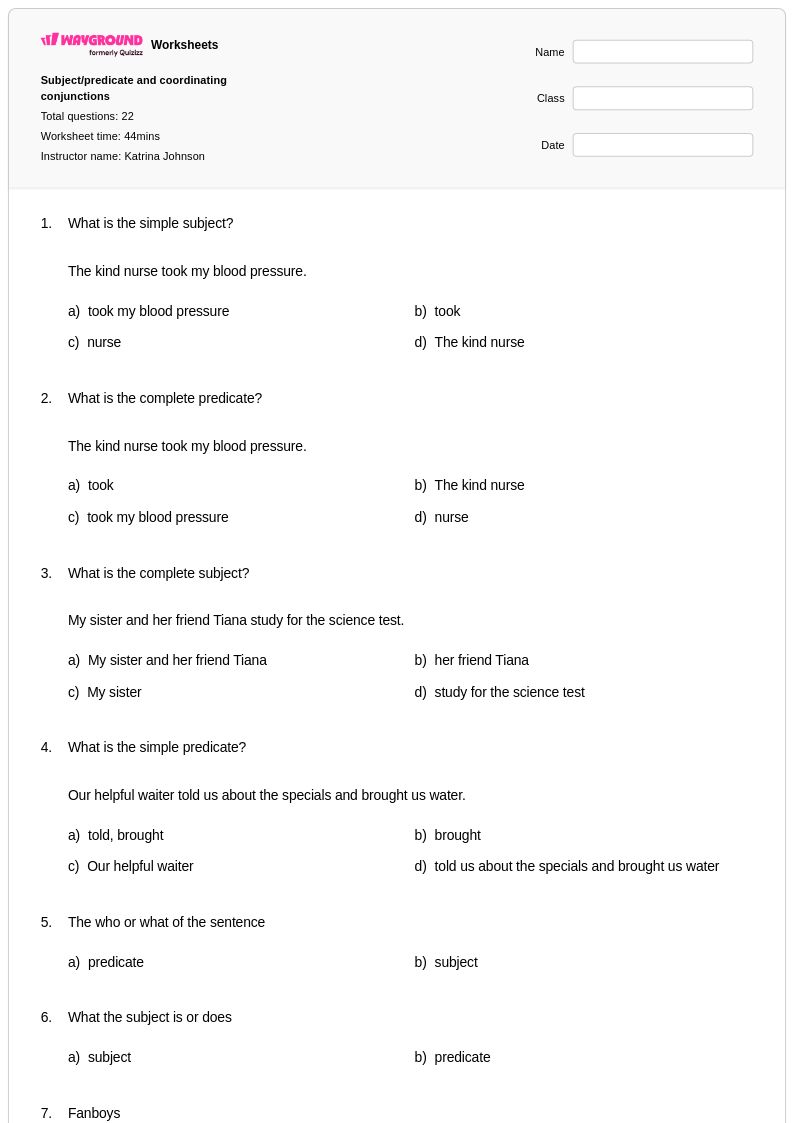
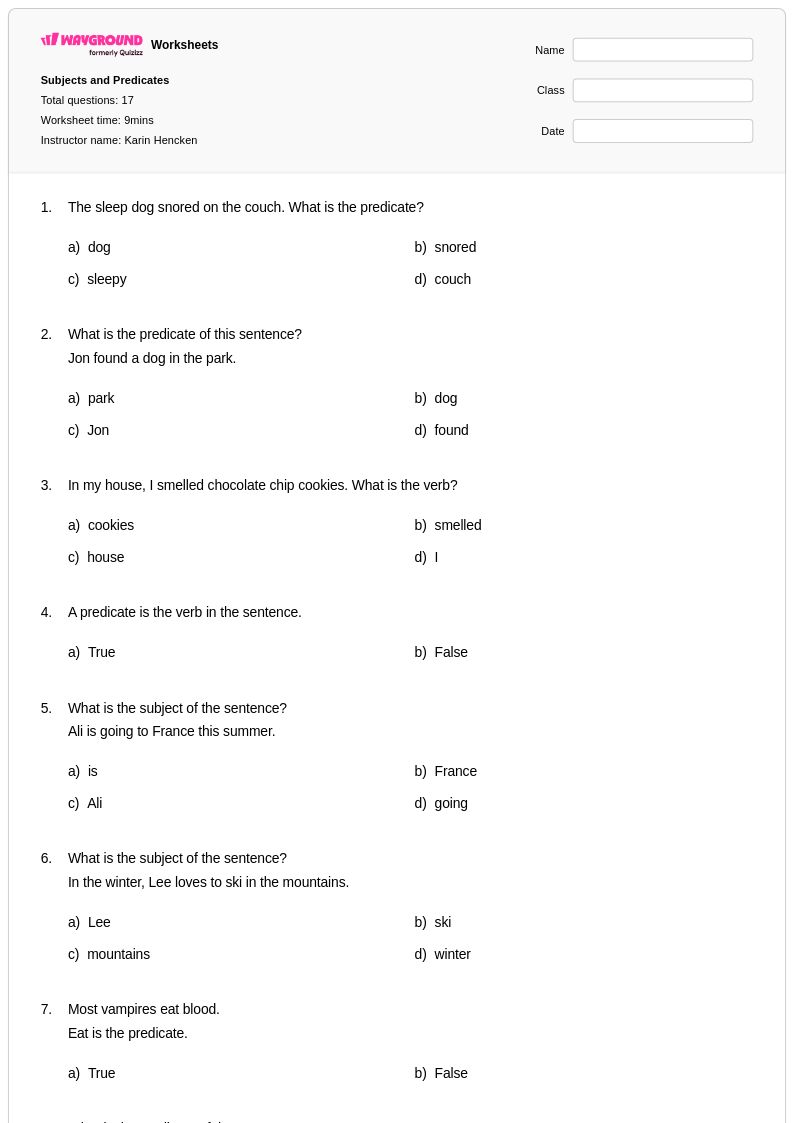
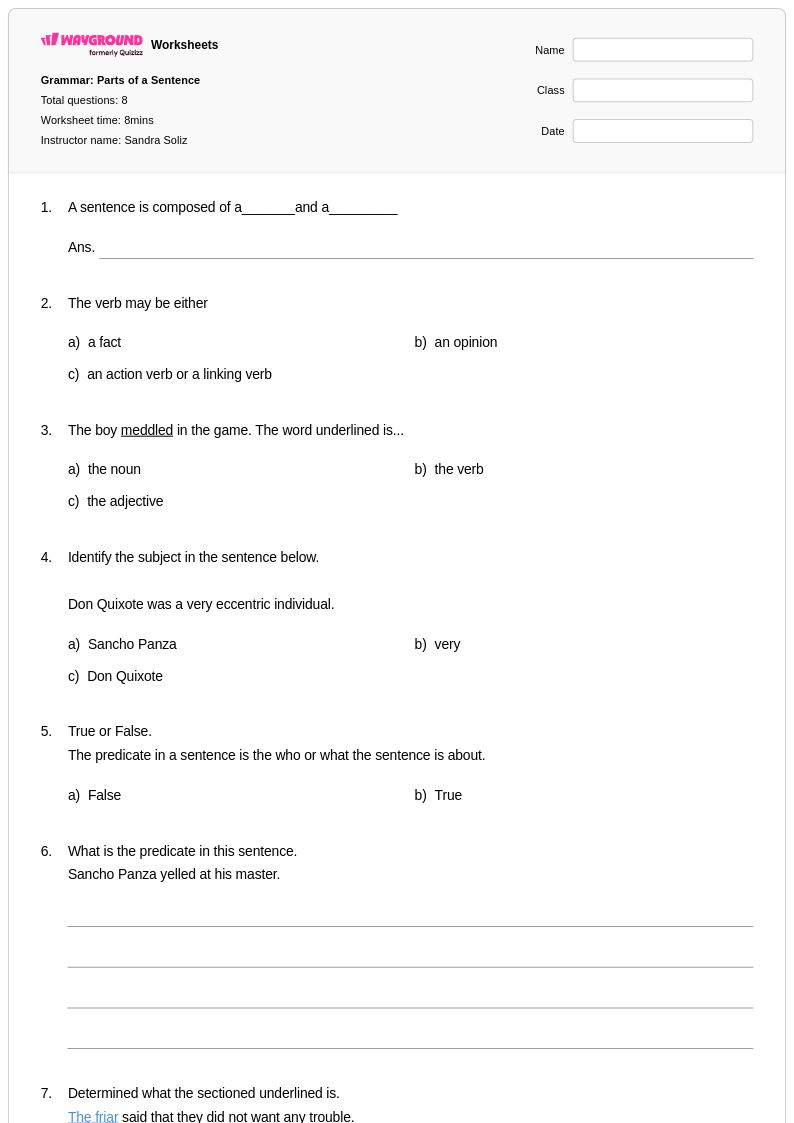
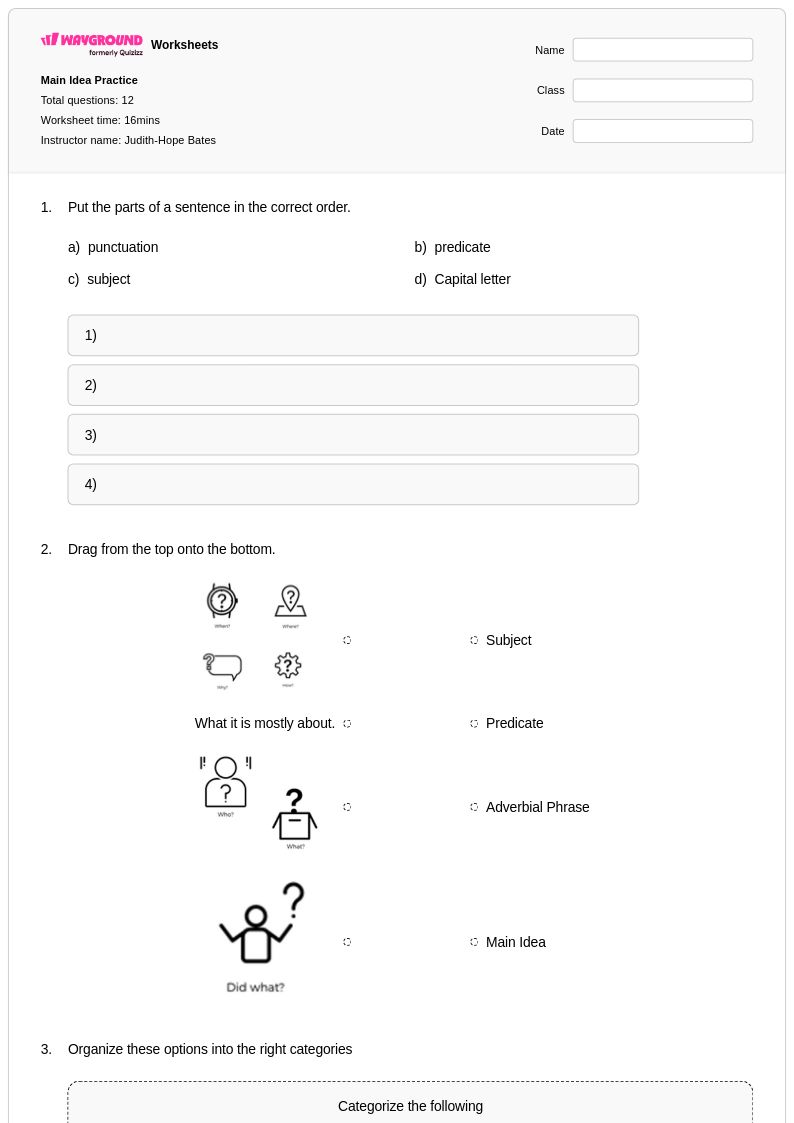
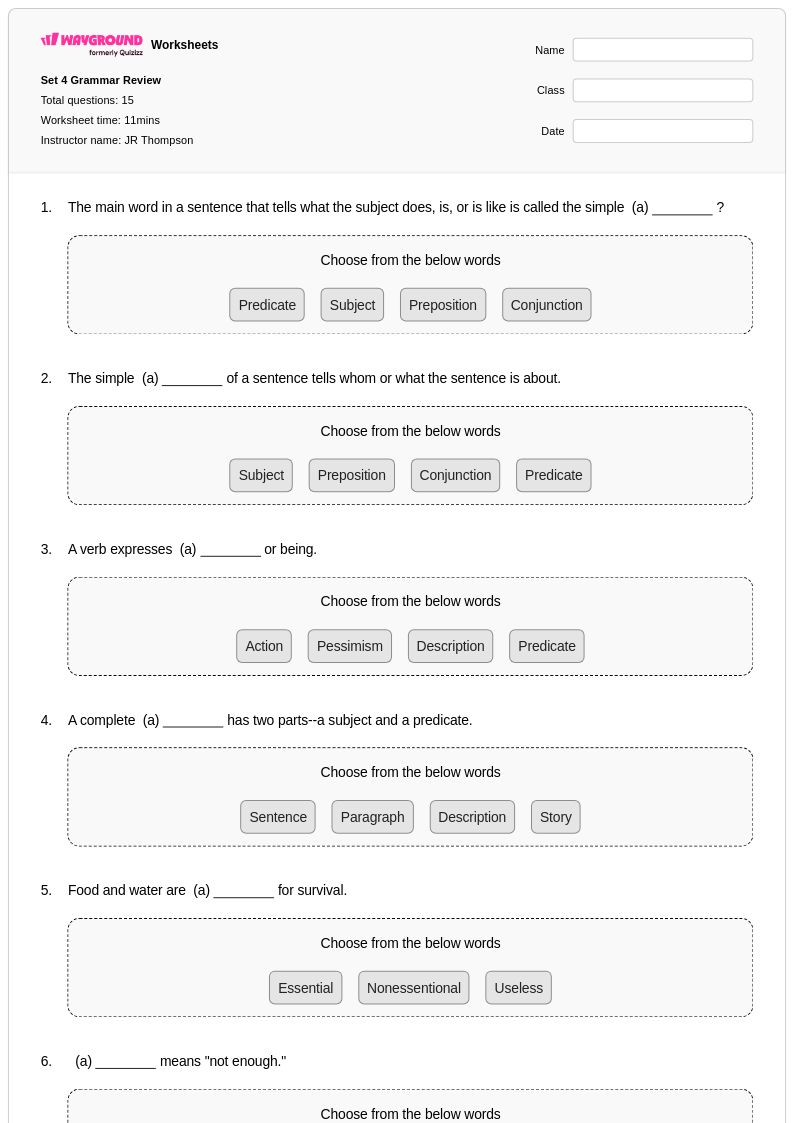
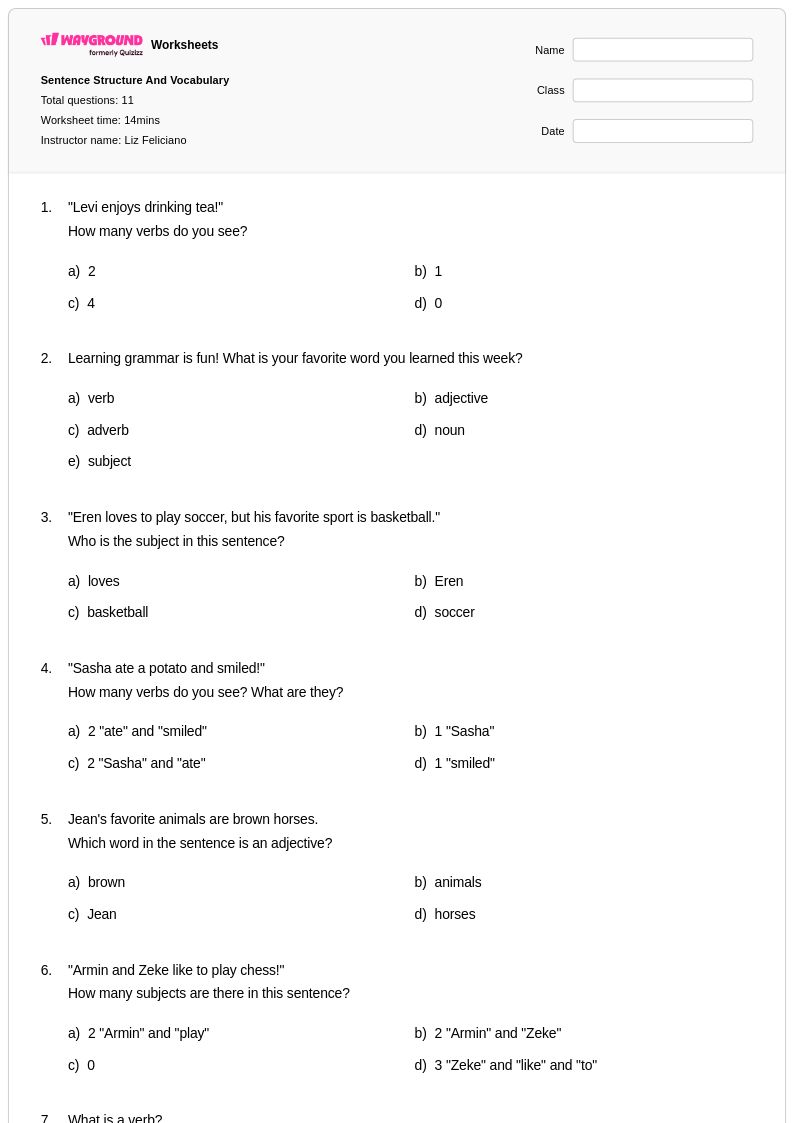
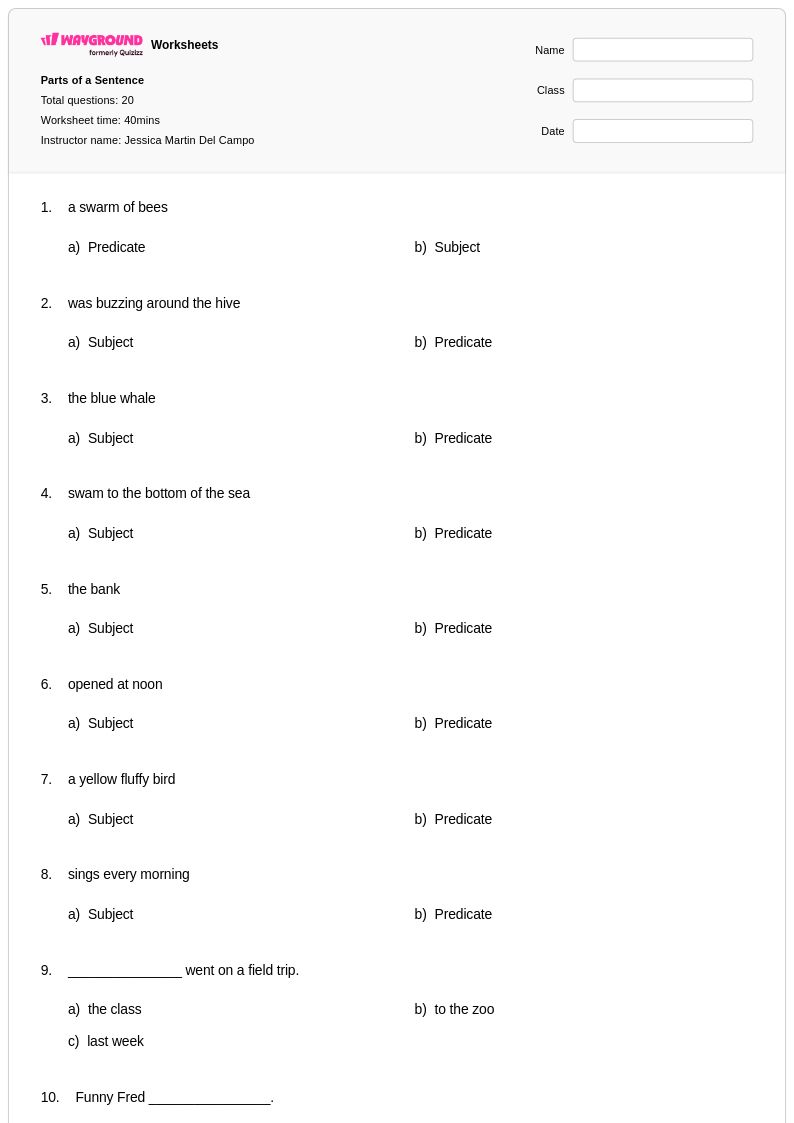
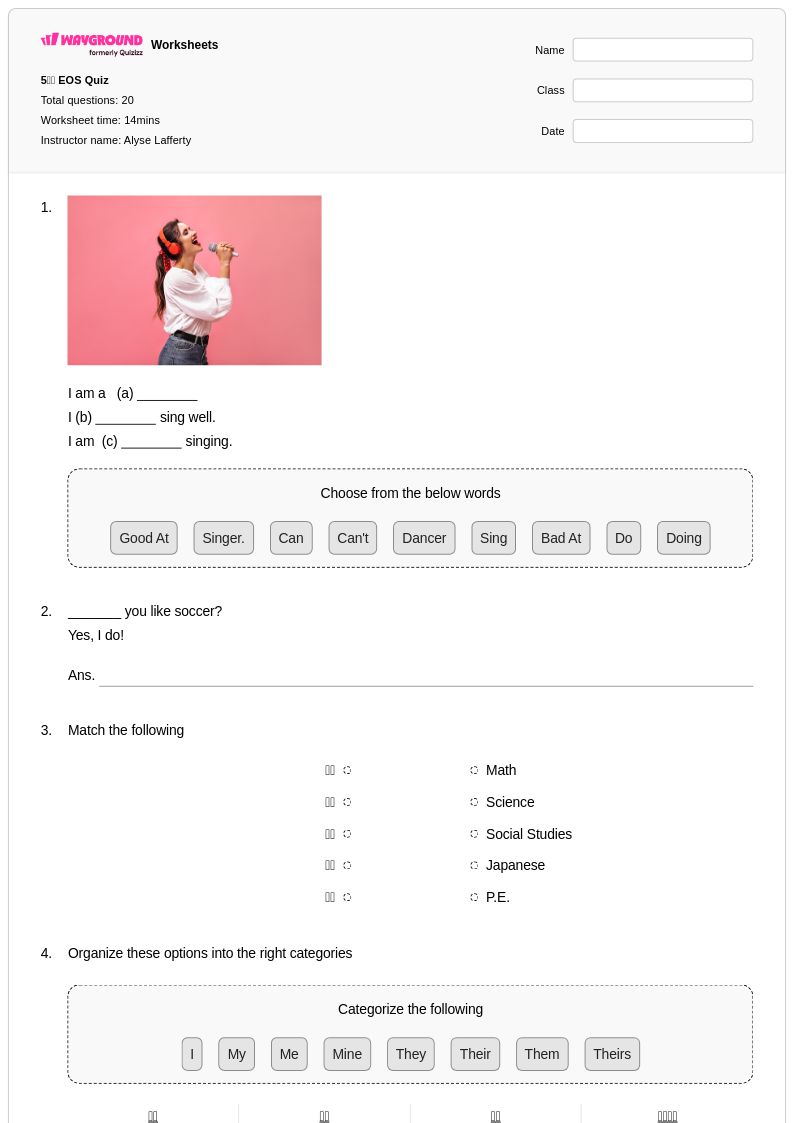
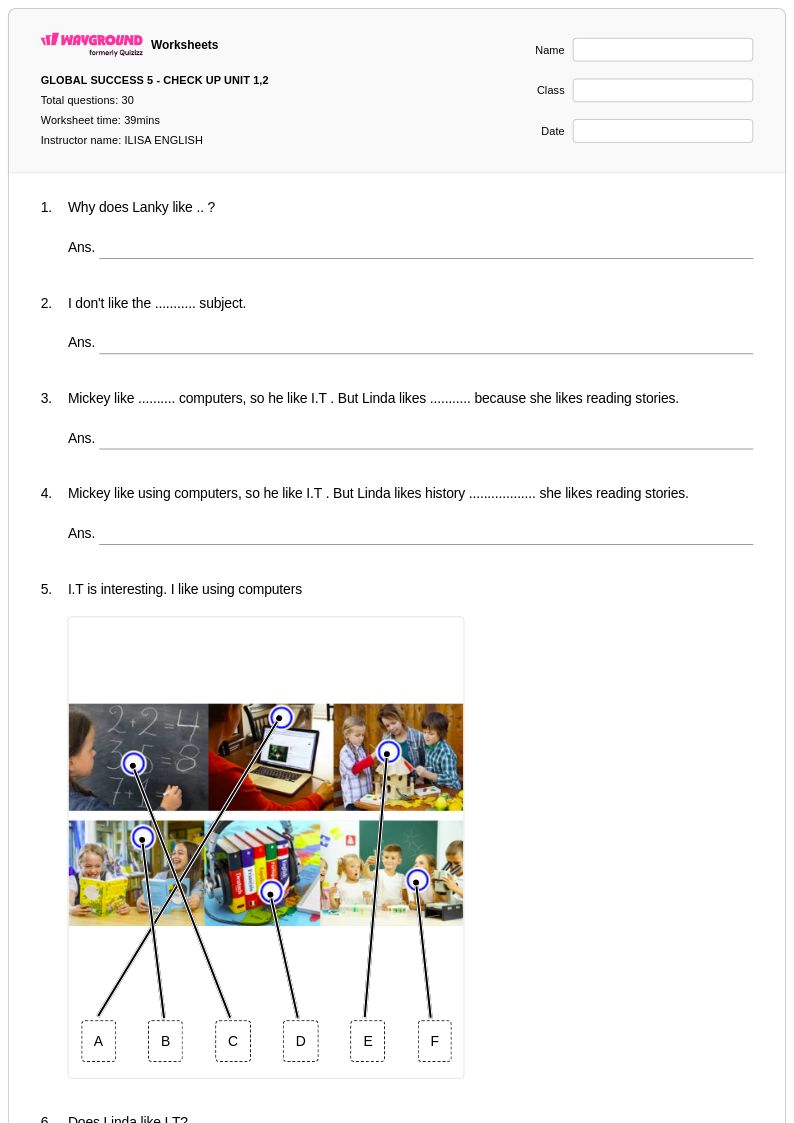
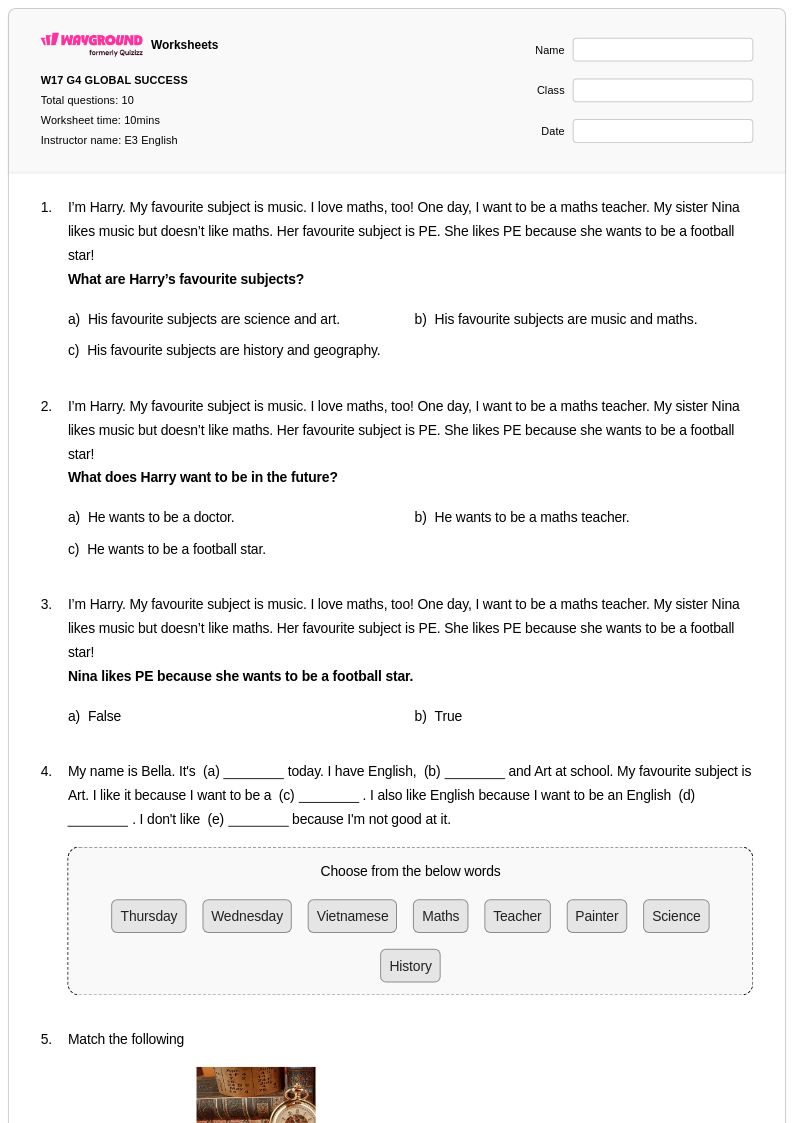
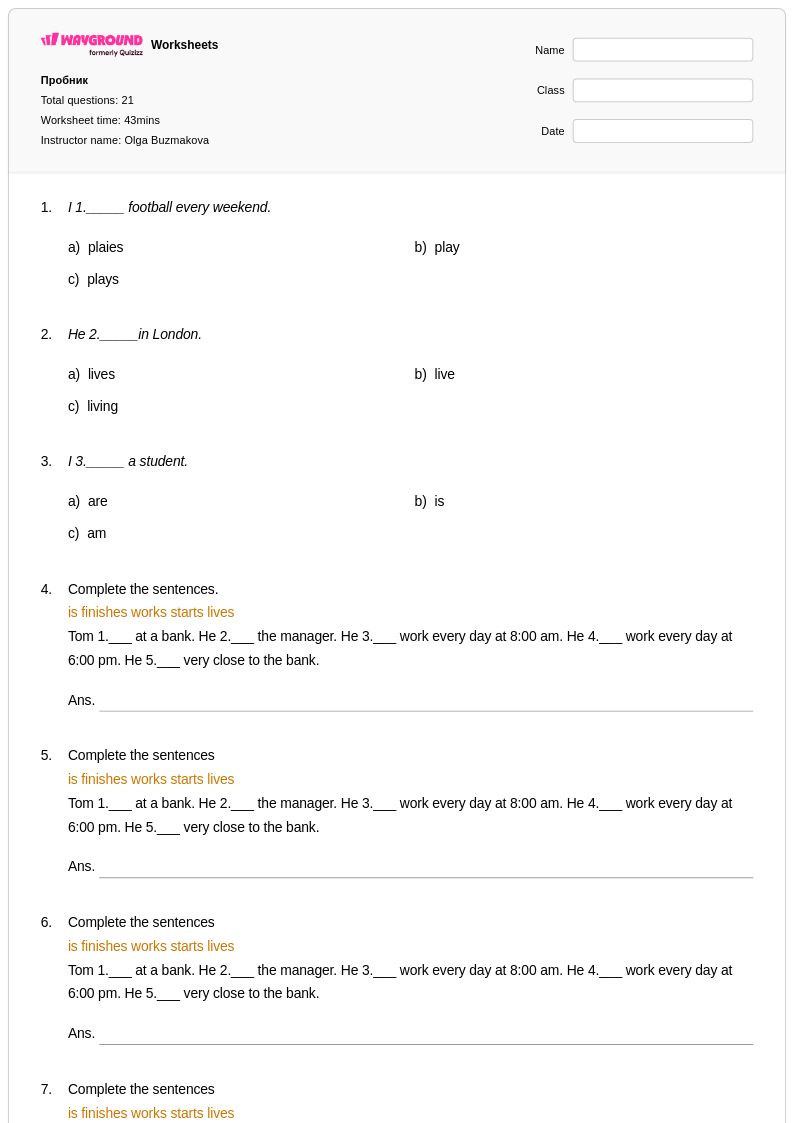
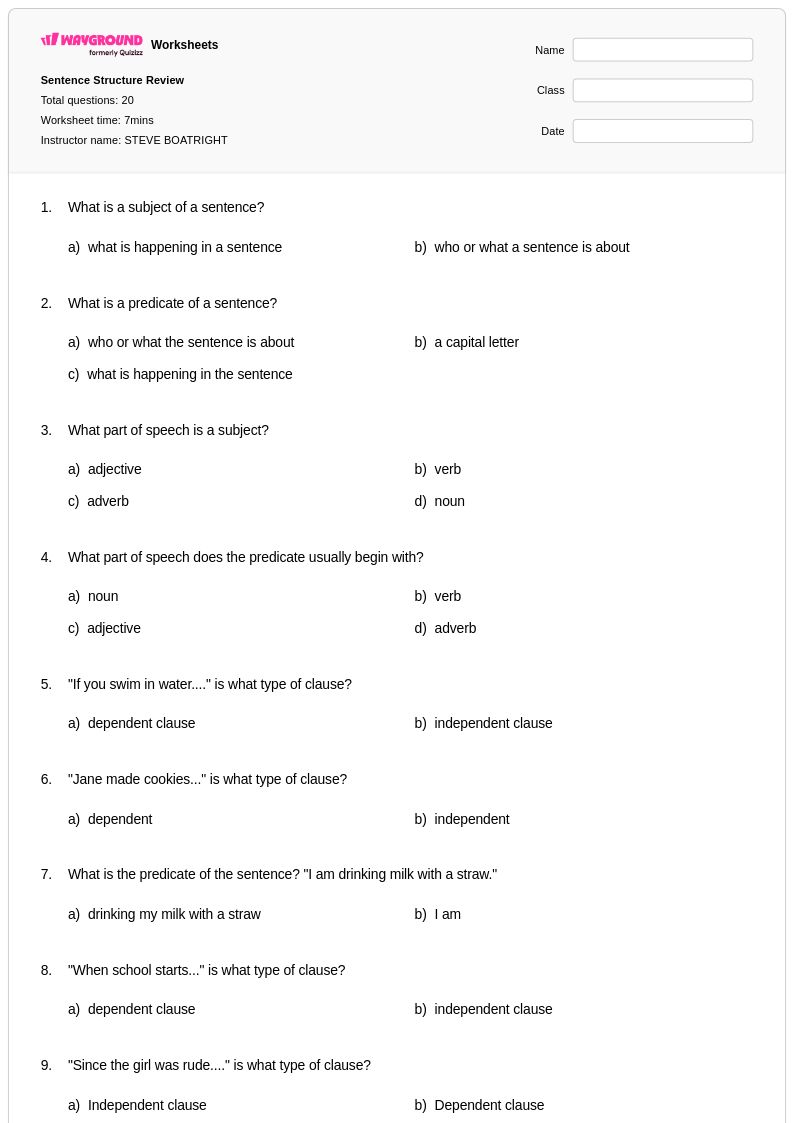
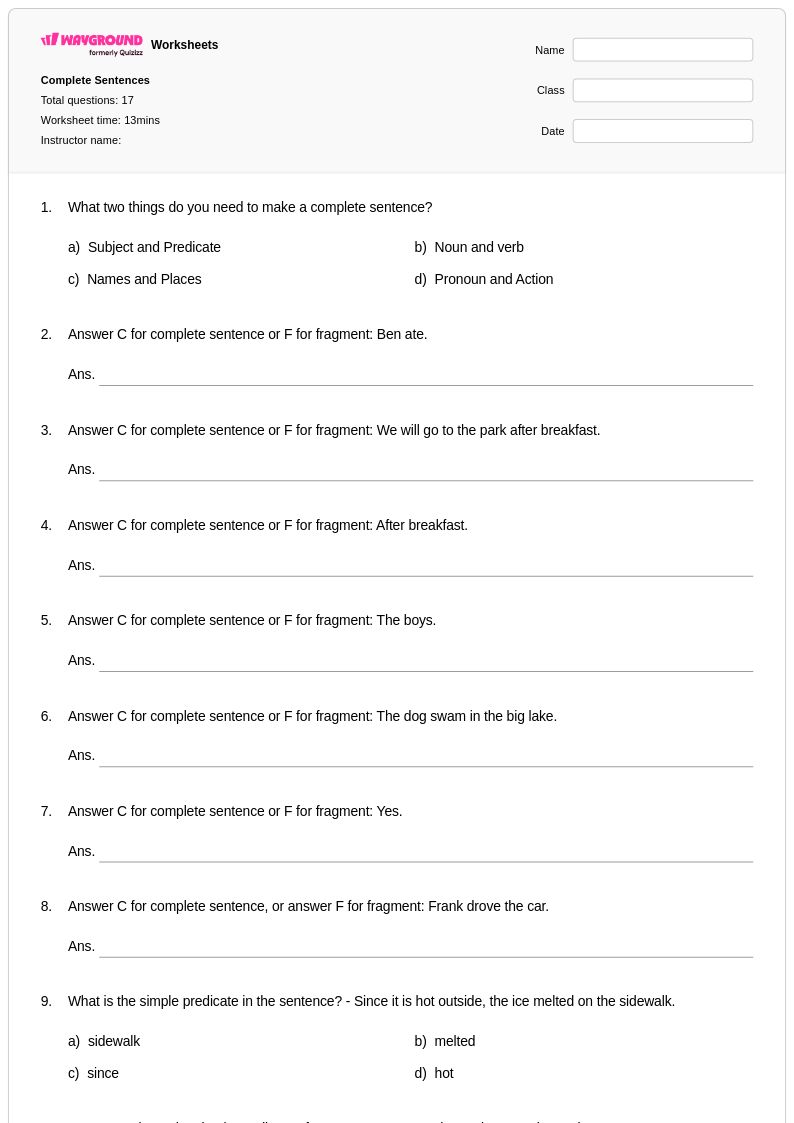
Grade 5 subjects worksheets from Wayground help students master identifying and understanding sentence subjects through engaging printables, free practice problems, and comprehensive answer keys in convenient PDF format.
Grade 5 subjects worksheets available through Wayground (formerly Quizizz) provide essential practice for students learning to identify and understand the subject component of sentences. These comprehensive printables focus specifically on helping fifth-grade students master the foundational grammar skill of recognizing who or what performs the action in a sentence. The worksheets strengthen critical reading comprehension and writing abilities by teaching students to distinguish between simple subjects, complete subjects, and compound subjects through engaging practice problems. Each resource includes a detailed answer key and is available as a free pdf download, making it convenient for both classroom instruction and independent study. Students work through carefully scaffolded exercises that progress from identifying obvious subjects in simple sentences to recognizing subjects in more complex sentence structures with prepositional phrases and inverted word order.
Wayground (formerly Quizizz) empowers teachers with millions of educator-created resources specifically designed for subjects instruction, featuring robust search and filtering capabilities that allow quick access to grade-appropriate materials. The platform's standards alignment ensures that Grade 5 subjects worksheets meet curriculum requirements, while differentiation tools enable teachers to customize content for varying student ability levels. Teachers can seamlessly integrate these resources into lesson planning, using them for initial instruction, targeted remediation, or enrichment activities for advanced learners. The flexible format options, including both printable pdf versions and interactive digital worksheets, accommodate diverse classroom needs and teaching styles. This comprehensive approach to subjects practice helps educators provide consistent, high-quality grammar instruction while saving valuable preparation time through ready-to-use materials that support systematic skill development.
FAQs
How do I teach students to identify the subject of a sentence?
Start by teaching students to locate the verb first, then ask 'Who or what is doing this action?' to isolate the subject. Begin with simple declarative sentences before introducing compound subjects, inverted sentences, and subjects buried after prepositional phrases. Using consistent sentence frames and color-coding subjects versus predicates can help students build reliable identification habits before moving to more complex structures.
What is the difference between a simple subject and a complete subject?
The simple subject is the core noun or pronoun that performs the action, while the complete subject includes the simple subject plus all its modifiers. For example, in 'The tall boy with red shoes runs fast,' the simple subject is 'boy' and the complete subject is 'The tall boy with red shoes.' Students often conflate the two, so explicit comparison practice with labeled examples is essential.
What exercises help students practice identifying sentence subjects?
Effective practice includes underlining subjects in isolated sentences, rewriting sentences to change the subject, and identifying subjects in student-written paragraphs to build real-world transfer. Exercises that progress from simple noun subjects to compound subjects and implied subjects in imperative sentences give students a structured skill ladder to climb.
What mistakes do students commonly make when identifying sentence subjects?
The most frequent error is confusing the noun in a prepositional phrase for the subject — for example, selecting 'box' as the subject in 'One of the boxes is missing.' Students also struggle with inverted sentences like questions and sentences beginning with 'There' or 'Here,' where the subject follows the verb. Targeted practice with these specific structures, paired with explicit instruction on prepositional phrase removal, directly addresses these patterns.
How do I support struggling students who can't identify subjects in complex sentences?
Break the task into steps: first have students cross out prepositional phrases, then find the verb, then ask who or what performs that verb. For students who need additional support, Wayground's Read Aloud accommodation can help students hear the sentence structure rather than decode it visually, while reduced answer choices can lower cognitive load during digital practice sessions.
How do I use Wayground's subjects worksheets in my classroom?
Wayground's subjects worksheets are available as printable PDFs for traditional paper-and-pencil classroom use and in digital formats for technology-integrated learning environments. Teachers can also host them as a quiz directly on Wayground, making it easy to assign practice for homework, bell ringers, or formative assessment. Each worksheet includes a complete answer key, so grading and feedback are built in.