Free Printable Substance Abuse Worksheets for Grade 9
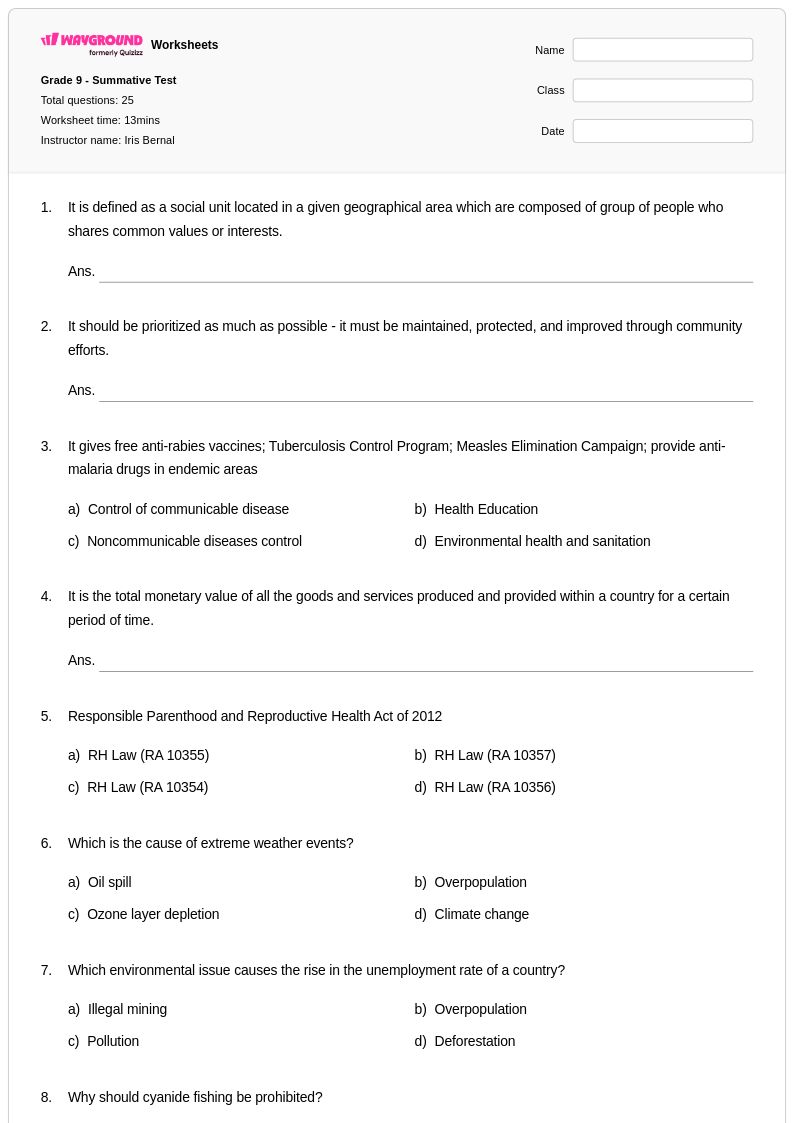
Grade 9 substance abuse worksheets from Wayground provide comprehensive printables and practice problems that help students understand the risks of drug and alcohol use, featuring free PDF resources with answer keys to support health education learning.
Explore printable Substance Abuse worksheets for Grade 9
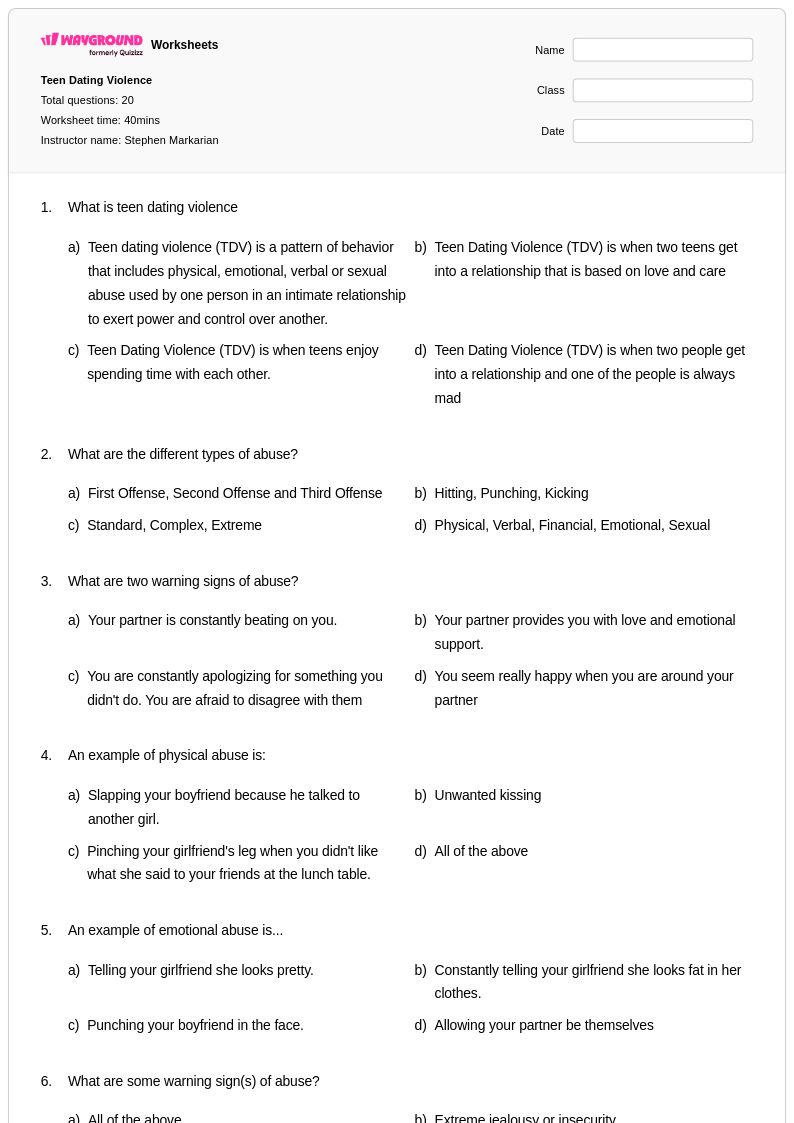
Substance abuse education worksheets for Grade 9 students available through Wayground provide comprehensive resources to help teenagers understand the serious health risks and social consequences associated with drug and alcohol use. These carefully designed printables strengthen critical thinking skills as students analyze real-world scenarios, examine the physiological effects of various substances on developing bodies, and explore decision-making strategies for resisting peer pressure. Each worksheet collection includes detailed answer keys that enable both independent study and guided instruction, while free practice problems cover essential topics such as identifying warning signs of addiction, understanding legal consequences, and recognizing healthy coping mechanisms. The pdf format ensures easy access for both classroom instruction and homework assignments, allowing students to develop informed perspectives on substance abuse prevention through evidence-based learning activities.
Wayground supports physical education and health teachers with millions of carefully curated, teacher-created worksheet resources specifically designed for substance abuse education at the Grade 9 level. The platform's robust search and filtering capabilities allow educators to quickly locate materials aligned with state health education standards, while built-in differentiation tools help teachers customize content for diverse learning needs and reading levels. These flexible resources are available in both printable and digital pdf formats, making them ideal for traditional classroom instruction, remote learning environments, or hybrid teaching approaches. Teachers can efficiently plan comprehensive substance abuse prevention units, provide targeted remediation for students who need additional support, and offer enrichment activities for advanced learners, all while ensuring that critical health education concepts are reinforced through meaningful skill practice and assessment opportunities.
FAQs
How do I teach substance abuse prevention in a health class?
Effective substance abuse prevention education combines factual instruction about the physiological effects of drugs and alcohol with skill-building activities focused on decision-making and resisting peer pressure. Teachers should use real-world scenarios and statistical data to make the consequences of substance use concrete and relevant for students. Connecting substance abuse topics to mental health helps students understand addiction as a complex issue rather than a moral failing, which encourages more honest classroom discussion.
What topics should a substance abuse worksheet cover?
A well-rounded substance abuse worksheet should address the physiological effects of specific substances, risk factors that contribute to addiction, the relationship between mental health and substance use, and practical strategies for resisting peer pressure. Including scenario-based problems helps students apply knowledge to real-life situations, while sections on where to seek help give the content an actionable, prevention-focused purpose.
What common misconceptions do students have about drug and alcohol use?
Students frequently underestimate the addictive potential of substances that are legal or widely used, such as alcohol, nicotine, and prescription medications. Many also believe that addiction is purely a matter of willpower, which obscures the neurological and environmental risk factors involved. Correcting these misconceptions early is critical because they directly influence students' risk perception and decision-making. Worksheets that present physiological data and examine risk factors help replace these misconceptions with accurate, evidence-based understanding.
How can I help students who struggle with sensitive substance abuse content?
Some students may have personal or family experiences with substance abuse, making this content emotionally charged. Using anonymous reflection prompts, focusing on factual and statistical analysis rather than personal disclosure, and framing discussions around community and prevention rather than judgment can reduce barriers to engagement. On Wayground, teachers can enable the Read Aloud accommodation for students who need audio support, and adjust font sizes and themes through Reading Mode to make the material more accessible for diverse learners.
How do I use Wayground's substance abuse worksheets in my classroom?
Wayground's substance abuse worksheets are available as printable PDFs for traditional classroom use and in digital formats for technology-integrated environments, giving teachers flexibility for individual practice, small group discussion, or whole-class instruction. Teachers can also host worksheets as a quiz directly on Wayground, which supports interactive engagement and makes it easy to review responses. Each worksheet includes a detailed answer key, supporting both independent student work and teacher-led instruction.
How can I differentiate substance abuse education materials for students at different levels?
Differentiation in substance abuse education can involve adjusting the complexity of scenario analysis, the amount of scaffolding provided in decision-making activities, or the reading level of informational content. Wayground supports differentiation tools that allow teachers to customize content complexity for remediation or enrichment. For students with additional needs, accommodations such as extended time, reduced answer choices, or Read Aloud can be applied individually without alerting the rest of the class.