Free Printable Text and Graphic Features Worksheets for Grade 8
Grade 8 text and graphic features worksheets help students master analyzing visual elements, charts, diagrams, and textual components through free printables with comprehensive answer keys for effective reading comprehension practice.
Explore printable Text and Graphic Features worksheets for Grade 8
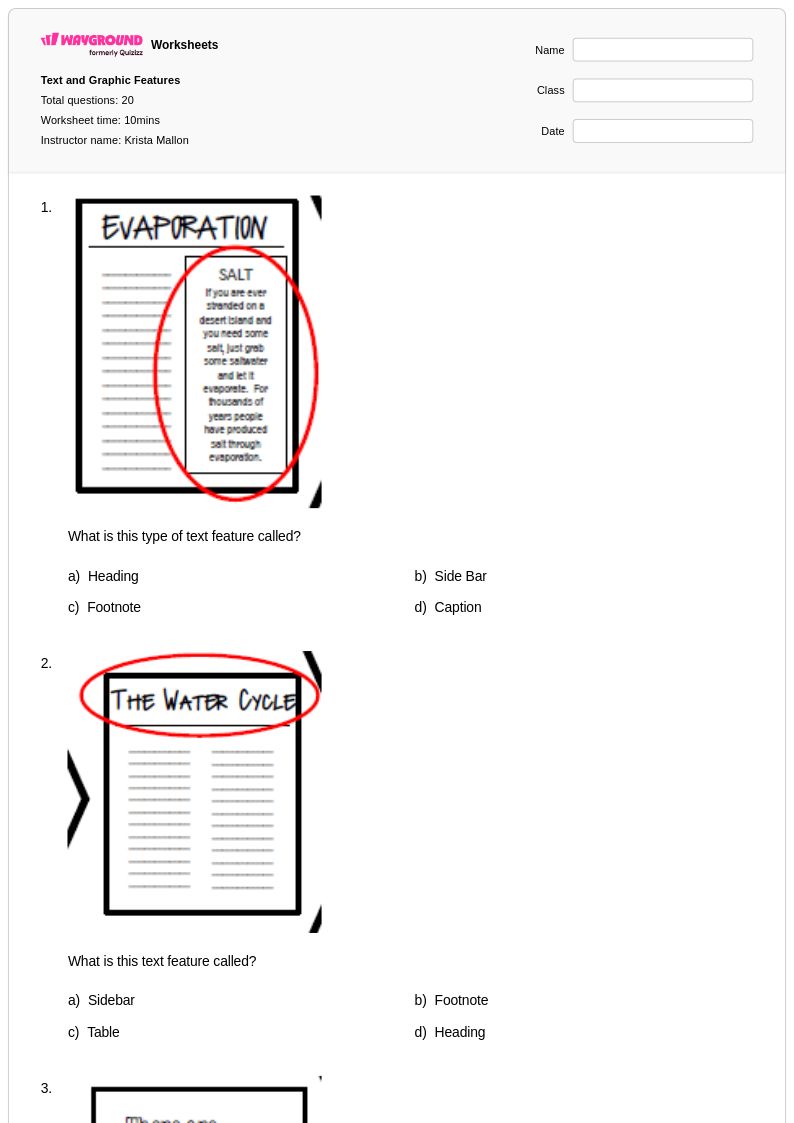
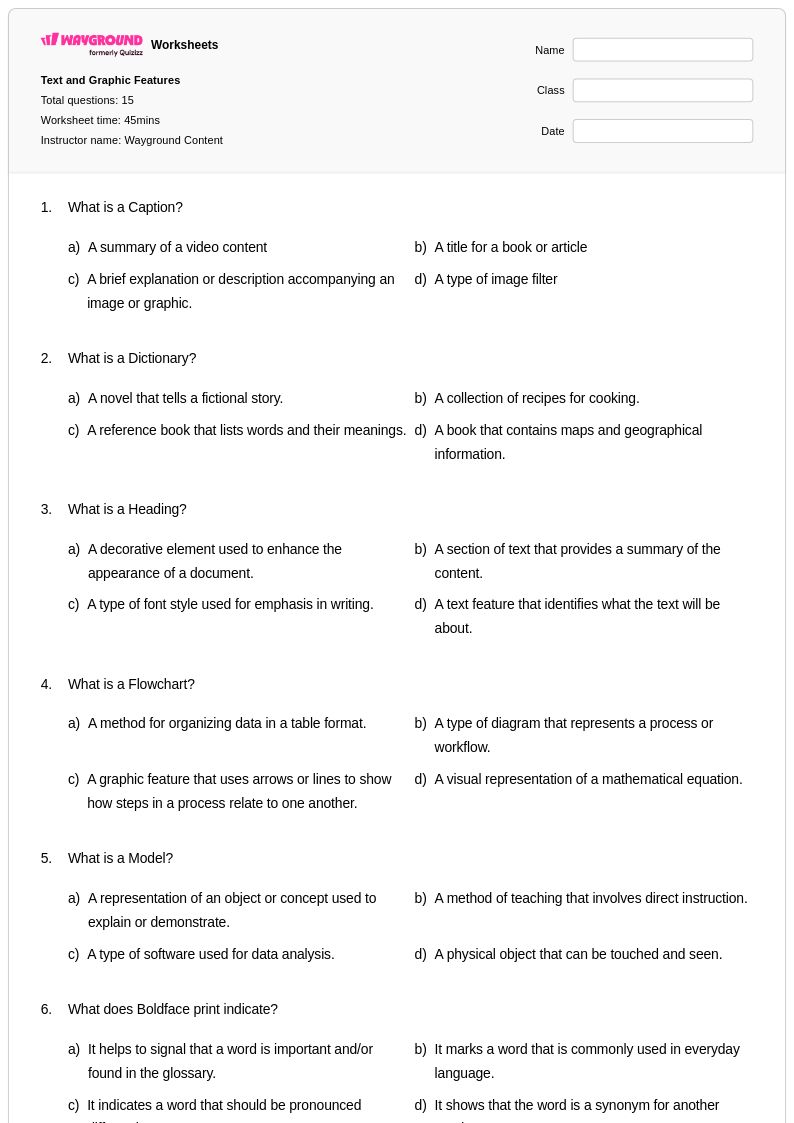
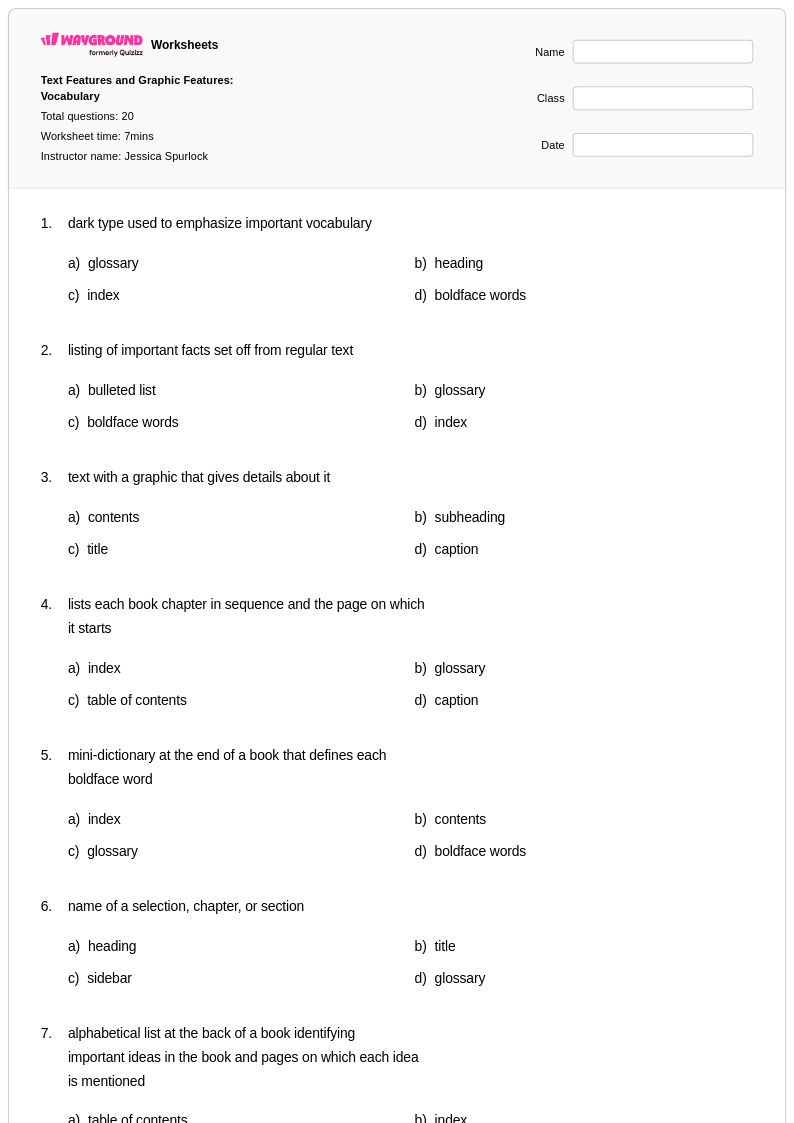
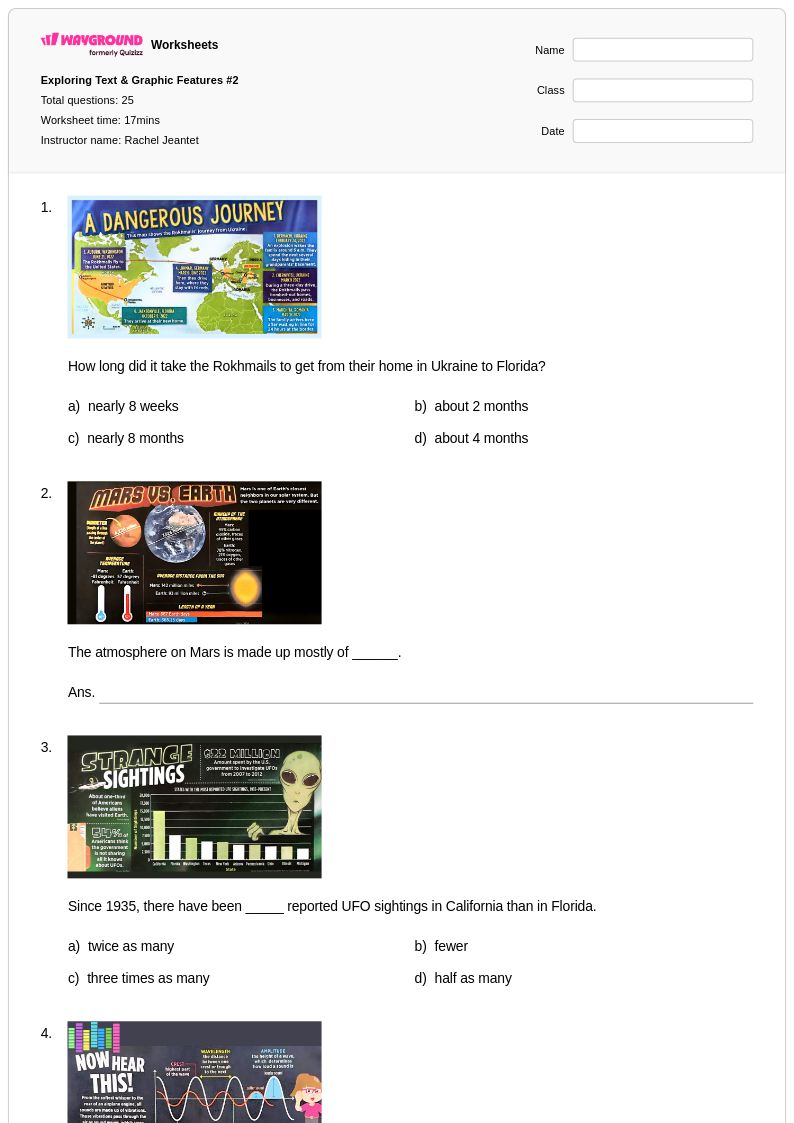
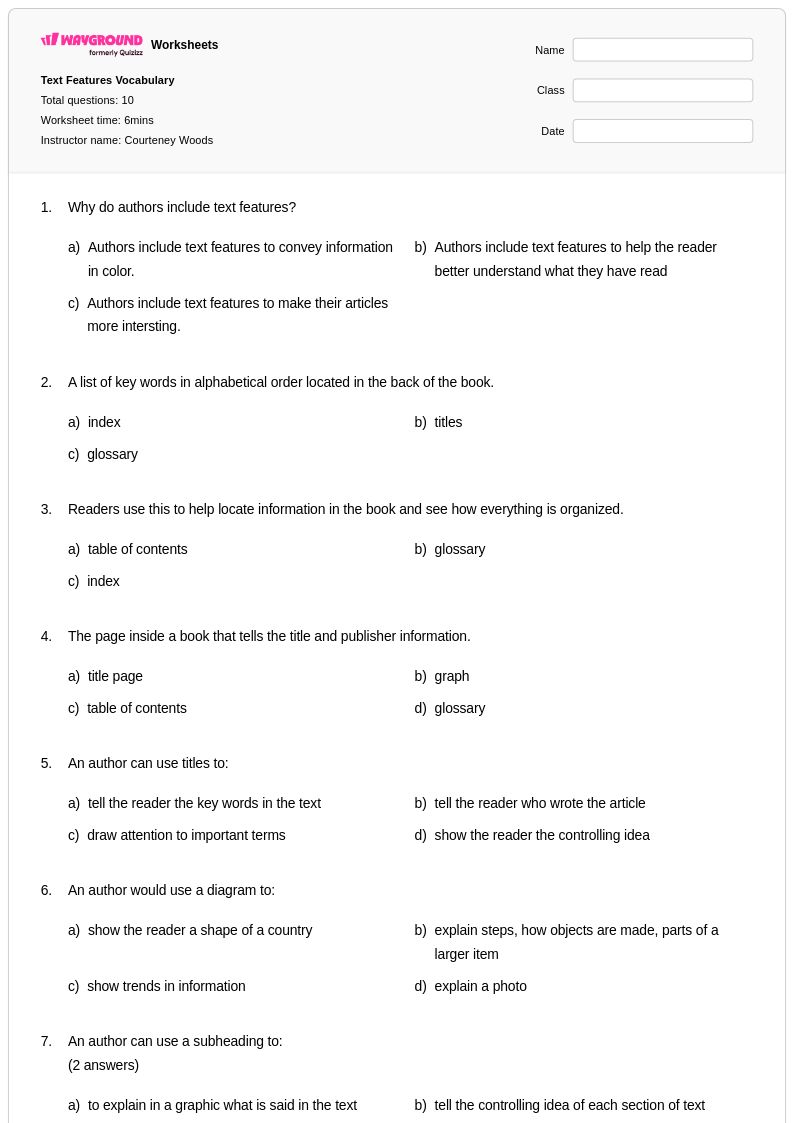
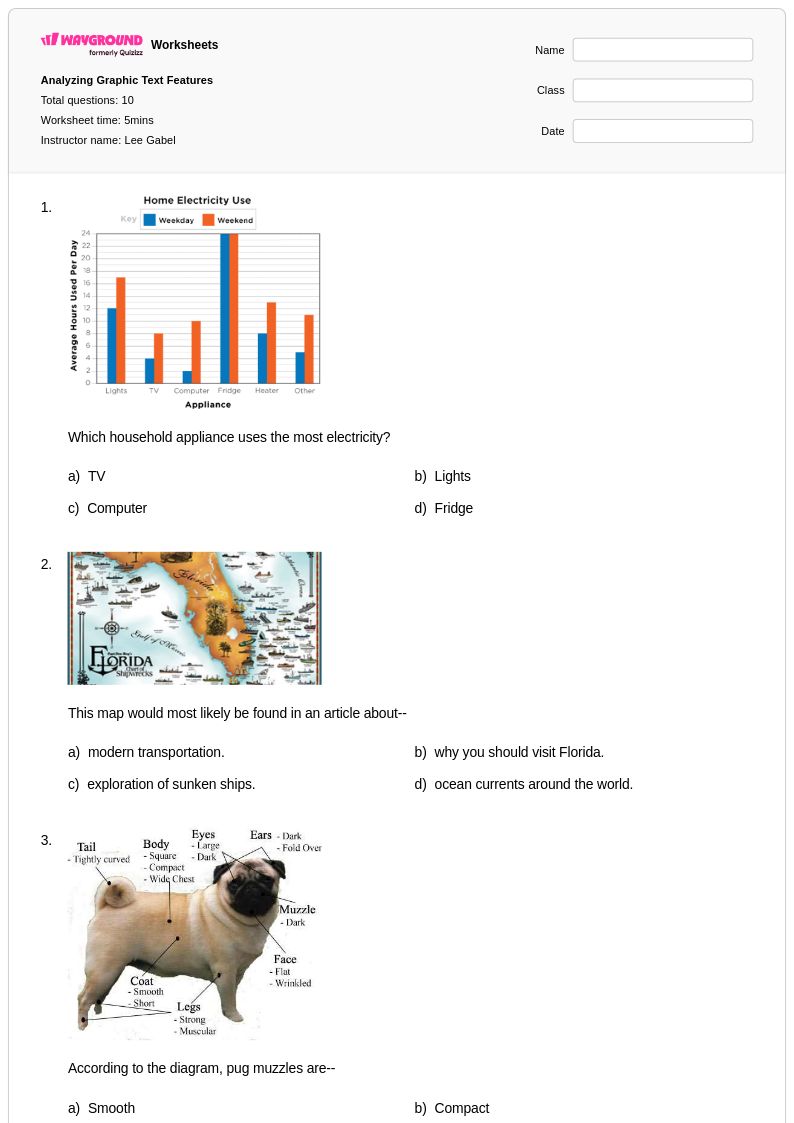
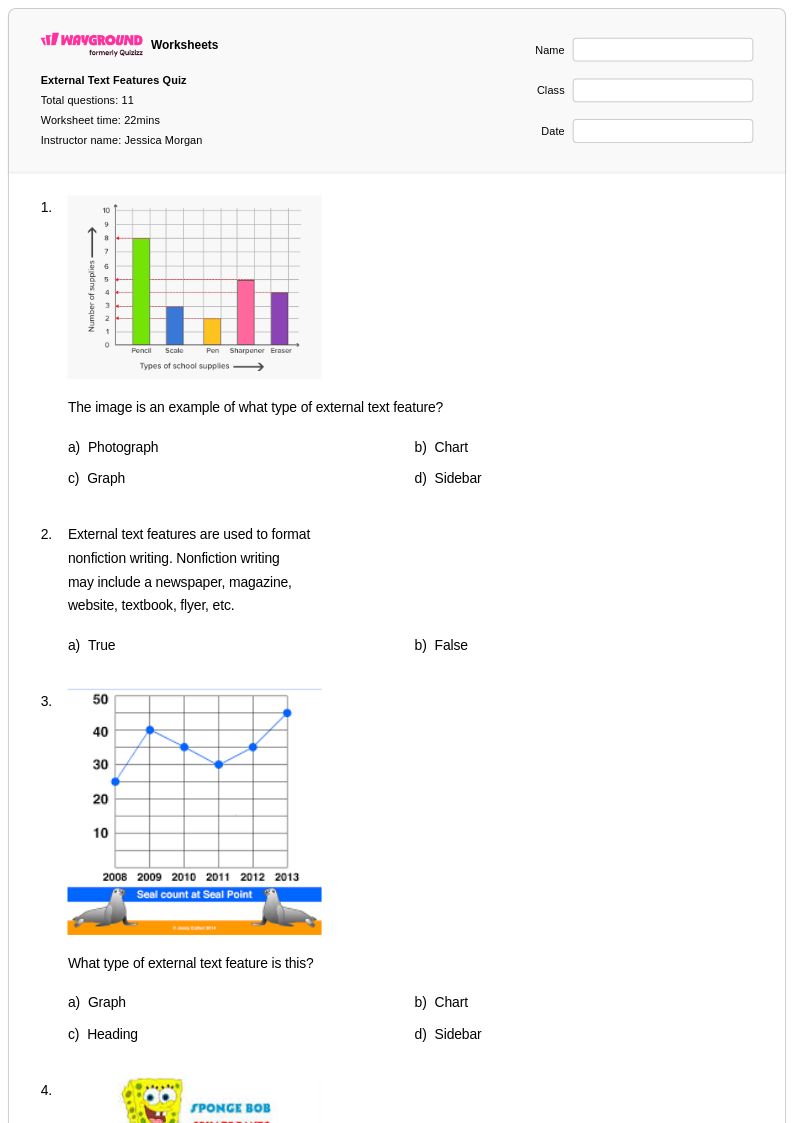
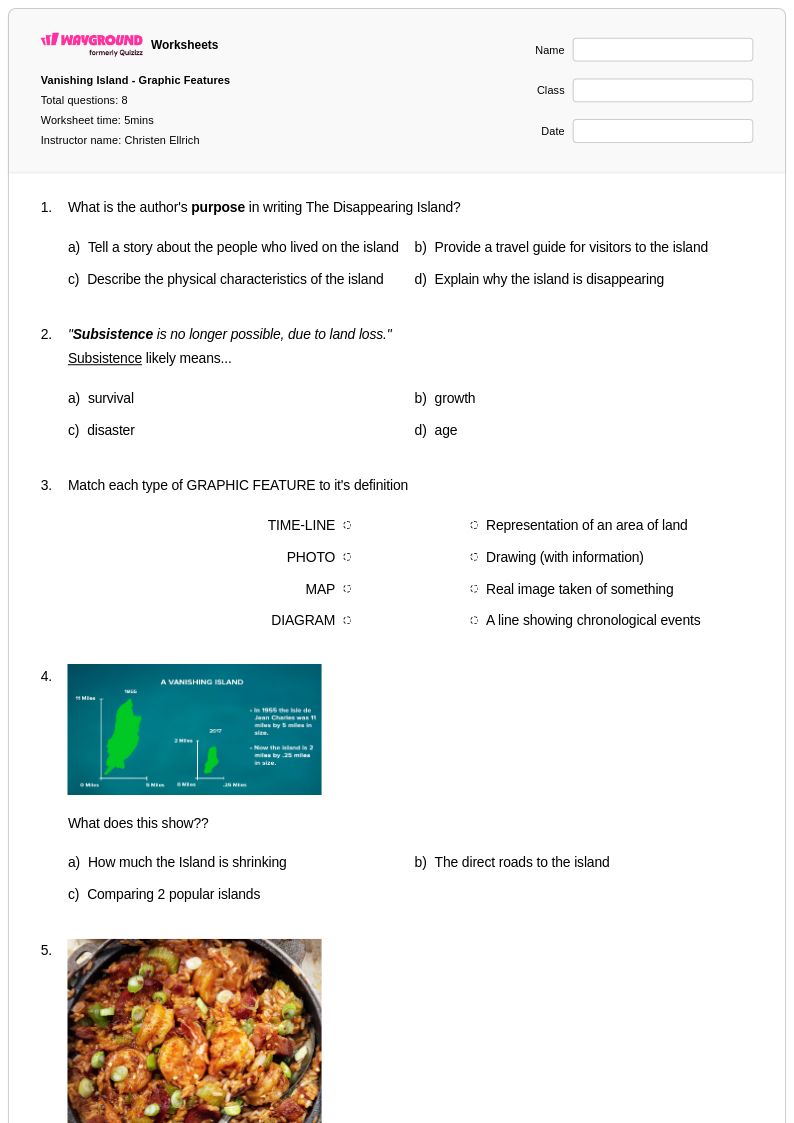
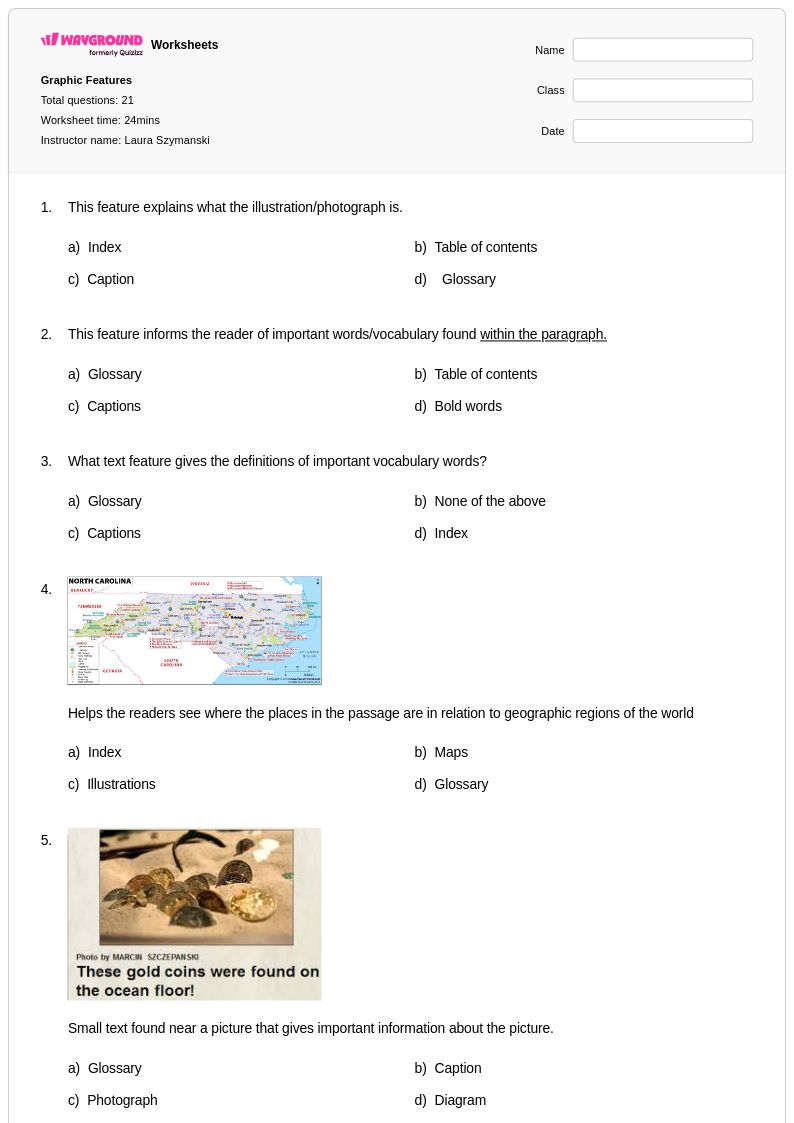
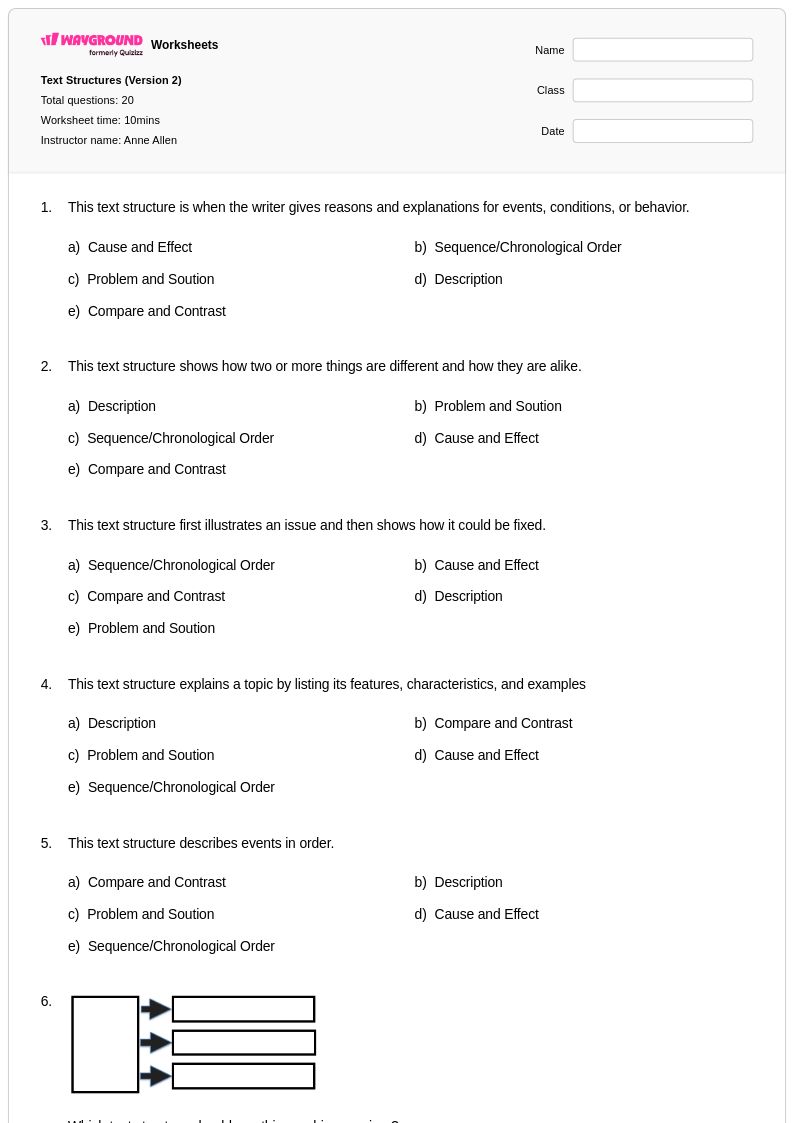
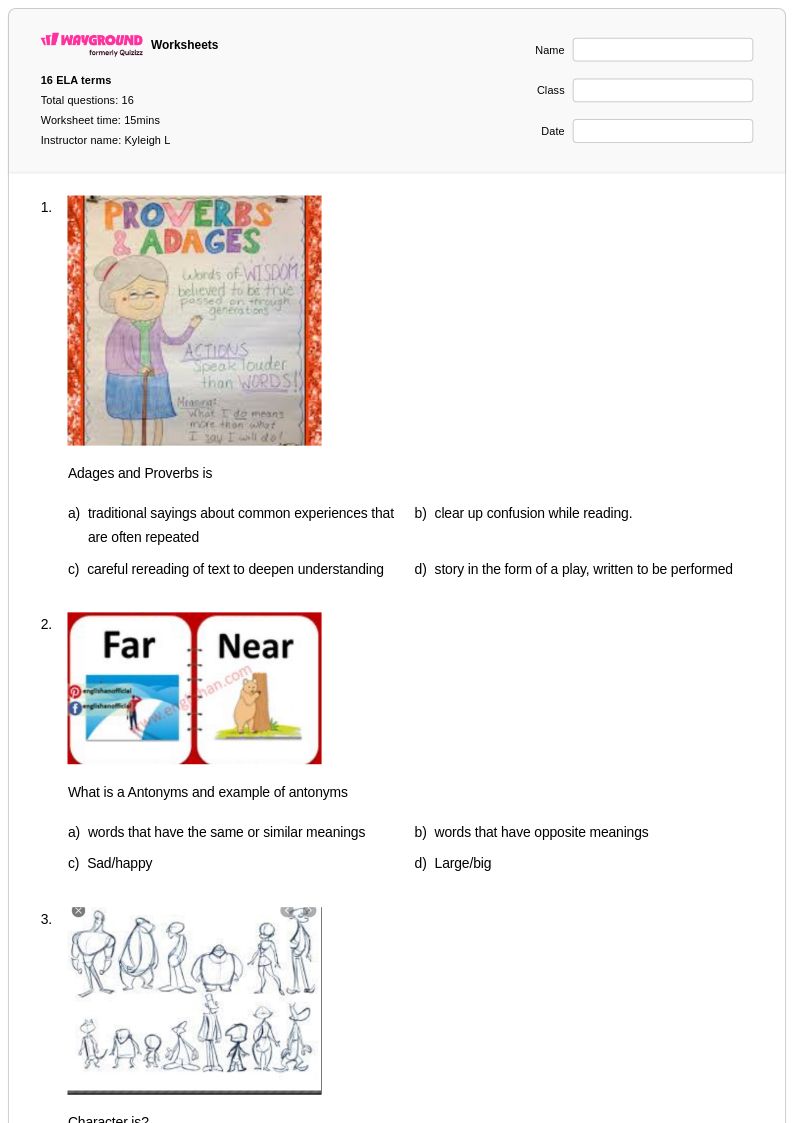
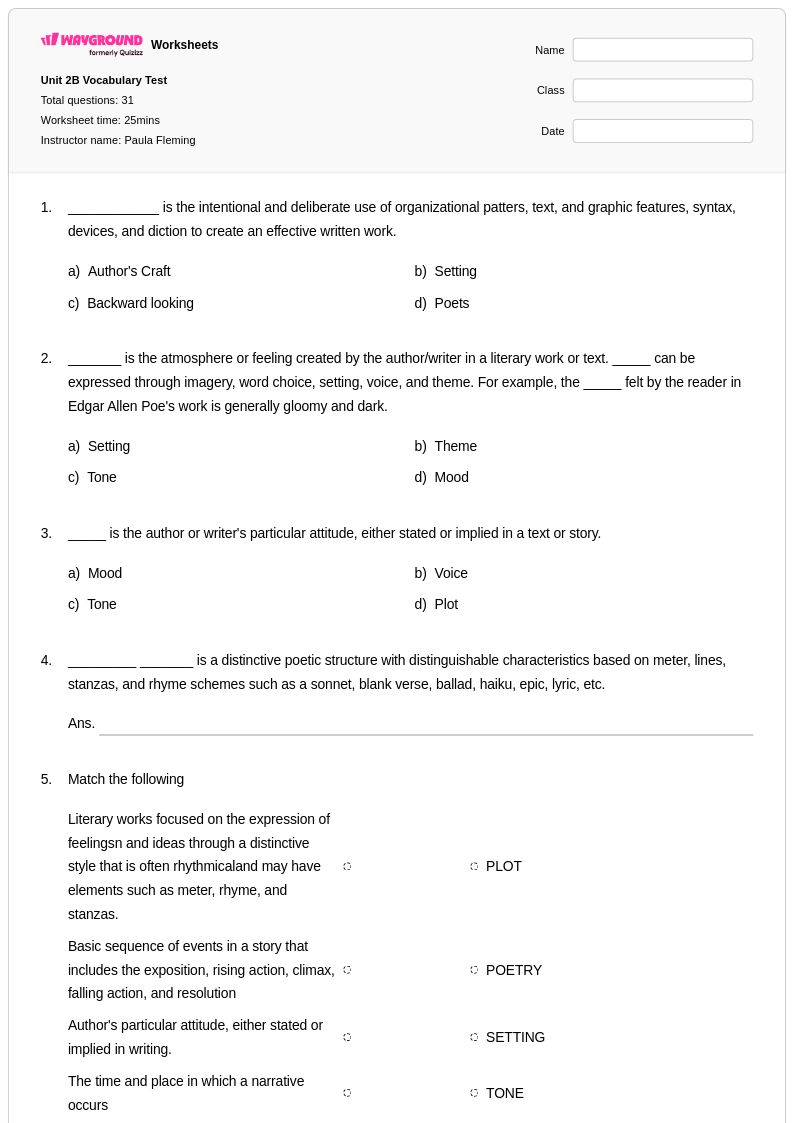
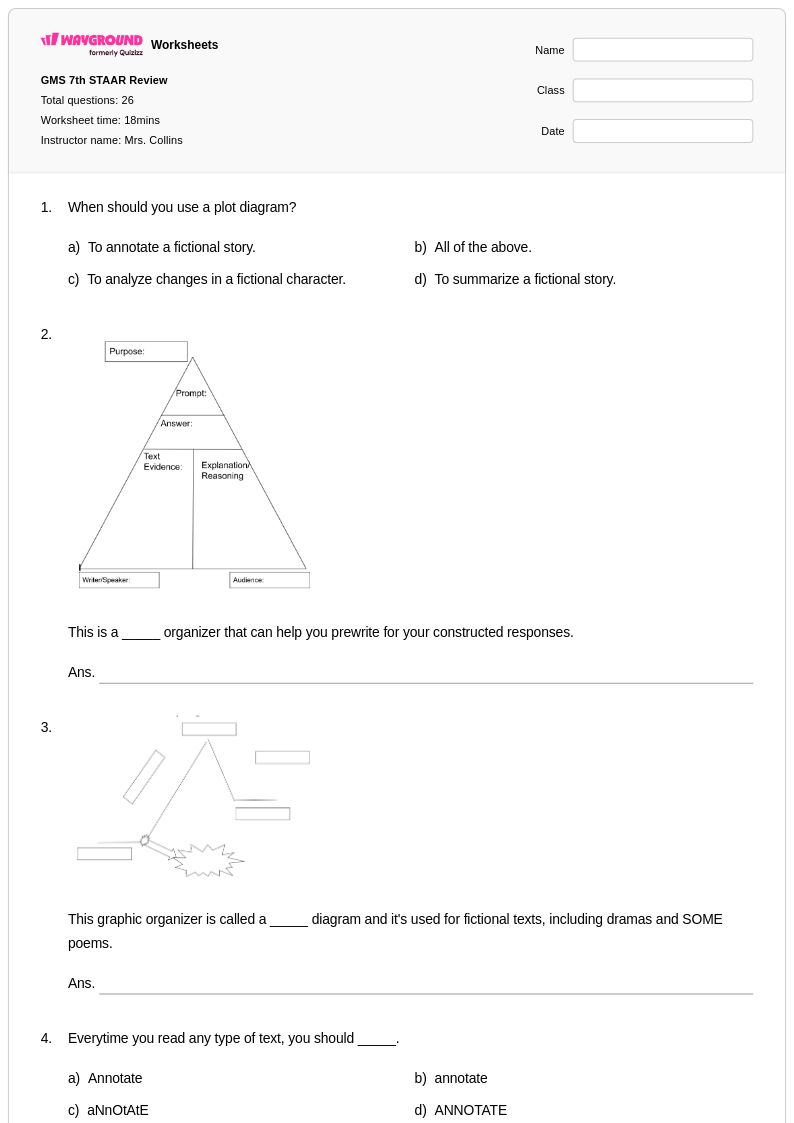
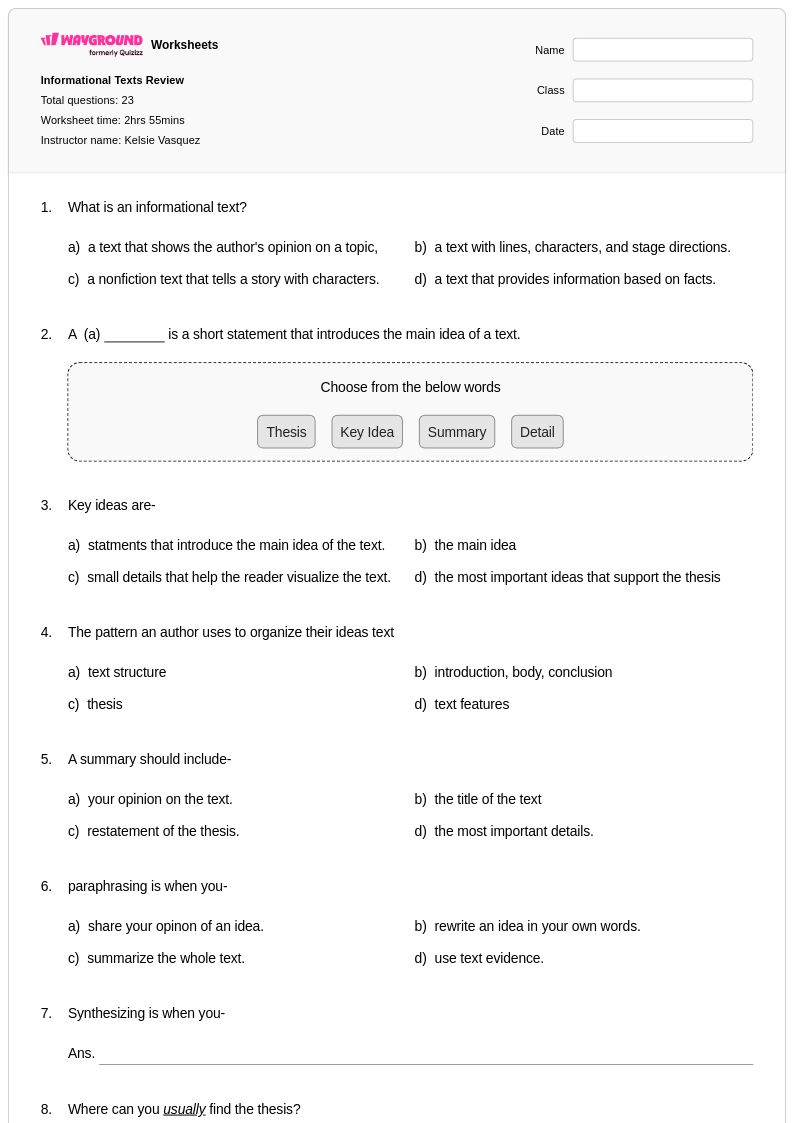
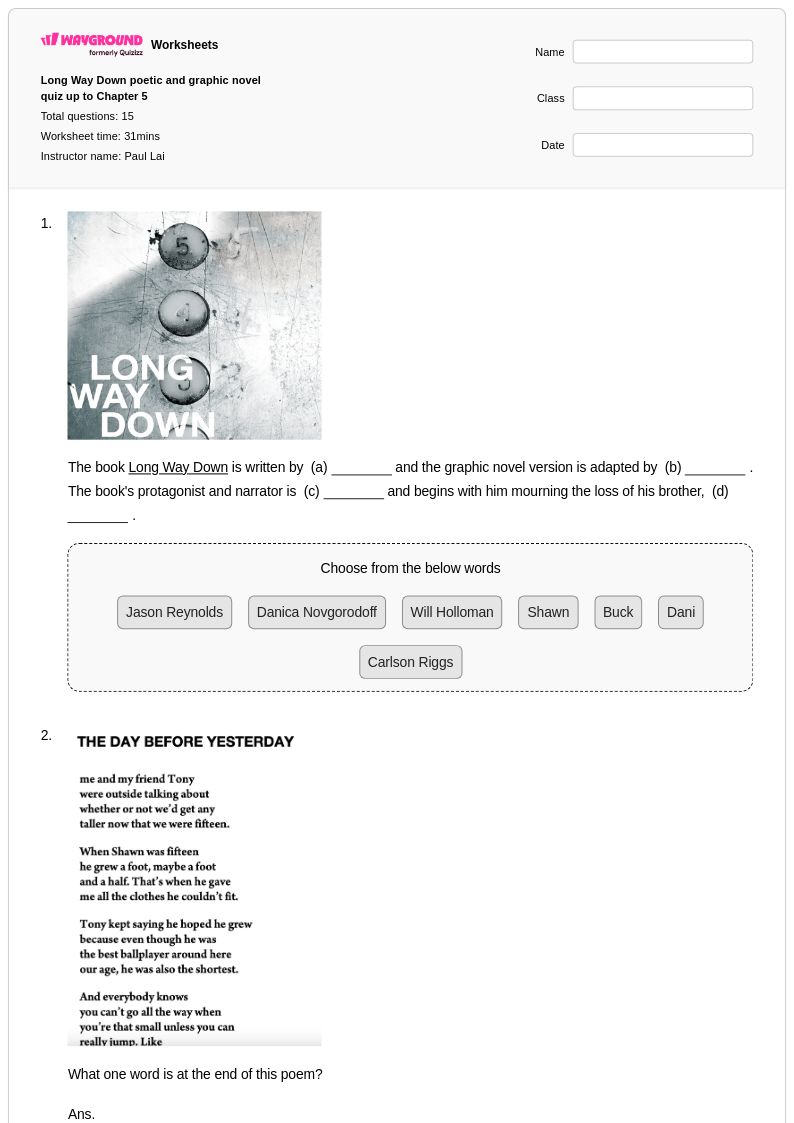
Text and graphic features worksheets for Grade 8 students available through Wayground (formerly Quizizz) provide comprehensive practice in identifying, analyzing, and interpreting the visual and textual elements that enhance reading comprehension. These carefully designed worksheets focus on developing students' ability to recognize how authors use headings, subheadings, captions, charts, graphs, maps, timelines, and other organizational features to convey meaning and structure information. Each worksheet includes detailed answer keys that help teachers assess student understanding of how these features support main ideas, clarify complex concepts, and guide readers through informational texts. The free printable resources offer structured practice problems that challenge eighth-grade students to extract information from graphic organizers, interpret data visualizations, and understand how text features like bold print, italics, and bullet points emphasize key information across various genres and subject areas.
Wayground (formerly Quizizz) supports educators with an extensive collection of teacher-created text and graphic features worksheets, drawing from millions of high-quality resources that align with grade-level standards and learning objectives. The platform's robust search and filtering capabilities enable teachers to quickly locate materials that match specific curriculum requirements, student reading levels, and instructional goals for text feature instruction. These versatile worksheet collections are available in both printable pdf formats for traditional classroom use and digital formats for technology-enhanced learning environments, providing flexibility for diverse teaching situations. Teachers can customize these resources to support differentiated instruction, using them for initial skill introduction, targeted remediation for struggling readers, enrichment activities for advanced students, or regular practice to reinforce reading comprehension strategies throughout the academic year.
FAQs
How do I teach text and graphic features to students?
Start by modeling how to identify individual features — such as headings, captions, diagrams, and timelines — in real informational texts before asking students to do so independently. Use a think-aloud strategy to demonstrate why an author chose a particular feature and how it adds meaning beyond the running text. Gradually release responsibility by having students practice with structured worksheets that guide them through systematic feature identification and interpretation. Connecting each feature to its purpose (e.g., a caption clarifies a photo; a timeline shows sequence) helps students internalize the skill rather than just label elements.
What exercises help students practice identifying text and graphic features?
Effective practice exercises include feature hunts where students scan a nonfiction passage and annotate every feature they find, followed by written explanations of each feature's purpose. Matching activities that pair feature names with definitions or examples build vocabulary, while analysis tasks that ask students to explain how a specific chart or diagram supports the main idea deepen comprehension. Structured worksheets that combine identification, labeling, and short-response questions are especially useful because they scaffold the skill from recognition to interpretation in a single activity.
What mistakes do students commonly make when analyzing text and graphic features?
The most common error is treating features as decorative rather than purposeful — students often skip over charts, diagrams, or sidebars without connecting them to the main text. Another frequent mistake is confusing feature types, such as labeling a diagram as a chart or misidentifying a subheading as a title. Students also tend to describe what a feature shows rather than explaining why the author included it, which reflects surface-level engagement rather than true comprehension. Explicitly teaching the function of each feature type, and requiring students to justify their answers, helps address these patterns.
How can I use text and graphic features worksheets to support struggling readers?
For struggling readers, start with worksheets that isolate one feature at a time rather than presenting a full page of mixed elements, so students can build confidence before tackling complexity. On Wayground, teachers can enable the Read Aloud accommodation so question text and instructions are read to students who have decoding difficulties, keeping the focus on comprehension rather than word recognition. Reducing answer choices is another option for students who are easily overwhelmed, allowing them to demonstrate understanding without the cognitive load of a full set of distractors. These accommodations can be assigned to individual students while the rest of the class works with standard settings.
How do I use Wayground's text and graphic features worksheets in my classroom?
Wayground's text and graphic features worksheets are available as printable PDFs for traditional classroom use and in digital formats for technology-integrated environments, making them flexible for independent work, small groups, or whole-class instruction. Teachers can also host worksheets as a live quiz on Wayground, giving students an interactive experience while automatically collecting responses for review. Answer keys are included with every worksheet, supporting both self-checking by students and efficient grading by teachers. The digital format is particularly useful for assigning practice as homework or for use in blended learning rotations.
At what grade level should students learn to identify text and graphic features?
Instruction in text and graphic features typically begins in early elementary grades, where students learn to recognize basic elements like titles, headings, and photographs, and extends through middle school as texts become more complex and features more varied. Standards in most curricula formally introduce this skill in grades 2 through 4 and continue building on it through grade 8, particularly in informational reading and content-area literacy. Teachers at all grade levels can find appropriately leveled materials to match where their students are in this progression.