
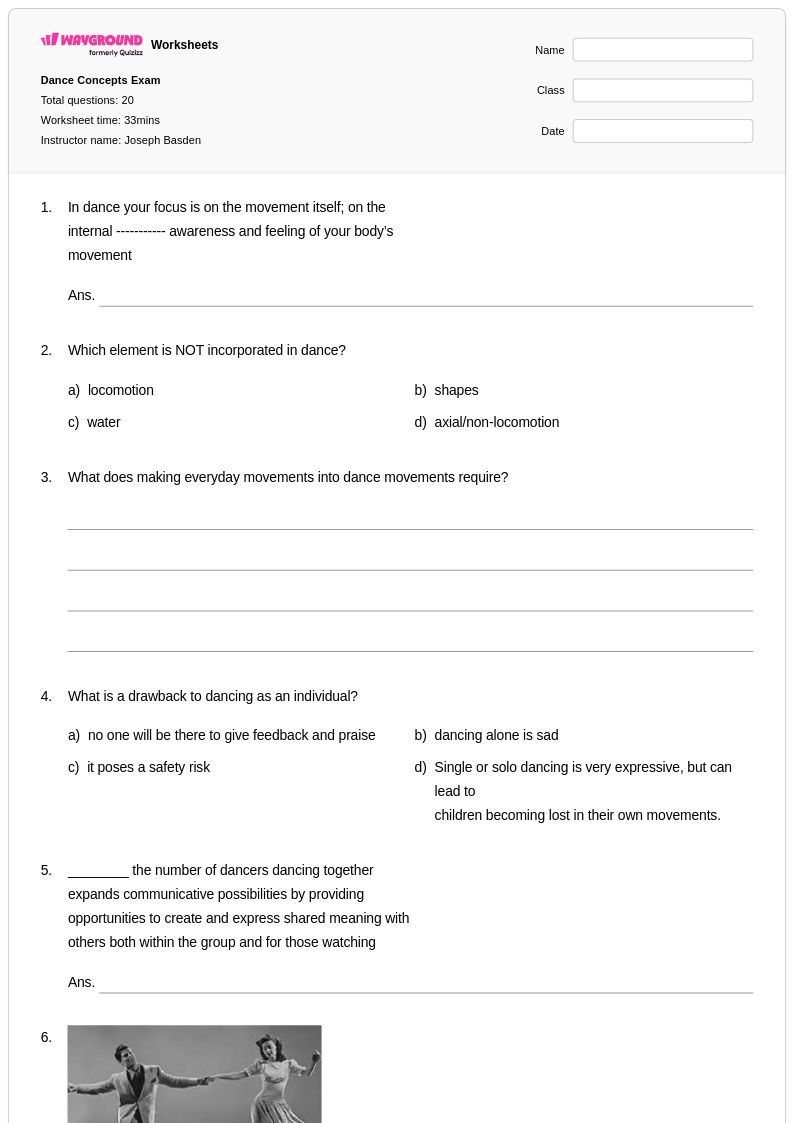
20 Q
1st - 5th
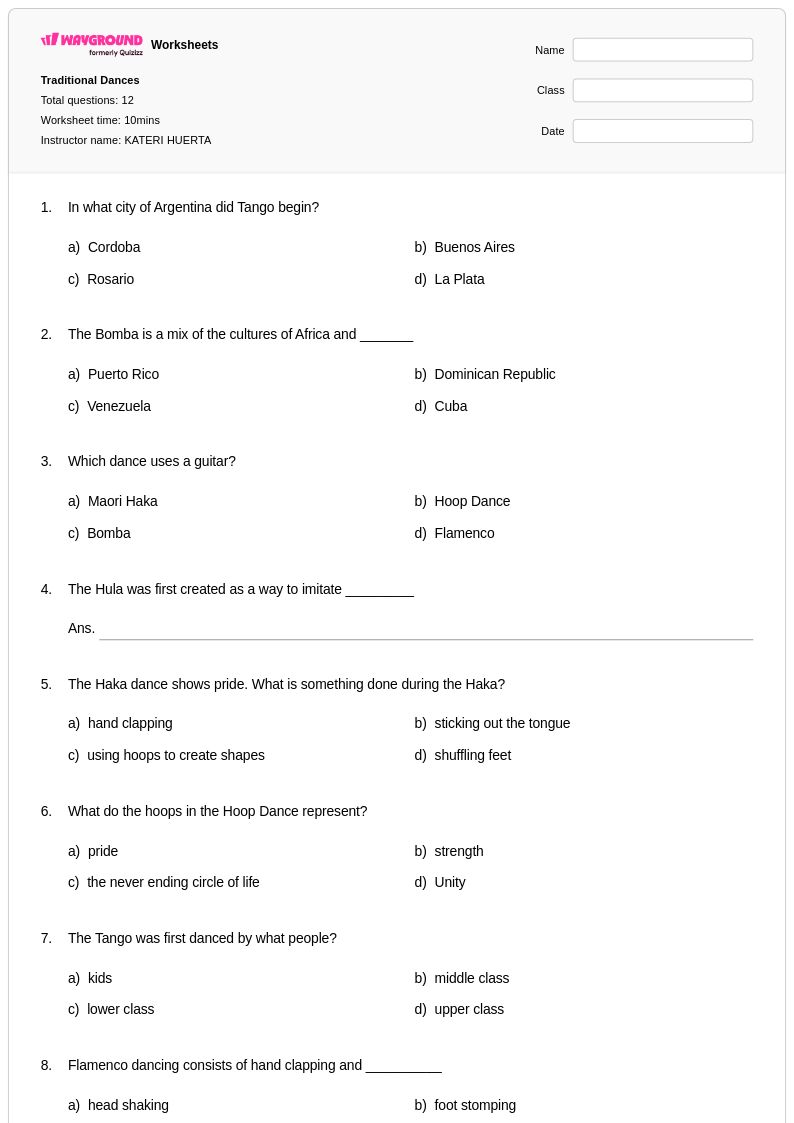
12 Q
2nd - 3rd
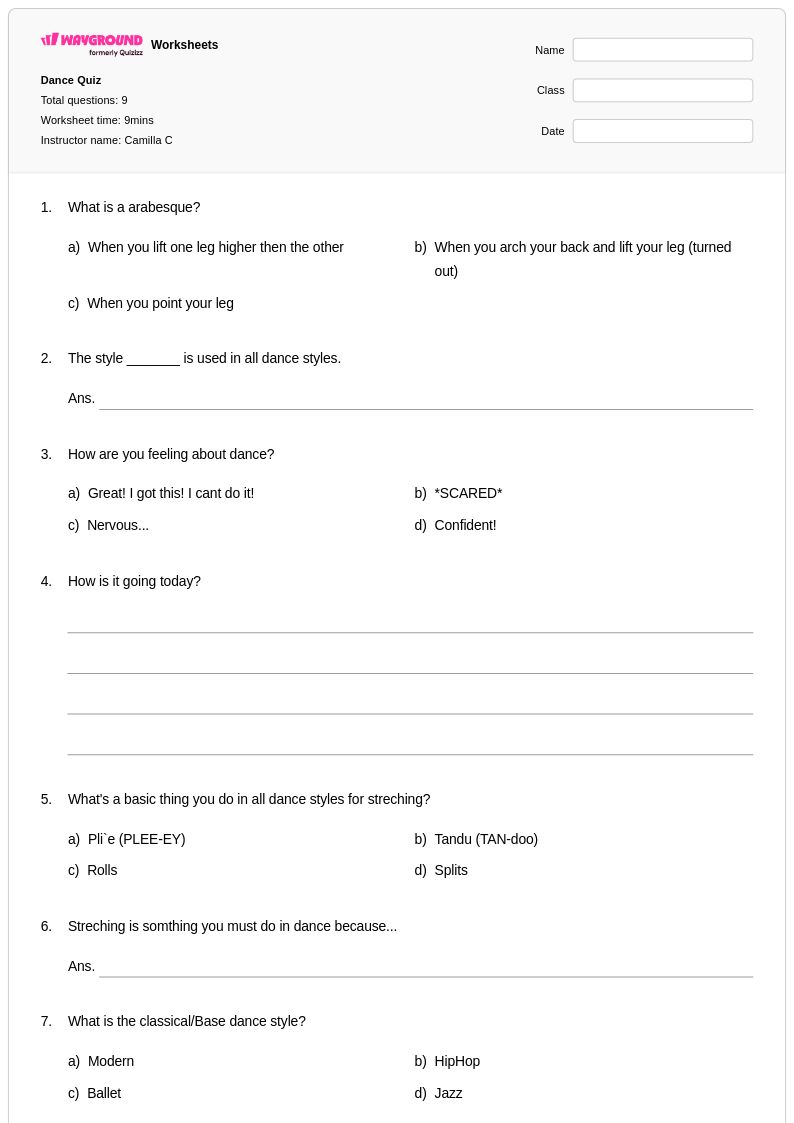
9 Q
KG - Uni
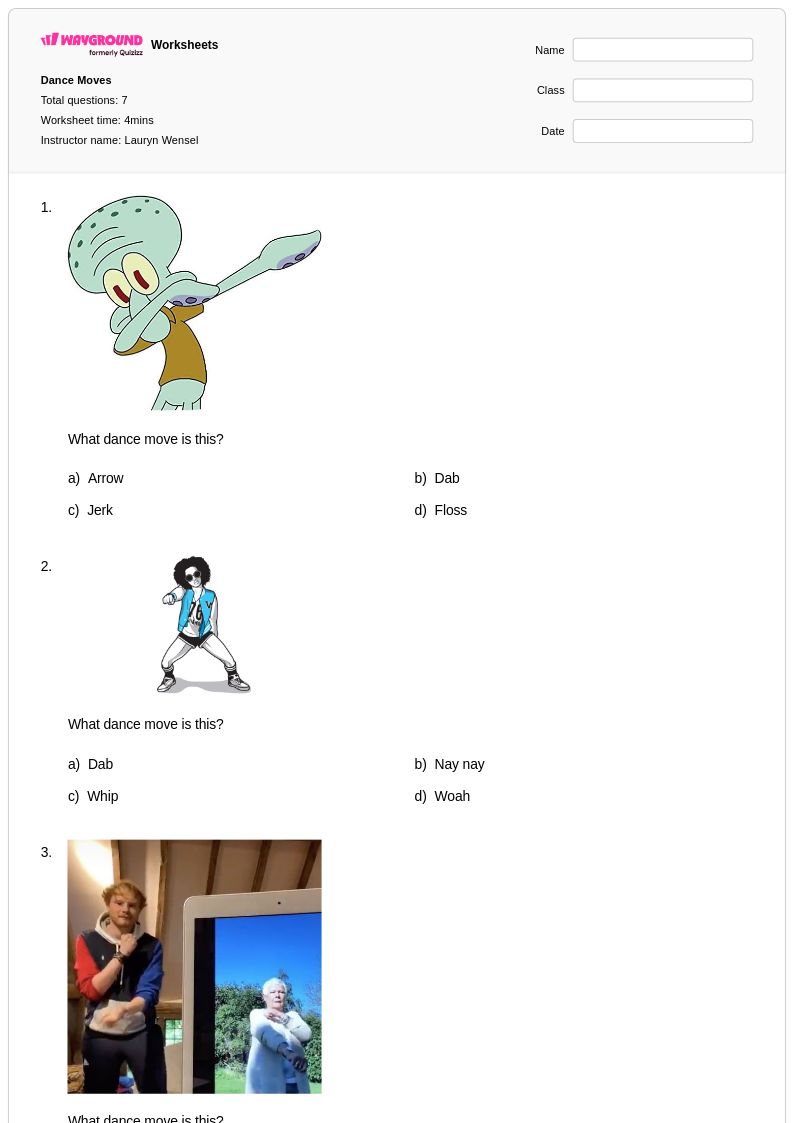
7 Q
2nd - 4th
12 Q
2nd - 3rd
15 Q
KG - PD
20 Q
1st - 5th
8 Q
KG - Uni

10 Q
1st - Uni
5 Q
1st - 5th
11 Q
KG - 3rd
18 Q
1st - 2nd
10 Q
KG - Uni
20 Q
1st - 5th
10 Q
KG - Uni
10 Q
1st - 3rd
10 Q
KG - PD
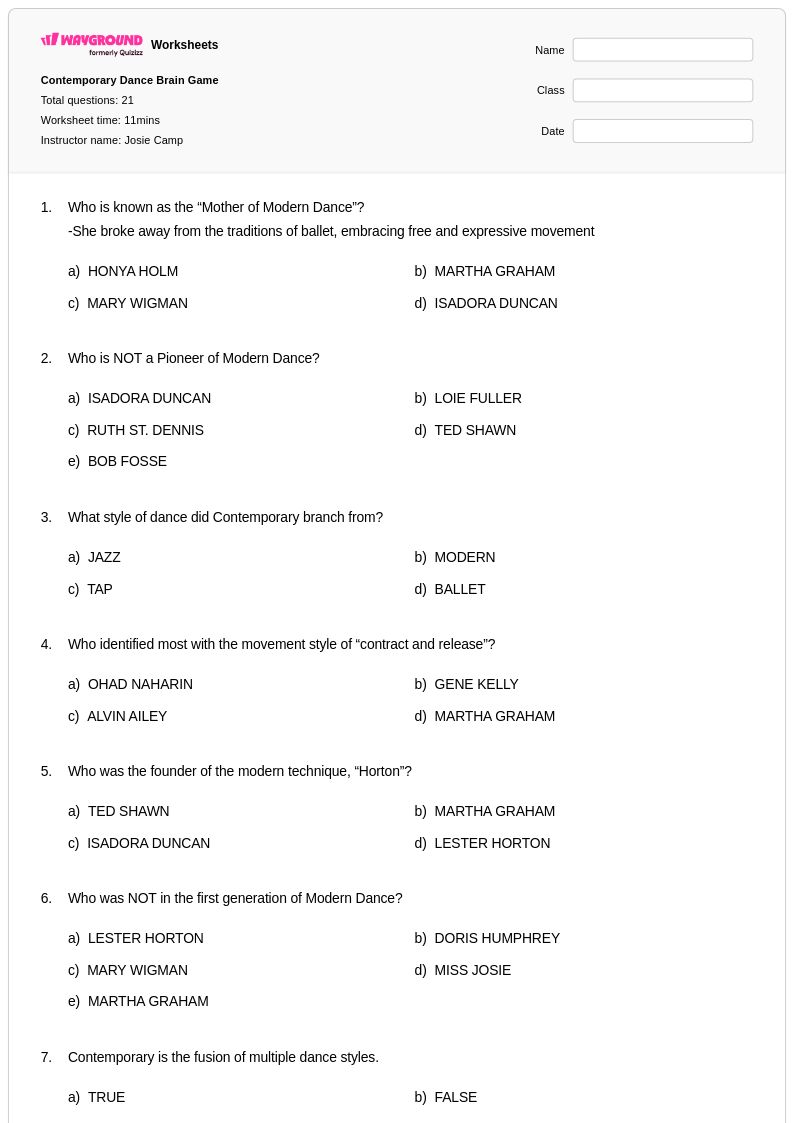
21 Q
1st - 5th
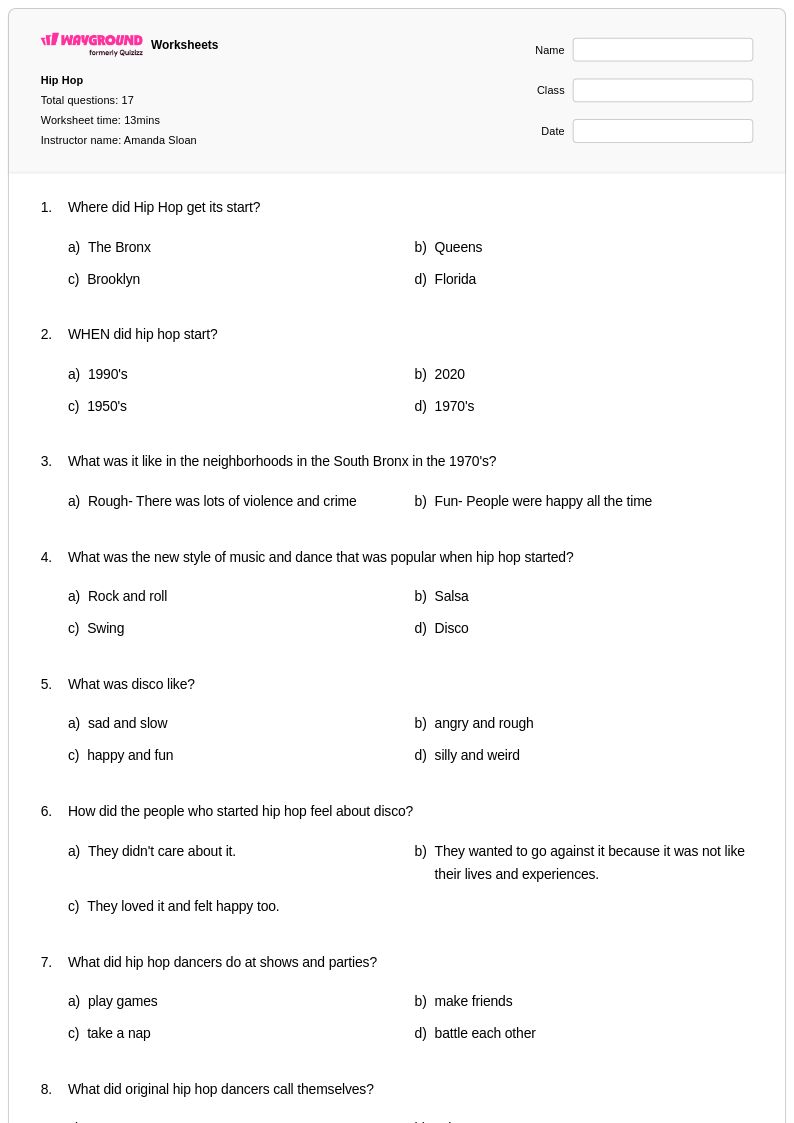
17 Q
2nd
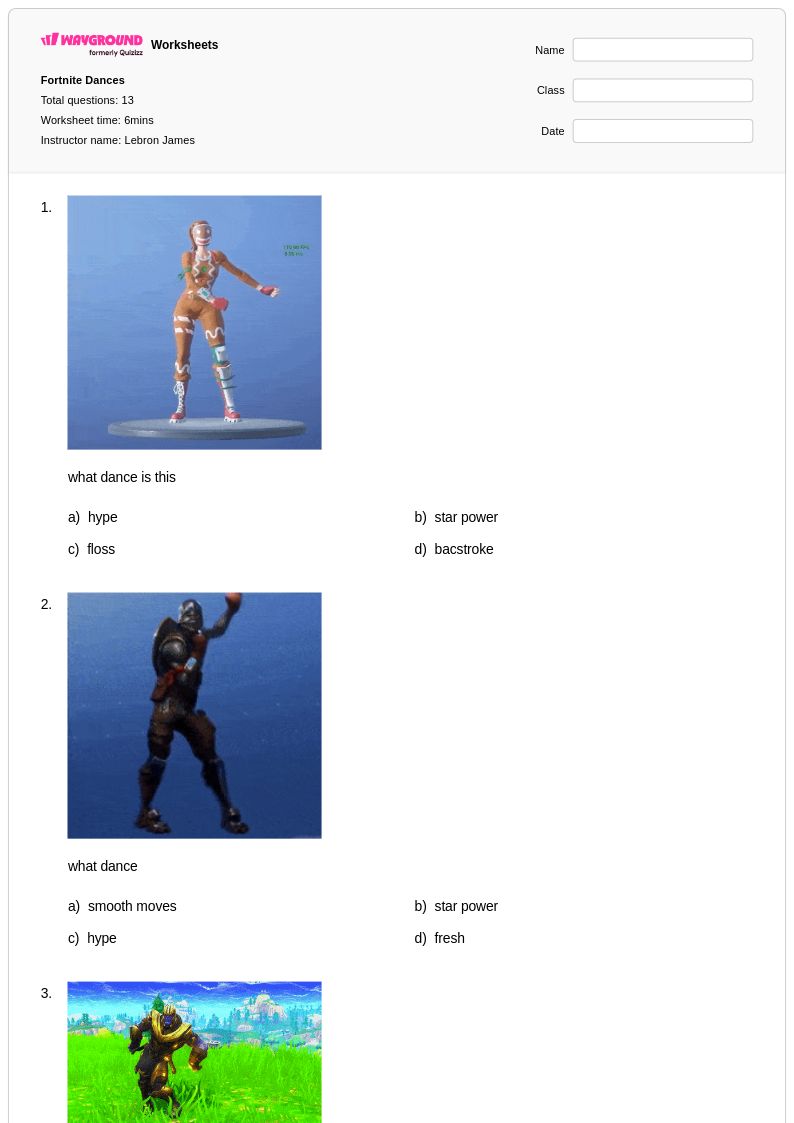
13 Q
2nd - 11th
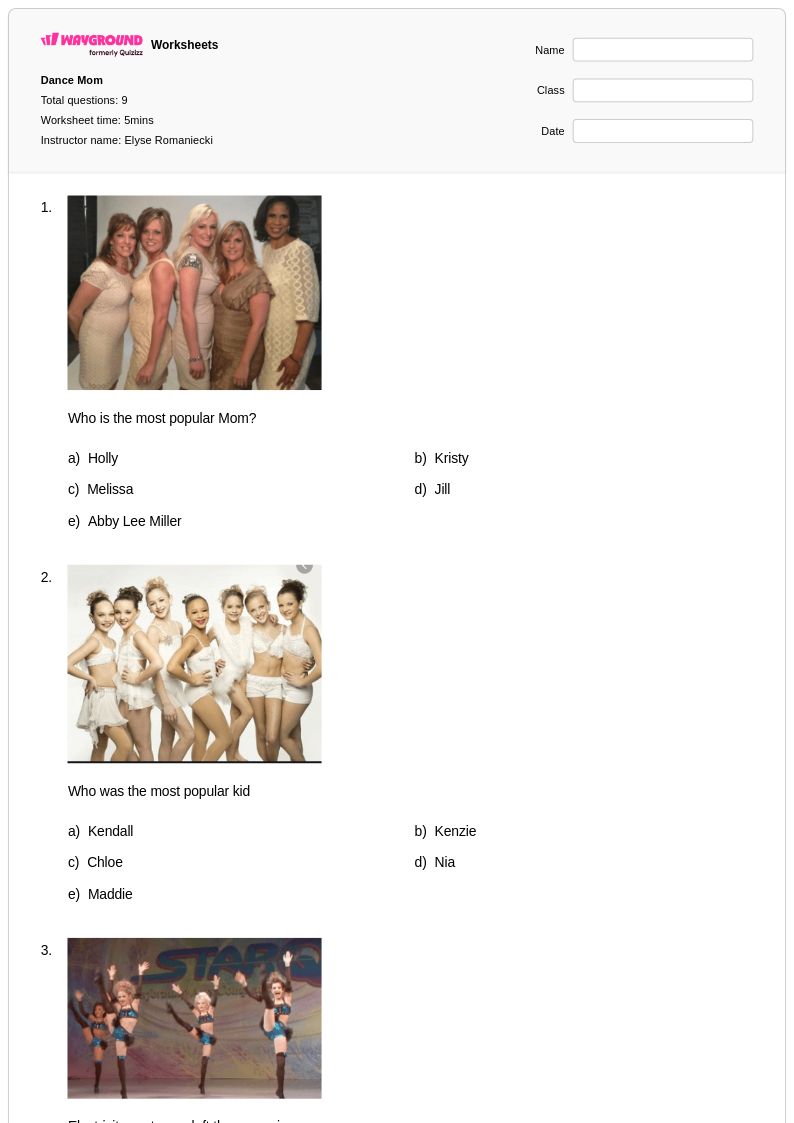
9 Q
KG - PD
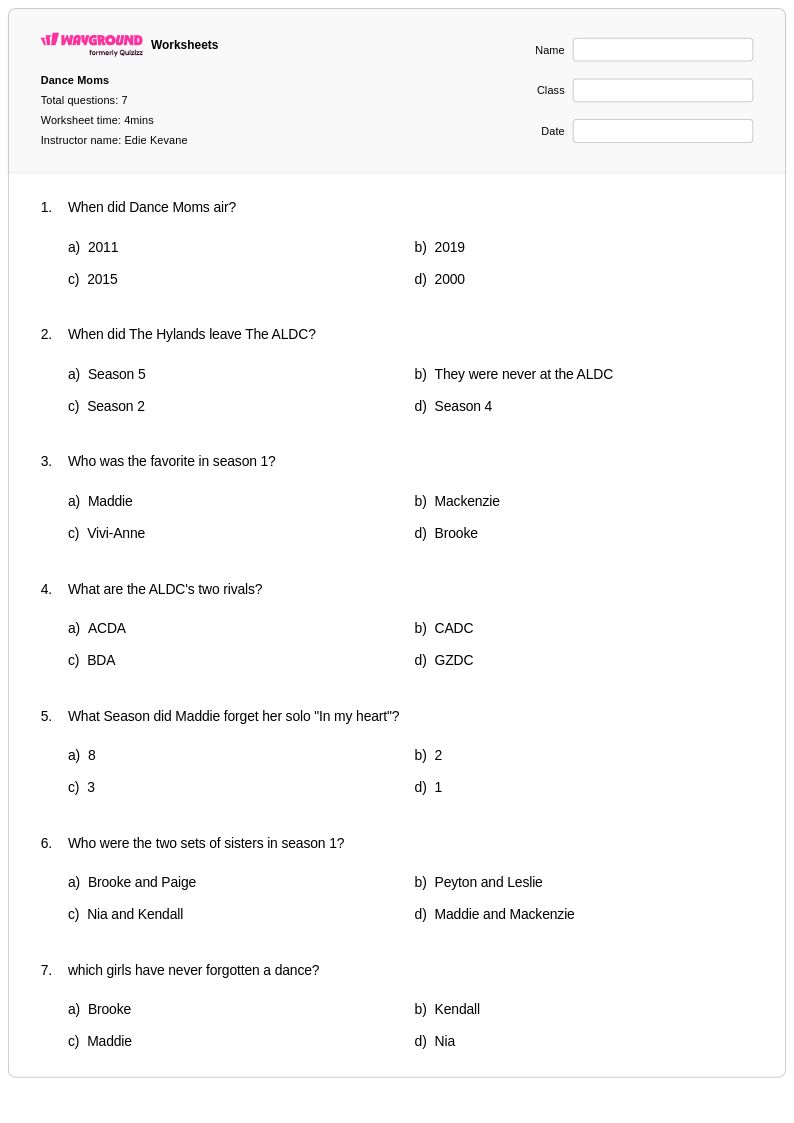
7 Q
2nd - 10th
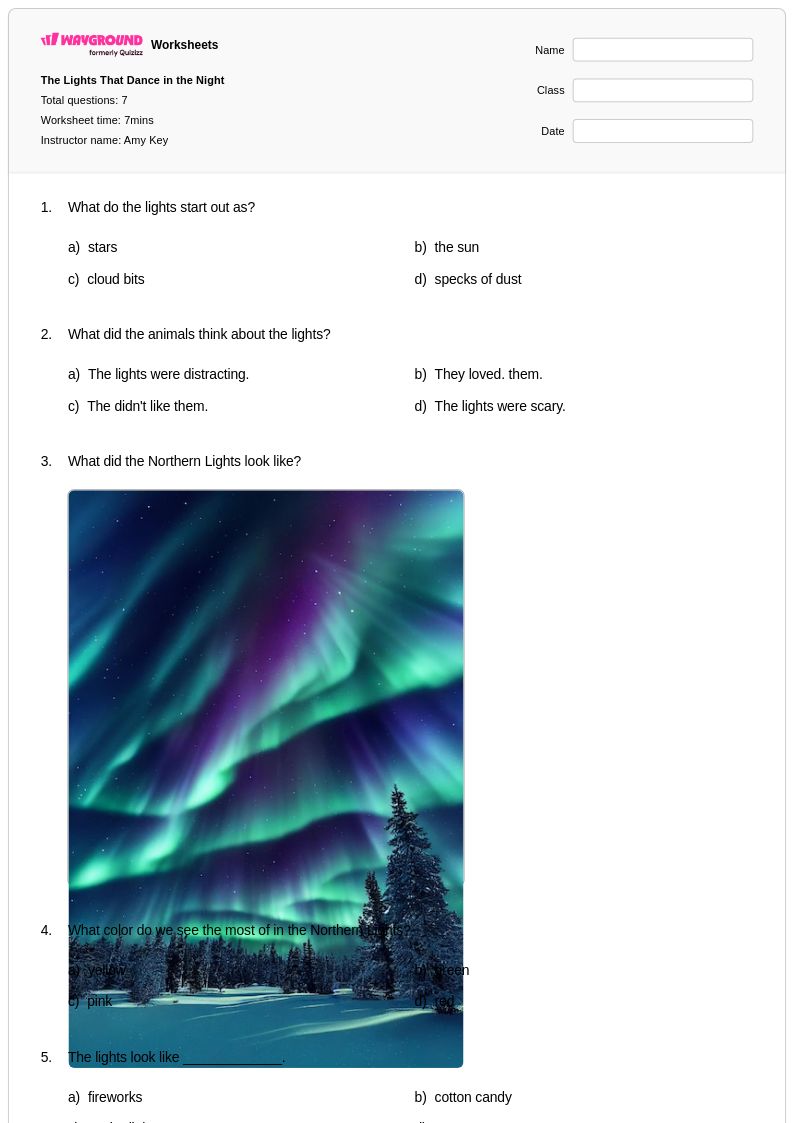
7 Q
2nd
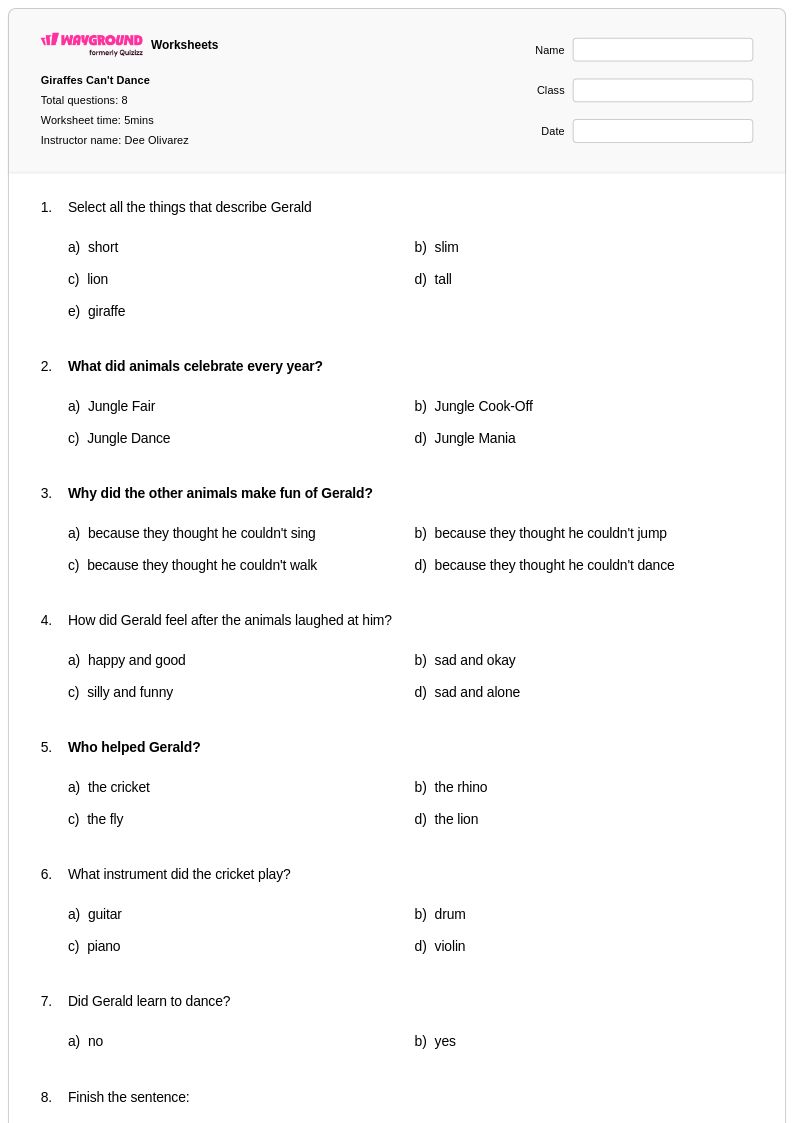
8 Q
KG - 5th
Explore Dance Worksheets by Grades
Explore Other Subject Worksheets for grade 2
Explore printable Dance worksheets for Grade 2
Dance worksheets for Grade 2 students available through Wayground (formerly Quizizz) provide young learners with engaging physical education activities that develop fundamental movement skills, rhythm awareness, and creative expression. These carefully designed printables focus on essential dance concepts including body awareness, spatial relationships, locomotor and non-locomotor movements, and basic rhythm patterns that are developmentally appropriate for second-grade students. The worksheets strengthen key skills such as coordination, balance, sequencing, and following directions while introducing students to various dance styles and cultural movements. Each resource includes comprehensive materials with answer keys and practice problems that help teachers assess student understanding of dance terminology, movement vocabulary, and basic choreographic concepts, making these free educational tools invaluable for building a strong foundation in dance education.
Wayground (formerly Quizizz) supports physical education teachers with an extensive collection of millions of teacher-created dance resources specifically designed for Grade 2 instruction, featuring robust search and filtering capabilities that allow educators to quickly locate materials aligned with physical education standards and learning objectives. The platform's differentiation tools enable teachers to customize worksheets for various skill levels and learning needs, while flexible formatting options provide both printable pdf versions for hands-on activities and digital formats for interactive learning experiences. These comprehensive features streamline lesson planning by offering ready-to-use materials for skill practice, support targeted remediation for students who need additional movement concept reinforcement, and provide enrichment opportunities for advanced learners to explore more complex dance patterns and creative movement challenges, ultimately enhancing the overall quality and effectiveness of elementary dance instruction.
FAQs
How do I teach dance concepts in a physical education class?
What exercises help students practice rhythm and choreography?
What mistakes do students commonly make when learning dance terminology and choreographic elements?
How can I use dance worksheets to support students with different learning needs?
How do I use Wayground's dance worksheets in my classroom?
How do I incorporate dance history and cultural context into my lessons?