Free Printable The Circulatory and Respiratory Systems Worksheets for Grade 6
Grade 6 biology students can master the circulatory and respiratory systems with Wayground's comprehensive collection of free worksheets, printables, and practice problems featuring detailed answer keys.
Explore printable The Circulatory and Respiratory Systems worksheets for Grade 6
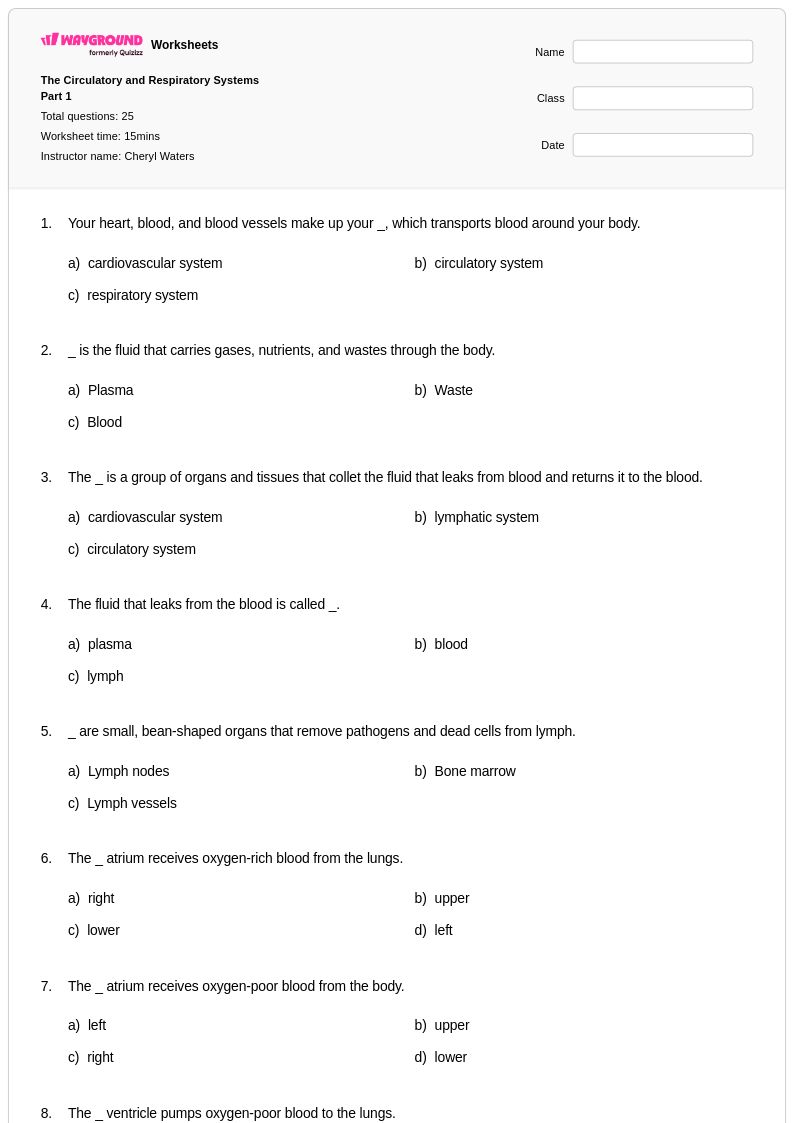
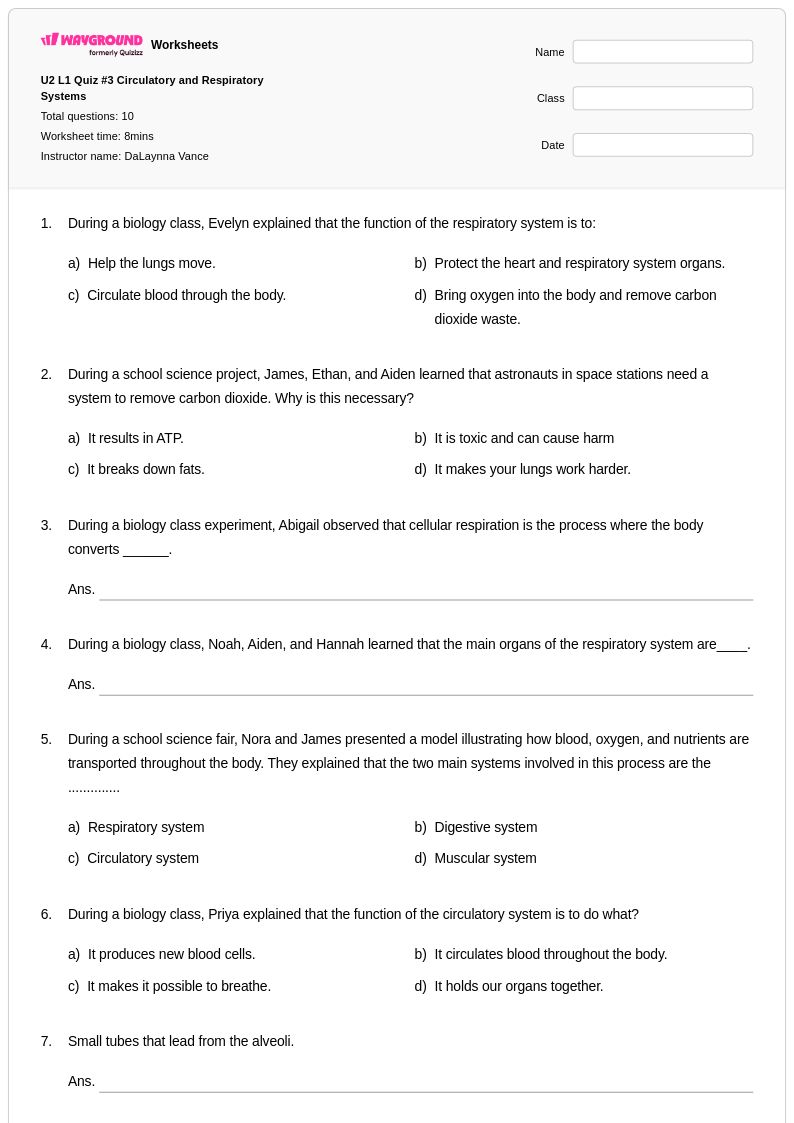
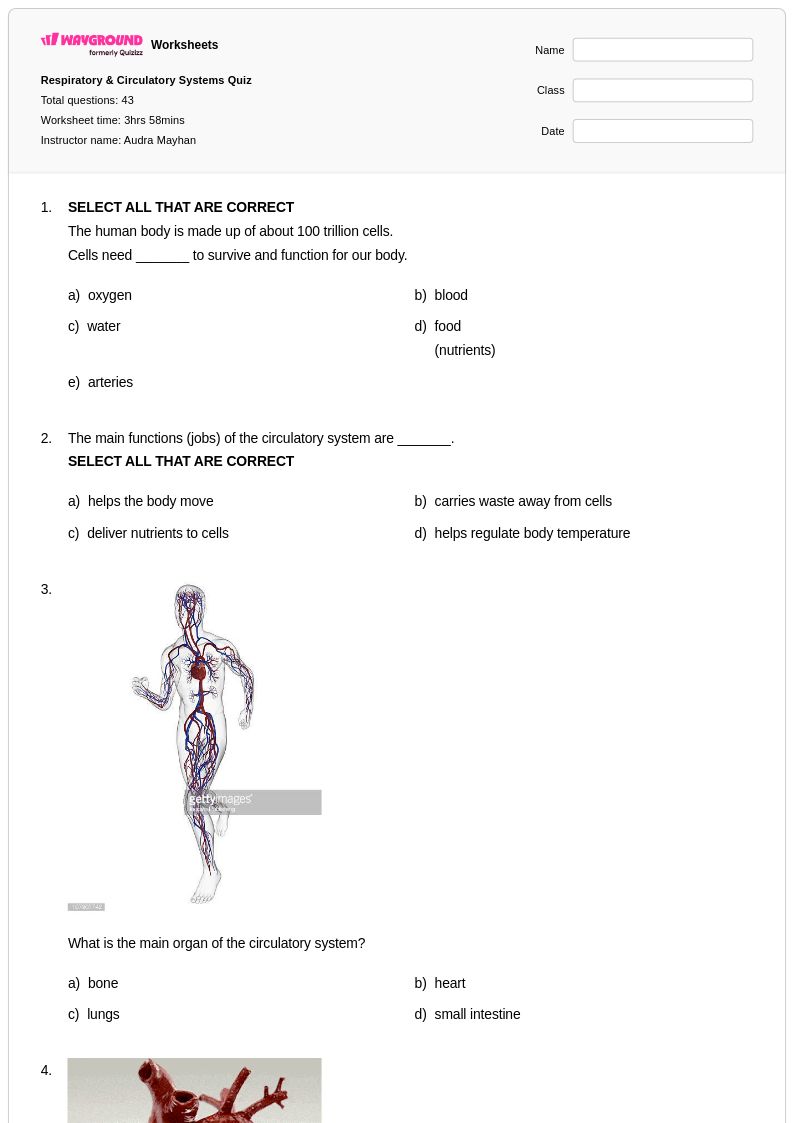
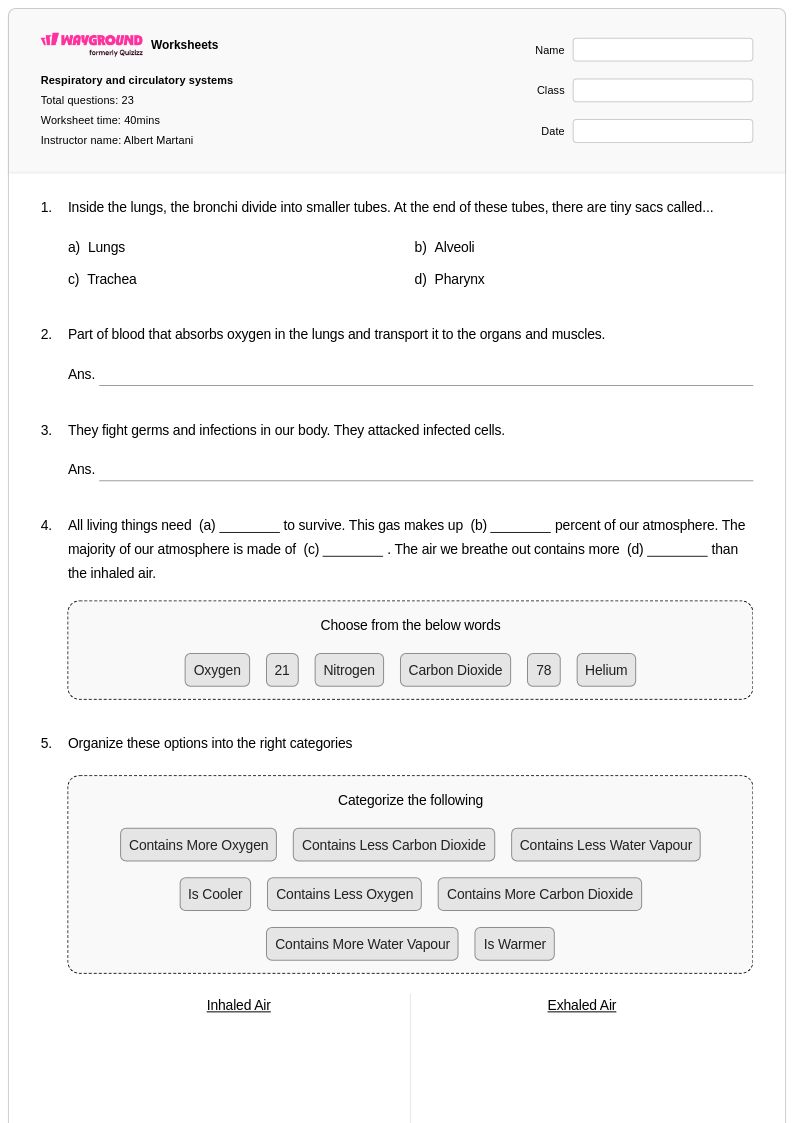
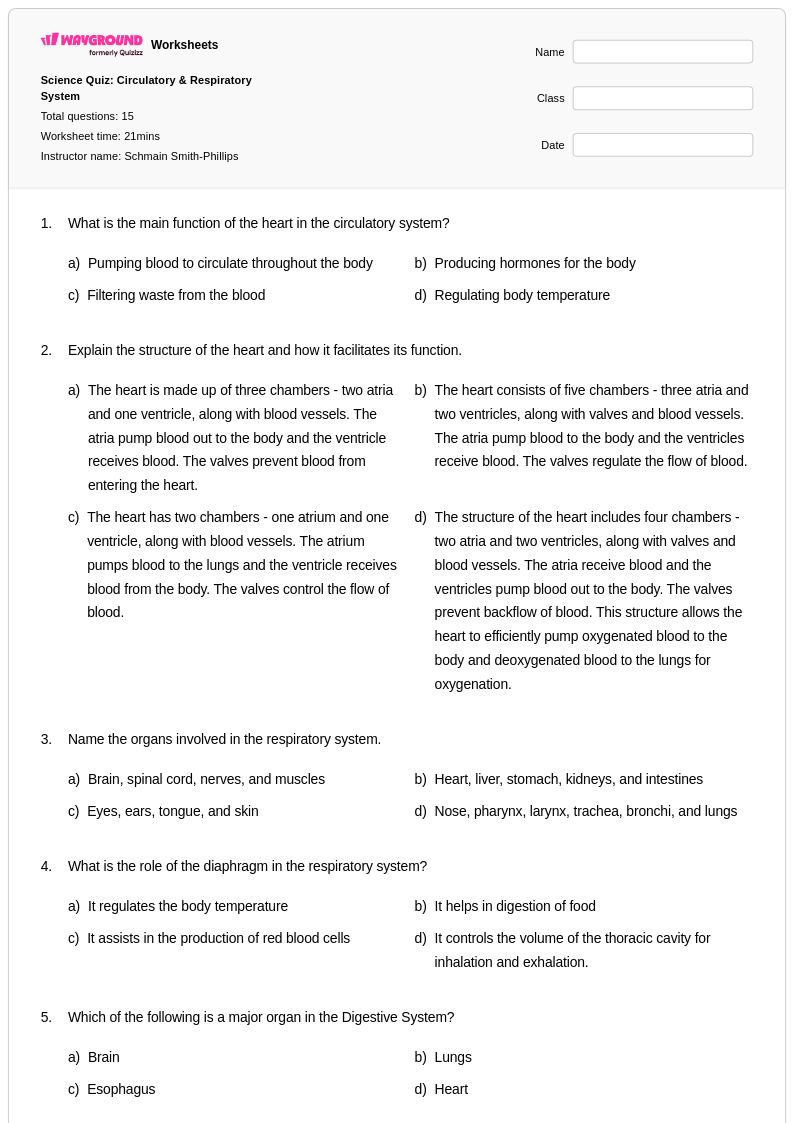
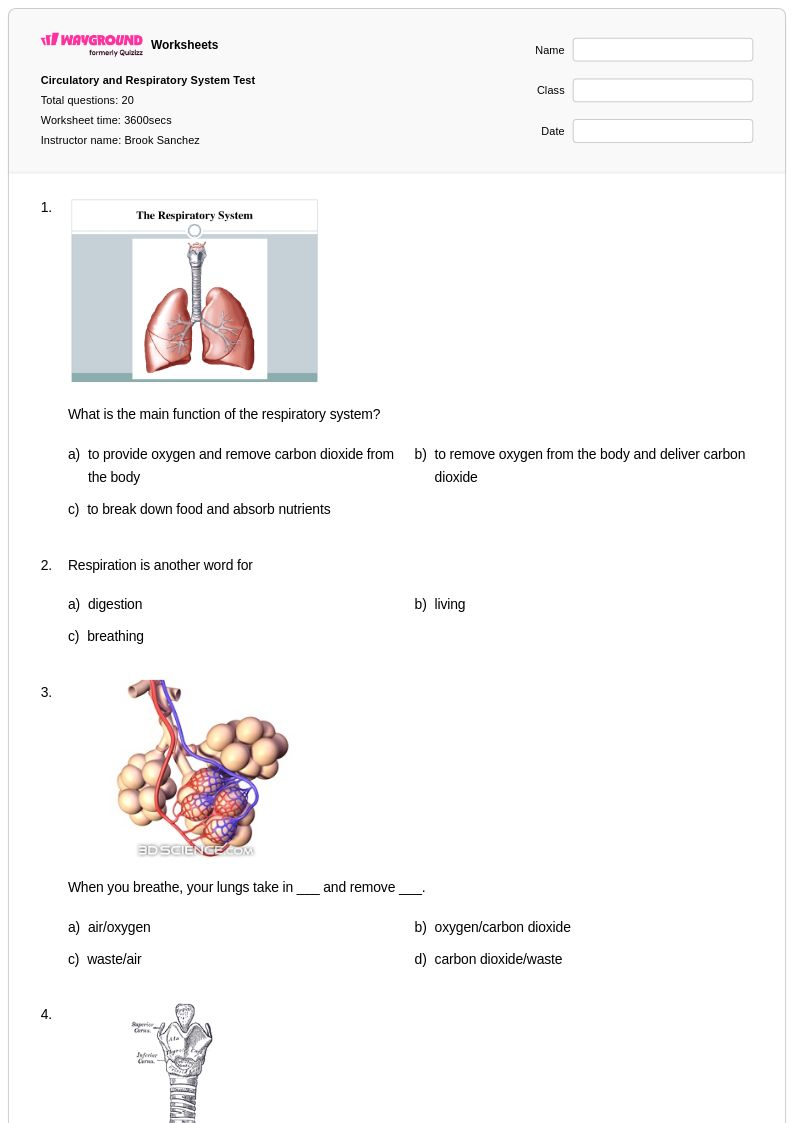
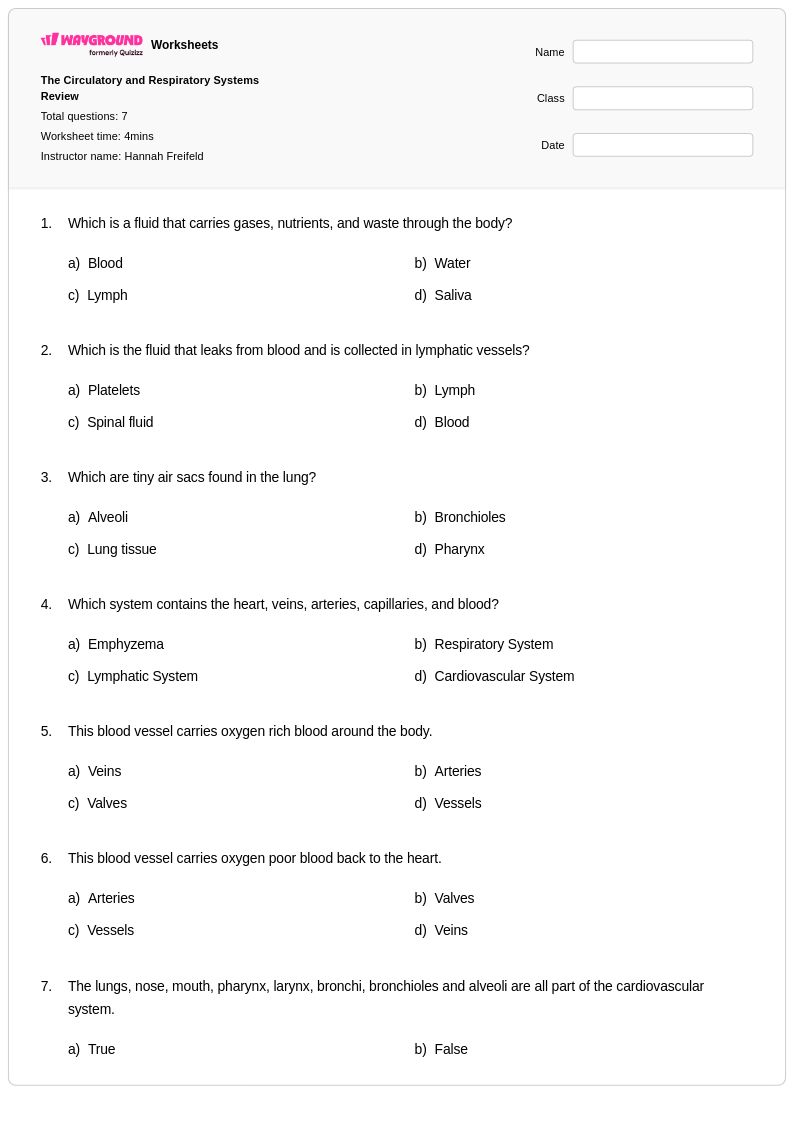
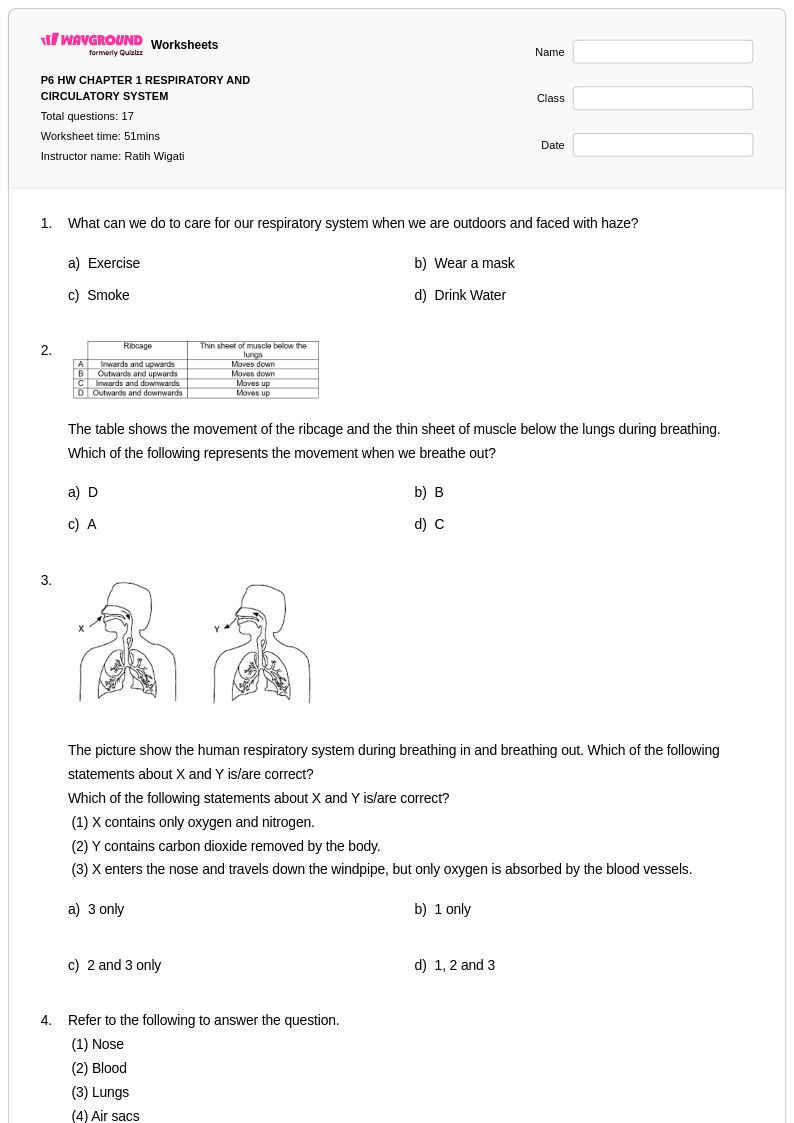
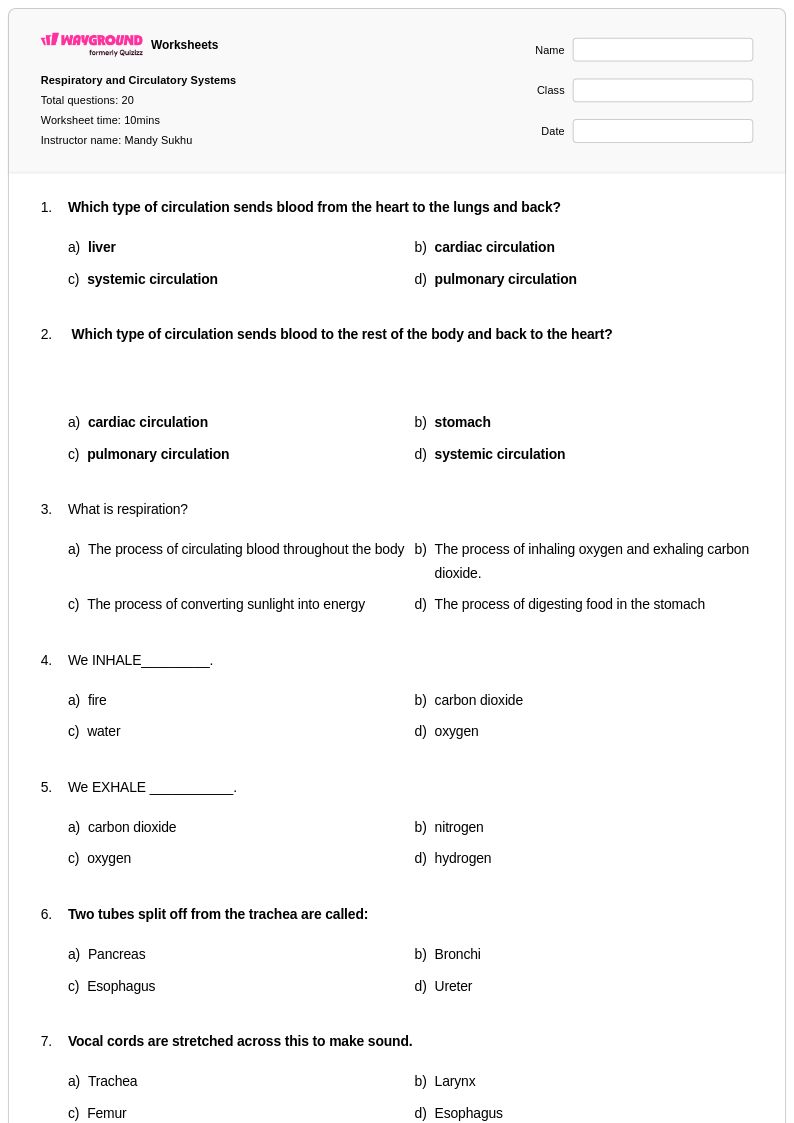
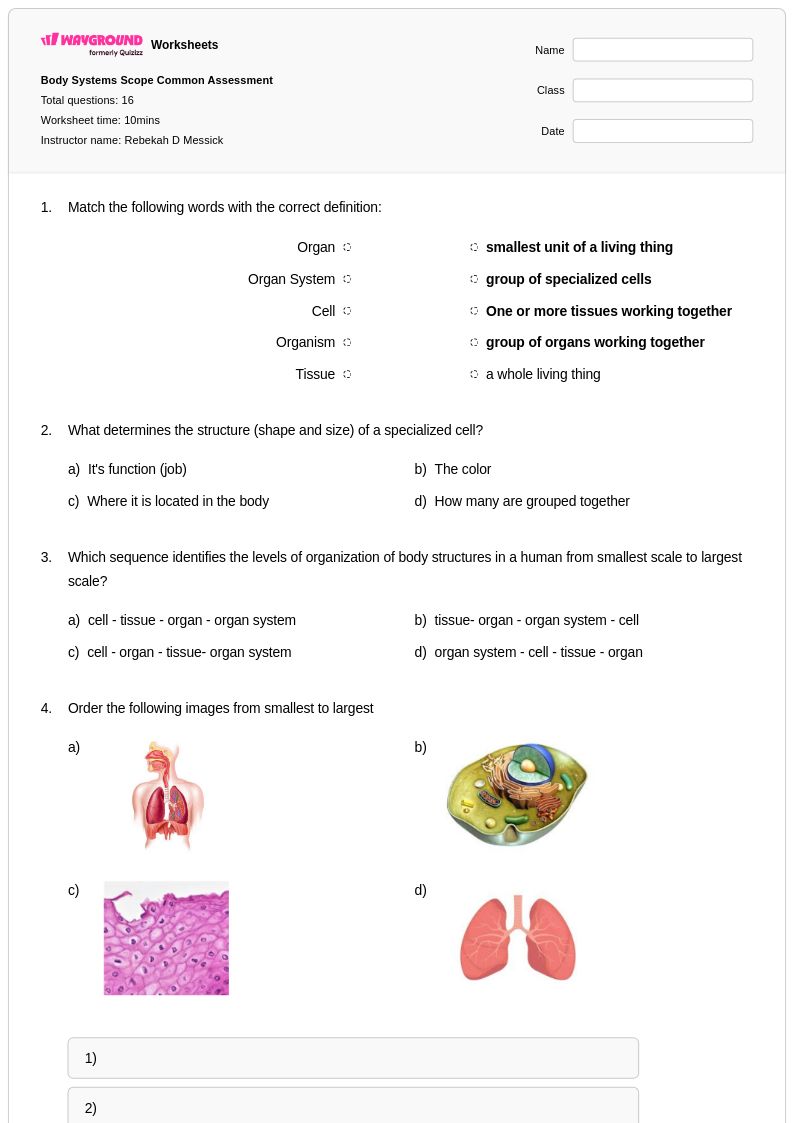
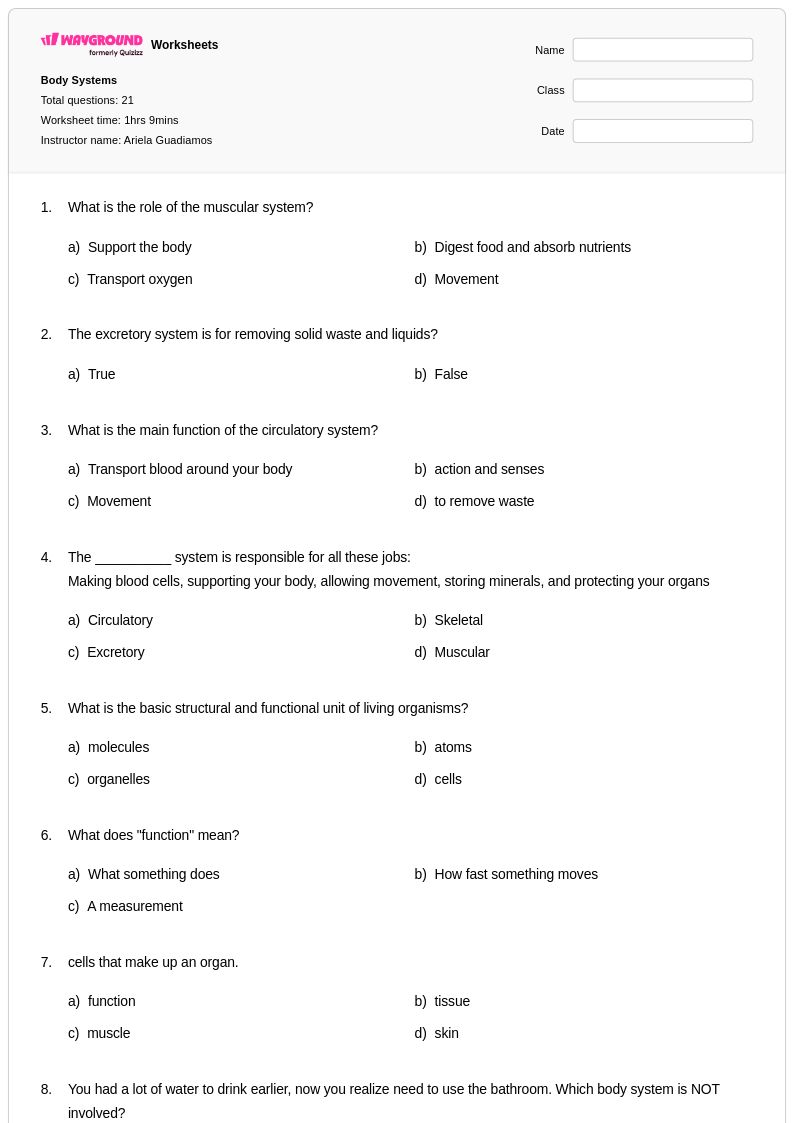
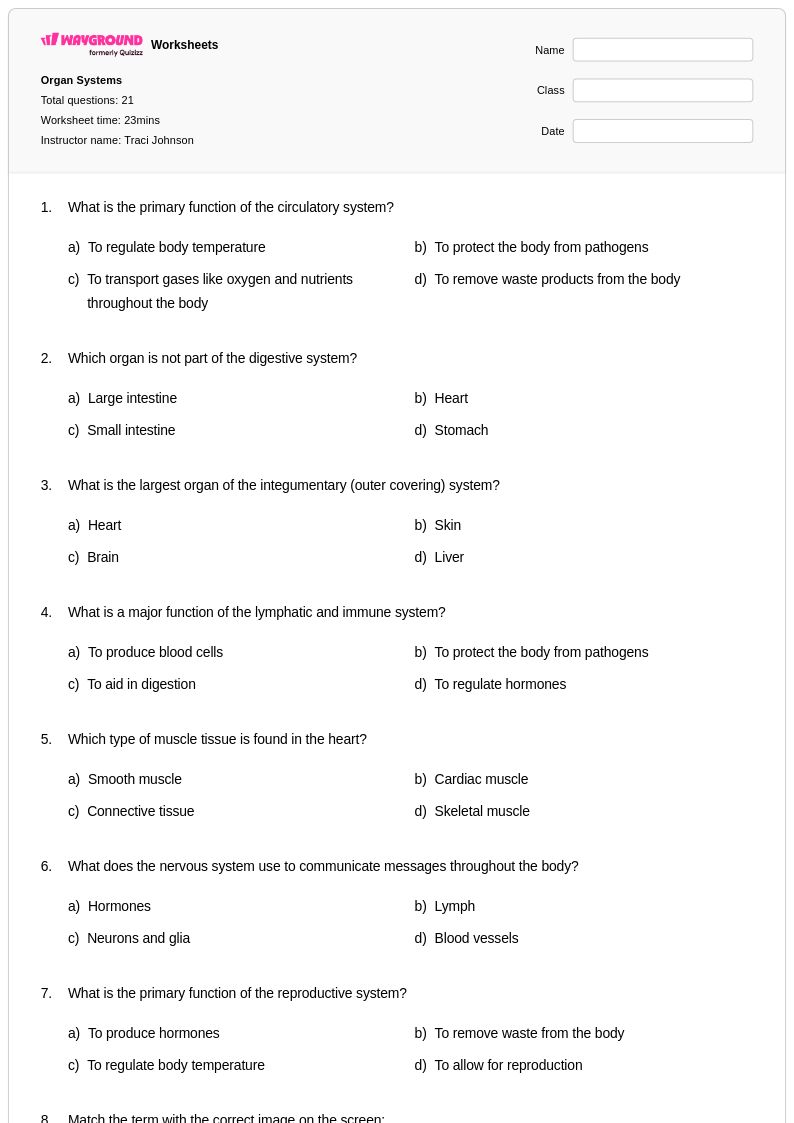
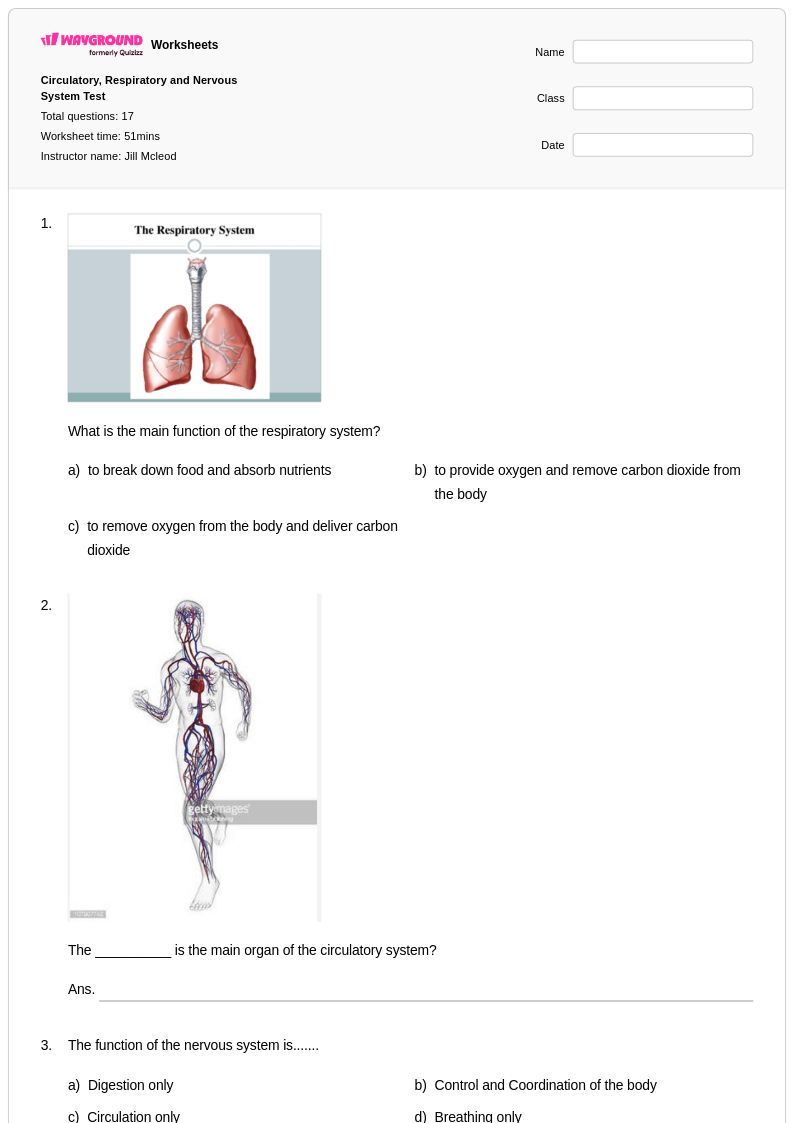
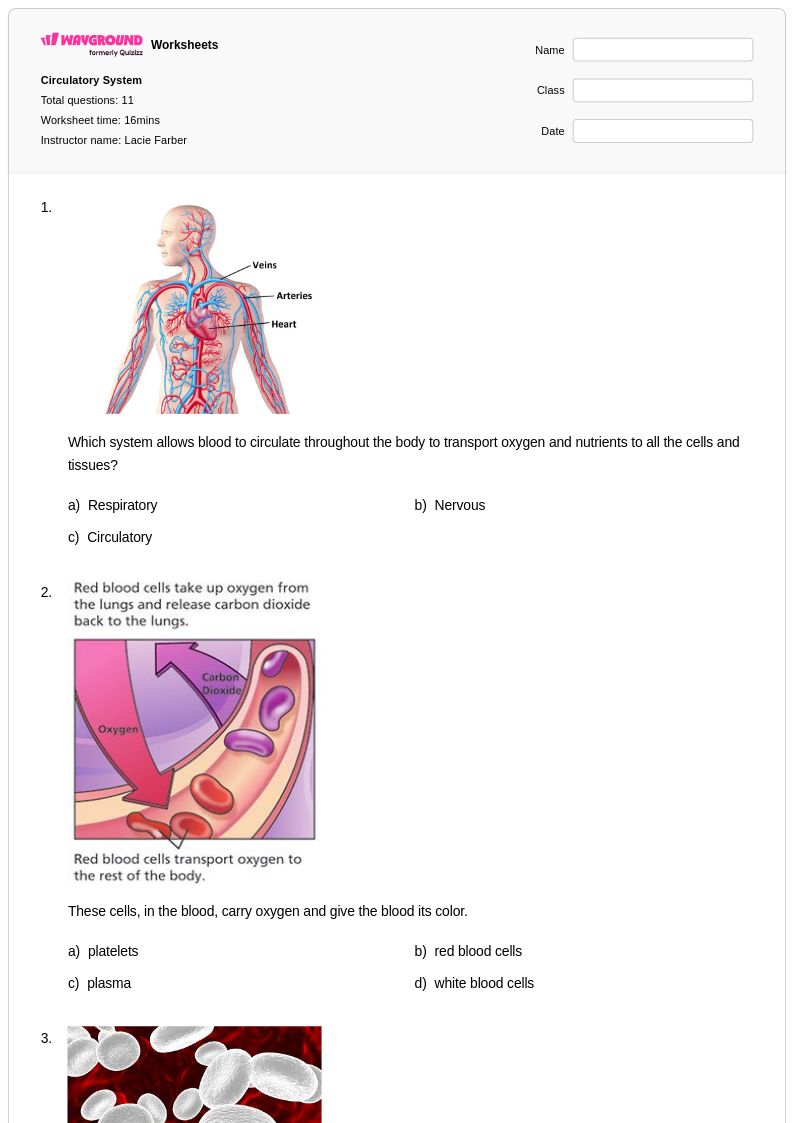
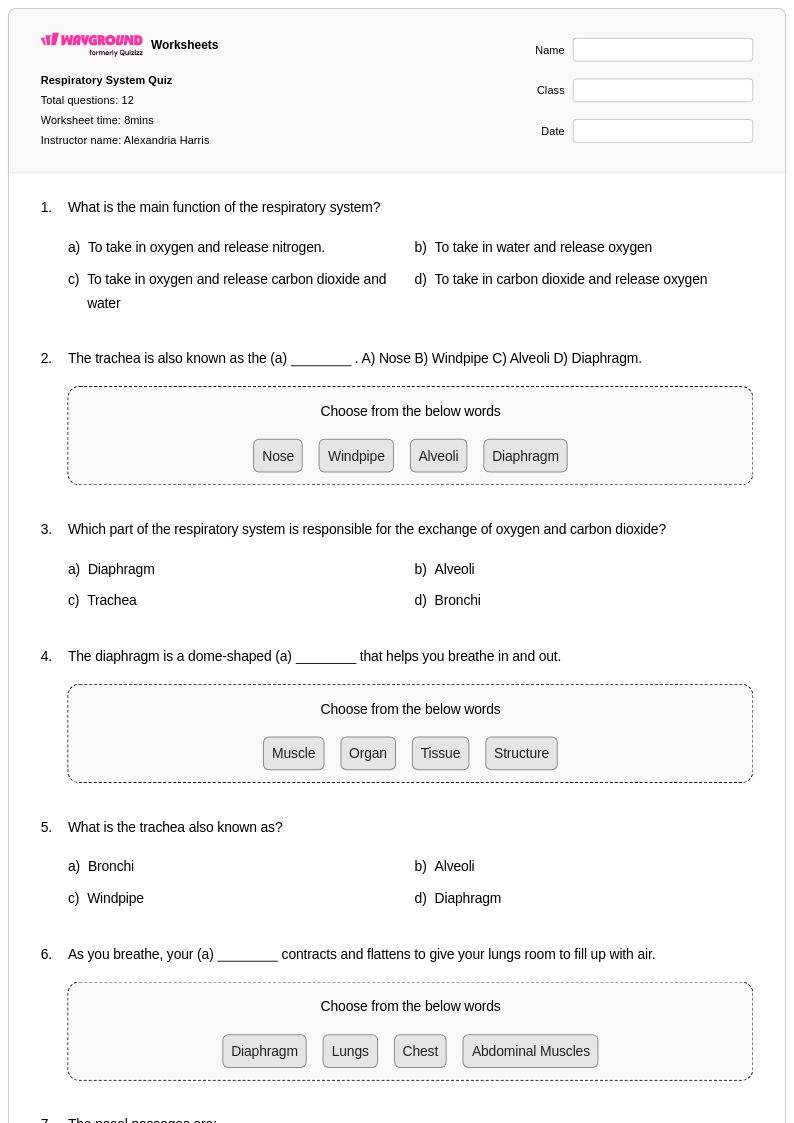
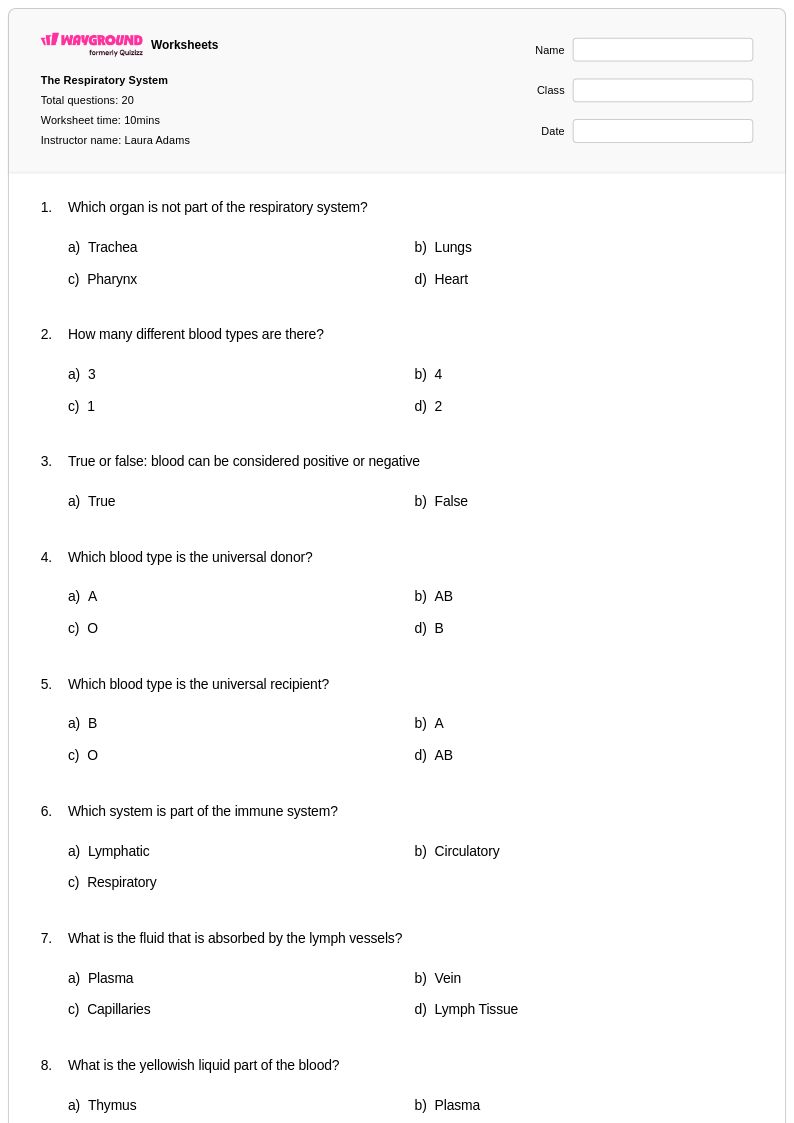
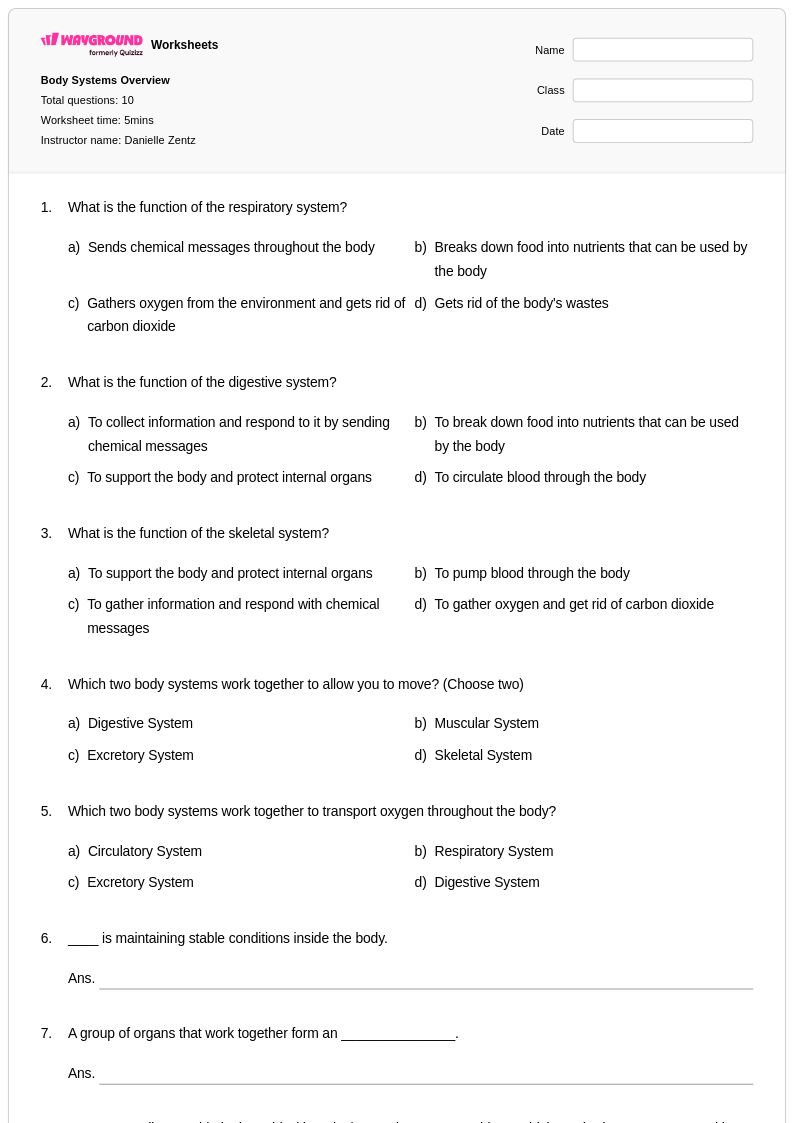
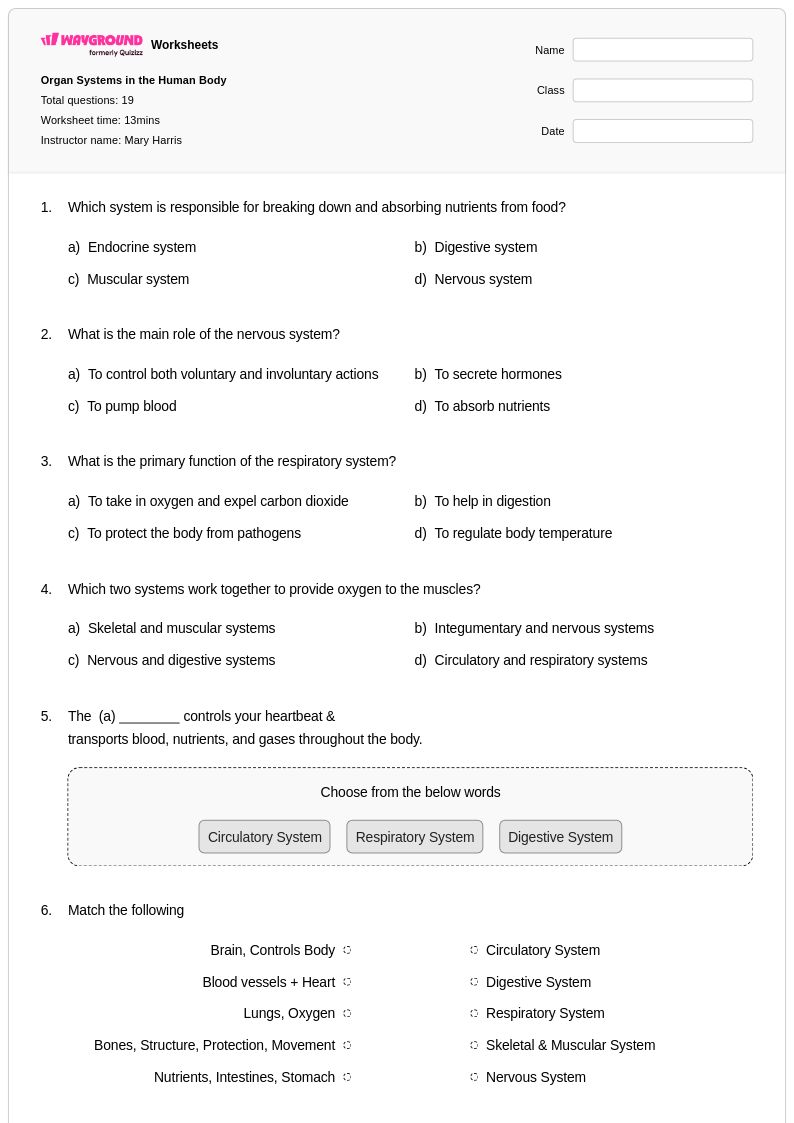
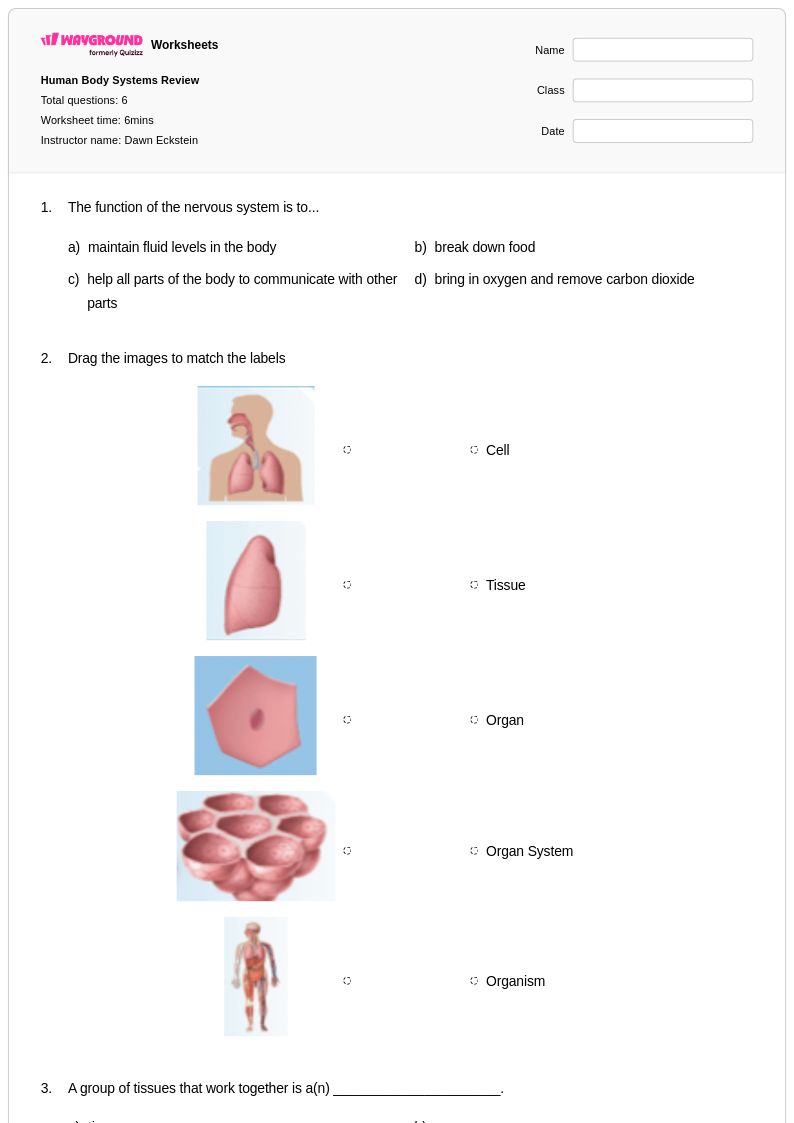
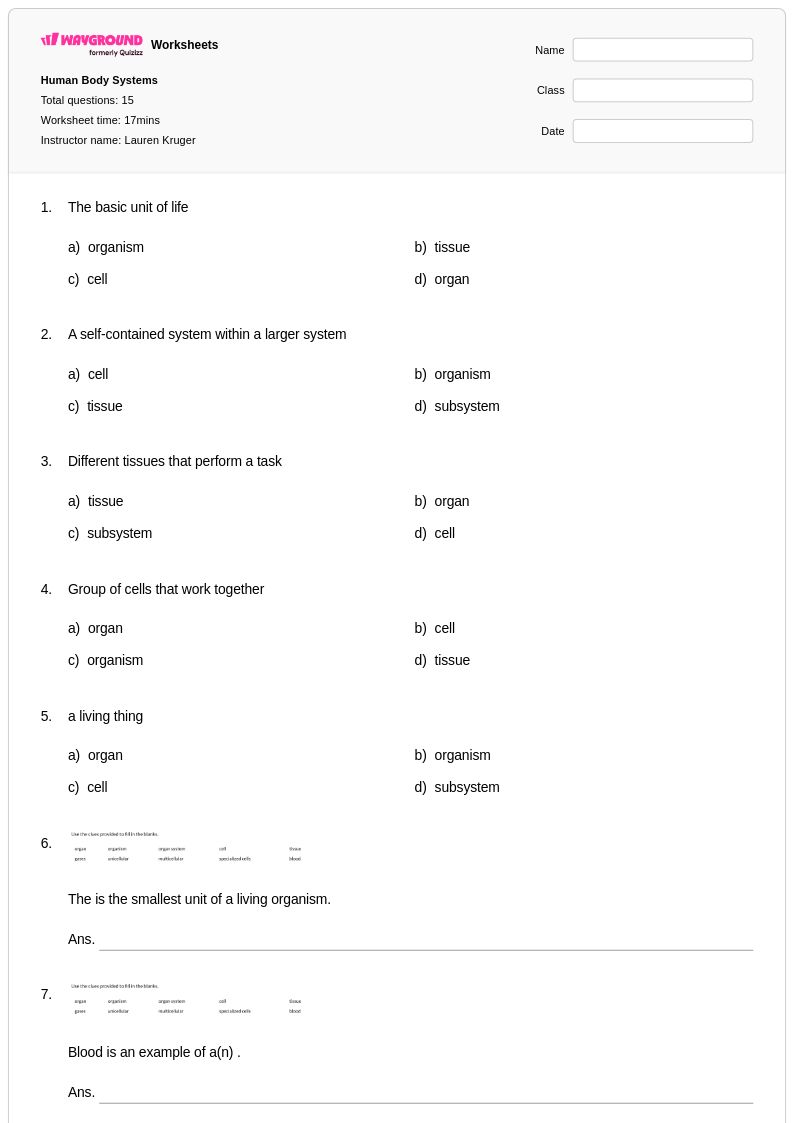
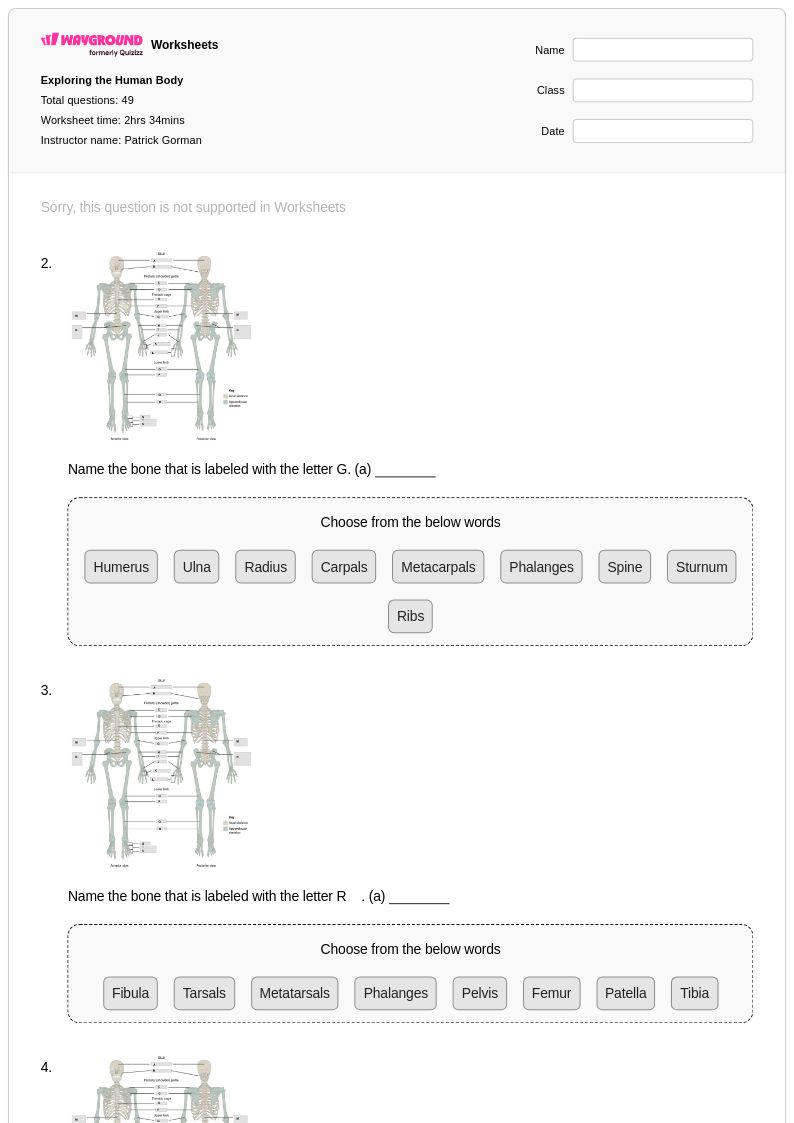
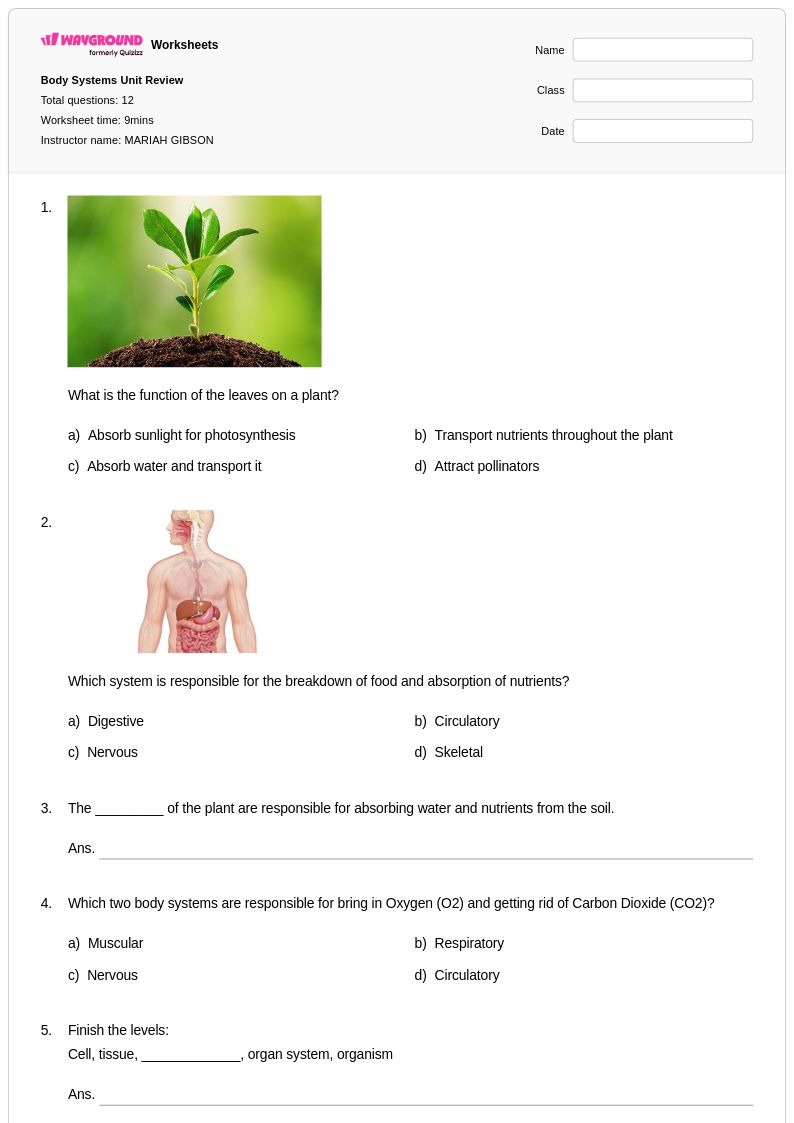
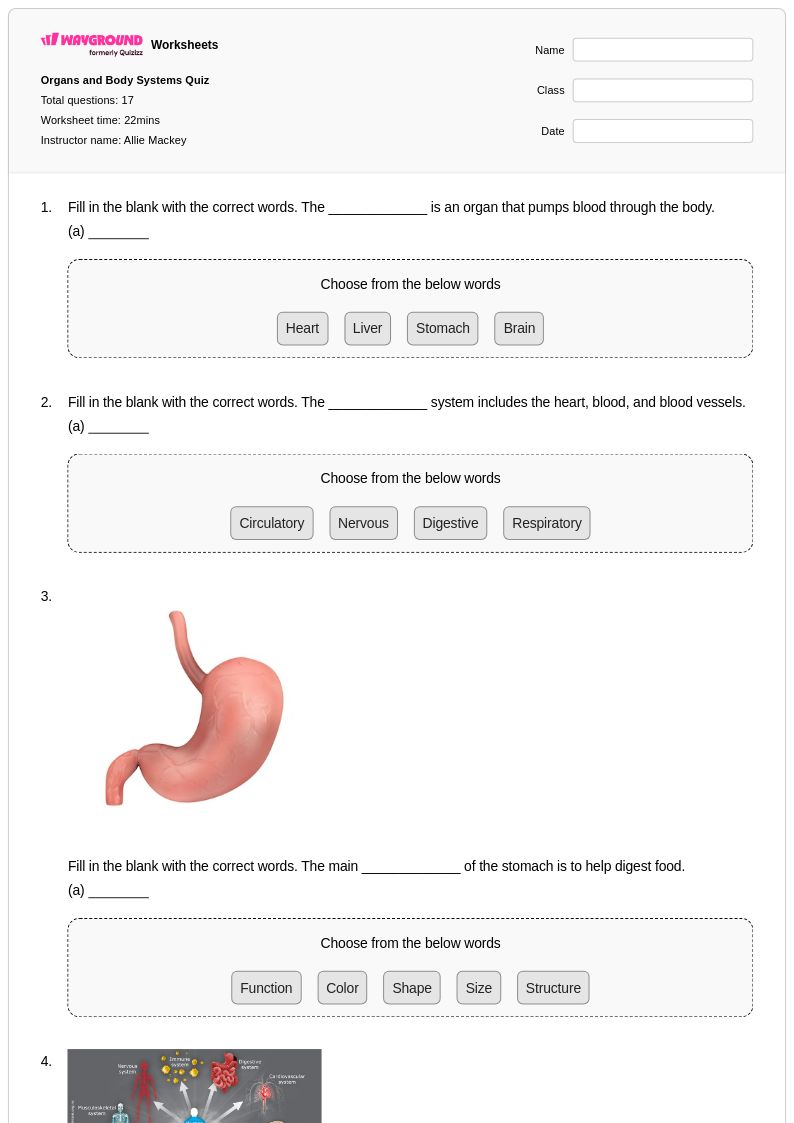
The circulatory and respiratory systems worksheets available through Wayground (formerly Quizizz) provide Grade 6 students with comprehensive practice materials that explore how these vital body systems work together to sustain life. These expertly designed worksheets strengthen critical thinking skills as students learn to identify key components like the heart, blood vessels, lungs, and airways, while understanding how oxygen travels from the respiratory system into the bloodstream and how carbon dioxide is removed from the body. Each worksheet includes detailed answer keys that help students verify their understanding of complex processes such as gas exchange in the alveoli and blood circulation through the four chambers of the heart. The free printable resources feature practice problems that challenge students to trace the path of blood through pulmonary and systemic circulation, analyze the relationship between breathing rate and physical activity, and explain how the diaphragm facilitates respiration.
Wayground (formerly Quizizz) empowers teachers with millions of educator-created resources specifically focused on the circulatory and respiratory systems, featuring robust search and filtering capabilities that allow instructors to quickly locate materials aligned with curriculum standards and learning objectives. The platform's differentiation tools enable teachers to customize worksheets for diverse learning needs, offering both remediation support for struggling students and enrichment opportunities for advanced learners who need additional challenges in understanding cardiovascular and pulmonary functions. These flexible resources are available in both printable PDF format and interactive digital versions, making lesson planning more efficient while providing multiple options for skill practice, formative assessment, and targeted instruction that helps students master the intricate connections between breathing, circulation, and cellular respiration.
FAQs
How do I teach the circulatory and respiratory systems together in one unit?
Teaching these two systems together works best when you anchor instruction around their shared function: gas exchange. Start with the respiratory system's role in bringing oxygen into the body and removing carbon dioxide, then show how the circulatory system transports those gases between the lungs and body tissues. Tracing the full path of oxygen from inhalation through the alveoli, into the bloodstream, and out to cells gives students a coherent narrative that makes both systems easier to understand and remember.
What exercises help students practice tracing blood flow through the heart?
Labeling diagrams of the four-chambered heart is one of the most effective practice formats for this topic, as it requires students to recall the names and sequence of chambers, valves, and vessels rather than just recognize them. Following that with fill-in-the-blank or ordering exercises that trace the path of deoxygenated blood from the body into the right atrium, through the pulmonary circuit, and back as oxygenated blood through the left side reinforces procedural understanding. Practice problems that ask students to explain why blood travels in this specific sequence deepen conceptual retention beyond rote memorization.
What are the most common mistakes students make when learning about the circulatory and respiratory systems?
One of the most frequent misconceptions is that arteries always carry oxygenated blood and veins always carry deoxygenated blood — students often don't realize the pulmonary artery is an exception that carries deoxygenated blood to the lungs. Another common error is confusing the location of gas exchange, with students placing it in the lungs generally rather than specifically in the alveoli. Students also frequently conflate breathing rate with heart rate without understanding that these are regulated by different mechanisms that respond to overlapping but distinct physiological signals.
How does gas exchange actually work in the alveoli, and how do I explain it to students?
Gas exchange in the alveoli occurs through diffusion: oxygen moves from the high concentration in the air sacs across thin alveolar and capillary walls into the bloodstream, while carbon dioxide moves in the opposite direction from blood into the alveoli to be exhaled. The most effective classroom explanation pairs this mechanism with a diagram showing the proximity of alveoli to capillaries, emphasizing that the walls are only one cell thick to allow rapid diffusion. Connecting this to the concept of concentration gradients helps students understand why the process is passive and continuous rather than something the body actively drives.
How can I use circulatory and respiratory systems worksheets to support students with different learning needs?
Wayground's circulatory and respiratory systems worksheets can be used digitally with built-in accommodation settings that support diverse learners. Teachers can enable read-aloud for students who benefit from audio support, reduce the number of answer choices to lower cognitive load for students who need it, and assign extended time on a per-student basis. These settings can be applied individually so that students with accommodations receive tailored support while the rest of the class works under standard conditions, making differentiation manageable without disrupting lesson flow.
How do I use these circulatory and respiratory systems worksheets in my classroom?
Wayground's circulatory and respiratory systems worksheets are available as printable PDFs for traditional classroom use and in digital formats for technology-integrated environments, so they work whether students are working on paper or on devices. Teachers can also host the worksheets as a quiz directly on Wayground, which allows for easy collection and review of student responses. Each worksheet includes a complete answer key, making them suitable for independent practice, homework, or formative assessment without requiring additional grading prep.