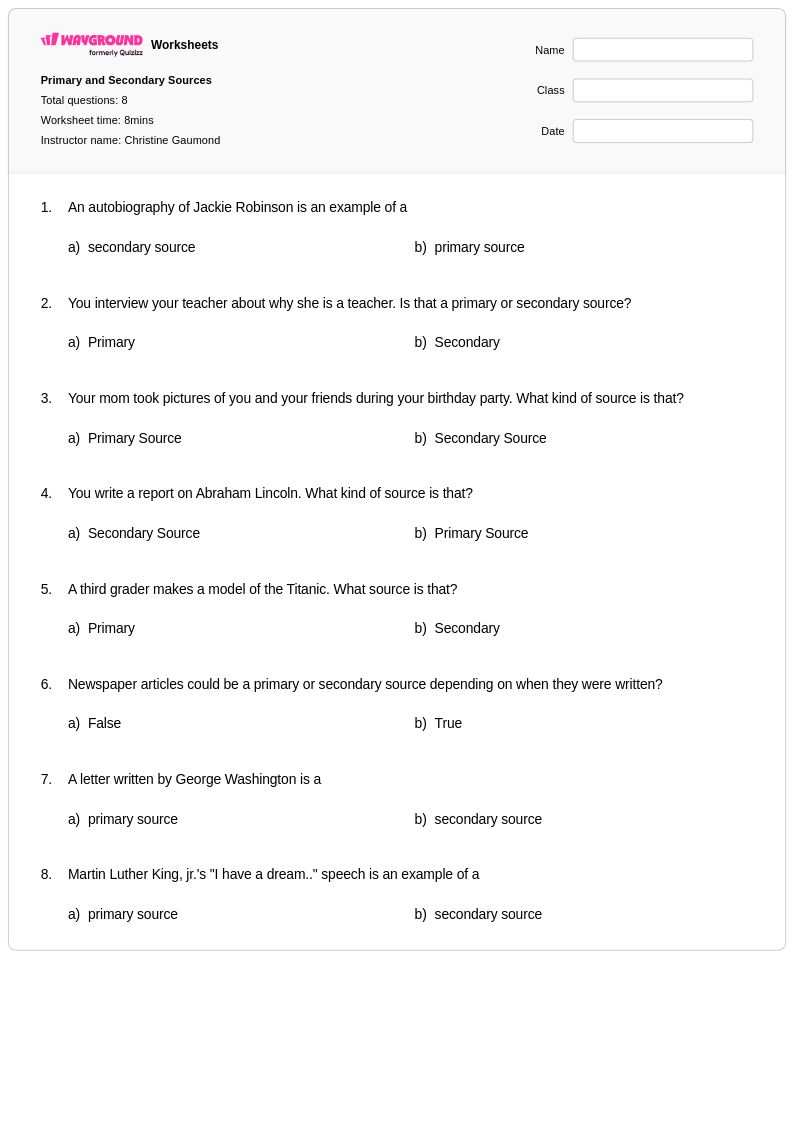
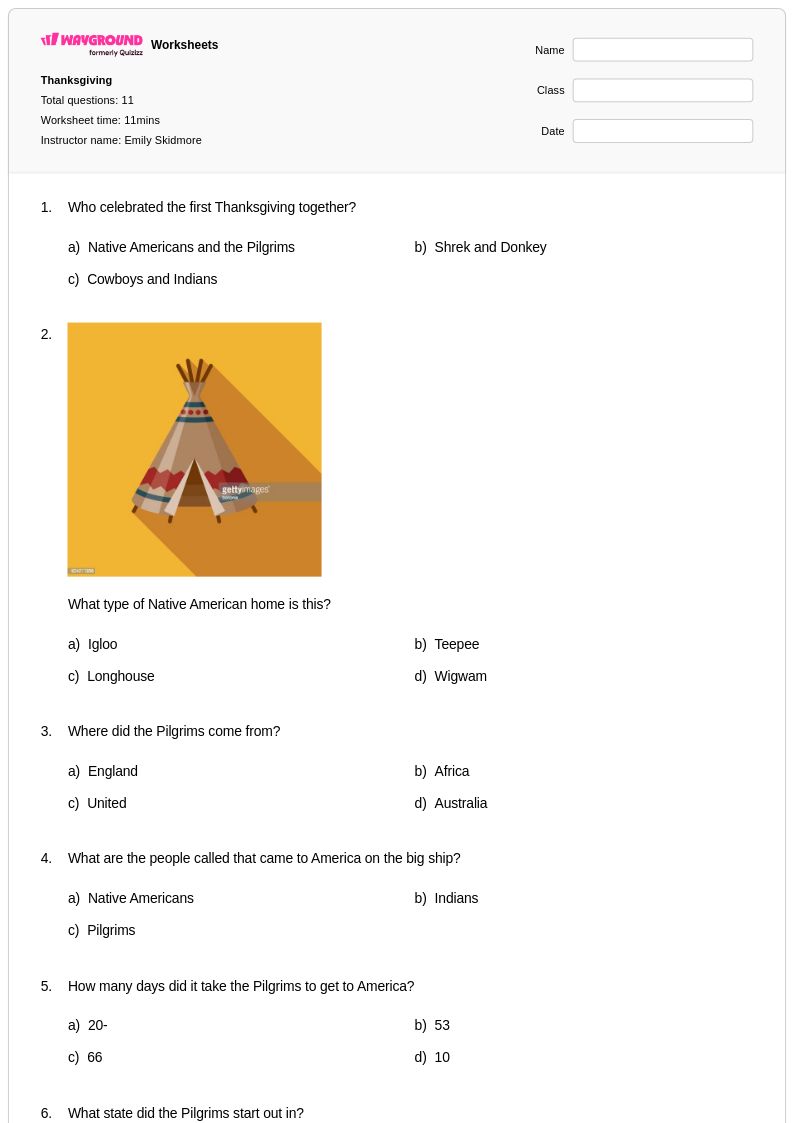
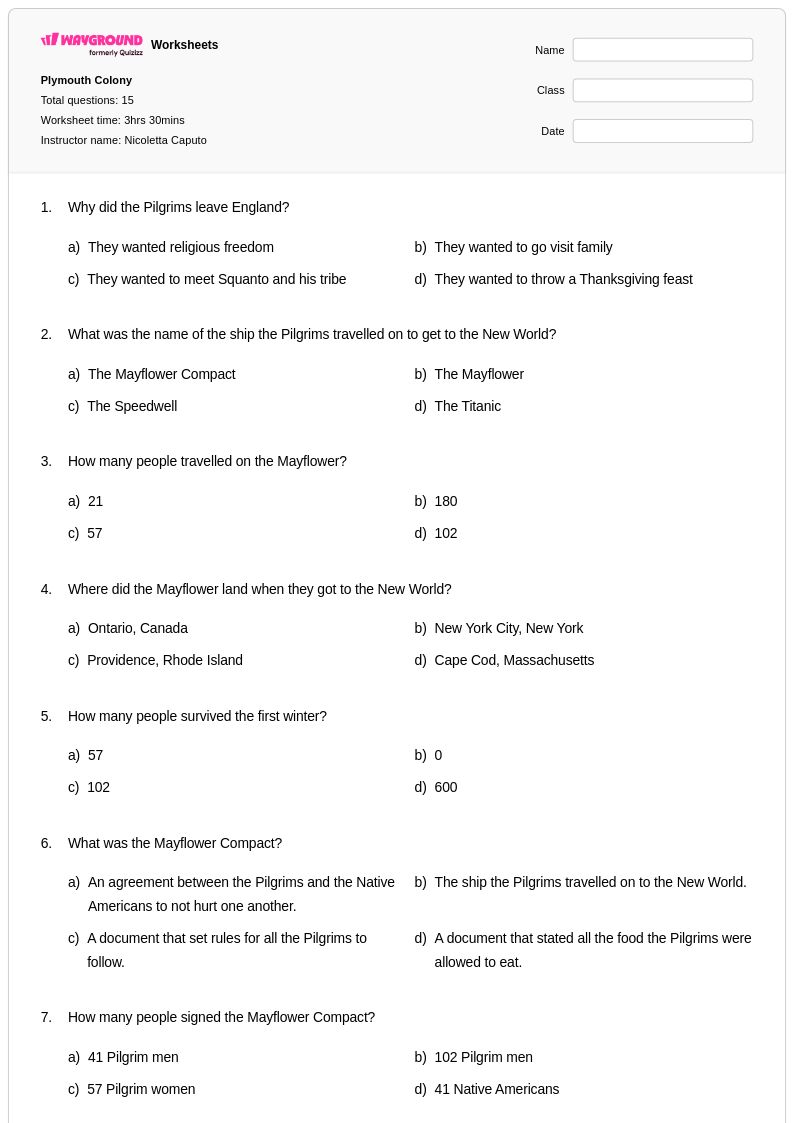
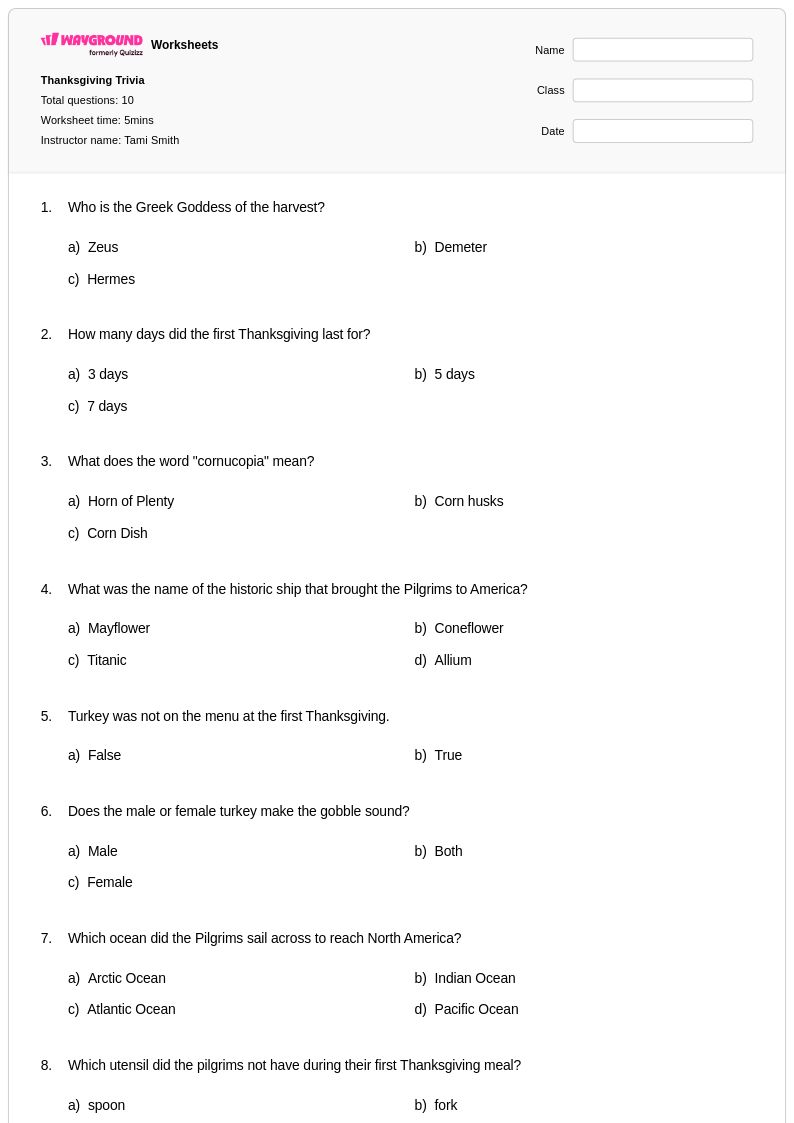
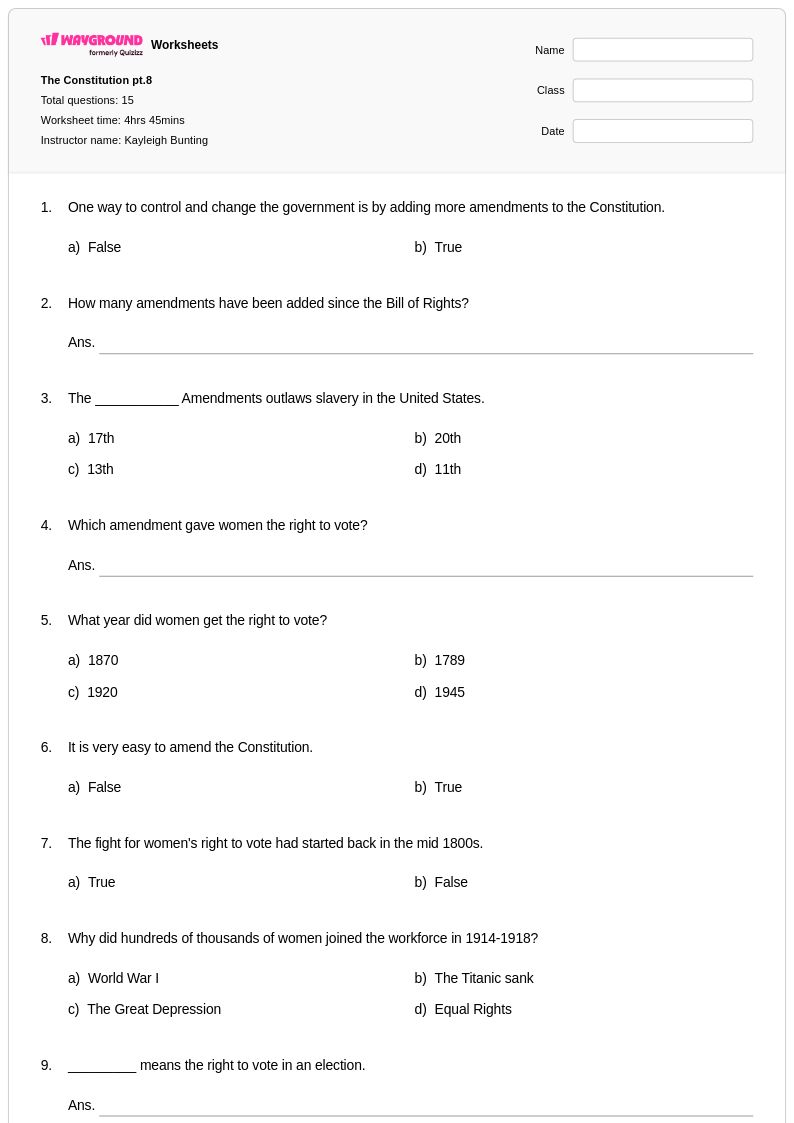
Explore our collection of free Grade 3 Titanic worksheets and printables that help students discover the historic ship's fascinating story through engaging practice problems, downloadable PDFs, and comprehensive answer keys.
Titanic worksheets for Grade 3 students available through Wayground (formerly Quizizz) provide an engaging introduction to one of history's most significant maritime disasters. These educational resources help young learners develop critical thinking skills while exploring the historical events surrounding the famous ship's tragic voyage in 1912. The worksheets strengthen reading comprehension, timeline analysis, and cause-and-effect reasoning as students examine primary sources, survivor accounts, and historical photographs. Each printable resource includes comprehensive practice problems that guide students through key concepts such as social class distinctions aboard the ship, technological innovations of the early 1900s, and the human stories of courage and loss. Teachers can access complete answer keys and free pdf downloads to support classroom instruction and independent student work.
Wayground (formerly Quizizz) empowers educators with millions of teacher-created Titanic resources specifically designed for Grade 3 social studies instruction. The platform's robust search and filtering capabilities allow teachers to quickly locate worksheets aligned with state history standards while offering differentiation tools to meet diverse learning needs. These customizable materials are available in both printable and digital pdf formats, enabling seamless integration into traditional classroom settings or remote learning environments. Teachers utilize these comprehensive worksheet collections for lesson planning, targeted skill remediation, and enrichment activities that deepen students' understanding of this pivotal historical event. The platform's extensive library ensures educators have access to varied question types, visual aids, and scaffolded activities that make complex historical concepts accessible to elementary learners.
FAQs
How do I teach the Titanic to elementary or middle school students?
Teaching the Titanic effectively means anchoring the event in concrete details before moving to broader analysis. Start with the timeline of the sinking, then introduce the social class structure aboard the ship to help students understand why survival rates differed so dramatically. From there, connect the disaster to real-world outcomes like the creation of the International Ice Patrol and mandatory lifeboat regulations, which gives students a clear cause-and-effect framework to work with.
What worksheets or activities help students practice historical thinking with the Titanic?
Titanic worksheets that focus on primary source analysis, cause-and-effect mapping, and chronological sequencing are particularly effective for building historical thinking skills. Students benefit from exercises that ask them to examine survivor accounts or news coverage from 1912 and evaluate perspective and bias. Cause-and-effect graphic organizers work well here because students can trace both the immediate causes of the sinking and the long-term regulatory changes that followed.
What common mistakes do students make when learning about the Titanic?
The most common misconception is that the Titanic sank solely because of operator negligence or iceberg collision, without understanding the broader context of inadequate lifeboats, ignored ice warnings, and class-based evacuation practices. Students also frequently conflate the cultural mythology around the Titanic with the documented historical record. Worksheets that require students to distinguish between verified facts and popular legend are especially useful for correcting these errors.
How can I use Titanic worksheets to address social class and inequality in history?
The Titanic is one of the most teachable examples of how socioeconomic status affects survival outcomes in a crisis. Survival rate data broken down by passenger class gives students a concrete, quantifiable entry point into discussions about inequality. Worksheets that ask students to compare first, second, and third-class experiences and then connect those patterns to broader Edwardian social attitudes help develop critical analysis skills that transfer across social studies units.
How do I use Wayground's Titanic worksheets in my classroom?
Wayground's Titanic worksheets are available as printable PDFs for traditional classroom use and in digital formats for technology-integrated or hybrid learning environments, accommodating a range of student preferences and instructional setups. Each worksheet includes a complete answer key, making them suitable for independent practice, guided instruction, or assessment prep. Teachers can also host the worksheets as a quiz directly on Wayground, enabling interactive delivery with built-in response tracking.
How can I differentiate Titanic instruction for students with different learning needs?
Wayground supports several built-in accommodations that can be assigned to individual students without disrupting the rest of the class. Teachers can enable extended time, read-aloud support for students who need text read to them, and reduced answer choices to lower cognitive load for students who benefit from it. These settings are saved per student and carry over to future sessions, making it straightforward to maintain consistent accommodations across a Titanic unit.