Free Printable To Kill a Mockingbird Worksheets for Grade 10
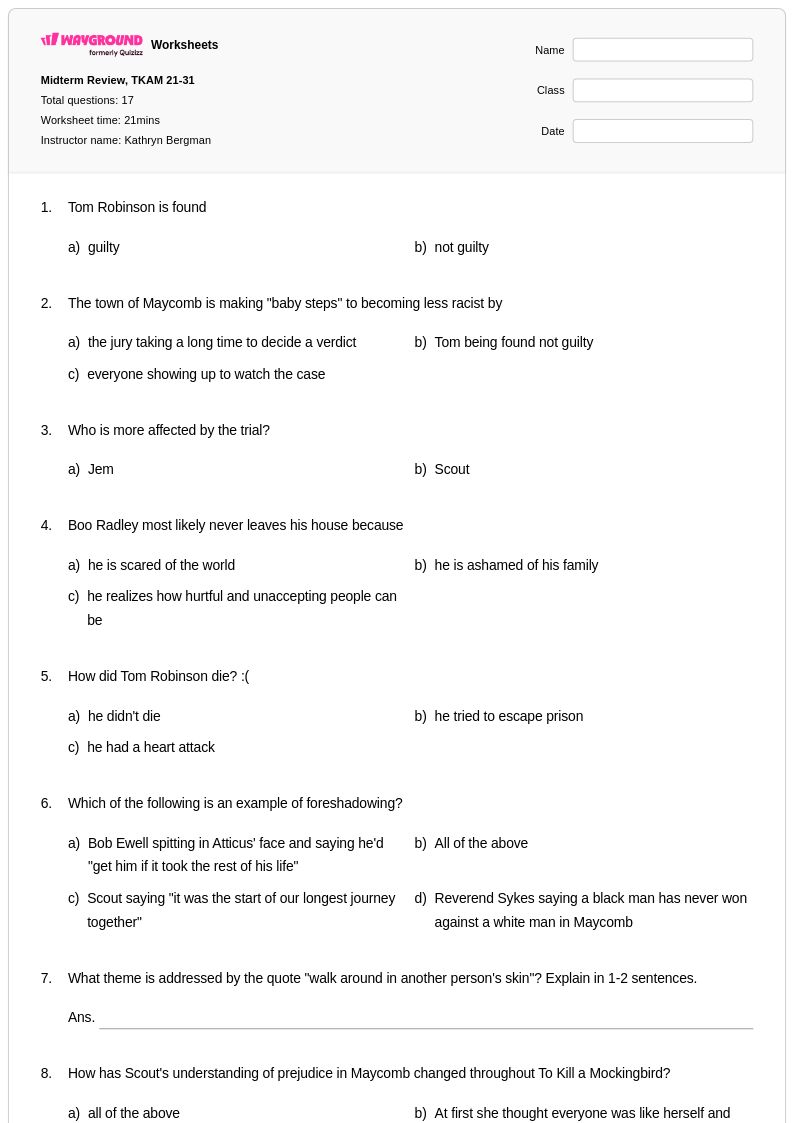
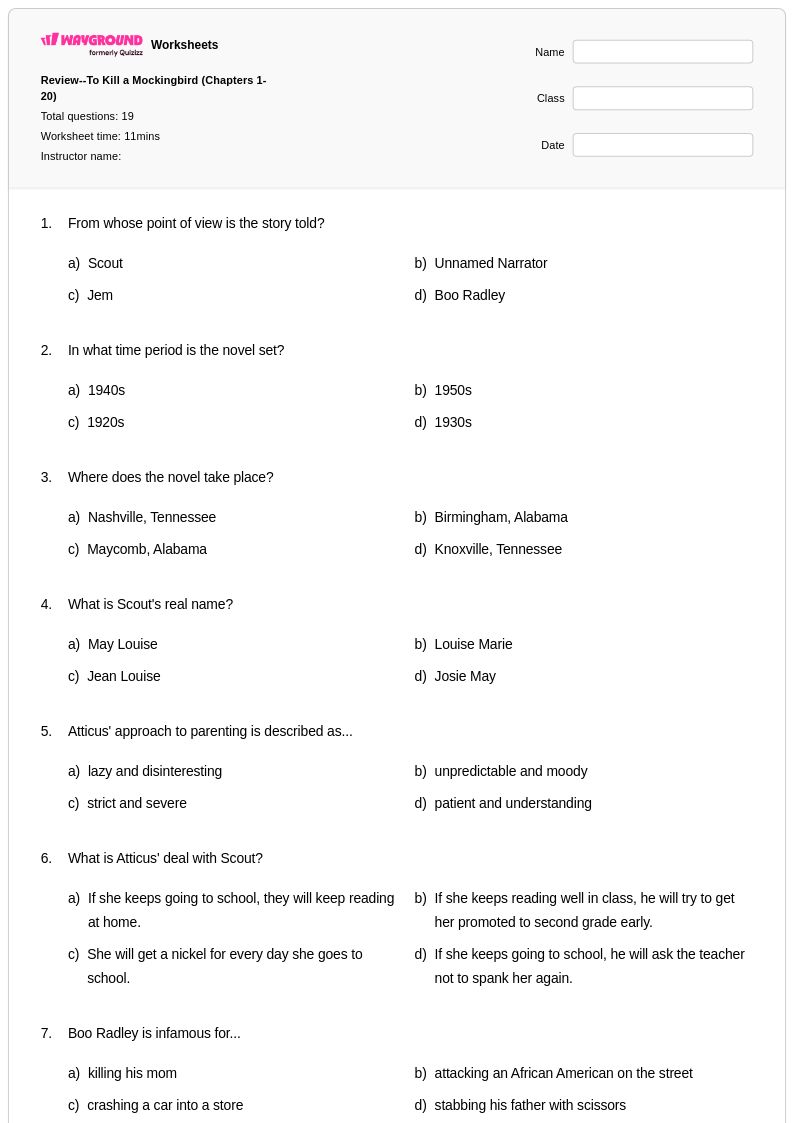
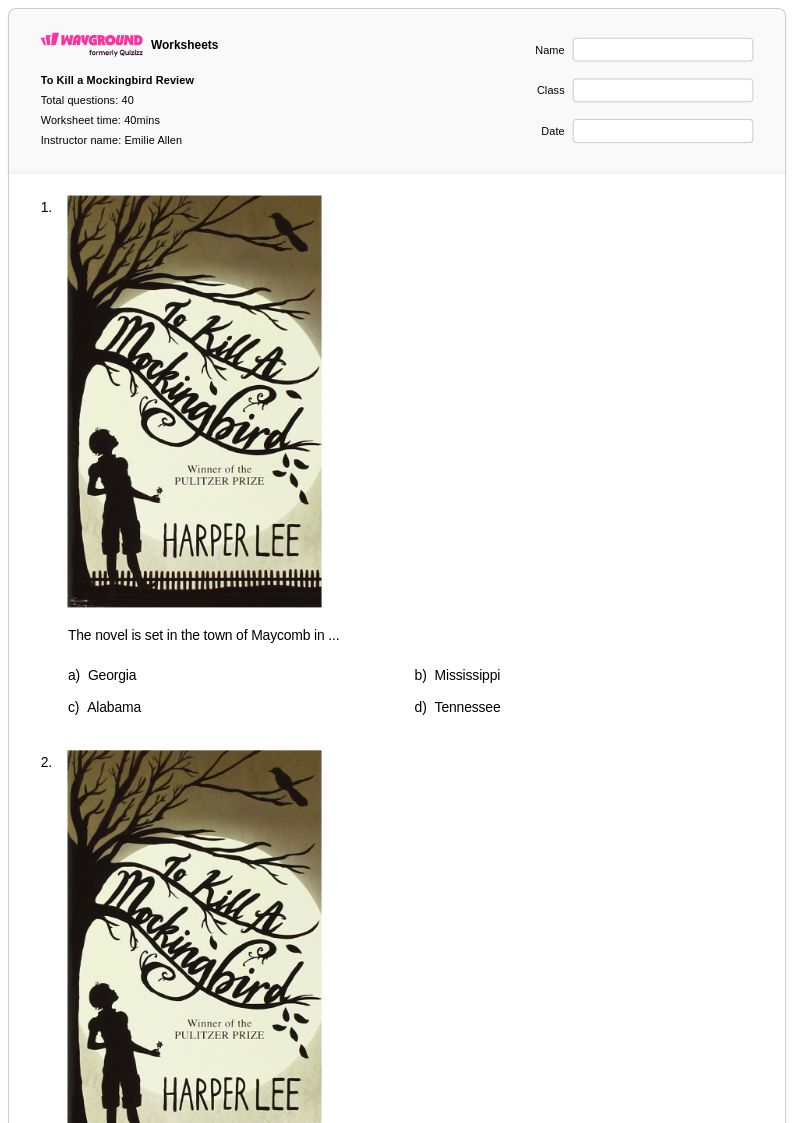
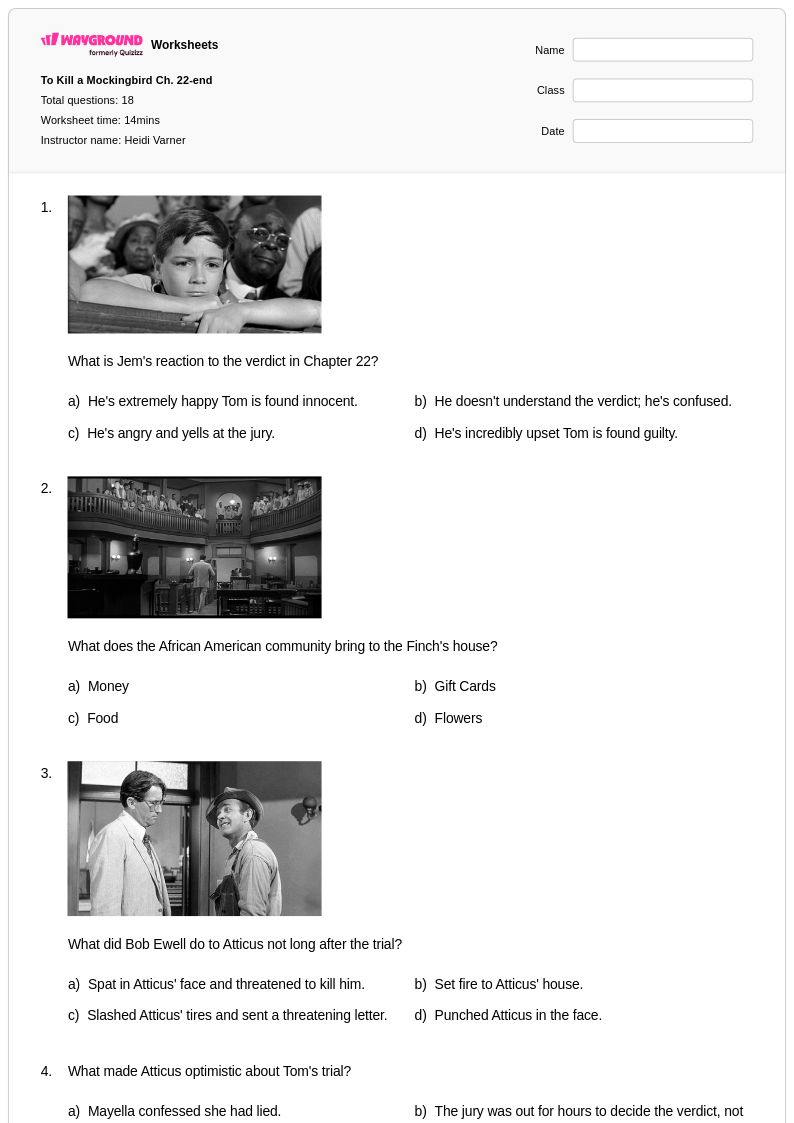
Grade 10 English students can explore Harper Lee's classic novel through free To Kill a Mockingbird worksheets, featuring printable PDFs with practice problems and answer keys to deepen literary analysis skills.
Explore printable To Kill a Mockingbird worksheets for Grade 10
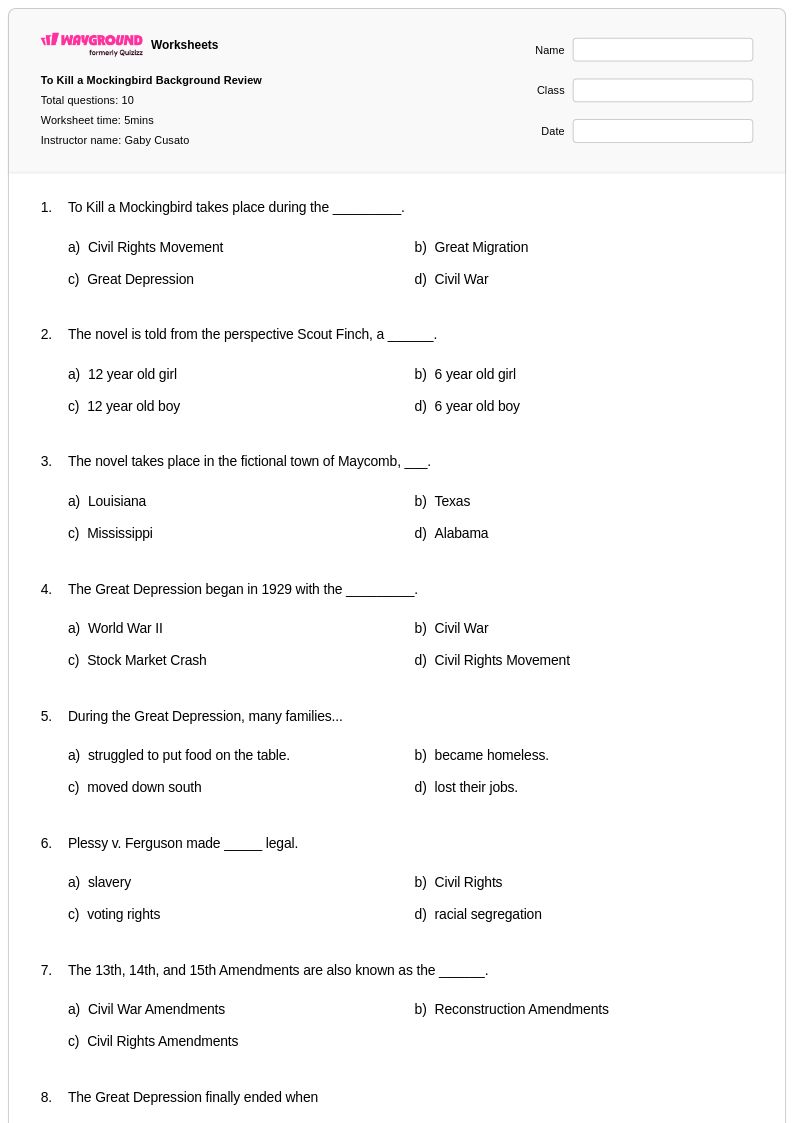
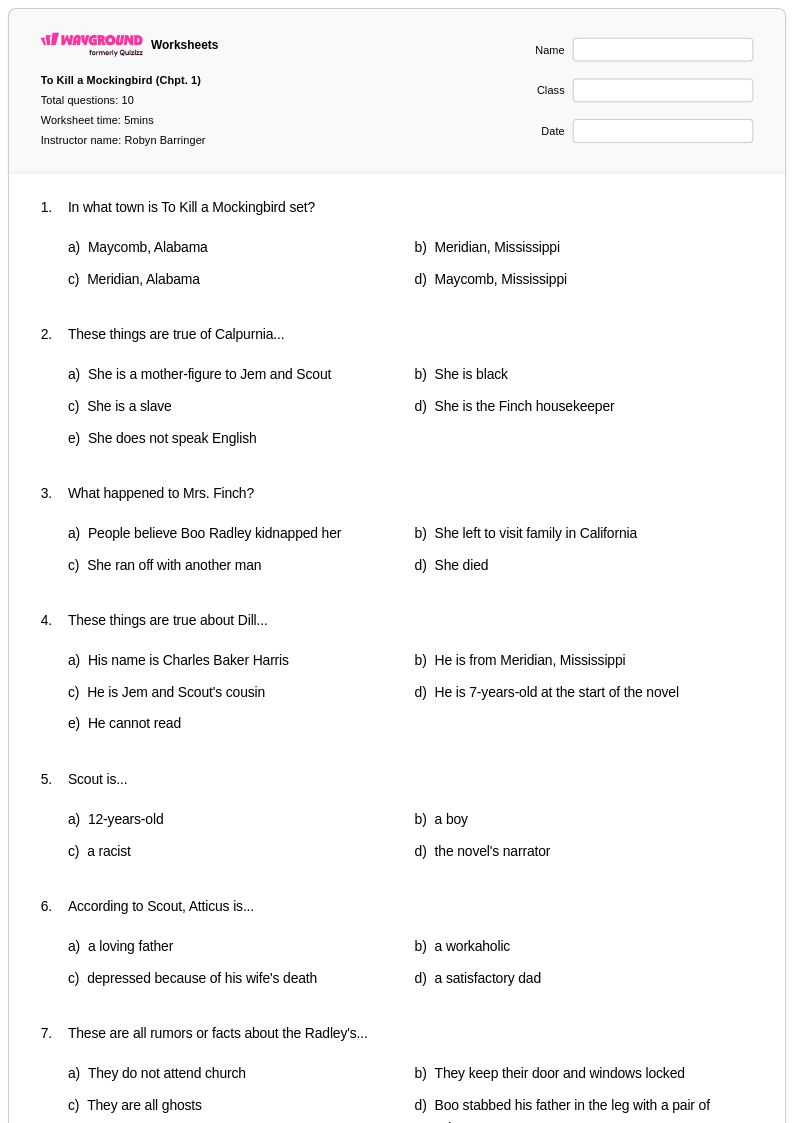
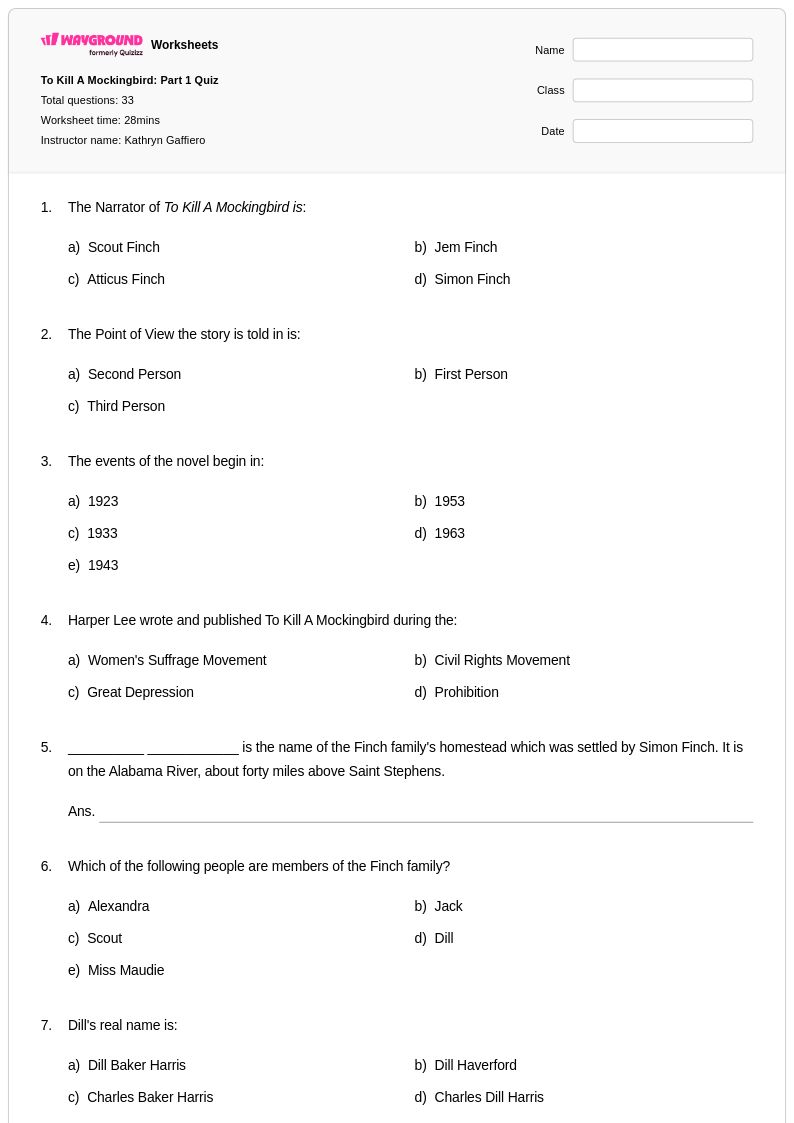
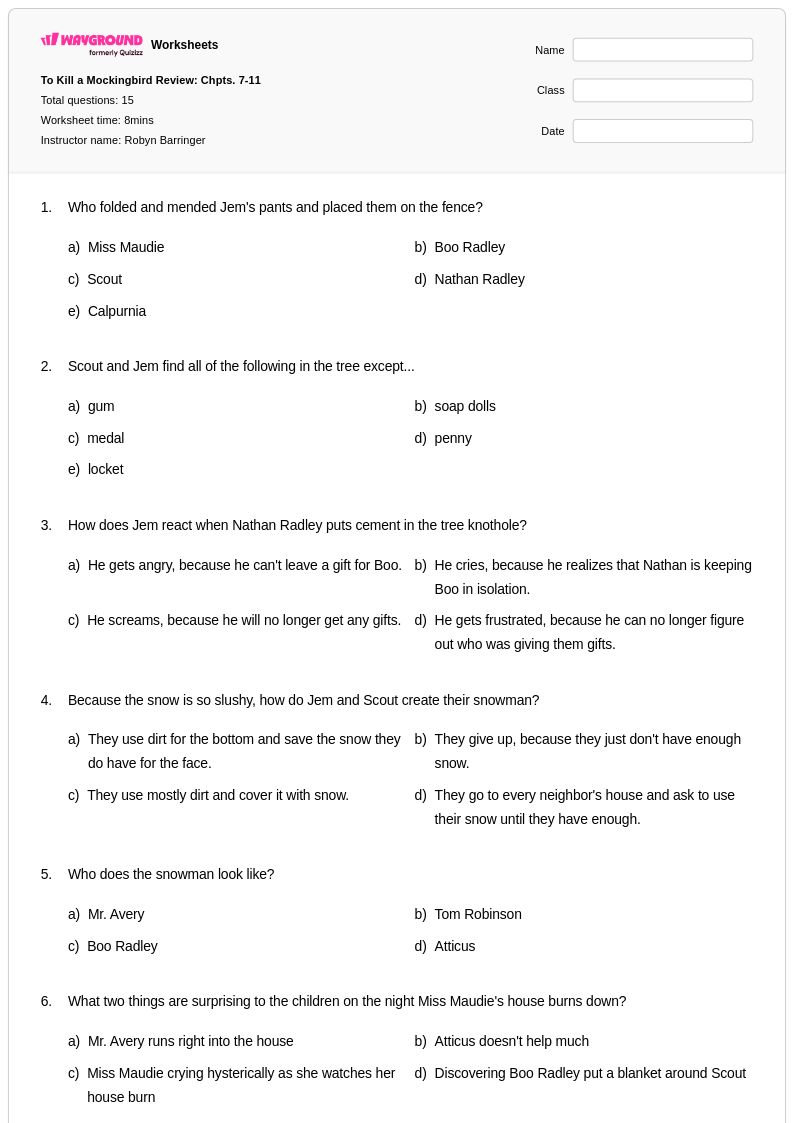
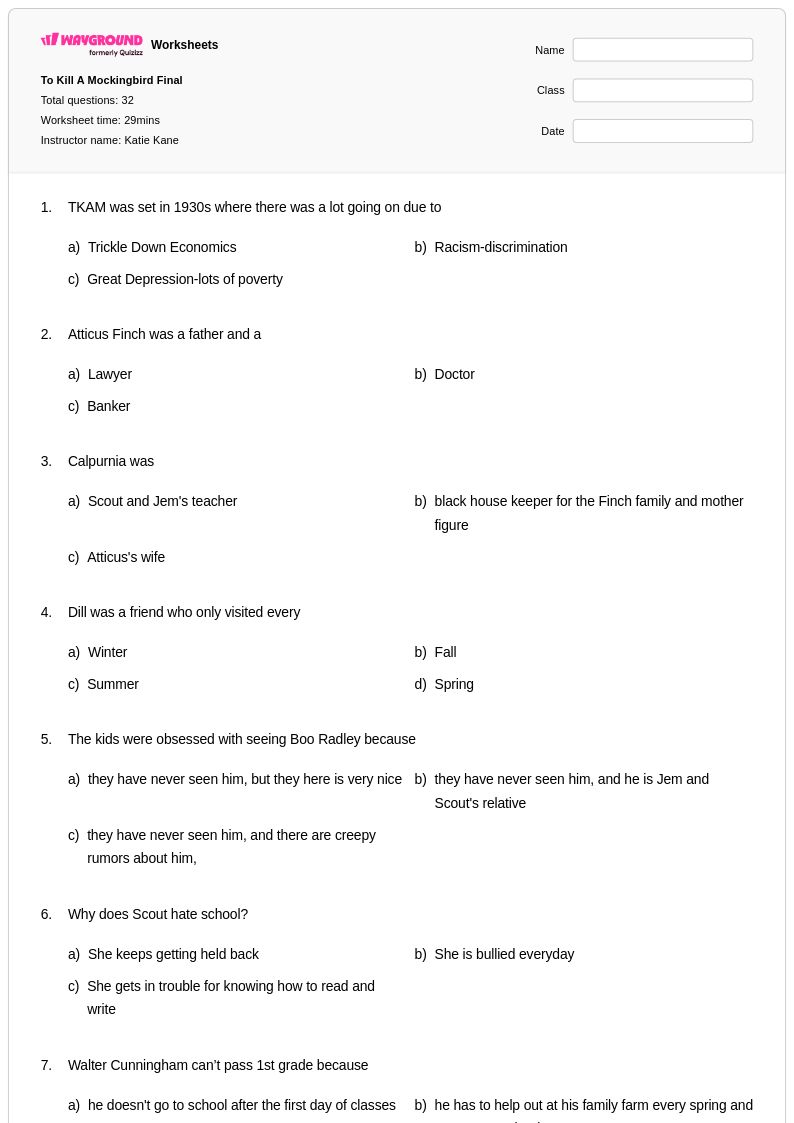
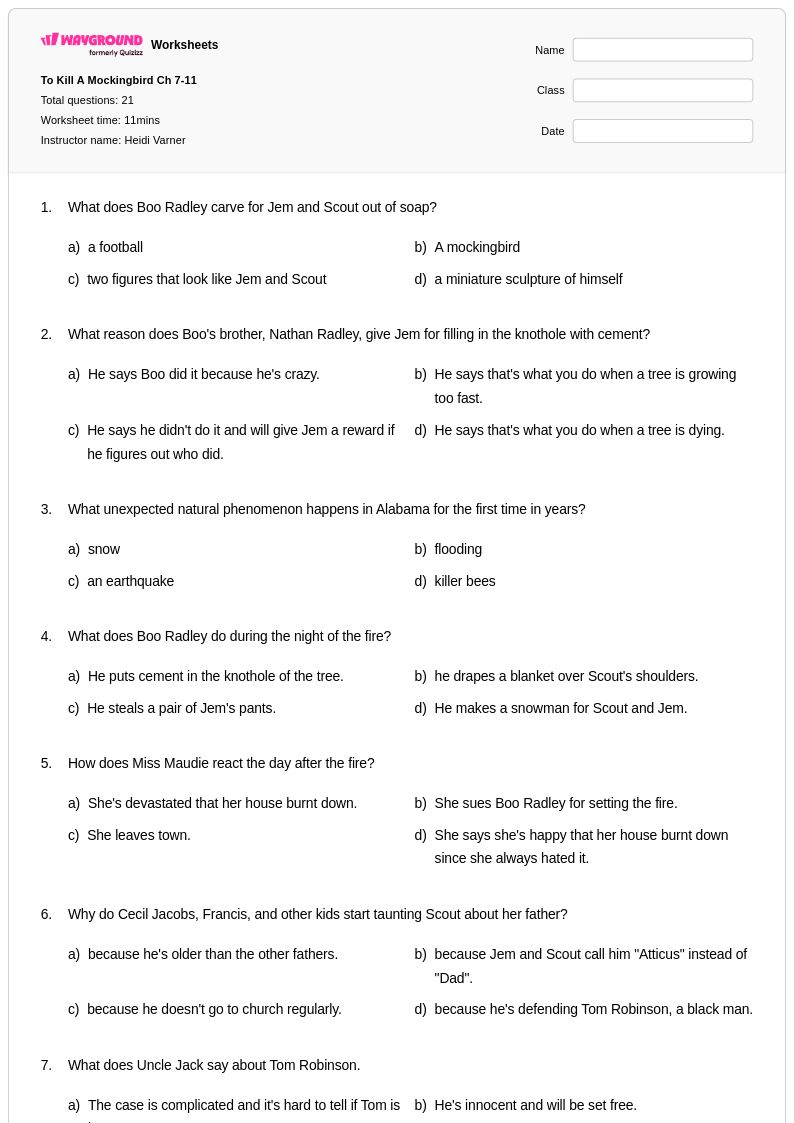
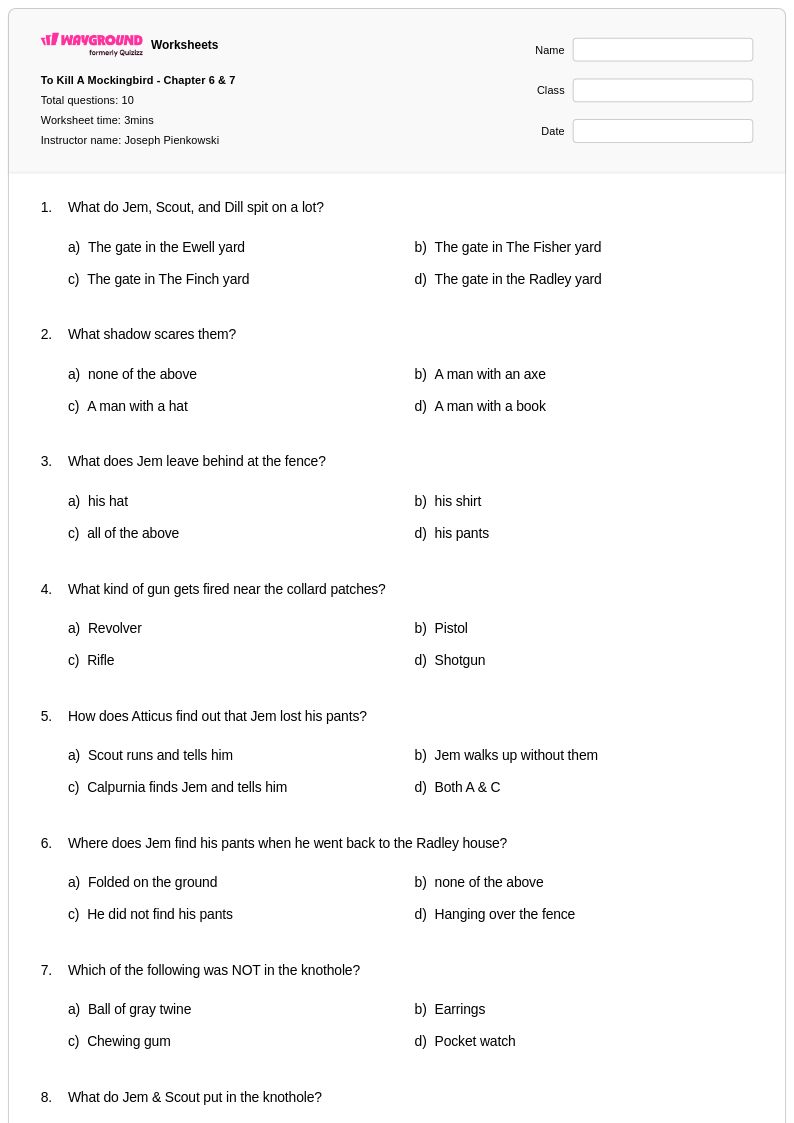
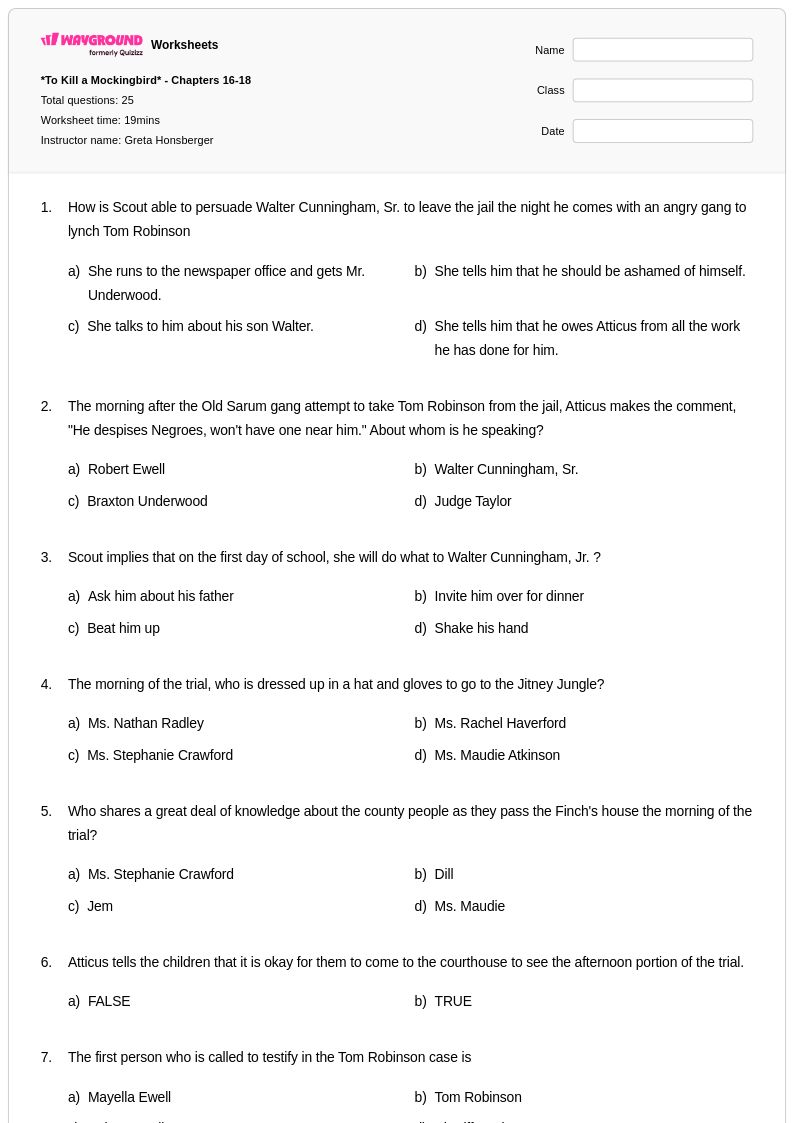
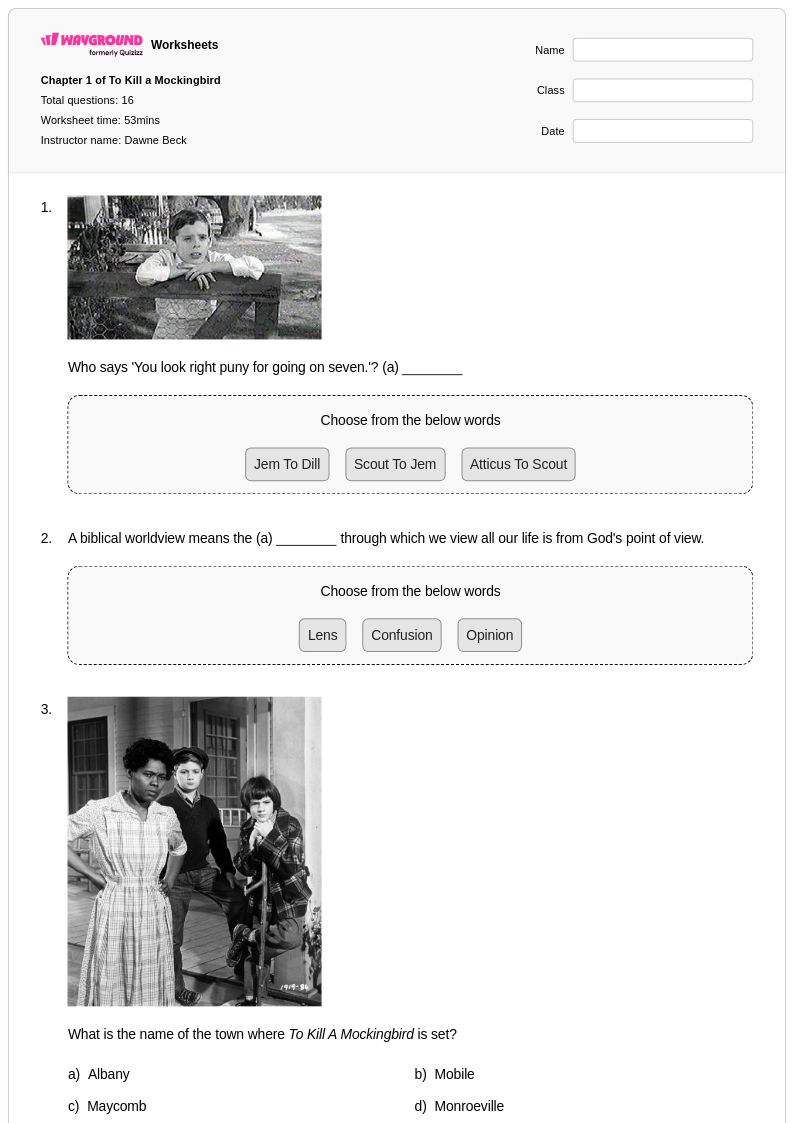
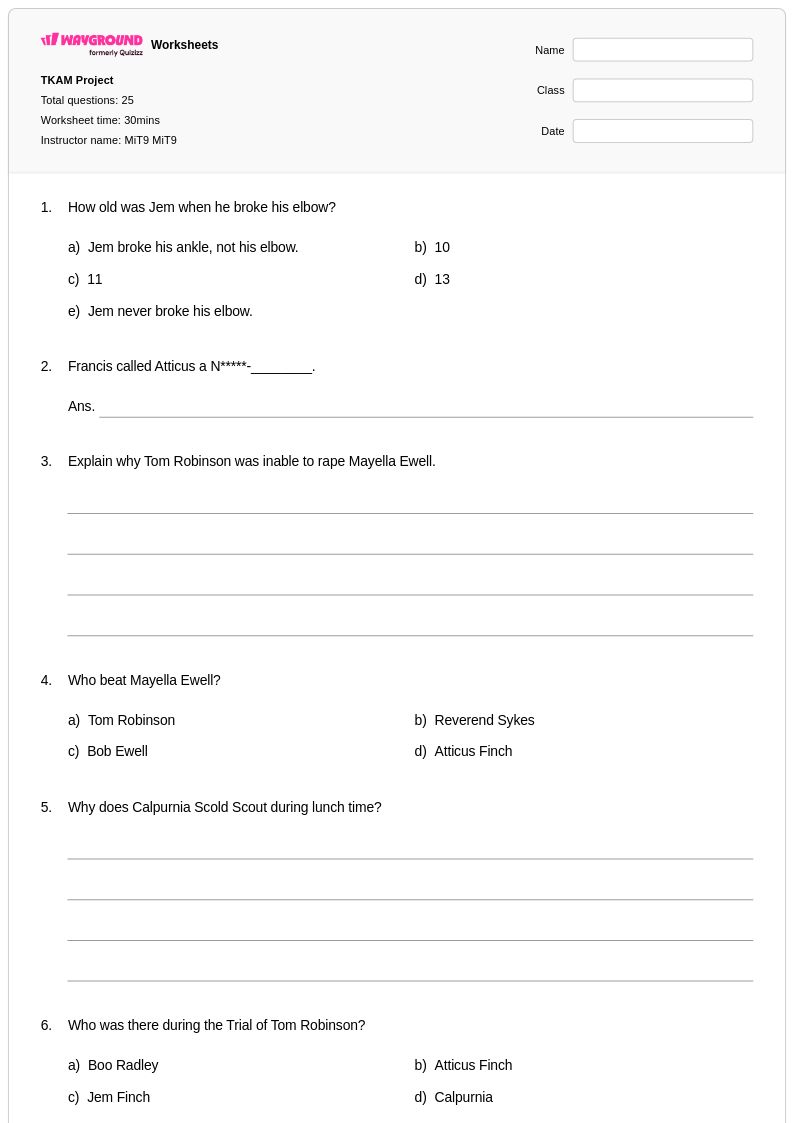
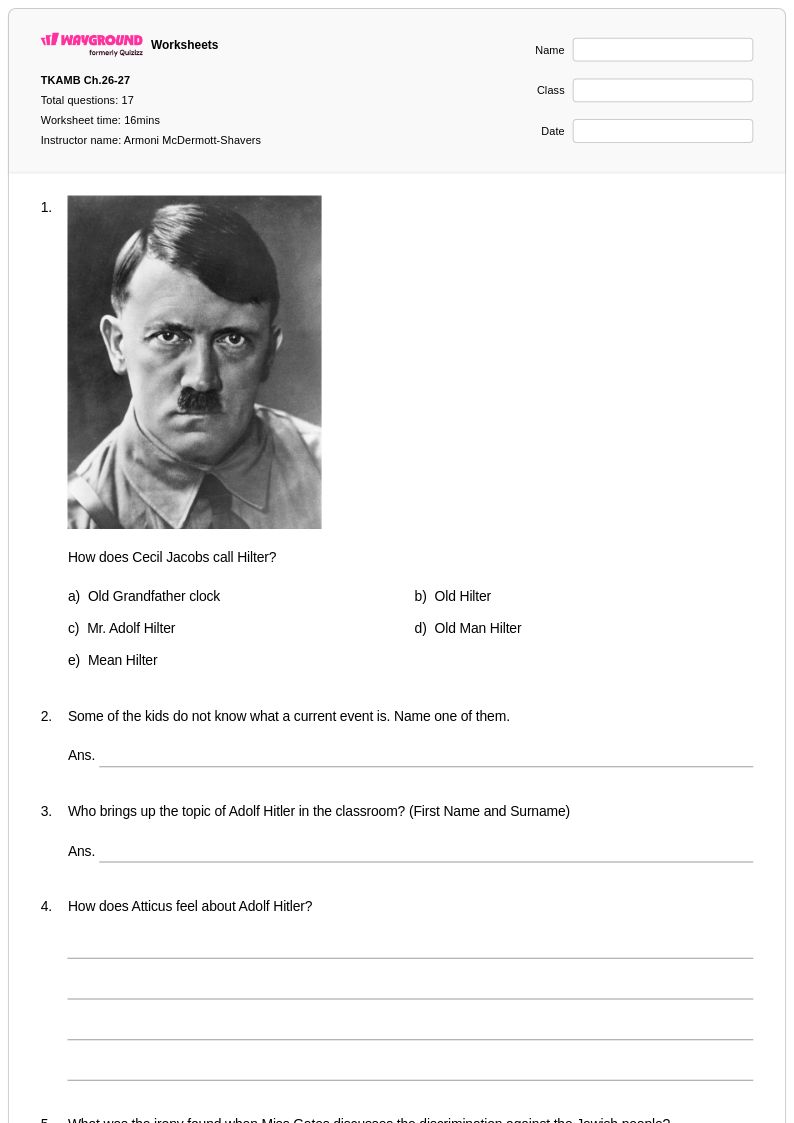
To Kill a Mockingbird worksheets for Grade 10 students available through Wayground (formerly Quizizz) provide comprehensive support for analyzing Harper Lee's timeless novel within the context of reading genres and types. These expertly crafted resources strengthen critical reading skills by guiding students through literary analysis, character development, thematic exploration, and historical context understanding. The worksheets feature practice problems that challenge students to examine the novel's classification as both coming-of-age fiction and social commentary, while developing their ability to identify literary devices, analyze narrative perspective, and connect historical events to fictional storylines. Each printable resource includes detailed answer keys that support both independent study and classroom instruction, with free pdf formats ensuring accessibility for diverse learning environments.
Wayground (formerly Quizizz) empowers educators with an extensive collection of millions of teacher-created resources specifically designed for To Kill a Mockingbird instruction at the Grade 10 level. The platform's robust search and filtering capabilities allow teachers to locate materials that align with specific learning standards while addressing varying skill levels through built-in differentiation tools. These customizable worksheets are available in both printable and digital formats, including downloadable pdfs, enabling seamless integration into any classroom setting or remote learning environment. Teachers can efficiently plan comprehensive novel studies, provide targeted remediation for struggling readers, offer enrichment opportunities for advanced students, and ensure consistent skill practice through these professionally developed materials that support deep literary analysis and critical thinking development.
FAQs
How do I teach To Kill a Mockingbird in a way that connects students to its themes?
Grounding students in the historical context of 1930s Alabama before they begin reading helps make the novel's themes of racial injustice, moral courage, and class inequality feel concrete rather than abstract. Teachers often pair close reading of Atticus Finch's courtroom scenes with structured discussions about perspective-taking and civic responsibility. Assigning character journals from Scout's point of view encourages students to track how her moral understanding evolves across the novel, which deepens engagement with the coming-of-age arc.
What activities help students practice literary analysis skills while reading To Kill a Mockingbird?
Textual evidence collection exercises, where students identify and annotate specific passages tied to themes like justice or innocence, build the habit of grounding analysis in the text. Character motivation charts for figures like Atticus, Tom Robinson, and Boo Radley help students move beyond plot summary into interpretive thinking. Symbolism tracking worksheets focused on the mockingbird motif, the Radley house, and the mad dog scene are particularly effective for developing close reading skills.
What common mistakes do students make when analyzing To Kill a Mockingbird?
One of the most frequent errors is conflating Scout's first-person perspective with objective truth, which leads students to miss the dramatic irony Harper Lee builds throughout the novel. Students also commonly treat Boo Radley as a minor character rather than recognizing his thematic function as a symbol of innocence and societal misunderstanding. Another recurring mistake is reducing the trial of Tom Robinson to a plot event rather than analyzing it as the moral and structural center of the novel.
How do I use To Kill a Mockingbird worksheets effectively in my classroom?
To Kill a Mockingbird worksheets on Wayground are available as printable PDFs for traditional classroom use and in digital formats for technology-integrated instruction, including the option to host them as a quiz on Wayground. Printable versions work well for annotation exercises and in-class discussion prep, while digital formats are effective for independent reading checks and formative assessment. Teachers can assign specific worksheets chapter by chapter to maintain accountability across the novel's longer reading arc.
How can I differentiate To Kill a Mockingbird instruction for students reading below grade level?
Scaffolding comprehension with guided reading questions that break chapters into manageable chunks helps struggling readers track plot and character without becoming overwhelmed. On Wayground, teachers can enable the Read Aloud accommodation so students hear questions and content read to them, and Reduced Answer Choices can lower cognitive load for students who need additional support during assessments. These accommodations can be assigned to individual students without notifying the rest of the class, preserving a consistent experience for all learners.
How do I help students write a strong thematic essay about To Kill a Mockingbird?
Effective thematic essay preparation begins with helping students distinguish between a topic (e.g., racism) and an arguable thematic claim (e.g., the novel argues that moral courage requires accepting social isolation). Structured pre-writing activities that ask students to identify three pieces of textual evidence per claim before drafting reduce the tendency to write plot summaries rather than analysis. Reviewing how Harper Lee uses Scout's limited perspective to reveal adult hypocrisy gives students a sophisticated lens for building literary arguments.