Grade 4 students master the correct usage of to, two, and too with Wayground's free worksheets featuring engaging practice problems, printable PDFs, and comprehensive answer keys to build essential vocabulary skills.
Explore printable To/two/too worksheets for Grade 4
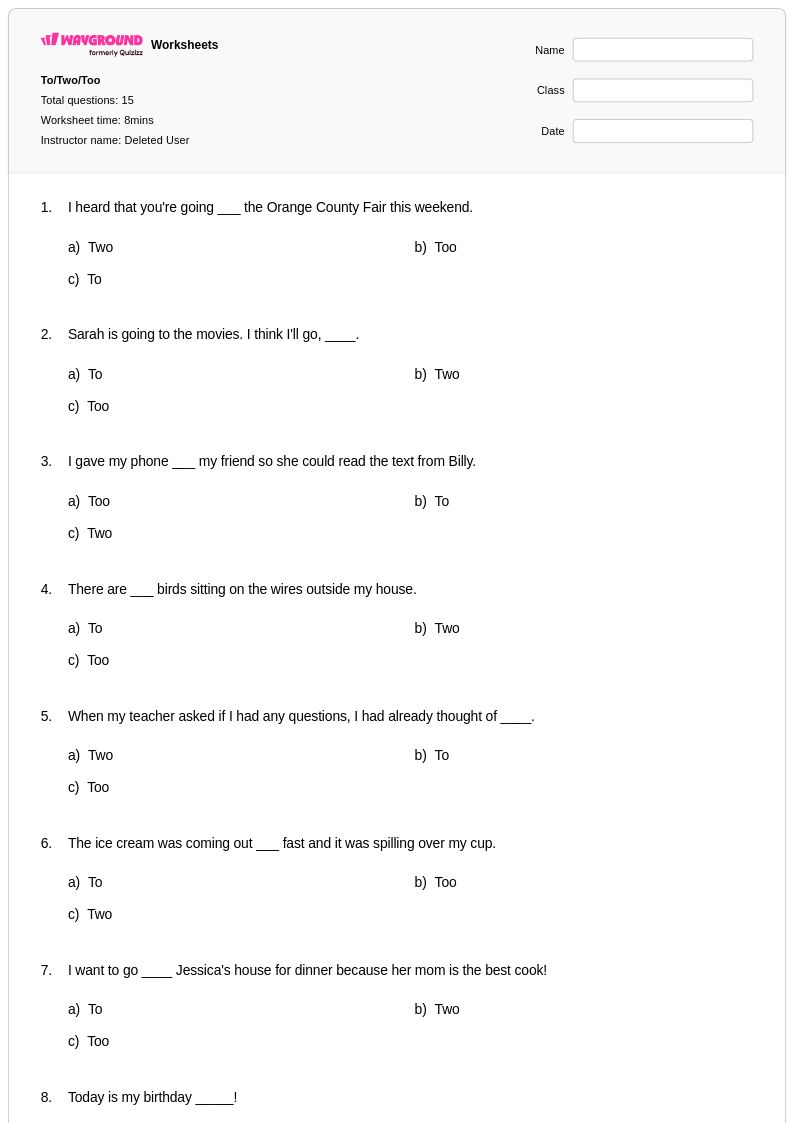
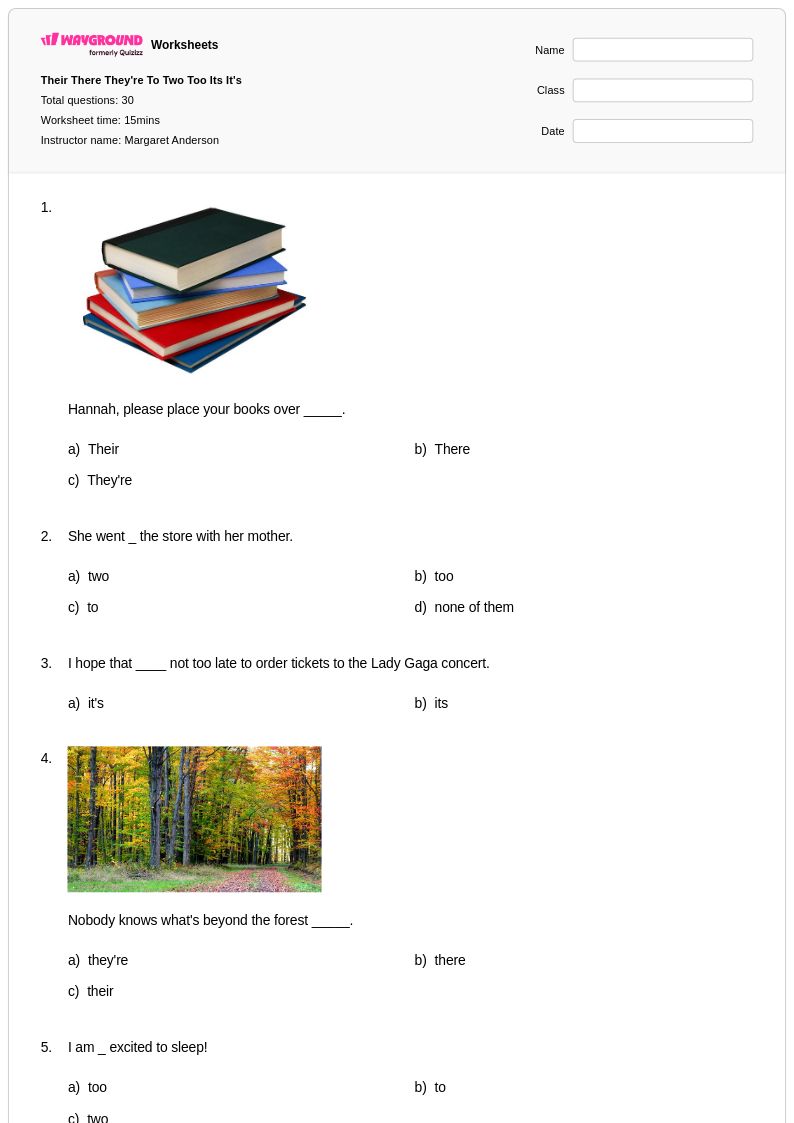
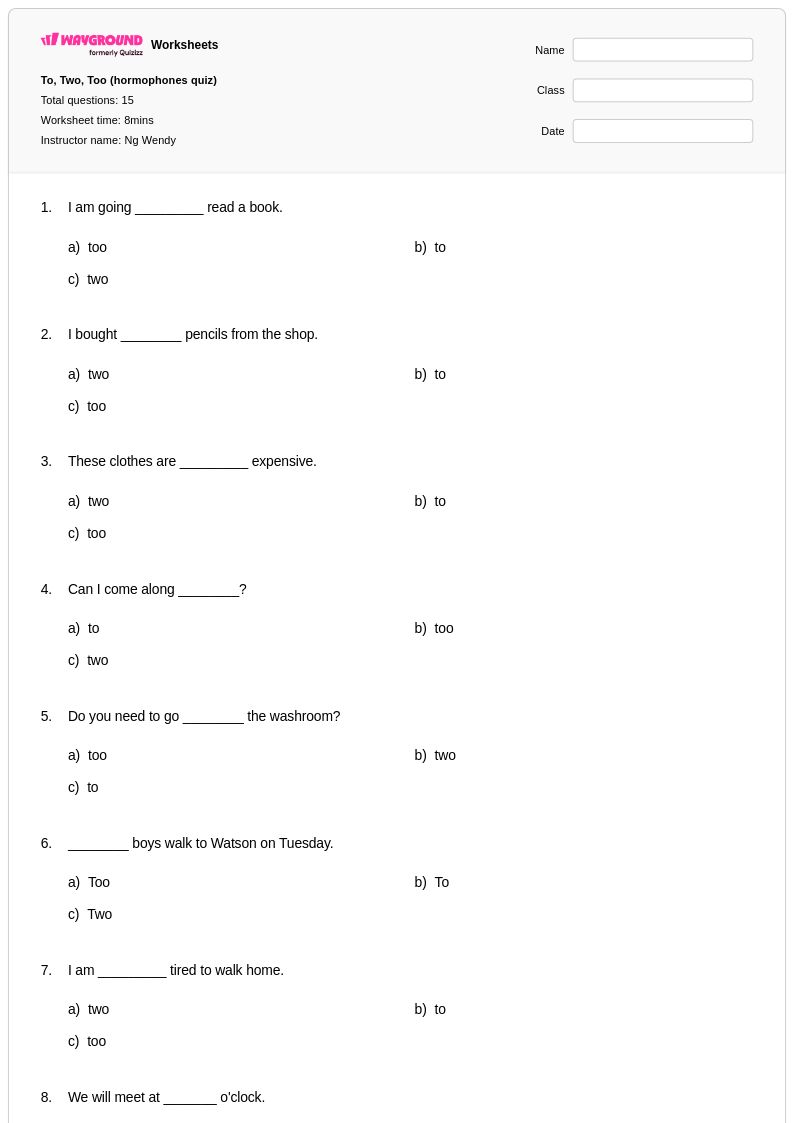
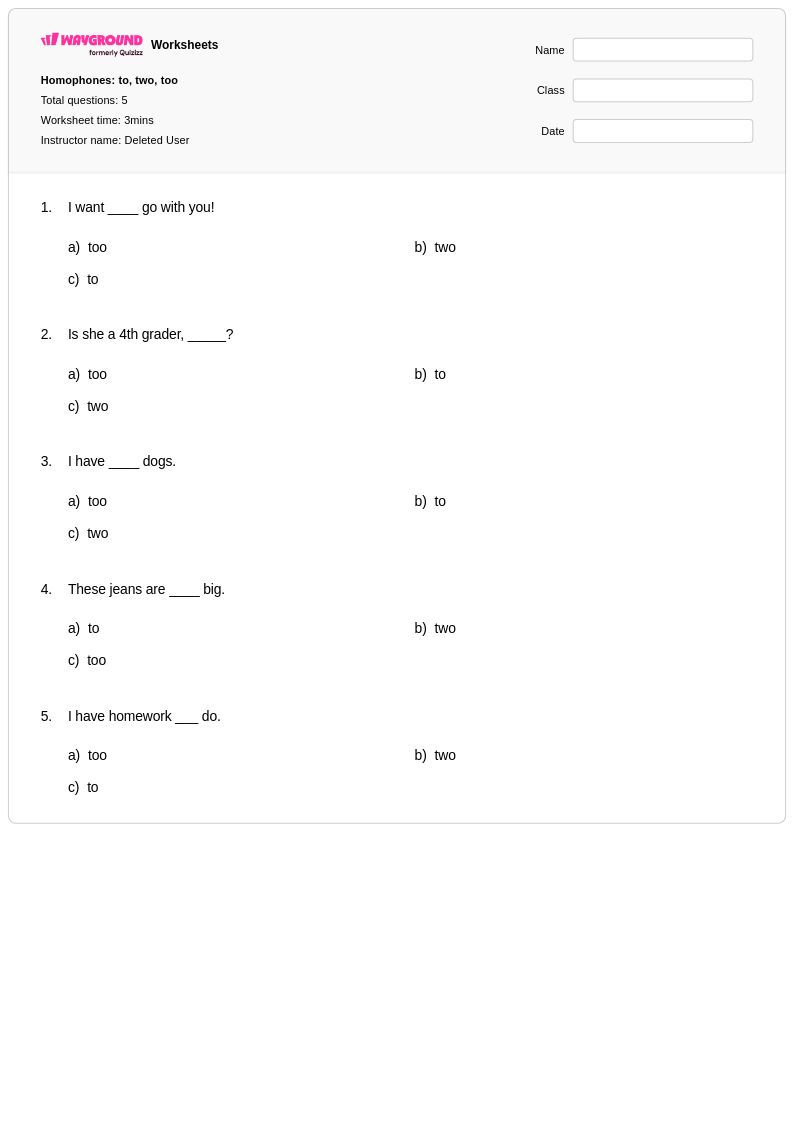
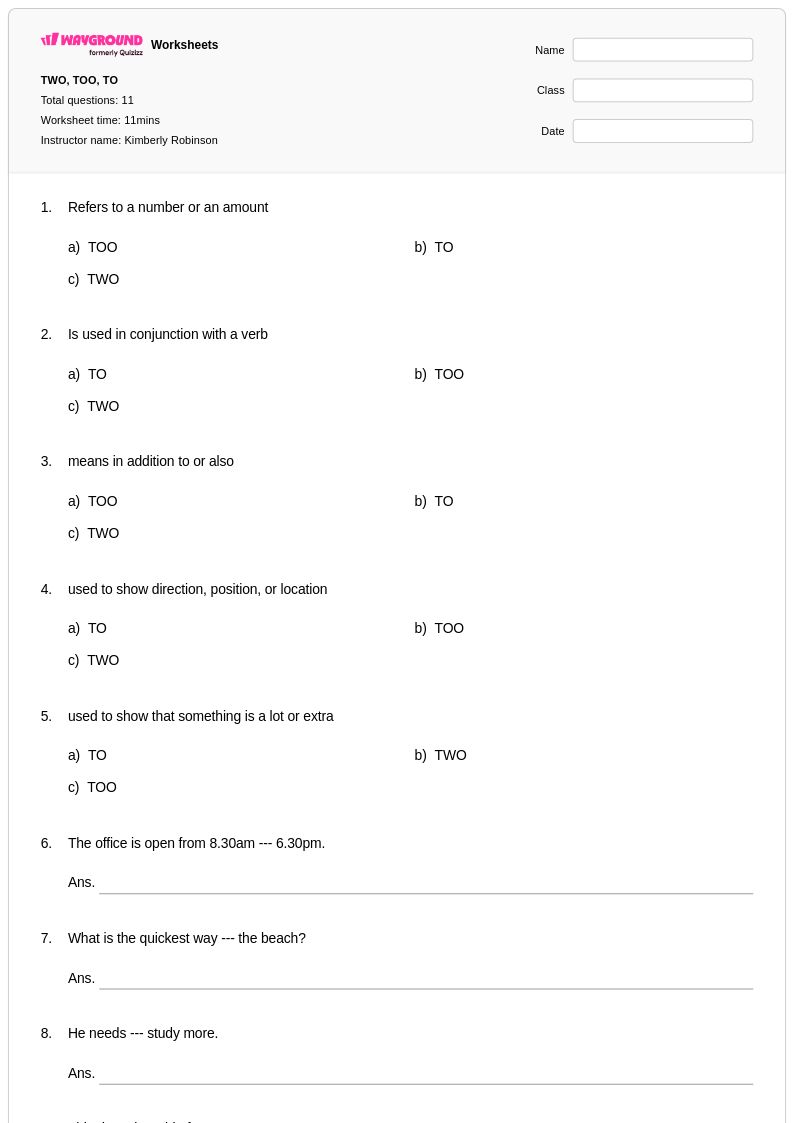
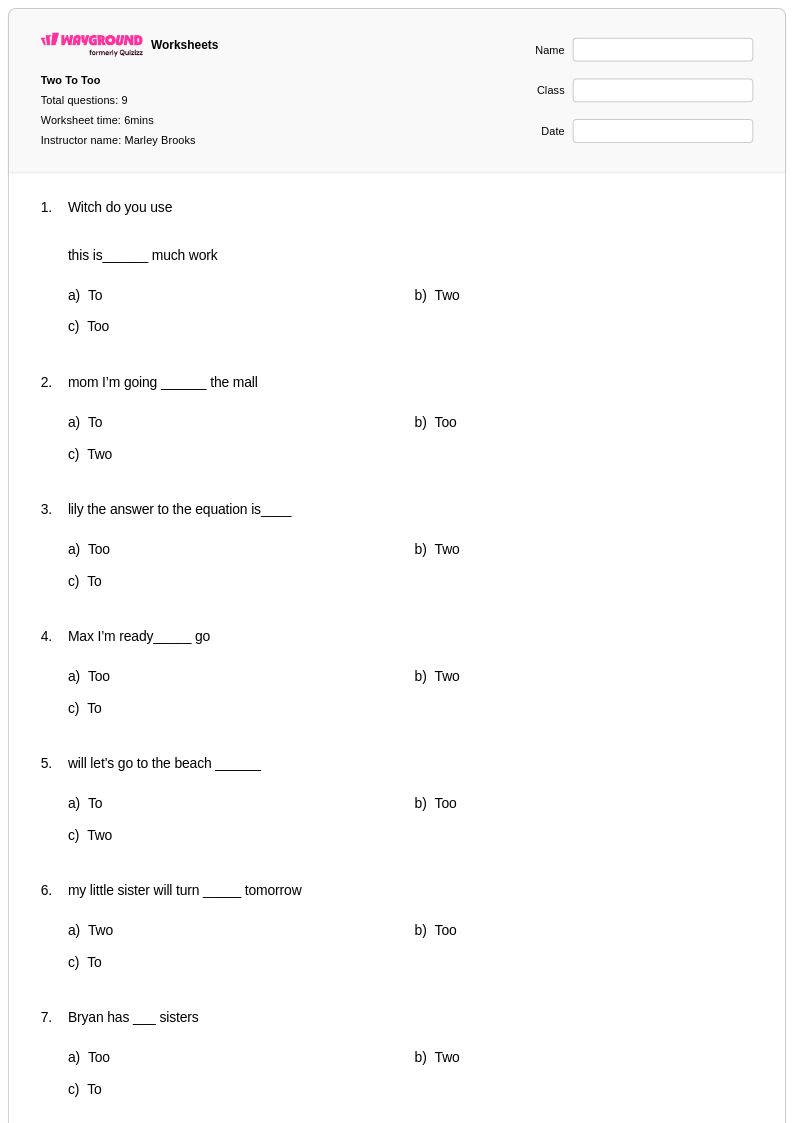
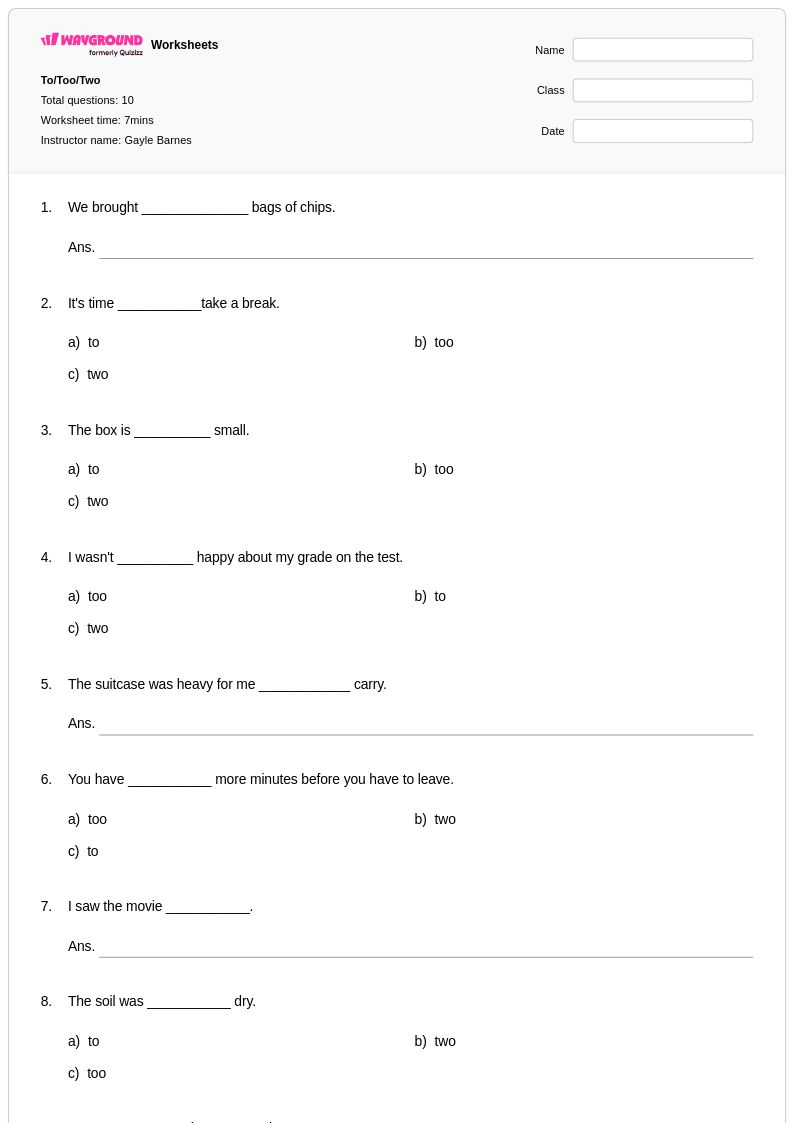
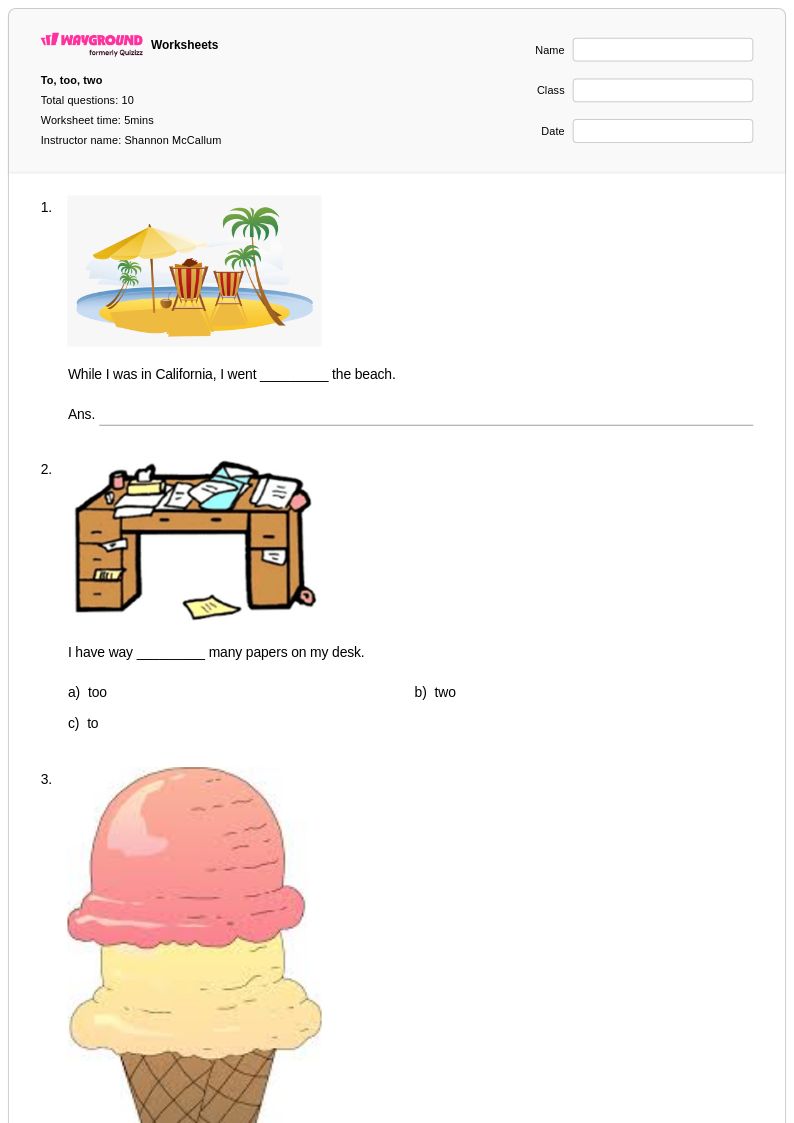
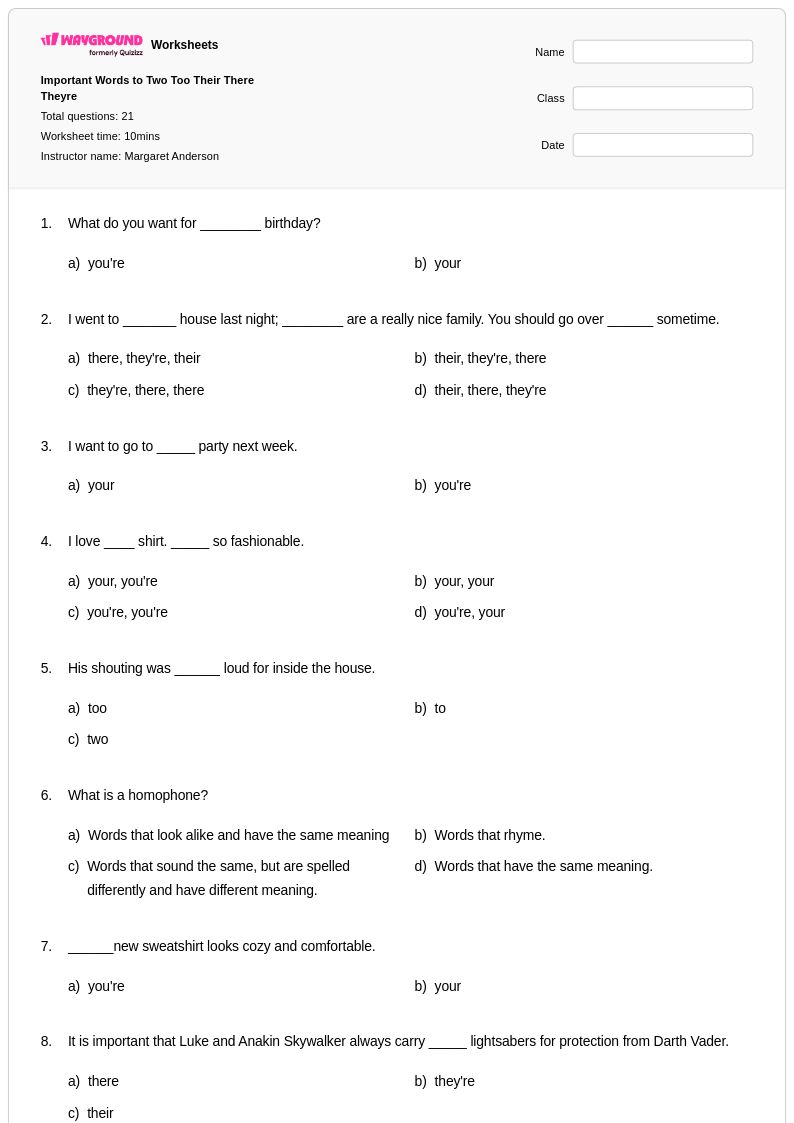
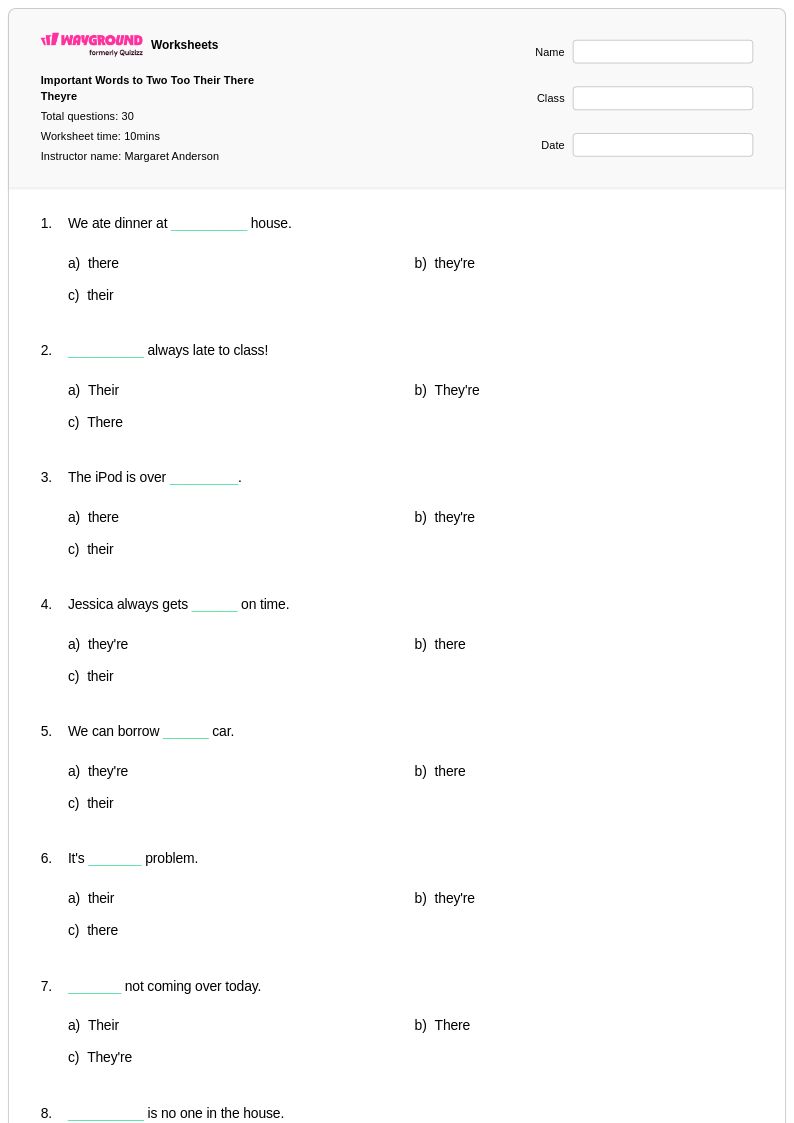
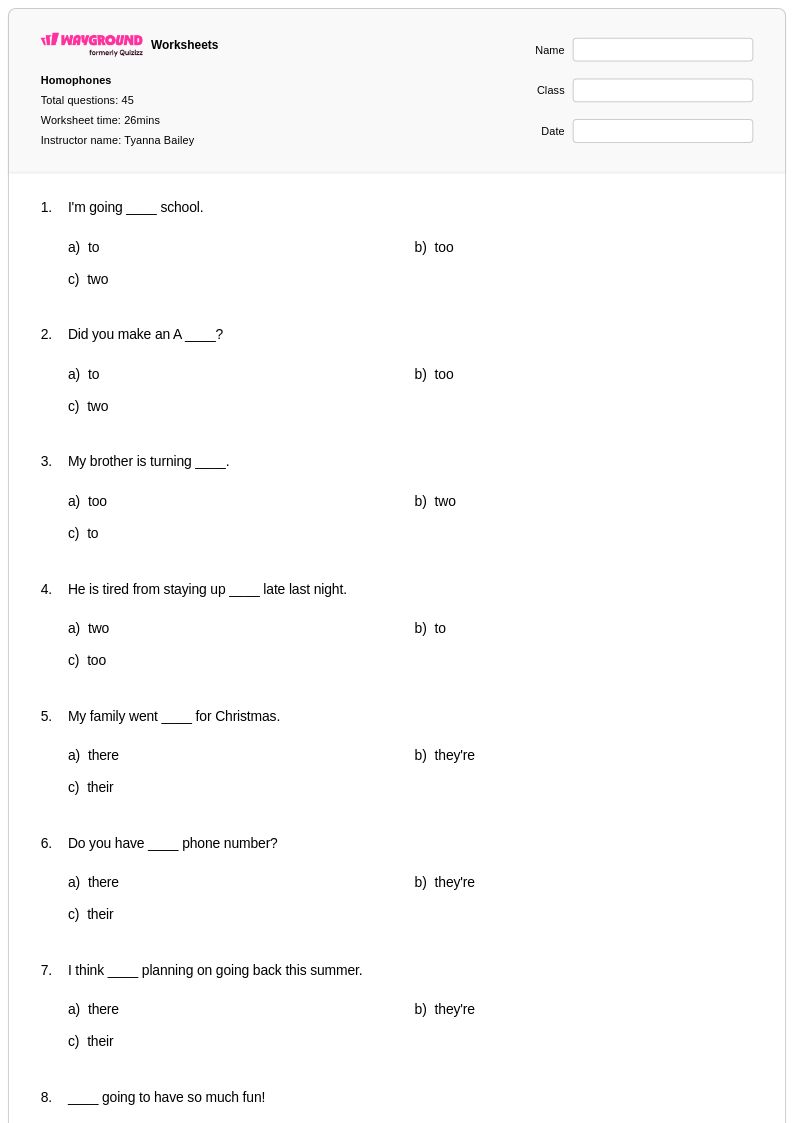
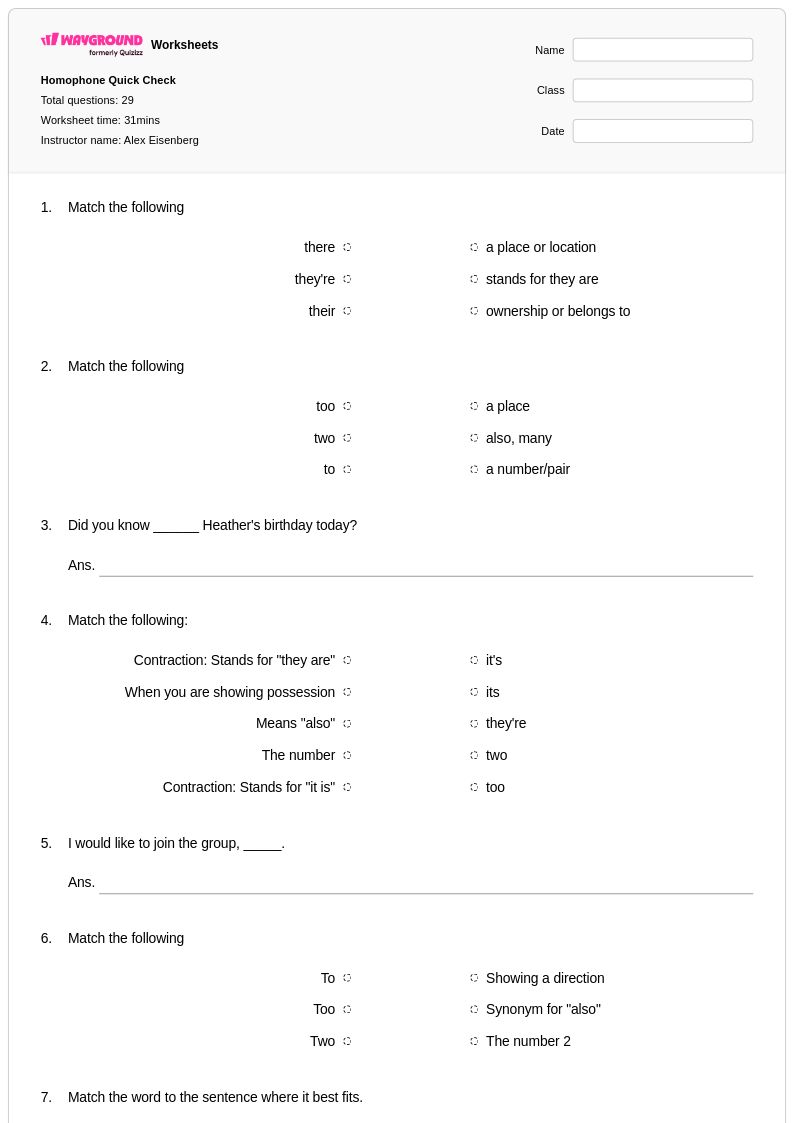
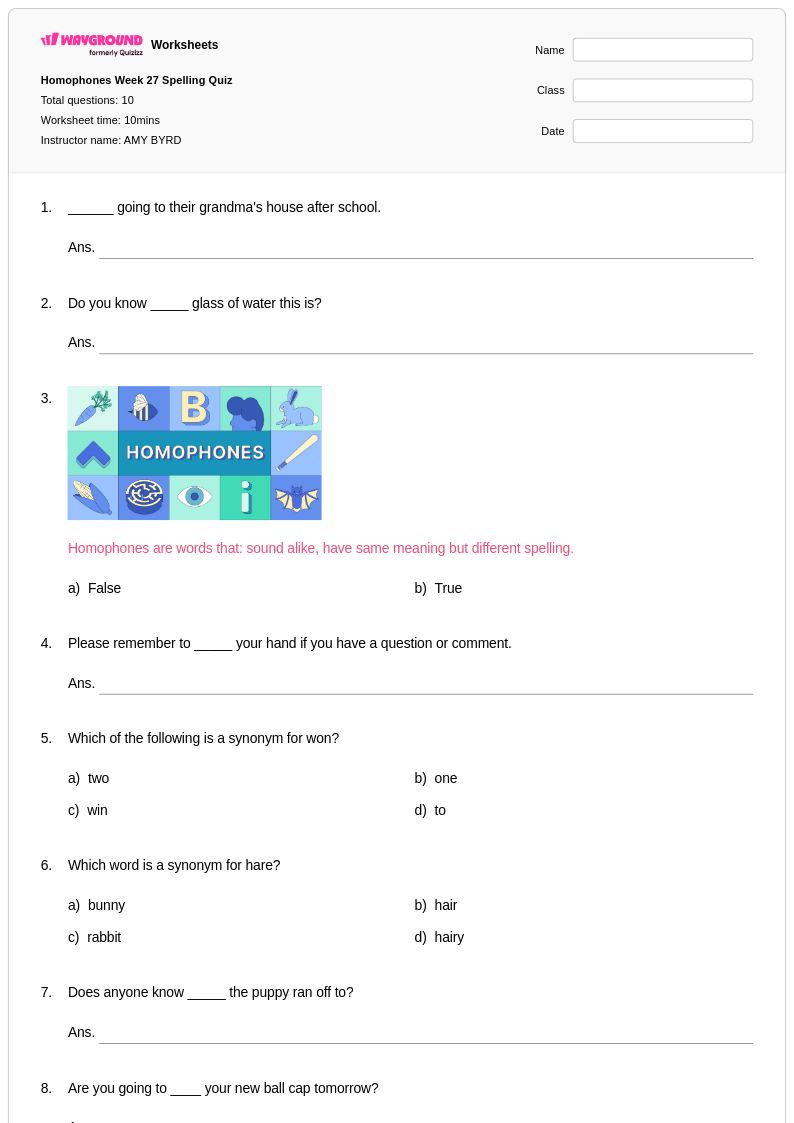
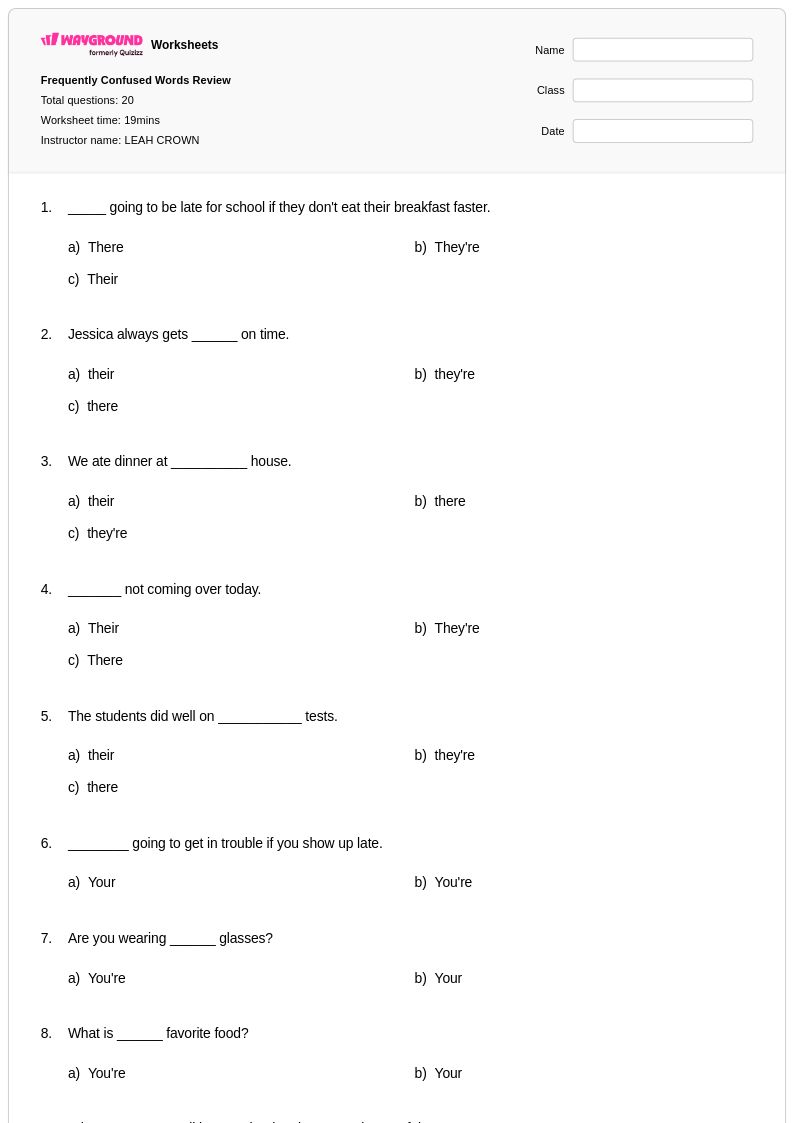
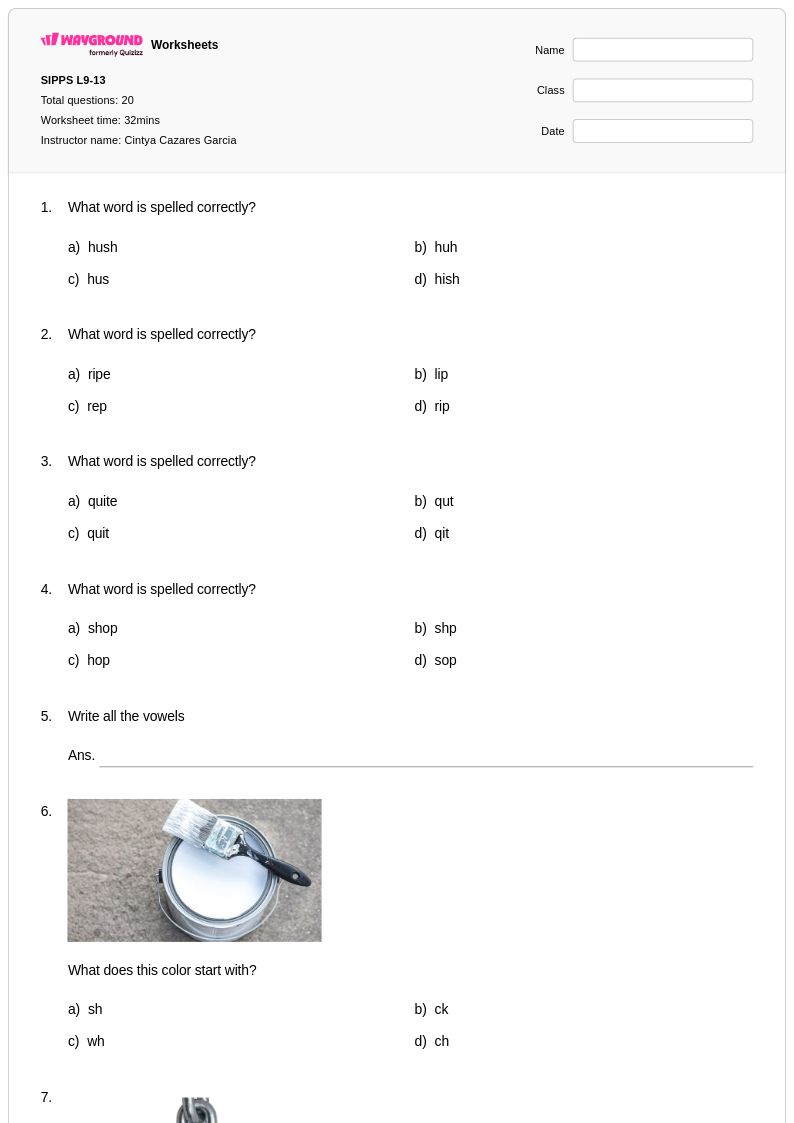
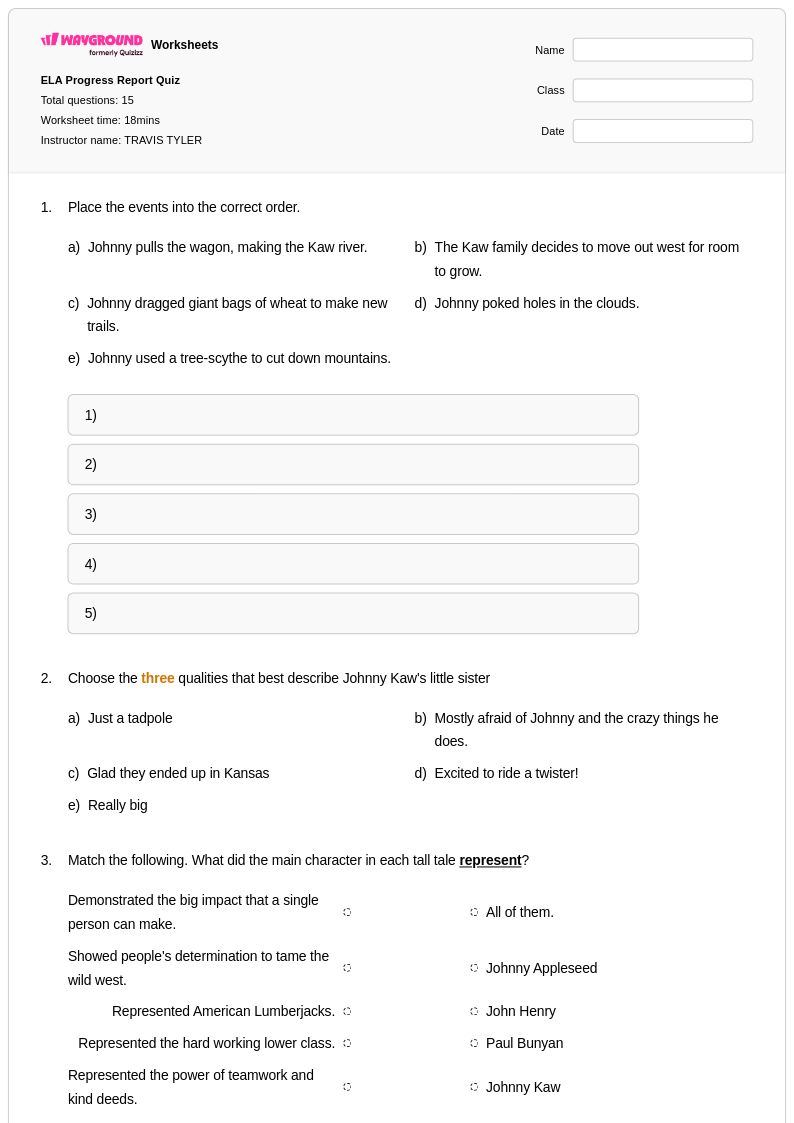
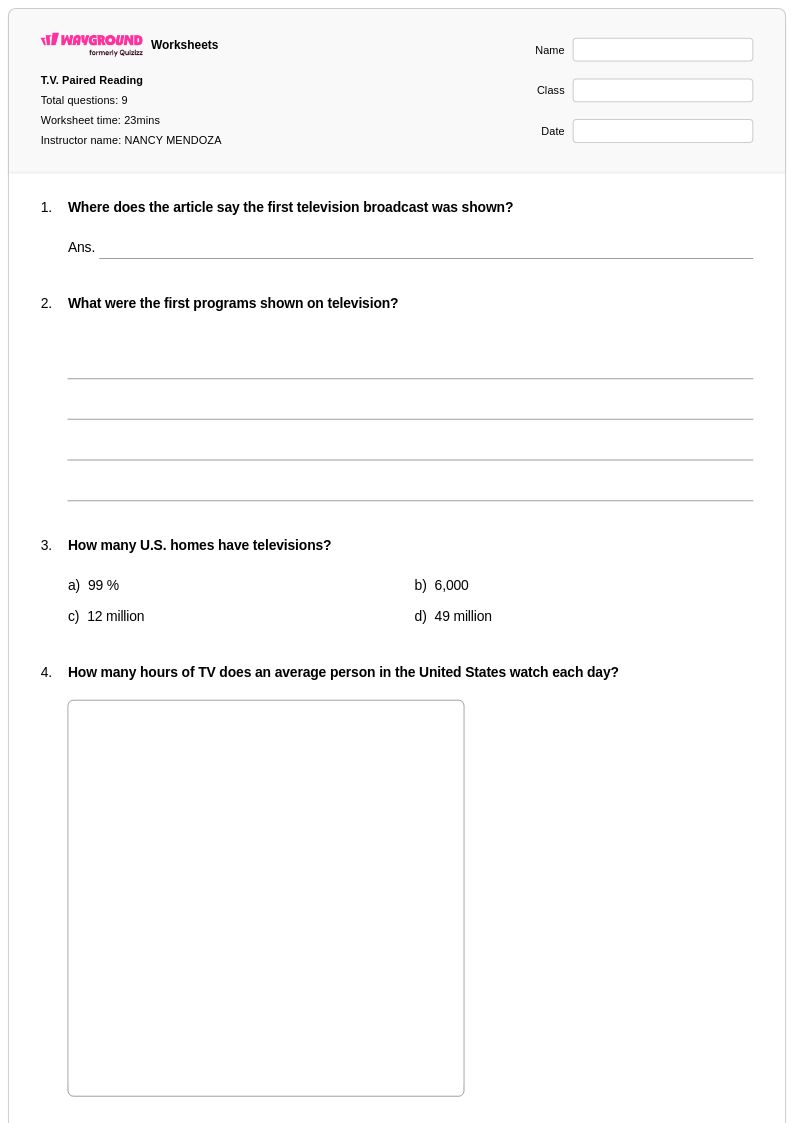
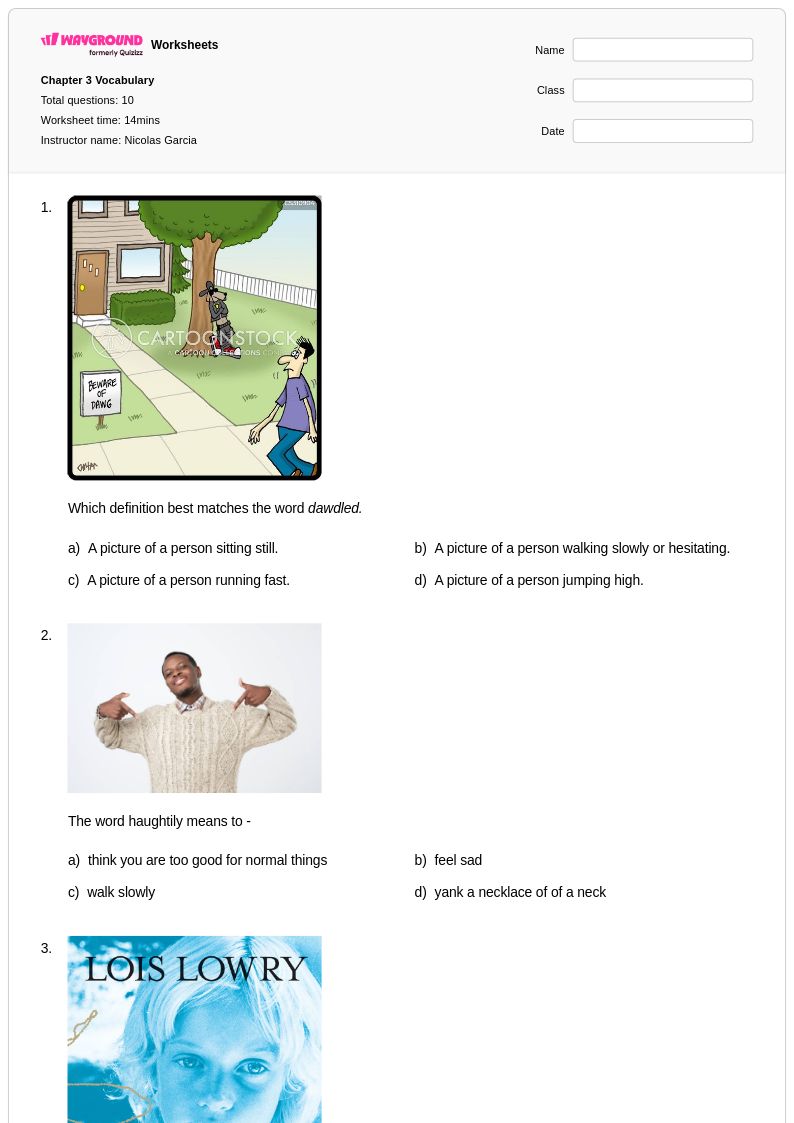
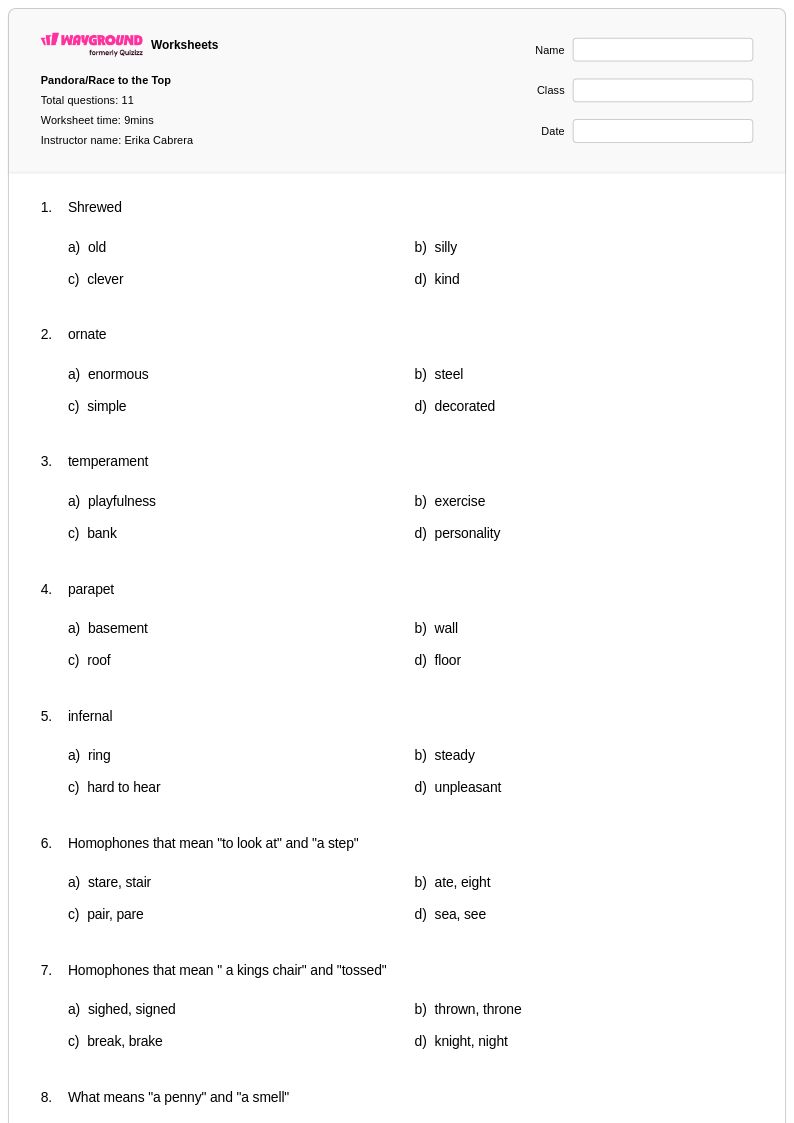
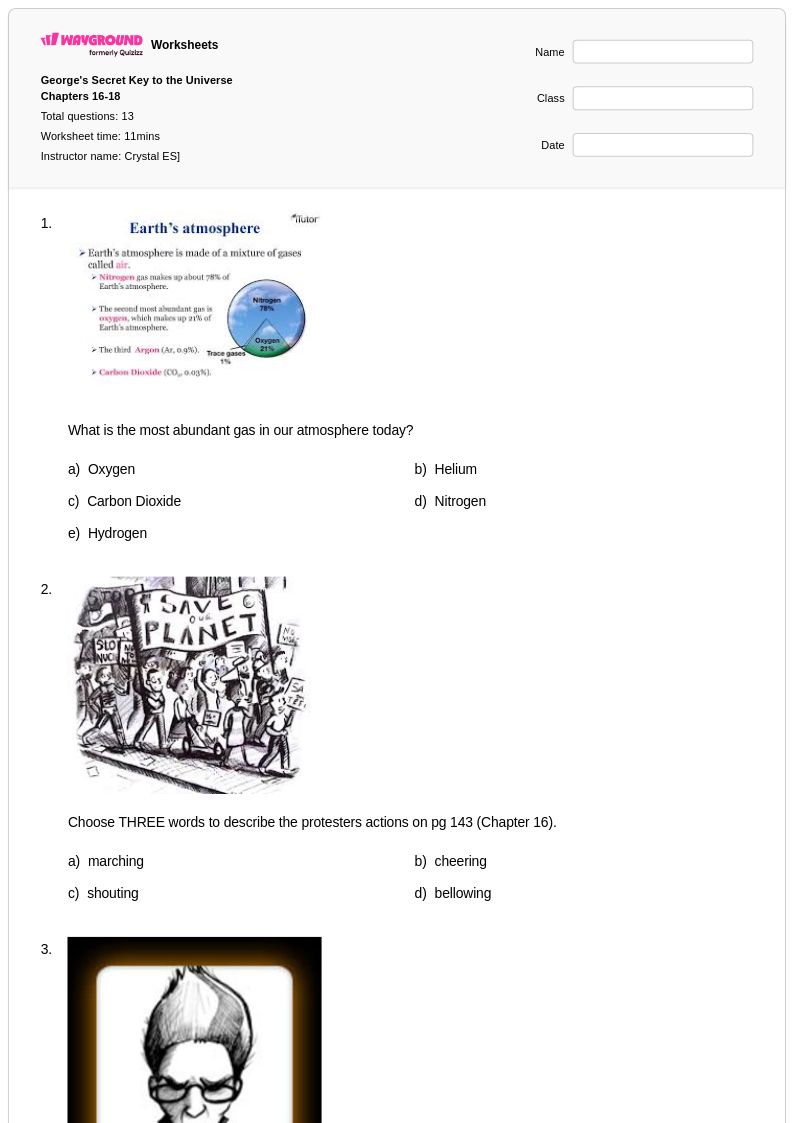
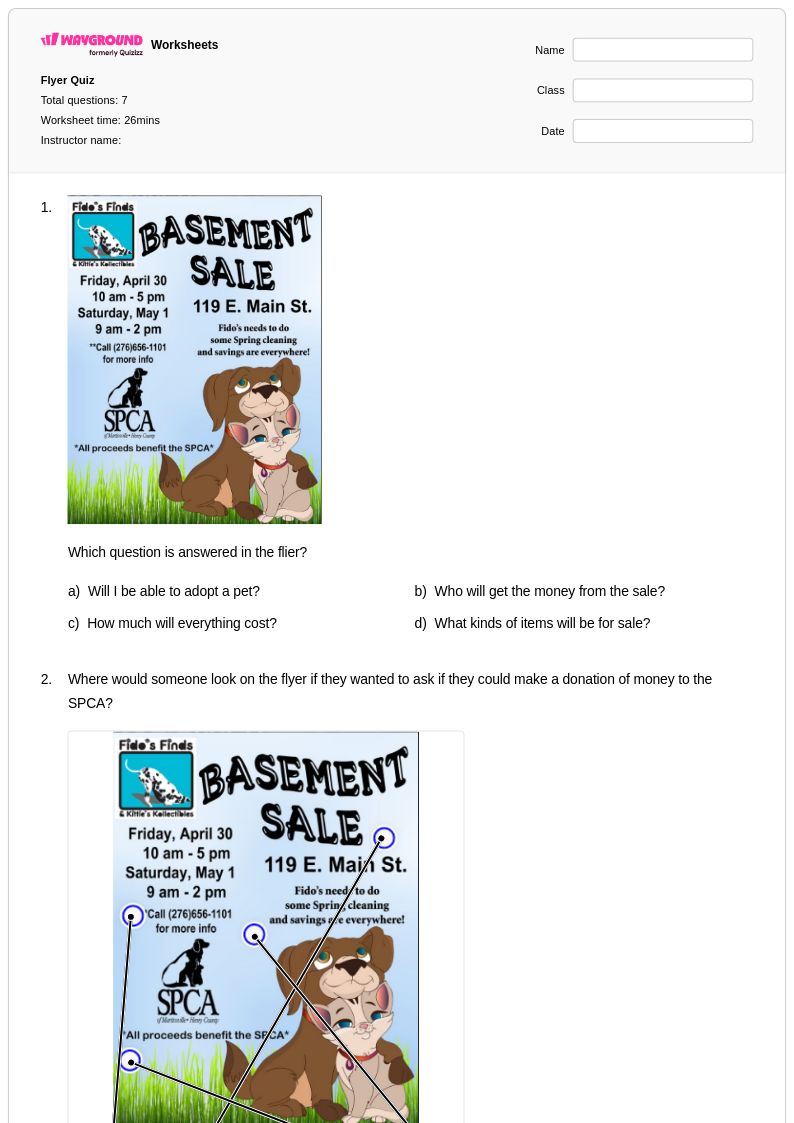
To/two/too worksheets for Grade 4 students available through Wayground (formerly Quizizz) provide essential practice with these commonly confused homophones that share identical pronunciation but carry distinct meanings and spellings. These comprehensive printables strengthen students' understanding that "to" functions as a preposition or part of an infinitive verb, "two" represents the number 2, and "too" means "also" or "excessively." Each worksheet includes carefully crafted practice problems that challenge fourth graders to identify correct usage within sentence contexts, complete fill-in-the-blank exercises, and demonstrate mastery through application activities. Teachers can access complete answer keys alongside each free pdf resource, enabling efficient grading and immediate feedback to support student learning of this fundamental vocabulary distinction.
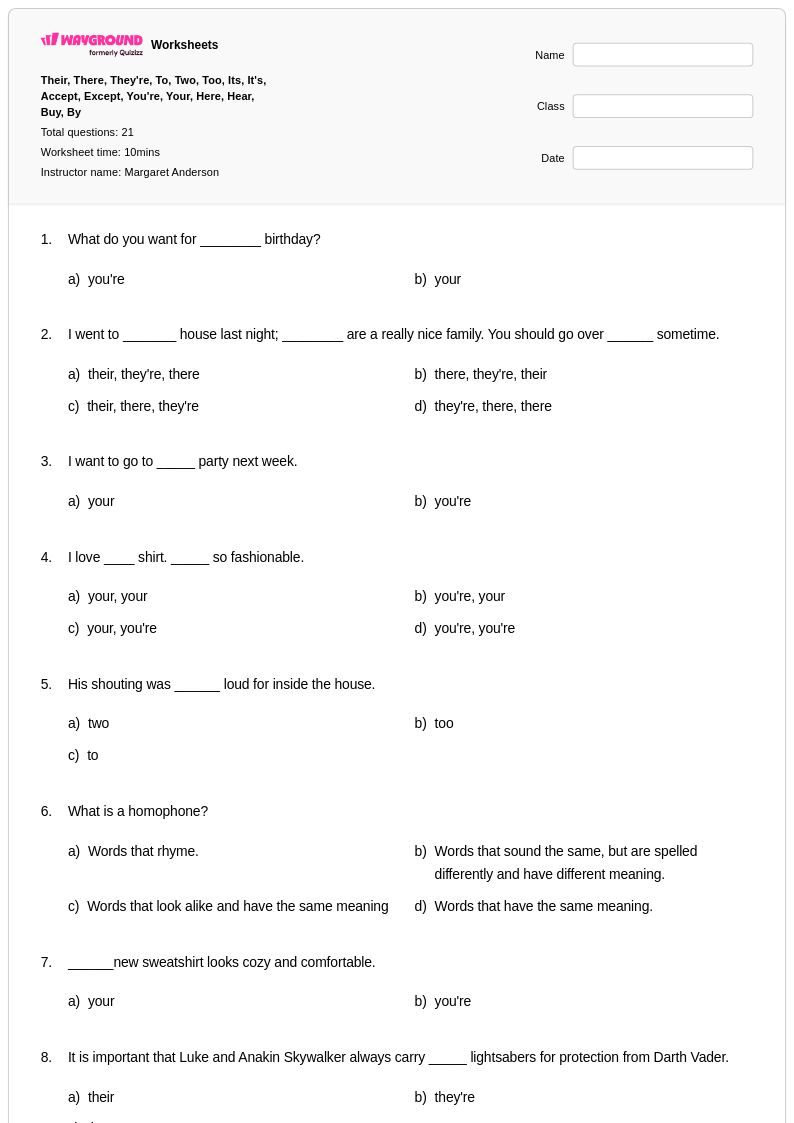
Wayground (formerly Quizizz) empowers educators with millions of teacher-created resources specifically designed for to/two/too instruction, featuring robust search and filtering capabilities that allow teachers to locate materials perfectly matched to their Grade 4 curriculum needs. The platform's standards alignment ensures these vocabulary worksheets support required learning objectives, while built-in differentiation tools enable teachers to customize difficulty levels for diverse learners within the same classroom. Available in both printable pdf format and interactive digital versions, these worksheet collections facilitate flexible lesson planning whether teachers need quick remediation exercises, enrichment activities for advanced students, or systematic skill practice for whole-class instruction. The extensive customization options allow educators to modify existing worksheets or combine multiple resources to create comprehensive learning experiences that address individual student needs and reinforce proper homophone usage across various contexts.
FAQs
How do I teach students the difference between to, two, and too?
Start by anchoring each word to a single, memorable rule: 'two' always refers to the number 2, 'too' means 'also' or 'excessively' (and has an extra O to signal excess), and 'to' functions as a preposition or part of an infinitive verb. Introduce each word in isolation before presenting them together in sentences. Using real-world sentence examples where context makes the correct choice obvious helps students build intuition before tackling ambiguous cases.
What exercises help students practice to, two, and too?
Fill-in-the-blank sentences are particularly effective because they force students to evaluate context before selecting the correct word rather than guessing from spelling alone. Multiple choice formats add an additional layer of practice by presenting plausible distractors, while writing prompts that require students to use all three words in original sentences push them toward deeper, applied understanding. Repeated exposure across varied formats builds automaticity, which is the goal for homophones that appear constantly in everyday writing.
What mistakes do students commonly make with to, two, and too?
The most frequent error is substituting 'to' for 'too' in sentences meaning 'also' or 'excessively,' largely because 'to' is the most commonly seen form and students default to it. Students also routinely confuse 'too' and 'two' in early grades when spelling is still developing. A persistent secondary error is using 'too' before a verb phrase, not recognizing that 'to' is required to form the infinitive in constructions like 'I want to go.'
How can I use to/two/too worksheets in my classroom?
To/two/too worksheets on Wayground are available as printable PDFs for traditional classroom use and in digital formats for technology-integrated environments, including the option to host them as a quiz directly on Wayground. Printable versions work well for independent practice, warm-ups, or homework, while the digital format allows for immediate scoring and feedback. The included answer keys make grading straightforward, freeing up time for targeted reteaching with students who are still confusing these words.
How do I support struggling students who keep mixing up to, two, and too?
For students who continue to mix up these homophones after initial instruction, reduce the variables by focusing on one word at a time in isolation before reintroducing all three together. On Wayground, teachers can apply accommodations such as read aloud, which allows questions and sentences to be read to students, helping auditory learners hear context clues more clearly. Reduced answer choices can also lower cognitive load for students who are overwhelmed when all three options appear simultaneously.
At what grade level should students master to, two, and too?
Distinguishing between to, two, and too is typically introduced in grades 1 and 2, with mastery expected by the end of grade 3 in most ELA standards frameworks. However, these homophones remain a persistent source of errors through middle school and beyond, making targeted review worksheets valuable at multiple grade levels. Teachers in upper elementary and even middle school grades frequently use to/two/too practice materials for remediation and editing skill development.