Free Printable Trail of Tears Worksheets for Grade 4
Grade 4 Trail of Tears worksheets and printables help students learn about this difficult period in U.S. History through engaging practice problems, free PDF resources, and comprehensive answer keys available on Wayground.
Explore printable Trail of Tears worksheets for Grade 4
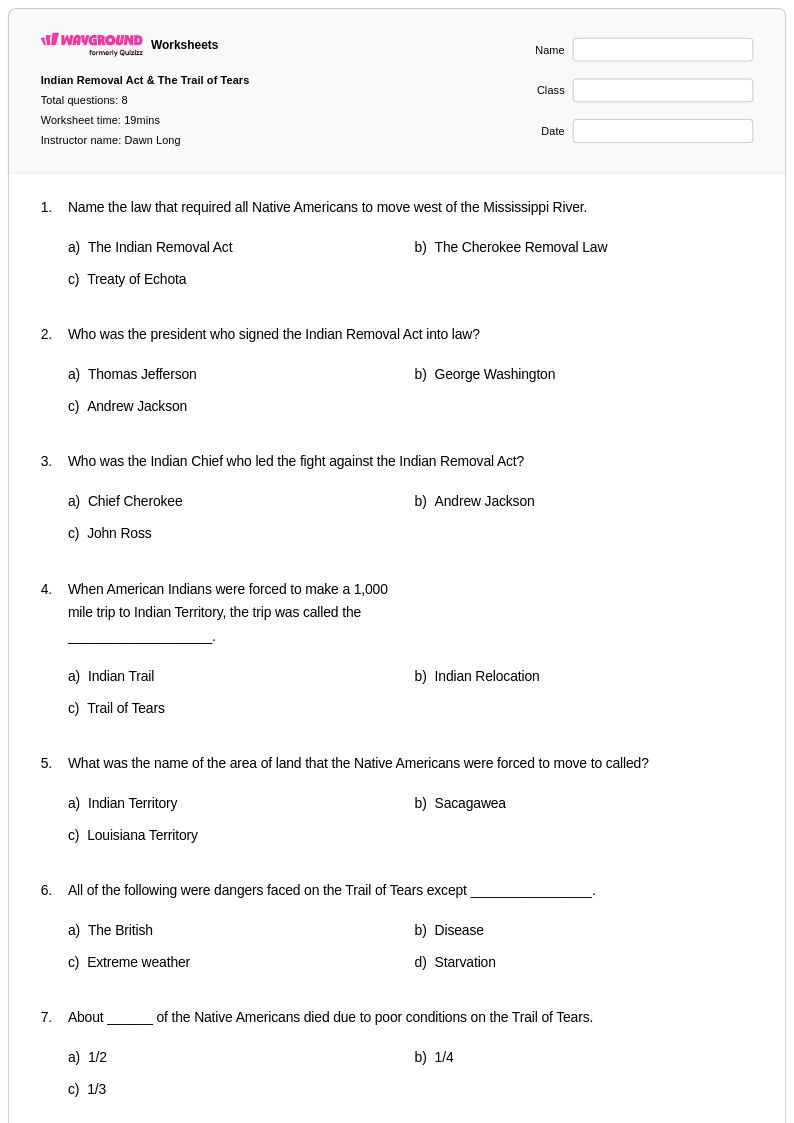
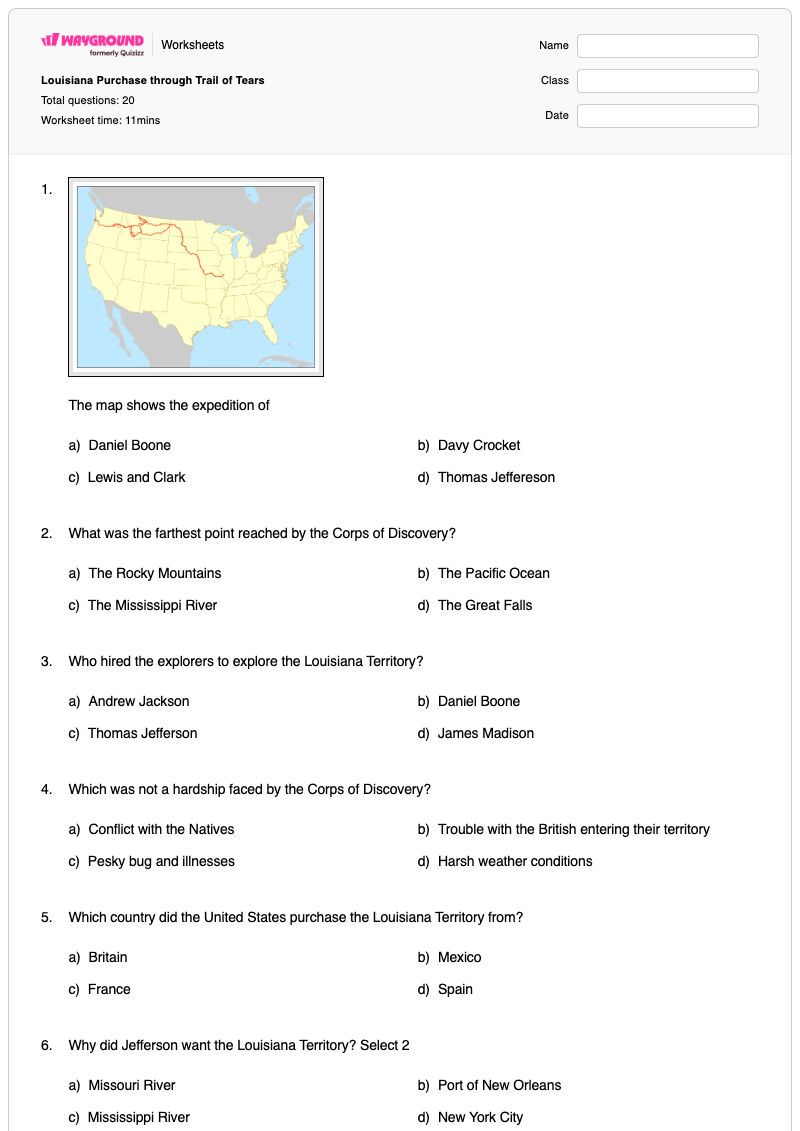
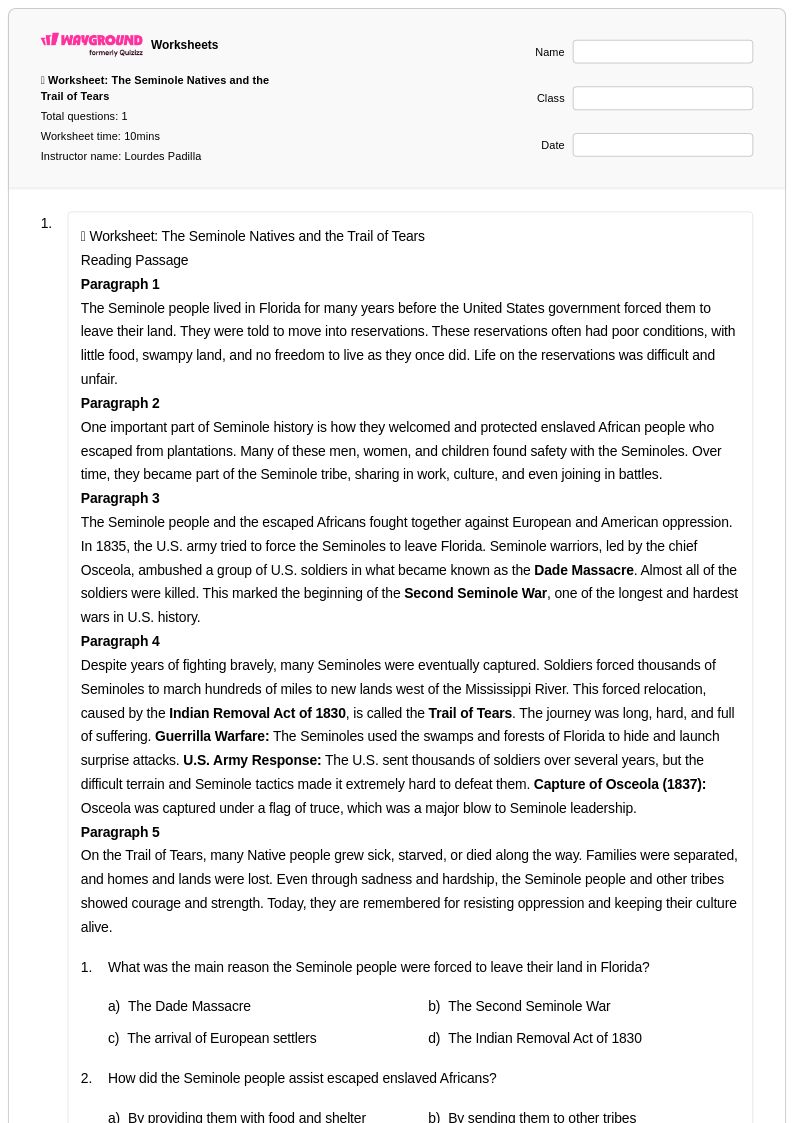
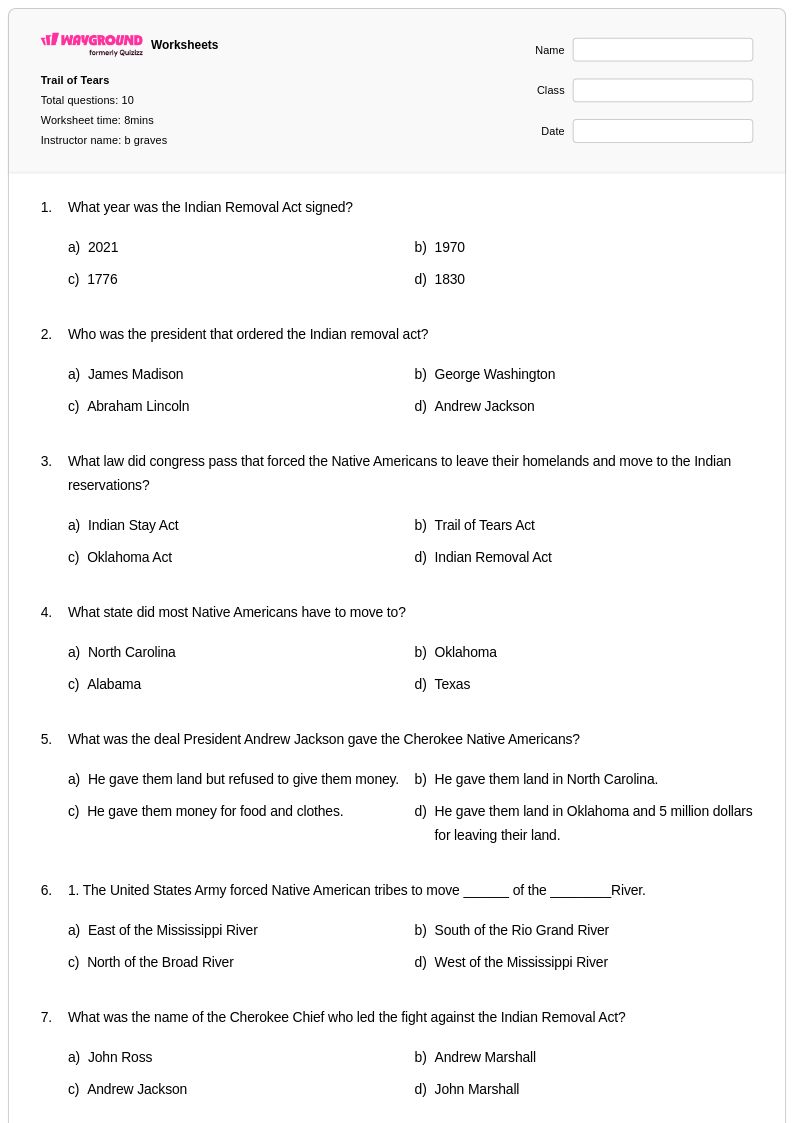
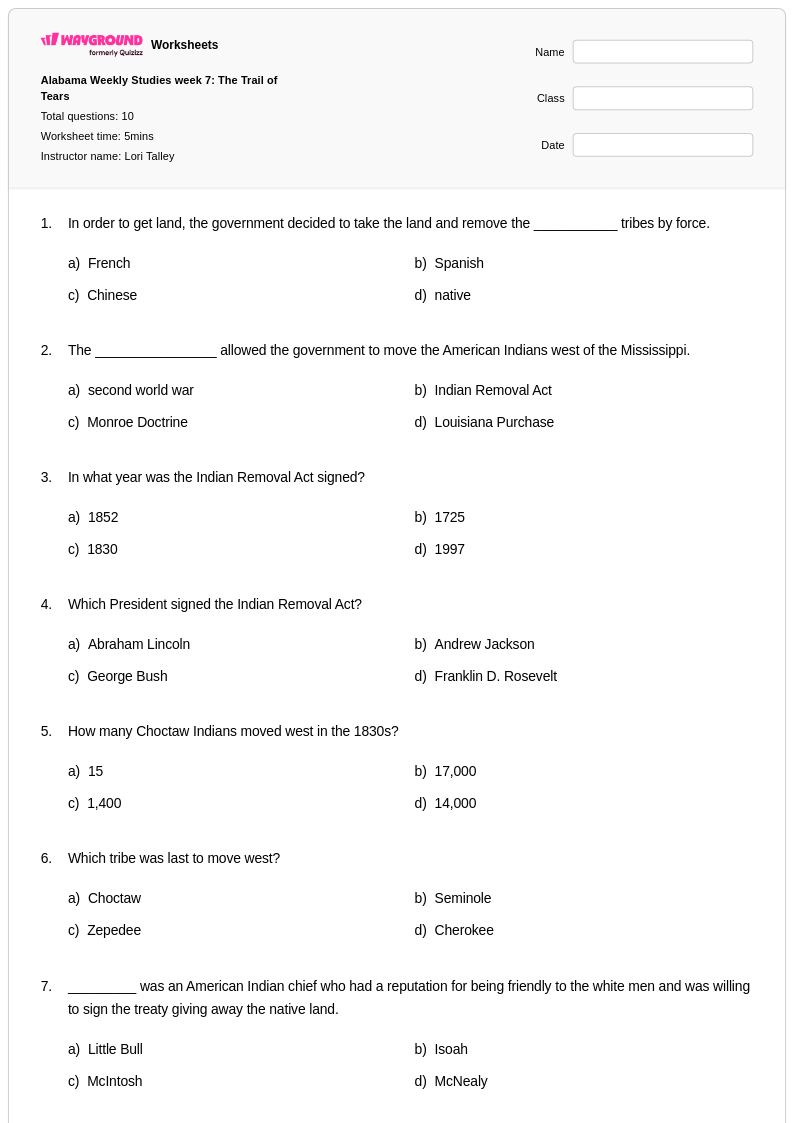
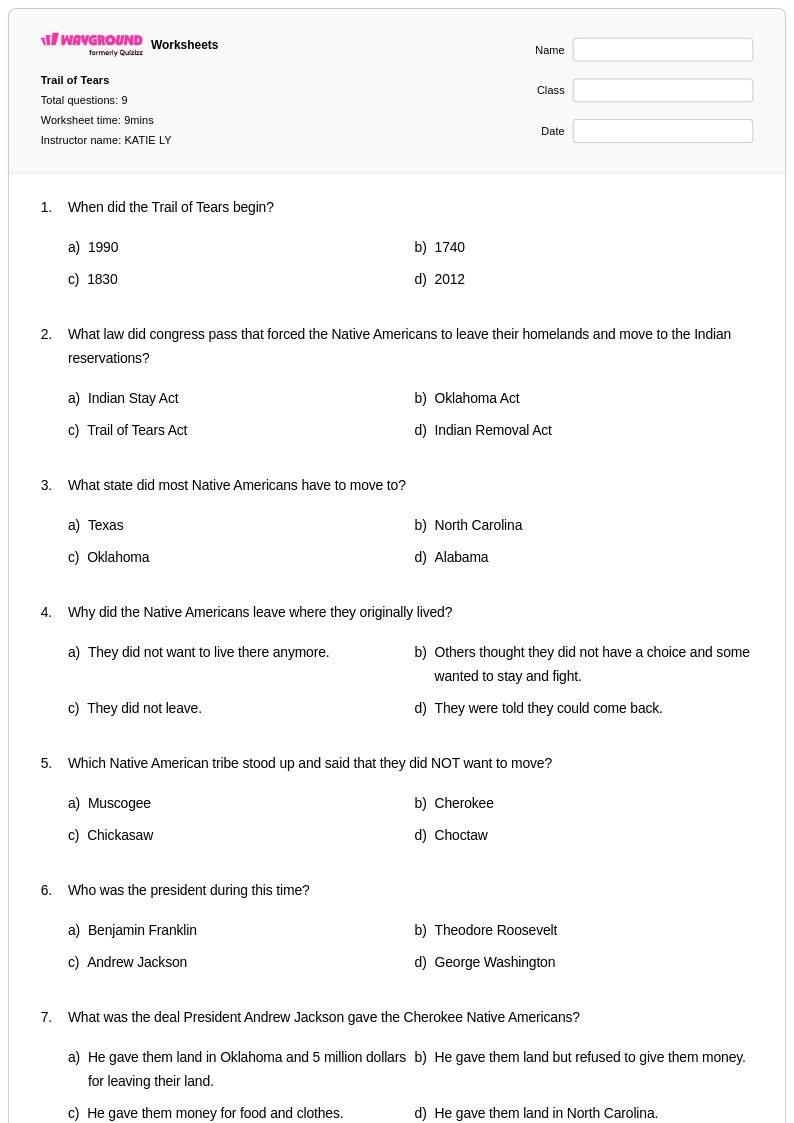
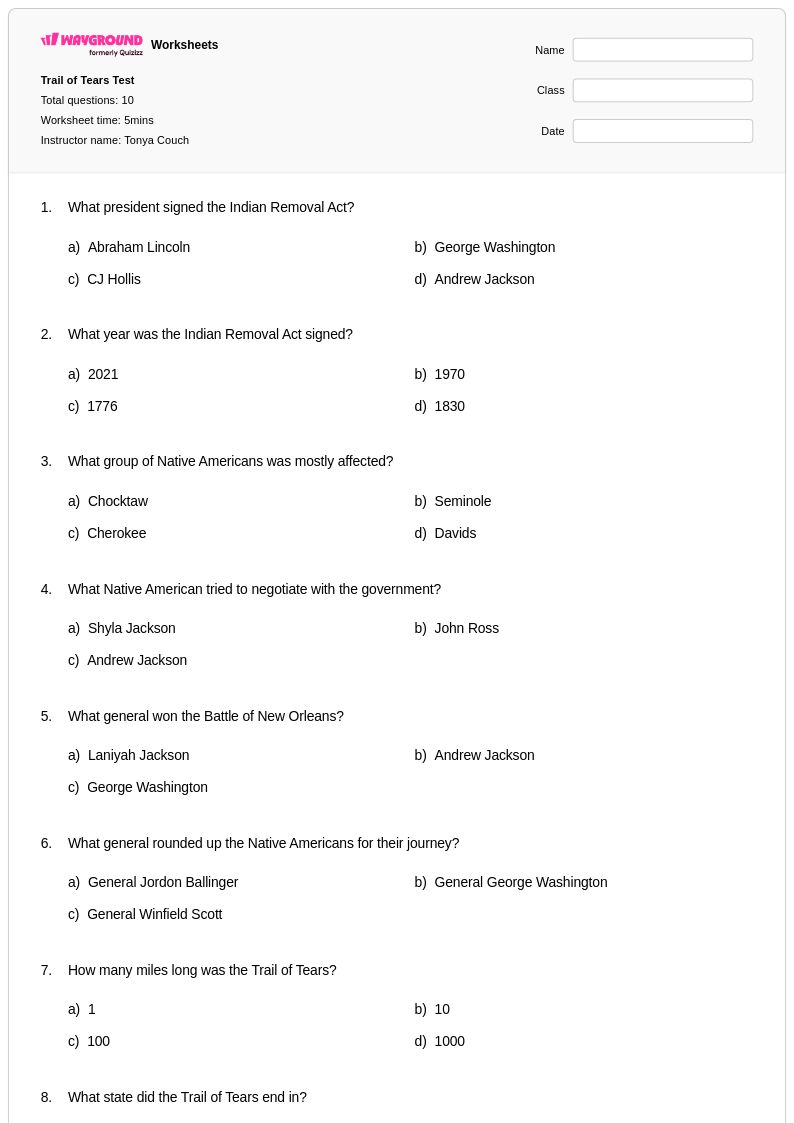
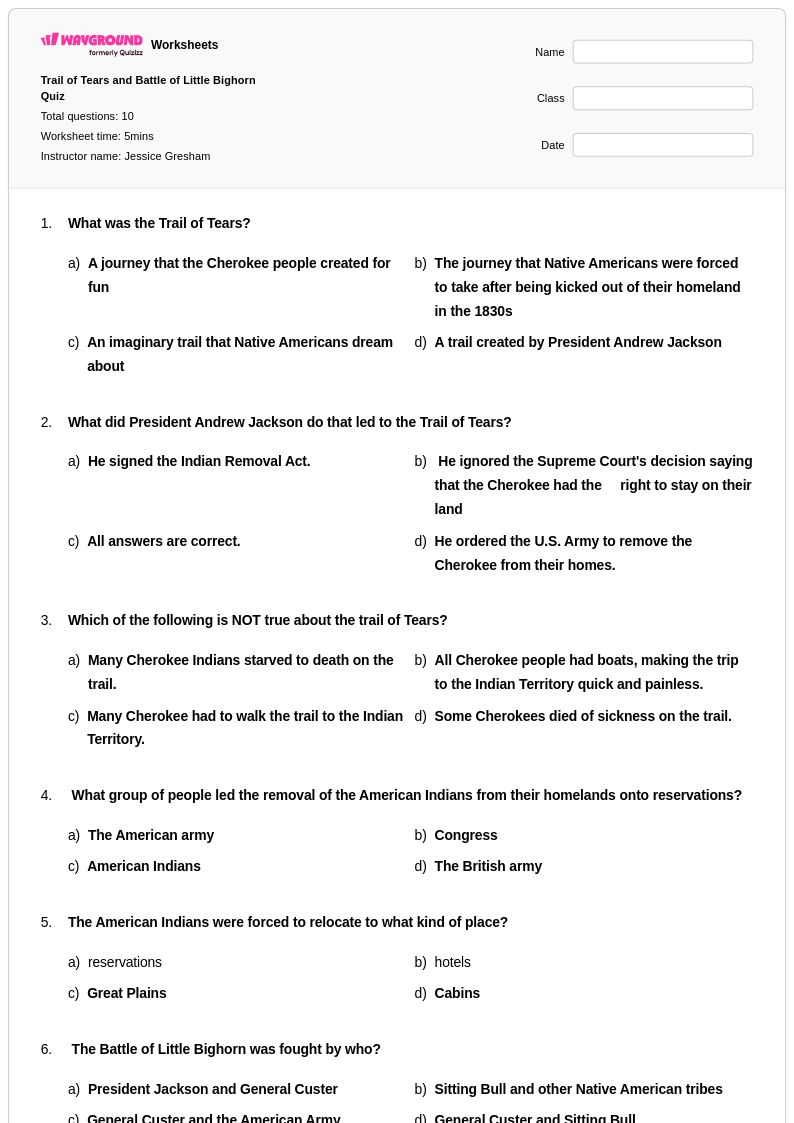
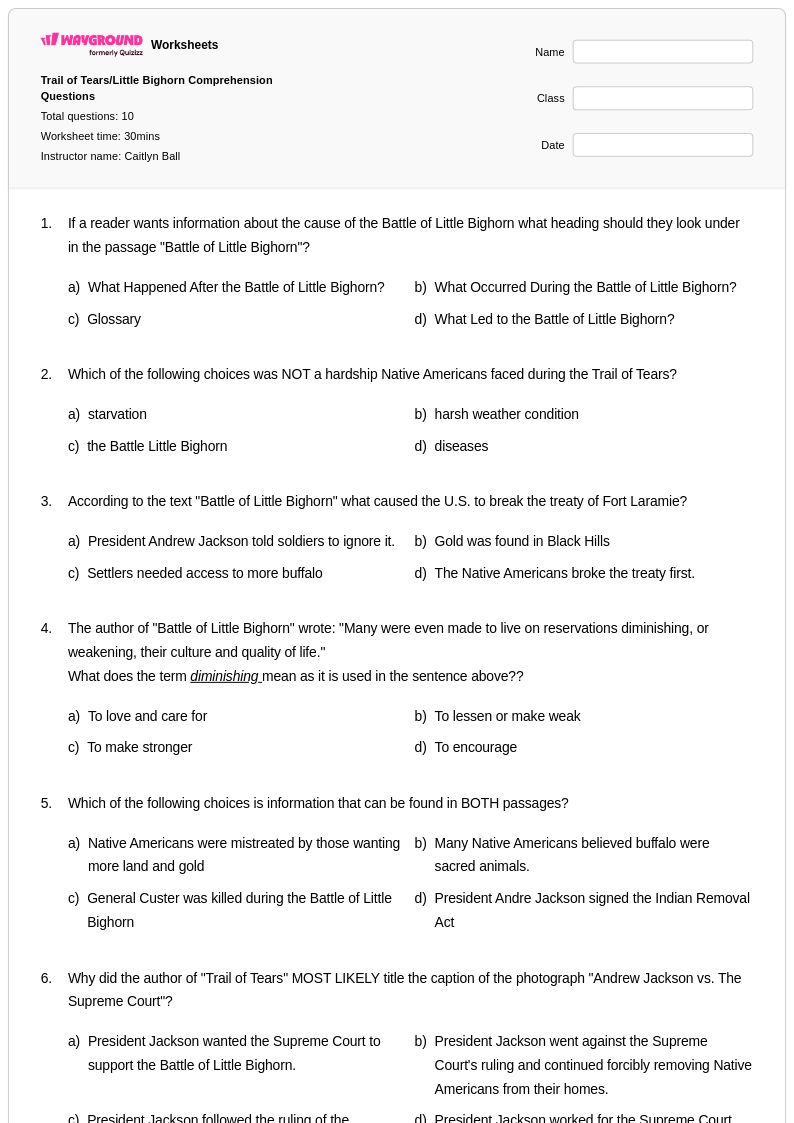
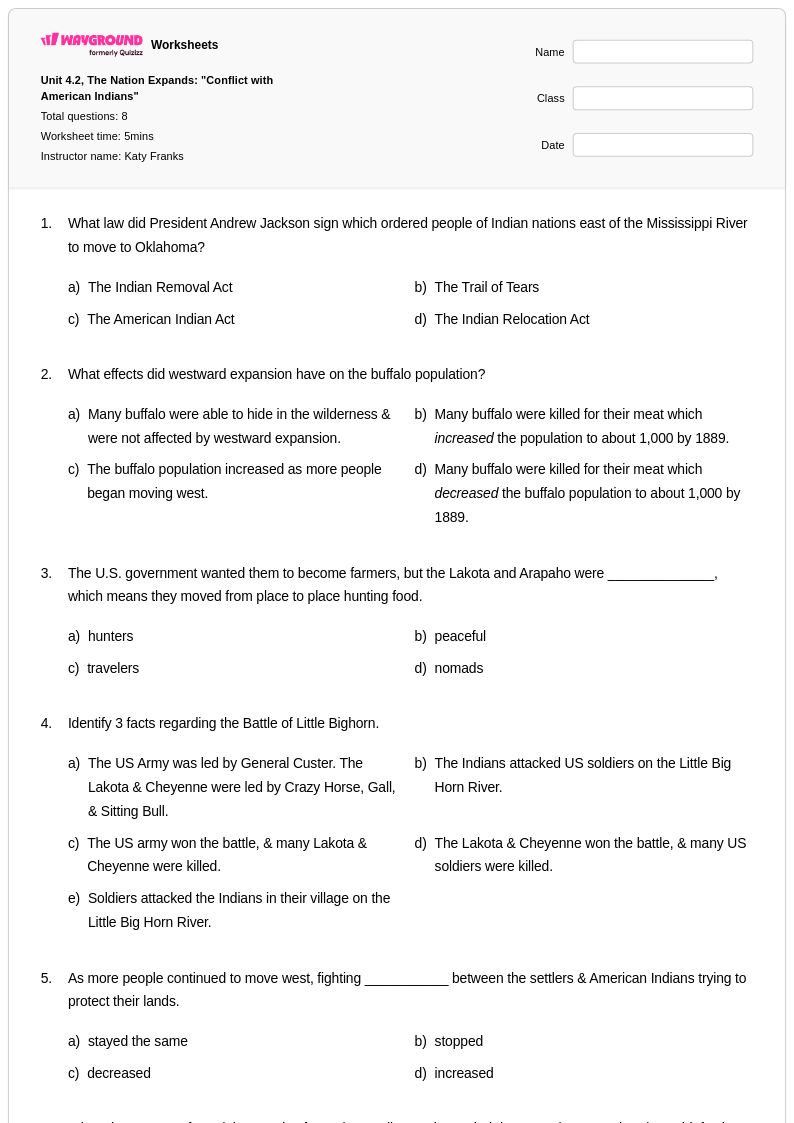
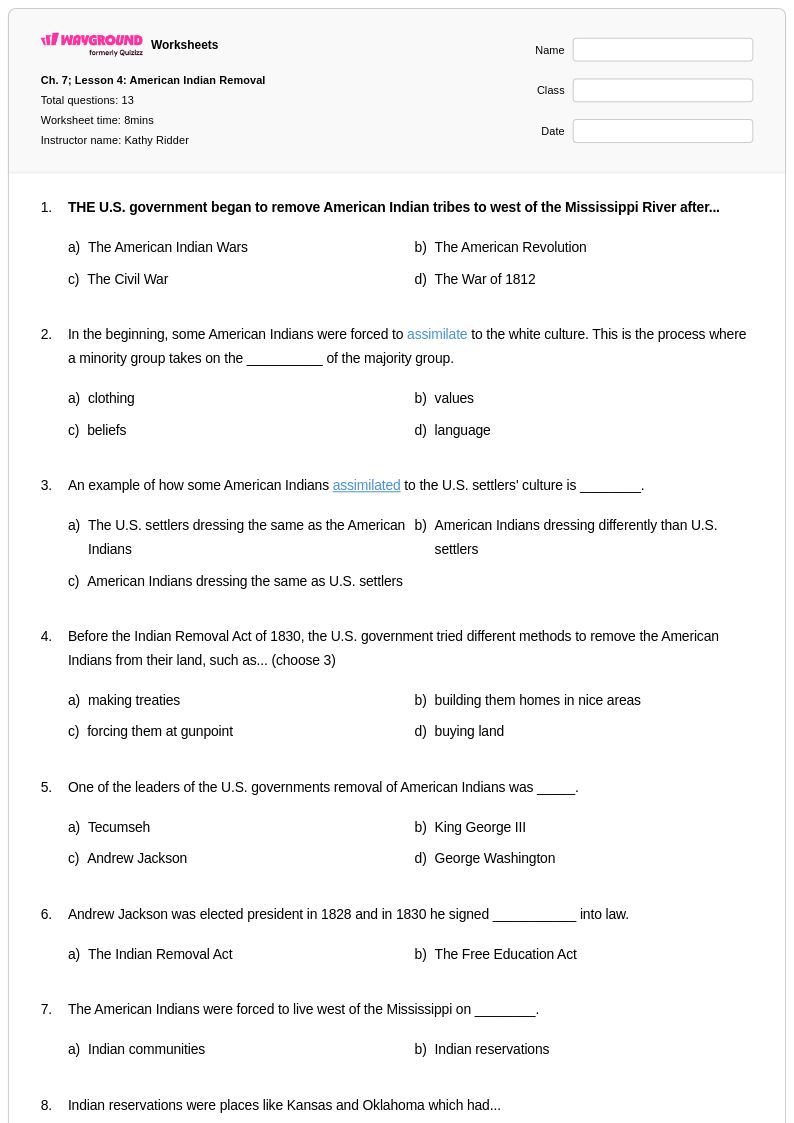
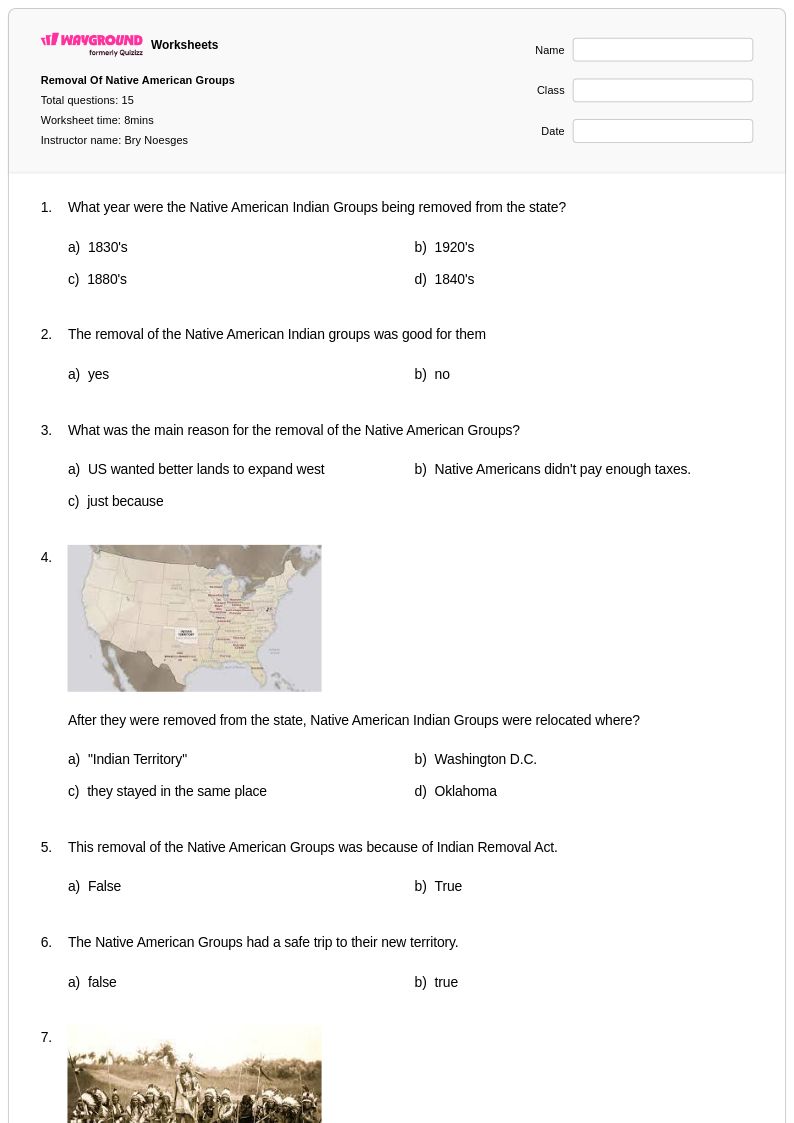
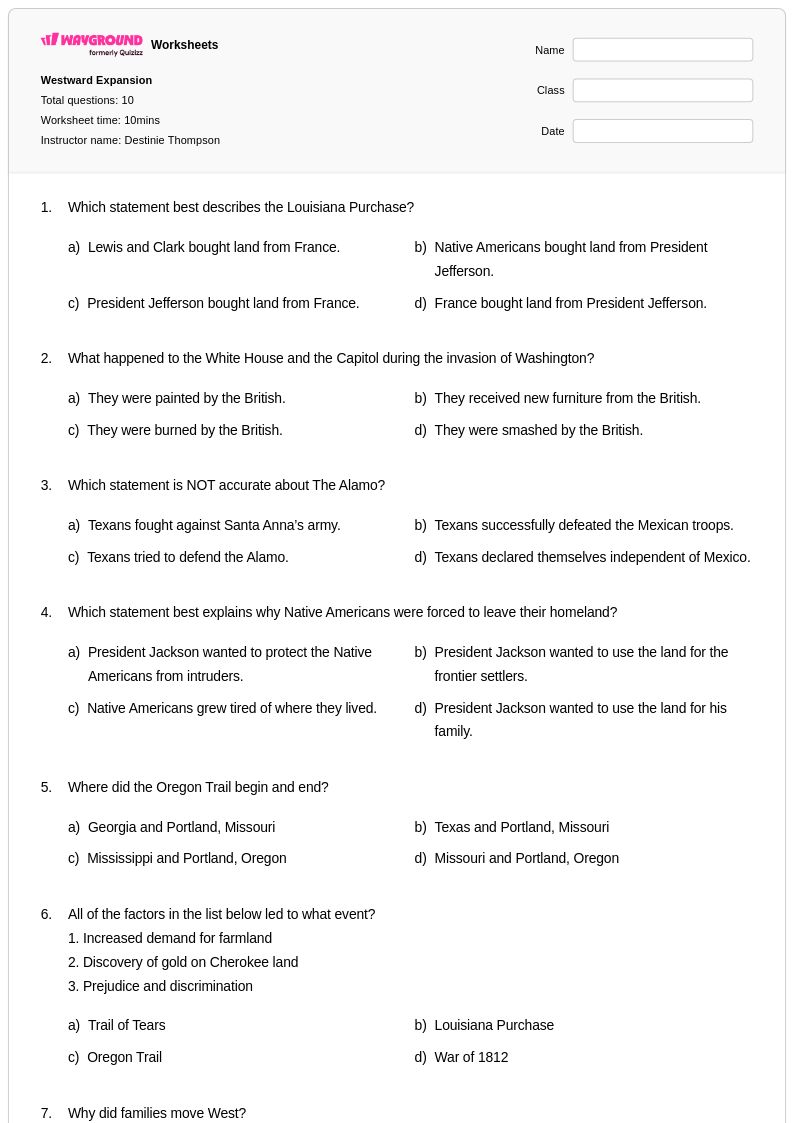
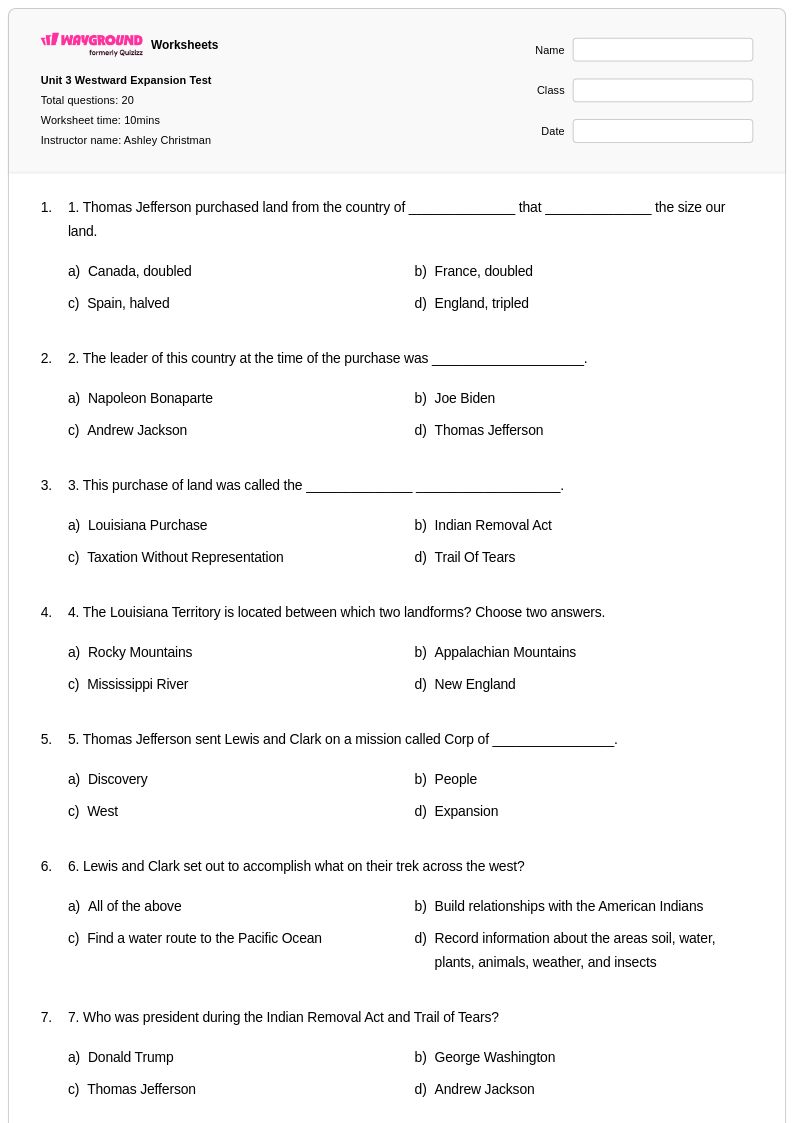
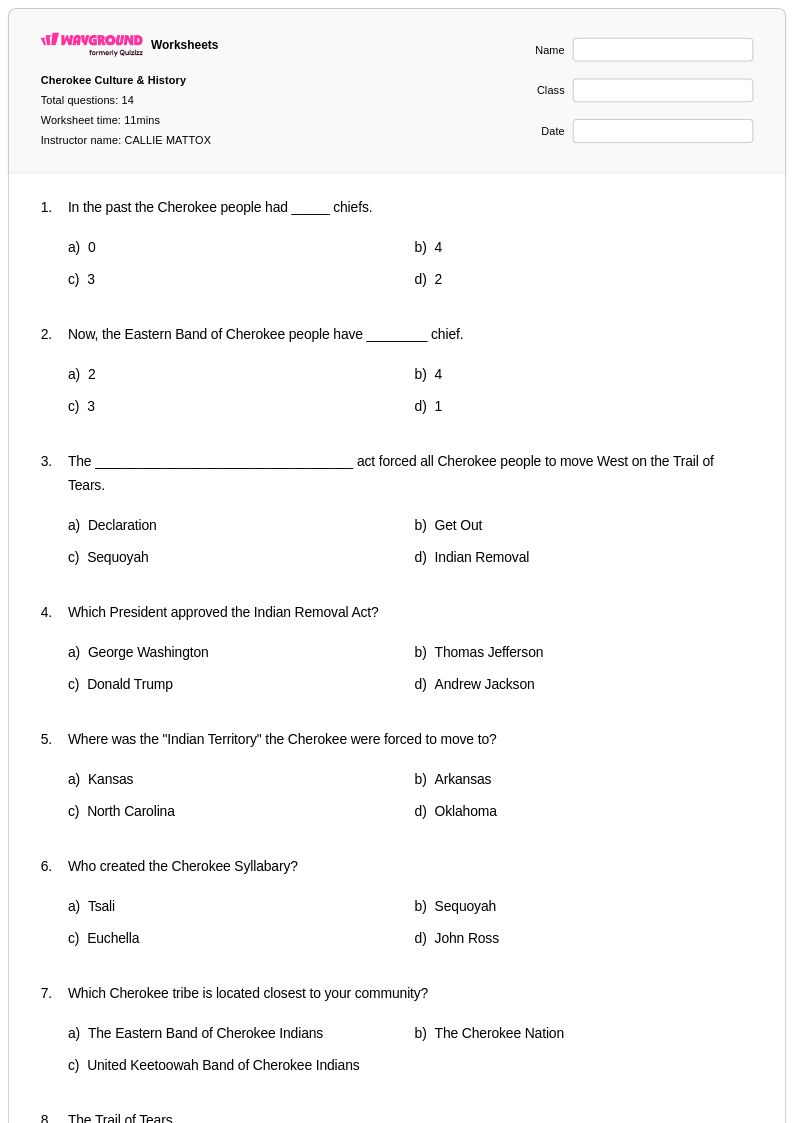
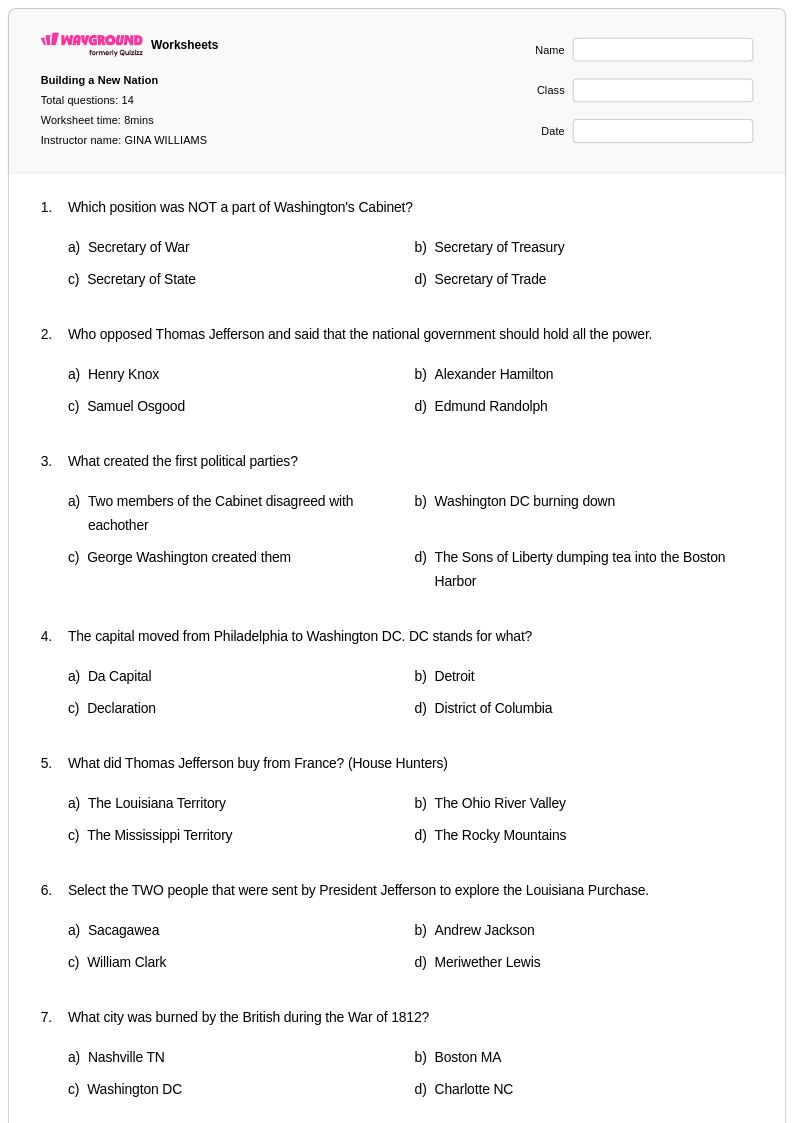
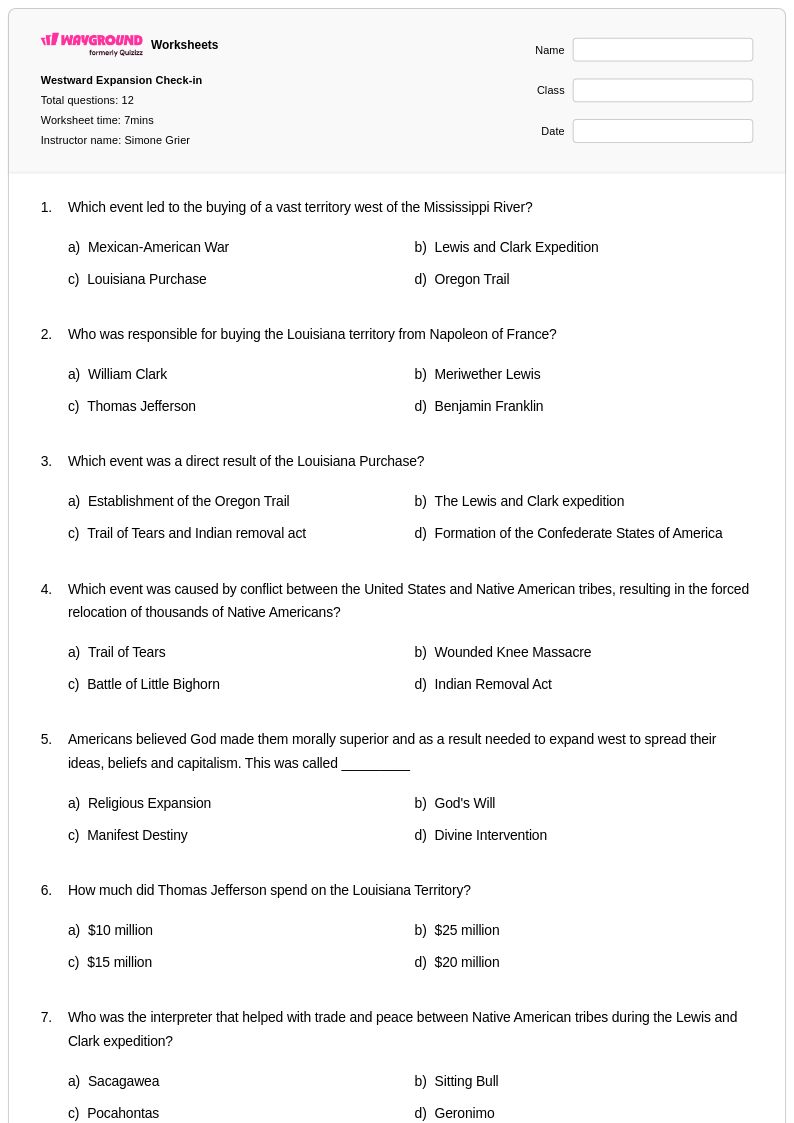
Trail of Tears worksheets for Grade 4 students available through Wayground (formerly Quizizz) provide age-appropriate materials to help young learners understand this significant and challenging period in U.S. History. These educational resources focus on developing critical thinking skills while introducing students to the forced relocation of Native American tribes in the 1830s, emphasizing the human impact and historical consequences of these events. The worksheets include carefully crafted practice problems that encourage students to analyze primary source excerpts, timeline activities, and map work that traces the routes taken during the removal. Each worksheet comes with a comprehensive answer key to support both independent learning and guided instruction, and teachers can access these materials as free printables in convenient pdf format for classroom distribution.
Wayground (formerly Quizizz) empowers educators with an extensive collection of millions of teacher-created resources specifically designed to support Trail of Tears instruction at the Grade 4 level. The platform's robust search and filtering capabilities allow teachers to quickly locate materials that align with state social studies standards and match their specific curriculum requirements. These versatile worksheet collections support differentiated instruction through customizable difficulty levels and can be adapted for various learning needs, from remediation activities for struggling students to enrichment opportunities for advanced learners. Available in both printable and digital formats, including downloadable pdf versions, these resources streamline lesson planning while providing flexible options for homework assignments, classroom practice, and assessment preparation that help students develop a deeper understanding of this pivotal moment in American history.
FAQs
How do I teach the Trail of Tears to middle or high school students?
Teaching the Trail of Tears effectively requires grounding students in the political context of the Indian Removal Act of 1830 before introducing the human consequences of forced relocation. Start with primary sources such as Cherokee petitions or firsthand accounts to build historical empathy, then use cause-and-effect frameworks to connect Andrew Jackson's policy decisions to the suffering of tribes like the Cherokee, Choctaw, and Creek. Map activities that trace the removal routes help students visualize the geographic scale and physical hardship of the journey. Pairing government documents with Native American perspectives ensures students encounter multiple viewpoints rather than a single narrative.
What exercises help students practice analyzing the Trail of Tears?
Effective practice exercises for the Trail of Tears include primary source analysis, map interpretation of removal routes, and cause-and-effect graphic organizers that connect federal policy to its human outcomes. Students benefit from document-based questions that ask them to evaluate the perspectives of federal officials, affected tribes, and contemporary critics of Indian removal. Comparing the stated justifications for removal with its actual consequences strengthens critical thinking and historical reasoning skills. These types of structured practice tasks mirror the analytical demands students face on standardized history assessments.
What common mistakes do students make when learning about the Trail of Tears?
A frequent misconception is that the Trail of Tears affected only the Cherokee, when in fact the forced removal policy displaced multiple southeastern tribes including the Choctaw, Creek, Chickasaw, and Seminole. Students also tend to treat Indian removal as an inevitable or uncontested policy, overlooking significant legal challenges such as Worcester v. Georgia, in which the Supreme Court ruled against removal but was ignored by the executive branch. Another common error is conflating the journey itself with the entirety of the event, missing the longer story of land loss, cultural disruption, and demographic devastation. Encouraging students to analyze multiple perspectives and primary sources directly addresses these gaps.
How can I use Trail of Tears worksheets to support different reading levels in my classroom?
Trail of Tears worksheets can be differentiated by pairing complex primary source documents with scaffolded reading guides for students who need support, while offering open-ended analytical prompts for advanced learners. On Wayground, teachers can apply individual student accommodations such as Read Aloud for students who struggle with text-heavy documents, reduced answer choices to lower cognitive load for those who need it, and adjustable font sizes through reading mode. These accommodations can be assigned to individual students without notifying the rest of the class, so all learners engage with the same content in a format suited to their needs. This makes it practical to run a single Trail of Tears lesson that genuinely reaches every student in the room.
How do I use Wayground's Trail of Tears worksheets in my classroom?
Wayground's Trail of Tears worksheets are available as printable PDFs for traditional classroom use and in digital formats for technology-integrated environments, giving teachers flexibility in how they distribute and assign materials. Teachers can also host worksheets as a quiz directly on Wayground, making it easy to collect student responses and track performance in real time. Each resource includes a complete answer key, reducing prep time and supporting efficient grading. The platform's search and filtering tools allow teachers to quickly locate materials aligned to specific curriculum standards, whether for initial instruction, targeted remediation, or enrichment.
How do I connect the Trail of Tears to broader U.S. history curriculum standards?
The Trail of Tears connects directly to standards addressing federal Indian policy, Jacksonian democracy, westward expansion, and the tensions between executive power and the judiciary. It also serves as a foundational case study for broader themes such as civil rights, government authority over marginalized groups, and the long-term consequences of settler colonialism. Teachers can use it as a bridge between the early republic unit and Manifest Destiny, or as a lens for discussing systemic injustice in American history. Framing the Trail of Tears within these larger curriculum threads helps students see it as a pivotal turning point rather than an isolated event.