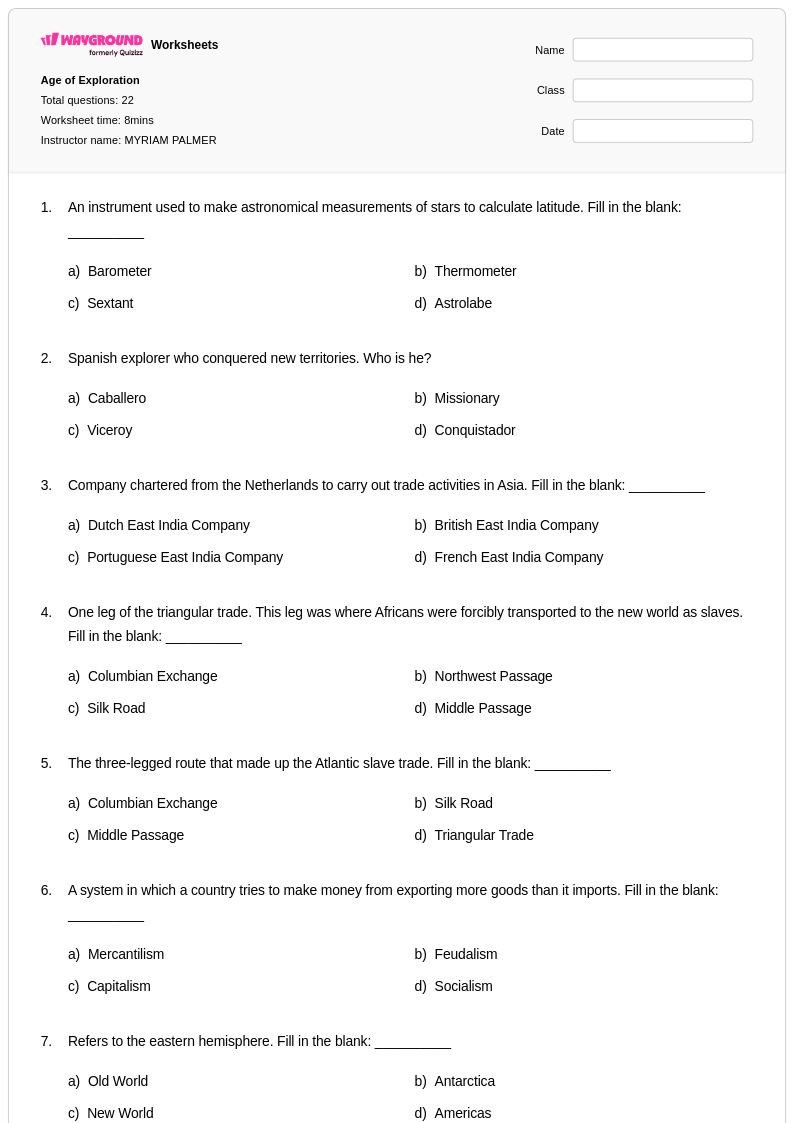
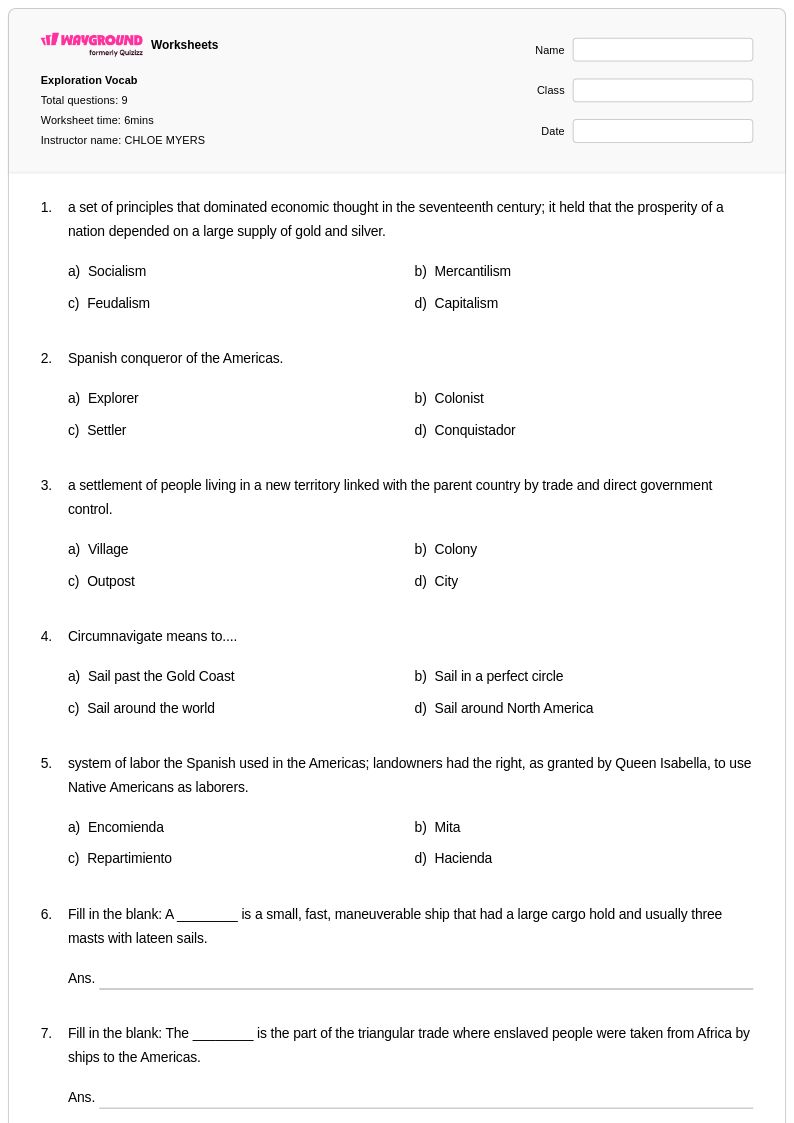
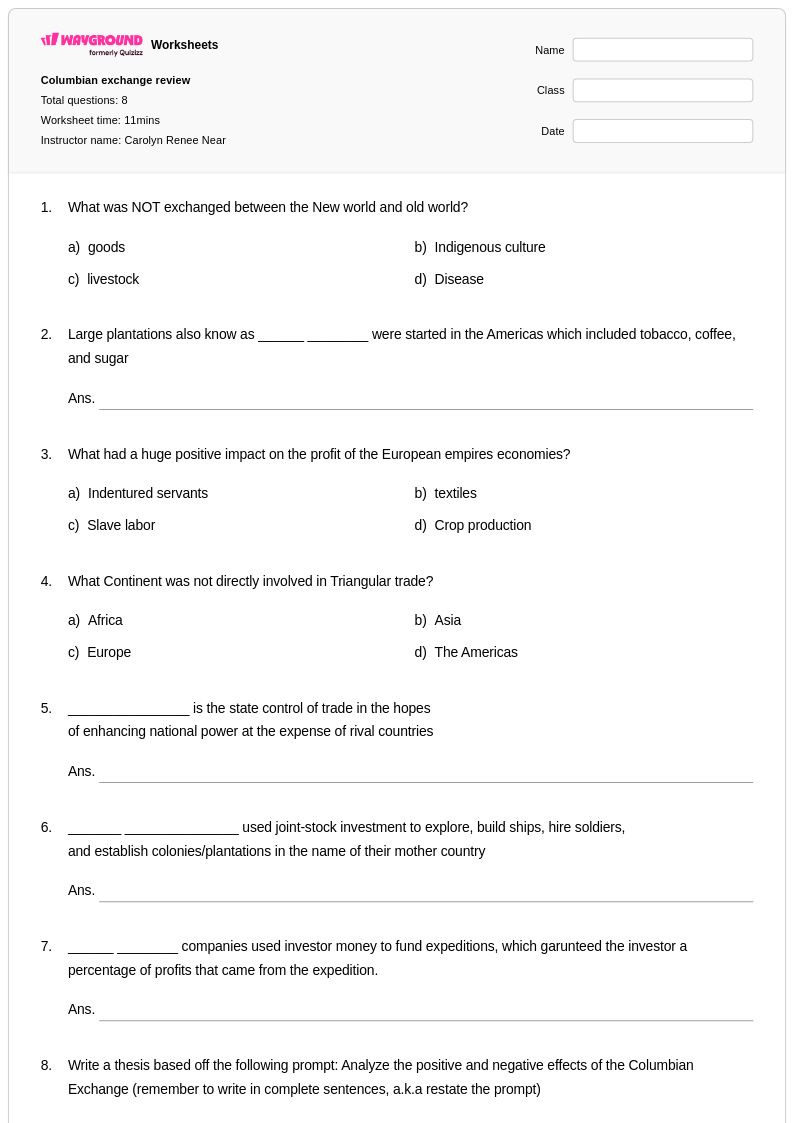
Free Printable Triangular Trade Worksheets for Grade 9
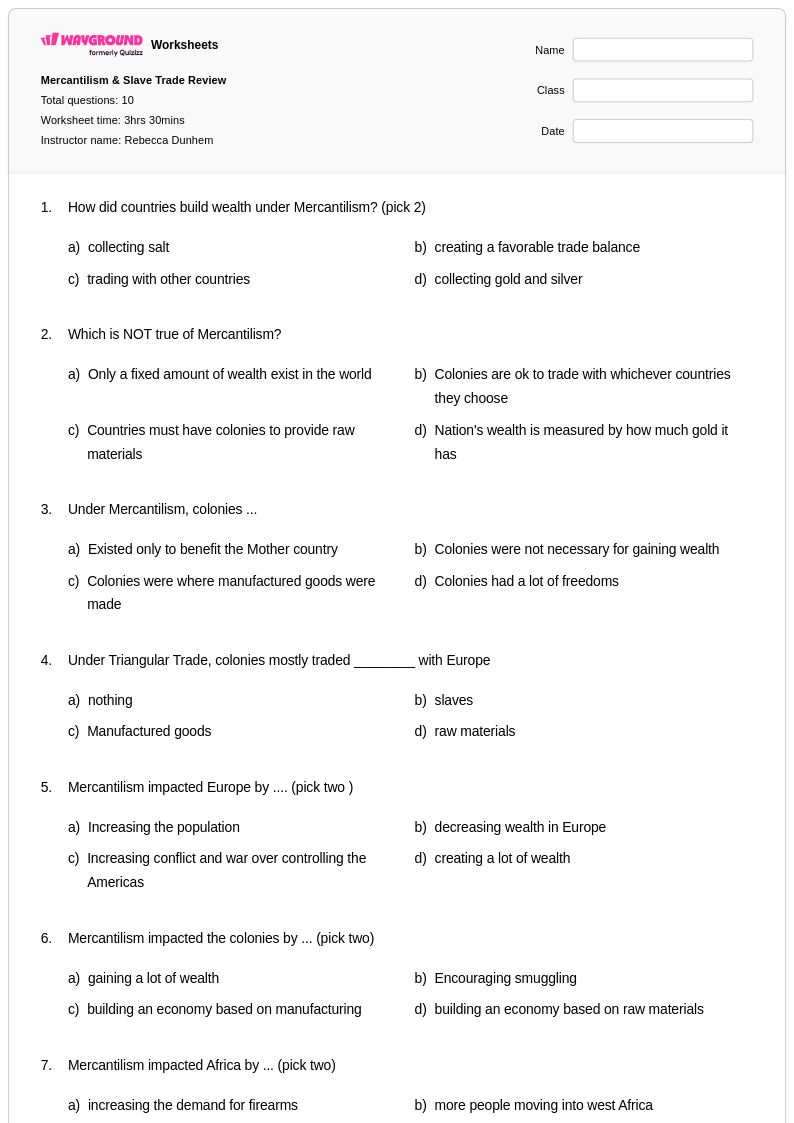
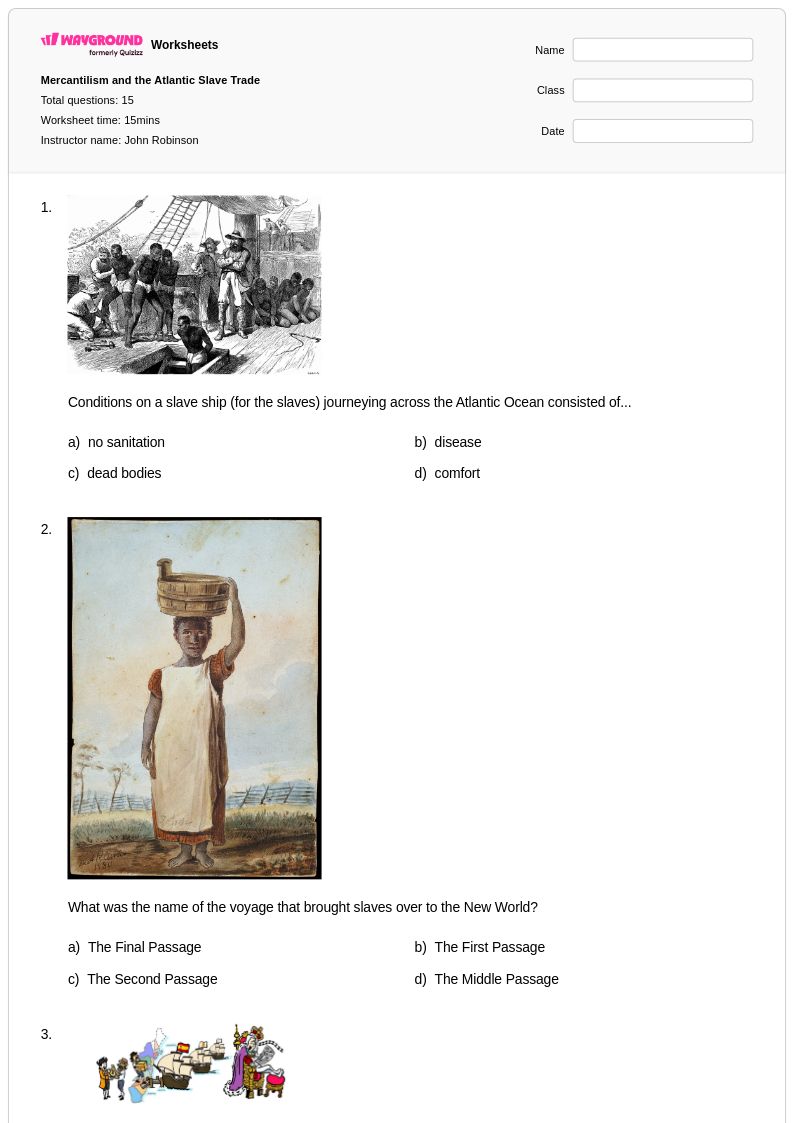
Grade 9 Triangular Trade worksheets from Wayground help students master this pivotal World History concept through engaging printables, practice problems, and comprehensive answer keys available as free PDF downloads.
Explore printable Triangular Trade worksheets for Grade 9
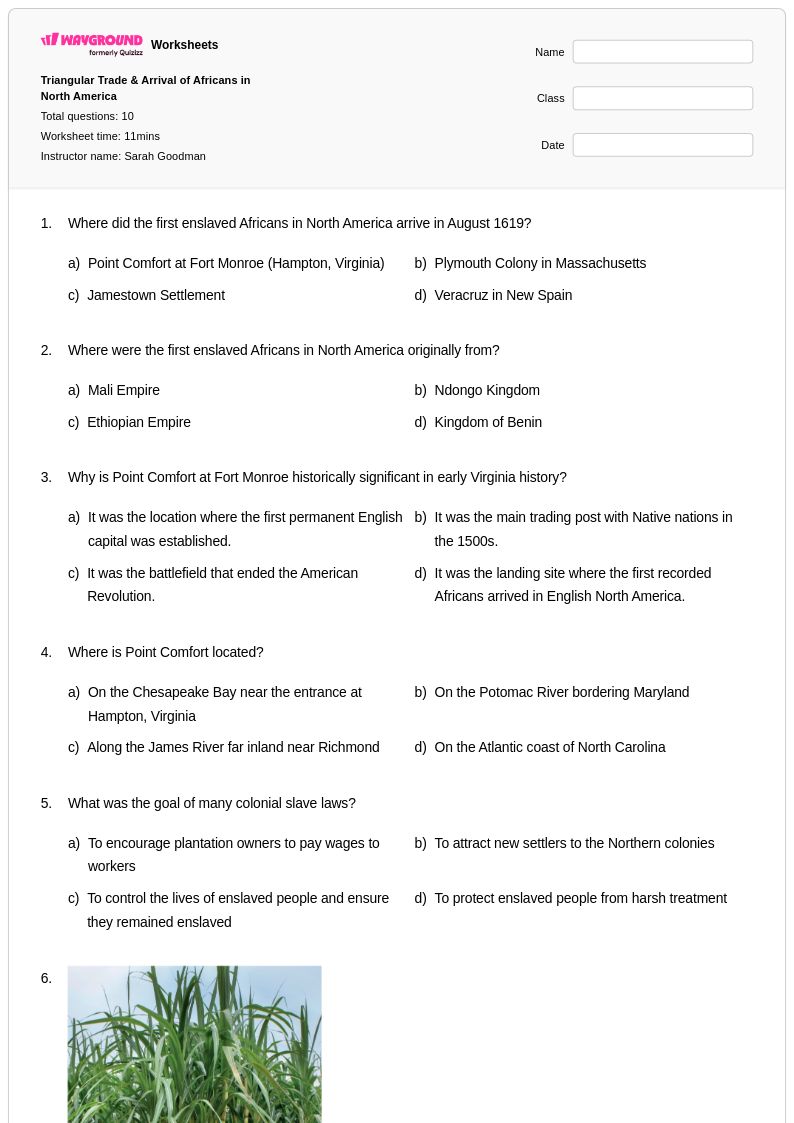
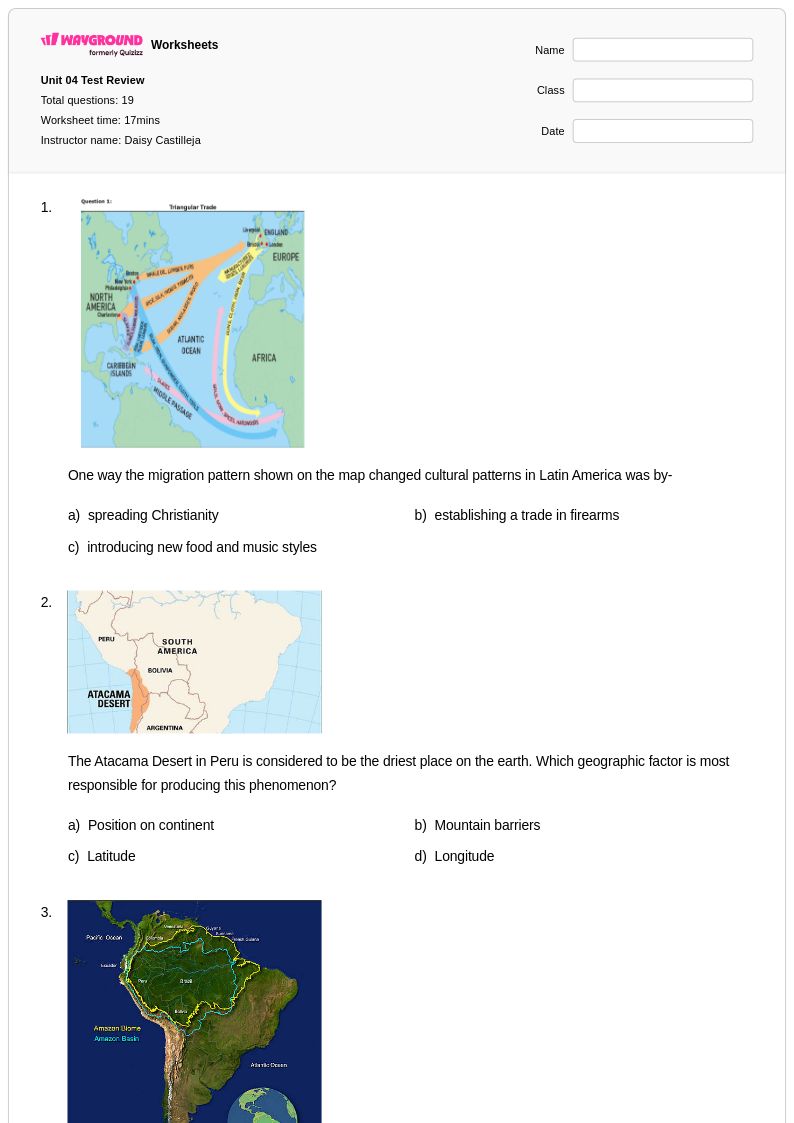
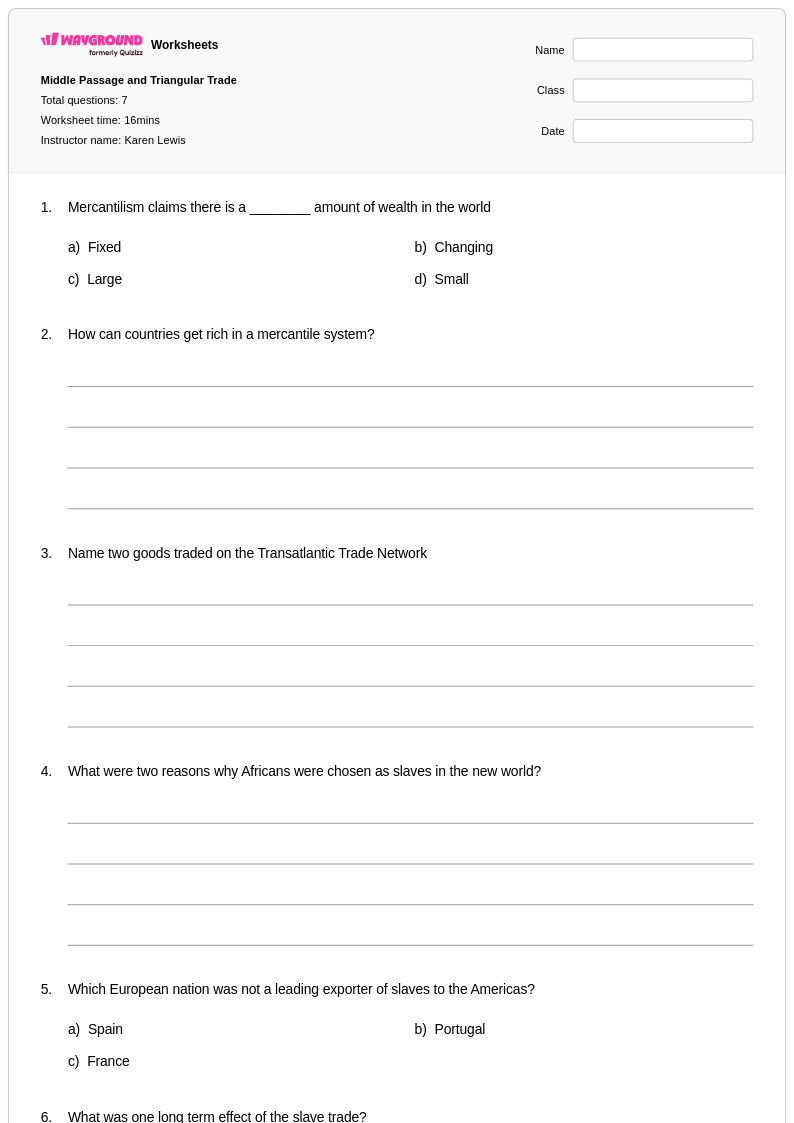
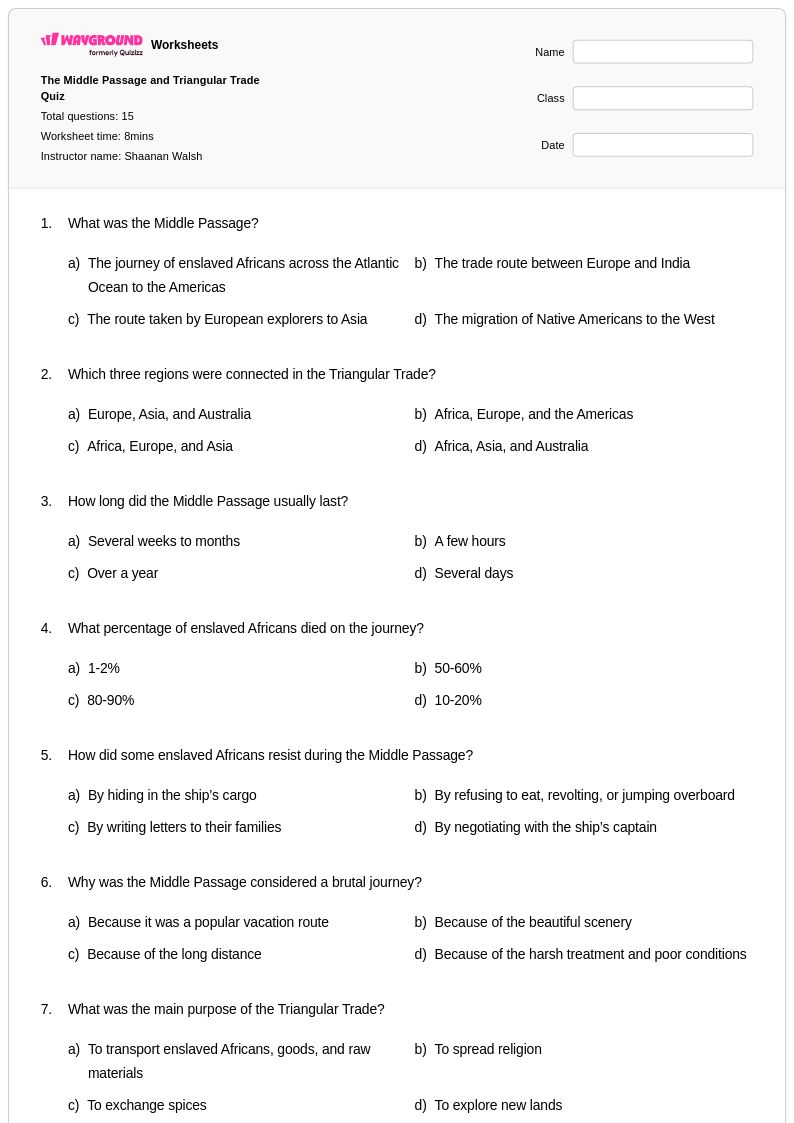
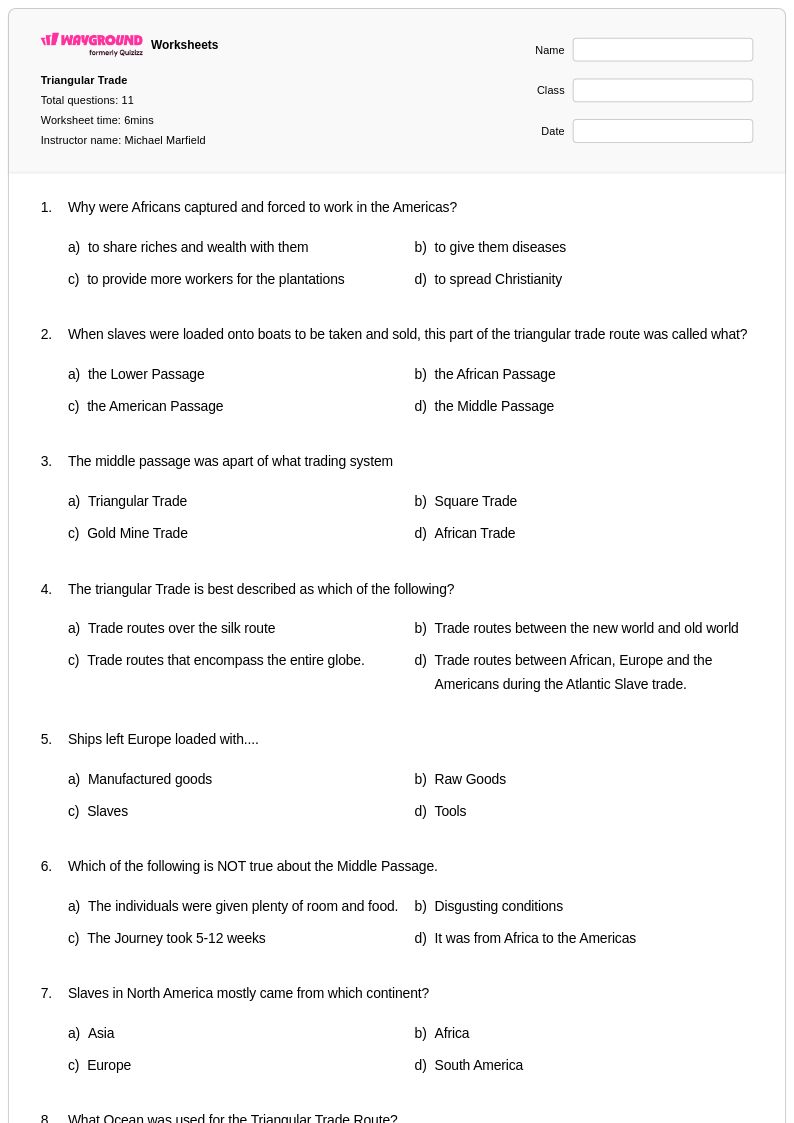
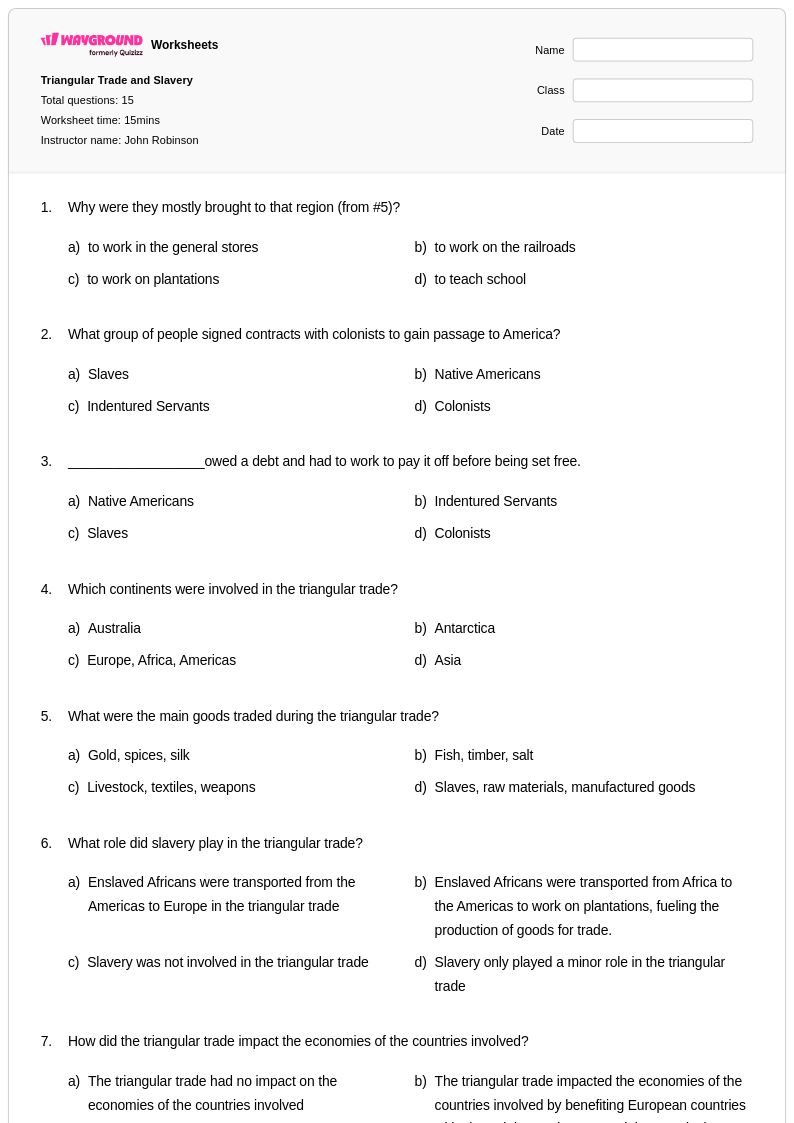
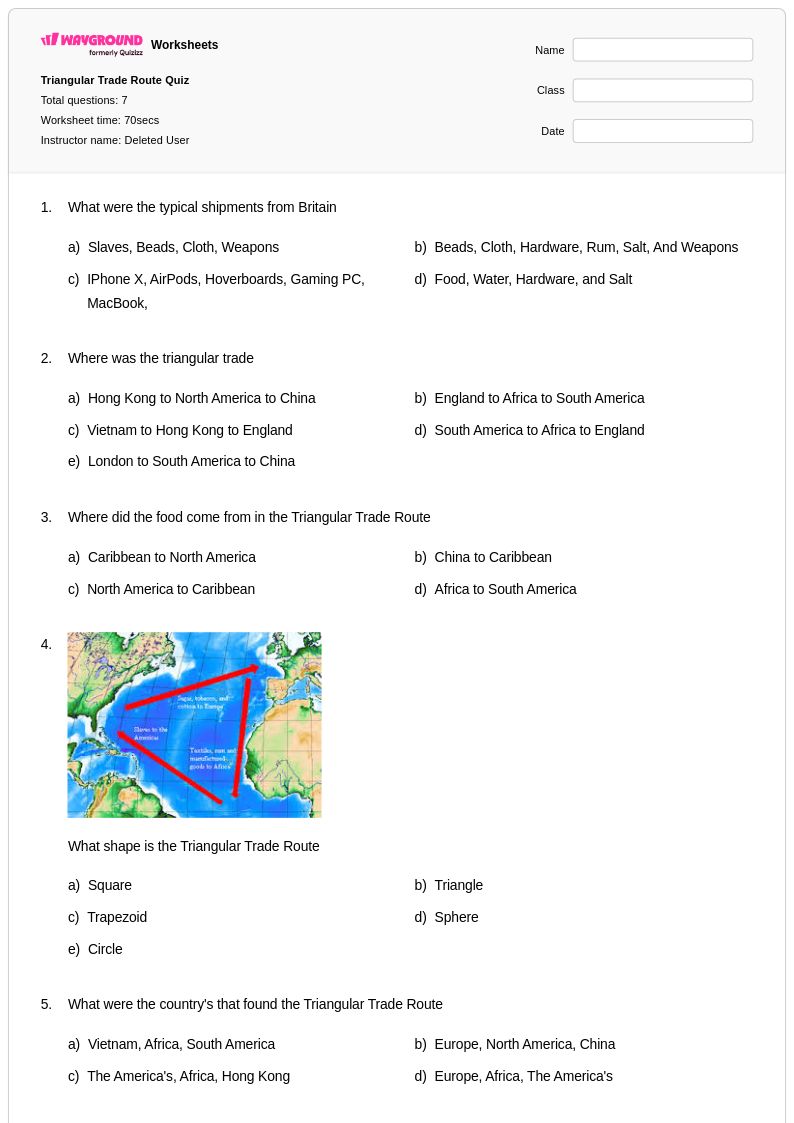
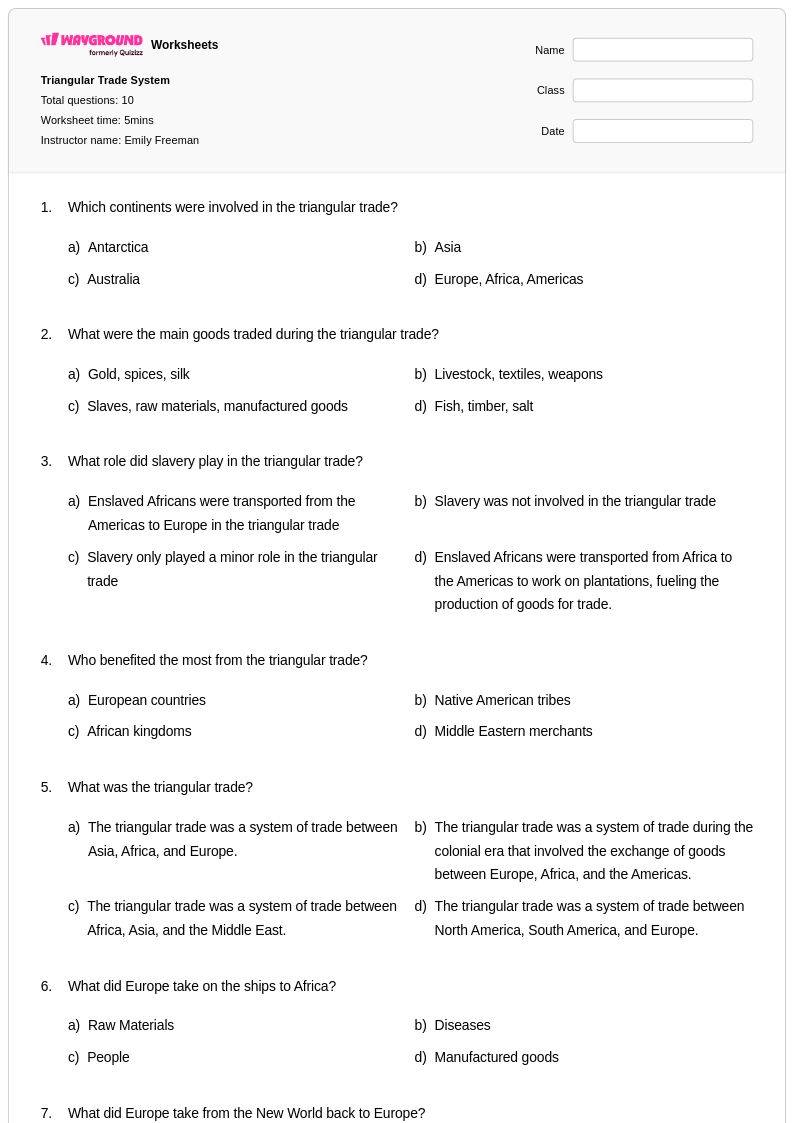
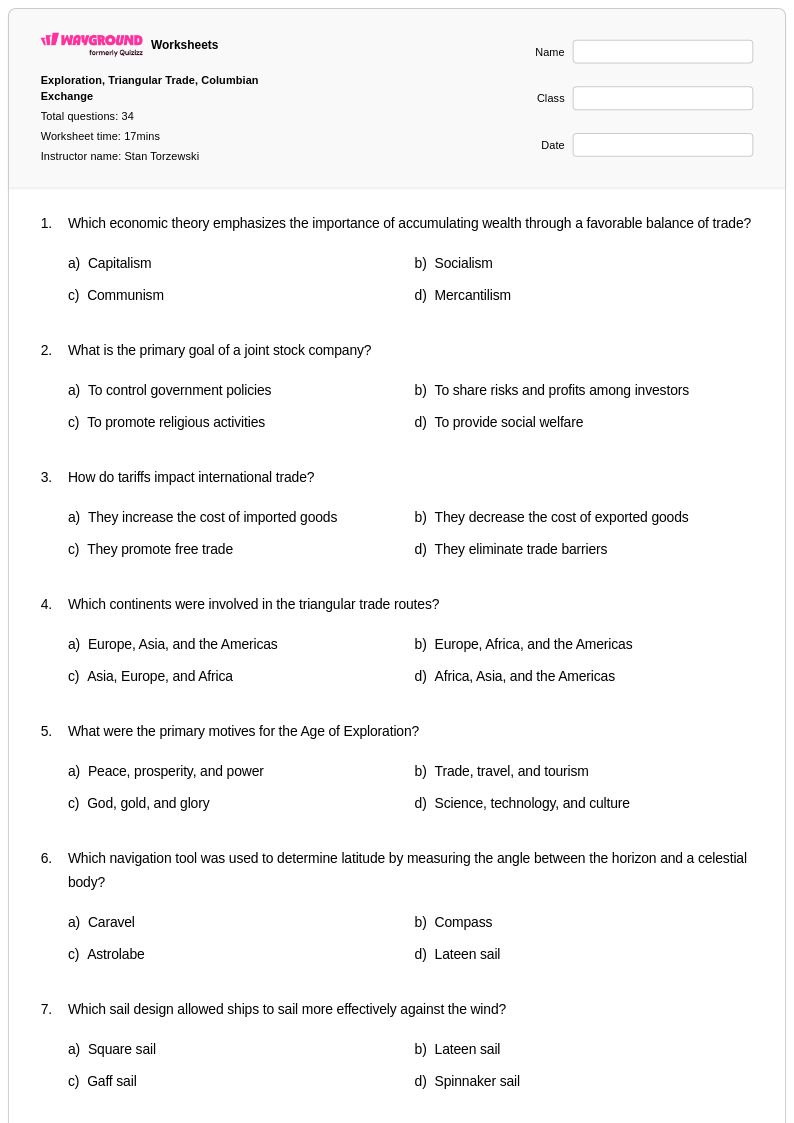
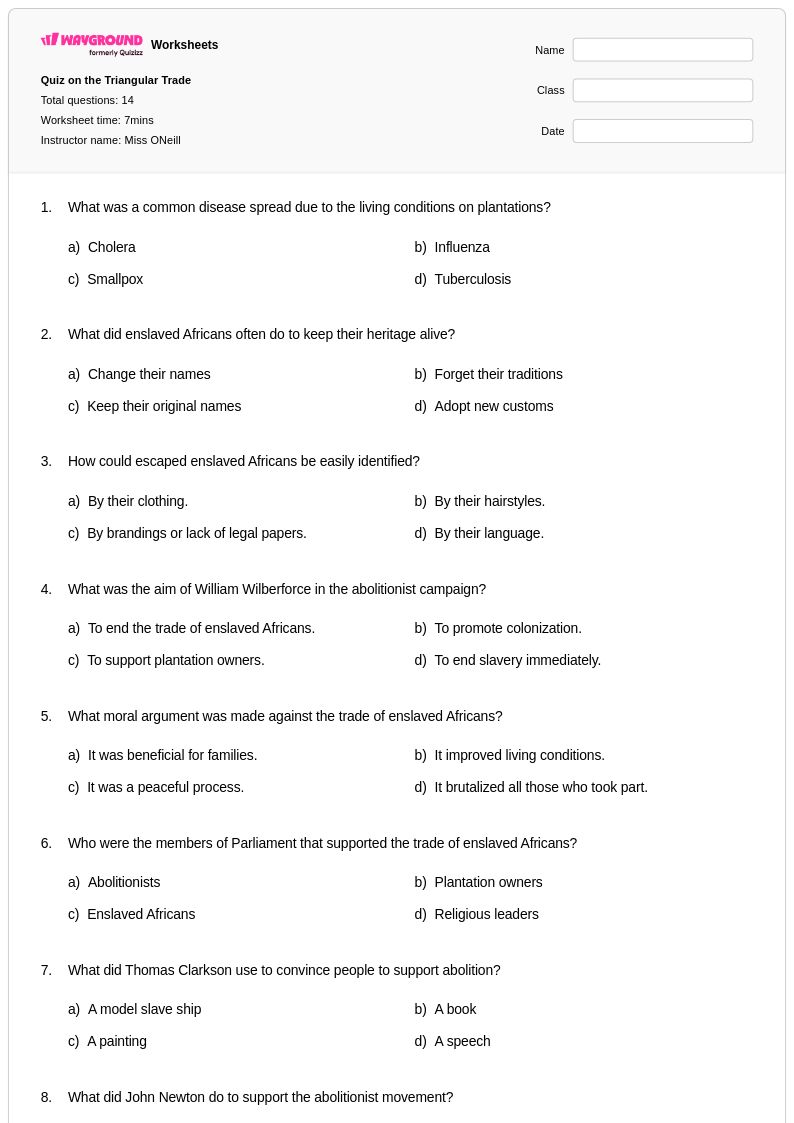
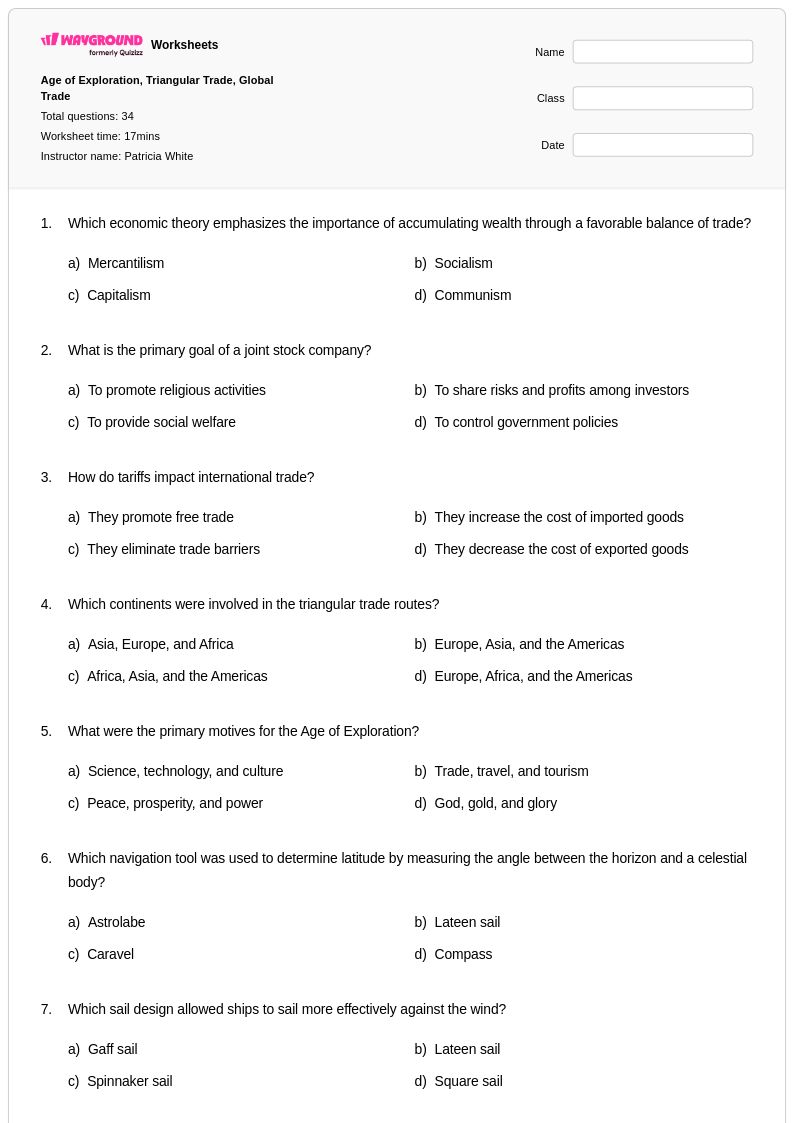
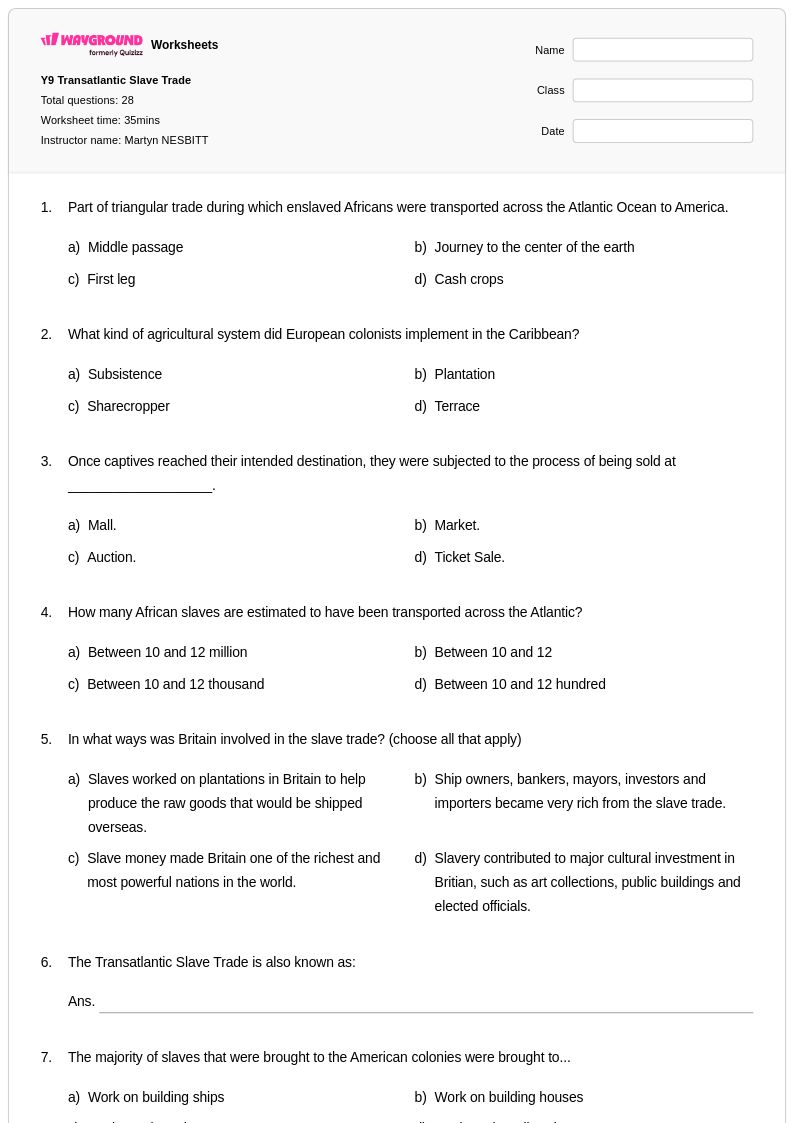
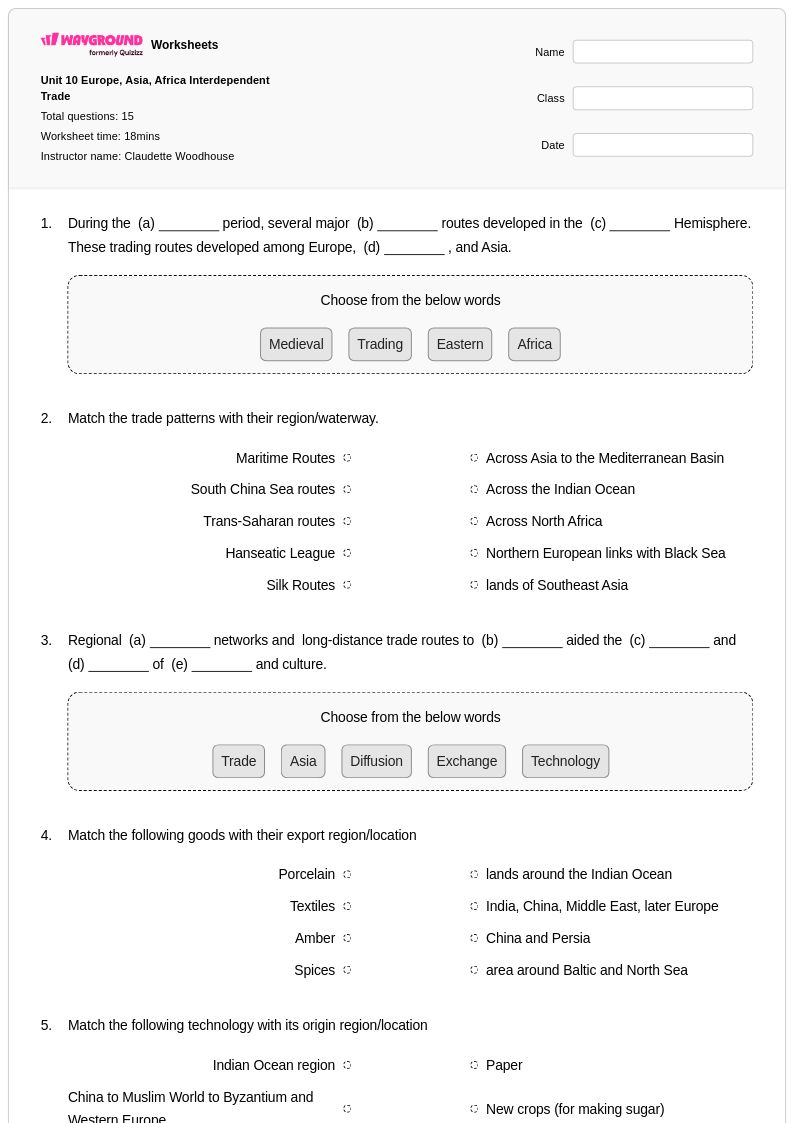
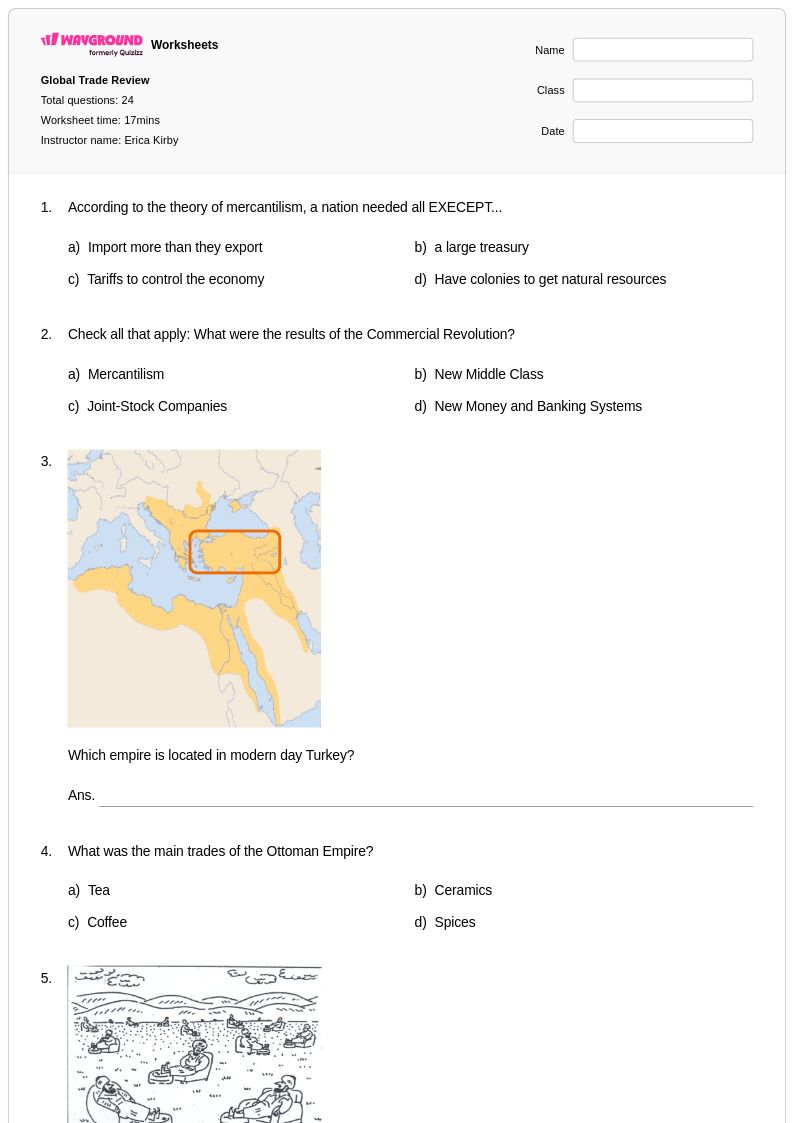
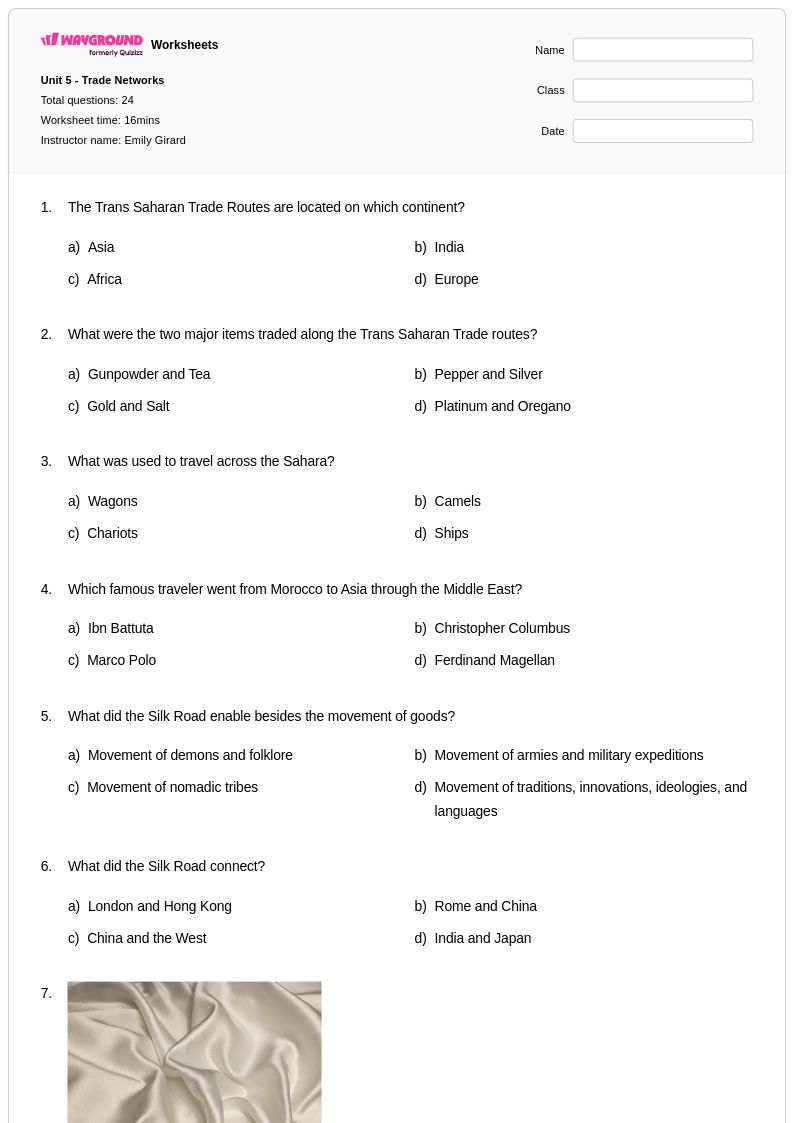
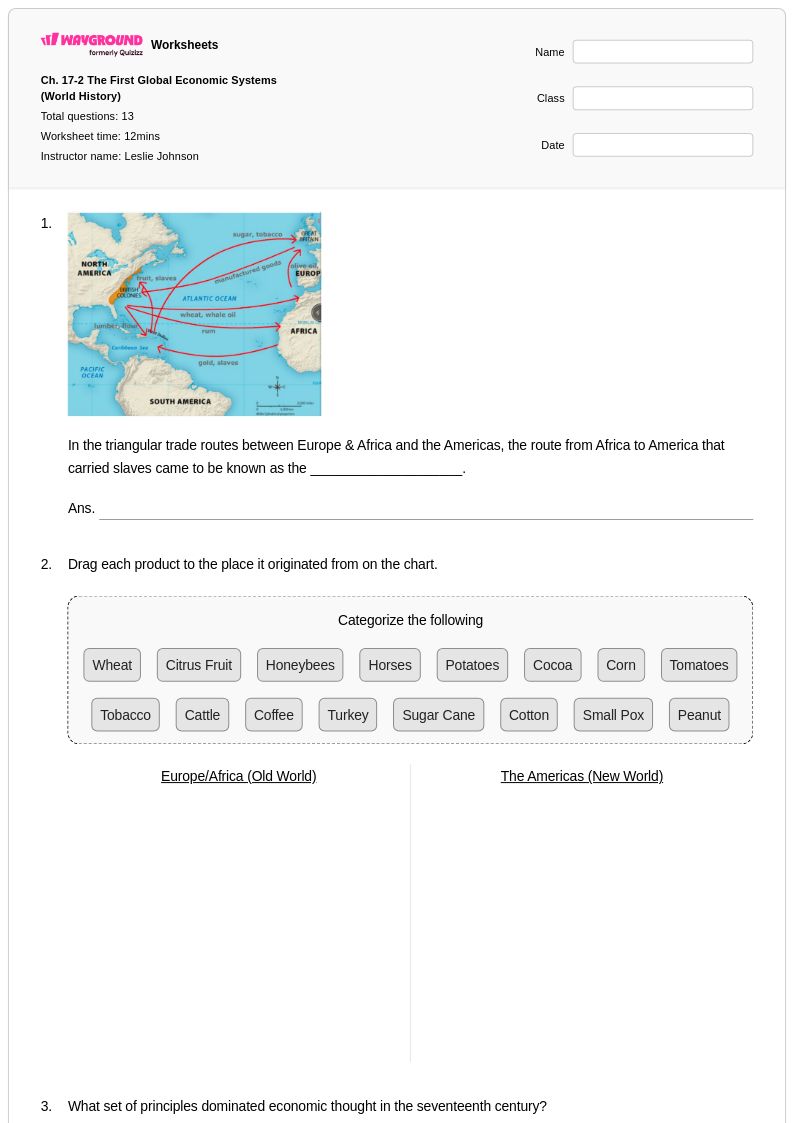
Triangular Trade worksheets for Grade 9 students available through Wayground provide comprehensive exploration of this pivotal Atlantic World system that connected Europe, Africa, and the Americas from the 16th through 19th centuries. These expertly designed educational resources help students analyze the complex economic relationships, trace commodity flows including enslaved people, raw materials, and manufactured goods, and evaluate the profound social and cultural impacts of this trade network. The worksheets strengthen critical thinking skills through primary source analysis, map interpretation, and cause-and-effect reasoning while students examine how the Triangular Trade shaped colonial economies, perpetuated the Atlantic slave trade, and influenced global patterns of migration and cultural exchange. Each resource includes detailed answer keys and is available as free printables in pdf format, featuring practice problems that challenge students to connect historical evidence with broader themes of economic exploitation, cultural transformation, and human rights.
Wayground's extensive collection of Triangular Trade resources empowers Grade 9 Social Studies teachers with access to millions of educator-created materials that support diverse learning needs and curriculum requirements. The platform's robust search and filtering capabilities allow teachers to quickly locate standards-aligned worksheets that match specific learning objectives, whether focusing on economic systems, geographic patterns, or social justice themes within World History coursework. Advanced differentiation tools enable educators to customize content complexity and modify assignments for varied skill levels, while the availability of both printable pdf formats and interactive digital versions provides maximum classroom flexibility. These comprehensive resources facilitate effective lesson planning by offering ready-to-use materials for direct instruction, small group activities, and independent practice, while also supporting targeted remediation for struggling learners and enrichment opportunities for advanced students seeking deeper historical analysis and critical thinking challenges.
FAQs
How do I teach triangular trade to middle or high school students?
Teaching triangular trade effectively requires grounding students in the three-leg structure of the system: European manufactured goods to Africa, enslaved Africans to the Americas, and raw materials back to Europe. Start with trade route maps to build geographic literacy, then layer in primary sources that reveal the human consequences of each leg, particularly the Middle Passage. Framing the economic logic alongside its moral catastrophe helps students develop both analytical and empathetic historical thinking.
What types of practice exercises help students understand triangular trade?
Effective practice for triangular trade includes map labeling activities that require students to trace routes and identify key ports, document analysis tasks using excerpts from merchant logs or abolitionist accounts, and cause-and-effect graphic organizers that connect the economic incentives of mercantilism to the social consequences of the Atlantic slave trade. These exercise types build both content knowledge and the analytical skills students need to interpret historical systems.
What are the most common misconceptions students have about triangular trade?
One of the most common misconceptions is that triangular trade was a straightforward commercial exchange rather than a system built on forced labor and mass human suffering. Students also frequently oversimplify the routes, not recognizing that voyages were irregular and that the 'triangle' is a historiographical model rather than a literal description of every journey. Another error is conflating triangular trade with the broader Atlantic slave trade without understanding how mercantilist economic policy made both possible.
How do I help students analyze primary sources related to triangular trade?
When guiding students through primary source analysis on triangular trade, have them first identify the author's role in the system, whether merchant, enslaved person, abolitionist, or colonial official, as perspective directly shapes what is recorded and what is omitted. Teach students to read for both economic language and dehumanizing language as parallel evidence of how the system was rationalized. Pairing firsthand accounts of the Middle Passage with merchant ledgers creates productive tension that builds critical thinking about whose voices shape historical records.
How can I use triangular trade worksheets in my classroom?
Triangular trade worksheets on Wayground are available as printable PDFs for traditional classroom use and in digital formats for technology-integrated environments, including the option to host them as a quiz directly on Wayground. The included answer keys make them suitable for independent student work, small group analysis, or teacher-led instruction. Digital delivery allows teachers to apply accommodations such as read aloud or extended time for individual students without disrupting the broader class workflow.
How does triangular trade connect to other World History topics I'm already teaching?
Triangular trade is a connecting thread for several major World History topics, including European colonialism, mercantilism, the development of plantation economies in the Americas, and the origins of the African diaspora. It also provides essential context for understanding the economic foundations of American slavery and sets up later discussions of industrialization, abolition movements, and global inequality. Teaching it as an interconnected system rather than an isolated event strengthens students' broader historical reasoning.