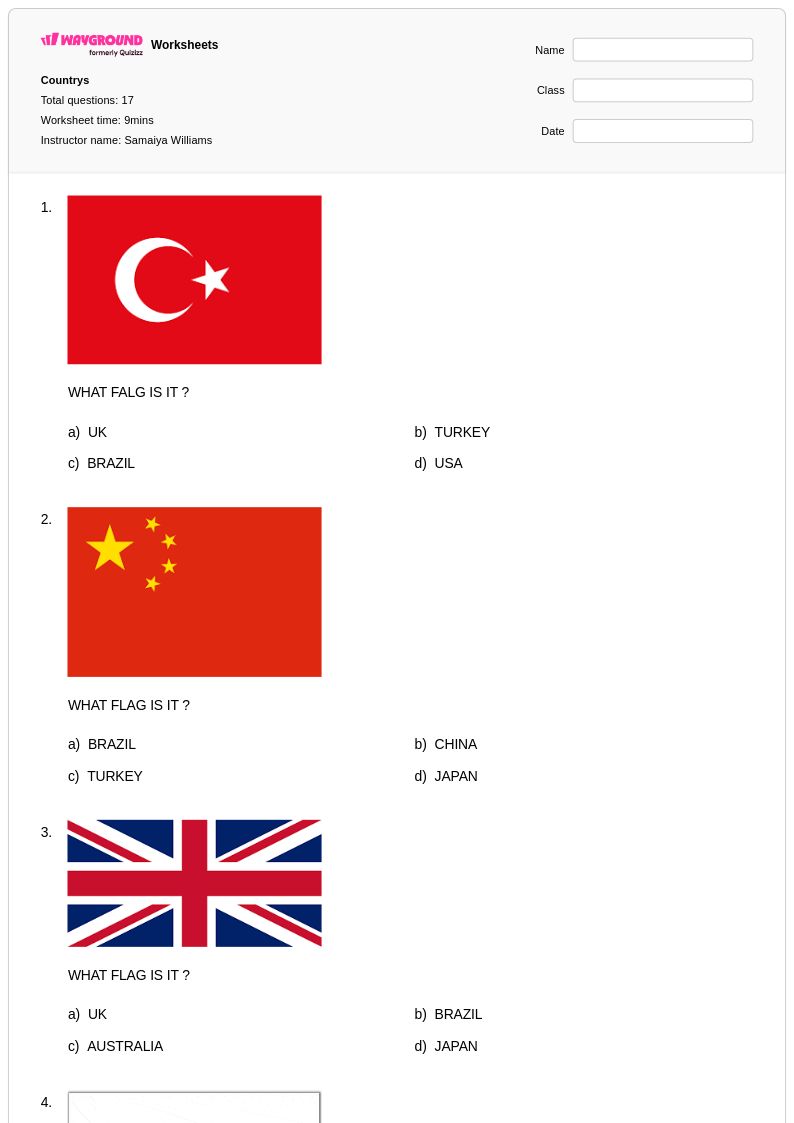
Discover free turkey worksheets and printables that help students explore fascinating facts about these remarkable birds through engaging practice problems and activities, complete with answer keys for effective learning.
Turkey-focused life science worksheets available through Wayground (formerly Quizizz) provide students with comprehensive resources to explore the fascinating biology, behavior, and ecological significance of these remarkable birds. These educational materials strengthen critical scientific observation skills, biological classification abilities, and understanding of animal adaptations through detailed study of turkey anatomy, life cycles, habitat requirements, and behavioral patterns. The worksheet collections include practice problems that challenge students to analyze turkey feeding habits, reproductive strategies, and their role within various ecosystems, while accompanying answer keys support both independent learning and classroom instruction. These free printables cover essential concepts from basic turkey identification and physical characteristics to more complex topics such as seasonal migration patterns, domestication processes, and the species' historical and cultural importance in North American ecosystems.
Wayground (formerly Quizizz) empowers educators with an extensive library of millions of teacher-created resources specifically designed to support comprehensive turkey-themed life science instruction across multiple learning environments. The platform's robust search and filtering capabilities enable teachers to quickly locate age-appropriate materials that align with relevant science standards, while built-in differentiation tools ensure that worksheets can be customized to meet diverse student needs and learning objectives. These versatile resources are available in both printable pdf formats for traditional classroom use and digital formats for technology-integrated learning, making them invaluable for lesson planning, targeted remediation of specific biological concepts, enrichment activities for advanced learners, and ongoing skill practice that reinforces understanding of avian biology and ecological relationships.
FAQs
How do I teach students about turkey biology and adaptations?
When teaching turkey biology, anchor instruction around observable adaptations: their specialized feet for foraging, fan-shaped tail feathers used in courtship displays, and keen eyesight adapted for detecting predators. Start with physical characteristics and classification before moving into behavioral patterns such as flocking, roosting, and seasonal feeding habits. Connecting anatomy to function helps students build a concrete understanding of how turkeys survive in their ecosystems.
What topics should turkey worksheets cover for life science?
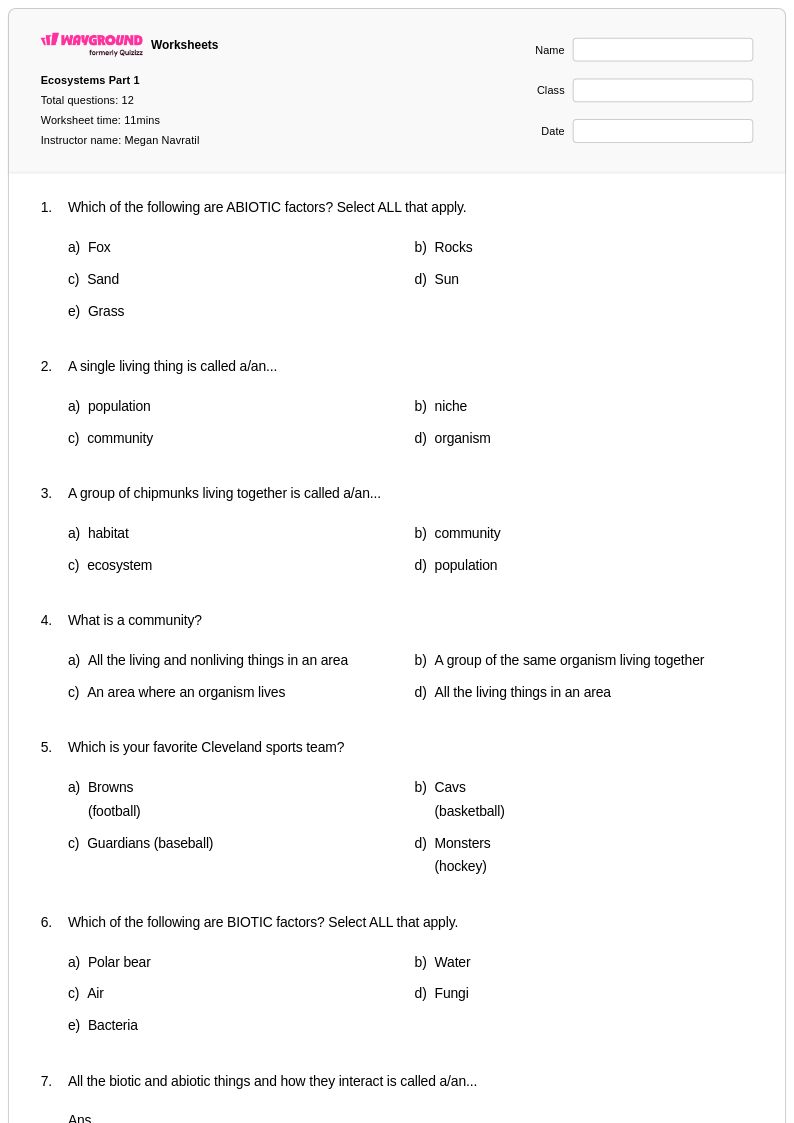
Effective turkey worksheets for life science should cover turkey anatomy, biological classification, habitat requirements, life cycle stages, feeding habits, reproductive strategies, and the turkey's ecological role. More advanced materials can extend into domestication history, seasonal migration patterns, and the species' cultural significance in North America. This range ensures students develop both foundational identification skills and deeper understanding of avian biology.
What common mistakes do students make when studying animal adaptations like those of turkeys?
Students frequently confuse physical adaptations with behavioral adaptations, categorizing actions like courtship displays or flock movement as physical traits. Another common error is assuming adaptations are intentional choices rather than evolved responses to environmental pressures. When studying turkeys specifically, students may also overlook the ecological significance of their foraging behavior and its effect on seed dispersal and habitat dynamics.
How can I use turkey worksheets to support different skill levels in my classroom?
Turkey worksheets can be differentiated by adjusting complexity, from basic identification and labeling activities for younger or developing learners to analytical tasks such as comparing wild and domesticated turkey traits or evaluating habitat suitability for more advanced students. On Wayground, teachers can apply individual student accommodations including read aloud support, reduced answer choices, and extended time, ensuring every learner can engage meaningfully with the same core content without disrupting the experience of other students.
How do I use Wayground's turkey worksheets in my classroom?
Wayground's turkey worksheets are available as printable PDFs for traditional classroom use and in digital formats for technology-integrated learning environments, accommodating a range of teaching setups and student preferences. Teachers can also host the worksheets directly as a quiz on Wayground, enabling real-time student response tracking. Each worksheet includes a complete answer key, supporting both independent student work and teacher-led instruction or review.
How do turkeys fit into ecosystem and food web lessons?
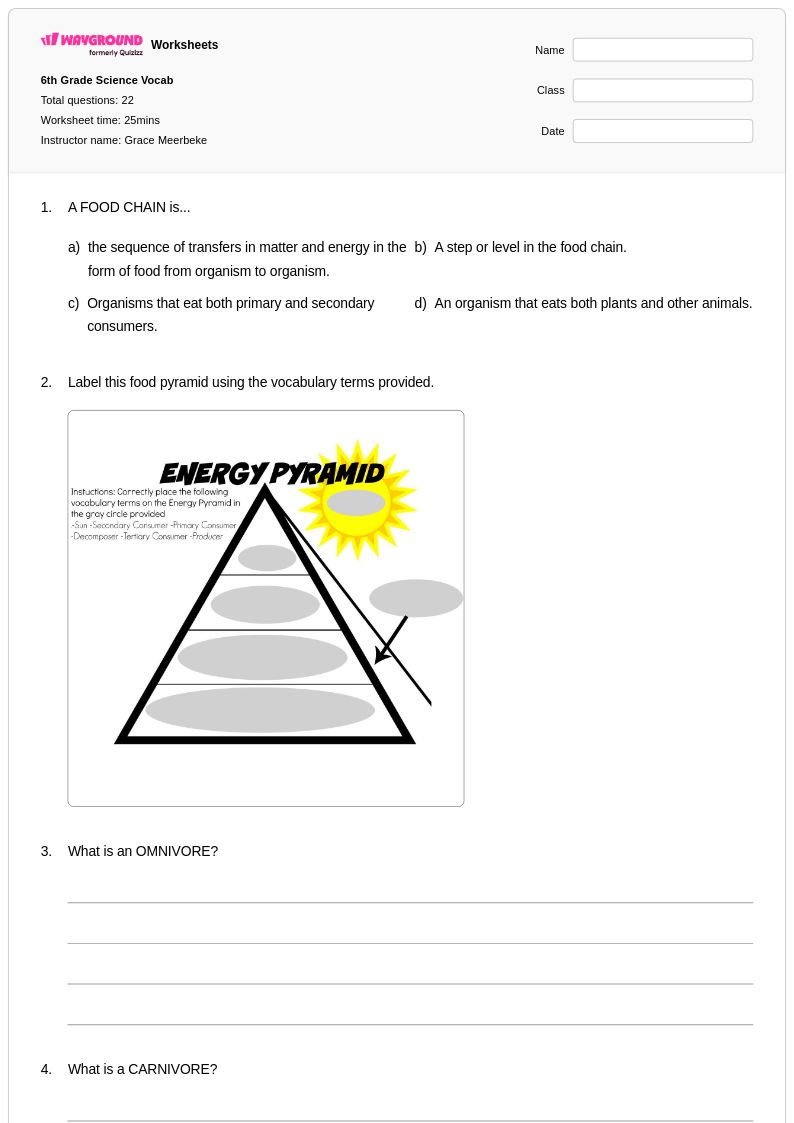
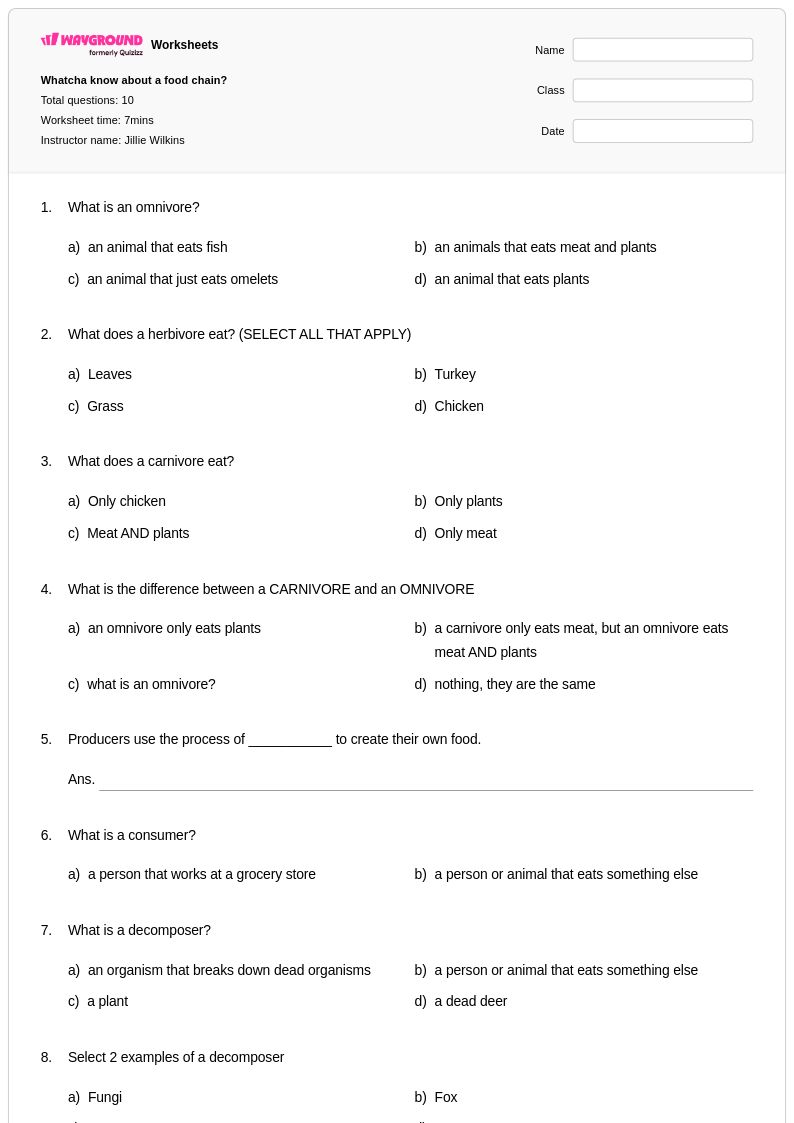
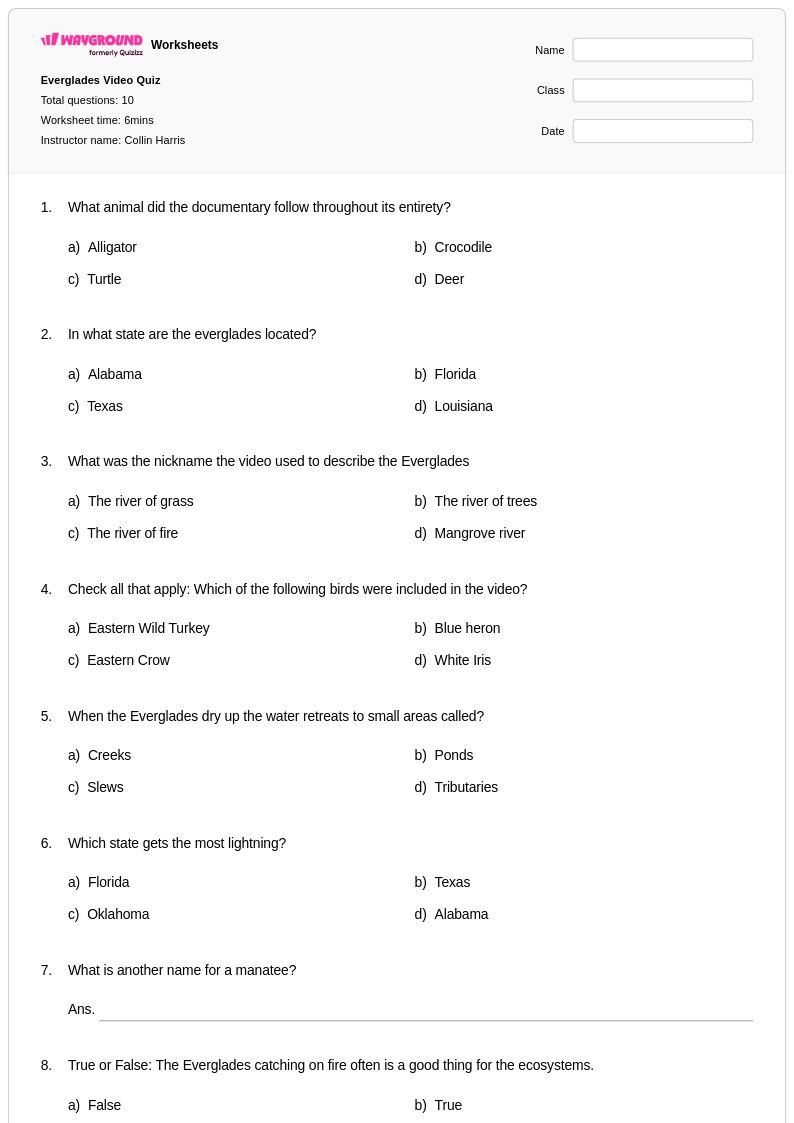
Turkeys are omnivores that occupy a mid-level position in forest and grassland food webs, consuming insects, seeds, berries, and small vertebrates while serving as prey for predators such as foxes, coyotes, and birds of prey. Their foraging behavior contributes to seed dispersal and insect population regulation, making them a useful case study for illustrating how a single species can influence ecosystem dynamics. Incorporating turkeys into food web diagrams gives students a concrete, familiar example to apply abstract ecological concepts.