
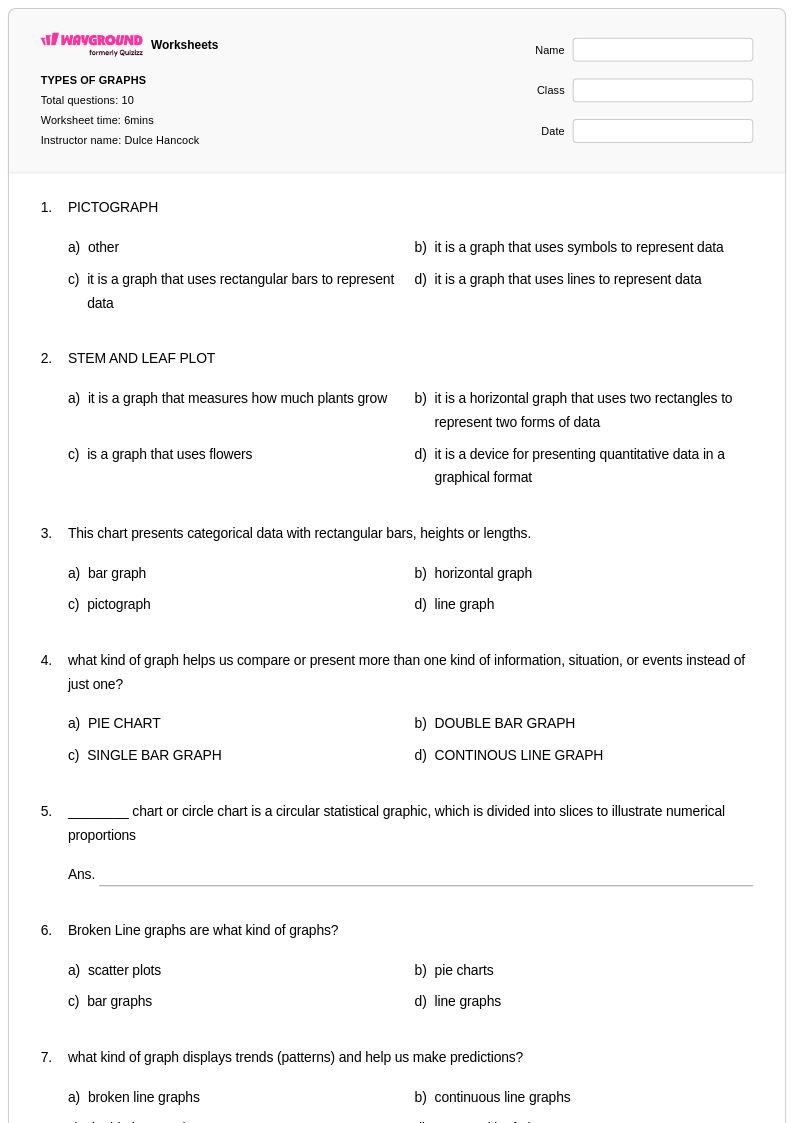
10 T
4th - 6th
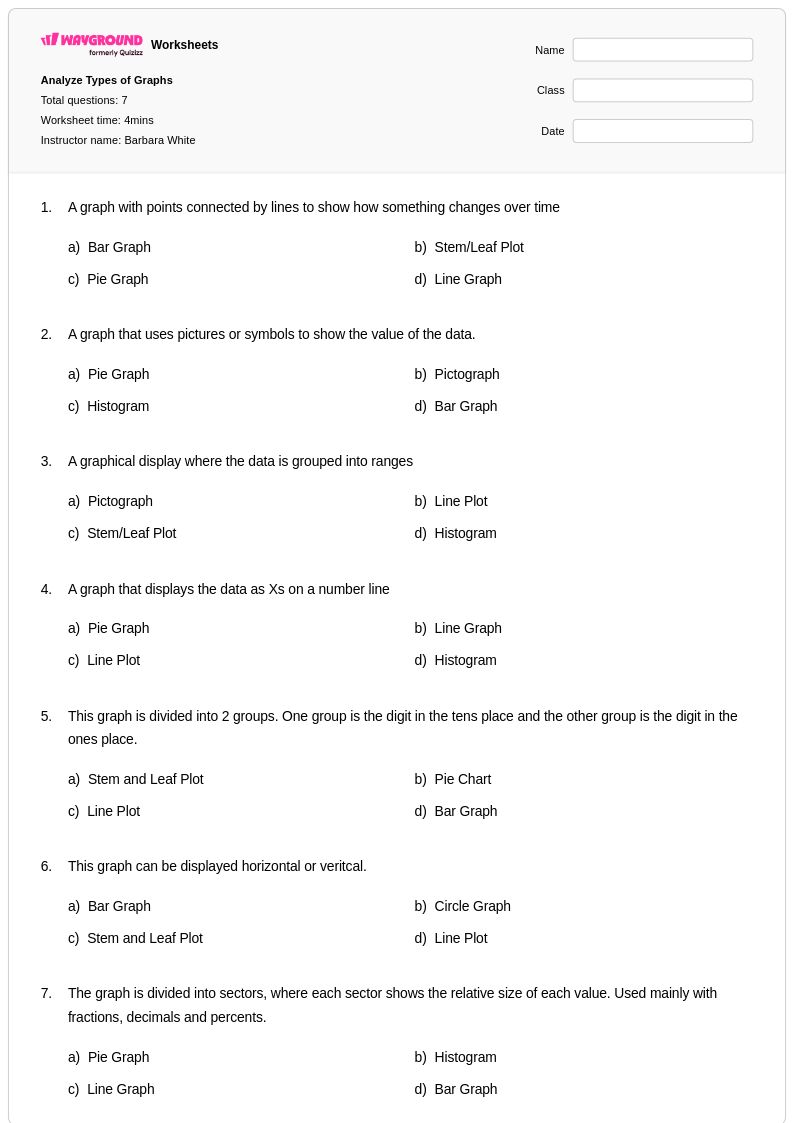
7 T
3rd - 5th
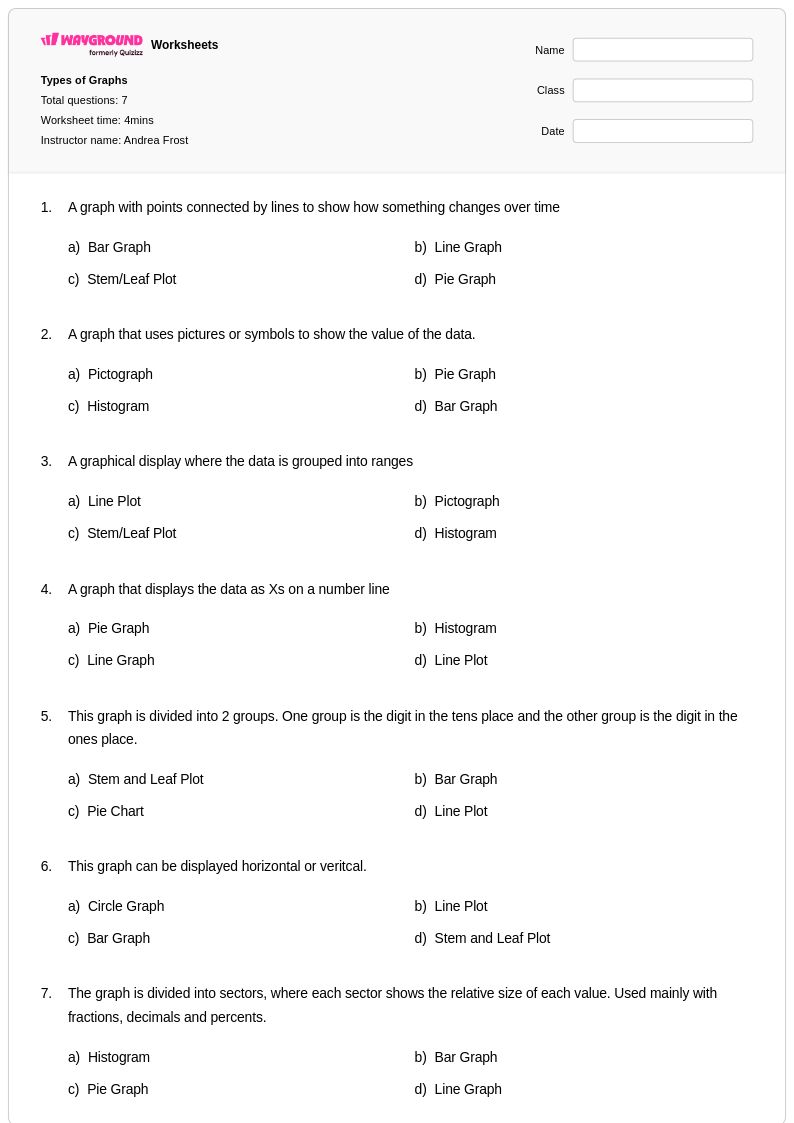
7 T
3rd - 5th
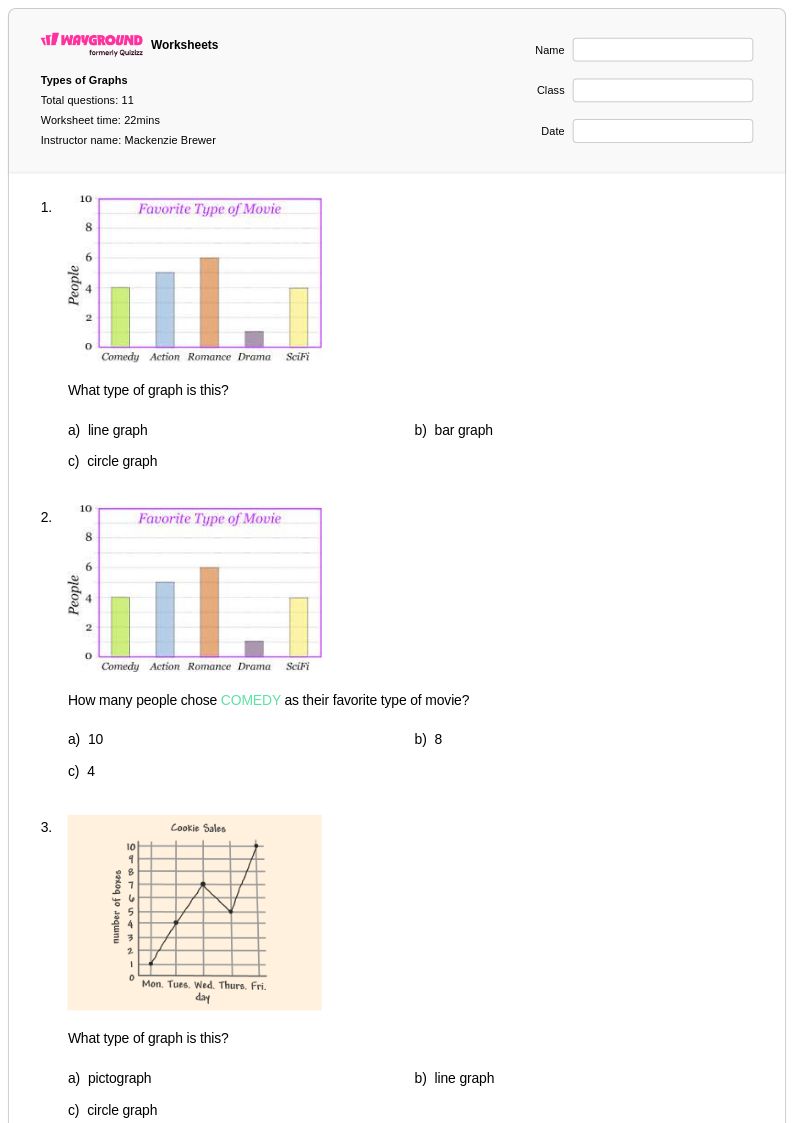
11 T
4th - 9th
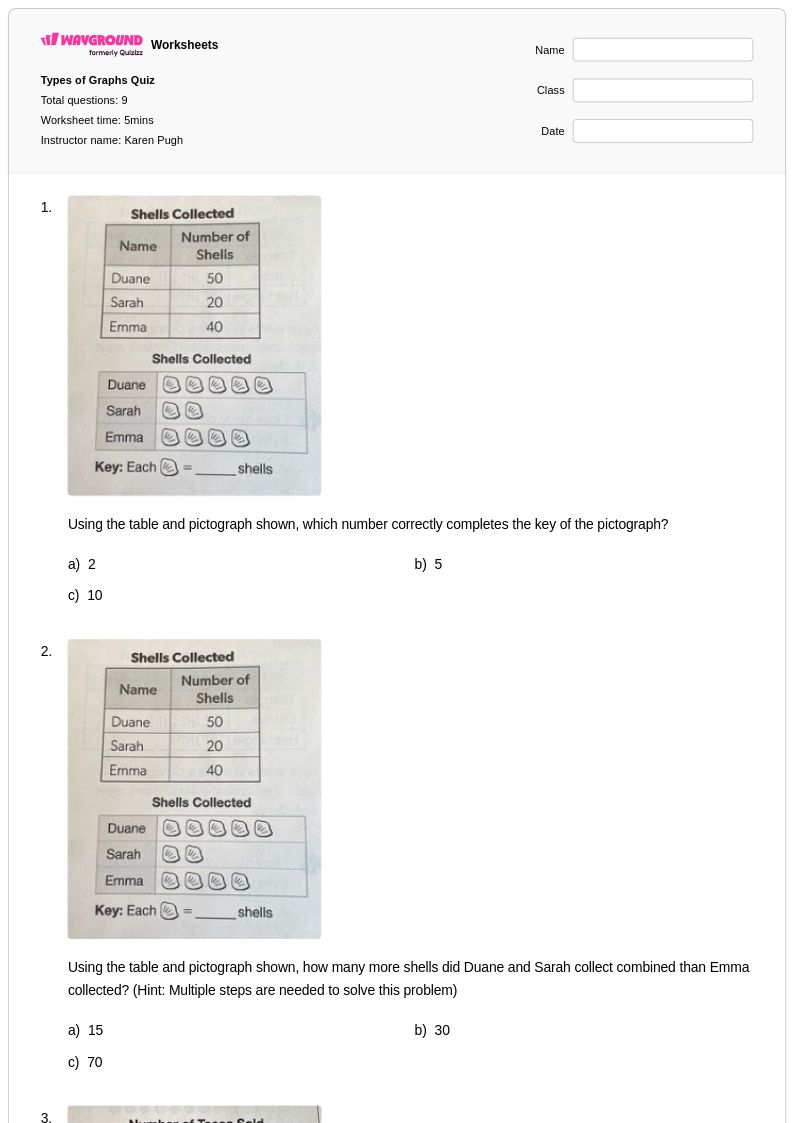
9 T
3rd - Uni
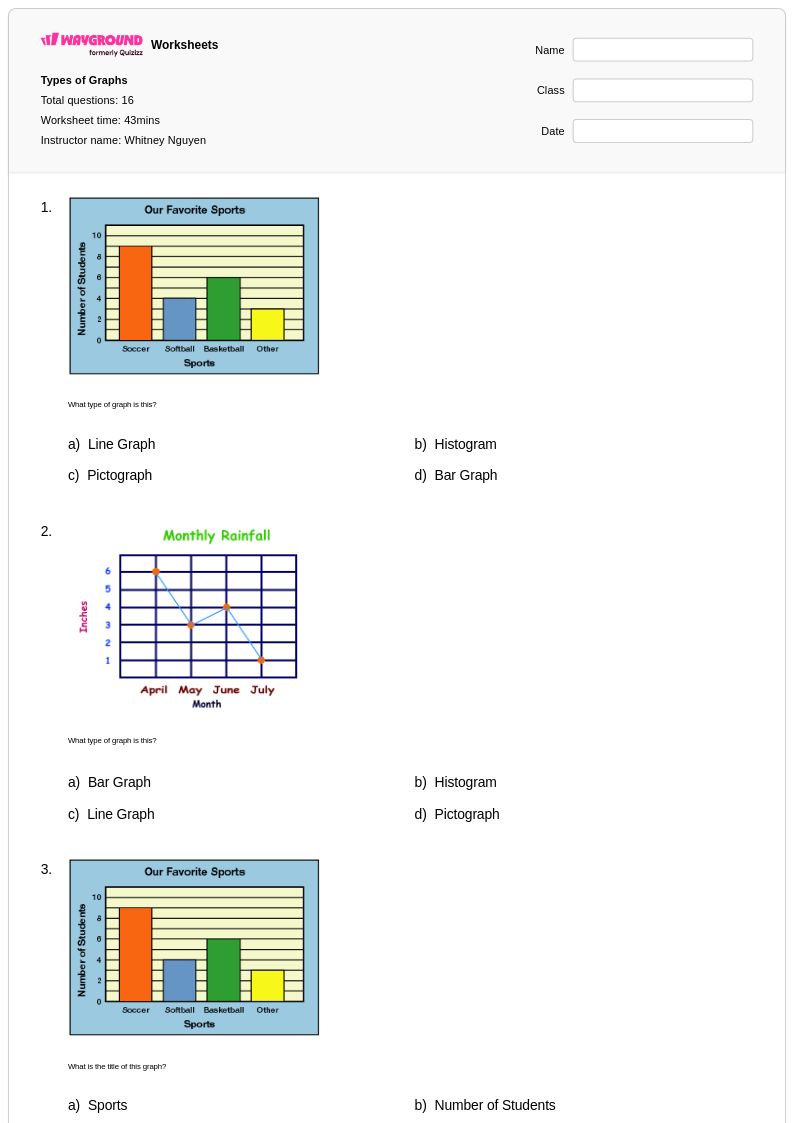
16 T
5th - 6th
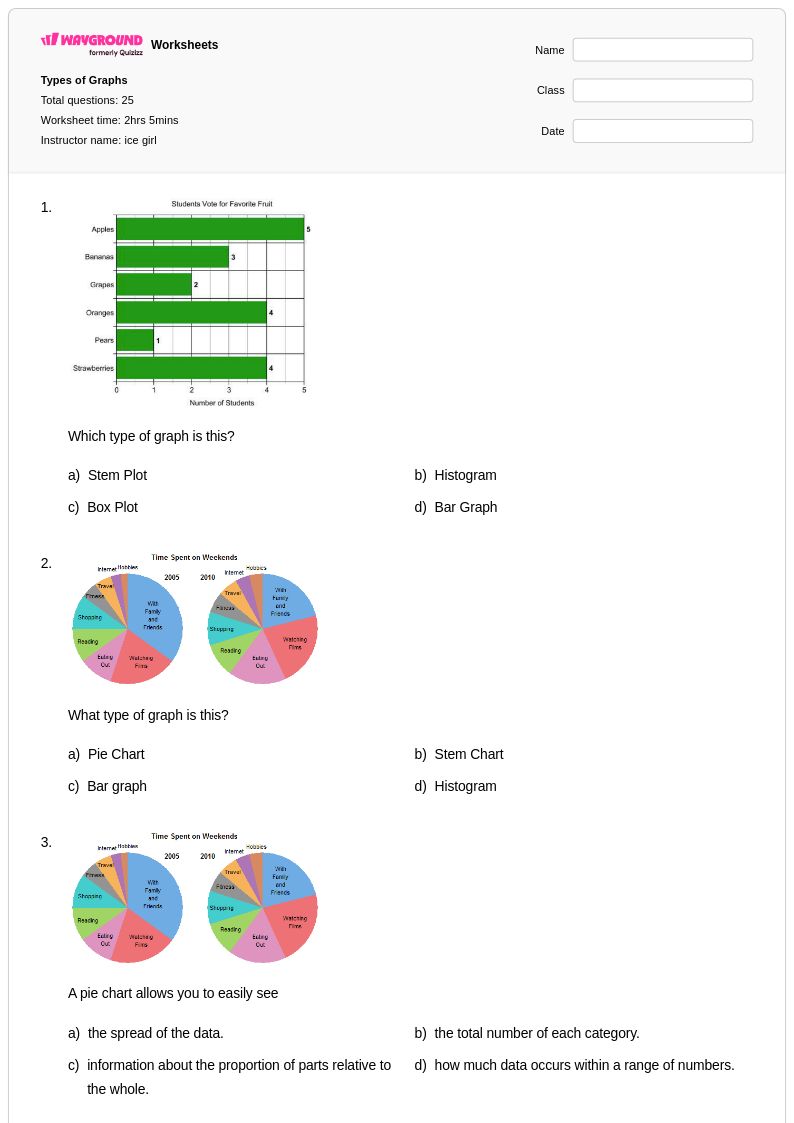
25 T
5th - 6th
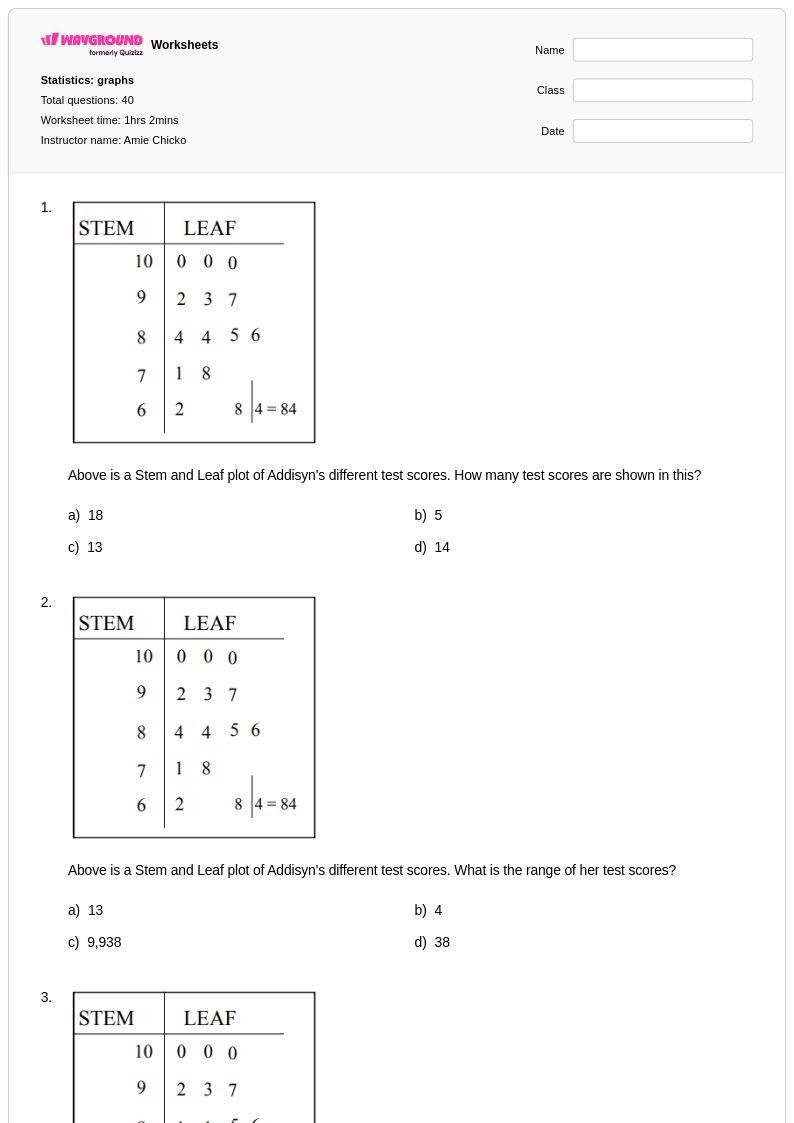
40 T
5th - 6th
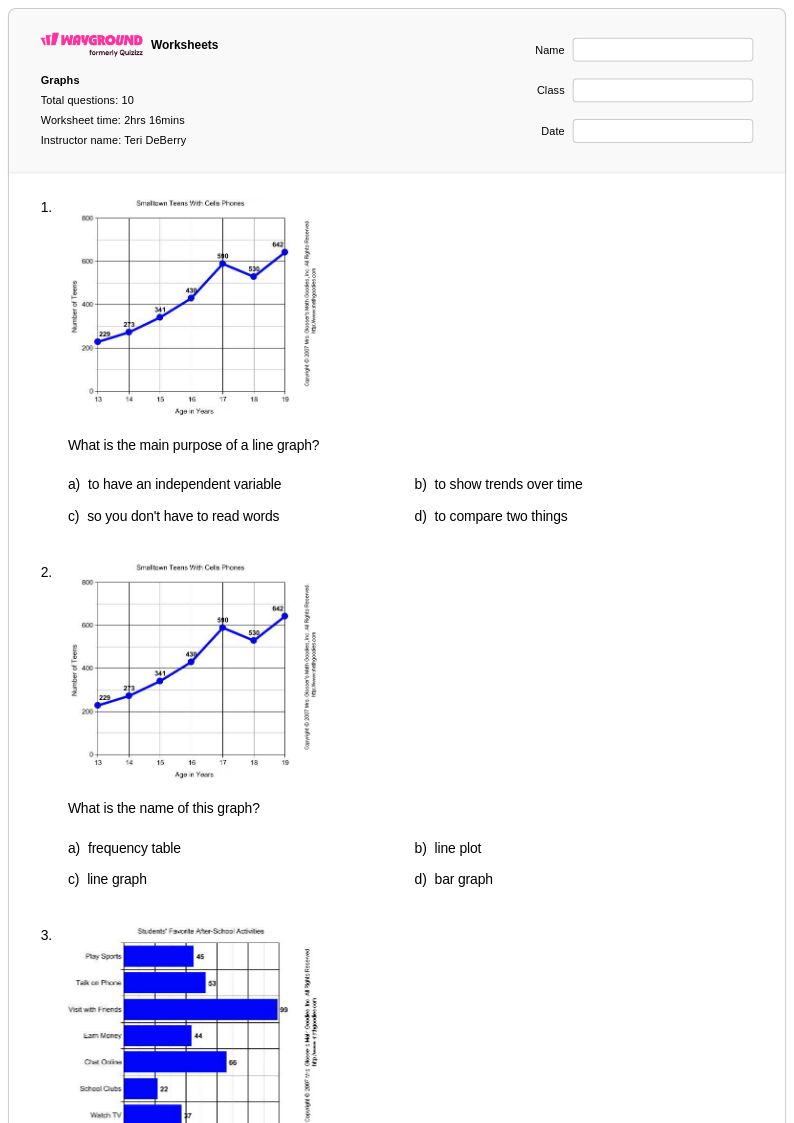
10 T
4th - 5th
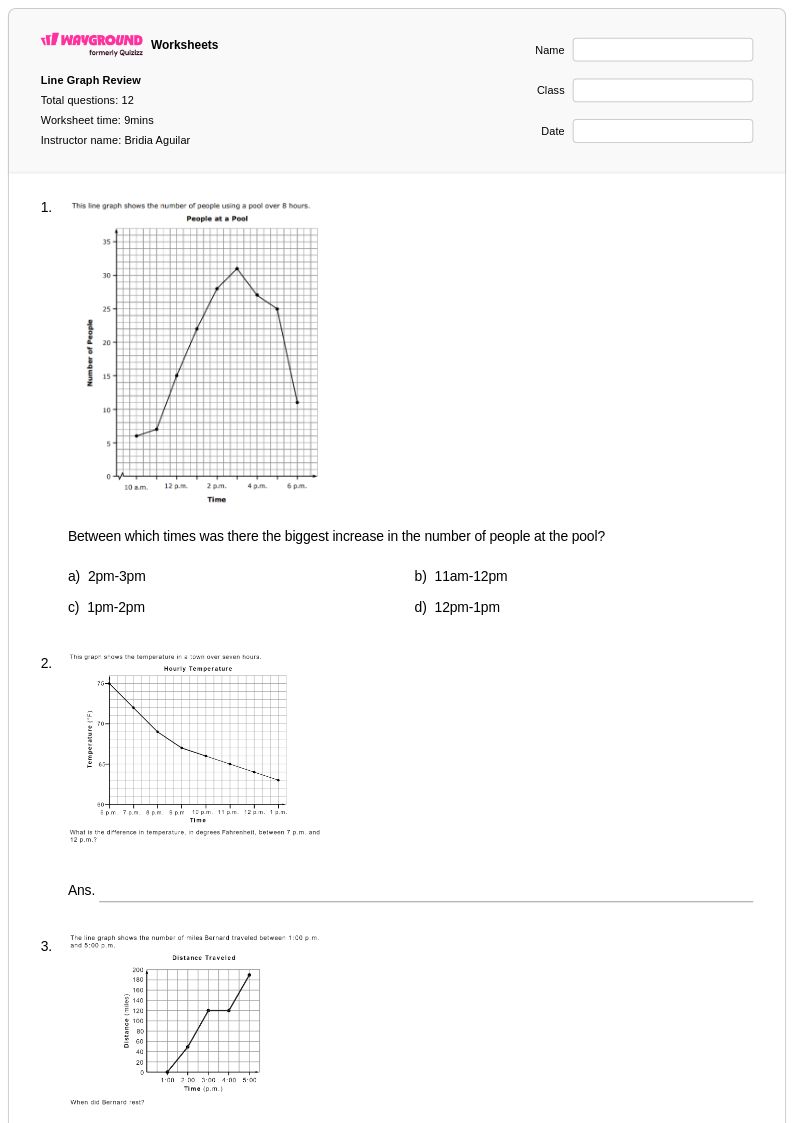
12 T
5th
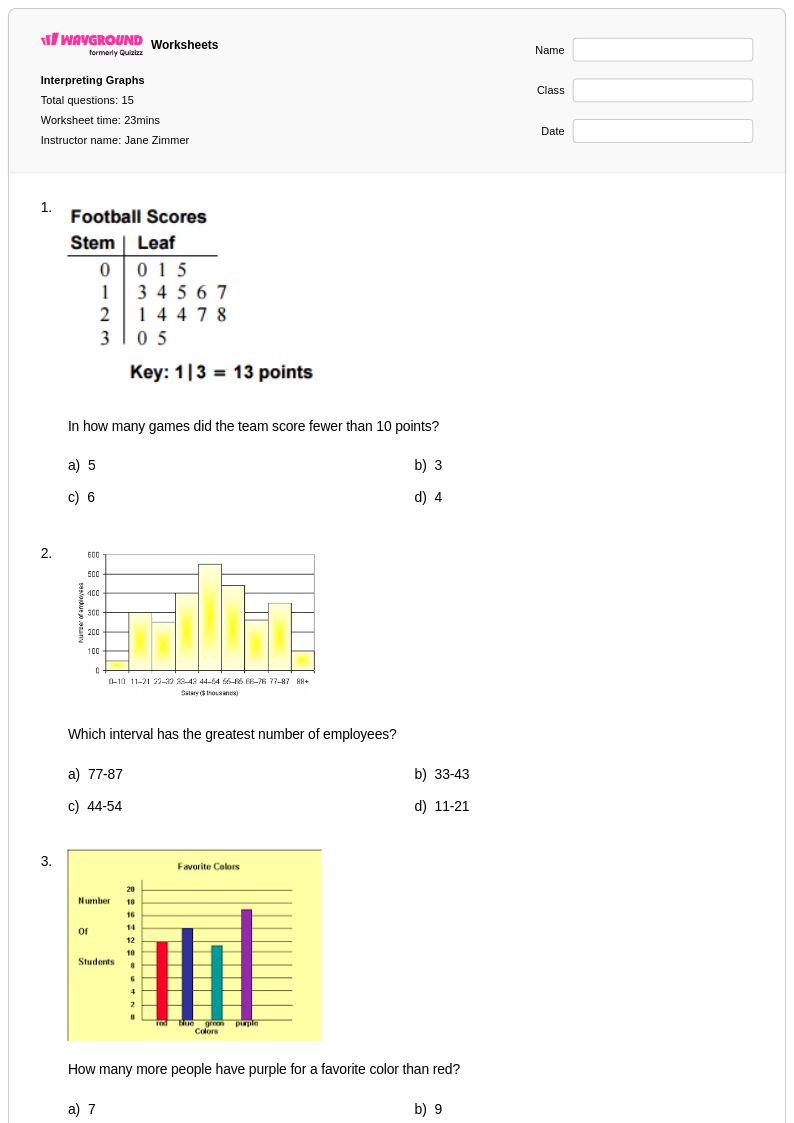
15 T
5th - 7th
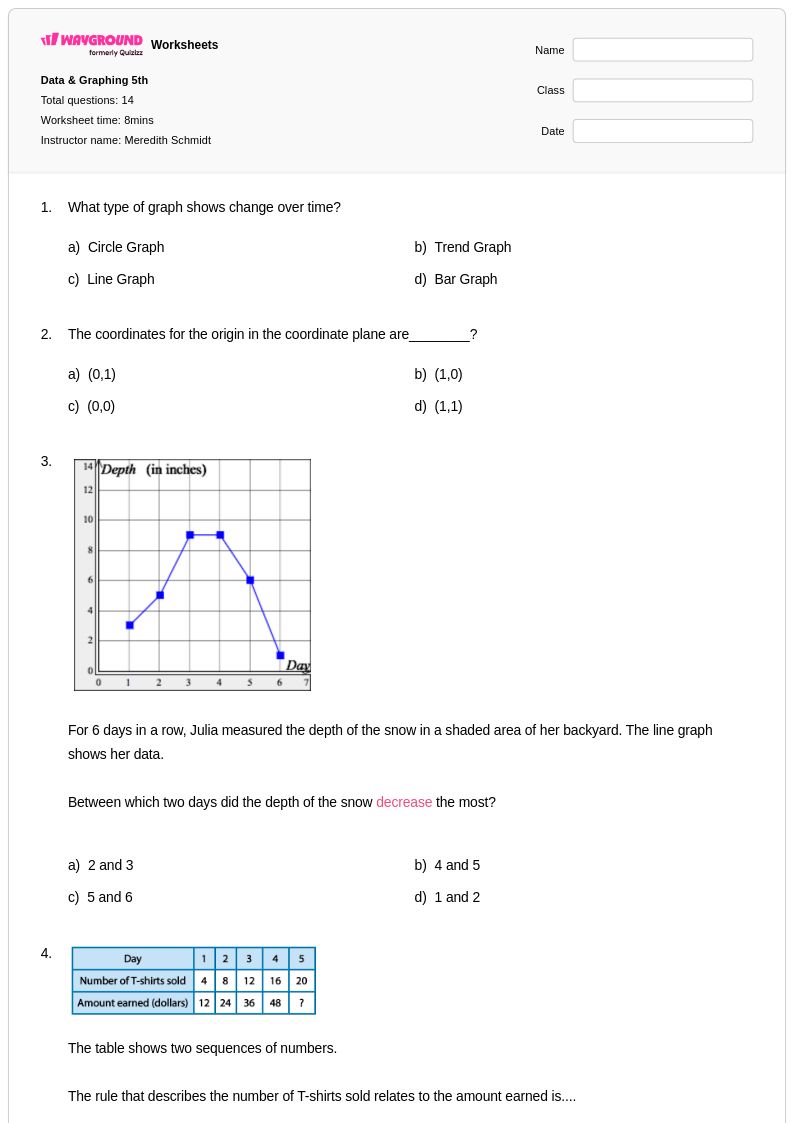
14 T
5th
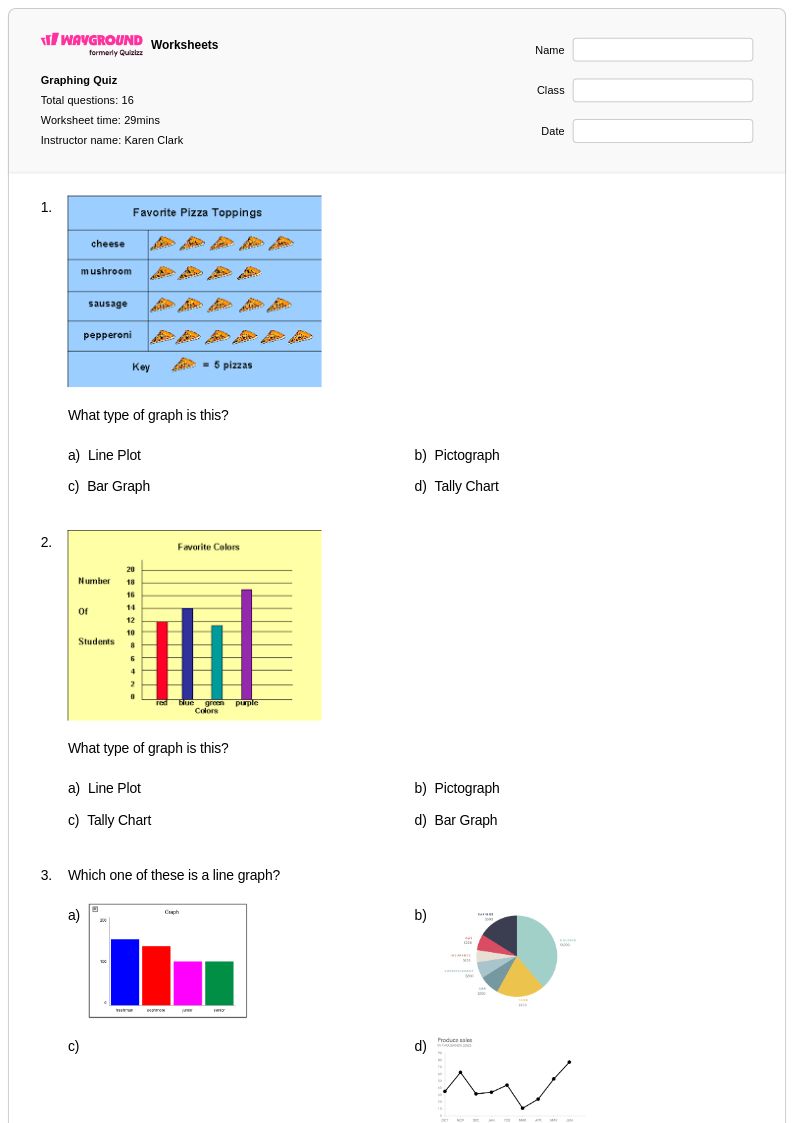
16 T
2nd - 5th
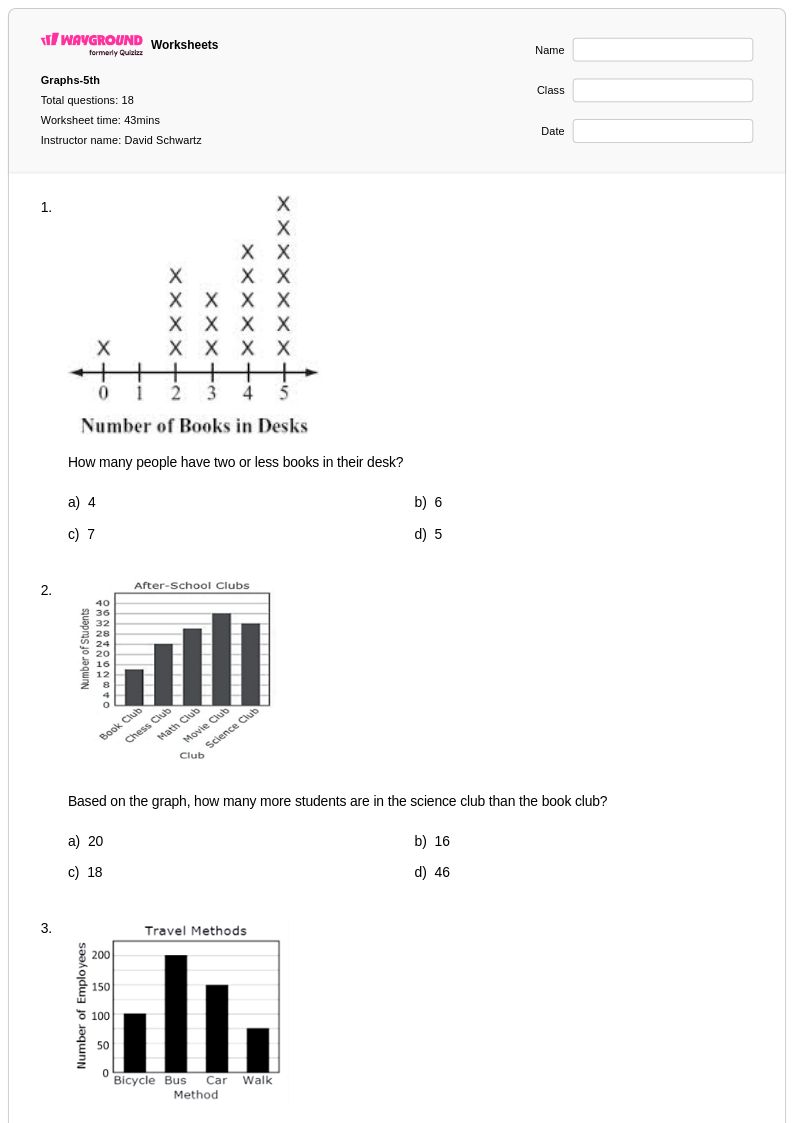
18 T
5th
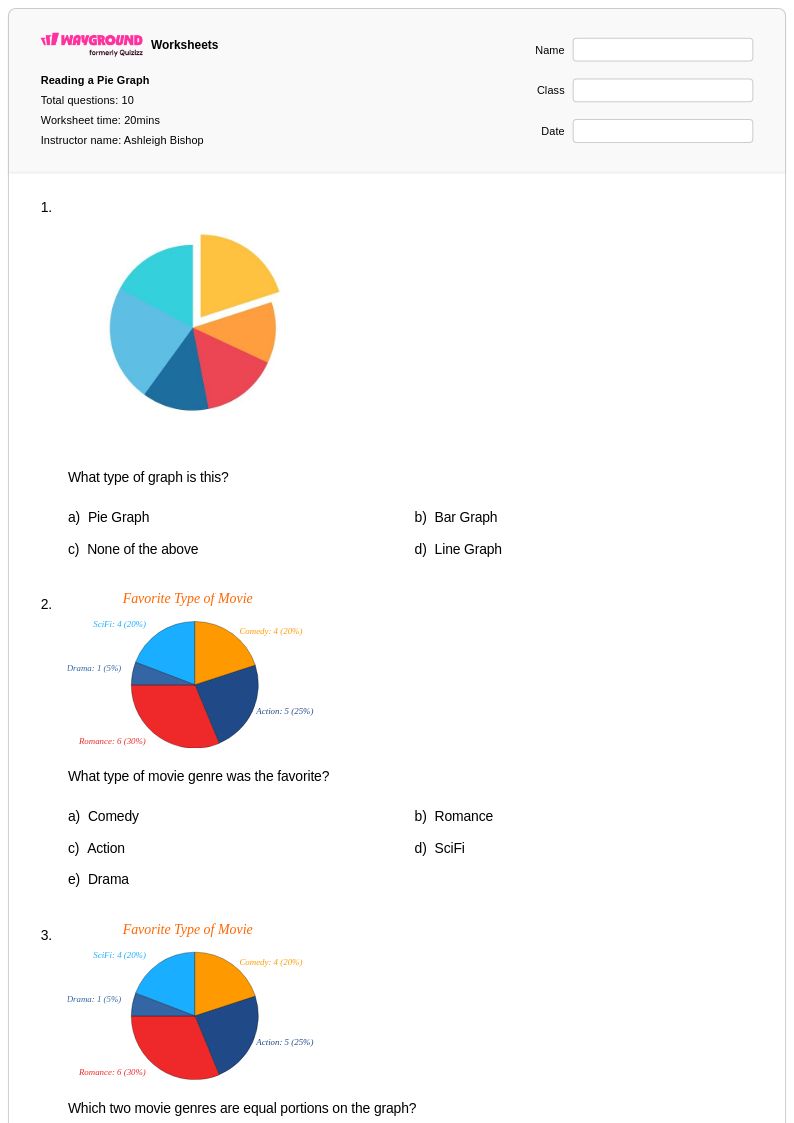
10 T
5th - 6th

15 T
5th - Uni
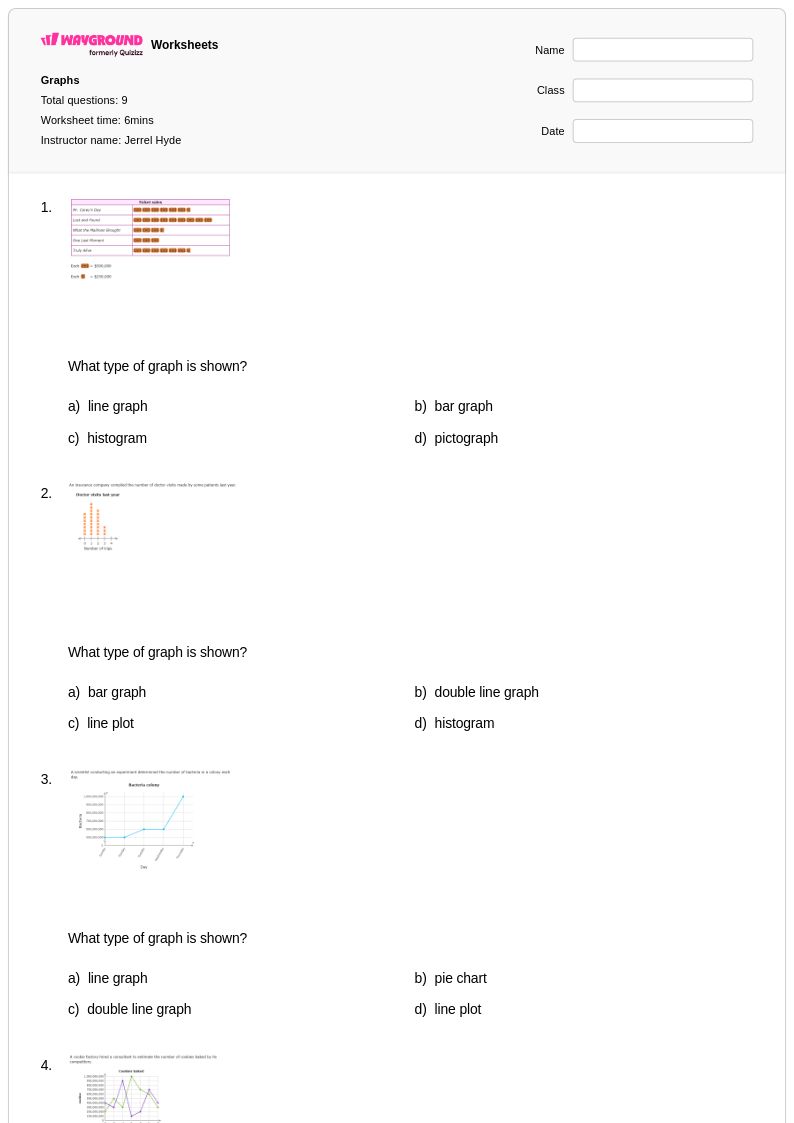
9 T
4th - 7th
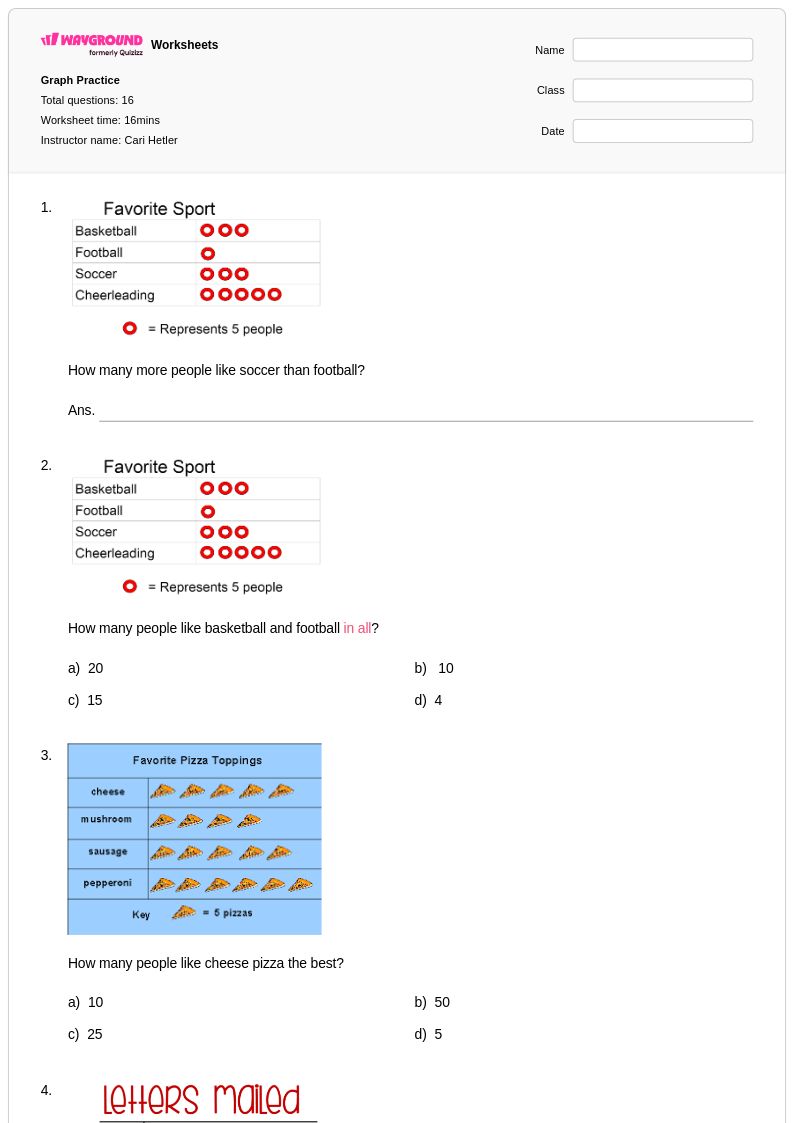
16 T
5th - 6th
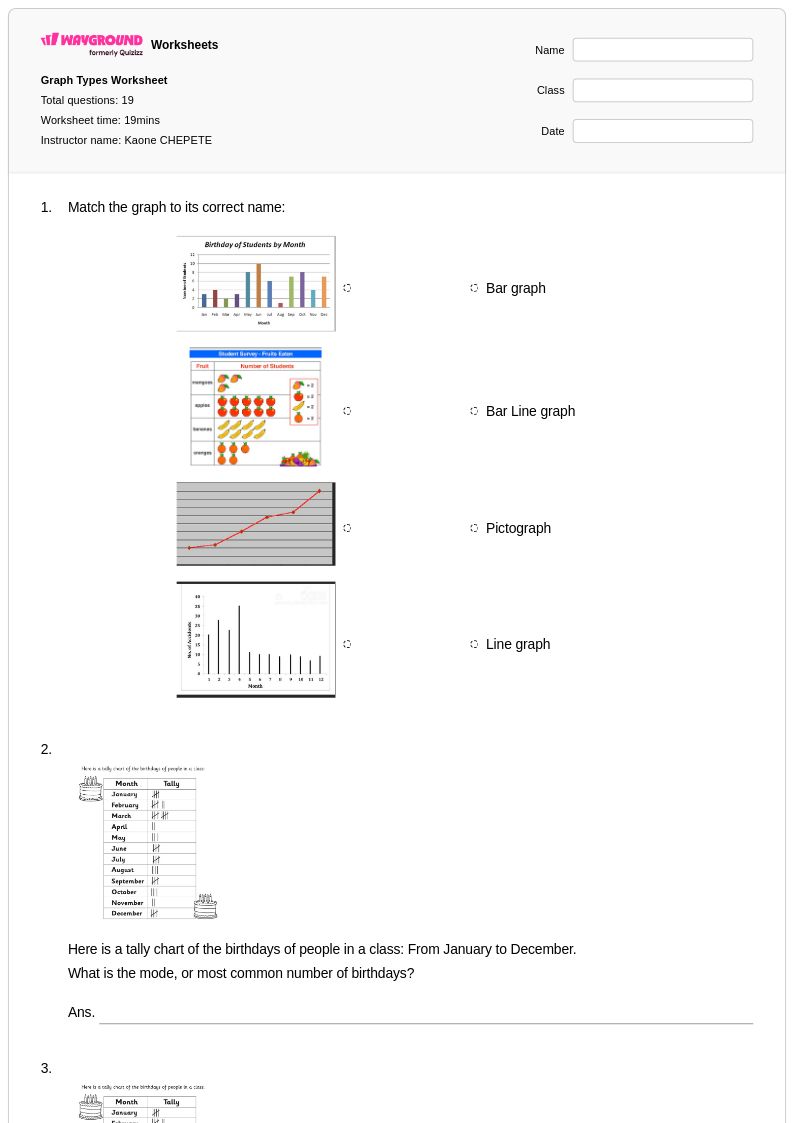
19 T
5th - Uni
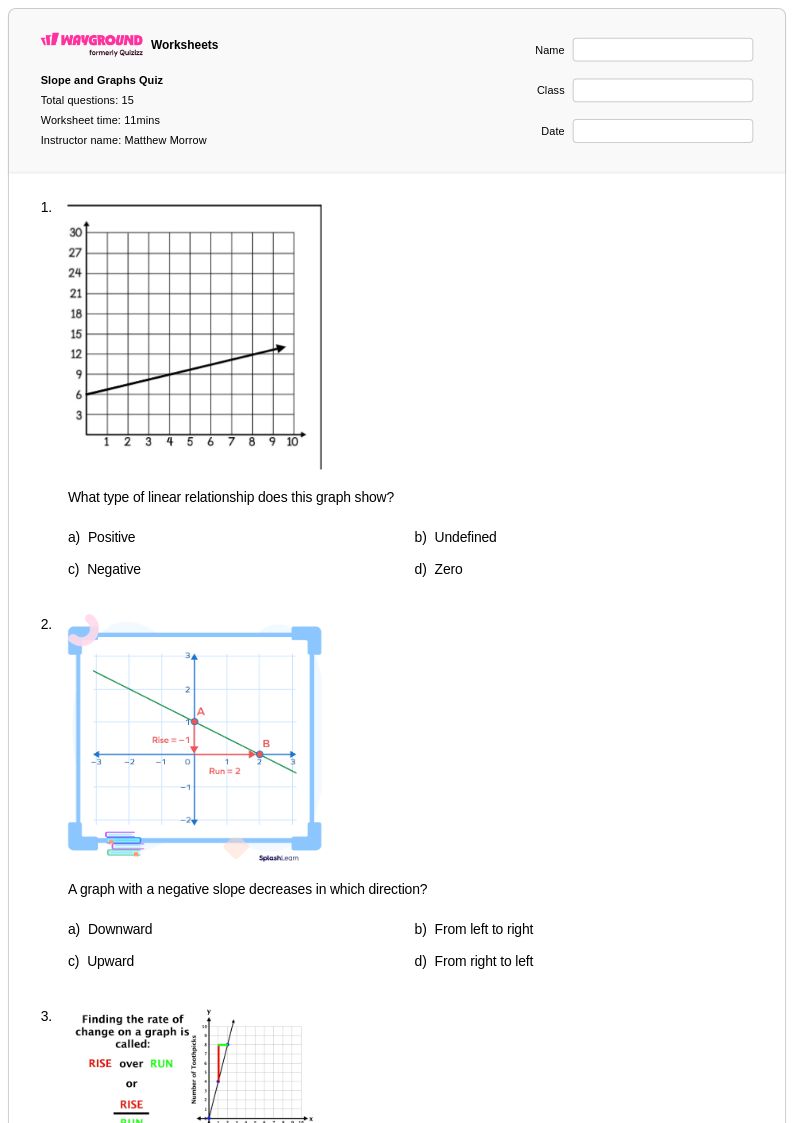
15 T
5th
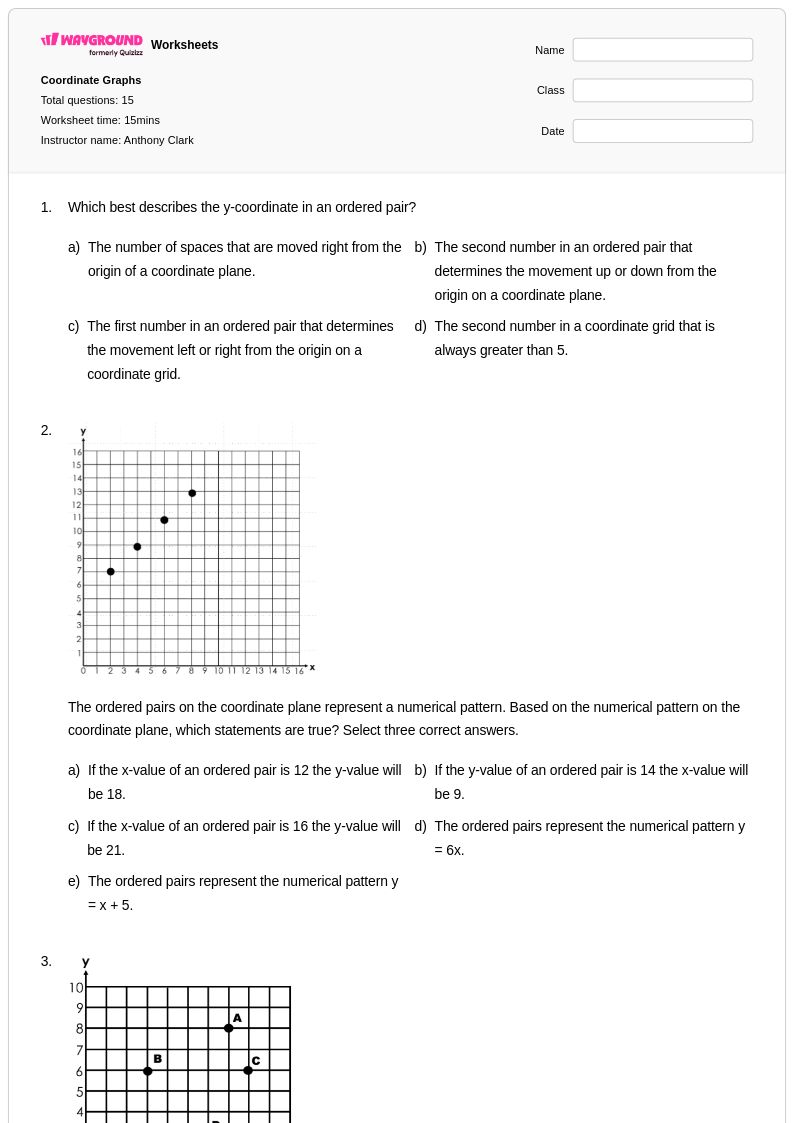
15 T
5th - Uni
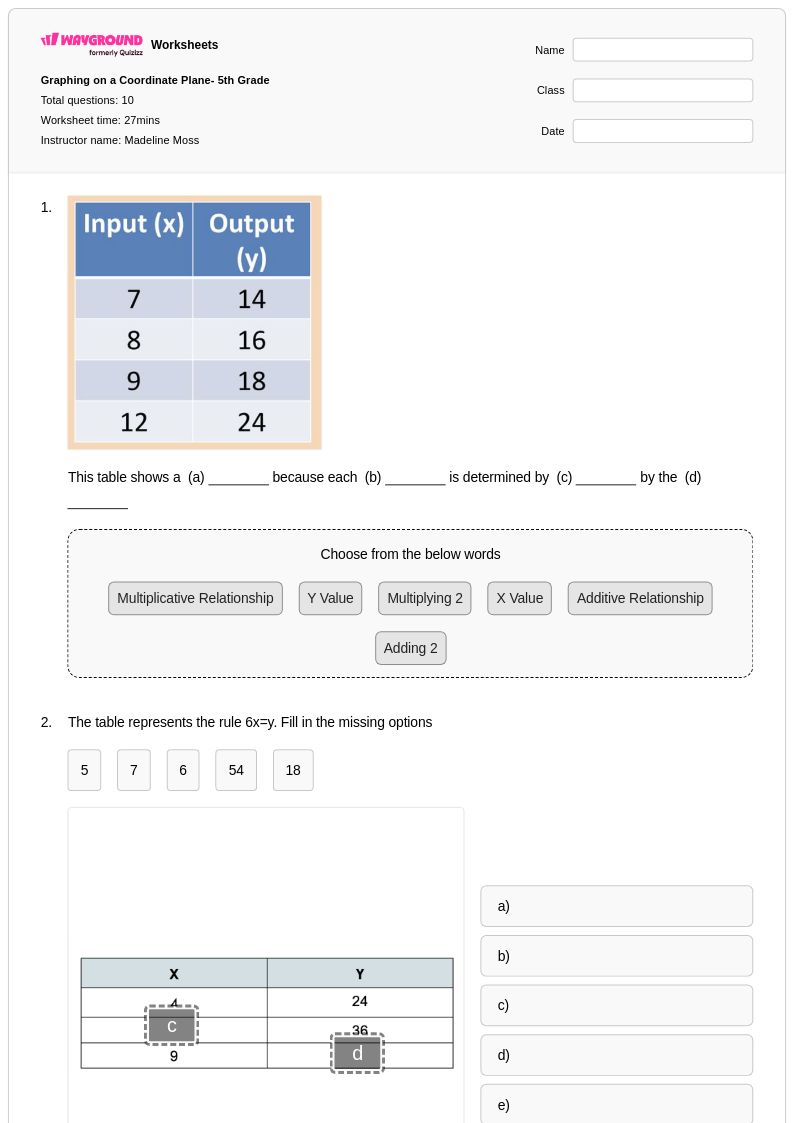
10 T
5th
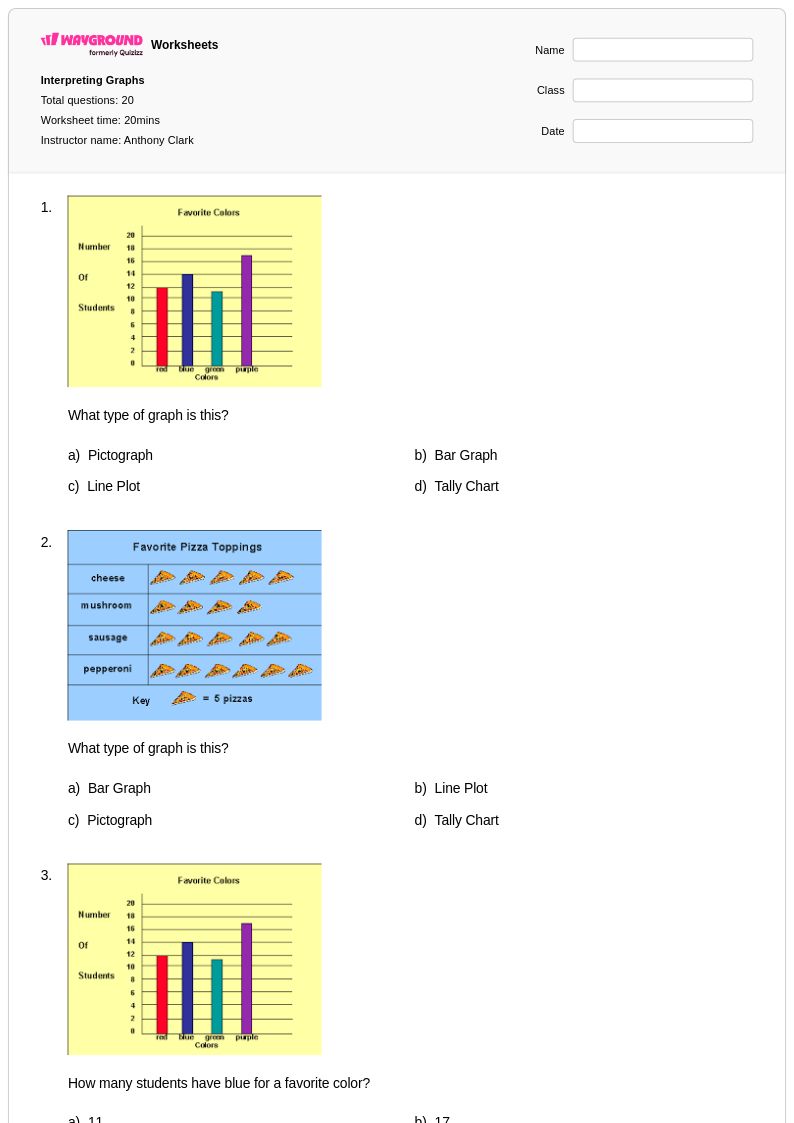
20 T
3rd - Uni
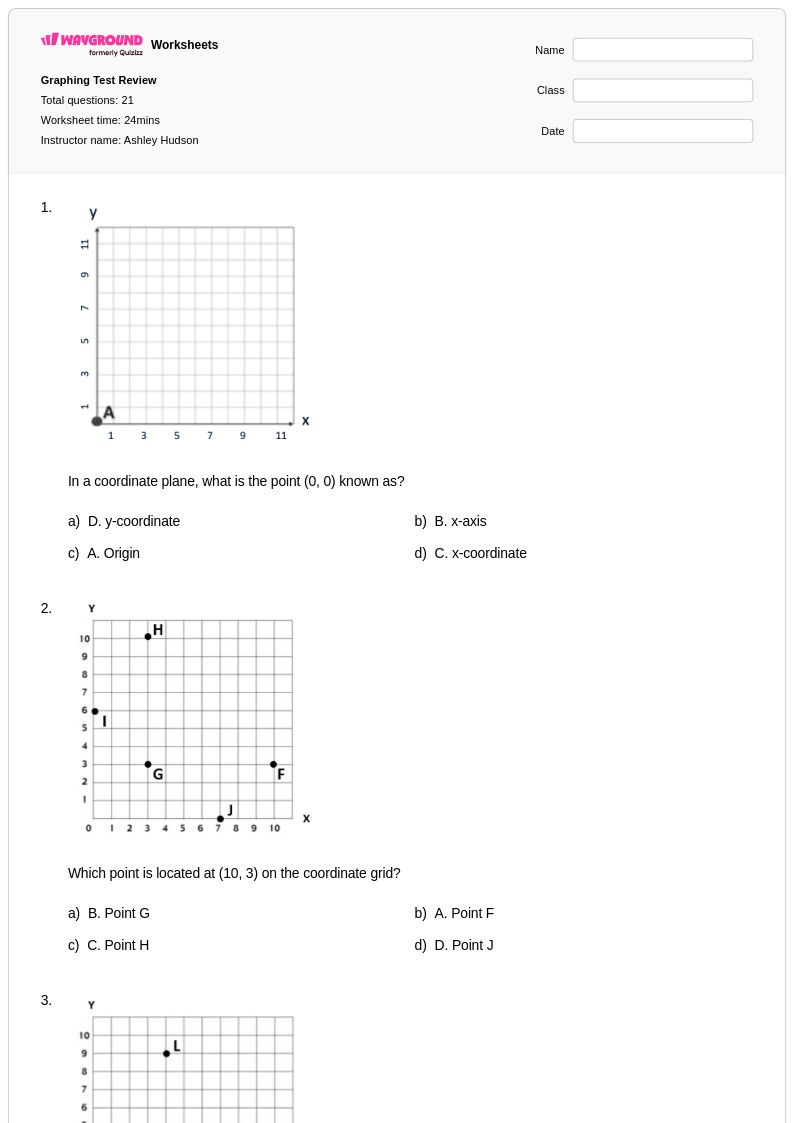
21 T
5th
Jelajahi Types of Graphs Lembar Kerja berdasarkan Nilai
Jelajahi Lembar Kerja Mata Pelajaran Lainnya untuk grade 5
Explore printable Types of Graphs worksheets for Grade 5
Types of graphs worksheets for Grade 5 students available through Wayground (formerly Quizizz) provide comprehensive practice with the fundamental graphing concepts that form the backbone of data literacy. These expertly designed worksheets guide fifth-grade learners through identifying, interpreting, and creating various graph types including bar graphs, line graphs, pictographs, and circle graphs, while developing critical thinking skills essential for mathematical reasoning. Each worksheet collection includes detailed answer keys and is available as free printables in convenient pdf format, ensuring teachers have access to high-quality practice problems that reinforce students' understanding of how different graph types serve specific purposes in representing and analyzing data sets.
Wayground (formerly Quizizz) empowers educators with an extensive library of millions of teacher-created resources specifically focused on types of graphs instruction, featuring robust search and filtering capabilities that allow teachers to locate materials perfectly aligned with Grade 5 mathematics standards and individual classroom needs. The platform's sophisticated differentiation tools enable seamless customization of worksheet difficulty levels, supporting both remediation for struggling learners and enrichment opportunities for advanced students, while flexible formatting options provide access to both printable pdf versions and interactive digital formats. These comprehensive features streamline lesson planning by offering teachers immediate access to diverse practice materials that can be adapted for homework assignments, in-class skill practice, formative assessments, and targeted intervention activities that strengthen students' graphing competencies.