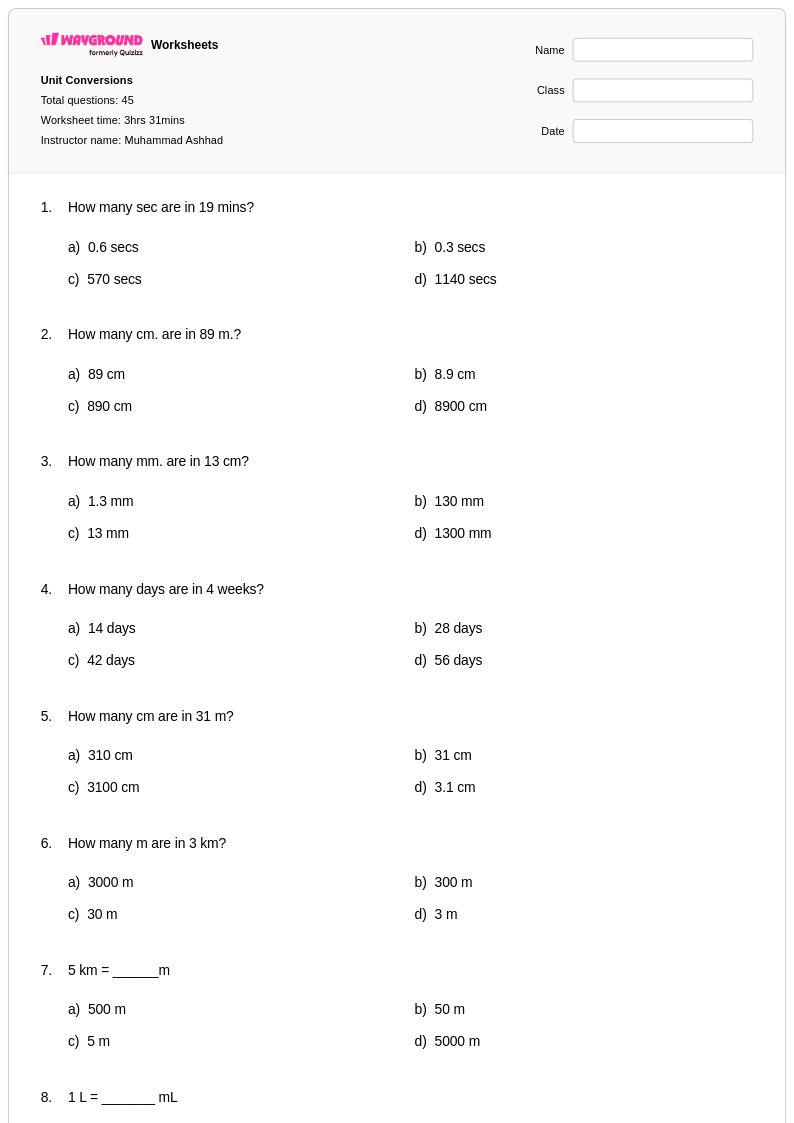
Free Printable Unit Conversion Worksheets for Grade 8
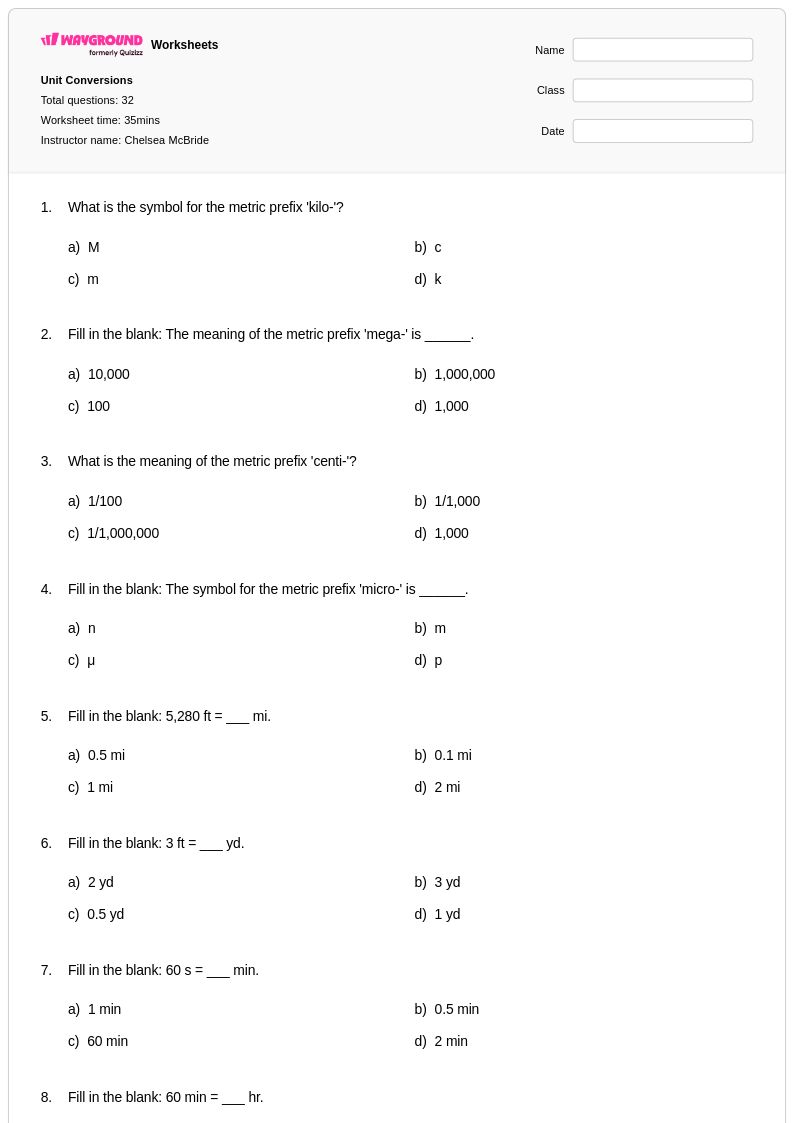
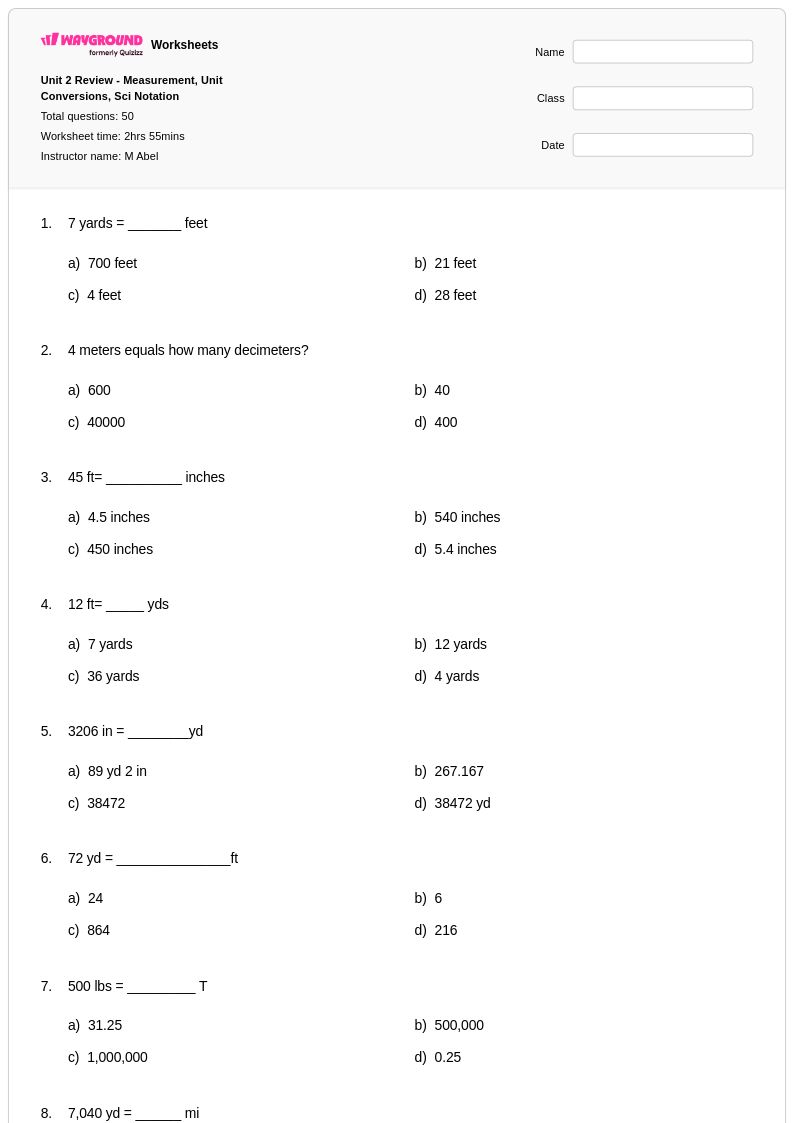
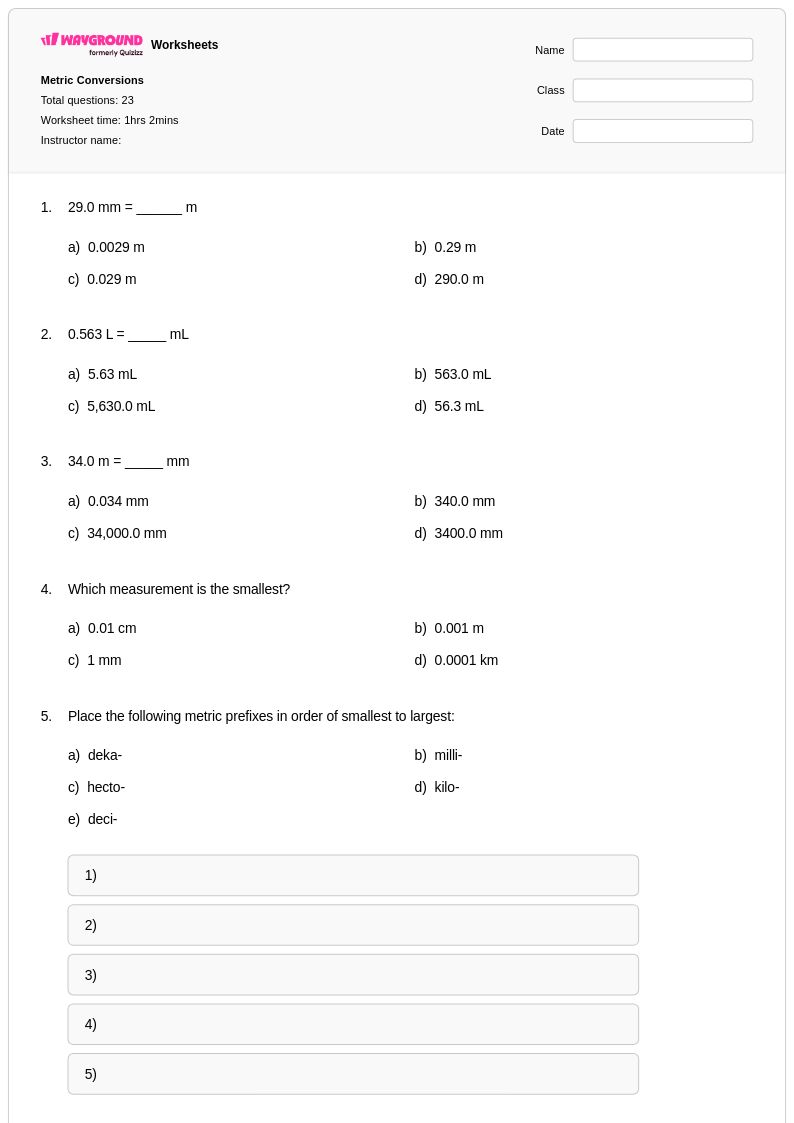
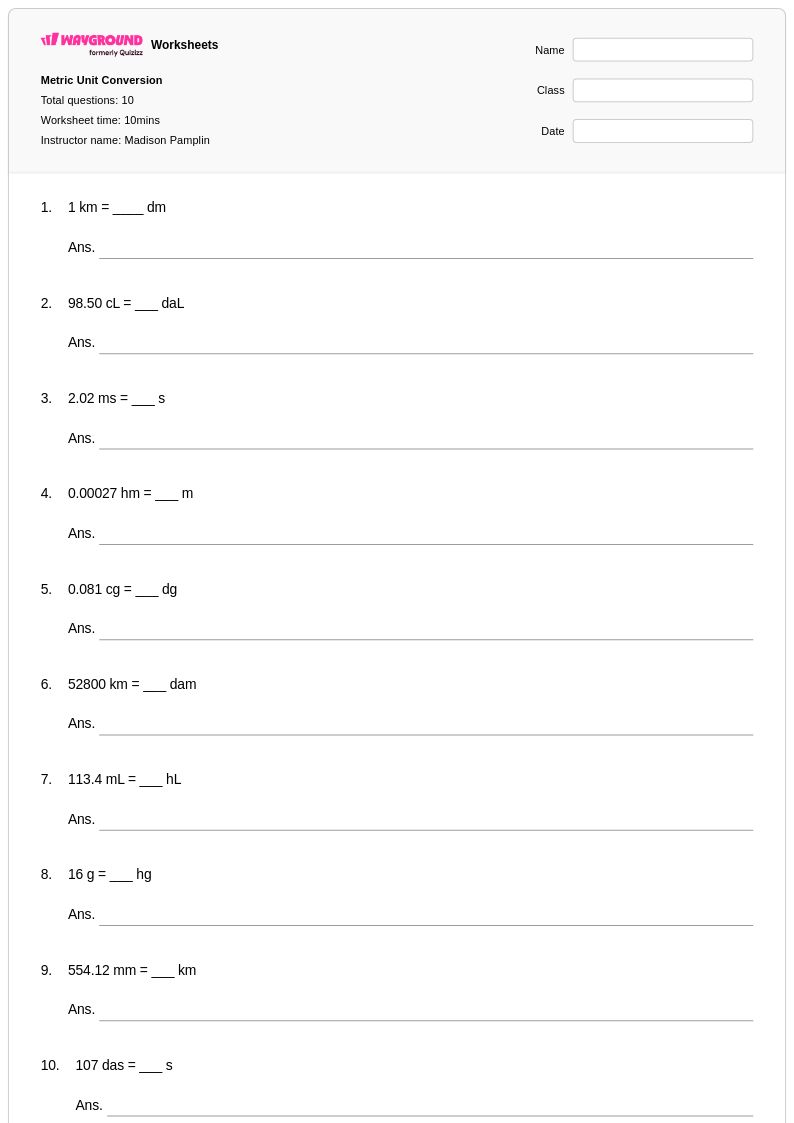
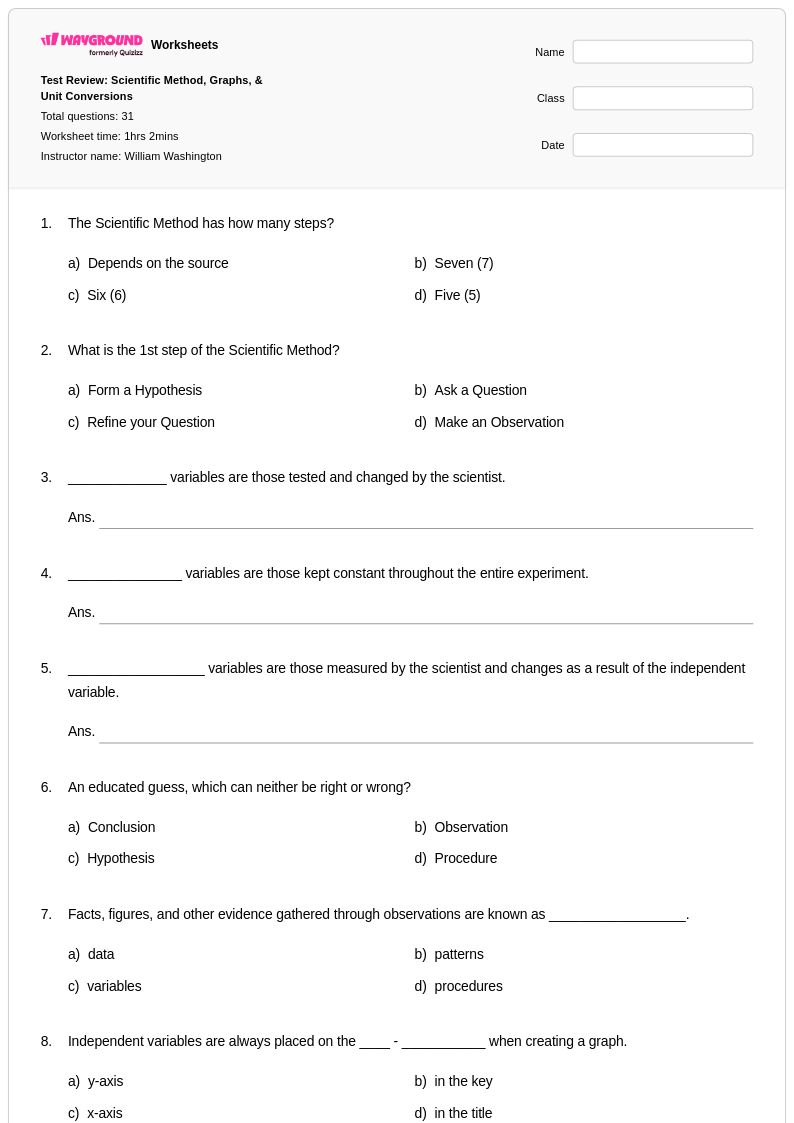
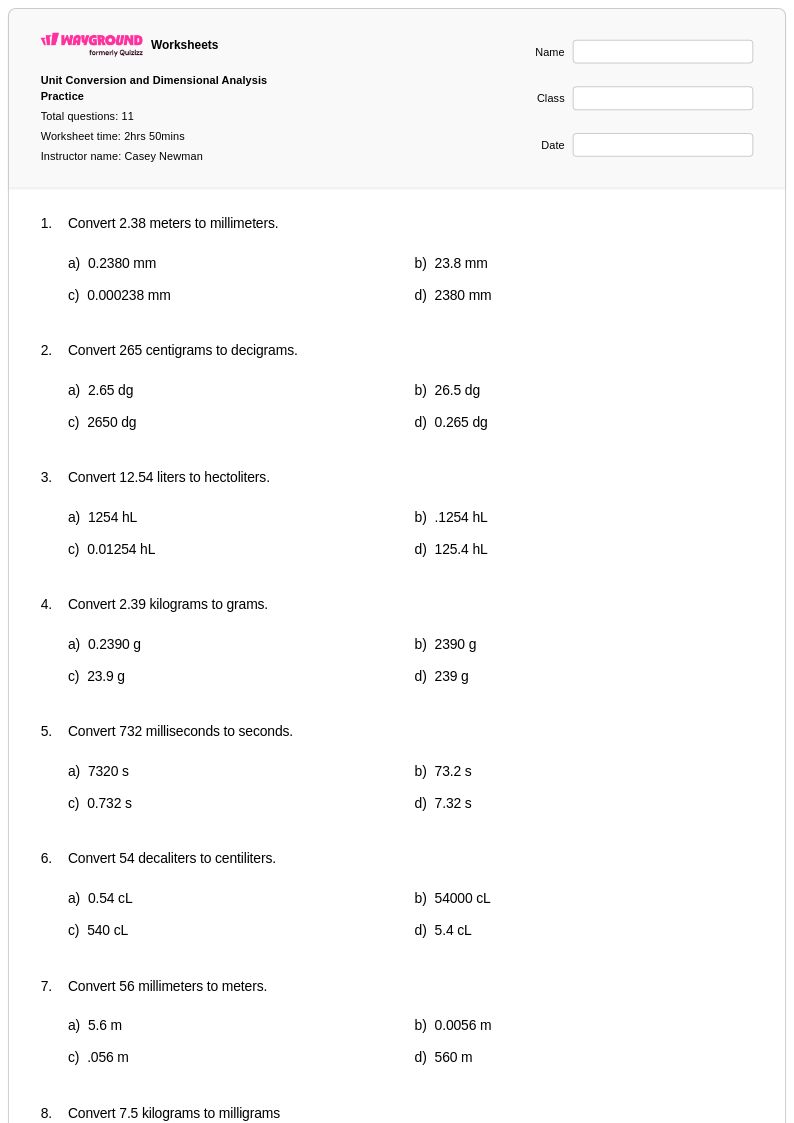
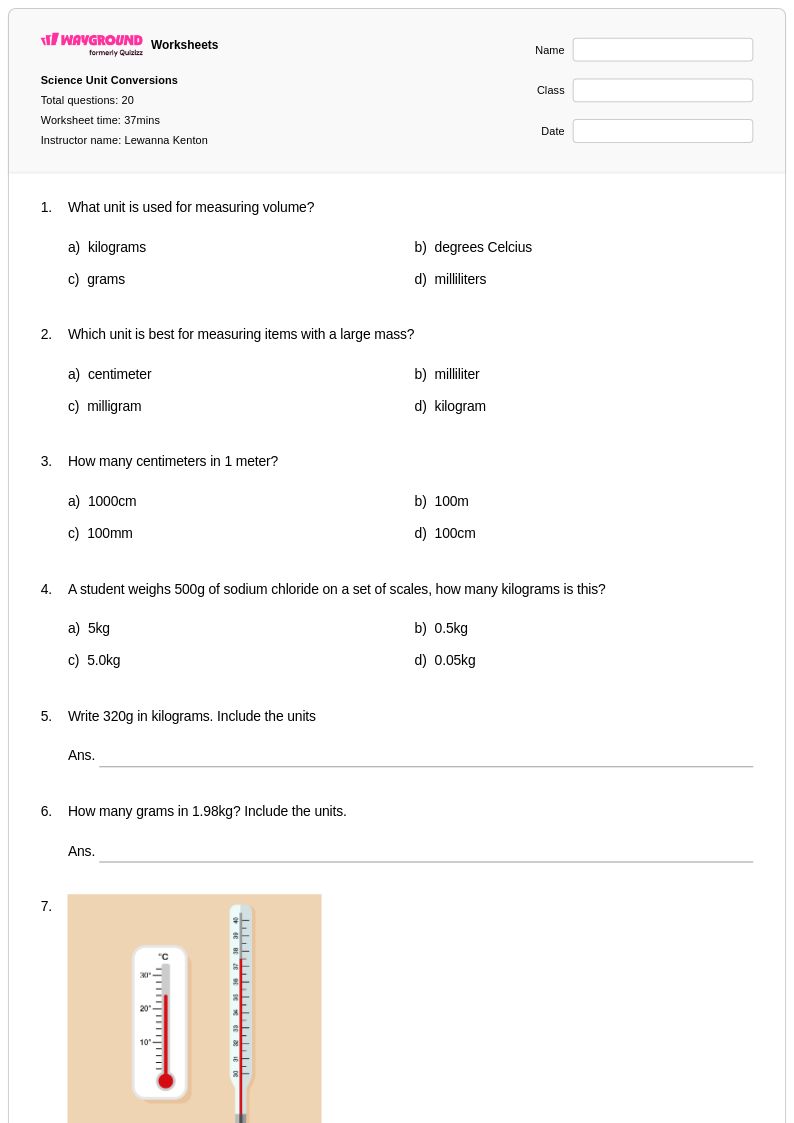
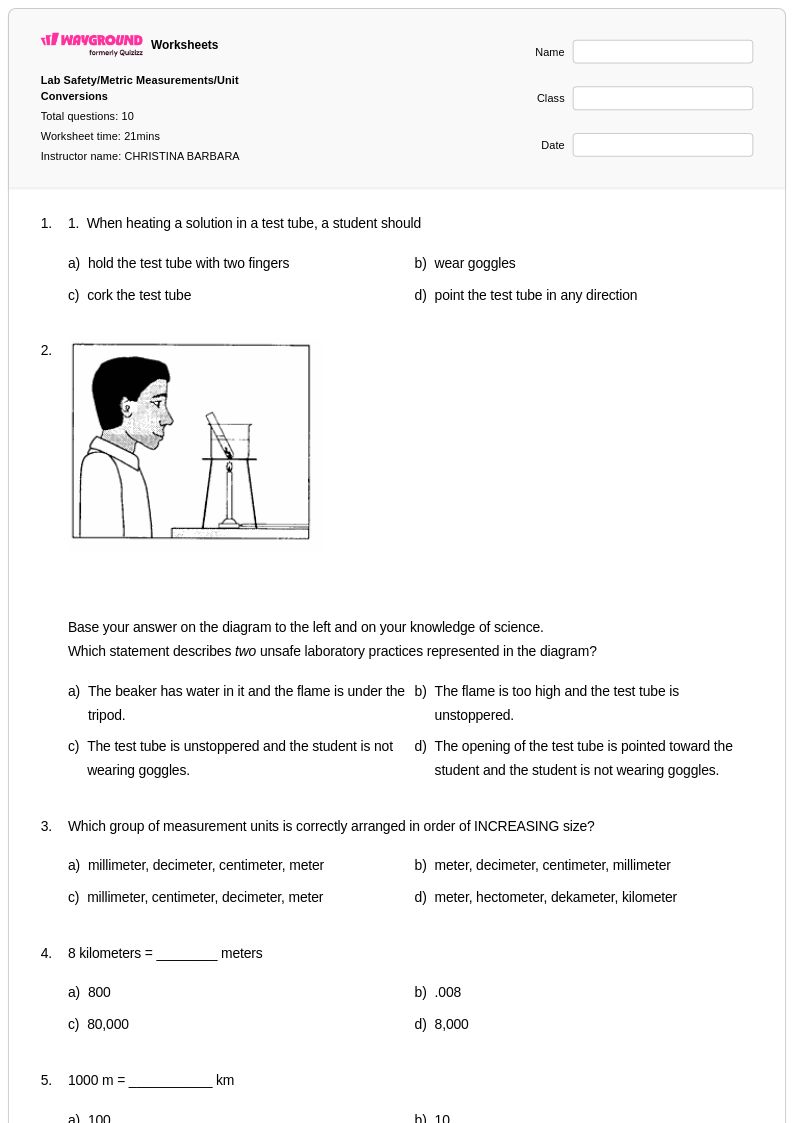
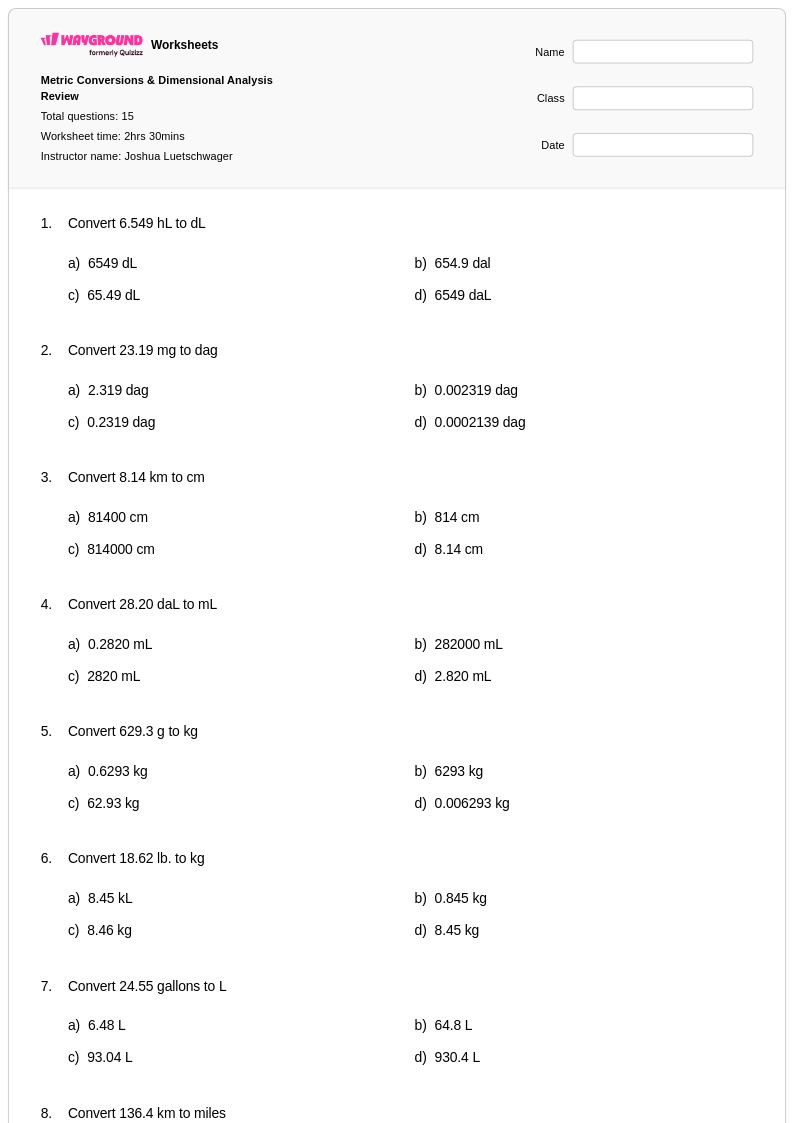
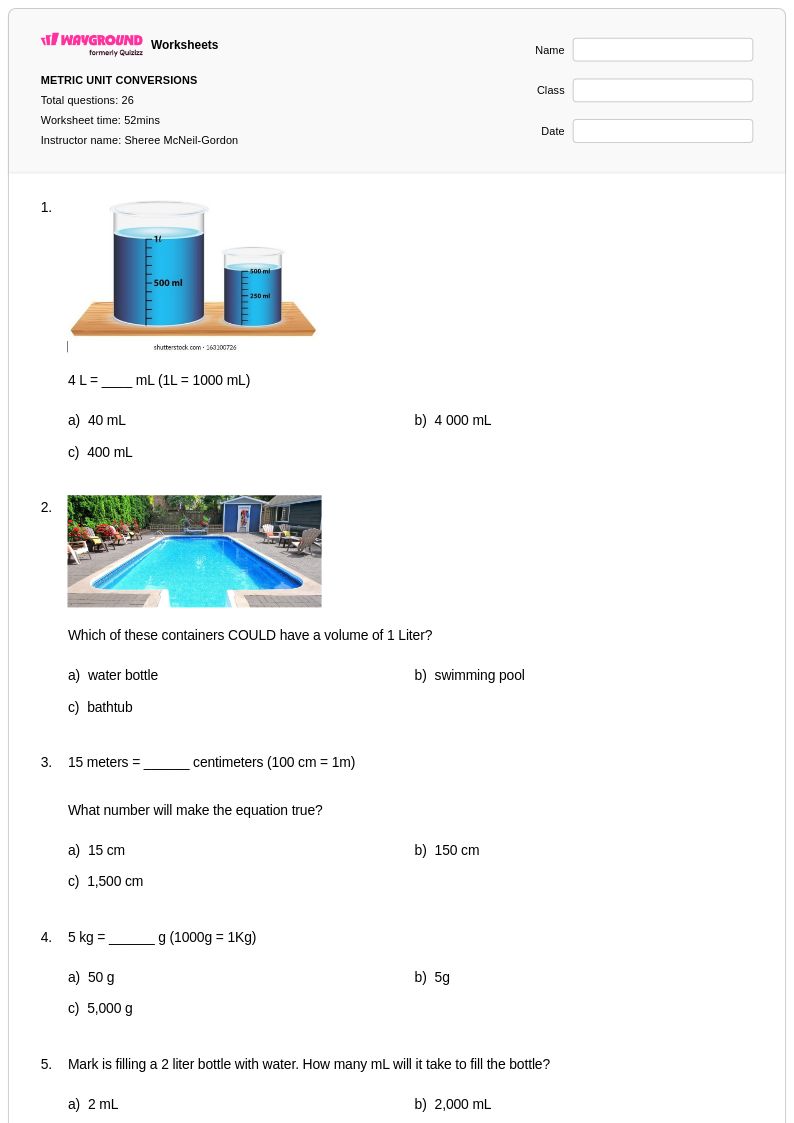
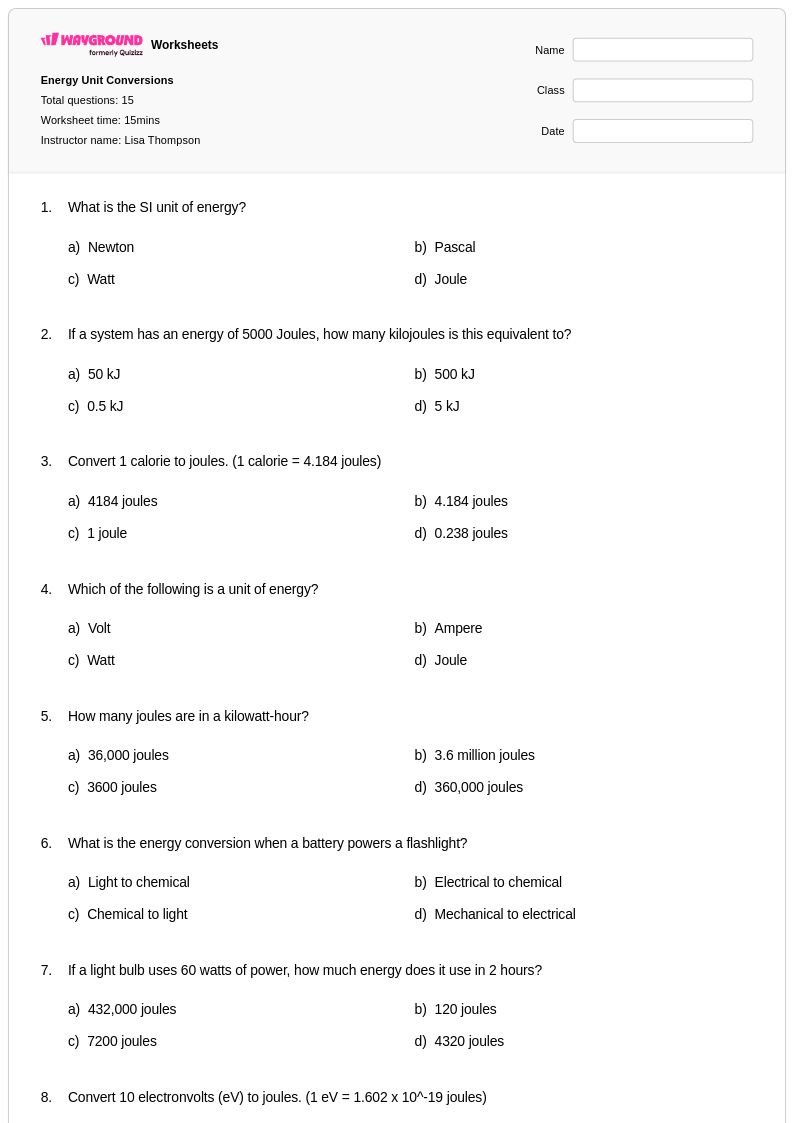
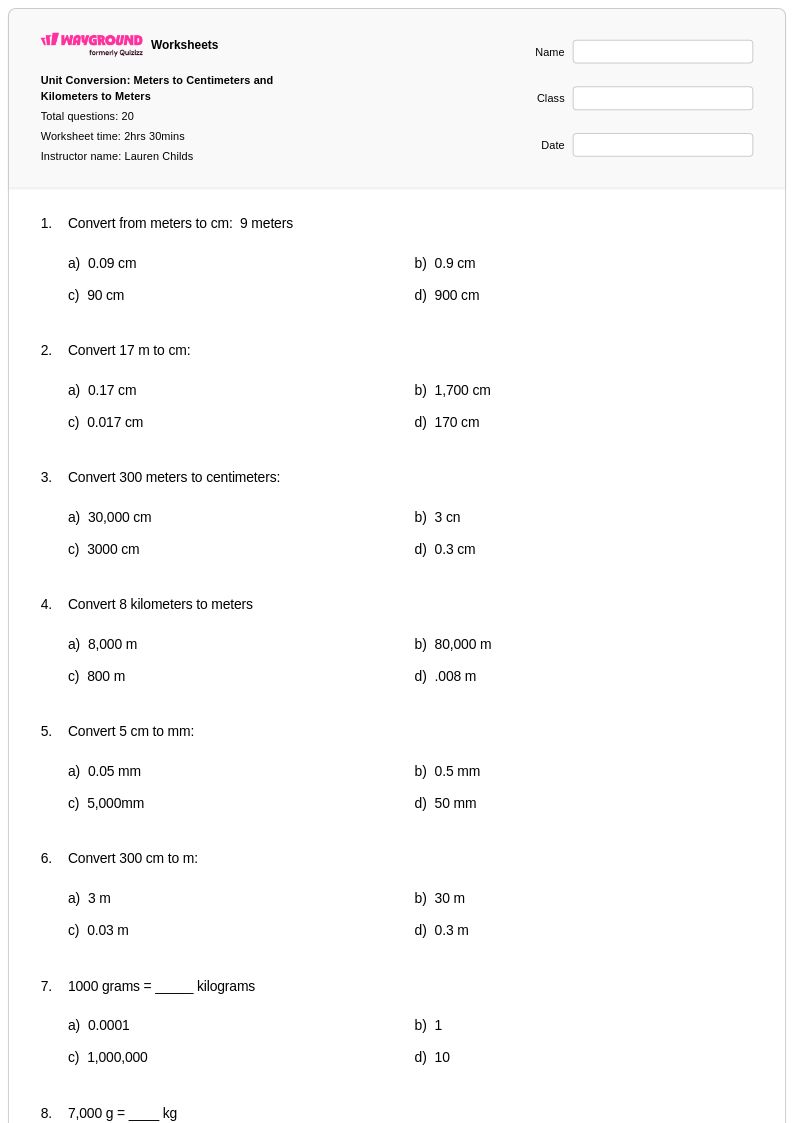
Grade 8 unit conversion worksheets from Wayground help students master converting between different measurement units through engaging practice problems, printable PDFs, and comprehensive answer keys for effective science learning.
Explore printable Unit Conversion worksheets for Grade 8
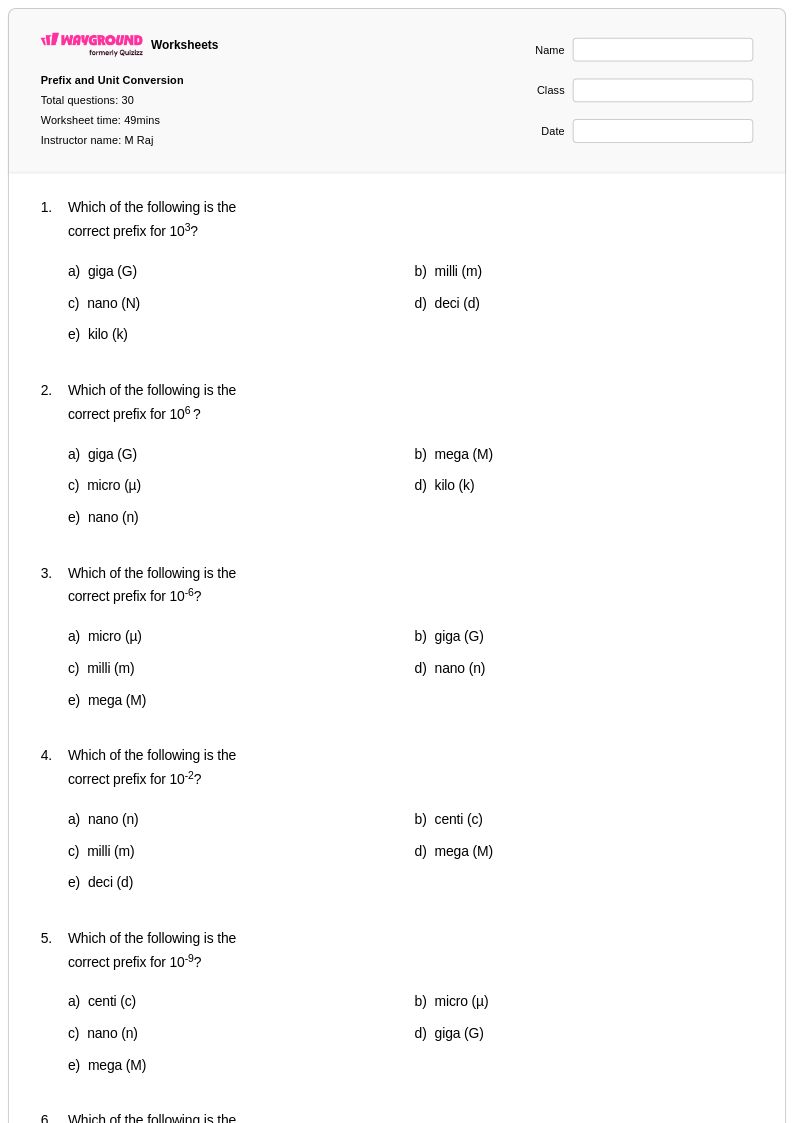
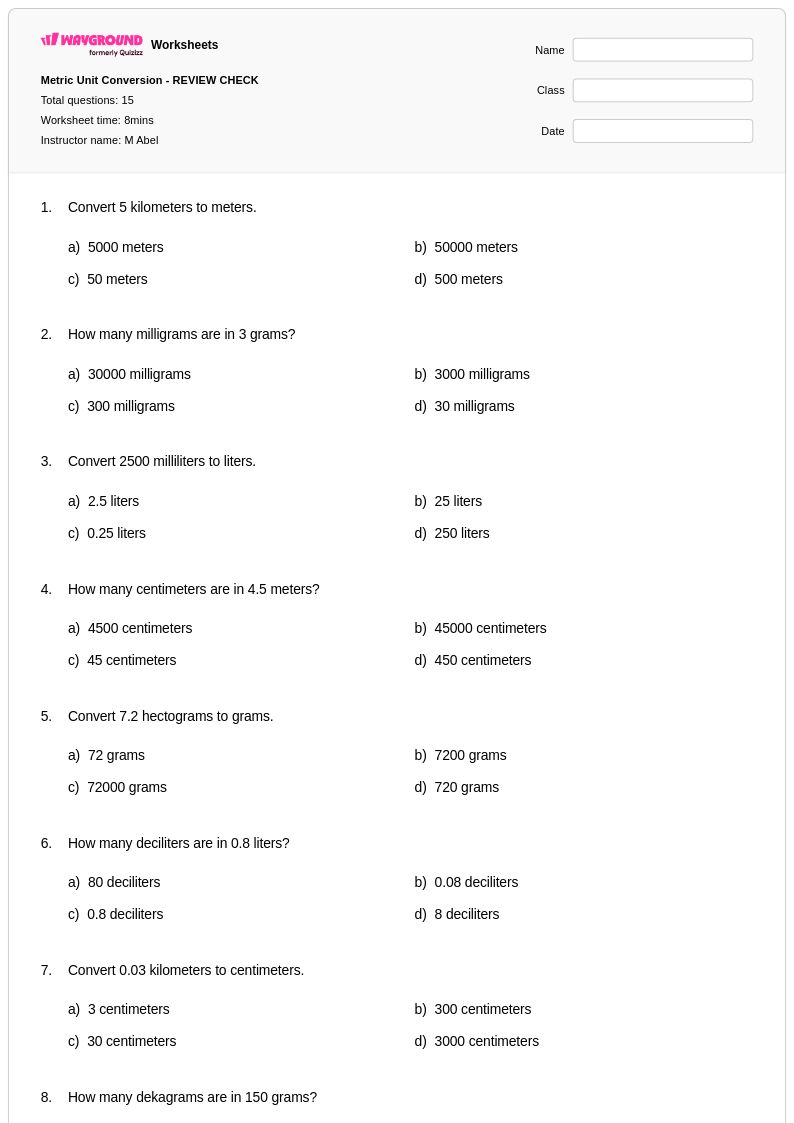
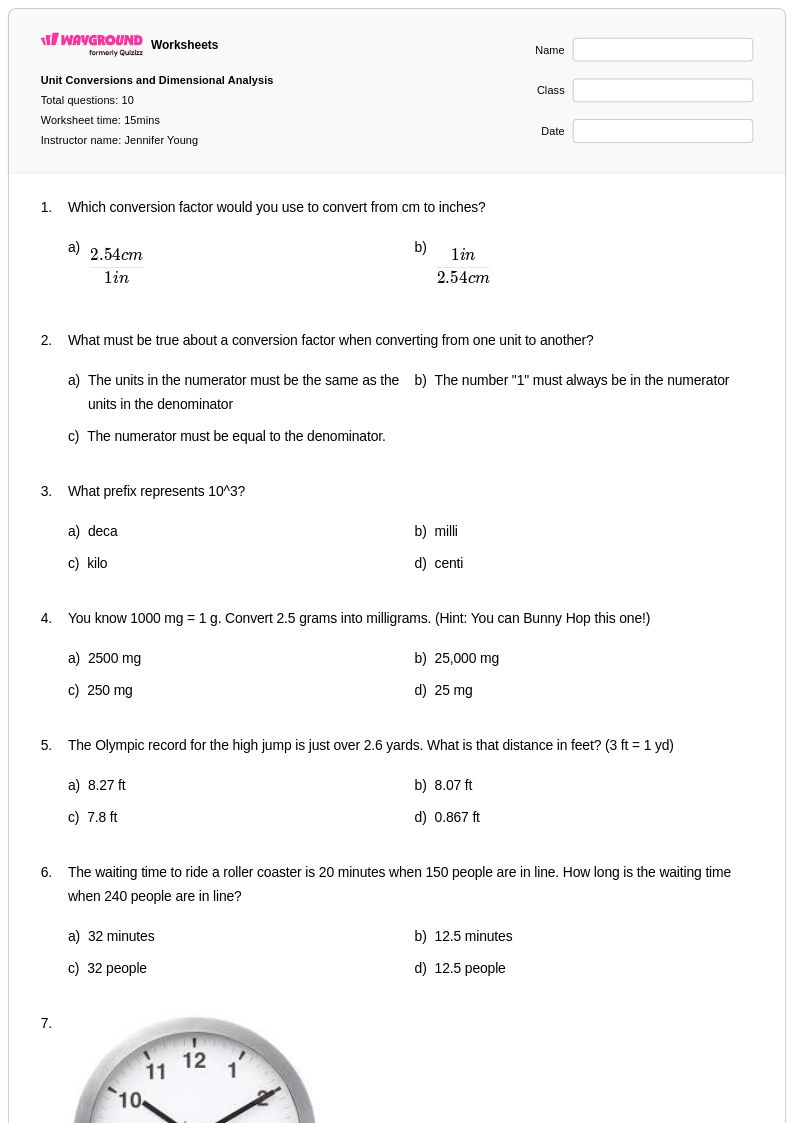
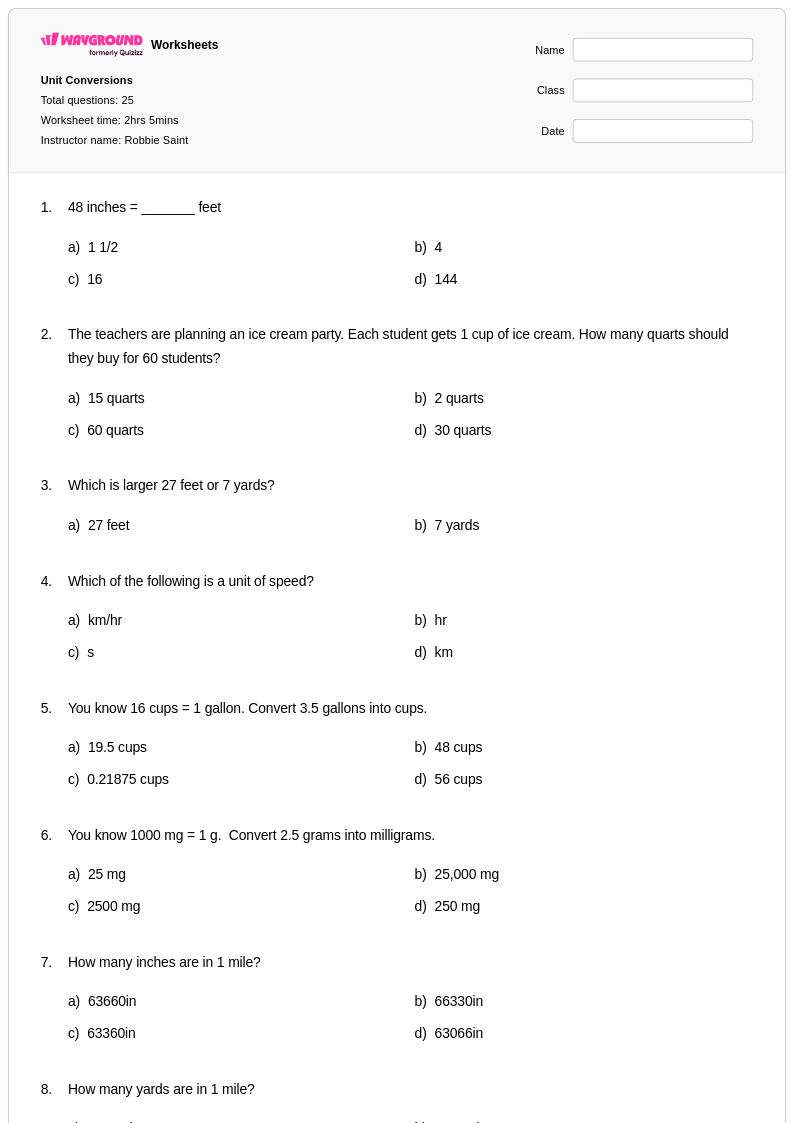
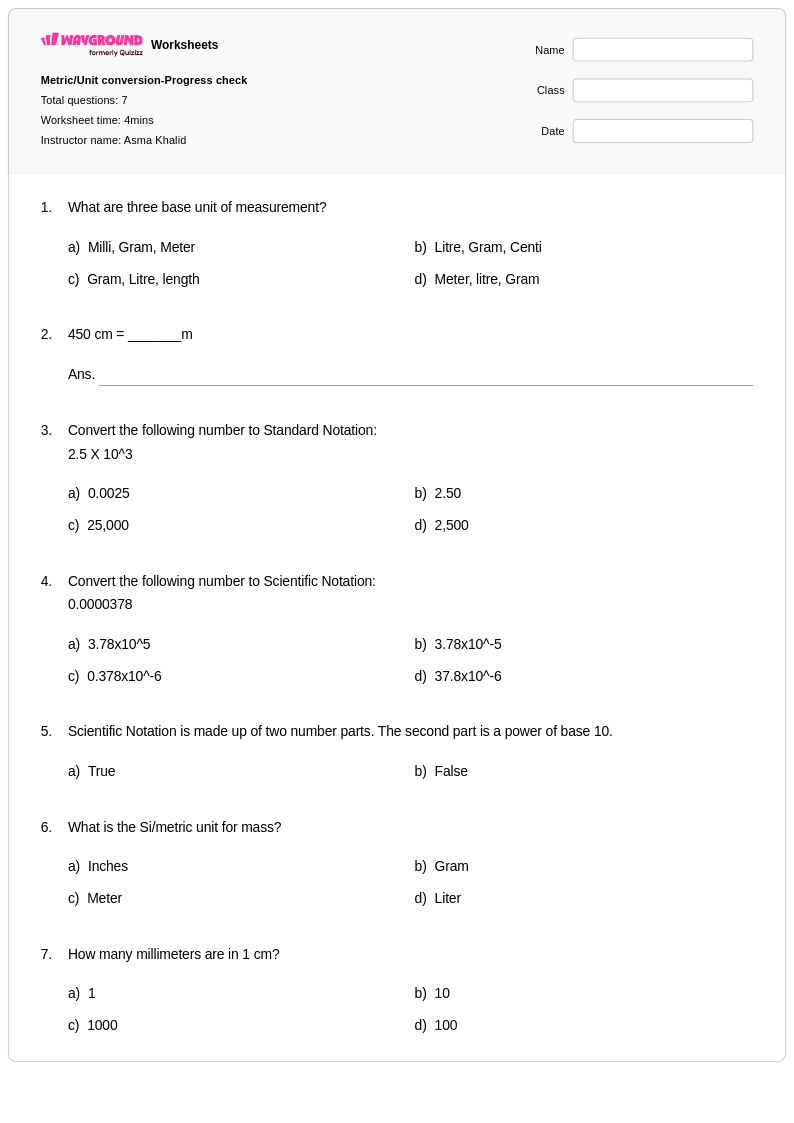
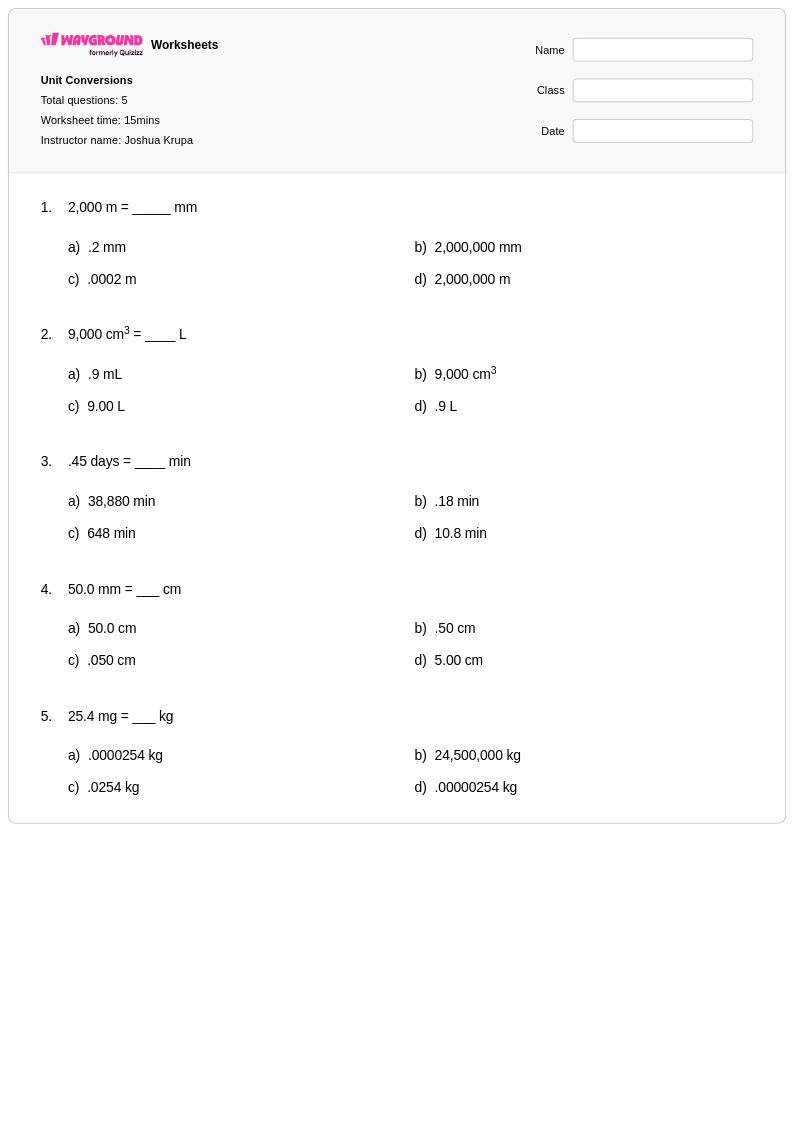
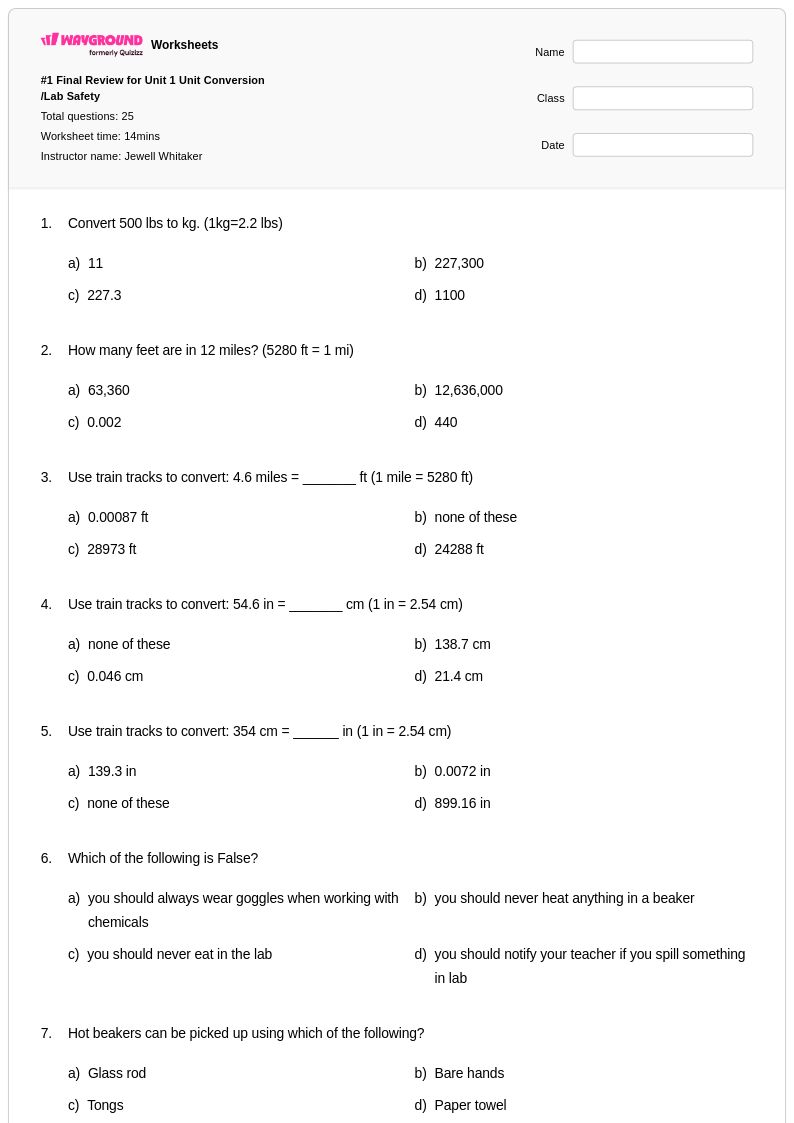
Unit conversion worksheets for Grade 8 students available through Wayground (formerly Quizizz) provide comprehensive practice with the fundamental skill of converting between different units of measurement within and across measurement systems. These expertly designed worksheets strengthen students' ability to work with metric and imperial units, including length, mass, volume, time, and temperature conversions, while building proficiency with conversion factors, dimensional analysis, and proportional reasoning. Each worksheet collection includes detailed answer keys and step-by-step solutions that help students understand the systematic approach to unit conversion problems, making these free printables invaluable for developing the mathematical precision required in scientific calculations and real-world problem solving.
Wayground (formerly Quizizz) empowers educators with millions of teacher-created unit conversion resources that can be easily searched, filtered, and customized to meet diverse classroom needs. The platform's robust standards alignment ensures that Grade 8 unit conversion worksheets directly support curriculum objectives, while built-in differentiation tools allow teachers to modify difficulty levels and problem types for individual student requirements. These versatile resources are available in both printable pdf format and interactive digital versions, enabling seamless integration into lesson planning, targeted remediation for struggling learners, enrichment activities for advanced students, and ongoing skill practice that reinforces mastery of this essential scientific measurement concept.
FAQs
How do I teach unit conversion to students who struggle with the concept?
The most effective approach to teaching unit conversion is dimensional analysis, also called the factor-label method, where students multiply a given measurement by a conversion factor written as a fraction so that unwanted units cancel out. Start with single-step conversions within the same system (e.g., centimeters to meters) before introducing multi-step or cross-system problems. Using real-world contexts, such as converting recipe measurements or distances on a map, helps students see why unit conversion matters and builds intrinsic motivation to master the process.
What exercises help students practice unit conversion effectively?
Students benefit most from practice problems that progress in difficulty, beginning with single-step conversions within one measurement system and advancing to multi-step problems that cross between systems, such as converting miles per hour to meters per second. Exercises that require students to set up conversion factor fractions explicitly, rather than just plugging into a formula, reinforce dimensional analysis reasoning. Mixing unit types, including length, mass, volume, time, and temperature, across a single practice set also helps students generalize the skill rather than memorizing isolated procedures.
What mistakes do students commonly make when converting units?
The most frequent error is inverting the conversion factor, multiplying when they should divide or vice versa, because students memorize a number without understanding the directional logic of the conversion. Students also commonly forget to convert all units in a compound measurement, such as converting only the numerator in a rate like km/h. A third common mistake is treating temperature conversions (Celsius to Fahrenheit) the same as ratio-based conversions, ignoring the additive offset in the formula.
How can I differentiate unit conversion practice for students at different skill levels?
For students who need additional support, begin with visual conversion charts and single-step problems limited to one measurement type before introducing multi-step or cross-system conversions. For advanced learners, assign problems that require chaining multiple conversion steps or that embed unit conversion within a larger science or math context, such as calculating density with mixed units. On Wayground, teachers can apply accommodations at the individual student level, including reduced answer choices to lower cognitive load and read-aloud support for students with reading barriers, while the rest of the class receives standard settings.
How do I use Wayground's unit conversion worksheets in my classroom?
Wayground's unit conversion worksheets are available as printable PDFs for traditional classroom use and in digital formats for technology-integrated environments, giving teachers flexibility regardless of their classroom setup. Teachers can assign them as independent practice, use them for guided instruction with step-by-step solutions projected for the class, or host them as a quiz directly on Wayground for immediate student feedback. Each worksheet includes a complete answer key, so they are equally effective for in-class work, homework, or targeted remediation sessions.
At what grade level should students be introduced to unit conversion?
Students are typically introduced to basic unit conversion within the metric system in grades 4 and 5, where they learn to move between units of length, mass, and volume using powers of ten. By middle school (grades 6 through 8), expectations expand to include conversions between measurement systems, such as metric to customary, and compound unit conversions used in science. High school students are expected to apply dimensional analysis fluently across chemistry, physics, and advanced math contexts.