Free Printable Units and Measurement Worksheets for Grade 4
Explore free Grade 4 Units and Measurement worksheets and printables from Wayground that help students master scientific measurement concepts through engaging practice problems and comprehensive answer keys.
Explore printable Units and Measurement worksheets for Grade 4
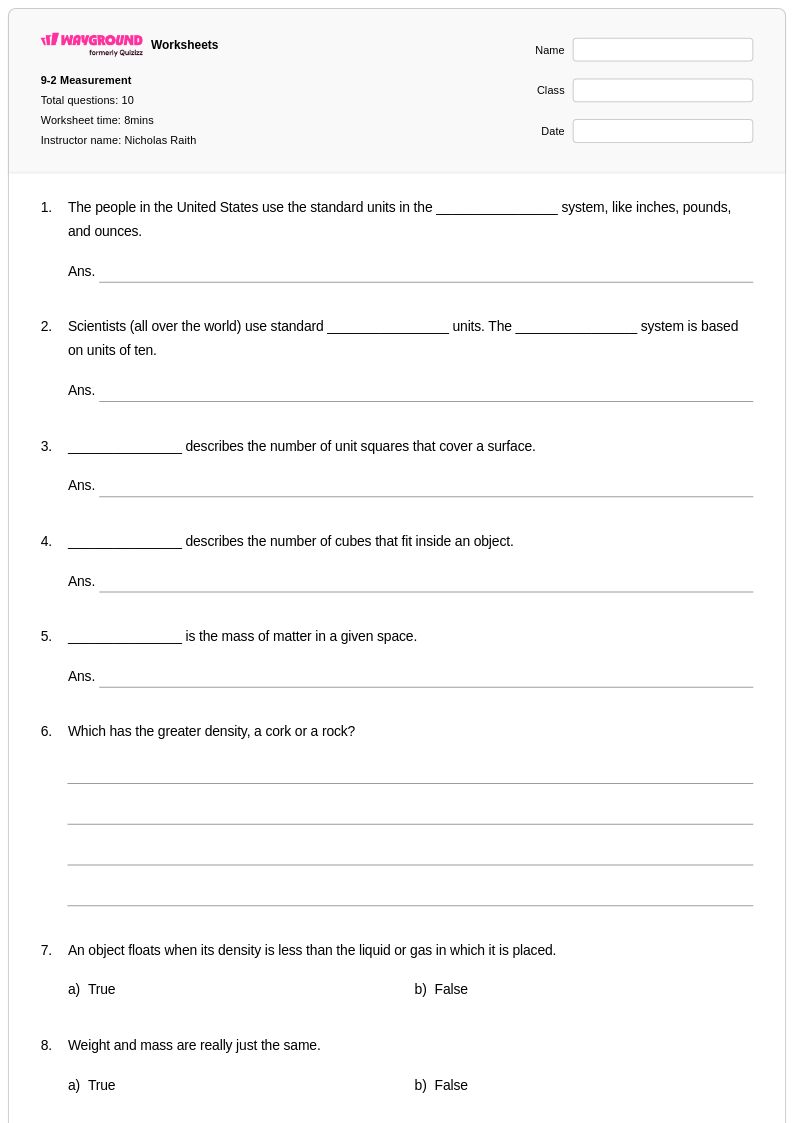
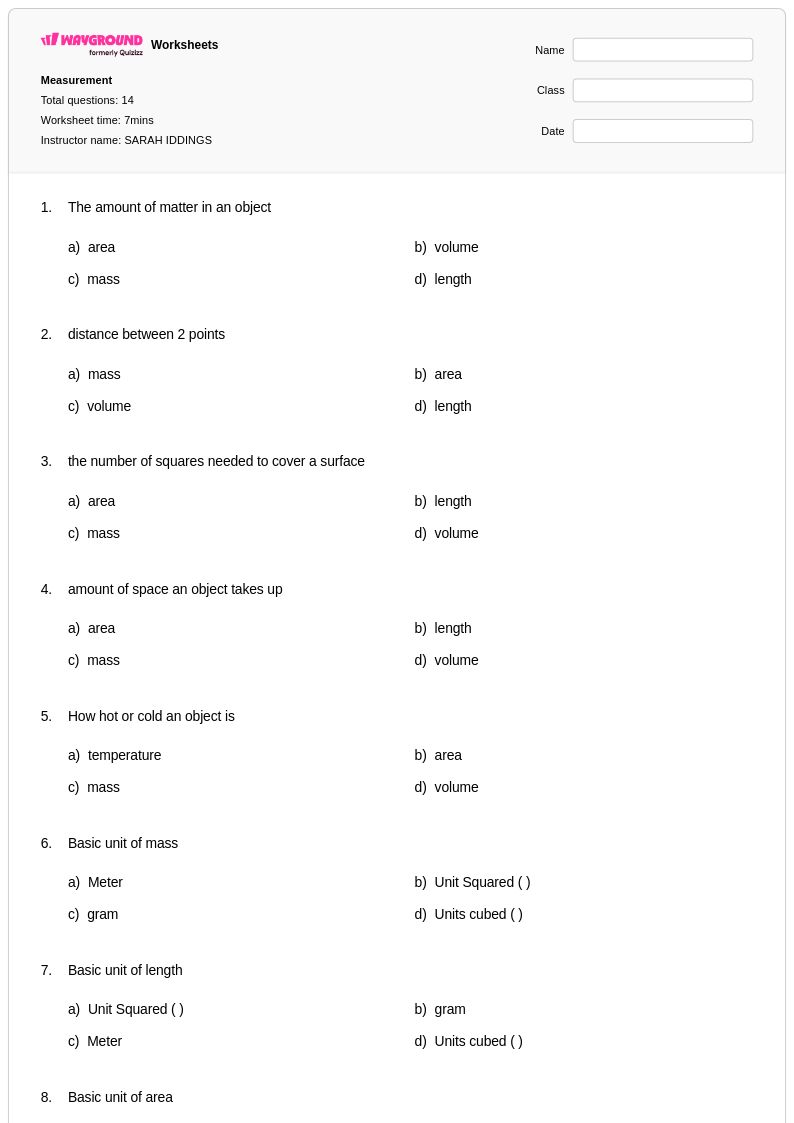
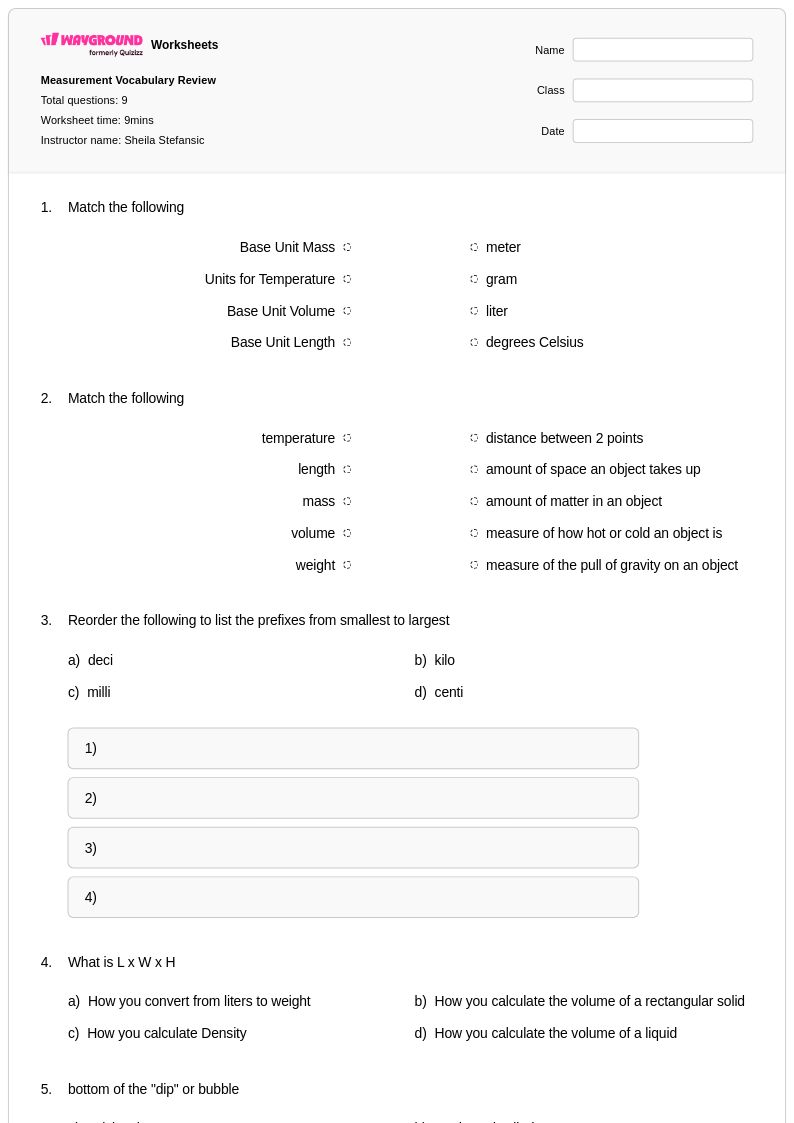
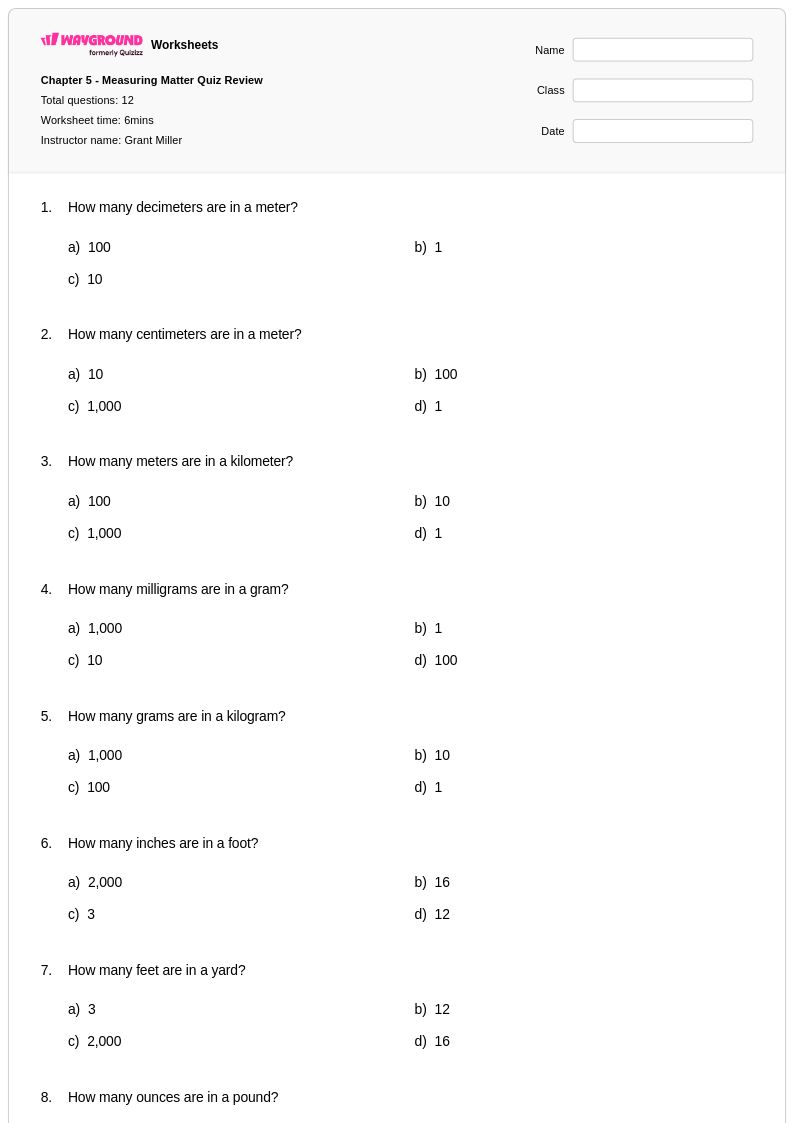
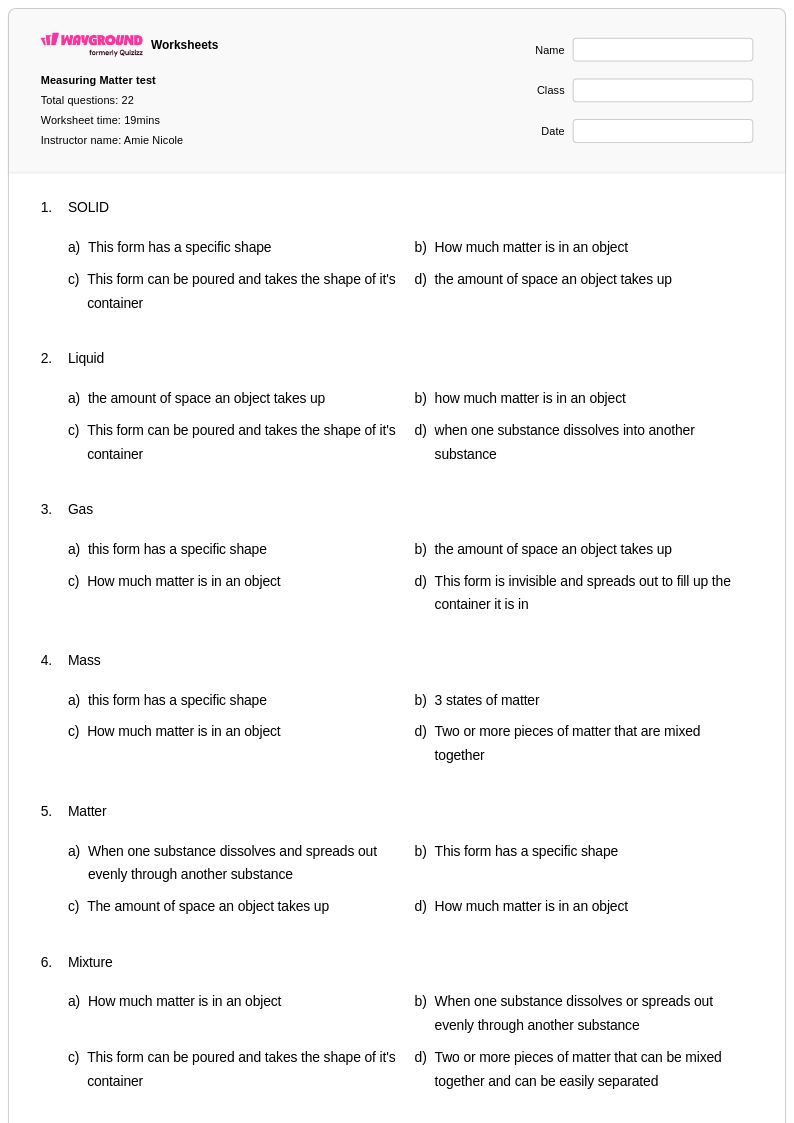
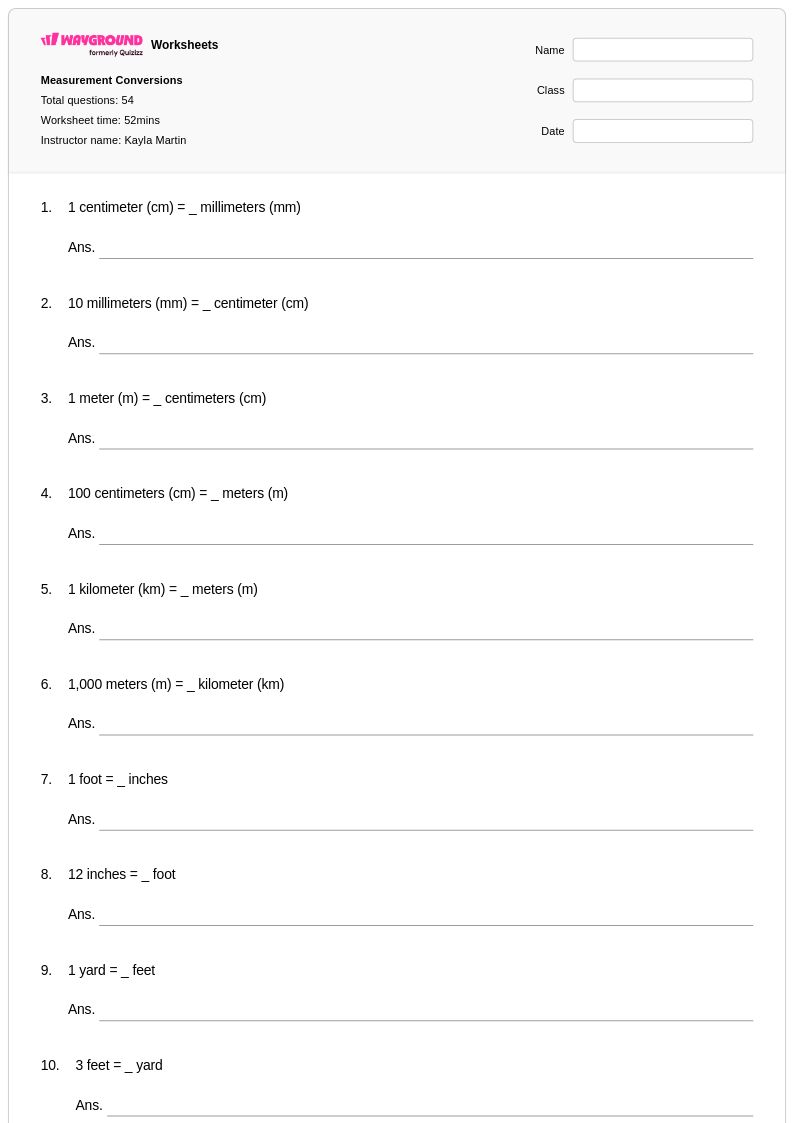
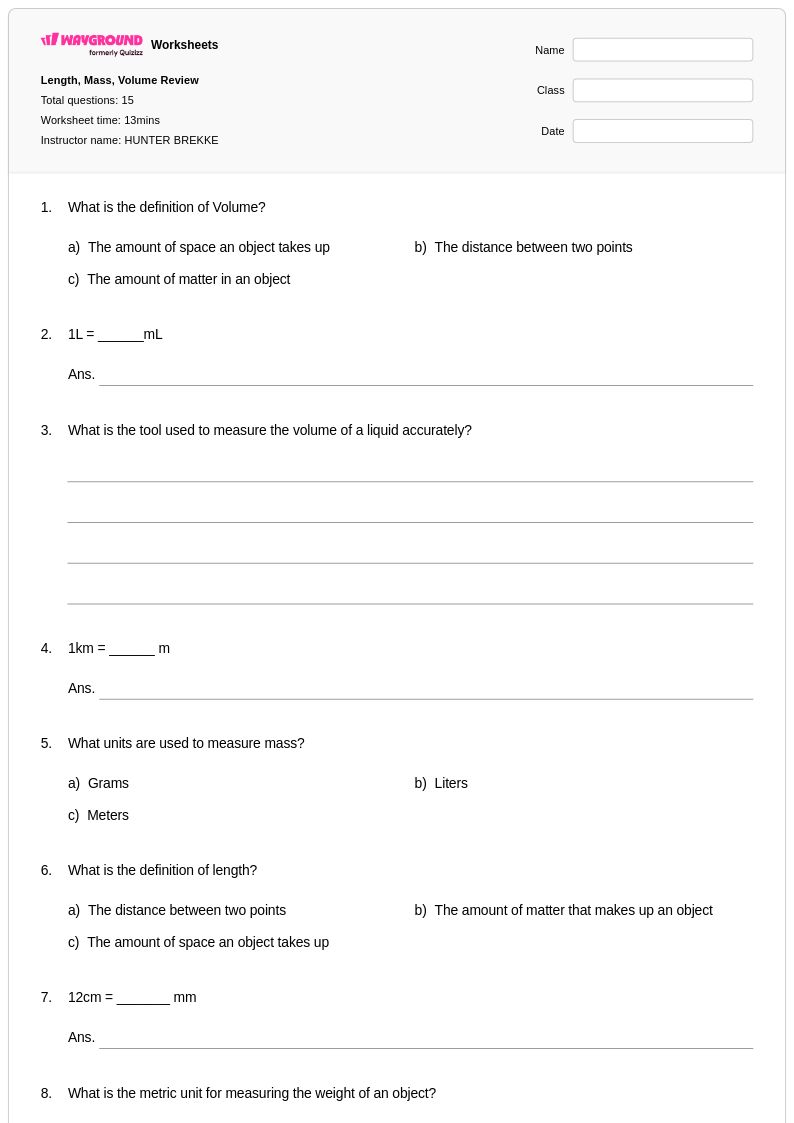
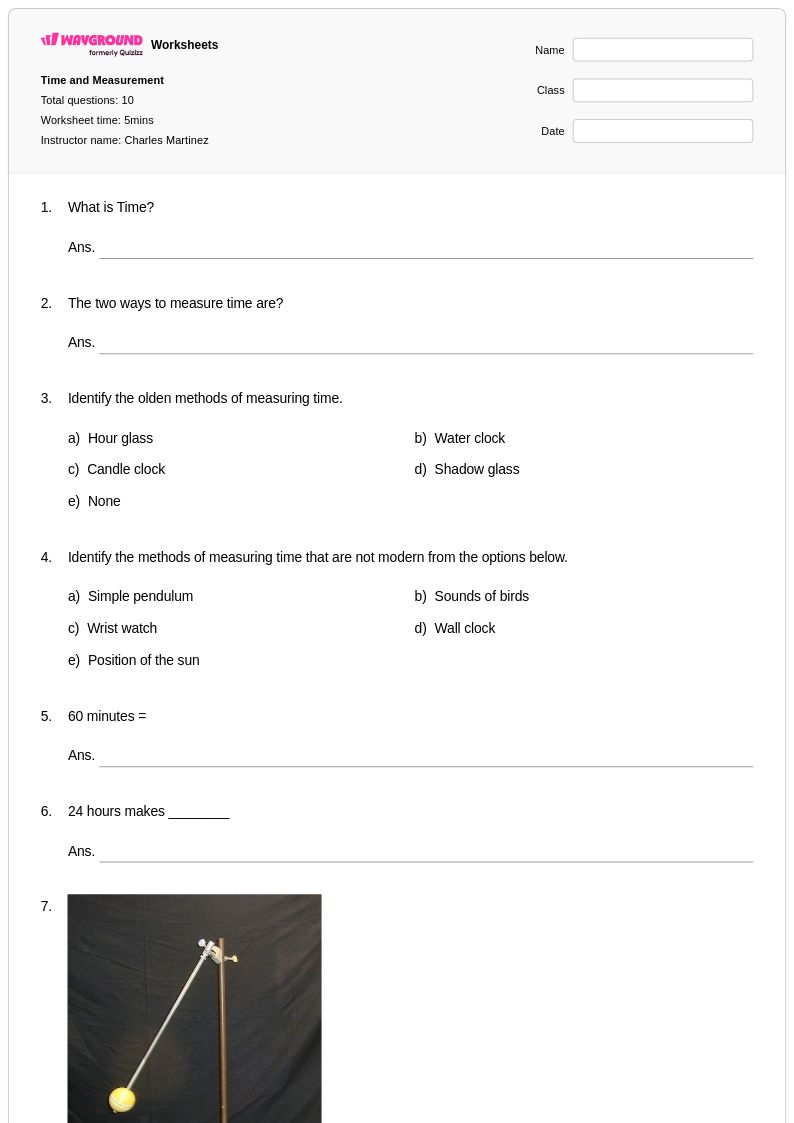
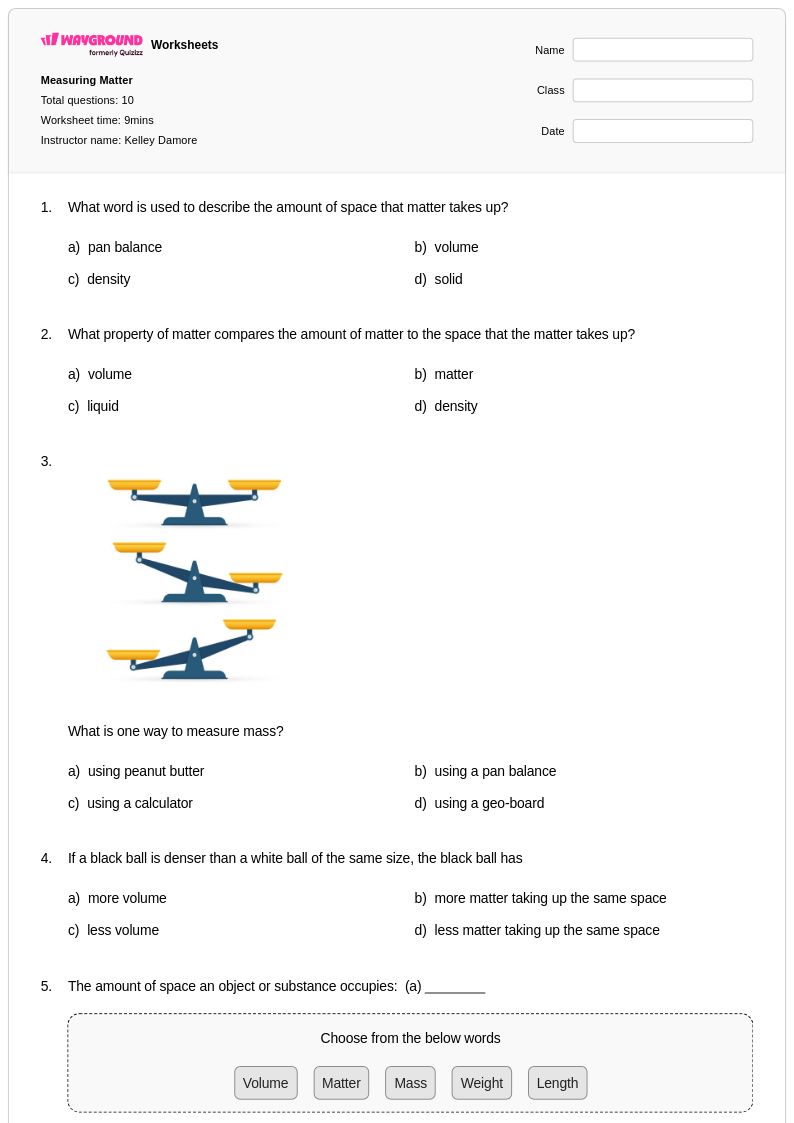
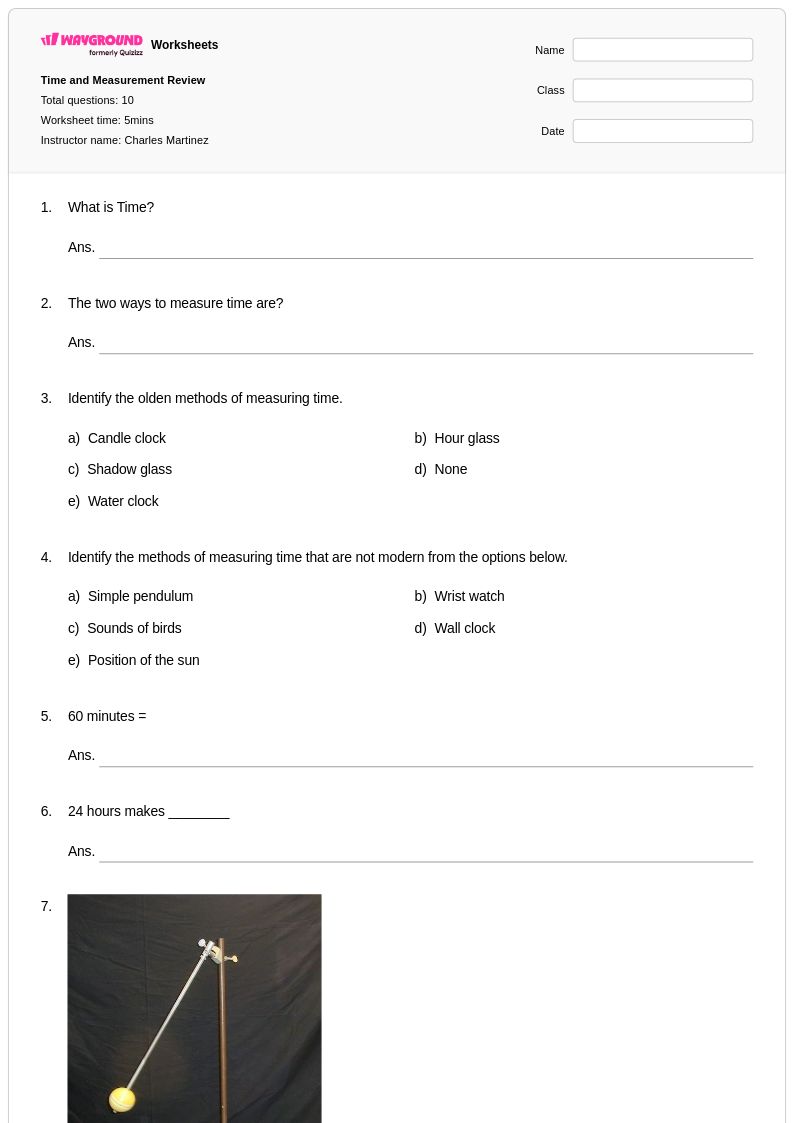
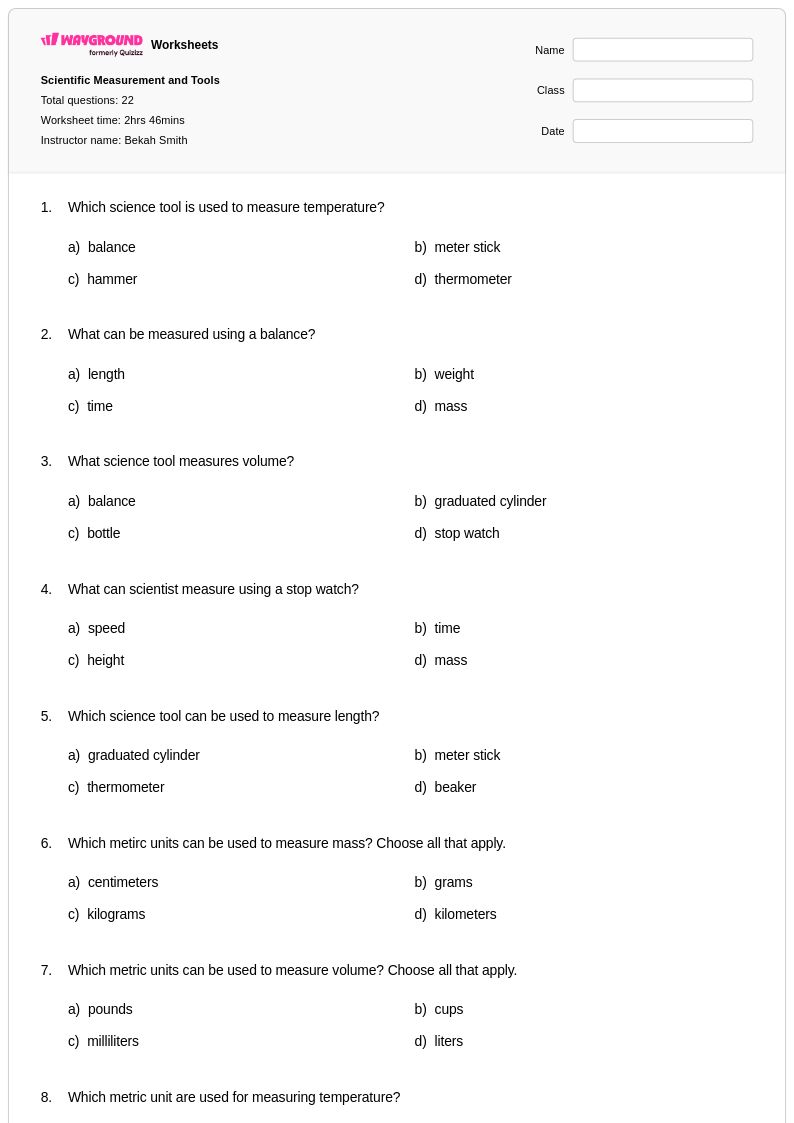
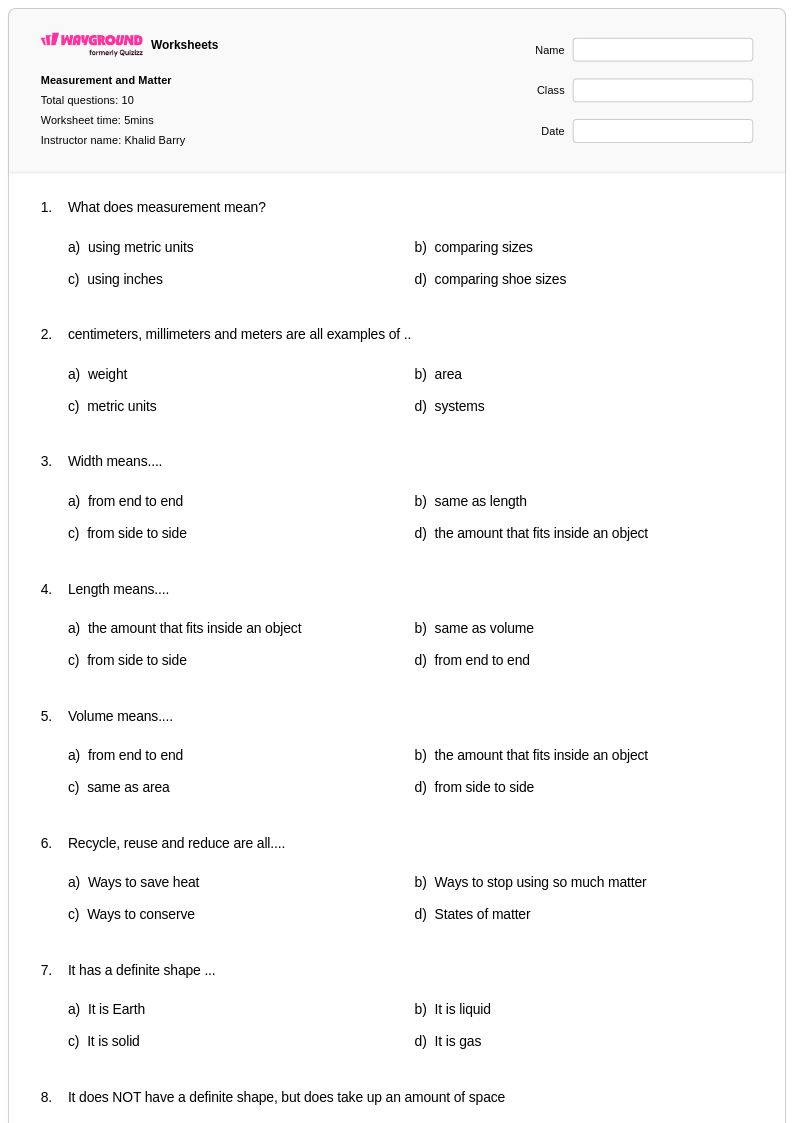
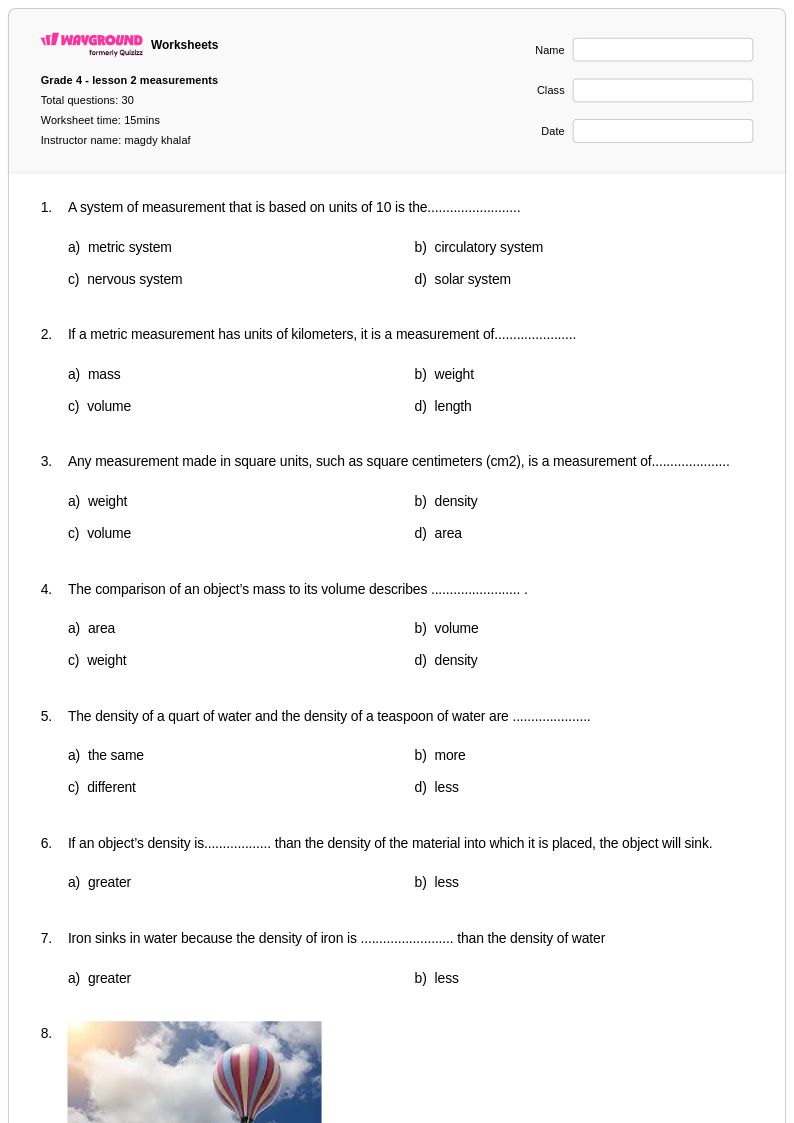
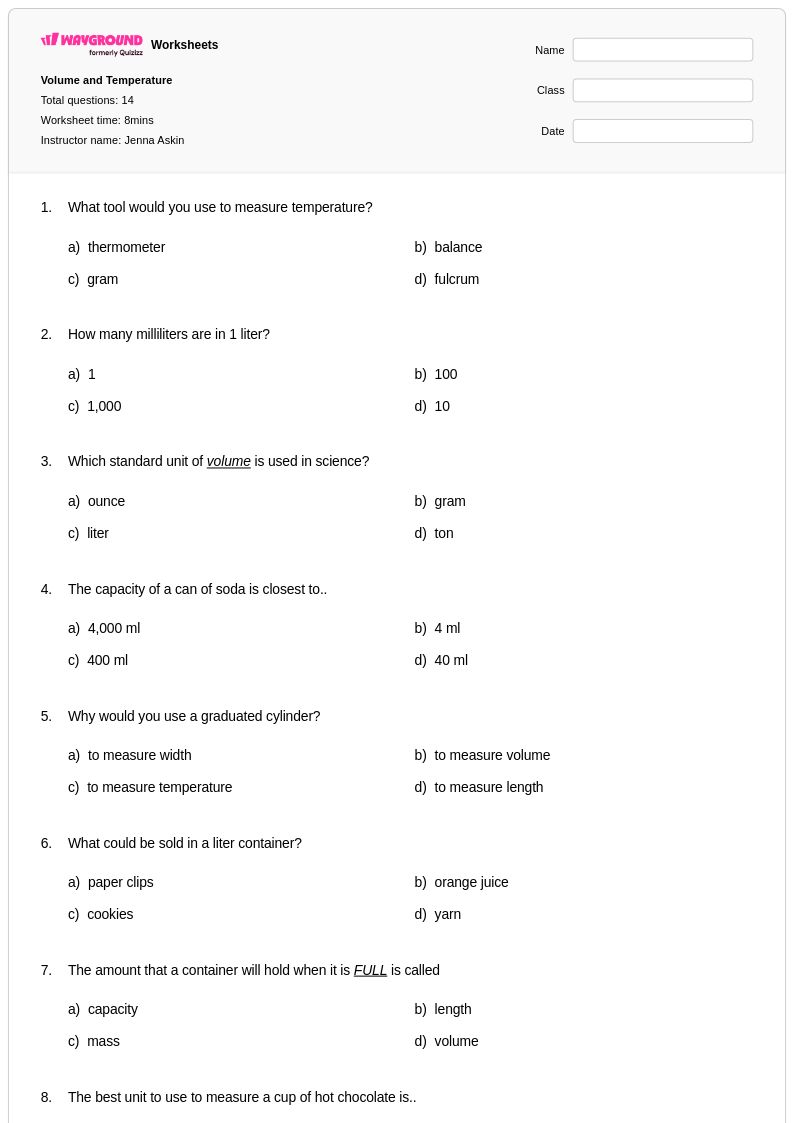
Units and measurement worksheets for Grade 4 through Wayground (formerly Quizizz) provide comprehensive practice in fundamental scientific measurement concepts that form the foundation of scientific inquiry. These carefully designed resources help fourth-grade students master essential skills including identifying appropriate units for different quantities, converting between standard and metric measurements, reading measurement tools accurately, and understanding the importance of precision in scientific observations. The worksheets feature engaging practice problems that challenge students to apply measurement concepts in real-world scenarios, from measuring classroom objects to analyzing data in simple experiments. Each worksheet includes a detailed answer key to support independent learning and self-assessment, while the free printable pdf format ensures easy classroom distribution and homework assignments.
Wayground (formerly Quizizz) empowers educators with access to millions of teacher-created resources specifically focused on units and measurement concepts for Grade 4 science instruction. The platform's robust search and filtering capabilities allow teachers to quickly locate worksheets aligned with specific standards and learning objectives, while differentiation tools enable customization for diverse student needs and abilities. Whether seeking materials for initial skill introduction, targeted remediation, or enrichment activities, teachers can select from both printable and digital formats to match their instructional preferences and classroom technology. These versatile resources streamline lesson planning by providing ready-to-use materials that support systematic skill practice, formative assessment opportunities, and flexible implementation across various teaching contexts, ensuring students develop strong foundational understanding of scientific measurement principles.
FAQs
How do I teach unit conversion to students who keep getting confused by the process?
The most effective approach is to teach unit conversion through dimensional analysis, also called the factor-label method, where students treat units as algebraic quantities that cancel out. Start with single-step conversions within one system (such as metric prefixes), then progress to multi-step conversions across systems. Visual scaffolding, such as writing out every conversion factor explicitly as a fraction, helps students see why units cancel and reduces procedural errors.
What is the difference between accuracy and precision in measurement, and how do I explain it clearly?
Accuracy refers to how close a measurement is to the true or accepted value, while precision refers to how consistent repeated measurements are with each other, regardless of whether they are correct. A useful classroom analogy is a dartboard: a precise but inaccurate thrower groups darts tightly together but away from the bullseye, while an accurate but imprecise thrower scatters darts around the center. Students should practice classifying measurement scenarios as accurate, precise, both, or neither to solidify the distinction.
What exercises help students practice significant figures?
Effective practice for significant figures includes identifying the number of sig figs in given values, rounding calculated answers to the correct number of sig figs, and applying sig fig rules to addition, subtraction, multiplication, and division problems separately, since the rules differ by operation. Worksheets that mix all four operations in applied science contexts, such as density or volume calculations, are particularly effective because they require students to decide which rule to apply rather than follow a single procedure automatically.
What mistakes do students commonly make when reading measurement tools like graduated cylinders or triple beam balances?
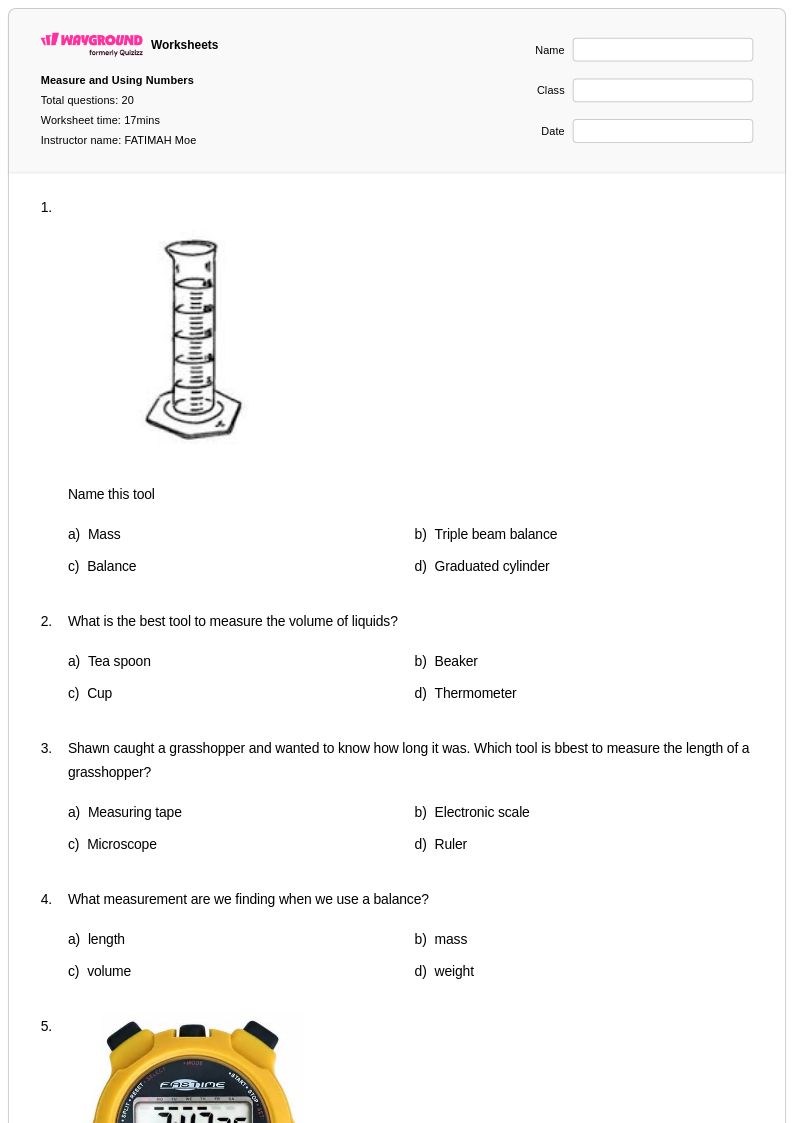
With graduated cylinders, the most common error is reading from the top of the meniscus rather than the bottom, and failing to read at eye level, both of which introduce parallax error. On the triple beam balance, students frequently forget to zero the instrument before measuring or misread the rider positions by confusing the scale increments. Reinforcing instrument precision, specifically the idea that a measurement should be recorded to one decimal place beyond the smallest graduation, helps students develop consistent and accurate reading habits.
How do I help students struggling with temperature conversion between Fahrenheit and Celsius?
Students most often struggle with temperature conversion because the formulas involve both multiplication and addition or subtraction, making order of operations critical. Explicitly walking through each step and labeling which operation comes first reduces errors. Having students convert a set of benchmark temperatures, such as freezing, body temperature, and boiling point, helps them build intuition for whether a converted answer is reasonable, which serves as a self-checking strategy.
How can I use units and measurement worksheets in my classroom?
Units and measurement worksheets on Wayground are available as printable PDFs for traditional classroom use and in digital formats for technology-integrated environments, including the option to host them as an interactive quiz directly on Wayground. Teachers can use them for direct instruction support, independent practice, homework assignments, or formative assessment. Wayground also supports student-level accommodations such as extended time, read aloud, and reduced answer choices, which can be configured individually so that all students engage with the material in the format that best supports their learning.
How do I differentiate units and measurement instruction for students at different skill levels?
For students who need additional support, focus on single-system practice, such as metric-only conversions using a prefix chart, before introducing cross-system problems. Advanced learners benefit from multi-step dimensional analysis problems and applied contexts such as volume and density calculations. On Wayground, teachers can customize worksheets to address individual learning gaps or provide enrichment, and accommodation settings such as reduced answer choices or read aloud can be applied to specific students without affecting the rest of the class.