Free Printable Uppercase and Lowercase Matching worksheets
Enhance early literacy skills with Wayground's free uppercase and lowercase matching worksheets, featuring engaging printables and practice problems with answer keys to help students master letter recognition.
Explore printable Uppercase and Lowercase Matching worksheets
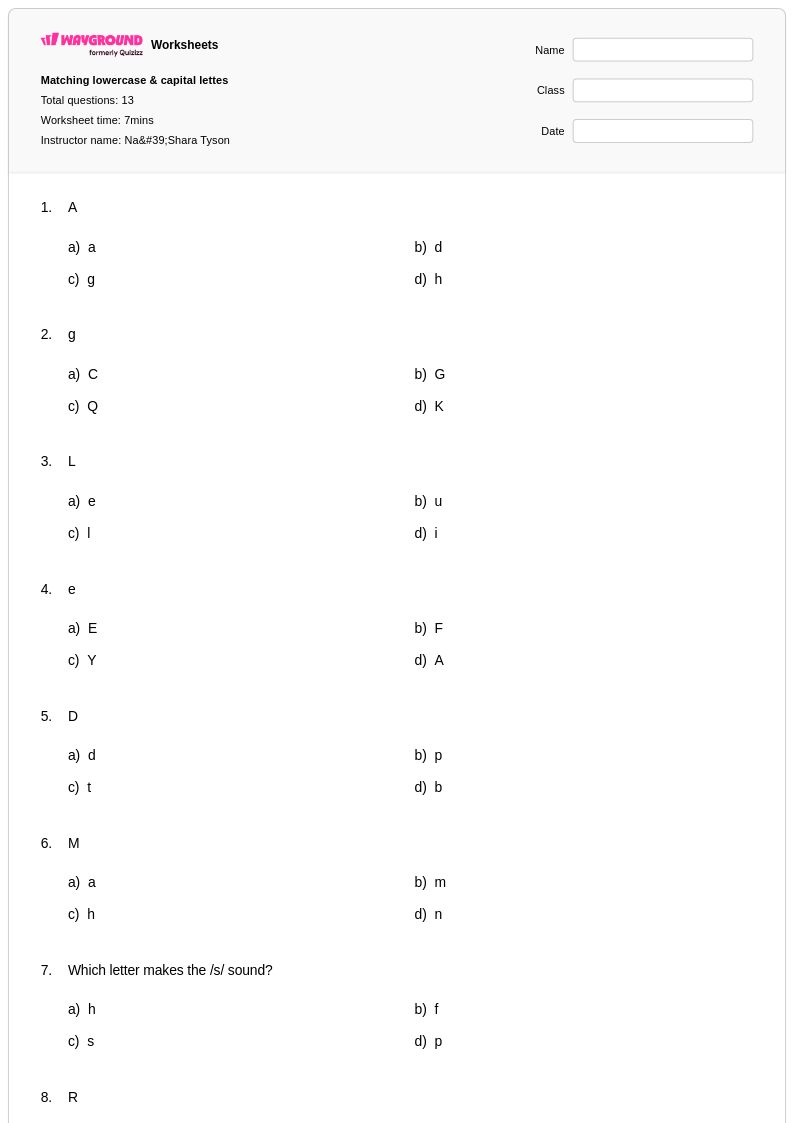
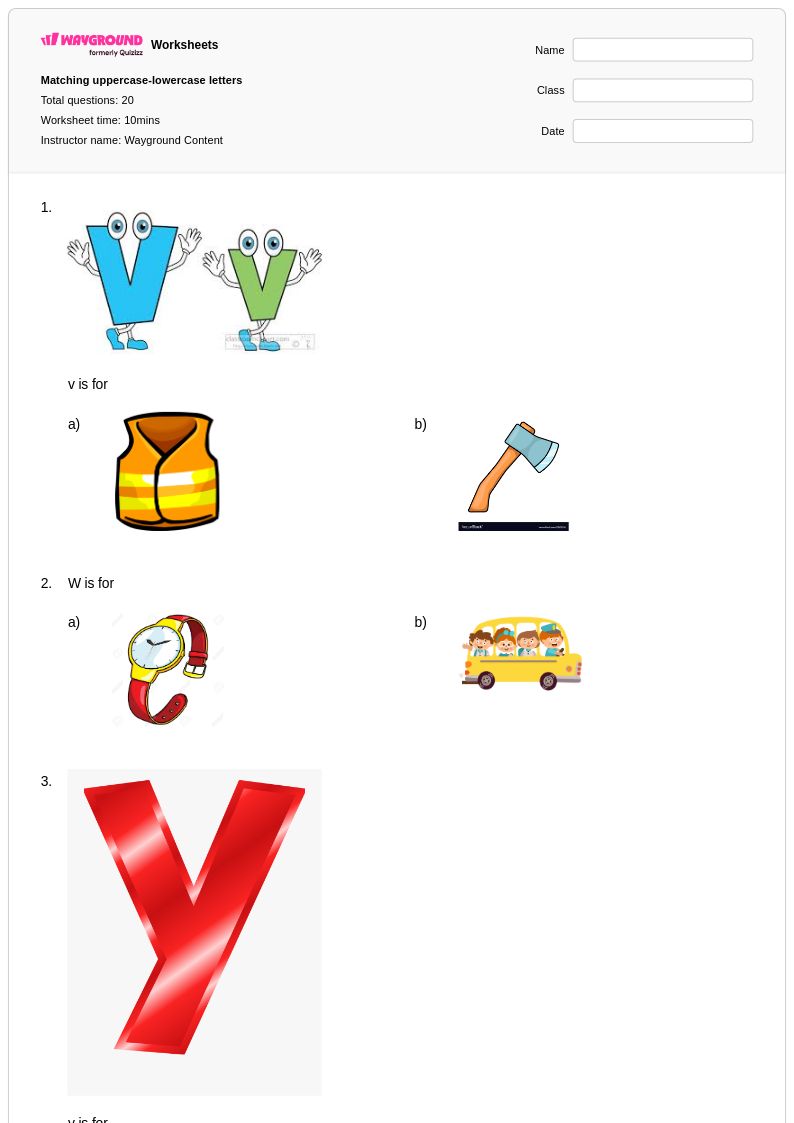
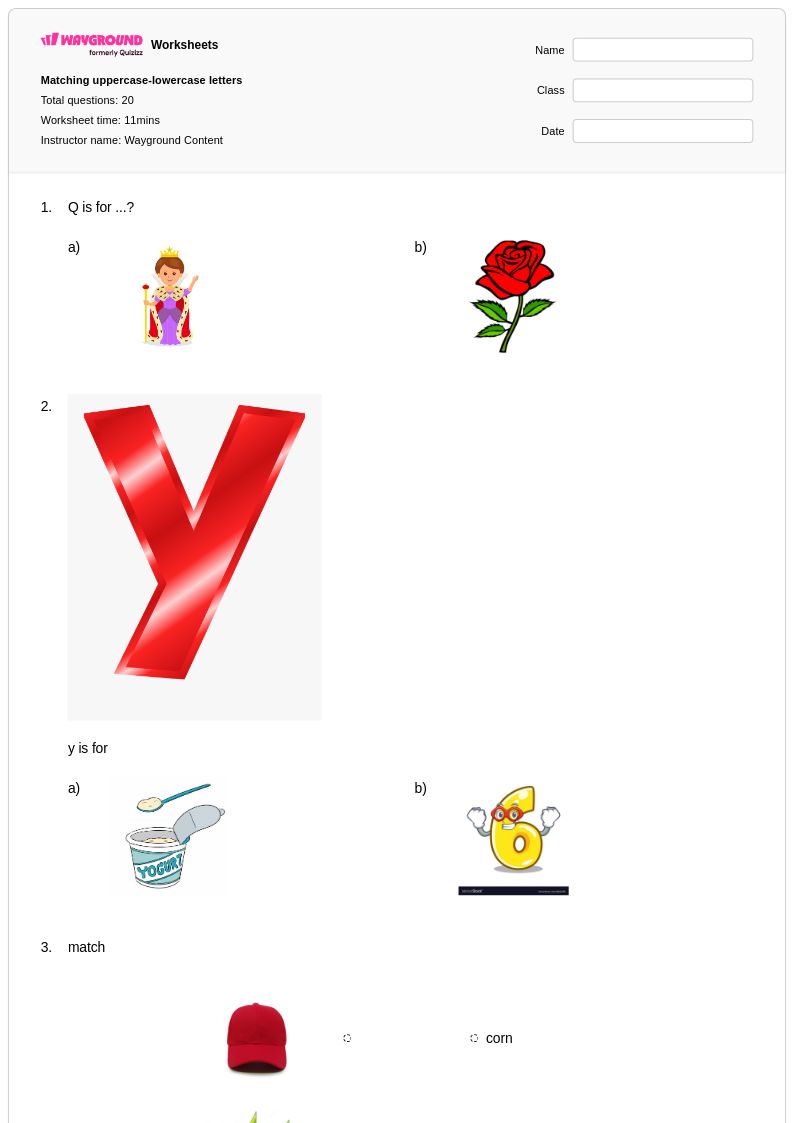
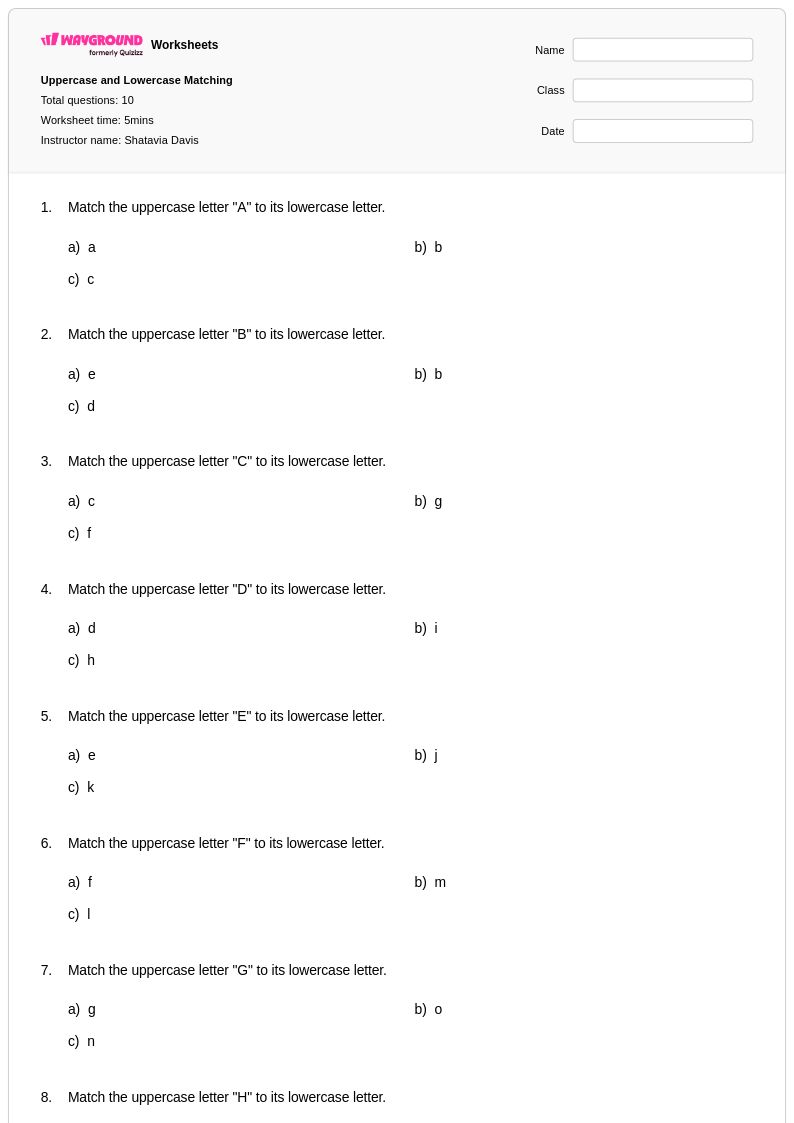
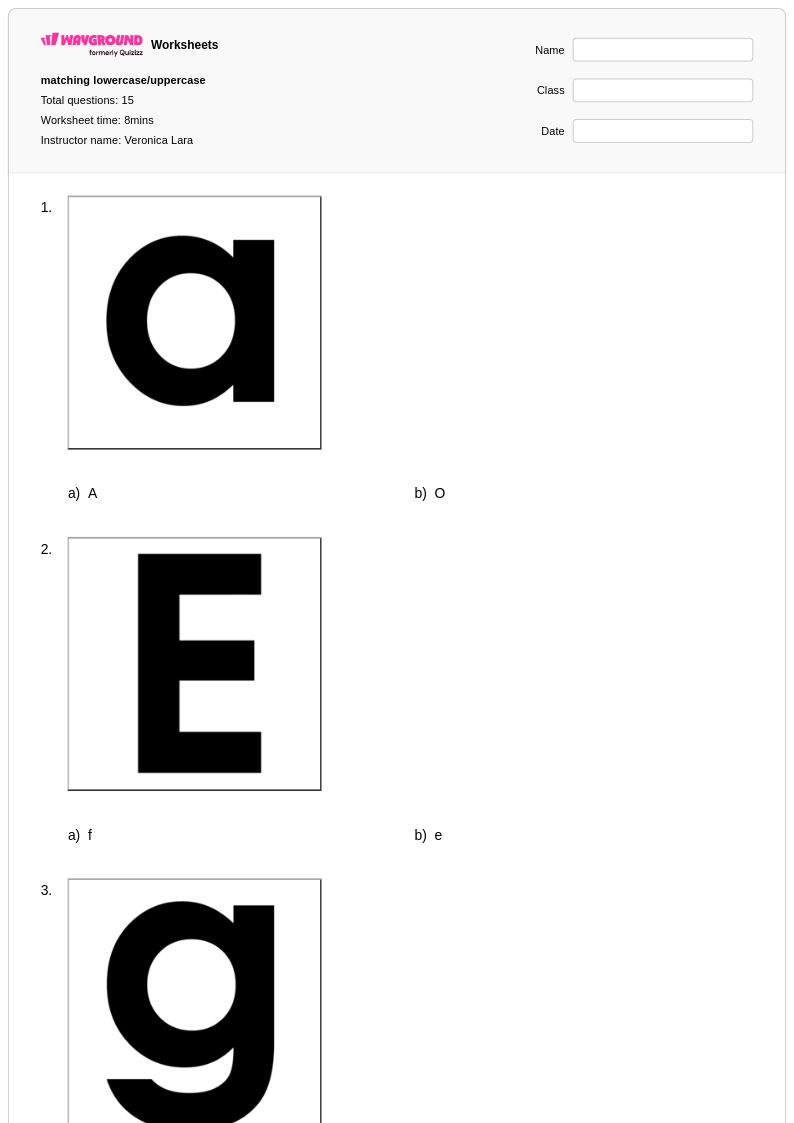
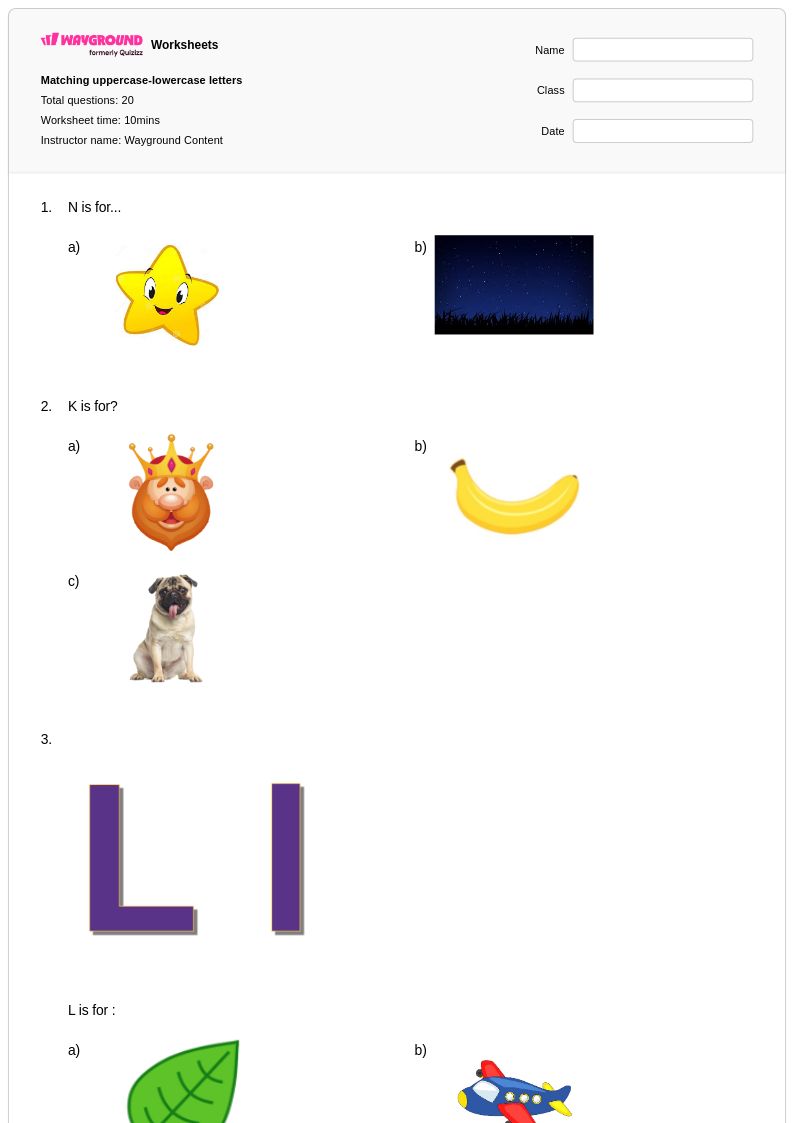
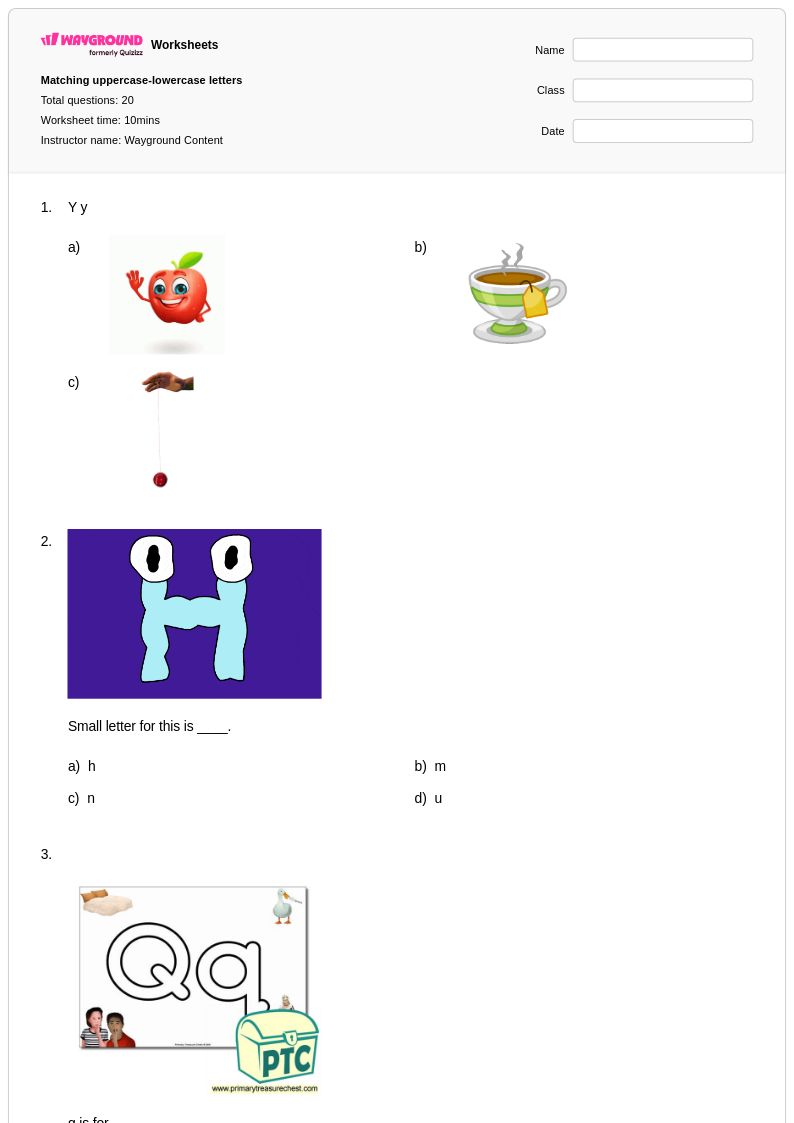
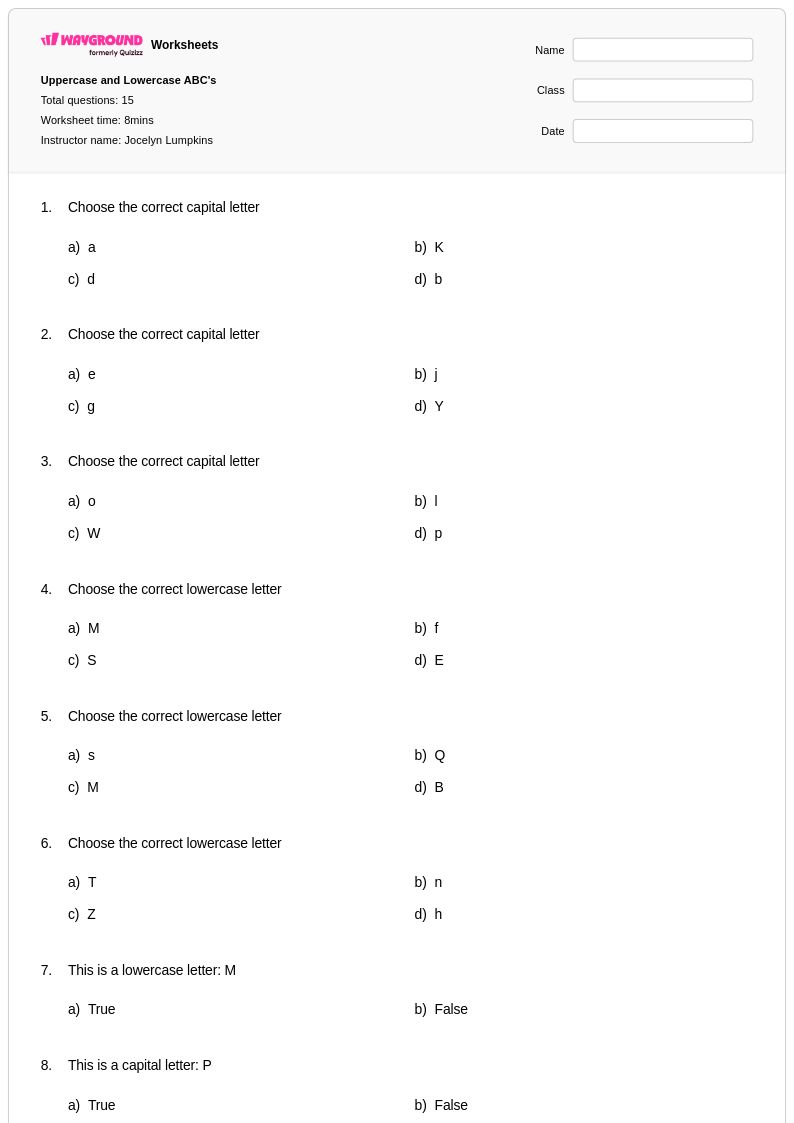
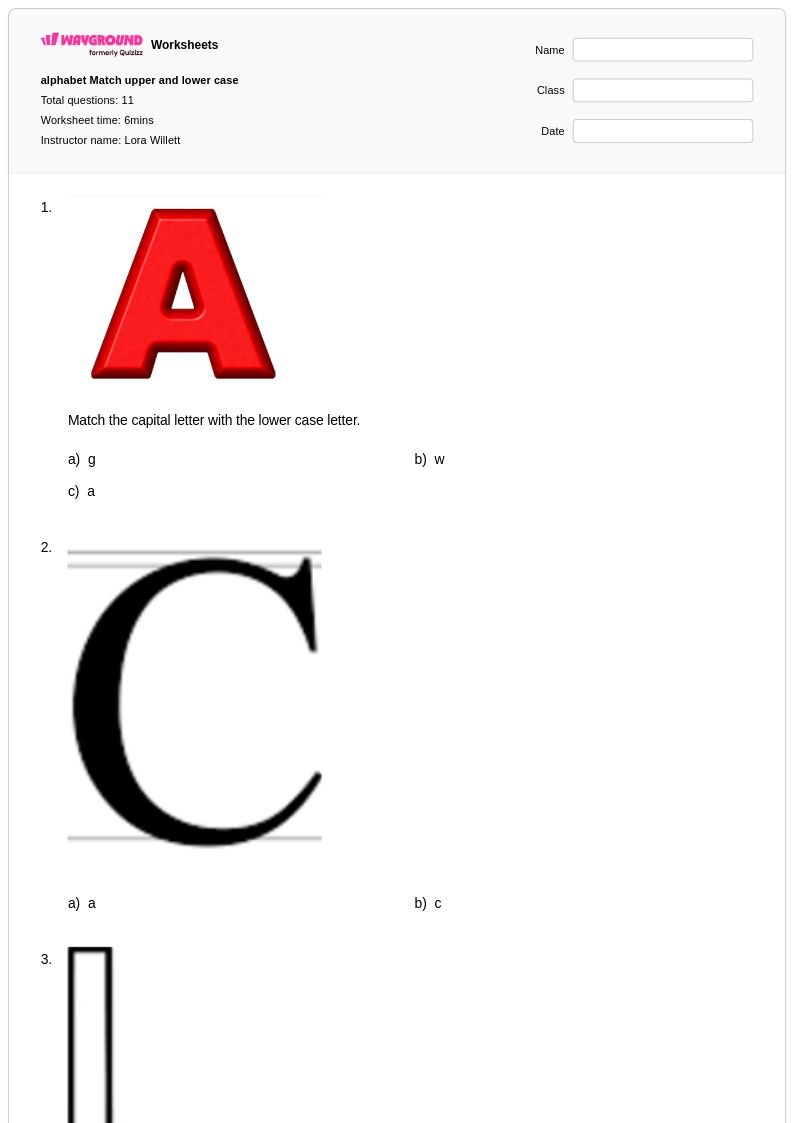
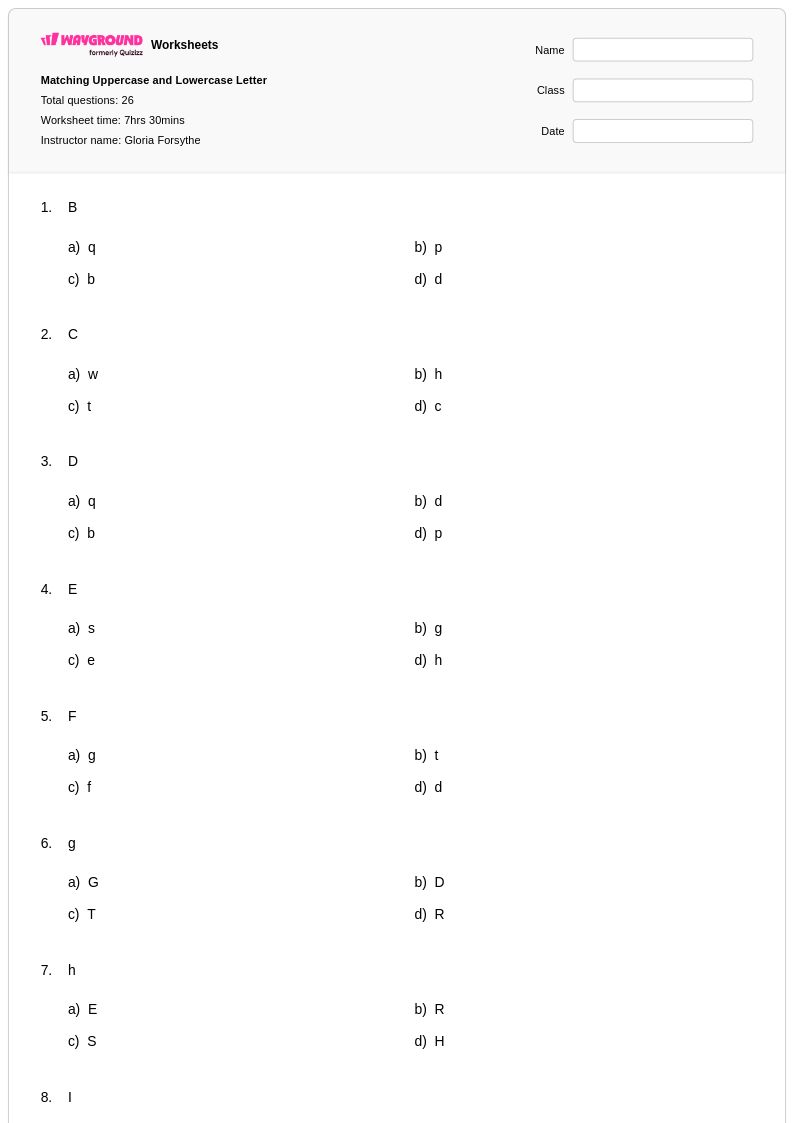
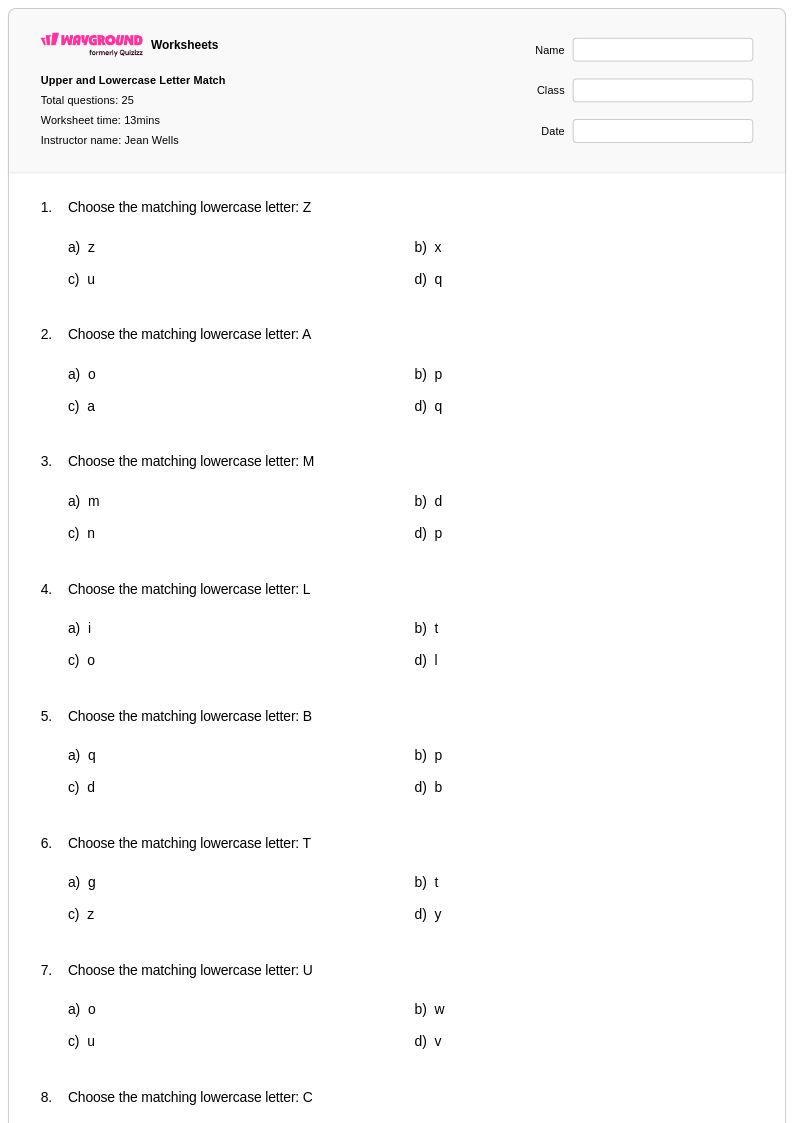
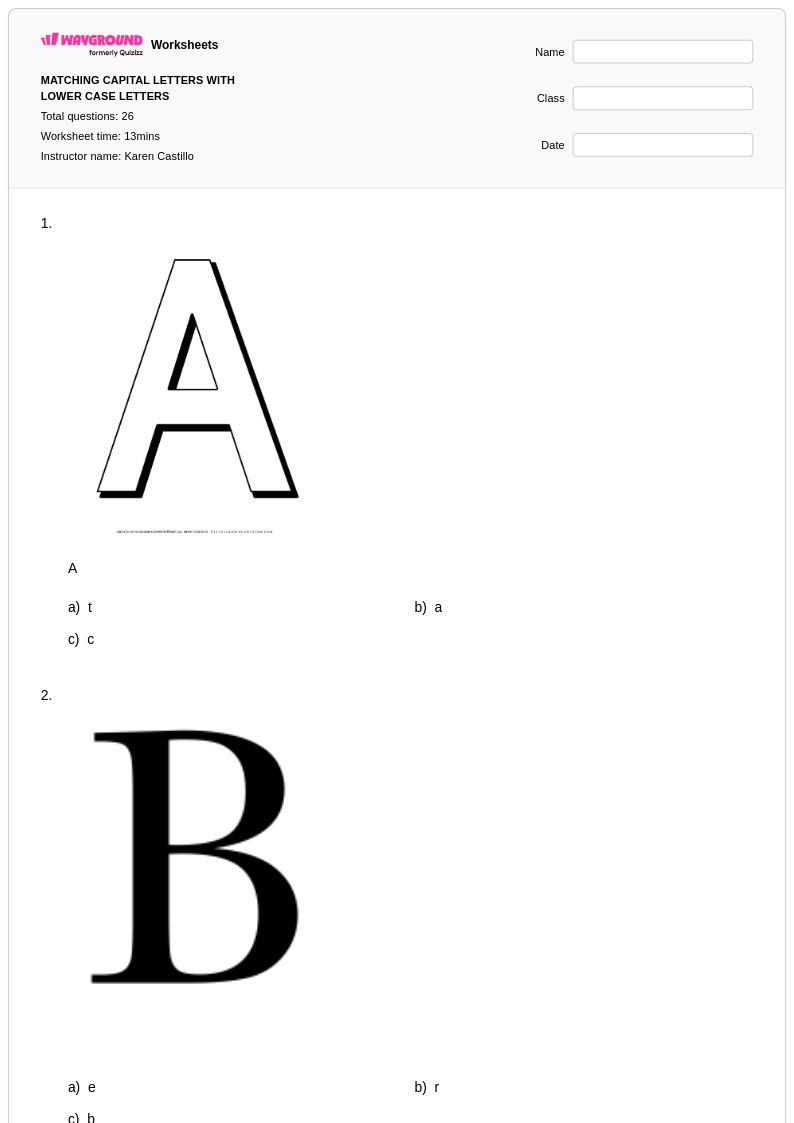
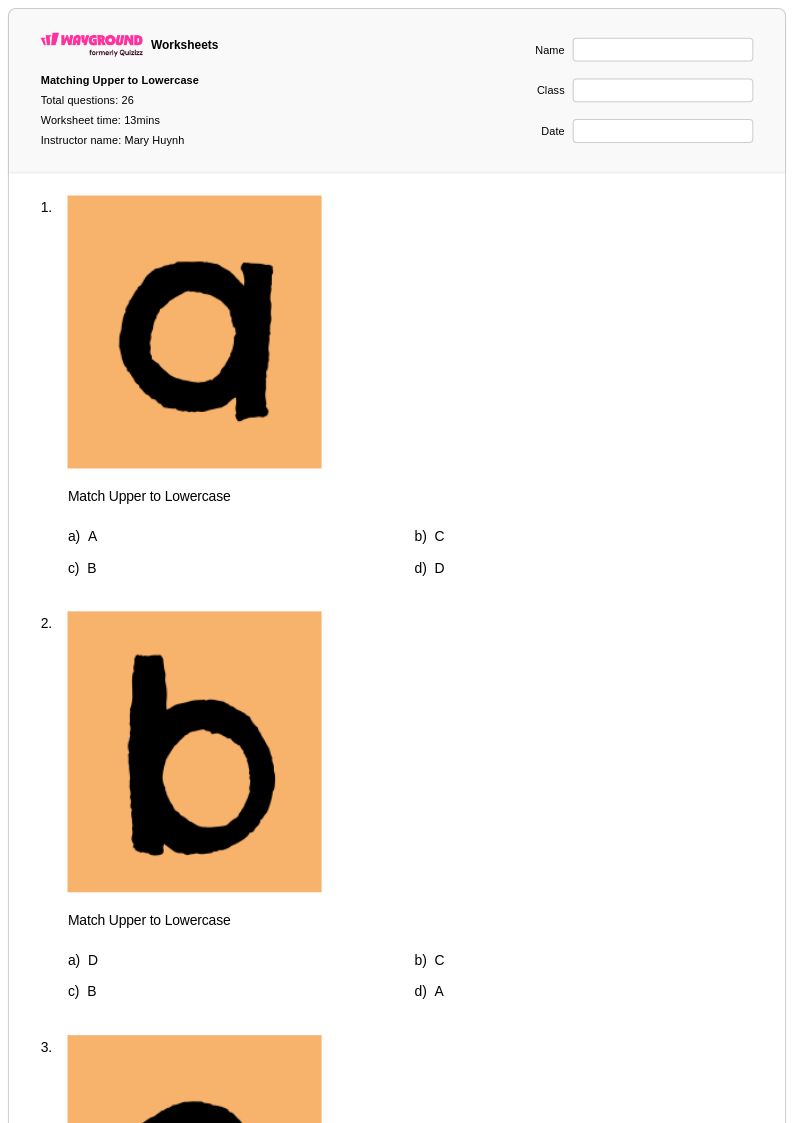
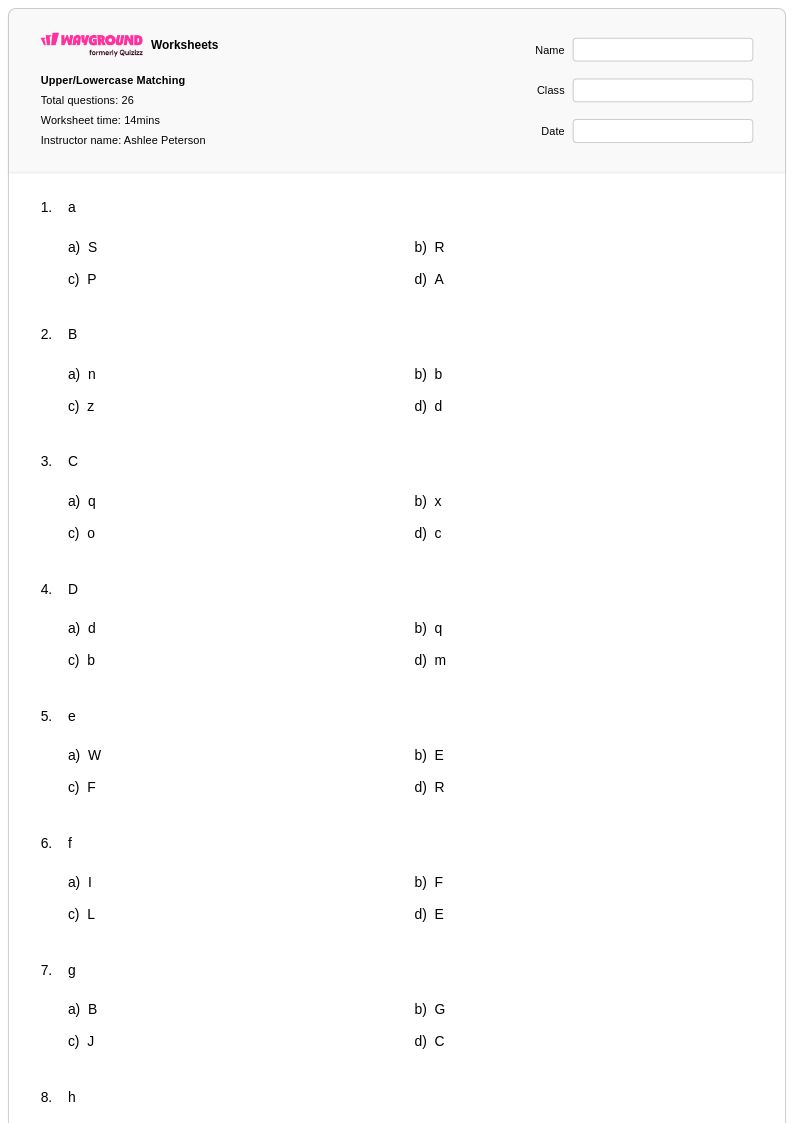
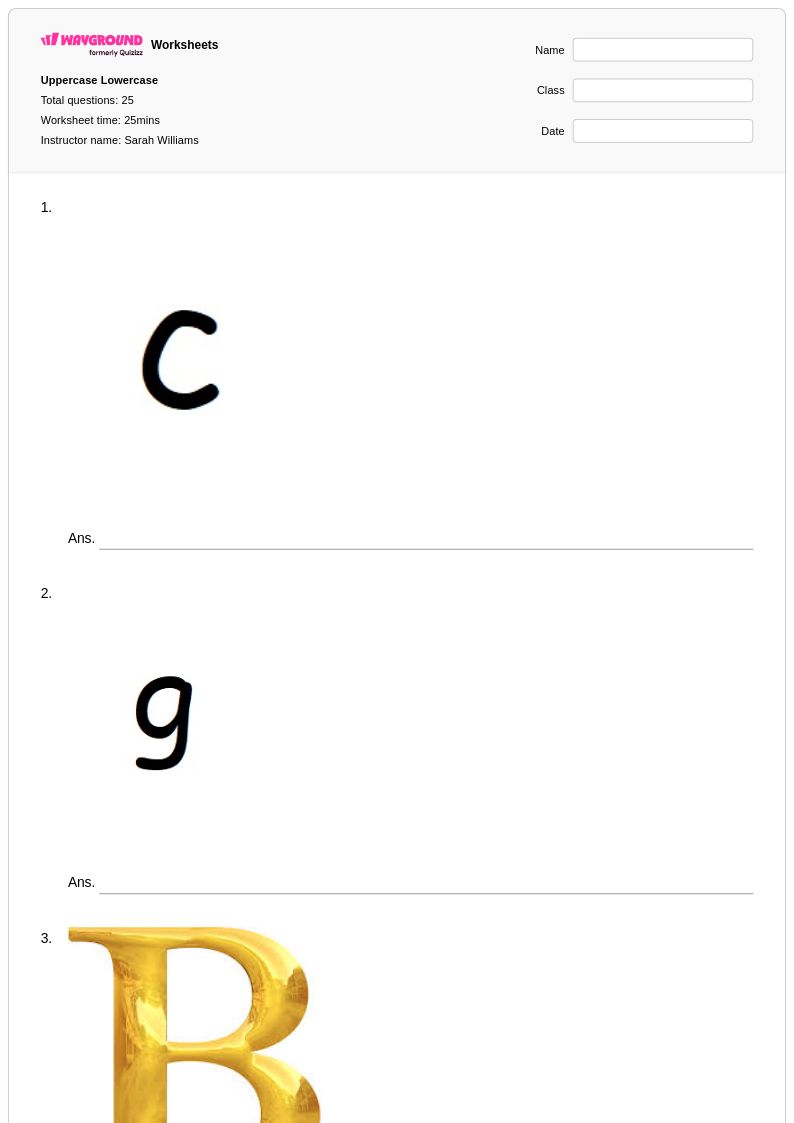
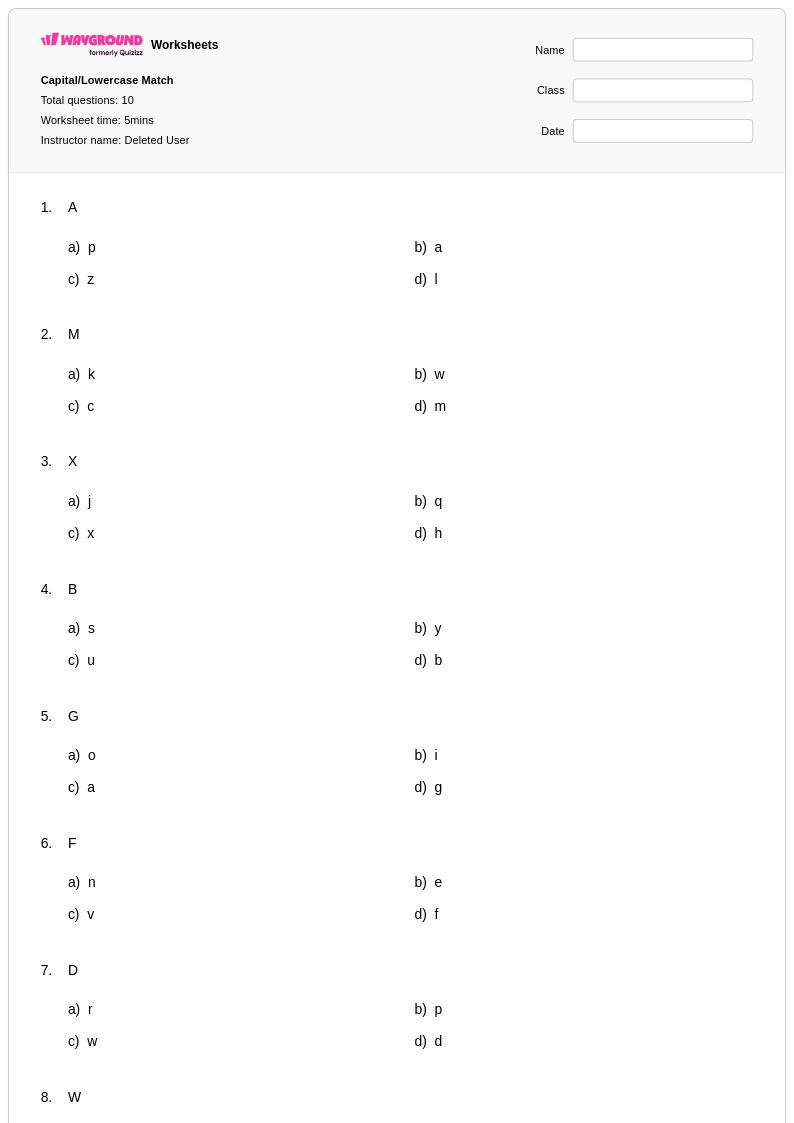
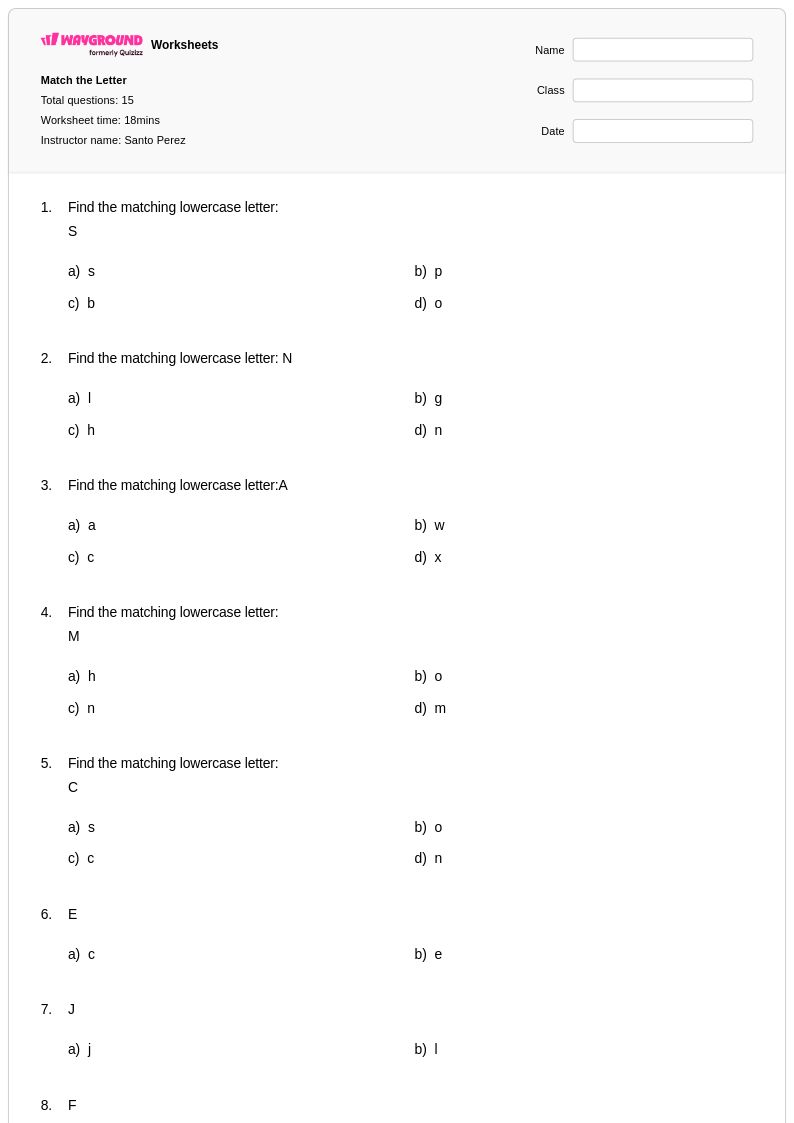
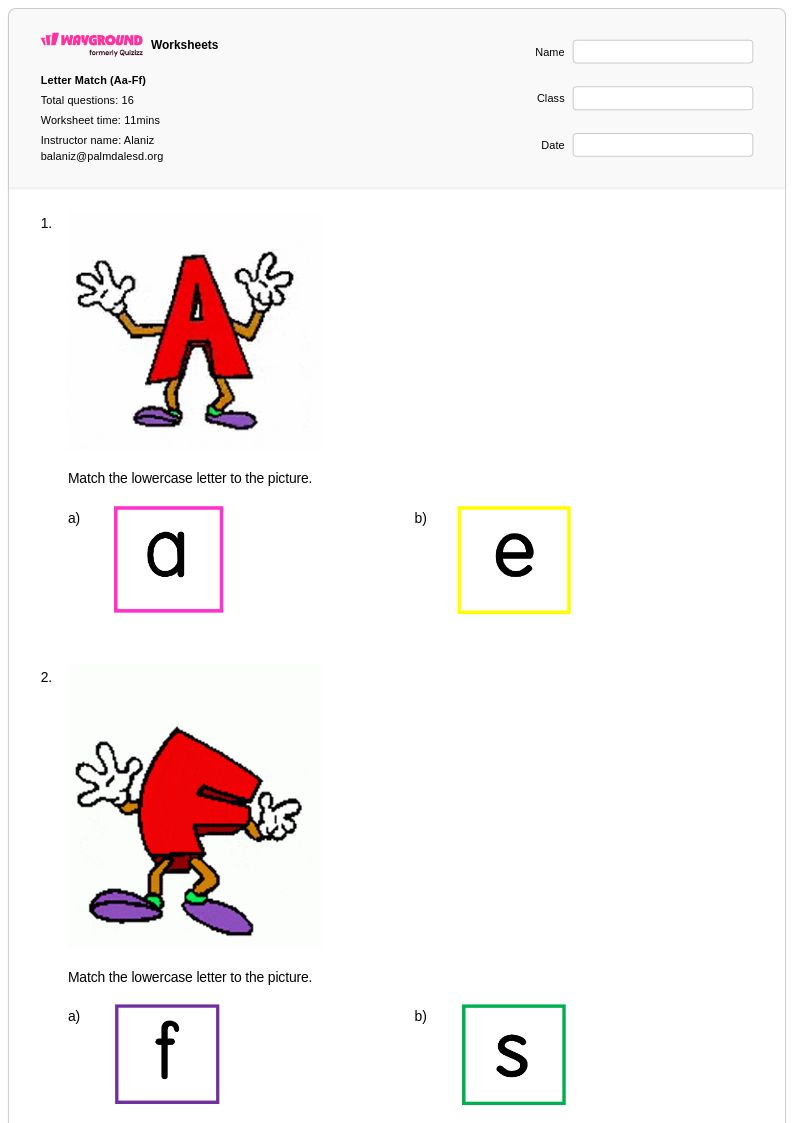
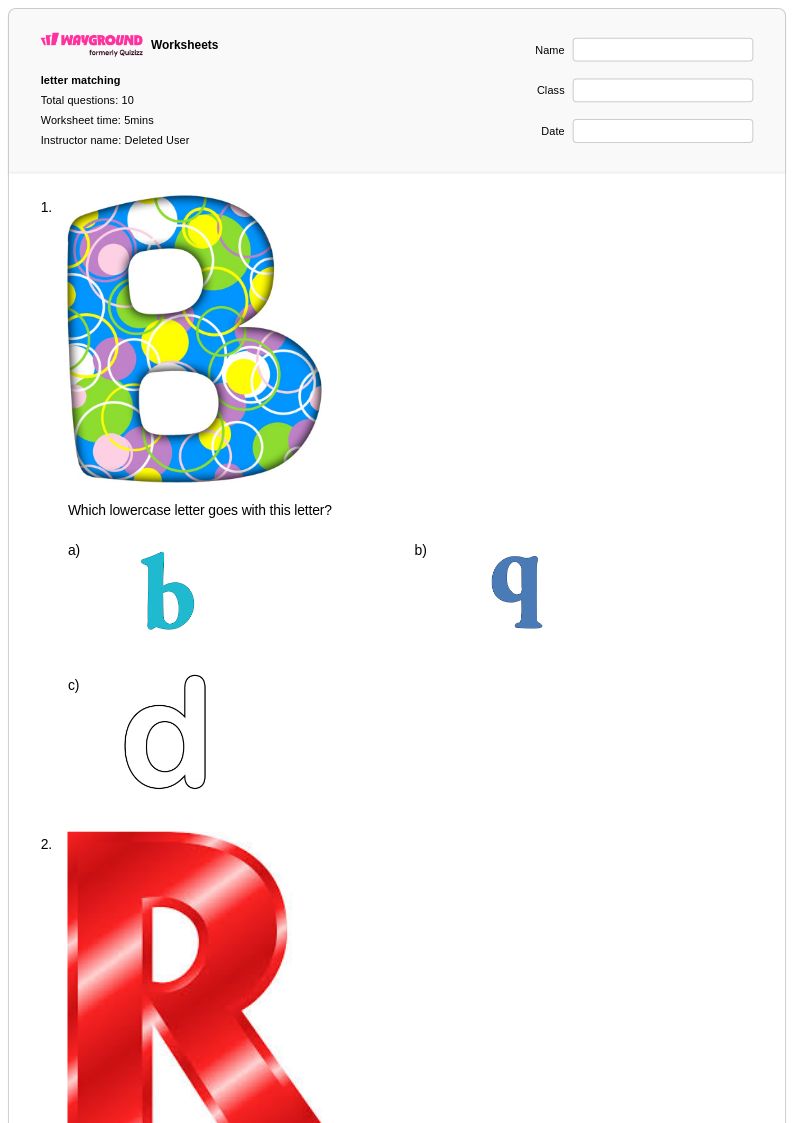
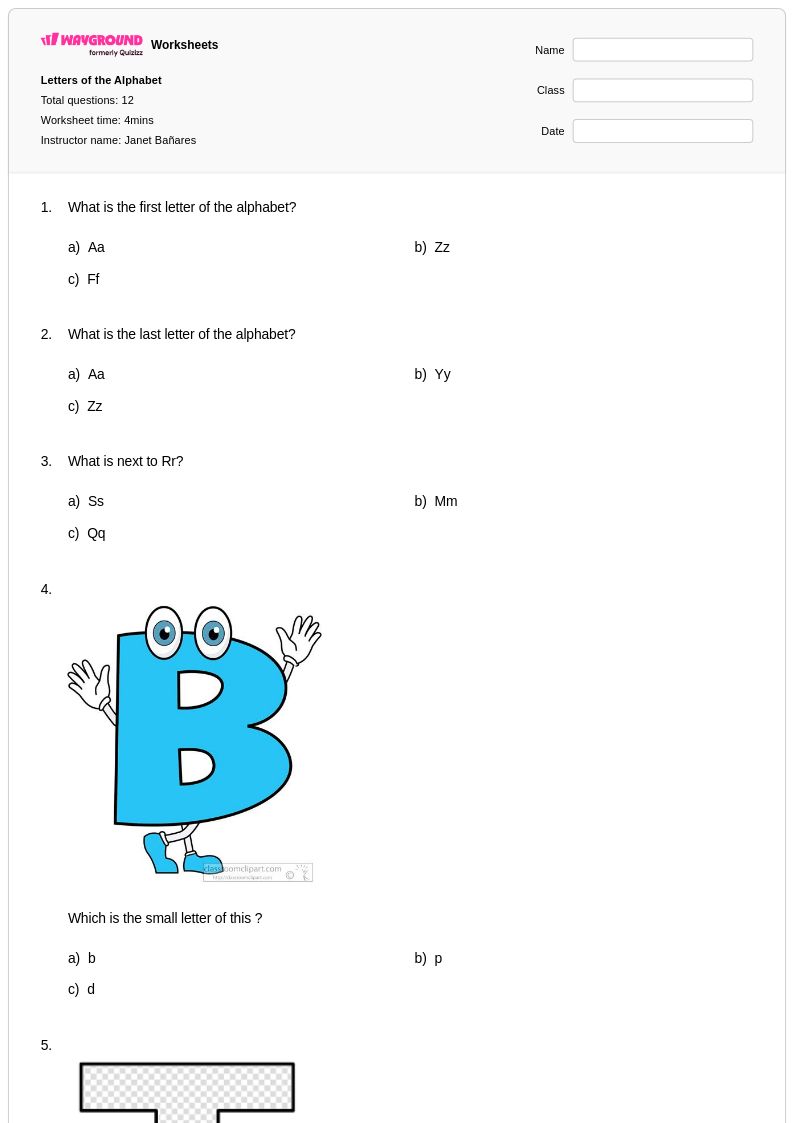
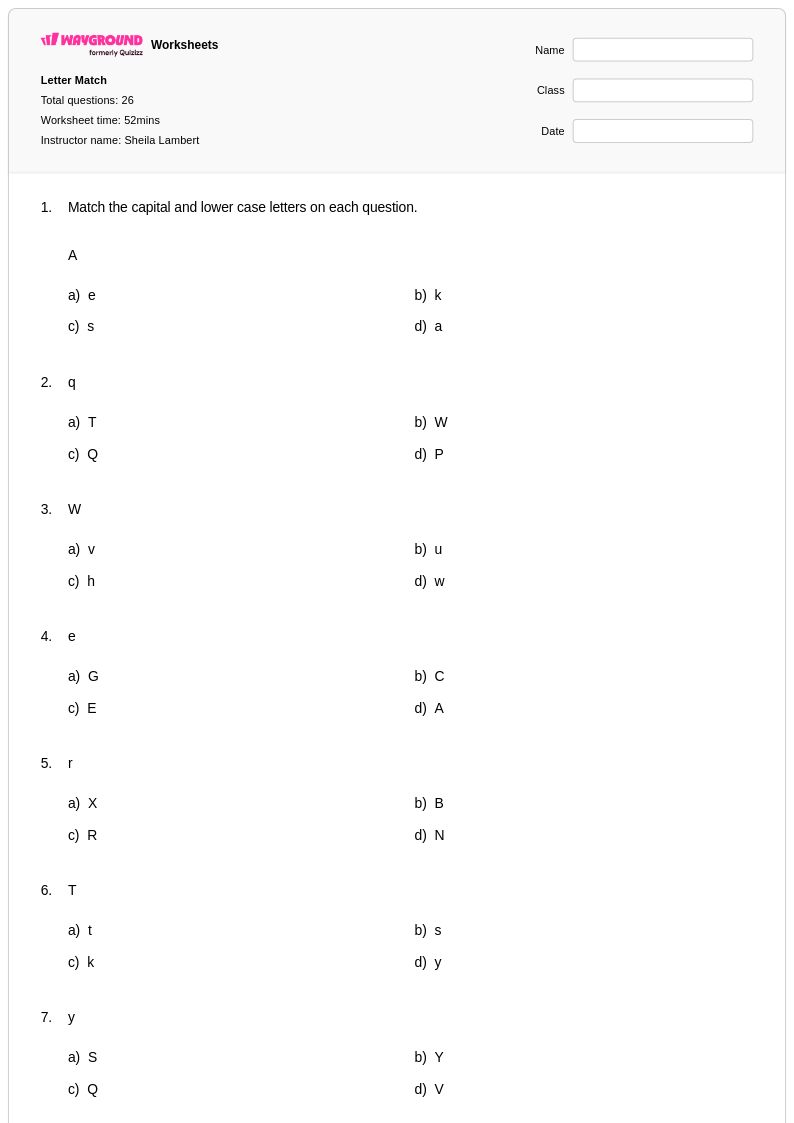
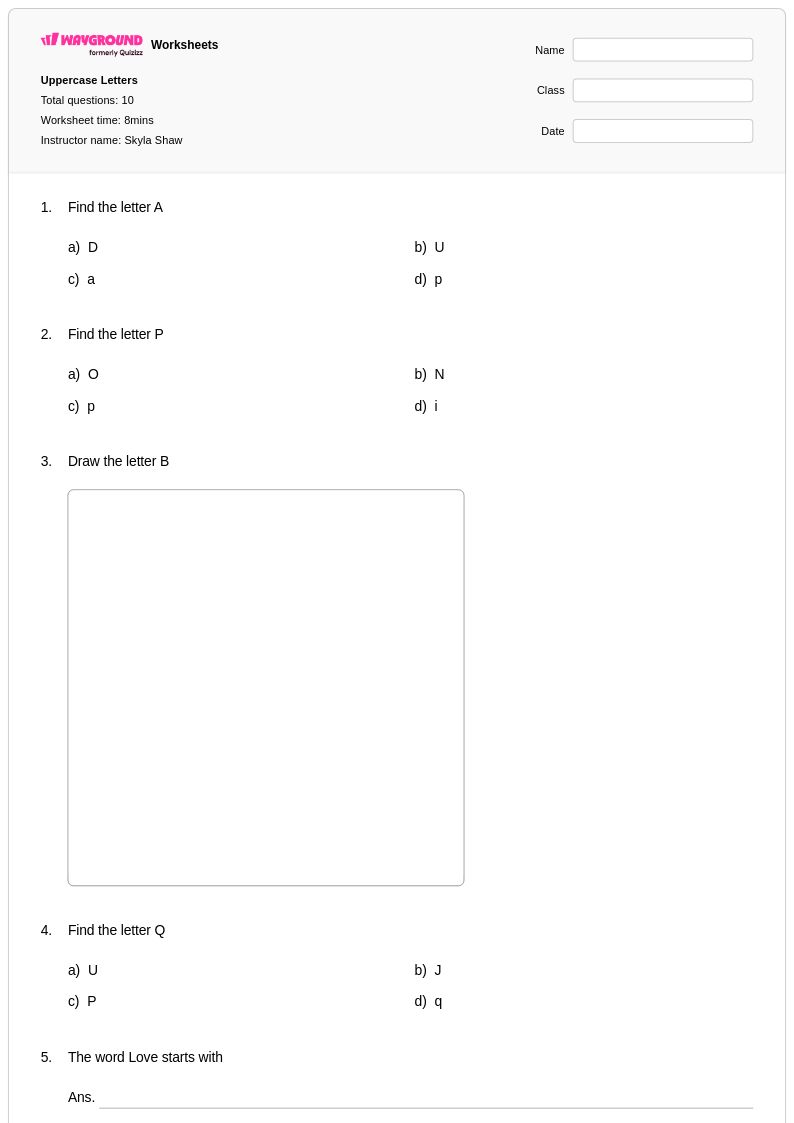
Uppercase and lowercase matching worksheets available through Wayground (formerly Quizizz) provide essential foundational practice for developing letter recognition skills in early literacy education. These carefully designed printables help young learners strengthen their ability to identify and pair corresponding capital and lowercase letters, a critical skill that supports reading readiness and alphabet mastery. Each worksheet features engaging activities where students connect, circle, or match letter pairs, with clear answer keys provided to support both independent practice and guided instruction. The free pdf format ensures easy access for classroom use, homework assignments, or intervention sessions, while the variety of practice problems accommodates different learning styles and reinforces letter-sound relationships that form the building blocks of successful reading development.
Wayground (formerly Quizizz) empowers educators with an extensive collection of millions of teacher-created resources specifically designed to support early literacy instruction through comprehensive uppercase and lowercase matching materials. The platform's robust search and filtering capabilities allow teachers to quickly locate worksheets that align with specific learning standards and developmental needs, while differentiation tools enable customization for diverse learners requiring varying levels of challenge or support. Available in both printable and digital pdf formats, these resources seamlessly integrate into lesson planning for skill practice, remediation sessions with struggling readers, or enrichment activities for advanced students. The flexible customization options help teachers modify content to match their classroom requirements, ensuring that each student receives targeted practice in letter recognition that builds confidence and accelerates progress toward reading proficiency.
FAQs
How do I teach uppercase and lowercase letter matching to early readers?
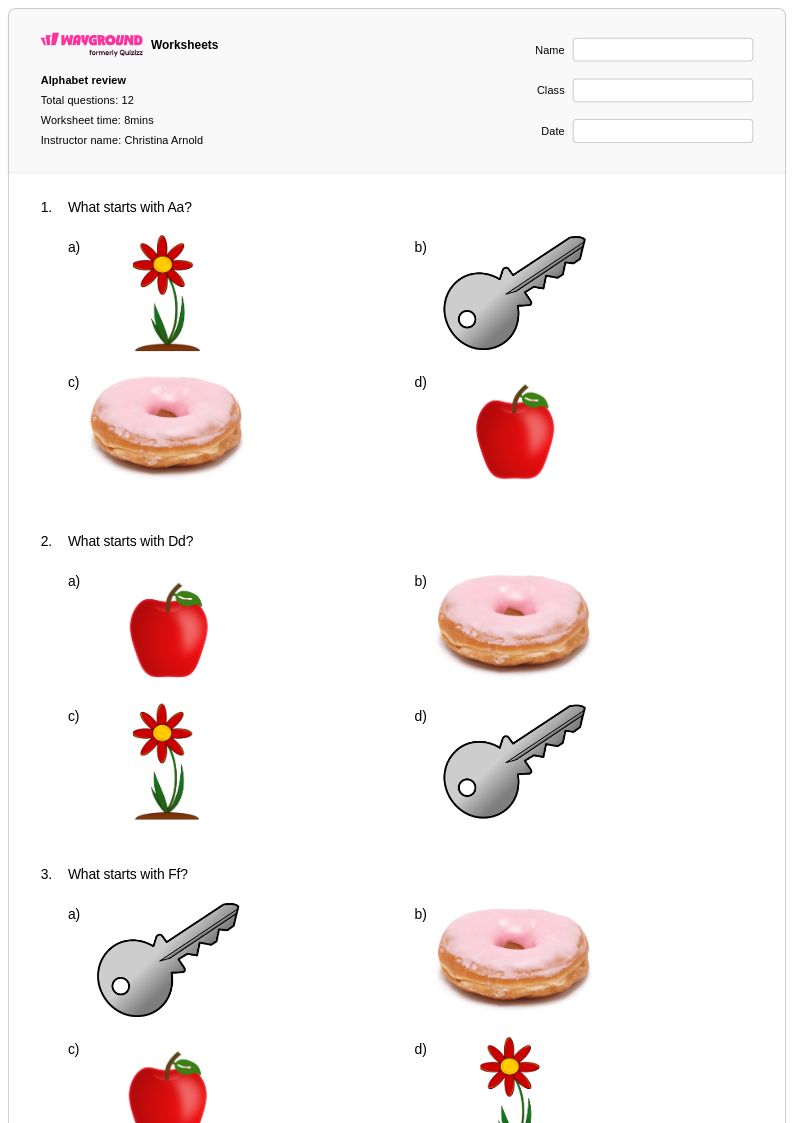
Start by introducing one letter pair at a time, using multisensory methods such as tracing, sorting physical letter cards, and saying the letter aloud to build recognition across modalities. Once students are confident with individual pairs, move to activities that require matching across a full set of letters, gradually increasing complexity. Connecting each letter to a familiar word or image (e.g., 'A is for apple') helps anchor abstract letter forms to meaningful context and accelerates mastery.
What exercises help students practice matching uppercase and lowercase letters?
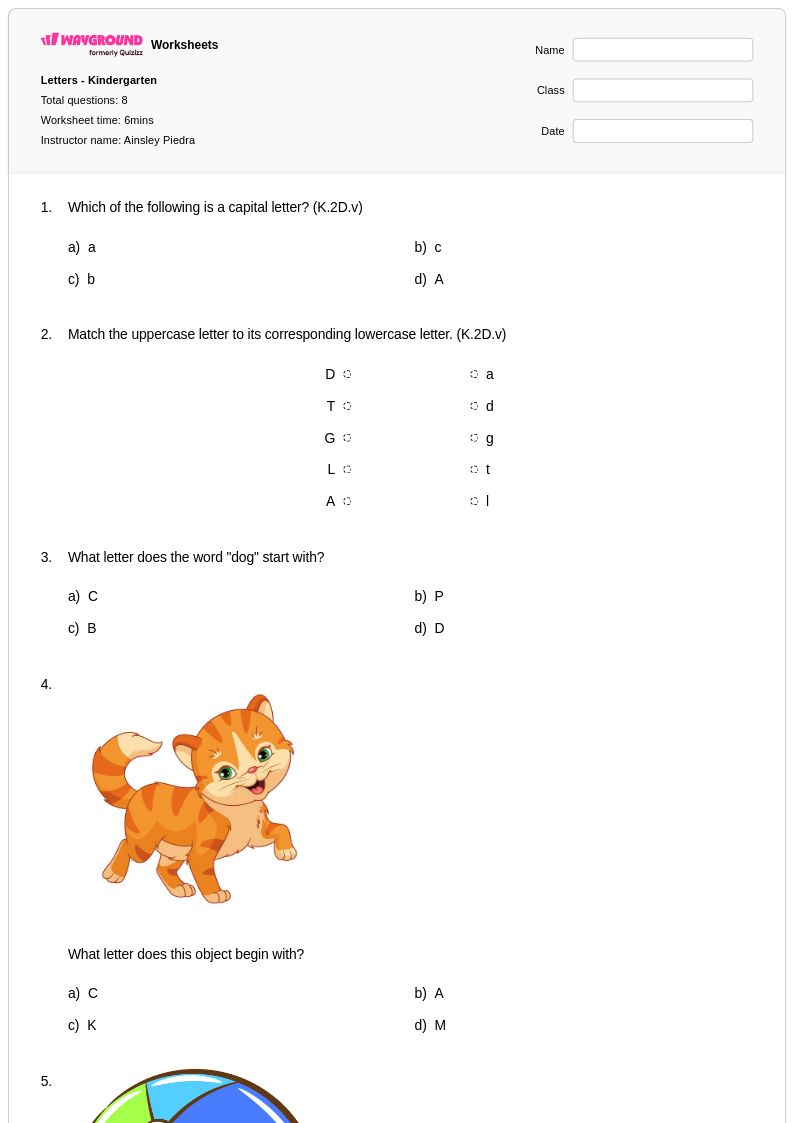
Effective practice exercises include draw-a-line matching activities where students connect capital letters to their lowercase counterparts, circling the correct lowercase letter from a set of options, and cut-and-paste sorts that require physical manipulation. These formats build both visual discrimination and fine motor skills simultaneously, which is especially valuable in early literacy instruction. Rotating between exercise types prevents rote memorization and ensures students can recognize letter pairs across different visual contexts.
What mistakes do students commonly make when matching uppercase and lowercase letters?
The most common errors involve visually similar letter pairs, particularly b/d, p/q, and n/u, where students confuse orientation rather than the letter identity itself. Students also frequently struggle with letters whose uppercase and lowercase forms look entirely different, such as A/a, G/g, and R/r, because they cannot rely on shape similarity as a matching cue. Targeted practice with these specific pairs, using color-coding or exaggerated visual cues, helps students isolate and correct these persistent errors.
How can I use uppercase and lowercase matching worksheets in my classroom?
These worksheets work well as warm-up activities, literacy center rotations, or take-home practice to reinforce letter recognition between lessons. On Wayground, uppercase and lowercase matching worksheets are available as printable PDFs for traditional classroom use and in digital formats for technology-integrated learning environments, including the option to host them as an interactive quiz on the platform. The included answer keys make them practical for independent work stations or homework assignments without requiring additional teacher preparation.
How do I differentiate uppercase and lowercase matching activities for students at different levels?
For students who are still building foundational recognition, limit practice sets to 5 to 10 letter pairs at a time and use worksheets with larger font sizes and clear visual spacing to reduce cognitive load. More advanced students can work with full alphabet matching activities or timed formats that build fluency. On Wayground, teachers can apply accommodations such as reduced answer choices or read aloud support to individual students, so each learner receives an appropriately challenging version of the same activity without singling anyone out.
At what age or grade level should students master uppercase and lowercase letter matching?
Most students are expected to recognize and match all 26 uppercase and lowercase letter pairs by the end of kindergarten, as this skill is a foundational benchmark for reading readiness in most early literacy frameworks. Pre-K instruction typically focuses on high-frequency letters in a student's own name before expanding to the full alphabet. Students who enter first grade without solid letter-matching fluency often benefit from targeted intervention, as this gap can slow phonics acquisition and early decoding development.