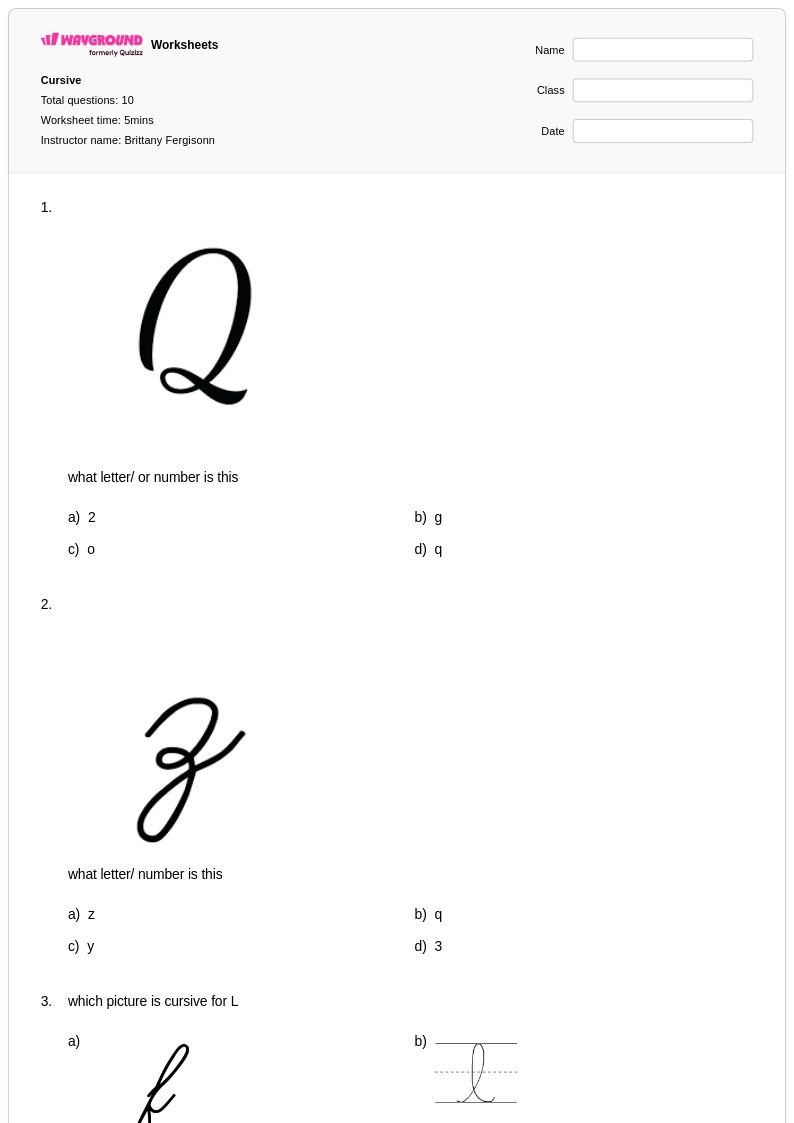
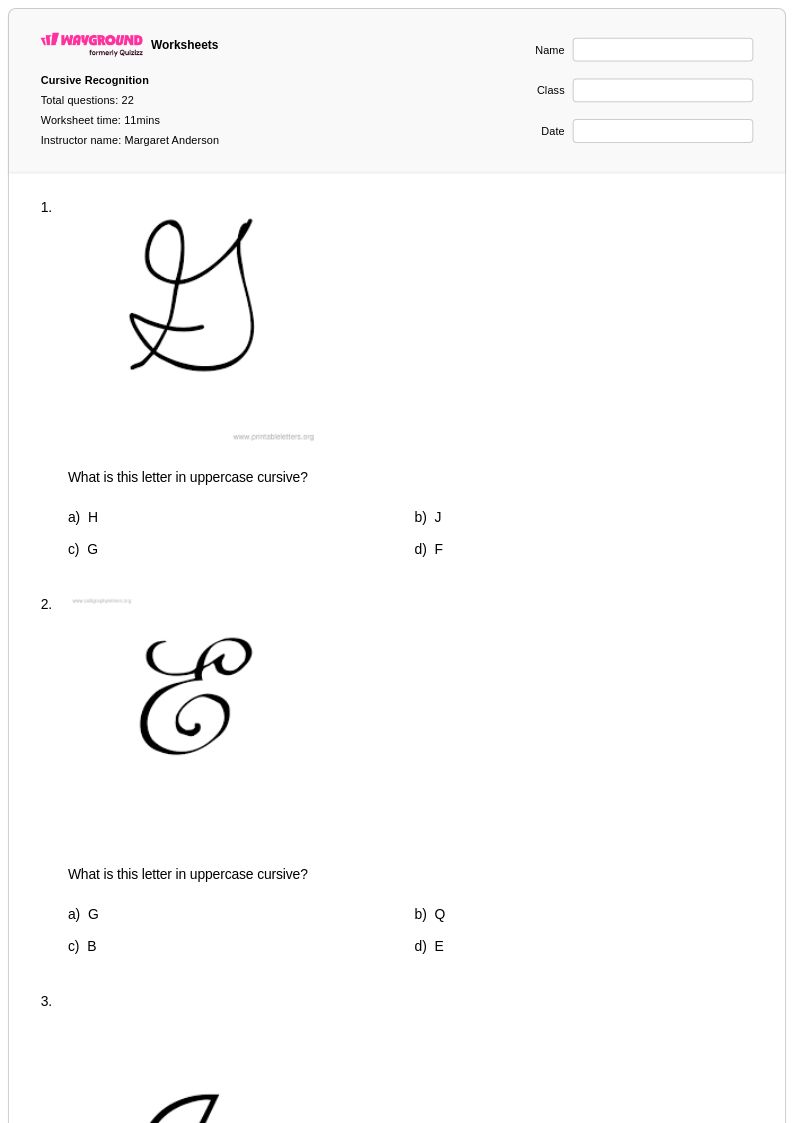
Free Printable Uppercase Cursive Worksheets for Grade 4
Master Grade 4 uppercase cursive handwriting with Wayground's comprehensive collection of free worksheets and printables, featuring guided practice problems and answer keys to help students develop proper letter formation and fluency.
Explore printable Uppercase Cursive worksheets for Grade 4
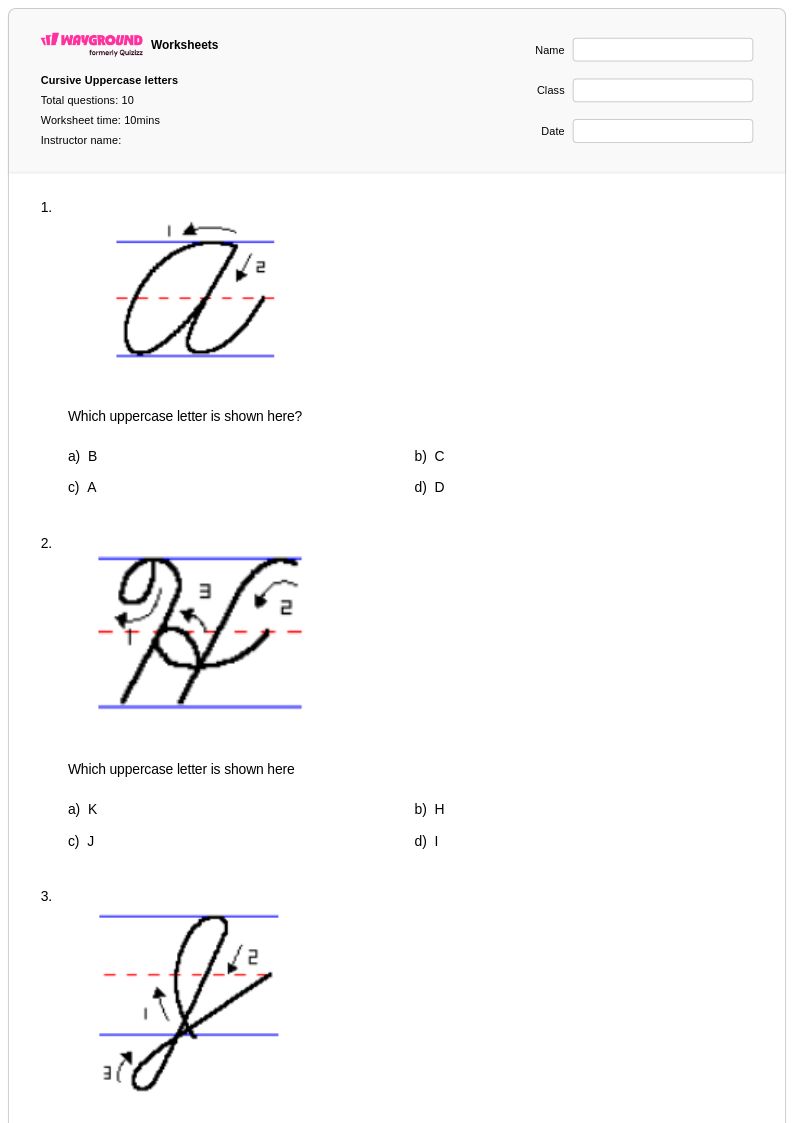
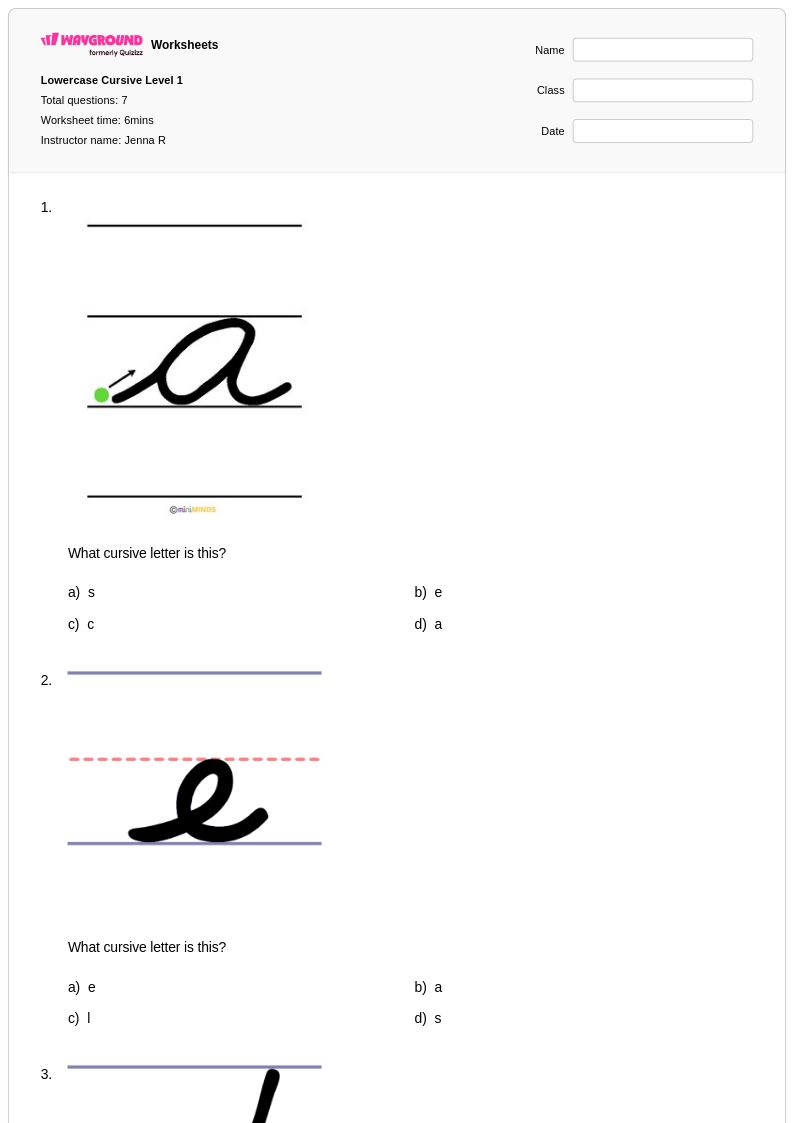
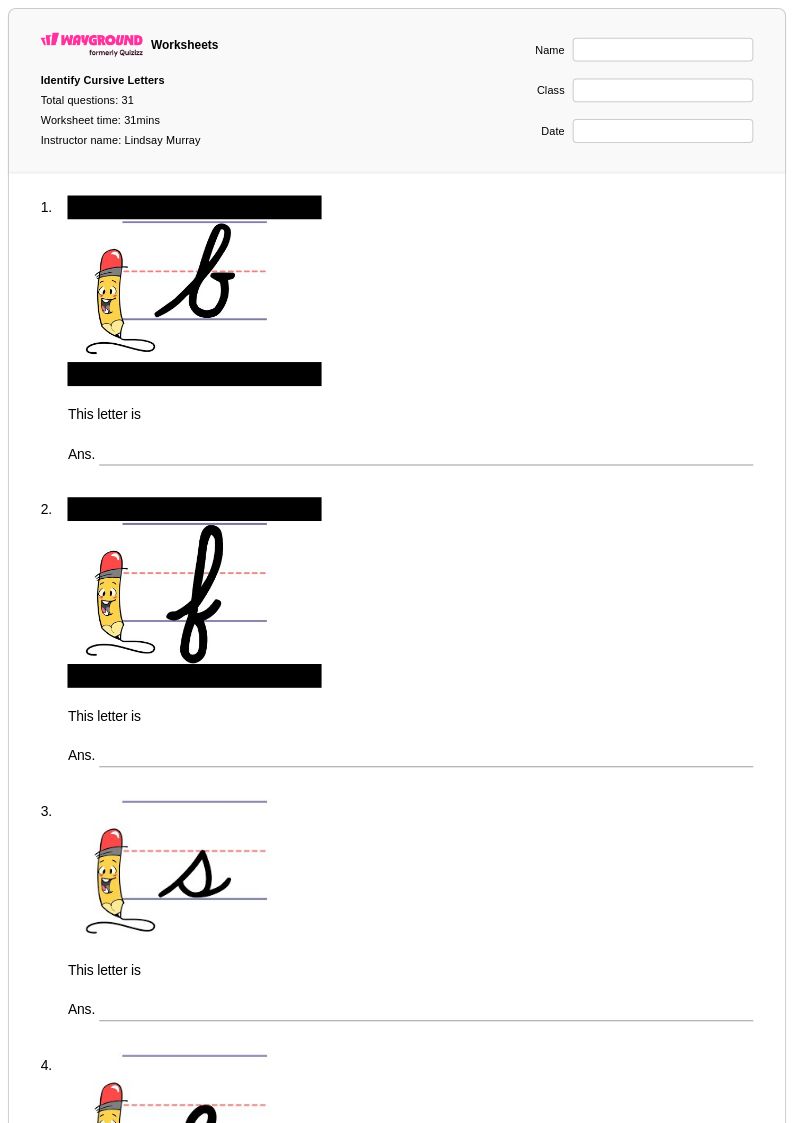
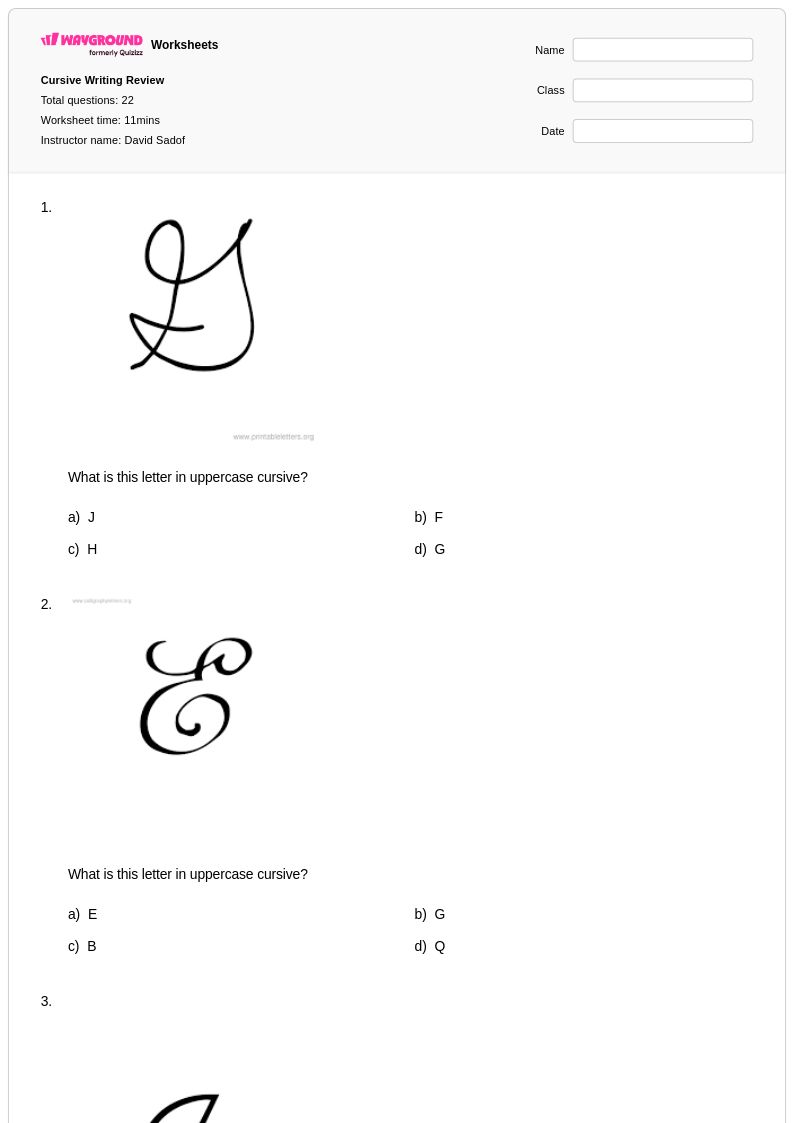
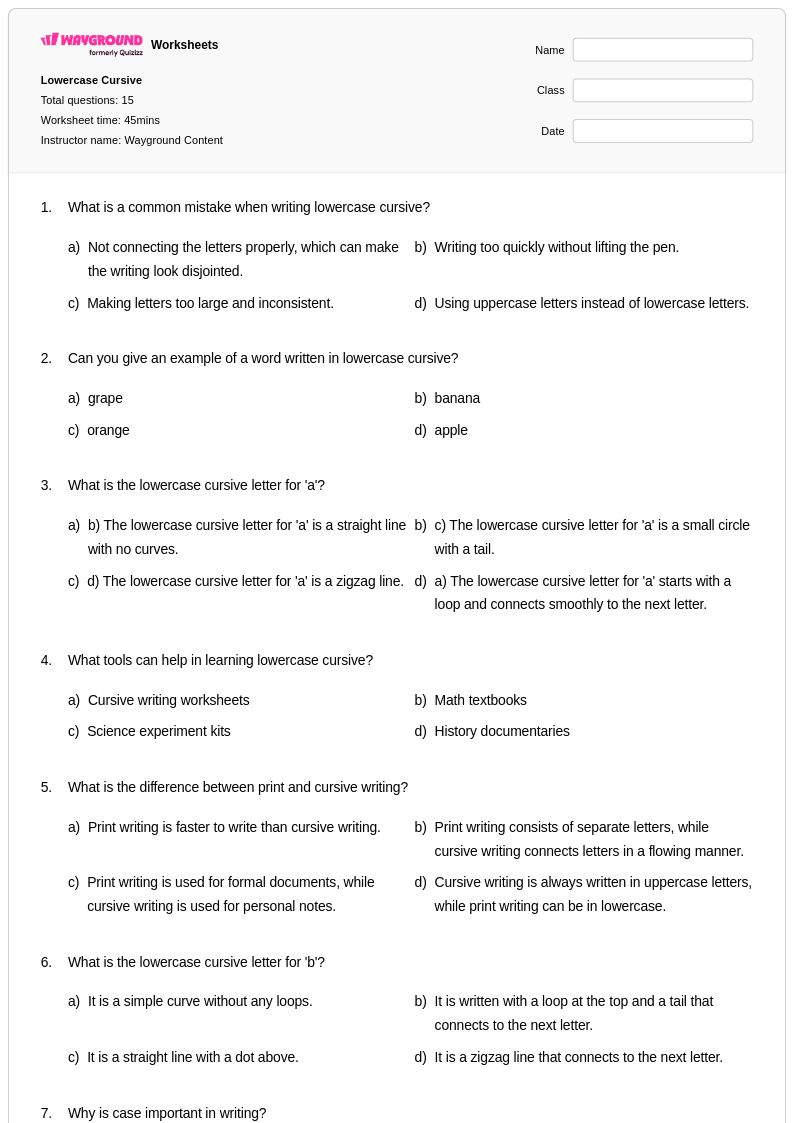
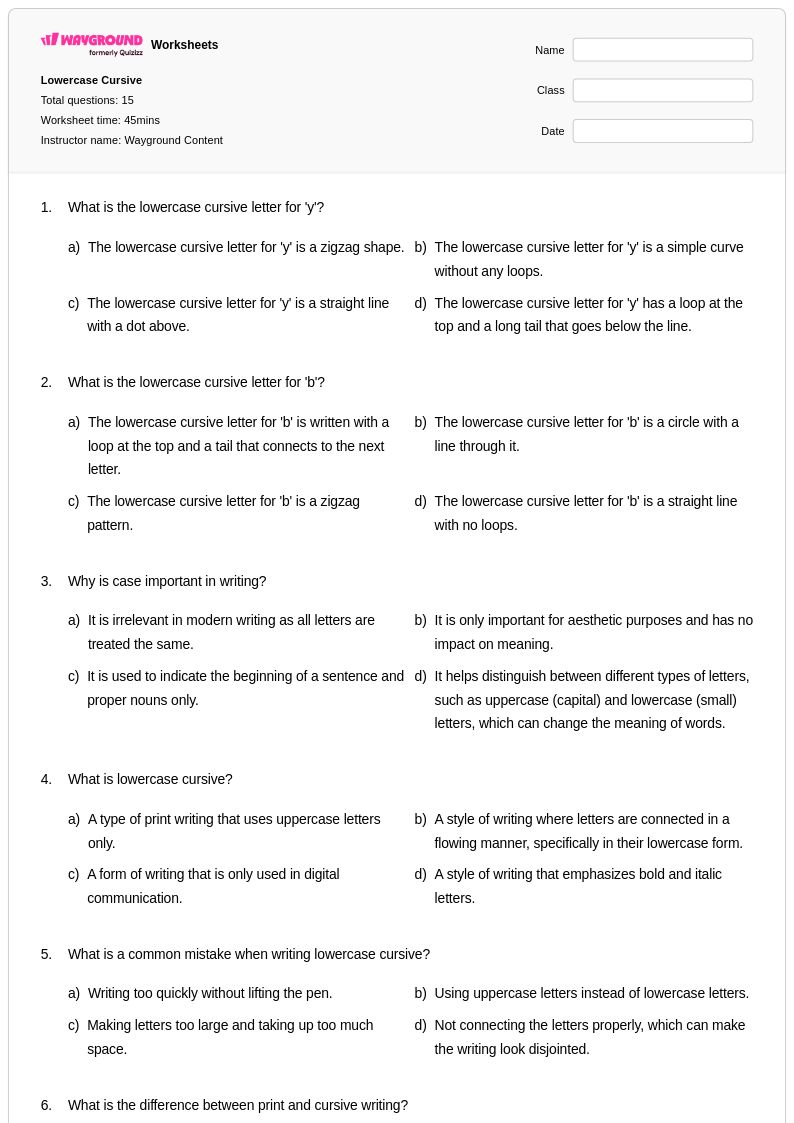
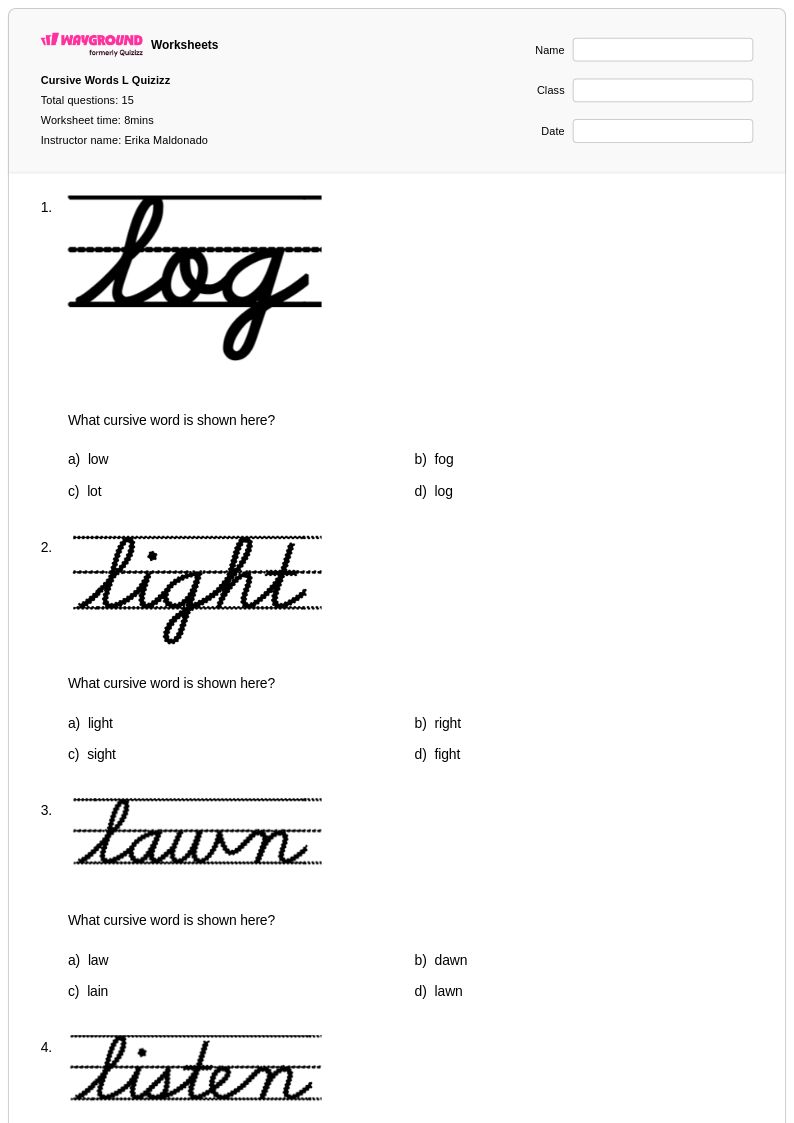
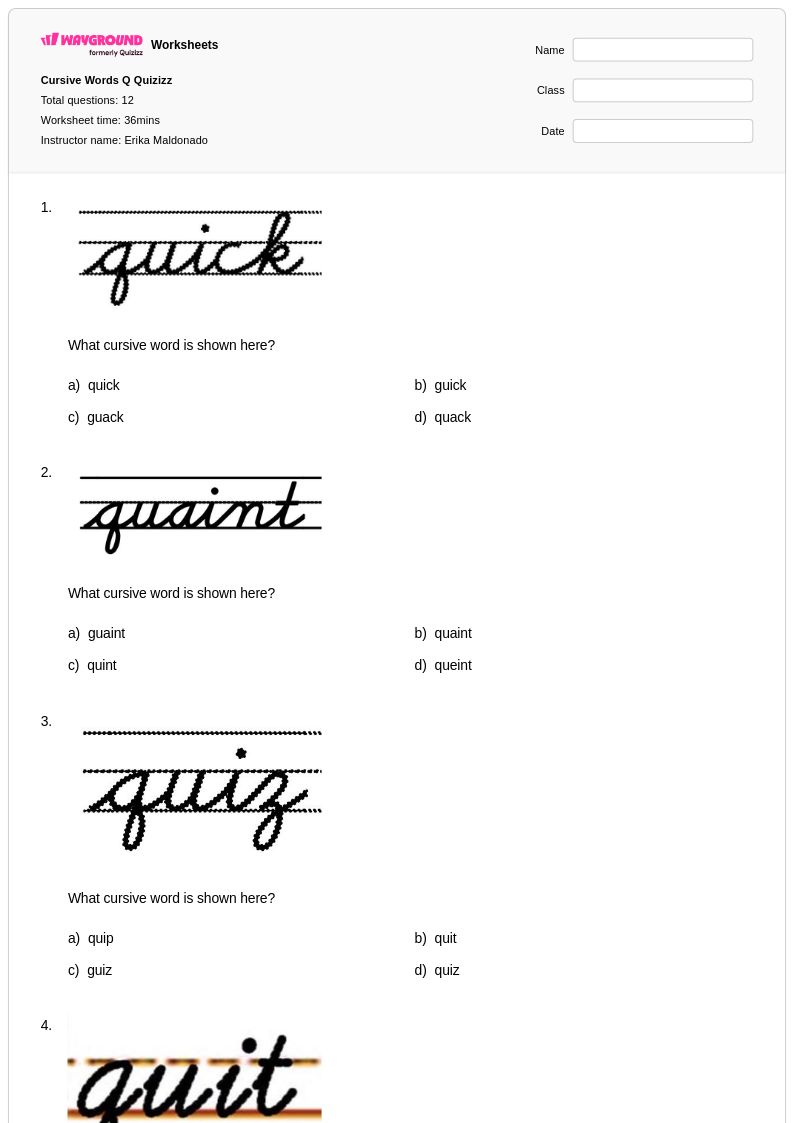
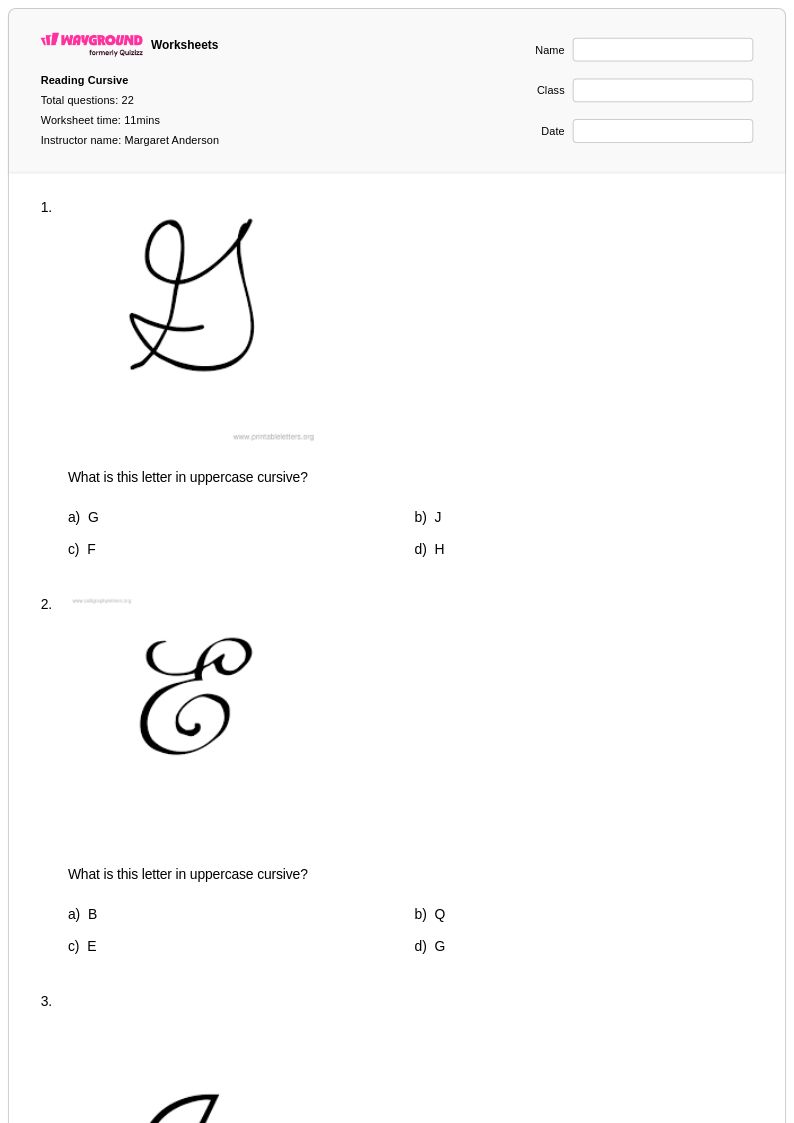
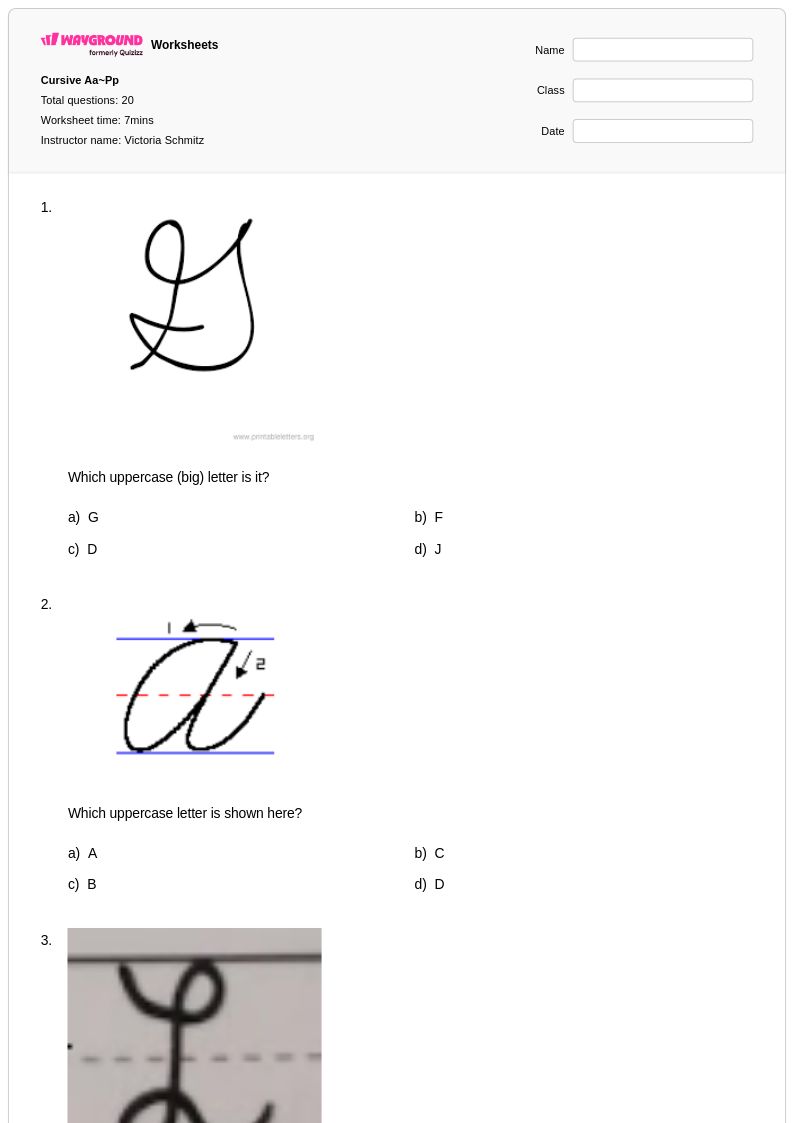
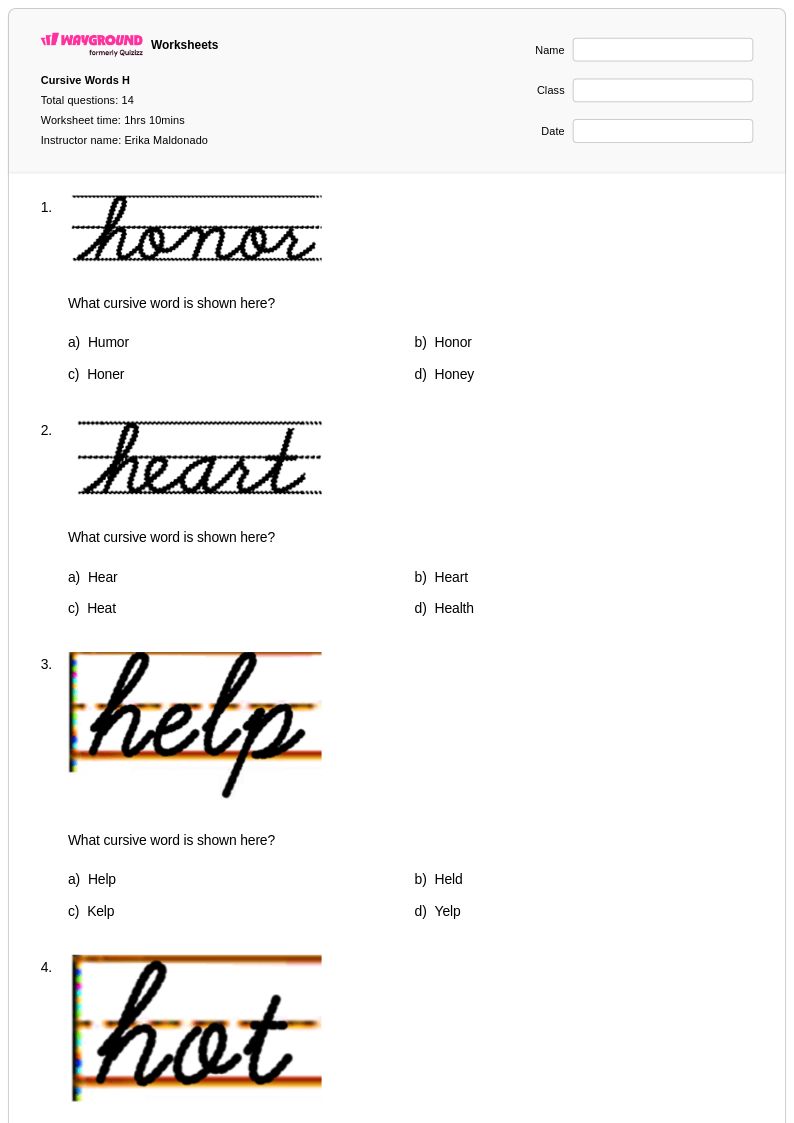
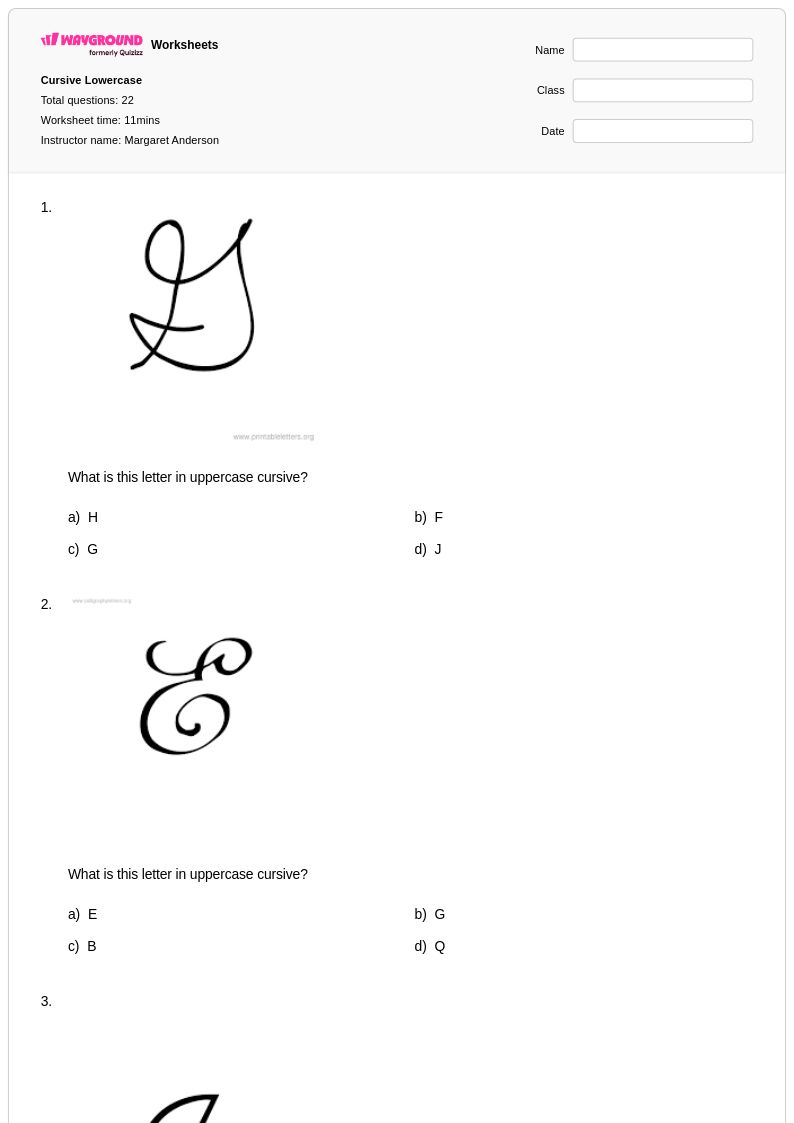
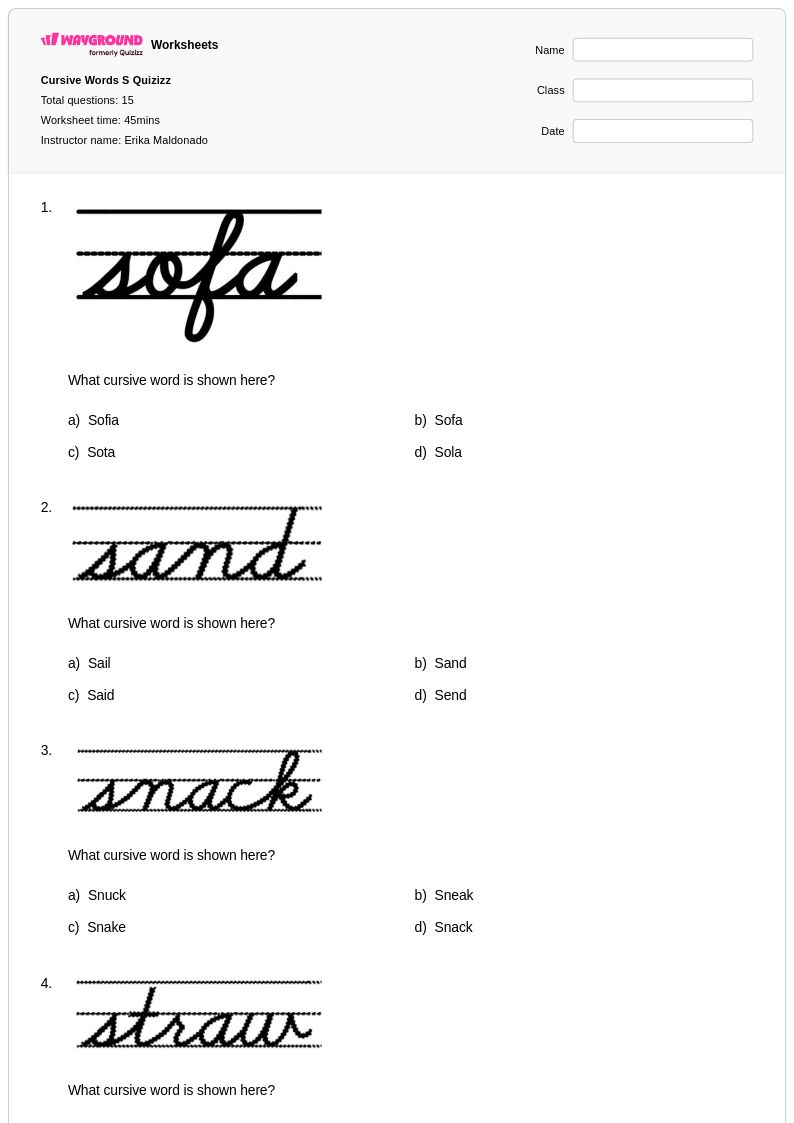
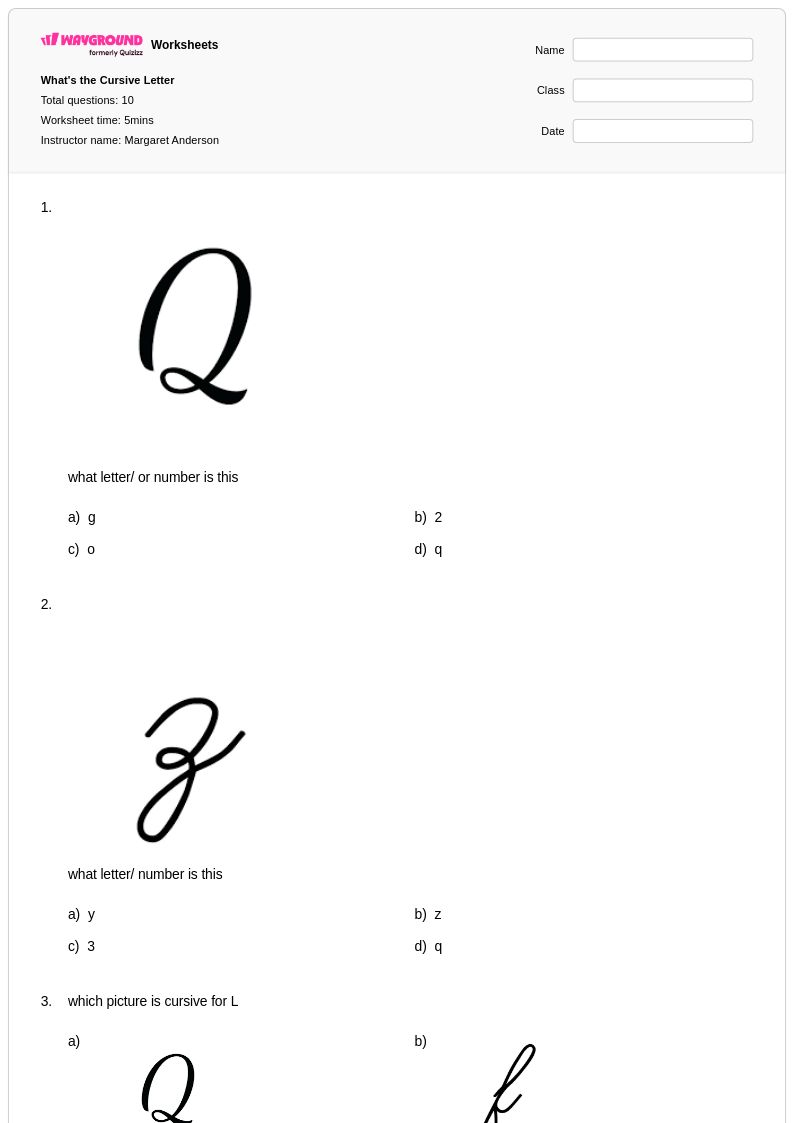
Uppercase cursive worksheets for Grade 4 students available through Wayground (formerly Quizizz) provide essential practice for developing proper letter formation and fluency in formal handwriting skills. These comprehensive printables focus specifically on mastering the 26 uppercase cursive letters, helping fourth graders refine their penmanship through structured repetition and guided practice problems. Each worksheet targets critical motor skills development, including proper stroke sequence, letter spacing, and consistent slant angles that form the foundation of legible cursive writing. Students benefit from varied exercise formats that progress from tracing activities to independent letter formation, with answer keys and assessment rubrics helping teachers monitor progress effectively. These free pdf resources support both classroom instruction and home practice, ensuring students develop the muscle memory and confidence needed for advanced cursive writing tasks.
Wayground (formerly Quizizz) empowers educators with millions of teacher-created uppercase cursive resources that streamline lesson planning and provide targeted skill practice for Grade 4 handwriting instruction. The platform's robust search and filtering capabilities allow teachers to quickly locate worksheets aligned with specific handwriting standards and learning objectives, while differentiation tools enable customization for students with varying skill levels. These versatile resources are available in both printable pdf format for traditional paper-and-pencil practice and digital formats for interactive learning experiences. Teachers can effectively use these materials for initial instruction, remediation support for struggling writers, and enrichment activities for advanced students, creating a comprehensive handwriting curriculum that addresses individual learning needs. The extensive collection ensures educators have access to fresh practice materials that maintain student engagement while building essential cursive writing proficiency.
FAQs
How do I teach uppercase cursive letters to beginners?
Start by grouping uppercase cursive letters by their stroke families rather than alphabetical order — for example, letters that begin with an overcurve (like A, C, and E) should be introduced together so students build on familiar muscle memory. Demonstrate each letter slowly on the board while narrating the stroke direction, then have students trace before writing independently. Consistent daily practice in short sessions is more effective than infrequent longer ones for building automaticity.
What exercises help students practice uppercase cursive handwriting?
Structured tracing exercises are the most effective starting point, as they guide students through correct stroke order before they attempt freehand writing. Following tracing with copy practice — where students reproduce a letter or word directly beneath a model — reinforces proper sizing and spacing. Sentence-level practice that incorporates uppercase cursive letters at the start of names or proper nouns gives students meaningful, contextual repetition beyond isolated letter drills.
What mistakes do students commonly make when forming uppercase cursive letters?
The most frequent errors include inconsistent letter sizing, where capitals are written the same height as lowercase letters, and incorrect starting points that disrupt stroke flow. Students also commonly struggle with the connecting stroke after uppercase letters, since many uppercase cursive forms do not connect naturally to the following lowercase letter. Reversals and mirror-image formations are common with letters like S, J, and Z, which require explicit attention to directionality during instruction.
How can I differentiate uppercase cursive practice for students at different skill levels?
For students who are still developing fine motor control, begin with larger-format tracing sheets and focus on one letter family at a time rather than the full alphabet. More advanced students can move to word- and sentence-level practice that emphasizes consistent slant and smooth connections. On Wayground, teachers can apply accommodations such as read aloud support and reduced answer choices to individual students, allowing the same worksheet session to serve learners across a range of skill levels without singling anyone out.
How do I use Wayground's uppercase cursive worksheets in my classroom?
Wayground's uppercase cursive worksheets are available as printable PDFs for traditional handwriting practice and in digital formats for technology-integrated classrooms, giving teachers flexibility for in-class work, homework, or independent centers. Teachers can also host worksheets as a quiz on Wayground, enabling real-time progress monitoring. Answer keys are included with every worksheet, so students can self-assess their letter formation and teachers can quickly identify which letters need targeted reteaching.
At what grade level should students learn uppercase cursive letters?
Uppercase cursive is typically introduced after students have developed foundational lowercase cursive fluency, which most curricula place in grades 3 to 4. However, some programs introduce select uppercase letters earlier when they appear at the start of students' names or common proper nouns. Students who struggle with print letter formation may benefit from additional fine motor preparation before beginning uppercase cursive instruction regardless of grade level.