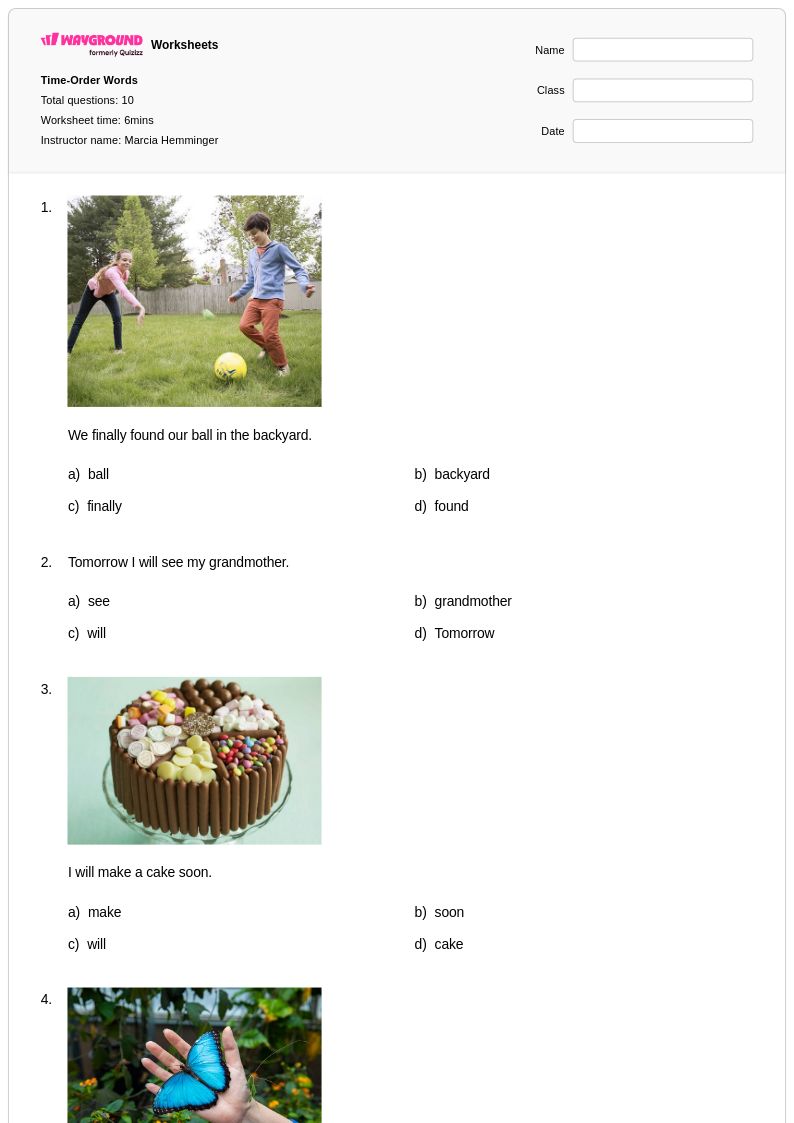
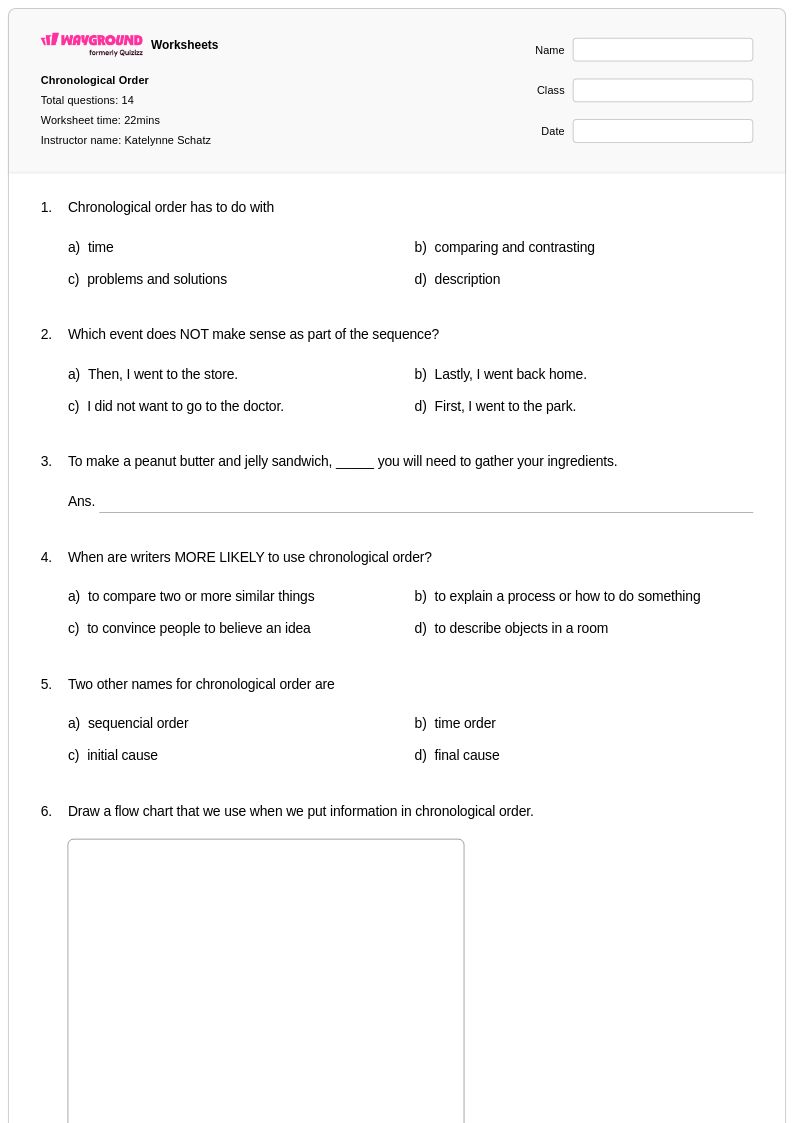
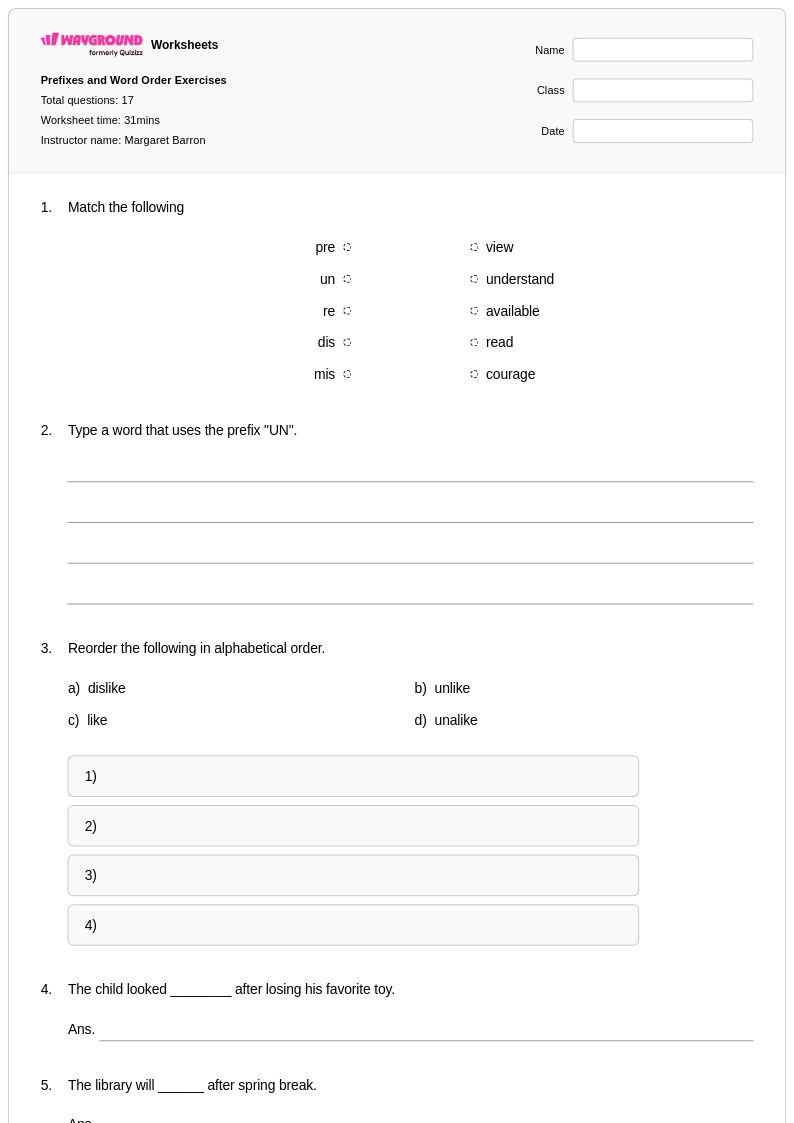
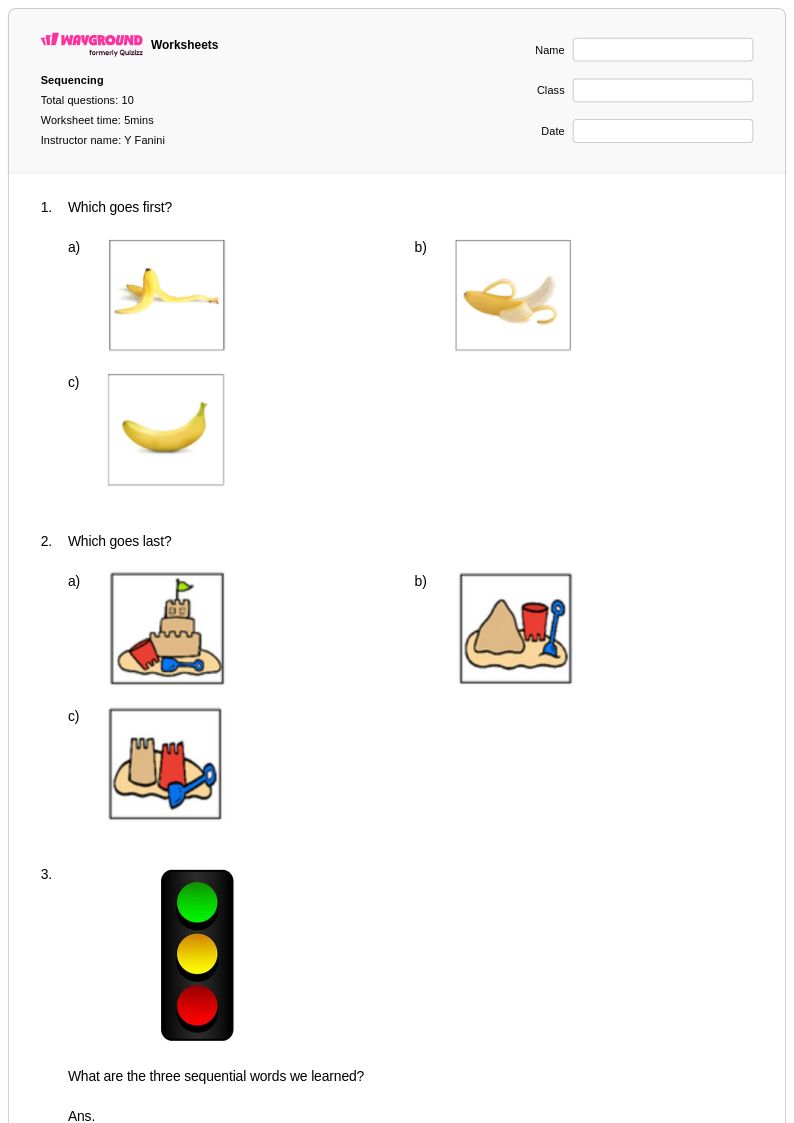
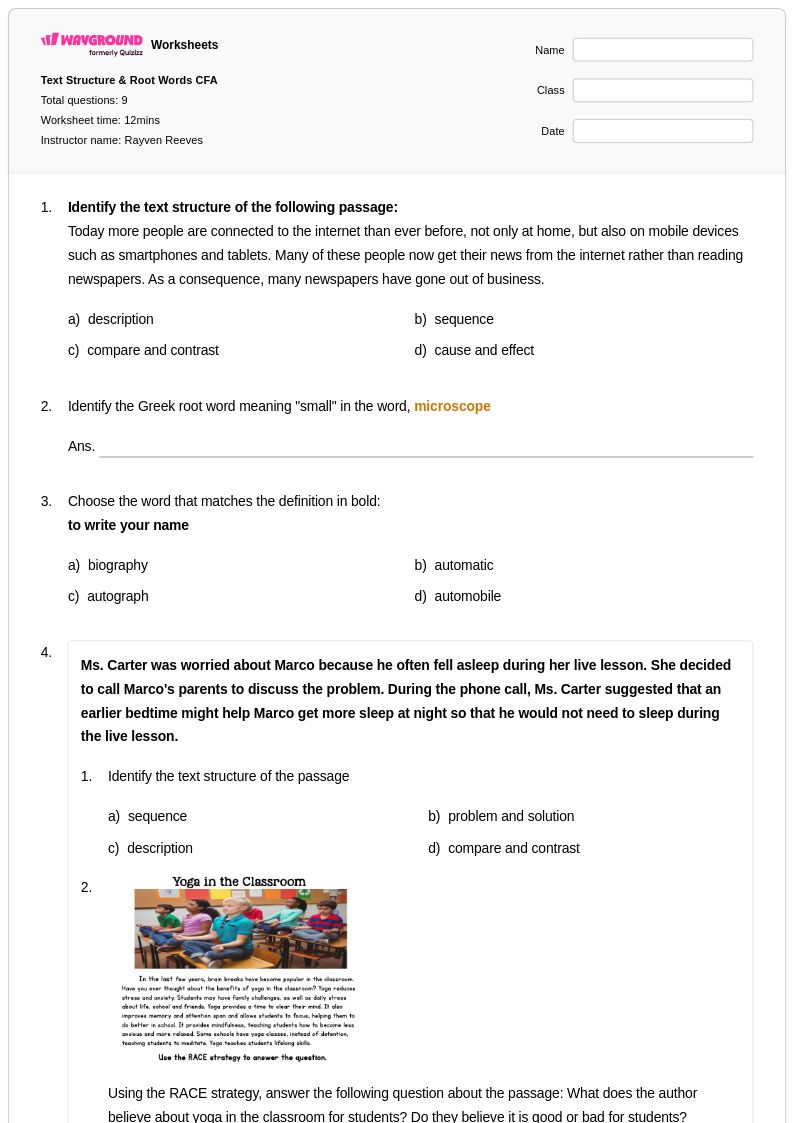
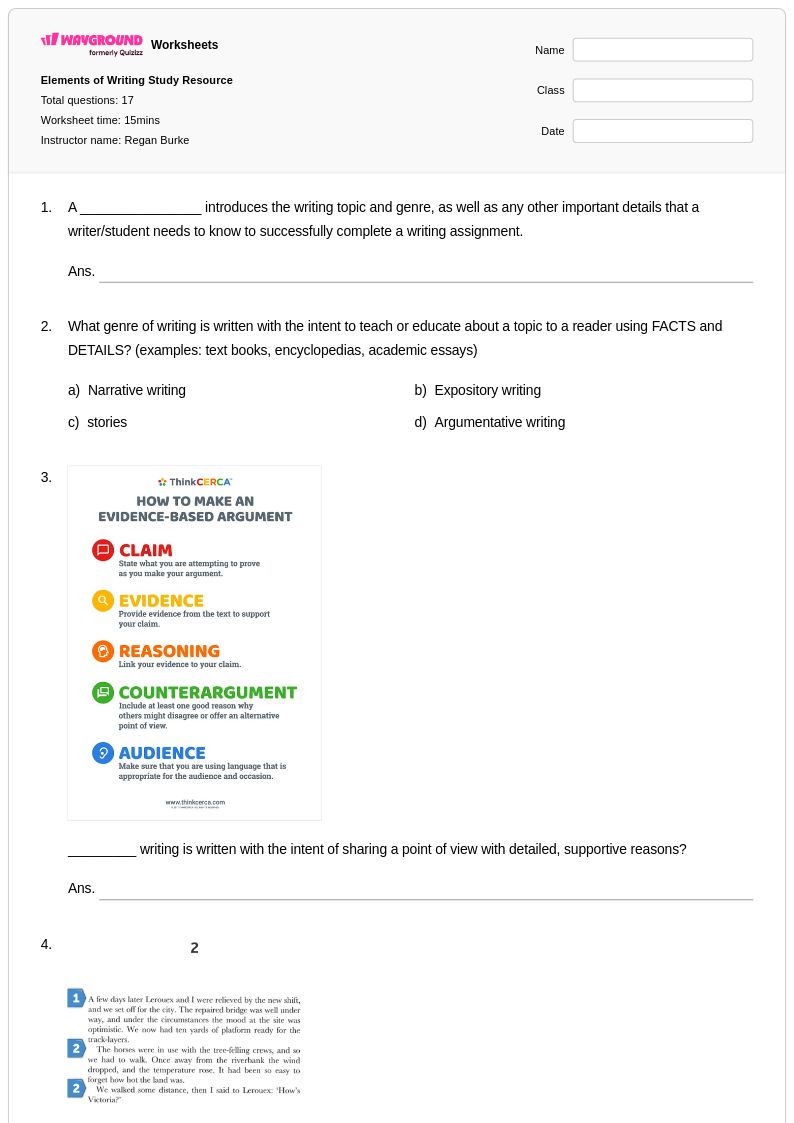
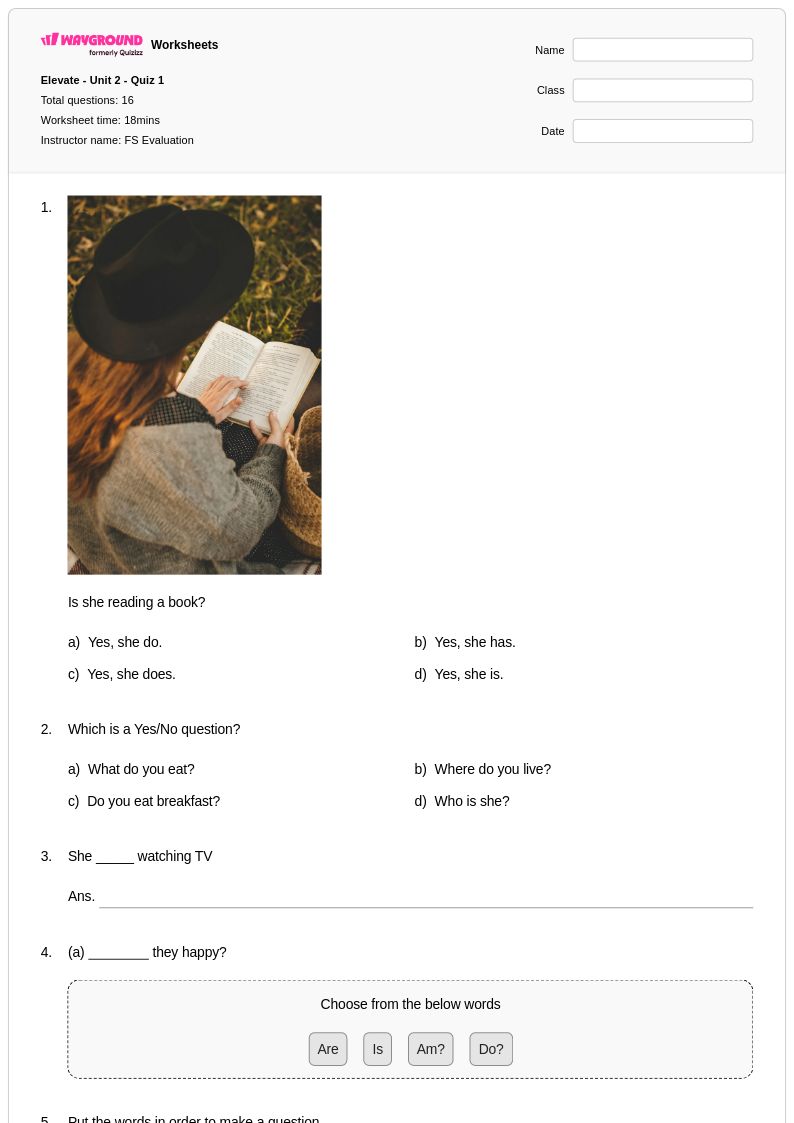
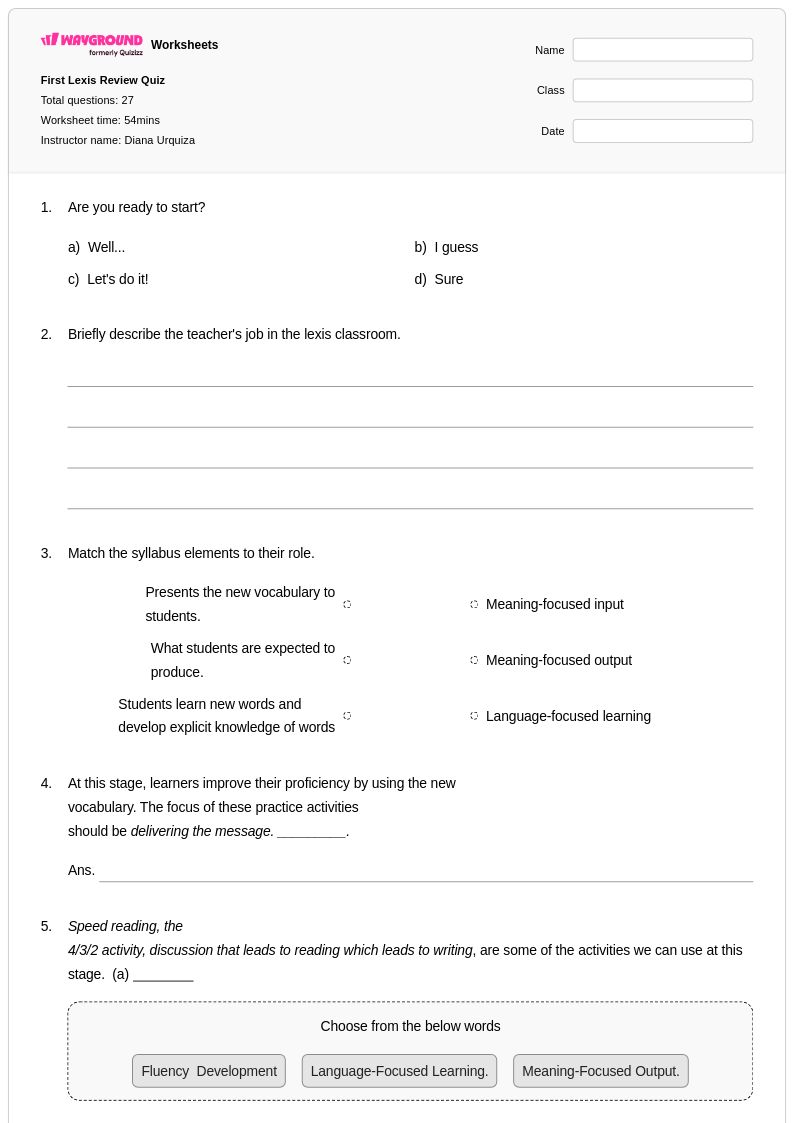
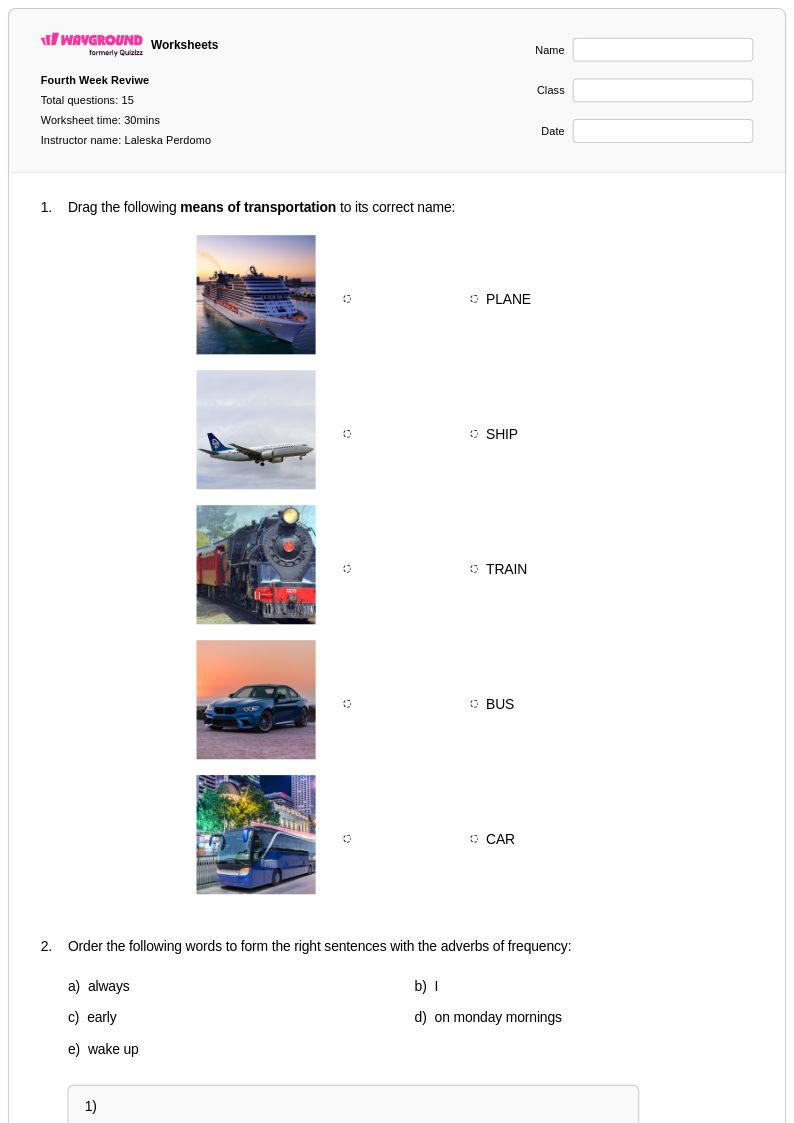
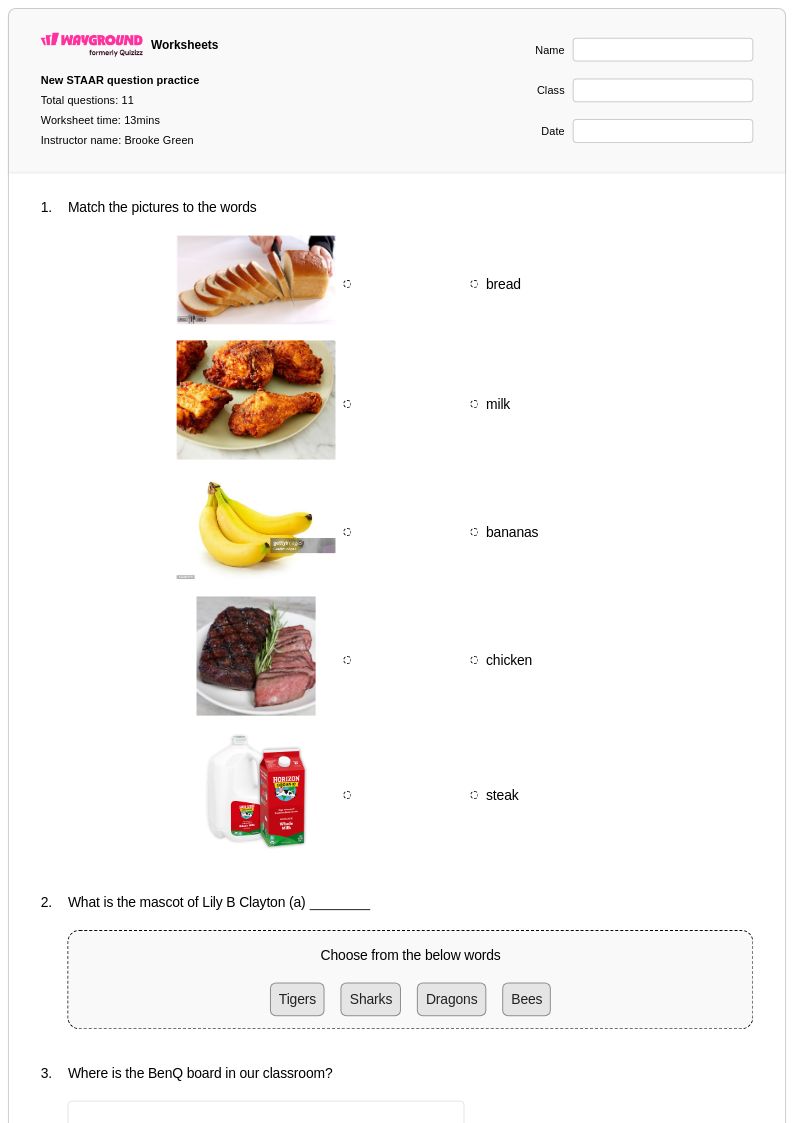
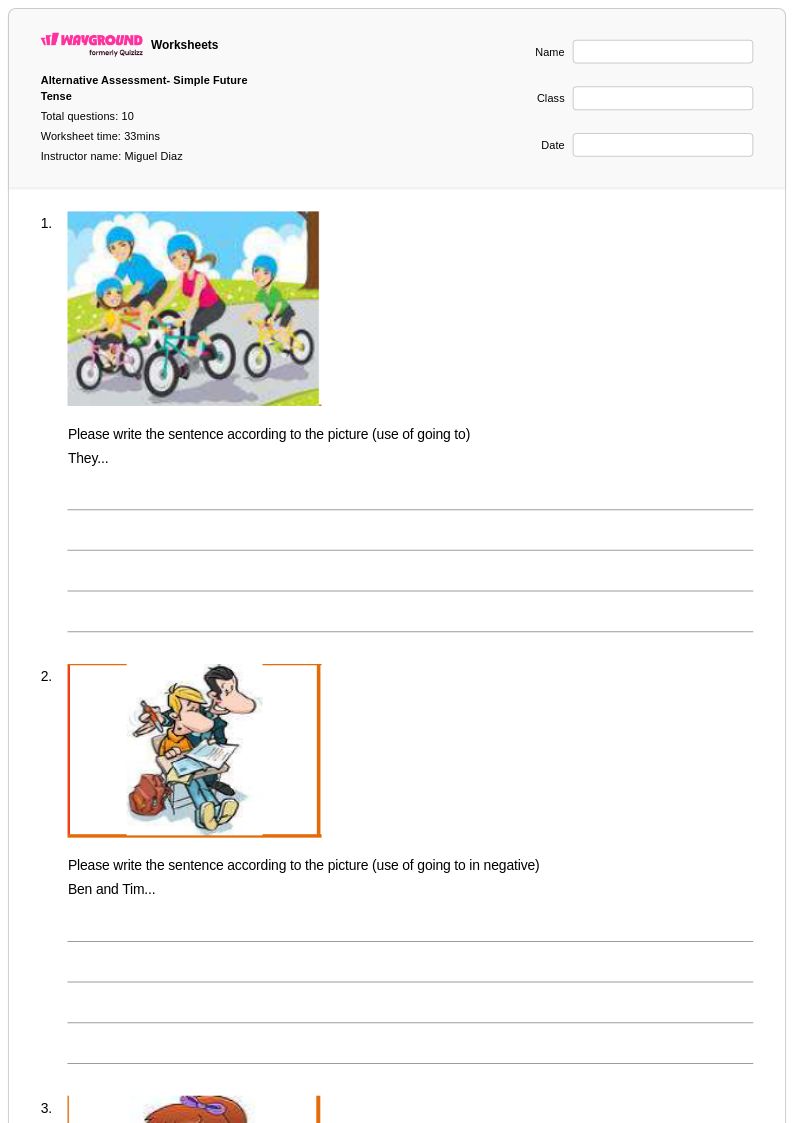
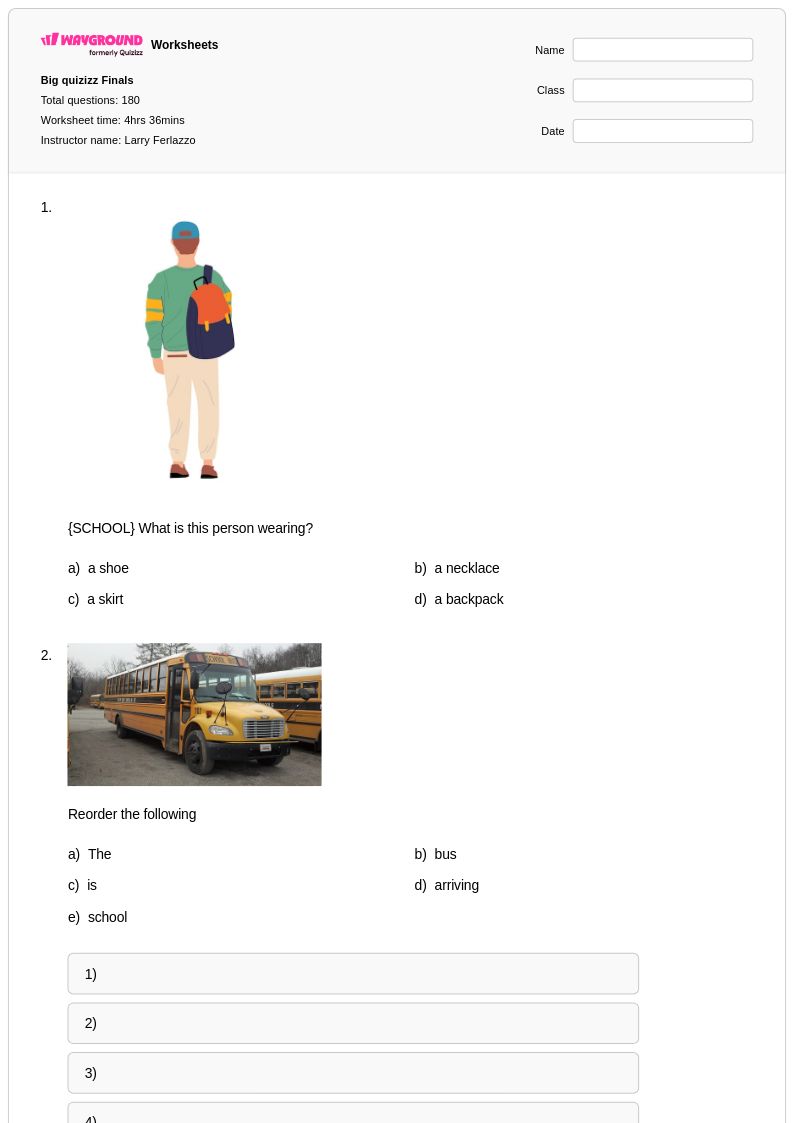
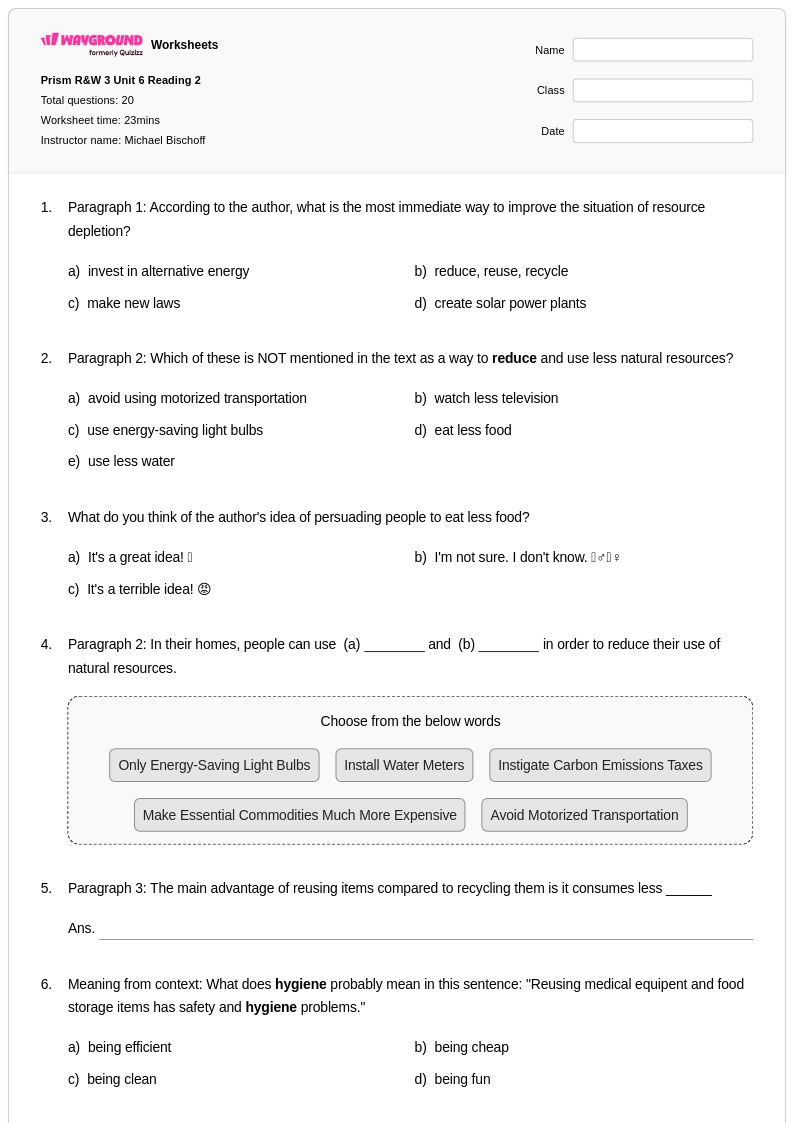
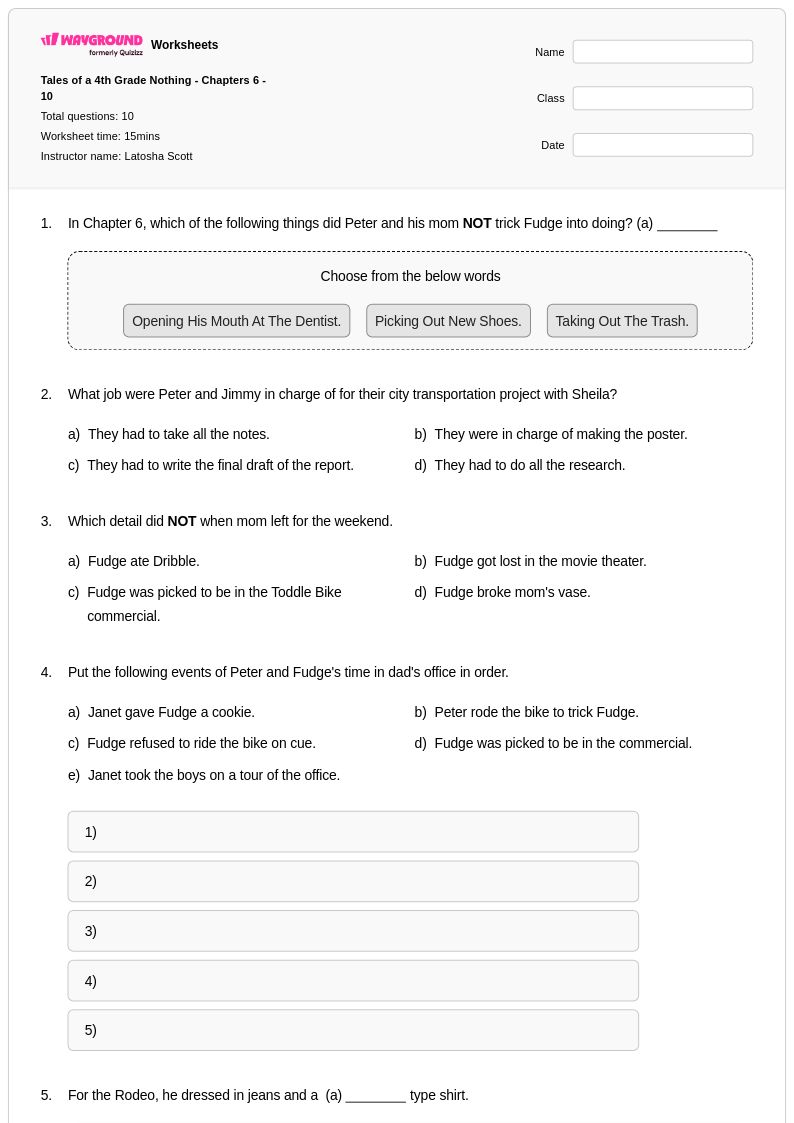
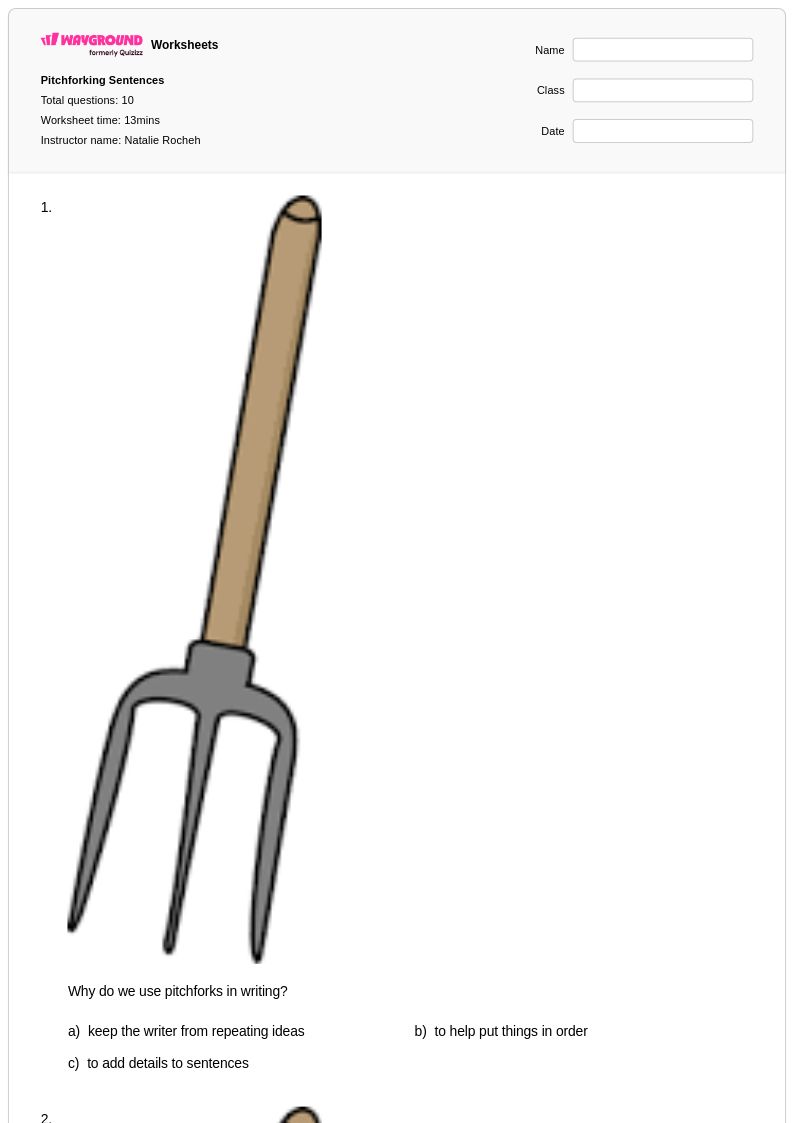
Master time order words with Wayground's free printable worksheets and practice problems that help students organize their writing chronologically using transitions like first, next, then, and finally, complete with answer keys.
Explore printable Using Time Order Words worksheets
Using time order words effectively transforms student writing by providing clear chronological structure and improved narrative flow. Wayground's comprehensive collection of time order word worksheets offers students targeted practice in identifying, selecting, and implementing transitional phrases like "first," "next," "meanwhile," and "finally" to create coherent sequences in their compositions. These free printable resources include answer keys and structured practice problems that guide learners through various exercises, from simple sentence completion activities to complex paragraph organization tasks. The worksheets systematically build students' understanding of temporal relationships in writing, helping them master essential transition words that signal sequence, duration, and chronological connections between ideas and events.
Wayground's extensive library supports educators with millions of teacher-created resources specifically designed for writing organization and structure instruction. The platform's robust search and filtering capabilities enable teachers to quickly locate time order word worksheets that align with curriculum standards and match their students' specific learning needs. These versatile materials are available in both printable PDF formats for traditional classroom use and digital versions for online instruction, offering flexible customization options that accommodate diverse teaching environments. Teachers can easily differentiate instruction by selecting worksheets with varying complexity levels, use the resources for targeted remediation with struggling writers, or implement them as enrichment activities for advanced students seeking to refine their transitional writing techniques.
FAQs
How do I teach time order words to students?
Introduce time order words by connecting them to familiar sequences students already know, such as the steps of a morning routine or a recipe. Model how transitional phrases like 'first,' 'next,' 'then,' and 'finally' signal the order of events in both reading and writing. Once students recognize these words in mentor texts, move them into production tasks where they sequence sentences or paragraphs using the transitions themselves. Consistent exposure across reading and writing contexts reinforces retention.
What exercises help students practice using time order words?
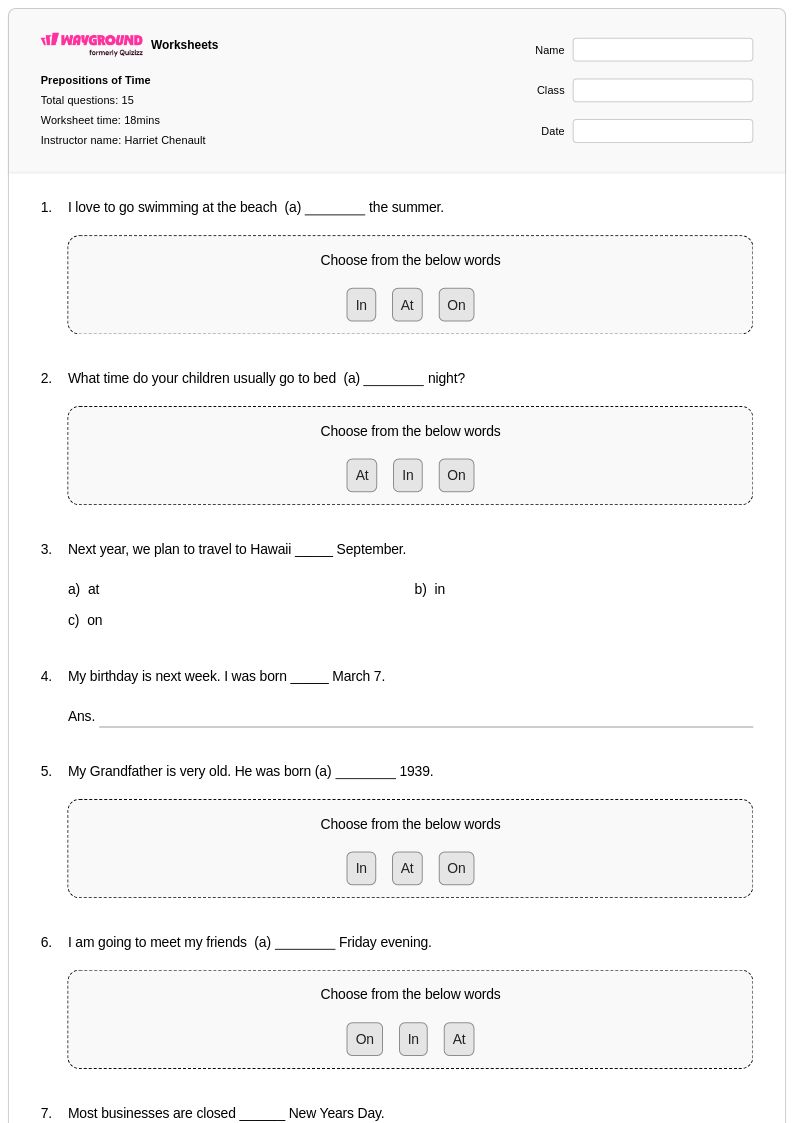
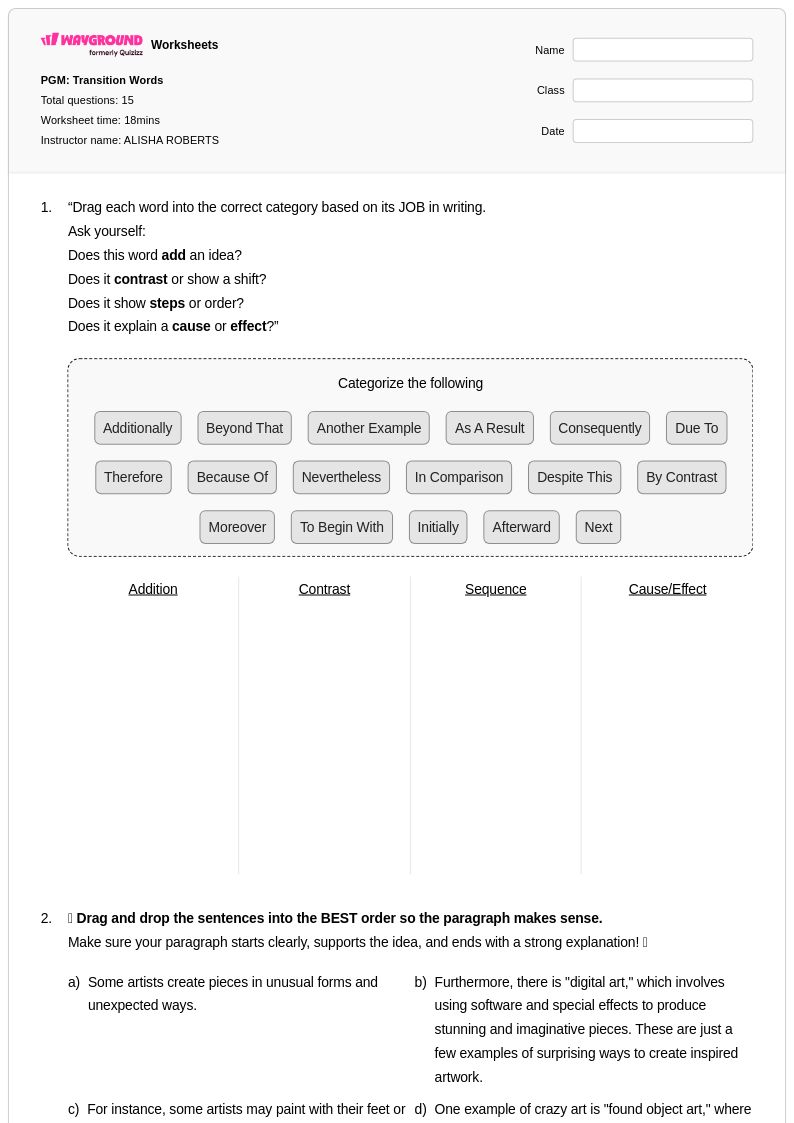
Effective practice exercises include sentence completion activities where students select the correct transitional phrase from a set of options, cut-and-sequence tasks where students physically reorder scrambled sentences using time cues, and paragraph reconstruction tasks where students identify and correct misplaced transitions. Moving from isolated sentence work to full paragraph organization builds the skill progressively and mirrors real writing demands.
What mistakes do students commonly make when using time order words?
The most common error is overusing a single transition, typically 'then,' throughout an entire piece rather than varying the language with words like 'meanwhile,' 'afterward,' or 'finally.' Students also frequently misplace transitions mid-paragraph, signaling a new step before the previous one is complete, which disrupts chronological clarity. Another common mistake is treating time order words as optional decoration rather than functional anchors that guide the reader through sequence.
How can I use time order word worksheets to support struggling writers?
For struggling writers, start with sentence-level completion exercises that provide a word bank of transitions, reducing the cognitive load of recall while still requiring students to apply correct placement. Gradually increase complexity by moving to paragraph-level tasks once students demonstrate confidence with isolated sentences. On Wayground, teachers can apply accommodations such as read aloud and reduced answer choices to individual students, making the same worksheet accessible to learners at different readiness levels without singling anyone out.
How do I use Wayground's time order words worksheets in my classroom?
Wayground's time order words worksheets are available as printable PDFs for traditional classroom use and in digital formats for technology-integrated or remote learning environments. Teachers can also host the worksheets as a quiz directly on Wayground, making them suitable for formative assessment as well as independent practice. Each worksheet includes a complete answer key, so teachers can efficiently review student work or allow students to self-check their responses.
How do time order words improve student writing?
Time order words provide chronological structure that makes writing easier to follow by signaling when one event ends and another begins. Without these transitions, student narratives and informational pieces often read as disconnected lists of events rather than coherent sequences. Teaching students to deploy transitions like 'first,' 'meanwhile,' and 'finally' deliberately improves both the clarity and the perceived sophistication of their writing.