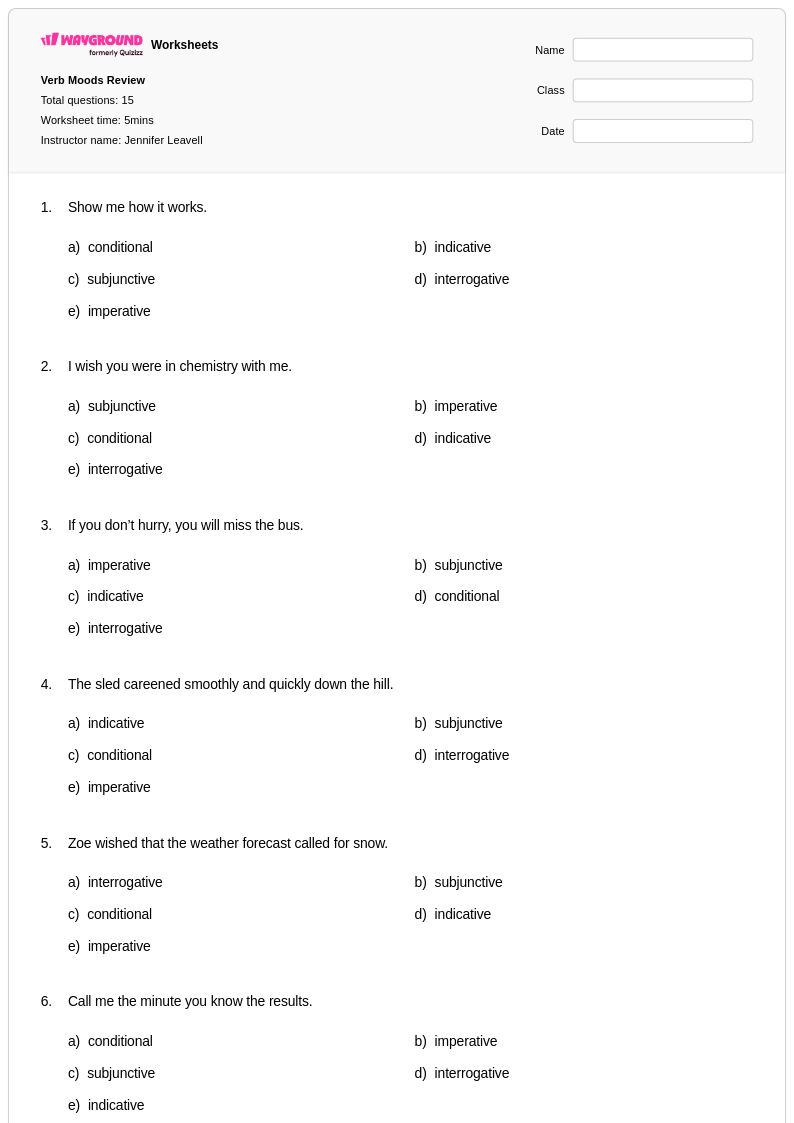
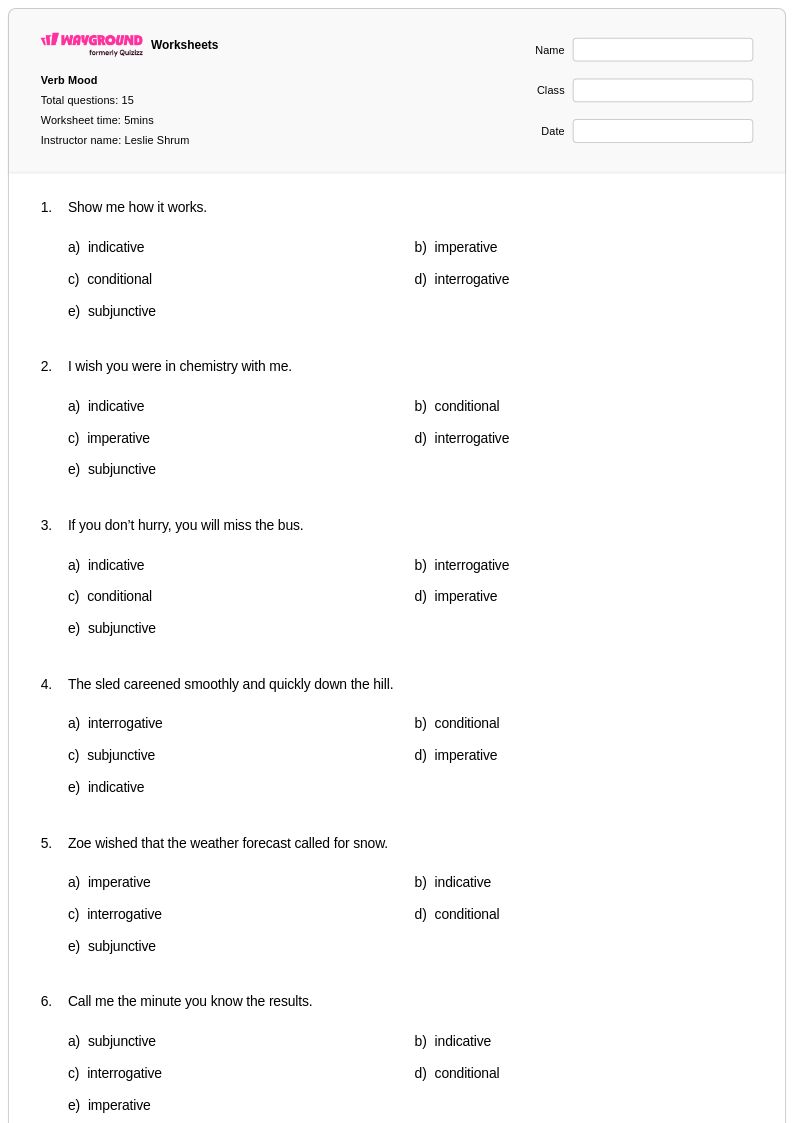
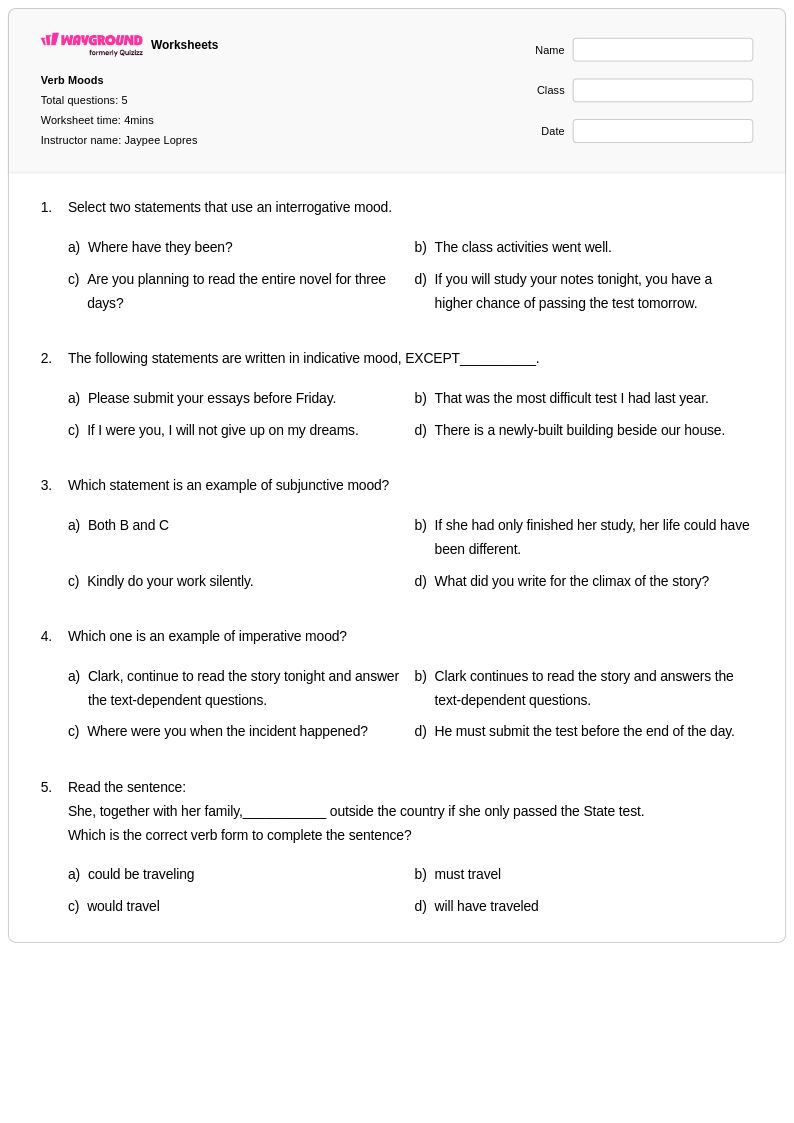
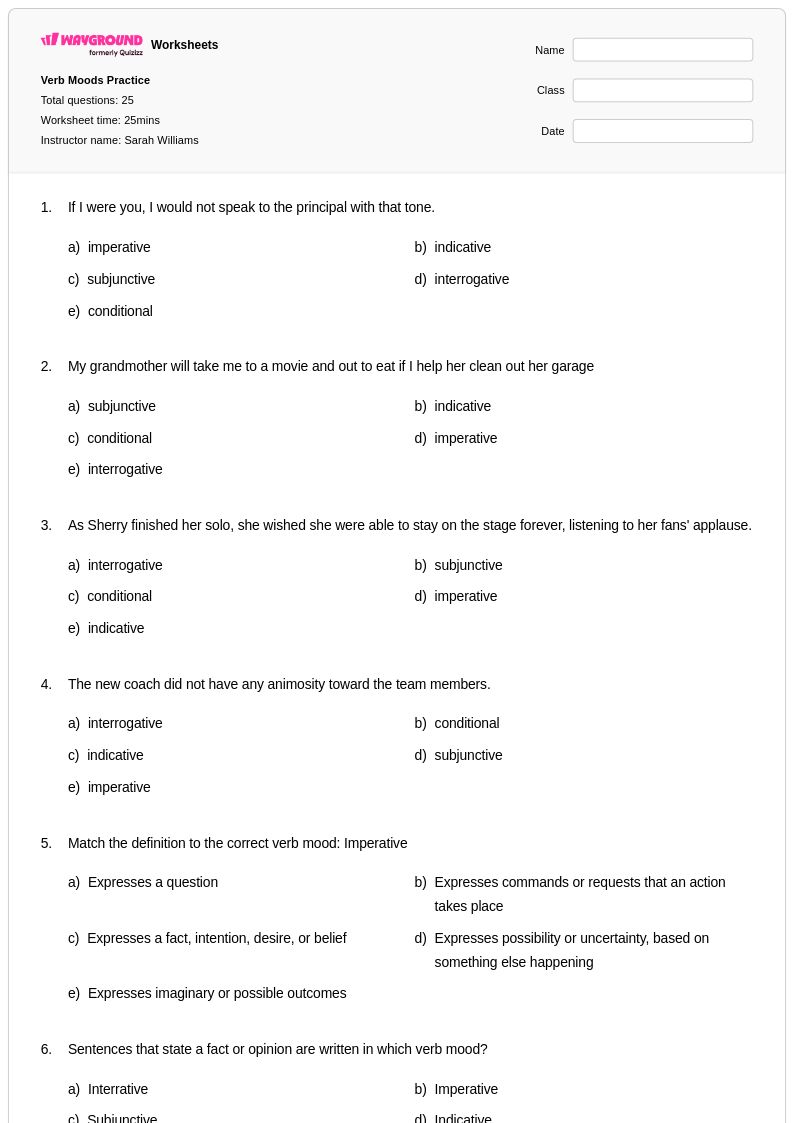
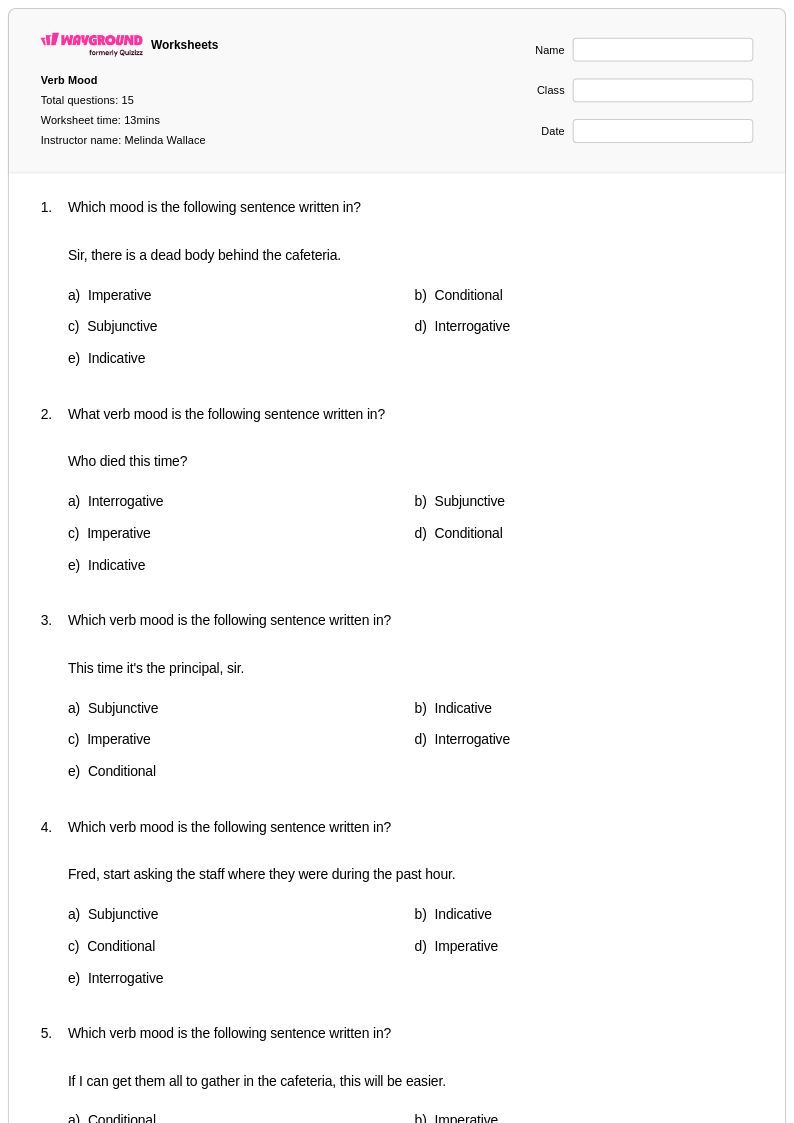
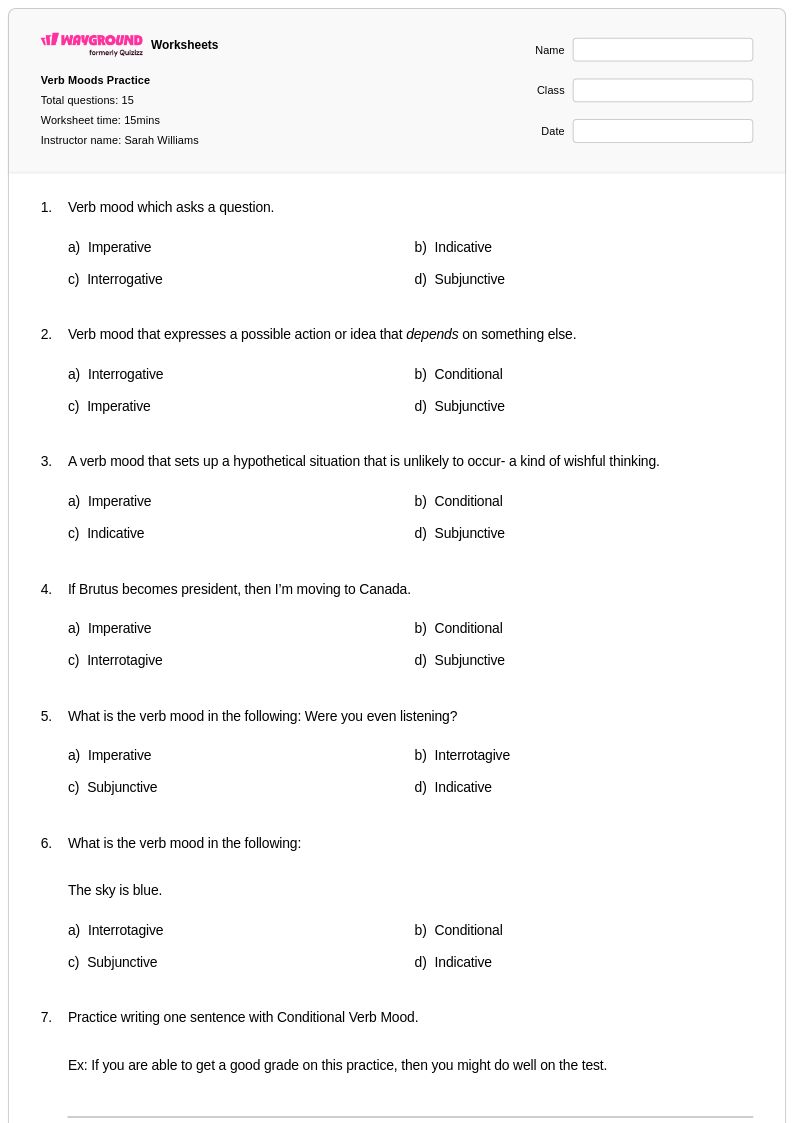
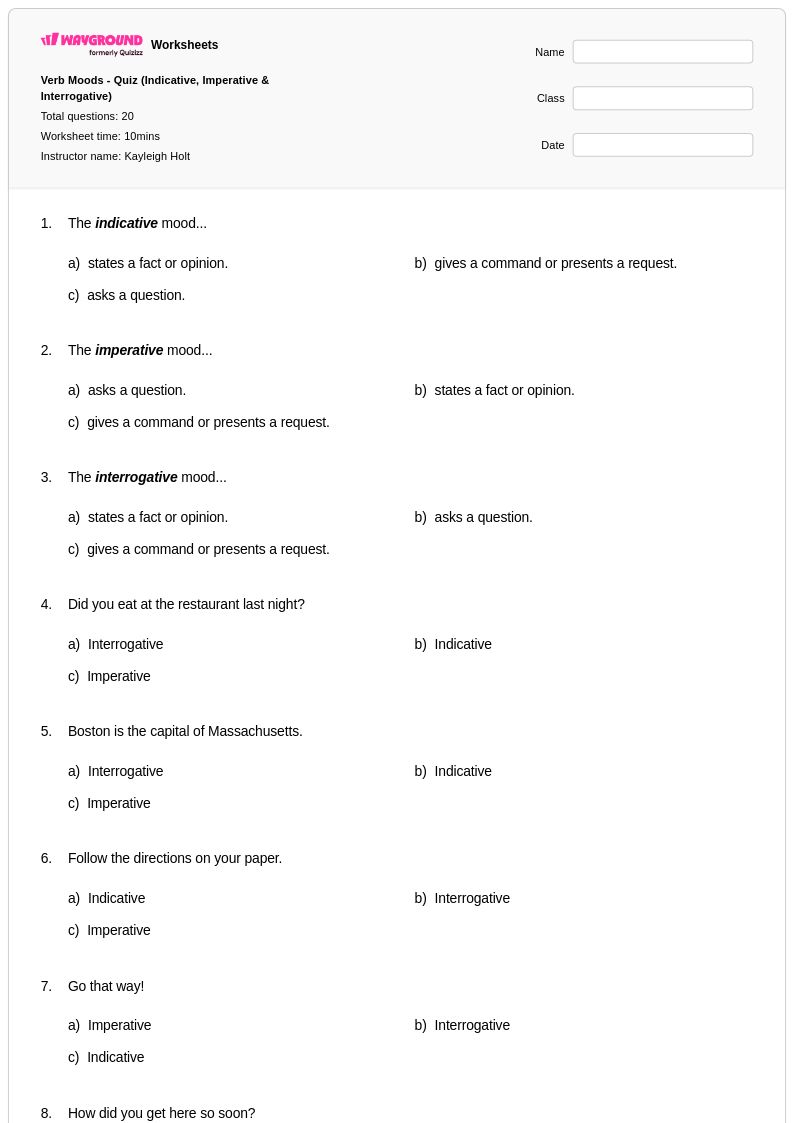
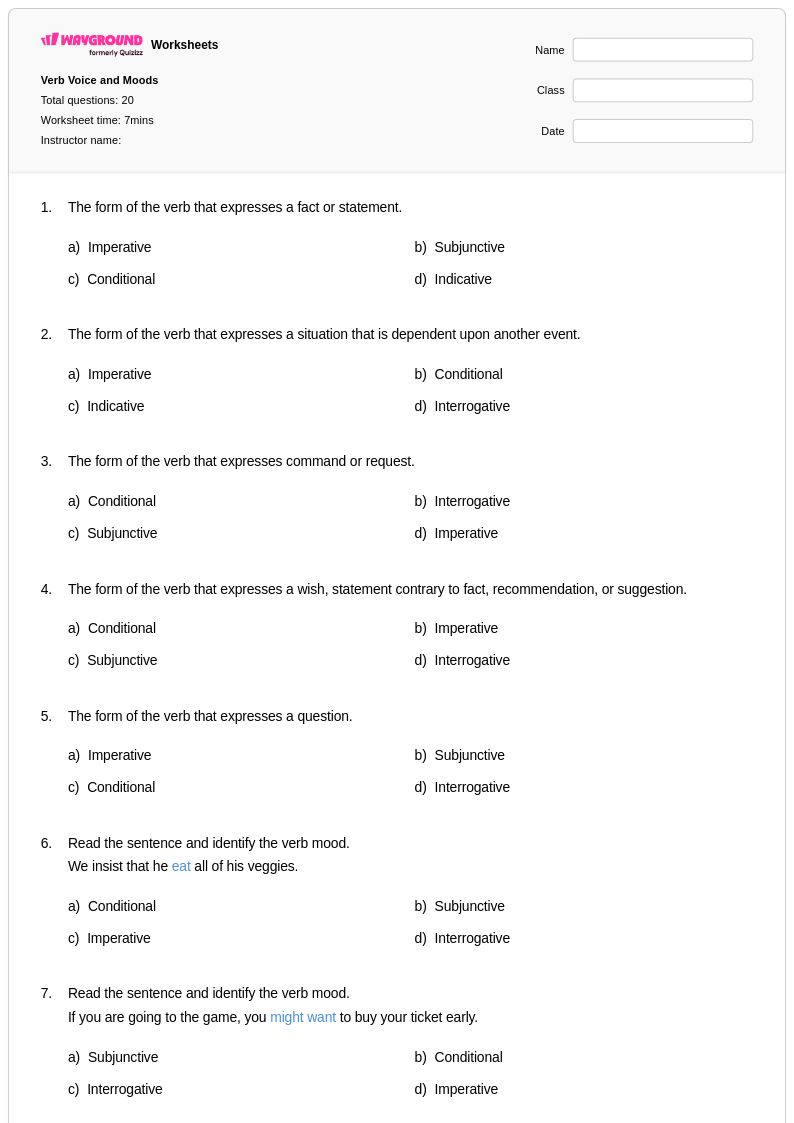
Enhance Grade 10 students' understanding of verb moods with Wayground's comprehensive collection of free worksheets, featuring engaging practice problems, printable PDFs, and complete answer keys to master indicative, imperative, and subjunctive moods.
Explore printable Verb Moods worksheets for Grade 10
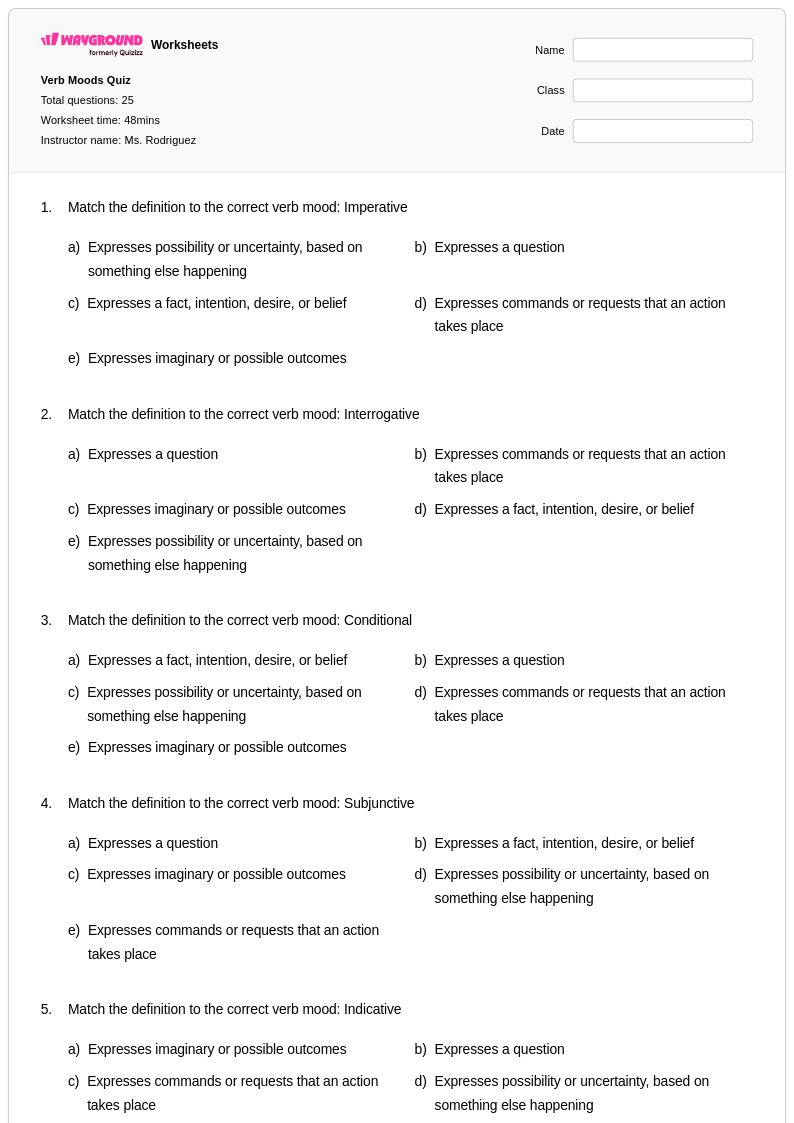
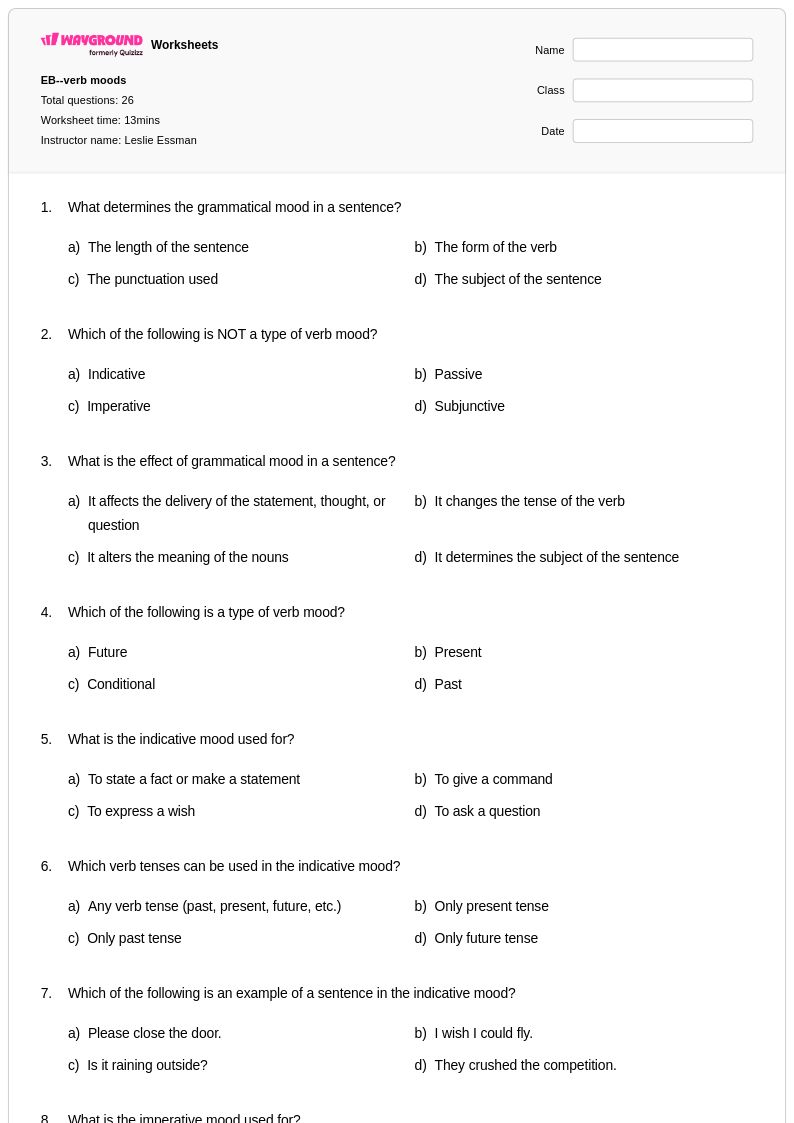
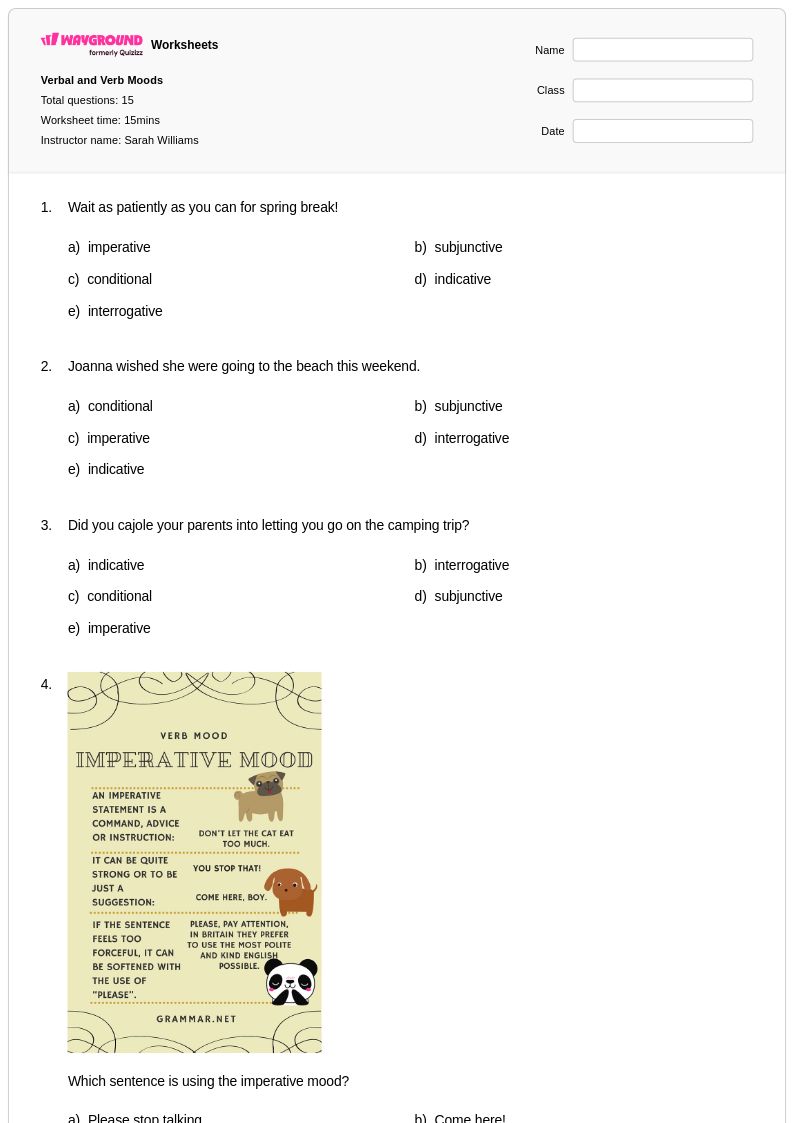
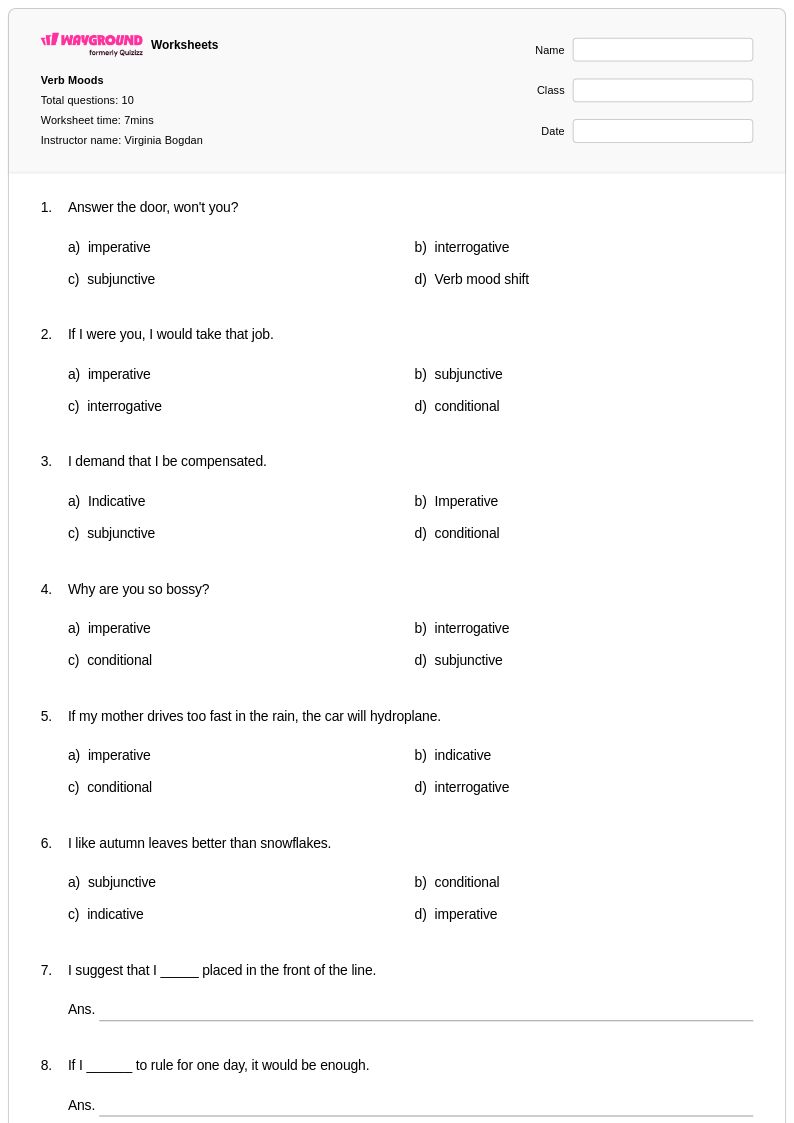
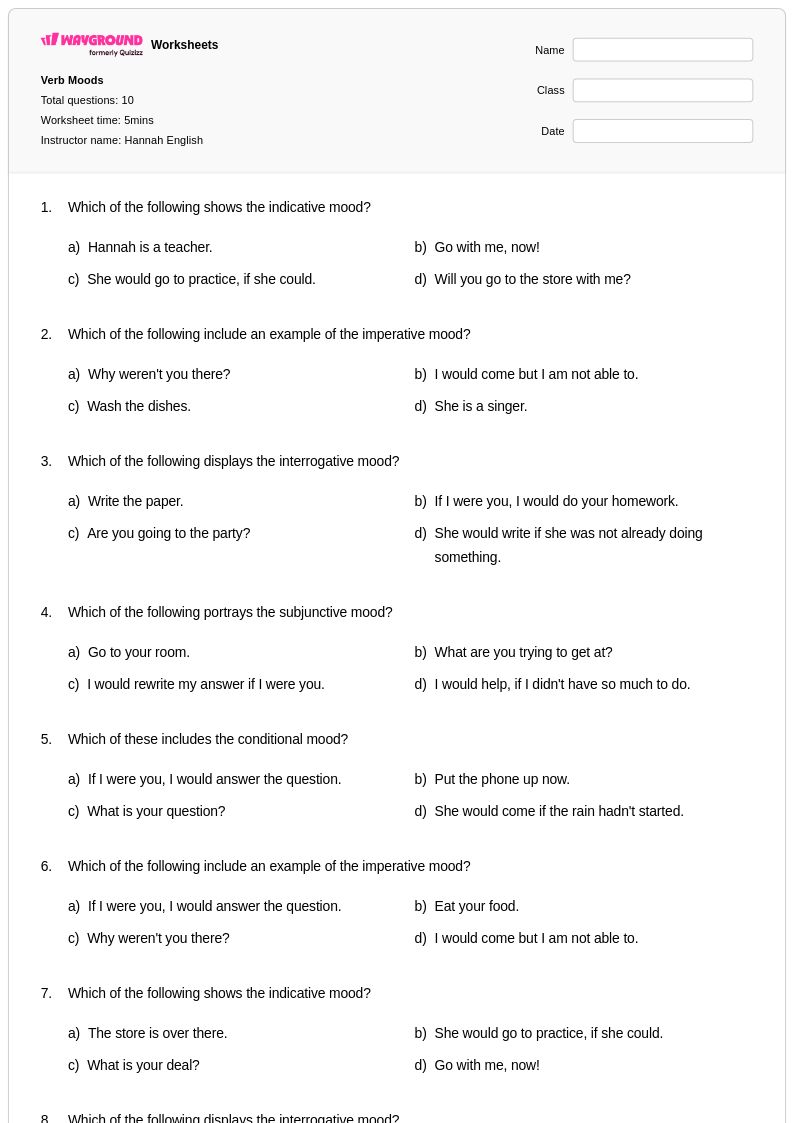
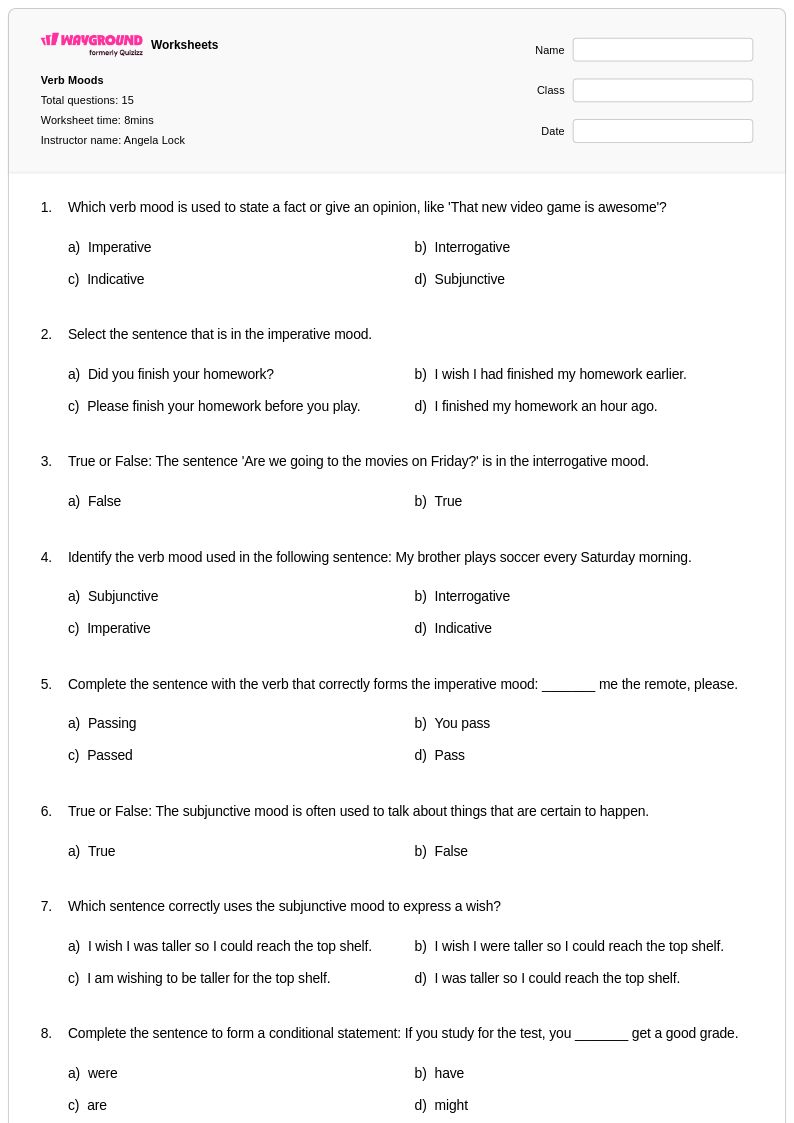
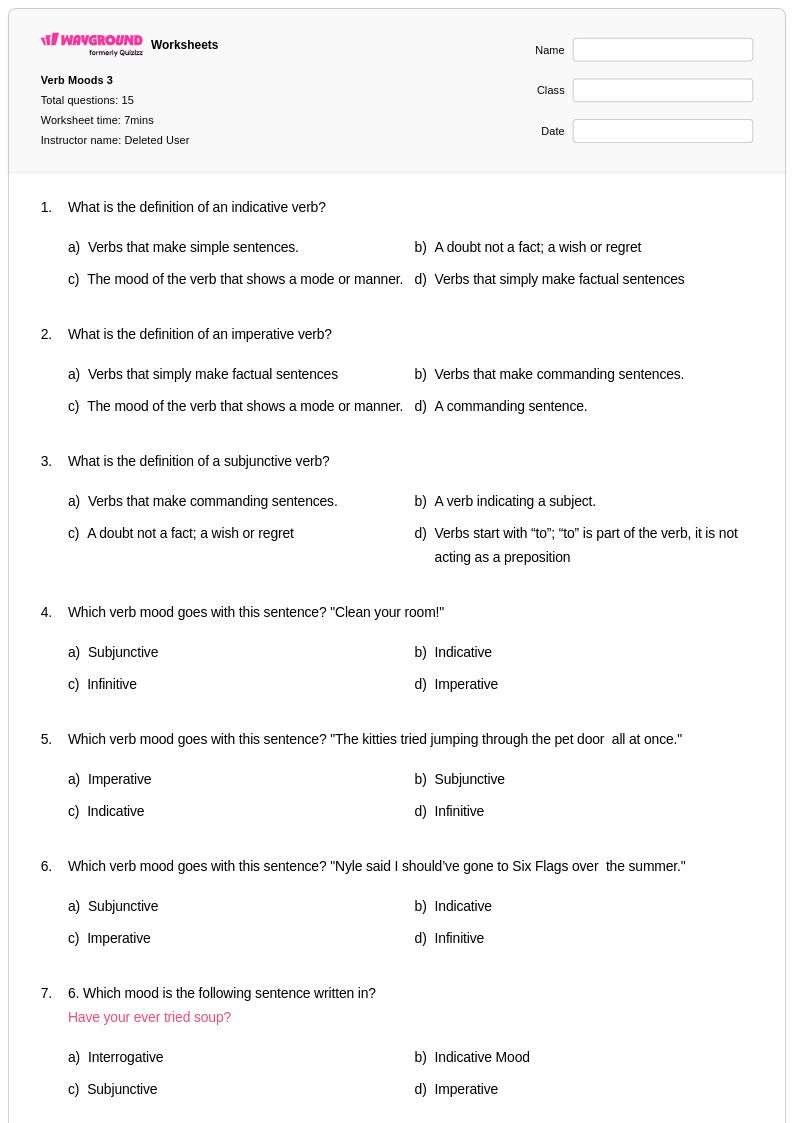
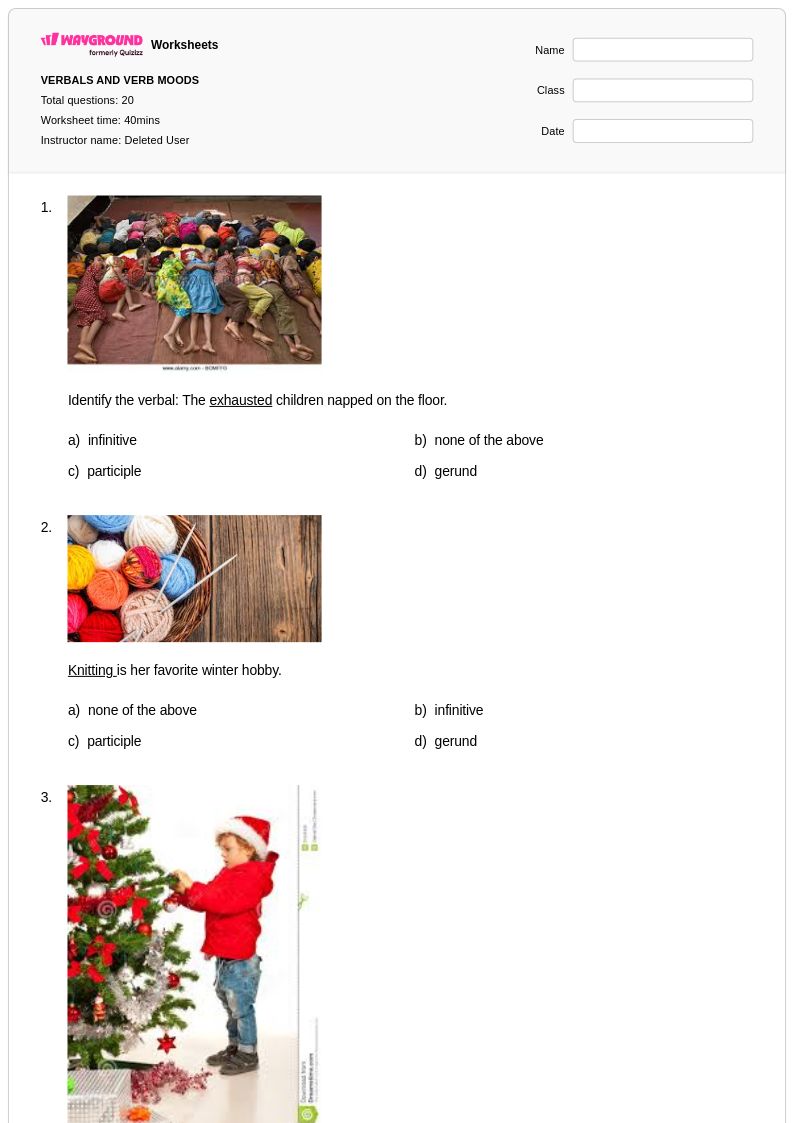
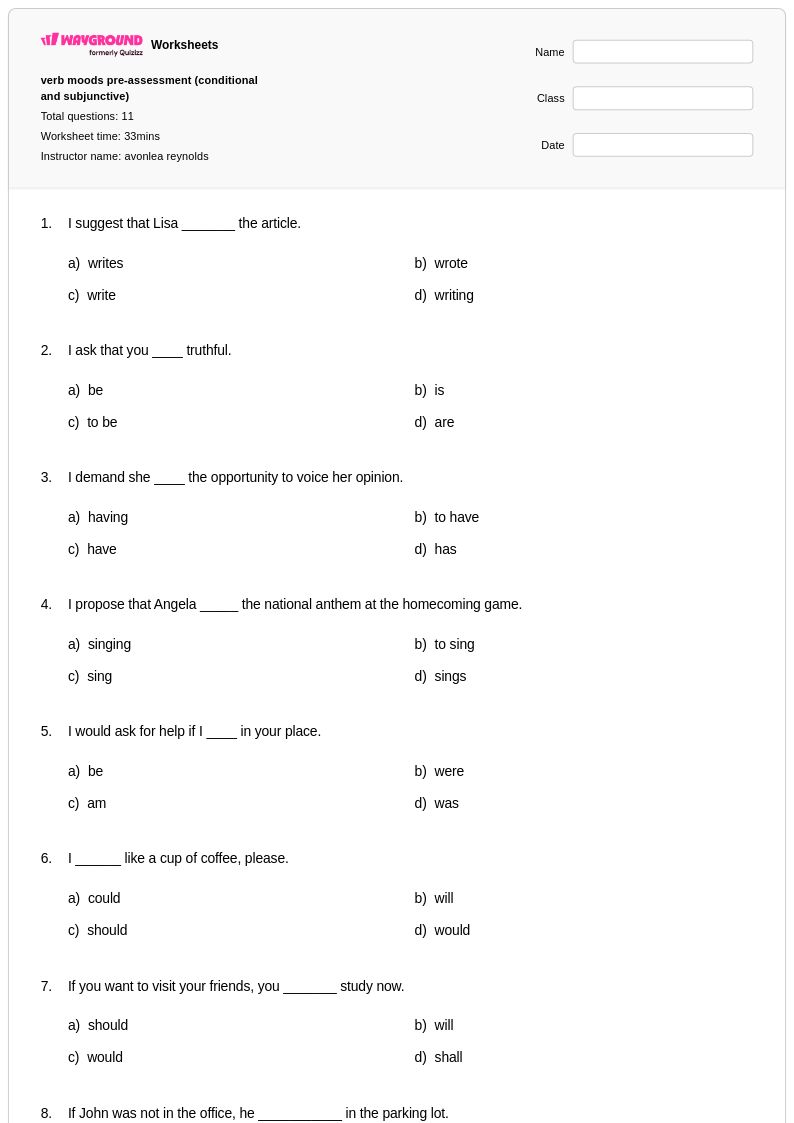
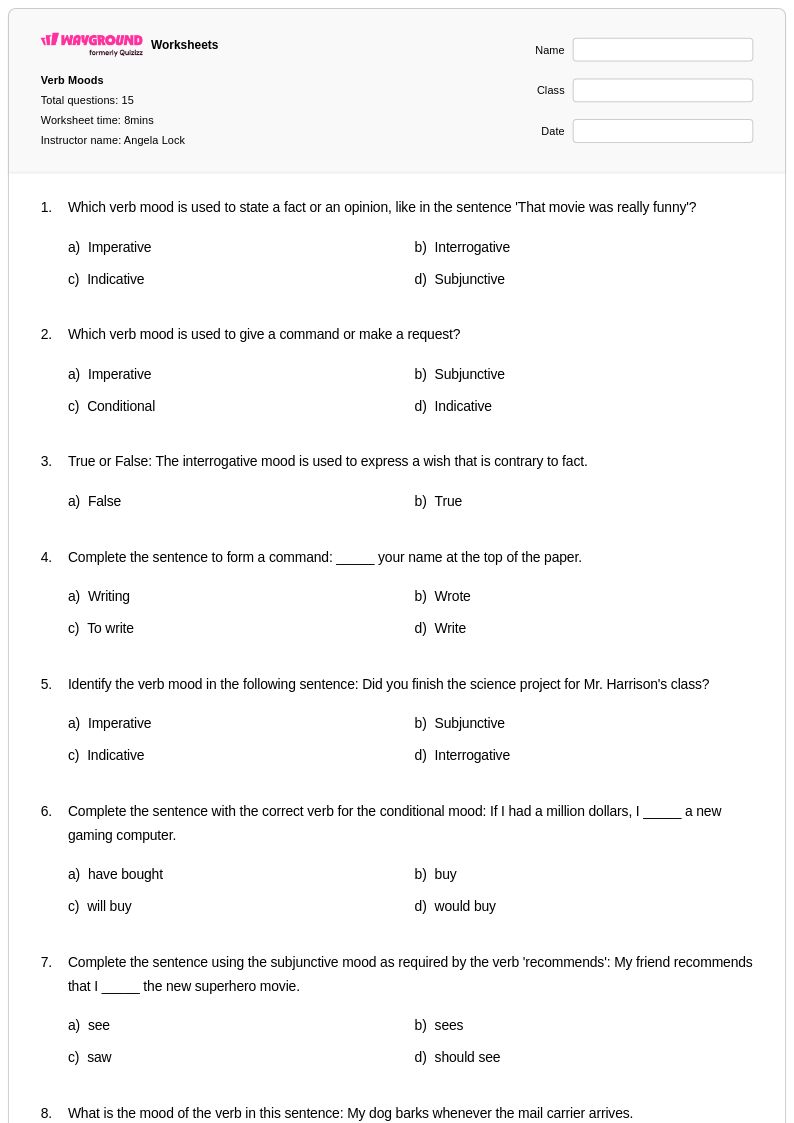
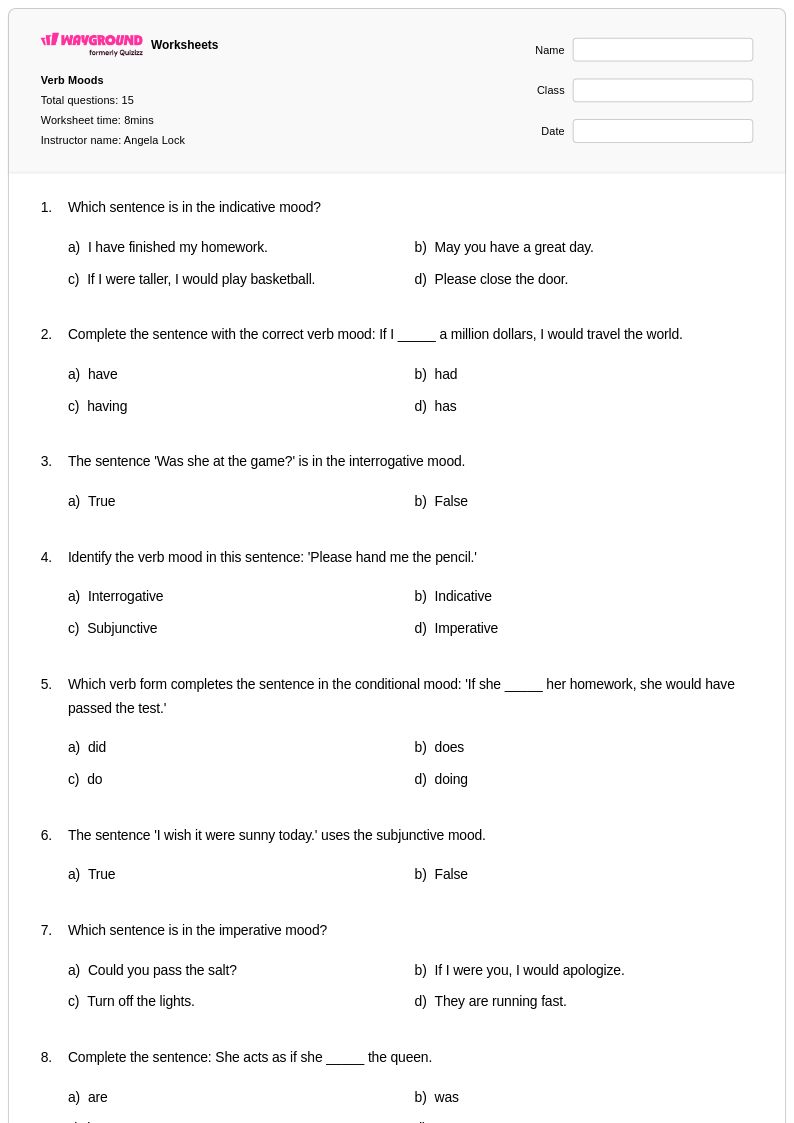
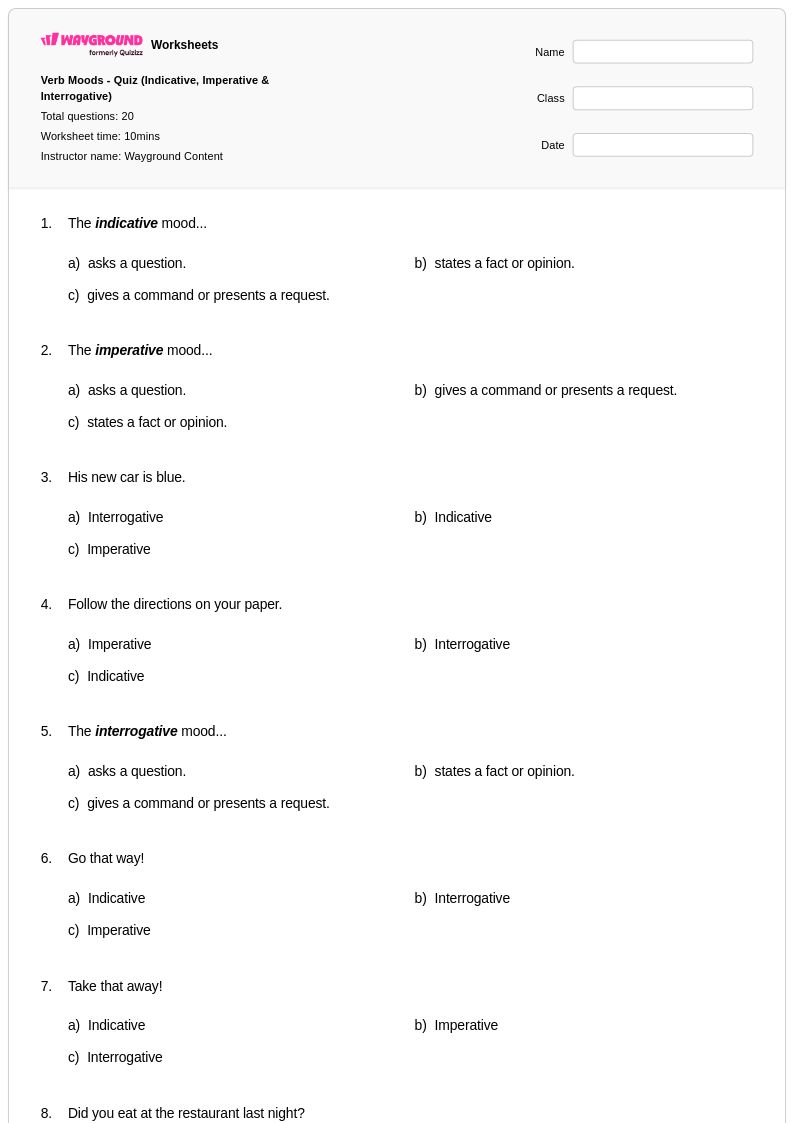
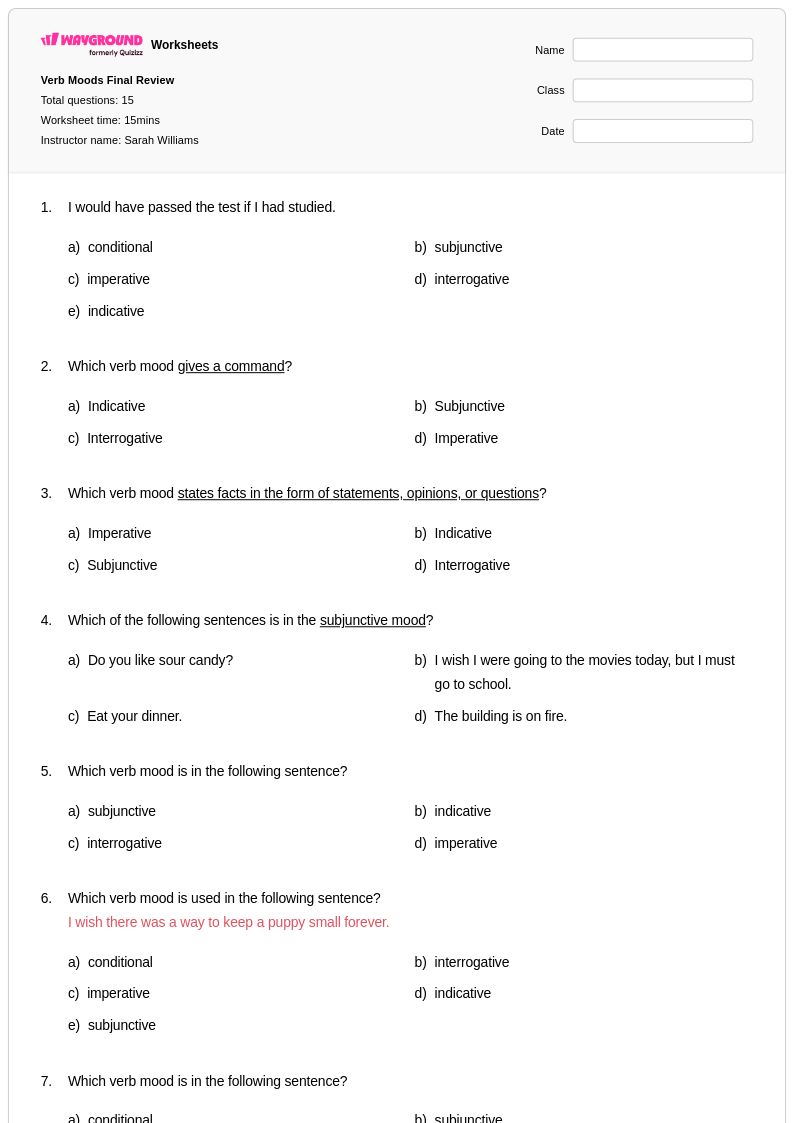
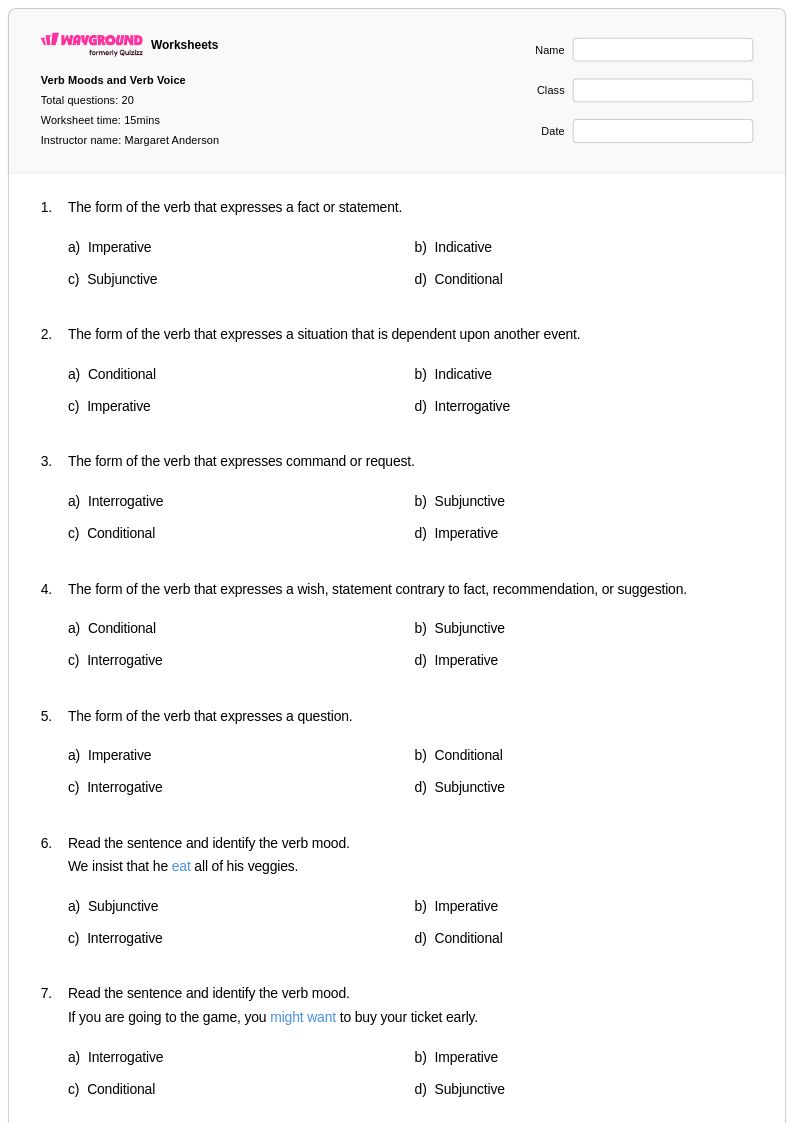
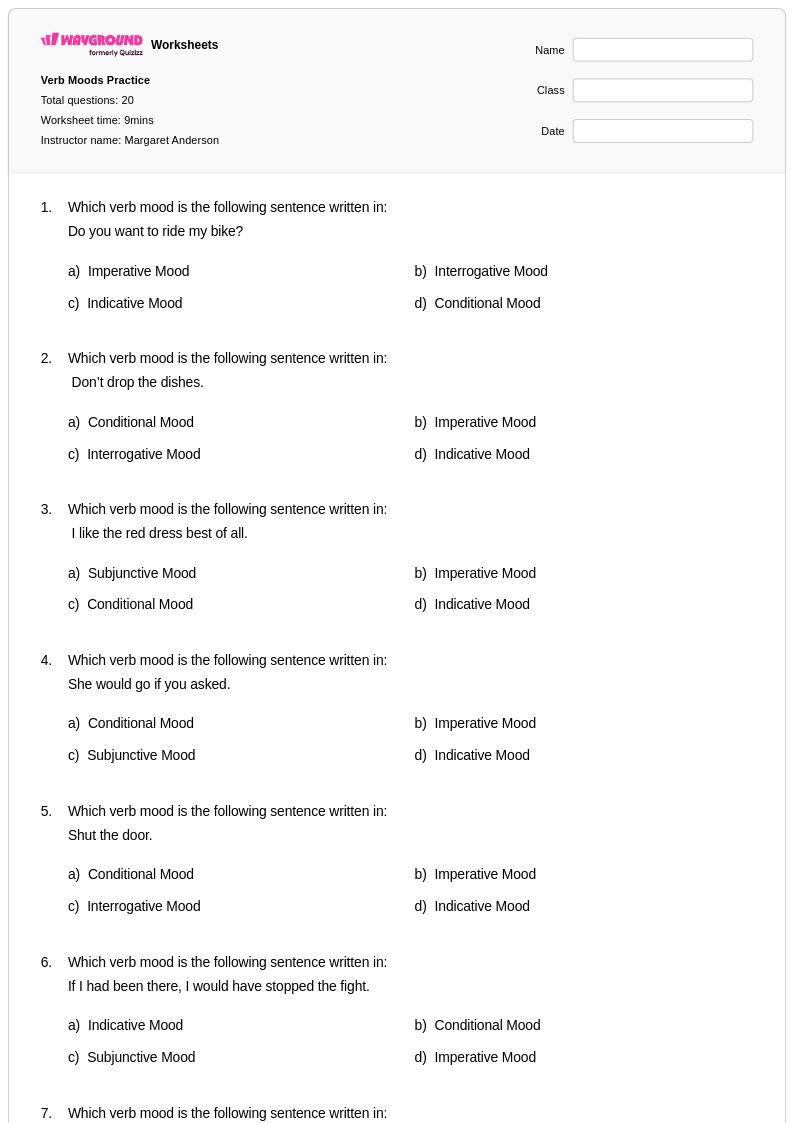
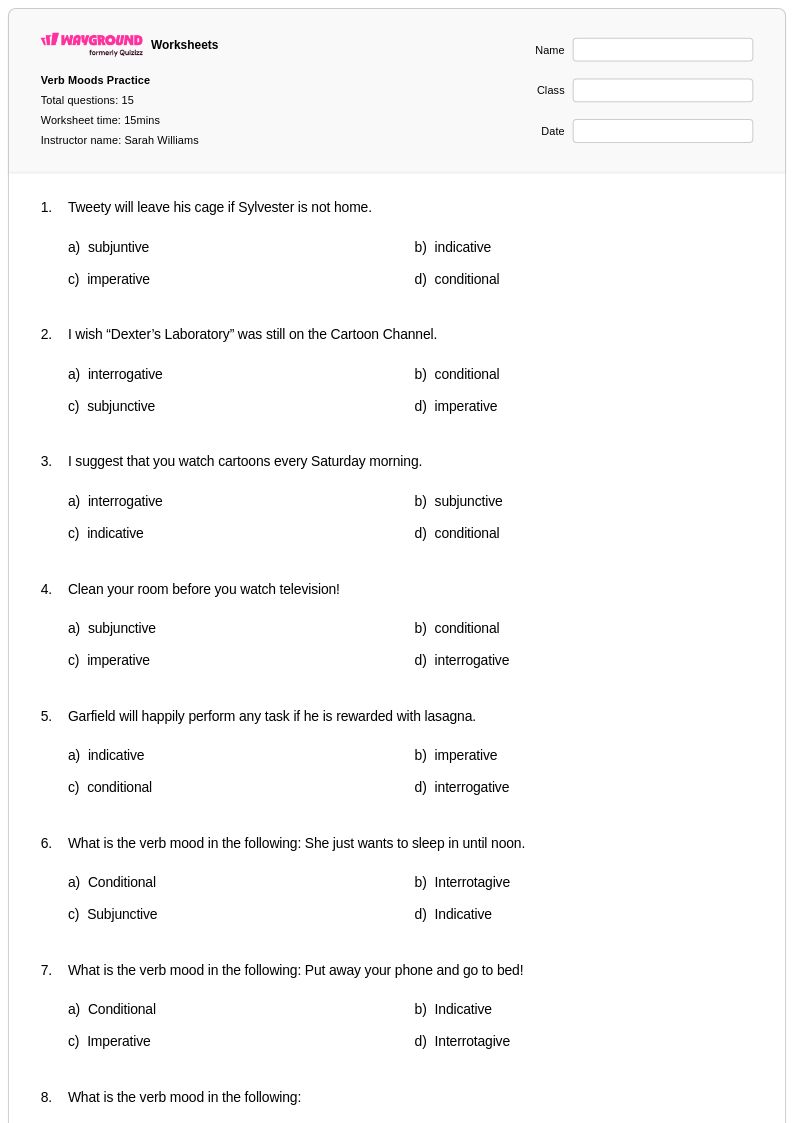
Verb moods represent one of the most sophisticated aspects of English grammar that Grade 10 students must master to achieve advanced writing proficiency. Wayground's comprehensive collection of verb moods worksheets provides targeted practice with indicative, imperative, subjunctive, and conditional moods, helping students understand how these grammatical structures convey different attitudes, intentions, and degrees of certainty in their writing. These expertly crafted worksheets include detailed answer keys and are available as free printables in pdf format, featuring practice problems that guide students through identifying mood shifts in literature, creating appropriate mood usage in their own compositions, and recognizing how authors manipulate verb moods to achieve specific rhetorical effects. The systematic approach ensures students develop both recognition skills and practical application abilities essential for sophisticated academic writing.
Wayground's robust platform, formerly known as Quizizz, empowers educators with millions of teacher-created resources specifically designed to support Grade 10 verb mood instruction through advanced search and filtering capabilities that align with state and national standards. Teachers can easily differentiate instruction by accessing worksheets that range from foundational mood identification exercises to complex analysis tasks involving subjunctive constructions and conditional statements. The platform's flexible customization tools allow educators to modify existing materials or create hybrid resources that address specific classroom needs, while the availability of both printable pdf formats and interactive digital versions supports diverse learning environments. This comprehensive resource collection streamlines lesson planning while providing targeted materials for remediation, enrichment, and ongoing skill practice that helps students achieve mastery of these challenging grammatical concepts.
FAQs
How do I teach verb moods to students who keep confusing indicative and subjunctive?
The most effective approach is to anchor each mood to a concrete communicative purpose before introducing labels. Teach the indicative mood as the default for stating facts ('She goes to school'), then contrast it with the subjunctive by focusing on trigger phrases like 'I wish,' 'if I were,' and 'it is important that.' Students who confuse the two typically benefit from sorting exercises where they identify whether a sentence states reality or expresses a hypothetical, wish, or recommendation before analyzing the verb form itself.
What exercises help students practice identifying verb moods?
Identification-before-production exercises work best: start with sentence-sorting tasks where students categorize sentences by mood, then progress to fill-in-the-blank activities that require choosing the correct verb form. Rewriting exercises, where students transform indicative sentences into subjunctive constructions, help bridge recognition and application. These scaffolded practice types are well-suited to worksheet formats that progress from basic identification to complex application in authentic writing contexts.
What mistakes do students commonly make with verb moods?
The most common error is treating the subjunctive as interchangeable with the indicative, particularly in conditional and wish constructions (writing 'If I was' instead of 'If I were'). Students also frequently overuse the imperative or misidentify it as indicative when the subject is omitted. A third common misconception is conflating the conditional mood with simple future tense, since both involve possibility but differ in how they frame the condition.
How do I use verb moods worksheets in both print and digital classroom settings?
Verb moods worksheets on Wayground are available as printable PDFs for traditional classroom use and in digital formats for technology-integrated learning environments, giving teachers flexibility regardless of their setup. The digital versions can also be hosted as a quiz on Wayground, making them suitable for synchronous and asynchronous instruction. Both formats include complete answer keys, so they support independent student practice as well as teacher-led review sessions.
How can I differentiate verb moods instruction for students at different skill levels?
For students who struggle with mood recognition, reduce cognitive load by focusing first on the two most contrasting moods, indicative and imperative, before introducing the subjunctive. Wayground's platform supports differentiation tools including reduced answer choices and read-aloud features for students who need additional support, while advanced learners can be directed toward application tasks involving literary analysis or creative writing to explore nuanced uses of the subjunctive and conditional moods.
At what grade level should verb moods be introduced?
The indicative and imperative moods are typically introduced in upper elementary grades, while the subjunctive and conditional moods are more commonly taught in middle and high school as part of advanced grammar and writing instruction. Exposure to the subjunctive often occurs alongside literature study, where students encounter formal constructions like 'were it not for' or 'lest he fail.' Instruction can be adapted across grade levels depending on the complexity of the verb forms and contexts being studied.